This is the tale of the complete failure of both council and the state government in terms of protecting our devastatingly low tree canopy and ensuring that moonscaping is drastically halted. For all the talk about stopping moonscaping and preserving canopy trees, the following example illustrates completely how far Glen Eira is failing in its objective.
Below we feature a street map view of a property that was granted a permit in 2021 for the construction of 2 double storeys. Three years later there was another application for a permit time extension. That was granted by council in April 2024. Full demolition started this week and will be completed in the next day or two.
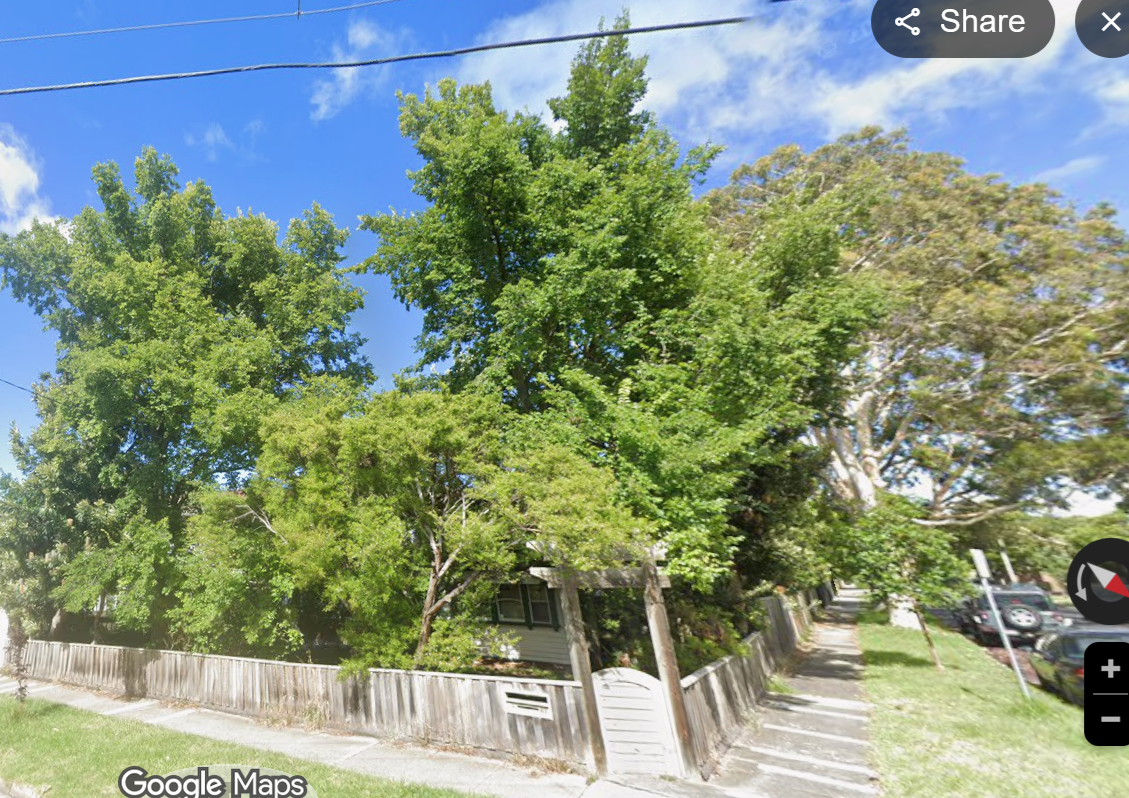
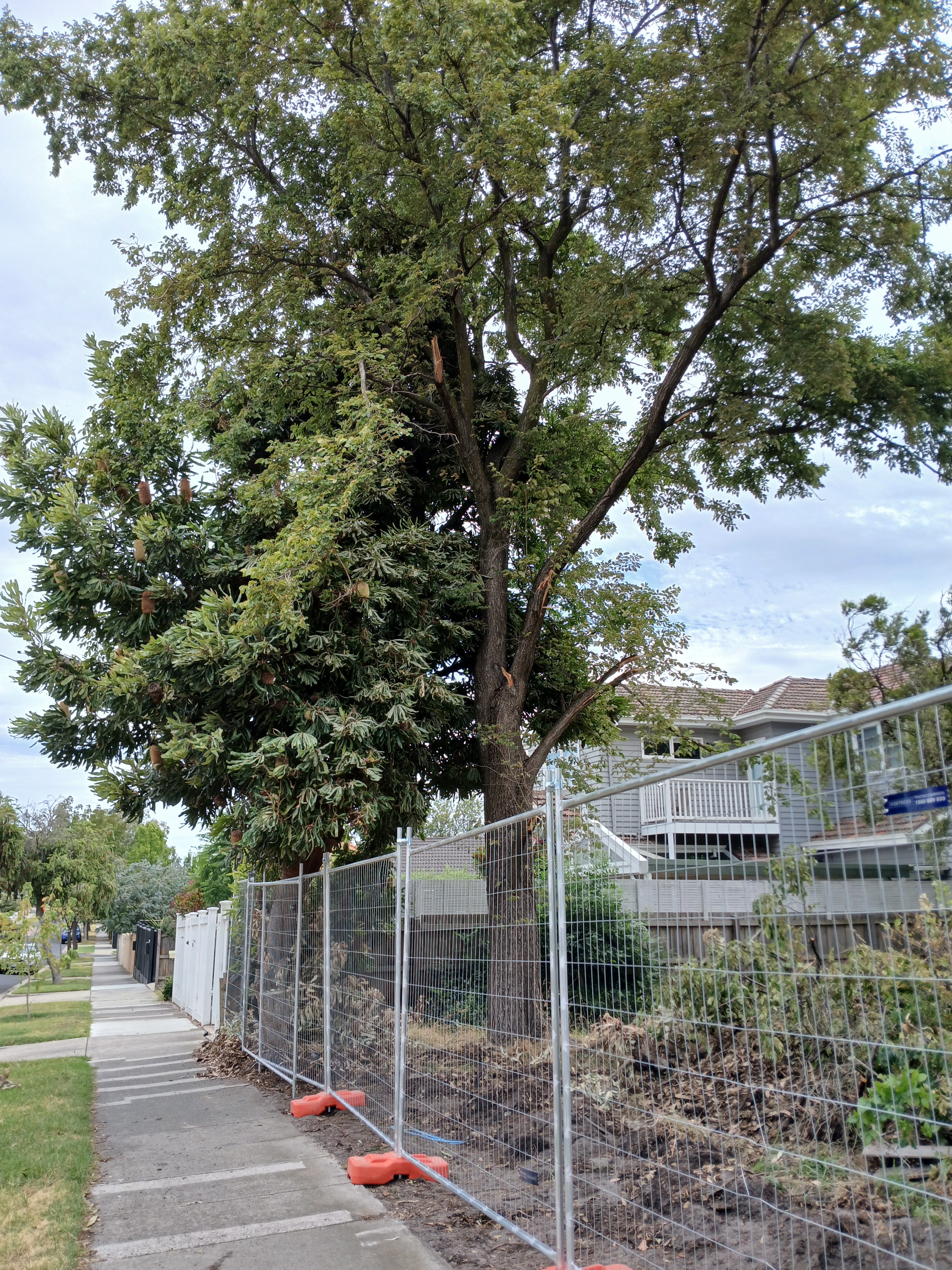
What is not clear from the above image is the fact that the property contained at least 10 beautiful and fully grown canopy trees. All of these trees would have been at least 50-60 years old (including a superb box species and a magnificent saw banksia). All of these canopy trees had been carefully planted along the perimeter of the site apart from one that was approximately 3 metres inside the front fence.
The following photos show what the site looks like now and the carnage that has been wrought on these trees. They will all be gone in the next day or so according to the tradies working on demolition.
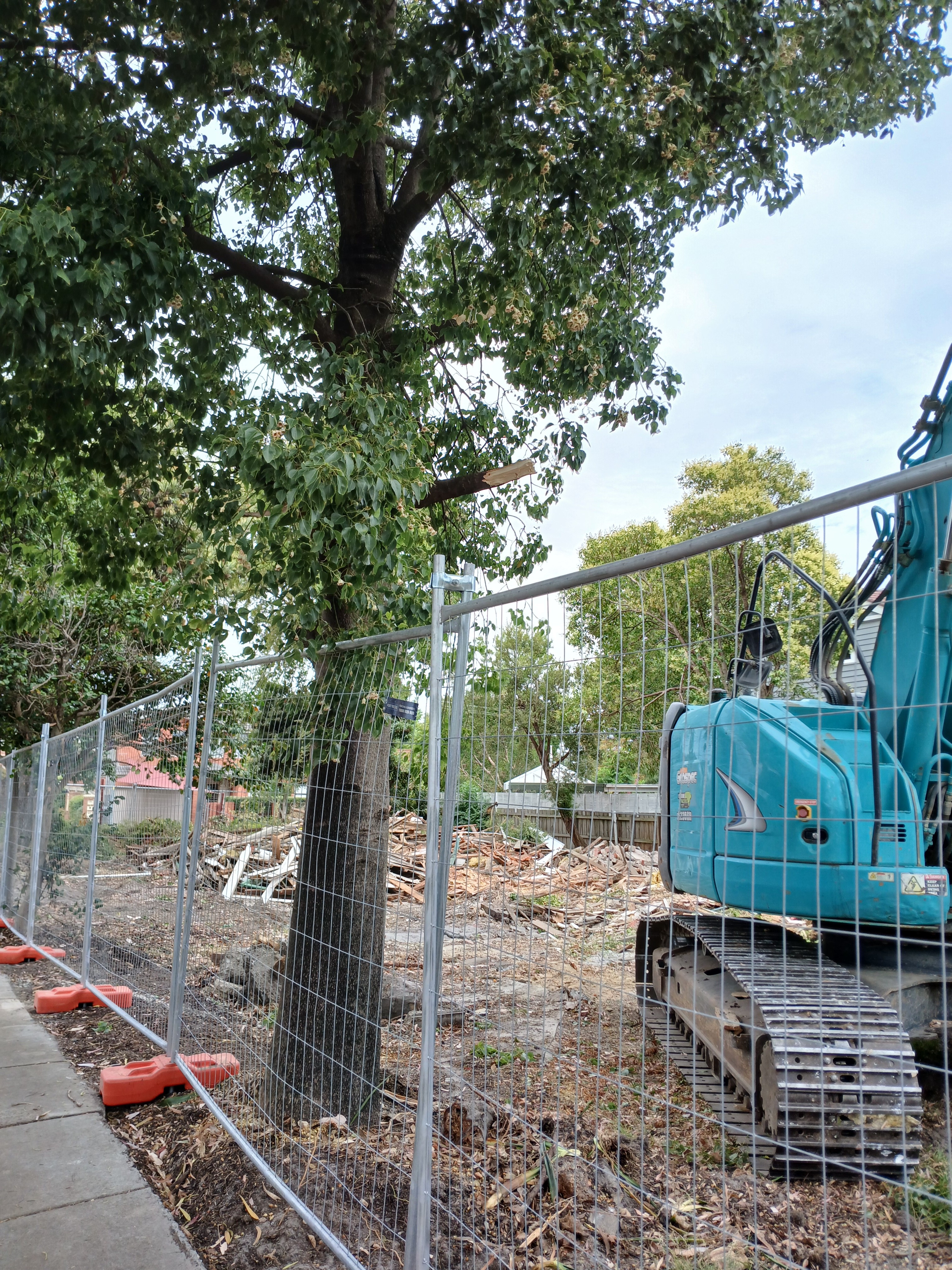
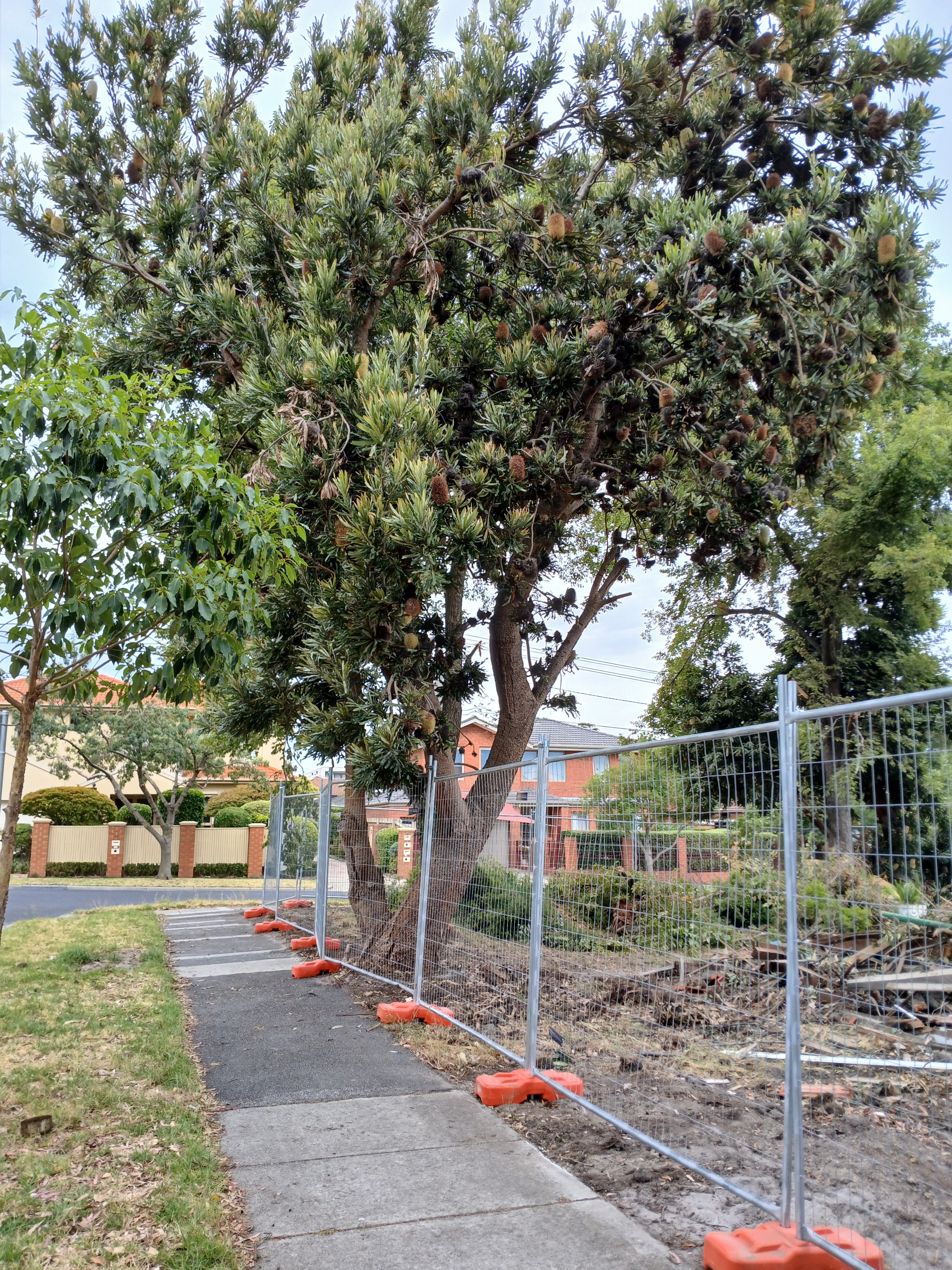
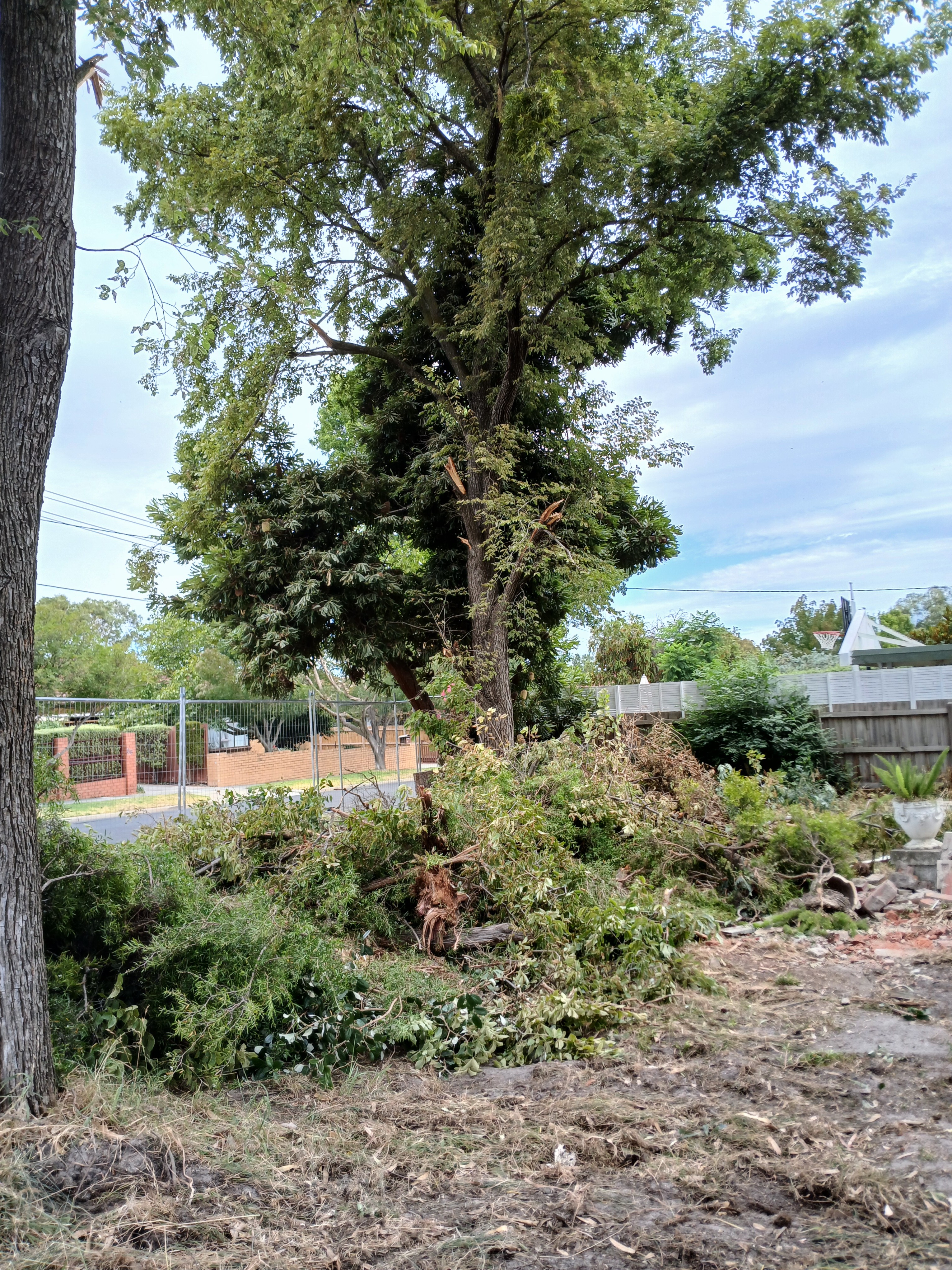
The questions therefore abound:
- Surely any decent architect could have designed dwellings where at least some of these perimeter canopy trees could have been preserved?
- Why was a permit granted that presumably allowed the removal of all of these trees? Was there really nothing that council could have done?
- How hard has council really tried to preserve its tree canopy, especially on private land? Yes, Council’s Tree Protection Canopy Law only came in last year so would not have been applicable to this planning application. This however does not absolve council of all blame. For years now, there have been options available to councils such as vegetation overlays (especially for classified trees) that several councils (ie Moonee Valley, Whitehorse) have introduced. But not Glen Eira. Their argument has been to wait for the state government to carry out the requisite work. Well in September 2025, the government introduced a new amendment that falls far short of truly protecting the environment and achieving the goal of 30% tree canopy coverage in the decades ahead across the state.
Boroondara at its December 2025 meeting pointed out the drawbacks of the state government amendment – cited below
During the course of the consultation, the Victorian Government introduced new tree planning controls through a Particular Provision at Clause 52.37 of the Planning Scheme. These new controls apply universally to all residential zoned land across Boroondara and metropolitan Melbourne and introduce new standard planning permit triggers for the removal, destruction or lopping of a canopy tree in the front and rear setback of a site.
While the introduction of consistent, state-wide tree controls is welcome, there are some concerns with the detailed permit triggers. Overall, the provision provides protection for canopy trees only in the front and rear setback of lots and makes no allowance for consideration of significant trees including works that may impact a significant tree.
Generally, it is considered that the new Particular Provision provides less protection for canopy trees and significant trees than the existing local law and the proposed new overlays. It is therefore recommended that Council continue to seek authorisation for the proposed new overlays as discussed in this report.
Boroondara is now pushing ahead to ensure that tree protection resides in the planning scheme and not simply in a council’s Local Law. This is something that Glen Eira should have sought years ago.
The example we’ve provided tells us how vulnerable our valuable trees are today – despite all the rhetoric on tree protection. The onus is clearly on councils to both introduce and enforce laws that are fail safe and do the job they are supposed to.
The issue is not about development versus tree protection. It’s far more fundamental than that. Development can occur and should occur if all necessary actions are taken to preserve the health of our dwindling canopy coverage on private property. Is the ability to build a few extra feet of dwelling space worth the loss of our most valuable vegetation and aspects of our neighbourhood character – especially in an era of dramatic climate change?
 Glen Eira Debates
February 4, 2026 at 9:12 PM
Tragic! I’m so sorry to see what’s happening and how much we are losing in terms of tree cover. Profit over everything else wins every time.
February 4, 2026 at 9:16 PM
Council will have been working with the developer to facilitate removal of the trees, knowing the changes the State Government was about to introduce. I don’t trust the Government either–changes under VC282 seem to allow a loophole, that you can build then subdivide a proposal that you wouldn’t be allowed to subdivide then build. Council has been silent on the removal or weakening of requirements as formerly specified in Schedules to Zones.
https://www.planning.vic.gov.au/guides-and-resources/guides/all-guides/protecting-and-enhancing-our-tree-canopy-for-a-greener-victoria
February 4, 2026 at 9:39 PM
Your assertion is probably correct. Adding further insult to injury another amendment was rushed through today by the government. Anyone wanting to build two dwellings can now resort to the speed plan of VicSmart which means permits in 10 days and nobody knows anything about what’s going on next door to them.
February 5, 2026 at 9:24 AM
i have written to Councillors on several occasions as with great fanfare they announced a Climate Emergency and yet all their planning approvals and amendments have been for the removal of vital garden ecosystems, replaced with large apartments or town houses taking up the majority of the block and much of any remaining space is paved for driveways or courtyards.
‘How the State Government or Glen Eira Council can have any green credibility is beyond me. So hypocritical!
It has been proven that green space and particularly canopy is much cooler than concrete and paving which just creates a heat bank.
February 5, 2026 at 11:38 AM
very disturbing.
February 5, 2026 at 12:20 PM
From the photos taken it does look like most of the trees were sitting at the edges of the property line. I can’t believe that some of them couldn’t be saved and protected. They will be replaced by twigs that will take at least a decade to develop into anything meaningful, or a bunch of grasses that look terrible. What is wrong with this state and council and does it all boil down to give developers everything they want so they can make as much money as possible. It’s disgraceful what is allowed to happen.
February 5, 2026 at 8:47 PM
Its time to start planting trees in all those terrible open fields called sporting grounds as it will become to hot to use them. This will help make up for the loss of trees on private land. If we dont do that we are going cook ourselves in the coming serve heat waves.