Councillor Performance


Over the past few years we have heard time and again that rate-capping and cost shifting by federal and state government has caused uncertainty in Glen Eira’s ability to resource all its services and infrastructure. This has resulted in the closure of our early learning centres and the attempted sell off of aged care.

But how much is this financial ‘stress’ due to Glen Eira’s own grandiose plans and refusal to impose any sort of financial imposte on developers?  In 2016, the planning scheme review noted time and again full resident support for a development contributions levy (DCL) and even a car parking waiver levy.  Glen Eira used to have a DCL but it was allowed to expire in 2010 and has never been reintroduced. Even when the latest structure plans came up for decision the officers’ reports paid short shrift to the idea of introducing such a levy. Over the years we have had statements such as the following:

Incorporating a Development Contributions Plan into the Planning Scheme for Carnegie will not be able to be undertaken as part of Amendment C184 due to the length and complexity of this process and may be worth examining at a later date. (January 2020)

And in the November 2023 planning scheme review (without community consultation!!) we were told that the DCL is: On hold. Pushed back owing to other major strategic planning implementation, such as controls to implement structure plans.

Thus, since 2010 Glen Eira residents have been subsidising developers and there is no indication when this largesse will cease!

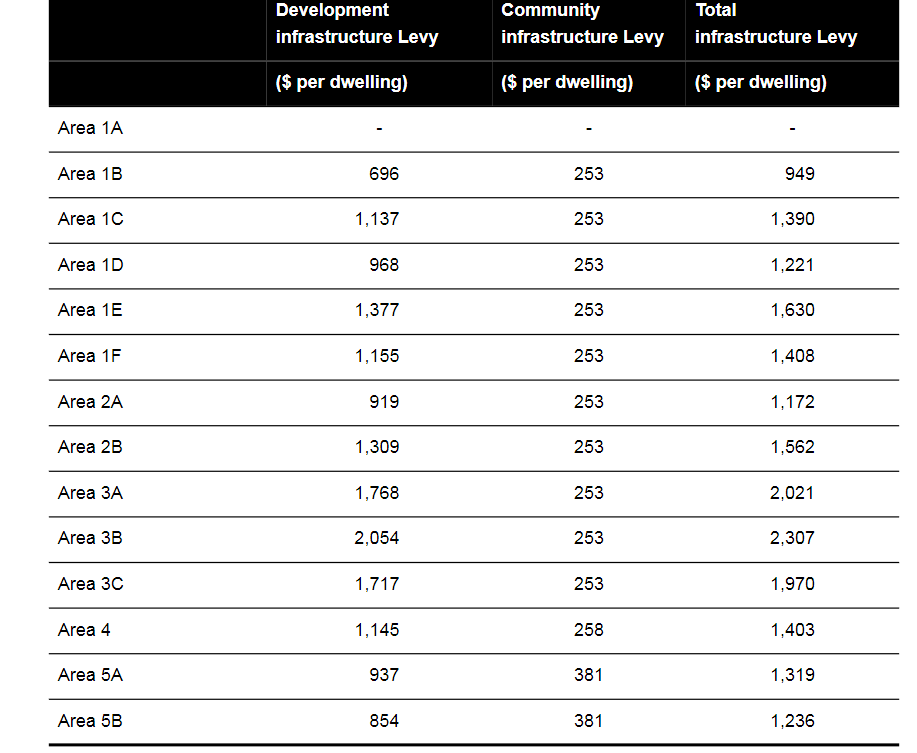
Other councils thankfully have not been so backwards in getting their priorities right and working to ensure that their residents aren’t subsidising developers to the hilt. The following screen dumps are all from councils which have been successful in introducing a DCL in the past 18 months into their planning scheme as well as a car parking waiver

WHITEHORSE

STONNINGTON

MERRIBEK

MARIBYRNONG

BRIMBANK

The first screen dump is from Whitehorse council. For its Box Hill Activity Centre the levy is $2,100 per residential dwelling. Glen Eira forecasts over 2000 net new dwellings just for Elsternwick alone. Doing the sums, with a DCL comparable to Whitehorse that could bring in over $4,000,000!!!! Add to this all the other major activity and neighbourhood centres alone, then the income could well and truly be hitting the $20M mark.

AND SOME CAR PARKING LEVIES

Over the years Council’s excuse for not (re)introducing a DCL was that the cost involved far outweighed the benefit! Surely this kind of argument would also apply to all of the above councils? Yet they have forged ahead. If the cost was truly prohibitive then surely they would have refrained?

The question remains: if other councils can achieve the gazetting of their DCL’s and car parking levies, then why is Glen Eira so reluctant to introduce something that was promised seven years ago and hasn’t existed for 14 years now?  Instead of continually crying wolf and bemoaning rate capping etc Glen Eira Council needs to look at its own back yard. It can increase its revenue via these levies! It can cut spending by refusing to build taj mahals that are in the vicinity of $85+M and incurring massive  interest repayments for the next decade and more. It can reduce spending on useless ‘consultations’ that are anything but genuine. There is no excuse possible for the failure to rein in costs and to source new revenue funds via these developer levies. Maybe then council might stop trying to flog off all our services such as childcare, aged care, home support, etc.

The Victorian Electoral Commission (VEC) ran a recount vote this morning to elect a councillor to replace David Zyngier. Jane Karslake won the recount. We are yet to see the actual numbers on how the voting fell. This will be available in the next few days on the VEC website. Assuming that Ms Karlake signs the relevant papers she will represent Camden Ward.

Ms Karslake has twice stood for council elections in the past. We wish her well for the remainder of this term.

Last night’s council meeting confirmed the latest Tweedledum and Tweedledee union between Magee and Cade. As there were only 6 councillors present, Cade exercised her second vote on several important items to ensure that the motions passed.  Zhang was absent as was Athanasopolous – again!

On the May Street issue as to whether this was a ‘road at law’ the vote to note the officer’s report was – Magee, Esakoff, Cade and opposed Zmood and Parasol. Pennicuik abstained. Cade used her casting vote to ensure it got through.

On the Glasshouse relocation at the Caulfield Racecourse Magee moved an amendment that the Queens Road gate be closed from 10pm until 7am instead of being open till 4am every day. Once this was the substantive motion it basically precluded the alternative motion that Szmood foreshadowed. Voting for this amendment were Magee, Cade, Esakoff and opposed Pennicuik, Szmood and Parasol. Cade again used her casting vote to grant the permit.

Thus two major issues got through with plenty of misleading statements by Magee. For example:

  • The MRC has done everything that it was allowed to do! Really? Does this include coming in and removing 42 trees many of them heritage listed, plus buildings, only to be halted by a Heritage Victoria injunction?
  • The May Street issue is over and there’s nothing more that can be done he claimed. Not so! We believe that the ombudsman is now involved. This is just the first step! Both Pennicuik and Szmood stated that they were unsure as to the current status of May St. They implied that the council decision to not recognise May St as a ‘road at law’ lacked all the necessary ‘certainty’.  

In our view, Cade’s performance thus far does not augur well for what may be in store in 2024. Since becoming deputy mayor, and now mayor,  Cade’s performances have seen a 180 degree about face. We remind readers that she voted AGAINST the first Carnegie structure plan as well as the Housing Strategy. One has to query why this sudden turn around and will it continue? Or will she come to truly represent her constituents?

PS: We forgot to mention another item which surely belongs in the world of Monty Python given its nonsensical process. This involved the Hawthorn Road application. Szmood moved an alternate motion that the proposed 4 storey development be reduced to 3 storeys. Supporting this motion were: Pennicuik, Zmood and Esakoff. Opposing the motion were: Parasol, Magee and Cade. Yet, when it came to her casting vote Cade decided to vote FOR THE MOTION!!!! How on earth can you vote AGAINST the alternative and then with your second vote, support it?!!!!!!!!!

In September 2023 the state government released its latest version of Victoria In Future (VIF). Promoted as a yearly document, this one only took four and a quarter years to materialise! Councils are directed to base their strategic planning on this document. What is interesting about this latest prognostication is that instead of Glen Eira’s projected 188,000 in the 2019 version, the 2023 version projects the number of residents in 2036 to reach 174,000. In terms of dwellings required this has now changed from 78,500 to 79,090. Thus VIF 2023 projects that between 2021-2036 Glen Eira will require 12,850 net new dwellings to meet population growth needs.

The latest VIF data can be accessed via https://www.planning.vic.gov.au/guides-and-resources/data-and-insights/victoria-in-future

Glen Eira however continues to base all its strategic planning on facilitating far more than 13,000 net new dwellings by 2036 as evidenced in its latest structure plans, the housing strategy and Amendment C220. If our projected population has dropped by 14,000, together with a decline in required housing, then why are we still going full bore for more and more development?

If we look at our major planning documents (ie structure plans and priority development zones) and what these documents forecast, the true picture reveals itself. Background papers for these plans forecast the following  (conservative) numbers of net new dwellings over the next 15 years –

Glen Huntly -410

East village – 3000+

Caulfield village/Caulfield Staion – 3,500+

Bentleigh – 2388

Elsternwick – 2000+

Carnegie – 2,500+

TOTAL: 13,798

It should also be remembered that both Caulfield and East Village are only ‘preliminary’ figures. In both cases they can well and truly exceed these forecasts as the permit for East Village has already enshrined!  Thus if we simply focus on the above we already surpass the proposed target, without even counting development that is occurring in our eleven neighbourhood centres, and residential areas. Yet council is not satisfied, and with the housing strategy recommendations ALL of Glen Eira will be turned into a developer’s paradise.

Please note that our Housing Strategy and Amendment C220 forecasts the rezoning of over 10,000 sites and this includes the removal of the mandatory garden requirement for ALL sites zoned General Residential zone, and the creation of a new zone NRZ2 which will increase the permissible site coverage and reduce current permeability requirements. All engineered to allow more and more development on single sites.

When other councils are trying their hardest to stop their municipalities becoming congested and environmentally unsustainable areas, Glen Eira is doing everything it can to achieve the opposite. Here as some example quotes from these councils’ Housing Strategies. Compare these with the Glen Eira vision and what is proposed:

Boroondara

The BHS (Boroondara Housing Strategy) recognises that the need for housing diversity should also be considered in conjunction with the capacity and functions of key infrastructure, such as roads, sewerage, drainage, public services and public transport. If these services cannot sustain additional population in particular locations, it would be unsustainable to increase densities in these locations until the necessary infrastructure can support the change. (page 2 of the Housing Strategy)

COMMENT:  In the Glen Eira documentation, there has been no assessment that we are aware of which provides any analysis of existing infrastructure and future need. No costings have been provided; no time-lines have been provided, and no evidence to support the sustainability of 13000+ net new dwellings.

Bayside

The Review also found that Bayside’s growth locations have sufficient housing capacity to meet anticipated population increases over the next 15 years to 2036 as required by State planning policy. (page 3)

….the overarching spatial approach outlined in the Housing Strategy, 2012 and in this update to the Housing Strategy, is delivering increased housing in Bayside in locations that are well served by public transport, shops and services. This is the most sustainable approach to delivering increased housing density and is in line with State Government planning policy. Should further housing capacity be required in the future, a future review of the Housing Strategy can consider other locations that may be suitable for increased housing density in addition to those already identified in the Housing Strategy. This approach allows Council to direct and manage growth in the short to medium term. (page 6)

Retain the existing residential zoning in Bayside. This clearly implements the Housing Strategy’s vision and spatial approach to managing housing growth in Bayside

COMMENT: Bayside sees no need to change zoning given the growth in its major activity centres. Glen Eira on the other hand intends to ensure that 10,000 sites will be rezoned when our major activity centres alone can meet projected growth.

YARRA

As shown by the assessment of the Yarra’s activity centres to accommodate future housing growth, Yarra can rely on existing capacity and does not need to make significant changes to rezone other land at this time to provide additional housing supply. If housing delivery trends continue to be strong in Yarra, within the next 5 to 10 years it will be important to identify key precincts to undertake further strategic planning to identify long term housing land availability. (page 67)

COMMENT: Yarra takes a similar approach to Bayside. Capacity is sufficient and if there is a need for more dwellings then this can be addressed at the time. In Glen Eira, policies/zonings once introduced stay there forever. The residential zones introduced secretly  in 2013 have not had a thorough review, and certainly no public consultation. No attempt has been made in 12 years to address shortfalls in permeability and site coverage requirements when countless other councils have up to 40% permeability requirements for their General Residential Zone areas. And yet, we are supposed to have an Urban Forest Strategy and a concern about sustainable development.

CONCLUSION

With the latest projections provided by VIF 2023, council must review its strategic planning and assure residents that development at all costs is no longer necessary nor sustainable in our municipality.


Not for the first time do we have council handing over full control of planning to the Minister and the Department. We ask readers to carefully compare and consider the following screen dumps. They involve adopted amendments and the resolution to send the amendment to the Minister seeking approval for advertising and formal submissions.

The Whitehorse resolution contains no mention of the Minister or the Department as does the Glen Eira one. One may quibble as to the interpretation of ‘intent’ but giving the Minister the right to change whatever he likes can still fit into ‘intent’ given that this basically means to produce documentation for land use.

Here are a couple of other resolutions from Boroondara and Stonnington. Again, note the absence of mention of Minister and/or department.

So why has Glen Eira resorted to the inclusion of this phrasing when other councils haven’t?  The repercussions can be immense as proven previously with the increased heights for Carnegie and Elsternwick through the interim DDO’s. It also means that residents will not have any future say – it will be fait accompli. Instead of ensuring that what was decided upon remains, this clause simply allows more changes without community input.

Once again a whopping agenda that lumps together some of the most important planning issues that confront the community. These are:

  • Bentleigh Structure Plan community feedback
  • Bentleigh East  Neighbourhood Centre amendment
  • Elsternwick Structure Plan amendment
  • Carnegie Structure Plan amendment

Very little has changed in regard to the Major Activity Centres, especially in relation to heights, and overshadowing. All this despite the fact that the majority of responses were opposed to various recommendations in the structure plans and the mooted DDO’s. Carnegie did not even have community consultation following the abandonment of version one (ie Amendment C184)!!!!!!!

We will deal with each of the above as separate posts beginning with the Bentleigh consultation summary.

Bentleigh Community Feedback ‘summary’

  • There were 106 survey responses, 17 emails and a petition of 221 signatories. Council states that it sent out 4,101 letters to surrounding households. The feedback equates to a pathetic 2.56% response rate for the survey. Why? Are Bentleigh residents so apathetic that they don’t care? Have residents given up on believing that their voices can affect outcomes in Glen Eira? Or is there something drastically wrong with the way in which council communicates its intentions? We have yet to see any analyses EVER of why feedback is so low and what can be done to improve this. It serves council well to simply go through the motions of ‘consultation’ despite the fact that survey after survey has been anything but a genuine attempt to elicit relevant and valid responses.
  • Again, we are not privy to the raw data. No publication of the responses as has happened in the past. Instead we have a ‘doctored’ summary that falls far short of reporting on what was actually said/written.
  • Language used remains a problem. The officer’s report is vague and imprecise with terminology such as ‘mixed responses’, ‘about half’, ‘support for accommodating growth’, ‘some support’, etc. Very little is quantified.
  • The summary report itself is nothing more than a public relations exercise. For example: On ‘retaining character’ we find this conclusion in the report – 55 percent of participants indicated that accommodating growth above the commercial strip was better than doing it in other parts of Bentleigh. Ostensibly this sounds like a majority are in favour, but one must query the value of the question itself. There could very well be support for greater density in the commercial core, but THIS DOES NOT MEAN that respondents are in favour of 8 storeys (discretionary) adjacent to heritage homes. The value of any response and what conclusions might be drawn are 100% dependent on the quality of the questions asked. The online survey as we’ve commented on before was carefully engineered to avoid as much as possible any responses that could be interpreted as ‘negative’ or opposed to the recommendations of the structure plan.  
  • The above criticisms can also be directed to this conclusion – 51% of participants indicated they ‘strongly agreed’ or ‘agreed’ that measures such as height limits and upper-level setbacks for new development would help to retain the character of Centre Road. Of course people want height limits. But we were never asked what those height limits should be!!!!!!!
  • On page 4 of the summary report we are told that 20 percent of participants indicated they would like a building height limit reduction in the centre when asked about retaining character in a growing centre. This sounds like a clear minority in favour of reduced height limits. But this  alleged 20% is only from those individuals who took the option to write something in the text boxes. And again, no question asked what is an appropriate height limit?
  • More concerning is that the above cited 20% does not correlate with what is then presented in the following table:

 We’ve highlighted all those responses which could be seen as pertaining to the issue of height. The totals are far in excess of the previously stated 20%!!!!!! However, without full publication of all the responses then it is not possible to determine whether the 20% is anywhere near accurate or council’s fudging of the responses. Transparency is again the victim in this reporting.

CONCLUSION(S)

Until this council is prepared to undertake genuine consultation that includes full oversight by councillors and the community engagement committee in the drafting of survey questions then residents cannot hope to be participants in anything but a carefully orchestrated farce that fulfils legal requirements and nothing else. Nor can residents have any confidence in the resulting feedback summaries when the raw data is with-held. When council fights so hard to avoid full disclosure one must surely doubt the results.

As stated earlier, there must be a full analyses of why consultation in Glen Eira is such a failure in terms of community feedback. This should start at the first stage of notification to residents – are they provided with enough detail to engage their interest/concern? Are they expected to undertake hours of reading that involves hundreds of pages instead of succinct summaries? And how many residents have simply given up because they don’t believe that anything they put forward will eventuate? This isn’t apathy we believe. It is simply distrust of council and the predetermined nature of all decision making. If residents truly believed that council was ready to listen and act, then we are confident that feedback would quadruple and that residents could actually believe that council was acting on their behalf. Sadly this is not the modus operandi of Glen Eira City Council!

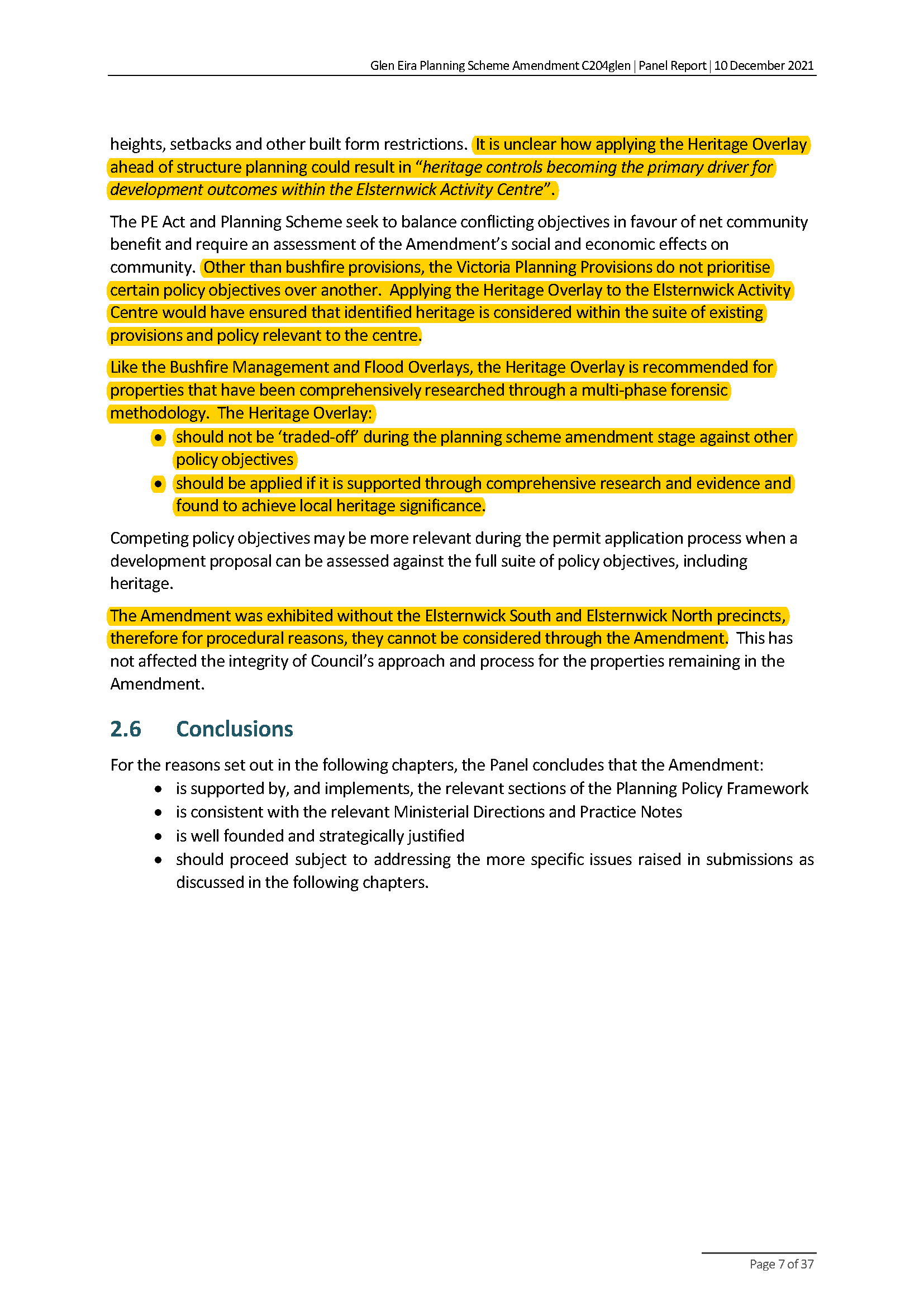
Earlier this month Boroondara City Council voted in a resolution which basically condemned the flurry of planning changes introduced by the State Government over the past 18 months or so. The vote was a result of a detailed officer report outlining the consequences of these changes and how they would impact the Boroondara community.  In Glen Eira, apart from a bit of fear mongering by some councillors used to justify their voting patterns on activity centres (ie  we would get worse results if the minister calls it in, blah, blah, blah) there has not been one report, analyses, or discussion similar to the Boroondara stance. In all likelihood, residents have no idea of what these changes to the planning system entail, or what they mean for future development.

If councils are truly working for their residents, then it is incumbent on them to provide their communities with the necessary information and to work collaboratively with various community groups in their advocacy roles. None of this has happened in Glen Eira. Why not? Why can’t we have an officer’s report which is out in the open and discussed in council chambers so that everyone knows what this council stands for?

The Boroondara vote can be watched via https://www.youtube.com/watch?v=h4f_0Tab2Ag. It starts at approximately 52 minutes into the webcast.  We’ve also uploaded several pages from the officer’s report. It was lengthy, but the highlighted comments here are important and reveal the primary concerns of Boroondara. Are these shared by Glen Eira? Who knows?

Again, we have a myriad of questions:

  • Have councillors even been briefed on what each new piece of legislation means?
  • Have options been presented to councillors on what can and should be done in response?
  • What communications have taken place between officers and departments? Have councillors been made aware of all such communications? If so, have they seen hard copies of this communication or simply had to rely on officer’s verbal summaries?

Residents deserve heaps better from our council. Or is the truth simply that the Glen Eira administration is fully behind the government’s actions in removing as far as possible all third party objection rights and allowing more and more development?

Lockdowns in Melbourne ended in late 2021. Throughout the past few years council meetings were held in public with residents present in the gallery. During this ‘return to normal’ all public questions asked, irrespective of whether the questioner was present in the gallery or not, were read out, answered, and recorded in the minutes. Yet at the last council meeting without any explanation, council resorted to its ridiculous policy of NOT reading out and answering questions if the resident was not present in the chamber. Nor were the questions recorded in the minutes. Even more bizarre is the fact that previously absent questioners’ names WERE RECORDED IN THE MINUTES. Not for the last meeting!

There are other questionable practices that require explanation. For example: historically, all proposed amendments were noted in the ensuing minutes, whether or not they were seconded and if they were seconded a vote taken as to whether the amendment became the substantive motion. Again, the current minutes from last council meeting fail to record an amendment moved by Zyngier and seconded by Pennicuik. Admittedly minutes are not supposed to be a Hansard recording of what was said. But they do have to record what decisions are made in council meetings and the voting on the issue. So we now have another subtle change in what is recorded without explanation and without reference to long standing previous practice.

A quick perusal of previous and recent minutes reveals that on the following dates council minutes DID record amendments as well as the resulting vote(s) in the minutes. The dates are: 8th  June 2021; 9th August 2022; 8th February 2023 and 28th February 2023.

Council’s approach to its governance rules and the lack of consistency certainly requires examination and explanation. But this is more than a simple case of lack of consistency. It harkens back to the central issue of lack of transparency and questions how well this council acts in accordance with its own policies, practices and legislation.

PS: here’s a couple more examples of what a mess council’s governance rules are – or more precisely, how little that is done is in accordance with the existing policies.

  1. The publishing of agendas. According to the governance rules, agendas will be available on the Friday post noon before every ordinary council meeting. Over the past year or so, agendas have come out either late Wednesday afternoon, Thursday, and even late Friday – well after the supposed 12pm time line.
  2. Public questions. We now have the farcical situation that at every council meeting there has to be a motion to bring forward the public question section nearer the beginning rather than towards the end of the meeting as pronounced in the governance rules.

Surely all that is required is for the Local Law to once and for all enshrine the simply procedures so that public questions are heard at the start of all council meetings and that definitive times are imposed on the publishing of agendas.

The governance rules also need to make it absolutely clear as to what will feature in the minutes and the constraints of word limit, and questioners’ presence in council chambers be removed. As it currently stands some questions are well and truly over 150 words, yet are permitted. Others that might be 156 words are deemed to have exceeded the limit and are not read out. The hallmark of what’s been happening is not only inconsistency, but raises the question of why bother having rules and regulations to begin with if they can so easily be ignored and bypassed when it suits.

We’ve received the following media release.

 A myriad of questions result from this:

  • If in 2008 legal advice found that May Street was indeed a ‘road at law’, and that council officers were informed and certainly aware of this finding, then where is corporate memory? The Woolies vcat decision goes back years and certain officers such as Torres et al were certainly working for council in 2008 and also up until recently. Surely it is part of their responsibility to have been aware of such documents – or was a blind eye turned on this ‘evidence’ because it would have made things far more difficult for Woolies?
  • Why has no mention been made of this 2008 decision? Why weren’t councillors informed? What does this say about council’s required record keeping and its required role in informing councillors of all relevant information prior to their decision making?
  • Council claims to have received its own ‘legal advice’. How does this supposed ‘legal advice’ refute the 2008 advice and STET’S own comprehensive legal advice? Council has done nothing in the intervening period to change the status of the 2008 decision – ie. no zone changes, no attempt to remove the ‘road’ status, etc. Until everything is out in the open so that the community can gauge for itself, then the perception the council has indeed failed in its ‘due diligence’ remains.
  • This is more than a simple failure to locate, assess and acknowledge the ramifications of a previous finding. It raises very real questions about the integrity of this administration and how far it will go to facilitate major development.

The following Media Release is on council’s website –

Council made a preliminary decision on Tuesday night to close its three small Early Learning Centres in Caulfield, Carnegie and Murrumbeena.

Statement from Glen Eira Mayor Cr Jim Magee: Preliminary decision on the future of Council’s three early learning centres

We are now consulting directly with impacted families, staff, and the community before making a final decision by the end of the year.

We recognise this will be a challenging time for staff and families and are here to support them.

Council’s three Early Learning Centres were established at a time when opportunities for families to access childcare services were limited. In the decades since, a radical change in government funding and policy has led to a boom in the childcare market and slowed demand for Council’s centres.

The number of childcare places in Glen Eira has doubled since 2010, and increased from 3,966 places to 5,731 places since 2019, an increase of 44 per cent. Nine further non-Council centres now in the planning phase will offer a further 919 places.

A service review found we provide quality care and have excellent educators, however our older centres no longer meet contemporary building and service standards that modern childcare centres provide. 

Our centres are expected to operate at a loss of at least $570,000 each year. Amid increasing costs and economic uncertainty, it is getting harder for councils to run services and we need to make responsible choices and provide value to all the community.

The municipality has a vibrant childcare market that provides choice, competition and capacity. We have confidence that the supply of childcare places will meet current and future demand. Our centres now account for just two per cent of the childcare places available across the municipality.

If Council decides to close the centres, the final day of operation is likely to be Thursday 21 December 2023. We will help families find alternative care that best suits their individual needs and help staff find a new role through redeployment to another Council role or career support.

To learn more about the Council preliminary decision and provide feedback, visit www.haveyoursaygleneira.com.au/childcare.

Media contact: Alex Leamy on 0409 086 361

PS: The Age is also running a story on this issue. See: https://www.theage.com.au/national/victoria/glen-eira-council-to-close-three-childcare-centres-before-christmas-20231005-p5e9yc.html

« Previous PageNext Page »