GE Consultation/Communication


Council has stated that the draft Housing Strategy will be up for decision on November 2nd (a Wednesday instead of Tuesday since this is Cup Day). Residents need to bear in mind that on the first  appearance of this draft strategy 4 councillors were opposed to its adoption. Sadly, 5 voted in favour so the document went out for a bogus ‘consultation’.

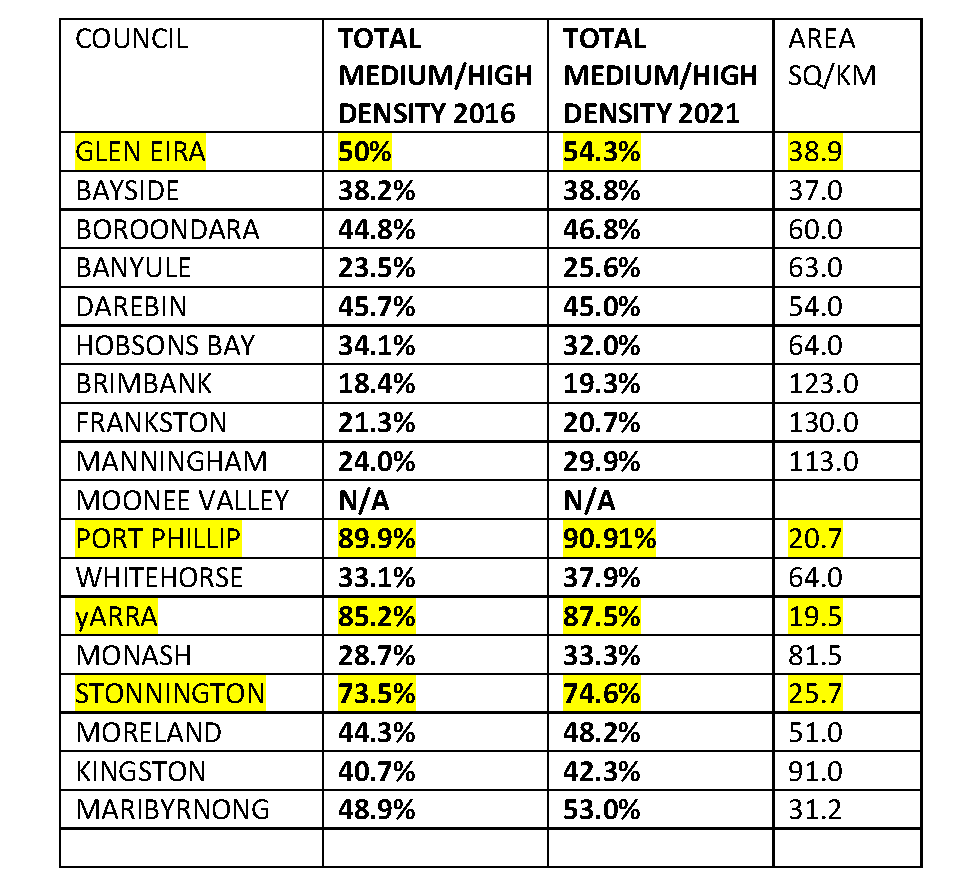
The most startling component of this first draft is the admission that Glen Eira has capacity for 50,000 new dwellings on current planning scheme zonings out to 2036 and beyond. All we actually need according to State Government projections are 13,000. Yet council is determined to pack more and more development into Glen Eira regardless of whether or not it is needed, whether the infrastructure will cope, and whether our tree canopy will diminish even more rapidly with the removal of the mandatory garden requirement in ALL sites zoned GRZ and the 3000+ NRZ sites that will have increased site capacity, reduced permeability, and removal of rear setbacks.

No other council operates in the manner that Glen Eira does. What follows are quotes from recent Housing Strategies from these neighbouring councils. When these comments are contrasted with what Glen Eira proposes, then serious questions require answering. We will get to these later. Here is what others state:

BAYSIDE

The Housing Strategy Review 2019 found that Bayside’s growth locations have sufficient housing capacity to meet anticipated population increases over the next 15 years to 2036 as required by State planning policy. (PAGE 4)

The Housing Strategy identifies locations where housing growth can occur. These locations have sufficient housing capacity to meet the anticipated increases in population to 2036. (PAGE 6)

Should further housing capacity be required in the future, a future review of the Housing Strategy can consider other locations that may be suitable for increased housing density in addition to those already identified in the Housing Strategy. This approach allows Council to direct and manage growth in the short to medium term. (PAGE 7)

HOBSON’S BAY

The housing capacity assessment conservatively estimates that Hobsons Bay has development sites/opportunities to provide a net gain of approximately 16,281 dwellings. Based on estimated housing demand of 443 new dwellings per annum (over the next 20 years), this represents around 37 years of supply (PAGE  4)

Based on the housing capacity assessment identified in this report, there is enough capacity/housing opportunities in Hobsons Bay to comfortably meet expected housing demand over the next 20 years )PAGE  140)

It is expected that the strategic redevelopment sites alone could accommodate more than half (52 per cent) the total forecasted dwelling demand by 2036 (PAGE 140)

YARRA RANGES

At the current development rate, approximately 560 dwellings per year, this tells us about 31 years of land supply is available in the existing residentially zoned land. The figure also shows land capacity will easily meet the State Government’s target of 10,700 new dwellings in Yarra Ranges over the next 15 years or approximately 700 dwellings per year. Even if development rates increased, there is still capacity within the existing residentially zoned land to accommodate development. (discussion paper 2022 – page 39)

YARRA

The housing capacity analysis indicates there is enough capacity within Yarra’s activity centres to accommodate sufficient housing growth. The analysis confirms that, while Yarra’s established residential neighbourhoods will continue to accommodate some housing growth, Yarra does not need to rely on these areas to supply projected housing growth (page 65)

THE QUESTIONS

  • Incompetence and/or complicity? All planning should stem from a Housing Strategy. Council knew it had to develop a Housing Strategy as far back as 2019. Instead this council has instead introduced structure plans BEFORE a housing strategy. That amounts to incompetence. As for the ‘complicity’ aspect, it appears that whatever the department (DWELP) says is accepted. No public outcry to speak of; no media releases criticising government; no support for residents. It also doesn’t help when we have the likes of Athanasopolous, Magee and Zhang blindly following government policy instead of representing their constituents – which is the first priority of a councillor.
  • Consultation Feedback in Full. The refusal to publish ALL feedback achieves nothing except greater skepticism and mistrust of council. It also flies in the face of council’s ‘transparency’ policy.
  • Why is Glen Eira so radically different to our neighbouring councils?  Historically, this council has been the odd-man out on so many strategic planning  occasions – the last to have a Housing Strategy; the last to complete structure plans; the last to have a significant tree register; the last to have a fair-dinkum notice of motion. The list goes on and on. Until councillors fulfill their obligations as representatives of the community, the culture will not change. The onus is on councillors to reject this Housing Strategy and order that it goes back to the drawing board!

Council’s 2021/22 Annual Report claims to have held 27 community consultations. Of these only ONE in 2021 and ONE in 2022 published IN FULL all of the community feedback. Budget and financial plans are excluded from this calculation since they are required by law to be available.

What is clear is that over the past few years, on all the important issues such as structure planning, urban design frameworks, quality design guidelines, etc. this council has deliberately with-held the complete feedback that residents submitted. Instead the community has been provided with ‘summaries’ that we allege are far from representative of what residents stated. If it were otherwise, then why is access to these submissions denied?

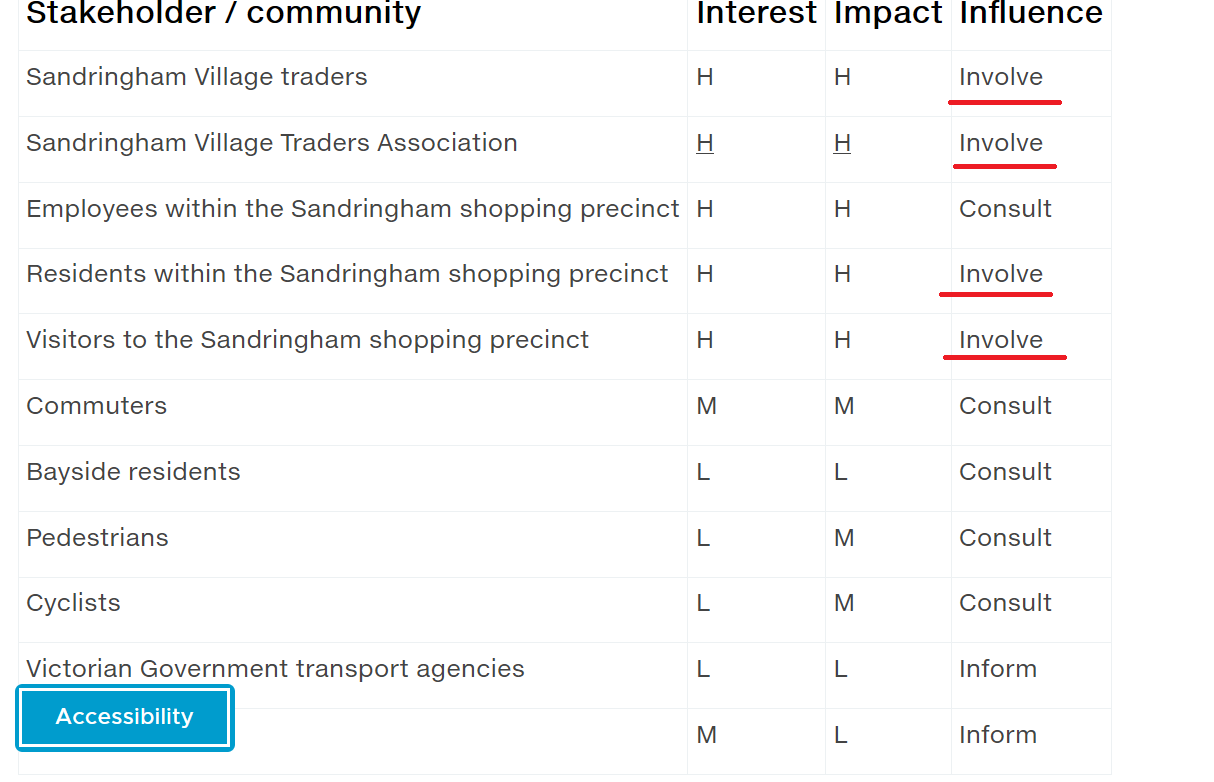
We have had a litany of excuses – that the issue is ‘operational’ and therefore beyond councillors’ domain; that privacy and confidentiality are important; that the Engagement Strategy mandates that privacy be protected, etc. All of these are spurious and last ditch attempts to hide the truth. Even more galling is the fact that planning issues that will establish what happens in Glen Eira for the next 20 years are seen as needing only the ‘consult’ level of participation rather than ‘involve’ or ‘collaborate’ which other councils have implemented.

The past two years have seen some incredibly important decisions being made and residents being denied the full results of the accompanying consultations. We have mickey-mouse reporting instead. All of the following decision included mere ‘summaries’:

Glen Huntly Structure Plan

Carnegie Structure Plan

Housing Strategy (Stage 1 and Stage 2 Consultation)

Caulfield Station Structure Plan

Amendment C184 for Bentleigh and Carnegie structure plans

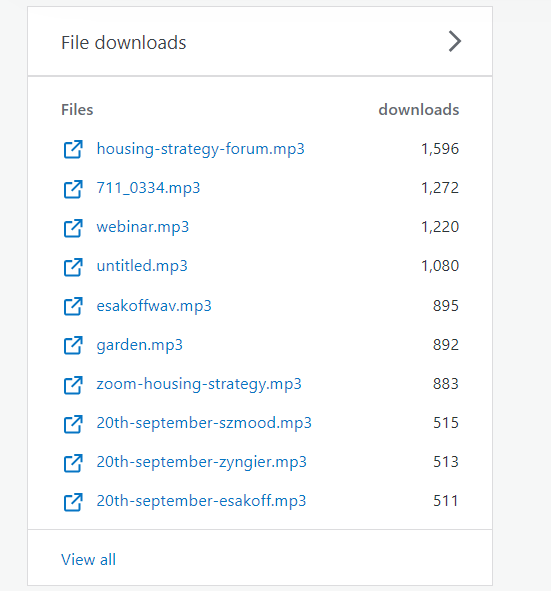
When 110 people show up in the middle of winter and in the midst of covid, and voice their views as they did at the Town Hall Forum, and this doesn’t even warrant a single word of feedback in the consultation summary, then we are in deep trouble. Readers might be interested to know that our recording of this evening has been downloaded 1,596 times already. Other recordings of important planning issues have also been downloaded hundreds and hundreds of times. Planning is definitely on people’s minds and there are certainly more than 150 people (according to Magee) who have concerns with what is happening. Check out these figures –

Finally, it beggars belief, as to why feedback on less important issues have in the past been published but not on the above list of issues. We maintain that this administration is determined to bulldoze through its plans regardless of what residents say they want. If it were otherwise, and consultation was indeed a genuine attempt to gather feedback and where possible act on this feedback then all results would be published. Instead we have an administration determined to censor contrary views, and determined to limit the role of residents and councillors. That is unconscionable.

By way of comparison, we gone through all the agendas from 2016-22 (the start of the McKenzie reign) and listed all those consultation feedbacks which were published in full. We’ve omitted budget, local law, etc reports. Please compare the importance of the following to the significance of these later planning issues.

One caveat to the above. When council first began their work on the various structure plans in 2017, and held their misleading online surveys such as ‘what do you like about your shopping strip’, the full results were published – including facebook comments. But this was well before residents were made aware of the repercussions of these ‘consultations’ and what it would mean for the final draft structure plans. Interestingly, privacy, confidentiality was not an issue back then and neither was this regarded as strictly ‘operational’. You can access these reports via this link –

https://www.gleneira.vic.gov.au/our-city/planning-for-the-future/the-future-of-bentleigh/bentleigh-community-consultation

PROPOSED NEW PARK, FOSBERY AVENUE AND ST AUBINS AVENUE, CAULFIELD

NORTH – 19th September 2016. Feedback – Emails, Phone and Letters; 2 Have Your Say – Forum Comments;3 Traffic Volume Analysis

JOYCE PARK – OPEN SPACE CONVERSION  – 13th June 2017 – Attachment 3: Feedback Received – Email Attachment 4: Feedback Received – Have Your Say Forum

ACTIVITY CENTRE, HOUSING AND LOCAL ECONOMY STRATEGY 25th July 2017 – all online survey responses and formal submissions

HARLESTON PARK OPEN SPACE AND PLAY SPACE UPGRADE CONSULTATION – 5th September 2017 – 2. Feedback – Email, mail and phone

3. Feedback – ‘Have Your Say’ Forum comments

EE GUNN RESERVE LANDSCAPE MASTERPLAN –5th September 2017 – . Feedback – Email and Phone; 3. Feedback – ‘Have Your Say’ Online Comments

TRANSFORMING MURRUMBEENA CONSULTATION REPORT – 17th October 2017 – Comments in full from “Have your say” discussion board

3 – Feedback received by email, phone and other channels

4 – Summary written feedback from information session

5 – Local Area Traffic Management Plan

HARLESTON PARK SMALL BASKETBALL COURT– 28th November 2017 – 2. Feedback – Email comments; 3. Feedback – ‘Have Your Say’ Forum comments;4. Feedback – Letter received with signatures

CAULFIELD WEDGE DOG PARK– 6th February 2018 – 3. Feedback – Email and phone comments;4. Feedback – ‘Have Your Say’ forum comments

COMMUNITY FEEDBACK ON THE IMPLEMENTATION OF A CLASSIFIED TREE REGISTER – 26th September 2018 – survey responses & submissions

PROPOSED NEW PARK – AILEEN AVENUE, CAULFIELD SOUTH – 5th February 2019 – 2. Have Your Say Feedback; Email Feedback; Phone Call Feedback

CAULFIELD PARK MASTERPLAN – 5th February 2019 –Have Your Say Forum Discussion  Email Feedback; 4. Community Meeting Feedback

GLEN EIRA ROOMING HOUSE STRATEGY – 21st May 2019 – 2019 – Consultation feedback

ROSANNA STREET RESERVE UPGRADE – STAGE TWO – 2nd July 2019 – Have Your Say Feedback ; Email Feedback;Phone Calls Feedback

DRAFT MURRUMBEENA PARK MASTERPLAN REFRESH – 3rd September 2019 – Survey feedback;5. Email feedback

BENTLEIGH EAT STREET – PROPOSED ONE-WAY TRAFFIC CHANGES

(NORTHBOUND) TO VICKERY STREET – 24th September 2019 – email, survey responses

HOPETOUN GARDENS LANDSCAPE MASTERPLAN – 16th October 2019 – Have Your Say feedback;Email feedback;Phone call feedback

FUTURE OF SPORT AND ACTIVE RECREATION – CONSULTATION OUTCOMES – 16th October, 2019 – Have your say comments

WALKING AND ACCESSIBILITY ACTION PLAN, CYCLING ACTION PLAN AND

PUBLIC TRANSPORT ADVOCACY PLAN – 17th December 2019 – emails, comments (but not on previous item for Inkerman Road cycle path)

CARNEGIE SWIM CENTRE REDEVELOPMENT OPTIONS – COMMUNITY

CONSULTATION OUTCOMES – Community Consultation responses’Community Voice’ survey results

 25th February 2020

PARKING POLICY – 17th March 2020 – Draft Parking Policy Engagement Report

OPEN SPACE STRATEGY REFRESH – 9th June 2020 – Feedback – Email and Letter; Have Your Say Forum

MULTIDECK CARPARKS COMMUNITY ENGAGEMENT AND CONSULTATION – 14th December 2021 – HYS Individual Comments; CV Individual Comments; WSP Report – Online Community Workshop; Chat – Online Community Workshop;;Social Media; Written Correspondence

MULTIDECK COMMUTER CARPARKS PROJECT – OUTCOMES OF COMMUNITY CONSULTATION – 30th August 2022 – MDCP – Social Media Feedback;. MDCP – Written Correspondence Feedback;MDCP – HYS Survey Responses

Democracy in Glen Eira is moribund. Decisions are made by this administration prior to any so called ‘community consultation’. Even councillors are denied access to all relevant data either in time for the thousands of pages to be digested properly, or with-held completely. Ultimately, all this means is that decision making and community consultation in Glen Eira is a joke!

Whether it is McKenzie or Torres, the decision to NOT PUBLISH all community responses in full on the Housing Strategy is the most recent case in point. This has now expanded to include contentious projects detailed in the current agenda. We will itemise our concerns with these two projects.

Alma Village Pop-up Park

We have to query the value of any consultation (ignoring of course the effect of the various sub-standard questions asked) when residents who decide to respond are not provided with enough information to come to some reasonable conclusions as to the proposed project. For example, in the above ‘consultation’, there are plenty of drawbacks, plus residents have never been informed as to:

  • The final estimated cost of the project
  • The number of residential/road car park spots to be lost
  • Traffic analysis dates from 2018 and is therefore way out of date
  • Not even a consultation ‘summary’ report included – it is incorporated into the officer’s report

Interestingly, this officer’s report does include the following:

Page 556 of the agenda states:All feedback received is attached.

Page 561 states: All feedback received is included as an attachment with names and identifiers removed.
One letter from a local business and property owner is included with all details.

None of these attachments are included in the agenda! Our commiserations to the officer since it is obvious that the decision to with-hold the full feedback was done following the writing of this report! Decisions on the run no doubt as a result of community criticism.

The report itself recommends that council proceed with the pop-up park, despite the fact that we are told that the feedback results were ‘split evenly’ between those who supported the idea and those opposed. When nearly half of respondents are opposed, then surely some re-thinking is necessary? But no! The project is still pushed onwards!

Circular Economy Feedback

For this ‘consultation’ we do get a ‘summary consultation’ report. Sadly, there has also been some late editing/censorship for this item. In the contents page we are told that the actual survey questions for both the ‘community members’ and for ‘businesses’ are included as Appendix A and Appendix B. THEY ARE NOT!

As per normal, what we do get is a ‘summary of themes’ rather than a full insight into what people said or wrote, plus some demographic info.

COMMENT(S)

Recent decisions to with-hold information and commentary from residents is deliberate and has nothing to do with ‘transparency’ and privacy’. If identifying information could be removed in countless previous consultations and all feedback published, then it should also apply to the most important consultations such as the Housing Strategy and the structure plans. Council has therefore entered the new realm of censorship in the hope that residents will accept the spin, and bullshit that typifies council’s reporting in these matters.

We have had of late survey after survey, where the questions fail to address the central issues and proposals of the item. Most are Dorothy Dixers, designed to elicit the response required. They do NOT seek to garner what the community really thinks or wants. They are prepared in order to substantiate the decision that this administration has already made. We do not even know if councillors have any say in the creation of these questions. The Community Engagement Committee certainly does not – when in fact they should be a vital component of the process.

But even more alarming is council’s failure to adhere to the IAPP2 scenarios of engagement and to inform residents of the ‘influence’ their input can and will have. All consultations in Glen Eira do not even come close to the ‘involve’ or ‘collaborate’ criteria. Most are simply ‘inform’ and with ‘consult’. It remains a top-down approach. Here are the selected options, now pick one! The money splurged on these bogus consultations is simply mind-boggling. But naturally, we will never be told how much!

By way of contrast, we ask readers to have a long, hard look at what Bayside is currently doing on one of its consultations, and which they have done for all of their important consultations. That is letting residents know well in advance the extent of ‘influence’ they can have. Various methodologies are then implemented to ensure these criterion are met. Not so in Glen Eira. All residents are told is that the feedback will be ‘considered’.

Here is the Bayside approach:

See: https://yoursay.bayside.vic.gov.au/MelroseStreet/community-engagement-overview

Finally a recommendation to readers:

  • If you are providing any feedback to council directly, then we believe it is imperative that you also cc your comments to all councillors. This can be easily accomplished via this email: councillors@gleneira.vic.gov.au. Our suggestion is based on our real doubt that councillors are informed fully as to what residents say/want. Communicating directly with them will ensure that the ‘gate-keeping’ of this administration is reduced.
  • Public questions should also be sent to councillors. We again doubt that councillors have much time to digest the public questions and certainly not too much time to provide responses in the record of assembly meetings held just prior to entering the chamber.  

Here are the closing remarks by Athanasopolous on the Caulfield Station Structure Plan which was voted through on the casting vote of Magee.

One must seriously doubt whether Athanasopolous has ever read the Glen Eira Planning Scheme, or for that matter, given close consideration to officer reports. In his closing remarks presented above, there was the statement that council does not ‘seriously consider’ whether something is ‘excellent’, ‘good’ or bad. That he says ‘is not a consideration for us’.  Nothing could be further from the truth! If the planning scheme had indeed been read then he would have found the following clauses –

To promote design excellence which supports the ongoing significance of heritage places.

The replacement building displays design excellence

Demonstrates architectural design excellence. – Carnegie/Elsternwick/Bentleigh DDOs

Planning should promote excellence in the built environment ….

Avoid visually intrusive design which confronts the established architecture of the centre and
dominates the surroundings

Ensure the highest possible standards of built form and architecture, through contextually
appropriate design that adheres to the policy statements contained in this policy and principles
of economic, cultural and environmental sustainability and universal design

Whether the design is innovative and of a high architectural standard

To top this all off, these statements from the officer’s report of 1st September 2020 (pages 43 and 50) on the 7 Selwyn Street, Elsternwick application, unequivocally embrace the concept of ‘design excellence’. We quote:

Subject to the recommendations of Council’s Urban Designer regarding some of the materiality, it is considered that the proposal displays architectural design excellence and will be a significant architectural contribution to Elsternwick.

The design of the building achieves design excellence and will be a landmark building within the municipality

Whilst it is true that no clear ‘definition’ applies in Glen Eira, at least some other councils have taken major steps to ensure that ‘design excellence’ features prominently in their assessment of high rise dwellings. Here is what Moreland has done.

Other incredible statements relate to the simple black and white dichotomy that everyone should either accept or reject the notion of 1300 apartments. The problem with this is what is not stated. The Caulfield Station area will NOT simply include 1300 apartments. Combined with Caulfield Village the total could be in the realm of 4,400 as stated in the Charter, Kramer Keck analysis.

Even if we accept this 1300 number (remembering that heights will be discretionary and hence could be higher than proposed, thereby facilitating more apartments) his statements are far too simplistic. Allowing 1300 apartments might be fine IF –

  • There was adequate open space provided
  • Overshadowing was negligible and included the winter solstice
  • Buildings were of the highest 7+ efficiency/sustainability
  • Heritage was protected for individual sites and for surrounding precincts
  • Car parking was adequate
  • Landscaping did not include ‘potted’ trees
  • Wind tunnels were avoided
  • Housing diversity – ie 1, 2 and 3 bedroom apartments. The Charter Kramer report states that the overwhelming majority will be 1 and 2 bedroom places.

There are plenty more points that could be added to the above. Not even mentioning some of these vital components is Athanasopolous’ way of ignoring all facets of decent planning and presenting an argument that is deliberately one sided.

Athanasopolous goes on to claim that no decision on third party objection rights has been made. That all council is saying at this point is that they will ‘consider’ the potential for this. Really? If third party objection rights are viewed as important, then surely it would already have been in the draft? Leaving everything in abeyance until the fine print of the amendment is revealed does not do residents any favours. All it does is skew the odds in council’s and the MRCs favour since going to a planning panel has repeatedly shown how these panels basically support council and developers.

Finally, if the objective is to ‘achieve the best possible outcome for our community’, then there is absolutely no reason why this can’t be achieved NOW in the draft plans and well before things are set in concrete via the amendment. We repeat what we have stated in the past –

Yes this is a ‘framework’ plan, but once it is agreed that 20 and 12 storeys (discretionary) set the parameters, then any ‘controls’ that are introduced later, will not be geared to 7 storeys, or even 9 storeys. They will ‘cement’ what is proposed in the draft. The game is already up at this stage .

We maintain that the role of a councillor is to ensure that his vote is based on sound ‘evidence’. That means looking objectively at all facets of proposals – the positive and the negative – and then coming to a decision. Athanasopolous fails to do this repeatedly. His approach is to reduce everything to the simplest black and white dichotomies, to ignore even mentioning most planning components if they are ‘inconvenient’ and to railroad through decision after decision that facilitates what most residents would see as definitely ‘inappropriate development’.   

It has become a council tradition that public questions are not ‘answered’. Instead we get ‘responses’ that basically ignore the question and substitute a myriad of weasel words, spin, and deliberate obfuscation. In short, we conclude that the outcome is deliberately evasive and potentially dishonest.

We say dishonest because at last council meeting several councillors who voted against the Caulfield Station Structure Plan basically contradicted the responses given in a public question – thereby revealing what was the true state of affairs.

Here is the question and the response. We have bolded the important sections.

Item 8.2 of the agenda is recommending councillor endorsement of the draft Caulfield Station Structure Plan. Given that this precinct will potentially house up to 8000+ individuals and contain the tallest building forms, the decision carries great import for the municipality. Asking councillors to therefore endorse a plan that will set the aspirational vision for the future, should be based on clear, hard ‘evidence’. At any stage throughout this long process, were councillors provided with hard copy research and documentation as to the following – overshadowing data; set back requirements; traffic analysis; the complete survey responses? If so, what is/are the precise date(s) that councillors were given access to each of these nominated items? If not, and if councillors have as yet not been provided with all of the above, then I respectfully submit that they are in no position to complete what should be ‘informed decision making’!

Response: The draft Caulfield Structure Plan, which was presented at the 22 February 2022 Ordinary Council Meeting, was accompanied by a Housing and Economic Analysis prepared by consultants Charter Keck Cramer.

In response to your specific questions:

  •  Councillors were provided with overshadowing data prior to the 20 September 2022 Council Meeting.
  •  Building heights and setback requirements and guidelines have formed a significant component of the structure plan. This work and other content of the structure plan were the subject of several Councillor briefings ahead of the draft structure plan being endorsed for consultation.
  • • The draft and final Caulfield Structure Plan have been informed by traffic assessments prepared by consultants at the request of both the Victorian Planning Authority and Council. Further review has been conducted by Council’s strategic transport and traffic engineering officers. The data shows that the activity centre road network has capacity for the extent of growth envisaged. Traffic analysis and traffic management is an ongoing process and will continue to be reviewed as the structure plan is implemented.
  • • Councillors have been provided with the summary of consultation responses. Copies of all survey responses and all written submissions received during consultation were issued on September 13.

COMMENT

The most important aspect of this response comes in the first paragraph. We are told that councillors were provided access to the shadow diagrams PRIOR to the council meeting. NO DATE IS PROVIDED!!!! Zyngier addressed this when he stated that councillors were given access ‘last weekend’. We interpret this to mean September 17th – 3 days before the council meeting and over the weekend. We also believe that several Jewish councillors (and perhaps others) do not engage in council business over the Sabbath, or a weekend.

The question asked for SPECIFIC DATES to be provided. The only date mentioned in the response is September 13 for consultation feedback. It however refers to only ‘survey responses’ and ‘written submissions’ as being provided ‘in full’. It does not include emails sent to councillors, questions asked at the forums (and the responses provided at the time). One could also query whether September 13th is even enough time for councillors to fully digest the feedback.

Secondly, ‘building heights and setback requirements’ were ‘subjects’ presented at councillor briefings BUT ONLY for the ‘structure plan being endorsed for consultation’. That occurred late last year before February council meeting with the recommendation to go out for consultation. This is completely distinct from the current situation which sought endorsement. We also do not know whether these councillor briefings included hard copy documentation or simply ‘summaries’ provided by officers! We remind readers that the original draft plan had 25 storeys and 12 storeys for the Kambrook Road area. So what is the ‘evidence’ for the changes and the evidence that supported the first iteration?

If council had been working on the structure plan for months and months as claimed, then there is absolutely no excuse for the failure to provide councillors with ALL documentation well before the 20th September. The question and its conclusion that ‘informed decision making’ becomes impossible is reasonable and accurate. As we’ve stated several times, in Glen Eira residents and councillors are viewed as annoying impediments to the administration’s rule and power. But when it descends into evasiveness and deliberately misleading responses, then we are in deep trouble.

By way of contrast, the following screen dump, shows how far this council has come in implementing what is basically a ‘censorship’ program. Five years ago council could release far more data. Not so today.

Adding further insult to injury, Cr Zmood asked whether the shadow diagrams could be published on council’s website. Slavin responded that they would be made public. When pressed for when this would occur, the answer was ‘this week’. Two points on this:

  • At the time of writing (Monday morning) we have not been able to locate the file on council’s website. Surely all it takes is the press of the computer button to upload the document? Or is this administration hoping that residents and councillors forget all about this ‘promise’?
  • A recent public question queried why certain documents were not made public in regard to the Carnegie Structure Plan. The response was that they would be made public ONLY after they had received authorisation from the Minister to advertise the amendment. This of course raises the question as to why one set of background documents are to be with-held in the case of Carnegie, and why a similar document can be made public for the Caulfield Station plan. Both are structure plans; both require ministerial approval; both will eventuate in amendments. Council cannot pick and choose. And it should not take pressure from residents and councillors to ensure that everything this council does is completely transparent and accountable.

Finally, we urge all readers to carefully listen to what councillors had to say about the Caulfield structure plan. It reveals major dissatisfaction and concern as to what is being allowed. And more importantly, it raises fundamental questions as to how this administration operates and its timely and relevant release of information to its decision makers – ie councillors!

The Zyngier comments –

The Esakoff comments –

The Pennicuik comments –

The Zmood comments –

As for the Athanasopolous and Magee comments, we will comment on them in the next few days.

Last night’s council meeting made it abundantly clear how divided this council really is. The Caulfield Station Structure Plan was decided on the casting vote of Magee. Cade was on leave so the vote to adopt the structure plan was 4 to 4. Magee as chairperson/Mayor then used his second vote to pass the structure plan.

The voting was:

FOR – Magee, Athanasopolous, Parasol, Zhang

AGAINST – Esakoff, Zyngier, Szmood, Pennicuik.

What residents must realise is that the continued propaganda of ‘only the first step’ in the process and that the (much) later introduced ‘planning controls’ will ensure great outcomes, is pure bunkum! Once the parameters are set, as this structure plan does, then the eventual planning controls MUST relate to these parameters. For example: the plan sets the height of a discretionary 20 storeys for one site and a heap of 12 storeys discretionary elsewhere. The future planning controls will NOT then attempt to reduce such heights. They will simply tinker with the edges and probably provide only ‘guidelines’ for important things such as setbacks, etc. Nor does the plan provide any firm commitment as to objector rights, overshadowing just in case the discretionary heights are suddenly not 20 storeys but 25 storeys, etc.

This process has happened again and again in Glen Eira. It is a sham, that ties the hands of residents and councillors. Further, the end result will only be formal submissions to a draft amendment that means going to a panel. In our time of observing this council only once has a panel sided with residents in recommending against council.

Over the past few years we have seen this administration do everything literally arse-backwards. This cannot be anything but deliberate we believe in the attempt to set the groundwork that furthers and facilitates the council agenda of more and more growth – regardless of whether or not such growth is needed. We now have:

  • Amendment C220 with its framework plan designating ‘incremental change areas’ BEFORE a housing strategy is completed.
  • We have structure plans BEFORE the housing strategy
  • We have the removal of residential areas from the latest DDO’s so that these have now reverted back to their original zoning of 4 storeys instead of the prescribed 3 storey mandatory that the previous Amendment C157 created.
  • We have community consultation that is anything but and the refusal to publish all feedback
  • We have the sidelining of councillors and the community consultation committee in overseeing the creation of survey questions
  • We now have councillors asked to make major decisions prior to the full evidence being provided to them – or certainly provided in time so that careful assessment, discussion, and decision making can occur.
  • We have consistent rubbish (and that is the only way to describe) the nonsense that flows from the mouths of Athanasopolous and Magee. The tragedy is that last night 2 councillors did not utter a word to explain why they voted as they did – Zhang and Parasol! Surely the community deserves to know the rationale behind their votes?

Our advice to councillors is simple. If you have major concerns with various planning proposals, then voting in favour of the proposal does not do the community a favour. All concerns need to be addressed and remedied prior to being voted in. If the plans are so full of holes, then they should be sent back to the drawing board and redone!

We will comment fully on some of the arguments presented in our next post(s).

 We would also like to commend Esakoff, Zyngier, Zmood and Pennicuik for their efforts last night. It is obvious that they have spent much time thinking about the issue. Whether the same can be said for the other councillors is questionable. They appear to be merely following whatever the State Government and other vested interests want! The victim is undoubtedly the community, and all notions of democratic and sound governance. The benefactors remain developers!

The current agenda features the ‘final’ (Council’s wording) Caulfield Station Structure Plan. If residents were hoping for some major changes they should be mightily disappointed. Adding to the disappointment are the usual characteristics of council’s reporting procedures – ie

  • A befuddled ‘summary’ of the community consultation and no publication of all responses
  • No detailed strategic justification for any of the minor changes included. For example: why in the first version was it thought that 25 storeys was okay and now it has been reduced to 20 storeys (all discretionary – but this is never stated clearly!) What is the rationale supporting such changes? Where is the ‘evidence’ for the first version and now the second?
  • All ‘planning controls’ are consigned to the never-never land of sometime in the future.
  •  No mention per se of parking; traffic; social/affordable housing; quantifying all open space, etc. etc. etc.
  • No clear indication of objector rights – language is typically vague – ‘could’, ‘may’ etc.
  • Relying on 8.3% open space levy. Why? If Virginia Estate claims to have 10% levy and far less potential dwellings (3000), then why should the MRC only be expected to fork out 8.3% when the potential number of dwellings here will be at least an additional 2,500+ on top of the 2000+ for Caulfield Village?
  • Given that the need for ‘housing diversity’ is the cornerstone of the justification for the countless proposed zoning changes in the draft Housing Strategy, then why is council content with allowing high rise towers that will predominantly consist of single and two bedroom apartments. This has already been acknowledged in the published Charter et al document from the first version.
  • No rationale provided to support the creation of 8 storeys in a Heritage Zone along Derby Road

Below we feature some direct quotes from the officer’s report. Please note carefully the spin, the deliberate omission of detail, plus the lack of all strategic justification. Yet councillors are expected to vote this in next Tuesday. What this amounts to is voting for something that cannot in any shape or form constitute ‘informed decision making’!!!!!!!!!

The Structure Plan provides direction for the Caulfield MAC to accommodate significant population growth due to its proximity to Caulfield Station (Metro rail improvements) Monash University, Caulfield Racecourse Reserve and a range of shops and services. In the context of Glen Eira, the Caulfield Activity Centre is positioned to accommodate some of the “heavy lifting” with regards to population growth across the municipality.

COMMENT: So if we combine East Village (3000 dwellings) and Caulfield Station (another additional 2,500+) that’s at least 5,500 of the 12,500 ‘required’ by 2036. With all this ‘heavy lifting’ why do we therefore need a Housing Strategy that proposes zoning and heights that will facilitate far more than 7000 over the next 25 years?

Drafting of planning controls will consider situations where notice and review rights in the ACZ schedule could be switched on. This may include specific sites or applications which exceed proposed development guidelines and where the community should have an opportunity to comment, including the more sensitive residential interface precincts of Kambrook, Booran and Grange. This detail will be further explored and refined in the next stage, during the drafting of the planning controls. Importantly, adoption of the Structure Plan as recommended in this report does not pre-empt any future Council resolution on draft planning controls.

COMMENT: Activity Centre Zones as written in the Victorian Planning Provisions, do not have objection rights. This can be changed by Council and several councils have already done this. In Glen Eira, residents and councillors have to rely on ‘could’ and ‘may’ instead of any firm commitment as to what council hopes to achieve – regardless of whether or not it is accepted by the Minister for Planning! Furthermore, if we are to wait for planning controls that might eventuate in 12 months time, then council will undoubtedly argue that the structure plan has set the stage and these ‘planning controls’ are simply implementing what the structure plan says. We go back to our previous point – how on earth is it possible to vote on something that will set the future when so much detail is not forthcoming?

The CSP (Caulfield Structure Plan) will bring many benefits to new and existing populations. This includes review of gaps in community and development infrastructure in the area. Affordable housing needs and provision may also be addressed through advocacy with public land owners and through negotiated development outcomes.

COMMENT: Here we go again – ‘may be addressed’.  Whatever ‘gaps’ currently exist in infrastructure is unknown yet the recommendation is still to vote on something so unclear. Given that council’s pathetic Social Housing/Affordable Housing policy only aims for 5% we will be lucky to achieve any significant increase of such housing from this development. Once again, the MRC will be laughing all the way to the bank!

Here are some crucial questions that all residents should be demanding answers to:

  • Why is it in Glen Eira that the most important survey responses are not published and available for full scrutiny by residents?  All that is put into the public domain are inadequate ‘summaries’?
  • Why is it in Glen Eira that every major strategy is consigned to the ‘never-never land’ where both councillors and the community are told that the essential ‘planning controls’ will only be done sometime in the future? Yet countless policies and strategies are asked to be endorsed prior to the specifics being known – ie the Housing Strategy of late.
  • Why are survey questions so continually and abysmally poor and undoubtedly designed to elicit the required responses?
  • Why are public questions so frequently provided with responses rather than fulsome answers?
  • Why can other councils run engagement processes that are far superior to what occurs in Glen Eira? See some of our previous posts on this issue?

This is a very long post, so apologies. The length is due to the gravity of the issues – namely, the lack of transparency and consistency in anything council does or states. Even worse, is the fact that councillors seem incapable/unwilling to even comment, much less challenge the obvious spin and distortions that are emblematic of council’s approach to public questions on strategic planning.

At Tuesday night’s council meeting several public questions focused on the Housing Strategy consultation and the recently adopted Carnegie Structure Plan. Please consider the following carefully.

Carnegie Structure Plan

When the structure plan came up for decision at the 9th August council meeting, both Zyngier and Penicuik in particular commented that they had been concerned about the overshadowing potential with the proposed increased heights in Koornang Road. However, they had seen the relevant documents and were satisfied that this would not be a ‘problem’. Pennicuik even stated that after talking with officers she was ‘assured’ that there would be ‘enough sun’ in winter for Koornang Road. As with Pennicuik, Zyngier also confirmed that he had ‘seen the simulation’ for the shadow diagrams. Zmood brought up the point about the Built Form Frameworks. Neither of these vital documents were available to the public. Hence the following public question –

Question:  Several comments at the last council meeting in relation to the Carnegie structure plan, were that the overshadowing and built form frameworks reports would be made available to the public. It is nearly three weeks later, and the documents are yet to appear on council’s website. Why and when will these important reports be published?

Response: They haven’t been put on the website because the amendment is yet to be authorised by the Minister for Planning. Once Ministerial authorisation is received, the full suite of reports and information will be made available as part of the formal amendment exhibition.

COMMENT

The implication of the above response is that background documentation can only be available once the amendment has been authorised for public advertising. There is nothing in any legislation that we can find which supports this interpretation.  Councils can decide what they wish to put into the public domain!

Even here, Glen Eira is staggeringly inconsistent. For example: the recently adopted Glen Huntly structure plan DID INCLUDE shadow diagrams – PRIOR TO MINISTERIAL APPROVAL! Like Carnegie, Glen Huntly is also a major activity centre. So, the question must be asked, why the far more fulsome publication of documents in one instance and the with-holding of important documents in another? Admittedly, what was published for Glen Huntly was not the entire report, and the diagrams were practically impossible to decipher (deliberate?) – but at least they were public and before any vote was taken! Here are some screen dumps illustrating this:

The result of all this (apart from lack of consistency and transparency) is that when Carnegie is finally advertised, residents will undoubtedly have to plough through hundreds upon hundreds of pages, analyse them, write their submissions, and then be prepared to front up again at a planning panel which invariably supports council in their recommendations.

When such vital issues are up for decision, then why isn’t the public privy to the full background documents which are fundamental to such decision making? Is it that council fears that if residents could see the ‘simulations’ prior to the decision, then some might actually proffer their views as to the accuracy and efficacy of the reports – and hence potentially place some doubt in councillors’ minds? Are we still in the universe of residents should be kept in the dark and only allowed a say once decisions are made?

Housing Strategy Consultation

Over the past 18 months or so, community consultation reports on various important issues have had one common characteristic – summaries instead of full disclosure of all comments, emails, questions asked and answered.  Even with the appalling and biased survey questions, residents have been denied access to the complete range of responses. The result is that when these feedback reports are presented to councillors they are forced to rely on the summaries alone, rather than having the opportunity to read the entire gamut of responses. In other words, their decision making is compromised since it is not based on complete and unedited information.

The Housing Strategy consultation and its feedback has been tainted by these processes – ie no mention of the feedback from the town hall forum; no mention of the questions residents asked and the responses they got in the face-to-face sessions with officers; no mention of how any of this fits in with the IAPP2 principles of ‘consult’ and ‘involve’. The following public question sought to address such issues –

Question:  At the last Council meeting, a resident stated that residents’ concerns at the Town Hall meeting on May 5th were verging on white-hot anger and that these concerns have not been clearly articulated or addressed in Council’s Draft Housing Strategy consultation report. This is a common theme around the inadequacy of the Draft Housing Strategy consultation and as examples, 1) Residents were on mute at the Webinar and could only ask written questions. 2) Despite over 100 attendees, the Town Hall meeting was used by Council as a question and answer session only. 3) Recent face to face meetings were conducted after the completion of consultation. Why didn’t Council use the Town Hall meeting, the webinar and the recent face to face meetings to genuinely listen to the community concern raised and document key findings as part of the Draft Housing Strategy consultation?

Response: Council is yet to decide on the final form of the Housing Strategy. Consultation on the strategy ran for over 11 weeks and there were a variety of methods used to both inform, and gather feedback and input from, the community.

All feedback received will be taken into consideration when a decision is made later this year.

COMMENT

Readers will note that the question asking for complete ‘documentation’ on the consultation was not answered. It was simply ignored with the perennial vague ‘promise’ of being ‘taken into consideration’.

The Housing Strategy itself is replete with vague promises and generalisations, especially about improving landscaping, and the importance of tree retention, the urban forest strategy, etc. Yet, there is nothing within the strategy, or the accompanying officer reports, that tell residents how this will be achieved. Numerous questions on the proposed removal of the mandatory garden requirement in areas zoned GRZ, and how this will achieve better landscaping outcomes remains unanswered. Council’s consistent response has been that all of this will be revealed down the track with future amendments! In the meantime councillors are faced with the dilemma of endorsing a housing strategy that lacks detail!

Thankfully, not all councils operate in the same manner that Glen Eira does. Bayside for example has recently completed its community consultation on the preferred character statements for areas zoned GRZ. The questions asked on this alone put Glen Eira to shame! But more significantly, they also produced the intended zone schedules that could be used to accompany the schedule changes. In other words, they did not have to wait for ministerial approval in order to advertise. They allowed residents to see their full proposals well before it got to that stage and to proffer their views on the proposals. In Glen Eira it’s all kept secret!

Here are some examples of the schedule changes as published by Bayside in its agenda.

CONCLUSION

The onus is clearly on councillors to put a halt on an administration that repeatedly fails to inform its residents; that repeatedly fails to answer (rather than respond) to public questions; that repeatedly seeks endorsement for major policies and strategic planning documents without providing the necessary information to residents or councillors that ensures informed decision making.

The onus is also on councillors to ensure that processes for every single operation is consistent – ie Glen Huntly events compared to what has happened with Carnegie! Finally, sitting there like stoned mullets in absolute silence does not get the job done. In fact, silence signifies ‘consent’.

Last week’s council meeting raises countless questions about governance in Glen Eira and the role of councillors and the community. What is becoming increasingly obvious is that it is unelected and unaccountable officers who are running the show, rather than councillors.  The data on the Carnegie structure plan decision making is irrefutable evidence of this administration’s continued side-lining of both councillors and the community.

The most striking example of how this is happening is when we compare the resolutions passed for the Carnegie structure plan last week, and the resolution passed for the previous versions of this structure plan.

The minutes of the 18th December 2018, show this ‘recommendation’ which was passed. We highlight the section regarding the seeking of Ministerial approval to advertise –

authorises the Manager City Futures to undertake minor changes to the Amendment, including changes requested by the Minister for Planning or the Department of Environment, Land, Water and Planning in order to receive authorisation, where the changes do not affect the purpose or intent of the Amendment;

For last week’s council meeting, this became –

authorises the Manager City Futures to undertake all changes to the amendment documentation in accordance with Council’s resolution (or as required by the Minister for Planning) and to make any administrative changes required where changes do not affect the purpose or intent of the adopted amendment

The omission of ‘minor changes’ in this second recommendation is significant – as is the phrasing of ‘as required by the Minister for Planning’. What this in effect means is that once this has landed on the Minister’s desk, he has been granted council’s sign off to introduce any changes he likes – and without recourse back to councillors and the community apart from the formal submission process.

Questions abound!

Why has the recommendation changed? Why up until now, have all other major amendments seeking ministerial approval to advertise contained the phrasing of ‘minor changes’ and the Carnegie structure plan excludes this important phrase?

Did any councillor ask why this change? Were they alerted to this sleight of hand before the vote?

What discussions have already been held between officers and DWELP? Why aren’t councillors attending such meetings? Have they been provided with all documentation that has passed between the department and officers? If not, why not?

What happens if the Minister decides that 12 storeys is ‘insufficient’ and Carnegie is suddenly advertised as 15 storeys preferred? According to the above resolution, this is a possibility!

« Previous PageNext Page »