GE Council Meeting(s)


Please bear with us for this long post which reveals the planning mayhem that is Glen Eira.

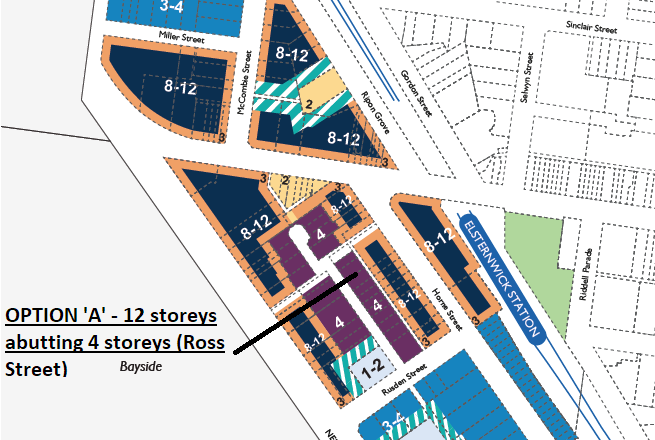
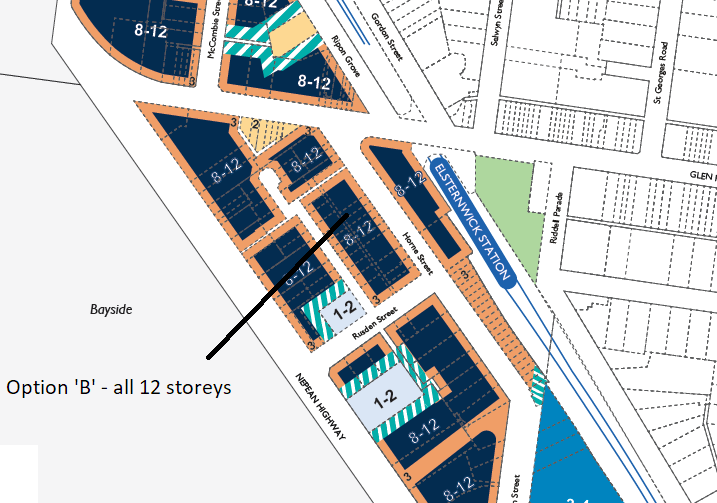
In October last year council released its second version of the various structure plans. This followed the July release of version one. Both the Elsternwick and Carnegie October versions maintained the 12 storey height proposals, but this time 2 options were provided for each centre. Our focus of attention is Elsternwick’s Horne Street and its relationship with Ross Street.

The following images depict the 2 current options for this area. Option One is for a complete rezoning of Horne and Ross Street to 12 storeys and the second option is to allow 12 storeys along Horne St., and 4 storeys along Ross Street. Please note that Ross Street is currently zoned RGZ (ie 4 storey maximum height limit of 13.5 metres). Council’s stated rationale for potentially rezoning Ross Street to 12 storeys is interesting to say the least – This option would allow for property owners to gain from the property uplift gained from a future rezoning (Page 56 of the ‘background report’!!!!!!!).
In December 2016 an application came in for a 9 storey development at 1-3 Horne St. We assume that prior to this formal application there would have been plenty of meetings between the developer and the planning department – as council’s own website even recommends! The development application was decided by council six month later on the 13th of June 2017. The officer’s (Rocky Camera) recommendation was a refusal. Councillors voted unanimously to also refuse. Here is part of what the officer’s report stated –

The subject sites have a total area of 612 square metres. The application proposes a maximum building height of 28 metres. Building heights within the immediate area predominately comprise one, two, three and four storey buildings. Despite the policy direction for higher densities in this location, the proposed 9 storey building is likely to present as a jarring and imposing building when read in the context of surrounding lower scale buildings, in particular to the lower scale residential dwellings located to the rear at Ross Street. The design therefore does not appropriately respond or contribute positively to its context or provide an appropriate scale in terms of the bulk and height relative to the scale of the street and surrounding buildings. Development should be appropriate for the area and new buildings should respond to the scale of surrounding buildings. Although there is not always a need to break up the massing of a building based on its context, in this instance it is considered that a predominant lower scale building, characteristic of the immediate surrounding area necessitates a more thoughtful and sensitive design response. (agenda 13/6/2017)

The developer then marched off to VCAT for a review of the refusal. This hearing was held on the 4-5 December 2017. The VCAT member upheld council’s decision to refuse a permit. (See: http://www6.austlii.edu.au/cgi-bin/viewdoc/au/cases/vic/VCAT//2018/172.html)

The decision and what it implies about council’s planning for the area is fascinating.  In June 2017 council thought that 9 storeys was too high. Yet structure planning was well and truly underway by this time. Barely one month later there was the release of the first draft of the Elsternwick structure plan containing the proposed 12 storeys. So we have the incredible situation where on the one hand council says that something is too high for the specific area and at the same time ignores its own arguments and comes up with 12 storeys instead. Ironic, or just plain incompetent, or have developers, itching to get their hands on some sites been knocking down the doors of council?

Ultimately what does this say about council’s and councillors’ entire planning approach? The VCAT member’s judgement focused quite specifically on overshadowing. Exactly the points that residents raised and which we revealed in our last post. Council of course was forced to admit that they were only now undertaking more ‘sophisticated’ analysis of the impacts. Yet it did not stop them from arguing about overshadowing at the VCAT hearing!

We will finish off with some quotes from the decision.

What is at issue is whether the extent of building intensification at nine storeys is too much for the particular constraints of the site. These constraints include the residential properties to the general south-west of the site, the continuity of development for adjoining commercial sites and the overall presentation of the building to the broader area.

From submissions made and the reasons identified in the council’s grounds for refusal we find there a number of questions we need to determine. These are:

  1. Does the built form adequately respond to its site setting? This is the key matter of consideration and includes how the proposal responds to:
    1. It’s setting in the activity centre at the corner of Glen Huntly Road.
    1. It’s setting to the existing and possible future rear interface of Ross Street and the broader view from the south-west.
    1. Its setting as part of the commercial street of Horne Street, and in particular its immediate abuttal to sites directly south-east of the site.
  1. Does the proposal need to include greater commercial use?
  1. Doe the proposal provide adequate car parking, bicycle and pedestrian access?

The building has a direct interface to three single storey houses at 26A to 30 Ross Street. These sites are located in a Residential Growth Zone where the planning scheme anticipates that there will be redevelopment through consolidation of sites and new building likely to be up to four storeys.

  • The proposed building will present as a nine storey building to these immediate abuttals and the generally lower building forms that exist in the wider area of Ross Street. This includes a three storey apartment building at 26 Ross Street and a 3-5 storey building under construction on the Nepean Highway that has an exposed façade to the court bowl, western end of Ross Street.
  • A key question is what amenity expectation should be held for the immediate abuttals, particularly the secluded open space areas of the three houses at 26A to 30 Ross Street that orientate north-east directly toward the review site

There are two key issues that interlink in this consideration. There are the visual impacts associated with the building bulk and shadow impacts to windows and secluded open space areas. The three adjoining properties all have small secluded open space areas that already receive limited direct sunlight at the equinox.

The proposed building will extend shadow at 9am over the entire roof of the buildings at 28-30 Ross Street. A person standing in these rear yards would therefore be in full shadow. This remains the case generally until sometime between 10.30 and 11am. The western yard at 26A Ross Street is significantly impacted by the shadow by 10am until sometime between 11am and 12pm. By 12pm the shadow of the proposed building moves to the commercial properties at 4-6 Horne Street.

The extent of additional shadow in the morning to these properties is concerning, particularly the complete enclosing of the rear yards at 28 and 30 Ross Street with shadow between 9 and 10am. This emphasises to us not just a question of shadow but also visual bulk to all three of these rear neighbours.

In conclusion we are not satisfied the proposed building sufficiently addresses the amenity of the existing dwellings to its rear. The shadow diagrams indicate that not only will the building cast significant shadow to these sites, but will significantly ‘loom’ over the rear yards of these adjoining sites.

  • Objective 5.1.2 of the Urban Design Guidelines for Victoria seeks to ensure that an activity centre provides a graduated transition between different building scales and uses. We are not satisfied the current proposal at nine storeys, against single storey, or even redevelopment up to four storeys to the south-west, achieves such appropriate graduation.
  • The sharp contrast in heights results in a combination of shadow and bulk impacts to the existing dwellings. We find these impacts to be a key failing of this proposal. Even assuming that the sites are redeveloped we remain concerned that the proposal will create an unacceptable interface to which the adjoining sites would then need to compensate for. We consider this an inequitable outcome.

More important questions arise out of this judgement. Does it in fact mean that council’s proposals don’t even meet the relevant legislation and guidelines for activity centre development?
In the ‘public participation’ section of tonight’s council meeting, there were two excellent questions asked by residents on the draft structure plans for Elsternwick – especially the proposals to rezone large areas of the suburb to cater for buildings up to twelve storeys. We present below a direct transcript of the questions and the answers provided by officers and councillors. Please consider the responses carefully.

RESIDENT ONE

“Your worship and councillors thank you for the opportunity to speak to you on the Elsternwick structure plans. The area that I am particularly concerned about is the area between the railway and Nepean Highway north and south of Glen Huntly Road. So what is this area comprised of? …I’ll be quick. There are about 250 residences. I counted the letter boxes south of Glen Huntly Road. There’s about 48 to the north. And by Glen Eira’s statistics there’s 2.48 persons on average per household. So that adds up to 742 people that are affected by these structure plans.  The six main sites of commercial enterprise, they comprise by my rough estimate,  31% of the land. So 69% of the land is homes. It’s an ethnically diverse area – Greek, Polish, Dutch, Italian, – many of us have superb cultivated gardens. We have solar panels, we have extensions, we have rain water tanks and we are friendly. We visit each other and we visited each other before the structure plans as well. We are a village community. We are exactly what the Elsternwick survey feedback said was important.

The most frequently used phrase in that feedback was ‘maintain the village feel’. I think I counted it five or six times. Our homes are not aged as in your report. They are period homes and they are cheery apartments.  And as Mary, sorry Cr Delahunty said when discussing 10 St Georges Road, in this very forum, this is not a paddock. I ask that you consider the current rezone with the same scrutiny  as you did with 10 St Georges Road. Any my two questions are: Where are the economic, and the social, and the traffic and environmental studies,  on our particular area? I know the documents exist and they are very good,  but they don’t say a lot to our little area. And what makes west Elsternwick residents matter less with respect to rezoning than the rest of Elsternwick? I thank you for your time.” (applause)

ATHANASOPOLOUS – handed over to Ron Torres.

TORRES: …I must say that this little location of our municipality received very strong feedback on our structure plans. Very diverse feedback. And the challenge for officers now is to digest all the views we’ve  received and to form a recommendation to council to determine on the 27nd February. As you know we went out to community engagement on two options and I must say that those options polarised the community. Not just the residents but also the car yard owners as well and we received very diverse views. So officers are now considering how to respond to that. What final recommendation we may offer to council to try and balance all those views. So stay tuned. It’s not an easy task. Hopefully we can find a balance for this precinct.

DELAHUNTY: I do want to add that I obviously concur with the process that Mr Torres has outlined, but also from the council’s point of view, we wanted consultation. And so we are really pleased the feedback’s strong, but it’s true and I think you should know that our minds  are true to it as well. That this is a question that was asked and when we’re getting answers there was never any preconceived  ‘this is how it must be’. So I think you should all be congratulated on the way you’ve all entered into that discussion.

ATHANASOPOLOUS: I concur with everything that Cr Delahunty has said.  Look, it’s been a massive process. It really started before any of us were even in the chamber and all along the way we’ve kept communicating with the community. There’s been some changes, there’s been some positive change, some would say there’s been some negative change.  So, we’re not sure what the recommendation will be come the 27th  but we’ll wait and see, then discuss it in this chamber.

RESIDENT TWO

Thank you councillors. My question relates also to the structure plan for Elsternwick. Now, you will be aware that there was a public meeting here in this building some time ago when the first plan came out and there were hundreds of people in attendance and – all residents of course – the response was most negative. So I have two questions. The area that is going to be affected also impacts on abutting residents. I know there’s a railway line in between but you’re proposing twelve storey apartments on that particular site. The railway easement for that area is only about 20 metres in width. And on the other side of that easement from the railway there are residential properties, single dwelling covenants, of one and two storeys only. And I want to ask council, what consideration has been given to the overshadowing of twelve storey apartments only 20 metres away from the single dwellings on the other side? Further, I want to ask at the southern end, because I’ve had a close look at those plans, you’ll find that there is no access from those particular apartment blocks to the train area in Glen Huntly Road  other than under the railway viaduct and then up some very narrow residential streets. And I want to know what consideration has been given to the pressure of traffic from all those new residences trying to access the train area and Glen Huntly Road, the tram on Glen Huntly Road, the buses on Glen Huntly Road, and the train on Glen Huntly Road? And how do you intend to ameliorate the issues that we as residents in the abutting areas Have? Thank you for your attention. (applause)

ATHANASOPOLOUS: I think that one thing that needs to be understood is that …there’s no plans submitted on any of the sites yet, so any traffic management is not yet entirely decided upon. However, in saying that, if a structure plan was to be approved by this council, what will occur  those controls may be put in place upon that structure plan that may speak to some of the questions that you’re asking.

TORRES: ….the feed back that we received from both the residential and business community caused us to look more closely at this precinct in terms of traffic, vehicular access,  shadowing on the adjoining residential area to the east and looking at the shadowing actually doing more sophisticated modelling, taking into account the topography of the railway embankment to properly assess the impacts of shadowing. So that work is being conducted as we speak. In terms of traffic, we are very aware of the issues that have been raised but linking back to the mayor’s answer, these structure plans are really just the start. They set the broad framework for possible future development. Well they set the parameters. When a development is eventually lodged for this precinct, as for anywhere else in the municipality I might add, more detailed analysis of traffic impact occurs as well. So there’s a whole journey ahead of us in setting the vision, setting what sort of planning provisions match with that vision,and that will still involve the community and ultimately deciding on detailed applications still involves the community.

COMMENTS

The responses to the above questions reveal some important facts –

  • Councillors have no real input into this entire process of structure planning. If they did have any influence, and were really listening to the feedback received, then we wouldn’t have had to go through the farce of consultation after consultation where residents have made it abundantly clear that 12 storey apartment blocks are anathema to the vast majority of the community. Yet this aspect of the structure planning for Elsternwick and Carnegie, has not changed one iota despite all the feedback!
  • How is it possible that with the volume of ‘documentation’ released in one fell swoop, that traffic, overshadowing, is not fully researched? What then is the point of spending hundreds of thousands of dollars on ‘expert’ Urban Design, Traffic, (and currently a Integrated Traffic Plan that was supposed to be the backbone of the structure planning) when council hasn’t the foggiest about the impact of all this development? Surely any decent planning should have been ‘sophisticated’ right from the start and not a year down the track? And, may we suggest, that if residents hadn’t kicked up such a stink, would council even be considering more ‘sophisticated’ approaches to analysis? We doubt it!!!!!
  • Torres’ comments on setting a ‘framework’ and ‘parameters’ are beguiling but misleading! Once a structure plan containing either preferred or mandatory height limits of 12 storeys is set, then developers have been given the go ahead to literally reach for the skies. And we all know the level of ‘analysis’ that goes into individual planning applications. The vast majority of officer reports note that an additional 100 or so apartments will not cause any negative impact on traffic, parking, etc!!!!!

Item 9.3 – North Road, Ormond

An application for a 6 storey, 39 apartment  dwellings is up for decision this coming council meeting. The site is in the Ormond Neighbourhood Centre , zoned Commercial and abuts a GRZ area (3 storeys).  The officer recommendation is to grant a permit with some minor tinkering of conditions – eg. increased setbacks on a few of the proposed apartments, car parking requirements, and a landscape plan, etc.

As an augur of what is to come, this application is significant –

  • Council has already admitted that it sees nothing wrong with an 8 storey development over rail in Ormond. Thus a six storey development in a Neighbourhood Centre is also welcomed. What this means for our other Neighbourhood Centres is ominous! And without any hope of getting structure planning done for these centres in the next 2 years at least, developers can rest easy that council will bend over backwards to support their applications.
  • Council is now quite content to allow a 3 storey differential between its current zoning. Several years back there was an application for a 6 storey development in Hawthorn Road, Caulfield North. The officer report at the time recommended a 5 storey height limit and included this comment – The General Residential Zoned land to the west has a known future height limit of 10.5m or 3 storeys. The transition of the 6 level proposal to the existing residential land to the west is considered to be too abrupt to the substantially single storey dwellings. This holds even if the land to the west is ultimately developed in accordance with the GRZ provisions. Nothing has changed in the planning scheme regarding North and Hawthorn Roads. So where is the consistency? If anything, the Caulfield North site (now viewed as a Major Activity Centre by Plan Melbourne is more ‘suitable’ for 6 storeys than is North Road which still remains a neighbourhood centre. We remind readers that these ‘recommendations’ make a complete mockery of council’s current planning scheme.

There is much in this officer’s report which should be questioned. For example: the proposed height of 23 metres is considered ‘acceptable’ because of previous permits granted that are smack in the middle of the commercial centre and NOT ON THE EDGE as this land is. Council however resorts to the jargon of this building representing a ‘gateway structure’ to the Neighbourhood Centre! Please remember the arguments on Wynne’s 13 storey proposal where councillors such as Esakoff saidwhat makes a building a landmark’? Didn’t think that a landmark building ‘needs to be 2 storeys higher’ than its surrounds. Landmarks are building of ‘some special design feature’ and not just height . Sztrajt also commented on what constitutes a ‘landmark’ building when he said that the State Government is  – ‘calling this landmark’ in order to ‘give them the possibility of creating a cash cow’ and to ‘recoup’ their costs for the grade separation. They are therefore ‘using the word landmark to convince us that a residential tower’ is ‘something special in a shopping area’.

As for the other components of this report, residents should note the following:

PARKING – The applicant advised (at the planning conference) that if required, an additional 14 car spaces could be provided on-site (by providing an additional basement level). This will result in a total of 29 car spaces provided for the retail component which is a shortfall of only 7 spaces. This is considered a reasonable outcome and forms part of the recommendation. 

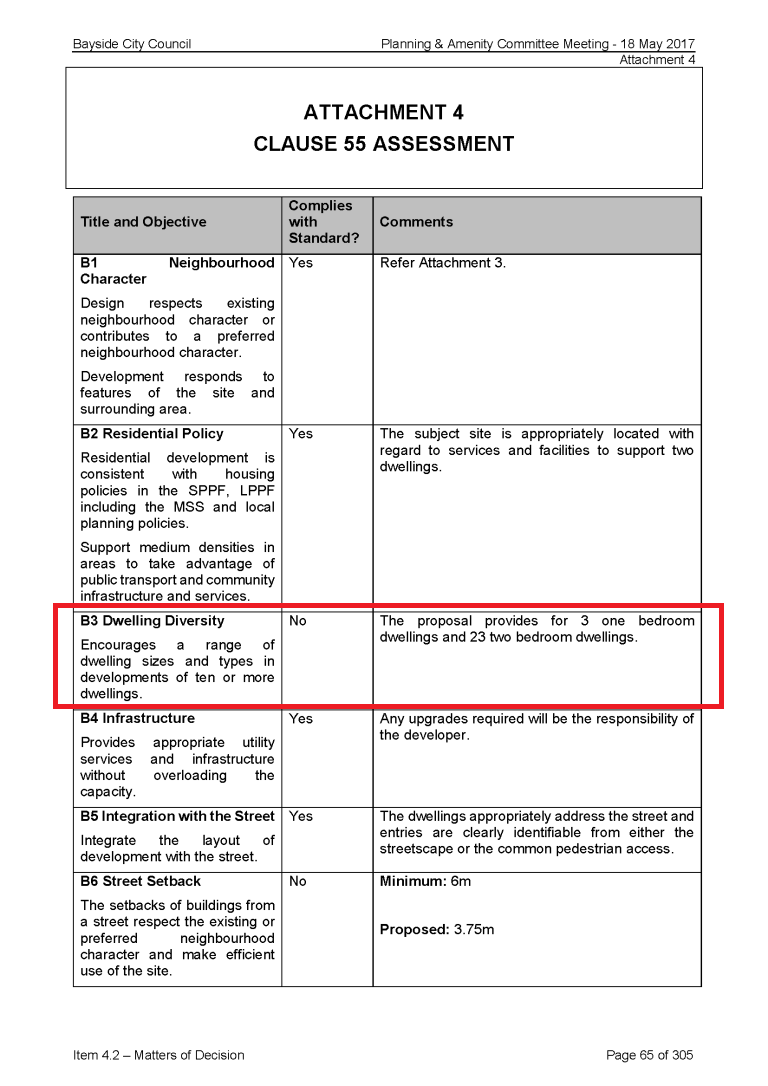
DIVERSITY OF DWELLINGS: The application proposed 39 dwellings of which 33 are two bedroom and 6 are three bedroom. The planning scheme under Section 58.02-3 states –To encourage a range of dwelling sizes and types in developments of ten or more dwellings.  Council’s response to this clause is – Whilst only proposing two primary forms of dwelling (two bedroom apartments and three bedroom apartments), it is considered that this is a suitable response. No explanation of course is provided as to why such a configuration is ‘suitable’ nor how a building that contains 85% of 2 bedrooms can be considered to meet the standards of a ‘range’ of ‘types’. Yes, there are no single bedroom apartmens but surely diversity does not mean 85% of two bedroom units?

Given the location of this site we also find it remarkable that only 9 properties were notified!

Our last comment reflects on the ‘consistency’ of council. A table is included in this report which purports to present ‘compliance’ with the various provisions of the planning act. Why such a table should only feature for one application and not all applications is beyond us. Secondly, we invite readers to again compare the quality of such a table with what other councils provide. Please note Bayside’s interpretation of ‘diversity’ in the image below.

As long as councillors continue to accept sub-standard officer reports and base their decision making on such reports, then we are indeed in deep trouble!

We are repeatedly floored by the lack of substance and constant acquiescence by this council to government planning proposals. In this case it involves Wynne’s proposed changes to what is commonly known as ‘aged care’. This involves:

  • The ‘reclassification’ of aged care from ‘residential building’ to ‘accommodation’. This means that all current ‘standards’ such as ResCode, neighbourhood character considerations, and the new ‘garden requirement’ for NRZ and GRZ areas no longer apply.
  • Height limits of the relevant zone no longer apply – hence such ‘accommodation’ in the NRZ could ‘legally’ be 4 storeys
  • An 80% site coverage allowance
  • No notice, appeal rights for the community

All in all, this is a further erosion of democratic rights and the continued relaxation of the law in favour of developers. We do acknowledge the need for (more) aged care facilities. What we do not accept is that the rest of the community is made to pay the price for shoddy legislation, and the total disregard for residential amenity.

So how does Glen Eira Council approach this? As stated above, the tone, content and ‘misgivings’ provided by council are pathetically weak, minimalist, and hardly informative for the community. By way of contrast, the Monash submission is all those things which Glen Eira hasn’t bothered with. We can find no excuse why the Monash agenda can include the actual proposed amendment, provide detailed explanations, and all Glen Eira can come up with is a one page officer’s report that is basically all jargon (ie Clause 74/5) and a page and a half submission that overall is cow-towing in both tone and content.

Glen Eira starts off its submission with this:

Glen Eira City Council thanks DELWP for the opportunity to provide feedback to the consultation process for changes to planning controls for residential aged care facilities (RACF). Council agreesthat changes need to be made to allow more efficient delivery of well-designed and located residential aged care facilities throughout Victoria.

Monash includes this commentary in its agenda –

It should be noted that Council did not receive direct notification of the the consultation program. Officers became aware of the consultation through the weekly State governments generic “Planning Matters” email which is distributed weekly to registered planning officers and industry professionals. Planning Matters is generally used to communicate planning information on amendments, panel hearings and planning training.

AND

Whilst there are a number of technical changes proposed to the planning scheme. The objective of the changes are to make it easier to obtain a planning permit for a RACF in all residential zones in the State. 

Admittedly, Glen Eira does comment on proposed heights, car parking, and locations for these aged care facility (RACF) changes.  But at the same time we find council’s SUPPORT for an 80% site coverage –

The proposed site coverage of 80%, including a driveway, pedestrian path and area set aside for car parking is considered acceptable. 

No explanation is provided as to why an 80% site coverage is ‘acceptable’ – especially in light of the fact that these facilities could be placed in NRZ areas where site coverage is currently 50% 

Monash’s view differs markedly as shown with these comments –

The proposed provisions would allow site coverage of 80%. This far exceeds the site coverage in existing residential areas – currently 60%, and in the Amendment C125 residential zones – between 40% and 60%.

Garden area requirements in the residential zones (usually between 25% and 35% of the site area depending on lot size) would not need to be met as RACF would no longer be in the definition of Residential Buildings, so the requirement would not apply. The result could potentially be buildings with very large footprints and little garden area or landscaping that would be at odds with the garden city character of Monash. 

The lack of any requirement to consider neighbourhood character and the impact on surrounding land uses is concerning and not appropriate in a residential zone. 

Such requirements apply to other uses in these zones and it is not clear why RACF should be exempt. 

Surely it is time that this council had the balls to stand up for its residents and strongly oppose amendments that continually favour developers whilst impacting negatively on the larger community and ratepayers.

FYI – the Monash submission is uploaded HERE.


Finally, after years and years of naysaying, council had the first live streaming of its meeting last night. It went well but does raise some questions in relation to its Local Law. For example:

  • Given that presumably more residents can now see who votes for what, couldn’t the minutes reflect this vote instead of simply having ‘carried’, ‘unanimous’ or ’lost’?
  • The ‘public participation’ segment is now also available. These ‘questions’ and ‘responses’ could therefore also be included in the minutes.
  • Since these recordings will be ‘archived’ and available for viewing at any time, surely it makes no sense to have the official paper record (ie the minutes) not in line with what can be watched over and over again?

As for the meeting itself and its contentious items, not much has changed. Early on it was the Esakoff and Hyams show on the Rigby and Newman Avenue multiple dwelling applications. The ‘solution’ as moved by Esakoff and seconded by Hyams was to grant a permit but instead of 4 out of the 5 dwellings being double storey, the permit now states that 3 out of the 5 be double storey. No other councillor spoke on either of these items. Hyams did refer to Wynne’s VC110 amendment but neglected to also say that according to the Planning Scheme large size lots in the NRZ have, since time immemorial and not just since 2013, had the potential for multiple dwellings! More dubious was Hyams’ subsequent  comment that because of the introduction of the zones in 2013  no such applications ‘would have been attempted’. He neglects to mention of course that council’s position to the department was that the ‘hurdle’ of 2 dwellings per lot could be overcome by subdividing first and then submitting an application!

We remind readers of several past VCAT decisions, where the member made it absolutely clear that large size lots can hold multiple dwellings because that is council’s ‘policy’ and is enshrined in both pre and post introduction of the zones. One such application was in St Aubins Court, Caulfield North. Even though the application came in prior to the introduction of the zones in 2013 and thus had the advantage of ‘transitional’ provisions, the outcome was still a 2 storey development of 22 units – based almost entirely on council’s ‘policy’. We quote:

However in this case there remains, even post the application of the Neighbourhood Residential Zone, strong and clear local policy support for the development of large sites such as the review site with medium density development……. While this policy intent has always applied to the Minimal Change Areas, we note that this policy statement was amended as part of the application of the new residential zones into the  Glen Eira  Planning Scheme. That amendment provided for the potential to rezone large sites with the Minimal Change Areas, so that they could continue to provide opportunities for medium density housing, despite the provisions of the Neighbourhood Residential Zone. We consider such an amendment to affirm for us the continued role expected in policy for large sites such as the review site, despite the applications of the new residential zones to the  Glen Eira  Planning Scheme. (http://www7.austlii.edu.au/cgi-bin/viewdoc/au/cases/vic/VCAT/2014/664.html)

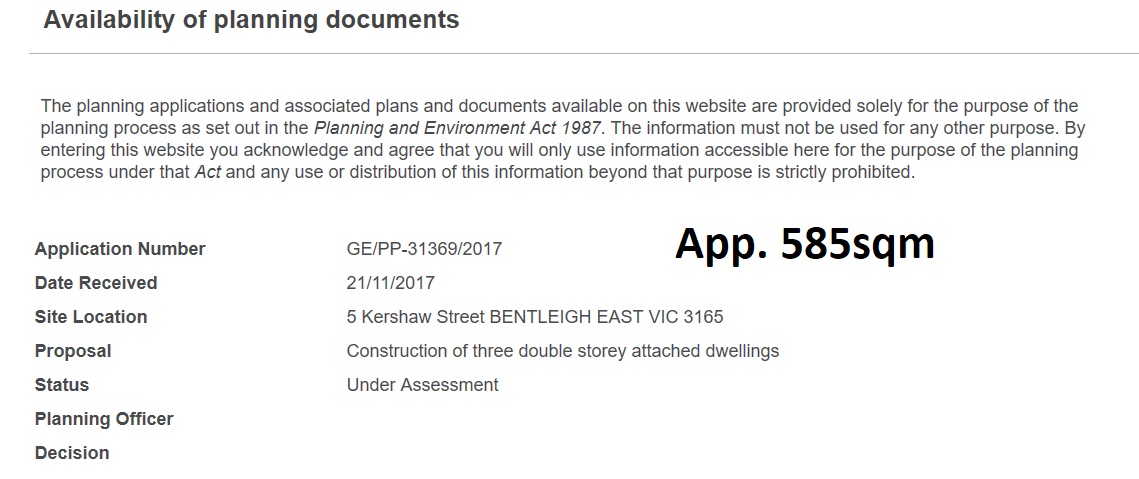
Wynne’s introduction of VC110 has major ramifications for Glen Eira and other councils. The 2 applications decided last night might be an anomaly because of their size. Thus far we believe that 14 applications have come in for multiple dwellings. Not all are large sites. The latest application for 3 double storeys is a mere 585 square metres (see below). Worth remembering as well is that according to the Housing report they accord only 0.6 net new dwellings in the NRZ and this is for sites over 700 square metres! Such applications show how far out council’s maths on dwellings truly are.

Whether or not this application receives a permit, or ends up with a permit from VCAT will reveal much about council’s agenda in relation to the Neighbourhood Residential Zones. The ‘requirements’ for this zone has remained unchanged since 2004. The Schedule introduced in 2013 simply incorporated what was already there. No new work was done. Now work is desperately required. Other councils managed to have schedules that had greater permeability, less site coverage, and subdivision sizes included in their schedules. Council has the opportunity to amend the schedules. But will they do this or remain content with facilitating more and more development in the NRZ?

PS: FYI, council has granted a permit for 6 Hudson St., Caulfield North for one double storey apartment block with 8 dwellings. The land size is approximately 1300 square metres. Please note this was not decided at council level and it shows that there is nothing to stop apartment blocks from now being constructed in the NRZ as opposed to ‘townhouses’ etc. The flood gates are well and truly open across Glen Eira!

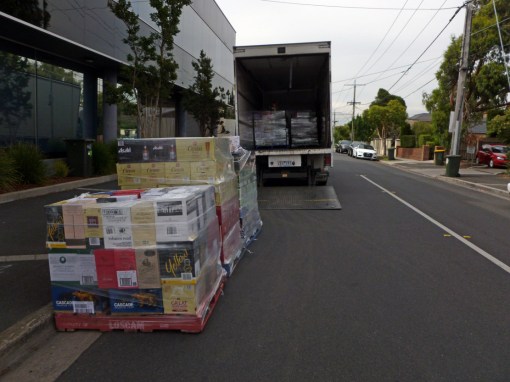
PS: Here’s a photo sent in by a resident to show what happens when loading bays are waived. (1) truck parks in ‘no standing zone’ (2) parks next to white line forcing other cars into oncoming traffic (3) no safe ‘sight lines’

one_street_off_loading_wheatley_rd_bentleigh_1_18-12-17

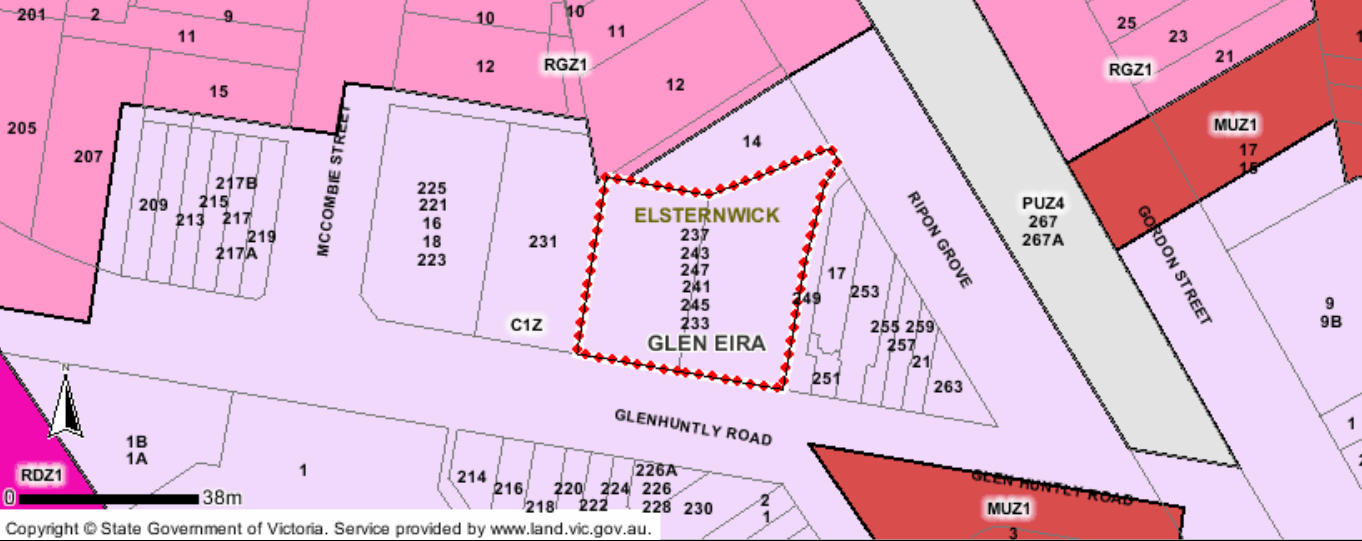
An application for a 13 storey, 115 or 117 unit development at 233-247 Glen Huntly Road & 14 Rippon Grove, Elsternwick raises innumerable questions about ‘consultation’ within Glen Eira and the quality of officer reports.

The recommendation is for a 12 storey building and the reduction of units to 111. VCAT has already approved a 10 storey development.

Below is a screen dump of the current zoning. What this means is that there is the potential for a 13 storey development sitting alongside 4 storey developments, according to the zoning. Council sees no problem with this – in line with some of its current ‘structure plan’ for Elsternwick! Readers should note that the officer report does NOT include this map, rather it is an aerial shot that reveals nothing about zoning! Deliberate?

The vast majority of the proposed dwellings are 2 bedroom. On page 11 of the officer’s report we find this bullet point:

High density residential development is acceptable at this location; however the building should incorporate a more diverse mix of apartment sizes. The design is overly dominated by two-bedroom dwellings and does not contribute adequately to diversity in the centre. 

Then on page 17, ‘compliance’ with the Planning Scheme on housing diversity is listed as – The application consists of a good mix of dwelling sizes’. The point here is that this is supposed to be a response to DWELLING DIVERSITY, and not simply DWELLING SIZE! When the proposal is for 2 one bedroom, 4 three bedroom and 111 two bedroom dwellings for a total of 117, then what ‘diversity’ is achieved? It’s also unclear as to whether we are talking about 115 dwellings or 117 dwellings since this number alternates throughout the report.

On parking we find council is again very generous in what it is willing to waive.

The most disturbing aspect of this report however is the following  –

Council is in the process of preparing a Structure Plan for Elsternwick and Quality Design Guidelines that will potentially inform future planning controls such as local policy, zoning and overlay provisions for the area. These are currently undergoing the second of two phases of consultation before going to Council for adoption in early 2018. In these plans, the site is designated within an area that is identified as being suitable for 8-12 storeys in height.

Whilst the Structure Plan is not at a stage that can influence the decision making process for this application, the recommendation to delete one floor will result in a building height in keeping with the expectations for this area. Notwithstanding, based on the existing character and built form outcome in the area, a building at 12 storeys is considered appropriate.

Everything in the above suggests that council has already determined that 12 storey height limit will remain in its structure planning and that for all the guff about ‘consultation’ and listening to the community, this aspect is set in concrete and will not change.

Finally, we repeat that council’s record in lopping off one or two storeys for cases that end up at VCAT is appalling. They have not been successful in even one such instance that we are aware of. Thus get ready for 13 storeys in Elsternwick and others that will be even higher given this precedent!

PS: We’ve done some double checking. According to the Minister for Planning’s Amendment VC104 and dated 22/8/2013 the maximum height limit in the NRZ is 8 metres if there is no height limit in the associated schedule. On the very next day, council’s Amendment 110 was gazetted. There were mandatory height limits in the schedules for the General Residential Zone (10.5m) and for the Residential Growth Zone (13.5m). Council relied on VC104 for its continuous claims about ‘introducing mandatory heights for all residential land’. Strictly speaking this claim, made time and time again, was and is untrue. The Mixed Use Zoning (considered ‘residential’) did not have height limits imposed – and neither did the schedule to the NRZ. On 23rd March Wynne gazetted his VC110 which has the effect of over-riding VC104 and the height limit there is 9 metres. Thus Glen Eira is now stuck with a 9 metre height limit in its NRZ and even higher if the land slopes. Readers should also note that Wynne has carefully refused to consider ‘basements’ as part of the 2 storey limit and allows basements to protrude up to 1.5 metres above ground level. This has the potential to therefore yield a three storey dwelling in the NRZ!


Two incredible officer reports feature in the agenda for Tuesday night. Both are examples of what lies in store as a result of Wynne’s VC110 and the removal of a 2 dwelling maximum for the Neighbourhood Residential Zones. The applications are for 2 Newman Avenue and 3 Rigby Avenue, both in Carnegie and practically abutting each other. The officer recommendations are to grant permits for both with some minor tinkering on conditions.

The details of the applications are:

Rigby Avenue – 4 double storey, 1 single storey

Newman Avenue – 4 double storey, 1 single storey

What is literally astounding about these reports is the failure to even mention Wynne’s VC110 and its ‘requirement’ for the mandatory ‘garden area’. Instead, the reports focus exclusively on the existing planning scheme where large allotments MAY be considered for more than 2 dwellings per lot.

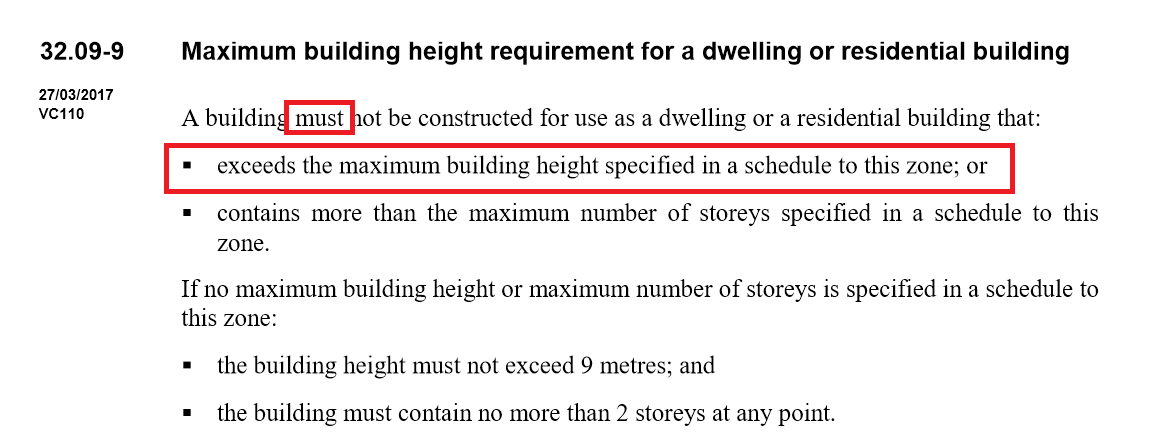
So, if council is determining applications based on its CURRENT PLANNING SCHEME, then the following is unlawful, devious, and inaccurate! BOTH applications exceed the current 8 metre mandatory height limit. VC110 specifically stated that if councils have different heights included in their schedules, then the schedules apply – at least for the next 3 years! Here is a screen dump of the legislation. Please note: ‘must’ and the fact that Glen Eira does have a schedule!

Instead of honouring its own planning scheme, these reports state –

Rigby Avenue – The maximum overall height (at 8.4m) is well within the 9m height limit of the zone.

Newman Avenue – The maximum overall height (at 8.8m) is within the 9m height limit of the zone. There appears to be a minor encroachment to the apex of the roof, which can be addressed by conditions.

Adding salt to the wounds for the Newman Avenue application is the recommendation to waive one car parking spot with this nonsense – The requirement for one visitor car space is proposed to be waived. This is considered reasonable given there will be one on-street car space maintained at the front of the site. 

There are plenty of other dispensations provided that reveal the inconsistency of this council’s application of its own planning scheme. More to the point, we find it reprehensible that a report can be written which deliberately includes false and misleading information!

Agenda Item 9.6 – Council’s submission to Smart Planning ‘Reforms’

Smart Planning basically represents the State Government’s further tinkering with VicSmart – the system where permits for various ‘minor’ applications aren’t publicised and approval is granted in 10 days. It also represents the attempt to further deregulate planning and pave the way for less council and resident ‘interference’. Whilst it is true that the current planning system is unwieldy and basically a mess, this doesn’t mean that ‘improvement’ is synonymous with less transparency and more advantages being handed out to the development industry.

The proposals, in broad terms, include –

  • align the State Planning Policy Framework and Local Planning Policy Framework into an integrated policy framework
  • review and rationalise planning permit triggers•
  • review and increase permit exemptions

All of the above basically means that:

  • Local council policies will now have to fit into those ‘themes’ specifically determined by State Policy
  • Less application ‘triggers’ means less control and oversight
  • More permit exemptions means less people know what’s going on until it’s too late

So the $64,000 question for residents is – how does Glen Eira Council respond to this ‘discussion paper’? How does council’s submission differ from other councils?  Council SUPPORTS either fully or ‘in principle’ every single thing suggested! The pro-development agenda is obvious!

Unlike other council submissions, Glen Eira makes no comment whatsoever on the following important proposed ‘revisions’ – Heritage, zoning, liquor licenses, etc. Here are some responses from various councils. We ask that readers compare what these councils have submitted and what our council has produced!

BRIMBANK

Additional exemptions should not be supported (in Heritage) as the alterations to verandas and pergolas can significantly impact on a heritage precinct.

Unintended consequences – The reformed provisions will potentially change standards zones, including the Activity Centre and Mixed Use Zones where there is currently no equivalent zone. This will not change the intent of the zone, however could impact on Council’s ability to customise land uses in specific areas, as there will be increased ‘as of right’ uses (no permit required) and prohibited uses may be considered as a section 2 use (permit required subject to policy).

Liquor Licences and Gaming – Council has highlighted the opportunity to give local government greater jurisdiction over the assessment of planning permit applications for liquor licences and gaming.

Ensure that the parking overlay continues to allow the collection of cash to enable Council’s to gain some compensation for constructing public car parking and when applicants cannot provide car parking on their sites.. The recent introduction of the residential zones, specifically the Residential Growth Zone, requires further consideration of car parking rates and how they apply to this zone. It is noted that the last ministerial advisory committee examined car parking rates in 2012, prior to the changes to the residential zones.

MORNINGTON

MPSC does not support the proposal to expand VicSmart on the basis that it reduces the inclusion of third parties in the planning process.

MPSC do not support the VicSmart assessment pathway in the first instance given its inability to consider and allow third party concerns and review rights

A key concern of the MPSC are the proposals that will make a number of land uses as of right. Such land uses are a common source of amenity and land use conflict. For example, industrial areas are being constantly challenged by an influx of non-industrial land operators being attracted by the cheaper lease opportunities. Frequently planners are required to strike the balance between preserving industrial land for manufacturing and/or warehousing with ‘new age’ commercial land uses such as gyms, dance schools and breweries. Carparking and conflict between operations is a genuine issue that requires careful balancing through a detailed planning permit consideration

Additionally, the reforms seek to enable licensed premises to be ‘as of right’ within commercial zones. There is concern that this could have lasting and direct impact within the townships of the Mornington Peninsula. For example, under the Commercial 1 Zone a restaurant, tavern (aka bar), nightclub and bottle shop are all ‘as of right’ land uses under the zone

STONNINGTON

One example of a potential consequence of being made to fit into the new policy structure is that Council’s substantial investment in structure planning for activity centres could be undermined or even wasted if the hierarchy of centres implied in Stonnington’s current MSS, Local Polices and Incorporated documents is made to align more closely with the hierarchy of centres outlined in Plan Melbourne when translated into the new PPF structure. This could result in Council not being able to achieve all of the currently intended policy outcomes for activity centres in Stonnington.

The introduction of code -based assessment for simple proposals is intended to eliminate much of the subjectivity and delay in decision -making. However, it could also result in some loss of planning control over issues that are important to the municipality and should be assessed against the appropriate planning provisions, e.g. liquor licensing and single dwellings on small lots (i.e. under 300m² or 500m²).

Liquor licensing can contribute to adverse impacts on residential and commercial amenity if not appropriately regulated. Therefore, proposed measures to remove liquor licensing from assessment under the planning scheme (Proposal 3.2 and Proposal 5.1 -Clause 52.27 ‘Licensed premises’) are not supported.

The inclusion of smaller lots standards as part of code assessment is not supported, especially if it could result in the loss of the assessment process against the relevant planning provisions in relation to side and rear setbacks of dwellings and upper -storey additions. This could result in unacceptable visual bulk and detrimental impact on neighbouring private open space.

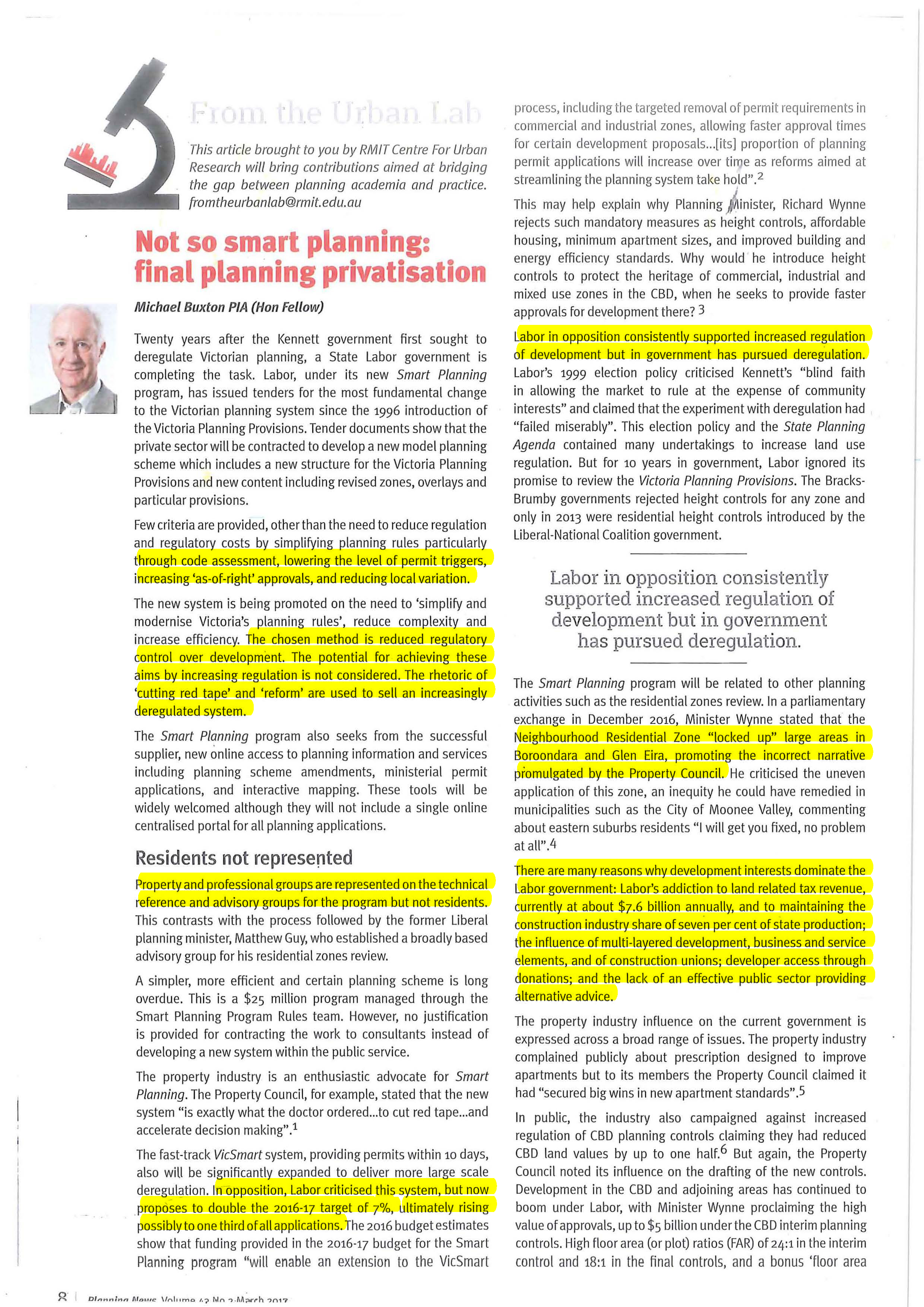
Finally, we’ve uploaded an article written by Prof Michael Buxton in March this year. Whilst this preceded the publication of VC110 and the release of the current discussion paper, most of the points made remain valid.

Quite a few interesting items in the agenda papers for Tuesday night.

Item 9.3 – Visitor Parking for Residential & Mixed Use Developments

No surprises here. The recommendation is to do nothing again and wait until the Integrated Transport Strategy is completed. Part of the ‘let’s do nothing’ justification rests on council’s: acknowledge(ment) that there are planning tools available to Council to manage car parking provision but the implementation of these tools requires a lengthy planning scheme amendment process underpinned by strong strategic justification 

As a result of the above the conclusion is:

The planning scheme sets out a basis upon which to assess car parking provision for new developments in Glen Eira. Given the complex pressures the municipality is facing with population growth and the resultant traffic congestion and parking demand, a more sophisticated approach is needed. This will likely involve a move from the current ‘one size fits all’ approach and one which uses a combination of planning policy and parking overlays.

To do so requires a planning scheme amendment, and the requisite strategic justification. The current structure planning program and the upcoming Integrated Transport Strategy will form an important part in the strategic justification that is required. Once this is completed, more detailed preparation of the necessary planning tools can commence. 

Our conclusion? At least another 2 years, if not more, before any thought of parking overlay amendments are introduced – and this despite the fact that residents have been screaming about the lack of adequate parking for at least the past decade!

Item 9.5 – 282 Centre Road, Bentleigh

This involves an application to extend liquor hours to 10pm Tuesdays & Wednesdays and until 1am on Thursday, Friday and Saturday. There were 17 objections highlighting noise, parking, impact on residential amenity, etc. Council’s ‘solution’ was –

It is also proposed to include a new condition that advises patrons to respect the neighbours and minimise noise when leaving the premises.

We question first of all the legality of such a ‘condition’ and secondly even if legal, how effective it would be? Is this ‘condition’ merely there to placate objectors?

Item 9.8 – Harleston Park Basketball Court 

We’ve now expended further ratepayer funds on a second consultation on the proposed basketball court in Harleston Park. Again no surprises in that the recommendation is basically to ignore the majority of respondents and to go ahead with installing the court. So much for ‘community consultation’!!!!!!!

Item 9.10 – Access to Ripponlea Gardens 

A good outcome in that Glen Eira residents will now have free access to the Ripponlea Gardens area. It will however cost council $250,000 per annum over the next 3 years. We do not bemoan this funding. What should however be acknowledged is the fact that:

  • This issue is not new. Now we learn that the reason it did not come about years ago is because Council’s previous position has been that it would not provide funding.
  • Last council meeting resolved NOT to appoint extra staff to insist on building/parking/construction compliance by developers because the monies had not been budgeted for. The recommendation was do nothing until the funds are possibly made available in the 2018/19 budget. Strange then, that we now have the ability to miraculously find $250,000 for Ripponlea and don’t have to wait for another year before something eventuates!

Finally a few minor points worthy of consideration:

  • The McKinnon Basketball Association’s winning of the GESAC basketball courts allocations until April 2018. This of course begs the question of why they didn’t get their lease years ago and how much the Bob Mann group (now gone bust) might still owe council given that the ‘reason’ for the choice of the latter was that they ‘guaranteed’ up to $98,000 per annum to council.
  • Talk of ‘refreshing’ the Open space strategy but not a word about the promised increase in the levy!

Council has finally published what is supposed to be the latest version of a draft structure plan for Virginia Estate. It is anything but a comprehensive and detailed set of proposals. At the time of writing no other documentation has been forthcoming – ie no traffic report, no economic analysis of impact of surrounding businesses, no urban design guidelines, no indication of setbacks, nothing on environmental sustainability and drainage. In short, another exercise in pretty pictures (all of which fail to present one image of an 8 storey building!) and grandiose, unproven statements that ultimately boil down to spin and more spin.

All that we are told is that the prospect is for another 3000 dwellings. Since this will ultimately become a ‘development plan’ akin to what happened at Caulfield Village, we won’t hold our breaths that the final figure will remain at 3000. Remember that the MRC started out with 1100 dwellings. It is, after 2 approved development plans for the first two precincts now standing at about 2063 dwellings in total. What precinct 3 will come up with is yet to be seen. We do not see why this project will be any different!

Some changes are apparent from the July version, namely – East Boundary Road developments go from 4 storey to potentially 6 storeys; the area of 8 storey development is slightly decreased.

Finally, until council releases all of the necessary documentation, this is anything but a genuine community consultation. People can only comment once they have been provided with the necessary information. This effort fails dismally on this important step!

We’ve uploaded the full document HERE AND PRESENT BELOW THE DIAGRAM OF PROPOSED HEIGHTS.

« Previous PageNext Page »