GE Council Meeting(s)


Lipshutz moved motion to permit 6 storeys, 4 shops, reduction in car parking and 45 dwellings.  Seconded by Sounness.

LIPSHUTZ: was ‘conscious’ of residents around area and that there were lots of high rise with ‘no infrastructure’ to go with them. Traffic is a problem especially with 6 storey development very close by. There is ‘creeping development’ and therefore he’s seeking to ‘reduce it to 6’ storeys which is ‘more in line’ with what’s already going up.

SOUNNESS: did ‘recognise’ that an urban village has got ‘certain features’ and that if this was close to a train station 8 storeys would be suitable. Since it’s not, then 6 storeys is “appropriate”. ‘Recognised’ that the ‘design of the building is good’. Said he was “a bit uncomfortable with 6′ but ‘can’t see any compelling reasons to refuse’ the application. For him, ‘6 is a compromise’. It’s not ideal but is better than refusal which ‘may not stand up to scrutiny at VCAT’.

DELAHUNTY: favoured a ‘refusal’. Said that there are more and more ‘high quality apartments’ and she does support high density living but ‘not at the expense of infrastructure’. Spoke about real estate agents telling people that Glen Eira is not like Richmond because Glen Eira doesn’t have the same open space problems, traffic problems, etc. But that in time ‘the more we allow’ these sorts of building to go up, then the more ‘we’ve moving towards being like Richmond’ and it’s the residents who have to put up with this. Said that until developers leave the city ‘as they found it’ (ie with open space, ‘and traffic catered for’) she won’t support this application/motion.

LOBO: Said that councillors had promised not to ‘encourage development of such monstrosity’. Said that people want to know the definition of ‘intense development’. Lobo then asked Akehurst to define it. Akehurst  said that the terms of ‘low, medium, high’ density aren’t defined in the Planning Scheme. Lobo then quoted from the planning scheme about being as ‘sympathetic as possible to neighbourhood character’ and wanted to know how the state was going to achieve a population of 5 million people. Asked ‘why are we ignoring’ transport’… ‘this is beyond my comprehension’. Said that the policy from 1999 ‘needs a review’ and that Rescode recipe for parking spaces ‘is a joke’ since most dwellings have 2 cars and people don’t always use public tranport. Went on to talk about overshadowing, and overlooking ‘neighbours bathroom’ so people can’t have showers ‘in their birthday suits’ and will possibly end up ‘using pyjamas’ whilst showering. Said that it’s ‘disappointing’ that councillors are now reneging on the election promises.

PILLING: ‘sympathised’ with Lobo and Delahunty but refusing isn’t the answer as it ‘will lead to’ vcat perhaps giving 8 storeys. This solution of 6 storeys is ‘more practical outcome’. Also said that ‘looking at the bigger picture’ there are issues about height and that there’s ‘increasingly’ a diversion of views between councillors and the community about ‘what is a reasonable height’. Said that that’s where the ‘heart of the issue lies’ and that all they’ve been doing is ‘tinkering’ at the edges and that ‘we really need to develop a more solid approach’ so that when developers come to council they fully know ‘what’s expected’. Said that this is worse than the previous 12 storey application in Carnegie because the Carnegie one was at least a ‘commercial’ area but this one is smaller and backs onto 2 storey places. Said that there ‘needs to be more guidance’ about height levels and expectations because ‘at the moment the sky….is the limit’. Said he ‘wasn’t sure’ about the answer, but knew that they ‘had to do something’ because at ‘the moment it’s become increasingly ad hoc’.

HYAMS: asked Lobo whether he said that Lipshutz was ignoring the recommendations of transport planning. Lobo answered that he didn’t say that and Hyams then ‘confirmed’ that Lobo ‘didn’t say that we were ignoring’ transport recommendations. Said that Lobo talked about what councillors said in election campaigns but that he only said that he would ‘be opposing inappropriate development’ and ‘inappropriate’ is all in ‘the eye of the beholder’. It doesn’t mean ‘oppose everything’ and that people have to ‘apply the planning law’ in order to decide whether an application is ‘appropriate or not’. Said this was an urban village and went on to list the cirteria such as size, orientation, etc. He agreed that ‘8 storeys is too high’ but since there was going to be 6 storeys near Coles, that this one was ‘probably appropriate’. Went on to talk about how the impact was taken into consideration by the waste management plan and other imposed conditions. Agreed with Pilling’s concerns about height and said that ‘it is a bit of a dog’s breakfast’. Said that a problem was that if you set height limits then ‘people will build up to that height and you can’t stop them’ but if you don’t have height limits and let each application be ‘judged on its merits’ then you could get ‘better outcomes’. Also council policies ‘aren’t enforceable at VCAT’. Talked about the zoning reforms and that these would be ‘prescriptive’ so the ‘greater certainty’ that they want will ‘come in’ in the next year or so. In this case he thought that Lipshutz’s motion was ‘appropriate’.

LIPSHUTZ: said that both Lobo and Delahunty had identified ‘deficiencies in the planning system’. Said that Melbourne was going to get higher density without sufficient transport, but all this isn’t ‘for us to decide’. Said that things aren’t going to stay the same. Councillors have to make decisions on planning law and they are a ‘quasi tribunal’ and the ‘law is not scientific’ and on what each individual regards ‘as appropriate or inappropriate’. Said he’d like to see no changes along Glen Huntly Rd but ‘that isn’t going to happen’ and that by voting against he’s ‘not doing anyone a service’ because the ‘developer will go to VCAT and get his 8 storeys’. Putting down 6 storeys means that ‘you can go to vcat and argue that cogently’/ It’s ‘nice’ to be populist but that’s not ‘realistic’ and ‘I’d rather be realistic’. 6 storeys ‘is a compromise’ but which ‘vcat more than likely will support’.

MOTION PUT. Lobo asked for a division.

IN FAVOUR – PILLING, ESAKOFF, LIPSHUTZ, HYAMS, SOUNNESS, OKOTEL

AGAINST – DELAHUNTY, LOBO, MAGEE
A very quick summary of the decisions from tonight’s council meeting. There were no surprises. The same old cliches, contradictions, and lamentable arguments were trotted out on cue. The gang has now definitely recruited another member – Thomas Sounness to join Pilling!

We will provide a full account of the ‘debate’ in the days ahead. Here are the outcomes:

1. 8 storey Glen Huntly Rd – reduced to 6 storeys.

2. 4 storey Glen Huntly Rd – reduced to 3 storeys

3. James St – reduced by one unit

4. Tree Register – passed – but all in the hands of officers and will account for less than 1% of trees

5. Car sharing – another ‘review’ in a year’s time!

6. Public questions – none answered satisfactorily

7. Magee’s Request for a Report – after much argey bargey finally got through plus $15,000 expenditure on ‘external’ report by consultant.

In our opinion, many of the items set down for next Tuesday night’s council meeting are nothing short of disastrous for residents. We apologise for the length of this post, but the issues are extremely important.

Item: 483-493 Glen Huntly Rd

Application is for 8 storeys; 4 shops, 57 dwellings and car parking and loading bay waiver. Ron Torres recommends acceptance of application with some minor conditions thrown in. We do not really have to say anything but let the report itself tell the full story. Here are the relevant extracts:

Taking up opportunities for more intense development in the appropriate locations gives Council greater legitimacy and credibility in limiting development in Minimal Change Areas. In other words, it’s okay to sacrifice 20% of Glen Eira without ever defining what “intense development” really means!

It is considered the building itself is of a high quality architectural design that compliments the rhythm of the narrow Glen Huntly Road shop fronts and will make a positive contribution to the emerging character of the Urban Village. In this context, it is considered the proposed building at a height of 8 sotreys is consistent with the policy expectation for this site. Here is it in black and white! 8 storeys is the benchmark for this council! Beware the Planning Zone Reforms! We could also be quite pedantic and wonder what on earth ‘rhythm’ has got to do with ‘planning law’ as so constantly noted by Lipshutz, Pilling, Hyams. How exactly ‘rhythm’ is quantified is of course another question. We suppose it just sounds good and will surely now feature regularly in future officer reports.

The report however gets even better! –It is proposed to provide 66 on site car spaces within 3 levels of basement car parking. The planning scheme requires 82 car parking spaces. Torres goes on with this feeble rationalisation – In this case, a reduction in the visitor car parking requirement is justified. If sustainable transport modes are to be promoted, then a reduction in the visitor car parking requirement should be encouraged. It is considered appropriate to provide a modest level of visitor parking. However providing additional on-site parking for visitors will only encourage more vehicle traffic to an area which anecdotally has issues with traffic. It is also noted that a visitor parking rate of 1 space per 10 dwelling (as proposed in this case) has been supported previously in activity centre locations. The logic is incredible here. Visitor parking will encourage more cars – but allowing 8 storeys and countless dwellings presumably won’t – or at least this isn’t mentioned. Readers should also note the reference to ‘anecdotal’. Pity that there is not one scrap of data in any part of this report to substantiate any of the claims made!

But the best is yet to come! The Transport Department had this to say – Providing less than half the required number of residential visitor spaces on the site is not appropriate. A minimum of 9 on-site visitor car spaces is recommended.

Urban Design then has this to say: There are several trees on the property to the north which have the potential to be impacted upon by the proposed development. The size and extent of basement will mean there are no realistic opportunities for tree planting and the concept landscape plan is not supported. So, here we have traffic and urban design saying ‘nay’ – yet the proposal gets through. Residents should be asking exactly how many ticks in the boxes does it take before a proposal is rejected? What is the priority listing for all these boxes? For example: is parking given greater weighting than landscaping or natural light?

Then there’s this further icing on the cake: The existing street tree can be removed at the permit holder’s expense.  So much for a ‘green, gregarious garden city’!!!!

Item 687-689 Glen Huntly Rd.

The application was for a 4 storey, 29 dwellings, 2 offices, and a reduction in visitor car parking. Recommendation was to accept, but with 28 dwellings! There’s also an interface with Minimal Change Area. The report notes that the property has a permit for 3 storeys and 19 dwellings + 2 offices. This application is to increase dwellings and height. The ‘reason’ not to grant the full 29 dwellings but rather 28 is: ….it is recommended that Units 401 and 402 on the third floor be consolidated to form one 3 bedroom dwelling, thereby contributing to housing diversity and reducing bulk/mass impacts. Wow! Does this mean that out of 29/28 units ONLY ONE will be a 3 bedroom outfit? That is really encouraging ‘housing diversity’ to cater for families, etc.!

On car parking we have this gem: It is proposed to provide 33 car spaces in the basement. This satisfies the planning scheme for the dwellings and offices but not for visitor parking. Only one visitor space is proposed whilst the planning scheme asks for five. Council’s Transport Planning Department has suggested that at least 3 on-site car spaces should be provided for visitors.

Item 6 James Street, Caulfield South.

The application is for 3 storeys and 10 dwellings. Interestingly, the site is labelled as South Caulfield. It is Glen Huntly! Officer’s recommendation is for 9 units. A notation states: In 2011, an application was refused which proposed a two storey building with seven dwellings. It was found to be an overdevelopment of the site…..The current proposal is for ten dwellings. It is however, not an overdevelopment like the previous proposal. Reasons given are that car parking is now ‘adequate’ and site coverage has ‘fallen from 59% to 46%.’

What’s particularly galling is the argument that is then trotted out: …the proposal is more akin to the characteristics of the emerging character of the area. Recently approved, at the direction of VCAT, is a 27 dwelling, four storey development at 18-20 Etna Street, Glen Huntly, located two properties east from the subject site. Once again, the folly of lack of height limits is exposed. Now the argument becomes because the precedent is already there so further development is okay.

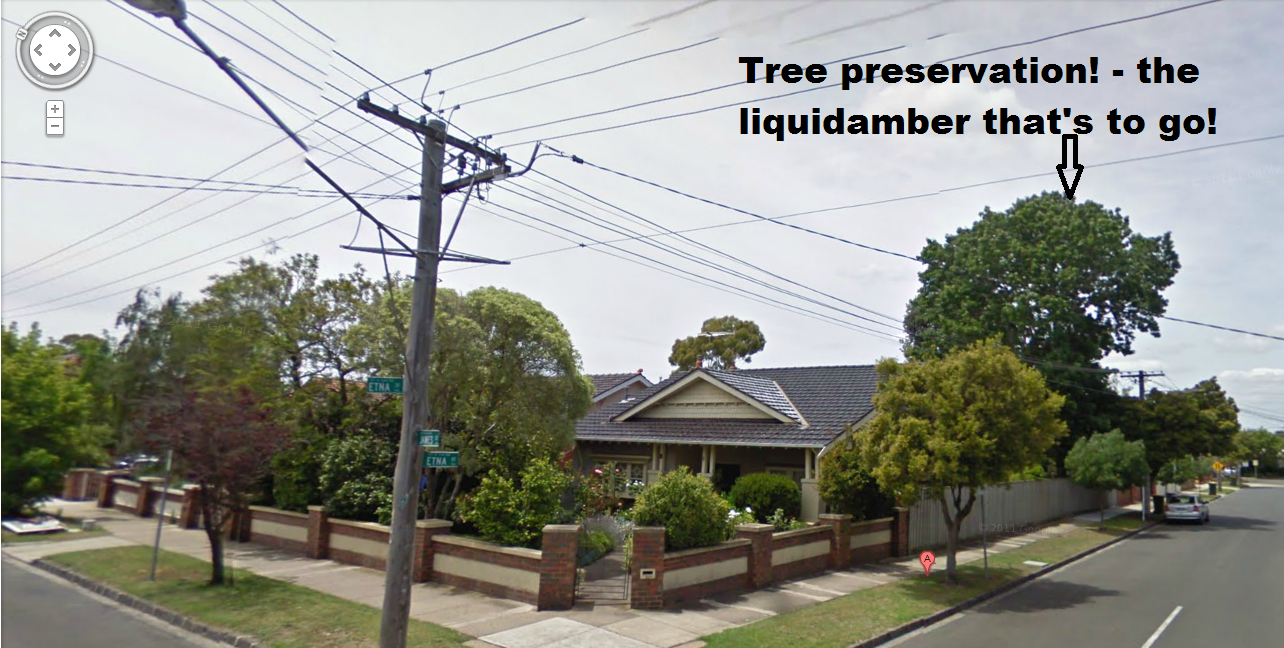
One other very important aspect of this application concerns the destruction of a liquidamber. We highlight this aspect given the spin that is the item on Significant Tree Register also in the agenda. The comment reads: There is a tree located at the rear of the site (Liquidambar) that is proposed to be removed. Its removal is considered acceptable given the site’s location in a Housing Diversity area where this type of development is envisaged and where replacement trees can provide for more appropriate landscaping.  Housing Diversity Areas are again sacrificed. They do not need trees, open space, or normal amenities. Exactly what “appropriate landscaping’ means is again not explained.

ITEM TREE PROTECTION

We remind readers that the issue of a Significant Tree Register has been rearing its ugly head since at least 2003.  That’s ten years of doing absolutely nothing. The unnamed officer’s report on this issue is another piece of spin, dissembling, and the failure to adequately inform. Given the comments from the James St. application the irony of the comments found in this report should be obvious to all readers. We quote:

The normal processing of town planning applications provides on going protection of over 200 valued existing trees and the planning of over 1,000 future canopy trees each year.

Where values trees are identified, the town planning assessment will regularly incorporate permit conditions which require protection during construction and a tree management condition to ensure the ongoing retention of the tree/s. Where a tree to be retained is near a proposed building, further conditions are applied for special foundations which do not disturb or damage the root system. Similarly, the proposed building is protected from future damage from the tree roots. Such foundations often add thousands of dollars to construction costs. Wonderful isn’t it?  Who identifies ‘valuable trees’? Certainly not residents or councillors! How many trees have been allowed to be cut down (as with James St) in order to squeeze more units onto a block? How well ‘safeguarded’ are such trees by the planning processes?

We’re then told that there are penalties for removal of trees without a permit. We wonder how many prosecutions this council has carried out in the past decade?

After a page and a half of self praise, the report finally gets to the nitty gritty, with:

Approaches to supplement existing levels of tree protection include the following.

Introduce a Local Law to require a permit to remove any tree of more than a specified size, usually measured by circumference of the trunk. This involves property owners applying for a permit, paying a fee, possibly requiring a report by an arborist, with the Council determining whether to grant the permit or not. Many Councils have this approach.

Introduce a Classified Tree Register where there is a Local Law requiring a permit but only for those high quality trees which Council has included in the Register.

That’s it as far as details go. Nothing about resident rights to object to street tree removal; nothing about private versus public property; nothing about giving residents the opportunity to have input into ‘valued’ trees; nothing to restrain this council from chopping down tree after tree without producing a qualified arborist’s report.

There are many other items in this agenda which deserve to be severely criticised. We will do this in the days ahead.

PS: Just for the heck of it, here’s the 6 James St. proposed development PLUS THE ‘INSIGNIFICANT TREE’ that’s about to get the chop!

Untitled

Graphic-2

How committed local government is to democracy, transparency and full accountability is most easily measured via its Local Law Meeting Procedures. Forget all the spin, all the tens of thousands of dollars spent on fancy words, posters, logos, mottos, and plain old bulldust. How council meetings are run, what is allowed and disallowed provides the real picture of how open, honest and community minded a council is.

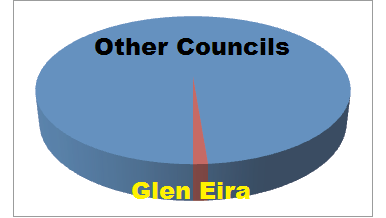
The chart provided above reveals the full story of the abuses currently perpetrated by this administration and its select band of self interested councillors. We have gone to great lengths to verify our data. EVERY SINGLE Local Law from EVERY SINGLE council in the State has been analysed. Of the 79 councils in Victoria GLEN EIRA IS THE ONLY COUNCIL THAT DOES NOT HAVE A NOTICE OF MOTION in its meeting procedures. Unbelievable, and unforgiveable!

Year after year the same old drivel is trotted out by Lipshutz and his masters – ‘if it ain’t broke don’t fix it’. Well, we believe there is plenty that is ‘broke’ in Glen Eira and it all stems from the Local Law and associated policies. Here are some facts:

In Glen Eira, Newton has total control of the agenda. Again, no other council in the state has had the gall to include what is in our Local Law – “Other than for special meetings of Council called under section 84(1) of the Local Government Act 1989, the notice papers and agenda for all meetings of the Council shall be prepared by the Chief Executive Officer or his/her delegate”. That means that officially no councillor can get anything onto the agenda without Newton’s consent. A Notice of motion would allow issues to be put on the table and discussed/debated in an open council meeting. All that is required is a mover and a seconder. The motion may not result in the resolution being carried, but that’s democracy at work! The furphy that mechanisms currently exist via ‘urgent business’ provisions are sheer nonsense. For something to ‘qualify’ as ‘urgent business’ it has to occur after the publication of the agenda and before the subsequent council meeting – ie a few days! Then there’s also the pathetic option of a request for a report. Again, this may take months to surface and all it does is provide officers with the time and opportunity to skew the information in whatever way they wish. History shows that such reports are simply ‘noted’ on most occasions and/or recommendations fully accepted. Without a Notice of Motion councillors, in trying to represent their constituents are hamstrung, silenced, and basically knobbled.

When every other council in the state sees fit to include a Notice of Motion in its meeting procedures, then Glen Eira’s reluctance to afford its residents and councillors this fundamental right needs to be carefully examined. Who stands to lose out if a Notice of Motion is codified? Why doesn’t Glen Eira embrace this democratic principle? Who are the culprits that oppose such rights and why? It’s worth noting that when this issue came up in June 2011 the councillors who then voted against having a notice of motion were Tang, Lipshutz, Hyams, Esakoff. Forge had removed herself from chamber and Lobo was absent. The general gist of the arguments was that a Notice of Motion was ‘dangerous’ (Lipshutz), ‘irresponsible’ (Hyams), and that voting against it was ‘protecting future councils’ (Esakoff).

More on the travesties that currently exist in the Local Law in following posts!

It’s clear that when it comes to Cr Lipshutz there is no such thing as ‘conflict of interest’. From the ‘debate’ that occurred regarding the Emmy Monash 4 storey aged care application in Hawthorn Rd comments were made that the applicant just happened to be handing out ‘How to Vote Cards’ for certain councillor/s. We assume that the councillor in question was Lipshutz, especially since prior to the meeting there was a very, very warm handshake between these individuals and both were on a first name basis.

On GESAC and extended car parking on Gardener’s Rd – it, of course, got the go ahead with the prospect of further car parking ‘arrangements’ to be undertaken since, as Lipshutz stated, council was the ‘victim of its (GESAC’s) success’! Again potential questions of conflict of interest were ignored with Hyams moving an amendment that sporting clubs and their officials should have extended parking rights (defeated). Magee agreed with Hyams. Given that both belong to such sporting clubs, one could ask whether this might constitute another conflict of interest?

We will report in detail on these and other decisions in the coming days.

The agenda for Tuesday night’s council meeting is a beauty. Here are our comments on those items we’ve not yet covered.

LOCAL LAW ADVISORY COMMITTEE

After years and years and years of pussy footing around the issue of ‘organised sporting groups’ (ie permits, Frisbees, Schleppers, kids in the park, conflict of interest, and heaps of negative publicity) the issue has reared its ugly head again. Two options were presented – one which we advocated months ago – ie give priority to those groups with allocations and allow everyone else to use ovals when vacant. The committee also ‘investigated’ the inclusion of ‘guidelines’ into the Local Law and decided that this was the best option. However, the ‘action’ resulting from this reads: “The Committee agreed legal advice should be obtained on incorporation of the guidelines into the local law.” Unbelievable! Here we go again with more money being spent on ‘legal advice’ when 2 lawyers plus corporate counsel are present on this committee and the ‘solution’ would appear to be dead simple!

AMENDMENTS

3 Amendments and referrals to Planning Panels are up for decision. We note that had any of these amendments been ‘reasonable’, then there would probably not have been any submission objections and the resulting costs of thousands of dollars for 3 panel hearings and lawyers galore! The proposed amendments are:

  • Rezoning of Glen Huntly Rd PLUS application for 5 storey & 62 dwellings, offices & carpark. 10 submissions were received and the objections related to: overdevelopment; car parking, this is a flood prone area and plans have no flood mitigation proposals. Melbourne Water opposes the development. Also included in the officer’s report is this paragraph:

“It is considered that the proposed amendment should still be supported in anticipation of the draft commercial zones being introduced. Department of Planning and Community Development advice is that any rezoning requests ‘in the pipeline” should not be delayed due to the proposed new zones process”. It’s a great pity that this same argument isn’t used when it comes to height limits. On this issue the pathetic council response is ‘we’ll wait for the planning zone reforms to be in place’. Consistency, transparency, and credibility are not this council’s strong points!

  • Amendment C95 – more rezoning on Hawthorn Rd. The real purpose of this Amendment is revealed in this sentence: “enable residential development opportunities in accordance with Councils Housing Diversity Area Policy….”. Once again it’s full bore ahead with no need to wait for the zoning reforms: “The purpose of the new Commercial 1 Zone is to provide for economic growth and land use flexibility within activity centres. Advice from the Department of Planning and Community Development is to precede (sic) with amendments, such as this, not-withstanding possible new commercial zones in the near future”.
  • Amendment C98 – Tovan Akas Ave, Bentleigh. This constitutes the most objectionable of all the proposed amendments. Apart from setting the scene for more residential development this Amendment also proposes to “(Amend) the planning scheme such that selected Rescode provisions do not apply”. We find this totally unacceptable especially when it has often been argued how wonderful this council is in that their conditions EXCEED the ResCode requirements (ie private open space). It would appear that all is expendable when more and more dwellings can be crammed into various sites. In this instance building heights and front setbacks will be the casualties.

The site we’re told is just on 5,500 square metres and “is surrounded by residential land uses immediately north-east, east and south, a car sales businesses fronting Nepean Highway to the west, and an industrial site used as a training facility to the north-west.” Yet this council argues that it is appropriate to reduce the ResCode requirements because “The reduced setback is considered reasonable in this instance, as the site abuts a car sales business to the west (rather than a dwelling) and a unit development to the east with a front setback of 6m.” If nothing else, this statement alone is clear evidence of how short sighted planning policy is in Glen Eira. There is no consideration of what could happen several years down the track – ie what if the car yard goes out of business and decides to sell? Would council then go through another amendment to undo what it has put in place now? All council can say is: “Facilitating the land to be converted from industrial to residential in this location is generally considered to be a positive outcome and the departures from ResCode are considered to be responsive to the context of the site and its neighbours.” What about 2 years, 3 years, down the track? And why should any of the minimalist ResCode regulations be dwindled down any further?

It also needs to be noted that this is a MINIMAL CHANGE AREA and that submissions noted that the street is predominantly single storey. The amendment allows 4 storeys in a MINIMAL CHANGE AREA!

Once again we have the nonsense argument supporting the full steam ahead approach –

There is no impediment to considering and supporting this amendment despite the soon to be released zones. The inclusion of a detailed building envelope control (Design and Development Overlay) will provide even greater control than any replacement residential zone. In this respect the proposed Design and Development Overlay represents a safety net to ensure compatible and appropriate future development.”

Given the pre-election mantras from most councillors about opposing inappropriate development it will be interesting to hear the logic that supports (or opposes) these amendments and the huge costs of 3 Panel hearings. We remind readers that the Hawthorn Rd heritage debacle cost $9000 for one lawyer for half a day PLUS paying the panel members. Multiply that by 3 and we’re really talking big bikkies!

CAR SHARE

What a surprise! The recommendation on this issue by Akehurst reads: “Notes that car share systems could be used within new developments in the future.” Given the glacial pace at which this council moves, we envisage that this issue will crop up at least another 3 times in the next decade; it will have report after report tabled, but the outcome will still remain the same – ie NO ACTION!

It’s also worth pointing out that the only other council mentioned is Melbourne City. A quick Google search has revealed that numerous other councils have already introduced this scheme into their municipalities and that others such as Bayside have earmarked this for introduction in the next year to two. The links below will explain how other councils see their role in reducing the numbers of cars on our roads –

http://www.portphillip.vic.gov.au/car_share.htm

http://www.yarracity.vic.gov.au/Parking-roads-and-transport/Sustainable-transport/Carsharing/

http://www.boroondara.vic.gov.au/news/car-share-discount

http://www.stonnington.vic.gov.au/residents-and-services/parking-and-transport/car-share-program/

http://moreland.vic.gov.au/about-council/news-media/media-releases/2012-media-releases/media-release-Car-share-in-moreland.html

At the last council meeting officers provided a report in response to the motion moved by Okotel and Esakoff.

“In the interest of transparency and demystifying the planning process for residents and ratepayers, I request a report on:

(a) The information provided to applicants and objectors in relation to Council’s procedures in dealing with planning applications; and

(b) If and how applicants and objectors are informed about the points along the process where they can be involved or express their views.

The MOTION was put and CARRIED unanimously.”

In accepting this report both councillors praised its ‘fulsome’ and ‘comprehensive nature’ although Okotel did comment on several ‘misprints’ that managed to worm their way into official documents. Sadly she did not elaborate! We beg to differ on these  evaluations of the report.

The entire report, presumably by Jeff Akehurst since his name is provided for ‘enquiries’, is merely a regurgitation of the current provided information, and the usual litany of self-congratulatory statements. For example, one sentence claims that both the DPC and the Planning Conferences are a result of Council choos(ing) to have these public forums in the interest of broader community involvement in town planning decision making.” “Community involvement’ is a wonderful catchcry. It is however illusory in Glen Eira when the implementation of these committees are examined in detail.

The DPC meetings are far from encouraging ‘broader community involvement’ for the following reasons:

  1. Objectors, if they’re lucky, receive only 5 days notice! Further it is not clear whether this means that letters are posted 5 days earlier, or whether council ensures via earlier posting, that objectors have the full 5 days notice. It is even conceivable that if the letters are posted on a Friday, and the DPC meeting is arranged for a Tuesday or Wednesday, that objectors would only receive the notification on the Monday. Hardly a full 5 days notice. Surely if ‘broader community involvement’ was the real objective, Council would inform objectors far earlier of the set dates.
  2. DPC meetings are scheduled DURING OFFICE HOURS. Hardly an appropriate time for resident objectors to attend such a conference if they work. Once again, this would limit and hinder full participation by all objectors. Since community forums and other countless meetings are held in the evening, and if the desire for ‘broader community involvement’ was genuine, then DPC meetings would also be held in the evenings when a far greater number of residents would be likely to attend.
  3. No councillor is granted decision making authority for these meetings. We even wonder whether councillors know which applications are being considered by the DPC, or more significantly, when they find out. Before the fact, or after the permit has been granted or refused? In this instance, councillors are sidelined as effectively as residents. All committee members are officers and the meetings generally go for about one hour. It is further not compulsory for applicants to attend. No minutes or records of DPC decisions are available for public scrutiny. Hardly a transparent and accountable process!


PLANNING CONFERENCES

Whilst a councillor is chair of such meetings, and planning conferences usually go to council for ultimate decision making, the procedures are again non conducive to ‘broader community involvement’. Some of the reasons are the same as those outlined above –

  • The lack of sufficient notice
  • The repeated gagging of objector comments and questions (ie Mahvo St is the perfect example)
  • Applicants often do not attend and hence are not available for questioning and ‘compromise’ with residents

The greatest drawback however is that NO OFFICER recommendations are available until the application appears as a report in council agenda papers. This is made public on Friday – usually late in the afternoon on Council’s website. It should again be pointed out that most people work. Most people would also be respectful of councillors’ weekends. So that means that objectors only have 2 working days in order to analyse the officer’s recommendations, contact their councillors and attempt to achieve some favourable outcomes. Timing is everything. Why aren’t the officers’ recommendations reported back to objectors well before the item surfaces as a council agenda item? The 64 dollar question would be – are developers notified of officer recommendations in the same manner or do they get a look in well before objectors find out the fate of the application?

The entire planning processes in Glen Eira are designed to favour the applicant rather than the resident objector. Okotel and Esakoff may continue singing the praises of officer reports, but in doing so they fail to address the central concerns of how such information is disseminated and what protocols are in existence to ensure a fair hearing for both objectors and applicants.

Here’s the unbelievable response to a public question asked at last council meeting. We draw readers’ attention to:

  • The waffle & irrelevance
  • The failure to address the major concern of the question – ie why officer reports do not directly engage (and hence answer) the questions raised via the Request for a Report
  • The unnecessary length

Subject: McKinnon Reserve fence.

The McKinnon Reserve fencing report does not provide Council with an opportunity to decide if gates should be installed at the McKinnon Reserve or if no gates are more appropriate in a fenced reserve. Surely when there are a number of residents requesting gates be returned to the reserve, it is for Council not Officers to decide if the community’s wishes are to be heard? The complete removal, rather than the careful management of the so called ‘dangerous’ Cypress trees along Tucker Road remains a mystery to many residents as the Cypress trees inside the reserve itself remain (although whats done is done). When will this Council provide local residents with an on-going opportunity to have their say in the improvements and changes made in our local reserves?

The Mayor read Council’s response. He said:

“Council dealt with this matter earlier in the meeting at Agenda Item 9.4 and you will be able to find Council’s resolution in the Minutes of the meeting.

Your assertions are not correct. The report at Agenda Item 9.4 presents the Council with the opportunity to make whatever decision it wishes to. Had Councillors chosen to have gates installed, we could have passed a motion to that effect. It is the Council and not as you assert Council Officers that decide resolutions of Council.

It is Council Policy to remove trees in only a limited number of circumstances. Such circumstances include a tree being dead, close to death or structurally unsound.Residents whose properties back on to the Reserve and users of the reserve had expressed ongoing concern about the Cypress trees at the southern end of the reserve. Concerns included the declining appearance of the trees and the increasing number of limb failures.

Council’s records indicate that between January 2008 and April 2009 alone, twelve structural branches fell. The electricity company had also been in contact with Council and required Council to prune the trees to comply with the Victorian Government’s new Electrical Line Clearance Regulations (2010).

In response to the community’s concerns and the electricity companies’ direction, Council commissioned an independent arboricultural report of the trees. Key findings were:

 The trees would no longer be viable if pruned to the extent the new Regulations required

 The trees had reached the end of their safe useful life

 The risk of further limb failure was high

 The trees should be removed

The Cypress trees in the north of the reserve were not identified as a risk at that time. Given the findings of the report, there was no other option but for Council to remove the Cypress trees in the south of the reserve.

To inform the community of this, Council’s Parks Services Department:

 Hand delivered letters to 186-236 Tucker Rd, 197 Tucker Rd, 17-25 St James Ave, 2 and 2A Osborne Ave, and

 Erected nine A3 size signs in the reserve: four along the Tucker Road frontage; two at the front entrance; two at the cricket practice nets; and one at the rear entrance.

The letter to residents was dated 22 August 2011 and read as follows:

“TO THE RESIDENT AN IMPORTANT MESSAGE FROM YOUR COUNCIL

Dear Resident

Re. McKinnon Reserve – Tree removal works

Council recently commissioned an arboricultural report on the health and condition of the rows of Cypress trees located in McKinnon Reserve.

The report identified that the Cypress trees along the southern boundary and eastern boundary (Tucker Road frontage) of the reserve are over mature, have poor structure and the likelihood of significant limb failure is high. As a consequence the risk to people, powerlines and property is high. The report recommends the removal of the entire southern and eastern rows of 178 Cypress trees.

Council plans to commence removing the trees on Monday 29th August 2011. The immediate area around the affected trees will be fenced off during works to ensure the safety to park users. Replacement trees will be planted later in 2011.

If you need any further information on this matter please contact Council’s Tree Maintenance Coordinator Mr David Edwards on 9524 3333.

Yours sincerely,

Laurie Unwin

Manager Park Services”

The nine signs that were erected around the Reserve read as follows:

“PUBLIC NOTICE – Tree Removal Works

An independent arborist has identified the need to remove the southern and eastern rows of over mature Cypress trees in McKinnon Reserve (178 trees in total).The trees are in poor condition, have poor structure and many have had branches fail and fall.

To eliminate the risk to people, powerlines and property Council will commence removing the trees on the southern and Tucker Road boundaries on Monday 29th August.

To ensure safety, Council will fence off the effected trees before starting works and request that park users do not enter these areas. Council is planning to plant new trees later in 2011.”

The independent arborist who is professionally qualified in these matters did not regard the trees that required removing as ‘so called dangerous’.

This Council has always provided opportunities for input into the development of our City. Public consultation is a feature that has informed Council’s development of park masterplans and strategies and the elected Councillors will be continuing with this feature. Previous examples include:

 Boyd Park Management Plan

 Caulfield Park Masterplan

 Bentleigh Hodgson Masterplan

 Packer Park Masterplan

 Princes Park Masterplan

 The Glen Eira Sports and Aquatic Centre (GESAC)

 The Dog off leash review

 Bicycle Strategy

 Packer Park West development

 Duncan Mackinnon Reserve Masterplan

 Murrumbeena Play space redevelopment

 Former Booran Road Reservoir Redevelopment.

A forthcoming example will be the Open Space Strategy review that will commence in the near future. This will involve wide consultation.

Of course, residents can also always contact Council or Councillors about any concerns they have in relation to any park and these will be examined and considered.”

PS: By way of contrast we’re adding this titbit of news from the Port Phillip Council Meeting Minutes of 27th November 2012, Page 3. The difference to the way things are done in Glen Eira is, of course, staggering.

“A petition was received from 14 signatories in relation to parking on Bridge Street between Lyons Street to Esplanade East, Port Melbourne.

MOVED BY CRS TOUZEAU/VOSS

That Council:

Receives the petitions and refers it to officers for investigation. A proposal will then be developed for possible new parking restrictions. A subsequent survey/questionnaire will be distributed to properties adjacent to Bridge Street Port Melbourne seeking feedback.The survey will inform any new parking restrictions that may be implemented.

A vote was taken and the motion was carried”


COMMENTS

We find it most refreshing that councillors actually TELL officers what to do! We also find it most refreshing that decisions are made on the spot, not a year later. We also find it most refreshing that transparency and consultation is an integral part of a response. The take home message for our councillors is that where there’s a will , there’s definitely a way!

++++++++++++++++++++++

The minutes of 7th February 2012 recorded this petition from residents:

A petition co-signed by 23 signatories was tabled which read as follows:

“This petition of certain residents of the City of Glen Eira draws to the attention of the Council our wish that there be trees planted on Murray Road, Mckinnon/Ormond. Prioritising tree planting on our street will help realise the Glen Eira Community Plan, Street Tree Strategy and Environmental Sustainability Strategy. We believe that this action will significantly improve the psychological, social and environmental quality of our street. We understand that trees would have to be planted on the road and that there will be some associated loss of car parking space. Your petitioners therefore pray that trees are planted on Murray Road, Mckinnon/Ormond as soon as possible.”

The petition, as per normal was ‘received and noted’ unanimously.

Now, 9 months later at Tuesday night’s council meeting Pilling submitted a request for a report on the planting of street trees in Murray Rd. This was seconded by Esakoff. Pilling said that it’s a narrow street and lacks trees and there was the need to improve the ‘amenity of the street’. Esakoff agreed that ‘the street could certainly do with some greening’. Okotel  was ‘pleased’ because this issue was ‘long overdue’ and that concerns of residents ‘are being heard’ and that the report will be the means to ‘ensure that (the issue) ‘will be addressed without further delay”.

We highlight this Request for a Report because it again illustrates the failure of this council and its councillors to institute processes that respond in a timely fashion to resident concerns. We note the following:

  • In other councils petitions are not merely ‘noted’ – they are immediately passed on to the relevant department for action. In Glen Eira petitions generally disappear into the ether and unless residents keep the issue up front, they are invariably ignored and forgotten.
  • Now we have the farce of waiting for another officer’s report. With NO NOTICE OF MOTION available to councillors, the community is again in the hands of officers who may take months and months to report back and then possibly another major time lag before anything is actually planted.
  • The ‘solution’ is very simple it would seem to us. Councillors must ensure that when petitions are tabled they are acted upon, or responded to immediately. It is literally a joke that it takes 9 months, and another officers’ report in order to get anything done in Glen Eira. Not only is this a slap in the face to residents, but it also means more time and expense wasted on unnecessary paper work by officers.
  • Further, if councillors were so concerned about ‘greening’ Murray Rd. did the thought ever occur to them that a simple resolution which stated ’30 street trees to be planted in Murray Rd’ might have sufficed? That is of course, if such a motion passed the ‘no surprises’ component of the Meeting Procedures of the Local Law and if it could somehow be squeezed into an agenda set by Newton!

FINANCIAL REPORT

LIPSHUTZ: council is again ‘progressing well’ and that GESAC is doing a lot better than council ‘anticipated’. They’d originally been looking at a $300,000+ ‘surplus’ but this has now gone out to over a million dollar surplus. Claimed that GESAC is now covering ‘all its borrowing costs’ but not ‘operating costs’. There are over 8,500 members and that he ‘anticipates’ that it will be ‘covering operating costs completely’. Also noted a sentence on page 2 where there ‘was a transfer of $136,000’ from a maternal child & health centre to GESAC for ‘heating and ventilation’. Said that this ‘wasn’t so much a transfer of funds’ out of the health centre but that council were thinking of ‘redeveloping’ the centre staff room. ‘Council decided that when they looked at the plans….it wasn’t worth doing….and as such it didn’t occur’. The money was therefore ‘surplus’ and now used for GESAC. Because GESAC is ‘so heavily used’ and there are lots of people in the centre that ‘we needed to lower the temperature’. ‘We don’t ordinarily remove funds from’ one project to another. Noted that what the Auditor General had said was that unlike other councils, Glen Eira has a ‘business plan before we do anything’ and if ‘it doesn’t stand up, we don’t do it’. So when officers looked at the issue of the staff room it didn’t ‘stack up’…’and as such it didn’t happen’. Went on about ‘operating costs per assessment’ – Glen Eira has one of the lowest & rates and charges are also one of the lowest; ‘fourth highest for pensioner rebates’ and ‘third highest for grants and subsidies’ and 3rd highest in capital works. Said that in some other councils the criticism is that money should be used ‘to pay back debt’. Claimed that was ‘poor’ because it would mean the degradation of facilities and ultimately cost more to replace.Glen Eira has a ‘rolling program’ that means they ‘keep things moving’ ‘so we don’t have to spend money’….’cost saving’. Summed up that it was an ‘excellent report’ which shows that ‘council is on track once again’ and that Glen Eira is a ‘template’ for quality and other councils.

DELAHUNTY: disagreed with Lipshutz on Auditor General’s report. Said that council had been asked to maintain a liquidity ratio somewhere ‘greater than 1.5’ and the report clearly says that over the next few years it will remain ‘around 1’ so there is a need for ‘caution’ with cash flows, ‘so there is a need for concern’. Said that congratulations are due to GESAC but it’s not yet ‘paying for itself’ since it costs council $1 per visit. Agreed with some of the things Lipshutz said but the liquidity ratio needed some caution.

HYAMS: said that Lipshutz is ‘adamant’ that all surplus should be ‘spent on capital works’. Spoke about the $7 million dollar debt for the Benefits scheme which council was ‘going to be charged 7.5% interest on’ that there are ‘grounds to consider’ whether some of the debt should be paid off sooner. ‘That’s a discussion we will all have no doubt’. Referring to Delahunty’s comments on the liquidity ratio agreed that ‘yes it is something we will need to keep our eye on’ but he ‘wouldn’t say it is cause for concern’ but a ’cause for caution’. It’s only ‘one indicator taken in isolation’ and overall ‘we are in a very sound financial position’ and that the report ‘reflects that’. Said that council is generally conservative in its forecasts so that the projected liquidity ratio is of this ilk and will stay ‘well above’ the 1 figure.

LIPSHUTZ: said that Delahunty ‘didn’t have the benefit’ of being present at the Audit committee when the Auditor General came out. The AG was ‘very satisfied’ with the ways things were being handled, congratulated them in fact and that ‘council was handling (things) very, very well’. ‘There was nothing of concern at all’….’we have to be cautious, we have to watch our ratio’

CARRIED UNANIMOUSLY

COMMENTS:

We freely admit that we are not accountants. Yet, some of the revelations ensuing from this item we find to be extraordinary. For the first time we learn that the Employee Retirement Fund cost of over $7 million is to incur a loan of 7.5% interest. Council has repeatedly claimed that the first $3 million plus, that is due to be paid by June 2013 has already been budgeted for. Does this therefore mean that council over the next 15 years can’t find a meagre $4 million dollars to pay off this debt? More significantly why are they locked into an interest rate of 7.5%? This is surely astronomical given today’s falling interest rates. Is this a sign that Glen Eira Council is in fact viewed by lenders as ‘high risk’ and hence the high interest rate? Why must there be any borrowing at all for a measly 4 or 7 million unless the cash flow is indeed on very parlous grounds?

So, for all the talk of being ‘on track’ and how wonderful this council’s finances are, there are countless questions that need answering and figures that reveal the absolute truth. Here are some further questions to ponder:

  • If Glen Eira is so wonderful with its ‘business plans’ then how can a budget be approved, funded, and then suddenly money is withheld from a child care centre and transferred to GESAC?  The actual sentence referred to by Lipshutz reads: “Transfer funds of $136K from Caulfield MCHC to GESAC HVAC works to cover the expenses on the additional HVAC plant”. Since these acronyms would mean nothing to 99% of residents, surely it is time that an important document such as this was made intelligible to people? More importantly, what does this again indicate about the overall planning and astuteness of the entire GESAC project? How often has this council ripped money out of one agreed to project to cover the costs of another?
  • Why has so little money been spent on other projects? Are they being delayed because there simply isn’t the money to go ahead with them? Lipshutz argues that ‘surplus’ is spent on capital works, yet over $10 million dollars is carried through from LAST YEAR’S budget! If that’s not delaying projects to an inordinate amount, then we don’t know what is!
  • The public deserves a fully itemised ledger on exactly what GESAC is costing. Figures cited in these reports need to be fully DEFINED. For example: do the ‘expenses’ listed for GESAC include interest repayments, staff costs, or are they simply everyday costs, such as heating, maintenance, etc? Without clear definitions the public is lost. Of course, this may all be deliberate!!!!!! It is definitely time for less spin and more upfront and detailed accounting!

« Previous PageNext Page »