GE Governance


Burke read the petition. Lobo spoke first and said that since Lipshutz, Hyams and Esakoff are ‘mentioned’ in the petition that he ‘believed there is a conflict of interest’ and that these individuals shouldn’t be in the chamber when the petition was being discussed. Hyams responded that since Lobo’s comments ‘didn’t relate to the running of the meeting’ that this wasn’t a point of order. Hyams went on and said that he trusts that ‘the next time you put your hand up for a committee’ or deputy mayor or mayor that he would declare a conflict and leave the meeting.  Delahunty moved to accept the motion and Magee seconded.

DELAHUNTY: short and sweet and basically moved to accept

MAGEE: said nothing

HYAMS: thought that the petition was ‘pathetic’ and didn’t want to ‘set a precedent’ where ‘we’re rehashing council decisions because some people don’t like it’ and that would lead to petitions on all council decisions.Said that the government appointed the 3 councillors ‘who came first in their wards’. Read out the numbers of first preference votes for each of the three councillors that people ‘are happy to have those councillors representing them’ and ’64 people come along and think they are more important’ and this ‘shows at the very least an exaggerated sense of their own importance’. Went on to say that it was ‘very sad’ that people can be ‘so spiteful’ and that he knows what’s ‘behind it’ and the ‘people behind it’ and it doesn’t ‘surprise’ him at all.

LIPSHUTZ: said the petition was ‘ridiculous’ but that ‘when any member of this council’ is appointed that they’re appointed as ‘representatives of council’ and ‘we in fact act on behalf of the community’. Spoke about the Leader article and Magee and ‘what he tried to achieve’ and that was following council policy and he’s (Lipshutz) asked for the same things since ‘2005’. This wasn’t ‘something new’ it was what ‘council has approved’. Council doesn’t want training at the racecourse which is what Magee was advocating and it’s what council wants too. The petition is ‘ridiculous’ and just ‘shows the small minded people’…’we’re councillors and we’re here for the benefit of the community’. People mightn’t like every decision but the choice is ‘vote us out’. Voters had ‘confidence’ about all 9 councillors and even though they’ve got different views on things ‘we are a councillor group as one’ and as trustees they ‘will be there to support the community’

PILLING: said that this is the first time he’s had a petition like this which ‘is really a personal attack’ and ‘defamatory’. Thought that there are time when ‘you should draw a line in the sand’ on ‘what’s fair, what’s reasonable’ and that council needs to have ‘some standards’ so in that context he won’t be supporting the motion.

LOBO: fully understood what Hyams had said and that ‘i’m a councillor as well’…’I didn’t feel too happy when you said there are no grounds’. Mentioned ‘freedom of speech’ and ‘freedom of choice’ and the importance of saying what one feels and that’s why he’s been put in this council by Tucker Ward residents

ESAKOFF: wasn’t going to speak and doesn’t want to give this ‘any further oxygen’ since it doesn’t ‘deserve any’. The petition is ‘vexatious’, ‘nasty’. ‘Unfortunately it’s been moved and seconded’ whereas she would have preferred for this to ‘lie on the table’

DELAHUNTY: felt obligated to move the petition since it’s ‘come before us in the proper manner’ but ‘accepts’ that those councillors named may find it ‘vexatious’. Lipshutz made a good point about acknowledging the work of Magee in that ‘he certainly brought matters to the fore’ and ‘raised the profile of the MRC’ in the community. She hoped that the new trustees would be able to ‘carry on that momentum’ and that the community ‘would like to see a review of the trust structure’

MOTION PUT. IN FAVOUR OF ACCEPTING PETITION – DELAHUNTY, MAGEE, LOBO
AGAINST: Hyams, Esakoff, Lipshutz, Pilling, Sounness, Okotel

crr

+++++++++++++++++

A petition of 60+ signatures was submitted for tabling at tonight’s council meeting. It reads:

“TO HIS/HER WORSHIP THE MAYOR AND COUNCILLORS OF THE CITY OF GLEN EIRA IN COUNCIL ASSEMBLED

This petition of certain residents of the City of Glen Eira draws to the attention of the Council the recent nomination of 3 councillors (Crs.Hyams, Lipshutz, Esakoff) as Trustees to the Caulfield Racecourse Reserve. We do not believe that these individuals are suitable candidates to adequately represent the interests of the community.

Your petitioners therefore pray that Council writes to the Minister requesting a revision of this decision and the appointment of different councillor representatives. And your petitioners will ever pray.”

+++++++++++++++++++++

southwick

Source: http://www.davidsouthwick.com.au/funrun/

PS: AND NOW CRYING POOR!

Melbourne Racing Club struggling to profit from racing activities

  • by: Rod Nicholson
  • From: Herald Sun
  • February 26, 2013 12:00AM
Miracles Of Life

Melbourne Racing Club is owed money from Nathan Tinkler for his sponsorship of the Blue Diamond Stakes. Picture: Wayne Ludbey Source: Sunday Herald Sun

AUSTRALIA’S wealthiest race club will report a record profit at the end of the financial year – but a massive loss for its racing activities.

Melbourne Racing Club, which runs Caulfield, owns Sandown and is in partnership with Victoria’s biggest country club, Mornington, lost $5 million last year and is heading towards a $6 million loss this year from racing.

The purchase of eight profitable hotels with gaming facilities, on top of its two massive enterprises at Caulfield and Sandown, will provide the record profit.

The club has spent millions of dollars kick-starting a new precinct, branded Caulfield Village, which will have 340 residential units, a supermarket, specialty shops, professional services, restaurants and cafes.

It has already been paid a sizeable sum this year, boosting its profits, and anticipates massive financial rewards when the precinct is completed in 2017-18. But the club is so concerned with its racing activities, treasurer Brodie Arnhold has taken on the full-time responsibility of investigating every department in a bid to curtail costs.

The money woes have been compounded by the lack of payment of sponsorship by mining magnate Nathan

Tinkler for his Patinack Farm’s naming rights to Saturday’s Group 1 Blue Diamond Stakes.

He is yet to pay what club chairman Mike Symons describes as “significant and substantial money”.

Tinkler, now having finished the last year of a three-year deal, was not bound to pay until after Saturday’s event.

The club is already talking to prospective new sponsors but remains hopeful Tinkler will honour his agreement.

Symons said the club had three areas of operation.

“The investment in gaming and other activities is highly profitable, and we have received money from our investment in the Caulfield Village,” he said.

“We will deliver a record profit for 2013, but the costs of our racing are getting out of control and we need to make that side of the business as efficient as possible without sacrificing our service to patrons.”

The club recently spent spent millions upgrading the Caulfield racetrack.

It also spent millions merging with Mornington Racing Club.

Hansard of August 15th 2012 (Legislative Council) records MP Pennicuik reading parts of a letter that Cr Magee wrote to the Premier in regards to the countless governance issues that surround the role and function of the MRC Trustees  . The letter was dated the 26th July and requested a response from the Premier. To the best of our knowledge, no response has been forthcoming. The full letter (minus address details) is presented below:

“Dear Mr Baillieu

Re: CAULFIELD RACECOURSE RESERVE

I am writing to bring to your attention concerns about the governance of the Caulfield Racecourse Reserve and the responsible financial management of some $2 billion dollars’ worth of public land.

Earlier this year, I was elected Chairman of Trustees.

  1. Composition of the Trust

The Trustees are appointed by the Governor in Council on the recommendation of the Minister for Crown Lands, the Hon Ryan Smith. The Trust is comprised of six nominees of the Melbourne Racing Club (MRC), three Councillors of the City of Glen Eira and six nominees of the Minister.

Those arrangements appear to date back more than a hundred years.

The MRC being the tenant and comprising 6/15ths of the Trustees seems to institutionalise actual or perceived conflicts of interest which do not seem consistent with contemporary standards of governance.  One option would be to reconstitute the Trust as independent of all interested parties.

  1. Non-adherence to Government Guidelines

The Department of Sustainability and Environment publishes “Committee of Management Responsibilities and Good Practice Guidelines” (Guidelines). The Trustees received a copy of the Guidelines and advice from the Office of the Victorian Government Solicitor Anthony Leggiero, on the 24th February 2012 that in his opinion,”

“It is clear that members of the general public could reasonably form the view that the Nominated Trustees may experience a conflict between their private obligations’ to the Club and their duties as Trustees, which could influence their decision-making in relation to Reserve tenure issues.”

Guidelines recommend that the Nominated Trustees manage this perceived conflict of interest by:

  1. “Disclosing their potential conflict to the other Trustees:
  2. Recording this disclosure in the meeting minutes: and
  3. Implementing a transparent and accountable process to manage the perceived conflict.”

The Majority of Trustees have decided not to accept the advice or Guidelines.

  1. Responsible Financial Management

The Caulfield Racecourse Reserve is Crown Land with a commercial value of approximately $2 billion.  The land is used for a range of purposes including racing, racing related, recreational and commercial.  At present the commercial users pay their rents to the MRC and not to the Trustees. The Trust has virtually no income with which to discharge its responsibilities.

The Trustees are currently dealing with the appropriate leasing of the Reserve or parts of the Reserve for different purposes and tenures.

The governance arrangements referred to above and the non-adherence to the Government’s Guidelines raise urgent issues concerning decision-making on these very important leases.

  1. Tenure of Trustees

While Government and MRC-nominated Trustees retain their appointments for long periods of time, Trustees nominated by the Council are regarded as losing their eligibility at the end of each Council Term and, if re-elected it takes many months for them to be reappointed.  That is likely to happen again when the Council Term expires on 27 October 2012.  The Victorian Government Solicitor advises that the leases are likely to be finalised in the period immediately after this and the Council may be unrepresented in that process.

  1. Parliamentary scrutiny

These arrangements were the subject of an all-party Report by the Select Committee on Public Land Development in 2008, chaired by Hon David Davis MLC.  The unanimous Report was critical of these arrangements and called for reforms.  No response was made to that Report at the time and it would be appropriate for those concerns to be addressed urgently.

For all these reasons I would appreciate it if the Government would give urgent and serious attention to ensuring that the Crown Land is subject to appropriate governance arrangements and that the process for establishing leases over this land meets all government requirements.

Yours sincerely

Cr Jim Magee

Chairman

For and on behalf of the Trustees

Of the Caulfield Racecourse Reserve

Copy

Mr Des Pearson, Auditor General

Mr George Brouwer, Ombudsman

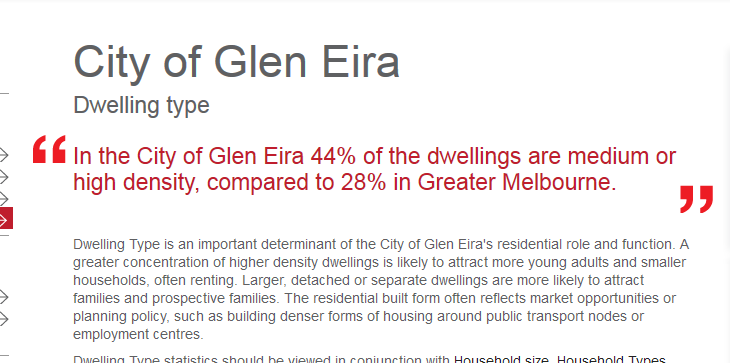
The Minister has announced that the new councillor trustee representatives on the Caulfield Racecourse are non other than our infamous gang – Lipshutz, Hyams and Esakoff. What a surprise, eh? And what does this bode for the community voice? Zilch we suggest!

At the very least we can say that what is required is a full Royal Commission into the wheeling and dealing that has been going on for the past century and the unsavoury role of vested interests, politicians, administrators and councillors.

Untitled

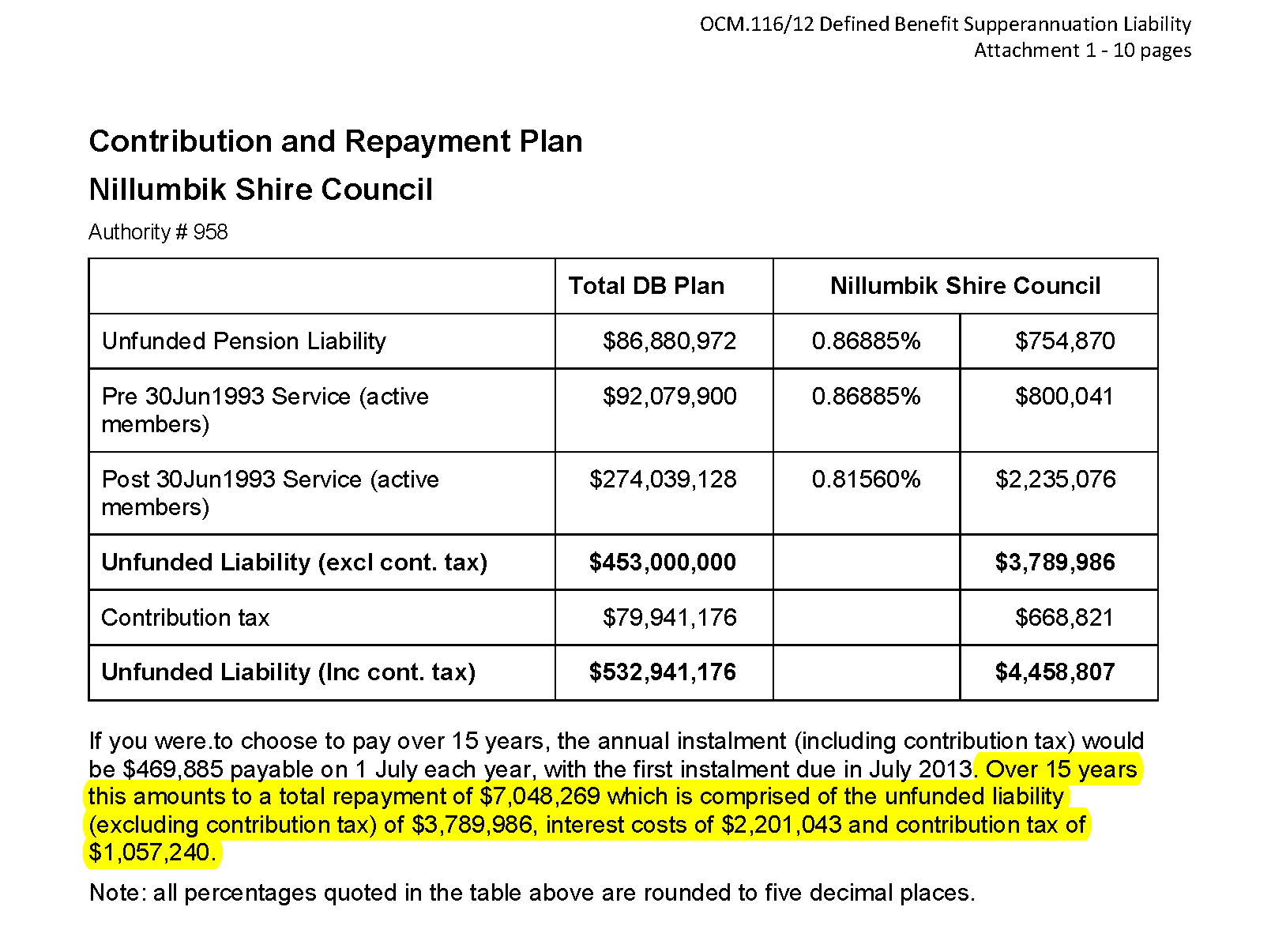
The folly of GESAC is about to come back and bite residents really hard. Faced with a $7.1 million bill for employee superannuation, councils have the choice of paying their share off in one lump sum or spreading the repayments out over 10 or 15 years. Glen Eira, because of GESAC, would not have this choice we believe. By borrowing $25 million they are already over committed and no bank in its right mind would lend them any more. The result is that in all probability Glen Eira will be paying off its dues over the extended time period. That means more money down the drain in interest and an inevitable huge rate hike to meet all the bills.

Other councils such as Bayside ($5.1 million) and Nillumbik ($4.78 million) and probably countless others are endeavouring to pay this amount off in one hit. Both will borrow in order to avoid unnecessary expenditure on interest – but they are capable of doing this. For Glen Eira, we would wager that there is not this option. Instead we will be facing years upon years of endless interest repayments.

Serious questions need to be asked about the financial management of this council. Why is there no substantial ‘nest egg’ to cover such unexpected emergencies? Why have all our eggs been placed in the suspect GESAC basket, and now everyone’s got egg on their faces! Why in this cash strapped council that was designated as ‘high risk’ less than a year ago and has only managed to climb up to ‘Low risk” by delaying Duncan McKinnon for over a year, plus other capital works programs, do we have to witness the pathetic squabbling over whether to spend $16,000 for a lolly pop person or other safety measures for our kids? Yet, there’s no problem in finding another $1.5 million for car parking at GESAC.

By our reckoning this council will be facing an interest bill of at least 3 to 4 million dollars per year for the next 15 years.  This figure is based on the Nillumbik calculations and the document which was sent to all councils with their individual calculations. (uploaded here) .We have to wonder whether councillors even got to see this paper? Here’s the important page based on Nillumbik’s share of $4.78 million. When the maths are done for $7.1 million then the interest is astronomical.

Pages from August_2012_OCM116-12_Defined_Benefit_Attachment-2

What is required is the complete tearing apart of all financial records by a government appointed forensic accountant. More importantly a full blow by blow costing for every single nail that has gone into GESAC. We have absolutely no idea of how our money has been spent, nor how much it costs to keep this place running on a daily basis, nor how many members have not resigned once the novelty has worn off, nor how many staff are being paid for by residents, nor how much subsidy the Warriors are receiving from ratepayers. The questions are multitudinous and the responses non existent. That is councillors’ jobs – to not just ask, but demand and then to ensure that residents know exactly how and why their funds have been spent in this unaccountable and non-transparent fashion!

For starters no amount of spin, bluff and bluster can hide the fact that GESAC has incurred additionals costs that have never been either reported upon, nor directly associated with its construction. We highlight just a few:

  • Lawyers for the ‘liquidated damages’. What happens when council is perhaps found liable to pay the difference, plus punitive damages, plus more interest?
  • Why isn’t the construction of an electricity substation, plus road works and traffic lights included in the ‘construction costs’? The figure of $41.2 million is thus not only disingenuous, but totally bogus when one considers the money that has been forked out to facilitate the actual ‘construction’.
  • What are the insurance costs? why the need for a higher purchase agreement?
  • What are the heating, cooling, cleaning, maintenance, etc. costs? How much does this tally per day, per week, per month?

Over to you councillors! Do you have the courage?

Here we go again! Officer reports that are incomplete, inaccurate and which deliberately neglect to mention, much less highlight, crucial factors that would impact on any decision making in a normal and transparent council. Add to this councillors who either haven’t been adequately briefed, or the more plausible explanation we believe, is that they quite willingly go along with this deception.

We are referring to the Council Meeting of 18th December, 2012 when Council passed the resolution that another $600,000 (estimated) be spent on GESAC car parking. This is on top of the near $1,000,000 already spent in extending the existing Bailey Reserve car parking and to ‘relocate’ the playground. The motion that was passed in December read:

Crs Lipshutz/Lobo

That Council endorse Option A, additional car parking on the Bailey Reserve side of Gardeners Road, in order to provide additional car parking around Bailey Reserve. That Council continue to examine Option C, timed parking restrictions on the Bailey Reserve side of East Boundary Road, and Option D, East Boundary Road Median Strip parking.

Cr Sounness was the only councillor to vote against the motion. We also remind readers that the argument against the installation of an underground car park was the estimated cost of $1.5 million dollars. Now, when council has already spent this amount and it still hasn’t solved the problem, the argument switches to the laughable claim that underground parking was rejected primarily because women did not feel safe! No such excuse was proffered at the time of the original decision back in July 2011, yet it surfaces on this occasion. Some real scraping of the bottom of the ideas barrel here! Then there’s Lobo’s claim that ‘safety’ is an issue and therefore council is unable to ‘consult’. Quite ludicrous we think. From the architect’s drawing it would appear that cars will be parking perpendicular to the reserve. That means that they will have to either reverse into the spot, or more than likely, reverse back out into Gardiner’s Rd in order to exit. This street is also a bus route and it is extremely narrow. (So much for at least 2 years of”advocating’ that the bus route be switched to East Boundary Rd!) So we now will have cars reversing, buses passing, kids alighting, – all on a narrow residential street. Another great solution in averting ‘risk’.

The argument we love the best however is the one about councillors not wanting to see poor old cricketers and baseballers having to park in ‘residential streets’, or worse, Centre Rd. According to this logic, Gardiner’s Rd does not qualify as a ‘residential street’. Readers should go back to the December ‘debate’ and have a good laugh at the appalling level of argument, and plain old humbug. (See: https://gleneira.wordpress.com/2012/12/19/gesac-read-weep/)

But it gets even worse in terms of what happened on December 18th  and the total failure of this administration and its councillors to be transparent and accountable. There cannot be any excuse for failing to fully inform residents that more open space will be lost and that bitumen and car parking are the priorities in Glen Eira regardless of cost. Here’s what was not written or stated:

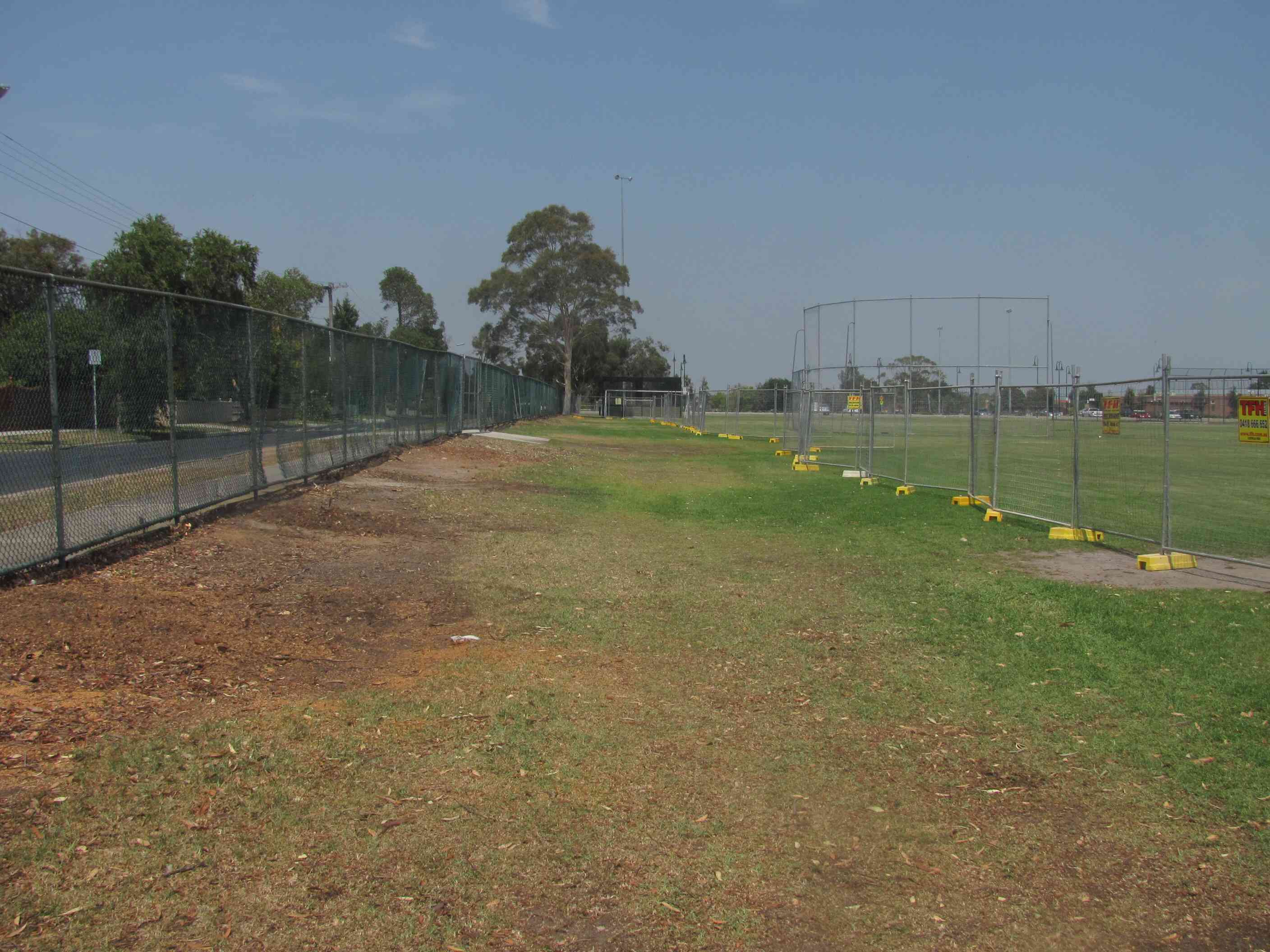
  • Throughout the entire officer’s report there is NOT A SINGLE MENTION of the fact that open space WITHIN BAILEY RESERVE will be diminished and turned into more car parking spots. The only sentence of any relevance on the issue is this feeble, and ultimately misleading one-liner – “A guiding principle has been to try to avoid any further reduction of public open space”.
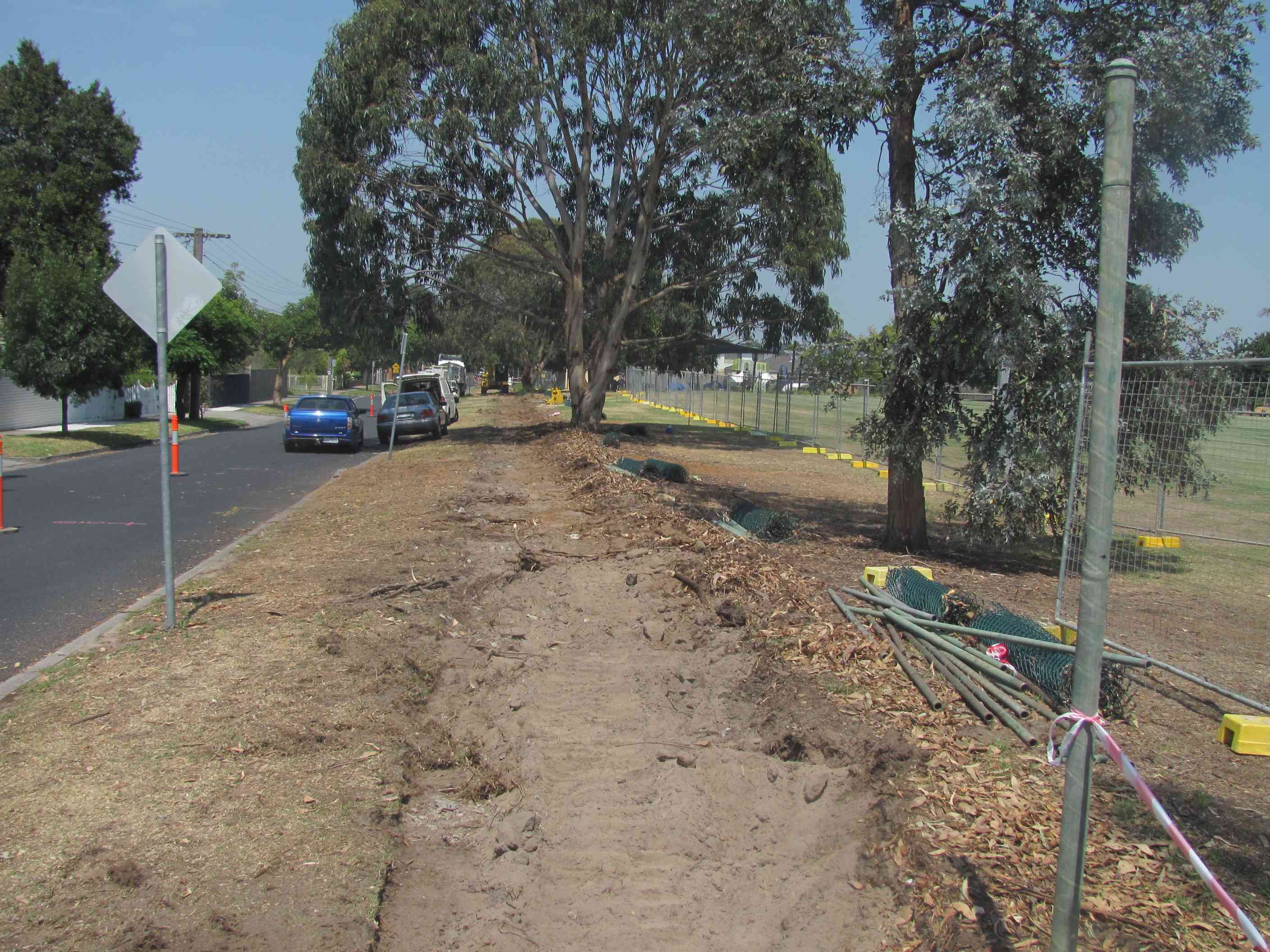
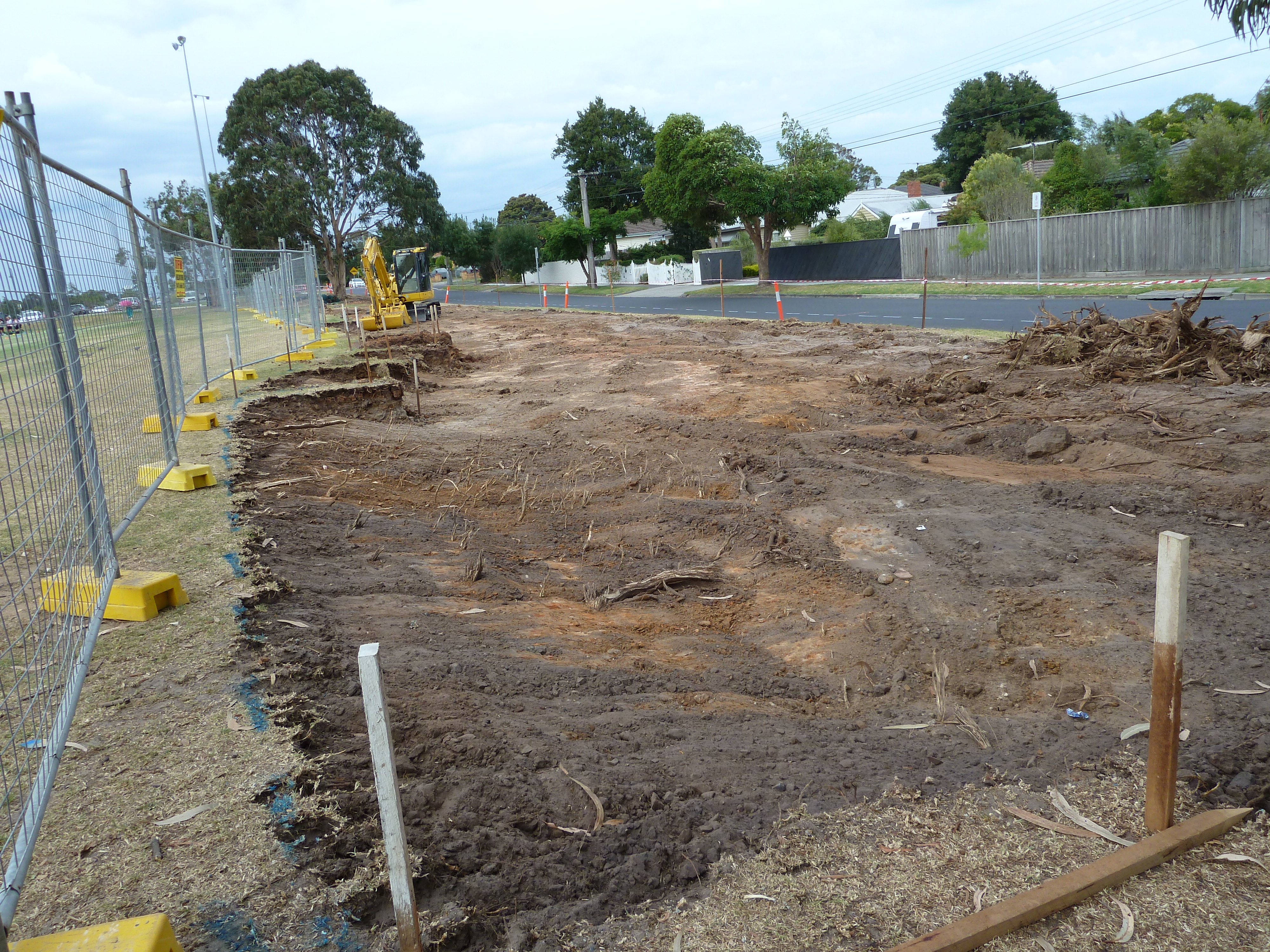
  • Not one councillor in the ‘debate’ referred to the encroachment on Bailey Reserve itself. In fact, Magee proudly proclaimed: “WE’RE TAKING AWAY A BIT OF NATURE STRIP AND GETTING A MUCH NEEDED CAR PARK”. The photos below show that much, much more than a ‘bit of nature strip’ is going. Lipshutz in turn could only say that as ‘victims of our success’ that more car parks “won’t have any impact’ on the reserve. So much for accuracy, and so much for revealing all the facts.
  • Yet, the plan that was part of this item, makes it absolutely clear that Bailey reserve itself would be hacked to pieces and that more open space will be lost. Didn’t any councillor look at this? Didn’t the author of the item (unnamed of course!) look at the plan? Or was all this done in the hope that NO-ONE would bother looking at the detail so residents could once again be easily duped into believing the half-truths and mistruths that issue from this council?
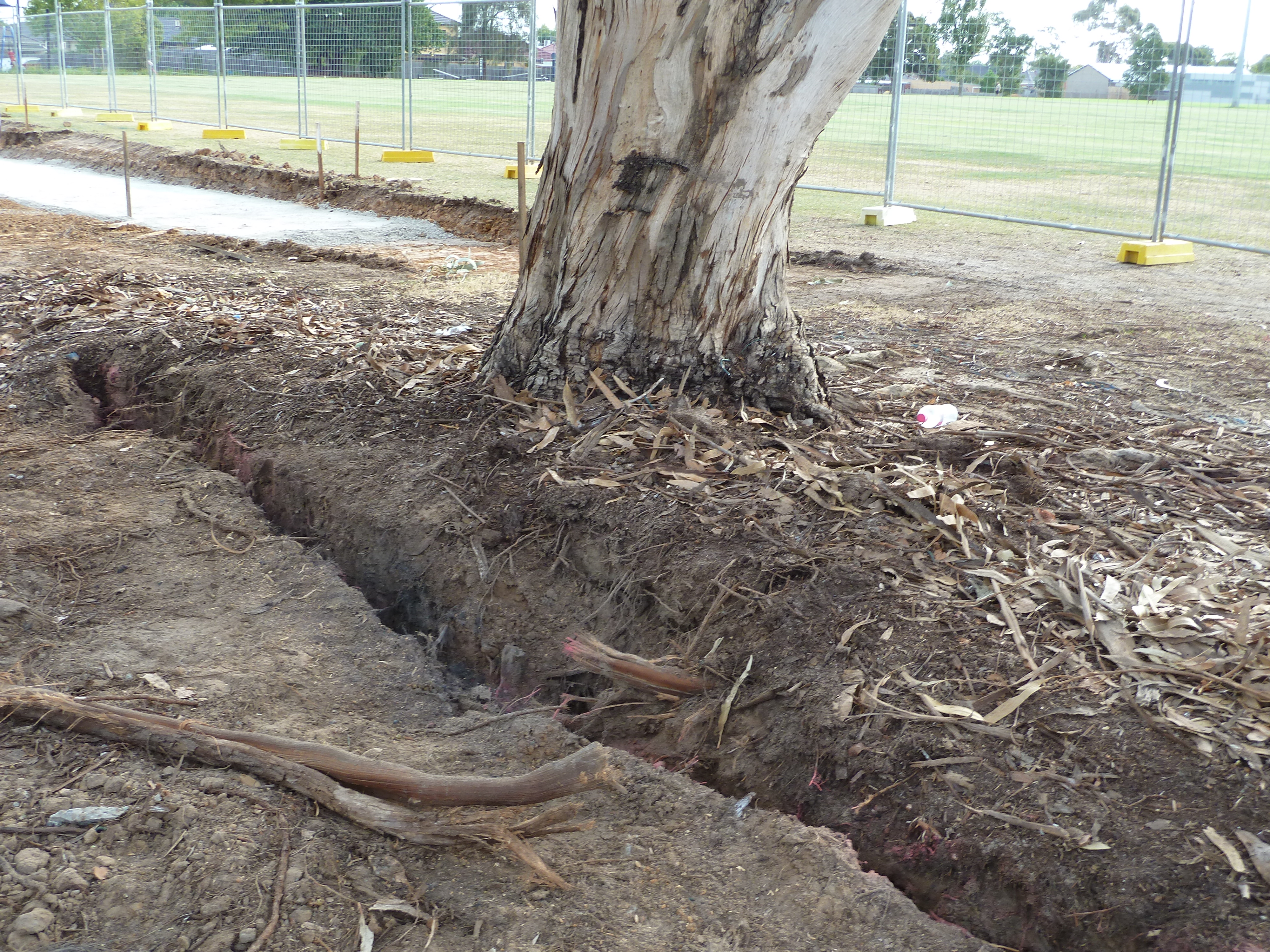
  • Finally, what of the trees? The almost illegible table on the left hand side of the diagram states ‘No. of trees to be retained’ and ‘no. of trees to be removed’. The actual figures are impossible to read. Yet, no-one even uttered the word ‘trees’ and it does not appear anywhere in the officer’s written report. The plan certainly has no trees actually included in the diagram! The root systems have been badly mauled and it would not be any surprise to find council’s arborist in the very near future reporting that the tree is “unstable’ or “diseased” or “unsafe” and that it has to be removed! After all, this is Glen Eira so what are a few fine gum specimens, or other long established trees, or even recent landscaping that cost the earth no doubt, compared to a GESAC car-park extension?

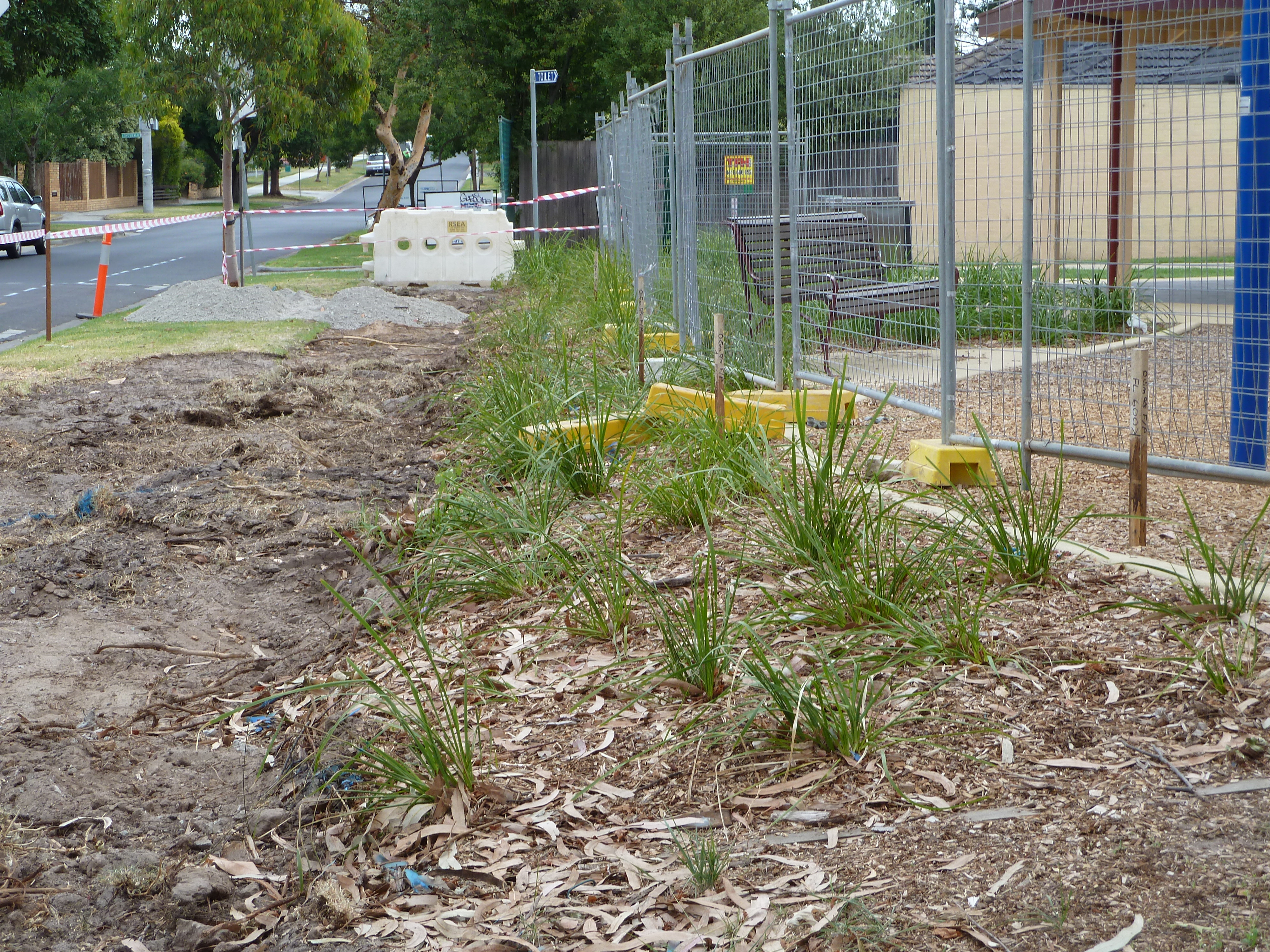
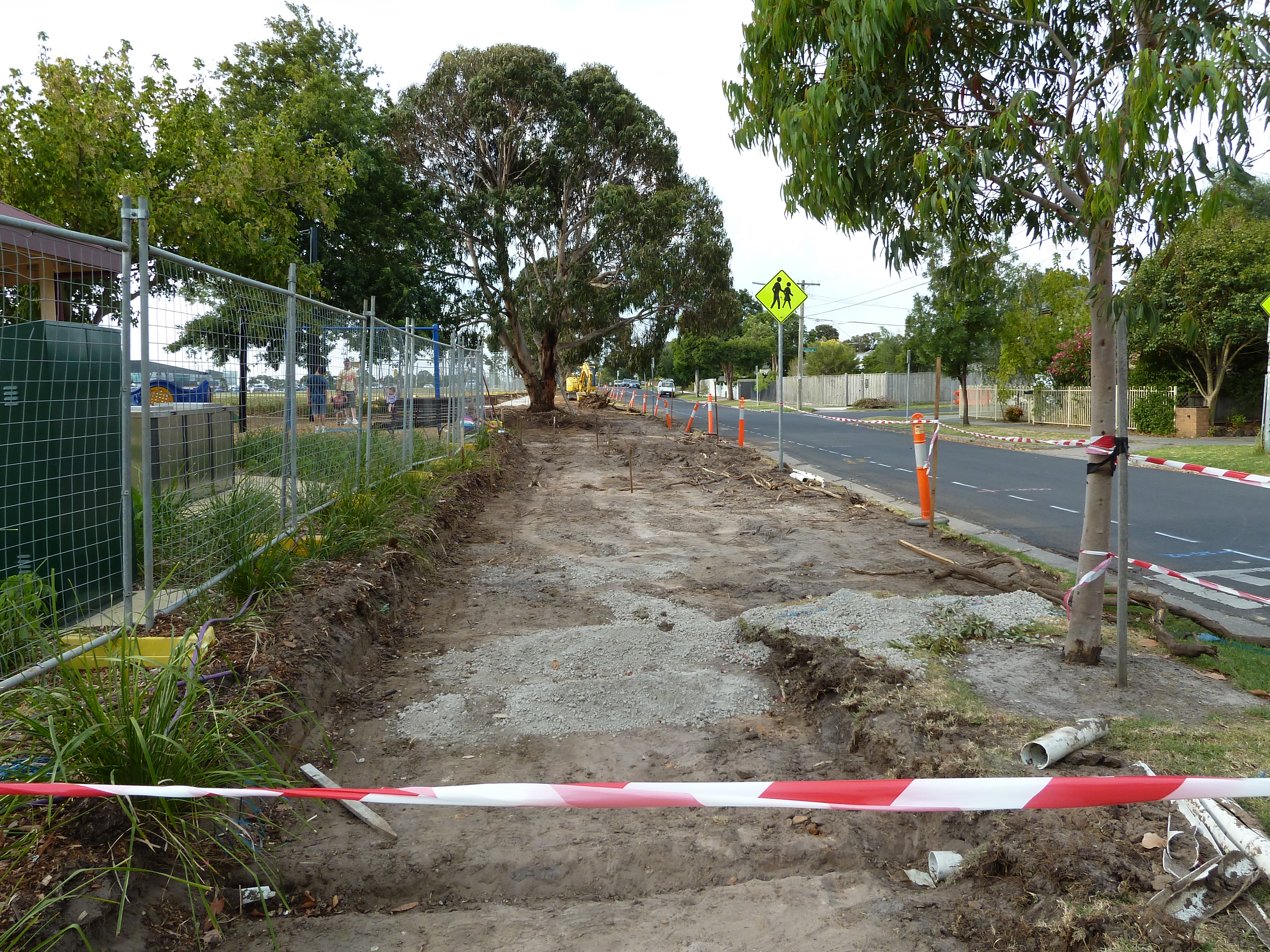
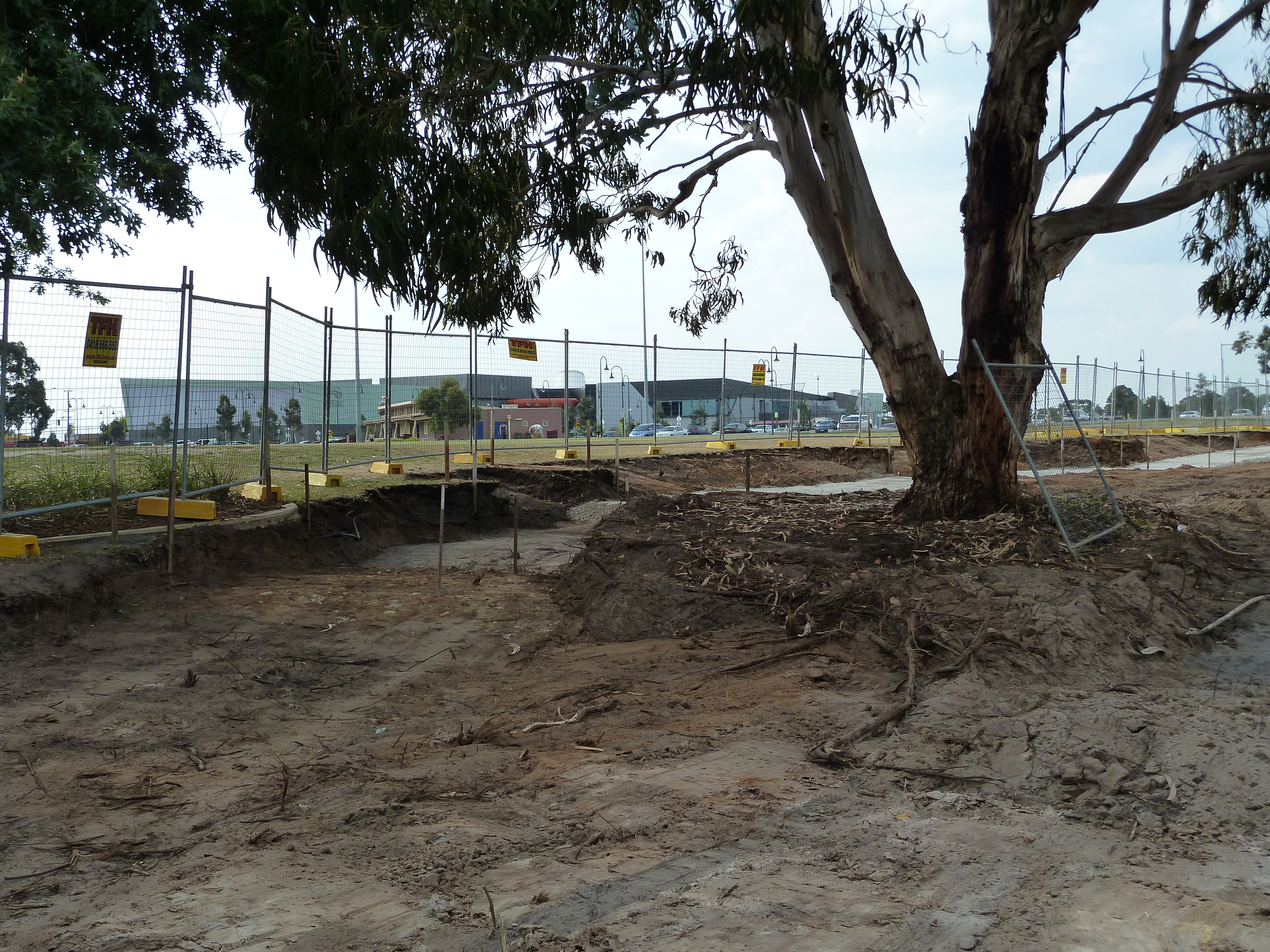
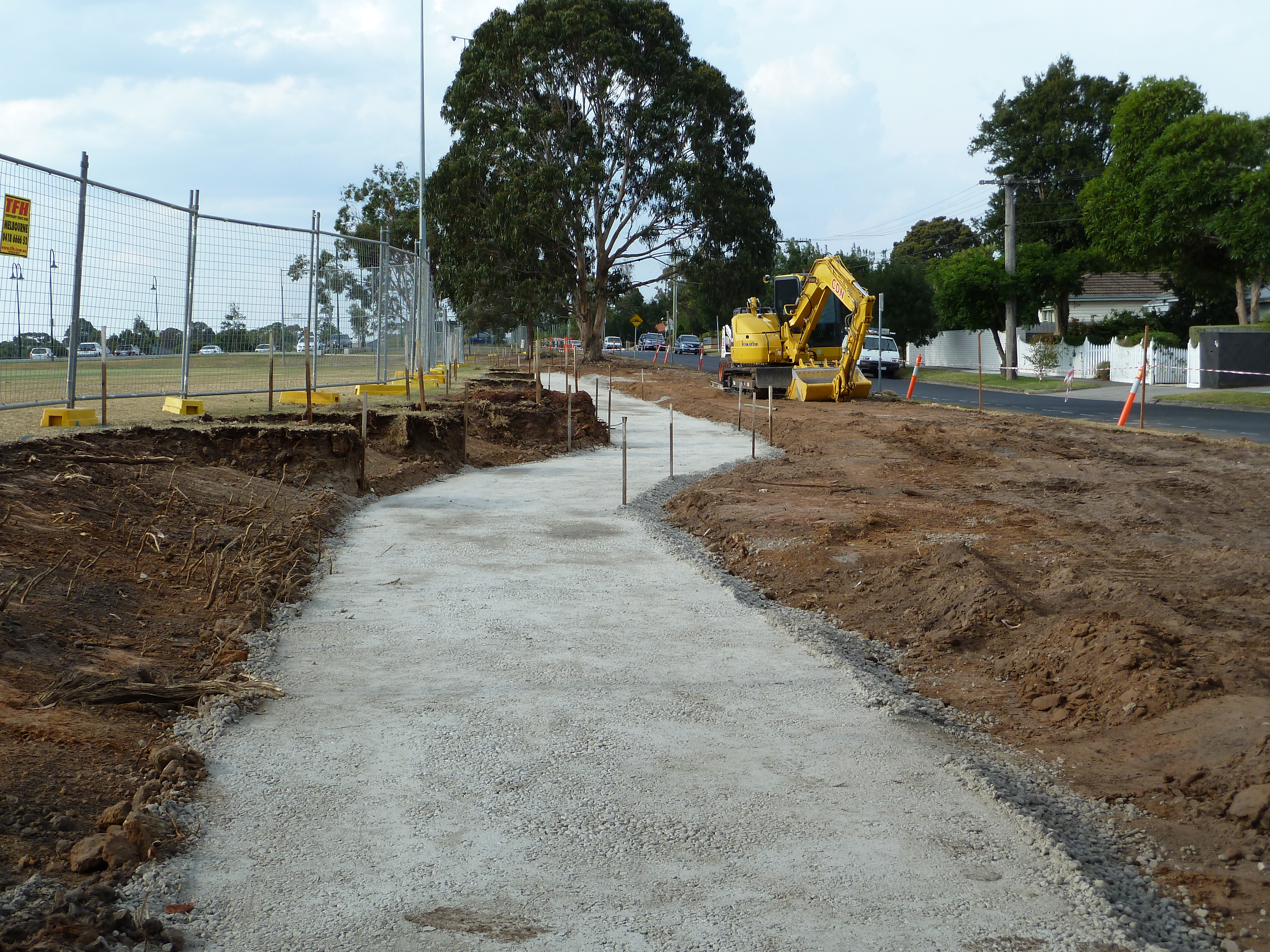
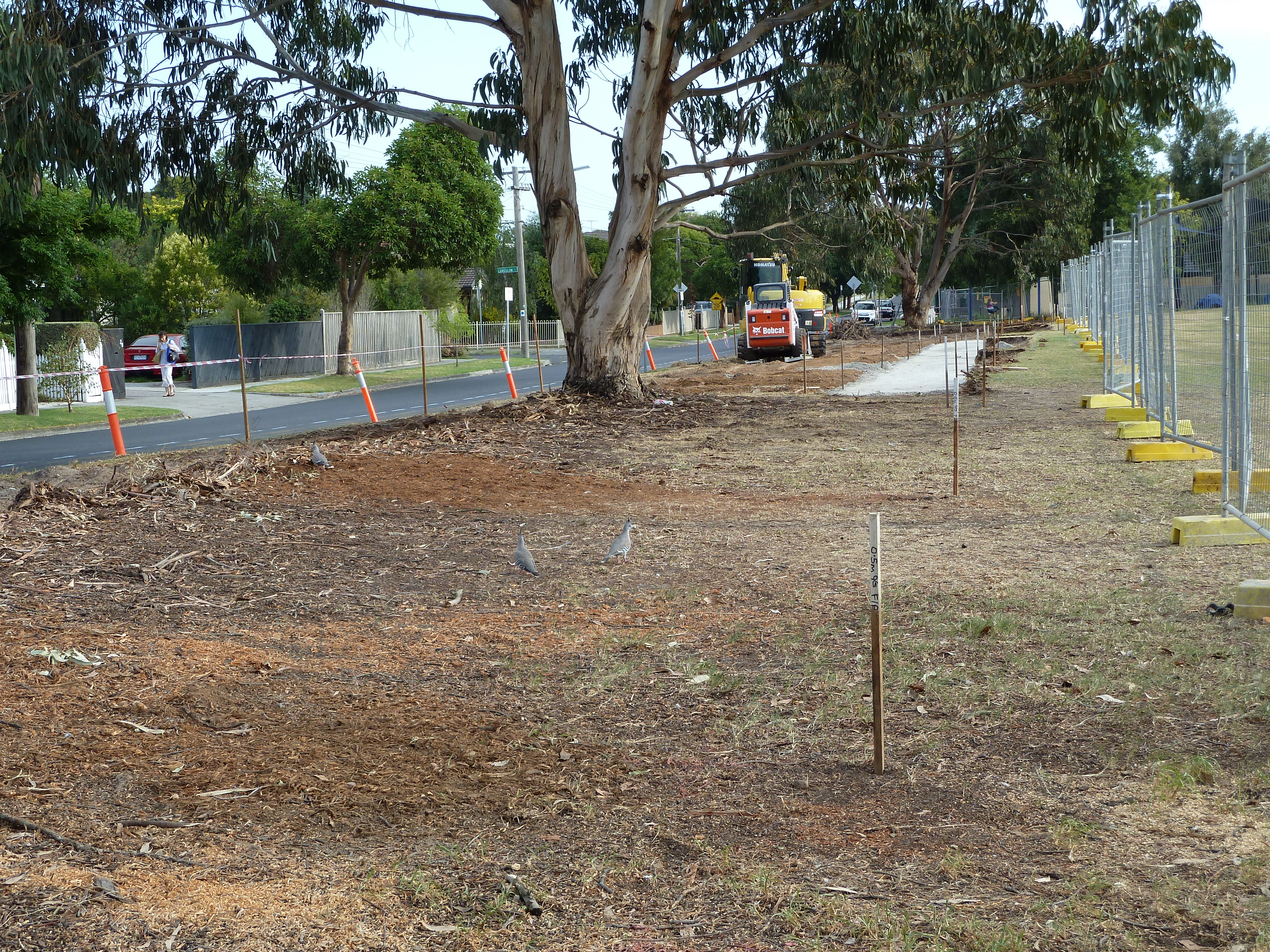
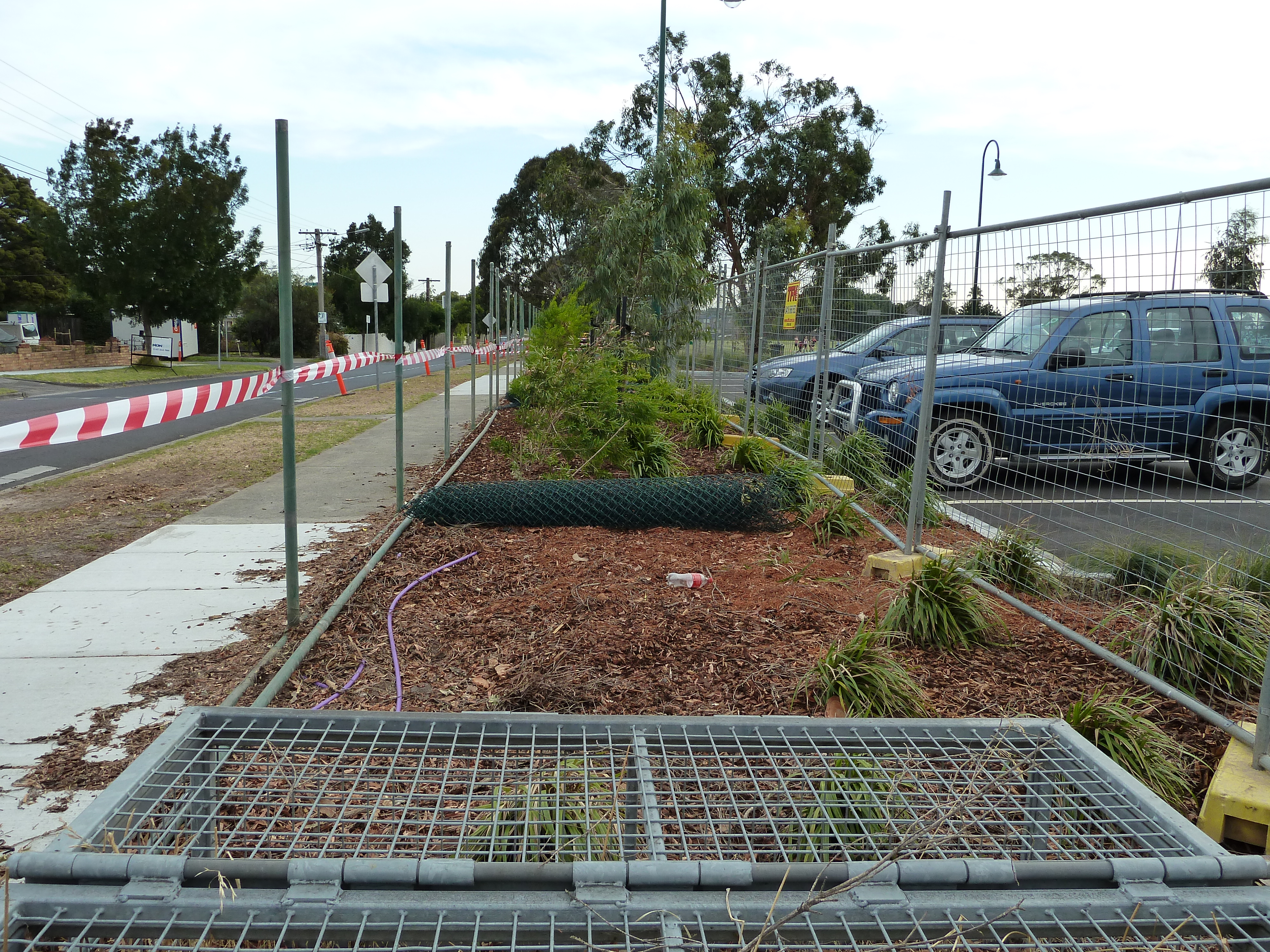
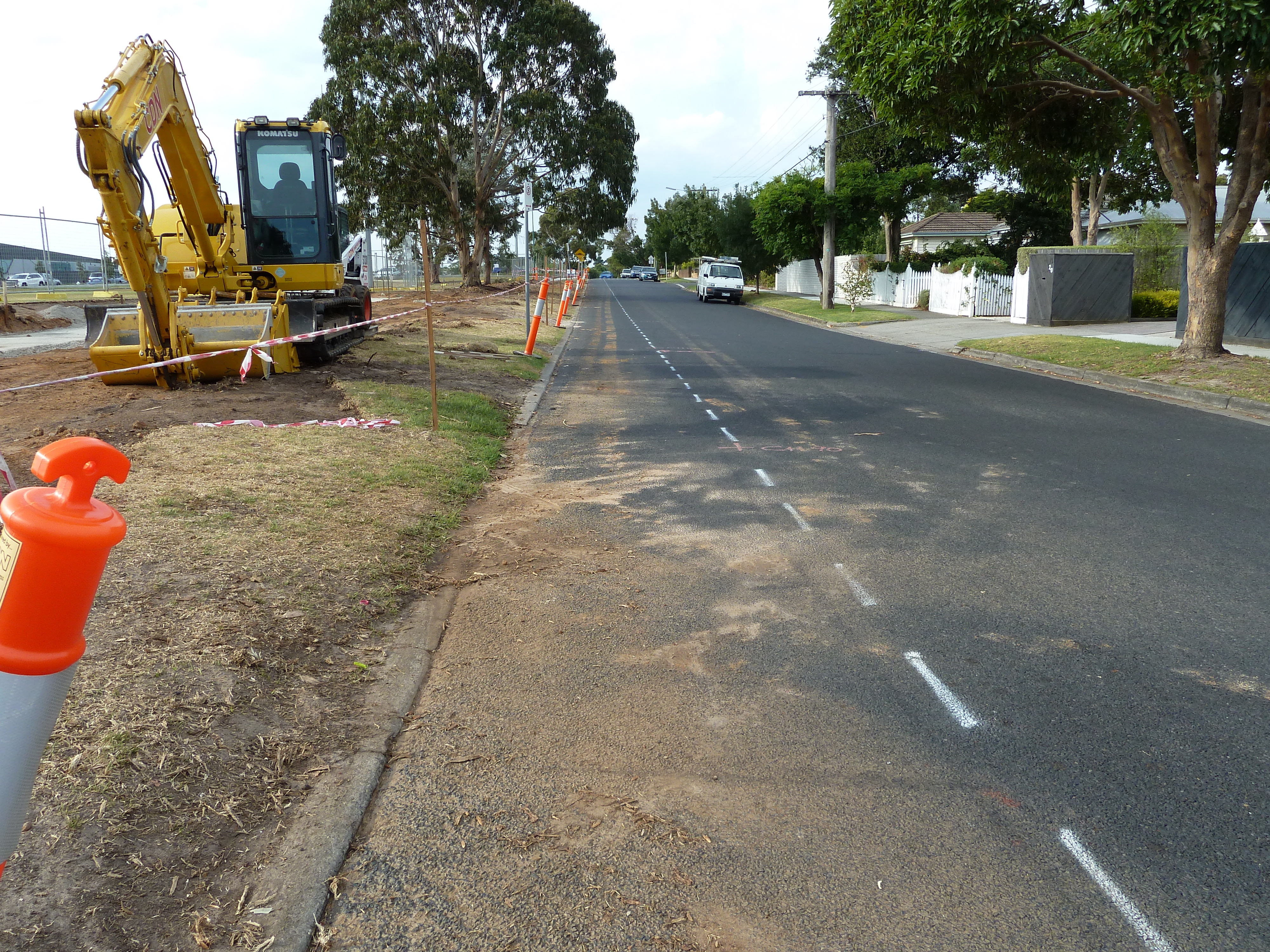
We’ve visited the site in the past few days and below are some photos taken over  several days of the ongoing works. We’ve decided to present them in their full glory, rather than as a slide show.  Please note:

  • Photo 1 displays the area cordoned off WITHIN BAILEY RESERVE before work started
  • Photo 2 displays the original footpath/nature strip which is located to the LEFT of the gum and has now been removed
  • Other photos reveal the new ‘path’ that is well inside Bailey Reserve itself, plus the shredded roots of the gum.

GESAC 13Feb13 IMG_0612

GESAC 13Feb13 IMG_0614

P1000036

P1000035

P1000041

P1000047

P1000045

P1000042

P1000043

P1000046

P1000038 - Copy

P1000044

Untitled

We’ve received a very long email from ‘Seriously Concerned Resident’ that we’ve split into two. In our view it makes for essential reading for all those people concerned about the policies and autocracy that is currently in power at this council. As a snapshot of what is happening we direct readers to http://profile.id.com.au/glen-eira/dwellings to realise the full extent of the impending disaster. Here is the ‘headline’ from this research:
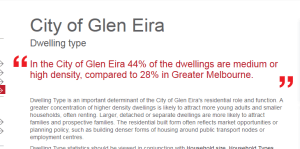
dwelling

Now for Seriously Concerned Resident’s email:

“Last week’s posts on the Council meeting reinforces the view that the Lipshutz/Hyams law as practiced in Glen Eira weakens this “government to represent and respond to the needs expressed by local communities” (for general discussion see epress.lib.uts.edu.au/ojs/index.php/cjlg/article/ ).

The arguments presented by Crs Lipshutz and Hyams have little to do with community representation or being ‘fair, just, and equitable’. It raises suspicion that the Council favours the rich, powerful, or influential. The long term neglect to plan and govern in favour of ‘quasijudicial’ or case-by-case decision making is simply to diminish the democratic nature of a Council. Best example is the Local Law provisions, which is more akin to some kind of autocratic regime rather than a democratically elected local government. The best proof is that there is no other Council in Victoria that have such draconian limitations on Councillors as we have in Glen Eira, and the delegated immense power of the administration. The Local Laws in other Councils tend towards ‘participatory democracy’ elements. Glen Eira tends towards ‘autocratic’ administration elements. The other problem with the arrangements in Glen Eira are the opportunities for corruption as explained by Prof Graycar (http://cass.anu.edu.au/story/when-local-government-decisions-are-sale ) “For example, too much discretion devolved to decision makers can lead to abuse, so can a highly complex process involving excessive time periods and a lack of transparency in who makes decisions and how they are made.” The building development decisions made by open Council are few in comparison to total number of developments. Most are made by staff and the Delegated Planning Committee with residents or Councillors absent.

The more important issue is that of planning for the future. ‘gleneira’ posts and ‘Reprobate’ are commenting on those at length in here. I would like to refer to 2002 Report on ‘Housing and Residential Development Strategy’. It is a well written document strategically focussed and outlining ( www.gleneira.vic.gov.au/files/bdb7243f-fca5-489e-89d3-a08301 ) objectives, strategies, and implementation actions. It also tries to determine the end point of developments in a section 4.5 Dwelling Supply Analysis. Whether one agrees with the plan or not such plans should be reviewed or updated at least every 5 years. That has not happened in 2007 or 2012. The vision for Glen Eira has not changed since 1996 (Glen Eira 2020). Other Councils have done at least one vision revision since creation of amalgamated Cities. The problem with not reviewing is that the predictions are usually wrong and making decisions on a case-by-case basis catches up on things like infrastructure, traffic congestion, provision for parks, sporting facilities, and other community amenities etc. Ad hoc developments allow developers to control the rate and the type of development nilly willy case-by-case. The questions arise: – what kind of city does the community want to end up with? And do the Councillors know that? Does the administration work directed towards such an end point?

Cr Lobo remarked in relation to some proposals ‘are we in Calcutta or Richmond?’ And so we may well ask. Here are some quotes from the 2002 Housing and Residential Development Strategy:

· The total private dwelling stock in Glen Eira in 1996 was 51,060 dwellings. The State Government predicts an increase in dwellings from 53,000 in 2000 to 59,000 in 2021 (approximately 300 dwellings per year). However, these trends may be underestimated. Over the last five years, 600 dwellings a year have been approved by both Council and VCAT.

· A major issue for Glen Eira is how additional dwellings will be accommodated over the next 20 years. New dwellings could potentially effect existing neighbourhood character, traffic and parking, energy consumption, infrastructure, access to services and facilities and meeting housing needs.

· The State Government estimates about 500 dwellings per year between 2000-2009. About 600 dwellings per year are currently approved in Glen Eira.

· While Council targeted a particular concentration of dwelling activity in areas designated for higher densities in the Municipal Strategic Statement, such as urban villages and neighbourhood centres, development is spread across most of the City.

· Two main locations for development in Glen Eira are infill development and major redevelopment sites. Overall, major redevelopment will make a small contribution to new housing in Glen Eira as many major redevelopment sites are nearly fully constructed. This means infill development will constitute the majority of Glen Eira’s future development. Growing community concern exists over the impact of infill development on existing neighbourhoods, including character, amenity and infrastructure.

· Through its planning role, Council has some control over the type and location of residential development. However, Council has an even more important role to ensure the community’s visions and aspirations are reflected in planning policy.

·  Council can ensure that housing policy represents the aspirations of its community. Council can also enhance the liveability of Glen Eira’s residential areas by maintaining and enhancing parks, improving the public realm (eg, street trees) and maintaining roads, footpaths and the physical infrastructure.

·  Develop structure plans and urban design frameworks for the neighbourhood centres of Alma Village, Balaclava Junction (Caulfield North), Bentleigh East, Caulfield South Glen Huntly, Hughesdale, McKinnon, Moorabbin, Murrumbeena, and Ormond.

·  Develop suburb plans for each suburb which integrates land use and development planning, with planning for infrastructure, capital works, recreation, parks and gardens, street trees and business development.

·  Investigate further mechanisms for development contributions.

·  Involve the community in public realm streetscape improvement works to enhance the residential amenity and suburban character.

·  Investigate opportunities to increase open space in locations where deficiencies have been identified in the Glen Eira Open Space Long Term Strategy.

·  In 1996, there were 47,000 households in Glen Eira (Department of Infrastructure, 1998b).The number of households is growing at a faster rate than the population. The State Government has predicted that Glen Eira will have 58,000 households by 2021 (Department of Infrastructure, 2000e).

·  Building activity has remained steady in Glen Eira since the building boom began in 1997  averaging 675 dwellings a year. Perhaps somewhat surprisingly, separate houses account for the majority (58 per cent) of approvals in Glen Eira between 1996 and 2001. While Council targeted particular concentration of dwelling activity in areas designated for higher densities in the Municipal Strategic Statement (such as urban villages and neighbourhood centres), development is spread across most of the City.

·  Infill development will constitute the majority of Glen Eira’s development. Community concern over the impact of infill development on existing neighbourhoods is growing. Depending on the individual developments, infill development has the potential to impact on access to sunlight, daylight and privacy. It can also affect neighbourhood character.

·  At the 1996-2001 average annual rate of development of almost 600, the total potential stock of 10,864 dwellings (in housing diversity areas with higher density) will last for 18 years (to 2020).

·  ‘Low density’ scenario produced 9,820 new dwellings in total. If only half the lots were developed in this scenario, then only 5,000 new dwellings would be developed.

·  Glen Eira has been growing since it was established in 1994. The Australian Bureau of Statistics estimates that Glen Eira’s population was nearly 126,000 in June 2001 (Australian Bureau of Statistics, 2001). The State Government estimates the population will increase to 130,000 by 2021 (Department of Infrastructure, 2001e). However, given recent levels of residential development this figure may understate the likely population growth in Glen Eira.”

Our comment: ask yourselves how many of the above ‘promises’ have been investigated, implemented, or even partially achieved? Why not? The only constant in this sad, sad saga has been the ongoing administration.

We are becoming increasingly concerned at what can only be described as the deliberate hoodwinking of an unsuspecting public. Our comments relate to one item from the regular VCAT Watch – namely the 8 Railway Parade, Murrumbeena decision. This was an application for a 3 storey and 15 dwellings development.

Reading the officer’s report, residents could be forgiven for believing that council has done everything in its power to halt this development. We’re told that the Delegated Planning Committee refused the application but that VCAT ordered a permit be granted. So far this is the truth. But it’s not the ENTIRE TRUTH! What is not revealed in the officer’s report is:

  • Amended plans were submitted and it was these plans that were under consideration by VCAT
  • Council fully accepted the amended plans
  • The resident objector did not show up to the hearing and in fact was the owner of another 3 storey neighbouring development. He claimed amongst other things, that this proposed building would now ‘overshadow’ his.

Here is the important part of the officer’s report –

“The application was refused by Council on the grounds that the proposal did not adequately respond to its context in terms of urban character. Of particular concern was its poor transition to the adjoining property to the east, excessive visual bulk and failure to satisfy a number of ResCode standards. Thus the refusal was premised on a poor design response rather than a policy breach.

 The Tribunal identified that the type of development proposed is to be anticipated in this location given its strategic context. It further identified that the implementation of the Housing Diversity Area Policy is clearly demonstrated by the recently constructed three-storey apartment building on the neighbouring property located to the east.

 Ultimately the Tribunal determined that a three-storey building is acceptable on this site given its strategic context and the two and three-storey apartment buildings on neighbouring properties. Furthermore the Tribunal considered that the contemporary design and materials would be an appropriate response to the emerging character of the area.

The Tribunal therefore determined to overturn Council’s refusal and direct that a planning permit should be granted.”

The above extracts seek, we believe, to perpetuate the myth that all the blame should be laid at the feet of VCAT. Council is merely the poor, impotent victim where its decisions are continually overturned. Please note that we are not commenting on the application’s merits, nor the merits of the member’s decision. We’re not even commenting on the merit of the final agreement between Council and developer. What we are commenting on is the failure of this report to include all the salient facts.

When we go to what the member actually said, we find the following:

“On considering the amended plans, the Council finds the changes overcome its concerns with respect to the proposal. It now supports the grant of a permit subject to conditions.  Pegasus  Realty supports the grant of the permit subject to the Council’s conditions.”

The Council submits that the proposal is now worthy of a permit. It submits that the land is strategically well located within a NAC that is well served by public transport and in an area where increased densities is encouraged. It also submits that the changes to the plans, particularly the increased setbacks and reduction in the size of the basement, result in an outcome that is acceptable.”

“To the extent that there is non-compliance with standard B6, I agree with both the Council and Mr McGurn that it is minor and acceptable given the angled alignment of the land’s frontage.”

Here are some questions to consider:

  • Why couldn’t readers be told that the member was considering amended plans?
  • Why couldn’t readers be told that council was accepting of these amended plans?
  • Why couldn’t we be told that council argued strongly that the site was ‘strategically well located’ and that ‘increased densit(y) is encouraged’?
  • Why couldn’t readers be told the whole truth and nothing but the truth?

Source: http://www.austlii.edu.au/au/cases/vic/VCAT/2012/1843.html


We have long bemoaned the failure of this council to actually ANSWER a public question. More often than not, residents receive replies that neatly dodge the central concerns of the query or, the response is padded out with superfluous nonsense and irrelevancies. The most common tactic, is the tendency to engage in semantics. When it suits, council seems quite incapable of understanding the question. On only two occasions from the recent past, has any councillor objected to either the tone or content of these answers – presumably penned by Paul Burke. They sit there dumbstruck, and hence complicit in allowing such practices to continue. To add further insult to injury,  councillors often do not even get the time to READ the public questions prior to the council meeting. At most, they might spend 5 minutes at the end of their assembly meetings and are confronted with the already written responses. If there have been numerous questions, then there is no time to even read the responses and to contemplate their import. None of this is good enough.

We’ve decided to keep a running score on public questions and their responses. Readers will be able to access all questions/responses from our new category in the header – ‘Public questions’. They will be arranged in chronological order of council meetings and be classified according to our categories – ie governance, transport, performance, etc. After each council meeting we will also be featuring a separate post on some or all of these questions and responses. If appropriate, we will comment directly on the responses given and invite, as always, your feedback. Here is one from last week’s effort:

QUESTION 1 – Glen Eira Council is reported as having made a submission to the Ministerial Advisory Committee investigating Development Contributions under the Planning and Environment Act. Will Council make this submission public and accessible to all? When was this issue discussed with councillors?”

ANSWER: The Mayor read Council’s response. He said: “In September 2012 Councils were asked a standard list of specific technical questions relating to the DPCD position paper entitled Standard Development Contributions Paper – A Preferred Way Forward. Council officers provided answers to these technical questions in October 2012.

Councillors were informed of this during that time.

It is understood that Councils and members of the public will be given opportunities in the future to make further submissions.”

COMMENT: The question is clearly not answered! Will residents get to see the submission? Your guess is as good as ours! Not for the first time are formal council submissions done in secret. Secondly, if this submission did involve councillors being “informed” then why, oh why is there no mention of it in the relevant records of assembly? Or was it a tiny one liner in some briefing paper that could so very easily be overlooked by councillors? Did councillors in fact ever discuss this issue? Did they have any role in the writing of the document, vetting some of the ideas/suggestions, did they in fact have any say whatsoever? Or worse, did they even know this was happening?

As an aside, we remind readers that Glen Eira in its wisdom scrapped the levy. Thus, we assume that no monies are being collected from developers for drainage and other infrastructure whilst high rise apartments are mushrooming everywhere. The State Government has now released its response to the committee’s report and is again seeking submissions. We note that other councils have publicised this submission process. Glen Eira of course, keeps it under wraps. Please see: http://www.dpcd.vic.gov.au/__data/assets/pdf_file/0020/130727/Fair-and-simple-development-contributions.pdf

This post is simply pointing out some ostensible patterns or trends and is positing some questions for residents’ consideration.

Over the years there have been many complaints about the running of the so called ‘planning conferences’  – ie. how objectors are not given the opportunity to ask the developer questions (that’s when they deign to even show up as with the centre of the racecourse debacle); how the planner’s final report is only available on the Friday before the council meeting, and so forth. The stated objective is that these planning conferences function as opportunities for dialogue and the potential resolution of differences. We wonder how much dialogue and subsequent compromise ever eventuates – especially when no real reports or ‘satisfaction survey’ results are made public.

Related to these conferences is the question of who chairs them. Should only local councillors chair such meetings if the application relates to their ward? Or should everyone be sent throughout the municipality since, as Lipshutz so often delights in telling people, he doesn’t just represent Camden Ward, but all of Glen Eira! It’s very strange then, that the vast majority of his chairmanship just happened to involve applications that were located in Camden!

Next is the NUMBER of planning conferences chaired by the various councillors, and the nature of the respective applications. Our analysis tells us that when the stakes are pretty big (such as major high rise developments, or important amendments such as C87, or applications that have garnered large numbers of objections) then the ‘big guns’ – ie Hyams, Lipshutz and early on, Magee – are dragooned into action. What also stands out is that throughout the duration of the last council, Penhalluriack DID NOT CHAIR ONE PLANNING CONFERENCE! Why, we wonder?

Here are some stats outlining the number of times each councillor chaired a meeting. We’ve omitted Staikos and Whiteside.

Hyams – 28

Lipshutz – 23

Magee – 25

Esakoff – 14

Tang – 5

Pilling – 19

Lobo – 7

Forge – 8

When we start looking at the individual councillor and the individual application, then there is definitely a trend. For example: on the few times that Lipshutz ventured out of his electorate it was to chair pretty contentious development proposals, that either drew heaps of objections or, were ‘unusual’. (ie the sell off of Station St to the Port Phillip Housing Association for $3.1m; Mavho St with stacks of objections). Magee was the ‘jack of all trades’, especially early when he was presumably ‘one of the boys’ – so he also got a few major projects. Then there’s our erstwhile Mayor. He’s indispensible, peripatetic, and seemingly most available – especially for many of the really top notch and contentious proposals (C87 Amendment; 10 storeys in Glen Huntly Rd.). Most of the other councillors were left with run-of-the-mill stuff such as double storey applications in minimal change areas. The over-riding impression is that the gang, including Pilling of recent times, generally get the really important proposals and the rest of the councillors all the left-overs.

Some other questions to consider:

  • Are these conferences allocated or do councillors ‘volunteer’?
  • If allocated, what is the rationale for picking which councillor chairs each meeting? (availability assumed)
  • And the $64 question? How many ‘discussions’ has the chair already had with the developer prior to the conference as opposed to the number of discussions had with objectors? And as revealed at a recent council meeting with Lipshutz and his ‘volunteer’ in handing out how to vote cards, what about the potential for conflict of interest?

All in all, like everything else to do with planning, there is plenty of opportunity for manipulation and rigging the game – especially when there’s the oft repeated ‘threat’ of closing the meeting if too many people ask too many embarrassing questions!

« Previous PageNext Page »