GE Governance


The Belsize Ave (4 storey 52 dwellings) Application

The building will be prominent in its existing context (due to the relative scale to neighbouring single storey dwellings) and will be visible from various vantage points. However, the design of the building through its use of alternate materials, breaks in the building length, side/rear setbacks and graduation of the height is considered acceptable.

COMMENT: Please define ‘acceptable’ especially when it is admitted that a 4 storey dwelling next to a single storey will be ‘visible’!

The proposed crossover from Belsize Avenue requires the removal of an existing street tree (Queensland Brush box located in front of 15 Belsize Avenue). Council’s Parks Services Department have consented to the removal of this street tree provided the cost is borne by the developer

Prior to the commencement of the development, a fee of $798 must be paid to the Responsible Authority for the removal and replacement of the existing street tree (Queensland Brush Box located on the nature strip of 15 Belsize Avenue). Removal of the street tree may only be undertaken by the Responsible Authority.

COMMENT: Is the tree healthy? How big? How old? What does it add to the street. Not a word about any of this.

22-26 Bent St Bentleigh – 15 properties notified – 36 objections – Another 4 storey

More intense building forms are emerging in the surrounding areas and this trend is expected to continue. Accordingly a 4 storey development of this nature is considered, in general, an acceptable response to policy, zoning, the site context and emerging neighbourhood character.

COMMENT: translated this means ‘more to come’

The building will be prominent in its existing context (due to the relative scale to neighbouring single storey dwellings) and will be visible from various vantage points.The design of the building generally seeks to reduce these visual impacts through its use of alternate materials, breaks in the building length and graduation of the height between each respective floor.

COMMENT: So currently the building is ‘prominent’ but given the rubber stamping of this street for 4 storeys Council can’t see anything wrong in getting the ball rolling

Balconies consequently reduced and such that they do not intrude into the increased setbacks by more than 2.5m (width).

COMMENT: why have setbacks at all if they can be overhung by 2.5 metres? Or are the setbacks there only to accommodate the developers design so he can squeeze some balconies in and not lose any apartments?

The amenity impacts to the private open space at the rear of 3/23 Vickery Street may experience overshadowing from 2pm onwards. The building should be redesigned so that this area remains unaffected by shadows up to 2pm.

COMMENT: This one we simply adore. Overshadowing ‘may’ occur but they are not sure. To compensate the poor resident at 3/23 Vickery St should have sunlight only up to 2pm. Never mind the hours of overshadowing post 2pm.

Loranne St -19 properties notified – 28 objections – another 4 storey

It is acknowledged that the proposed building at 4 storeys in height represents a change to this neighbourhood. However, in considering the merits of the proposed height, a number of contextual factors must be considered:

Σ The character of the wider area in general is undergoing change and will continue to do so, in accordance with State and Local Policy.

Σ Surrounding properties are within the Urban Village and may be subject to future redevelopment in line with policy and zoning.

Σ The design has been carefully sited with generous (in excess of 14m) setbacks from the street and will be appropriate to the scale and character of the area and the emerging character

COMMENT: oh dear – no problems here about setting a precedent – unlike the arguments that went with last meeting’s Hawthorn Road application. 14 metres set back sounds amazing until one realises this is referring to the 4 th storey level and not anywhere else. Pity this wasn’t made absolutely clear! Readers should also note that this is the ONLY application that has been accorded the privilege of having a distinct subheading – Neighbourhood Character. We presume that the other applications to not have any ‘neighbourhood character’ or simply aren’t worthy of this consideration since they have already been allowed to go to the dogs.


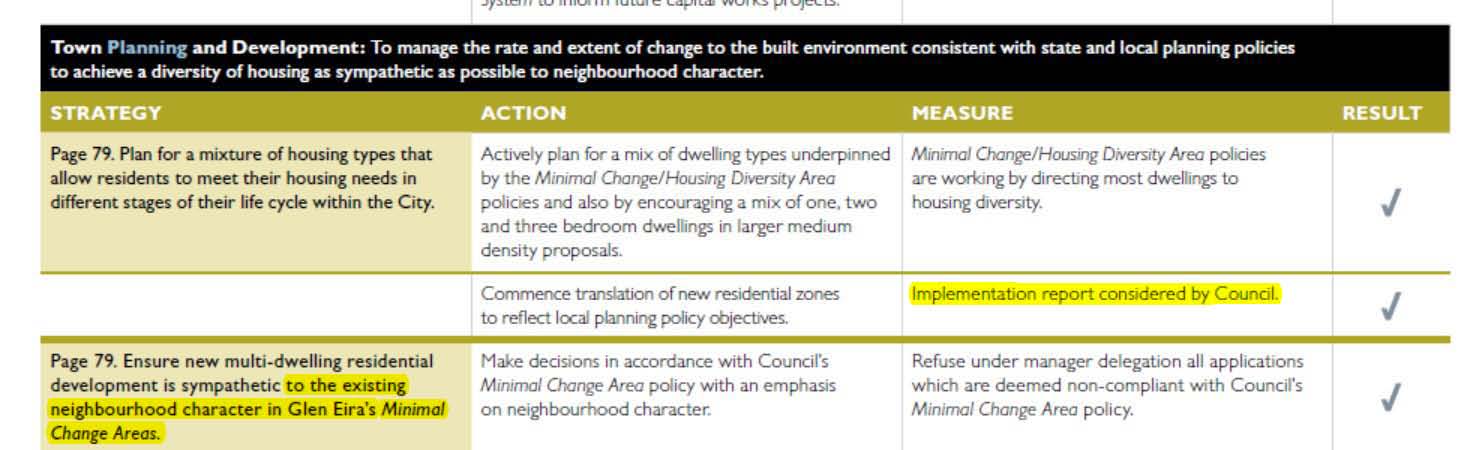
The latest and crudest example of Council’s desperation and public relations gone mad is the pathetic exercise that comes in Item 9.1 of the current agenda. It is Akehurst’s puerile attempt to gild the lily and to justify the new residential zones. We have to say that this must go down in the annals of Glen Eira City Council as its most ineffectual and lamentable effort – and we also suspect that Akehurst must in his heart of hearts feel the same. Poor man. Council is obviously feeling the heat from a growing chorus of outraged residents and this is the corporate response – propaganda, and mistruths at the drop of a hat!

The stated purpose is quite grandiose – To inform the Council of changes which may increase building height and density in other municipalities but which will not apply in Glen Eira. Please note the careful equivocation here. Nothing is certain, things ‘may’ change in other councils. The premise is set – Glen Eira is above and beyond the best council; untouchable because of its wonderful residential zones. Of course, the only point that is made is HEIGHT and the assumed resulting density. But more on this later.

Akehurst is quite correct when he writes – Authority to re-zone land rests with the State Minister for Planning. No Council has the power to zone or rezone any land. It’s just a great pity that Akehurst didn’t go on to say that it is Councils who do the planning and designing and analysis of their municipalities and then go on to figure out where zones should be. That is then put to the minister and department for approval. He also neglects to say that the role of council is to advocate strongly on behalf of residents. Hard to advocate we say when residents haven’t been asked and the zones as they currently stand are based on figures and projections from the 1990s. At least Akehurst had the sense not to cite ‘consultation’ from 2010 which was the previous excuse. Now it is strictly 2003. Yes, the zones are based on “consultation” that took place in the dark ages.

There’s also the usual sleight of hand with this next sentence – The Minister announced that he would rezone land into the three new residential zones by way of Ministerial Amendments. No, that is not what he said and in no way does it present the full picture of that time. In fact Guy’s Media Release of 5th March 2013 contained this statement – “Importantly, these zones will be at the discretion of local council and it will predominately be the view of the local community that informs which zone should be applied where.” http://premier.vic.gov.au/media-centre/media-releases/6183-reformed-residential-zones-bringing-new-certainty-to-melbournes-neighbourhoods.html

Casting further doubt on Akehurst’s claims is the Governments Advisory Note 50 dating from July 2013. Of relevance here is this quotation from page 3 for those councils who feel that their policies are ‘ready to go’ – as Glen Eira claims – ie the ‘neutral translation’ line. It states categorically –

A council can begin preparing an amendment to implement the new residential zones. This may include a request to the Minister for Planning to prepare the amendment and use his powers under Section 20(4) of the Planning and Environment Act 1987 to exempt himself from the requirements of giving notice depending on the earlier consultation informing the housing and development strategy and its implementation

http://www.dtpli.vic.gov.au/__data/assets/pdf_file/0011/229871/AN50-Reformed-residential-zones-July-2013.pdf

So we’ve again got the ‘may’ word. As for the ‘earlier consultation’ bit, we wonder if it ever entered the Minister’s head that such consultation might also apply to data originating in the last century. We doubt it! The import however is that the onus is again on council to REQUEST the minister to act, whereas the Akehurst claim would like everyone to believe that it was the minister acting unilaterally and without any input or consultation from council. What this page 3 also makes very clear is that council had various options it could have taken. It did nothing except operate in secrecy and in deliberately misleading its residents when asked specific public questions.

Akehurst then rambles on about council’s letter and how adamant it was in maintaining the current status quo of minimal change and housing diversity. Height again rears its ugly head but no mention is made of all the other ‘protections’ that could have been afforded via the respective schedules and which countless other councils have taken up.

Other claims made by Akehurst are also very very suspect. Of course nothing is council’s fault – the Alma Club rezoning had nothing to do with them. They didn’t even know about it. Factually Akehurst is dead wrong here too. In claiming that the Alma Club was the only ‘change’ is incorrect. Tovan Akas was rezoned. Large sites were now under the standards of General Residential Zones and not the previous minimal change zones. They also put their heads together to concoct the wonderful escape loop of subdivision prior to applications in order to subvert the very policy of two dwellings per lot in Neighourhnood Residential Zone. Of course, none of this gets a mention.

The most incredible porkies in the entire document come towards the end of the Akehurst effort. If the wording of the ‘purpose’ is changed, then why should Glen Eira be exempt? Akehurst then makes the following extraordinary statement –

Glen Eira is understood to be the only Council which has this mandatory height limit.

What utter nonsense! Here are some examples of other councils having height limits in their RGZ that are lower or equal to Glen Eira’s –

LATROBE COUNCIL – RGZ2 – HEIGHT LIMIT OF 9 METRES (http://planningschemes.dpcd.vic.gov.au/schemes/latrobe/ordinance/32_07s02_latr.pdf)

STONNINGTON – RGZ2 – 13.5 metres – (http://planningschemes.dpcd.vic.gov.au/schemes/stonnington/ordinance/32_07s02_ston.pdf)

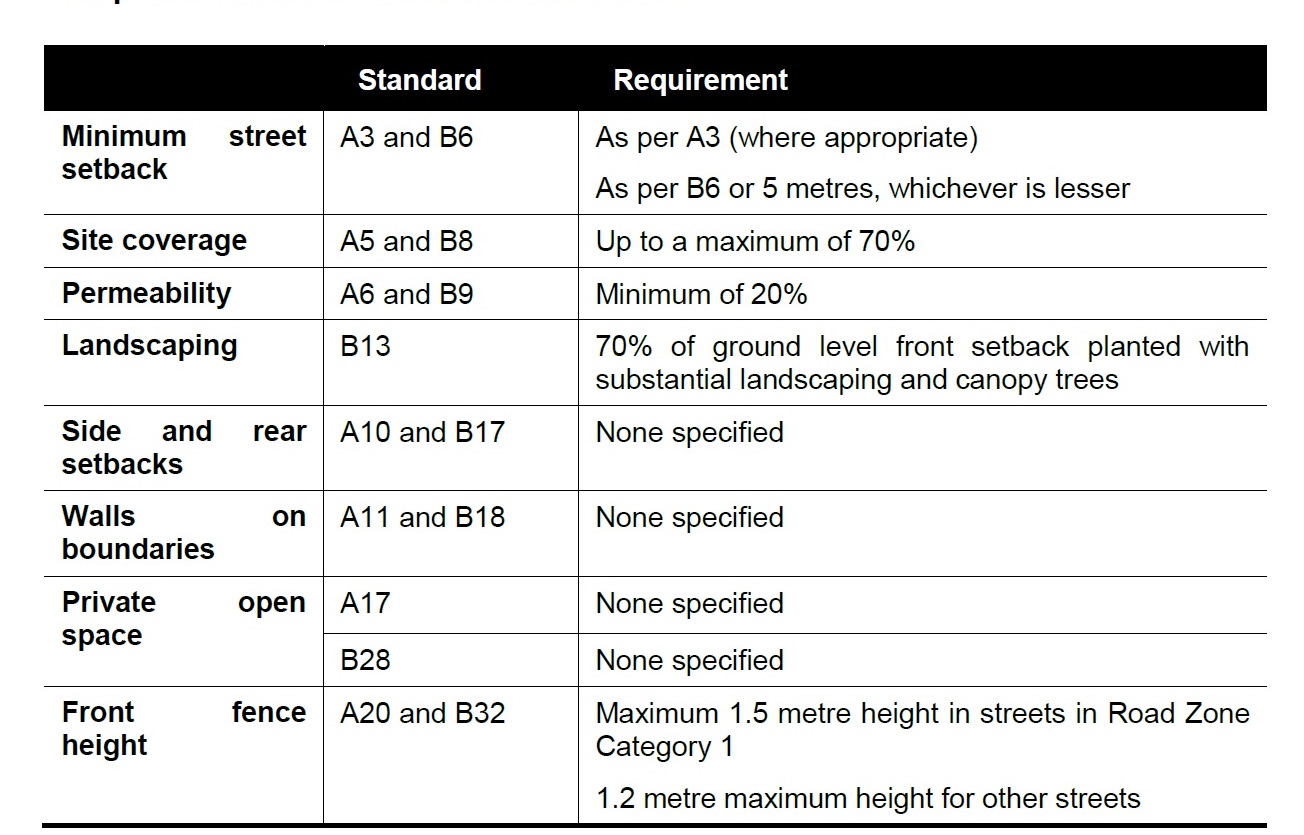
It should also be pointed out that there are quite a few councils that don’t even have RGZ in their planning schemes. Instead, they have relied on numerous General Residential Zoning schedules to implement their finely grained schemes. As we’ve noted before, Stonnington and Bayside have plenty of GRZ schedules that include some that have a 9 metre height limit. Further, even for Greater Dandenong which was the second council to have their zones ratified their attempts to limit the damage is evident in their schedule to the RGZ. Note all that they have included in comparison to Glen Eira’s cave in. Greater Dandenong was able to achieve a site coverage of 70%. Glen Eira has 80%. Greater Dandenong has standards on landscaping, fences etc. Glen Eira is silent on all of this.

greater dandenong

The most outrageous statement of all comes in the final recommendation – That Council notes that the maximum height limits achieved last year are providing greater protection to Glen Eira than in other municipalities.

Height is only a fraction of what could be seen as constituting ‘protection’. Of far greater importance is:

  • Where the RGZ zones are placed – are they only along main shopping strips or main roads which people could live with, or do they engulf entire quiet residential streets that are now being destroyed – such as Mavho, Penang, Loranne, Bent, Glen Orme and hundreds of others?
  • If 52 units can be crammed onto one site, then ‘density’ is not exclusively dependent on height, but on size of dwellings, permeability and site coverage, landscaping requirements, etc. All of these considerations do not rate a mention in Council’s view of planning and do not feature in the zoning for RGZ and neither do they feature in the GRZ zones.

The more Council insists on issuing such misleading and deceptive public relations exercises the more residents should start thinking that this is not the sort of council that is serving its populace as it should. When trust is lost, when public pronouncements can’t be believed, when self aggrandisement and continual cover ups occur, then there is definitely something rotten at the heart. Right now it is reeking to high heaven!

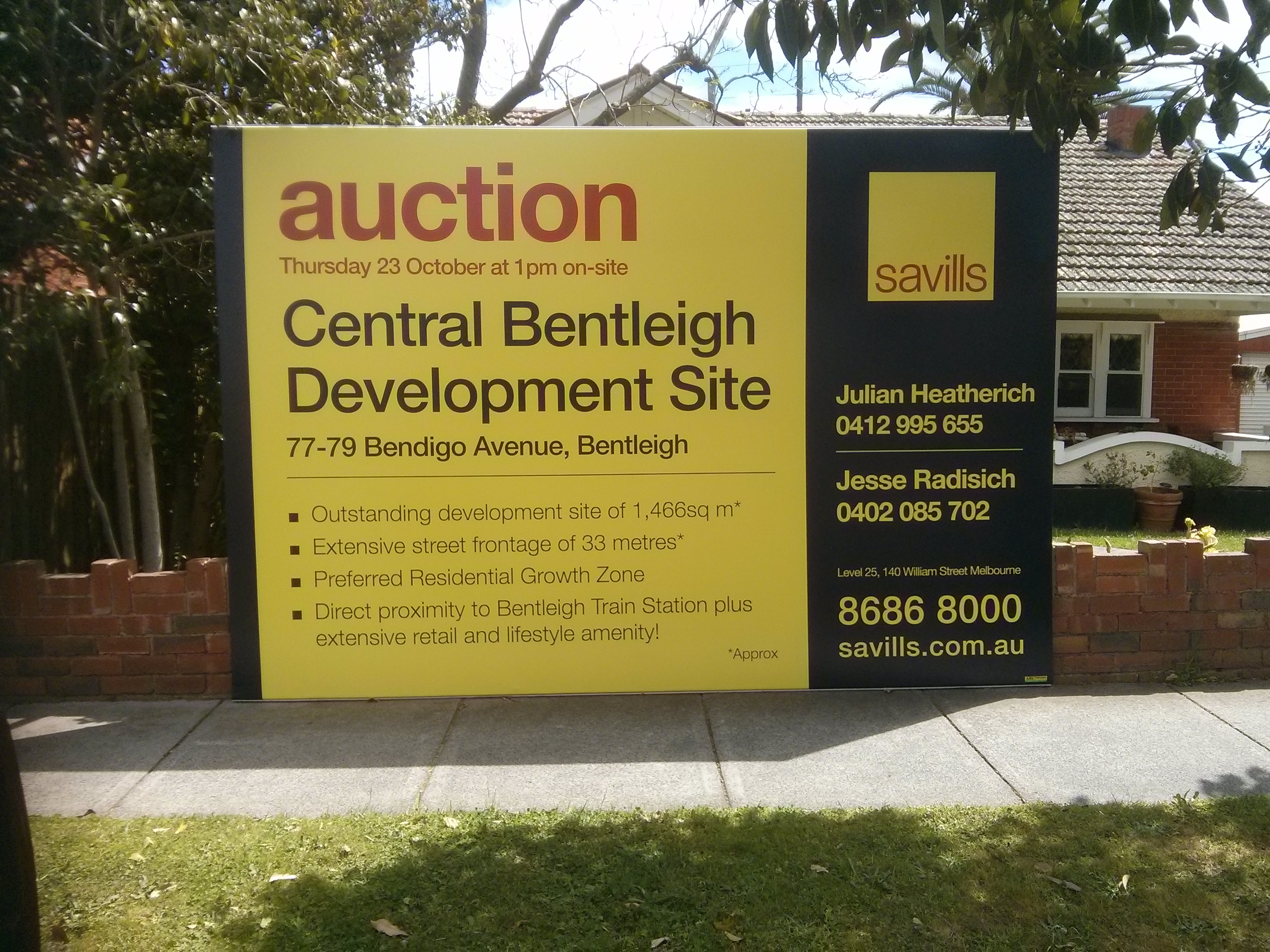
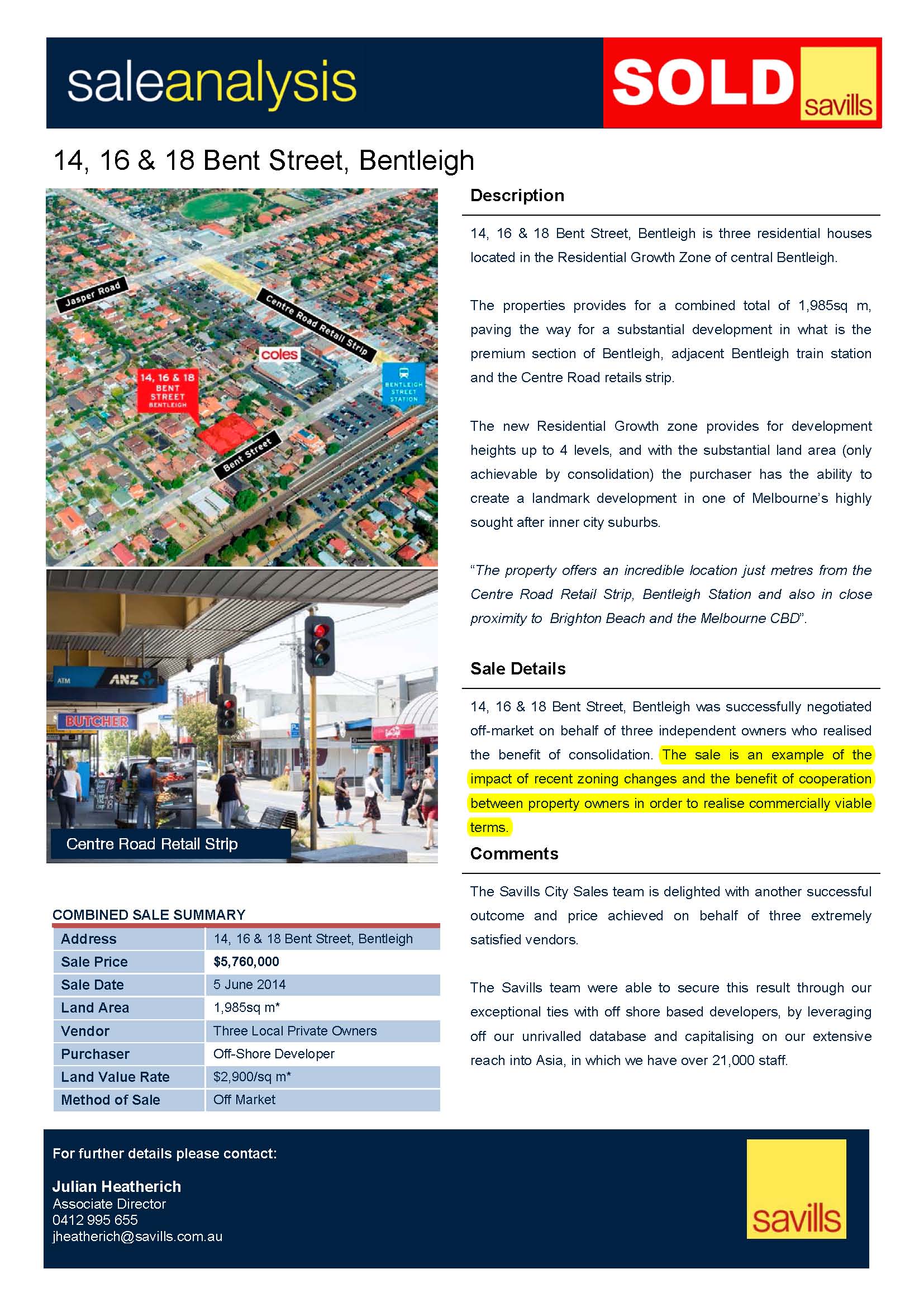
pdfAnd just for the record, here’s what’s currently on the market in Bent St or recently been sold. Folks are getting out whilst the going is good. No one wants to live with a four storey box next door to them, opposite them, or behind them – not when they weren’t told a single thing, weren’t consulted, and must now bear witness to the creation of our future slums. This pattern is being repeated in Mavho Street as well and will soon come to a street near YOU!

Unit 3. No.7;

Unit 5. No 7;

Unit 10.No.9;

No.10;

No.12;

No. 14/16/18;

Unit 8.No.21;

No.23;

No.26;

No.28;

No. 34

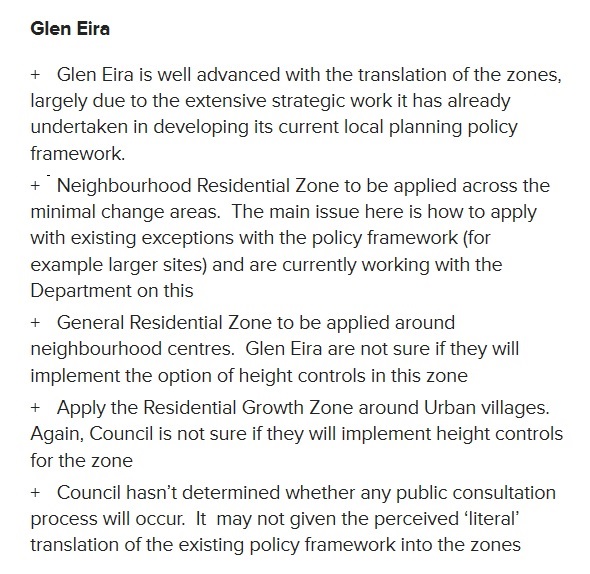
Council and some of their supporters insist on propagating the myth that the introduction of the new zones has not been the impetus for far greater development, and density, in Glen Eira. The standard line has now become that nothing is different; that the introduction of the new zones merely reinforced what was council’s policy since 2002 and earlier. That in the end, the new zones represent a ‘neutral translation’. Nothing could be further from the truth.

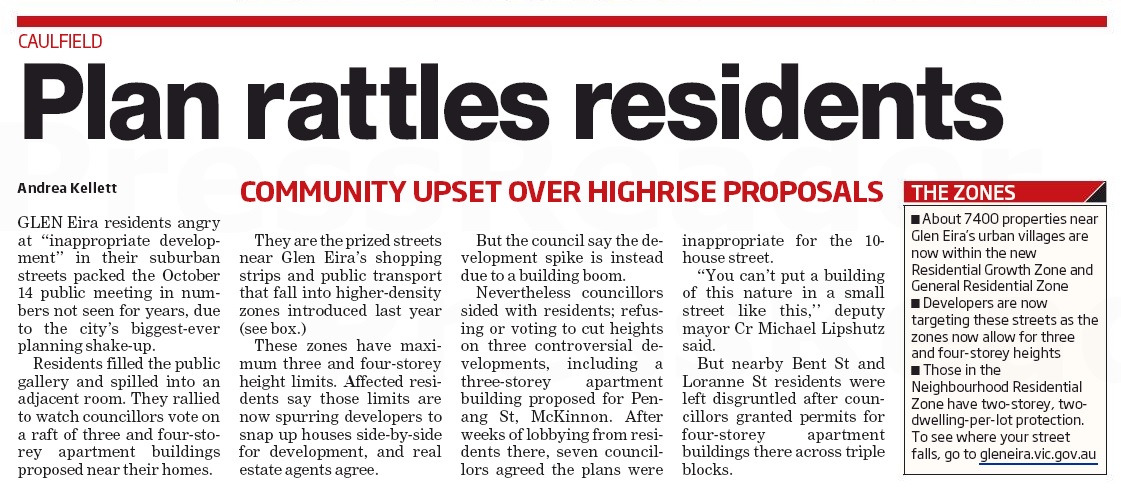
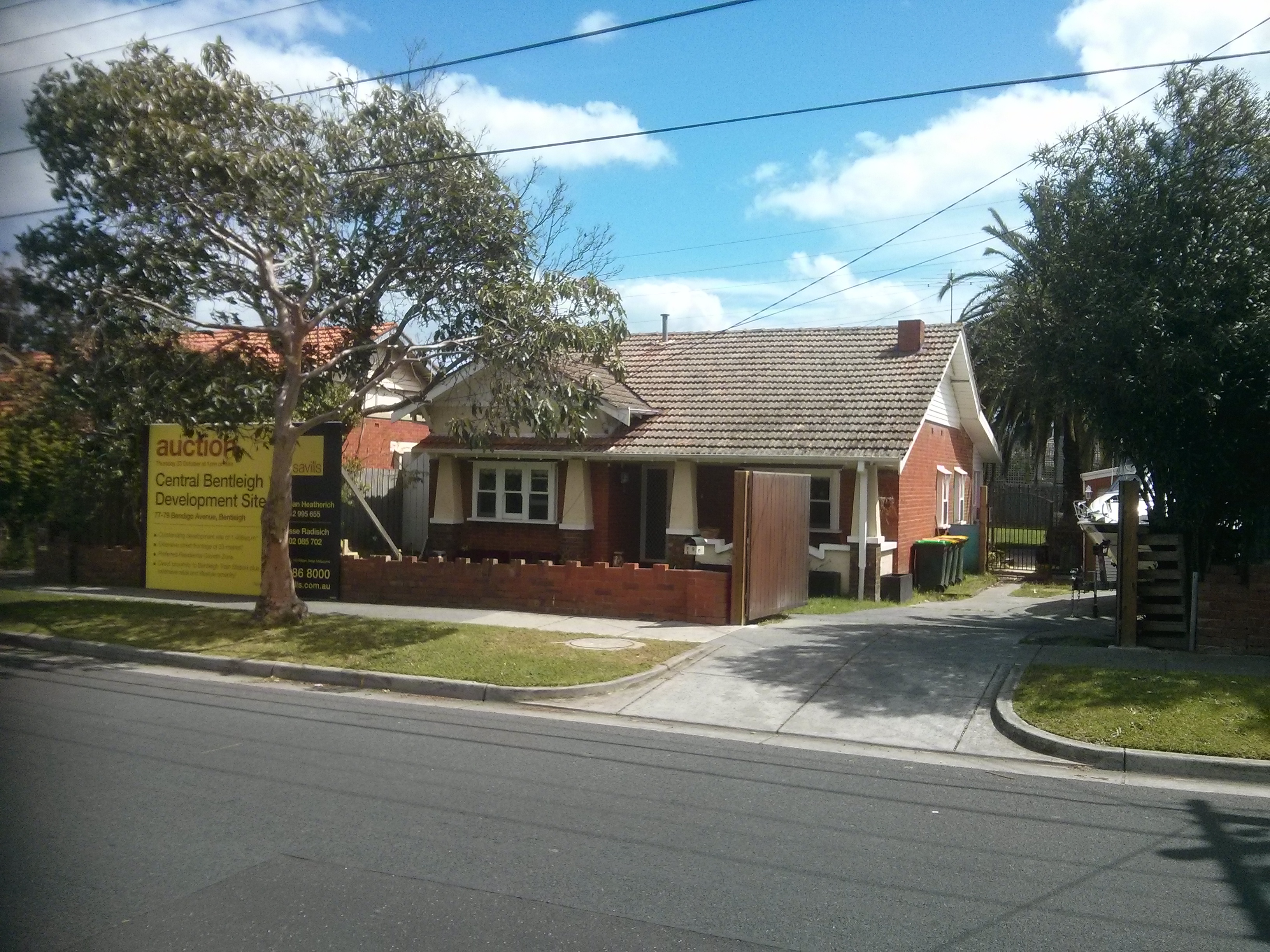
Readers will know that Bent Street Bentleigh has now become the focus of some large combined property sales with the potential for huge developments. Bent St was previously designated as ‘housing diversity’. A large part of Bent St is now zoned Residential Growth Zone – meaning that 4 storey developments are likely to become the norm.

In the interests of historical accuracy, we want readers to reflect on the following VCAT case and development application. It dates from February 2012 and concerned an application at 23 Bent St for a 3 storey, 27 unit development. The land comprised a large block of 1,057 square metres. Council had refused the application. VCAT granted the permit. What is most telling however is the argument produced by Council against the development and the VCAT member’s comments. We cite directly from the judgement.

I note from council’s delegate report at page 7 “the construction of a three storey development is reasonable having regard to the zoning of the land is consistent with the state and local policy in terms of its strategic vision for the Bentleigh urban village”.

COMMENT – so two years ago a 3 storey development was considered ‘reasonable’. Now we have to assume that a 4 storey development is also ‘reasonable’

Council acknowledged that a site of this size could accommodate a three storey building however had concerns regarding the extent of the third level combined with its side setbacks, in that it would provide an overly dominant form particularly when viewed from the private open space of 25 Bent Street to the north which is a single storey dwelling.

COMMENT – 3 storeys was ‘dominant’ 2 years ago, and now 4 storeys is okay?

The maximum overall height of the building varies between 8.8 metres and 9.51 metres due to the fall of the site from south to north. It is acknowledged that the overall height largely exceeds the suggested 9 metre height contained in clause 55 but the permit applicant maintains that it is an appropriate and respectful height given the existing and preferred character of the neighbourhood which is identified in the LPPF for managed change to accommodate more intensive residential development.

COMMENT – So a building of 9.51 metres was in 2012 considered ‘dominant’. Even Clause 55 suggests a ‘9 metre height’. What we’ve got now is 13.5m!!!

The subject site is within the residential precinct 4 of the Bentleigh Activity Centre which at a policy level is directed towards increasing residential densities. This building will be the first introduction of a three storey building into the locality however, I am satisfied with the changes that I require via permit condition the proposal will set a standard for future redevelopment within the area whilst also sitting comfortably with its neighbours in the street

COMMENT: what was the ‘standard’ two years ago has therefore changed. The ‘standard’ now is 4 storey due entirely to the introduction of the new zones and the designation of this street as a Residential Growth Zone. The same applies to countless other streets throughout all of Glen Eira.

Source: http://www.austlii.edu.au/au/cases/vic/VCAT/2012/197.html

PS: and like any sensible developer would, given the largesse of council, there has been an APPROVED amended application to turn this 3 storey development into a FOUR STOREY DEVELOPMENT. The developer got his amended application in October 2013 – after the zones were introduced!

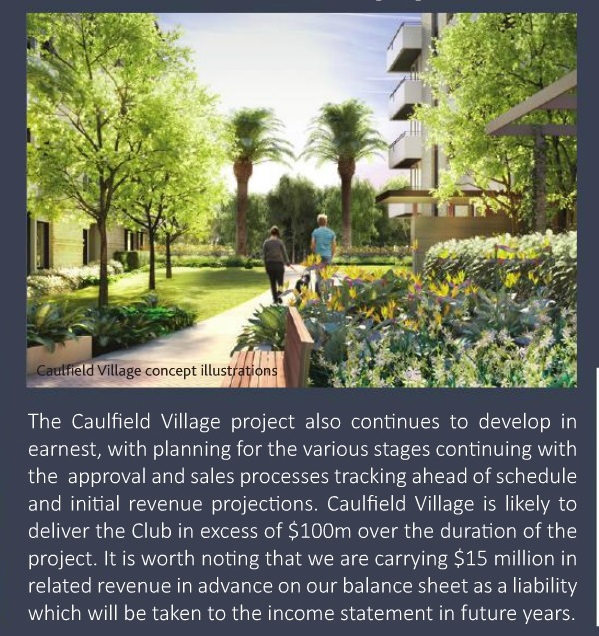
The bastardry, skulduggery, and pattern of capitulation which has dogged the entire Caulfield Village fiasco, is now complete. Council has once again caved in completely to the MRC/Developer judging by the VCAT order resulting from the August ‘mediation’. (full document uploaded here).

We remind readers that in May this year the Development Plan was rubber stamped by the majority of councillors. Attempting to simply save face, Lipshutz and Sounness put forward an amendment which was meant to ‘rectify’ the problems such as ‘fixing’ the vast number of miniscule balconies, and car parking issues. (See: https://gleneira.wordpress.com/2014/05/21/defending-the-indefensible/).

Well, surprise, surprise, surprise – the developer got practically everything he wanted! The two most important conditions (balconies and car parking) were practically tossed out the window and many other conditions eroded away in favour of the developer. All that council appears to have gained is to force the developer to provide more detailed information on soil depths so that the promised ‘garden of Eden’ will have enough soil to actually survive a year or two!

Which leads us to some pretty important questions:

  • Why didn’t council insist that this goes to a full hearing and not mediation if they were so adamant that their conditions were vital?
  • How much did this mediation cost ratepayers since we would bet that council employed barristers, planning ‘experts’ etc.?

We also must congratulate all those ‘backroom boys’ for their years of plotting, since this development is now exclusively OUT OF THE HANDS OF COUNCILLORS. Everything is now up to the ‘satisfaction’ of the ‘responsible authority’ – ie officers (exclusively). Hyams, Lipshutz, Pilling, Esakoff have done their work and handed the MRC their biggest prize ever to the detriment of every single resident living in Glen Eira.

Below is a summary that we’ve drawn up. On the left hand side is what the resolution of May 2014 stipulated. On the right hand side is what has now changed according to the VCAT order. These are all verbatim. Please read carefully and then ask yourselves whether or not you believe that Glen Eira is indeed the ‘cave in Kings’ of the State!!!

There’s undoubtedly a lot more buried in the technical detail of this order, so we welcome your views on what we’ve left out.

mrc


Wouldn’t it be fantastic if the residents of Glen Eira had a council that was upfront, direct, and fully transparent? Wouldn’t it be fantastic if residents knew how much money was going down the drain, wasted, misspent on lawyers, stuff ups, and countless other ‘irregularities’? Alas, this is definitely not the way council functions.

Last council meeting saw a public question asked about Duncan Mackinnon pavilion. Readers will remember that apart from being years and years behind schedule, plus the fact that originally the stated price was around 6 million and then ballooned out to 10 million, there were plenty of other problems. Maxstra, the original main contractor ostensibly got the boot and another contractor replaced this company. The pavilion is still not finished! Here’s what the public question asked and council’s response –

What exact sums of money has Council paid to Maxstra Constructions prior to their dismissal as major contractor for the Duncan Mackinnon pavilion? Are funds still payable to Maxtra following the termination of their contract? And, what were the total invoiced costs for legal advice regarding the termination of the contract?”

“Maxstra Constructions have been paid $2.81 million. Whether any other payments are due them cannot be determined until all works are completed. As the balance of the work was taken out of Maxstra’s hands no legal costs have been incurred in relation to a termination because a termination has not occurred.”

Going back into history, it’s worthwhile considering the following as well.

  1. On the 22nd May 2012, council awarded the contract to Maxstra for the amount of $9,744,651.52
  2. On the 10th June 2014 a new contract was awarded to Fimma for $8,185,711.67

Doing our maths, things just don’t add up. If Maxstra has already been paid $2.81 million, with the possibility of receiving even more, then does this mean that the Duncan Mackinnon Pavilion project is literally MILLIONS OVER BUDGET?

We also can’t accept that there will not be any further wrangling over these sums, which potentially means more lawyers, more courts, more settlements, and more cost to residents. Nor can we believe that a company like Fimma would undertake work for a set price and then be prepared to have that sum whittled way down.

For years now there has been a stony silence concerning this project – no upfront public announcements of what’s really going on. Just a buried sentence or two in annual reports (that 99% of people don’t bother to read). So, how about a simple, honest answer to these questions councillors?

  • How much over budget is Duncan Mackinnon pavilion?
  • Can residents expect more legal battles? And how much is this likely to cost?

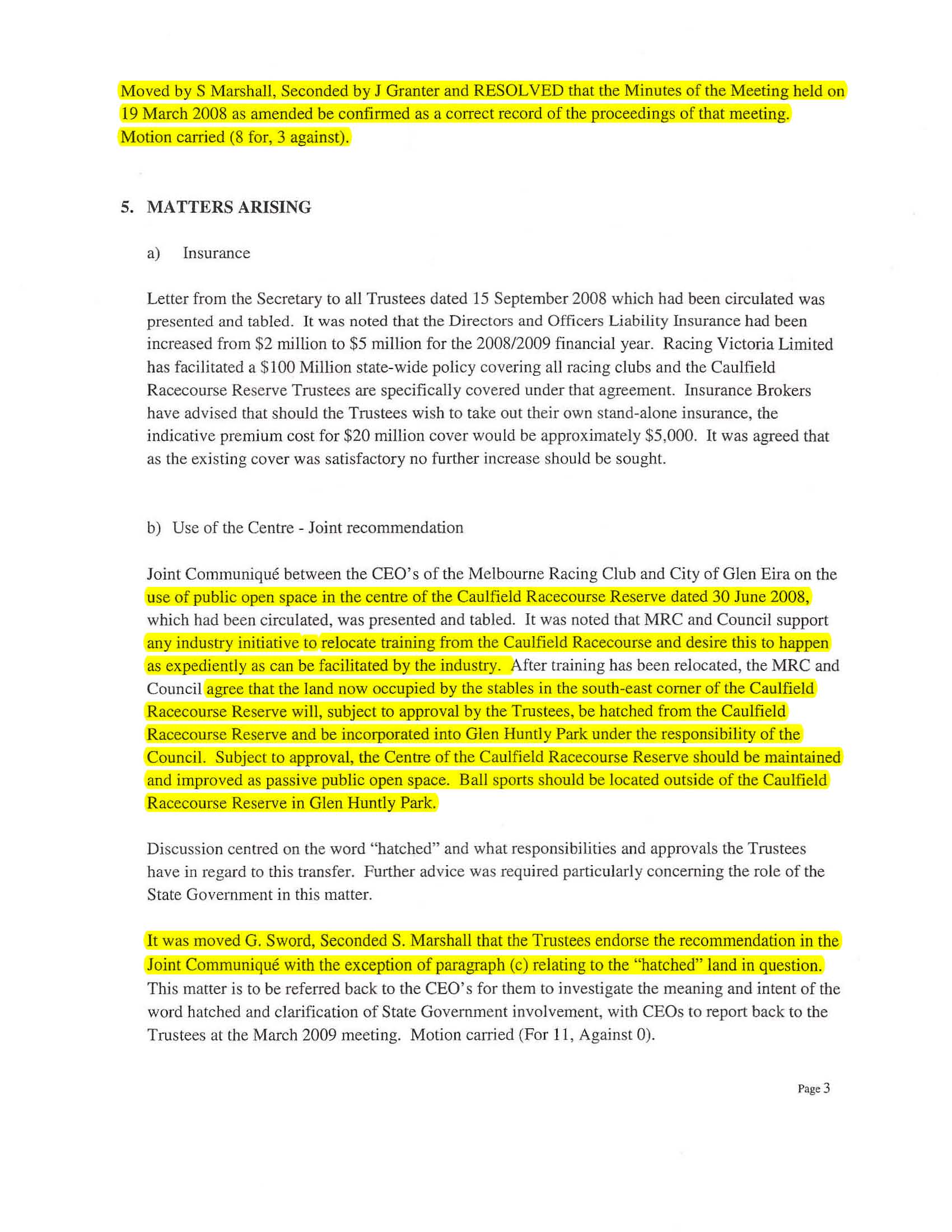
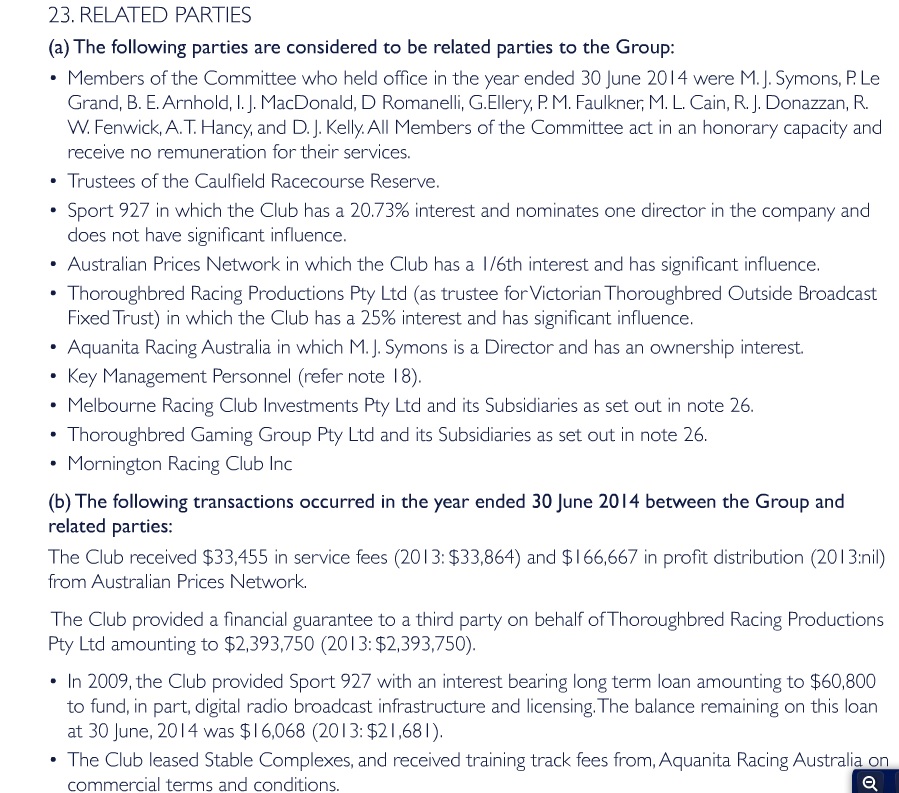
Thank you to one of our readers for alerting us to the changed Trustee website. Changes have occurred in that:

  • Minutes are now published
  • Financial reports are now published

However, the minutes clearly reveal the ongoing reluctance of the MRC to fully embrace the reforms recommended by the Auditor General. Leases remain in limbo with extension upon extension and master plans ‘progress’ at glacial pace. At this rate we have no real confidence that total reform is even close. It must also be borne in mind that on the topic of the removal of training there is stunning silence from all and sundry – including our councillor reps.

See the following links in order to access the minutes:

February 2014 – http://www.crrt.org.au/Portals/0/Downloads/Sep14/CRR_TRUSTEES_Minutes_180214.pdf

August 2014 – http://www.crrt.org.au/Portals/0/Downloads/Sep14/CRR_TRUSTEES_Minutes_070814.pdf

IMG

IMG_0001

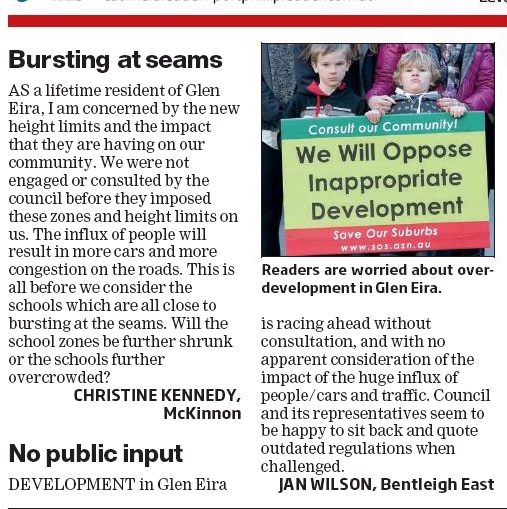
We have repeatedly stated that we believe that Glen Eira council has been derelict in its planning processes regarding the new zones. Apart from the lack of consultation, Council has not done the necessary strategic work to ensure the best outcome for residents. When major housing policies have not been touched for over a decade, and when reference documents in the planning scheme go back to 1996, then something is drastically wrong.

It also begs the question of why, and how, other councils such as Stonnington, could get the Minister to approve their zones that clearly are far superior to the ‘one size fits all’ model adopted by Glen Eira. It’s important that residents realise what could have been done, and hence, was NOT DONE!

Below, we present an overview of what Stonnington has achieved via its GRZ and RGZ schedules.

Stonnington has RGZ2 at 13.5metres height. It also has, in both the RGZ1 and RGZ2 Schedules, as well as ALL the GRZ schedules, the following requirement under site coverage –“Basements should not exceed 75% of the site area”. This is important because it means that underground car parking excavations have to be well contained within the site envelope. This helps avoid earth anchors onto neighbouring properties and problems with earth movements that might affect adjoining houses.

Stonnington also has countless other requirements for the GRZ zones in their respective schedules – none of which appear for Glen Eira. Here’s a sample –

Fences – Maximum height of 2 metres in streets in a Road Zone, Category 1. Other streets 1.2 metres maximum height.

Walls on boundaries – Walls should not be located on side boundaries for a distance of 5 metres behind the front façade of the building fronting the street.

Side and rear setbacks – For a distance of at least 5 metres behind the front facade of the building fronting the street, setback new buildings (including basements) a minimum of 2 metres from at least one side boundary and at least 1 metre from the other side boundary up to 3.6 metres in height.

Landscaping – In addition to the requirements of B13, at least one canopy tree should be planted on the site.

The most telling difference however, and as we’ve stated before, is the number of GRZ zones that Stonnington applied and the HEIGHT DIFFERENCES BETWEEN EACH. In other words, they have dissected their suburbs, planned according to recent developments, and didn’t adopt a ‘one size fits all’ approach as Glen Eira did. When we keep in mind that the heights for GRZ  in Glen Eira is an all encompassing 13.5 metres,(PS: oops, this should read 10.5m) it is remarkable what other councils could, and did, achieve. Here are the Stonnington GRZ schedules and their respective height limits –

Grz1 – 13.5m

Grz2 – none specified

Grz3 – 12m

Grz4 – 12 m

Grz5 – 9m

Grz6 – 11.5m

Grz7 – 10.5m

Grz8 – 12m

Grz9 – non specified

Grz10 – 9m

Grz11 – 12m

Grz12 – 9m

Grz13 – none specified

We report on one planning application from last night’s council meeting. Two others will follow. We ask readers to carefully consider the contradictions from all three sets of arguments; the repeated attempts at gagging free speech, and the basic mistruths that have been uttered time and again.

ITEM 9.4 – TUCKER ROAD

Delahunty moved to accept as printed. Seconded by Pilling.

DELAHUNTY: said that councillors had discussions on this and ‘went over it in great detail’. Application is to amend earlier permit and increase dwellings from 13 to 20. The Bentleigh area is a ‘very popular place to be’. ‘It’s a wonderful place to live’ and those living there are ‘very lucky’. ‘More people want to live there’. Councillors have taken into account objectors’ views but the permit should still ‘be issued’. A 2009 VCAT hearing allowed the 13 dwellings, so there’s ‘been some history’ and subsequently the land has been subdivided and now the application wants to extend the dwellings on the rest of the site. Meets height, mass under GRZ schedule. Parking and traffic is ‘within an acceptable limit‘. Amenity also ‘complies with ResCode standards’.

PILLING: there have been other 5 and 6 storey application in Murrumbeena and this is on a main road and is ‘quite acceptable‘. Development is ‘in the right area’.

HYAMS: councillors have a responsibility to the planning law and not necessarily to ‘what residents would like us to do’ even thought ‘this might be the easy thing to do’. ‘We need to apply planning law’. Said that ‘most of us’ take this ‘very seriously’. He ‘would like’ to refuse but the planning grounds don’t give the option of refusing – especially since the ‘permit that’s already there’. Whilst Tucker Road ‘isn’t a main road’ it is ‘certainly not a side street’. Height is within limits, and setback from front is better than permit granted. Side setbacks ‘aren’t as good as they were but still within acceptable parameter’. Conditions have increased setbacks and by removing study wall that makes it 3 bedroom and therefore more parking spots to be provided. Overshadowing will be the ‘same as current permit’. Regurgitated rest of officers report about waste management plan. etc.

LOBO: referred to Lipshutz saying on the Heritage Amendment (9.3) that ‘officers don’t get it right all the time’.

LIPSHUTZ jumped up with a point of order. ‘I did not say that’. (NOTE: LIPSHUTZ DID SAY THIS!). Claimed that he was ‘misrepresented’ by Lobo.

PILLING asked Lobo to retract comment. Lobo said ‘okay’.

LOBO: Asked why council says that ‘the new residential zones were established to maintain certainty for all?’ Said that ‘experience’ has shown him that ‘developers have more advantage’ than residents and that ‘residents are the downtrodden people in all this decision making’. Said that apart from the minimal change areas, the ‘flood gates have opened up’ and those ‘waiting in anticipation of these new zones have now come out of the woodwork’ and ‘anticipate’ increase and putting in their applications.

HYAMS: sprang up with a point of order saying that the Local Law requires ‘honesty’ in that Lobo is saying that the new zones are letting developments that previously weren’t and ‘we’ve said time and time again that that is not the case’.

PILLING: ‘I agree with’ Hyams and ‘what you are saying is incorrect’.

LOBO: said that he is ‘free for my opinion’.

PILLING: ‘you need to make factual statements’ if you’re speaking on behalf of council. Said that Lobo can ask the ‘director to clarify’ if he wants’.

LOBO: answered that he couldn’t ‘clarify because we have not gone to public consultation’. And ‘because it is a law, I have to agree with this’. Said that ‘internally, Cr Okotel and I did not agree’.

PILLING: told Lobo to ‘speak to the application’.

HYAMS: another point of order that what Lobo was saying about disagreeing with council on the need for consultation that ‘that’s not true either’.

LOBO: ‘it is true. Ask Cr Okotel’.

PILLING: told Lobo that he had already ‘corrected’ him on the information and that he should talk to the application.

LOBO: said that Hyams is ‘interpreting all the time’.

PILLING: again tried to stop Lobo while Lobo kept interrupting and saying that people should be allowed to talk.

HYAMS: said that Lobo is accusing him of ‘racism’.

LOBO: ‘I didn’t say that. I speak 5 languages’.

PILLING: again asked Lobo to ‘speak to the application’.

LOBO: said there is overshadowing. Residents also said that privacy, devaluation of property is no concern to the ‘three tiers of government’. ResCode is ‘simply a joke’ in terms of parking. Said that Guy’s powers were ‘extraordinary’.

PILLING: interrupted again asking that he stick to the application.

LOBO: said that his comments ‘were true’

PILLING: didn’t want discussion on ‘political stance’ but wanted discussion on the application. Lobo kept interrupting and Pilling said that he would tell him to stop unless he spoke about the application. Lobo claimed that Pilling was ‘pre-empting’ what he was about to say. Pilling disagreed.

LOBO: said he had a call from a resident who on talk back radio asked why the zones ‘had been introduced’ and that guy had said ‘it is the fault of the Glen Eira City Council’.

PILLING: again asked Lobo to stick to the application.

LOBO: claimed that all this can be ‘dirty, selfish’

LIPSHUTZ: another point of order and asked Pilling to tell Lobo to ‘sit down’

Lobo then needed a time extension. The motion was put and seconded by Delahunty. On the vote only Sounness and Delahunty voted for time extension. Motion was lost and Pilling told Lobo to sit down.

MAGEE: said that this application only ‘survives’ because it’s on Tucker road which is more than a residential street. The ‘impact before and after’ is ‘minimal’. Shouldn’t condemn developers for wanting to ‘maximise return’ because they also ‘maximise opportunities for families’. Tucker is the ‘entry point’ into Glen Eira because it is ‘most affordable’. ‘If we are to save the small suburban streets’ then this kind of application has to be ‘accommodated’. Although ‘not ideal’ it in the end ‘does comply’. On the ‘positive side’ it gives ‘opportunity’ for families to move ‘into the greatest suburb in Australia’.

HYAMS: said that Lobo had talked about overshadowing and he wanted Akehurst to say whether the overshadowing was ‘worse’ than the current permit.

AKEHURST: said that with the conditions imposed the overshadowing is ‘no greater’ than what the permit allowed.

SOUNNESS: found the application was ‘consistent with good, orderly planning’.

DELAHUNTY: said that objectors should be reassured that the conditions council has imposed ‘protect them from no greater harm’ than the original permit. Said that ‘people have to live somewhere’ and that we ‘can’t prejudge what type of people might move in’.

MOTION PUT AND PASSED. LOBO VOTED AGAINST.


« Previous PageNext Page »