GE Service Performance


Below are extracts from the VCAT decision on Penhalluriack’s application for FOI access to council documents. The full decision is available at: http://www.austlii.edu.au/au/cases/vic/VCAT/2012/370.html

The report indicated sampling and testing of the mulch itself had not been carried out. Rather, NAA’s report referred to the results of air testing conducted around the mulch storage facility (including at the adjacent playground) and compared with a neutral reference location. This was on the basis that it was NAA’s view that air testing was the most effective way to assess any threats to the health of the public, or Council employees working at the facility.

The report concluded that it was likely that workers and mulch users would potentially be exposed to bacteria (eg legionella) and fungi as a result of handling mulch. It stated however that air testing of the levels of bacteria and fungi at various locations around the mulch facility indicated that these were not elevated when compared with general environmental exposure. Nevertheless, it recommended a series of simple steps be taken to minimise the risks associated with the levels of bacteria and fungi which Council workers and the public would be exposed to. These included preventing buildup of large quantities of mulch, providing training and personal protection equipment for workers, installing a fine mist spray system and providing warning information to members of the public, by way of signs and flyers, about the risks of handling the material, equivalent to those provided on commercially available products.

Cr Penhalluriack was also concerned that the NAA report may have been compromised as a result of consultations between Council staff and NAA. This concern arose in circumstances where Cr Penhalluriack became aware that the report had been through a number of drafts, in consultation with Council officers, and also in the light of his concerns that Council officers had not taken the issue seriously when he had raised it prior to November 2010.

Cr Penhalluriack made an FOI request to the Council on 21 March 2011 (ie before to the 5 April 2011 resolution to remove the facility) in the following terms: I would like copies of all records relating to the Mulch storage facility from the time it was installed in Glen Huntly Park in or about August 2009 until now. These records should include documents arising from, or relating to, an enquiry to the Audit Committee on the 19th November 2010, and include diary, telephone, email and discussion notes, including a list which outlines the nature of any “complaints” or “comments/feedback” that have been received by Council and which were submitted by residents, contractors, or employees in relation to the Mulch storage facility

Cr Penhalluriack was also denied access to twenty-six documents. These were said to constitute internal working documents, and to be exempt under section 30 of the Act.

By the commencement of the hearing, consultations between the parties resulted in only six documents remaining in dispute.

This case is a little unusual in that the respondent is a Municipal Council, and the applicant is a Councillor of that Council. One would expect councillors to be provided with a deal of information by councils, on occasion including documents which would be exempt under FOI. However, there is nothing preventing councillors pursuing documents under FOI from their own council

30 Internal working documents

(1) Subject to this section, a document is an exempt document if it is a document the disclosure of which under this Act—

(a) would disclose matter in the nature of opinion, advice or recommendation prepared by an officer or Minister, or consultation or deliberation that has taken place between officers, Ministers, or an officer and a Minister, in the course of, or for the purpose of, the deliberative processes involved in the functions of an agency or Minister or of the government; and

(b) would be contrary to the public interest.

the key requirements of section 30(1)(a) are that the matter in the documents in question must be in the nature of opinion, advice or recommendation. Alternatively, they must comprise consultation or deliberation between officers, councillors or between an officer and a councillor.

It is well accepted that the term “officer” includes independent consultants retained by agencies to assist in carrying out their functions

This is perhaps the most significant document in terms of the controversy between the parties. It is described in the schedule of documents in dispute as “Email and Draft Report” dated 10 February 2011. The author is NAA. This document comprises first, a short covering email and second, the enclosed draft report. This was an earlier draft of the report which was provided to the Audit Committee at its meeting on 25 February 2011. This version is marked “V2”. The version produced to the Audit Committee which was publicly released is marked “V3”.

Although it has the same basic structure, the 10 February version of the Report (V2) differs from V3 in a number of ways.

In my view, it is a typical example of the type of document the Tribunal has frequently determined is a pre-completion draft, which should not be released. The final version represents the considered view of its authors, on the matters which the Council had asked it to advise about. To release the draft version would confuse readers, and could cause mischief or unnecessary concern, especially in the light of the fact that the report is dealing with an issue of public health (including investigating the prevalence of legionella, which has the potential to cause alarm in the community). What should and what should not be included in the final version of such a document are important in terms of the message which is conveyed to the public. As was discussed in Brog, it is in the nature of preliminary drafts that they are reviewed and polished- corrected by alteration, substitution and addition.

It was also submitted on behalf of the applicant that the desire to obtain an independent view by experts outside the Council was of significance here. It was argued in effect that it was in the public interest to be able to examine communications with the consultants, to shed light on whether their independence was compromised – whether they were unduly influenced by Council officers. However, this runs contrary to the concession which the applicant made, rightly, that NAA is to be regarded as an “officer” of the Council for the purposes of section 30.

Further, the facility was closed about 12 months ago. It might be said that this suggests any confusion or mischief is lessened with the passage of time. On the other hand, this could also be said to militate in favour of not releasing a draft version of the report, because it could be said to be stirring up something in the past which in itself creates mischief and confusion now. On balance, I do not believe the passage of time is a strong factor in favour of release in this case.

The applicant contended that only the first sentence of the second last paragraph could properly be described as an opinion expressed by a Council officer. I disagree. In my view, a fair reading of this document as a whole is that it is discussing the appropriate content of the report to be put to Council, and then, presumably, released publicly. It is part of the process of determining what the appropriate content of the report is, in order to fulfil its purpose, which is, broadly, to advise Council on any risks associated with the facility, and to recommend steps to deal with such risks.

The applicant invoked the high public interest in ensuring the protection of public health. His counsel, Ms Currie, submitted that the public are entitled to know what tests are being carried out to be able to scrutinise them and form a view as to their effectiveness and as to the quality of the report by NAA. She also referred to authority in relation to the need to be able to test expert evidence in legal proceedings, saying that the public interest here is akin to the rationale for scrutiny of expert material in litigation between parties where expert evidence is being relied on. Thirdly, she relied on the public interest in the integrity of independent advice publicly proffered to Council in relation to a matter of public health and safety. It was contended “that interest is of particular prominence in circumstances where the independence of the risk assessment and the reporting from the Council’s own processes was an essential reason for commissioning the independent risk assessment and report”.

I do not accept that any of these aspects of public interest are of sufficient magnitude to satisfy the threshold required for section 50(4). I do not accept the suggested analogy with the need for scrutiny of expert evidence in litigation. In relation to public health, of course this is important, but there is nothing in the content of the documents which suggests that an issue arose in the conduct of this matter by the Council, which gives rise to an overriding concern, or a need to expose the Council’s internal processes beyond what would normally occur in applying section 30. Whilst the spectre of “legionella” was raised, I do not accept there was a potential threat to public health of sufficient magnitude to outweigh the public interest against release, let alone require release of the document. Also, of course, the facility was closed down 12 months ago and so such public health concerns are no longer current.
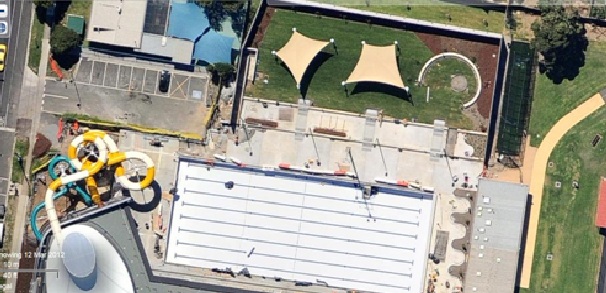
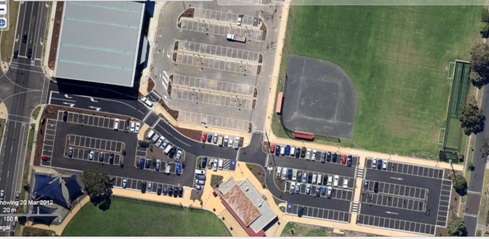
Photos are dated 20th March


Item 4.4 of the Special Council Meeting involved the ‘conflict of interest & Laneway’ issue. In the accompanying Officers’ report (which again has no name attached to it!) there is the statement –

“As the substance of this matter was handled under delegation and has not previously been considered at a Council Meeting, documents relevant to the Ombudsman’s Report are attached.

1. Recommendation That Council note that Council’s in-house lawyer (Corporate Counsel) rejected the proposal in relation to the laneway on 22 October 2009.”

We could again quibble and ask why only a selective version of correspondence is suddenly made public. What’s more important however is the statement as to whether the question of the laneway has ever come up in any shape or form at a council meeting. Clever wordplay such as ‘substance’ cannot disguise the fact that the laneway issue has featured prominently in previous formal council decisions. We refer readers to the minutes of 25th September, 2007 and the 16th October, 2007 where the question of the laneway and adverse possession were constantly referred to. We quote from the minutes of 25th September –

“Proposed construction of buildings and works over the right of way

The applicant does not own the right of way. It is a road within the meaning of the Road Management Act 2004, which is available for public use.

The applicant has rights to use it to access his property. The two adjoining residential properties facing Hawthorn Road also have access rights over the right of way from their properties.

The structure will physically block access to part of the right of way for the two Hawthorn Road residential properties, and prevent public access..

As an aside, the applicant has lodged an adverse possession claim for the right of way through the Land Titles Office. This process has not concluded. Notwithstanding this, it has no bearing on the town planning decision before Council”.

Also in these minutes there is an ‘addendum’ from planner Effie Tangalakis which ‘corrects’ the earlier officers’ report in its comments on the laneway. It reads in part:

“At its meeting of 4th September 2007, Council deferred consideration of Item 8.5 until the next Council meeting. The decision to defer the matter was subject to clarification on the ownership of the right of way affected by the proposal.

The right of way consists of two parts; a northern and southern portion. The southern portion is owned by Katrine Isobel Penhalluriack subject to an easement of carriageway in favour of the abutting properties in Hawthorn Road.

The Certificates of Title to numbers 339 and 341 Hawthorn Road show the combined northern and southern portions as being a “road”. The ownership of the right of way, as with the ownership of the subject site or adjoining properties, does not affect the town planning consideration or the planning merits of the case. What is significant though are the carriageway rights to the abutting properties over the land on which the planning permit is sought for a building.

As indicated in the Council report, this outcome does not constitute proper and orderly Planning”.

Council meeting of September 25th 2007 contains emails sent by Penhalluriack to councillors. The emails focus on the inaccuracies in the officer’s report especially in relation to the laneway issue. It’s also clear from these emails that Penhalluriack as a citizen, not a councillor, had meetings with councillors regarding the issue – as is the right of any ratepayer.

Penhalluriack’s application was eventually passed 6 to 3. Those voting in favour WHO ARE CURRENTLY SERVING COUNCILLORS WERE : Tang, Lipshutz and Esakoff. 

To therefore claim that the issue of the laneway has been exclusively handled under delegation and has never ‘in substance’ come up before council is both untrue and another example of selective corporate memory. Even the ombudsman reveals that current councillors had knowledge of such dealings when he states:that the document that Cr Penhalluriack was seeking was created before Cr Penhalluriack became a Councillor and was created for the purposes of advising former Councillors of Mr Penhalluriack’s various disputes with the council.” 

All councillors therefore knew about the disputed laneway. Several of them had even voted on the application that contained the contested ‘roadway’. To now plead ‘ignorance’ and the furphy that it was all handled under delegation does not coincide with the facts of the matter. None of these councillors are poor, innocent bystanders, ignorant of what has gone on. This is simply another example of misrepresentation and deliberate distortion of the facts. More than anything, Lipshutz, Tang and Esakoff have played a major part in this whole fiasco.  

When Lipshutz, Tang and the others last Tuesday night voted to unanimously accept the recommendation they created a further black mark against themselves! Lobo’s pathetic attempt to disengage himself from the situation with his totally irrelevant argument is even more laughable, especially when he took the Ombudsman to task with the following comments: 

LOBO: read the title of the ombudsman’s report and stated that he had to ‘wrestle’ with this since the meaning of ‘governance’ embraces all councillors and staff in providing ‘transparent and accountable local governance’. Went on to say that he thought he and others had done ‘all we could do to help’ Penhalluriack and as a result he rejected the title of the ombudsman’s report saying that it should have instead been called bullying etc. ‘by a councillor of the city of Glen Eira’. Lobo then claimed that the ombudsman has ‘painted all of us’ into the ‘category of poor governance’. He concluded by saying that ‘we have done what we had to do’. 

PILLING: reiterated the blurb that this issue hadn’t been handled at a council meeting and that it was all done under delegation and he supported the recommendation. 

Our conclusion is that the ombudsman on this one point at least got it right. All councillors are tainted by their failure to provide good governance in continually accepting without question or comment the nonsense that is put before them by administrators.  

ITEM 4.3: Reopening the mulch facility

Penhalluriack declared a conflict of interest as a result of the ombudsman’s report but maintained that he hasn’t a conflict of interest.

Lipshutz moved the motion to reopen and Magee seconded.

LIPSHUTZ: Said that when council first made its decision to close the facility that this was based on ‘mainly’ on Penhalluriack providing councillors ‘with some reports…..mainly Google (based) I understand….(and what council has got is a report made by a government department and professionals, so) ‘appropriate course would be…..reinstate the mulch shed’ (and put into place the recommendations from the consultant. Will provide) ‘safety and certainty for the community’.

MAGEE: Magee said that he’d asked many customers from the sawmill industry about how they ‘confine’ their green and dry waste. The answer that he was told to overcome all problems is a ‘mist spray’….’keeps the dust at bay’ (so stops the inhaling of dust). Was pleased to see that the consultants recommended this and admitted he didn’t notice this when he first read the report ‘so good to see that’s an industry standard’. Stated that the mulch would now be ‘confined within the confines’ of the shed and not allowed to spill out. Said that all the recommendations such as gloves, masks, spray etc. would be installed and that if in 6 months times ‘we’re still having issues’ and the mulch is seeping out, then the shed could be regularly emptied. ‘I’m more than happy with the conditions that are put on it’ and that now with the industry standards applied that ‘they are more than sufficient’.

FORGE: announced that she had an ‘alternative motion’ that stated the item is ‘outside the scope of the notice’ of the agenda and that all councillors be given before the May council meeting ‘all necessary documents relating to the mulch facility’ and that these consist of ‘all test reports conducted by Noel Arnold’ followed by a report from officers on relocating the facility.

PILLING: stated that in May last year there had been a request for a report on alternate sites ‘that hasn’t come to council….I have concerns about the site….next to a chiildren’s playground and a school….I support the request for a report…. I think it’s fair enough that the report comes to council before we vote on it’. Spoke about the arguments put up when there was discussion about Notice of Motion and that councillors should have information and that applies here – ie councillors get the information first and then vote…..’we should follow process’….”I’ll be voting against 4.3″.

TANG: Said it’s important to explain his position. On the original motion back last year he ‘was in opposition’ to the motion to close the facility. Said that he didn’t have concerns about the faility until Penhalluriack raised them. Said he thought that Penhalluriack’s position was ‘unreasonable’ in light of ‘the advice council had received’. These people had ‘put their professional qualifications on the line’ and he felt that with their recommendations the facility should have remained open. ‘My position in that regard hasn’t changed’….(and when councillors resolved to close it that’s why he moved the request for report on other suitable locations) ‘because I felt there was community support for the facility’….’the appropriate safeguards being those recommended to Council’. ‘We didn’t see the results of that report…..(because) of the various priorities Council has had…..I would want to see the outcome of that report…..(facility was good)’ but location was wrong….they should have the opportunity to see alternate sites….this facility can be provided from Glen Huntly Park with appropriate safeguards’. Happy to make a decision after seeing the Officers’ report.

MAGEE then asked Burke that since council has been looking for a site ‘for so long, has council found an alternative site?’

BURKE: ‘No we haven’t….original motion which was to close a free service not a service that was anything else’

MAGEE asked what difference this makes.

BURKE: ‘There is a good deal of confusion. Some people believe there were health issues. The motion was never about health issues. The motion was about closing a free facility’.

MOTION DEFEATED – voting for LIPSHUTZ, LOBO, MAGEE.

AGAINST: TANG, PILLING, FORGE, HYAMS

FORGE: repeated what she said earlier – item be adjourned; 2 weeks before 1st May meeting councillors receive ‘all necessary documents’ about test results and a report on feasability on relocating the facility ‘as previously requested by Council’. THERE WAS NO SECONDER!

LIPSHUTZ came up with another motion that councillors be ‘provided 14 days prior to the Council Meeting’ documents ‘including but not limited to all test results’ from consultants and a report from officers also be provided.

PILLING sought clarification on the reports. Burke answered that there is ‘only one report’ and that he is ‘not assuming that this is an attempt to gain access to documents that would be in confidence’.

LIPSHUTZ then rephrased  his motion AND  removed the word ALL from ‘test results’. Forge seconded.

LIPSHUTZ: Acknowledged that ‘process is important’. Forge’s original motion was ‘inappropriate because it is within the scope of this Council Meeting’

That’s why he couldn’t support the first part of Forge’s motion. Also said that for the Noel Arnold reports that ‘that’s not in the purview of Council and Council can’t ask for that….(they can look at the report and the) ‘process would be that council would consider the report’ (if there’s another place to relocate then) ‘council would consider that’.

TANG: Said that this is ‘difficult’ because not everyone agrees as to why they ‘knocked back the motion as printed’ (Didn’t support Forge’s motion because he didn’t think) ‘it was outside the scope….it does relate to the finding of the Ombudsman’. Went on to say that it ‘doesn’t matter’ if the driving force was Penhalluriack because ‘at the time we all had to make a decision based on the advice we received’. On test reports ‘I just don’t know what councillors are going to do with it….(councillors aren’t going to put an interpretation on them – that’s the job of Noel Arnold) ‘they need to interpret their test reports and come to a conclusion’….(Councillors can disagree with their report but not to) ‘rewrite the report based on the source material…..that’s outside the scope of the decision making process’. ‘I’m not in favour of reinterpreting the test results’. Said that councillors really want a report on ultimate sites. What’s wrong with Forge’s motion was ‘that there is no guarantee that that will go to the community’ so the resolution needs to ask that it goes to a council meeting. Suggested that this be added to the motion.

FORGE then asked Newton about the notice for the meeting that appeared in The Age. She read out the ‘purpose of the meeting’. ‘It seems to me we’re taking a lot of time to discuss the mulch’ and why this wasn’t included in the notice so that the gallery would know what they were going ‘to listen to’.

NEWTON: Said that the ‘meeting was called by the Mayor, not by me’ and that the ‘business of the meeting was specified by the Mayor’. The CEO ‘does not have the power to determine’ the agenda for Special Council Meetings.

FORGE then asked Hyams the question.

HYAMS: Read out the title of the Ombudsman’s report and said that the report ‘had a number of paragraphs….about the mulch facility. So in discussing this issue we are discussing that report’. Also stated that the agenda item was made available on the Friday so ‘the public would have seen’ what was to be discussed.

HYAMS: Agreed with Lipshutz and Tang that it’s important to get the officers’ report and ‘that’s the way we should be proceeding’. Said he would be voting against the motion because it doesn’t do ‘what councillors intend it to do’.

LIPSHUTZ: Said that the consultant’s report doesn’t mean that ‘councillors can start reinterpreting’. That before councillors make a decision it’s ‘appropriate’ that the officers’ report ‘is in front of us’. Supported Tang that the report comes back to an ordinary council meeting and would accept the amendment.

MOTION PUT – MOTION IS LOST

FAVOUR – FORGE, LIPSHUTZ, LOB0

AGAINST – HYAMS, MAGEE, TANG, PILLING

TANG then moved the motion that a report be provided to ordinary council meeting ‘detailing all findings to the…..feasibility….of alternate mulch facility….within the City of Glen Eira’ and that paragraphs 28-73 of the Ombudsman’s report as well. Lipshutz seconded.

MOTION PUT – carried unanimously.

Errors stall Glen Eira pool opening

BY BEAU DONELLY
02 Apr, 2012 01:48 PM
CONSTRUCTION of the $41 million Glen Eira Sports and Aquatic Centre is expected to be completed later this month – four months behind schedule.Head of the pools steering committee, Cr Michael Lipshutz, said builders’ mistakes and “cost-cutting” measures by developer Hansen Yuncken were to blame for the delay.“Part of the delay has resulted from our two  project managers catching the builders cutting corners and making mistakes, some of which are serious,” he said. “We’ve made them fix it because we want the highest quality finish and want the centre to last at least 40 years.”Cr Lipshutz said that while some of the mistakes posed a danger to public health and safety, most were cosmetic.

But while the council was pressing to have the centre open by the end of April, Cr Lipshutz said progress was ‘‘in the hands of the builder’’.

Hansen Yuncken will be forced to pay more than $1 million in liquidated damages for the project running late. To date, the council has paid Hansen Yuncken $36.89 million.

According to the council’s GESAC eNewsletter, the gym, indoor stadium, change rooms, child-care centre, reception and car parks have been completed.

Builders are still working on the outdoor concourse and final rectification works around the site.

Glen Eira Council spokesman Paul Burke said staff had started to install gym equipment.

“Once that is done and all construction work has been completed, the community will be advised of the precise opening date for GESAC,” he said.

Hansen Yuncken’s Victorian manager, Richard Hansen, said it was not appropriate to comment.

COMMENT
  • Will Lipshutz’s comments get him into trouble? – ie. ‘cutting corners’
  • Does ‘not appropriate to comment’ mean that residents should start looking out for a long and protracted legal battle? Will we be told even if this does eventuate?
  • Tender for gym equipment went out (listed as higher purchase agreement with Westpac) in July 2011. It was still being discussed in camera at last council meeting. Thus, is there a problem Houston? If not, then why the need for another in camera ‘discussion’?

One of the items on the agenda for next Tuesday night’s hastily called Special Council Meeting contains the ‘recommendation’ that the Glen Huntly Rd mulch facility be re-opened AT GLEN HUNTLY.  Under the pretext that this meeting is called to deal with the Ombudsman’s ‘recommendations’ Newton and his supporters have snuck this item into the agenda. Readers need to be fully aware that:

  • The ombudsman never recommended the reopening of the facility
  • The ombudsman also never commented on the potential health risks

Nothing but nothing in the ombudsman’s report has anything to do with the Peter Jones’ (under orders?) recommendation.

Further, the consultant’s scientific report is currently the subject of an FOI application. Council has refused to release documents that could have a direct bearing on any decision regarding the facility. Yet, here is the officers’ recommendation urging a re-opening. What if the VCAT member determines that the documents be released and the information reveals undue interference by officers? What if the health risks have somehow been downgraded? We already know that not all of the recommendations made it into the final version of the report. So given all these ‘unknowns’ and their possible ramifications for any decision making, why is this item in the agenda?

Tuesday night will therefore be the ‘acid test’ for councillors. Will they cave in and reopen the facility in exactly the same place? Will we witness another example of hypocrisy and the further erosion of public trust in anything that some councillors state?

We should remember that:

  • In May 2011 Tang’s Request for a Report on alternate sites and relocation of the mulch facility was passed by Council. It has yet to make an appearance. This resolution still stands, yet there is no recommendation to ‘rescind’ such a motion and replace it with the current one.
  • When councillors voted on the above many of their arguments were that they felt that the current location was clearly inappropriate given its proximity to a playground and a school – not to mention a public park. In fact our notes and the post we made at the time report that Pilling stated that the placement is wrong ‘wedged between a playground and a secondary school….I think it should be moved’. Esakoff also said that ‘given its location near a playground caution is warranted’. Nothing has changed. The facility is still there – contrary to the initial motion that it be removed. So much for council’s resolution and the legal requirement for the CEO to action all resolutions in a ‘timely’ fashion!
  • Even the mover of the request (Tang) stated that if his motion for the report was defeated he ‘would let the issue lie’ – ie maintain the closure of the facility.

The acid test is definitely on councillors who voted for closure. They now have the opportunity to stand by their original words and decision. It is time that they put a stop to the continual manipulation that is endemic in Glen Eira and stood up for what is ethical, transparent, and represents good governance.

At the heart of this entire issue is the simple fact that the mulch facility should never have been placed at Glen Huntly. This decision was made by officers and we presume senior administrators. The campaign against Penhalluriack is, in our view, directly attributable to the fact that in response to resident concerns, he has dared to question and therefore highlight the potential failure of risk management at this council and faulty decision making. For this temerity he must be punished and tens of thousands of ratepayers’ funds expended on this inquisition.

This Special Council Meeting, called with such indecent haste, should be seen for what it is and questions asked as to why this particular recommendation is included since it has absolutely nothing to do with the Ombudsman’s Report. It’s definitely time that the games that Newton plays be exposed and challenged. That’s the acid test. Which of these councillors can pass the test?

Based on a careful reading of the report, the public should be concerned about the role of Ombudsman in investigating people as distinct from government organisations, practices, and legislation. I’d be furious if a report was written as maliciously about me. As for the timing, designed to prejudice a matter before VCAT, one good thing to emerge so far from VCAT is that it criticized the lack of specifics in Council’s case. The Ombudsman makes the same mistakes, and adds several of his own. The overall impression is that the Ombudsman is not a reasonable person, is incapable of critically analysing information, and is prepared to use his incredible coercive powers to assist (MODERATORS: phrase deleted) of a fellow bureaucrat.

Analyzing the report properly would take a similar amount of space to that of the Ombudsman’s, which would be about as tedious as his own report. For the moment I’ll just make the following general comments.

The report is not about conflict of interest, poor governance and bullying at the City of Glen Eira Council. The report makes that claim, but the contents reveal that the report is only concerned with Cr Penhalluriack. No investigation of poor governance or bullying by other members of council or council staff has been done.

Although Worksafe appears in a list of reports done by the Ombudsman, there is no appearance of Worksafe with respect to various accusations made about bullying, harrassment, humiliation. Its almost as if Council is aware that should Worksafe be involved, the behaviour of other individuals, include the Mayor and CEO, would be examined. Maybe they have received legal advice warning them not to involve Worksafe. I have previously pointed out some behaviours that constitute bullying according to examples provided by Worksafe. Incidentally, there is only one piece of evidence in the report concerning harrassment, and the victim was Cr Penhalluriack.

The expression “conflict of interest” is bandied about in the report carelessly. “Conflict of Interest” is defined in Local Government Act, which also places limitations on what is conflict of interest. Both Cr Penhalluriack and the Ombudsman are aware of LGA 77A(4). The Ombudsman sneeringly dismisses it (“irrelevant”), but doesn’t say why. Quite simply, the Ombudsman despite *all* the evidence available to him concerning the mulch heap, doesn’t see it as a health issue. Even the CEO did though, taking some actions to soften the criticism when it emerged that the facility was a health risk and was poorly operated. The CEO, as the driving force for the relocation, is embarrassed about his failure to do due diligence about the site and its operation.

The interpretation of 77A(4) is critical to much that is at stake here–whether a perceived conflict (as defined) can “reasonably be regarded as capable of influencing any actions or decisions of the relevant person in relation to the matter”. The Ombudsman has revealed elsewhere his belief that $20 is sufficient to be capable of influencing an officer. [Unless they’re Musical Viva tickets.] The trouble with being a martinet and expecting others to follow is that it leads to poor governance. Few of us were happy that a Gang of Four (GoF) were given delegated authority for matters as important as C60. It came about because of the interpretation some councillors placed on matters as trivial as having a drink with a member of MRC executive. (MODERATORS: Sentence deleted).

There is a particularly telling section in the report, #151, in which the Ombudsman quotes uncritically a Council resolution to make certain matters public. From the resolution: “and in accordance with the legislation that states that the applicant must be a Councillor or Councillors”. Of course, the legislation doesn’t state that. The legislation very clearly provides 81B(1)(a), meaning Council can apply. It is symptomatic of the carelessness plaguing both investigations and Council’s efforts, in which honesty and integrity have been sacrificed.

The Ombudsman claims repeatedly that council officers have been diverted by Cr Penhalluriack’s behaviour and not focusing on what they should be. He didn’t provide any evidence or justification for saying this, although the lack of structure plans, open space, openness in decision-making does support the view that council and officers haven’t been doing what they should.

The Ombudsman also makes the extraordinary claim, without evidence, that Cr Penhalluriack’s “services on the council have not been of assistance to the good government of the City of Glen Eira”. This is an unforgivable abuse of his powers. Cr Penhalluriack has been prepared to ask questions and to analyze critically Council reports, and at least made a token effort to resist the culture of secrecy that pervades our council. Accountability is so important, it appears multiple times in the Preamble, the very *first* section, of LGA. The Ombudsman has not been elected to his office and is not accountable to the people of Victoria. If he doesn’t like elected representatives then he should advocate shorter terms for Council like we once had.

In several places the Ombudsman refers to carefully selected past incidents in an attempt to use prejudice to strengthen the case against Cr Penhalluriack. The Ombudsman should have known, given his extraordinary coercive powers, of the long history of ill-feeling between the CEO and Cr Penhalluriack, (MODERATORS: phrase deleted). He should also have known of the matter between the CEO and Cr Grossbard previously, of the sacking of Council in 2005, the members of that council who are currently councillors, of the manner in which Andrew contributed to (some may say engineered) the downfall of a previous CEO, of the embarrassing “apology” issued by Cr Esakoff to the CEO concerning the seeking of the reasons why a long list of requested reports had not been published in Council Minutes, the hissy fit he threw in public when Cr Penhalluriack asked his reasonable question. This should have been either stated or acknowledged when attaching weight to the statements he accepted uncritically and the ones he rejected when statements conflicted.

And so it goes. Instead of improving governance in Glen Eira, such as by tackling the excessive use of secrecy, the Ombudsman has chosen to add to the problem. Only he knows why.

The Grattan Institute yesterday released its insightful report Social Cities. We’ve selected a few extracts and ask readers to contemplate what can be done and how well our councillors and planners are moving in this direction – if at all? The full report is available from: http://www.grattan.edu.au/publications/137_report_social_cities.pdf

“…quality of open space is just as important as the quantity. A small park that is well maintained and watered, with established trees to provide shade, vibrant flower gardens for visual pleasure, quality seating and creative playgrounds, will be used far more actively than a park that is far larger but less inviting. In fact without appropriate design, parks can be too big for comfort. In his pioneering work William H Whyte demonstrated that people prefer to congregate on the edges of public spaces (see Figure 18). So if seating and play equipment are stranded in the middle of large open areas they will not get much use, because people will feel exposed and vulnerable. This is particularly true when a park is bounded by busy roads, blank walls and fences or vacant and derelict land.

Some of the most successful parks are intimate mini-parks or ‘pocket parks’. Pocket parks are often created on irregular-shaped patches of land that are too small for building, or on vacant lots between other developments. Sometimes the developers of major projects are required to include pocket parks as part of their planning approval. In response to the sub-prime mortgage crisis, the City of Los Angeles is transforming foreclosed properties into pocket parks with the aim of adding amenity and raising the value of surrounding houses and neighbourhoods at the same time.

In the 1980s in the UK, Northamptonshire planner Alan Teulon pioneered the idea of pocket parks by involving local residents in identifying, creating and maintaining small, local parks. This evolved into the Doorstep Greens program that, for a small investment, has transformed more than 100 neglected public areas into popular green spaces. Strong public engagement and volunteering has helped to keep costs and vandalism down. The process of developing these pocket parks has brought local residents together and helped to foster social connection.(p.23)

Traffic

In his pioneering work on streets, Donald Appleyard showed that residents in a street with light traffic flow (2,000 vehicles per day) had three times more friends living in the street (and twice as many acquaintances) than residents on a street with heavy traffic flow (16,000 vehicles per day).

The heavily trafficked street had little or no sidewalk activity while on the street with light traffic, front steps were frequently used for sitting and chatting, and there was play and casual conversation on the pavement.

More recent studies confirm the impact that traffic has on the time people spend on the street. In New York, 44% of people who live on streets with heavy traffic say they respond by going out less often. This compares to only 7% of people who live in medium traffic areas, and 3% of people in light traffic areas. (p.36-7)

There are many ways to shift the role of streets from the car dominated default. The first and most obvious is to reduce speed limits in residential streets. In recent years the default speed limit in built-up areas in many Australian cities has been reduced from 60 to 50km/h. Road safety experts say Australia should follow the Swedish example and further reduce residential speed limits to 30km/h, a speed below which pedestrians have dramatically improved chances of surviving the impact of being hit by a car.

Perhaps counter-intuitively, a significant reduction in speed limits is predicted to have only a minor impact on average travel times (p.38)

After being sent packing by VCAT to redo their allegations against Cr Penhalluriack, Council’s lawyers (Maddocks) have come up with the following gem in their long list of complaints. We quote:

“it is alleged that the Respondent acted unreasonably towards the Applicant’s Director Assets and Facilities by criticising him at the Council meeting on 14 December 2010, by: referring to a project in respect of stormwater harvesting in Boyd Park, Murrumbeena as a ‘ridiculous project’ and a ‘waste of money”.

We’ve double checked what occurred at this meeting and in our post of the 15th December 2010 we reported:

Item 9.8 Boyd park water (Pilling).

Penhalluriack spoke against the motion stating residents believe ‘they (council) are hopeless, but I’ve been defending council. But this one is the most ridiculous waste of money I’ve ever come across…This is $1.1 million dollars. Yes the government is giving half. So what? It is still money that can be spent’ elsewhere than this ‘extravagant, extroadinary waste of money’. He estimated that the final cost of the water would be 15.17 cents per litre. ‘Why should we be spending 16 cents per litre on this water….? “This is a nonsense….this is one of the worst money wasting schemes I’ve ever come across..’ No-one in their right mind would want to install this tank underground and pay 16 cents per litre. Magee agreed with Penhalluriack – it was still spending $500,000 council dollars. That’s money ‘that we could spend in our municipality servicing our ratepayers…’

Tang then stated that Penhalluriack ‘has gone further than he needed to’; that he didn’t have to talk about ‘the quality of the proposal’ and include ‘gratuitous references’ about it!!! ‘I think it is a good proposal’.

Lobo also saw it as a ‘big waste of money’ and wanted a ‘cost benefit analysis before we consider it further’. Forge also called for a more ‘accurate cost benefit analysis’ and the need to defer decision until more analysis was completed”.

COMMENT

Councillors have a legal and fiduciary responsibility to ensure that public funds are spent in the most efficient and responsible manner. Councillors also have the right to demand complete and full information prior to their decision making. Debates are part of the political process. What occurred on December 14th 2010 is exactly what should happen – 4 councillors questioning the lack of detail in an officer’s report. Yet, only Penhalluriack is accused of ‘acting inappropriately’ and ‘criticising’ Peter Waite. If this is representative of the quality and substance of Council’s allegations then a full inquiry is necessary to determine how and why tens of thousands of dollars have been spent in an orchestrated witch hunt against Penhalluriack. As for Waite’s ‘embarrassment’ we leave this up to readers to determine.

« Previous PageNext Page »