GE Service Performance


Paul Burke is dissembling once again. The consultation held prior to the adoption of the detestable Urban Villages policy did not support the vision that Council chose to adopt. At *no stage* did the community authorize Council to waive compliance with ResCode. The community has never accepted that developer profit is sufficient reason to waive compliance. Council refuses to invest in the infrastructure necessary to support quality high-density living. People who read the policy will be aware that there are obligations on Council around not exacerabiting existing traffic congestion problems.

Council has never explained who or what a “pedestrian driver” is, or why some developers have been allowed to build without a Planning Permit. Even the recent pathetic response from Paul Burke about the loss of trees at Council reminds us that car parking for council officers is more important. This is despite them being located on 2 different modes of public transport. The hasty vote to expand the carpark at GESAC rather than provide adequate public transport reinforces the message that they simply don’t believe in their policy. The lack of Structure Plans for areas targetted for the highest densities is extraordinary considering the benefits DPCD claims for them.

We have crumbling infrastructure that Council can’t maintain. Developers don’t pay for the infrastructure needed to support their profits–we the community are expected to subsidize them. So what does Council do? It votes to remove Development Contributions Overlays. (If you can believe Council, $150K was inadequate, and it cost them more than that to collect.)

Even the way C87 has been handled shows contempt for us. Council has published an “Explanatory Report” which is supposed to answer why the amendment is necessary and what the benefits are. It claims its needed because a Planisphere report recommended it. The Planisphere outlines what Council told it to do, and it has done as Council has asked (and paid them to do). Note also that Planisphere was explicitly told *not* to consider any property outside of the Minimal Change areas. The benefits listed apply only to the chosen few residents and seem to undermine Council’s pro-development arguments elsewhere.

As Council has been forced to admit, the Objectives of Planning in Victoria include “to provide for the fair, orderly, economic and sustainable use” of land, and “to secure a pleasant, efficient, and safe working, living and recreational environment for all Victorians”. It has failed to demonstrate in the propaganda distributed with C87 how it has met *any* of these Objectives. There’s certainly nothing fair about Council’s policies, very little that’s pleasant about the consequences, and its failure to provide open space within safe walking distance of the urban ghettos its encouraging, despite collecting money to pay for it, is simply insulting.

The MBA Executive have put out the following statement:

Dear Members,

GESAC Update from Council Meeting 14-Dec-2011

We are very keen for the MBA to have a presence in GESAC as we see ourselves as clearly the most logical occupant. Consequently we will work with Council and the Warriors to see whether there is a way in which the proposal as outlined below can be made to work.

However, what the motion does not contemplate is the fact that the court space we currently occupy is not ours to allocate to others as we see fit. As such we will need to work with our relevant schools to determine whether they would be agreeable to such an arrangement. This process has already commenced. It is important to stress this point as some recent media reports suggest that we have already agreed to the proposal as outlined in the motion, we have only made such commitments subject to agreement from our existing landlords.

On December 14, 2011 a motion was put before Glen Eira City Council by Councillors Hyams and Lipshitz, the motion read as follows:

That Council

  1. Note that:
    1. As the result of a fair and proper Expression of Interest (EoI) process, the use of the GESAC indoor courts for basketball was allocated to the Warriors;
    2. In the interests of maximising the use of the GESAC indoor courts by the community, Council’s preferred position is that the basketball allocation be shared between the Warriors and the McKinnon Basketball Association (MBA); and
    3. Notwithstanding the allocation referred to in (a), the Warriors have indicated a willingness to share that allocation with the MBA.
  2. Allocate the use of the GESAC indoor courts to the Warriors on Fridays from 6pm to 11pm and Sundays from 9am to 11pm.
  3. Allocate the use of the GESAC indoor courts to the MBA on Saturdays from 8am to 11pm subject to the MBA agreeing by January 15 2012 to provide two alternative basketball courts to the Warriors from 8am to 7pm on Saturdays to the reasonable satisfaction of the Warriors, or, if such agreement is not reached, or observed, allocate the GESAC indoor courts to the Warriors on Saturdays from 8am to 7pm.
  4. In all other respects, apply the terms and conditions of the allocation referred to in 1(a) to the use of the courts by the Warriors and, if applicable, to the MBA.
  5. Authorise officers to give effect to this resolution.
  6. Incorporate this resolution and this report in the public Minutes of this Meeting apart from Council’s legal advice at section 3.4 of this report and in the attachments.

DIVISION Cr Magee called for a Division on voting of the SUBSTANTIVE MOTION FOR: Cr Tang, Cr Hyams, Cr Lipshutz, Cr Forge AGAINST: Cr Magee, Cr Penhalluriack, Cr Pilling, Cr Esakoff

The SUBSTANTIVE MOTION was put and CARRIED on the casting Vote of the Chairperson (Mayor Cr. Hyams)

Finally, it is worth noting that this allocation is for 12 months and that it is our understanding that should the Warriors be unable to fully utilize the space they have committed to for their own use, any surplus capacity will be reallocated by Council and must first be offered to McKinnon.

Kind regards

MBA Executive Committee

Source: http://www.sportingpulse.com/assoc_page.cgi?client=1-4059-0-0-0


New boundaries are being declared along the Elster Creek Trail – as we suspected! We’ve previously highlighted what this implies regarding Council’s planning department and how poorly they do their requisite homework. For example:

  • The claiming of land has been known to council for at least 15 years
  • They’ve spent a fortune on a concrete path without first checking to see whether they have constructed this path on, or far too close to private property
  • The most interesting query is whether ratepayers will be forking out money to ensure that this and potentially other new fences do not sit on, or right next to the yellow brick road. If money is handed over to landowners, then what’s the cost to residents for something that should never have happened?

We reiterate – we do not have any problem with landowners claiming what is their legal right to land. At anywhere between $1000 and $2000 per square foot this is not a negligible sum that many would be ready to forego. What we do have a major problem with, is the failure of this council to ensure that all necessary planning has been done beforehand. When you create a flood plain (as the raising of this path has done), and when you don’t know where public and private land meet, then we believe there is cause for concern as to the competence of those responsible.

The slideshow reveals the ‘before’ and ‘after’ view and the amount of land that has now been ‘reclaimed’. Please also note that the new fence line is directly over major drainage and a lightpole. Who pays for relocating, removing is another fascinating query. We also wonder whether the landowner fully realises that this particular section of the trail is more often than not under several inches of water thanks to the new yellow brick road!


This slideshow requires JavaScript.


The silence from both the Warriors and the McKinnon basketball club does not augur well for the ‘compromise’ that got over the line at last council meeting on the casting vote of Mayor Hyams. The deadline for ‘agreement’ was listed as the 16th January. Now twelve days later there is deathly silence from both groups. Hence we can only surmise that the deal has fallen through – either because ‘suitable’ playing venues for the Warriors on the Saturday weren’t acceptable to them, or to the location owners the McKinnon club offered.

Whichever, it again highlights the total balls up by the administration and councillors. It basically leaves the Warriors with the prospect of filling all the venues, paying out big bucks and praying like hell that they can cover costs or get someone else to cover the costs for them via a ‘takeover’. In the end GESAC may not be the home of either the Warriors or McKinnon.

These are the facts currently facing Glen Eira:

  • a ‘high risk’ council as determined by the Auditor General
  • a liquidity cash crisis due to GESAC
  • repeated statements on the need to curb spending

So, given these circumstances, it is absolutely astonishing that we find the following Media Release by the Minister for Sport & Recreation.

Funding boost for new playspace at Murrumbeena Park

Thursday, 19 January 2012

Families in the Murrumbeena area will soon have access to an exciting new accessible playspace thanks to $258,921 of Victorian Government funding set to go towards a new community facility at the popular Murrumbeena Park.

Minister for Sport and Recreation Hugh Delahunty visited Murrumbeena Park today to announce the funding boost from the latest round of the Community Facility Funding Program.

“Local parks provide a fantastic outdoor space for families to get together, socialise, enjoy a picnic, relax or get active,” Mr Delahunty said.

“The proposed new playspace will add a whole new dimension to the Murrumbeena Park, providing even more recreation options for this growing community.

“This new project will introduce a variety of new play equipment to excite and challenge children of all abilities and backgrounds, testing their dexterity and, most importantly, encouraging fun activities,” Mr Delahunty said.

The project includes the development of a new regional playspace and social area featuring play equipment that ranges from junior to senior level and will be complimented with creative garden landscaping.

Mr Delahunty said the new playspace was also designed to complement the park’s existing charm and character.

“Murrumbeena Park is also home to several local sports clubs including the Murrumbeena Football and Bowls Clubs.

“Once fully established the new play space will encourage not just local kids but the whole community to venture outside more often to exercise, socialise, join a club and get more active, more often,” Mr Delahunty said

“By investing in high-quality, accessible community sport and recreation facilities across Victoria, the program goes a long way towards increasing participation and improved access to sport and recreation activities in communities like Murrumbeena,” Mr Delahunty said.

Mr Delahunty congratulated the City of Glen Eira for contributing $776,764 towards the project.

COMMENTS:

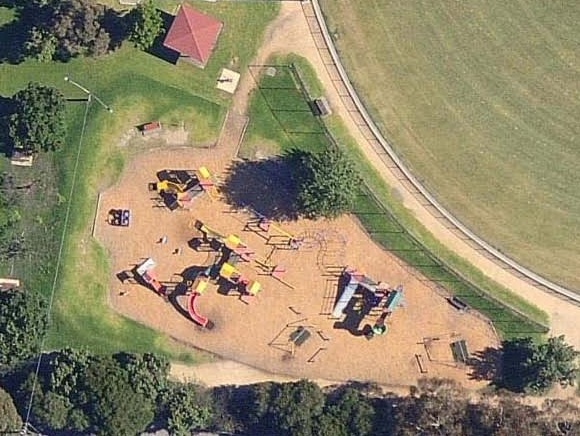
  • A playground already exists (see photo below)
  • The $776,764 does not appear anywhere in the 2011/12 budget
  • Did councillors know of this proposed expenditure & grant application?
  • Why does it seem that all grants have something to do with either sport, or appearance? How many applications have gone in for structure plans, transport plans, children’s hubs, etc. etc.? The real ‘nuts and bolts’ for successful planning?
  • Why is council now spending another million dollars on a park when we have a ‘cash crisis’? What does this say about the financial management of Glen Eira and the strategic directions being pursued?

Members’ GESAC swim centre protest

17 Jan 12 @  06:00am by Jenny Ling

PAID-UP members of Glen Eira Sports and Aquatic Centre will not be offered compensation for long delays to the sports complex. Residents have voiced their frustration on Facebook, saying they are having to pay expensive casual rates to go elsewhere while work on the $41.2 million Glen Eira Council centre continues.

The centre was supposed to open in December, but the swimming pools are empty, the pool hall ceiling is unfinished and landscaping is incomplete.

And while the indoor courts, creche and cafe are nearly finished, the gym needs to be fitted with equipment and furnishings.

Glen Eira Mayor Jamie Hyams said compensation had not been discussed.

“Members have paid a two-week deposit. The yearly membership doesn’t start until it opens,” he said. “Overall I don’t see that it’s going to cost them any extra because their memberships will start later and run later.”

Construction stopped over Christmas and builders were expected back on site yesterday, with work now expected to be finished in March.

More than 3000 people have bought memberships.

Sarah Boukouras said she understood it was not the fault of GESAC, but “surely they could extend a little goodwill for those of us who have been without a gym now for months?”

This slideshow requires JavaScript.

We must first of all thank ‘Reprobate’ for alerting us to the paper on ATS (Active Transport to School) which we’ve uploaded. We’ve also copied some extracts from this paper for readers’ consideration and response since we feel that the issues raised here are not exclusively about ATS, but impinge on all policy and governance decision making in Glen Eira.

“The paper further examines actor behaviour and institutional cultures in the processes of ATS policy implementation in local government through an investigation of the Cities of Glen Eira and Boroondara, two middle-ring Melbourne council areas with quite different ATS outcomes. Boroondara experienced an eightfold growth (from 891 to 7,278) in ATS participation between 2008 and 2010 whilst over the same period ATS participation in Glen Eira declined by 23% (from 5,442 to 4,187) (Bicycle Victoria, 2010b). Exposure to State government policy and other external influences are the same for both organisations. So, it can be presumed that the key differentiating factors relate to the processes of policy implementation at the local government level.

The role of local government diversified following council amalgamations in 1994-95 (Department of Infrastructure and Transport, 2008). An outcome of these changes was an expectation that councils ‘…would have greater resources to manage more complex and diverse services and to engage in more difficult urban issues in a more sophisticated manner‘ (Stone, 2008, p. 110). ATS programs fall into this domain. However, the strategic direction of some councils including Glen Eira, has been to resist the diversification of responsibilities. Glen Eira City Council resists many of the existing policy goals. In large part, the resistance is due to the culture within the institution, lack of clarity on the delegated responsibility of local government, and an aversion to cost shifting from other tiers of government.

A request was made for the researcher to interview Glen Eira Council staff. The request was refused by the CEO ostensibly due to the perception of bias resulting from the researcher’s involvement in local active travel advocacy groups. Interviews were conducted with two elected officials who shed light on the role of Councillors and Council Officers and their attitudes to ATS. Councillors are not subject to the CEOs restrictive powers and were willing to participate in the research.

The CEO at Glen Eira has an overriding influence on the activities within the Council. Theoretically, local government CEOs work for the Council and have the role of managing the council entity (Cetinic-Dorol, 2000). Although it is not unusual for conflict to arise between the CEO and Councillors, the conflict that has plagued Glen Eira City Council is extreme and has hindered the organisations ability to achieve its objectives. His stranglehold on the organisation is further reflected in the council’s organisational chart…

Glen Eira promotes itself as a ‘low cost council’ with an aversion to real or perceived cost shifting (Glen Eira City Council, 2008, p. 25; 2010a, p. 13; 2010b, p. 13). The council models itself on the traditional council with an emphasis on ‘roads, rates and rubbish’(Glen Eira Councillor 1, 2010). They are involved in two programs with limited regard to ATS- part-funding (with VicRoads) school crossing supervisors and two (4% of schools) road safety audits are undertaken by traffic engineers around schools annually. Institutionally, the council is reticent to become involved in better facilitating ATS despite external funding opportunities with seed and match funding programs dominating funding opportunities for sustainable transport projects. The objective of such programs is to embed cultural change within institutions. As a local government, Glen Eira fears other tiers of government shifting responsibilities and costs onto local government so ‘…they won’t, as a council, support an unfunded or defunded government programs…’ (Glen Eira Councillor 2, 2010). This fear of cost shifting is common to many Victorian local governments, but it is used at Glen Eira as a device to avoid participation in programs that challenge the ‘roads, rates and rubbish’ mindset. This is a governance issue and stems from the institutional culture operating within Glen Eira.

The culture within an institution can be a barrier or facilitator of sustainable transport programs. Interviewees suggested the various departments within Glen Eira operate in a siloed or independent rather than integrated manner (National Bicycle Advocacy Group Representatives, 2010). This siloed approach includes a reluctance to engage external expertise. The unwillingness extends to the involvement of the local government in external funding programs such as Victorian Travel Smart programs, Supported Employment of Sustainable Transport Officers and Local Area Access Program. These programs require local governments to match funding from the state government. The institutional unwillingness to contribute adequately to such programs hampers program facilitation (State MP, 2010). This aversion to adequately fund programs has resulted in Glen Eira receiving the lowest Grants Commission funding per resident in Victoria (DPCD, 2010; Glen Eira City Council, 2010a), signifying a failure to utilise external funding opportunities for programs including ATS.

Strategy within Glen Eira exhibits a desire to resist change and continue with a business as usual approach where roads are for cars. The unwillingness to invest time and money into programs facilitating alternate modes of travel illustrates the higher priority given to motorised travel. This is despite traffic congestion being a concern cited by the community and in strategic policy documents (Glen Eira City Council, 2008).

Glen Eira has the fourth lowest per capita expenditure on bicycle infrastructure in Victoria. The 2010expenditure of just $2.91 per capita on bicycle infrastructure was in contrast to Boroondara at $6.51 percapita (Bicycle Victoria, 2010a). The total capital expenditure in Glen Eira in 2010-11 was forecast to be $47 million, with 19% allocated to the renewal and upgrade of roads. Only 0.2% of the budget is allocated to bicycle lanes, 2% to pedestrian safety and 0.03% to ‘upgrade of safety treatments around schools’(Glen Eira City Council, 2010b). In the same budget period, Booroondara allocated about 4% of their capital works budget to active travel infrastructure (Boroondara City Council, 2010b).

Within Glen Eira, the CEO and his senior managers are the most influential, whilst elected officials, whose role is to represent community needs and interests are generally supportive of ATS yet their input is nullified.

Glen Eira City Council is an example of a technocratic community network (see Fig 3). Such networks resist policy change including the implementation of delegated responsibilities such as ATS programs. The Council uses cost shifting as an excuse within the institution to account for the local government’s reluctance to engage in ATS programs. However, funding is allocated to a number of programs which although beneficial to the community, do not fall within the tradition council realm. These programs include aged care facilities, an arts program, and business development programs.Based on Peterson’s (2003) policy network variables, Glen Eira is a stable policy network in which the same actors dominate decision making (Fig 3). Outsiders are not encouraged to engage with the local government nor are outsiders actively invited to provide input.
We’ve recently featured a post on the removal of public seating in Carnegie which was then replaced with private seating for Grill’d – part of a chain of hamburger joints.  We’ve also wondered whether this was a deliberate and calculated move by Council.

Interestingly enough, there is an item in the in camera section of the December 13th Council minutes which reads: “12.6 under Section 89 (2)(d) “contractual” which relates to a licence agreement for land at Jersey Parade, Carnegie” . This sounds pretty innocuous, until we discover that Jersey Parade is actually directly opposite Koornang Rd and the Grill’d franchise.

Jersey Parade itself is entirely residential, so we have to wonder what kind of ruse is going on here and what kind of ‘licences’ are being handed out for ‘land’ in a residential area? Or, could it conceivably be, that this in camera item is actually all about giving Grill’d the permit to establish their private seating at the expense of public seating? If so, then further questions need answering:

  • Why was this item in camera?  Why weren’t the results announced?
  • We don’t recall any other ‘licence’ agreements for ‘land’ taking place behind closed doors. Even the C60 and other leases have all been included in agenda items for open Council meetings. So, what’s so special about this particular item?
  • If the item is indeed about Grill’d then why isn’t the address Koornang Rd provided, since this is their listing in the phone book? Is this a deliberate attempt to cover up the truth?
  • Finally – how much did it cost ratepayers to have the public seating removed and how much is Council getting back in revenue from the paltry number of plastic tables and chairs? From the photographs there are only 3 or 4 tables. Council’s rates for Koornang Rd are approx. $33 per square metre. There are additional charges for awnings, signs, etc all requiring a permit. Even if the area covers 20 square metres, which we very much doubt, the return to council is probably a pittance. So, if this item is about Grill’d and the monetary value is miniscule, then what’s the real reason for keeping it top secret and what’s the real reason for removing perfectly good seats in the first place?
  • Obviously a decision was made somewhere along the line to grant a permit for Grill’d. If this Agenda Item is indeed about Grill’d and was held in camera, wouldn’t it be nice to know whether or not councillors were previously informed  that public seating had been removed in order to clear the way for this little deal?

« Previous PageNext Page »