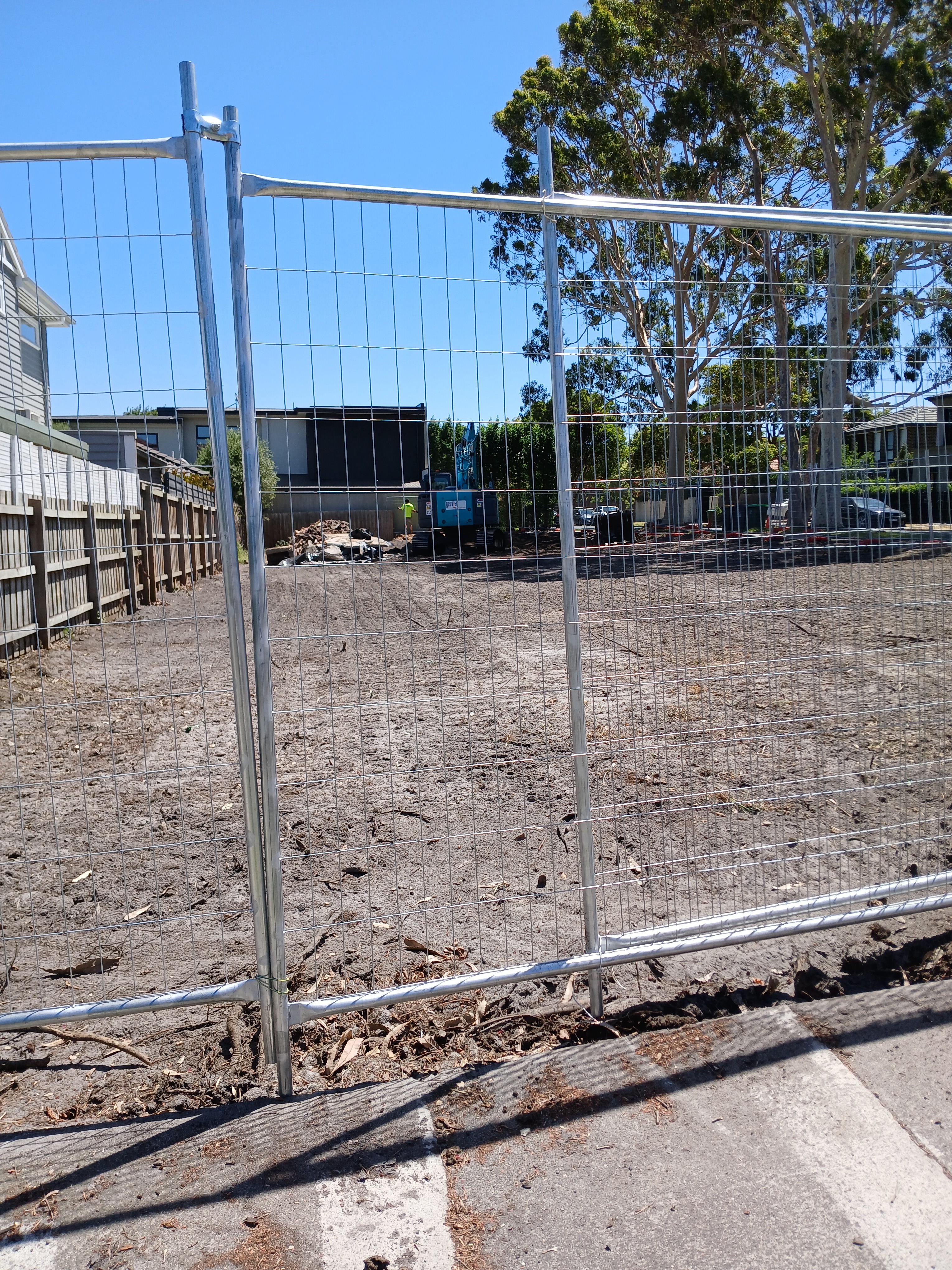
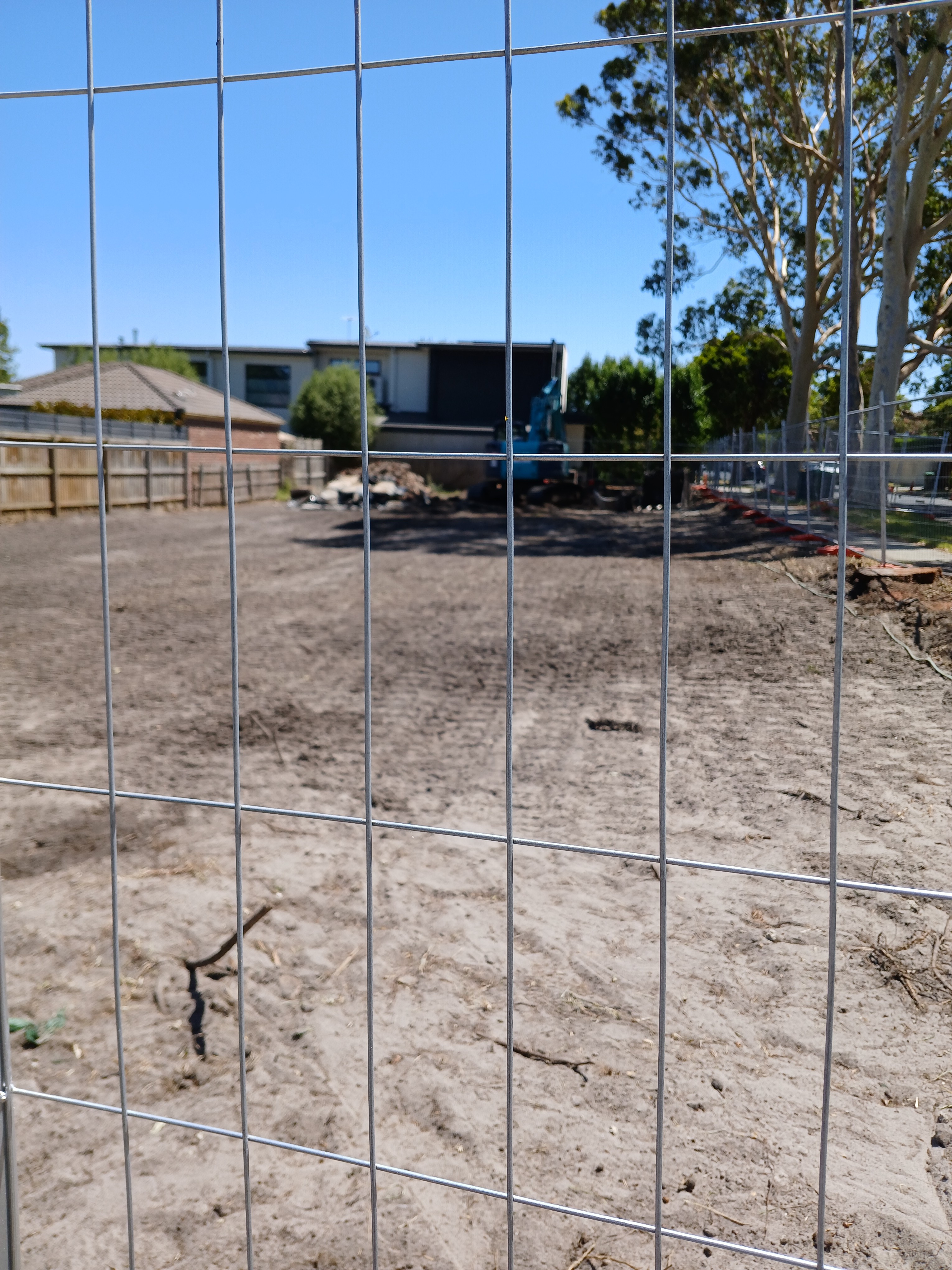
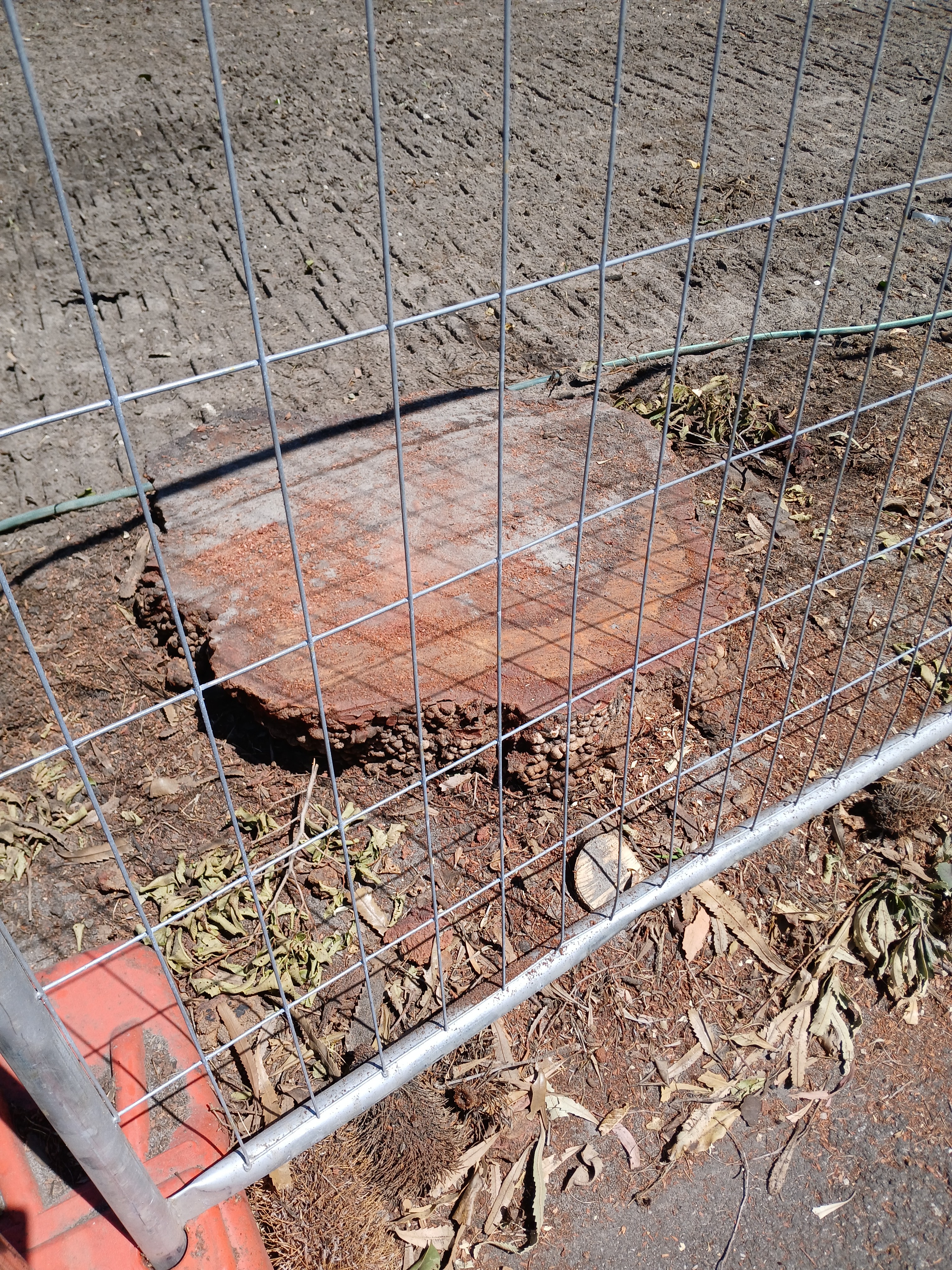
The carnage depicted in our previous post is now 95% complete.
February 7, 2026
The carnage depicted in our previous post is now 95% complete.
February 4, 2026
This is the tale of the complete failure of both council and the state government in terms of protecting our devastatingly low tree canopy and ensuring that moonscaping is drastically halted. For all the talk about stopping moonscaping and preserving canopy trees, the following example illustrates completely how far Glen Eira is failing in its objective.
Below we feature a street map view of a property that was granted a permit in 2021 for the construction of 2 double storeys. Three years later there was another application for a permit time extension. That was granted by council in April 2024. Full demolition started this week and will be completed in the next day or two.
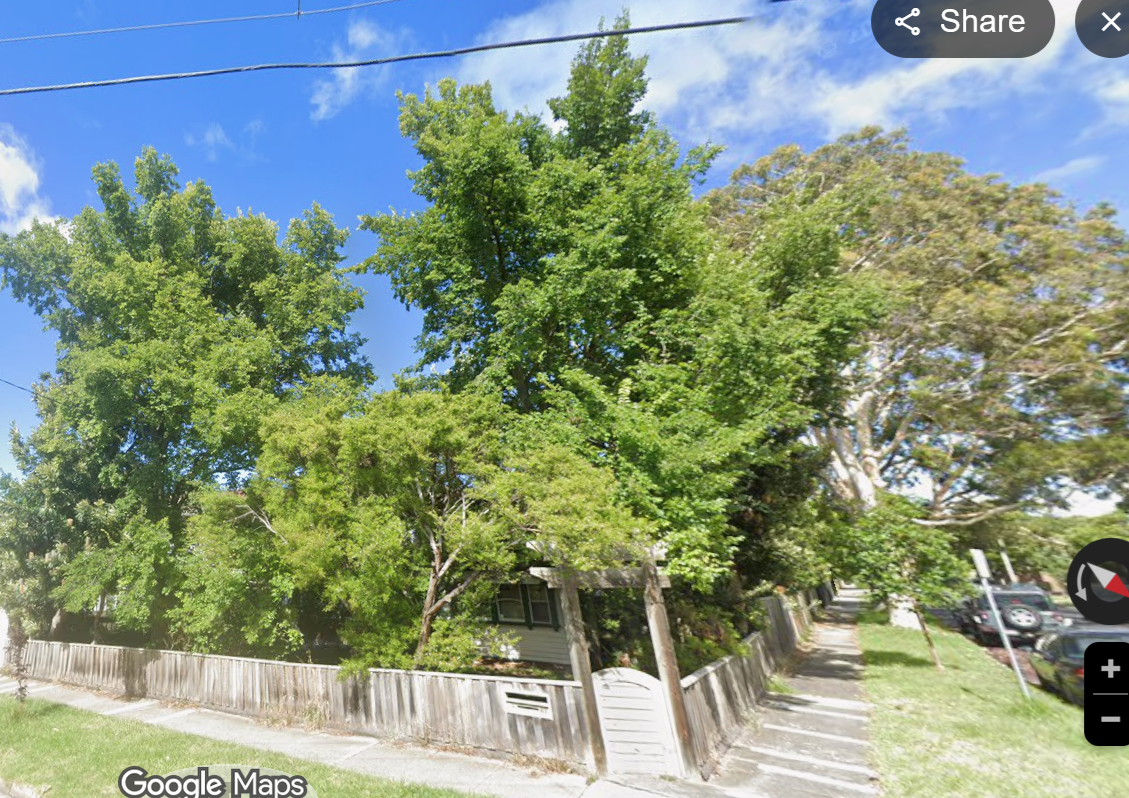
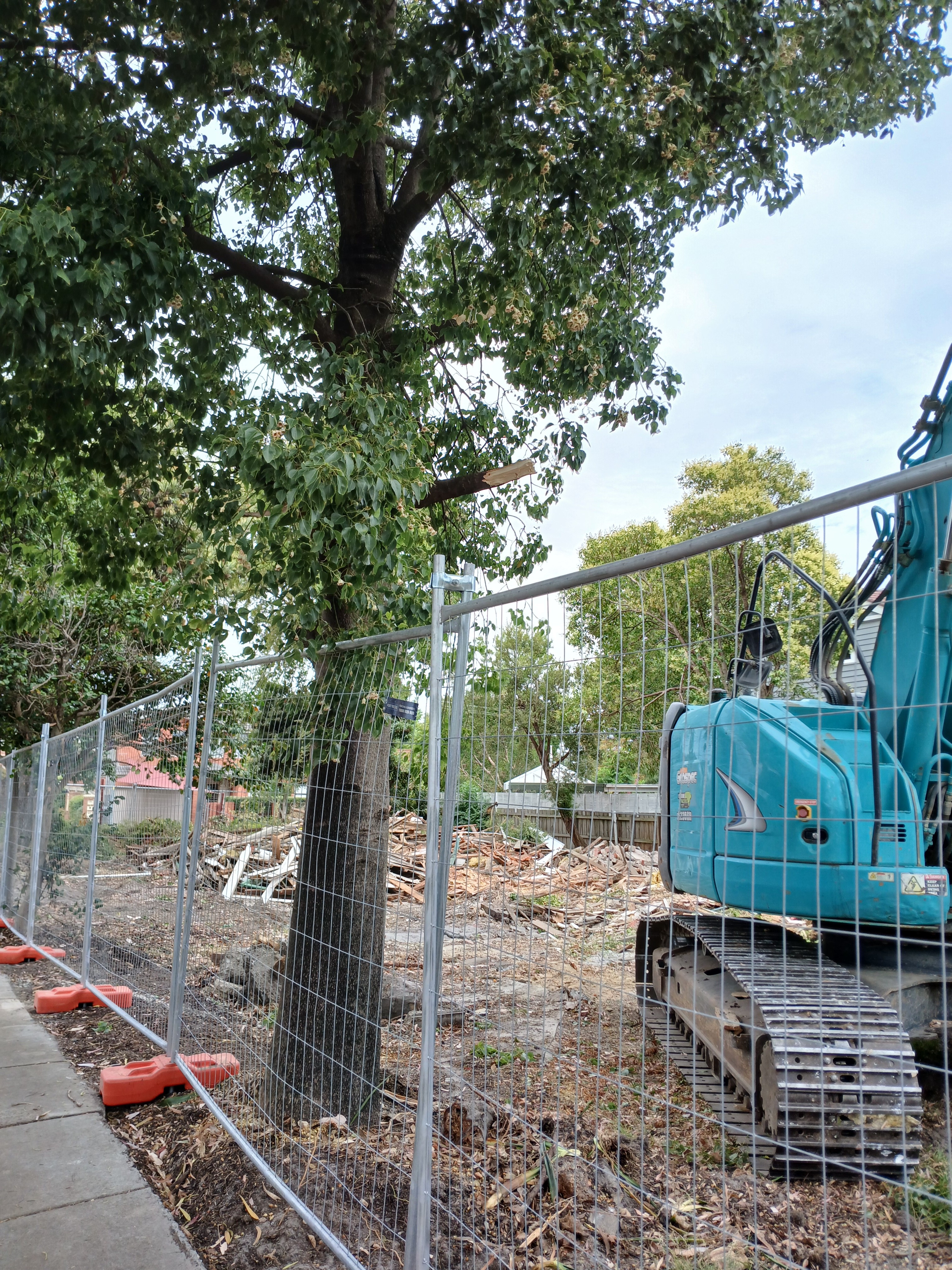
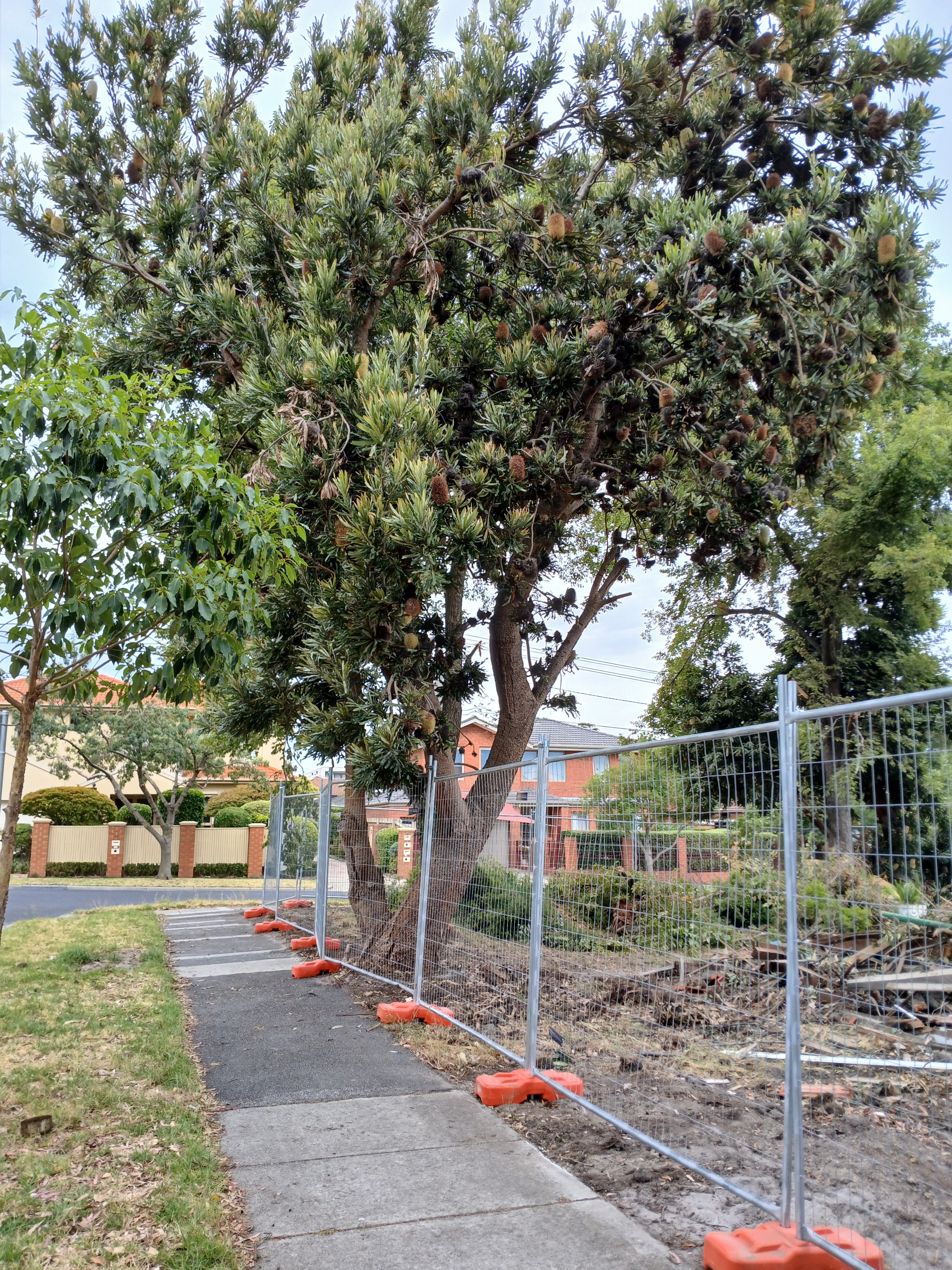
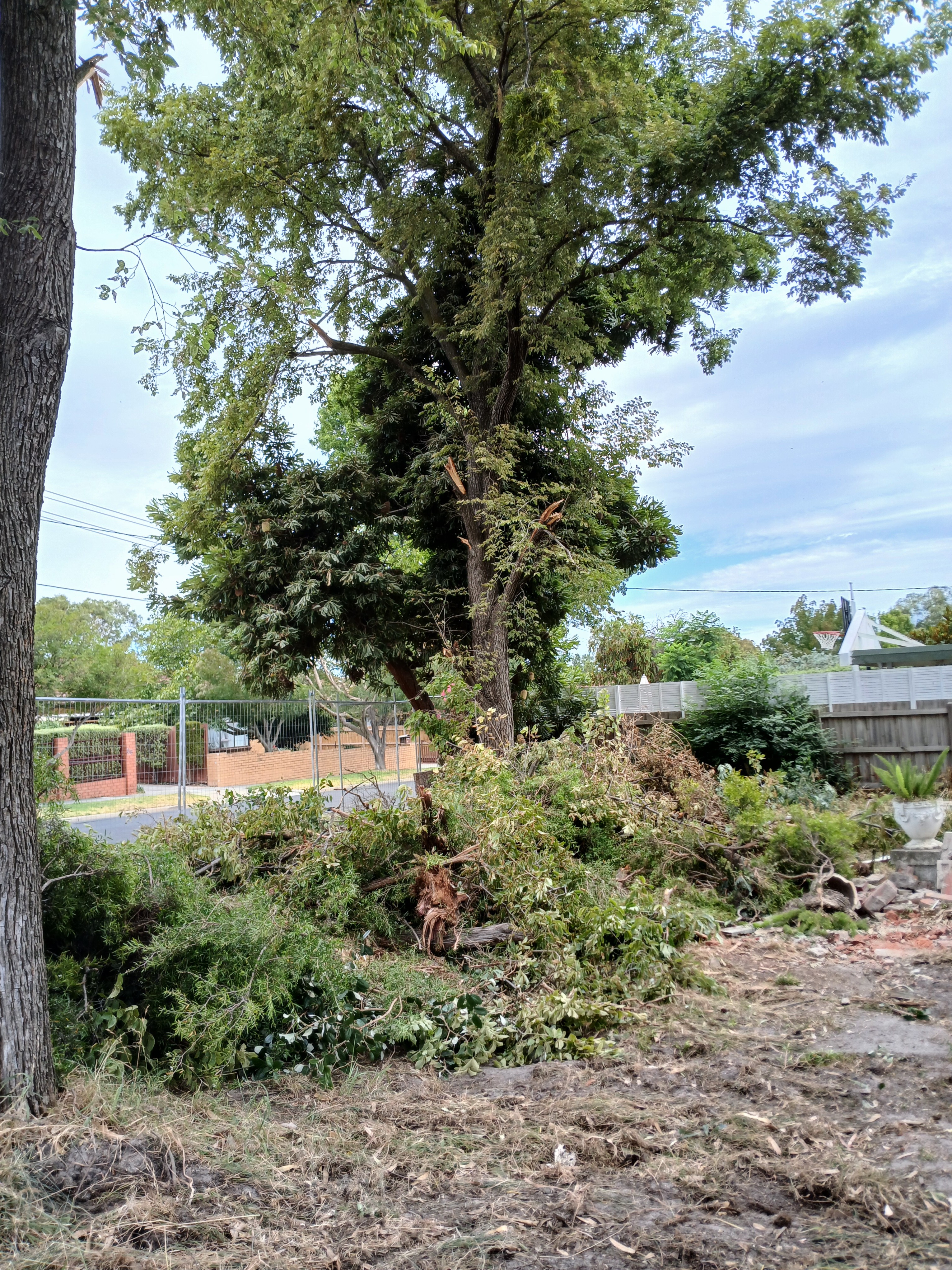
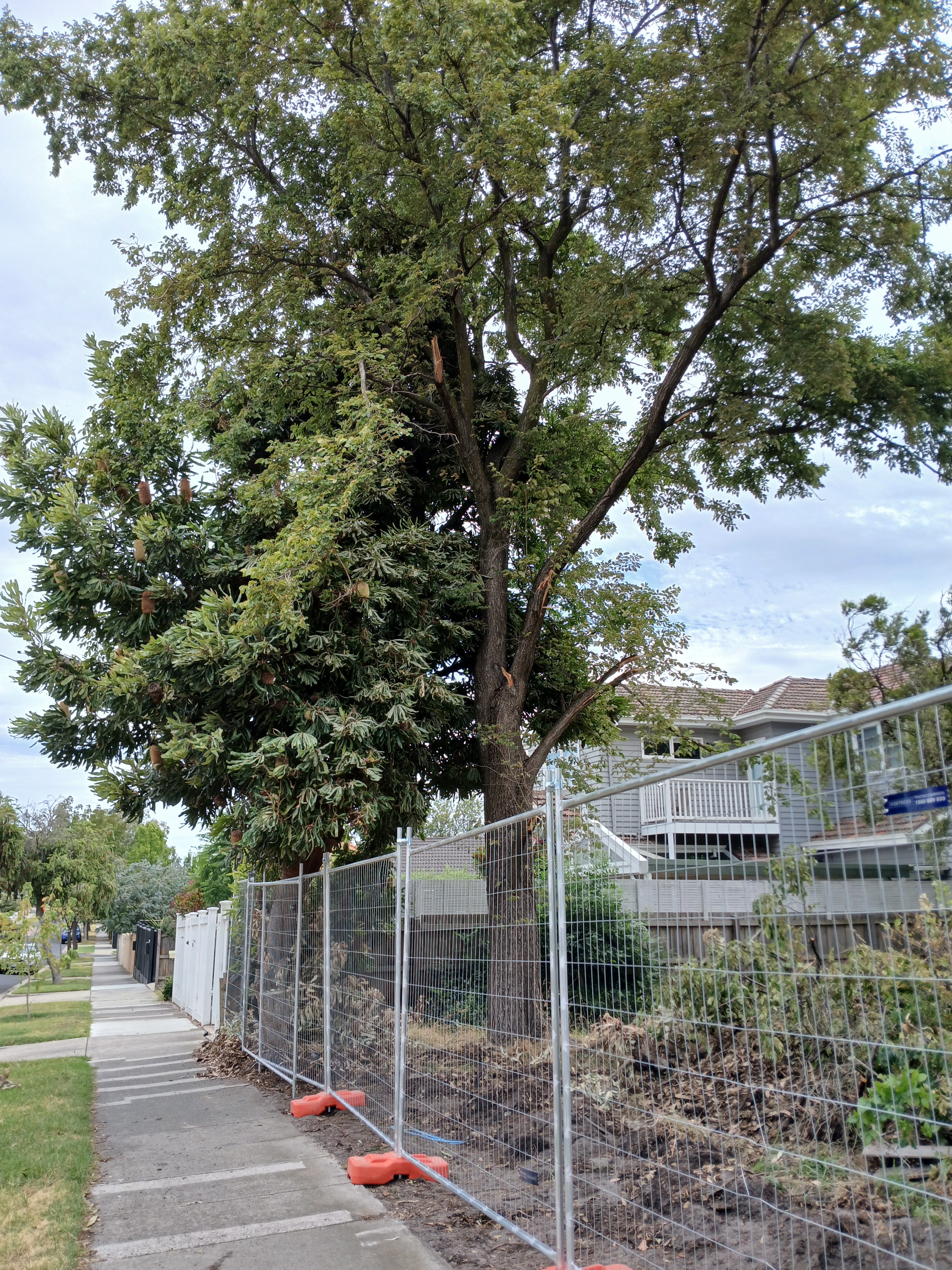
What is not clear from the above image is the fact that the property contained at least 10 beautiful and fully grown canopy trees. All of these trees would have been at least 50-60 years old (including a superb box species and a magnificent saw banksia). All of these canopy trees had been carefully planted along the perimeter of the site apart from one that was approximately 3 metres inside the front fence.
The following photos show what the site looks like now and the carnage that has been wrought on these trees. They will all be gone in the next day or so according to the tradies working on demolition.
The questions therefore abound:
Boroondara at its December 2025 meeting pointed out the drawbacks of the state government amendment – cited below
During the course of the consultation, the Victorian Government introduced new tree planning controls through a Particular Provision at Clause 52.37 of the Planning Scheme. These new controls apply universally to all residential zoned land across Boroondara and metropolitan Melbourne and introduce new standard planning permit triggers for the removal, destruction or lopping of a canopy tree in the front and rear setback of a site.
While the introduction of consistent, state-wide tree controls is welcome, there are some concerns with the detailed permit triggers. Overall, the provision provides protection for canopy trees only in the front and rear setback of lots and makes no allowance for consideration of significant trees including works that may impact a significant tree.
Generally, it is considered that the new Particular Provision provides less protection for canopy trees and significant trees than the existing local law and the proposed new overlays. It is therefore recommended that Council continue to seek authorisation for the proposed new overlays as discussed in this report.
Boroondara is now pushing ahead to ensure that tree protection resides in the planning scheme and not simply in a council’s Local Law. This is something that Glen Eira should have sought years ago.
The example we’ve provided tells us how vulnerable our valuable trees are today – despite all the rhetoric on tree protection. The onus is clearly on councils to both introduce and enforce laws that are fail safe and do the job they are supposed to.
The issue is not about development versus tree protection. It’s far more fundamental than that. Development can occur and should occur if all necessary actions are taken to preserve the health of our dwindling canopy coverage on private property. Is the ability to build a few extra feet of dwelling space worth the loss of our most valuable vegetation and aspects of our neighbourhood character – especially in an era of dramatic climate change?
December 13, 2025
Not for the first time do we have to query the accuracy of a council report. We refer to the current agenda item 10.6. This is supposed to be an analysis of housing development in Glen Eira for the period 2021-2024.
Council has provided the following tables:

We have taken the time to go through council’s planning register to see whether these figures actually stand up to scrutiny. To make things as simple as possible, we decided to concentrate on the multi-dwelling applications for the year 2024 since this is the smallest category and thus less time consuming. Council tells us that for this category of dwellings there were only 23 applications decided in 2024 and that the total number of dwellings approved as a result of these applications was a paltry 142 dwellings (highlighted in yellow in the above image).
But council’s own planning register tells a completely different story and its only for this category of dwellings. We haven’t gone through the other categories as yet.
Listed further below are all the multi-unit applications, the number of proposed dwellings, and the dates when permits approving developments were issued. We’ve also sure that we’ve probably missed a few to boot. Several include ‘amended permits’ granted. However, we can only assume that development would not have started prior to the granting of the amendment.
Casting further doubt on council’s analysis is the failure to state the number of dwellings associated with several of these applications – and they are all large developments. For example: Horne Street, 600 North Road (8 Storeys); 144 Hawthorn Road (6 storeys). We make a conservative estimate that we’re looking at least another 100 dwellings just from these few applications.
Our tally comes up with the following numbers:
35 applications decided, (as opposed to councils claim of 23) and
246 dwellings approved (as opposed to council’s claim of 142) (PLUS THE APPROX 100 NOT LISTED AS DESCRIBED ABOVE.)
How can there be such a discrepancy between this report and council’s own planning register? Even when we’ve tried to correlate the above figures with the state government’s Planning Activity Website, there is a major difference between council’s numbers and what they are obliged to report to government. We limited our search to the 2024 calendar year as well as only residential development and permits granted in this year. The results show:
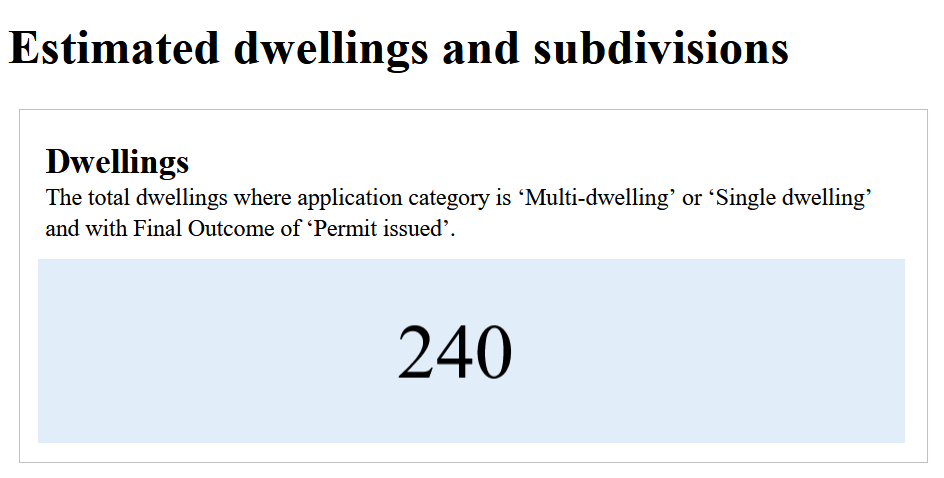
Admittedly the above figure of 240 also includes ‘single dwellings’ but these are only a minority and would not alter the discrepancy between council’s claim of only 142 new dwellings constructed.
Is it too much to therefore ask that council’s reports are beyond question? And how come that for the last few years, council’s budgets have all claimed to be based on approximately 1000 new rateable properties for each year? Why do we keep getting such rubbery figures? Is it incompetence, laziness, or merely a mindset to produce data that supports hidden agendas?
Finally please have a read of all the approved permit applications we list below:
216 Hawthorn Road CAULFIELD NORTH, 4 dwellings – 13/12/2024
7-15 Horne Street Elsternwick – no of dwellings not stated – amended permit issued 11/11/2024
52 Hill Street Bentleigh East – 4 dwellings – 18/10/2024
2 Rusden Street Elsternwick – 5 x 3 storey – 16/12/2024
168 Hawthorn Road Caulfield North – 4 x3 storey – amended permit – 21/8/2024
98-100 Truganini Road Carnegie – 12 dwellings – amended permit – 10/10/2024
1 Anderson Street Caulfield – 4 double storeys – amended permit – 12/12/2024
86 Bignell Road Bentleigh East – 3 double storeys – 17/10/2024
600-604 North Road Ormond – 8 storey building but no. of dwellings not listed – amended permit 21/11/2024
259 Orrong Road St Kilda East – 3 double storeys – 9/10/2024
9 Station Avenue McKinnon – 8 double storeys – amended permit issued – 14/6/2024
21 George Street Bentleigh East – 3 double storeys – 3/10/2024
583 North Road Ormond – 4 dwellings – 6/11/2024
15 Leamington Crescent Caulfield East – 3 double storeys – amended permit 20/2/2024
Unit 1 and Unit 2 1 Francesco Street Bentleigh East – 7 x 3 storey – 19/7/2024
136 Tucker Road Bentleigh – 3 double storeys – amended permit 19/4/2024
34-36 Jersey Parade Carnegie – 4 storey, 18 dwellings – 13/6/2024
1 and 1A Stephens Street Caulfield – 4 double storeys – 23/4/2024
71 McKinnon Road Mckinnon – 3 double storeys – 11/7/2024
6 Cobar Street Bentleigh East – 4 double storeys – 16/4/2024
Units 1 and 2, 49 Kangaroo Road Murrumbeena – 3 dwellings – 17/5/2024
30 Hobart Road Murrumbeena – 4 double storeys – 29/5/2024
108 Patterson Road and 70 Railway Crescent Bentleigh – 4 dwellings – amended 30/1/2024
35-39 Murrumbeena Road Murrumbeena – 32 apartments and 2 townhouses – 11/10/2024
144 Hawthorn Road Caulfield North – 6 storey, no of dwellings not stated – amended permit 24.1.2024
292 Hawthorn Road Caulfield – 13 dwellings – amended permit 31/5/2024
216 Hawthorn Road Caulfield North – 5 dwellings – 19/2/2024
51 Clarence Street Elsternwick – 4 dwellings – 19/2/2024
296 Jasper Road Mckinnon – 3 double storeys – 16/1/2024
679-683 Glen Huntly Road Caulfield – 6 storey, 50 dwellings – amended permit – 30/1/2024
23 Loranne Street Bentleigh – 3 dwellings – 12/6/2024
Unit 1-3 14 James Street Glen Huntly – 5 dwellings – amended permit – 29/5/2024
11 Perth Street Murrumbeena – 5 x 3 storeys – amended permit – 31/5/2024
52 Whitmuir Road McKinnon – 4 dwellings – 21/3/2024
226 Hawthorn Road, Caulfield North – 7 dwellings – 22/1/2024
December 3, 2025
Today’s Age (https://www.theage.com.au/national/victoria/car-park-requirements-set-to-be-scrapped-in-planning-shake-up-20251202-p5nkak.html) carries a story on the government’s intention to remove the need for ANY onsite car parking spots in developments close to train stations and transport modes. To ‘compensate’, developers will have to pay $11,000 per dwelling for infrastructure of which council will receive 75% of the charge and the government the rest.
Insanity is one word to describe this latest action. Late in 2024 we published a post that analysed the state of car ownership in Glen Eira – particularly how residents living in both single bedroom and two bedroom homes owned cars. Our data came from the 2021 ABS census results. Here is the table produced at that time. We can only assume that car ownership has increased since then given the population increase.
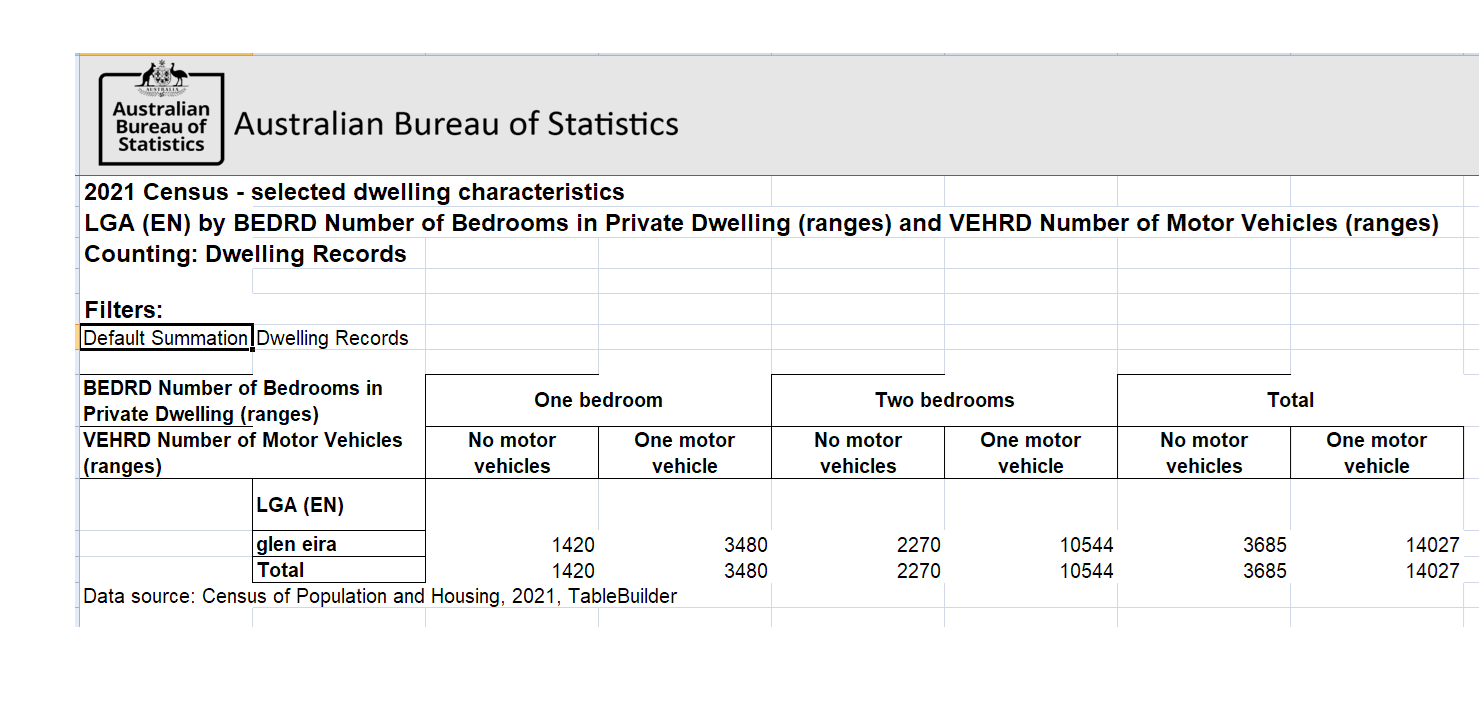
We also wrote at the time the following:
If we do a simple calculation based on the above data, we can see that:
Thus if we have 75% of residents living in single bedroom homes owning cars, and 87% who reside in two bedroom dwellings also owning cars, what does this say about the requirements for adequate onsite parking? What does it say about off street parking becoming impossible for the majority of residents if onsite car parking waivers are the norm as illustrated with the recent Halstead Street application? And let’s not forget that council has already mooted that it intends to REDUCE the requirement for onsite parking in our major activity centres in the very near future.
The Age article also makes note of the government’s claim that 40% of onsite car spots remain empty. Really? How was this data collected and by whom? Did the analysis take place in the morning, afternoon, evenings, weekends? Put simply, the myth that living near public transport means that residents will not have cars is nonsense as proven by the ABS census.
Ad hoc planning, and virtue signalling is the hallmark of this government, as well as allocating 25% of any development contribution paid into its coffers instead of to councils.
November 5, 2025
We have been asked to publish the following comments regarding further shenanigans at Caulfield Racecourse.
In case many readers have missed the latest news we are pleased to announce that the MRC’s attempts to bypass the payment of $3M as an open space levy for its proposed subdivision has been knocked back by VCAT. They will now have to pay council this amount.
Here are the comments mentioned at the start:
Caulfield Racecourse Flying Club excluded by trust
In 1879, Caulfield Racecourse was bequeathed as a Crown Land Grant to the community for horse racing for 25 days of the year and for the rest of the time, as a recreational reserve and parkland. The Caulfield Racecourse Reserve Act 2017 (Vic) gives effect to the current trust and encompasses the functions and duties of the trustees. However, there is some doubt whether the new trustees are complying with the purposes of the Act and objectives of the trust. “Truly inclusive open space” and “what the community can expect” is not living up to “making the reserve a place for everyone to use and enjoy” The new trustees are regulating and even banning some community groups who have used the land for many years for recreational activities. The Caulfield Racecourse Flying Club Inc (CRFC) is one such group that has used the Racecourse Reserve for over 50 years. It has been used for flying model aircraft probably since its inception. The former trustees had such a bad reputation for management of the Reserve that they were formally removed as trustees but at least identified CRFC as the controlling body for flying RC planes (1994 Regulations XI). The CRFC now holds no confidence that new trustees can be entrusted to do any better. The reserve is 54 hectares of near open space with at least 8 hectares of completely open grassland, well buffered by vacant land. It has been ideal for flying model aeroplanes (or now sometimes drones) since the reserve was formed. CRFC was incorporated in 1988 and is now a member of the Australian Men’s Shed Association. “Open spaces are vital to our collective health and wellbeing.” CRFC members have been using the open area for many years and always under the auspices and sanction of the Trust at the time, DELWP and the Melbourne Racing Club reserve management. The Club was always insured by Victorian and Australian affiliates and complied with their safety guidelines. Now the Trustees have banned us. A ban on flying models is targeted at our club only and not nonmembers or other people. The process to get rid of us was a carefully planned ploy starting with absurd restrictions such as; restricting flying hours to 10:00 AM to 2:00 PM Monday to Friday (hardly recreational hours and well after the wind had come up); proof of insurance cover that covered us while travelling between the reserve and home. Further absurd restrictions were introduced to the point where if a member wanted to fly a model even as small as your hand, he must have 4 club officials present to act as ‘spotters’. We are a recreational club, participating in a recreational activity, in recreational reserve and yet we could only use it under the Trustee’s absurd protocol. We wonder what other recreational users will be banned for un founded safety reasons – fishermen, dog walkers (on-lead and off-lead), bicycle riders, joggers, disk golfers, kite flyers and rocket enthusiasts. All these have no insurance and yet our members would have $20 million cover including public liability. We now seek your help and advice regarding a dispute resolution process e.g. VCAT.
Sincerely,
David Casley, President of the CRFC
October 28, 2025
We’ve decided to concentrate on council’s annual reports for this post – in particular focusing on an area that is repeatedly touted as vitally important to residents – increasing our overall tree canopy. We now have plenty of policies that are supposed to concentrate on environmental sustainability, urban forest creation, and protecting mature trees as well as reaching the target of 22% tree canopy coverage by 2040. So how well are we actually doing and can we trust the figures that council trots out?
Since the 2021/22 annual report residents have no idea as to how well the goal of increasing tree canopy is going. Why? Because every single annual report since then has consistently refused to provide the most essential data – ie how many trees have been lost and had to be replaced? If the only figure that is provided is the number of new tree plantings, then how on earth can we know whether the cited new plantings are in fact achieving the stated goal?
The list below features verbatim quotes from 2018/19 onwards. Readers will note that up until 2021/22, we were told not only how many new plantings there were, but how many trees had been lost throughout the year.
2018/19 – We planted 2,077 street trees (940 replacement and 1,137 additional). (page 13)
2019/20 – We planted 950 street trees (684 replacement and 266 additional) which was 1,050 under target due to COVID-19 restrictions (PAGE 15)
2020/21 Annual report – We planted 1,854 trees (854 replacement and 1,000 additional). (page 15)
2021/22 – 1008 – NO MENTION OF REPLACEMENTS
2022/23 – 872 trees planted NO MENTION OF REPLACEMENTS –
2023/24 – 2,241 trees planted – NO MENTION OF REPLACEMENTS
2024/25 – 1189 planted – NO MENTION OF REPLACEMENTS
What’s even more frustrating is the nonsense that the following paragraph from 2022/23 report reveals –
The planting of the 800 trees will result in an estimated tree canopy increase to 12.8 per cent canopy cover for the municipality, which is helping Council achieve the Urban Forest Strategy 2040 target of 22 per cent canopy cover ( 2022/23 ANNUAL REPORT – PAGE 80)
How is the 12.8 percent figure arrived at, when we don’t know how many trees have gone? Does this mean that the 0.8 per cent increase is the result of only effectively 400 new plantings? 300? 600? Nor does the paragraph reveal that council’s coverage is only 12% at the previous assessment. Is a purported 0.8% increase really that great? And that’s without even knowing what the true number of plantings is.
Whilst we accept that annual reports are really nothing more than public relation exercises designed to provide as much positive news as possible, the onus must still be on full disclosure and accountability. Council continues to fail in these two essential requirements.
October 13, 2025
Finally there is some commentary from Glen Eira on the state government’s proposed changes to all activity centres – especially the inclusion of expanded areas surrounding these activity centres. Once again, the proposed submission by Glen Eira palls into insignificance compared to the efforts produced by Boroondara and Bayside. These councils have held public forums, Q and A sessions, and prominently featured summaries and information on their websites. Glen Eira has done none of these things.
So now we come to the need for a formal submission by late October. We have read the submissions and copied verbatim some of the comments contained in the various officer reports. Whilst the final submission(s) have as yet to be written, the amount of detail provided by Boroondara compared to Glen Eira is staggering. What’s also insightful is the tone that each council applies. Boroondara sees nothing wrong with clear and unequivocal criticisms. Glen Eira on the other hand resorts to wishy-washy statements that basically mean nothing. Boroondara is also not averse to publishing so called ‘confidential’ documents. Glen Eira does not even mention the fact that they have received such documents!
Once more we have to ask why another council can produce work which informs the community with detailed analysis and Glen Eira can only produce some generic document that adds little to basic understanding of the potential impacts. Does it all boil down to the quality of our planning department? Or is this merely another instance of an administration that fully welcomes the government agenda and to hell with existing residents, liveability, heritage and a million other consequences?
Please read the following quotes carefully and realise how vastly different they read and what this actually means.
GLEN EIRA (16th October agenda)
Generally, not supportive of the “deemed to comply” approach for heights, setbacks and street wall heights which will be applied in the core and catchment areas.
In the core commercial area of Carnegie, the proposed changes are positive for Council and the community, with draft maps proposing to retain the building heights adopted under the Carnegie Structure Plan (proposed Planning Scheme Amendment C237). This is pleasing to see and the result of strong advocacy by Council over 2024 and 2025.
Council has continually requested that DTP provide technical reports/data as part of their activity centre program, plans and draft maps. This will help us understand how the heights were developed, modelled and what was considered.
Council’s experience with the deemed to comply approach in the Moorabbin and Chadstone activity centres, is that Council is limited in its ability to encourage increased development within the catchment areas, where appropriate. This is due to the changes which essentially switch off policy and zone purpose considerations for townhouse development. The intent of the catchments is therefore not being achieved in these existing locations and Council is likely to see a similar result in the Carnegie Cluster unless changes are made to the planning controls.
The heights for Murrumbeena and Hughesdale core areas and for all the catchment areas are a significant change, particularly in the outer core areas. These proposed heights are contrary to the heights adopted in the Glen Eira Housing Strategy and a departure from the community’s expectations
It is unclear on how the catchment areas will integrate with the heritage places and precincts and Neighbourhood Character Overlay (NCO) in these areas, specifically in Carnegie and Murrumbeena. If the BFO and HCTZ are applied these controls will allow taller built forms in potential conflict with neighbourhood character and heritage streetscapes.
Directing housing into existing activity centres will reduce the impacts of significant growth on the environment in growth areas. Living more closely together can open opportunities for the sharing economy, increase local services and reduce the need for travel, and enable more people to live close to public transport
These changes coupled with the other recent changes to housing assessment provisions creates a substantially different planning context for Glen Eira and the community
OFFICER’S REPORT – 13 PAGES
BOROONDARA (6th October minutes)
The draft standards have been circulated on a confidential basis and are not available for public distribution. This approach limits transparency and prevents meaningful community input. For proper consideration, the draft standards should be formally exhibited and open to feedback from the community
The introduction of new and improved standards for developments of 4–6 storeys is needed as it is recognised that larger built forms have the potential to generate greater visual bulk, overshadowing and amenity impacts compared with smaller developments. However, a number of the proposed standards reduce and weaken the existing requirements, particuarly relating to off-site amenity impacts such as overshadowing and overlooking
Through amendments VC243 and VC267 earlier this year, Clause 55 of the planning scheme, which relates to residential development up to 3 storeys, was amended to lower the standards and make them ‘deemed to comply’. This means that where the standard is met, the objective to the standard is automatically met. Developments that comply with the deemed to comply standards in Clause 55 are also exempt from third party appeals (objector reviews of a decision) to the Victorian Civil and Administrative Tribunal.
Key changes to Clause 55 and 57 at the time included:
• The minimum street setback requirement reduced from 9 metres to 6 metres.
• The private open space requirement reduced from 40 square metres to 25 square metres at ground level.
• Site coverage requirements have been revised to include a sliding scale dependant on which zone the site is located (60% Neighbourhood Residential
Zone and Township Zone, 65% General Residential Zone and 70% Mixed Use Zone and the newly minted Housing Choice and Transport Zone).
• Overlooking standards no longer apply to bedroom windows.
• Options for two side and rear setback standards.
The submission will highlight the following concerns:
• Front setback changes will increase the dominance of buildings in the streetscape and reduce opportunities for tree planting in the front setback to one small or medium tree.
• 4 to 6 storey proposals are able to access a lesser street setback than 1 to 3 storey proposals. This may have a consequence of encouraging proposals with a greater height in the HCTZ compared to lower scale proposals such as townhouses.
Allowing bedroom windows to have a sole source of daylight to a light-court, instead of an external wall of the building, is considered to be a poor amenity outcome for the future occupants. It is inapt that a bedroom window is proposed to be afforded with the same level of amenity as a non-habitable room window such as a bathroom or laundry. It is considered that bedrooms should be included in Building Separation, which would improve the overall amenity of dwellings. At a minimum, daylight modelling should be required if light-courts are to be relied upon as a bedroom’s only source of daylight access
The draft mid-rise standards suggests that the proposed side and rear setback requirements effectively limits overshadowing impacts on adjoining properties, in a similar way to applying the existing overshadowing standard and protects neighbouring development opportunities. No modelling has been provided to demonstrate whether the outcome will offer less or equal protection and it is suggested that existing protection should not be reduced.
Sustainability considerations will maintain existing standards for permeability and stormwater management as well as energy efficiency. A level of documentation would be required from applicants to demonstrate compliance with cooling loads, but this would be the extent of assessment. With the operation of standards narrowing considerations, there will be a reduction in assessment of Environmentally Sustainable Development (ESD) features in development outcomes compared to what is currently offered with planning applications. This is contrary to the ambition to elevate ESD targets and draft standards fail to recognise the opportunity to embed stronger environmental sustainability measures within mid-rise apartment development which will be raised as a concern in the submission.
However, the draft has been circulated on a confidential basis and is not available for broader distribution (Attachment 1 – confidential). It is unclear why the draft has been circulated on a confidential basis as there is nothing of a confidential nature within the code. The standards are very similar to the standards that have already been introduced to the planning scheme for other residential development types, such as the townhouse and low rise code, so there are no concepts being tested with Councils and stakeholders that are not already publicly available. Even if new concepts are being tested for stakeholder input that are potentially controversial or sensitive, that does not make the material “confidential”.
Officer’s report – 22 pages
BOROONDARA (10TH October)
The ACP’s rushed rollout and extremely compressed timeframes, the absence of evidence supporting the need for urgency, and disregard for proper planning processes – including transparent policy development and authentic consultation – have eroded public trust and accountability in its implementation
Another key methodological flaw to be highlighted is the lack of coordination and integration with other planning investigations that will have significant impact on the development capacity of the identified centres. Most notably the absence of updated flood mapping (not expected until late 2026), no provision of a comprehensive movement and place analysis and framework and no plan for place based and community infrastructure to support growth and deliver high density urban amenity.
General issues, inconsistencies and problematic outcomes include:
• Lack of justification for the density index approach to set the baseline for building heights and catchment distances as well as the methodology on how the density index was applied to centres.
• The lack of evidence (including urban design analysis and built form testing or modelling) to support the building heights across the centres.
• Lack of justification to exceed the 8 to 12-storey maximum set for Centres with a density index of 3.
• Excessive building heights resulting in overshadowing of footpaths in key locations contradicting principles of creating high quality, pedestrian-focussed public realm.
• The inconsistency in applying different building heights to adjoining sites with the same context and interface issues.
• The lack of building heights for identified strategic heights and failure to define how strategic sites were selected.
• Building heights not responding to sensitive interfaces such as low-rise heritage areas (e.g. Manningtree Road, Hawthorn).
• Applying uniform building heights across larger strategic sites where differential heights, setbacks and place-based built form response is required
Inclusion of heritage areas within the catchment. One of the most critical issues to be highlighted in the submission is the inclusion of heritage areas within the residential catchment (e.g. Grace Park Estate, Cranmore Estate and Environs amongst others). Apart from the inappropriate impact this would have on our city’s valued heritage areas, applying the inner catchment to heritage is inconsistent with DTP’s methodology described in the additional technical information and the approach taken in the pilot program. Applying a catchment growth area to any heritage area is inconsistent with the findings and recommendations of the Activity Centre (Pilot program) Standing Advisory Committee.
October 9, 2025
Indeed! – why the silence from Glen Eira council? Why can other councils go public and voice their strong opposition to the state government’s ad hoc planning agenda that lacks strategic justification, genuine consultation, and full transparency? Why can other councils’ websites include valuable summaries of the current state of play, plus links to relevant government documents and surveys? Nothing like this exists for Glen Eira residents who have much to lose given that we have 9 railway stations, and 13 nominated activity centres.
The latest outrage is featured in this Age article. Please note the stance taken by Boroondara and their officer’s (public) report.
Mid-rise developments could loom over suburbs, secret documents reveal
Mid-rise apartment developments could loom closer to heritage homes and overshadow solar panels, under confidential Victorian draft planning guidelines.
The Department of Transport and Planning is finalising new “deemed-to-comply” design standards for four- to six-storey residential developments that would exempt proposals from time-consuming appeals.
Camberwell resident Jane Oldham worries mid-rise apartment design will worsen under the new code and harm Boroondara, where heritage homes are prevalent.
The draft rules were recently shared with councils for feedback in a document marked confidential, but Boroondara Council revealed details at a meeting on Monday night.
Jane Oldham, of the Boroondara Community Group, spoke at the meeting against the draft standards, which propose approval for street setbacks of 4½ metres, lower than the already reduced six-metre requirement under the low-rise code announced earlier this year.
Oldham was concerned that the changes would lead to mid-rise buildings jammed together, reducing privacy, sunlight and green space.
“Why people like suburbs such as Camberwell, I think, is the heritage, the character, the greenery,” Oldham said. “And that will definitely be lost. We can do better.”
The Allan government has argued the mid-rise code would make the planning system easier and boost housing supply while maintaining amenity.
The standards have not been finalised.
In a statement, Boroondara Mayor Sophie Torney said the broader community deserved honesty and criticised the state government for keeping under wraps the options that have been canvassed.
“Boroondara believes in open, transparent decision-making,” she said. “Communities have a right to know what’s being proposed in their own neighbourhoods before decisions are made, not after.”
Boroondara Mayor Sophie Torney says the state has ignored locals in their plans for the Hawthorn, Glenferrie, Auburn and Kew Junction activity centres.Credit: Eamon Gallagher
The new mid-rise code is most applicable to the Housing Choice and Transport Zones in Melbourne’s 60 new activity centres, which are slated for four- to six-storey development.
Affluent eastern suburbs are overrepresented in the state government’s activity centre program, as the state government says outer suburbs have shouldered too much of the home-building load in recent decades. The only way to make housing fairer for young Victorians is to build more homes faster,” a state government spokesperson said. “This is exactly why we’ve been overhauling our planning system, because the status quo is not an option.”
Boroondara is among several councils that have strongly criticised the approach so far.
On Monday night, Torney expressed particular concern that the proposed mid-rise standards did not have a clause to prevent buildings from blocking sunlight to solar panels, which was included in the low-rise standards announced earlier this year.
“We’re literally building shadows over the very homes we want to electrify, and not ensuring new apartment builds potentially have solar,” Torney said.
“That makes no sense to me, and it’s in direct contrast to the government’s energy policies.”
In their submission to the government, Boroondara council officers also took issue with a proposal to deem bedrooms compliant if their sole sunlight source was a window facing an internal-light courtyard, rather than an outward-facing window.
The proposed 4.5-metre setback standard also caused consternation, as the council said it would incentivise higher development while the minimum low-rise setback was six metres.
“The irony at the moment [is] under the existing scenario for a single dwelling, it has to be further back again,” Boroondara’s urban living director Scott Walker said on Monday.
“Now that’s going to get changed … but we’ve got quite a paradoxical standard scenario at the moment.”
Whitehorse City Council also expressed “significant concerns” about the draft mid-rise standards at a meeting in September.
Planning Institute of Victoria president Pat Fensham, having viewed the mid-rise code proposals in the Boroondara council document, said he was also concerned there appeared to be no provision for councils to consider local design issues.
He argued this meant site-specific environmental problems could be missed under a narrow assessment of whether a mid-rise proposal was “deemed to comply” with built-form standards.
“You can’t anticipate all the impacts. Local context matters,” he said.
YIMBY Melbourne lead organiser Jonathan O’Brien, whose group has urged governments to address “the missing middle” of housing development, supported the state government’s overall approach when he viewed the proposals detailed in the Boroondara council documents.
“We see codification like this, even if it’s imperfect, as an absolute improvement,” he said.
September 30, 2025
Melbourne Racing Club claims $195m Mount Scopus deal imperiled by council levy
September 29, 2025 — 6.58pm
Melbourne Racing Club has vowed to press on with a debt-clearing deal to sell a $195 million slice of Caulfield Racecourse to a private school despite telling a tribunal that a council levy had put the plan at risk.
The MRC has taken Glen Eira City Council to the Victorian Civil and Administrative Tribunal challenging conditions on a subdivision permit required to sell land along Kambrook Road to Mount Scopus Memorial College.
It has asked the tribunal to scrap the estimated $3 million public open space contribution normally imposed on subdivisions, arguing it went against the levy’s purpose of promoting greenery alongside residential, industrial or commercial development.
“This is an extraordinary impost for a proposal that is no more than an internal boundary realignment,” the MRC said in its submission, obtained by The Age.
The racing club then suggested the entire Mount Scopus plan could be in jeopardy if the tribunal didn’t amend the approved planning permit.
“The alternative is to retain condition 11 in its current form and thereby to impose a substantial unwarranted burden on MRC that could imperil the proposal the condition is otherwise intended to allow.”
But when contacted by The Age on Monday, an MRC spokesman backed away from the club’s lawyers’ submission that the open space levy imperiled the land deal and was adamant the transaction would proceed.
“What we can confirm is that the Mount Scopus project is progressing and remains firmly on track. This is a routine VCAT process regarding conditions on an already approved permit, and any finding from VCAT will in no way impact the project. Both the MRC and Mount Scopus remain committed to completing the transaction.”
The MRC announced a 7.5-hectare land sale last December, but it is still not finalised as the school has two years to settle.
The deal would give Mount Scopus, a private Jewish school, a land tract which runs the length of the western area of Caulfield Racecourse – from Station Street along Kambrook and Booran roads to Glen Eira College – and allow it to consolidate three campuses into one in Melbourne’s Jewish heartland.
A subdivision was required before the sale as an existing northern parcel within the larger proposed development site included administration buildings and track access that the MRC needs to keep.
The larger slice of the subdivided block, which is mainly now a car park, is slated for Mount Scopus in a future completed sale.
The deal is crucial for the racing club and chairman John Kanga, who dramatically took control of the $1 billion MRC last year and soon announced the sale of old training facilities to Mount Scopus to help clear the club’s debt.
The MRC’s annual report released last week showed debt had increased to $178 million.
In its submissions to VCAT, the MRC conceded its request to not pay the open space levy was “novel and unusual” but argued the circumstances – in which part of the land “might one day be used for a school” – were unique as well.
The entity leading the Mount Scopus development, Project Generation Ltd, also joined the VCAT case to oppose a condition requiring the new owner of the subdivided parcel on Kambrook Road to enter into a covenant with the Heritage Council that blocked any new buildings.
PGL argued it could have a devastating impact on Mount Scopus’ transformative project and was unnecessary.
“This potentially renders the site too small for PGL’s purposes and threatens the commercial feasibility of the project,” the submission said.
But on Monday, Scopus Foundation president David Gold said Heritage Victoria had withdrawn its covenant condition.
Mount Scopus hopes to enrol the first students at its new campus in 2030.
“We’d been told it was no longer an issue,” he said.
A spokesman for Heritage Victoria said a heritage permit would still be required for any development proposal.
Acclaimed New York-based architect Daniel Libeskind has been brought in to design the new Mount Scopus campus, and more detailed development plans are expected to be finalised in November.
A spokeswoman for Glen Eira City Council declined to comment on the ongoing dispute with the MRC over the open space levy.
The VCAT decision on that matter is expected in the coming weeks after a hearing was held on September 8 and 9.
COMMENTS
It’s a bit rich for the MRC to complain about a potential $3M open space levy when over the years they have been granted extraordinary largesse from both government and Glen Eira council. Here are some facts that have garnered the MRC millions thanks to council and government:
September 11, 2025
The State Government has now released the next swathe of planning interventions for 25 activity centres. Whilst it may be argued that Glen Eira does slightly better than Bayside or Boroondara in terms of height limits, the overall impact of the proposed changes are catastrophic for residential amenity and urban living.
At the time of writing, we have not sighted any response from Glen Eira on their website. In contrast both Bayside and Boroondara were quick out of the blocks in condemning this latest intervention. See: https://www.bayside.vic.gov.au/news/statement-activity-centres-program-consultation
and
Once again there is nothing in these newly released documents which provide any information on: infrastructure costs, traffic, open space, etc. All we’re told is that developers can now build to their heart’s content and bypass resident objections in most cases. Even the government run consultation surveys are again nothing more than a tick the box exercise (see the Boroondara link for access details). We are still to see what plans are in store for Bentleigh, Elsternwick, Glen Huntly and others.
It is indeed extreme folly to believe that what will eventuate will be affordable housing. These inner suburbs basically cater for ‘luxury’ apartments selling between $2m and $3m or dog boxes that in no way suit a family.
Here’s what is proposed for Carnegie –
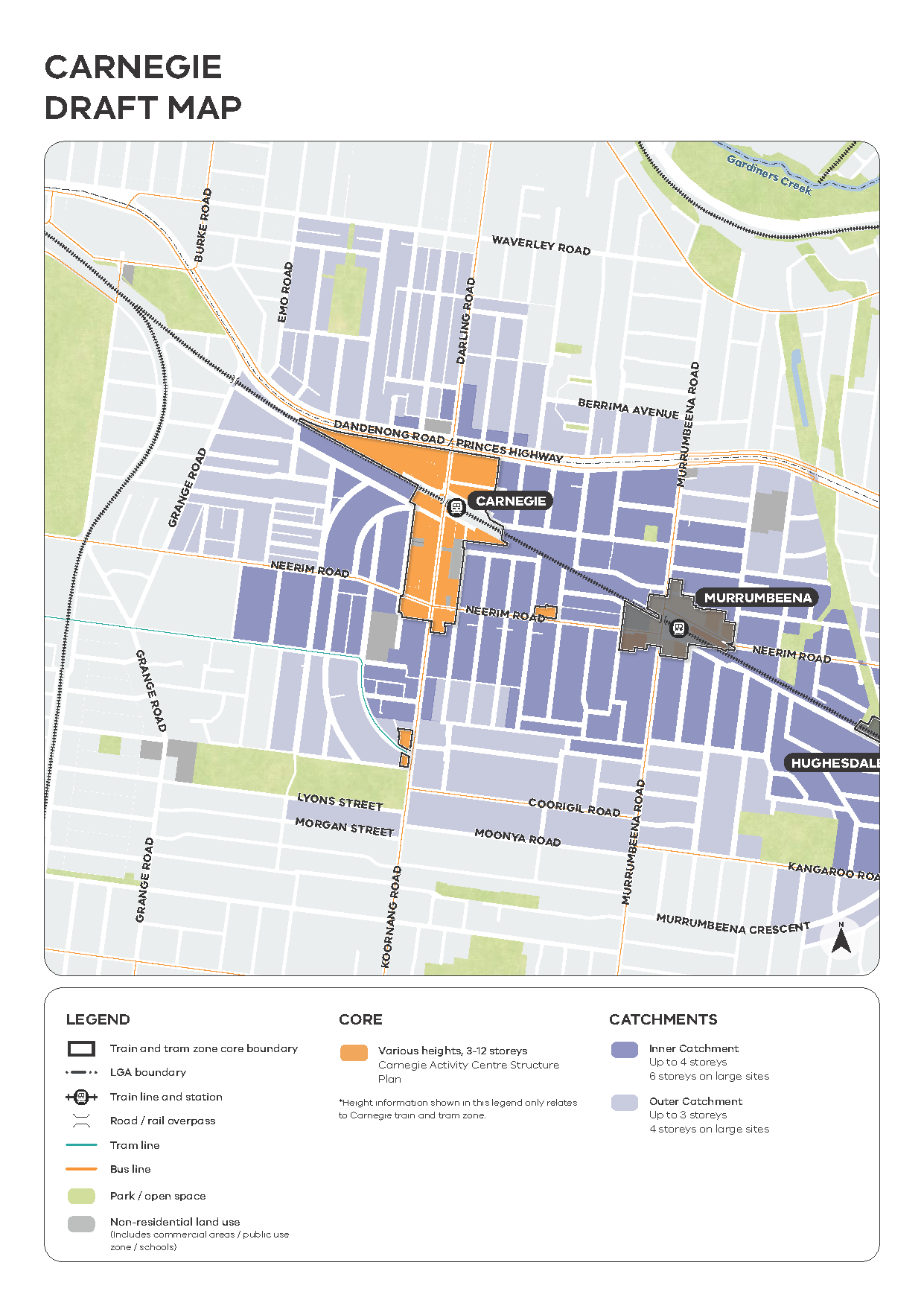
Whilst the council structure plan remains the same (and already includes allowance for 12 storeys) the surrounding areas are severely impacted. Please note that the light blue sections in the above image can now be built to 3 storeys and the darker blue to 4 storeys. If the land is ‘large’ (and this isn’t defined) then the limits go to 4 storeys or even 6 storeys.
When this is compared to the current zonings, then hundreds upon hundreds of sites are being earmarked for height increases and therefore a massive density rise. For example here are our current zonings:
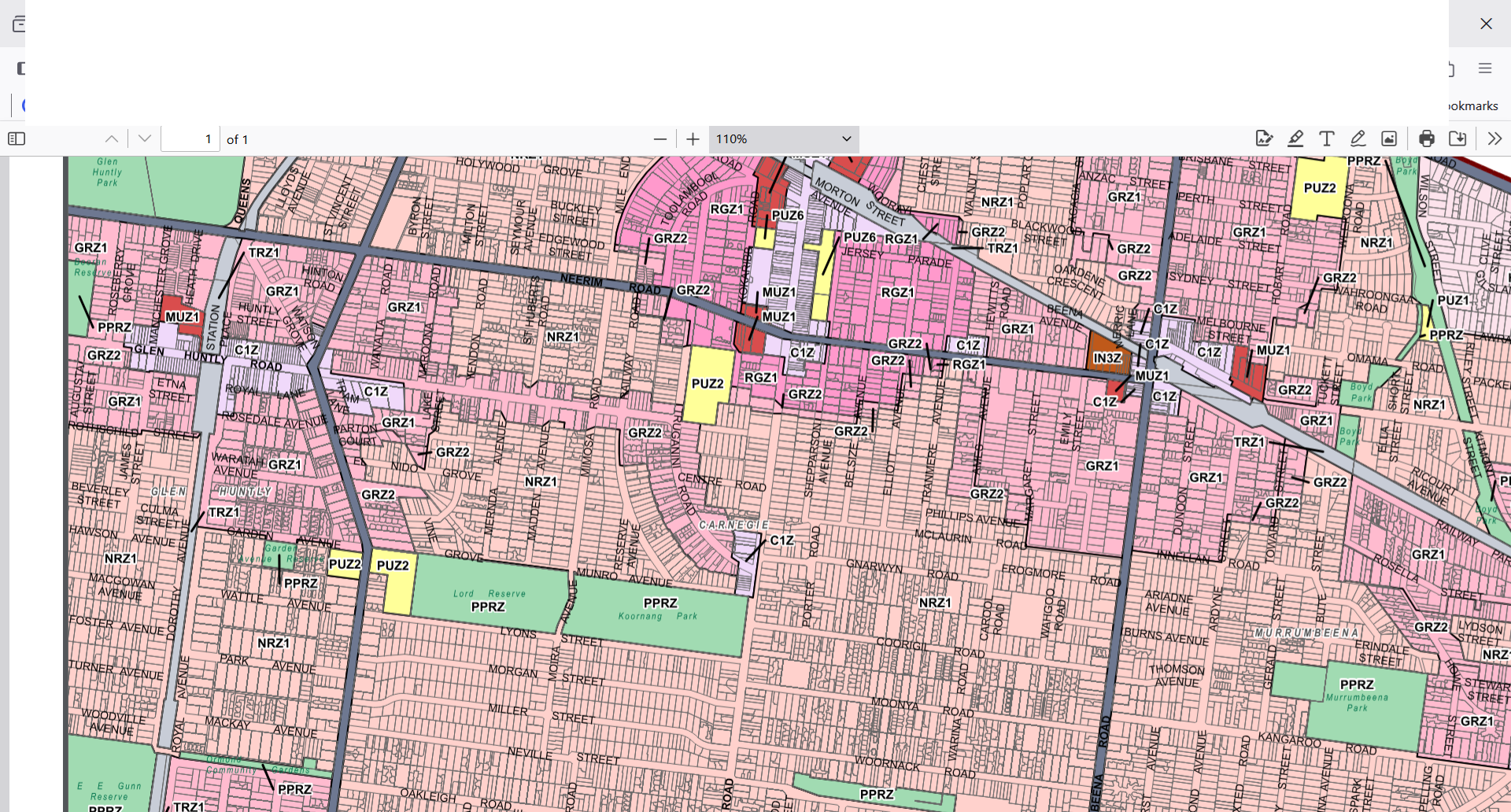
What we are witnessing is the creation of unsustainable development that will become an urban wasteland that consists of apartment blocks following apartment blocks with no regard for heritage, open space, environment, and certainly no cheaper housing that suits families and downsizers. If our councillors aren’t screaming blue murder right now, then they are not doing their jobs in representing their constituents.
 Glen Eira Debates