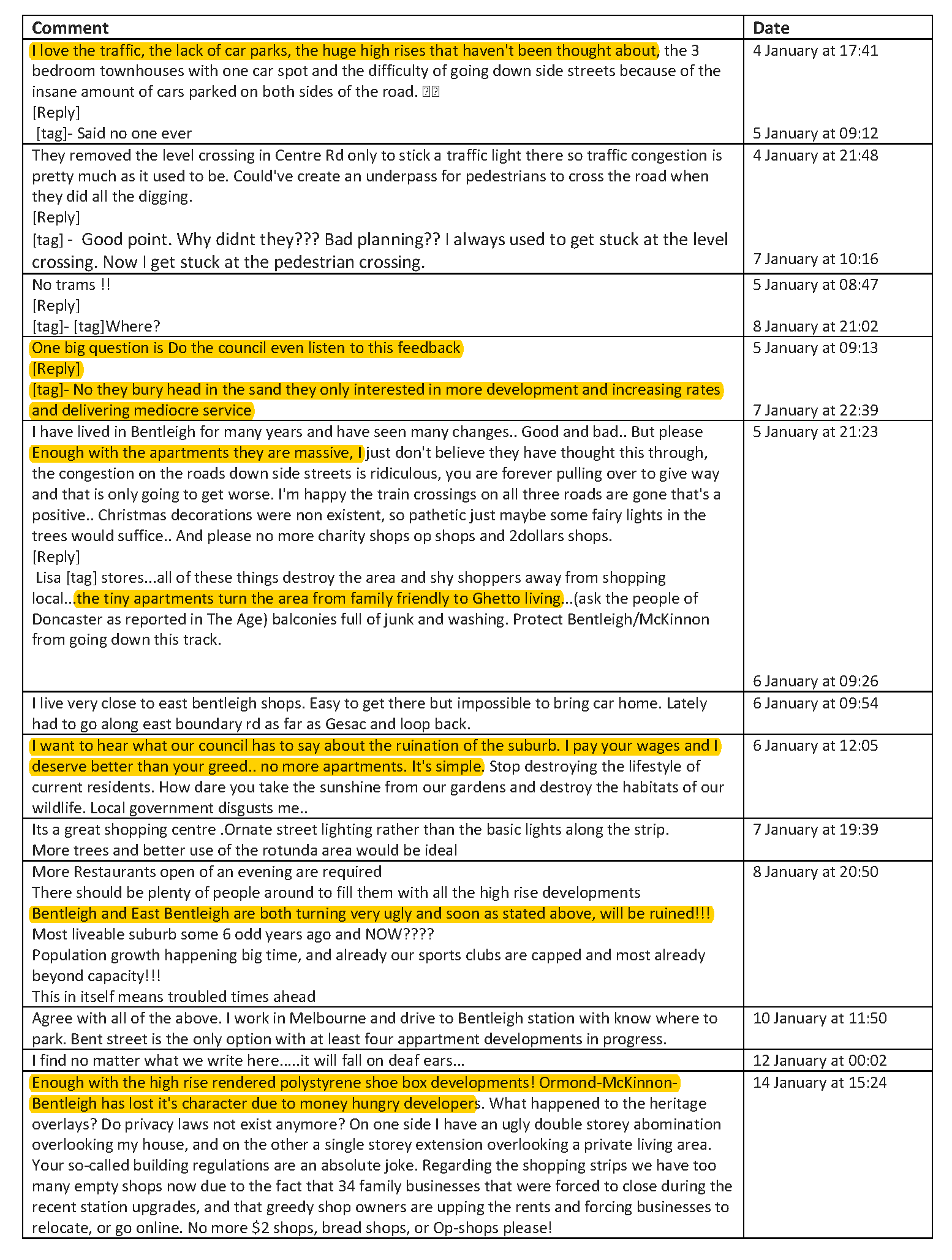
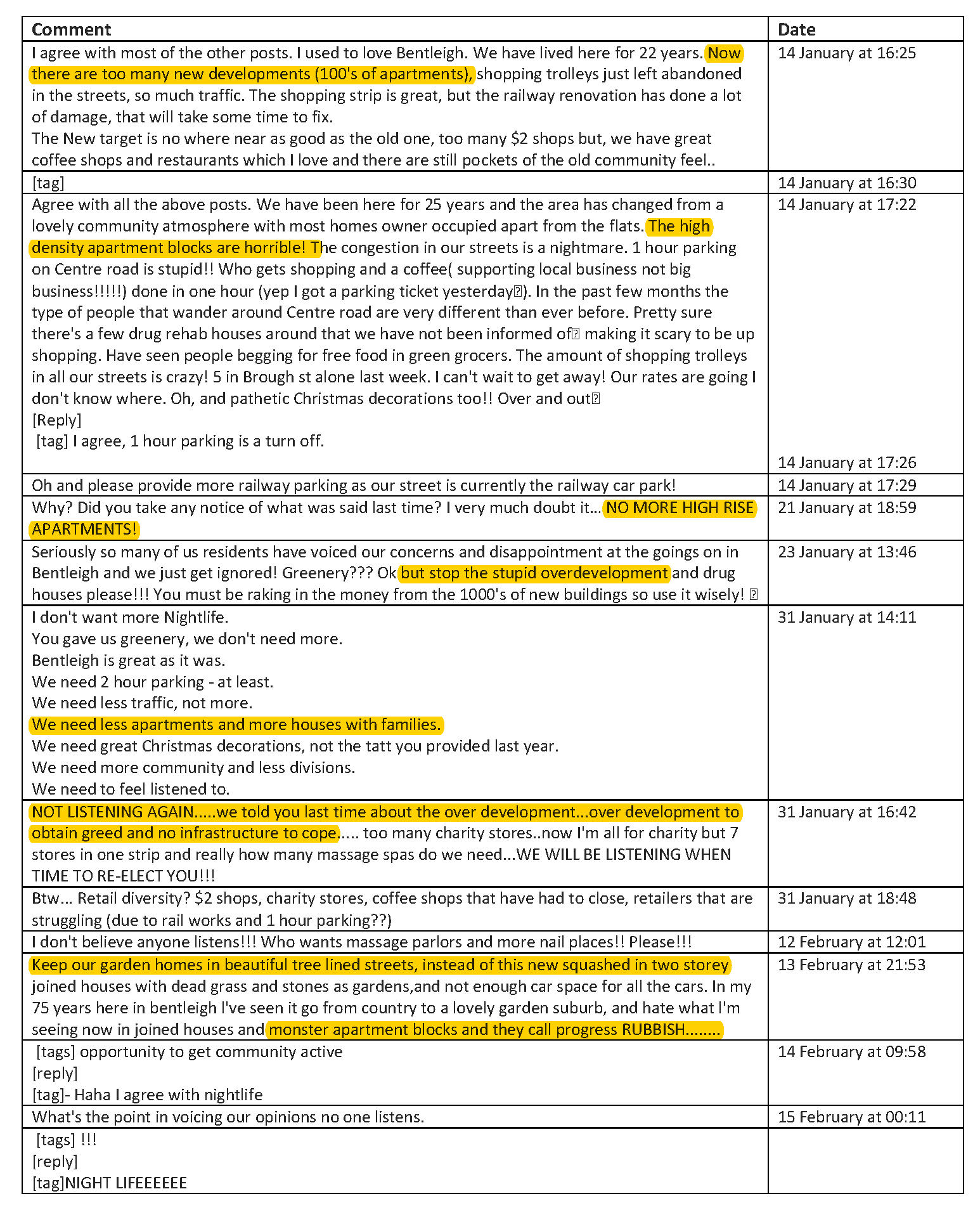
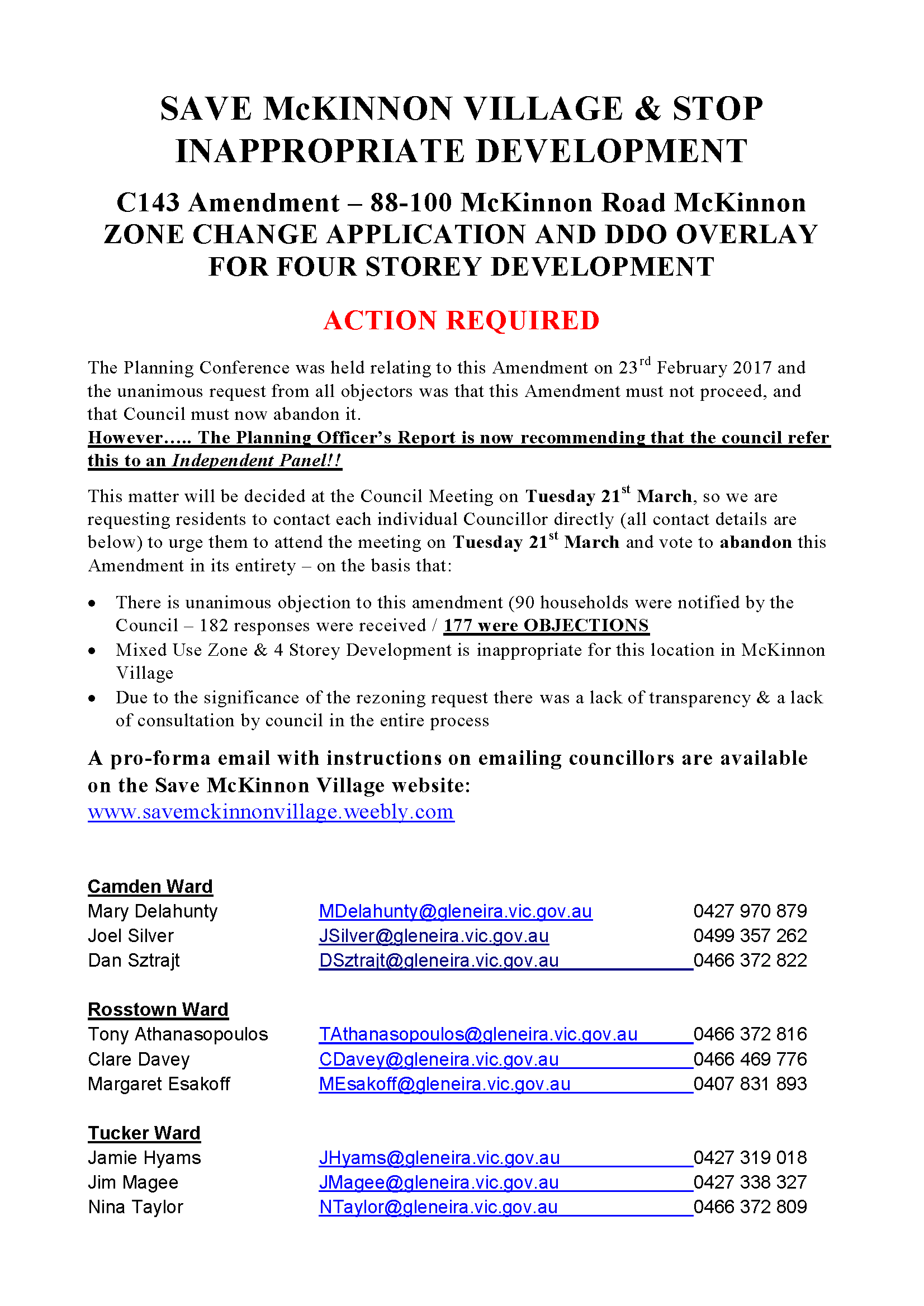
A new record low in public relations has been reached by Glen Eira City Council. The issue relates to the draft amendment for McKinnon Road, McKinnon. In an unprecedented move the Planning Conference was arbitrarily designated as ‘by invitation only’. No sound reasoning was provided for this new move to stifle community involvement. Instead, anyone who bothered to question the rationale behind such a decision was provided with the pro forma response sent out to all questioners by Delahunty.  She wrote:

As you know we are currently reviewing all aspects of our planning process, including our Planning Conference processes. As part of this review we will trial different approaches, and seek community feedback before implementing permanent changes.

From time to time there are contentious or sensitive applications that, in our view, require a slightly different approach in order to ensure that community views are able to be heard in a safe, welcoming and respectful environment.  This Council is absolutely committed to transparency, but we are similarly committed to a no tolerance approach to racism, bullying and inappropriate behaviour.

The application for 88-100 McKinnon Road is an example of a more sensitive application.  For this reason only those who have made a formal submission through the advertisement process will be able to attend.

Please encourage those who are in contact with you to give me a call if they need further explanation.

But the best was yet to come! At the actual Planning Conference held last week, POLICE WERE PRESENT. Residents were told that they were there in order to PROTECT THE DEVELOPER from angry residents. It is indeed a very sad state of affairs when residents, who have every right to attend such a meeting (regardless of whether or not they are formal objectors) are firstly denied access, and secondly, treated as potential hoodlums.

Surely council would be better off spending our hard earned dollars, not on hiring armed police, or drafting obnoxious and spurious  excuses for its decisions, but instead accelerating its stated planning scheme work!

There are many questions that need to be answered on this set of events:

  • Did all councillors know that these decisions had been made?
  • If they did, then did they support them?
  • Who made the decision? When was it made?
  • On what basis was such a decision made? – and please no bogus claims about ‘damaging’ developer’s property or his need for ‘protection’!
  • Is this the course that council has set itself for the next few years? Is there actually a ‘policy’ which outlines the circumstances that police are ‘invited’ and residents excluded?
  • How will any of these actions solve the root problem of inadequate and negligent planning?
  • Given all the community angst, how on earth can council still claim that there is enough development potential in Glen Eira for the next 100 years as stated in their submission to Infrastructure Victoria?!!!!!!!!

Finally, what on earth was council trying to achieve through such actions except to alienate more of its constituents and to again prove how little respect is held for residents.

No surprise that the recommendation for the 19 storey Calvary Health application is a refusal. With over 300 formal objections, wide media coverage, Wynne’s  call for Council to ‘get it right’ and the absurdity of what is undoubtedly an ambit claim, council was left with little option.  Trouble is that they have certainly not done residents a favour with the resulting officer’s report. If anything it has handed the developer enough ammunition to turn council into a laughing stock at VCAT.  The report is incompetent, and worse, deliberately misleading! Here’s why!

One of the major reasons for refusal is council’s sudden interest in open space.  We’re told:

The proposal is inconsistent with the City of Glen Eira Open Space Strategy (2014) as: The proposed public open space is of insufficient size to serve the open space needs of the existing and/or future population.

The area is said to be 457 square metres and consequently not large enough for public open space according to this version of reality. Trouble is that the cited Open Space Strategy (OSS), and the Planning Scheme itself says nothing of the sort! Yes, the area is designated as a ‘gap area’ requiring the creation of 2 Small Local Open Space parks. Clause 22.02 states that the size of such parks can be –

oss

Then on page 75 of the OSS we find the following – the area allocated for Small Local open spaces range in size from 300 sqm up to 2,499 sqm and the larger sized spaces can accommodate large canopy trees.

457 square metres is acceptable as public open space according to both the Planning Scheme and the OSS. Further, council suddenly requires that the open space within the development itself has the capacity to not restrict the type of activities that could take place there.

Once again the OSS disagrees with this statement – Minimise duplication of facilities in Small Local open spaces to provide a diversity of recreational activities in open spaces within a local area, e.g. one Small Local open space could be predominantly for play facilities, while the next provides passive seating and open grassed areas. (page 261). In other words, Small Local Open spaces should be treated as unique sites and not be seen as providing options for multiple users and uses.

We also get the demand for a land contribution instead of a cash payment. Whilst the OSS and the Planning Scheme does list council’s preference for a land contribution here, nothing is mandatory. Council ‘may’ request a land contribution if they so wish, or opt for the cash alternative. Which they so happily did with the Virginia Estate amendment that is also listed as suitable for a land contribution. The Gillon Group then revealed that they had offered land but Council insisted on cash. Why the inconsistency is of course the crucial question.

Next there is the question of ‘neighbourhood character’ and council’s ‘policies’. We agree that 19 storeys is a joke. But so is the Planning Scheme and its ‘summary’ of ‘neighbourhood character’ in this area. The fact that any ‘policy’ can be so general, cover such an immense area, and be so wishy-washy, is hardly something that can be relied upon at VCAT!

Character Area 9: Elsternwick – Caulfield South

Character Type: Edwardian / interwar garden suburban base with modern overbuilding (infill development)

This area has an Edwardian and interwar base, with a range of modern overbuilding that creates a mixed character.

Many of the original buildings are constructed of timber.

The area generally has well established gardens with low to medium scale vegetation and regular planting of street trees. Occasionally private gardens include substantial trees and several streets are defined by their avenue planting.

It includes the areas of significant neighbourhood character around St James andRiddell Parades, which is valued for its intact Victorian, Edwardian and Interwarstreetscapes and the strong vegetation quality. (Clause 22.08).

Council also relies on its claims about ‘potential flooding’! Please note:

  • There has been no referral to Melbourne Water
  • There is no Special Building Overlay (SBO) impacting on the site (see image below)
  • All the VCAT member has to do is look at this nonsense and chuck it out. This of course doesn’t explain the fact that given all the flooding since at least 2011, Council has sat back and done bugger all about its SBO’s

sbos

The most important omission in our view is any discussion as to the legal interpretations that should play a large part in any VCAT hearing. Council simply states –

The mandatory height limit applies only to land used as a “Dwelling” or “ResidentialBuilding”. Any other use is not subject to the mandatory height.In this instance, the proposed “Residential Aged Care Facility” building fronting Ludbrook Avenue is the only component of the development which is subject to the mandatory height limit of 9 metres (as the slope of the land is greater than 2.5 degrees). The balance of the development including the nineteen storey building comprising the retired living units is exempt from the mandatory maximum height under the zone.

When 86 so called ‘independent living units’ are crammed into a 19 storey building, and some of these will include 3 bedroom apartments, then surely it is at least worth raising the issue of the status of such a proposal. Could they in any shape or form be considered as ‘dwellings’? If they are ’dwellings’ then they come under the Neighbourhood Residential zone requirements of an 8 metre mandatory height limit! Even the Planning & Environment Act would appear to provide some solace here with its definition of ‘dwelling’. Council simply ignores, or at best, skims over this vital consideration!

“dwelling” means a building that is used, or is intended, adapted or designed for use, as a separate residence, (including kitchen, bathroom and sanitary facilities) for an occupier who has a right to the exclusive use of it …..(planning and environment act, 1987 – definitions Section 46H)

There are plenty of other gaping holes in this Rocky Camera report. Until the competence of the planning department improves dramatically and until officer’s reports are accurate and not misleading, we do not hold out much hope that residents can have any faith in what is presented on the written page!

Time for a quasi ‘performance report’ on council. It is now a year since Glen Eira has had a new CEO at the helm and 4 months since 5 new councillors were elected. Has anything really changed? Has there been ‘progress’ in terms of transparency and accountability? Has this council lived up to the rhetoric of ‘listening to residents’ and instituting vital change to democratic processes and protocols?

Some potential positives –

  • Several directors are gone – so there has been a major reshuffle of senior admin
  • Suspension of standing orders in order to cater for ‘community conversations’ at council meetings

The negatives –

  • No change to Local Law until 2019
  • No change to advisory committee meetings protocols
  • No intention of reviewing residential zones despite huge community outcry
  • And much, much more……..

In December last year, the Ombudsman released her report into transparency in decision making by local councils. Glen Eira was one of the councils focused upon. According to the report the basis for the selection of the 12 councils was: the number of complaints received about them; comments received via the Government’s Local Act Review, and the performance measures on ‘transparency ratings’.

We’ve uploaded the full report HERE and fully endorse the findings made. Each recommendation is something that for years and years this council has fought tooth and nail to avoid. We can see no reason why many of these recommendations cannot be instituted immediately and do not even require amending the Local Law – ie publishing the agenda at least 5 days prior to the council meeting, instead of late Friday afternoon!

Here is the media release on the recommendations –

local-government-media-release-final_page_1local-government-media-release-final_page_2We must also take some credit in leading the ombudsman to conclude that Council’s Delegated Planning Committee had been operating illegally for the past decade! That is why several council meetings ago, there was the resolution to rescind the delegation to this committee and reconstitute it! Thus here was another opportunity for council to mend its ways – to be far more open and transparent. No such luck in Glen Eira – except for the notation in the CEO’s response that the public could request minutes from this committee. Certainly news to us and why hasn’t this been widely publicised if in fact true?

pages-from-vo_report_tansparency-of-lg-decision-making_dec-2016_page_1pages-from-vo_report_tansparency-of-lg-decision-making_dec-2016_page_2

The motivation to change, to live up to the rhetoric, to ensure greater transparency, and to work with the community instead of against it, would appear to be moribund. If it were alive and well we would not:

  • Have to wait until 2019 for the Local Law to be amended – especially when the current public question fiasco can occur at the drop of a hat and at the whim of the anti-community forces within council
  • Find planning conferences designated as ‘sensitive’ and accessible by ‘invitation only’
  • Council submissions/consultant’s reports on vital issues would be available PRIOR to council resolution and NOT AFTER
  • etc. etc.

Mounting opposition to Melbourne’s high-rise retirement village

  • Aisha Dow

Most people wouldn’t be too worried about having a retirement village next door, after all nursing homes tend to attract a type of neighbour unlikely to be the instigator of raging parties or burnouts.

But a unique proposal in the municipality of Glen Eira has many residents up in arms for a very particular reason. The new retirement facility would be 19 storeys.

The proposal is to redevelop the low-rise Calvary Health Care Bethlehem hospital in Caulfield South into a $73 million precinct including retirement village, aged care home and childcare centre.

A “loophole” in the planning law means the owners of the Kooyong Road facility could sidestep a strict eight-metre height limit, angering hundreds of local residents.

“We are not against the site being developed. It’s a very ugly building,” said Bethlehem Hospital Community Action Group spokesman Kelvin Cope.

Calvary Health Care’s national development manager Angus Bradley said the proposed redevelopment would be a place where the ageing and elderly could stay in their homes for longer, and couples remain together.

The new precinct would see 85 two and three-bedroom “independent” units with shared gym, art room and library. Those needing more living assistance could relocate into the aged care home with 80 beds. And there would be a  hospital specialising in palliative care and neurological diseases such as Parkinson’s.

“What is really important to us is that we are catering for the needs of the people of Glen Eira and surrounds for the medium and long term … so they don’t have to leave the place they may have lived in for 15 to 20 years,” Mr Bradley said.

But the proposal is facing fierce opposition from the community. Almost 300  people have officially opposed the application, with just eight in support.

Eight-year-old Finn Clarke is one those who have submitted an objection, writing he was worried that people in the planned tower could see him swimming in his backyard pool. His family lives near the hospital.

“Don’t build the tower here. Build it in the city where it belongs,” he wrote. Finn’s mother Melissa Monks described the proposal as “monstrous”.

“While the proposal may include underground car parking, like is the reality today, many staff and visitors will continue to try to park in the surrounding suburban streets, subjecting neighbours to gridlock, increased safety risks and increased noise,” she said.

Glen Eira councillors are scheduled to vote on the proposal on February 28 – but the council has already raised its concerns in a submission to the state government. It said current planning rules meant the area’s two-storey height did not apply to buildings defined “non-residential”, including independent living units and retirement villages. The council said this should change.

“It is considered that all buildings should be required to meet the mandatory maximum height limit in order to ensure that the neighbourhood character of residential areas is maintained.”

A spokesman for Planning Minister Richard Wynne said Glen Eira could still exercise its discretion and decide whether the proposal was appropriate for the area.

“This is an important matter for Caulfield South residents and it’s important the Glen Eira City Council gets it right,” he said.

Source: http://www.theage.com.au/victoria/mounting-opposition-to-melbournes-highrise-retirement-village-20170217-gufq4h.html


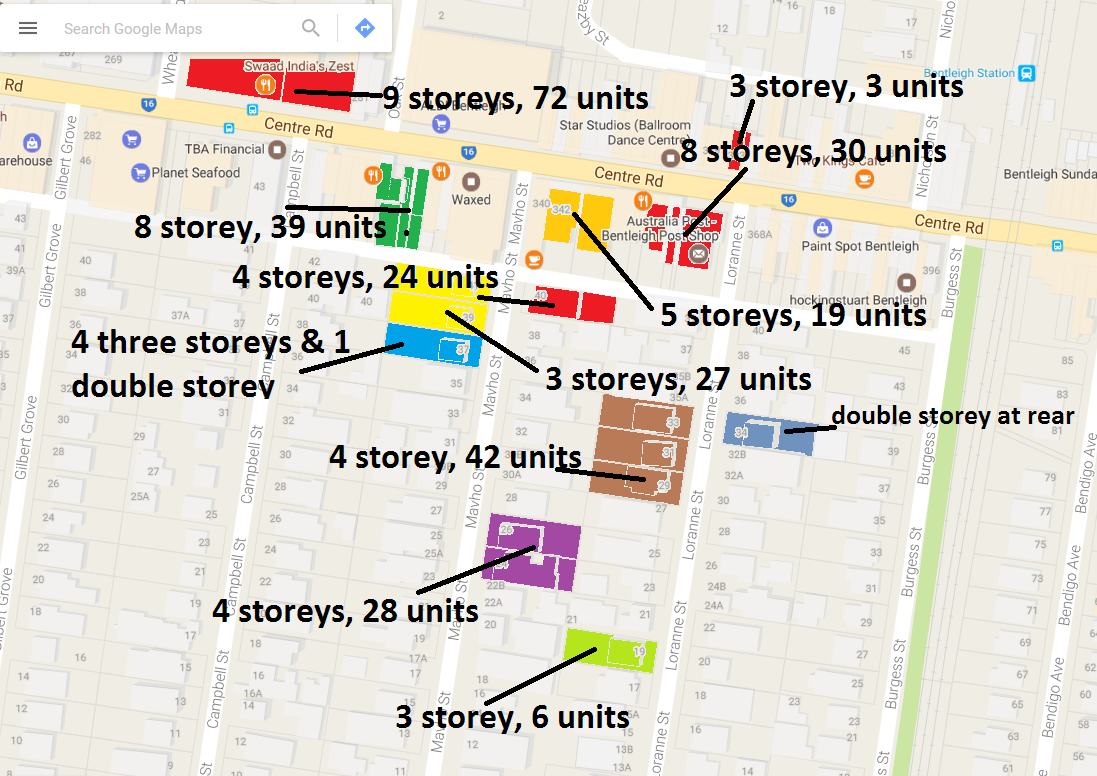
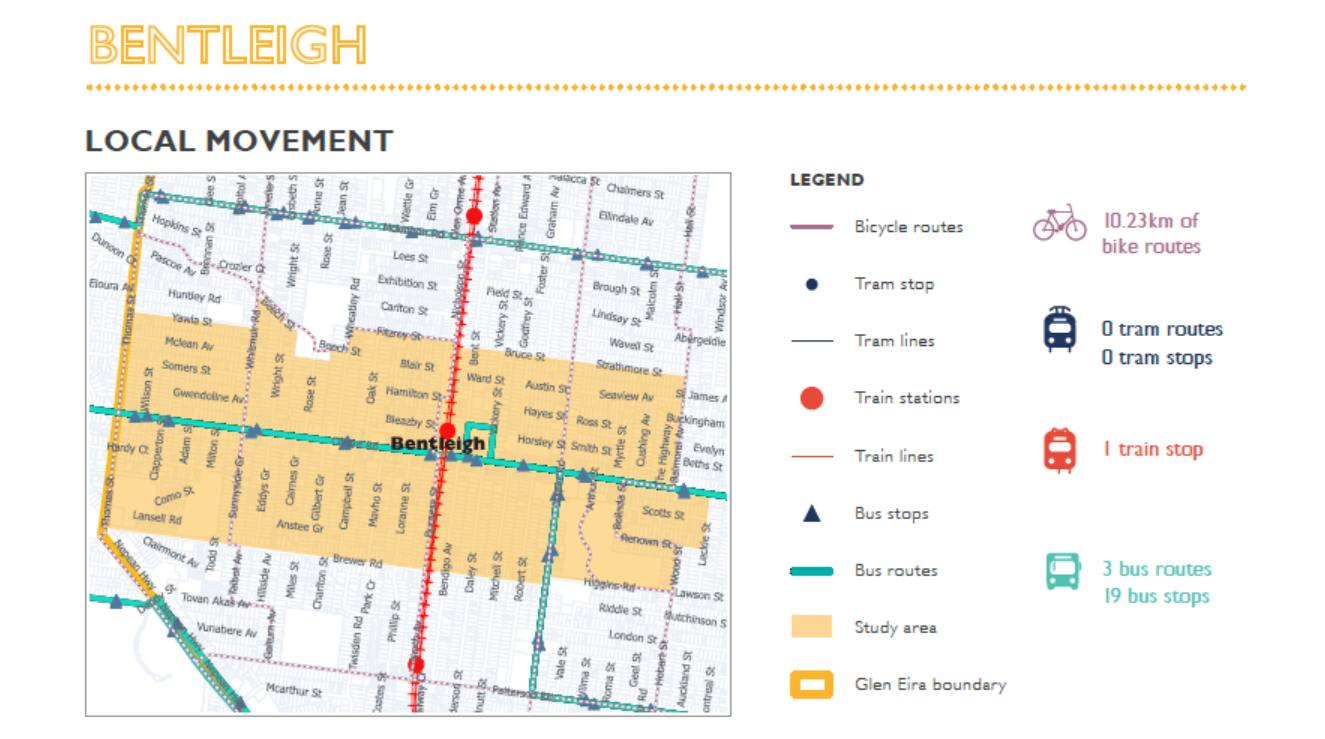
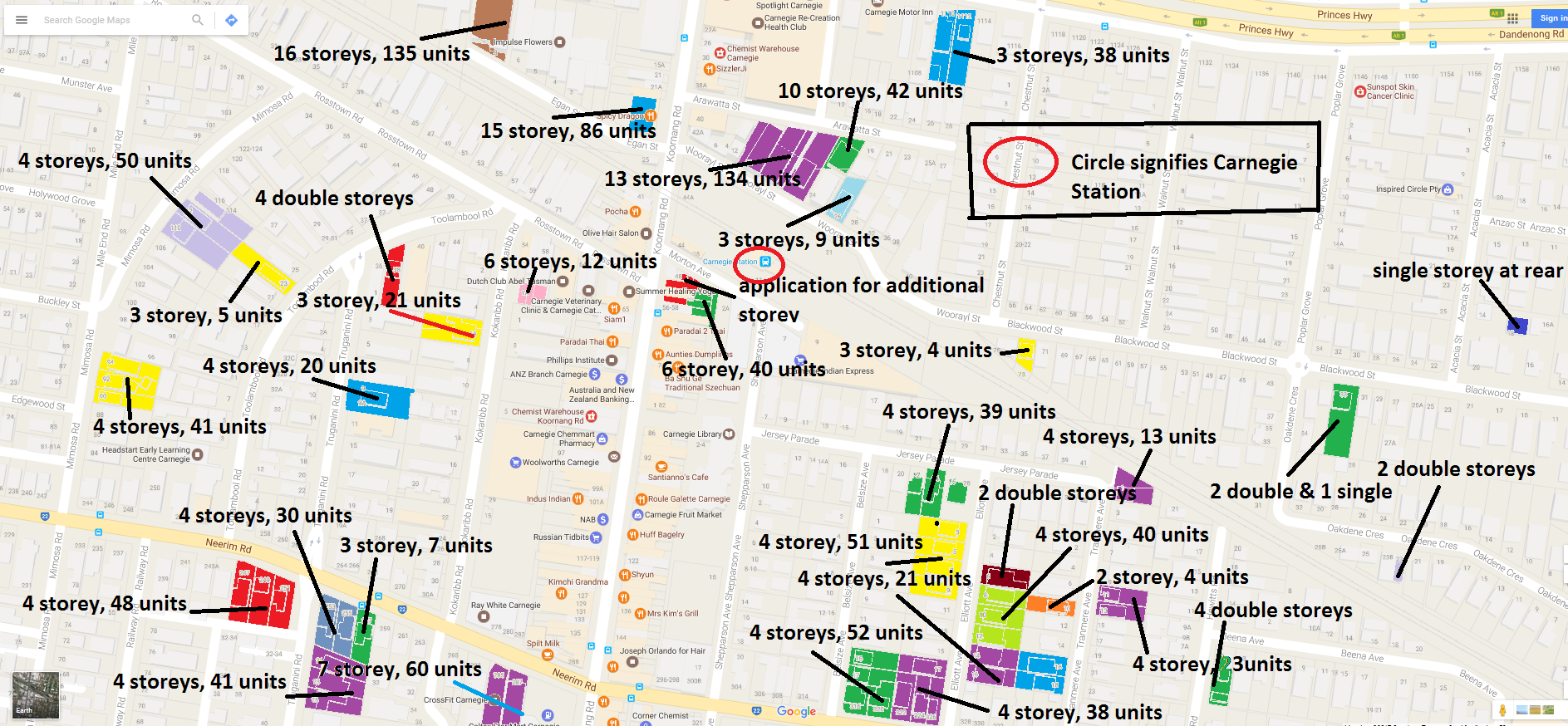
No need for words. The image says it all – 500 apartments crammed into another handful of streets! And this is without the 7,8, and 9 storey developments waiting in the wings along Centre Road itself. We should also point out that in the majority of these developments, permits were granted by Hyams, Esakoff, Magee and Delahunty who also decided that the community was not worth consulting when they introduced the zones in secret and by stealth!

bentleigh2CLICK TO ENLARGE

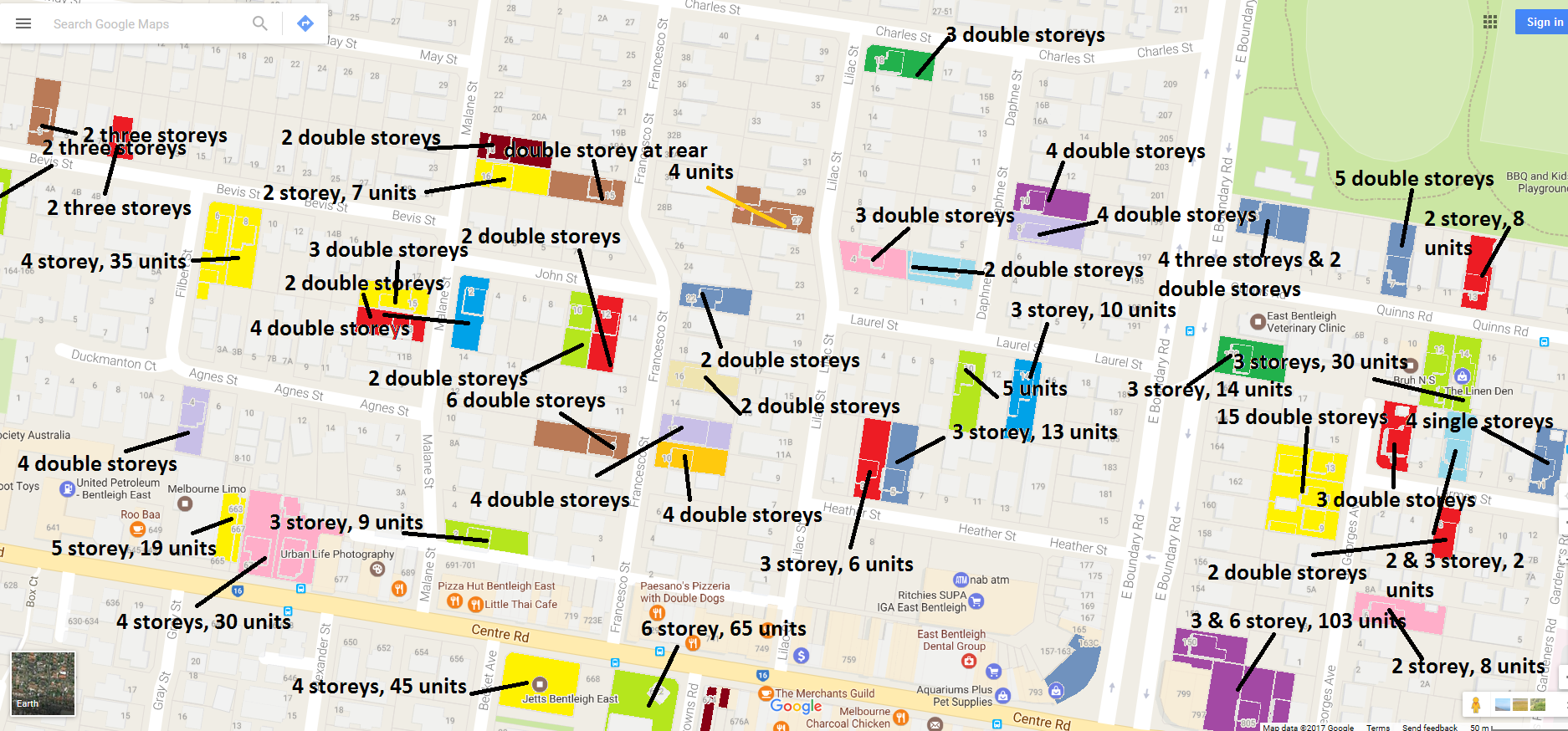
Featured below is what has been happening in McKinnon over the past 12 months. We have included several applications that council refused on the assumption that the developer will head to VCAT and instead of demanding 32 units for example, he will ask for 30 units. Given the current planning scheme, history tells us that a second bite at the cherry will be successful.

Please note:

  • The map DOES NOT INCLUDE ALL PERMITS GRANTED SINCE THE ZONES WERE INTRODUCED – ie multi-development in Penang for example, or the current amendment for the corner of Wheatley and McKinnon Road. Nor have we included all of the countless 2 double storey developments in these side streets. We have only concentrated on the past 12 month decision making by council and/or VCAT.
  • We estimate that during this time well over 300 new units will be on the cards – some already built, or in the process of being built. According to the planning scheme, Glen Eira requires only 600 net new dwellings per year to meet population growth. Thus a handful of streets in McKinnon alone have achieved 50% of the stated target for the entire Glen Eira municipality!

Residents should start asking the following questions and demanding concrete and honest answers from their councillors:

  1. What drainage upgrades have occurred in this area since the zones came in?
  2. When will council complete its structure planning for McKinnon and the other neighbourhood centres? Are residents expected to wait 10 to 15 years for this to occur according to the published schedule?
  3. Why is the current consultation on the ‘shopping strips’ emphasising the commercial strips, instead of first informing and then asking direct questions on development, traffic, open space, etc? What role did the consultation committee have in ‘devising’ this current consultation?
  4. How many one bedroom apartments have been built in Glen Eira over the past 3.5 years and how many 3 and 4 bedroom apartments?
  5. How many car parking waivers have been granted to all of the developments shown in the map below – and throughout all of Glen Eira itself?
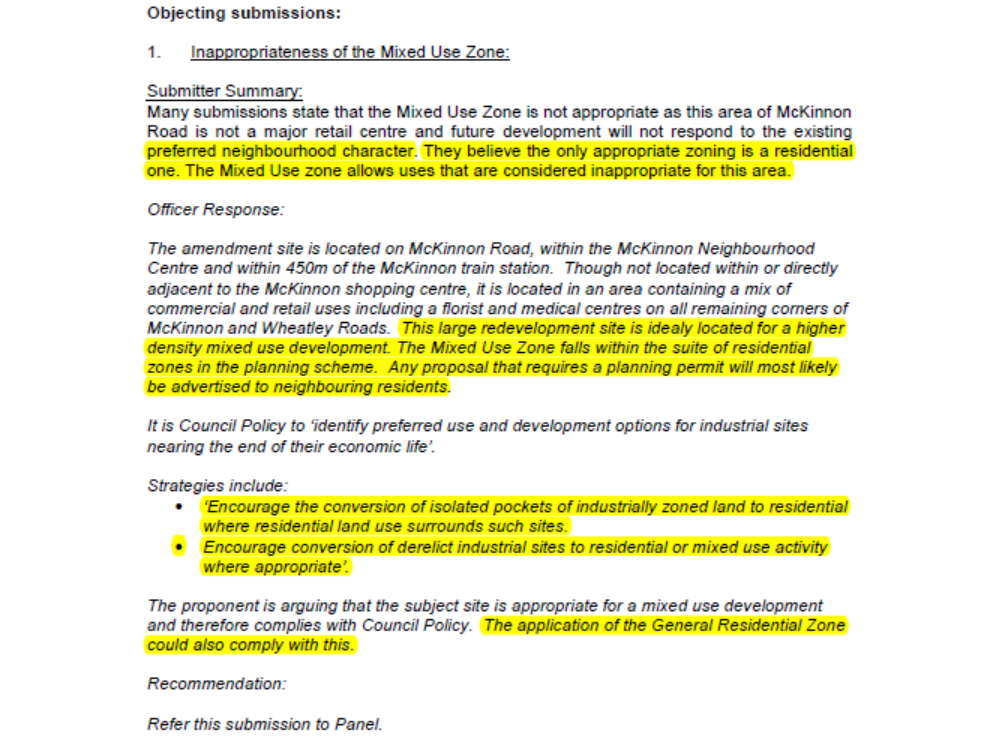
  6. Why is council steadfastly refusing to review the zones themselves – especially since development is occurring far more in local residential streets zoned General Residential and Residential Growth rather than those areas zoned commercial and mixed use?

mckinnonCLICK TO ENLARGE

flood

Apologies for this very long post. What occurred last Tuesday night on this item makes us wonder:

  • Has anything really changed in council?
  • How much are councillors really told/informed about?
  • When will the truth replace fiction? – ie Magee’s comments on ‘what sits next door’
  • Consistency remains elusive given the scores of times that councillors have lopped off several storeys in an application because it was good politics to ignore the ‘expert planners’ on council. Now suddenly it is vital that ‘expert’ recommendations are adhered to.
  • We ask residents to read and judge for themselves whether the level of debate has been elevated or whether this is nothing more than a continuation of the status quo?

Davey moved motion to accept recommendations ‘as printed’. Seconded by Athanasopoulos.

DAVEY: said the ‘report speaks for itself’ and that council has been ‘provided with expert’ advice and that 8 storeys is better than 13.

ATHANASOPOULOS: said he had spoken with residents about the issue. Made the points that ‘six storeys has already been approved in the area’ and this is a ‘stand alone site’ and  council will ‘fight’ so that it ‘won’t become a precedent’. Government wants ‘a landmark’. Council sought expert advice to present to the panel and they’ve got that and ‘the findings give us the tools’ and help council to ‘define our position’. This ‘wipes off 4 storeys from the initial plans’ and council is asking for ‘mandatory height’ which currently isn’t proposed. Said he could be ‘populist’ and ‘oppose the advice which we’ sought. ‘It would be much easier for me to say ‘no’, I think we should go for 6 storeys’ but they’ve ‘made a decision as a council that we want some evidence’. Council has asked for this ‘evidence’ but there will also be ‘other evidence’ that will be presented at the hearing. Said that the traffic evidence could ‘suggest that even 8 storeys is too high’. Said that if they ‘bundle’ all the reports together then if the panel chooses ‘not to go with something’ that could ‘undo all the work’ done. Council needs ‘evidence based defences when we come into these situations’ rather than being ‘wishy washy’ and saying ‘we feel this and so forth’.

ESAKOFF: started off by making several points. (1) this is a ‘neighbourhood centre’ and in council’s heirarchy of centres this is set down for less development in comparison to the 3 major activity centres of Bentleigh, Elsternwick, Carnegie. (2) this ‘sits at lowest’ centre for development (3) schools nearby, childcare, so there are ‘associated parking and traffic ‘ issues. (4) area ‘is a flood zone’ (5) heritage overlays are there and also Neighbourhood Residential zones. The consultants suggest 8 storeys as ‘maximum’ and is based on the desire for this ‘to be a landmark building’. Said that ‘community views in the main are not supportive’ of this and ‘I doubt they would be supportive of any development’ of 8 storeys. Thought that the ‘sticking point’ was the government’s wish that this be a ‘landmark building’. Asked ‘what makes a building a landmark’? Didn’t think that a landmark building ‘needs to be 2 storeys higher’ than its surrounds. Landmarks are building of ‘some special design feature’ and not just height. Said that heritage and neighbourhood status of the centre ‘should be respected’ and traffic shouldn’t be raised to levels that match ‘arterial roads’. ‘Community views should be respected’. Said her ‘preference is not to exceed’ what’s already approved – ie 6 storeys but could ‘succumb’ to a well planned 7 storeys.

SZTRAJT: Thought the whole issue was a ‘circus’. This was a state government project and they are making the decisions so ‘that is already absurd’. Went on to say that the government isn’t ‘building a park’ and they are ‘calling this landmark’ in order to ‘give them the possibility of creating a cash cow’ and to ‘recoup’ their costs for the grade separation. They are therefore ‘using the word landmark to convince us that a residential tower’ is ‘something special in a shopping area’. His concern was that council had to ‘put its stamp of approval on something’ and that ‘the minute we say 8 storeys is acceptable in Ormond’ it will be the  benchmark because this is the ‘first of many towers’ that the state government will be looking to build and ‘I can’t believe the state government is going to show restraint on the first project’ so for the other project ‘not being able to exceed the limits’ they’ve done in Ormond. ‘Therefore, they are not going to listen to this advice’ and will want to ‘build this as high as they possibly can’. They will build their 13 and in a couple of years there will be ‘an application from next door’ where the developer will say that even council supports 8 storeys. ‘We are setting ourselves up’. Said ‘I am disgusted by this report in the first place’ and council has to make sure that ‘if the state government is going to steam roll us, we are not giving permission’ for even 8 storeys. ‘To put anything higher than 6’ is he believes ‘irresponsible’.

SILVER: began by stating that the reason why this tower is proposed in Ormond is because ‘it is a Liberal electorate’ and Bentleigh and McKinnon aren’t. If this was proposed for these latter suburbs then he could ‘assure’ us that the sitting member ‘would be quite worried’. Supported the motion and does ‘prefer the evidence based approach’ although he isn’t completely happy with the proposal. Thought it was ‘damage control’. State government is in control and ‘they want to make a bit of money out of this site’. In cases like this it is worth being ‘objective and look at the surrounding area’ and ask ‘what is reasonable?’ Said that ‘unfortunately, we don’t have those controls anymore’ since it is a government controlled development. Said that the Panel ‘will look for the best evidence, the most persuasive’. Claimed that councillors had a ‘choice whether we put an emotive argument’ which people might be ‘happy’ about, but which is ‘unlikely to give us much credibility’. That would lead to 13 storeys and ‘I don’t want to see that’ nor does he particularly ‘want to see 8’ but ‘it’s better than 13’. Didn’t think ‘this should be happening’ and for the next state election to ‘give the state government hell over this’. Council needs to ‘put its best foot forward’ and to ensure that they have the ‘best option going forward’.

MAGEE: asked the mover and seconder whether they would accept the addition to the motion that council releases the Hansen report. Both agreed. Began by saying that there’s a ‘little place’ called the ‘real world’ and in this place the government has ‘every right’ to do some ‘value capture’ to recoup some of the money it has spent on the grade separation and this money eventually goes to ‘you and me’ as the tax and ‘ratepayers’. Said that council is ‘considering something that we asked for’ (ie consultant’s report). Council ‘decided’ that ‘we didn’t want to go to the Minister and say I think 5, I think 6’. He will ask how did you come to 6 storeys and we will say because next door is 6 storeys. Said that ‘regardless of what sits next door, VCAT cannot use this as a precedent’. With the amendment ‘we can prove how we came to that’ because ‘8 storeys doesn’t throw a shadow’ onto the south side and that the setbacks on the west are ‘sympathetic’ to heritage. ‘We brought in the experts’ and the Minister will listen to them because of all the criteria which ‘we mightn’t understand’ but the panel will. ‘This isn’t about 9 councillors saying I think, I like, I want’ because they are going to front a committee who understands how all this works. Can’t have the ‘expert’ saying 8 and council saying ‘7 or 6’ and council ‘not supporting the officer recommendation’. Said he doesn’t want 8, but he certainly doesn’t want 13 and can’t have a situation where ‘all the experts are saying this, but councillors are saying that’. ‘That defeats the purpose, no matter how much we don’t like it’. They’ve asked for an ‘evidence based approach’ and he thinks it is ‘incumbent on us to actually use that’.

TAYLOR: land is ‘precious’ and house prices are escalating and there’s a ‘housing shortage’. ‘On the other hand’, council has to ‘bear in mind where’ this development will go. All of this ‘has to be considered’ and perhaps a ‘little harsh’ to say that it’s ‘only a money grab’. ‘We did decide that we would defer to experts’ and ‘we are not experts’ in planning and if they are ignored then ‘why pay for experts in the first place?’ Experts give council ‘the best possible chance to get the best possible outcome’. On height and if councillors said only 6, then the panel would ask well, do you want 6 here, and here, over the whole site. But with this proposal there would be ‘bulk at the front’ only and a ‘greater probability’ of getting 3 and 4 storeys at the back. Worried that ‘if we trim that front they will say okay we’re going to have to get it somewhere’ so residents ‘will appreciate that they have a 3 level rather than a six level’ next to them.

SZTRAJT: wanted to ‘clarify something that was said before’ – hamely that if an application goes in for 8 storeys ‘next door’ and ‘we reject it’ whether this means that ‘VCAT can’t approve it’?

TORRES: said the site is under a ‘new set of rules’ which is a ‘building envelope’ and ‘you can build within that height without any resistance from local government’.

SZTRAJT: asked that ‘if a new developer’ and not government puts in an application for ‘8 storeys next door’, council rejects it and the developer goes to VCAT, can ‘VCAT not allow’ that development?

TORRES: asked if this was a ‘scenario on nearby land that is privately owned’. Was told ‘yes’. Said that it ‘would depend on the planning controls on that land’. If ‘it is in a Commercial 1 zone, there is no height control’ and the usual ‘decision making process could include VCAT overriding council decision’.  Said that according to the notion of ‘precedent’, that in planning there is the thinking that ‘each application is assessed on its merits and that tends to move away from the precedent notion’. This is because ‘every site is different’ even if they’ve got the ‘same zones’. ‘It can’t be said that just because there is 8 storeys near by that 8 storeys can just go’ into a neighbouring site.

HYAMS: agreed with Sztrajt and Esakoff ‘except for their conclusions’. SAid that ‘under normal circumstances’ he would never ‘say’ anything that could be seen as ‘supporting 8 storeys’ in Ormond.  Acknowledged that it’s a ‘lower order centre’ and 13 storeys is ‘way out of character’ for the area – ‘but these aren’t normal circumstances’. Government which ‘has power over all of us’ has set the circumstances and the urban design expert ‘has taken into account those circumstances’. Said he’s interested ‘in the best outcome for the community’ and this can only be achieved ‘if we make our expert evidence as strong as possible’. It is ‘possible’ that the government will simply put its 13 storeys up, but council’s best chance is to ‘go along with what our expert has said’. Doesn’t think that ‘just because an expert says something we automatically have to go along with it’. Councillors are the ‘decision makers’ and they have to ‘take that evidence, assess it’. But it’s also ‘important’ that ‘we do achieve the best result by assessing that evidence’.  On the question of ‘precedent’ he thought if it is 13 storeys then this ‘does change the way VCAT’ and applicants will ‘look at it’, and that’s one reason why council is ‘trying to keep it as low as possible’ by ‘throwing our weight behind the expert evidence’.

SZTRAJT: said they’ve been talking about ‘evidence based’ study but ‘we have one piece of evidence’ but ‘I understand that council may also have requested additional’ advice that ‘would include elements like the’ narrow streets alongside the project and ‘issues like the number of cars going’ down these streets. Wanted to know that if council is taking the ‘evidence based approach’ that they are not simply taking ‘one piece of evidence’ but ‘all three that have been requested by council’.

TORRES: said that council’s submission will ‘consist of 3’ expert evidence on traffic, urban design, and retail impact.

SZTRAJT: repeated that he wanted clarity that the evidence based approach is based on ‘all three’ documents and ‘not just one’.

TORRES: ‘yes’. SAid the council rep will ‘orchestrate’ at the panel the ‘strong presentation’ to ‘strongly support our submission’. All are on different topics, but will form part of the submission.

SZTRAJT: asked if ‘one piece of evidence’ is saying 8 storeys  and for example the traffic evidence says that the ‘bulk’ of the building ‘will create’ cars ‘in excess of what the streets can handle’ puts council in a position where they might have to ‘request less than 8 storeys’.

TORRES: said that traffic report ‘will not provide advice on urban design’ but ‘would likely come up with potential suggestions about road widths’ and so on.

ATHANASOPOULOS: asked why Torres had said to councillors that ‘evidence based’ would have ‘a bit more weight behind it’ when council would be arguing their case?

TORRES: said that ‘one word’ missing from all the discussion thus far is ‘independent’. The urban design report ‘has not been guided by officers’. SAid the report is based on ‘urban design principles’. Based on  council’s experience this kind of advice before panels and VCAT has ‘the strongest impact’.

DELAHUNTY: said council is in a very ‘unique’ position. Government on one side and community on the other, and so council had to do what it could to ‘collect the best evidence’. Said they’ve told the government that 13 storeys is ‘ridiculous’. Council has ‘done all that’ so they can’t come back and say ‘we want 5’ with ‘nothing backing that up’. ‘Our reputation is at stake in this process’ and the residents will benefit if ‘that reputation is intact’. ‘This process allows us to enhance our reputation’. They’ve also told government that it is a ‘mistake that they are the planning authority’ and it should be council. ‘Therefore, it is important that we do so with a straight bat’. SAid that the ‘solar access’ points made in the consultant’s report ‘are crucial’ whereas the ‘arbitrary 13 storeys said don’t worry’. Since both sides of the street should be in sunlight therefore the setbacks become important and ‘should be at this amount’. Everyone shouldn’t ‘just talk about height’. ‘Height can disappear if interaction is right’. Council is proposing that the building ‘better integrates’ into the village. There needs to be major ‘scaleback at the back’ to better integrate with heritage. Said that council is like an ordinary community member here and that the best way for them to go is ‘to use this evidence based approach’.

DAVEY: asked for details of when the panel would take place.

TORRES: said he wasn’t ‘up to speed’ on the panel hearing dates.

DAVEY: quoted Esakoff about getting ‘maximum building height’ so ‘hopefully they go less’. Said that Athanasopoulos cited ‘quite rightly’ that these sites have ‘specific controls’. What she found ‘quite disappointing’ plus recognising ‘the irony’ in her saying this as the Green ‘endorsed candidate’, the only party to formally endorse candidates, were Silver’s comments. It is disappointing that ‘we are bringing pure speculation’ about ‘the rationale’ behind the proposal. SAid the government ‘has every right’ to try and recoup its money. What’s disappointing is the speculation that this is ‘being done because of the sitting member in this seat’ (ie Liberal).


MOTION PUT AND PASSED. VOTING AGAINST – SZTRAJT AND ESAKOFF

Congratulations to those residents who objected, and put in the necessary time and resources to the 6-8 Bevis Street, Bentleigh East development application. VCAT confirmed council’s rejection of the application and no permit was granted. The member’s judgement however, where he summarised the verdicts of many other VCAT decisions, laid bare the mess that is the current planning scheme and how the zones have been (mis)applied by council.

In the end, the application was refused primarily because the developer was far too greedy and NOT because of the constraints that exist in the planning scheme. The ‘faults’ of the application were:

  • Unacceptable daylight to many habitable rooms due to snorkel windows.
  • Small habitable rooms, particularly bedrooms that would have dimensions less than three metres.
  • Living rooms with dimensions less than three metres, and meals areas located in corridors.
  • Balconies that are less than eight square metres as required by standard B28 of clause 55.05.
  • The secluded private open space of several dwellings, including the larger three bedroom dwellings would face south and have poor solar access.
  • The floor levels of some dwellings on the south side would be different to natural ground level, requiring steps that would reduce the open space areas, and the steps are not shown on the plans.
  • The dwelling entry should face Bevis Street as that is the address of the land, and the entry facing Filbert Street would cause confusion.
  • The extent of screening to habitable rooms would diminish their amenity.

What concerns us is the ‘lessons’ that must be taken from these decisions and remedied with a completely revamped planning scheme AND a total review of the zones. Unless the shortcomings,outlined below, are effectively addressed, then developers will still be successful in 99% of cases.

Here are the gaping holes as enunciated by the VCAT member and which have been a constant refrain for years and years –

The purposes of the GRZ are also to implement adopted neighbourhood character guidelines and to ensure that development respects the existing or preferred neighbourhood character.

The scheme provides limited guidance as to the height, scale and massing of development within the HDA’s.

Clause 22.07 does not specify a neighbourhood character for the HDAs in general or for particular HDAs, unlike clause 22.08 that includes a description of the character of each of the sixteen neighbourhoods that comprise the areas nominated for minimal change.

A range of dwelling types can be accommodated in the housing diversity areas, including apartment buildings.

With regard to the policies in clause 22.07 that encourage a transition in density and scale between the commercial core and a boundary with the NRZ, the Tribunal has found:

  • The height limit in the GRZ1 of 10.5 metres or three storeys is itself a transition between the taller heights that are generally allowed within the commercial areas and the two storey height limit that is applicable in the Neighbourhood Residential Zone.
  • The schedule to the zone does not vary the standard of clause 55 to require transition in height, built form or intensity. Schedule 2 to the GRZ that is applied at the interface of the GRZ and the NRZ only varies the setback to the rear boundary and does not reduce the allowable height in the NRZ.
  • Hence the need for transition within the housing diversity area is limited.
  • Proximity to a minimal change area (NRZ) does not diminish the strong policy support for more dwellings in the housing diversity areas. A street can provide an effective transition between three storey built form in the GRZ and two storey built form in the NRZ on the other side of the street.

The generality of the policy that encourages transition makes it of limited value to decision makers when considering specific development proposals.

I accept the level of public transport service is less than is available near Bentleigh and other train stations. Whilst limited, it is available and it is probably a better service than found in many fringe suburbs. The distance from Bentleigh train station is not a reason to constrain development in a nominated housing diversity area. If that had been an important consideration, in my view, the area would not have been identified in the scheme as an area where change is to be expected. It has been so nominated in the scheme and change should be expected in this area.

  • It was said that an apartment building is unsuitable in a local residential street. I am satisfied that an apartment building can be an appropriate housing form in Bevis Street and Filbert Street in a housing diversity area. I come to this finding for the following reasons.
  • Firstly there is no distinction in the GRZ, clause 55 or in clause 74 (Definitions) between a duplex, a townhouse or an apartment building. All are defined as dwellings. The scheme distinguishes other forms of accommodation (residential building, residential village, boarding house and others) but has deliberately decided not to distinguish between other types of dwellings. Clause 55 guides the development of a range of buildings up to four storeys in height, without distinguishing amongst housing types. Hence all dwellings must be considered to be appropriate within the GRZ.

Secondly, State and local policy strongly encourage the provision of a diversity of dwellings. Clause 21.04 and clause 22.07 use the terms “multi-unit housing” and residential development. Both terms are broad and refer to more than one dwelling on a lot. They do not limit or define the housing types that can implement the housing objective.

Clause 22.07 encourages a range of housing types comprising of a mix of single dwellings, two dwelling developments and other forms of multi-unit development. This clearly contemplates that a wide range of dwelling types can be appropriate in a housing diversity area

  • They (objectors) say the numeric density of this development is consistent with, or greater than apartment buildings being developed in Centre Road. Hence its appropriate location is on a main road, within or immediately adjacent to the commercial centre, rather than being in a local residential street.
  • I think that the reference to density in clause 22.07 has to be read in conjunction with the height, scale and mass of the building. The discretion that I have to exercise under the zone and the decision guidelines is in relation to the built form, not the number of dwellings. It is the height, setbacks, design, site coverage, ground level open space, landscaping and permeability of a proposed building(s) in its setting that determines whether it comprises an acceptable development. Density or the number and size of dwellings is an outcome or derivative of these design matters; that is, how large can a building envelope be? I do not consider density to be a decisive criteria in its own right, or more important than built form. Furthermore the scheme does not provide any guidance whether a particular dwelling density is acceptable while another density may be unacceptable. It does not distinguish any correlation between density and distance from a commercial zone or main road.

A further proposition that was put by the respondents that Glen Eira is meeting and exceeding its housing growth targets. This proposition is based on a letter from the Chief Executive Officer of the Council to Ms Wilson dated 17 October 2016. The letter advises that in the financial year 2015-2016, the City experienced a net increase of approximately 1900 dwellings. The respondents say this recent growth largely meets the City’s target in clause 21.04 of 6000 dwellings. Consequently they say there is no need to efficiently develop sites in the housing diversity areas.

While the information regarding the number of recent dwelling approvals is interesting, I give it little weight in this review. It does not assist the discretion I must exercise. I must apply the scheme as I find it. In my view there is no direction in the scheme that allow me to refuse a development proposal in a housing diversity area because a certain number of dwellings have been approved or constructed elsewhere in the municipality.

Source: http://www.austlii.edu.au/au/cases/vic/VCAT/2017/153.html

Finally, just to add more salt to the wounds, VCAT granted a permit for a 7 storey building in Centre Road, Bentleigh – on the corner of the ruined Mavho Street. Councillors as per norm, lopped off a couple of storeys and a number of dwellings and granted a permit for 5 storeys and 19 apartments. The developer naturally went to VCAT and got his permit for 7 storeys. Once again, there are plenty of take home messages in the member’s decision –

  • the scheme provides no specific directions regarding the appropriate height of development in an urban village generally or Bentleigh in particular. There is no further guidance regarding preferred heights within precinct 2, even though it is a long ribbon strip with varying interfaces. There is remarkably little policy guidance in this matter beyond very general policy support for the urban villages to do the heavy lifting in meeting Glen Eira’s housing aspirations. This generally means that taller mixed use buildings at higher densities than in other parts of the municipality are to be developed in these centres. Taller buildings can be contemplated in Bentleigh, but as noted in Kai Mou Pty v Glen Eira CC, beyond these general propositions, policy does not greatly assist us in forming a view about the acceptability of a particular proposal[5]. In that matter, the Tribunal undertook a contextual assessment.
  • Mr O’Leary advised that the Council has requested the Minister for Planning to prepare, adopt and approve Amendment C147 in accordance with section 20(4) of the Planning and Environment Act 1987. This amendment would impose a Design and Development Overlay in the Urban villages. It include a maximum mandatory height limit of 4 storeys. Mr O’Leary advised the DELWP has requested further information.
  • The Tribunal has found that no weight should be given to Amendment C147 because there is no certainty that the minister will agree to the council’s request or what form the amendment may ultimately take[6]. Consequently, its final form is highly uncertain at this time. I adopt this approach and give it no weight in this review.

Source: http://www.austlii.edu.au/au/cases/vic/VCAT/2017/136.html

And the final insult to injury, is that once again a developer has taken council to VCAT due to the failure to determine an application for 8 storeys in Centre Road within the 60 day time limit.  This is now the third example in recent times!!!!!!

Unless the zones and the schedules are rewritten completely, we do not see much changing for the countless suburban streets caught up in the mess of Glen Eira’s planning. Concentrating exclusively on ‘shopping strips’ will do nothing to alleviate the over-development occurring in the kms zoned GRZ!

Council has released the various documents it will be presenting at the upcoming panel hearing for the Ormond Tower project. The files are available at: http://www.gleneira.vic.gov.au/Council/News-and-media/Latest-news/Copy-of-Ormond-Station-proposal

We wish to note the following:

  • The only councillors to vote against the ‘official’ council position of a mandatory 8 storey height limit were Esakoff and Sztrajt. All others in our view adopted the spurious position of 8 storeys is better than 13 storeys. Hardly a convincing argument!
  • The fact that the so called ‘evidence’ was released only AFTER the decision was made cannot be seen as transparent and accountable government. It reinforces our view that like so many other contentious issues in Glen Eira, first make the decision and then massage the ‘evidence’ to support that decision!
  • ‘Evidence based’ is the latest jargon to infiltrate into polit-speak. Our understanding of ‘evidence-based’ is that it stems from medicine in the first place and involves data that is ‘scientific’, ‘objective’ and quantified through such processes as randomised clinical trials held over years and years. Individual ‘clinical expertise’ does come into it, but that ‘expertise’ is accorded the lowest rung on the hierarchy of ‘evidence’ and is measured against the overwhelming findings of the various data sets.
  • We find no such ‘evidence’ in the Hansen report for starters. The term ‘opinion’ is used at least 11 times in the document, whilst ‘in my view’ occurs countless more times. Basically, this is nothing more than the ‘opinion’ of one individual – albeit the opinion of someone with great experience.
  • We challenge anyone to find one single scrap of ‘evidence’ in the Hansen report that would justify the recommendation for an 8 storey building. There is absolutely nothing in this report that would indicate why 8 storeys is preferable to say 7, 6 or even 10 storeys!
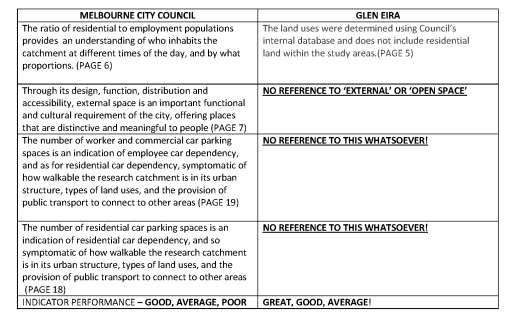
  • The traffic report is equally dubious. And why there is support for a reduction in resident and visitor parking is simply beyond us given that it does not accord with council’s own planning scheme! (see image below).

parking

  • The economic retail report is interesting for several reasons. It announces huge impacts on neighbouring commercial shopping strips if the project proceeds. Mention is made of Bentleigh and others. Yet when it came to the Virginia Estate proposed amendment, the initial officer’s report fobbed off the economic impact by stating that under the zoning of Commercial, the intent was to develop more ‘activity’ and ‘employment’ in these centres.

Thus we have to wonder – did each an every councillor bother to read these ‘expert’ reports? Did they ask some decent questions? When were they briefed on the reports? Or were they simply told by officers ‘this is what we think’ and you should abide by this? Finally, how much did all these ‘experts’ cost ratepayers?

We will report on the actual ‘debate’ in the coming days.