Councillor Performance


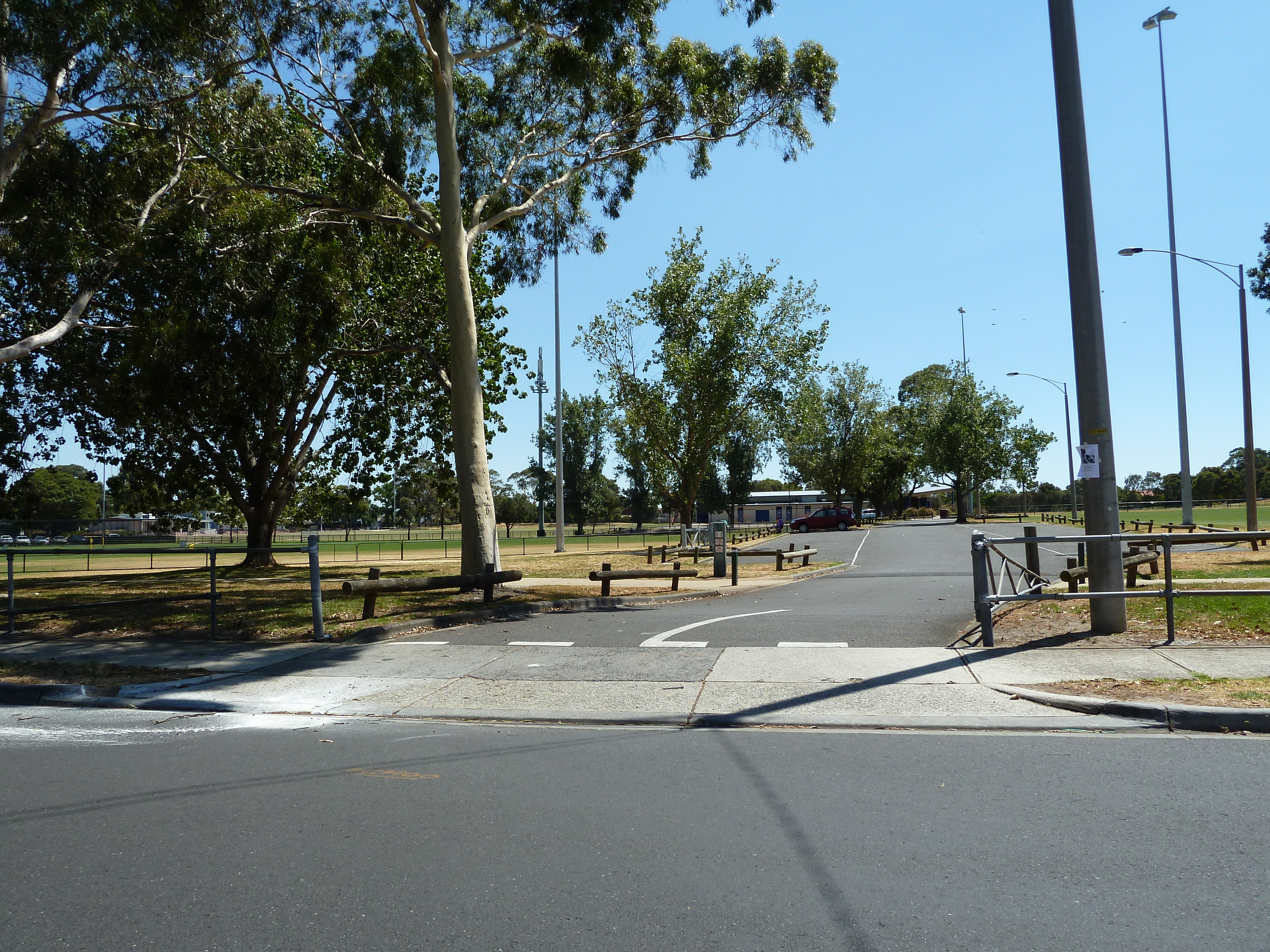
We paid a visit to the centre of the racecourse (aka ‘The Wasteland’) this afternoon in order to check up on some emails we’ve received regarding the state of the upkeep of this land. What we found confirmed what residents had been saying:

  • Barbecues that had not been cleaned for days or weeks
  • Toilets that were disgusting
  • Weeds everywhere
  • Boardwalk fading and weeds/grasses coming through
  • Dead saplings all over the place
  • And not a soul to be seen at 2.30pm on a gorgeous day!

So much for the ‘Agreement’; so much for proper maintenance, and so much for Council supervision and possible breaches of the Health Act!

ccr1

ccr4

ccr2

ccr3

ccr5

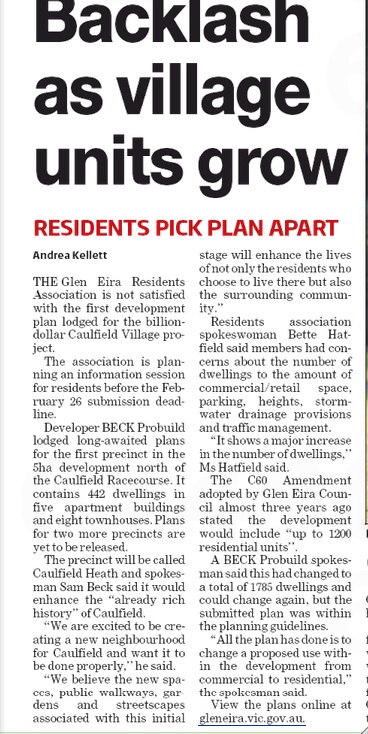
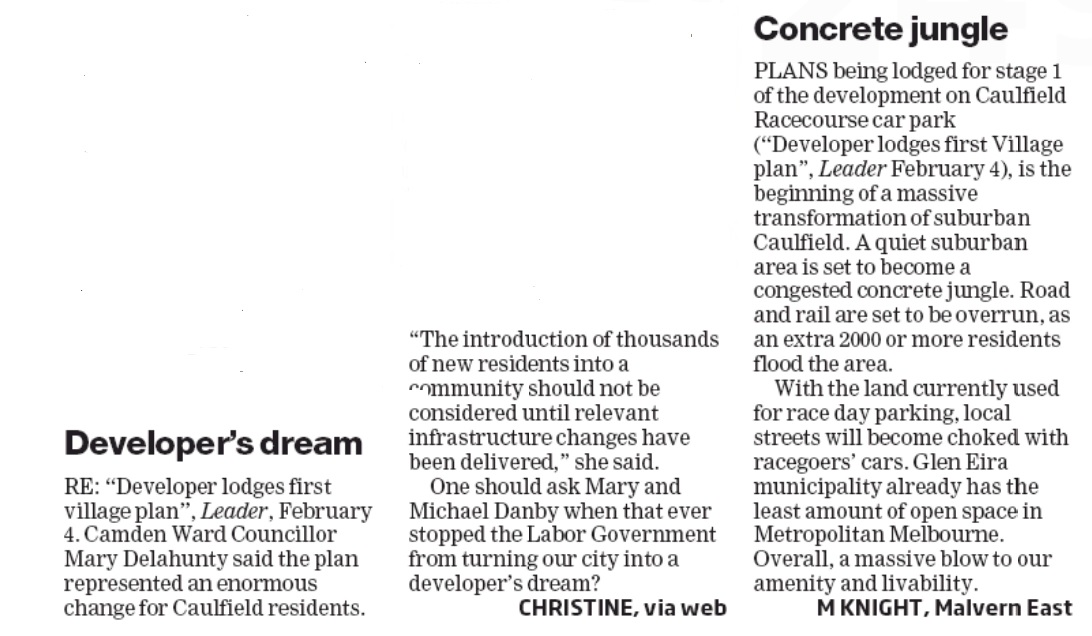
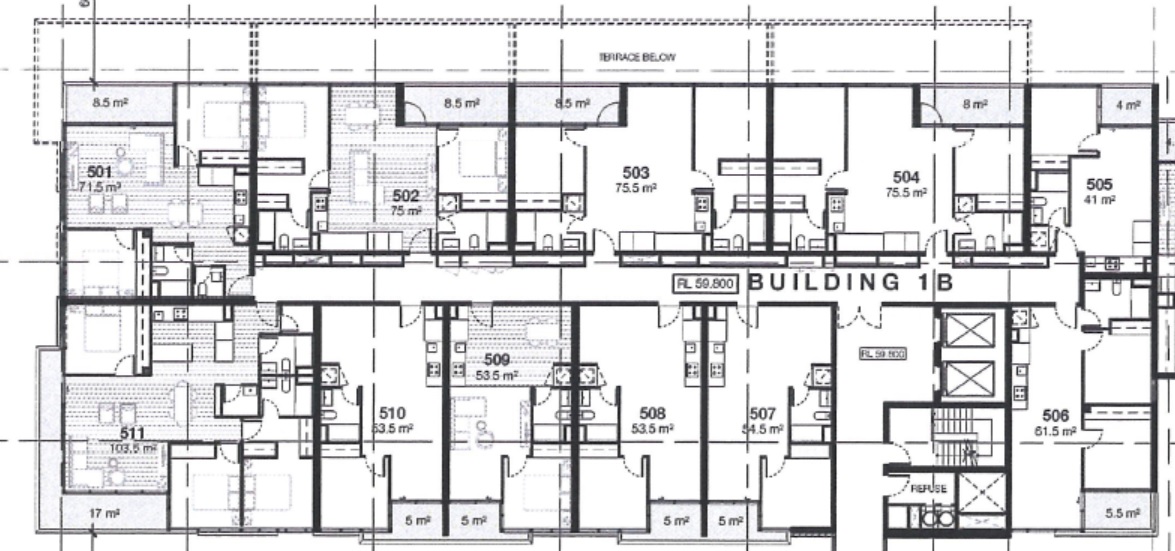
Buried in the fine print of several of these documents, some truths are finally revealed. Residents were repeatedly told by council and the MRC that the project envisaged 1200 dwellings, plus commercial and retail areas. It then burgeoned into 1500 units. Now we are looking at the possibility of 2040 of which the vast and overwhelming majority are SINGLE BEDROOM apartments! We can only wait with baited breath for stages 4 onwards, when height for the remaining buildings are revealed.

Below are the figures taken directly from the ‘Precinct Plan’ and the argument is that this is still in line with the Incorporated Plan!!!!! What bunkum and what collusion!

3

2

1

Council can certainly get things rolling very quickly when they want to. The latest is the Lord Reserve car park development at the cost of $542,000. Tenders were advertised on November 16th and closed on 6th December. The decision was made on the 17th December. Quick as a wink, without telling residents exactly what is happening, the contractors moved in, and what a surprise, a further bunch of at least 8 mature trees were removed.

We do not for one instance believe that the speed and timing of this project is a coincidence. If you expect community opposition, and certainly questions, then January is the best time to get the ball rolling.

Please note: we are not suggesting that this section doesn’t require work. What we are questioning is:

  • Why were so many trees removed? Could any have been saved?
  • How much open space will be lost and turned into a bitumen car park?
  • Why can’t residents be given a clear picture of what is happening?

PS: By way of contrast, residents should take a look at how Bayside City Council deals with car park extensions and the value of trees and consultation. The following is taken directly from the agenda set down for January 28th.

The Beaumaris Reserve Masterplan was adopted by Council in September 2008. The masterplan identified a range of initiatives to be implemented over the lifetime of the plan, including works to the car park adjacent to the sportsground at the rear of the Reserve.

The design for the car park was subject to a period of community consultation between May and July 2013. Key design features reflected the endorsed 2008 masterplan and included; reducing the area available for car parking by turning the area behind the Arts Building into an extended Village Green, proposed removal of six trees to the north of the existing car park to facilitate additional car parking spaces and the installation of a rain garden. 

Following this phase of community consultation, it was evident from the comments received that the proposed design no longer met the needs of the community or the users of the Reserve. As a result, a revised design was developed to take into account issues raised by users, including retaining the existing car park footprint, retaining six trees proposed to be removed and reducing the extent of asphalt surface to the entry road. As the revised car park footprint differed significantly to the endorsed 2008 masterplan, a revision to the masterplan was required.

A revised masterplan detailing the amended car park footprint was presented to Council and adopted at its 29 October 2013 Ordinary Meeting detailed in Attachment 1.

Source: Agenda item 10.1 – 28th January 2014 – http://www.bayside.vic.gov.au/documents/governance/28_January_2014_Ordinary_Meeting_Agenda_without_confidential.pdf

lord

Here’s the ‘before and after’ –

Untitled

lord3

Untitled2

lord2

The latest missive from Friends of Caulfield Park –

Dear Friend of Caulfield Park,

Happy New Year!

You will have seen that this week the Council has started to work on ovals 3 & 4 in earnest. 

Last Monday, at the start of the week of over 40 degree heat, Council chose to relocate the trees that they had made so much political capital out of ‘saving’. 

Whilst we are sure the contractors for the removal did their best, this was an absurd thing to do as no real work took place at the site until this Tuesday.  It was clear last week that this week would have been much cooler and a thinking person would have put back the move 7 days to this Monday, (especially as the relocation of the trees only took a couple of hours).

Early last week, as soon as we discovered the Council’s folly, we sent an urgent email to Paul Burke and when there was no reply by the next day, to the CEO Andrew Newton. 

We asked:

  • why was the relocation not rescheduled to a later date when it was cooler,
  • what steps were being taken to help the clearly stressed trees to survive
  •  to affirm that no further relocations or removals would be needed.

On Thursday afternoon, four days after the Monday relocations, we were finally advised by phone that both Messrs Newton and Burke were on vacation.  It is  shame that there was no-one  able to respond in their absence.  It seems that the Council was without leadership over the Festive Season. 

We then emailed the mayor, Neil Pilling, who replied that he would let us know what was happening by this Monday and that Council had been busy dealing with people suffering from the extreme heat.   That is as it should be, but the parks maintenance crew would hardly have been involved in caring for elderly and vulnerable people!

On Monday the mayor advised that the tree relocation had been scheduled for that Monday, that the relocated trees were now being watered three times a day, and that there were no plans to relocate or cut down any further trees in association with the oval redevelopment.  There was no explanation why there had been no attempt to reschedule the relocations of the trees.

As far as we can tell, from Friday onward there has indeed been a program to save the trees by regular watering.  However, of the 12 trees moved, 3 (2 of which were larger Eucalypts) look as if they are very likely to die, and after such inappropriate timing in terms of the heat, it is possible that more will follow so that the only trees that have been ‘saved’ were the recently planted saplings. 

What can one say about a Council that never admits to error, and which therefore never says ‘Sorry’?

We are continuing to monitor the work and will keep you posted of any further developments.

Best regards,
Spike Cramphorn
Secretary

City of Stonnington aims to create more open space

Date:January 20, 2014

The City of Stonnington is flush with nightclubs, shops and socialites. What it doesn’t have a lot of, is parks. And so it has set out to acquire some.

Council has launched a $200,000 feasibility study and is test drilling this week to explore turning Cato Street car park in Prahran into a park.

But parking officers shouldn’t weep just yet or greenies rejoice – the council plans to move the car park under the park, which could increase the number of parking spaces from the current 400.

Mayor Adrian Stubbs said the car park may have to be at least two levels deep to make it viable.

The cost would be ”millions” but council will wait until the feasibility study’s report comes out in May. Council could finance it or seek private, federal, or, in an election year, state government funding.

Cr Stubbs would like an underground car park to offer shoppers the first two hours free, and sees the park as a village square, flanked by cafes and shops as well as the current supermarkets.

He said it would be a boon to locals. ”It gives residents a place to congregate, socialise. You’d see mums walking with their prams, it’s a place to engage in sporting activity, it’s a place just to sit and think. Would you rather have asphalt, or trees and grass? I’d rather have trees and grass.”

The move came from concerns that of Stonnington’s 26 square kilometres of land, only 6.7 per cent is public open space. It is the second-lowest ratio after Glen Eira at 4.5 per cent, and compares to an average 17.9 per cent in metropolitan Melbourne.

Cr Stubbs said because it was so ”mammothly behind” the council ”needs to be creative” to increase the percentage. It has identified 450 sites for investigation, including taking a 100-space car park in Edsall Street, Malvern, underground, if Cato Street proved successful. Cato Street and Edsall Street car parks are both council-owned.

Stonnington also has a $28.1 million reserve fund for 2013-2014 alone for the purchase of open space, raised from developers who subdivide property having to contribute to council 5 per cent of the land’s unimproved capital value towards open space, if they don’t contribute actual open space. Since 2007 the fund has purchased six properties, many adjoining parks, five of them worth more than $1 million, says Cr Stubbs.

Council has also applied for an acquisition overlay for vacant privately owned land in Carters Street, Toorak, and for vacant factories between Bangs Street and Clifton Street, Prahran, to signal council’s desire to purchase when it is sold in future. Other options being considered include buying railway land or building decking over it, creating ”pocket parks” in dead-end streets and creating roof gardens.

Oskar Cebergs, spokesman for the Chapel Street Precinct Association, said the 6.7 per cent open space figure was ”pretty frightening”. The association was ”fully supportive” of the open space strategy, including the greening of Cato Street car park. But building the car park shouldn’t be a priority over the council’s revitalisation of Chapel Street, including new footpaths, lighting, town squares, furniture and greening.

140117_Powell_-_Tough_new_powers_for_mayors_to_raise_standards__Page_1140117_Powell_-_Tough_new_powers_for_mayors_to_raise_standards__Page_2

P1000134

P1000228

Neighbours allege ‘threats’ from Kornhauser family

Nicole and Eliezer Kornhauser (left) at home and (right) the Springfield Avenue building at the heart of the conflict.Nicole and Eliezer Kornhauser (left) at home and (right) the Springfield Avenue building at the heart of the conflict. Photo: Ken Irwin

A property dispute in a sleepy corner of St Kilda East has spilled from the courts into the streets following allegations that members of one of the nation’s wealthiest families threatened their neighbours.

Police have received complaints about a death threat and abusive behaviour involving Nicole and Eliezer (Eric) Kornhauser, a scion of the Kornhauser business and property empire worth an estimated $430 million.

The couple have been locked in a protracted battle against more than a dozen neighbours and Glen Eira City Council over the future of the Orthodox Jewish school that operates out of a specially designed building attached to their mansion in Springfield Avenue.

Council and court records show complaints about noise, parking and traffic problems in the residential area associated with the ”education centre”, which provides gender-segregated religious instruction to more than 30 boys and young women.

The Kornhausers’ bid to receive retroactive planning permission for the growing ”home school” facility was denied by the council and rejected on appeal to the Victorian Civil and Administrative Tribunal last year.

But the stoush has now come to police attention amid claims of intimidation and threats of violence in the lead-up to a Supreme Court challenge to the VCAT ruling.

Springfield Avenue resident Jannine Gross has filed a complaint with police following an alleged confrontation with Ms Kornhauser after trying to visit a common neighbour.

”As we were walking through Max’s front gate, I noticed out of the corner of my eye one of Nicole’s young children who is five or six years old walking towards us. He saw us and turned around and ran back towards his house,” the statement said.

”All of a sudden Nicole [Kornhauser] rushed in the gate before we had even left. She put her face about one millimetre away from mine and was screaming into my face, ‘If you touch my children, I will kill you. I will kill you. I will kill you. I will kill you.”’

The complaint also described an incident a month earlier when Mr Kornhauser allegedly pushed Ms Gross’ husband and threatened to ”destroy him”.

Police have declined to comment because of the Supreme Court civil proceeding. But Fairfax Media understands no charges have been laid relating to the complaint.

A spokeswoman for the Kornhausers said: ”The Kornhausers continue to be committed to do what they can to bring about peaceful relations with their neighbours – an outcome recently encouraged among all the neighbours in that area by their ward councillors, at the conclusion of a planning matter involving the parties.”

But some residents are gearing up for a new fight after the council recently withdrew from the Supreme Court case and reversed its opposition to the school.

The council has now voted unanimously in favour of the project after the Kornhausers agreed to cap the number of students at 25, reduce its operating hours and incorporate a neighbouring property they own to provide off-street parking.

”We felt the second application was far better – especially relating to the car parking – and it allayed the concerns we had around the original proposal,” Glen Eira mayor Neil Pilling said.

Fairfax Media understands the council’s new decision will be contested by Springfield Avenue residents in VCAT.

■ cvedelago@theage.com.au

Twitter: @chrisvedelago


Pages from councils_confidentiality_audit_2012The above graphic derives from the South Australian Ombudsman’s audit of 2011 into local councils’ use of confidentiality clauses within their Act. Whilst slightly different to the Victorian Local Government Act, the overriding principles and objectives remain the same – ie. local government decision making must be transparent and accountable.

We have repeatedly commented on the secrecy which permeates much of what goes on in Glen Eira Council and our firm belief that countless decisions, or ‘straw votes’ which amount to the same thing, are made behind the closed doors of assembly meetings. Discussion of items in camera is another well used, and over used tactic by this council. An earlier post (https://gleneira.wordpress.com/2011/12/17/a-record-to-be-proud-of/) detailed how many agenda items were ‘relegated’ to back room discussions and the appallingly low number of council decisions which were then made public. Not much has changed with this new council. Of the 50 agenda items decided in camera since November 2012, council announced only 30 decisions – many of which were straight out tenders.

The Local Government Act sets out the broad parameters for when a council may CHOOSE to exclude the public. Please note – this is not mandatory, but optional. The Act also requires councils to provide reasons for their barring of the public. In Glen Eira this requirement has reached the state of sheer farce. Time and again the ‘reasons’ provided are nothing more than tautologies designed to keep the masses ignorant – ie under s89 (2)(d) “contractual” which relates to a contractual matter. (in the minutes of 3rd September and 15th October 2013. Please note that neither outcome was reported upon.) Other in camera items not reported upon and which we believe have major import for the expenditure of council funds included: 

  • 9th April – 12.2 under s89 (2)(a) “personnel” and s89 (2)(d) “contractual” which relates to compliance with the Local Government Act. (More lawyer fees, we wonder?)
  • 2nd July – which relates to the contract for internal audit services (Given the jobs for the boys approach of this Audit Committee, we wonder which company was ‘rewarded’ with another contract and how much this cost ratepayers?
  • 13th August – under s89(2)(d) “contractual” which relates to completed capital works approved by Council. (Another stuff up? – GESAC, Duncan Mackinnon perhaps?)
  • 6th November – An item of Urgent Business under s89(2)(a) personnel and 89(2)(f) legal advice which relates to a personnel matter. (More lawyers, councillor code of conduct panels and more witch hunts? Our bet is Lobo!)
  • 17th December – under s89 (2)(d) “contractual” which relates to the contract for the Duncan Mackinnon Pavilion (Has Maxtra gone? Is this a new contract to fix up the problems? How much is this costing ratepayers?)

All of the above have remained ‘secret’. Yet they undoubtedly involve hundreds of thousands of ratepayer funds and residents are no wiser as to why this money is being spent, and whether or not, it is money spent wisely. A culture of secrecy does not serve the public interest and neither does it serve sound financial management.

In conclusion here are some extracts from the South Australian Ombudsman’s findings. (full report uploaded here).  We believe that they are most relevant to the situation in Glen Eira and probably many other councils in this state.

Audit opinion

The evidence from this audit indicates that councils commonly use the confidentiality provisions of the Local Government Act without fully considering or explaining the reasons for excluding members of the public from council meetings. This also results in too many meeting and document confidentiality orders being issued.

Some councils incorrectly believe that they are required to close meetings when they consider certain topics. It also appears that the special circumstances intended in the Act are being misinterpreted by some as a shield to protect their council from ‘pressure from the public’ when debating sensitive topics.

Other councils are misunderstanding or misinterpreting specific provisions in the Act when making an order to close a meeting to the public. They are consequently making orders which would be unlikely to withstand legal challenge.

I formed the view that councils are sometimes moving into confidence over matters of local sensitivity or controversy in an attempt to debate issues without pressure from the public. Such intent is contrary to the democratic objects of the Act.

Consideration should be given to amending the Local Government (Procedures at Meetings) Regulations to specify that the minutes of a council or key committee meeting must include a record of any document tabled at the meeting and/or any verbal briefing given to the meeting on a matter of council business. 

A commitment to compliance with the Local Government Act is essential to accountable administration and sound governance. It is important that councils are sensitive to the public’s demand for the open and transparent exercise of municipal power. As such, attention to both the letter and the spirit of the Act is a means of strengthening and improving relations with the community. This builds public confidence in local government.

In my view councils must, after identifying the relevant paragraph of section 90(3) of the Act, then articulate the reasoning behind the order. Details of the reasons for relying on the particular paragraphs in section 90(3) must be provided in order to allow the public to better understand the council’s decision for moving into confidence. This is part of good administrative decision-making. Further, articulating reasons would also help both the administrative staff and councillors to think more carefully about why the public should be excluded from the meeting. In the latter case, this may also help add an appropriate measure of caution to weighing up recommendations for secrecy.

As shown in Figure 3, I found that for 45 of the 80 agenda items examined there were no valid grounds for the council to exclude members of the public. On many other occasions I made the judgement that the order to invoke section 90(2) had been too broad and that many of the details of the discussion could have been held in public. The effect of this would be to limit the in camera deliberations to only those items which were properly the subject of a valid confidentiality order.  A recurring example of this is the issue of CEO performance reviews conducted regularly by councils. I advised councils that I could see no good reason to exclude the public from discussions and, consequently, from access to documentation, which covered, inter alia, the key performance indicators established for the CEO position and the criteria for assessing performance. I made the observation on a number of occasions that I can find no compelling reason for considering the matter of CEO performance reviews exclusively in confidence.

On another level, a common risk encountered by many councils during informal gatherings is the building of consensus. I note the advice on this prepared by the Queensland government for its local government sector:29

Building consensus, even in an informal manner, can effectively result in the ‘rubber stamping’ of decisions during subsequent council meetings.

Councillors are required to attend meetings with an open mind and without having predetermined the outcome under consideration. As such, avoiding situations where debate and discussion result in consensus building is imperative. 

In my view there can be neither public nor council benefit in suppressing knowledge of how a council is providing its ratepayers with value for money in a tender process. As suggested, a redacted report or ‘blind bidder’ approach can be used if names and amounts are a sensitive issue. My preference is for councils to consider these decisions in public with appropriately modified or redacted reports which can also be made public promptly when the decisions are made and the contract is awarded.

Second, there is a discrete issue with regard to the tabling of documents in confidential meetings. The concern I have is that sometimes documents which are part of the material considered by council in making a decision are not referred to in the minutes. As such, people wishing to understand a particular council decision, or the basis upon which it was made, may have difficulty following the logic and authority of the decision. I found records of meetings where a document has been considered by the council but no reference note or copy made of the material for the minutes.


Pages from SEP13 CCL AGENDA ITEM 6.2 REVIEW OF COUNCILS GENERAL DELEGATIONS POLICY

Featured above is an item from a recent Melbourne City Council agenda. (We’ve also uploaded the full document here). What caught our eye was:

  • The existence of a ‘Delegations Policy’ – which of course is non-existent, or secret in Glen Eira.
  • The limitations put on officers
  • The clear role of Council and committees to decide important issues that affect the community – again entirely ‘verboten’ in Glen Eira.

If such a policy were to exist in Glen Eira, then the included ‘criteria’ would have ensured that ALL of the following controversies would have been the domain of councillors and not unelected officials.

  • The surreptitious removal of trees in Caulfield Park
  • The GESAC basketball allocations fiasco
  • The introduction of the Residential Zones
  • Countless Planning decisions decided exclusively by the Delegated Planning Committee (ie officers)
  • Lawyer fees that are astronomical and we believe unnecessary.

Under the present regime at Glen Eira, the community is basically disenfranchised since councillors have willingly ceded all control to the unelected, faceless and extremely well-paid public servants. Councillors have been willing accomplices in their own emasculation to the detriment of residents.

« Previous PageNext Page »