Councillor Performance


This council has had no qualms in spending tens of thousands of dollars in pursuing Frank Penhalluriack over an alleged boarding house violation that in effect was only in existence for several weeks. It would appear that the same diligence, persistence and consistency of law and principle does not apply to all residents and properties. We are referring to the new application for 8 -10 Springfield Avenue, North Caulfield. What councillors are now being asked to do is grant a ‘retrospective permit’ for an ‘education centre’ and we believe a ‘shared accommodation’ site.

The question of  double standards centres on the following:

  • If there is a component of this ‘education centre’ that provides a 10 month course and offers ‘accommodation’ for these students (some of whom are from overseas) does this constitute a ‘boarding house’?
  • Why has council turned a blind eye to this and not pursued the owner in a manner that is commensurate with the approach taken to Penhalluriack? We refer readers to the boarding house registry where they will find that NO PERMIT exists for this property (https://www.consumer.vic.gov.au/housing-and-accommodation/renting/types-of-rental-agreements/public-register-of-rooming-houses?rs=Glen+Eira+City&sz=20&pg=1&ct=4
  • Why does the Ron Torres report not mention the fact that the 10 month course also offers ‘accommodation’. All that we are told is: The intensity of the current version of the proposal has been reduced compared with the previous version that was refused. For example, the 2 week intensive MerkosWomen course will not be offered and a maximum of 10 women will be enrolled in the 10 month course rather than 15. Whilst the maximum number of boys is not proposed to be reduced, the hours of operation will no longer include any Sunday classes. Similarly, there will be no evening classes for the MerkosWomen that were part of the original application.
  • Yet, the current website of Merkos Women, makes it absolutely clear that the site provides for live-in accommodation, and according to the VCAT member the 10 month course charges US $12,000!

Participants are provided with beautiful accommodation in the heart of Melbourne’s Jewish community. The accommodation includes comfortable shared bedrooms, modern formal and informal lounging areas and a large kitchen in which the girls are guided in preparing communal based meals and are given the opportunity to explore the cultural aspect of food preparation. For the hotter summer months, there is a swimming pool and outdoor area.

Source: http://merkoswomen.com.au/general-info-for-overseas-participants

This ‘new application’ is ‘retrospective’. In other words the site has been operating for years without the appropriate permits. And what has council done? Very little it would seem! The earlier VCAT decision even included this admission by Council’s representative (Mr Leary) – Council’s Enforcement Officer having apparently had problems in the past with being granted access on to the subject land. (http://www.austlii.edu.au/au/cases/vic/VCAT/2013/1157.html)

As to the merits of the ‘new’ application we only reiterate that for years neighbours have complained to council about the operation of this site as a school and they have basically been ignored. Now council proposes to grant a permit despite traffic concerns, and entirely overlooks the question of whether or not the site is in part operating as ‘shared accommodation’. Thus our question of double standards and why the law is not applied equally to all?

Finally, we draw readers’ attention to the following Age/SMH article and especially to the alleged council position as stated in the penultimate sentence – The council has agreed not to fight the move in exchange for a promise from the Kornhausers that they would not seek to force the council to pay any legal costs if the family wins the case.
Read more: http://www.smh.com.au/business/family-seeks-to-run-school-20130917-2tx2r.html#ixzz2nUskMgpk
Apologies for what is an exceedingly long post but which focuses on 2 vitally important Amendment proposals that basically admit council’s previous stuff ups, plus the public relations exercise on the C60 and Caulfield Village. Please refer to the actual agenda items on council’s website for other items including – walking strategy, sporting ground allocations policy, and some very interesting in camera items concerning the Audit Committee.

Caulfield Village Development

Rocky Camera’s report is in response to the following Request for a Report passed at last council meeting – “That a report be prepared to determine the best methods to engage with the community surrounding the Caulfield  Racecourse in light of impending developments which will impact their amenity. That the report recommend ways to involve the community in helping to shape the future of their area be that through structure planning or another method used by other councils.”

We note at the outset that the request for ‘methods’ is not really addressed by Mr Camera’s response and ‘structure’ planning is mentioned only twice in passing, in the entire 6 pages of script! Instead, the report is a follow up to the Akehurst comments from this council meeting and the admission that residents’ opportunities to ‘object’ to the Caulfield Village are dead and buried!

Once again there is plenty of misleading information. Even though Probuild has formally announced its intention to build 1500+ units, this report still maintains – “Caulfield Village will contain 1200 dwellings’ and ‘improvements to three main road intersections’. The report then continues with assurances that “details” are known and this followed (of course) ‘extensive community consultation’. Probuild could not have employed a better public relations firm that Glen Eira City Council in spruiking the development as evidenced by the following highly dubious claims.

This document gives certainty to the local community by precisely stipulating building envelopes; their heights, setbacks, and siting. It can be said that the Caulfield Village development is one of the most planned development sites in the municipality. The future development of this land has been “locked in” following a rigorous community consultation and amendment process, the community now has a high level of certainty in what to expect at Caulfield Village. This certainty even extends to the location of new roads, infrastructure upgrades, and the use of laneways. If any person is unaware or unsure of the future development of the Caulfield Village, they simply just need to turn to the Incorporated Plan. In this respect, the community’s involvement in “helping shape the future of the area” has occurred.

The degree of detail and certainty far exceeds what a structure plan could offer. At best, structure plans are policy documents, providing general guidance on future development. The framework for Caulfield Village, with precise controls, and a rigorous ‘recipe’, means there is already absolute certainty about what the extent of future development will be.

Thus, after a page and a half of unfounded assurances, the real truth emerges. All residents will be able to do regarding the Development Plan is submit ‘comments’. They will not have any objection rights to VCAT. The best residents can hope for is that someone with common sense realises that 1500+ units as opposed to 1200+ units, does in fact constitute a marked departure from the Incorporated Plan. The domino effect should then be applied to traffic, etc. But all we’re told is:

if the developer deviates from the Incorporated Plan (‘recipe’) and proposes, say, taller buildings than what is specified in the building envelope. In this case, a full town planning process, together with typical third-party rights must be undertaken. That is, if a proposal contains taller buildings than the agreed envelopes, or departs from the Incorporated Plan, the community needs to be further consulted.

What will be interesting is how ‘deviates’ is defined and by whom and what constitutes a ‘deviation’ from the sorely lacking detail of the Incorporated Plan!

There are several other admissions most notably that the open space levy extracted from the developers only amounts to $4m for the residential components. Given that the law at the time permitted up to 5% Council has again let the big boys off very cheap at 4%! Mention is made of the possibility of ‘back dating’ rates, but we assume that this will be calculated on the miniscule rates that have been part of the Planning Scheme since 2006/7 and not the uppermost limit currently available. Another present to developers!

We urge residents to read this report very, very carefully and to note the following:

  • The first development plan is already in the hands of council and will be made public early 2014
  • After so many assurances that ‘precise details’ are known about the future of this area, the recommendations confess that the C60 in effect only supplies ‘broad parameters’!

NEIGHBOURHOOD CHARACTER AND HERITAGE CONTROLS

If ever there was an admission of a total stuff up then Item 9.9 is the living proof. This harks back to Amendment c87 where the Neighborhood Character Overlays were introduced into the planning scheme. Readers will remember that councillors in their wisdom promised those residents who asked that their areas be included, or not excluded, that they could present their case to the Planning Panel, only to find that the ‘terms of reference’ could not be altered. Hence, all those individuals who believed council found out to their horror that their claims were not relevant to the deliberations of the Planning Panel. We also remind readers that both residents and councillors were not given the opportunity to put in any recommendations – it was all done ‘inhouse’ by officers and through the Planisphere report.

Well now (a year later) there is a massive public relations exercise about to happen, where a handful of residents from that time will get a look in. The proposals are minimalist in the extreme – a couple of more houses added to the heritage listing and basically one more street included. Of course, none of this will happen in the short term, given the length of time it takes for Amendments to get through. We simply ask why this couldn’t have happened right from the start? Why does it take this council attempt after attempt to get something close to ‘correct’?

LARGE SITES – NEIGHBOURHOOD RESIDENTIAL ZONE

This is nothing but a confession that the zone reforms are another major stuff up and this is purely a limited attempt at ‘damage control’ given the outcry from developers. It does not excuse, nor solve the problem as we see it because:

  • The proposed amendment only addresses lots that are larger than 2000 sq. m. What if block of land is 1000sq.m for example?
  • With no minimum size prescribed in the planning scheme we can have subdivisions upon subdivisions so the myth of two dwellings per lot may stand – but the overall effect would mean 2 dwellings on each subdivision. There is nothing in the planning scheme to prevent this and we believe it is already happening.

There is much, more more of significance in these agenda papers. As per the norm, major issues are all presented at the one time so that real discussion, debate, and the prospect of intelligent and careful decision making is jeopardised. We even wonder whether councillors have taken the time to actually read all 377 pages!

PS: We’ve neglected to mention the Elsternwick Plaza item. At last council meeting the following resolution was passed – “That Council not accept VicTrack’s revised offer and continue to advocate for finalisation of the lease as per the original plan.”. This was after the Lipshutz/Hyams motion was defeated. However, being persistent little councillors, we now find that Newton has undertaken further negotiations and that there has been some ‘movement at the station’. This new recommendations DOES NOT ADHERE TO THE EXISTING RESOLUTION. We presume that the motto of the gang is that if you don’t succeed first time around, try, try, try again! It will be fascinating to see if councillors have got the gumption to stick to their original motion or whether they will cave in as per usual. This item just happens to be 9.20 – last cab off the rank when ‘determination’ and ‘stamina’ have been well and truly exhausted by everyone! Ah, the games that we play!

PETITIONS

Following petitions presented to the house:

Caulfield Park tree removal

To the Legislative Assembly of Victoria:

The petition of the residents of Caulfield and surrounding areas draws to the attention of the house:

the decision by the councillors of the City of Glen Eira to remove or relocate 37 trees of varying maturity and significance within the Crown land of Caulfield Park in order to enlarge two sporting ovals. This decision deviates significantly from the approved master plan for Caulfield Park and was undertaken without any community consultation.

The petitioners request that the Legislative Assembly of Victoria expresses its strong disapproval of this action which was undertaken without due process and urges the City of Glen Eira to reverse this decision and explore options that will minimise the impact on the trees while still allowing for the upgrade of sporting facilities.

By Mr SOUTHWICK (Caulfield) (533 signatures).

Caulfield Park trees

Mr SOUTHWICK (Caulfield)—When I first spoke in this house three years ago I said that ‘Caulfield Park has for more than a century been a suburban oasis for the people of Caulfield, providing an escape to nature’. This is still true; a quick walk through Caulfield Park brings people a sense of sanctuary and quiet, with only the jingle of tram route 3 to remind them that they are in the centre of Melbourne in the great and beautiful suburb of Caulfield. For decades passive enjoyment of the park has coexisted with Caulfield’s great community sporting activities of footy, soccer, cricket, lawn bowls and many other great sports that are a key part of the park.

That sense of quiet was blown away yesterday by the sounds of chainsaws and trucks as the City of Glen Eira, led by the Labor-Greens council, set about destroying or relocating 37 mature and significant trees without any consultation with park users or the community. The council claims that the trees need to be removed in order to create a buffer around the sporting ovals and to increase the size of the ovals. Friends of Caulfield Park submitted to council a well-thought-out alternative proposal that would have had minimum impact on the trees, but it was ignored. This morning I tabled a petition of 533 signatures which shows the strength of community opinion the council is so willing to ignore.

There is significant community anger in Caulfield about the decision by council to ride roughshod over the feelings of residents and carelessly destroy trees of significant environmental and historical value. I join my community in utterly condemning this decision by Glen Eira City Council to sneakily destroy these trees.

Below is the latest Friends of Caulfield Park email –

Council “thumbs it nose” at the Community

Like storm troopers, the secret executioners gathered in the early hours of this morning and, instructed by the administration and its officers, swooped on the 39 trees and cut them down.

The mayor said all the Councillors were behind this move.

He said there was nothing wrong with this action.

We disagree.

We know not all the Councillors were behind him and were kept in the dark about this destruction.

We believe that the Mayor and the administration realised that the FoCP petition of over 500 names (gathered in less than a week) would be presented to Parliament tomorrow and that their plan to cut down the trees would be in jeopardy.   They thought once cut down they were gone and they could proceed with their ill-conceived plan in peace.  With the Festive Season upon us we would all forget their contemptuous action and let them get on with it.  This is bureaucracy at its arrogant worst in overriding community wishes.

We have shown how their justifications for cutting down the trees are fabrications.  So what is the real reason for their determination to proceed, no matter what the community thinks?  If anyone knows the background to their hidden agenda, please drop a note to PO Box 2511 Caulfield Junction 3161.  It appears that they are somehow beholden to sports clubs above all other interests.  Something is rotten in the City of Glen Eira

David Wilde is handing in the Petition on the Parliament steps tomorrow at 9 am and would like others to join him.  If you are able to do so, then ring him on 0417 032 437 tonight up to 9 pm. We realise this is short notice, but please do your best.

What next?  The Council thinks it can thumb its nose at us.  They need to learn that the community is not impressed with their anti-social, anti-community behaviour.  There are two issues here. The one is the loss of the trees, and the other is the Council’s total disregard for the expressed concern of the community about this matter.

Let the Council know what you think of them.  Here are their contact details.  Email, message and phone them and tell them their behaviour is no longer acceptable.  Tell them we want those trees replaced with mature trees where those that were cut down previously stood, and that they cannot spurn the community in this way.

David Wilde

President

We’ve deleted the list of contact details for councillors and Newton!

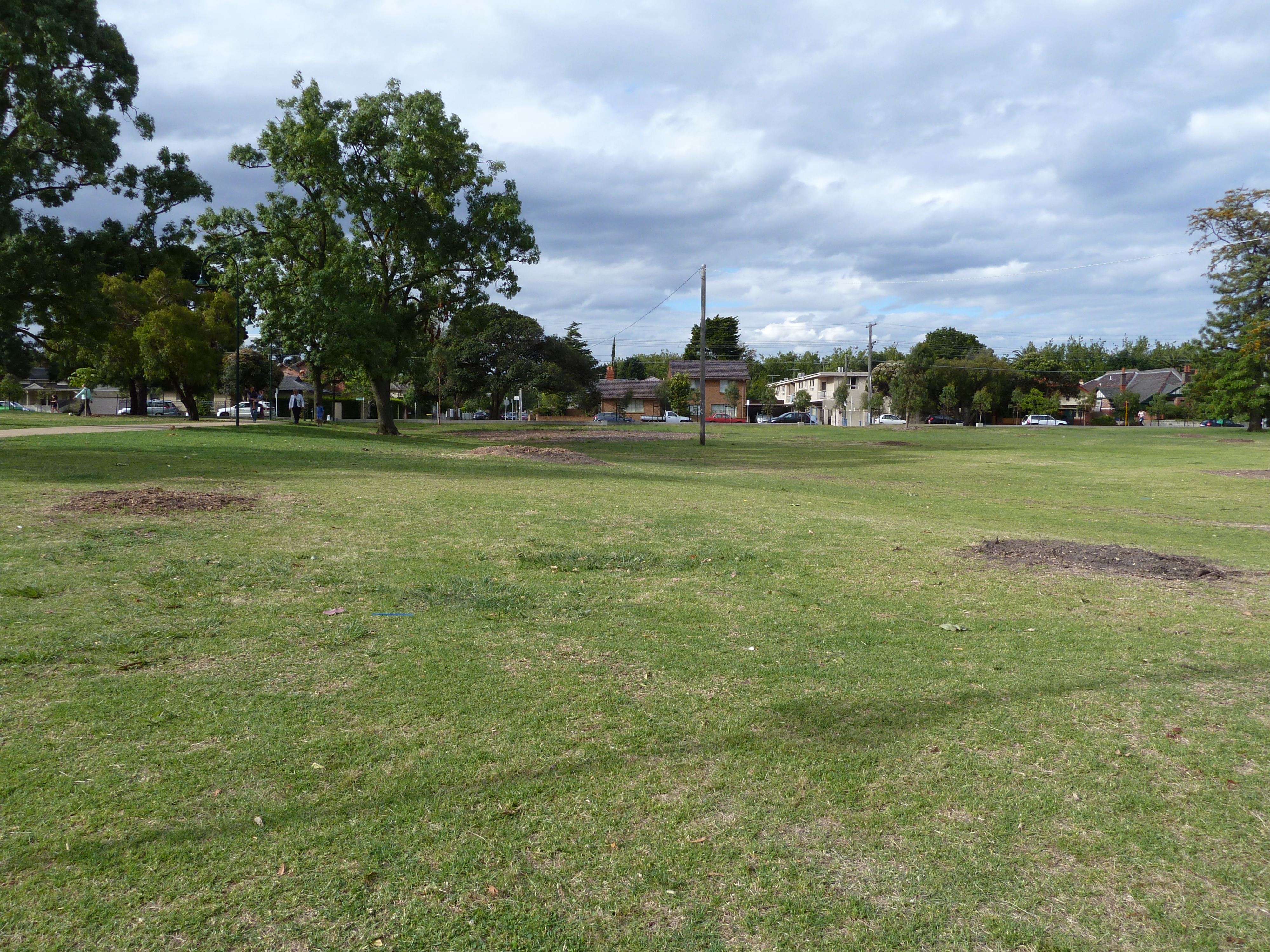
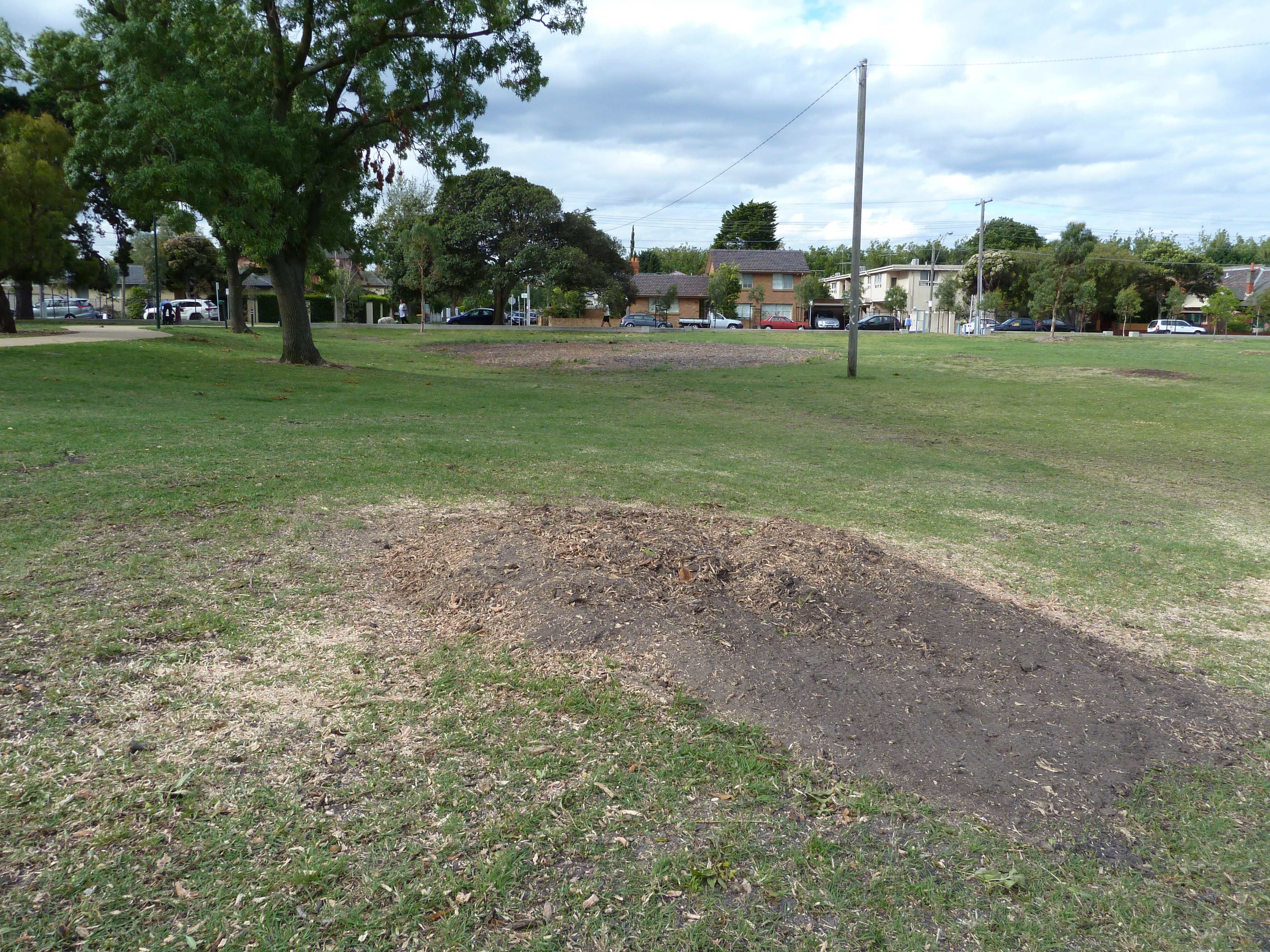
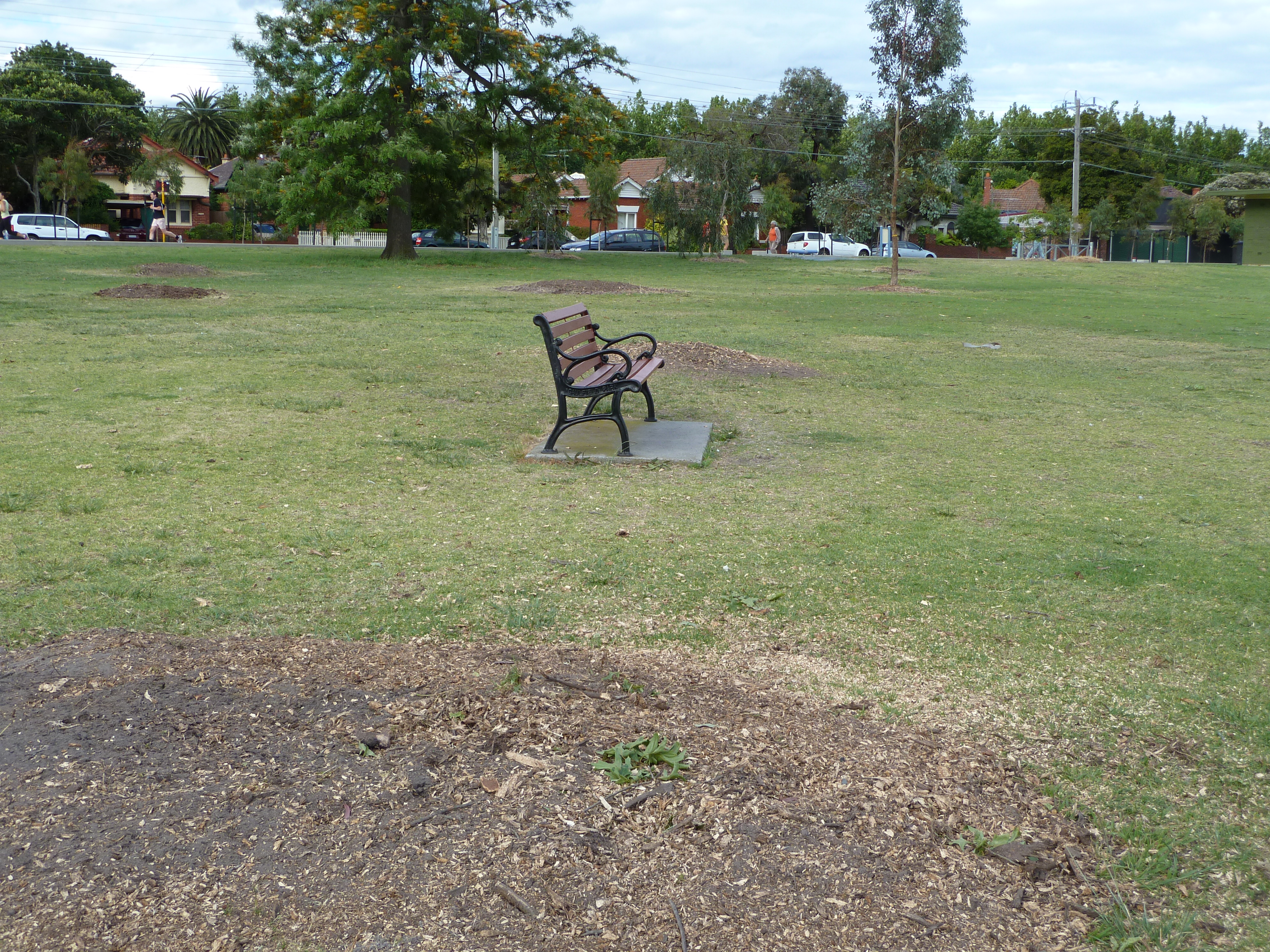
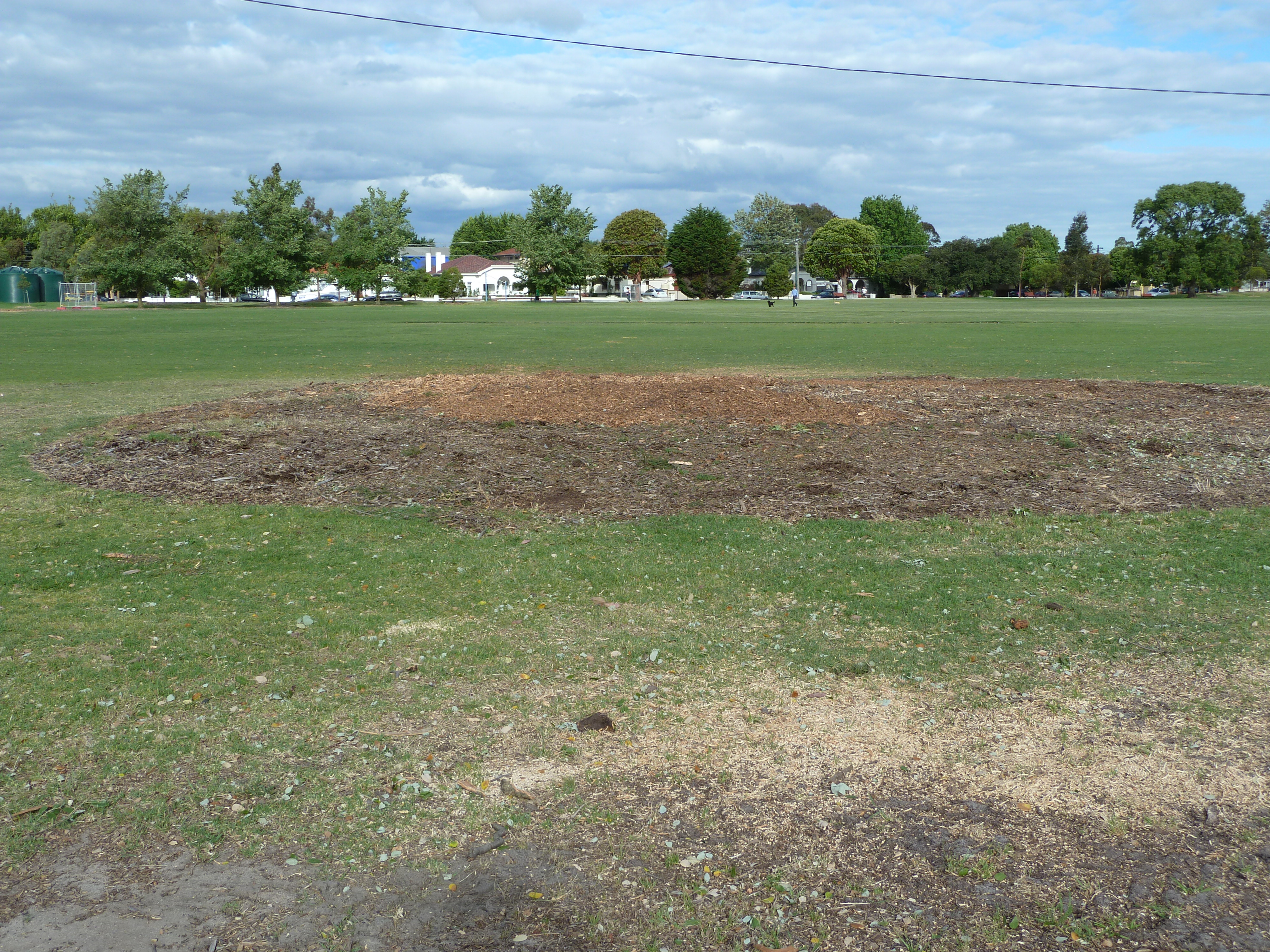
PS: NOT ONLY DO THEY COME IN THE DEAD OF NIGHT, BUT THEY MAKE SURE THAT ANY ‘EVIDENCE’ IS REMOVED QUICK SMART – so unlike what happens to other trees that are removed and the trunks can lie around for days, if not weeks, untouched. This section of Caulfield Park is now a total wasteland! Residents should remember that the original ‘timetable’ announced that the trees would be removed IN JANUARY!

P1000215 P1000211 P1000212 P1000213

PPS: And from today’s online Leader (http://www.heraldsun.com.au/leader/central/glen-eira-council-culls-21-trees-at-caulfield-park/story-fngnvlpt-1226779662643)

Glen Eira Council culls 21 trees at Caulfield Park

  • Andrea Kellett
  • December 10, 2013 4:17PM
Cranes were used to help remove the mature trees at Caulfield Park. Picture: RICHARD CORNISH

Cranes were used to help remove the mature trees at Caulfield Park. Picture: RICHARD CORNISH Source: Supplied

GLEN Eira Council stands accused of organising a dawn raid tree chop in Caulfield Park without telling residents who were campaigning to save the trees.

Contractors removed and mulched 21 mature trees at the north-eastern end of the park this morning and Friends of Caulfield Park president David Wilde found out while walking his dog in the park at 8.30am.

“This is a deceptive and manipulative move by the administration,” Mr Wilde said.

“When I rang the mayor he said they had done everything by the book … If the book involves deception and manipulation then the book needs to be rewritten.”

Glen Eira Mayor Neil Pilling – a member of the Greens Party – said councillors were told preliminary works were about to start ahead of oval redevelopment but were not told an exact date.

Council signs erected in the park a month ago said redevelopment works for ovals three and four would start in January.

The council is now saying that does not include today’s “preliminary” works.


Trees being chopped up for removal from Caulfield Park. Picture: Derrick den Hollander

Trees being chopped up for removal from Caulfield Park. Picture: Derrick den Hollander Source: News Limited

Cr Pilling said the council had listened to the community and reworked its plans to reduce the number of trees that needed to be removed for oval refurbishment.

He refuted allegations of deception and denied councillors had been told not to tell residents.

“No, certainly not,” he said.

“We didn’t know exactly what day it was going to happen. We were advised a week ago that preliminary works would start in the second week of December and that included the trees.”

Caulfield MP David Southwick is also understood to be livid.

He had planned to table a petition to save the trees, containing about 600 signatures, in Parliament tomorrow.

His office confirmed this morning that he was not told about today’s tree chop.

“We had no idea it was going to happen today,” spokesman Adam McKee said.

Caulfield resident Richard Cornish, who photographed the tree chop at 8.20am, described today’s events as a “disturbing, devious dawn raid”.

Residents had vocally opposed plans to chop the trees down, organising protests and lobbying the council and government.

Cr Pilling was swept up in a storm of community outrage last month after news of the council plan to rip out the trees around two sports ovals to “improve” open space at the park’s eastern end.

Listed below are expenditure figures taken directly from the past 8 budgets which focus on sporting facilities and equipment. As a comparison we also list the amounts assigned to drains and Local Area Traffic Management over this time. Please note that the definition of ‘drains’ according to council is: “Drains include drains in road reserves and sports grounds drainage and irrigation”. Hence when the budget, for example, cites $3m on ‘drains’, residents need to subtract the amount that is set aside for sporting grounds and ‘irrigation’ in order to ascertain the real figures being spent on ameliorating the potential for flooding in residential areas.

At first glance some of the figures presented below appear to be repeated (ie coach boxes). However, no location is provided for many of these apparent ‘duplicates’, and since the sums differ, we can only assume that more than one location is intended.

Some of the costings simply beggar belief as does the numbers of ‘cricket net’ and ‘cricket cover’ replacements. With an ageing population, and a fall in the numbers of residents partaking in ‘organised sport’, we have to seriously question whether the priorities of this council are in line with the majority of residents’ priorities.

Last, but not least, we have omitted many of the “set up” expenditures on GESAC which according to council accounted for more than $7 million.

2006/7 BUDGET

Bricker pavilion – $1.15 million

Implementation of the Joyce Park master-plan – $758,000

Cricket wicket replacement – $54,000

Caulfield Park pavillon/Cricket net Replacement/Car Park access $1,000,000

Sport Ground Lighting program – $327,000

Sport Ground drainage, irrigation & surface reshaping – $277,000

Cricket Net replacement program – $159,000

Sport Ground Drainage – Centenary Park – $124,000

Sport Ground Spoon Drain -King George VI – $57,000

Sport Ground Spoon drain – Koornang Park – $45,000

Replacement of deteriorated coaches boxes at sportgrounds – $36,000

Replacement of deteriorated coaches boxes at sportgrounds – $25,000

High Jump Mats (Junior & Senior) & Enclosure – $45,000

Tennis hit up wall replacement – $37,000

Replacement of Cricket wicket covers at Sportsgrounds – $30,000

Drains – $1.6m

LATM – $100,000

BUDGET 2007/8

Caulfield Park Pavilion – $4.63M

Tennis hit up wall – concrete floor replacement – $18,000

Redesign of new pavilion – $200,000

Synthetic wicket cover replacements – $5,000

Sportsground rolling lighting program – $365,000

Steel goalpost replacement – $25,000

Cricket net replacement program – $246,000

Caulfield Park cricket wicket relocation – $225,000

Players shelter – $25,000

Softball roof and reshaping of diamond – $40,000

Drainage – $3.3M

LATM – $50,000

BUDGET 2008/9

Caulfield Park pavilion – $605,000

Sportsground drainage – $500,000

Sportsground lighting – $305,000

Design works at Duncan McKinnon – $200,000

Duncan McKinnon drought tolerant system – $150,000

Cricket net replacement – $95,000

High jump enclosure modification – $25,000

Minor pavilion renewal works – $40,000

Cricket net replacement – $95,000

Sports Ground lighting rolling program – $305,000

Wicket soil replacement – Moorleigh – $25,000

Improve accessibility to sports fields – $6,000

Sports ground fencing – $14,500

Sports ground drainage – $500,000

Expansion of wicket tables – $20,000

Cricket wicket area remedial works – $28,000

Duncan McKinnon Master Plan – $70,000

Sports ground shelters – $70,000

Duncan McKinnon athletics track speaker system replacement – $5,000

Sports ground spoon drain – Moorleigh Reserve – $50,000

 Drains – $3m

LATM – $50,000


BUDGET 2009/10

Sports Grounds Lighting $175,000.

Sports Ground Drought Tolerant Grass – Spring – Centenary – Reserve No.1, Koornang Park, EE Gunn-Oval No.1 $1,234,000

Reconstruction• Sports Ground Drainage, Irrigation, Reshaping and Redesign $650,000;

Reconfiguration of Marlborough Reserve $75,000

Installation of Excluding Zone Fencing $80,000

Sports Ground Drought Tolerant Grass – Autumn – Victory Park  No.1, King George Reserve No.1  $542,000

Cricket Net Upgrades/Replacements Program – $132,000

Pavilion Renewal Upgrade Program – $700,000

Sports Ground Lighting Timing Switches – $15,000

Cricket Wicket Reconstruction, Replacement, Remedial Works – $112,000

Replacement of Soccer & Football Posts – $40,000

Sports Ground Drainage, Irrigation & Redesign – $60,000

Synthetic Covers for Cricket Wickets – $40,000

Athletics Track Line Marking & Maintenance – $50,000

Fitness Equipment Undersurfacing Works – $30,000

Half Costing Fencing Assistance Program – $50,000

Drains – $3m

LATM _ $100,000


BUDGET 2010/11 

Sport ground drought tolerant grasses rolling program – $1,305,000

Sports ground lighting rolling program – $150,000

Duncan McKinnon Pavilion Upgrade – $750,000

Crcket Net synthetic surface replacement program at Koornang Park – $15,000

Detail design and documention of master plan – Marlborough Reserve and Caulfield Park sports grounds 3 and 4 – $55,000

Sports ground shelter (EE Gunn Reserve) – $30,000

Reshaping and resurface of Diamond 3 at Bailey Reserve – $50,000

Synthetic covers for cricket wickets – $40,000

Drip irrigation – sports fields – $130,000 

Drains – $3m

LATM – $325,000


BUDGET 2011/12 

Sports Ground Drought Tolerant Grass  $1,435,000

Sports Grounds Upgrade $70,000

Pavilion Renewal Upgrade $5,500,000

Replace Coaches Boxes (EE Gunn Reserve) – $35,000

Replacement of Synthetic Cricket Wicket Surface – $50,000

Driveway for Tractor Access to Sports Field – $30,000

Upgrade of Athletic Track Throwers Cages, Shot Put Zone & Surrounding Surfaces – $70,000

Drains – $3,

LATM – $360,000


BUDGET 2012/13

Sports Ground Drought Tolerant Grass – $650,000

Sports Ground Lighting -$125,000

Pavilion Upgrade- Duncan Mackinnon – $1,085,000

Pavilion Upgrade (Design) – Centenary Park – $200,000

Installation of Synthetic Cricket Wicket Surface – $30,000

Packer Park Velodrome Upgrade – $160,000

Heating Systems Renewal within Pavilions – $48,000


Drains – $3.94m (Including $450,000 govt grant that has to be returned since the full project for Boyd Park was abandoned)

LATM – $200,000


BUDGET 13/14 

Sports ground drought tolerant grasses – Caulfield park (ovals 3 and 4) – $650,000

Sports ground lighting, Duncan Mackinnon Oval; Duncan Mackinnon Track – $160,000

Pavilion upgrade – Duncan Mackinnon – $2,150,000

Construction of new Pavilion – Centenary Park – $1,300,000

Replacement and installation of synthetic cricket wicket surfaces within practice nets – $15,000

Softball diamond fencing upgrade – $85,000

Public tennis court resurfacing – $50,000

Packer park velodrome track resurfacing – $85,000

Centre wicket protecting fencing – $14,000

Drainage of tennis courts – EE Gunn Reserve – $60,000

Sport ground safety fencing Oval 1 King George Reserve – $25,000

Drains – $3.5m

LATM – $200,000

VCAT has approved an 8 storey ‘mixed use’ development of  shops, offices, 54 dwellings and waiver of resident, visitor, and loading bay requirements. The site is at 28 Riddell Parade, Elsternwick. Below are extracts from the decision. Whilst VCAT will undoubtedly be ‘blamed’ by Lipshutz & Co for this decision, the member once again highlights how the Glen Eira Planning Scheme holds little terror for developers. The full decision is available at – 

http://www.austlii.edu.au/au/cases/vic/VCAT/2013/2006.html 

  • We find the policy guidance on height turns on the weight to be given to State policy, which clearly supports larger scale buildings in Major Activity Centre that do not conflict with surrounding land uses. Mr Sheppard expressed this policy direction succinctly by saying State policy anticipates new development will lead to Major Activity Centres having a different character than that which currently exists.
  • The absence of a Design and Development Overlay specifying a preferred maximum height for new development on the review site influences our interpretation of the site’s policy setting. It implies that a development’s height is only limited by the specific combination of the policy and physical context of this, or any other, site in this Major Activity Centre that is not encumbered by such an Overlay.
  • We found it relevant that numerous other 7 to 10 storey buildings have been approved in this Major Activity Centre, with many of these buildings having direct abuttals to low scale residential development. These buildings all display a different character to what currently exists and indicate that buildings of a comparable height to what is proposed have been considered acceptable in this centre.
  • To this end, we distinguish Mr Scott’s evidence as relying too strongly on the notion of respecting and maintaining the centre’s existing character. We find his reliance on the ‘success’ of recent four storey infill development is too heavily weighted towards the assumption that policy discourages any visual competition to this centre’s heritage character. We found Ms Heggen’s opinion that the proposed development is one of the ‘next generation’ of activity centre buildings better reflects the policy framework and the recent history of this centre.
  • We do not accept the concept that only the western end of Glen Huntly Road can accommodate taller buildings, as it is not reflected in State or local policy nor is reflected on the ground. The local policy does not distinguish between the eastern and western sides of the railway line nor does it call for ‘gateway’ buildings along Glen Huntly Road.
  • Rather, it separates the centre into precincts where particular development outcomes are anticipated. We note that the zone boundaries make an intentional deviation to include this site. It anticipates larger scale buildings at heights compatible with adjacent buildings in the precinct containing the review site and identifies Stanley Street as a ‘point of transition from larger scale to the north’ to ‘lower scale to the south’. We find this explicitly encourages larger scale development on the review site, despite it lacking a frontage to Glen Huntly Road and despite it being on the east side of the railway line.
  • Much turned on the meaning of these phrases in the local policy. We find the first phrase – heights compatible with adjacent buildings – is to be interpreted as including heights envisaged by the policy framework rather than just the height of the existing adjoining buildings. In this interpretation, it is reasonable to assume a larger scale building could occupy the commercial site to the north or could be constructed on the council managed car park to the east.
  • We find local policy is not clear on whether a gradual or an abrupt transition is required. To this extent, Mr Barber’s interpretation is credible yet we consider it is not correct. The policy guidance for Precinct 4 does not imply taller buildings are discouraged in Precinct 6, rather Precincts 5 and 6 require a ‘transition’ between the Stanley Street precincts. We see the term as standing on its own and being capable of interpreted as either an abrupt or a gradual transition.
  • Separately, Messrs Barber and Scott rely on the Design Vision for Elsternwick Planisphere 2004 to varying degrees. We find this is not helpful to our decision, as this document has no status in the Planning Scheme.

In summary, we find the policies of the Planning Scheme support the height of the proposed building.

Overshadowing of Elsternwick Plaza

  1. We do not accept that the public amenity impact of overshadowing of Elsternwick Plaza caused by this building is reason to reduce its height. The building will cast shadow on the southern corner of the Plaza, yet this shadow will recede before 10am at the equinox. We find this is a marginal and acceptable impact.
  2. We acknowledge that local policy discourages such overshadowing yet find this must be balanced against other policy considerations that promote larger scale development on the review site. We also acknowledge Mr Brazilec’s observation that greater shadow will fall on the Plaza at times other than the equinox, yet remain of the view that the shadow is acceptable, as it will fall on a relatively small section of the Plaza even in mid-winter.

The ongoing saga of the intended ‘relocation’ of Caulfield Park ovals and the originally proposed removal of 39 trees should be a lesson to all Glen Eira residents. What has been made clear is:

  • The lack of straight talking and honesty from this administration and its councillors
  • No such thing as community consultation and certainly not adopting any community suggestions
  • When found out telling porkies simply change the argument and find another bogus excuse
  • Councillors, as always, remain superfluous appendages to the plans hatched by officers
  • Open space is becoming the exclusive preserve of sporting clubs under this regime
  • The environment, and especially trees, and tree management come in as very low on the list of priorities for this council

The arguments for the proposed expenditure of what we anticipate to be close to $800,000 have changed continually. Yet, in the fine print of various documents, the truth emerges – that is, if the poor resident can even find, collate, and then consider the implications of the buried, nebulous figures. Presented below are statements extracted from the last three Quarterly Reports. Taken together they provide the raison d’etre for what is happening now.

September to March 2013 – Summer season 2012/13 one social cricket club did not request an allocation. Team numbers down this summer season, the reduction was mainly with junior cricket teams.

Summer 2013/14 season team numbers dropped from 235 to 204, (31 team decline) the decreases were:• Softball 1 senior men’s, 3 senior women’s & 2 juniors

• Cricket 2 senior women’s and 23 juniors

Winter 2013 season team numbers have increased from 249 to 272 (23 teams) the increases were:

• 13 soccer teams

• 4 AFL teams

• 6 lacrosse teams

We do not take issue with the need for sporting fields as such. What we do take issue with is the lack of transparency by this council, the continual dissemination of deliberately misleading information, and why residents should always be the last to know what the real corporate vision is, the costs involved, and the deviousness with which plans are implemented. This is all best summed up in the latest email from the Friends of Caulfield Park!

Dear Mary

Thank you for coming clean yesterday about the real agenda driving the enlarged ovals.

We now know that it is not insurance and the buffer zones, they were simply a pretext; it is about cramming in as many junior soccer ovals as possible and cutting down trees that the kids might run into.  Further, it finally clear that the intent is to use the sports area at night since there is, for the first time, the stated intent to put in lights.  As usual, there was no consultation and it is certainly not in line with the Master Plan.

So it turns out that in objecting to the justifications given for cutting down the trees that we have been chasing a trail of red herrings while those in the know sat and smiled.  No wonder this Council keeps us all in the dark!  The paradigm of mushroom management is obvious.

Also, a benefit of enlarging the playing fields that is given in the Council website news update is typically misleading.   It compares the present number of available junior grounds with what could be achieved under the administration’s proposed plan. The real comparison should be with the number that would be available under the FoCP plan.  The difference would be far smaller.

We looked back at your election flyer where you stated that you will “work hard to preserve the beauty of Glen Eira, to increase the livability of our wonderful suburbs”.  How can you reconcile these undertakings with supporting the transformation of one of Melbourne’s premier parks, a park not owned by the Council but administered in Trust, into a treeless green wasteland?  Instead of the treed ovals of the past, we are left with interlocking treeless areas with a few saplings round the periphery.  Perhaps you can rationalise it, but those people who elected you have a much harder task.

We realise that the insurance need was a red herring, but we did as I believe that you suggested and we contacted the MAV about the insurance situation.  We were reliably informed that while all councils have an obligation to protect the safety of users of property for which they are responsible, there is NO set directive about buffer zones and no specific insurance requirements about buffer zones. Furthermore, contrary to what may have been said, there are no discounts on premiums as a result of having these buffer zones.

It seems to us as though the Administration is either deliberately misleading Councillors or is simply providing selective information to support its programs.  Certainly each time we demonstrate the emptiness of a justification to cut down these trees, a new one pops up.

Kind regards

Spike Cramphorn

Secretary FoCP

PS: the latest FoCP email

Dear Mary,

Thank you for your phone call.  You are right the phrase to “come clean” is not appropriate in this context and does not reflect what I intended to convey.

What I should have said was that after talking to you and looking at the Council’s new information, the total amount budgeted, and the amount allocated for this portion of the work, it had become clear to us that the the Council’s intent had always been to expand this area to accommodate lots of junior football fields whilst talking cricket ovals.  We then surmised that the uncommitted amount in the budget was for night lights and felt that we, the Friends of Caulfield Park had been unable to learn any of this until as late as possible.

It has been said that the FoCP are always negative, but this is only because we, the only representatives of the informal and casual users of the park, are left out of any consultation process on matters that affect Caulfield Park.  When there is a material departure from the  Master Plan, as in this instance, we believe that this is not appropriate and that often, with some minor adjustments, we could achieve much better outcomes for all.

None of this was attributable to you personally and I did not intend to convey this.  To the extent that it appeared to do so, I apologise without reservation.

Yours sincerely,

Michael

Presented below is the transcript of a public question taken from the minutes of April 30th, 2009 and the response provided by the then Mayor, and councillor rep on the Racecourse Reserve Trustees, Helen Whiteside. Comparing the response presented below and the utter silence that emanates from current and past trustees today, we question:

  • why this difference in approach;
  • what has happened in the intervening years to create this ‘secret society’?
  • Who is responsible?
  • And why are council and councillors so complicit in this clamp down on information dissemination?
  • If details of trustee meetings were provided 4 years ago, then why doesn’t this council provide any public report?
  • Are all councillors even kept in the loop about what happens at these trustee meetings? Or does the ‘secret society’ now extend only to Newton and the annointed Lipshutz, Esakoff, and Hyams?

Subject: Caulfield Racecourse Trustees
“By way of a comprehensive report, please tell me what transpired at the last meeting of the Caulfield Racecourse Trustees on or about Thursday 19th March 2009.”

The Mayor responded to your Public Question. She said:

“The Trustees’ meeting took place on 19 March 2009. In attendance were 14 of the 15 Trustees, including myself, Cr Tang and Cr Staikos, the Secretary Mr Cleaver and the Business Affairs Manager of the MRC.

There were four main items of business.

Firstly, the Trustees considered the “Communique” between the MRC and Council. The “Communique” proposed that after training had been relocated from Caulfield, land on Neerim Road would be excised from the Racecourse Reserve and be
incorporated into Glen Huntly Park under the control of the Council. The Trustees by a majority decided that they did not wish Trust land to be excised. The Trustees decided to ask the MRC and Council to propose alternative arrangements to give
effect to the underlying intentions of the Communique.

Secondly, the Trustees considered an MRC plan for the development of the centre around the lake. The plan was in two stages with the community facilities in the second stage. Concern was expressed that the area for passive open space had been substantially reduced from what had been previously agreed and Trustees decided that the MRC and Council should consider revised plans for presentation to the next meeting of Trustees.

Thirdly, the Chairman advised that he had received a letter from the Ombudsman about alleged conflict of interest and the Chairman distributed a copy of the Chairman’s reply.

Fourthly, the Trustees agreed that two draft policies should be prepared for consideration at the next meeting:
• A draft policy on Conflict of Interest and
• A draft policy on who should be permitted to attend Trustees’ meetings.”


kingston

Item 9.10 – CCTV

Hyams moved the motion to use the grants for the closed circuit cameras minus installation costs, maintenance and ‘operations’ and for the police to give advice on where to put the cameras. There should also be consultation with traders and community as well as ‘developing a cctv public policy’.  Seconded Magee.

COMMENT

Readers need to be aware that what this motion really means is that if the grant is for $150,000 for cameras, that Hyams proposes to spend the funds on cameras ONLY AFTER all the other costs have been subtracted. In other words, he does not want council to spend a penny of its funds. What this ultimately means is less cameras in less places!

HYAMS: stated that it would be ‘far more preferable’ for the police to be responsible for monitoring. That’s been an issue since 2011 when ‘the funding was made available in Bentleigh’. Said that the situation now is that it’s been ‘definitively shown’ that the police won’t take coverage so ‘it’s up to us to decide what we want to do’. Council can’t keep on arguing with the police and they must ‘use the money’. Went on to say that he thought that this is the opportunity to ‘spend the money’ on what he ‘believes the community wants us to spend the money on’. Also if the money isn’t spent then they ‘will lose’ it. Traders, particularly in Bentleigh want it as well as the Carnegie traders. “I believe the community wants it as well’. Claimed that it ‘can deter crime’ as well as catching criminals. When government sets something up then suddenly ‘we’re carrying the expense’ but with this motion it ‘doesn’t cost us anything’. In the end the ‘community wins out’.

MAGEE: said that cctv is ‘now a necessity’ and claimed that in 2010 he had called for a report on this. Even though Glen Eira isn’t a ‘hot bed of crime’ it’s important because ‘a lot of people take comfort’ and the cameras give a sense of security to people. Repeated that cameras can detect crime and prosecuting people. Thought that the Bentleigh rotunda would be ‘one of the first places’ where they could put the cameras. Thought it was also ‘incumbent’ for council to ‘do things’ for all those people likely to commit a crime in order to ‘discourage the anti-social behaviour’. Said that ‘this would probably be a large part of council’s operations’ in the future. This would be the role of policy in identifying ‘how to manage that in the future’. ‘This is the beginning, this is the first step’. He commends the motion.

DELAHUNTY: asked that since this is a ‘once off allocation of money’ then ‘how do we intend to understand what the costs of the operation are? and to ‘manage that on an ongoing basis’?

NEWTON: answered the question by stating that the offer was for ‘capital grants only’ so the government has to agree to give the funds ‘on a slightly different basis’. Also said that he ‘wasn’t quite sure how to account’ for any future costs but as far as possible they could ‘try to go with life-cycle’. Confirmed that it involved shifting the’ operational costs to us’.

DELAHUNTY: supported the idea of a public policy but not the cameras themselves. Said she was ‘uncomfortable’ with spending any of the money that could be used for other things. ‘I just don’t think there is a need for it’. Said the police, although they haven’t done an assessment would nominate other areas as more deserving of cameras. Quoted that ‘this is a solution in search of a problem’. Talked about the ‘important role that sport plays’ in giving adolescents ‘a pathway through life’ and ‘helps to alleviate anti-social behaviour’. ‘If you can spend $400,000 helping us improve the racecourse’ for sport then that’s worthwhile. Didn’t ‘think that this is a good use of money’. Since everyone is a ‘taxpayer’ then everyone would ‘have an opinion on how it’s better spent’. Said that what’s being proposed is for council ‘to step outside our privacy obligations’ and also to ‘play some sort of peace keeping role’. Thought that it was ‘a waste altogether’ but there is a need for a policy nevertheless for the future.

LIPSHUTZ: found it strange to be agreeing with Delahunty but if people wanted cameras then Hyams’ motion was ‘the appropriate one’. He wasn’t in favour of cctv cameras. Said that if there is a high crime rate then they are justified but there ‘is no high crime area’ in Glen Eira. Agreed that it was a solution ‘in search of a problem’ and ‘there is no problem’. Also didn’t ‘like the idea of people looking at us’. It’s not needed and all that’s happening is the argument we’ve got the money so ‘let’s take it and not waste it’.

SOUNNESS: said that he and Magee went to a security conference in recent weeks. The conference had a section on cctv cameras and the findings were that in ‘high crime’ areas the cameras weren’t a deterrent, but with ‘repeat offenders’ there was a good chance of ‘successful prosecution’ but ‘cameras themselves didn’t prevent’ the crime. Also quoted someone he had spoken with from Parramatta council and that it also wasn’t a good use of resources and that police were more important for crime prevention. Said that Ballarat council also had the same view. The costs and management can be large so the question is about ‘returns’ on this investment. Agreed about the need for policy and that it should answer such questions about ‘co-ordinating’ with owners who already have set up cameras. Overall he was ‘very uncomfortable with council taking on that role’ of supervising the cameras and ‘actually being the police person’.

LOBO: claimed that only ‘one person’ saw a ‘drunk man’ and that was the owner of a shop in Centre Rd. He thought that the real problem with Centre Rd was the ‘patients’ who frequent the methadone chemist. Asked ‘how long is a bit of string’ if there’s going to be monitoring.Thought that cctv was ‘the way to go’ but installing them ‘just because of one person’ isn’t the answer and that the real problem that ‘is creating hell’ is the methadone place. ‘So are we going to put the cctv just to focus on that?’ The other alternative is to ‘move the pharmacy to Moorabbin’.

OKOTEL: thought that cctv ‘will be of benefit to the Glen Eira community’. Gave an example of someone jumping over their back fence and then police coming and asking what was going on and she was told that ‘someone had been molested in Allnutt Park’. She’d ‘also heard’ that there were other unsavoury ‘activities’ in Allnutt Park. Therefore having cameras in parks would be of great assistance in ‘catching perpetrators of crime or preventing it potentially’. She was also told about a ‘laneway off Grange Road where drug deals occur’. They think that because ‘there is a light in that laneway they can see what they’re doing’. Police can’t ‘catch them’ but with cameras it ‘would be a benefit to the community’. There are also drug deals on stations. She’s also been told that where there is ‘footage’ it really helps in ‘prosecution’. She’s in favour of cameras ‘in spots where it’s necessary to have it’ and that ‘those spots can be identified through consultation’.

PILLING: commended Hyams for trying ‘to address all the issues that have been raised’. Thought that the money could be used to ‘build an adventure playground’ and that he ‘also shares’ Lipshutz’s concerns about ‘privacy’. Thought that a place like Chapel St was an appropriate place for cameras. ‘We’ve nothing like that here’.

HYAMS: answered Lobo that this ‘isn’t about one person getting attacked’ and that he’s talked with the Bentleigh traders and ‘they tell all sorts of stories’ about what’s been going on in Bentleigh – ie about offering alcohol to ‘small kids’; ‘assaults in shops’. Maybe this isn’t like the crime that goes on outside nightclubs but it’s still a ‘serious matter’ for the people involved. So ‘we should do what we can to prevent that happening’. Argued that if cameras ‘help catch the person committing the crime’ then it would stop ‘subsequent crimes’. Said that they could get advice from others about the ‘life time costs’ of the cameras. Said that he’d spoken to the Higgins MP and that if Glen Eira didn’t want the money that it would be handed over to Ashburton. Therefore it’s not a question of using that money for other things but losing that money entirely. Said that both Carnegie and Bentleigh traders would both be ‘very disappointed’ if this didn’t go through. ‘If the money comes along for something then we should do it’. Since there is cctv in the town hall ‘we might be sending the message’ that they spend the money on ‘themselves’ but ‘not so concerned’ about the community.

MOTION PUT and CARRIED. Voting for: Hyams, Okotel, Esakoff, Magee, Sounness. Voting against: Delahunty, Pilling, Lobo, Lipshutz

AND JUST FOR THE RECORD, HERE ARE SOME EXTRACTS FROM MP MILLER’S LITTLE SPIEL IN PARLIAMENT THIS WEEK –

Glen Eira CCTV cameras

MsMILLER (Bentleigh)—I direct my request to the Minister for Crime Prevention to provide an update on the commitment to install CCTV cameras in the city of Glen Eira, the dominant municipality in the Bentleigh electorate. At the 2010 election I made a commitment to provide funding of $150 000 to pay for the provision of CCTV cameras and infrastructure in Bentleigh. That money was made available to Glen Eira City Council after the coalition came to government, but so far the cameras have not been installed. ………

The coalition government has funded around 240 CCTV cameras in locations across metropolitan Melbourne and rural and regional Victoria. No matter the type of community, they all see the great value in having these cameras in place. In every one of these cases the relevant council has accepted the terms of the coalition’s funding promise—that is, that the state will pay for the infrastructure and the council will agree to pay for installation and maintenance. This has happened with every council except in the case of the City of Glen Eira.

On 18 November the coalition government announced that the funding it had promised the City of Kingston at the last election will pay for CCTV cameras at even more sites than had been anticipated. A recent survey conducted by the Department of Justice in the city of Kingston, which neighbours Glen Eira, showed that 85 per cent of residents supported the installation of CCTV cameras in their area. Through my discussions with local residents, shoppers and traders it is clear to me that there is enormous local support for CCTV cameras in the city of Glen Eira as well. The community believes the cameras will make a significant difference in keeping the community safe.

……..The action I seek is for the Minister for Crime Prevention to provide me with an update on the installation of CCTV cameras in the city of Glen Eira, given that the coalition has delivered this funding as promised.

COMMENT

So now, years and years down the track, the issue of whether or not Glen Eira gets cctv cameras is still in abeyance – dependent on the government’s agreement to the new found use for the money! Even if they agree, how many cameras will this mean, when potentially half of the funding could well be spent on actual installation etc?

A few more observations:

  • When it suits, Hyams finds no problem in arguing that his view coincides with that of the ‘community’. Pity the community is never asked on all major expenditures such as increasing car parks or knocking down trees in Centenary Park, Caulfield Park, Bailey Reserve, etc. etc.
  • Magee mentions the rotunda in Centre Rd. We note that this is another project that has been buried following ‘consultation’ years and years ago. Secondly, if the issue of graffiti has greatly improved, then it has got nothing to do with council, but the simple fact that the new owners of the old bank next door to the rotunda space have installed their own private cctv cameras! No one of course happened to mention this fact!

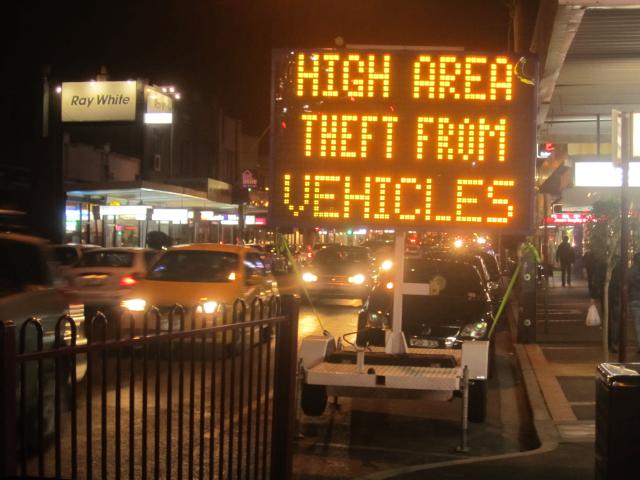
PS: We wonder if Lipshutz is aware that perhaps the police do not necessarily agree with him regarding the crime rate in Glen Eira. If they did, then perhaps there would be no need for the following trailer placement in Koornang Road in recent times!

crime


« Previous PageNext Page »