Councillor Performance


One of the stated strategic objectives of the latest Community Plan promises residents that Council will Provide you with regular and transparent reports on key outcomes and on our performance.

If this is truly the objective, then why is the latest State Government Community Satisfaction Survey results buried deep on council’s website and no officer reports extolling the virtues of this council have made it onto the agenda for the past two years – in stark contrast to what was previous practice?

The answer of course is that Glen Eira is on a continuous downward spiral when it comes to residents’ perceptions of performance. The dissatisfaction with those old perennials of planning, traffic, consultation have never reached such a low ebb. Many of the results listed are below both the Metropolitan average as well as the State average for all councils.

The most important indicator in our view is the differential score between ‘importance’ and ‘performance’. In other words, how important residents regard a particular aspect of council’s work compared to the actual performance of that work. Glen Eira has never had a differential of over 30 points as this year’s survey reveals. Year after year these areas have been highlighted by responses as basically failing resident expectations. That this is still the case, and worsening, says much about how council is addressing residents’ concerns.

Below are some screen dumps of the ‘lowlights’ –

Here is a table from the Australian Bureau of Statistics (ABS) recording the number of building permits granted in each municipality for the 2015/16 financial year and up to the end of April, 2017.

These figures prove conclusively that Glen Eira is the most overdeveloped municipality in the South East. As we’ve mentioned several times, Port Phillip is a very special case – ie parts zoned as Capital City status, plus a huge Commercial area (9.5%) in comparison to Glen Eira (3.1%). These figures come from the State of Play reports for the committee which reviewed the residential zones – MRDAC (Ministerial Residential Development Advisory Committee).

The figures raise countless questions that we’ve previously reported on. For instance:

  • Why, when Glen Eira is basically doubling and tripling its projected required dwelling figures to meet population growth, is there a strong possibility that council will expand the borders of its activity centres and include more sites into its GRZ or even RGZ zoning?
  • Why isn’t council screaming loud and clear about Wynne’s VC110 amendment when countless other councils are? Remember that the mandatory 2 dwellings per lot in the Neighbourhood Residential Zone is now gone and we are already seeing applications coming in for multiple dwellings in this zone? Plus the fact that the General Residential Zone will now not be seen as the area for ‘incremental’ growth, but is the target for major development? That especially hurts neighbourhood centres like Ormond, McKinnon, Bentleigh East, etc where large swathes are zoned as General Residential.
  • Why isn’t council addressing the most basic of questions – what is ‘capacity’?
  • Why isn’t council uttering a single word about ‘density’? Our calculations indicate that at the estimated population for 2016 of 148,000 people, that the municipality’s density (ie number of people per square km for land zoned as ‘residential’) will climb from approximately 3,800 per sqk to over 4,400 per sqk. How sustainable is this? How much will it cost to upgrade basic amenities such as drainage, open space, etc. And who will pay for it – developers or residents?

VCAT has granted a permit for a 7 storey building (43 units and shops) at 67-77 Hawthorn Road, Caulfield North. The original application was for 8 storeys but an amended permit was put in. Here are the ‘lowlights’ of the decision.

We give little weight to the recently approved planning scheme amendments that limit the heights of development in parts of Bentleigh and Carnegie urban villages. They are not applicable to this site or activity centre. We understand these amendments impose height controls for a limited time until an urban design framework is completed that provides a coherent and reasoned basis for height and other development controls.

We are not persuaded that the building would be unduly tall in this centre because:

  • There is no specific guidance in the scheme in a schedule to the zone, a DDO or a policy regarding the preferred height.
  • There are buildings of six, five and four storeys in the centre, hence this building with its recessed top storey will not appear to be out of scale with the emerging built form.
  • There is good prospect that the adjoining sites to the north and south will also be developed for buildings of similar height, hence in time it would be one of a cluster of tall buildings rather than an anomaly.
  • Lot sizes in the centre, behind the shops that front Hawthorn Road are generally large and capable of accommodating taller buildings

Another VCAT decision will not please residents in East Bentleigh. Without adequate controls developers are now going for broke. This time it is an amended permit for 669-673 Centre Road raising the height from 4 storeys to 6 and the number of apartments from 32 to 39. And once again the developer appealed to VCAT because of council’s inability to determine its decision within the prescribed 60 day limit.

We now have the utterly ridiculous situation where so called ‘neighbourhood centres’ are being granted permits that in some cases outstrip what council regards as ‘appropriate’ for its ‘urban villages’ or Major Activity Centres. The best example of this is council’s ‘approval’ of 8 storeys for the Ormond Tower (a neighbourhood centre) which is higher than its interim height limits for both Carnegie and Bentleigh.

The reasons for the permit in Bentleigh East ultimately boils down to the following – and we quote:

  • I acknowledge that a building of six storeys may have an appearance from certain views as a dominant element. This arises from the adjoining single storey development and form surrounding the site on Centre Road. However, I must also be mindful of a number of factors including:
  • There are no height controls or development overlays to guide development in the centre or to restrict the height of built form,
  • There is a five storey development under construction located to the west of the review site and other permitted developments of a range of heights within the surrounding area.
  • I am mindful that in the context of the ‘targeted approach’ to housing densities within the municipality, higher forms are contemplated and the area is changing. In the short to medium term the view of the building from the east would be larger than the adjoining buildings but this may change given the centres zoning and policy direction.
  • There is nothing in the Planning Scheme to indicate that a uniform or low building height is anticipated in this location. In a commercial centre, heights often vary. In this immediate future, this building will be one storey taller than its neighbour to its west.
  • A fair reading of the Housing Diversity Policy identifies that change is anticipated in Neighbourhood Commercial Areas such as this. It is recognised by the Planning Scheme that neighbourhood centres will provide significant opportunities for housing diversity. It further recognises that different outcomes are sought in the commercial and residential areas of neighbourhood centres. The proposed additional two levels is in keeping with the vision to provide for further housing diversity.

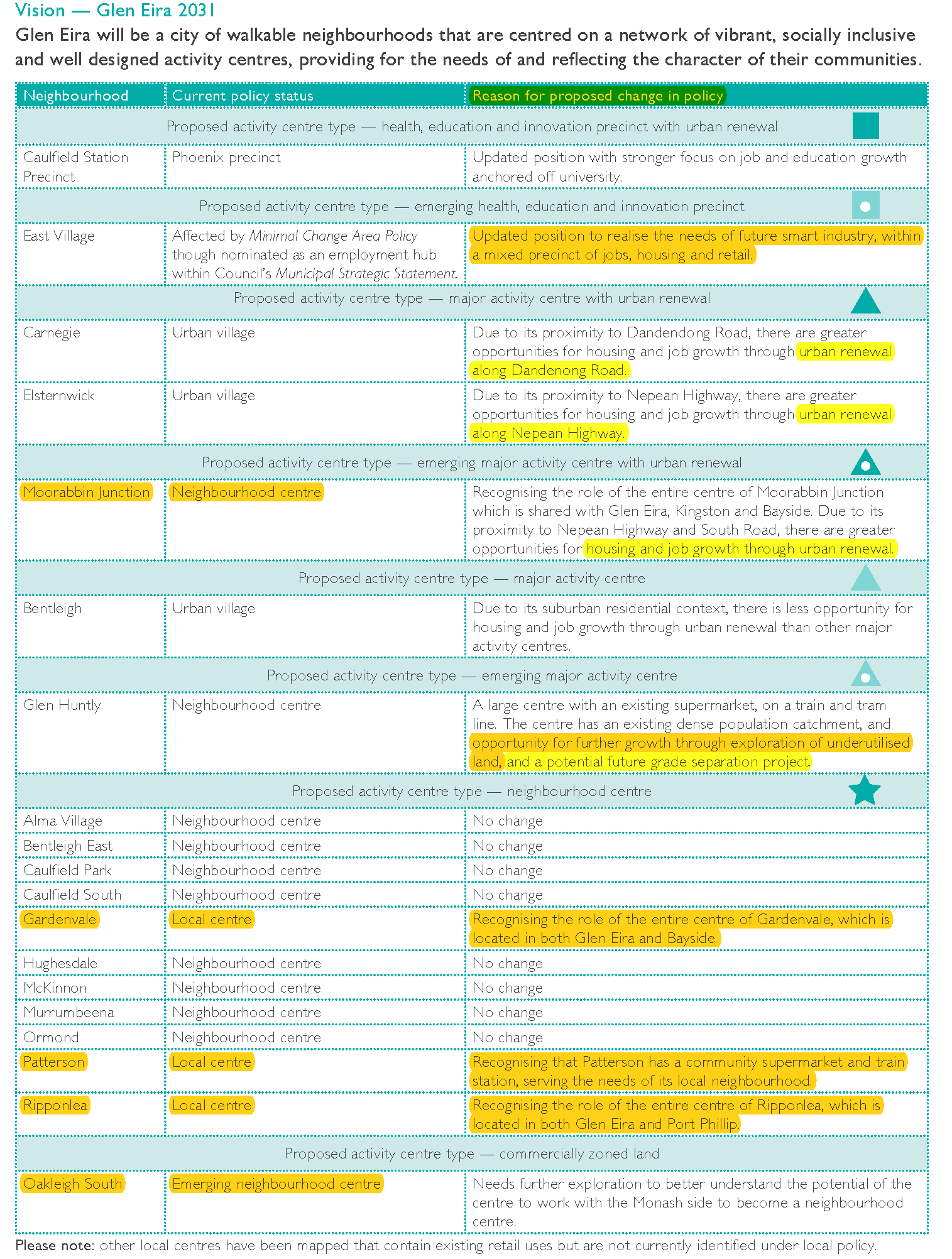
We remind readers that we have yet to get confirmation that council is intending to introduce structure plans for each individual neighbourhood centre, nor have any specific timelines been provided. All that has been stated is that an ‘activity centre strategy’ will eventually see the light of day. We doubt whether this ‘strategy’ will be binding on developers. In the meantime residents are paying the cost of council’s refusal to enact any meaningful legislation for the past decade.

Item 9.8 – Environmental Sustainability Measures

Sztrajt moved motion to accept ‘as printed’. Seconded by Esakoff.

SZTRAJT: began by saying that he requested the report and that he wanted to ‘ensure’ that those who are ‘building this new generation of houses’ are being ‘compliant’ with ‘our wishes’ and ‘cognisant’ of the requirements for sustainable energy sources and urban design. ‘What’s been fantastic’ is that officers reported back to him with ‘quite a large amount of detail’ about what the ‘State Government is intending’ to do. ‘Upset’ about the ‘lag time’ before the government does anything and council doesn’t have ‘any idea’ about what they will do. This means that until then, ‘we will have a significant number of developments’ that will only be ‘considering’ the ‘current guidelines’. ‘It would have been nice for Glen Eira to take the lead here’ but the ‘reality’ is that ‘for us to put forward’ any proposal ‘would in fact take just as long’ as ‘waiting for the State Government’. ‘It’s a little bit of a missed opportunity’ but ‘we simply don’t have enough time to tackle’ the issues. Council ‘has lead the way’ in ensuring that their facilities are as ‘environmentally friendly as they can be’. ‘It would have been very nice’ with all the development going on, to have something and he is ‘hoping’ that this now ‘happens across the state’. ‘It’s a shame that between now and then nothing can happen’ and he recognises the ‘purely logistic reasons why that is not possible’. Wants council to ‘revisit’ the issue once they know what the State Government is doing. Then council can decide ‘what is the right environmental’ outcome for Glen Eira and if the state government regulations ‘fall short of our standards’ then Council can move to strengthen them for the municipality.

ESAKOFF: agreed with Sztrajt but ‘given the time constraints’ she is happy to look at the government regulations when they come through and to see what council can do then to ‘bring it up to the standard that we would like it’ to be.

TAYLOR: is ‘very passionate’ about ‘enhancing’ the environment and the ‘Integrated Traffic Management’ plan can add further on carbon emissions. If council is going to tackle co2 emissions then they ‘have to be consistent’ across the board. She is ‘disappointed that we have to wait for the State Government’ but rather than proceeding ‘head long’ once the government comes up with its plan it will be ‘easier to implement’. But that doesn’t mean that ‘we can’t revise what we are doing here and now but subject to the State Government’.

MAGEE: stated that on his recent visit to Hanover (Germany) nobidy parks their cars in apartments. It is automatically parked ‘millimetres’ from each other and takes about 42 seconds for people to retrieve their cars. This is also more ‘environmentally friendly’ because ‘there’s no lighting down there’ so if it’s all mechanical there’s also no airconditioning and electricity costs are lower. Melbourne hasn’t seen this yet. There are also trains ‘every 2 minutes’. And ‘visitor car parking isn’t considered there’ because they ‘can fit them’. He wants to see ‘things like that coming through our planning schemes’.

SZTRAJT: said there are 2 options before councillors. One is to ‘ask officers’ to do the work on an amendment for which ‘there is clearly no benefit in us doing’

MOTION PUT AND CARRIED UNANIMOUSLY

COMMENT

The most farcical aspect of the above ‘debate’ is that council has numerous times used the argument that ‘no, we can’t do that because the outcome could be worse’. Now we get the reverse – ie if the State Government amendments don’t come up to our (non-existent) standards, then we will introduce more stringent ones! On what basis does Sztrajt, Esakoff and Taylor believe that the minister will allow more stringent rules that limit developer’s options or cost them more? And what if council suddenly has a ‘born again’ conversion after the State Government’s announcements – how long will it take them to get things started? Another two years? Three years?

Clearly this is a council which has no standards, no objectives on the environment and no will to act in an environmentally responsible fashion for the benefit of the entire community. The only benefit is for developers. If it were otherwise then council would act immediately on amending its schedules to the zones by increasing the permeability requirement across the board as well as increasing the open space requirements across the board. Introducing a minimum lot size subdivision would also be of great benefit. There is absolutely no reason why these changes cannot be done now.

PS: As for ‘progress’ in Glen Eira, we recommend that readers have a read of one of our previous posts on Environmental Sustainability Measures. The refrain since at least 2008 has been the same! – https://gleneira.wordpress.com/2012/12/15/how-green-is-my-council/

In the ‘community participation’ segment of Tuesday night’s council meeting, one resident got up and said that ‘large trees’ are being taken down by developers before they put in their applications. The resident claimed that two large trees in Hamilton Street Bentleigh had been removed prior to the planning permit application and that he had sent an email to council ‘asking for them to be considered as significant trees’ but hadn’t got any response. He wanted to know ‘how do I go about’ having someone from council ‘come and have a look at it’. Delahunty answered that ‘council currently doesn’t have any tree protection on private land’. Only when someone has applied for a planning permit can council start assessing whether or not there is any ‘significant vegetation’ on the property.  Delahunty went on to say that ‘unfortunately at the moment there is no ability for us to protect those trees‘. The resident then wanted it confirmed that ‘there’s nothing we can do’. The developer will cut down the trees ‘and they will be gone’ before he puts in the planning application. Delahunty then asked Torres to ‘detail’ the planning scheme’s ‘anti-moonscaping provision’.

TORRES: said that ResCode allows councils to ‘consider significant vegetation’ that are removed ‘in the past 12 months prior to lodging’ the application and that there are ‘principles around that in not granting a development advantage’.

DELAHUNTY: said that ‘that doesn’t necessarily address what you are talking about’.

RESIDENT: said that the property up for decision that night had a ‘big tree removed’ from there and wanted to know ‘what can be done about that?’

DELAHUNTY: passed this onto Torres and said that she didn’t ‘realise’ that there were any trees involved and that councillors didn’t have any information on that. In the end answered that ‘nothing’ can be done.

DAVEY: asked ‘what can we do?’

DELAHUNTY: said that ‘previously council has considered a significant tree register’ and that many other councils have one. Also that this is something they will ‘consider’ in the future.

RESIDENT: asked ‘how do we go about the process’ for getting council to ‘consider that again?’

DELAHUNTY: said she is a ‘big fan’ of a significant tree register. It’s been part of the last Community Plan but wasn’t ‘enacted at council’. ‘We will have to kick off a Local Law Review’ and that’s when they will start to ‘look at this very seriously’.

HYAMS: asked Torres about ‘this moonscaping development’ how council knows whether large trees are gone before the application comes in?

TORRES: said council has ‘detailed aerial photography’. Plus they get ‘information from the community as well’.

HYAMS: asked the resident when the tree was removed.

RESIDENT: answered that it was removed ‘just before the planning application’ went in on the property.

HYAMS: ‘so theoretically, our officers would have taken that into account’ in writing up their recommendations for the development.

RESIDENT: ‘it’s not been listed on the plans at all’. ‘so it’s just bad luck and they can do what they like’. Said this ‘doesn’t give’ him any ‘hope for the future for the place across the road’. Went on to describe how since all the palm trees along Nicholson St had been removed, the birds are now using these trees in Hamilton and if they go, then there’s nowhere for them.

DELAHUNTY: said she would have ‘another look’ at the aerial shots and ‘maybe it wasn’t significant’

RESIDENT: said the tree was ‘absolutely enormous’.

DELAHUNTY: thanked the resident and said ‘that’s interesting’.


COMMENT

The above ‘discussion’ highlights everything that is suspect about planning in Glen Eira. Apart from the fact that time after time the possibility of a tree register has been defeated by the likes of Esakoff, Lipshutz, Magee, Okotel and Lobo, we find Hyams doing his best ‘public relations’ performance by implying that council officers ‘would have taken into account’ the missing tree in their permit deliberations. It’s very strange then that the officer’s report states – There are no significant trees on the site that would be affected by the proposed development. Thus, did the planning department even bother to visit the site? Did they actually view these ‘aerial photos’. Even a quick search on Google shows large trees across both properties in the application!

Perhaps Hyams and the planning department should be made to answer this very simple question – how many times in the past ten years has council refused to grant a permit on the basis that a tree has been removed? Or even, how many times has the applicant been forced to amend his planning application to encourage the planting of a new tree in the exact same spot that the butchery occurred?

It would also be fascinating to know whether, and how much, council fined Jewish Care over the Wahgoo fiasco when overnight the bulldozers moved in and destroyed nearly 90 trees (including 4 designated as ‘significant’) prior to a permit being granted?

We also need to question why the emphases is on the Local Law (not due for renewal until 2019) and not ensuring that tree protection is part of the Planning Scheme itself. Local laws have far less weight than a provision in the planning scheme. The fact that something is in the Planning Scheme also ensures that residents have objection rights and can go to VCAT if they so decide. Depending how the Local Law is written, there may not be any objection rights whatsoever! Nor would residents have to wait 2 years for the law to be reviewed. An amendment could be started immediately – that is, if council really had the will. A simple copying from other councils should not take too much officer time!

Davey’s question is also disappointing. Doesn’t she really know what is possible? Doesn’t she work for Boroondara which has a tree protection policy? Or is she playing Dorothy Dix here? Either way, after 8 months as a councillor, and a Green, surely she should be aware of the options? Boroondara even allows the ordinary Joe Blow to nominate a tree for the register – https://www.boroondara.vic.gov.au/waste-environment/trees-and-naturestrips/nominate-tree-recognition-and-protection

Plus there’s also this latest move from a resident in Bayside to protect her peppercorn trees once the property is sold to a developer – See: http://www.heraldsun.com.au/leader/inner-south/bayside-council-lists-sandringhams-susan-st-peppercorns-on-their-protective-significant-tree-register/news-story/c8b1172df081b566ba92cb903a05bcb7

New councillors have overall been most disappointing. Goes to show how promises to represent the community all too often and quickly disappear into thin air once elected. Much can and should be happening right now. All it takes is for 5 councillors to have the gumption to get up, move a resolution and have it passed. Of course that would require Glen Eira joining every other council in the state and having what it known as a Notice of Motion – repeatedly defeated by the likes of Lipshutz, Hyams, Okotel, Esakoff, Ho and Tang.

The prize for the most disingenuous, misleading, and completely ignorant or politically expedient comments for the year must go to Delahunty, Magee and Athanasopolous. How anyone in their right mind could even contemplate uttering the sentiment that 20+ storeys of dog boxes is acceptable, given the community’s outcry about height and inappropriate development is simply staggering. But that’s what has happened as exemplified in the following ‘debate’ on the option of seeking mandatory height controls for the Caulfield Village Smith Street Precinct.

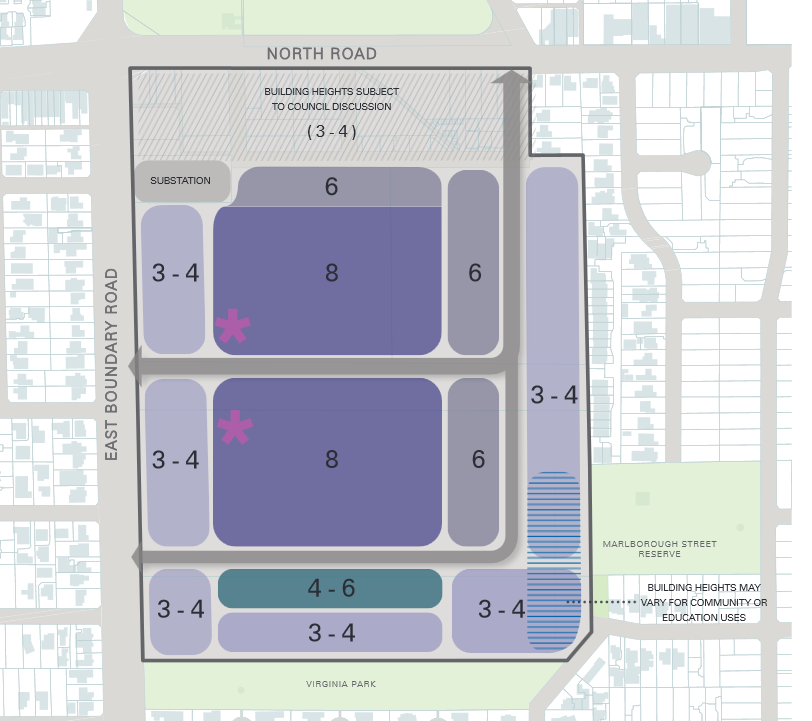
First, some explanation is necessary. The approved Incorporated Plan for the entire Caulfield Village project includes the following:

  • All stated heights are ‘preferred’ and are not MANDATORY.
  • The cited heights are listed according to AHD and for the Smith Street precinct the highest is nominated as 120 metres which is then recorded as ‘typical 20 storeys’.

AHD, or Australian Height Datum involves calculating street level from sea levels. In other words, how much above sea level is the land under discussion. The image we present below comes from the State Government’s Land Services division. It shows the contours of the land. Readers should note that the lie of the land varies from 46 to 49 metres. Since the Incorporated Plan specified 120m AHD that means that the 46 or 49 metres needs to be subtracted from the 120 metres to get any idea of the ensuing height.  If we subtract 50 metres from 120 metres, the result is 70 metres above ground level that the building can reach – unless of course the MRC decides to push the buttons on the ‘preferred’ aspect and go for higher. The Building Code of Australia sets a minimum floor to ceiling height of 2.4 metres. Thus even if we have larger floor to ceiling heights for the commercial ground floor areas, that would still leave approximately 60 metres available for residential purposes. The possible results are that the developer could quite easily construct a building of 25 and above storeys. Nothing binds the developer to a mere 20 storeys as this council would like residents to believe! – and especially not when we have a ‘preferred’ height limit rather than a mandatory one!

Please read the following carefully and decide how well these councillors are representing the community and how much they really understand as to the implications of their voting!

Delahunty moved motion to accept ‘as printed’. Magee seconded.

DELAHUNTY: thanked the resident for bringing council’s attention to the issue of ‘additional’ controls concerning heights at a recent council meeting and ‘whether or not we should look at some height controls’. Said the report gave the option that ‘we could apply to the minister to change the height controls’ or they could ‘reserve’ action until after the structure planning is done. Went on to say that ‘at the moment’ the Smith St precinct has height that varies from ’12 to 20 storeys’ and if the developer wanted to go over this height limit then ‘they would have to go through a planning application’. She therefore ‘supposes’ there is a ‘large disincentive’ for the developer to do this. Said she wasn’t ‘of a mind to impose anything additional’ on the developer that ‘isn’t in keeping with that particular precinct’. Her concern was getting ‘nice apartments’ and ‘not how high’ those apartments are. ‘I’m not particularly concerned about that’ or the ‘height of the Smith Street precinct at the moment’ because ‘I do not believe it will go over 20’. Admitted that it has been ‘much debated, much hated, but it is what it is’. It’s on an ‘incredibly major transport hub’ with no open space, but this ‘will change’. ‘So it’s right and proper that it takes a fair bit of development’. ‘So the height is of less concern to me personally’ than who will live there – ie affordable housing. This is where ‘I am suggesting we focus our energies’ and that’s why ‘I endorse that we reserve our considerations’ until the structure planning strategies are done. Said that it was ‘good’ to have to consider this and to have the reminder that there is a ‘built in disincentive for the developer’.

COMMENT

  • As to the Incorporated Plan being a ‘disincentive’ this is utter hogwash. If anything it and the history of this project are INCENTIVES, since the MRC has won every battle it has chosen to pursue at VCAT – and all with council’s complicity, or cave- ins. There is no reason to suspect that any future visit to VCAT will result in a different outcome if council does not strengthen its controls. And that, this motion has explicitly refused to do. Readers need to question why?

MAGEE: ‘like you’, I ‘certainly don’t have any issues with a 20 storey building on that site’.  Said it can already be ’22 storeys because what we’re talking about is height’ and by lowering the ceilings for each storey they can fit more storeys in. So on the ‘number of apartments’ there is ‘room to move’ but the overall height ‘can’t change’. ‘If you’re not going to put this sort of density around major transport’ hubs then ‘where are you going to put it?’ Went on to say that it does lack open space so ‘where can we find open space’ and implied the racecourse. Said that the precinct will also have commercial areas and that will bring ’employment opportunities’ and ‘right next to a railway station is a great incentive’. Didn’t think they should go to the government and try to get anything that’s ‘not there right now’. What’s there was ‘put in place many years ago and I believe we’ve moved on from that’. Went on to say that this is ‘really a great opportunity for people who don’t want to have a car’ to ‘live in a precinct’ that will give ‘unprecedented opportunities for public transport’ and ‘overlooking’ one of the most valued and ‘new open space’. With developments of this size there are ‘security’ issues but what council is ‘talking about today is not security, not open space, but height limits’. What’s there now is ‘may be not’ what was originally wanted but he thought it could be. ‘detrimental if we try and change that’ because ‘it could be changed the other way and we could see something that is quite significantly higher’

COMMENT

  • Money is NOT IN RETAIL, but in residential. That’s why the MRC has almost halved the originally mooted amount of commercial space in the development. For Magee to therefore spruik the ‘employment’ benefits of commercial space is a nonsense. We would not be surprised to find that the next development plan intends to cut the already reduced commercial space by another few thousand square metres and instead go for more apartments. Since nothing about this entire project is ‘mandatory’ the MRC can do what it likes – and it has!
  • Just because something has ‘been in place’ for years and has time and again shown to be inadequate is NOT AN ARGUMENT NOT TO TRY AND REMEDY THE SITUATION.

ATHANASOPOLOUS: asked if there was any site within the area that could provide space for ‘consumer car parking’ and whether ‘we’ve ever looked at the opportunity’ provided by the racecourse for ‘visitor car parking’?

TORRES: said it was a ‘private development on private land’ and so ‘the approval doesn’t envisage private car parking but it does envisage providing enough car parking for the various uses’ that will be ‘developed on this land’.

COMMENT

  • Athanasopolous’s question to Torres displays not only ignorance of the history of this project – for which admittedly some slack may be given – but surely when a councillor is about to vote on an important issue, he should make it his business to find out about the history of the project. If Athanasopolous had bothered to do his homework he would have found that on the issue of using the centre of the racecourse as a car park, both the community and council for that matter were strongly opposed.
  • Torres also needs to be ticked off on his response since it is only half true. The ‘various uses’ may be met, but there is no visitor car parking – agreed to by council!

MOTION PUT AND PASSED UNANIMOUSLY

A brief report on last night’s marathon 3.5hr council meeting. Full reports to follow.

  • On development applications, resolutions basically went along with officer recommendations. Certain councillors excelled in once again waffling on about ‘strategic vision’ instead of making even one comment as to the merits or drawbacks of the submitted plans and whether or not the plans were in accordance with the planning scheme.
  • Environmental Sustainability? Much hand wringing and crocodile tears regarding the environment but ‘too late’ to do anything now since the Government will be introducing its own guidelines/standards.
  • Mandatory heights for Caulfield Village? – Delahunty and Magee aren’t concerned about heights. Besides, there is already enough ‘protection’ regarding heights!

Comments

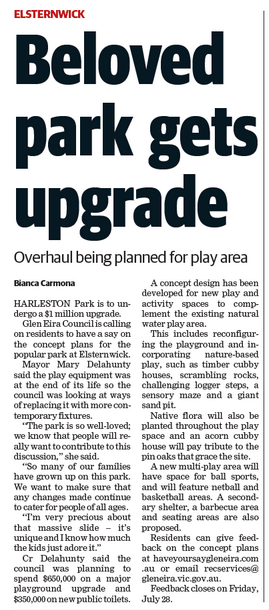
Whilst 5 new councillors were elected, it hasn’t taken long for them to be completely absorbed into the prevailing ‘do nothing’ , pro-development culture of this council. Opportunity after opportunity has arisen for real and dramatic change, as evidenced by the last two bullet points mentioned above. Residents should also not forget that any changes to the Local Law have also been delayed until 2019 when the current law expires. Nor should we forget the delay in introducing an amendment to hike up the open space levy. Council’s excuse?  Let’s wait for the latest census data! Well it is obvious that other councils do not intend to wait and have been working away solidly to impose adequate costs on developers that actually mean something. Here’s what Kingston is doing. The image is from today’s Caulfield-Moorabbin Leader. Amazing how other councils can proceed and work for their community!

Item 9.8 of the current agenda features council’s approach to Environmental Sustainability. That is, let’s not do anything and wait another two to three years for the State Government to introduce legislation. This ‘recommendation’ is despite all resident feedback on the need to increase open space in developments; to increase permeability and to introduce some decent amendments that will address the lack of any decent environmental measures in the current planning scheme.

We must also point out the complete lack of ‘objectivity’ in the officer’s report. Six metropolitan councils have been successful in introducing their own Environmental Sustainability Design amendments. Admittedly, these expire at the end of December 2017 as noted in the report. What is not noted is:

  • Are these councils seeking to extend their sunset clause?
  • What benefits have already been derived by having policy in place for nearly 3 years?
  • What damage will continue to occur in Glen Eira over the next 3 years whilst this council sits on its hands?
  • What of Water Sensitive Urban Design policies that these councils have with NO expiry date?

Every time that there is the possibility of introducing some new measure to protect the environment, or residential amenity, this council resorts to its old tricks – let’s wait for a couple of years because it is a state responsibility and not ours! Imagine how many more trees will go and how much more concrete will be poured whilst this council does nothing!!!!!!!

Here are the ‘unbiased’ officer recommendations –


Another incredible agenda of 273 pages. More developments feature and more ‘let’s do nothing’ recommendations.

Caulfield Village Height Limits

Item 9.10 is the officer report on councillors’ request to investigate the options available to provide more rigorous height provisions for the Smith Street precinct.

This report is the outcome from previous council resolutions that in typical fashion have gone nowhere and disappeared into the dustbin of history. On February 7th 2017, councillors passed this resolution –

requests officers to undertake a review of the current town planning controls applying to the Caulfield Village Development given that planning scheme controls have evolved since the approval of Amendment C60. The review is to identify any potential gaps in the controls including the loss of on-street car parking around the Caulfield Village development site. Should any gaps be identified officers are to commence a planning scheme amendment process to address these gaps.

Then again on the 21st March there was this resolution –

That Council:

  1. notes this report;
  2. notes potential gaps identified in the current controls relating to social/affordablehousing, and the precinct boundaries;
  3. commences a planning scheme amendment process to address these gaps in thecontrols, and seeks authorisation from the Minister for Planning to prepare and exhibitthe amendment; and
  4. seeks a further report from officers on the options available to provide more rigorousheight provisions for the Smith Street precinct..

Nothing could be clearer we maintain that the ‘order’ to begin a planning scheme amendment. It is yet to materialise.

So for this council meeting we get the following recommendations –

That Council:

  1. notes this report.
  2. notes that Council could apply to Minister for Planning to change the current preferred height controls within the Smith Street precinct to mandatory maximum height controls.
  3. reserves its consideration of height provisions for the Smith Street precinct until after Council has completed its Activity Centre, Housing and Local Economy Strategy, and resultant built form guidelines for Glen Eira’s activity centres.

The proffered arguments for this ‘do nothing’ approach are indeed lamentable.

  • First we’re told how wonderful the existing Incorporated Plan is – ie This process provides a significant incentive to the developer to comply with the heights and setbacks set out in the Incorporated Plan. Really?!!!! So this is why the developer has gone to VCAT time and time again and increased his heights and setbacks for Precinct One and now had major victories with Precinct 2? How much longer will council continue with this charade that the Incorporated Plan is worth the paper it is written on?
  • Next, there is the usual scare campaign – ie requesting the Minister to authorise mandatory height limits could very well result in greater than the current 20 storey ‘discretionary’ height.
  • Then finally we get the ‘promise’ of ‘action’ down the track – ie The Activity Centre Housing and Local Economy Stategy will result in ‘built form’ guidelines for Glen Eira’s activity centres, such as the Caulfield Station Precinct. It is recommended that any further consideration of the Smith Street precinct occurs after the completion of the built form guidelines. What this recommendation does not highlight is that ‘guidelines’ are just that, and in no shape or form are they a better option than mandatory provisions.
  • Nor is there any discussion of whether any proposed ‘mandatory height limits’ will be judged on the number of storeys, or what is known as the Australian Height Datum (AHD). We have already seen that because of the slope of the land Precinct 1 now has 6 storeys instead of 5, and the Smith Street precinct is mooting 22 storeys instead of the wonderful council promise of 20 storeys!

Conclusions 

  • How many more times will council resolutions be ignored and not acted upon?
  • How many more times will residents have to wait before council gets off its backside and actually begins reforming its all too numerous mistakes of the past?
  • How many more times will this administration use ‘scare tactics’ as the excuse to not attempt anything?

« Previous PageNext Page »