GE Council Meeting(s)


Residents have their chance to address council on the budget this Tuesday night. 17 submissions have been sent in – a huge increase. The comments (highlights presented below) range from unacceptable charges and rate increases, poor policy documents, that are so out of date they belong in a museum, and lack of real consultation with residents.

Before presenting these ‘highlights’, we draw readers’ attention the most ridiculous set of tenders ever entertained by this council. When councils all over Victoria are being urged to tighten their belts and be accountable for the expenditure of ratepayers’ hard earned dollars, Glen Eira council is its wisdom is about to spend a million dollars on unnecessary ‘trifles’. It appears that for this council the major priority is to promote itself rather than address the needs of residents. Here are the details of the proposed tenders –

  • Mystery shopping program for GESAC – $40,000
  • Point of Sale system for Glen Eira Sports and Aquatic Centre – $150,000
  • The supply of promotional items for sale/giveaway from Glen Eira City Council – $400,000
  • And $390,000 to plant a few trees and grass in the Carnegie forecourt! (mind you, no ADDITIONAL open space, just the usual expensive tinkering – which begs the question why the first design was ever countenanced).

This expenditure should be read in the light of resident comments below –

Deliberate, repeated deception and secrecy in governance and cover up continuing

I note that Glen Eira’s half-page Street Lighting policy dates from 2002 and as such is completely out of date. I suggest that this policy be comprehensively revised with the inclusion of the environmental and health impacts of light at night before such a program (ie LED) is contemplated.

…this year’s planned increase in rates of approximately 4.94 per cent, which is almost four times the current inflation rate, is completely unnecessary and unacceptable. (Please note: this resident has obviously been duped by the manner in which council has publicised its rate increase. The increase is 6.5% and NOT 4.94%!)…During March of this year, most of the kerbing, footpath and landscaping at this location, has been reworked at considerable expense to the Ratepayers of the City. In my opinion, the works appear to have only completed superficial changes, which I regard as unnecessary. Furthermore, it is unconscionable that the developer of this site is able to reap the profits, when the roadworks surrounding this property development have been required to be reworked as a direct cost to Glen Eira Ratepayers. ….it appears that the Council decision makers are intending to apply different principles because their accountability is obscure, and Ratepayers do not generally feel that the outcome of the objection process is likely to be worthy.

I consider the $450,000 allocated towards the construction of the Eskdale Road/Fitzgibbon Crescent Caulfield North new open space to be an unnecessary and terribly wasteful expense. The proposed new open space is small and is unwarranted as it is located within easy walking distance of Caulfield Park and therefore is unlikely to be used by many residents.

Supply of places (childcare) may exceed demand due to council charging too high fees for the service the centres provide. Whilst I am very conscious of the quality of care and the homely environment provided for children at the centre my child attends (which was a primary factor in choosing this centre), it is my understanding that other centres in Glen Eira provide nappies and even cooked meals. Parents have to provide these at the conoucil-run centre in Carnegie. Other centres also provide excursions…..It is actually my understanding that kinder places are funded by the State or Federal Government (which makes the cost significantly lower for parent who have the flexibility to put their child into a straight-up kinder program) and that the City of Glen Eira is not passing that funding on to parents through reduced fees for children in the Kinder-year.

Currently, there is no allocation in the budget to redress the steady erosion of resources and facilities for passive usage of Caulfield Park….Since the Conservatory has been removed, there is no shelter in the western end. This means that young and old have neighter shelter from the scorching heat of the summer sun, nor from biting winter wind and rain.

I appreciate that there are many opportunities for community input and consultation to Council deliberations generally, however feel that one area in which these opportunities are lacking, is in relation to the Children’s Centre. As far as I am aware, formal parent involvement in the governance of the centres is limited to an annual online survey, the results of which are not communicated. Input from the parents and the community has the potential to have direct impact on the bottom line, through suggestions that have cost savings, or revenue enhancement, implications.

As I can see the tennis courts are regulary used (ie at Carnegie pool) and appear to be in very good condition, why is $130,000 being spent to change them? Has there been any community consultation, and what is the reason for the change? (ie to convert to small sided soccer pitch)

The Draft Community Plan – Transport – page 28 proposes to improve pedestrian and bicycle facilities but “only where balanced against maintaining traffic flows”. Is the council really wanting “more traffic faster” as the overriding objection of transport planning in Glen Eira? The priority for more faster traffic reads like a strategy from the 1960’s for freeways and not a way to create a livable local community with good sustainable transport choices. Instead the plan and councils transport planning programs and works should firstly prioritise pedestrians, then bikes, then public transport and lastly cars – as is current transport planning best practice…..The Walking Plan is mentioned in the transport section but is missing from the list of all strategies on page 42 – is that an oversight or a statement of priority?….The proposed investment of $150,000 would be insufficient to build more than 1 set of traffic lights on the Rosstown Rail Trail – let alone the many that are required. Does carrying over funds from last year also indicate poor action on implementation and a need to review how the plan is managed?

How can $50,000 be allocated to Thomas Street Reserve, McKinnon? Surely, four large old trees surrounded by bark and drought affected grass, on a double housing block, doesn’t constitute a ‘Reserve’….Only two seats are provided at bus stops between Thomas Stret and Wheatley Road North side and no seats on the South side. Elderly people sitting on fences and students sitting on the kerb, waiting for the bus, is demeaning.

Item 9.3 – Dandenong Road, Carnegie – 4 storey, 22 dwellings

Esakoff moved to accept with the addition that balconies be moved so that there is no overshadowing. Okotel seconded.

ESAKOFF: said she chaired planning conference and that objectors complained about the car parking entrance as being ‘too close’ to the service road along Dandenong Road. So conditions ‘have been put in place to widen’ the exit. Residents also concerned about balconies overlooking into their private space but since not within 9 metres ‘planning controls don’t apply’. Site coverage is 87% and therefore brings up ‘permeability concerns – the height on the otherhand’ is within the zone limits. There are commercial sites abutting and this is ‘quite acceptable on Dandenong Road’ but amenity ‘impact’ on residential homes ‘is quite another matter’ so there are conditions for this and there is ‘already overshadowing’ due to an ‘overhang’ from the balcony above but ‘at least this particular condition won’t make that any worse’. Said that she would prefer a refusal because of ‘the site coverage’ which ‘is excessive’ but ‘there wasn’t support to refuse it’. However she hoped that the imposed conditions would ‘alleviate concerns’ that anyone living to the south would have.

OKOTEL: thought that the application was ‘appropriate in the context’ in that it ‘abuts commercial zones’. Also it ‘does meet largely the requirements’ for the ‘character of that area’. Thought that the amended motion was good because it means that residential properties to the East won’t be impacted so much. The application is ‘sensitive to this being a very busy area’ so ‘parking meets ResCode requirements’. Even though there is 87% site coverage there is ‘sufficient private open space in terms of balconies’.

LIPSHUTZ: supported the ‘motion reluctantly’. Has an ‘issue’ with site coverage which he thought was ‘inappropriate’ even though it ‘ticked all the boxes’ in regard to locality. There are also a ‘whole lot of other reasons why you couldn’t refuse it’ and Esakoff’s motion ‘goes a fair way’ to improving things but his ‘preference would be to refuse’.

HYAMS: ‘understood’ Lipshutz’s worries but this was an ‘unusual site wedged between shopping centre’ and residential zones. With Esakoff’s motion being ‘appropriate’ he supports it.

MOTION PUT and CARRIED UNANIMOUSLY (APPROXIMATELY 7 MINUTES)

COMMENT:

  • The site is roughly 1500 square metres. Allowing 7% more site coverage (ie it is 87% and should be 80%) is roughly the equivalent to another 2 units that council has turned a blind eye to.
  • We recommend that councillors refrain from citing ResCode as ‘prescriptive’ and how they can do nothing but adhere to these ‘standards’. There is plenty of evidence that when it suits, ResCode goes out the window in their decision making!
  • How two councillors can state that they favour ‘refusal’ and then vote in favour is beyond comprehension.
  • Okotel needs to re-read the planning scheme since there is no ‘character’ statement for housing diversity in Glen Eira.
  • Does this mean, according to Hyams that because the site is located next to commercial zones, that these future residents should not even be granted the most minimal amenity standards in terms of site coverage, permeability, open space, etc?

Item 9.2 – Balaclava road, Caulfield North – 3 storey, 32 dwellings

Hyams moved to accept with addition of the requirement that the body corporate (when established) be responsible for maintenance of car stacker and that a car parking management plan be produced. Seconded Pilling.

HYAMS: chaired conference. Main issue the laneway entrance and contamination of land. Admitted that the report ‘doesn’t refer in great detail to the laneway’ but there are conditions imposed to ‘ensure’ that car parking complies with the planning scheme. Said he spoke with Torres who ‘assured’ him that council’s engineers ‘are happy’ that the laneway access to the car park ‘is appropriate’. Said that ‘it is one of the widest laneways I’ve seen’. On contamination there will be an environmental audit to ‘certify that the land is appropriate for use’ as residential. Currently the site is vacant and ‘looks very ugly’. It’s in the General Residential Zone, so 10.5 metres ‘is appropriate’. There will be a ‘lift overrun’ but ‘that’s allowed’. A previous permit allows for 18 dwellings and a cafe so ‘it’s not a great change from what’s there now’. Parking meets Rescode, but ‘we all know’ that some residents have more than one car but the application meets ResCode so ‘that’s what we’re stuck with’. There will be ‘increased setbacks’ to allow more landscaping. Went on to regurgitate some of the other imposed conditions – ie overshadowing, Waste Management Construction Plan, etc. Thought that ‘this is an appropriate recommendation’ overall.

PILLING: had ‘nothing further’ to add.

LIPSHUTZ: supported the application and thought that ‘the architect should be congratulated’ because there is a ‘central courtyard’ and that’s not ‘something that you see’ in such dwellings. Thought that some of the setbacks for Balaclava and Kambrook Roads were unnecessary since there was ‘no overshadowing’ and the only benefit would be to ‘reduce the impact’ of the building on the ‘streetscape’. Overall ‘it’s a very good design’ and this ‘area has been an eyesore for many, many years’. ‘A well designed building and will add very favourably to the streetscape’.

MOTION PUT AND CARRIED UNANIMOUSLY. (APPROXIMATELY 6 MINUTES)

COMMENT

  • Staggering that Hyams does not think that a near doubling of the number of units permitted represents ‘not a great change’.
  • Does the new architectural guru (Lipshutz) now see setbacks as only required in case there might be overshadowing on adjacent properties?
  • How many more errors will go unnoticed in officer reports? For example: the site is GRZ2 and hence has a height limit of 10.5 plus lift over-run maximum of 1.5 metres. Yet, Point H of the ‘notes’ states – Written confirmation by a Licensed Land Surveyor must be provided to the Responsible Authority verifying that the development does not exceed 13.5 metres height above natural ground This must be provided at frame stage inspection and at final inspection. Surely with so many ‘professionals’ being paid, it is not asking too much that proper proof reading be done and the tendency for sloppy ‘cute and paste’ work be deemed unacceptable?
  • Council does not appear to have learnt its lesson for here we go again – the demand that the developer puts up notices about buyers not being granted parking permits is again part of the conditions. As far as we know, VCAT has laughed this condition out at least twice. But here it is again! Slow learners at council!
  • Residents need to take careful note of the following ‘new interpretation’ of the zones – The site has two frontages and two side boundaries. The requirements of Schedule 2 of the General Residential Zone, which seeks increased rear setbacks, is more appropriate on non-corner properties.
  • On aother important issue, we have uploaded Council’s right of way policy. We believe it is still current. Throughout the report the term  ‘laneway’ is used – yet does not appear on the register. Thus, if it’s a right of way, then the policy applies and it states categorically that upkeep, maintenance, etc. is the responsibility of the developer. Nothing of this appears in the officer’s report, nor does any councillor mention it. Another significant amenity issue that has been allowed to go through to the keeper!

Finally, on another issue entirely, we wish to alert residents that council has now gone into the business of selling ‘air space’ – Item 9.18!!!!!!

Item 9.13 – Neighbourhood Character

COMMENT

Here was the golden opportunity to achieve something positive for residents – to start the process of introducing those ‘tools’ that would go some way to ameliorating the damage that has already been done in neighbourhoods, as well as putting the brakes on further deterioration of amenity.

Instead we witness 9 councillors who have once again decided to serve the pro-development agenda rather than serving the best interests of residents. As with so many other contentious issues, the ‘answer’ was to do nothing – to ask for another report in 12 months time whilst Rome is burning at ever faster and faster rates. And when such a report does eventually surface, we are under no illusion that it will provide the catalyst for any action that does not benefit developers!

To cave-in, to basically whimp it is, in our view, unconscionable. Residents deserve a lot better than councillors who repeatedly fail to initiate any action that would serve the interests of their constituents.

Readers should note:

  • the ‘discussion’ took less than 5 minutes
  • the ‘silence’ of all other councillors apart from the mover and seconder
  • not one single comment on the ‘adequacy’ of the tabled report

 +++++++

Sounness moved to accept with the additions of: that ‘tools’ such as Urban Design frameworks have ‘less weight’ than statutary guidelines especially if applications end up at VCAT. A report be provided in ’12 months time’ on the ‘effectiveness’ of planning tools for ‘urban character’; the report also look at ‘car parking’ in Glen Eira’s Residential Growth Zones. Delahunty seconded.

SOUNNESS: said that he asked for the report because there were ‘some issues’ where the community ‘feels’ that with the new zones, especially in ‘transition’ areas, that people are concerned about what is happening. Stated that ‘council has an obligation to represent residents now’ and those residents who will be living in the area ‘in the future’. Report is on how the ‘tools we’ve got’ relate to ‘neighbourhood character’. Said that he had ‘asked around’ what council can do ‘to protect neighbourhood character’. The responses were basically that ‘the whole planning system should be changed’ but ‘this doesn’t really help’. The ‘advice’ that councillors have received is that the tools already in place are used ‘judiciously’ and even though ‘they might not satisfy everyone’s needs’ there are also the ‘future needs’ that have to be considered. Said he was enquiring about some of the clauses he had heard mentioned ‘around the place’ and that’s why he’s asked for the ’12 months time’ report. He knew that Bayside, Stonnington and Boroondara have ‘done certain things’ but when he’s talked with councillors there, they wish for ‘certain things that we’ve got’. So council can ‘review’ things in the future, especially when the Local Government Act is amended and other legislation. There ‘will be more opportunities for council and councillors’ to ‘communicate to the community what’s going to be happening’.

DELAHUNTY: claimed that what Sounness is ‘trying to achieve’ is to discover ‘why there is such a gap’ between what is ‘available to us’ and what ‘other councils are doing’. The motions ‘seeks to clarify’ this a ‘bit more’. There are applications in Glen Huntly Road for multi storey so when there is talk about ‘preferred character’ and ‘no doubt’ the report will say that this is ‘sympathetic to the emerging character’ but this becomes ‘the emerging character’ if it gets through. ‘This is incredibly subjective’.

MOTION PUT – carried unanimously

PS: another example of ‘quality control’ and ratepayers’ dollars at work?

sh

Two long standing permits are now seeking additions to the number of dwellings. One on the corner of Orrong Crescent and Inkerman Road is asking for an increase of 10 dwellings. Council is prepared to grant them an extra 6 dwellings with only one being a 3 bedroom apartment. The other application is in Balaclava Road and the increase asked for is a ‘mere’ 14 dwellings. None are 3 bedroom.

What is staggering about these applications is that permit extensions have been granted time and time again. The Balaclava site permit goes back to 2005 and the Orrong Crescent one to 2010. In 2012 a council report admitted that no statistics are kept on how many permit extensions are granted, and that there is no need for council to even bother about such statistics. Thus, permits granted over ten years ago are rubber stamped and height and number of dwellings often increased. And it does matter if a council repeatedly grants 10% or 90% of requests for permit extensions – especially if the original permit goes back over a decade ago. What may have been acceptable ten years ago is likely to be ‘unacceptable’ to most people ten years on and with the increased development all around the site.

However, there is one new aspect to the officer report on the Orrong Crescent application. In July 2014 a report on dwelling sizes took the ‘let’s do nothing’ approach which was endorsed by councillors. In part it stated – The current system largely leaves dwelling size to the developer whose interest is in responding to the housing market. It is considered that it is difficult to argue that town planning is best placed and therefore should intervene in dwelling size to a greater extent than it currently does.

Now the Orrong Crescent report includes the following –

Dwelling 2.04, at 36sqm in floor area and with a balcony of 5sqm is considered to be undersized, will not offer future residents with a reasonable level of amenity and is not supported. It is recommended that this dwelling be incorporated into Dwelling 2.03 (and made into a two bedroom dwelling).

Whether or not this ‘shift’ is nothing more than a token response to recent publicity, knowing that the application will probably end up at VCAT, remains to be seen. It is, however, welcomed. What would be even more ‘welcome’ of course would be for council to introduce its own amendment to regulate ‘diversity’ and dwelling sizes and to stop rubber stamping all requests for permit extensions without a comprehensive appraisal of the cumulative impacts in surrounding areas.

The agenda for Tuesday night is truly remarkable. Not only will it be another marathon, but the officers’ reports largely distinguish themselves once again with contradictions galore, selective ‘editing’, and to put it bluntly, sheer, unadulterated nonsense. We urge all readers to refer to the full officer reports in order to assess for themselves the ‘quality’ of these various efforts.

Item 9.13 – Neighbourhood Character and Effectiveness of Existing Planning Tools

This item is a response to the Sounness initiated Request for a Report. It reads –

That a report be prepared on the effectiveness of existing planning scheme tools addressing neighbourhood character, and consider the merits of a fresh publicly advertised scheme amendment, local policy and/or design guidelines to establish the preferred emerging neighbourhood character.

We remind readers that:

  • Glen Eira has NO PREFERRED CHARACTER STATEMENTS for its housing diversity areas
  • Other councils (ie Bayside) have current amendments documenting preferred neighbourhood character awaiting approval which covers their entire municipality – ie equivalent of minimal change and housing diversity.
  • The Request for a Report SPECIFICALLY refers to ‘emerging neighbourhood character’. The focus of the Camera report is that this is answered because Council through its zones has designated certain areas for 2, 3, and 4 storey developments! In other words this equates to ‘preferred emerging neighbourhood character’. Height becomes the be all and end all of council’s definition of ‘neighbourhood character’ in housing diversity.
  • In line with so many other officer reports the recommendations are designed to maintain the status quo – ie. Glen Eira is ‘perfect’ so we don’t need to introduce or change anything – as evidenced by the following – Neighbourhood character is an important consideration for any multi-dwelling residential development. Glen Eira’s suite of policies and controls, together with ResCode ensures that neighbourhood character is considered throughout the municipality, even in commercial areas. This framework provides an effective and transparent approach to managing neighbourhood character throughout the entire municipality. Camera knows very well, or should know that ResCode does not apply to buildings of 5 storeys or more. There are no height limits in Commercial areas or Mixed Use Zones. Further, how many times has Council or VCAT ignored ResCode in relation to shop parking, visitor parking, setbacks, etc? Far from being ‘prescriptive’ as is now the current terminology applied by Council to ResCode, it is anything but ‘prescriptive’.
  • The State Government’s Practice Note on Neighbourhood Character is then cited – selectively of course! Camera then tells us that “neighbourhood character is not solely about dwelling density or the amenity of adjoining properties. It is the qualitative interplay between those characteristics that make a neighbourhood distinctive.” (page 247). Correct, but if ‘density’ and ‘amenity of adjoining properties’ aren’t that significant, then how can Council then claim – Glen Eira’s residential zones provide certainty about neighbourhood character through: Mandatory maximum heights. These ensure that future development has a consistent height and scale to the surrounding area.
  • Suddenly ‘height’ becomes the over-riding factor in safeguarding neighbourhood character. Utter nonsense – especially in light of the what else the Practice Note states and which Camera chooses not to cite – The key to understanding character is being able to describe how the features of an area come together to give that area its own particular character. Breaking up character into discrete features and characteristics misses out on the relationships between these features and characteristics.
  • More importantly Camera ignores the following paragraph entirely- If, for a broader range of considerations, a change in the character of an area is sought, then this must be achieved by setting out a preferred future character statement in the planning scheme.
  • Yet Camera blithely goes on to write of housing diversity areas – “In residential areas around train stations and shopping centres which are experiencing the greatest change, the emerging neighbourhood character is effectively managed through a combination of the residential zone, local policy, and ResCode.”
  • Returning to the previous comment about neighbourhood character having little to do with ‘the amenity of adjoining properties’ there is another bit of selective editing which Camera chooses not to reveal. The practice note specifically states (and this has been supported by numerous cases at VCAT) that neighbourhood character is determined as follows – In most cases, about five sites or buildings up and down the street, across the street and behind the site in question should be sufficient to identify the features of the neighbourhood that should influence the design. However, sometimes it may be necessary to look further than this, depending upon the individual circumstances of the site and the neighbourhood. Thus, neighbours current amenity should be pivotal in determining both current, emerging, and preferred neighbourhood character – which does not exist for housing diversity.
  • The most devious sleight of hand and unsupportable aspect of this report comes in the following paragraphs –

‘The concept of preferred neighbourhood character applies to Glen Eira’s change areas; our Housing Diversity Areas where the Residential Growth zone and General Residential zone apply.

In a Residential Growth Zone, it reasonable to expect that two, three and four storey apartment buildings will become the ‘future’ or ‘emerging’ neighbourhood character in these areas. This aligns with Council’s longstanding Urban Villages Policy. This is a change to the existing neighbourhood character which has historically been single houses and dual occupancies. These are locations around train stations and large shopping centres.

The General Residential Zones are considered areas for diversity and change as per Council Housing Diversity Area Policy but at a lower scale than the Residential Growth Zone. In the General Residential Zone it is reasonable to expect a variety of housing types such townhouses and apartment buildings ranging from 2- 3 storeys in height.

Once again this is a change to the existing neighbourhood which has traditionally comprised single houses and dual occupancies”

After repeatedly stating that HEIGHT is only one determinant of neighbourhood character, we now have the argument that 2,3, and 4 storeys is enough to justify a preferred character statement’.

The final bit of hoodwinking comes with this gem – However the extent of change and preferred neighbourhood character will be appropriately managed by the mandatory heights achieved in the new residential zones. In other words Council is quite prepared to have every site in housing diversity ‘change’ into a 3 and 4 storey dwelling.

There’s much more that we could say about this item but we will refrain. What will be compulsory viewing on Tuesday night is how councillors respond to this biased, inadequate, and deliberately one sided report. Will they cave in or will at least some of them push for far greater protection of neighbourhood character in housing diversity areas? Will any of them bother to point out the inconsistencies? Will anyone have the courage to send this back to the drawing board and demand a report of quality. That after all is what these people are paid to deliver!

The prize for the most inane, devious and arguably dishonest Councillor comment of the year goes hands down to Hyams in the ‘discussion’ on the Caulfield Village amended Development Plan.

For someone who is so meticulous about quoting ‘planning law’ back to residents time and time again, it is literally inexcusable for a councillor to make the following comment – ‘I don’t know that there needs to be that diversity in every site – there needs to be diversity across Glen Eira’. . So even though there will be many one and two bedroom places there are ‘family sites around the area’ so that’s the diversity.

Not only is this a flagrant misrepresentation of council’s own Planning Scheme it is in total opposition to State policies – which we are sure that Hyams knows. Clause 55 of the State provisions reads:

To encourage a range of dwelling sizes and types in developments of ten or more dwellings.

Developments of ten or more dwellings should provide a range of dwelling sizes and types, including:

􀂃 Dwellings with a different number of bedrooms.

􀂃 At least one dwelling that contains a kitchen, bath or shower, and a toilet and wash basin at ground floor level

It would seem that Hyams and Pilling would stoop to any level in order to defend their previous decisions on C60 and the development plan! Readers should also take careful note of the nonsense presented by Okotel. Below is the full ‘discussion’

Pilling moved to accept the motion ‘as printed’. Lipshutz seconded.

PILLING: said he chaired the planning conference and that this has a long history going back to 2011 and the C60. Went through the details of the amended plan – ie increase in dwellings but that the ‘building envelope doesn’t change greatly’ even though there are ‘some changes in setbacks’ and ‘increases the size of balconies in some apartments’. These are all ‘relatively minor changes’ and the ‘main change is in the makeup of apartments’ – reduction of three bedroom and increase in one/two bedroom apartments. ‘This is a relatively minor change’ given the overall number of dwellings. Said he was ‘happy to accept the recommendation as printed’.

LIPSHUTZ: said that he ‘looked very carefully’ and because of the more car spaces thinks that this amended plan ‘is a better outcome’. Increased dwellings ‘wouldn’t cause any detriment’ to people. He thought it is ‘appropriate and I am supporting it’.

DELAHUNTY: was against the amended plan for same reasons as she was against the original plan – lack of social housing when the Incorporated Plan ‘quite unequivocally’ said that it would provide social housing. With the changes in ‘housing stock’ that the amendment proposes, this gives the developer a ‘great opportunity’ to provide for social housing – but it doesn’t do this. ‘It is absolutely against every value that I hold’ that social housing isn’t provided ‘in a variety of manners’ on such a huge site. Said ‘they can’t’ put social housing until the very last precinct goes up and ‘then shove some very cheap apartments on top’. ‘Social housing should be provided at all levels’ of the development. Here’s the opportunity to do this, but they haven’t and they won’t ‘until someone forces them to’.

HYAMS: said there will be more apartments, thus more people, but the ‘building still stays’ within the parameters of the incorporated plan. Said that objectors raised the issue of ‘lack of diversity’ but ‘I don’t know that there needs to be that diversity in every site – there needs to be diversity across Glen Eira’. So even though there will be many one and two bedroom places there are ‘family sites around the area’ so that’s the diversity. As for social housing ‘that is a requirement’ for the end of the development but ‘I don’t think there was a requirement’ for social housing in ‘every single part’ of the development. Didn’t think that it was ‘appropriate’ for council to ‘move the goal posts’ now in regard to social housing. He was ‘sure this would be enforced in due course’.

ESAKOFF: said there were ‘pros’ and ‘cons’ and that initially she thought that 442 dwellings ‘was sufficient’ but when 3 bedrooms were the ones ‘becoming’ one and two bedroom she noted that there were some ‘improvements’ in balcony sizes and setbacks and that agents had said that 3 bedroom apartments ‘don’t sell’. She asked Torres ‘how many’ three bedroom apartments ‘have been removed’ from the original plan.

TORRES: ‘I can’t find the precise number’ but he thought that there was a ‘noticeable reduction in three bedroom’ apartments.

ESAKOFF: said that leaves about 26 3 bedroom apartments but in terms of ‘percentage isn’t fantastic’ but still better than in other developments across Glen Eira. Was still ‘tooing and froing’ on the motion and was happy to listen to what others had to say.

SOUNNESS: thought that council has a ‘weakness’ in that they don’t have a ‘model’ for housing in diversity areas. Having ‘large apartments’ to ‘accommodate families is a very good thing’. Thought this would end up being student accommodation and that 3 bedroom apartments ‘should be protected’ and he was voting against.

OKOTEL: supported the motion because there are ‘design benefits’ like increased setbacks and ‘improved amenity’ for some of the apartments. Like Esakoff she was ‘concerned’ about the reduction of three bedroom apartments but she accepts that these could ‘be difficult to sell’ and ‘nobody wants to see vacant dwellings’ especially when ‘there is such a need for housing’. ‘It’s better that apartments are built and purchased’.

LOBO: ‘people accepted’ the first application ‘althougn they were not happy’ and now ‘we are trying to rub vinegar on their wounds’. Issue isn’t about an extra 21 dwellings since they are increased ‘to maximise profits’.

MAGEE: agreed with Delahunty. Said that ‘over half of the apartments do not provide sufficient open space’ and nor is there the ‘appropriate diversity of housing’ nor social housing.

PILLING: benefits of increased carparking. On profit council has to look at the ‘planning process’. 26 3 bedroom places ‘are a plus’ but’ not for us to determine’. Said that council ‘can encourage but we can’t actually have that law’. And this also applies to ‘social housing’. This will ‘happen’ at some point and ‘it’s up to the developer to provide it’ even though council might like it in ‘every part of the development’. Just because council doesn’t ‘like’ it isn’t enough reason to vote against. Council has to make its decisions on ‘good planning’ processes such as the planning scheme, incorporated plan and development plan.

MOTION PUT AND CARRIED – VOTING IN FAVOUR – PILLING, ESAKOFF, OKOTEL, LIPSHUTZ, HYAMS

VOTING AGAINST – LOBO, DELAHUNTY, SOUNNESS, MAGEE

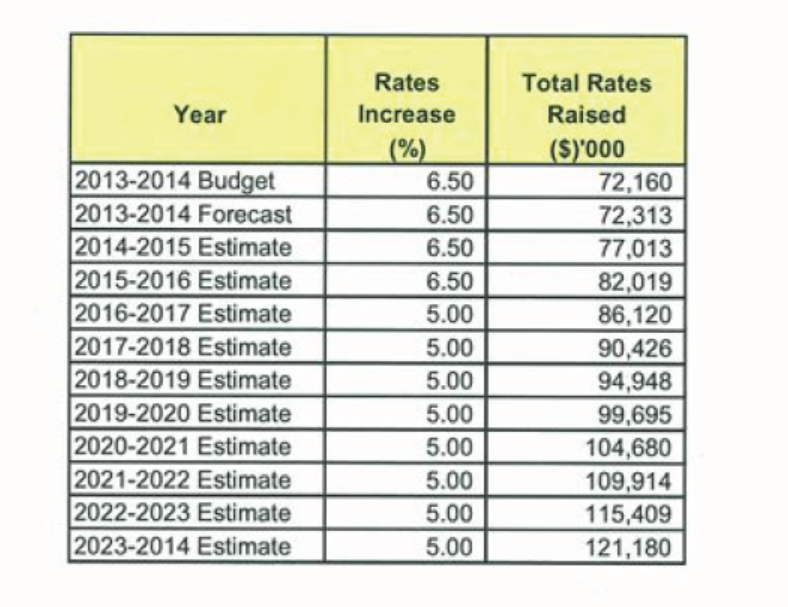
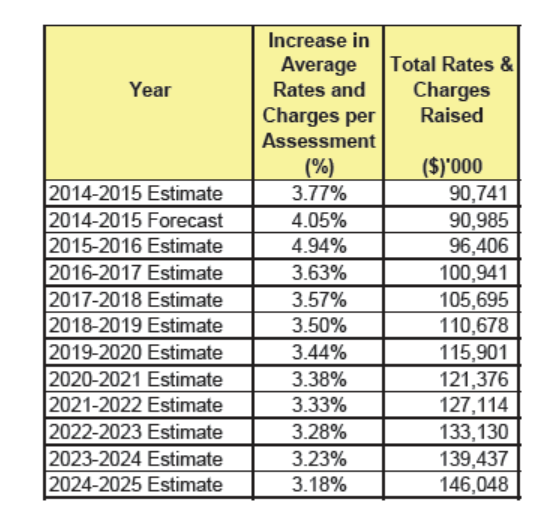
Council has released its draft budget for 2015/6. Rates and charges are up as per normal. What is different is the carefully designed sleight of hand that makes it incredibly difficult for residents to pinpoint precisely what the rate increase actually is. Instead of up front declarations of intent we have paragraphs such as –

Average rates and charges per assessment for 2015-2016 increase by approximately 4.94%. This is made up of an additional 600 assessments, an increase of 6.5% for rate revenue and 2.5% for waste and recycling charges.

This is a distinct departure from previous budget announcements as evidenced from the two screen dumps presented below. One is from the 2014/5 budget papers and one from the current draft budget. Readers should note the change in terminology and hence the change in the presented figures. The bottom line is that Glen Eira’s rate increase remains at 6.5% for ten years in succession!

2014b2015b


By way of comparison we’ve listed other councils’ proposed rate increases. Not all councils have as yet published their draft budgets. Below is what is available at the time of writing.

Banyule – 4.95%

Bass Coast – 6.3%

Bayside – 3.8%

Benalla – 4.5%

Bendigo – 5.0%

Boroondara – 4.5%

Brimbank – 4.8%

Cardinia – 5.5%

Colac – 4.9%

Corangamite – 5%

Dandenong – 5.5%

East Gippsland – 4.5%

Frankston – 5.5%

Golden Plains – 5.26%

Hobson’s Bay – 4.0%

Horsham – 5.0%

Indigo – 4.5%

Kingston – 4.25%

Latrobe – 3.0%

Manningham – 3.53%

Maribyrnong – 3.7%

Melton – 4.4%

Monash – 6.0%

Moonee Valley – 5.0%

Moorabool – 5.0%

Moreland – 5.0%

Mornington – 5.9%

Mount Alexander – 4.5%

Moyne – 5.75%

Nillumbik – 5.5%

Port Phillip – 4.75%

Pyrenees – 5.25%

Shepparton – 4.95%

South Gippsland – 4.9%

Stonnington – 4.5%

Strathbogie – 4.0%

Surf Coast – 5.5%

Towong – 6.0%

Warnambool – 5.5%

Wellington – 3.5%

Whitehorse – 7.6%

Whittlesea – 3.5%

Whyndham – 3.8%

Yarra – 4.5%


Another very, very long post so our apologies. However, the significance of the issue, and what occurred is we believe deserving of a full and comprehensive report.

The following discussion on the Lobo request for a report on the impact of the new zones is quite astonishing. It is replete with:

  • Incorrect information and countless bogus or misleading statements by councillors
  • The non–existence of good governance revealing clearly how decisions are made behind closed doors and that council meetings themselves are only the ‘public performance’ of these pre-determined decisions.

We ask readers to keep in mind the following:

  • Labor pre-election only committed to reviewing the PROCESSES involved in the IMPLEMENTATION of the new zones – not the zones themselves or where they are placed. On this alone Glen Eira should be condemned for its failure to inform, much less ‘consult’ with residents!
  • Lobo’s request for a report said nothing about the ‘building boom’ – yet what is produced is a document that seeks to divert the focus with page after page of ‘discussion’ on the ‘building boom’. Extraneous but self-serving!
  • Hyams’ and the report’s dissembling and deliberate obfuscation of the ‘facts’. Building approvals are NOT the same as planning permits for new dwellings – which we have no doubt he and the administration is well aware of.
  • Magee either does not know about the spread of the zones or he simply does not care. There are NOT 3 RESIDENTIAL GROWTH ZONES in Glen Eira as he claims. In fact there are 5 – two of which are NOT in Activity Centres or anywhere near railway loops.
  • Lobo’s motion does NOT state that the minister should review ‘where the zones’ were put as some councillors inferred!
  • The most crucial and telling point that is missing in all that follows is the continued refusal of this council to be proactive and begin to investigate first off, if anything needs changing, and then going about the processes to implement those changes. The first step in all of this is the amendment process. Countless other councils (post zones) are still consulting, still putting up amendments, and still fighting for better outcomes for their residents. They are not sitting back and saying ‘we could be worse off’ or leaving (review) decisions to ministers. These councils are doing the work themselves in consultation with their constituents. There is no scare mongering, no delays, and no waiting on ministers to initiate anything! Amendments originate first from councils. But that requires the will, the work, and the possible admission that perhaps ‘we were wrong’. All not part of the Glen Eira ethos and culture!

+++++++++

Lobo moved motion which was an ‘alternative’ to the recommendation(s) – (1) council notes the report and that there has been a ‘development boom in Victoria’. (2) that monthly figures show an ‘upward trend’ in Glen Eira (3) March 2015 data hasn’t ‘been included (4) there has been an ‘extraordinary increase’ in Carnegie, North Caulfield and Bentleigh (5) new zones don’t permit anything more than the ‘former arrangements’ (6) new zones ‘provide certainty’ (7) there are height limits (8) new zones have ‘directed developments to where it should be’ (9) development in General Residential Zones is ‘changing the neighbourhood’ and placing ‘some pressure on current homeowners’ (10) Council to write to Minister and ask him ‘what he would like to do’ in regards to the new zones. Delahunty seconded.

LOBO: said that the ‘data’ showed an increase in the number of new dwellings post zones – 744 after and 426 prior to the introduction of the zones. Said that it is true there is a development boom and more people arriving. Said that two main things had changed when looking at the old and new zones. Previously councillors ‘had the authority to take into account’ objections and with the ‘planning policy in place we would make the proper decision’. With the new zones there is ‘certainty to the builders’ where they can build and ‘thus the council power is limited’. Council ‘has to follow the law’ of the government. In all of this, ratepayers are ‘subsidising property developers’ as shown by the application fees discussed in Item 1. Therefore ‘we need to graciously accept that there is a need to go back to the drawing board’ since there is ‘always room to review’. Said that ‘we have heard and saw placards in the gallery’. He accepts that council sought ‘the best possible outcome’ from the government but ‘it would have been safer’ if they ‘had gone to the community’ and ‘showing them the new zones’. Claimed that the ‘new government’ takes ‘a different approach’ and is having a ‘review’. Wanted to ‘use that opportunity to obtain a far better outcome’ and to ‘leave a legacy’ that council has gone to government and it will help ‘mitigate the growing concern’ of residents. Said he checked with Bayside and that they will have 0.02% as a Residential Growth Zone; and 1% of Boroondara is a Residential Growth Zone whilst Glen Eira has 2.2% as the growth zone. Asked councillors to ‘put their differences aside’ and to ‘get the state government to rewrite the history on residential zones’ and to ‘protect the residents’.

DELAHUNTY: said she supports Lobo but would ‘like stronger language’ about what council writes to the Minister. Stated that it’s a ‘worthwhile report’ and shows increased development which isn’t ‘unexpected’ and has ‘gone into areas that we almost predetermined that it would go’. ‘We did seek an arrangement with the former government’ but not sure if ‘that is currently the best deal on the table’ given that other council have got improvements. So the motion is basically a ‘due diligence exercise’ to ensure that what Glen Eira has ‘got at the moment is the right thing’. Said she would like the Minister to ‘have a good look at East Bentleigh’ and she’s not sure about the ‘piece meal planning’ they go through with every application that the ‘zoning is correct’ especially since there is a ‘lack of public transport’ . She also met Elsternwick residents who were advocating for more growth zones in that suburb’s commercial area. Council has always said that if they say where development can’t go, it is their responsibility to say ‘where it can go’. As an Elsternwick resident she ‘supports that – yeah it can go there’ since ‘it’s on top of a train station’. Council can’t do anything about transport in East Bentleigh ‘but we can certainly have a look’ to see ‘if the zoning is right’. She ‘hopes that the Minister will do that’ and if the residents support increased development ‘in that little pocket of Elsternwick’ then that should also occur. Said it’s ‘not a statement that we did the wrong thing’. ‘We all stood here and talked about whether we were doing the wrong thing at the time’ and ‘whether or not we took that to the people’ . She is ‘convinced that the consultation we did prior’ ‘informed how we went about seeking those zones’. Also, since other councils have ‘differences’ in what ‘they were able to achieve’ so it’s ‘really an exercise’ to ensure that ‘we’ve got the best outcome’. Perhaps the Minister might come back and say ‘yes, you’ve got the best outcome’ or maybe he might come back and says ‘we need to pull it back here, we need to put a schedule there’.

PILING: thanked Lobo for requesting the report and that there is ‘some good information here’ although ‘not surprising’ that Carnegie and other suburbs have had ‘more development’. Said that ‘the problem’ with Lobo’s motion is that it ‘draws the inference’ about Glen Eira but that the ‘whole of Melbourne’ needs to be looked at in order to ‘see what is happening’. Said that they are being asked to ‘adopt a policy position’ in saying that ‘the present zones aren’t working’ but ‘I think they are’. He also wasn’t happy with ‘some of the language’ of the motion such as ‘extraordinary increases’ and this isn’t ‘reflective of where this council is’. Claimed they ‘did a lot of work 18 months ago’ and it gives ‘surety’ to developers and residents. Agreed with ‘part’ of the motion that there is development in areas where ‘it should go’. Said that Lobo mentioned Bayside and the current government’s promise to ‘review the zones’ but in his view these are both ‘politically expedient’ and Bayside has got an ‘unusual arrangement’ whilst the review was promised under ‘political pressure’.’I am not in favour of a review’ and although not against talking about ‘improvement’ didn’t think that ‘this was the place’ to ‘set upon a ‘policy position’.

LIPSHUTZ: agreed with Pilling and it was a ‘great report’. Read out Lobo’s clause about ‘extraordinary’ development in Carnegie, etc and then asked ‘what’s so extraordinary’ about this given the ‘boom throughout Victoria’? Said that there’s ‘nothing extraordinary about this’ since development is going on ‘everywhere’. Said that Lobo ‘talks about the old ways’ but ‘now we have certainty’ for ‘everyone’. Previously there was ‘policy that VCAT ignored’ but now ‘we have law’ and ‘people know exactly what can be built and what can’t be built’. He has difficulty with the item where Lobo wants council to ‘write to the minister and see what he wants’. Couldn’t ‘understand’ this. Asking him what he wants means ‘don’t worry what we want’. It should be council that ‘sits around’ and ‘talks’ about whether ‘there are improvements’ that could be made. Then after they’ve decided they ‘advocate to the minister what we want’. You don’t go to the minister and ask ‘what do you want’ – ‘that isn’t the way this council ever operates’. Lobo also talked about ‘pressure on homeowners’ next to developments but ‘ultimately you’re looking at the building boom’ and with development ‘suburbs are changing’. Today things aren’t all ‘triple brick veneers or Californian bungalows’. ‘We are looking for development’ and because of the zones ‘we have certainty’ about ‘what we want to do’. Thought the ‘intention’ of the motion was ‘good’ but ‘analysing’ it, ‘it is wrong’.

SOUNNESS: wanted Lobo to clarify part of his motion about writing to the Minister and Lobo said ‘I have changed that. I have left it out’.

Lobo then read out the clause again and this time said that since the new government had ‘promised’ to ‘have a look at the new zones’ that council writes to Wynne to ‘comment’. Several councillors then commented that this is now different to what the original motion stated.

MAGEE: ‘that is quite different’.

LOBO: ‘that’s right’ because ‘when we had the discussion inside we changed it’.

LIPSHUTZ: ‘point of order’ about the different motion.

MAGEE: asked Lobo if there ‘was a different document’ that he was ‘reading from’

LOBO: said he changed it because in the ‘pre-meeting we had some disagreement’ and that ‘people were not happy with my words’ so ‘I changed’ it.

MAGEE: told Lobo that councillors now ‘didn’t understand what the motion is’. Lobo claimed ‘it was the same one’ but Magee said ‘I don’t believe it is’.

SOUNNESS: proposed that what Lobo read out the second time is different and that the second version should be the motion.

LOBO: said that he had to ‘change’ things because of ‘some words’ which were part of the ‘internal document’ that ‘didn’t go to the public’. Lobo read out this part of the motion again that council writes to the Minister to ‘see what he wants to do’.

LIPSHUTZ: commented that that was what Lobo read out the first time.

Magee asked Sounness if ‘he was happy’ and Sounness said he was.

SOUNNESS: said he’s got an issue with several item in the motion. Sounness ‘didn’t feel’ that the development in Carnegie and Bentleigh was ‘particularly extraordinary’ and it was all ‘part of the general boom’. Problem with paragraph j is that it makes it sound as ‘if we’re advocating for change’ but what council is doing is just enquiring about the ‘review process’ and that they are not ‘asking for anything particular to be done’. Another problem is that the document ‘hasn’t spoken about Bayside’ or other municipalities. ‘Knows’ that there’s development ‘generally speaking’ everywhere but the report doesn’t cover this and how people will be ‘fitted in’. Said that there have been comments that what is occuring in Glen Eira ‘is unfair’. Said that ‘there are processes to go through that’ and asking the minister isn’t the right process because the ‘process should be’ for ‘all of Victoria’ to ask how the growth can be accommodated. ‘What can Melbourne do’ and how Glen Eira ‘would fit into those elements’. Acknowledged that others had ‘received good outcomes’ from their rezoning. Glen Eira in their ‘negotiation’ received ‘greater permeability’ and setbacks.’Some councils have won and some councils have lost’ as a result of their ‘negotiations’. In terms of voting on the motion he would ‘have to think about things as they progress’.

HYAMS: agreed that council should write to the minister. Said people could read the figures and because there is more development come to the conclusion that ‘the zones must be the cause’. Said this isn’t ‘necessarily the truth’ because other factors are involved. What’s important is ‘whether there have been more approvals in Glen Eira’ compared to other similar council areas. ‘Given the building boom it’s very unlikely that that’s the case’. The ABS table in the report shows that building approvals have increased ‘across the board’. Said that the new zones aren’t stopping people building anything ‘they couldn’t build before’ but ‘there’s plenty’ that could have been built previously but now ‘can’t be built’. This is especially true of the Neighbourhood Residential Zones where there is ‘far greater’ protection than before but ‘also true’ for RGZ and GRZ zones because of ‘height limits’ and setbacks. Claimed there was a ‘rush’ to beat the implementation of the zones. Said that ‘there are some who keep saying that the zones allow more’ but for him these people fit into 3 categories – to make money; playing politics and those who ‘who are being mislead by the first two’ categories. Said that ‘without the zones’ there still would have been an ‘increase’ but council ‘wouldn’t have had tools as good to deal with the increase’. Further, it ‘doesn’t mean’ that maximum heights are always granted. Council ‘still takes into account neighbourhood character’. Said that the zones were ‘overall a positive’ but if the government wants to review, that ‘doesn’t mean’ that council wouldn’t be ‘seeking an even better outcome’. But he doesn’t want to ‘suggest’ that the ‘new zones weren’t a good idea’ because he is ‘adamant that they were.’

OKOTEL: Stated that she in asking the government to ‘review where the zones are placed’ she ‘maintains’ her position on consulting with the community and that council should have consulted before bringing in the new zones and the ‘proposal they put’ before government. Felt that ‘the proportion’ of neighbourhood residential zones to general residential zones ‘is a good outcome’. Worried that by asking ‘the minister to review these zones’ then ‘we are allowing open slather for the minister’. Said that ‘again we are not consulting’ before ‘asking for a review’ and that this is ‘highly inappropriate’. Thought that ‘we should always consult with our community’ prior to ‘putting forward such a major proposal’ that ‘the zones be reviewed’. This becomes even more important since council doesn’t ‘know what this review looks like’ and they haven’t had a response to their letter. So now going ‘to the minister and asking for a wholesale review of our zones’ and especially ‘not knowing what implications there are’ is a ‘huge, a massive risk’. Council could lose ‘that 78 protection’ or maybe ‘gain greater residential zone coverage’ but if council loses then ‘it would be a devastating outcome’. Thought that if ‘asking for a review’ then council should ‘first consult with our community’ instead of ‘providing open slather for the minister’. Councillors ‘have a responsibility to ensure best outcomes’ and ‘not pass the buck to the State Government’. Wanted council to ‘keep advocating’ for residents.

MAGEE: only the Minister ‘can do anything’ about the zones. When in opposition, Labor was ‘very clear’ that they were going ‘to review zones’ but haven’t done ‘anything about it so far’. He ‘believes’ that ‘we’ve got a very good system’ . In 2009/10 there was a ‘public review’ of the planning scheme and three things emerged that residents wanted – height limits, buffer zones, and ‘less discretion at VCAT’. ‘That’s exactly what the zones are doing’. Regardless of council ‘advocating for this change or that change’ or whether ‘we want a review the minister at any time can review’. Said that MPs are asking the minister to review zones in their electorates. Said that council was’ criticised at one point for not consulting’ but he thought ‘we very much did’ and now to ‘do a review of our consulting’ they would be ‘accused of doing the very same thing’. Glen Eira’s ‘system puts development’ where he thinks ‘it should be’ – in activity centres and along transport routes. Said that there are 3 Residential Growth Zones and the rest of the residential zones are in ‘shopping strips’. Thought that Glen Eira ‘is very, very lucky to have what it has’. If the minister ‘wants to tinker with that and reduce that’ then no council would have room for residential growth zones. If councils all got what they wanted it would all be neighbourhood residential zones. This would be ‘totally inappropriate and disrespectful’ to the 1000 people a year who come to live in Glen Eira. They have to be ‘accommodated somehow’ and currently council has got a ‘system that I certainly won’t be voting to change’ until the minister tells them ‘what that change will look like’. Was worried that if council ‘opened this up’ that the growth zones would increase and ‘neighbourhood zones would decrease’.

LOBO: said that if there were ‘second thoughts’ then they shouldn’t have asked for the report. Said Okotel was ‘right 50%’ but ‘it doesn’t mean that our realisation’ since the introduction of the zones ‘should be just kept under the blanket’. Stated that his intention was ‘to pin down the minister for just making promises’. Lobo ‘wanted to check if he meant what he said’.

MOTION PUT: VOTING IN FAVOUR – LOBO, DELAHUNTY.

VOTING AGAINST: LIPSHUTZ, PILLING, HYAMS, OKOTEL, SOUNNESS,ESAKOFF

MOTION LOST.

Hyams then moved motion that council write to the minister and ‘enclose’ their letter of December 23rd and telling him that council hasn’t as yet got a response to that letter. Lipshutz seconded.

HYAMS: given the four months for no reply, it is worthwhile resending letter and will be ‘useful to know’ the ‘form the review may take’. Thought it was a ‘good report’ and disagreed with Lobo that ‘we didn’t see things the way that he wanted to move his motion’.

Lipshutz didn’t speak to the motion.

DELAHUNTY: thought the report was ‘useful’ and thought that what Lobo was trying for was to ensure ‘that we still have the best deal’. Said that there is ‘hand wringing every time there is an application in front of us’ especially along Neerim Road – ‘oh what can we do?(sarcastically)’ ‘well what we can do is ask for a review of the zones!’. Said that there ‘no harm’ in asking for a response from the minister to an earlier letter. Said that judging by the previous comments from councillors and the focus on consultation she asked Hyams to include an amendment in the letter that insisted on ‘community consultation prior to any changes’. Hyams agreed to the amendment.

Lobo then wanted Hyams to ‘read out’ the letter sent to the acting planning minister of the time. Hyams told him it was ‘in the agenda’. Lobo asked again if he would read it out for people ‘in the gallery’.Magee said the gallery has got the agenda and that ‘we are pressed for time’.

LOBO: said that his role was to give council the chance to ‘be transparent’ because ‘we are all the time accused that this council is not transparent’.

MAGEE: asked Lobo if ‘you feel that this council is not transparent’?

LOBO: ‘it is not what I believe – it is what people say’

HYAMS: said that those complaining about council not being transparent are ‘themselves very transparent’. Thought that ‘it is our role to get the best deal we can’ and ‘if it becomes possible to get a better deal maybe we should go for that’. First council needs to ‘know things the way they are’ and write to council for this information.

MOTION PUT AND CARRIED UNANIMOUSLY
Prior to reporting on this item, we urge readers to revisit our table of comparative rate rises for Glen Eira and our neighbouring councils over the past 9 years and then consider the validity of the arguments presented below.

https://gleneira.wordpress.com/2015/04/20/rates-value-for-money/

Item 9.1 – Development Application Fees

Delahunty moved motion to accept with the addition of the clause that if the State Government increases application fees, that Council will ‘pass on the full effects of this saving’ to residents via rate reductions. Lobo seconded.

DELAHUNTY: thought that the report was ‘groundbreaking’ and thanked officers. It reveals the ‘true costs to council’. Said that council is ‘subsidising multi-unit’ developments to the ‘tune of conservatively around one million dollars’ since the government sets the fees and these haven’t increased in the past 6 years whereas council costs have. The Government was voted in by people with the agenda of rate-capping and the government has charged councils to find savings. Glen Eira has found ‘savings’ which will make ‘an incredible difference to rates’. But Council needs ‘help’ from the government to ‘deliver’ the savings. Developers would ‘wear the cost’ and it is tax deductible for them. Wanted councillors to support motion that is asnwering the government’s challenge of finding ‘savings’. Said that it also ‘goes a step further’. Council has ‘set a very responsible budget’ and can ‘deliver what we think’ are the ‘municipality’s needs’ and with the cost savings this money ‘would go back to the ratepayer’.

LOBO: endorsed Delahunty’s comments. Developers are ‘rich’ and he didn’t think that ‘such cost shifting should be done’ even though the government ‘does a lot of cost shifting’. Residents are ‘having a hard time’ in meeting expenses, especially the retired who depend on Centre Link. Passing on the one million ‘would make a difference to them’. Went on to give figures from the report on how the state government supports VCAT to the tune of over $10,000 and council gets only around $4000 ‘for the work done’. This is ‘unfair to make the rich, richer’.

OKOTEL: supported motion ‘except for’ giving the money back to residents. Went through the report and noted – ‘burden’ on ratepayers; lack of increase in fees. Said that Pilling wrote to Minister last year asking for fee increase and received reply that a ‘regulatory’ review needed to be completed first of all.   Magee wrote to the ‘new government’ and ‘hopefully’ they will increase the fees payable. Council needs to continue to put ‘pressure’ on because ratepayers are ‘subsidising’ development. Didn’t support clause that savings be passed on to ratepayers. Claimed that this was ‘an arbitrary way of going about things’ since when rates are set ‘we go through a’ stringent ‘budgetary process’ and they ‘look at what we might spend ratepayers money on’. The money could be ‘put towards’ many other ‘initiatives’ such as open space, and pavilion upgrades. ‘It would not set a good precedent’ for council to say that they would ‘arbitrarily return that amount’. Council should ‘continue to be prudent in how we administer’ the funds.

LIPSHUTZ: also supported motion except for returning money via rate reductions to residents. Said ‘I’m a ratepayer’ and would like lower rates but ‘the reality’ is that rates and taxes are paid ‘so that our city can grow’ and that ‘we can have the services that we all expect’. Claimed that ‘this council is a very low cost council’. They ‘have a business plan’ about how ‘we do things’ and plans are done ‘for the benefit of our residents’. He would ‘hate to see’ a million dollars ‘come back and result in reduced rates’ because this means that ‘we can’t do the things we would like’. Said that Council has a ‘budget’ and this ‘suits what we want to do’ but ‘we can do so many more things’. Claimed that council ‘just lost $885,000 because two people’ opposed the open space levy. ‘Two people stopped that happening’.

SOUNNESS: raised a point of order in that Lipshutz is not speaking about application fees now.

MAGEE: ‘agreed’ with Lipshutz in that ‘I do see the connection’.

LIPSHUTZ: claimed that if ‘we had that money’ they would spend it on open space and if they received the one million they would also spend this on open space and on pavilions and ‘upgrading our facilities’. Didn’t want to see lower rates because ‘we have to take the long term view’ and ‘as councillors we have a responsibility’ to present the ‘budget properly’ and to ‘plan for the city’. ‘I don’t want to give money back’ or ‘put money simply into the bank’. If they had the ‘extra money’ he would ‘like to use that for all the things we would like to do’. Asked if Delahunty and Lobo would accept an amendment which ‘excised’ that particular clause from the motion. Said that the clause makes for ‘great PR, but the reality is I don’t want to see a million dollars simply go west’. He ‘wants us to use that money wisely’. Both Delahunty and Lobo said ‘no’.


Lipshutz then moved the amendment to excise this part of the motion. Seconded by Okotel.

Lipshutz said ‘what I said stands’.

OKOTEL: repeated that returning the money to ratepayers would be ‘arbitrary’. Said that council ‘experiences regularly unforseen costs’ for example Defined Benefits and they don’t know ‘how much this might be’ nor ‘when this might come’. Thought that it is ‘important that we stick to the budgetary process’.

DELAHUNTY: agreed with Okotel that ‘we do set a responsible budget’ and that it is an ‘arbitrary move’. Because the budget is ‘responsible’ they ‘account for these costs’ because ‘we bear these costs’ in that the budgets take account of them. Council has argued that ratepayers subsidising developers is ‘unfair’ and in spite of these costs, and in setting the budget ‘we’ve managed to deliver all of the things’ they wanted. If they don’t manage to ‘deliver’ then it is ‘the budgetry process’ which Okotel ‘holds in high regard’ that ‘should bear that up’. ‘This is an unmet cost that is unfair on the ratepayer to bear’. It is a ‘courageous’ councillor who can say that they don’t want the money to go back to ratepayers. This is like saying ‘we know what to do with your money better than you do’. The government was voted in on a policy of rate cutting, ‘we found an extra cost saving’ and that ‘I think you should have that back in your pockets’. Said that the budgetary process isn’t ‘undermined’ because the costs are already budgeted for. If the government raises the fees, then their costs diminish and they don’t ‘need’ the rates that were ‘set out’. And ‘if we need to do more’ then the way this is argued is the ‘budgetary process’. If fees are raised then it’s an ‘unexpected windfall for the council’ and is ‘unfair’ to ratepayers.

PILLING: said that his ‘problem’ with the Delahunty motion is that it is ‘almost acknowledging rate capping as a policy’ and ‘accepting it’. Didn’t think that this was ‘necessary at this stage’ (ie ‘shadow boxing’ with the government’).

HYAMS: liked the report. Went through details again regarding costs for processing applications and the ‘disparity’ in costs for VCAT. Bemoaned responses to mayor’s letter to minister and how long it’s taken for a review of fees. Said he supported amendment and that giving the money ‘holus bolus back to ratepayers’ ‘presumes that previous budgets and rate rises would have been that amount less’. Council sets rate rises ‘in advance’ and then officers and departments put in their submissions and ‘works out what can be fitted in’. Thought that previously they would have ‘gotten a bit less’ and ‘done more with it’. If fees rise then this would be ‘recouping’ not previous losses and what ‘council would have been able to achieve’. Didn’t think that ‘we are doing the right thing by ratepayers’ in simply saying ‘you can have all the money back’ and council will ‘continue to forego’ what could have been done ‘for you’.

LOBO: said that in this situation councillors, as ‘servants of the public’ and with whatever money ‘is in the kitty should go back’ to ‘the master’. Said that pre-election he read somewhere that if ‘your councillor is not standing by you then what is he doing in the council?’. Repeated that money ‘should go back to the masters’, it is a ‘master-slave relationship’ . Said that retired servicemen are ‘suffering’ and that discounts given to pensioners of $260 is ‘negligible and has not increased for almost 8 to 10 years’. ‘To keep (the money) is to be a miser’.

ESAKOFF: said that the ‘rate capping report is a good one’.

DELAHUNTY: raised a point of order questioning whether Esakoff was ‘on the right report’.

ESAKOFF: said she was on the correct item.

MAGEE: ‘I understand where Cr Esakoff, what she is speaking about’ since councillors have ‘mentioned rate capping’ previously.

ESAKOFF: was ‘happy’ with the report and the recommendations. Agreed with Pilling that ‘this assumes a lot’ and is ‘arbitrary and I don’t like that factor’. Said that council subsidises many services and that if they were to ‘start recouping’ all of these then they would be ‘giving everything back to the ratepayers and there would be no rates to be paid’. ‘At this point in time’ council ‘should wait and see’ what its costs are which will ‘vary’ depending on application numbers. Thought that the distributing ‘rate pool’ should be part of the ‘budget process’ and ‘not on one item’.

SOUNNESS: said that in Western Australia going to VCAT costs less than in Victoria. Said that people assume that what council does with money is for the public good. Agreed that there is a budgetary process and that council ‘needs to manage’ its costs and that it ‘would be a very unfair government that suddenly changes its fee structure’ and ends up with a ‘hole in the budget’. If changes are contemplated then it should be done with fair 6 month warning. Thought that the motion would ‘have very little impact on the ground’ and that he was ‘indifferent’ as to support this ‘or not’.

MAGEE: said rates are like taxes to raise money to run the city. If the government raised fees then this would be ‘a lesser amount that we would have to impose on ratepayers’ and this would be ‘reflected through the budgetary process’. This would be reflected in lower rate rises so isn’t ‘something we would have to give back’ since it wasn’t collected ‘in the first place’. Said he was ‘happy’ with the original recommendations.

AMENDMENT PUT: VOTING IN FAVOUR – LIPSHUTZ, OKOTEL, PILLING, ESAKOFF, HYAMS.

VOTING AGAINST: DELAHUNTY, LOBO, SOUNNESS; MAGEE

Amendment successful and became substantive motion. VOTED IN UNANIMOUSLY.

Two further applications for Neerim Road are up for decision at the next council meeting. If approved, this will mean (potentially) another seventy eight dwellings for this already overdeveloped road.

The latest trend in officer reports is to recommend setbacks which exceed ResCode ‘guidelines’ and anything in Council’s Residential Growth Zone Schedules. The language now used is to refer to ResCode as ‘prescriptive’. Given Council’s and VCAT’s record, ResCode is anything but ‘prescriptive’!

However, having been chastised by VCAT members in some recent decisions, the final recommendation is now couched in far more circumspect language. For example – ‘up to thirty (30) dwellings’ and ‘up to forty eight (48) dwellings’ in both applications.

Council’s recent arguments have been that if greater setbacks are imposed, this will likely cause a reduction in the number of proposed dwellings. The recent Belsize/Neerim Road application was for 52 dwellings. Council granted a permit for 47 on this basis. The member however, was far from convinced –

The reduction in dwelling numbers by Council appears to only be founded on its assumption that there may be a need to reduce the number of dwellings with the additional setbacks it imposed. With the setbacks I have determined it may be possible that close to 52 dwellings may be achieved. Until amended plans are submitted to Council it is unclear exactly how many dwellings will be achieved. I will therefore amend what the permit allows to remove reference to the number of dwellings. (http://www.austlii.edu.au/au/cases/vic/VCAT/2015/464.html)


Council has also been knocked back several times in its attempt to have, as part of the conditions, that the developer display a sign informing prospective buyers that residential parking permits will not be granted. The member’s view was:

The conditions do not directly relate to implementing the development in accordance with the planning scheme. Rather they are to provide advice to residents about a local law that is separate to the implementation of the planning permit. The planning application has met its obligations for resident car parking on site. Any local law Council has about how it manages on street parking permits is a matter for it to address, separate to this permit. I will delete the two conditions


When all of the above is combined with now common VCAT statements that Glen Eira’s planning scheme is bereft of preferred neighbourhood character statements for its housing diversity areas, and devoid of any ‘specific built form outcome’ statements, then developers will always have the upper hand. VCAT, for all its faults, can only interpret State regulations and Council’s Planning Scheme. If the Planning Scheme is totally inadequate then the blame must be sheeted home to council’s planners and its councillors.

« Previous PageNext Page »