GE Council Meeting(s)


Council has released its draft budget for 2015/6. Rates and charges are up as per normal. What is different is the carefully designed sleight of hand that makes it incredibly difficult for residents to pinpoint precisely what the rate increase actually is. Instead of up front declarations of intent we have paragraphs such as –

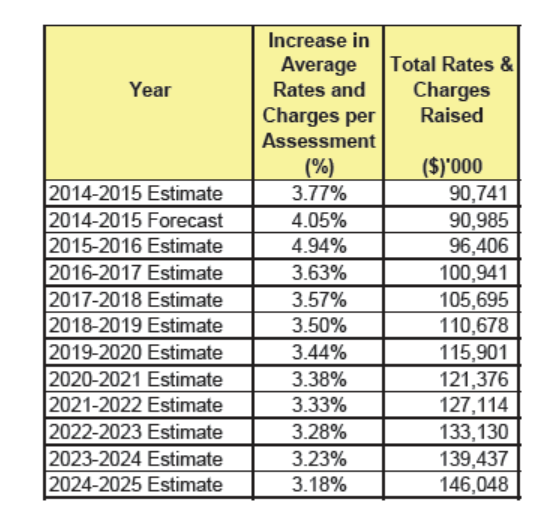
Average rates and charges per assessment for 2015-2016 increase by approximately 4.94%. This is made up of an additional 600 assessments, an increase of 6.5% for rate revenue and 2.5% for waste and recycling charges.

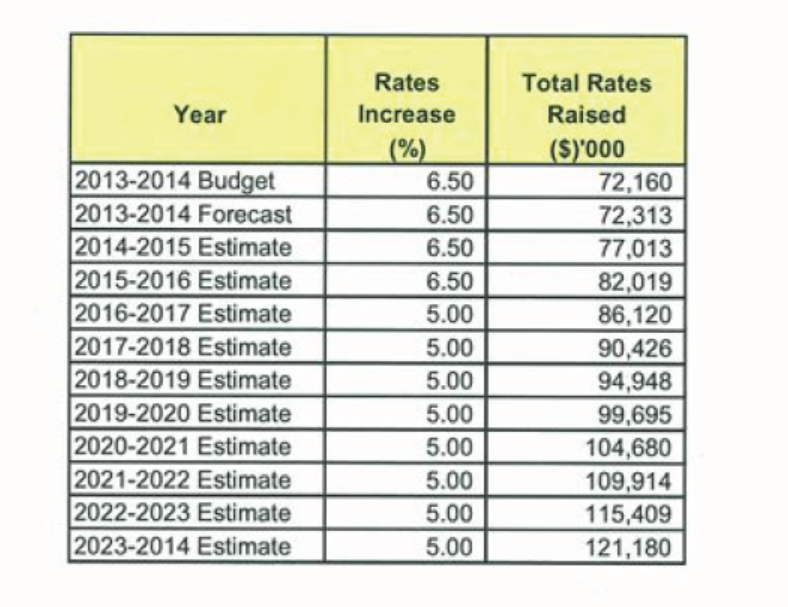
This is a distinct departure from previous budget announcements as evidenced from the two screen dumps presented below. One is from the 2014/5 budget papers and one from the current draft budget. Readers should note the change in terminology and hence the change in the presented figures. The bottom line is that Glen Eira’s rate increase remains at 6.5% for ten years in succession!

2014b2015b


By way of comparison we’ve listed other councils’ proposed rate increases. Not all councils have as yet published their draft budgets. Below is what is available at the time of writing.

Banyule – 4.95%

Bass Coast – 6.3%

Bayside – 3.8%

Benalla – 4.5%

Bendigo – 5.0%

Boroondara – 4.5%

Brimbank – 4.8%

Cardinia – 5.5%

Colac – 4.9%

Corangamite – 5%

Dandenong – 5.5%

East Gippsland – 4.5%

Frankston – 5.5%

Golden Plains – 5.26%

Hobson’s Bay – 4.0%

Horsham – 5.0%

Indigo – 4.5%

Kingston – 4.25%

Latrobe – 3.0%

Manningham – 3.53%

Maribyrnong – 3.7%

Melton – 4.4%

Monash – 6.0%

Moonee Valley – 5.0%

Moorabool – 5.0%

Moreland – 5.0%

Mornington – 5.9%

Mount Alexander – 4.5%

Moyne – 5.75%

Nillumbik – 5.5%

Port Phillip – 4.75%

Pyrenees – 5.25%

Shepparton – 4.95%

South Gippsland – 4.9%

Stonnington – 4.5%

Strathbogie – 4.0%

Surf Coast – 5.5%

Towong – 6.0%

Warnambool – 5.5%

Wellington – 3.5%

Whitehorse – 7.6%

Whittlesea – 3.5%

Whyndham – 3.8%

Yarra – 4.5%


Another very, very long post so our apologies. However, the significance of the issue, and what occurred is we believe deserving of a full and comprehensive report.

The following discussion on the Lobo request for a report on the impact of the new zones is quite astonishing. It is replete with:

  • Incorrect information and countless bogus or misleading statements by councillors
  • The non–existence of good governance revealing clearly how decisions are made behind closed doors and that council meetings themselves are only the ‘public performance’ of these pre-determined decisions.

We ask readers to keep in mind the following:

  • Labor pre-election only committed to reviewing the PROCESSES involved in the IMPLEMENTATION of the new zones – not the zones themselves or where they are placed. On this alone Glen Eira should be condemned for its failure to inform, much less ‘consult’ with residents!
  • Lobo’s request for a report said nothing about the ‘building boom’ – yet what is produced is a document that seeks to divert the focus with page after page of ‘discussion’ on the ‘building boom’. Extraneous but self-serving!
  • Hyams’ and the report’s dissembling and deliberate obfuscation of the ‘facts’. Building approvals are NOT the same as planning permits for new dwellings – which we have no doubt he and the administration is well aware of.
  • Magee either does not know about the spread of the zones or he simply does not care. There are NOT 3 RESIDENTIAL GROWTH ZONES in Glen Eira as he claims. In fact there are 5 – two of which are NOT in Activity Centres or anywhere near railway loops.
  • Lobo’s motion does NOT state that the minister should review ‘where the zones’ were put as some councillors inferred!
  • The most crucial and telling point that is missing in all that follows is the continued refusal of this council to be proactive and begin to investigate first off, if anything needs changing, and then going about the processes to implement those changes. The first step in all of this is the amendment process. Countless other councils (post zones) are still consulting, still putting up amendments, and still fighting for better outcomes for their residents. They are not sitting back and saying ‘we could be worse off’ or leaving (review) decisions to ministers. These councils are doing the work themselves in consultation with their constituents. There is no scare mongering, no delays, and no waiting on ministers to initiate anything! Amendments originate first from councils. But that requires the will, the work, and the possible admission that perhaps ‘we were wrong’. All not part of the Glen Eira ethos and culture!

+++++++++

Lobo moved motion which was an ‘alternative’ to the recommendation(s) – (1) council notes the report and that there has been a ‘development boom in Victoria’. (2) that monthly figures show an ‘upward trend’ in Glen Eira (3) March 2015 data hasn’t ‘been included (4) there has been an ‘extraordinary increase’ in Carnegie, North Caulfield and Bentleigh (5) new zones don’t permit anything more than the ‘former arrangements’ (6) new zones ‘provide certainty’ (7) there are height limits (8) new zones have ‘directed developments to where it should be’ (9) development in General Residential Zones is ‘changing the neighbourhood’ and placing ‘some pressure on current homeowners’ (10) Council to write to Minister and ask him ‘what he would like to do’ in regards to the new zones. Delahunty seconded.

LOBO: said that the ‘data’ showed an increase in the number of new dwellings post zones – 744 after and 426 prior to the introduction of the zones. Said that it is true there is a development boom and more people arriving. Said that two main things had changed when looking at the old and new zones. Previously councillors ‘had the authority to take into account’ objections and with the ‘planning policy in place we would make the proper decision’. With the new zones there is ‘certainty to the builders’ where they can build and ‘thus the council power is limited’. Council ‘has to follow the law’ of the government. In all of this, ratepayers are ‘subsidising property developers’ as shown by the application fees discussed in Item 1. Therefore ‘we need to graciously accept that there is a need to go back to the drawing board’ since there is ‘always room to review’. Said that ‘we have heard and saw placards in the gallery’. He accepts that council sought ‘the best possible outcome’ from the government but ‘it would have been safer’ if they ‘had gone to the community’ and ‘showing them the new zones’. Claimed that the ‘new government’ takes ‘a different approach’ and is having a ‘review’. Wanted to ‘use that opportunity to obtain a far better outcome’ and to ‘leave a legacy’ that council has gone to government and it will help ‘mitigate the growing concern’ of residents. Said he checked with Bayside and that they will have 0.02% as a Residential Growth Zone; and 1% of Boroondara is a Residential Growth Zone whilst Glen Eira has 2.2% as the growth zone. Asked councillors to ‘put their differences aside’ and to ‘get the state government to rewrite the history on residential zones’ and to ‘protect the residents’.

DELAHUNTY: said she supports Lobo but would ‘like stronger language’ about what council writes to the Minister. Stated that it’s a ‘worthwhile report’ and shows increased development which isn’t ‘unexpected’ and has ‘gone into areas that we almost predetermined that it would go’. ‘We did seek an arrangement with the former government’ but not sure if ‘that is currently the best deal on the table’ given that other council have got improvements. So the motion is basically a ‘due diligence exercise’ to ensure that what Glen Eira has ‘got at the moment is the right thing’. Said she would like the Minister to ‘have a good look at East Bentleigh’ and she’s not sure about the ‘piece meal planning’ they go through with every application that the ‘zoning is correct’ especially since there is a ‘lack of public transport’ . She also met Elsternwick residents who were advocating for more growth zones in that suburb’s commercial area. Council has always said that if they say where development can’t go, it is their responsibility to say ‘where it can go’. As an Elsternwick resident she ‘supports that – yeah it can go there’ since ‘it’s on top of a train station’. Council can’t do anything about transport in East Bentleigh ‘but we can certainly have a look’ to see ‘if the zoning is right’. She ‘hopes that the Minister will do that’ and if the residents support increased development ‘in that little pocket of Elsternwick’ then that should also occur. Said it’s ‘not a statement that we did the wrong thing’. ‘We all stood here and talked about whether we were doing the wrong thing at the time’ and ‘whether or not we took that to the people’ . She is ‘convinced that the consultation we did prior’ ‘informed how we went about seeking those zones’. Also, since other councils have ‘differences’ in what ‘they were able to achieve’ so it’s ‘really an exercise’ to ensure that ‘we’ve got the best outcome’. Perhaps the Minister might come back and say ‘yes, you’ve got the best outcome’ or maybe he might come back and says ‘we need to pull it back here, we need to put a schedule there’.

PILING: thanked Lobo for requesting the report and that there is ‘some good information here’ although ‘not surprising’ that Carnegie and other suburbs have had ‘more development’. Said that ‘the problem’ with Lobo’s motion is that it ‘draws the inference’ about Glen Eira but that the ‘whole of Melbourne’ needs to be looked at in order to ‘see what is happening’. Said that they are being asked to ‘adopt a policy position’ in saying that ‘the present zones aren’t working’ but ‘I think they are’. He also wasn’t happy with ‘some of the language’ of the motion such as ‘extraordinary increases’ and this isn’t ‘reflective of where this council is’. Claimed they ‘did a lot of work 18 months ago’ and it gives ‘surety’ to developers and residents. Agreed with ‘part’ of the motion that there is development in areas where ‘it should go’. Said that Lobo mentioned Bayside and the current government’s promise to ‘review the zones’ but in his view these are both ‘politically expedient’ and Bayside has got an ‘unusual arrangement’ whilst the review was promised under ‘political pressure’.’I am not in favour of a review’ and although not against talking about ‘improvement’ didn’t think that ‘this was the place’ to ‘set upon a ‘policy position’.

LIPSHUTZ: agreed with Pilling and it was a ‘great report’. Read out Lobo’s clause about ‘extraordinary’ development in Carnegie, etc and then asked ‘what’s so extraordinary’ about this given the ‘boom throughout Victoria’? Said that there’s ‘nothing extraordinary about this’ since development is going on ‘everywhere’. Said that Lobo ‘talks about the old ways’ but ‘now we have certainty’ for ‘everyone’. Previously there was ‘policy that VCAT ignored’ but now ‘we have law’ and ‘people know exactly what can be built and what can’t be built’. He has difficulty with the item where Lobo wants council to ‘write to the minister and see what he wants’. Couldn’t ‘understand’ this. Asking him what he wants means ‘don’t worry what we want’. It should be council that ‘sits around’ and ‘talks’ about whether ‘there are improvements’ that could be made. Then after they’ve decided they ‘advocate to the minister what we want’. You don’t go to the minister and ask ‘what do you want’ – ‘that isn’t the way this council ever operates’. Lobo also talked about ‘pressure on homeowners’ next to developments but ‘ultimately you’re looking at the building boom’ and with development ‘suburbs are changing’. Today things aren’t all ‘triple brick veneers or Californian bungalows’. ‘We are looking for development’ and because of the zones ‘we have certainty’ about ‘what we want to do’. Thought the ‘intention’ of the motion was ‘good’ but ‘analysing’ it, ‘it is wrong’.

SOUNNESS: wanted Lobo to clarify part of his motion about writing to the Minister and Lobo said ‘I have changed that. I have left it out’.

Lobo then read out the clause again and this time said that since the new government had ‘promised’ to ‘have a look at the new zones’ that council writes to Wynne to ‘comment’. Several councillors then commented that this is now different to what the original motion stated.

MAGEE: ‘that is quite different’.

LOBO: ‘that’s right’ because ‘when we had the discussion inside we changed it’.

LIPSHUTZ: ‘point of order’ about the different motion.

MAGEE: asked Lobo if there ‘was a different document’ that he was ‘reading from’

LOBO: said he changed it because in the ‘pre-meeting we had some disagreement’ and that ‘people were not happy with my words’ so ‘I changed’ it.

MAGEE: told Lobo that councillors now ‘didn’t understand what the motion is’. Lobo claimed ‘it was the same one’ but Magee said ‘I don’t believe it is’.

SOUNNESS: proposed that what Lobo read out the second time is different and that the second version should be the motion.

LOBO: said that he had to ‘change’ things because of ‘some words’ which were part of the ‘internal document’ that ‘didn’t go to the public’. Lobo read out this part of the motion again that council writes to the Minister to ‘see what he wants to do’.

LIPSHUTZ: commented that that was what Lobo read out the first time.

Magee asked Sounness if ‘he was happy’ and Sounness said he was.

SOUNNESS: said he’s got an issue with several item in the motion. Sounness ‘didn’t feel’ that the development in Carnegie and Bentleigh was ‘particularly extraordinary’ and it was all ‘part of the general boom’. Problem with paragraph j is that it makes it sound as ‘if we’re advocating for change’ but what council is doing is just enquiring about the ‘review process’ and that they are not ‘asking for anything particular to be done’. Another problem is that the document ‘hasn’t spoken about Bayside’ or other municipalities. ‘Knows’ that there’s development ‘generally speaking’ everywhere but the report doesn’t cover this and how people will be ‘fitted in’. Said that there have been comments that what is occuring in Glen Eira ‘is unfair’. Said that ‘there are processes to go through that’ and asking the minister isn’t the right process because the ‘process should be’ for ‘all of Victoria’ to ask how the growth can be accommodated. ‘What can Melbourne do’ and how Glen Eira ‘would fit into those elements’. Acknowledged that others had ‘received good outcomes’ from their rezoning. Glen Eira in their ‘negotiation’ received ‘greater permeability’ and setbacks.’Some councils have won and some councils have lost’ as a result of their ‘negotiations’. In terms of voting on the motion he would ‘have to think about things as they progress’.

HYAMS: agreed that council should write to the minister. Said people could read the figures and because there is more development come to the conclusion that ‘the zones must be the cause’. Said this isn’t ‘necessarily the truth’ because other factors are involved. What’s important is ‘whether there have been more approvals in Glen Eira’ compared to other similar council areas. ‘Given the building boom it’s very unlikely that that’s the case’. The ABS table in the report shows that building approvals have increased ‘across the board’. Said that the new zones aren’t stopping people building anything ‘they couldn’t build before’ but ‘there’s plenty’ that could have been built previously but now ‘can’t be built’. This is especially true of the Neighbourhood Residential Zones where there is ‘far greater’ protection than before but ‘also true’ for RGZ and GRZ zones because of ‘height limits’ and setbacks. Claimed there was a ‘rush’ to beat the implementation of the zones. Said that ‘there are some who keep saying that the zones allow more’ but for him these people fit into 3 categories – to make money; playing politics and those who ‘who are being mislead by the first two’ categories. Said that ‘without the zones’ there still would have been an ‘increase’ but council ‘wouldn’t have had tools as good to deal with the increase’. Further, it ‘doesn’t mean’ that maximum heights are always granted. Council ‘still takes into account neighbourhood character’. Said that the zones were ‘overall a positive’ but if the government wants to review, that ‘doesn’t mean’ that council wouldn’t be ‘seeking an even better outcome’. But he doesn’t want to ‘suggest’ that the ‘new zones weren’t a good idea’ because he is ‘adamant that they were.’

OKOTEL: Stated that she in asking the government to ‘review where the zones are placed’ she ‘maintains’ her position on consulting with the community and that council should have consulted before bringing in the new zones and the ‘proposal they put’ before government. Felt that ‘the proportion’ of neighbourhood residential zones to general residential zones ‘is a good outcome’. Worried that by asking ‘the minister to review these zones’ then ‘we are allowing open slather for the minister’. Said that ‘again we are not consulting’ before ‘asking for a review’ and that this is ‘highly inappropriate’. Thought that ‘we should always consult with our community’ prior to ‘putting forward such a major proposal’ that ‘the zones be reviewed’. This becomes even more important since council doesn’t ‘know what this review looks like’ and they haven’t had a response to their letter. So now going ‘to the minister and asking for a wholesale review of our zones’ and especially ‘not knowing what implications there are’ is a ‘huge, a massive risk’. Council could lose ‘that 78 protection’ or maybe ‘gain greater residential zone coverage’ but if council loses then ‘it would be a devastating outcome’. Thought that if ‘asking for a review’ then council should ‘first consult with our community’ instead of ‘providing open slather for the minister’. Councillors ‘have a responsibility to ensure best outcomes’ and ‘not pass the buck to the State Government’. Wanted council to ‘keep advocating’ for residents.

MAGEE: only the Minister ‘can do anything’ about the zones. When in opposition, Labor was ‘very clear’ that they were going ‘to review zones’ but haven’t done ‘anything about it so far’. He ‘believes’ that ‘we’ve got a very good system’ . In 2009/10 there was a ‘public review’ of the planning scheme and three things emerged that residents wanted – height limits, buffer zones, and ‘less discretion at VCAT’. ‘That’s exactly what the zones are doing’. Regardless of council ‘advocating for this change or that change’ or whether ‘we want a review the minister at any time can review’. Said that MPs are asking the minister to review zones in their electorates. Said that council was’ criticised at one point for not consulting’ but he thought ‘we very much did’ and now to ‘do a review of our consulting’ they would be ‘accused of doing the very same thing’. Glen Eira’s ‘system puts development’ where he thinks ‘it should be’ – in activity centres and along transport routes. Said that there are 3 Residential Growth Zones and the rest of the residential zones are in ‘shopping strips’. Thought that Glen Eira ‘is very, very lucky to have what it has’. If the minister ‘wants to tinker with that and reduce that’ then no council would have room for residential growth zones. If councils all got what they wanted it would all be neighbourhood residential zones. This would be ‘totally inappropriate and disrespectful’ to the 1000 people a year who come to live in Glen Eira. They have to be ‘accommodated somehow’ and currently council has got a ‘system that I certainly won’t be voting to change’ until the minister tells them ‘what that change will look like’. Was worried that if council ‘opened this up’ that the growth zones would increase and ‘neighbourhood zones would decrease’.

LOBO: said that if there were ‘second thoughts’ then they shouldn’t have asked for the report. Said Okotel was ‘right 50%’ but ‘it doesn’t mean that our realisation’ since the introduction of the zones ‘should be just kept under the blanket’. Stated that his intention was ‘to pin down the minister for just making promises’. Lobo ‘wanted to check if he meant what he said’.

MOTION PUT: VOTING IN FAVOUR – LOBO, DELAHUNTY.

VOTING AGAINST: LIPSHUTZ, PILLING, HYAMS, OKOTEL, SOUNNESS,ESAKOFF

MOTION LOST.

Hyams then moved motion that council write to the minister and ‘enclose’ their letter of December 23rd and telling him that council hasn’t as yet got a response to that letter. Lipshutz seconded.

HYAMS: given the four months for no reply, it is worthwhile resending letter and will be ‘useful to know’ the ‘form the review may take’. Thought it was a ‘good report’ and disagreed with Lobo that ‘we didn’t see things the way that he wanted to move his motion’.

Lipshutz didn’t speak to the motion.

DELAHUNTY: thought the report was ‘useful’ and thought that what Lobo was trying for was to ensure ‘that we still have the best deal’. Said that there is ‘hand wringing every time there is an application in front of us’ especially along Neerim Road – ‘oh what can we do?(sarcastically)’ ‘well what we can do is ask for a review of the zones!’. Said that there ‘no harm’ in asking for a response from the minister to an earlier letter. Said that judging by the previous comments from councillors and the focus on consultation she asked Hyams to include an amendment in the letter that insisted on ‘community consultation prior to any changes’. Hyams agreed to the amendment.

Lobo then wanted Hyams to ‘read out’ the letter sent to the acting planning minister of the time. Hyams told him it was ‘in the agenda’. Lobo asked again if he would read it out for people ‘in the gallery’.Magee said the gallery has got the agenda and that ‘we are pressed for time’.

LOBO: said that his role was to give council the chance to ‘be transparent’ because ‘we are all the time accused that this council is not transparent’.

MAGEE: asked Lobo if ‘you feel that this council is not transparent’?

LOBO: ‘it is not what I believe – it is what people say’

HYAMS: said that those complaining about council not being transparent are ‘themselves very transparent’. Thought that ‘it is our role to get the best deal we can’ and ‘if it becomes possible to get a better deal maybe we should go for that’. First council needs to ‘know things the way they are’ and write to council for this information.

MOTION PUT AND CARRIED UNANIMOUSLY
Prior to reporting on this item, we urge readers to revisit our table of comparative rate rises for Glen Eira and our neighbouring councils over the past 9 years and then consider the validity of the arguments presented below.

https://gleneira.wordpress.com/2015/04/20/rates-value-for-money/

Item 9.1 – Development Application Fees

Delahunty moved motion to accept with the addition of the clause that if the State Government increases application fees, that Council will ‘pass on the full effects of this saving’ to residents via rate reductions. Lobo seconded.

DELAHUNTY: thought that the report was ‘groundbreaking’ and thanked officers. It reveals the ‘true costs to council’. Said that council is ‘subsidising multi-unit’ developments to the ‘tune of conservatively around one million dollars’ since the government sets the fees and these haven’t increased in the past 6 years whereas council costs have. The Government was voted in by people with the agenda of rate-capping and the government has charged councils to find savings. Glen Eira has found ‘savings’ which will make ‘an incredible difference to rates’. But Council needs ‘help’ from the government to ‘deliver’ the savings. Developers would ‘wear the cost’ and it is tax deductible for them. Wanted councillors to support motion that is asnwering the government’s challenge of finding ‘savings’. Said that it also ‘goes a step further’. Council has ‘set a very responsible budget’ and can ‘deliver what we think’ are the ‘municipality’s needs’ and with the cost savings this money ‘would go back to the ratepayer’.

LOBO: endorsed Delahunty’s comments. Developers are ‘rich’ and he didn’t think that ‘such cost shifting should be done’ even though the government ‘does a lot of cost shifting’. Residents are ‘having a hard time’ in meeting expenses, especially the retired who depend on Centre Link. Passing on the one million ‘would make a difference to them’. Went on to give figures from the report on how the state government supports VCAT to the tune of over $10,000 and council gets only around $4000 ‘for the work done’. This is ‘unfair to make the rich, richer’.

OKOTEL: supported motion ‘except for’ giving the money back to residents. Went through the report and noted – ‘burden’ on ratepayers; lack of increase in fees. Said that Pilling wrote to Minister last year asking for fee increase and received reply that a ‘regulatory’ review needed to be completed first of all.   Magee wrote to the ‘new government’ and ‘hopefully’ they will increase the fees payable. Council needs to continue to put ‘pressure’ on because ratepayers are ‘subsidising’ development. Didn’t support clause that savings be passed on to ratepayers. Claimed that this was ‘an arbitrary way of going about things’ since when rates are set ‘we go through a’ stringent ‘budgetary process’ and they ‘look at what we might spend ratepayers money on’. The money could be ‘put towards’ many other ‘initiatives’ such as open space, and pavilion upgrades. ‘It would not set a good precedent’ for council to say that they would ‘arbitrarily return that amount’. Council should ‘continue to be prudent in how we administer’ the funds.

LIPSHUTZ: also supported motion except for returning money via rate reductions to residents. Said ‘I’m a ratepayer’ and would like lower rates but ‘the reality’ is that rates and taxes are paid ‘so that our city can grow’ and that ‘we can have the services that we all expect’. Claimed that ‘this council is a very low cost council’. They ‘have a business plan’ about how ‘we do things’ and plans are done ‘for the benefit of our residents’. He would ‘hate to see’ a million dollars ‘come back and result in reduced rates’ because this means that ‘we can’t do the things we would like’. Said that Council has a ‘budget’ and this ‘suits what we want to do’ but ‘we can do so many more things’. Claimed that council ‘just lost $885,000 because two people’ opposed the open space levy. ‘Two people stopped that happening’.

SOUNNESS: raised a point of order in that Lipshutz is not speaking about application fees now.

MAGEE: ‘agreed’ with Lipshutz in that ‘I do see the connection’.

LIPSHUTZ: claimed that if ‘we had that money’ they would spend it on open space and if they received the one million they would also spend this on open space and on pavilions and ‘upgrading our facilities’. Didn’t want to see lower rates because ‘we have to take the long term view’ and ‘as councillors we have a responsibility’ to present the ‘budget properly’ and to ‘plan for the city’. ‘I don’t want to give money back’ or ‘put money simply into the bank’. If they had the ‘extra money’ he would ‘like to use that for all the things we would like to do’. Asked if Delahunty and Lobo would accept an amendment which ‘excised’ that particular clause from the motion. Said that the clause makes for ‘great PR, but the reality is I don’t want to see a million dollars simply go west’. He ‘wants us to use that money wisely’. Both Delahunty and Lobo said ‘no’.


Lipshutz then moved the amendment to excise this part of the motion. Seconded by Okotel.

Lipshutz said ‘what I said stands’.

OKOTEL: repeated that returning the money to ratepayers would be ‘arbitrary’. Said that council ‘experiences regularly unforseen costs’ for example Defined Benefits and they don’t know ‘how much this might be’ nor ‘when this might come’. Thought that it is ‘important that we stick to the budgetary process’.

DELAHUNTY: agreed with Okotel that ‘we do set a responsible budget’ and that it is an ‘arbitrary move’. Because the budget is ‘responsible’ they ‘account for these costs’ because ‘we bear these costs’ in that the budgets take account of them. Council has argued that ratepayers subsidising developers is ‘unfair’ and in spite of these costs, and in setting the budget ‘we’ve managed to deliver all of the things’ they wanted. If they don’t manage to ‘deliver’ then it is ‘the budgetry process’ which Okotel ‘holds in high regard’ that ‘should bear that up’. ‘This is an unmet cost that is unfair on the ratepayer to bear’. It is a ‘courageous’ councillor who can say that they don’t want the money to go back to ratepayers. This is like saying ‘we know what to do with your money better than you do’. The government was voted in on a policy of rate cutting, ‘we found an extra cost saving’ and that ‘I think you should have that back in your pockets’. Said that the budgetary process isn’t ‘undermined’ because the costs are already budgeted for. If the government raises the fees, then their costs diminish and they don’t ‘need’ the rates that were ‘set out’. And ‘if we need to do more’ then the way this is argued is the ‘budgetary process’. If fees are raised then it’s an ‘unexpected windfall for the council’ and is ‘unfair’ to ratepayers.

PILLING: said that his ‘problem’ with the Delahunty motion is that it is ‘almost acknowledging rate capping as a policy’ and ‘accepting it’. Didn’t think that this was ‘necessary at this stage’ (ie ‘shadow boxing’ with the government’).

HYAMS: liked the report. Went through details again regarding costs for processing applications and the ‘disparity’ in costs for VCAT. Bemoaned responses to mayor’s letter to minister and how long it’s taken for a review of fees. Said he supported amendment and that giving the money ‘holus bolus back to ratepayers’ ‘presumes that previous budgets and rate rises would have been that amount less’. Council sets rate rises ‘in advance’ and then officers and departments put in their submissions and ‘works out what can be fitted in’. Thought that previously they would have ‘gotten a bit less’ and ‘done more with it’. If fees rise then this would be ‘recouping’ not previous losses and what ‘council would have been able to achieve’. Didn’t think that ‘we are doing the right thing by ratepayers’ in simply saying ‘you can have all the money back’ and council will ‘continue to forego’ what could have been done ‘for you’.

LOBO: said that in this situation councillors, as ‘servants of the public’ and with whatever money ‘is in the kitty should go back’ to ‘the master’. Said that pre-election he read somewhere that if ‘your councillor is not standing by you then what is he doing in the council?’. Repeated that money ‘should go back to the masters’, it is a ‘master-slave relationship’ . Said that retired servicemen are ‘suffering’ and that discounts given to pensioners of $260 is ‘negligible and has not increased for almost 8 to 10 years’. ‘To keep (the money) is to be a miser’.

ESAKOFF: said that the ‘rate capping report is a good one’.

DELAHUNTY: raised a point of order questioning whether Esakoff was ‘on the right report’.

ESAKOFF: said she was on the correct item.

MAGEE: ‘I understand where Cr Esakoff, what she is speaking about’ since councillors have ‘mentioned rate capping’ previously.

ESAKOFF: was ‘happy’ with the report and the recommendations. Agreed with Pilling that ‘this assumes a lot’ and is ‘arbitrary and I don’t like that factor’. Said that council subsidises many services and that if they were to ‘start recouping’ all of these then they would be ‘giving everything back to the ratepayers and there would be no rates to be paid’. ‘At this point in time’ council ‘should wait and see’ what its costs are which will ‘vary’ depending on application numbers. Thought that the distributing ‘rate pool’ should be part of the ‘budget process’ and ‘not on one item’.

SOUNNESS: said that in Western Australia going to VCAT costs less than in Victoria. Said that people assume that what council does with money is for the public good. Agreed that there is a budgetary process and that council ‘needs to manage’ its costs and that it ‘would be a very unfair government that suddenly changes its fee structure’ and ends up with a ‘hole in the budget’. If changes are contemplated then it should be done with fair 6 month warning. Thought that the motion would ‘have very little impact on the ground’ and that he was ‘indifferent’ as to support this ‘or not’.

MAGEE: said rates are like taxes to raise money to run the city. If the government raised fees then this would be ‘a lesser amount that we would have to impose on ratepayers’ and this would be ‘reflected through the budgetary process’. This would be reflected in lower rate rises so isn’t ‘something we would have to give back’ since it wasn’t collected ‘in the first place’. Said he was ‘happy’ with the original recommendations.

AMENDMENT PUT: VOTING IN FAVOUR – LIPSHUTZ, OKOTEL, PILLING, ESAKOFF, HYAMS.

VOTING AGAINST: DELAHUNTY, LOBO, SOUNNESS; MAGEE

Amendment successful and became substantive motion. VOTED IN UNANIMOUSLY.

Two further applications for Neerim Road are up for decision at the next council meeting. If approved, this will mean (potentially) another seventy eight dwellings for this already overdeveloped road.

The latest trend in officer reports is to recommend setbacks which exceed ResCode ‘guidelines’ and anything in Council’s Residential Growth Zone Schedules. The language now used is to refer to ResCode as ‘prescriptive’. Given Council’s and VCAT’s record, ResCode is anything but ‘prescriptive’!

However, having been chastised by VCAT members in some recent decisions, the final recommendation is now couched in far more circumspect language. For example – ‘up to thirty (30) dwellings’ and ‘up to forty eight (48) dwellings’ in both applications.

Council’s recent arguments have been that if greater setbacks are imposed, this will likely cause a reduction in the number of proposed dwellings. The recent Belsize/Neerim Road application was for 52 dwellings. Council granted a permit for 47 on this basis. The member however, was far from convinced –

The reduction in dwelling numbers by Council appears to only be founded on its assumption that there may be a need to reduce the number of dwellings with the additional setbacks it imposed. With the setbacks I have determined it may be possible that close to 52 dwellings may be achieved. Until amended plans are submitted to Council it is unclear exactly how many dwellings will be achieved. I will therefore amend what the permit allows to remove reference to the number of dwellings. (http://www.austlii.edu.au/au/cases/vic/VCAT/2015/464.html)


Council has also been knocked back several times in its attempt to have, as part of the conditions, that the developer display a sign informing prospective buyers that residential parking permits will not be granted. The member’s view was:

The conditions do not directly relate to implementing the development in accordance with the planning scheme. Rather they are to provide advice to residents about a local law that is separate to the implementation of the planning permit. The planning application has met its obligations for resident car parking on site. Any local law Council has about how it manages on street parking permits is a matter for it to address, separate to this permit. I will delete the two conditions


When all of the above is combined with now common VCAT statements that Glen Eira’s planning scheme is bereft of preferred neighbourhood character statements for its housing diversity areas, and devoid of any ‘specific built form outcome’ statements, then developers will always have the upper hand. VCAT, for all its faults, can only interpret State regulations and Council’s Planning Scheme. If the Planning Scheme is totally inadequate then the blame must be sheeted home to council’s planners and its councillors.

Residents should not be surprised that the latest MRC effort to increase the size of their development is fully supported by the officer’s report. The report itself is typically and conspicuously short on detail, justification, and analysis. Instead there is the much repeated phrase that the various council departments “are satisfied’ with this amended development plan.

In summary approval is sought for:

  • Increase in dwellings from 442 to 463. The increase is achieved by the creation of many more single bedroom units and the reduction of 3 bedroom units. The final makeup will be – 282 will be one bedroom; 155 will be 2 bedroom and only 26 units will be 3 bedroom. That means that 60.9% of this ‘village’ will comprise single bedroom dwellings. And the Rocky Camera comment? – The mix is considered to satisfy the Incorporated Plan.
  • Car parking basement spaces will increase from 478 to 489. Without visitor carparking of course!
  • On the one hand we are told that there will beIncreases to the size of balconies for a number of apartments. However, the reality is that the vast majority of these balconies will actually be REDUCED in size thanks to council’s previous ‘cave-in’ at the VCAT mediation hearing. This of course is also presented quite disingenuously when Camera writes – The developer subsequently appealed a number of conditions of the Development plan approval to VCAT. On the 15th September 2014 VCAT issued approval of the Development Plan. This approval altered a number of conditions issued by Council such as minimum balcony sizes and the design of the basement accessway. We remind readers that this WAS NOT A VCAT FULL HEARING. It was ‘mediation’ and as such, council was under no obligation to accept the conditions proposed by the MRC. They had the option of refusing and going to a full VCAT hearing.
  • The upshot of this is that the following configurations for balconies are now permissible –12 apartments with less than 6 square metres of balcony; up to 150 with between 6 to 7 square metres and up to 75 with between 7 and 8 metres. Hence 51% of this ‘village’ will have balconies that don’t even match what council stipulates for housing diversity areas.

There is one sentence in this report that deserves special mention. It reads – The Amended Development relates to Stages 1, 2 and 3 of the Residential Precinct and Mixed Use Precinct. Whether or not this is a ‘typo’ or actually means that these new ‘conditions’ will also apply to the other precincts is anyone’s guess. If the latter then surely it is incumbent on Council to be open, transparent and inform the community exactly what is going on!

In summary we have no qualms in calling this another cave-in to the sad and sorry saga that is Caulfield Village and all Council dealings with the MRC.

From today’s Caulfield Leader –

cp

We anticipate that once the agenda comes out, residents will once again find the following sentence – Council proposes to retain the existing Council Plan

As a memory refresher we invite readers to peruse our comments from years ago and to consider whether anything has really changed in this council.

https://gleneira.wordpress.com/2013/06/16/community-plan-versus-council-plan/

https://gleneira.wordpress.com/2012/06/22/budget-community-plan-the-continuing-consultation-con/


Item 9.1 – Centre Road, Bentleigh East. 3 storey, 24 dwellings.

Lobo moved motion with the amendment that some of the windows on upper floors have ‘glazing’ and ‘panels to 1.7 metres’ in height. Seconded by Delahunty.

LOBO: said he was ‘generally against development’ but here ‘a lot has been tried on behalf of residents’ like increased setbacks. But because of ResCode they ‘can’t do much’ other than what the report recommends. So all they ‘could do was this amendment of transparency’. Stated that he ‘understands it is a dilemma for Australians’ with overlooking into backyards which is a ‘way of life for an Aussie’ when they have a ‘barbecue and a beer in their hands’ and for the Greek community who ‘dance Zorba the Greek’.   He had been contacted by ‘half a dozen people’ who ‘didn’t like what they are seeing’ and who feared that the area will be ‘dominated by high rise buildings’. Didn’t want to go over the issue of the zones but said that residents had told him that ‘they have been treated with contempt’. They pay their rates and are facing ‘a ghetto’ and problems like parking, lack of privacy and ‘peeping toms’. Said he ‘reluctantly’ has to vote in favour because ‘I have no other choice’. Changing the application ‘would push this to VCAT’ which would then be a ‘case of David and Goliath’. Said that VCAT’s ‘wings have to be cut’ by the government.

DELAHUNTY: said that they were trying to ‘strike a balance’ as to ‘what is allowable under the zones’ and what is ‘fair’. She chaired the planning conference and thanked residents for their ‘detailed and comprehensive’ submissions. Traffic was the major themes and this has ‘been increasing in recent times’ and is possibly ‘exacerbated by the paid parking’ at the hospital. Said she asked for traffic management to undertake a review of the area. This is ‘ongoing’ and ‘will stretch to some of the other roads’ in the area. Said that ‘we’re not really sure’ whether there is a ‘rat-run’ occuring so they ‘will be looking at that’. On the application said that it ‘unusual’ for council to be ‘endorsing’ something ‘of this size down that end’ because of the lack of public transport there but the conditions imposed ‘go some way to help the amenity’ of residents. Stated that she was ‘disappointed’ at the planning conference when the developer ‘chose to attack the residents for not selling their houses’. Hoped that residents would ‘find that this building sits well’.

PILLING: supports the amendment and thought that ‘this goes some way’ to address residents concerns about overlooking. Thought that ‘generally’ this was a ‘good application’ since it’s on a ‘main road’ and in a General Residential Zone for 3 storeys. It does ‘tick many of the boxes’ even though he takes Delahunty’s point about lack of transport. He ‘took issue’ with Lobo’s comment about council treating residents ‘with contempt’ because they treat developers and residents ‘in a fair way’. They’ve listened here to residents concerns and the changes show that they’ve taken this seriously.

LIPSHUTZ: when he first ‘read this’ he wanted two storeys but then thought ‘what’s going to happen in terms of VCAT’. ‘We can play the populist card’ and ‘knock this down to 2’ as residents want us to do ‘but at the end of the day it goes to VCAT’ and they give the developer what he wants. Thus, ‘the best we can do is tinker and try to find a balance’. ‘Shared’ Pilling’s view about Lobo’s comments on ‘contempt’. Said that ‘we’re all residents’ and ‘each one of us is concerned about planning’ and that they ‘try to do the best we can within the confines of the law’. Despite what they ‘want to do’, ResCode makes them do things ‘we might not want to do’. Said that Lobo’s amendment has ‘tried to alleviate some of the issues’ such as parking and overlooking. Not the ‘best’ that residents wanted but the ‘best balance’ that council could get’.

ESAKOFF: would have liked greater setbacks on ‘rear’ and ‘where it adjoins residential properties’. Said that her ‘understanding’ is that residents were ‘happier’ to ‘leave it like that’ once the conditions of the amendment were put in ‘rather than push the boundaries’ and end up at VCAT. Said that ‘I probably would have pushed those boundaries’ more but she ‘understands’. The saiving grace is that some of the residential properties are north so won’t have overshadowing to a great extent.

OKOTEL: thought that 3 storeys ‘was appropriate’ since near the hospital and a permit already exists for three storeys ‘to the west’. Appreciated the increased setbacks to the front and the concern about parking and thought it was ‘important that we ensure there is adequate parking’. Said one resident was worried about balconies overlooking her garden and they did ‘explore options’ as to whether ‘balconies could be removed’ but that couldn’t be done because of the need to supply private open space to the building apartments. As to increasing setbacks even more planning officers ‘advised’ that this would mean the ‘deletion’ of more apartments and that this would be ‘overstepping the mark’. Thought that this strikes the ‘appropriate balance’ and hoped that ‘neighbours could be comfortable’ with the result.

HYAMS: visited the area on Saturday and therefore ‘totally understands’ residents’ concerns. ‘we’ve done everything we can under ResCode’ about overlooking. They’ve also done all they can in ‘requiring’ the number of parking spots. Said they are looking into parking but with the no parking permit conditions put on the permit this means that there is ‘restricted parking in the area’ so people who will live in the building will only have ‘cars as they have parking spots’ or they will have to park ‘further away’. Said it ‘probably is the right place’ for this dwelling even though it’s near ‘shops, and bus routes’. In the past he’s spoken about ‘neighbourhood character’ but in this instance neighbourhood character is ‘more varied’ so demanding pitched roofs wouldn’t be a ‘valid objection’. Ultimately this is ‘the right balance’.

LOBO: said that ‘the word contempt has not come out from me’ – it’s what the residents think – and ‘since we represent the residents we have to hear the key words’. Said that like Martin Luther King he ‘had a dream’ about Glen Eira becoming Calcutta. He still thinks ‘this is going to be a Calcutta’. In china there are 64 vacant apartments and he was told that they build them ‘just to give jobs to people’. wondered whether ‘the same thing is happening here’. ‘Appreciates’ that government is trying to ‘accommodate people’ but ‘why don’t they accommodate people in their homes?’ One resident who has lived in the area for 30 years was ‘instrumental’ in raising over $200,000 for the hospital and is ‘now feeling that the job that she has done is just nothing’. ‘we have to put up a fight’ regardless of political parties.

Pilling raised a point of order here about ‘relevance’. Magee said that ‘I understand the relevance’ so ‘I will over-rule your point of order’.

LOBO: ‘we need to have guts as councillors’ or ‘not stand for election next time’ and promise ‘the world’ that they will ‘fight inappropriate development’. He wanted ‘reluctantly’ the item passed.

MOTION PUT and CARRIED UNANIMOUSLY


Wednesday night’s agenda items feature more planning applications that deserve to be highlighted. Officer reports recommend

  • The demolition of two houses within a Heritage Overlay in Ormond and the construction of attached 2 two storey modern buildings across two sites. The report itself is unsurprisingly short on detail and short on justification.
  • Permits for another 56 dwellings for two applications – both in Neighbourhood Centres and not activity centres. Once again notification is minimal, but objections high. For the Heritage demolition only 8 properties were notified and 38 objections received.
  • Not one statistic to support such statements as: Traffic generated by the development would not have a major impact on the operation and function of Neerim Road and the surrounding road network.
  • Demanding increased setbacks for second and third level storeys that are outside council’s own planning scheme. An open invitation we believe for VCAT to reject such conditions. If council wanted increased setbacks then that should have been included within the new zones schedules. It wasn’t!
  • Of the 56 proposed new dwellings NOT ONE is a three bedroom apartment. So much for demanding ‘diversity’ in building!
  • A new childcare policy that’s to go to a planning panel but with important deletions from the current policy as pointed out by objectors – Disagree with deleting the objective to “ensure adequate provision for onsite car parking and drop off areas”. Disagree with deleting of car parking clause relating to provision of clear sight lines when entering and exiting.
  • Hyams and Esakoff still editing the minutes from Records of Assembly with such comments as – “unnecessary detail” and “amend wording”.

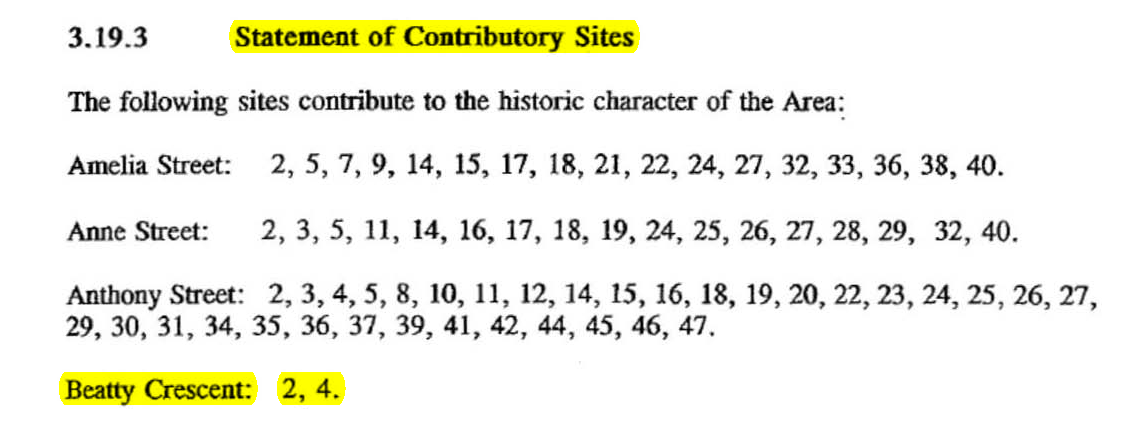
 PS: In the officer’s report for the demolition of 4 Beatty Cresc., Ormond there is this statement: Council’s Heritage Advisor has identified that the existing dwelling is not contributory to the Ormond Precinct Environs.

Once again accuracy does not appear to be a high priority in Glen Eira. The 1996 Heritage Plan, Volume 2, states clearly that this site IS CONTRIBUTORY to the overall Heritage area. Below is a screen dump of the relevant information.

beatty

At last week’s council meeting a permit was granted for a six storey and 117 units in Glen Huntly Road Carnegie – just past Grange Road. The area is now zoned Commercial (thanks to amendment C80) and is bordered by areas zoned General Residential Zone 1 (ie 3 storeys).

We have lamented time and time again the inconsistency and lack of accountability in Council’s planning offer reports. We revisit this issue via a comparison with a decision from September last year and the ensuing VCAT decision. What makes this inconsistency ten times worse is the questions that such a practice raises –

  • Is Carnegie the sacrificial lamb as opposed to North Caulfield (apart from the MRC windfall of the Caulfield Village?)
  • Is Glen Eira Council deliberately facilitating the creation of a ‘second class citizenry’, or are unknown vested interests involved that could explain such inconsistent and unjustified decision making?

In September last year an application was refused by officers and councillors for a 6 storey development in Hawthorn Road. It was also zoned Commercial and surrounded by GRZ1 areas. The application was for 40 units. Below is a table featuring the officer comments from both reports. Please note that neither site is in an Activity Centre and both are on tramlines – Hawthorn Road being close to two tramlines.The only difference is that the Glen Huntly Road application is approximately 600 metres from  a railway station.

Please note carefully:

  • How the Caulfield North Neighbourhood Centre is treated in comparison to ‘Glen Eira’s Neighbourhood Centres’ from the Glen Huntly Road application.
  • Cut and paste (verbatim) – and not for the first time!

144 Hawthorn Roa1

The Hawthorn Road application has ended up at VCAT and the member granted a permit. Whilst we do not support all of the member’s comments, we repeat some of what he said from an earlier post and ask readers to consider how well Council does its work. For example, in the original officer’s report there was this statement – There are no off-street public car parks in the Caulfield North Neighbourhood Centre. This centre is a known ‘hot spot’ in terms of infringements issued for overstaying time restricted parking. This demonstrates a car parking shortfall which extends into evening times. Off course no statistics, no traffic analysis, etc. Thus, at the VCAT hearing the only ‘evidence’ supplied came, of course, from the developer!

Here are some select quotes from this VCAT decision –

The review site forms part of the Caulfield Park Neighbourhood Activity Centre, which falls within the category ‘Neighbourhood Centres – Commercial’. It is in a location where increased residential densities are anticipated, and facilitated, by policy.

while building heights for the Neighbourhood Centres have not been specified in the Planning Scheme, it follows from the above that the height of anticipated development lies within the range established for the residential area and that of the Urban Villages/Phoenix Precinct. The proposed six storey height sits comfortably within these expected outcomes;

It would not be appropriate, in our view, to simply respond to the existing context by limiting development to not more than four storeys, which would equate to the tallest existing structure in the centre, located on the south-western corner of Hawthorn and Balaclava Roads. This would not sufficiently respond to the policy seeking to intensify residential densities in this location. Rather, it would reflect an outcome that would have been anticipated under the former planning regime which pre-dated the strategic work that underpinned the Council’s current housing policies. A height greater than four storeys must reasonably be contemplated for this site given its size and the strategic importance of its location.

There is nothing in the Planning Scheme to indicate that a uniform height is sought for buildings within this centre. Indeed, as noted during the course of the hearing, the land within the activity centre is not affected by any overlays that regulate built form outcomes, such as a Design and Development Overlay or Heritage Overlay. Activity centres are commonly characterised by a varied skyline or building profile. Heights vary, and it is not unusual to find that one building is taller than the others. It may well be that this building will be the tallest in the activity centre. If this were to eventuate, we do not consider it to be an unacceptable planning outcome as, ultimately, it is likely that the disparity in the height with other buildings would be confined to something in the order of two storeys. We consider this to represent an acceptable graduation in height within this context.

Having regard to the scale and form of existing development, there is no question that, at six storeys, the proposal will have a level of prominence within the centre. This is both from within the immediate streetscape and from further afield, in more distant locations along Hawthorn Road, for example. We do not find this to be a reason to refuse a permit. The policies anticipate the emergence of larger built forms within the centre. It is to be expected that these structures will have a degree of visibility within their context. This is particularly so given that this development is ‘the first cab off the rank’ within a low-rise environment.

The Applicant’s evidence confirmed that the shortfall in the car parking provision can be accommodated by the surrounding on-street parking within a distance of some 350 metres of the review site. The empirical basis of this evidence was not challenged. Rather, the Council submitted that, in determining whether to approve the reduced parking provision, consideration should not be given solely to the existing capacity within the adjoining and nearby streets, but also to the demand that is likely to be placed on this resource in the future as the activity centre consolidates and is further developed

We have made our finding based on the empirical data contained within the Applicant’s evidence. The surveys of on-street parking availability clearly demonstrate that there is adequate capacity to accommodate both the two shop car spaces and three visitor spaces. During the daytime, the available car spaces are subject to a range of time restrictions which make them suitable for the short-term nature of parking associated with customers and residential visitors. At evening times and during parts of the weekend, restrictions cease operating. These periods coincide with the times when the peak demand for visitor parking is generally expected to occur. For these reasons we conclude that the proposed reduction in the car parking requirement is acceptable in this instance and not a basis to refuse a permit.

We acknowledge the Council’s concerns regarding the impacts associated with a series of incremental approvals that reduce parking requirements for new developments. We also recognise that this centre lacks an off-street public car park. Parking provision in the activity centre is a broader strategic planning issue that should be approached on a centre-wide basis. If warranted, such an exercise may lead to the introduction of a Parking Overlay, for example, that would assist the Council in achieving its objectives in respect of satisfying the car parking requirements of the centre over the longer term.

We conclude that if residents are to have any confidence in the planning decisions arrived at by this council then, in our view, there must be fundamental change. Officer reports quite frankly are sub-standard, lacking detail, and justification. Since councillors are reliant on such reports for their decision making, it follows, that the ‘quality’ of many of these decisions are uninformed and suspect.

Item 9.1 of the last council meeting is another example of amendments going horribly wrong for residents and wonderfully well for developers. Here again is the essential background in order for readers to accurately interpret what occurred. We also ask that special attention be paid to the ‘arguments’ of the various councillors.

  • As with the Virginia Estate amendment, this Glen Huntly Road land has a long, long history going back a number of years. It was originally zoned ‘industrial’ so an application was made to rezone the land and put an Environmental Overlay on the property. Quite coincidentally we assume, the property next door to this site also submitted an application for a ‘recycling plant’ that dealt with plastics and other toxic materials. What was quite incredible about this is that council for some time actually entertained the idea of having a recycling plant right next to future residential land and surrounded by residential land – in total breach of its planning scheme, state legislation and plain old common sense. As was stated at the time – in Glen Eira’s planning department the right hand does not know what the left hand is doing. (See: https://gleneira.wordpress.com/2012/07/31/pilling-foot-in-mouth-disease/)
  • The application for rezoning became known as Amendment C80 and also included a permit application for 5 storeys and 62 dwellings. Readers should note that the current sought after, and accepted, amendment is for 6 storeys and a whopping 117 dwellings. Thank you to the new zones!
  • The amendment went to a Planning Panel, but after much messing about, council decided to drop the development application and have the panel only consider the rezoning to Business2 zone. The introduction of the new zones which automatically changed Business zones to Commercial zones were already well known – yet council still persisted in wanting this area zoned Commercial.

Here are the most important facts:

  • The site IS NOT in council’s view a Major Activity Centre. It is on the extremity of the Glen Huntly Neighbourhood Centre and surrounded by people’s homes to a large degree – hence development should never be at this scale.
  • Rezoning to commercial, means that all control that council might have had for any developments on the site has largely been lost since Commercial zoning has practically no restrictions.
  • Council, if it had wanted to really protect its residents, should have opted for rezoning to either a Mixed Use Zone or a Residential Growth Zone – both of which, via the schedules, would have given Council and residents a far better outcome than what has now happened – ie the approval of a 6 storey development with 117 units!

Please consider what each councillor has said in what follows. It largely provides a synopsis we believe of every single thing that is wrong with planning in Glen Eira. – IE – not one single word on internal amenity; not one single statistic on traffic/parking; not one single response as to why the planning scheme itself is ignored by the recommendation and the vote!

Delahunty moved motion to accept with changes to required setbacks and increase in visitor parking. Seconded by Pilling.

DELAHUNTY: thanked residents for their ‘help in determining best use’ of the site and they provided ‘very well thought out’ arguments and reasons as to why the original application wasn’t the ‘best use of commercial space’ and not the ‘fairest use of the land’ for neighbours ‘at the back’. The final changes ‘make quite a difference’ to the development so that the ‘mix’ of commercial to residential is ‘more appropriate’. Said that the street will have ‘more intense development’ with more ‘vacant’ land close by. Thought that ‘given the zoning’ council had limited the ‘amenity impacts’ for residents and is ‘fair’. ‘Hoped that the applicant and the residents can accept that’. Said that the overshadowing argument put up by neighbours was reasonable since ‘it’s not fair’ that in certain hours their ‘backyards and frontyards are in shadow’. ‘Commended’ the motion and thought that this is where ‘sensible development needs to go’.

PILLING: ‘endorsed’ Delahunty and said that there’s a tramline, close to station, and in a Commercial zone and this is ‘where we want development to go’. Delahunty’s changes ‘do go a fair way to addressing residents’ concerns’. The setbacks are in a ‘wedding cake tier’ so would help in reducing visual impact. ‘In an ideal world’ they would prefer less height but ‘we can’t predict when things will be developed’ and they have to ‘look at each application as they come in’. Said that ‘in the future’ there would be ‘increased development’ between Grange Road and the railway line. Thought that ‘this development is in keeping with what we are expecting there’. Changes do address concerns of residents ‘but maybe not all concerns’ and overall thought that ‘it is a fair compromise in this situation’.

ESAKOFF: said she didn’t ‘like this application at all’ and ‘regardless of zoning’ the site is a neighbourhood centre, and ‘not even in the centre’ of this centre. Thought that ‘something of the size and scale of this is not appropriate’. There are only a ‘handful of properties’ in the area that ‘have an industrial or commercial type use’ and ‘outside of those properties it is residential’. Didn’t think that the conditions improve amenity for one surrounding property but ‘certainly not enough’. Although on a tramline, council isn’t ‘seeing six storeys’ along tramlines but ‘seeing it at 3’. Said that 3 ‘and even at four would be a more appropriate outcome’.

OKOTEL: supported Esakoff and thought that the conditions imposed ‘goes someway’ to ameliorating the concerns. But for this site ‘this is an overdevelopment’. To both the North and South it is a General Residential Zone so ‘we should be seeing a transition’ and the proposed 6 storeys ‘doesn’t’ support this transition. Thought that with just one building between commercial and general residential zone isn’t enough to provide the necessary transition. In terms of visual bulk, Okotel said that even the officer’s report admitted that with the setbacks, the 4th, 5th, and 6th storeys the building would still loom large. So properties from the front of Glen Huntly Road would ‘be faced with an enormous building’. Stated that a reduction in floors ‘would be appropriate so we would have that transition’.

LOBO: Called the development ‘a monstrosity’. Said that people know his views on the new zones so ‘I won’t be a broken record’. Said that Carnegie is ‘going, going, gone’. The suburb has been ‘ripped’ apart in terms of privacy, ‘devaluation of their homes’, but not a government concern even though ‘people have spent their life savings’ on their homes.

SOUNNESS: in his view the ‘reasons to refuse’ are whether it is ‘excessive in the area’, whether there is ‘sufficient transition’ to the residential areas, if it’s a ‘good use of the land’ and ‘whether it fits in with strategic objectives’.   Said he would ‘find it offensive’ it there was major overshadowing, and if the design lacked ‘character’. He would also ‘find it offensive’ if the developer hadn’t provided enough space for landscaping but he has so ‘it’s another tick’. Even though 6 storeys is ‘a large substantial building’ but with the setbacks ‘you won’t see’ it as this height. The impact for residents ‘will be much reduced’.

HYAMS: started by saying that this site is for development because it is on a ‘fairly large block’ and in a Commercial zone on ‘a tramline’. But ‘the question’ is about intensity of development. If there is a commercial zone then the greatest intensity ‘belongs in the middle of the commercial zone’ and further out it should be less. Here, it’s only commercial ‘on one side of the road’ and is opposite single storey homes, so 6 storeys and even 5 storeys ‘is too much’. He would ‘accept four storeys but nothing more’.

LIPSHUTZ: ‘concurred’ with Sounness. Said he ‘went down and had a look at the site’ and when first seeing the plans thought that 6 storeys was not on. But now with the steepled design it will ‘look like a three storey building’. Parking is ‘always’ one of his concerns and Delahunty’s conditions ‘are appropriate’. Setbacks also make it not ‘as bulky nor intrusive’. Another concern he had was overshadowing but ‘that’s been dealt with also’.

DELAHUNTY: said she ‘understood’ why other councillors might not support the application and conditions imposed. Reiterated that the overshadowing concerns that neighbours brought up at the planning conference have now been ‘dealt with’ by the conditions. With the Special Building Overlay on the property the application had to be changed and this has also been done satisfactorily. Said that she wanted to ‘touch’ on the financial statistics about homes in Carnegie. ‘Everyone wants to live in Carnegie’ and this ‘gives that dream (ie owning their own home) to more people’. Some live in ‘beautiful, beautiful suburbs’ and ‘it’s right that we share this with others’. ‘this will allow other people to live in and around Carnegie’. Said that there also hadn’t been ‘any devaluation of homes up to this point’ and wouldn’t be ‘post this point’.

MOTION PUT. OKOTEL CALLED FOR A DIVISION. VOTING FOR – DELAHUNTY, PILLING, LIPSHUTZ, SOUNNESS, MAGEE. VOTING AGAINST – ESAKOFF, HYAMS, LOBO, OKOTEL. MOTION CARRIED 5 TO 4.

« Previous PageNext Page »