GE Council Meeting(s)


The officer’s report –

A recent example was the Alma Club where Council officers attempted to secure land for an additional local open space in Caulfield North but, owing to the impact on the design, suitable land could not be made available and a cash contribution was made instead.

The Public Question –

Item 9.8 of the agenda cites the Alma Club site as an example of a cash rather than land contribution. For this site, I ask:
1. What was the undeveloped land value placed on the site?
2. What was the full cash contribution that council received?
3. Was this amount paid in one lump sum?
4. Why was any contribution paid prior to subdivision and as stipulated by law?

The ‘Answer’ –

The report at item 9.8 was correct in saying that Council tried to secure agreement to an open space contribution of land at the former Alma Club. It was right to say that, following a period of negotiation, that was not feasible and the open space
contribution will be in cash.

The report was mistaken to say that the contribution had been paid. What has been paid is back rates of $67,430. That was paid on 30 May 2014. (Back rates are payable when a property ceases to be eligible to be rated under the Cultural and Recreational Lands Act and becomes rateable under the general rating system. )

The misunderstanding between the payment of the back rates as opposed to the open space contribution was made during the writing of that section of the item between the Planning Conference on the evening of 25 June and the Item being finalised on 26 June. Council apologises for the mistake. The open space cash contribution will be payable in cash at the time of subdivision and calculated according to the value of the land at that time. If Amendment C120 is in effect, it would be 5.7% and could not be appealed to VCAT. While Amendment C120 is not in effect, it would be 5% or less and could be appealed to VCAT.
A difference of 1% would equate to approximately $75,000 for this one subdivision.

Sounness moved the motion to accept and added the clause that the financial report ‘disclose’ open space contributions. Delahunty seconded.

SOUNNESS: said that the amendment ‘follows on’ from the Open Space Strategy. Acknowledged the ‘problem’ of lack of open space and that with new development people should have access to ‘new public open space’. Went through some features of the Open Space Strategy such as biodiversity, and how to ‘fund these developments’. Importantly the amendment wants to increase these contributions. Said that the ‘standard rate is 4% and lots of councils have 4%. When there were greenfields developers may have been happy to give a bit ‘of dirt’ but in developed residential areas they wouldn’t want to give up a ‘unit 2 of the third storey’ and so prefer to pay cash. Spoke about the objections and ‘some very good points were put forward about transparency’ and consequently there has been a ‘robust conversation’ amongst councillors and there’s been a ‘number of conversations’ about ‘what’s fair, what’s reasonable’ and comparing to other councils and how all this ‘refers to our future expectations’. Asked a question of Akehurst about why under this amendment the contributions wouldn’t ‘be appealable to VCAT’?

AKEHURST: said that currently there’s a ‘base rate’ based on numbers and that ‘other factors can add to tne percentages’ and these are ‘subjective’ and so can be challenged. He gave the example of ‘proximity’ to existing open space. Went on to say that council assesses one cost and the developer assesses this differently and figure that the money spent on challenging council is worthwhile. This also costs council money in going to VCAT. With the C120 there’s no sliding scale and there’s one rate for ‘every case’ and everywhere and the developer doesn’t have ‘grounds to argue for a discount’. Said that the amendment was there to give ‘more certainty’, more ‘revenue’ and without the associated costs of going to VCAT.

SOUNNESS: said that one of the objections had noted how the money was ‘expended’. He gave the example of the alma club developer paying money and asked how this money was spent in helping achieve open space around the Alma Club. Wanted to know if the amendment ‘speaks’ to the ‘direction’ of expenditure of the levy.

AKEHURST: said that the amendment was ‘about how you raise revenue’ and that the amendment ‘optimises that collection’ and then it becomes ‘up to council how it is spent’. That is then ‘expenditure’ and ‘council has a policy’ that stipulates spending the money on acquisition of ‘new open space’. Council would also have to spend money outside of its collected levies to bring these places ‘up to standard’.

SOUNNESS: then asked that when the amendment goes to the panel whether they have ‘the capacity to direct expenditure’?

AKEHURST: ‘no’ – the panel is bound by the law which says that money raised is ‘spent on land acquisition and improvements to existing public open space’. Said that every council then makes up its mind about spending on existing and additional open space and repeated the policy about spending 100% of the levy on ‘additional open space’ in Glen Eira and ‘zero’ of these contributions on ‘existing open space’. Went on to say that the policy is ‘binding on all staff’ and the use of the ‘revenues’. There will be accounting of the money in ‘each budget and each annual report’ and that ‘there is nothing that council could do’ which isn’t ‘already in place’.

SOUNNESS: reiterated that the amendment basically ‘seeks to increase the revenue’ and that there’s ‘only so much that can be done’ with how the money is spent. Summed up that the amendment wants to implement what the community has ‘endorsed’ in the Open Space Strategy. Said that the objections had ‘raised some issues that have been quite valuable’ and like the landswap it’s ‘very good to see where the money goes’ and that’s why he’s added the clause about reporting in the financial review.

DELAHUNTY: said that open space issues has ‘occupied a lot of councillors’ time’ and that when she first thought of becoming a councillor, open space was one of the ‘platforms’ that she wanted to run on. As a parent she sees ‘how important’ even ‘small pockets of green’ is. The problem is big and it will take a ‘step by step’ process and this included the Open Space Strategy and ‘getting the right people to write the strategy’ and have the ‘public contribute’ to the strategy. Council also ‘took a policy change initiative’ to ‘fence off the funds’ that would be received from contributions. The amendment is now the ‘next really important piece’ in the process. This is the end result of a long ‘calculation that is done by the right people’, and had public consultation. There is now the motion to put this to a panel and she asked Akehurst ‘what does this mean’?

AKEHURST: said that the Minister ‘appoints a panel’. Council and the objectors then ‘put their view’ before the panel. The panel then reports back to council ‘in the form of a recommendation’. Their recommendations could be that the amendment be adopted by council as exhibited, or ‘in some other form’. Council doesn’t have to accept the panel’s recommendations ‘but it would need to have serious reasons not to do that’. It then goes to the minister for approval if council has adopted the recommendations of the panel.

DELAHUNTY: ‘What’s the downside risk’?

AKEHURST: said that the panel might think that the 5.7% ‘is too high’.

DELAHUNTY: councillors had read the submissions and thought that many of the points ‘were correct’. Other things could be ‘clarified’ but she again asked Akehurst ‘what this would do to the process’?

AKEHURST: said that there were a ‘couple of errors’ and these were corrected. Amendments are a ‘statutory process’ and that council can’t change things in any ‘material way’ if it’s already gone on public exhibition. So even if there are submissions that ‘have merit’ but weren’t ‘part of the exhibited’ amendment ‘they could not be incorporated into’ this amendment because they would ‘depart’ from what’s already been exhibited.

DELAHUNTY: then asked whether Akehurst ‘was surprised’ that there were no objections to the 5.7%

AKHURST: ‘yes’

DELAHUNTY: said that she was ‘surprised and delighted’ and that at ‘heart’ everyone ‘understands’ that there are challenges that have to be fixed and she was pleased with community involvement because it’s an ’emotive issue’ but council wants to ‘move on’. Said that Sounness’ amendment will increase ‘transparency’ in ‘making sure they are reported upon’ in a ‘separate and visible line item’ in the financial report. Thought this was good and ‘goes some way’ to answering the submitters ‘concerns’. Said that the submitters ‘did a good job in pointing out those errors’ and that they are ‘pleased that we could provide a stronger submission’ as a result.

OKOTEL: glad that council is a ‘step closer’ to raising the contribution levy. Said that the 5.7% levy is one that was ‘supported by the Open Space Strategy’ and that this provided for a ‘strong reference base’ for this amount. The rate is ‘evidence based’ and she hoped it ‘would be accepted’. She then asked Newton a question about the officer’s report stating that 7 months would be added to the process if it went to a panel and that around $2 million would be lost from revenue and whether projects set down for implementation ‘would be impacted’?

NEWTON: said that when exhibited they estimated that the ‘revenue’ would rise from $2.2 million a year to $6.1 million. Continued that the Strategic Resource Plan is ‘based on current arrangements’ and the ‘extra revenue’ hasn’t been ‘taken into account’. Said that the current budget is resourced but what’s planned for the future in open space will only happen if the ‘amendment is put into effect’ and ‘the longer it takes the less money we will have’ for ‘next year and every other year’.

OKOTEL: then asked what council ‘mightn’t be able to complete’

NEWTON: gave two examples. One was the Booran Road Reservoir which is a ‘very expensive project’ and ‘because the meeting went so well’ council was thinking of ‘accelerating’ the works such as ‘demolishing the walls this current year’ and that’s ‘not budgeted’ but they could with the extra revenue and ‘complete the work earlier’ ‘if the money is available’. The second example was ‘another road intersection’ in North Caulfield and would be ‘similar’ to the Gisborne St/Riddell Parade closure. ‘At the moment there is no money in the ten year plan for that’ but if the amendment came in quickly ‘there would be more money’ so that ‘next year there would be more open space’.

MAGEE: said this could be a very ‘happy story’ that everyone wants. If developers pay the 5.7% then the money will ‘accumulate very quickly’ and council could implement the things listed in the Open Space Strategy. Referred to Newton’s examples and how important the Reservoir is given that council has been ‘talking about this for at least 5 years’. Said that it’s about ‘communities coming together and working together’. Stated that there could be times ‘when processes’ are different and other times when people can say ‘I don’t agree with you but I should work with you’. The amendment ‘benefits all of Glen Eira’ and council is ‘very passionate about’ this. The money isn’t from residents but ‘developers’ and the ‘cost to us is open space’ which council has to keep improving the open space. They can’t do this ‘by procrastinating’. Individuals might have ‘issues’ but the ‘overall good’ is for the community. ‘I’m saying don’t hold it back, don’t stop us’. Some people might say they ‘don’t like’ how council operates, but ‘suck it up’. ‘we need the money’ and it’s the ‘number one issue’ for Glen Eira that everyone should be ‘working towards’. ‘The process we can argue about’ but ‘let’s move on’.

DELAHUNTY: asked Sounness as a green, what the Greens would ‘say’ about the Open Space Strategy and the levy.

SOUNNESS: said that with open space then it’s about ‘improving, expanding’, ‘community access’, ‘equity and fairness’, letting people access a ‘safe, healthy, clean’ space,   so the greens and every party would support this.

DELAHUNTY: then asked that since there’s all this ‘passion’ and ‘feelings around the table’ whether there is ‘another path’ that could be taken so that the projects and money ‘could happen quicker’.

NEWTON: said that there’s ‘only one option’ if there are submissions and that’s to appoint a Panel. There would be a Panel in October and they’d report back to council which council would then consider and report back to Minister. ‘That’s a long time’ and council ‘would not be getting 5.7%’. He was like Delahunty ‘surprised and delighted’ that no one had objected to the 5.7%. Went on to say that if there hadn’t been submissions then council could have ‘adopted’ the amendment ‘tonight’ and written off to the minister tomorrow and it could have been in operation by August.

DELAHUNTY: since there are admissions, then the whole process has to be gone through – ie panel, report back to council, decision by council, sending off to minister and waiting for his approval.

NEWTON: so ‘if the submissions remain, the panel remains’ and all the other processes have to take place.

ESAKOFF: said it was ‘disappointing’ when this is on the agenda and the added costs that will happen. So there will be ‘delays’ or the inability to ‘accelerate’ projects. ‘It’s very disappointing’.

HYAMS: was ‘very p0leased’ that no submissions came from developers but thought that ‘once they cotton on’ to this that they may go directly to the minister and ‘try not to give us as much money’ as council is asking and others might be ‘rushing their applications through’. Said that consultants did ‘the strategic work that justifies the 5.7%’ so they are ‘pretty confident’ that even if developers object they would still get this rate. Perhaps even the developers looked at the ‘documentation’ of the amendment and ‘realised that we do have a solid case’ and they didn’t want to ‘waste their time’ on this knowing that ‘it was going to get through’. Sumbissions pointed out ‘2 errors in the documentation’ which might have ’caused confusion’ so ‘it’s good’ that this has been fixed. Thanked submitters and said that the submissions also ‘raised a number of policy’ questions. Hyams then ‘sought clarification’ from Akehurst by asking whether Public Acquisition Overlays are something that council ‘could or should do as part of this amendment’?

AKEHURST: said ‘no’ that it wasn’t ‘lawful’ and that ‘no council could do it’. Said that public acquisition overlays can only happen by ‘amending the planning scheme’ and to ‘identify the land to be applied’ and the ‘purpose for which it is being acquired’. The minister would have to approve exhibition and wouldn’t get the go ahead if council asked for more ‘land than required’. Council would also have to prove that ‘it has the financial resources to buy the land’ and this is ‘accepting financial responsibility’. If this is in the planning scheme then ‘council can be asked immediately to buy the land’. It can also cause anguish to the owners and that’s why councils only have ‘small numbers of overlays’. Councils generally start by getting the money from levies and then being in a position to buy the land, put in acquisition overlays.

HYAMS: stated that as one submitter said that it’s ‘unreasonable’ that all the money coming in would go to ‘catering for new residents’ and that the ‘140,000 people currently living in Glen Eira miss out’. Asked Akehurst whether it would be applied in this way.

AKEHURST: said council has go ‘not choice’ and that’s why it’s phrased as it is. Said that the amendment isn’t ‘justified if it’s not raising money for future residents’. Claimed that this ‘isn’t bad news for existing residents’ since the Open Space strategy has got projects where the money will be spent and apolicy that council will spend money ‘by other means’

HYAMS: asked Akehurst about the choice of ‘acquiring land or acquiring money’ and that the amendment only has 3 areas for cash contributions listed as preferable, so how is getting a ‘little’ piece of land at the back of a development ‘better than getting money’?

AKEHURST: said that ‘it’s not better’ and that council would be very stringent in what land it accepted and this would really only be if there was a ‘significant development’ and that this wouldn’t ‘happen very often’ because ‘Glen Eira is substantially developed already’.   Council would get cash mainly because development is generally on ‘small to medium sized lots’.

HYAMS: repeated how pleased he was that there weren’t any developer submissions and he thought that the two objectors would have thought that there would be others so they wouldn’t have expected that their submissions would be holding up council. Said that if the submissions ‘are withdrawn we can go straight to the minister’.

SOUNNESS: said this was ‘all about money’. Didn’t want to ‘see concrete’ but ‘useful’ parks, and gardens and the amendment want to ‘seek the mechanism for improving that capacity’. Said councillors ‘elswhere would love to get 5.7%’. Whitehorse is 4% and their plan was done by the same consultants and they’ve now bought 3 residential lots over time. Getting the cash means that council ‘can adjust to cicrumstances’. In western Australia there’s 5% and ‘compulsory acquisition overlays’. When this happens ‘people go nuts’ and say ‘my home is being removed’. Thanked submitters because ‘it’s a champion thing that democracy does’ but was worried that developers will now see that ‘there’s a cut off time’ and will take advantage of this by council getting a ‘rush of subdivisions’ and therefore receiving less money.

MOTION PUT AND CARRIED UNANIMOUSLY
 

Delahunty moved to ‘note the report’ and added that council seeks information about the money that was paid by the MRC to the government and that this include ‘advice’ from the Valuer General about the ‘reasons’ for the landswap and the amount paid, when the money was received, how much and ‘the Department that received the funds’. She also asked for a ‘copy’ of documents that the then Minister Gavin Jennings spoke about in parliament at the time. If necessary, council should use FOI to get the information ‘if required’. Sounness seconded.

DELAHUNTY: Began by saying that the landswap was before her time but clearly something that’s grated on people. Said she was surprised that the money paid was so large when it was claimed to be ‘compensation’ for the ‘inequity of the swap itself’. She wanted to know more ‘about that money’ since the MRC’s last 3 annual reports writes about $8 million being set aside for the buying of land and this could be the buy out of private properties but also contain the money paid to the government. Therefore no one knows how much they actually paid and what they thought it was for. Hansard mentioned this several times in response to members asking questions. Said that David Davis was asking whether the swap was equitable and he referred to the panel he was chairman of and that he was ‘still uncomfortable’ about the Trust and land swap. Sue Pennicuik has also been a long time advocate and been a ‘great help’ for the community. She also asked ‘a lot of questions at the time’ from Gavin Jennings and wanted to ensure that the community could ‘derive’ some benefit. Jennings answered that the land would be valued, and that this then would be approved by ‘the Government Land Monitor’. This would ‘ensure’ that the government isn’t ‘disadvantaged’. Jennings then went on to say that the swap was contingent on the approval of these bodies and that there would be commercial rates paid for the land. The act was then passed. Delahunty then said if these assurances ‘were given’ but the public still doesn’t know the details such as ‘where the money went’ and ‘what it should have been used for’ so that when the vote was taken in parliament they voted on the assumption that things would happen, but none of this has happened. She ‘presumes’ that the money went into general revenue. Thought that ‘this money should come back to provide the community’ with the ‘equity it was supposed to deliver’. Said that council was ‘more than happy’ to move the depot to the Booran land site which ‘we never wanted in the first place’. Council would need to spend ‘residents’ money’ or ‘get residents’ money back’ from the landswap. Summed up by saying that want to restore Caulfield Park, and get the ‘best use’ out of the Booran site and for ‘the money that is owed to the community’ to be returned. Thought that 2012 was when the money was handed over and that it was intended for ‘the people of this community’. They want all the information to ‘inform the public debate’ and that people should know ‘where their money has got to’.

SOUNNESS: said the the whole issue including racecourse, c60 etc. can ‘fire up’ people and that the best option for getting to the bottom of things is to ‘follow the money’. Pennicuik tried this. Said there was ‘still a long path to go down’ and they’re trying to find ways to ‘move the depot’ and find ‘better array of services’. Good that council is trying to ‘achieve a better outcome’ for residents.

MAGEE: said this would be ‘win-win’ for everyone in that the depot would be moved, and that so far there ‘is no community benefit’ from the landswap and the money which was paid by the MRC. This money could be used to achieve this. Said that government’s job is to ‘assist the community’ and for Glen Eira with the least amount of open space, that the government should ‘give it to us’ (the money). SAid this was a ‘great opportunity’ to get a good result and ‘banging on forever’ about the landswap, trustees is useless. This is positive and they will ‘keep the pressure on’ both government and Southwick. Wanted everyone to ‘work together’ for a ‘community benefit’.

OKOTEL: reiterated that this was an ‘important issue’ and that Pilling had already met with government and that council would continue to ‘agitate’ on the issue.

HYAMS: said this was a ‘mess’ from the start and council wasn’t happy from day one but that both sides (Liberals and Labor) voted the landswap in. The Trust also voted for it and of the 3 council reps ONLY 2 VOTED AGAINST IT, which is ‘disappointing’. Council never wanted it and from the start they wanted a depot but the MRC said ‘no’ they didn’t want a depot and the department put it aside for ‘recreation’. Buildings also went which is ‘unfortunate’ because they ‘might have been useful’. Said that now government has given permission to put the depot there and that for once it’s ‘good to see that the MRC’ isn’t having it all it’s own way but, that council ‘needs the money’ for this to occur. Asked Delahunty what she ‘expects’ the ‘legally binding document’ to contain. Delahunty said ‘I don’t know’ and that this was mentioned in the actual debate in parliament but that she expects to find ‘some wording about the exchange’ and whether the money was to ‘come back to the community’.

DELAHUNTY: said it’s a mess and was ‘outside the control’ of council. But the ‘opportunity’ is now due to Media Release by Southwick where he claimed that he was ‘excited’ to be ‘able to reinvigorate’ Caulfield Park. With this there’s Hansard where Davis ‘sought assurances’. So ‘there’s no better time’ to get things done than ‘right now’. To succeed they ‘need to understand all the information’. All this can ‘put to rest some of the ill will’.

Delahunty then went on to say that the letter published in the agenda which was sent to Southwick ‘some time ago’ had as yet ‘not reached his office’. On Twitter, Southwick claims that he first saw it with the agenda.

MAGEE: asked that if council doesn’t get the money ‘can we still afford to do the landswap’?

NEWTON: according to the Strategic Resource Plan ‘there’s no money in any of the ten years to do this’ and the ‘only way you could do this is to lower the priority of some other projects’.

MAGEE: summed it up by asking ‘No money, no move’?

DELAHUNTY: answered and repeated ‘no money, no move’.

MOTION PUT AND CARRIED UNANIMOUSLY.

A brief note on tonight’s meeting. Lobo, Pilling and Lipshutz were all absent. This inevitably lead to the circus of musical chairs, and three separate motions nominating individuals to attend a councillor ‘weekend’. Since nominated councillors had to declare a conflict of interest, and leave the chamber, there would not have been a quorum – hence the repeated motions/resolutions and the musical chairs.

Just how orchestrated council meetings are, how carefully scripted, was in full evidence tonight with countless Dorothy Dixer’s thrown at both Akehurst and Newton in the context of the ‘debate’ on Amendment C120. The dead give-away, was that Akehurst on numerous occasions read his answers from a prepared script! So much for impromptu ‘councillor questions’ that arise directly from the ‘debate’.

A public question on the assertion within the officer’s report that the Alma Club site had paid its open space levies, rather than a land allocation, was admitted to be ‘in error’ and an apology was tendered. Perhaps a council first, but again, this shows not only another stuff up, but that in all likelihood the offending paragraph was intended to mislead and deceive!

On the Caulfield Park depot removal to the Booran Rd/Glen Eira Rd, the infamous landswap was the primary feature with Delahunty moving a motion that if necessary council apply under FOI to see the legal documents involving the landswap, the valuation of the land, etc.

More on all of the above in the next day or so.

Audit Committee

There finally appears to be some ‘movement at the station’ with the following statement – The Chairman recommended that the process for the recruitment of a new Independent Audit Committee Member commence. The in camera items suggest that this process is near completion with this one liner – under s89 2(a) “personnel” which relates to the Audit Committee. Conclusion? That the reign of either Gibbs or McLean is about to end. Reasons for one of these departures is of course not mentioned, and nor has there been any public announcement that we are aware of for the advertising or recruitment of a new member.

Several other items also drew our attention –

The CEO noted that post implementation reviews of previously sub-contracted major projects, had resulted in the tender and referee evaluation process focusing more on how companies managed their subcontractors.

Following consideration of the Land and Buildings valuation paper, the Chairman requested that Council’s top ten open space assets be verified for accuracy of area size.

And from the Charter – An independent minute taker shall be responsible for keeping the minutes…… . A few sentences later there is this sentence – An appropriate officer shall act as independent minute taker to the Committee. We remind readers that for Councillor Assemblies, the municipal inspector had recommended, and council took up the recommendation (for at least some time) of obtaining a completely external minute taker.

Community Consultation Committee

Once again, two of the selected community representatives were absent! If memory serves us correctly, this would mean that only once have all four reps been present at such meetings. Hardly a result to write home about!

Amendment C120 – Open Space Levies

There is much in this item that we will comment upon in the coming days. One thing however is staggeringly clear – the inability of this planning department, plus the State Government’s offices to get something right the first time around. How an amendment can be drafted, sent off for permission to be advertised, given the go-ahead and STILL CONTAIN FUNDAMENTAL ERRORS of fact and accuracy is simply beyond belief. Who is responsible for vetting such documents? Why do these errors occur? What does this say about the entire shemozzle that is the process of drafting and implementing amendments? And most importantly, what does this say about the processes adopted by council. For example: submissions on the amendment closed on the 23rd of June. Submitters were notified on the 24th June that there would be a planning conference held on the 25th June. More indecent haste? More disregard for the public?

Tuesday night’s council meeting was replete with bouts of amnesia, inconsistencies, and some wonderful (unconscious?) irony found in the bombast of Lipshutz and his cronies – these latter examples still to come!

This was evident in the item on Amendment C102 (Non-Residential Uses in Residential Areas). Amazingly, not one single councillor referred to the watering down of conditions; not one single councillor mentioned that this was a deferred item from 2010, and not one single councillor provided any explanation as to why what was unacceptable two years ago should now be lauded as wonderful.

Motion to accept moved by Hyams and seconded by Delahunty

HYAMS: started off by saying that there’s ‘a need to update’ policies from ‘time to time’ and this is one of those times. Said that the only contentious issue was the stipulation that heights be consistent with what the current zones dictate. There had been one objection. Argued that it would be a pity if the zones provided protection elsewhere but if here ‘they were disregarded’. Said that there are ‘objectives’ and that if an application ‘basically’ complies with policy and doesn’t cause ‘undue’ ill effects on ‘amenity’ then ‘there is a bit of latitude there’. Said that council isn’t making a decision but sending it off to an ‘independent panel’ and objectors can then present their views to the panel and the report will come back to council for decision.

DELAHUNTY: agreed with Hyams about need for policy so that residents would ‘understand’ what is required and the ‘basis of how we make decisions’. Spoke about ‘measures’ and said that even if the measures ‘aren’t met’ then the application can still meet ‘the objectives of this policy’. This is just part of the ‘deliberate ambiguity that’s built into the policy’ and this allows places like schools to ‘lobby council’. There are other measures which ‘aren’t set in stone’ so it’s ‘wise’ to go onto the next step in sending it off to a panel.

OKOTEL: noted the two objections from private schools and how they were opposed to the height limits and the ‘limiting of set backs’. She agreed with the objectors. Gave an example of a doctor’s surgery opposite her parents’ house which wasn’t taking any more new patients because they were already so busy. Same applied to schools and in order to cater for the increase in population and demand that the best way to go was to ‘build up’ and this would also help people recognise and ‘see a GP practise’ from the street, rather than if it was set back. ‘It wouldn’t be set back with a garden at the front’ so people wouldn’t be able to easily identify that it was a GP practice. Therefore didn’t think that the policy should try and limit heights.

LOBO: said that he’s never been in favour of non-residential uses in residential areas because ‘everything has its time and place’. Noted Regent St application as an example. Said that this ‘was fine 15 years ago’ when population was smaller. Said that the policy has to be ‘rectified’ so that ‘no further damage is created’. Said that council need to ‘look after’ residents since they are the ones ‘who pay the rates’. Didn’t like gyms in streets, bars and that these sorts of establishments ‘shouldn’t be put in the streets’.

ESAKOFF: acknowledged that the policy came in in 1999 so it’s necessary to have a ‘review undertaken’ and that it should be ‘updated’ and to ‘conform’ to the way policies work. She has ‘some empathy’ with the objectors and had ‘concerns’ about ‘restricting the growth of schools’ and also doctors surgeries. These places don’t have a ‘lot of space’ and they can’t ‘go out’ so they ‘have to go up’. Noted that schools are ‘immune to’ council planning processes so the policy only applies to the ‘private school sector’. She didn’t want to ‘restrict’ these schools potential growth but ‘has been assured’ because of how the policy is drafted there is ‘some flexibility’ for these schools to make ‘their case’ so she’s ‘happy to take this to the next level’. Noted that the panel’s report isn’t ‘binding’ and that council can make its own decisions when the advice comes back from the panel.

LIPSHUTZ: said that there needs to be some ‘flexibility in terms of heights’. Lobo’s view about no non-residential uses in residential areas meant that he wasn’t ‘sure’ where you could then put ‘schools, churches’ and that he was ‘assured’ that if schools or churces wanted more than 2 storeys that ‘we would restrict that’. He was also ‘assured’ that these are ‘guidelines’ and ‘flexible’ so since they are ‘flexible’ he supports it.

SOUNNESS: started by saying that people who live in cities want facilities and there are residential areas and non-residential assets. Said that even living in a local street people can wander down to the corner and ‘have a coffee’ and that’s part of living in a city. The amendment is to avoid duplication and update policy according to the new zones and therefore it is very ‘reasonable’. Thought that it was good to have the ‘conversation’ about height because necessary to know what ‘the height might be in an area’. But it’s all relative and in a conversation with someone they spoke about height in relation to ‘tree height’ so if there’s is a bush close by then a ‘two storey height seems enormous’ and if there are huge gums nearby then this would ‘seem tiny’. It all depends ‘on the scale of what’s in the municipality’. And this policy ‘allows this conversation to take place’.

MAGEE: said that because there are schools and churches that ‘makes our residential zones’. Said his place was near schools and doctors and ‘two hospitals’. Change was inevitable and there would always be changes to the planning scheme. Although he doesn’t ‘particularly’ want to live in an industrial area or ‘near a beach’ and he picked where he lives ‘because of the amenity around it’. This was only the ‘first stage’ and where people live is ‘what we make it’. It’s okay to say that schools should only be 2 storeys in residential areas but ‘sometimes’ they do ‘run out of space’ and they can ‘only go up’. Gave examples of packed schools like McKinnon secondary. Repeated that this is only the ‘first stage’ of the process.

PILLING: thought that it was ‘quite reasonable’ to give ‘consideration’ to the area but as he ‘understands’ it, ‘there is nothing’ in the policy to ‘preclude schools going higher’. If there was an application for a ten storey non residential use then ‘I don’t think that’s what we want’. What council wants is ‘some form of uniformity’ and that’s why the current residential zones are ‘so unique’.

HYAMS: said that all they are talking about are schools etc. and not ‘commercial uses’. Council should protect height and also heights in General Residential Zones and Growth Zones. Said that if doctors surgeries wanted to be 3 storeys then there are areas in Glen Eira where they can build to this height.

MOTION PUT AND CARRIED – VOTING FOR – HYAMS, LIPSHUTZ, ESAKOFF, SOUNNESS, PILLING, MAGEE, DELAHUNTY.

VOTING AGAINST – OKOTEL, LOBO.

COMMENT

It’s worth asking why have policy at all, if it is ‘flexible’? Does ‘flexibility’ actually provide the ‘certainty’ to residents that this council always claims? Or is the desired ‘flexibility’ simply there to assist developers in building whatever they like, wherever they like? The problem with setting binding standards is that it leaves no wriggle room later on and commits council to a certain form of action. That in itself is anathema to the way this council operates on innumerable issues.

We also direct readers to the Okotel comments and point out the incredible inconsistencies in her logic. On the previous agenda item (9.1- the Ames St application for 13 double storeys) Okotel argued for protection of ‘neighbourhood character’. Five minutes later height limits should go. Surely height is the cornerstone of ‘neighbourhood character’? We are also really bemused by the argument that setbacks shouldn’t apply so that residents can more easily identify what is a doctor’s surgery!


Item 9.8 featured Xmas/Chanukah decorations. We note at the outset this item probably involved the longest ‘discussion’ of the evening going on for about 20 minutes. Far more than delegations, planning applications, financial reports, Amendments, etc. Good to see that councillors know what deserves top billing! We also remind readers that the razing of the conservatory was voted in on the basis that ‘restoration’ was too expensive and that council had to be frugal with its limited finances!

Lipshutz ‘expanded’ the recommendation to include lighting, Xmas trees and Chanukias in all four libraries, at the town hall and at Gesac. Seconded by Okotel.

LIPSHUTZ: said there was some ‘vexed issues’ about installing both Xmas trees and Chanukias. Stated that this is a ‘largely Christian’ society where ‘Christmas is celebrated’ so it’s ‘appropriate’ to have ‘festive lights’ and a tree. Even people who aren’t religious still ‘celebrate Christmas’. Glen Eira has the largest Jewish population of ‘anywhere in Australia’ and since Chanukah ‘falls around the same time’ as Christmas it’s appropriate that ‘we also recognise that’. Council shouldn’t be just looking at ‘bricks and mortar’ but also how ‘people feel’ and that Council should recognise that there are people who want to ‘celebrate Christmas, celebrate Chanukah’.

OKOTEL: delighted with the motion because she has been ‘envious’ of what other councils such as Stonnington do in comparison to the ‘bare town hall’ that is in Glen Eira and thought that it was ’embarrassing’ that there’s nothing at the town hall here. Even though some people might think of such decorations as ‘trivial’ she doesn’t think so. Having decorations brings ‘hope’ and a feeling of ‘celebration’. Council should ‘help’ and ‘facilitate’ people entering into ‘that festive season’. Decorations are ‘simple’ but it helps people enter ‘into that spirit’.

SOUNNESS: said he was sorry because he thought that they should be ‘doing councillor’ things and not so much about religion which ‘isn’t to my comfort’. Foreshadowed that he would abstain from the vote.

DELAHUNTY: asked anyone that since Lipshutz’s motion covered all the recommendations plus the extra one about Gesac, she wanted to know what this added to the $40,000 cost.

JONES: said he assumed that ‘we would be adding an additional’ Christmas tree and Chanukiah but ‘wasn’t quite sure’ what the answer was.

After some confusion it was decided that this would be an extra $2000 – making it $42,000

DELAHUNTY: said she was in ‘two minds’ on the issue. Was happy with lighting but not with ‘religious icons on state buildings’. Said that what needed to be ‘weighed up’ wasn’t just the money but ‘the value’. Claimed that $42,000 wasn’t a ‘relatively small amount of money’ and what was important was the ‘value that the community could get from that’ and she wasn’t sure that the value was there. Didn’t think that one the one hand councillors could argue about being treated like adults (ie the previous item on the agenda about rate capping) and then turn around and argue that $42,000 was a small amount of money. Can’t support anything but Option A because she thought that’s what would best suit the community. Nothing wrong with having the town hall lit as ‘opposed to religious events’.

MAGEE: started by saying that of the 140,000 residents that each experiences Christmas differently. For some it’s ‘spiritual’, and for others just a holiday. Didn’t see any of the options as ‘particularly religious for myself’. Said he saw this as a ‘multicultural item’ and not a ‘spiritual’ item. Just like Chinese new year and the dragon, it was good to watch but that ‘doesnt mean that I would build one’. Didn’t see the Christmas tree as a ‘religious symbol’ but just a ‘symbol of Christmas’. Even with 20% of the community being Jewish he thought that ‘every single one of them’ would have a different view and for some it would be ‘spiritual’ and for others it ‘would be just a symbol’. Saw this as an opportunity to ‘stop being politically correct’ and ‘just be ourselves’. Saw this as an ‘acknowledgement of the time of year’. Nothing wrong with that.

HYAMS: said that all they’re doing is ‘acknowledging the two largest cultures’ in the community and it’s not only about ‘recognising minorities’ but recognising ‘all cultures’ and most people would be ‘Christian or Jewish’. He knows plenty of people who aren’t religious but still have Christmas trees or Chanukiah at home at this time of year. This would ‘add a lot to the festive feel of the city’. It’s like saying that the City of Melbourne shouldn’t be spending a lot on fireworks but people do ‘get a lot out of it’ and ‘enjoy it’. Same goes for mixing state and religion because that would mean not having Carols in the Park. He goes and doesn’t feel offended by carols that have ‘got a lot to do with a religion that I don’t believe’. It’s ‘all part of being in a multicultural society’. Melbourne city council puts up a chanukiah in Fed Square and so does New York but they have a huge Jewish population. Saw it as ‘acknowledging a multicultural society’.

ESAKOFF: was ‘sitting on the fence’ and she really wanted only lighting and what the motion is, is even more than what Stonnington has got. Said she was ‘hesitating’ to go for all the options. ‘At this stage’ she was more in favour of Option B.

DELAHUNTY then asked about acknowledging the ‘traditional owners of the land’ and the past issue of putting up the aboriginal flag at the town hall.

PILLING: said that council doesn’t have a ‘continual presence’ but only during Reconciliation Week.

DELAHUNTY said that it was before her time, but she was wondering about a request for a report on putting up a flagpole for the aboriginal flag ‘in line with many other councils including Stonnington’. Wanted to know what the ‘cost of that was’.

Again, confusion and Burke said that ‘off the top my head’ he didn’t remember the cost.

Delahunty then asked if this was going to be a yearly cost. Jones said that it would be a once off cost apart from maintenance.

HYAMS then said that according to his memory cost wasn’t the only reason against the aboriginal flag but the question was about flagpoles of the same height as the Australian flag. Burke confirmed this.

PILLING: was in favour of Option A because it ‘wasn’t too costly’

LOBO: said that the Christmas tree ‘has a significance’. Asked ‘why don’t we give the same money to the charities?’ The season is meant to ‘give out things to the poor’ so it should go to charity.

LI8PSHUTZ: said this isn’t only about ‘dollars’ but ‘human capitol’. Council does have parties in the park but it’s not like Christmas and that’s the time when it’s a ‘festive season’ for everyone. Thousands show up for Chanukah in the park and they aren’t all Jewish. ‘It’s summer, it’s warm, it’s Christmas’ and ‘people feel good about it’. So it’s an ‘opportunity’ for council to ‘do something about it’. If it was a continual cost of $42,000 then he wouldn’t be in favour of it, but it’s only a start up cost and then a ‘very small’ maintenance cost and it will ‘go on for years and years’. In Australia there isn’t the ‘separation of church and state’ and ‘we’re not scared of offending’ by ‘having a Christmas tree’ and not scared of offending Muslims by having a Chanukiah, or offending Christians.’We are a multicultural society’ and when people see the Christmas trees, Chanukiah and lights they will ‘recognise it’. It’s important and council spends money on infrastructure and ‘improving our libraries’, streets, but a criticism is given about what council doesn’t do in ‘bringing people together’. It will ‘make people feel good’


MOTION PUT and CARRIED: VOTING FOR – LIPSHUTZ, OKOTEL, HYAMS, ESAKOFF, PILLING, MAGEE

VOTING AGAINST: DELAHUNTY, SOUNNESS, LOBO

Apologies for this long post – but it’s important!

Item 9.2 for Tuesday night’s council meeting exemplifies in our view the continued ‘con job’ that this administration foists on residents and probably most councillors. Here are some very illuminating facts:

  1. The bogus Planning Scheme Review of 2010 resolved to review all policies
  2. In June 2012, Amendment C102 first reared its ugly head
  3. GE DEBATES at the time provided the following commentary –

Agenda items for Tuesday night feature another 2 Planning Scheme Amendments. We will concentrate on the Non-Residential Uses in Residential Areas.

Generally when council introduces an amendment the argument is that it is necessary to fix up zoning issues, or that many of the clauses/phrases/wording in the existing planning scheme is repetitious, not clearly expressed, the legislation has changed, etc. etc. Our analysis of the proposed Non-Residential Uses reveals an entirely different picture. Yes, some changes are due to legislation but many represent nothing more than a watering down of previous conditions and thereby providing far more opportunity for developers to set up in residential areas. We have no problem with the position that amenities such as doctor surgeries, vets, etc. should be located where people live. What we do object to is the chipping away at conditions that help safeguard the existing amenity of residents.

Below we feature a table which presents side by side the current clauses and phrases from the existing Planning Scheme and what is proposed. Many of the changes are indeed subtle – just a word here and there – but the ramifications of these changes are immense. Please note that we have not covered everything – just the main concerns such as location, car parking, and protection of trees.

EXISTING POLICY PROPOSED   CHANGES
To encourage the development and location of new non-residential uses in areas   which are compatible with the residential nature of the area and comply with orderly and proper planning principles.


Proposed development sites abut a main or secondary road and have vehicular access from a service road or side.   Other locations may only be considered where it can be demonstrated that residential amenity will not be compromised.


The   proposal be located within easy walking distance of public transport.


Existing dwelling stock be retained in preference to purpose built facilities.


Sufficient car parking be provided on-site for all users.


he  standard car parking requirement will only be reduced where the Responsible Authority is satisfied that the area is supported with suitable levels of public car  parking and public transport.


The retention of any significant trees or landscape features be a high priority in the design.


Where  car parking is in the front setback, a generous landscape buffer between the car park and the street frontage be provided.


Where car parking areas abut residential dwellings, an adequate landscape buffer (suggested width of 1.5m) be provided and be heavily planted with large shrubs and trees.


Stormwater runoff directed into garden areas to reduce watering and demand on drainage infrastructure.

To  encourage the development or extension of non-residential uses, in suitable locations which comply with orderly and proper planning principles.


Encourage the   location of non-residential uses in “preferred locations” including main or secondary roads and on corner sites with vehicular access from a service or side road. Consider other locations where it can be demonstrated that residential amenity will not be unreasonably   compromised.


DISAPPEARED   and replaced with: Discourage the location of non-residential uses on local streets within Minimal Change Areas   (as defined in Clause 22.08)


Retain existing dwelling stock, where practical, and any associated extensions/alterations maintain or enhance its residential character.


To ensure that adequate provision is made for on-site vehicle parking, bicycle parking and (where necessary) drop off/pick up areas for all non-residential uses/s in a safe manner.

Car parking facilities be provided to the side or rear or basement of the premises, unless the use is in a preferred location abutting main or secondary roads (as defined in Clause 21.12) or in   a Housing Diversity Area (as defined in Clause 22.07)


Reduced on-site car parking must be supported by a Traffic and Parking Report


Retain any high priority significant trees  or landscape features within the design where possible.


Ensure that where car parking is proposed in the front setback (in limited circumstances where the use is in  a preferred location), a generous landscape buffer between the car park and the street frontage must be provided.


Where car parking areas abut residential dwelling, an adequate landscape buffer (minimum width of 1.0m) be provided and be heavily planted with large shrubs and trees.


DISAPPEARED

At the July 2012 Council meeting an unanimous resolution was passed to DEFER THE AMENDMENT. Here is the what Tang, Hyams, Esakoff, and Lobo stated at the time –

Tang moved that this item be deferred. Esakoff seconded.

TANG: Started off that the two amendments on the agenda came out of the Planning Scheme Review and that for the previous Amendment (rezoning) he was ‘satisfied’ with the ‘strategic’ justification and ‘merit’. Although ‘there may be some strategic merit in the suggestions’ for C102 there are also come ‘concerns’ and Council should be ‘prudent’ in ‘trying to address those concerns before proceeding’. Said that a resident had pointed out the ‘blog’ and that the moderators ‘were certainly very dedicated’. Tang went on to state that he was concerned about the ‘accuracy’ of the blog  and ‘balance of the views expressed’ but in a ‘democratic society’ people are permitted to express their viewpoint. He then went on to state that as a ‘community representative’ he was happy to ‘review’ those views  and if they had support to ‘bring them to council’. Said that he wanted to be 100% ‘satisfied’ about the concerns raised ‘in relation to the watering down of restrictions’….’expansion of the breadth of the policy….’and descriptions…..around significant trees’. ‘Council should consider what else it can do….before proceeding’.

ESAKOFF: Agreed but with ‘slightly different reasons’ to Tang. ‘ I would like some more time to work on this….’

LOBO: ‘it is a good idea to defer this’….’many (of the changes) are in favour of a developer’

HYAMS:  Said he understood the ‘aims in redrafting in making it more streamlined….(claimed he hadn’t read the blog) ‘for some time’ and that he’d come to the conclusion himself that ‘there were concerns with this’ such as putting in Housing Diversity as ‘preferred’ locations. Stated that he would be ‘more comfortable with some further consideration’.

TANG: ‘acknowledged’ that Hyams brought up ‘similar concerns’ to his own.  Said that the only reason he mentioned the blog is that ‘it is so often used ….as a vehicle for hate…spreads innuendo….or inaccurately assesses council’s performance….without checking the veracity of the underlying information’. Went on to state that ‘in this instance….the blog has done a good thing’ in comparing past policy with draft suggestions. ‘That’s fine and in fact very useful in the democratic debate’…..’regardless of how councillors have come to the conclusion I just hope they will take on board concerns’.

CARRIED UNANIMOUSLY

https://gleneira.wordpress.com/2012/07/03/the-whiff-of-revolution/

https://gleneira.wordpress.com/2012/06/29/chip-chip-chipping-away/

So now, AFTER A 2 YEAR DELAY, Amendment C102 makes a comeback! Has it changed? Has it addressed all the concerns that were evident in 2012? Not by a long shot. Admittedly some things have changed as a result of the New Zones – but the basics, such as protecting ‘significant trees’, setbacks, drainage, and many of the other points we raised are still valid, relevant and represent a bonus to applicants and not residents!

That of course raises the very serious question of:

  • Where is corporate memory, and especially the memory of councillors who (pretended?) at the time that they weren’t satisfied with the proposed changes? Since the 2012 and 2014 version are practically identical, and so is the officer’s report (word for word) why did they permit this amendment to be advertised as it stood? And the $64 question – how will they vote? Surely if it wasn’t good enough in 2012, it can’t be good enough now?
  • Or was this all smoke and mirrors – with knowledge of what was to come via the new zones legislation and the 100 metre extension around activity centres for uses without permits? There can be absolutely no excuse for a delay of 2 years from Version 1 to Version 2, when there have hardly been any changes whatsoever except the removal of the car parking measures and objectives.
  • Do the powers that be simply rely on poor memory so that they can ram through whatever accommodates developers rather than doing their jobs of trying their utmost to protect neighbourhood amenity? It would seem so we believe.
  • The councillors ‘excuses’ this coming Tuesday should be a highlight!

Residents and readers also need to take a very, very close look at Amendment C120 (open space levy) and how this has been manipulated. We will comment in detail on this in the coming weeks.

The agenda for Tuesday night’s council meeting is quite literally a ‘doozy’! What stands out clearly is the ceding of more and more power to unelected bureaucrats and removing the ‘influence’ of councillors even further. This has been done via suggested changes to the Planning Delegations. Councillors have never had (unlike other councils) the option of ‘legalised’ ‘call ins’. That is, if one councillor decides that an application should come before council for decision, that option is open to him/her. This does not exist in Glen Eira. What is now up for decision makes the sidelining of councillors even more ‘efficient’. The proposal is that if no more than 3 objections come into an application, then officers may decide. They may also decide if an objector has received a phone call from a planning officer and thereby had the ‘opportunity’ to voice concerns! Even worse is that the power to grant an amended permit for three storeys is now also in the hands of the unelected if they have previously been involved.

Akehurst provides SOME details of other councils’ delegations and how Glen Eira fares in comparison. For example, he cites that Port Phillip requires 15 objections, Stonnington 6 objections. However, what is conveniently omitted in relation to these other councils is the option for a single councillor to insist that the application come before council – ie. even on parking dispensations the Port Phillip delegation states: Non-compliance with residential parking requirements (except that a minor dispensation can be determined by the Manager City Development or Neighbourhood Coordinators unless a councillor requests that the application be determined by Council.

The best line however comes in the conclusion  to his report – Even with the recommended 3 objection limit our delegations would be more conservative than all the above mentioned Councils but our decision making performance would significantly improve. How effective ‘decision making’ is predicated on the number of objections is, of course, unstated and ultimately quite ridiculous.

But there’s even more of totally unsubstantiated and suspect logic. We quote directly from Akehurst’s report –

Attendees at DPC are dropping. Increasingly objectors and even applicants are not attending. This is likely the outcome of town planning rules which are now clearer.

Council also proposes to shorten the ‘lay off period’ over Christmas since this disadvantages the applicant and ‘benefits the objector’. During this time, phone calls may suffice! – On the last dot point, it is proposed that each objector has been spoken to either in person or telephone by a senior planning officer as delegated by the manager (the outcomes of which would be formally recorded on file). The senior officer will repeatedly attempt to contact an objector over a 48 hour period, after which a decision can be made.

This approach would still satisfy a fundamental principle of Glen Eira’s town planning process by allowing objectors an opportunity to elaborate on their objection with the decision maker. This would build on and follow the recent ‘consultation/mediation’ process adopted for applications with 1 objection.

Ironically we also have in this same agenda more evidence of how poorly council informs residents of what is going on in their direct vicinity. As we’ve pointed out repeatedly, the practise of minimal notification whenever many objections are anticipated, is alive and well. Item 9.1 features an application for 13 double storeys in Carnegie. Only 13 properties were notified, 16 notices sent and 44 objections received.

There is much more more that we will be commenting upon in the days ahead. However of real interest is this in camera item

12.2 which relates to the awarding of the contract for 2014.036 Duncan Mackinnon Pavilion – New Building, Civil Works and Landscaping.

Number of tenders received Four

Number of evaluation criteria tenders assessed against Three

Estimated contract value $8m

Surely residents deserve some public statement on what is happening at Duncan Mackinnon and why a project that originally was costed at 7 million has blown out to nearly ten million and now another 8 million possibly? And why the years and years of delay?

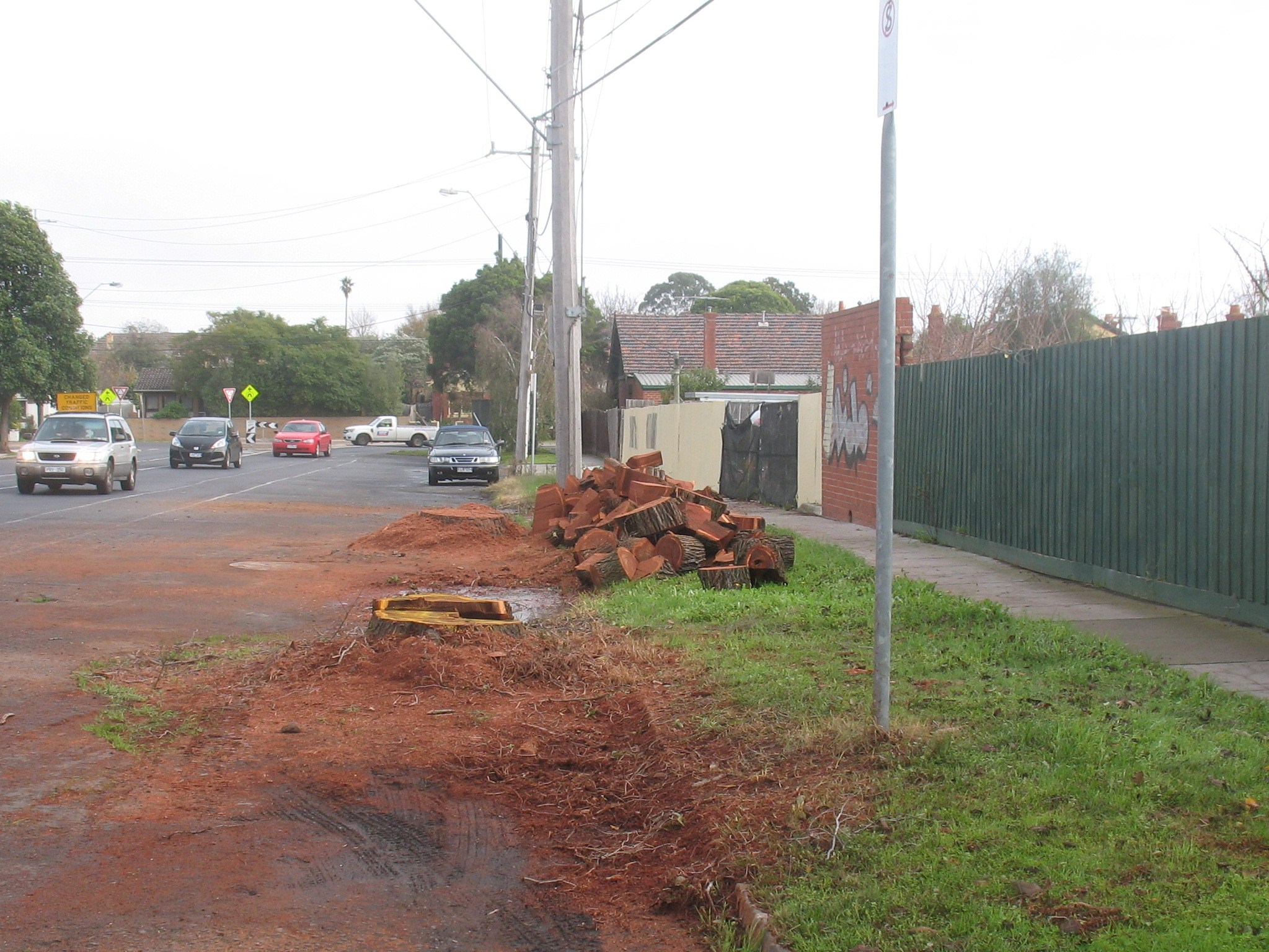
PS – UNRELATED, BUT WE’VE RECEIVED A PHOTO TAKEN TODAY BY A RESIDENT WHICH REVEALS THE CARNAGE ALREADY UNDERWAY FOR THE CAULFIELD VILLAGE. Location is corner of Bond/Station Streets.

031

The next Kingston Council Meeting set down for June 2nd should be well worth watching on their live streaming. Several Notices of Motion stand out for their call for greater transparency and accountability and hence overall governance practices. None of these, of course, could ever happen in Glen Eira given the current status of Meeting Procedures as well as a culture that shuns public scrutiny on all matters.

Here are the most ‘interesting’ items –

(Councillor Bearsley) – I Move

A. That council launches an independent review of the following areas in order of priority:

a. Community Engagement

b. Economic Development

c. Communications

d. Statutory Planning

B. That council scopes a tender process for an efficiency and effectiveness report for whole of council to be compiled by a reputable accounting/auditing firm and completed no later than August 2014.

C. That council develops an annual assessment and review process of efficiency and effectiveness of the council organisation with appropriate reporting measures which improve accountability and transparency.

D. That performance reporting KPIs be incorporated as part of an annual review.


(Cr Eden) – I move that:

Kingston Council seek to appoint an independently appointed observer to explore whether there are poor practices at Kingston Council, and whether Councillors have been acting in a questionable manner with respect to Planning matters.


(Cr Bearsley) – I move :

I move that planning officers prepare a report that details all developments, over the past two years, that have significantly breached the approved permit conditions and required amendment/resolution. The report is to indicate the breach, address, owner/applicant and final outcome. The report should include ways Kingston identify and minimise such breaches occurring and be provided by the 30th June.


(Cr Eden) – I move :

1. Council record the ‘in camera’ part of the Council meeting, so that if & when the item(s) are later made public the debate / discussion accompanying the confidential item will also be available to the public.

2. That officers report to Council on the reasons for ‘glitches / errors’ in the live recording and streaming of council meetings, and possible actions to rectify these problems, including:

a) That officers explore alternative mechanisms for recording the sound generated at meetings to ensure that regardless of whether the person speaking has their microphone on, their comments will be recorded – this will ensure if there is debate /discussions around the room that such comments are captured.

b) Officers implement a system to ensure that the live recording / streaming is working during meetings, and that Councillors are immediately notified if there are ‘technical issues’.

++++++++++

Another agenda item includes an indepth report on items declared ‘confidential’ which is well worth reading.

« Previous PageNext Page »