GE Governance


Elsternwick is quickly emerging as Glen Eira’s high rise capital with another 14 storey application for the former Daily Planet site. Adding salt to the wounds of residents, this application:

  • Abuts the 4 storey mandatory height limit of Ross Street – where many dwellings are single storey
  • The discretionary height limit is 12 storeys but developers regard this as nothing more than a ‘minimum’.

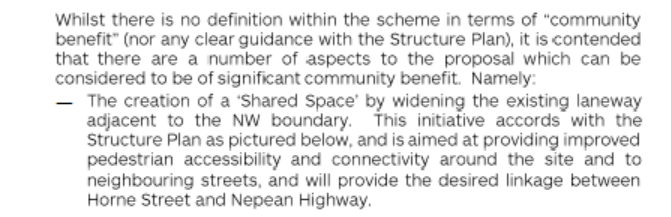
Possibly the biggest joke in this application is the developer’s claims to ‘community benefit’. Readers should remember that council decided that development could go from 8 to 12 storeys if there was ‘community benefit’. Of course there is very little definition of what this term actually means and certainly nothing worth a cracker in the eventual interim amendment. For those applications wishing to exceed the preferred height, all they have to show is (quote) – that the development includes the provision of significant community benefit. Not a single of word of definition exists; no decision criteria exist. Council should congratulate itself on producing the perfect example of waffle par excellence!

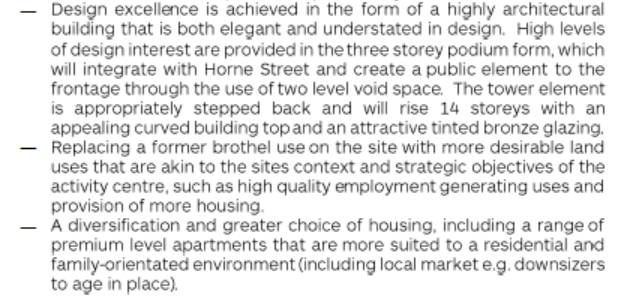
How does the developer respond to this clause then? Here’s what is claimed as ‘community benefit’ –

We get a paragraph on office space and ’employment’, then more of the same. Please note the reference to the former brothel!

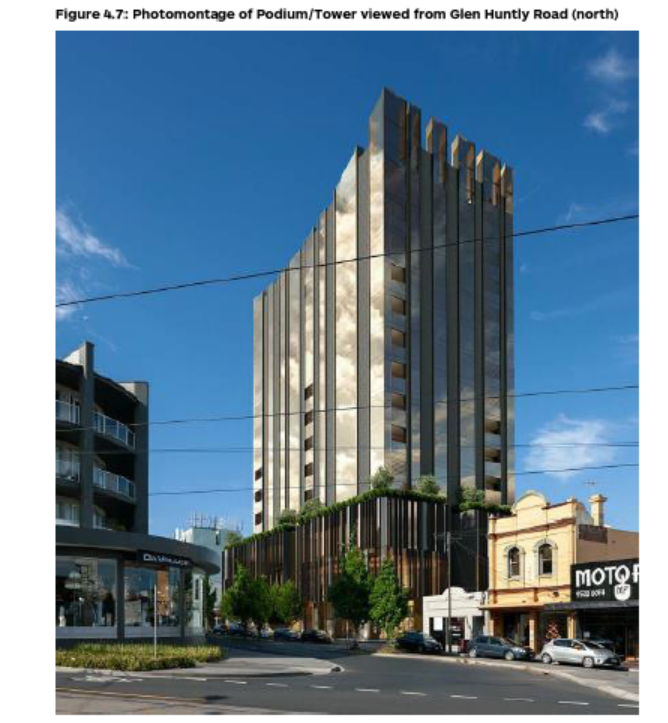
And the result will look like this:

There’s another aspect to this application worth considering. As recently as the last council meeting a resolution was passed to grant this site a permit for a drug rehabilitation unit. It had apparently been operating for some time without a permit. The current application allegedly arrived at council on the 2nd November.  Discussions prior to this date would undoubtedly have taken place with council planners. Thus, given that developers operated without a permit, did council issue any fines, or merely turn a blind eye knowing this was in the works?

Many other aspects of the application are contentious – ie overshadowing; traffic, open space. What is becoming clearer and clearer is that Elsternwick has always been seen as Glen Eira’s high rise capital and every effort has been made to further this agenda by a council that steadfastly refuses to listen to its residents!

Common sense is a very scarce commodity in Glen Eira council. Why on earth would you close off three quarters of a family park on December 3rd when kids and families are about to go on holidays and would enjoy spending some time in a public park? Why now, and for a stretch of 6 months, when the decision to spend a squillion on Harleston park was made just on 18 months ago?

Here’s the breakdown of events:

  • The first inkling that council had decided to spend $650,000 on a new playground, and $350,000 on toilets came in the 2017/18 budget papers. That’s 18 months ago!
  • Next came the pretty drawings and public consultation where the vast majority of responses were opposed to the expense and the decision to create a full size basketball court. Countless comments wanted the park to remain the same.
  • With this fierce opposition, we then had another round of ‘consultation’ with the majority of residents still opposed. This time councilors voted to proceed but with a half court instead. How much these rounds of ‘consultation’ cost has never been disclosed, nor has the ‘design’ drawings as far as we know.
  • The 2018/19 budget papers included another $155,000 for an ‘all purpose court’ – is this in addition to the $650,000?
  • The tender finally went out with closing dates of October 2018 – a year of doing nothing despite what the budget stated.
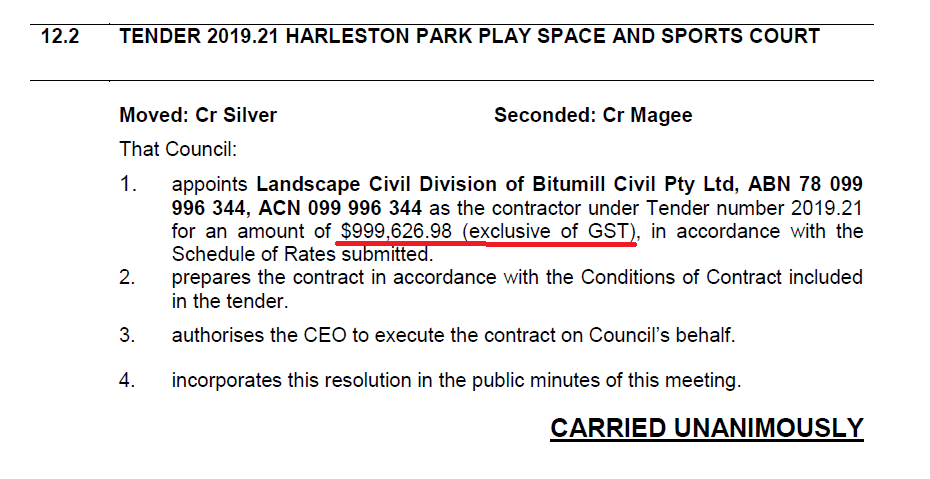
  • On November 7th, council awarded the contract as shown below –


It is unclear whether this successful tender includes the toilet costs or is simply for the playground and landscaping. Please note that the stated amount is EXCLUSIVE of GST – meaning that this project will cost well over a million dollars.

This exercise raises plenty of issues, such as:

  • When will this council finally start listening to its residents? If the majority didn’t want this ‘redevelopment’ then how can the expenditure of over one million be justified?
  • Why does it take so long for budget items to get off the ground? Is it that council doesn’t have the requisite cash available at the time?
  • Couldn’t the restructure have been started earlier, well before XMAS and the holiday season? Should it really take 6 months for completion?
  • And the over-riding question – why must each park look the same? What’s wrong with one area that is specifically suited to toddlers as the majority of responses indicated?

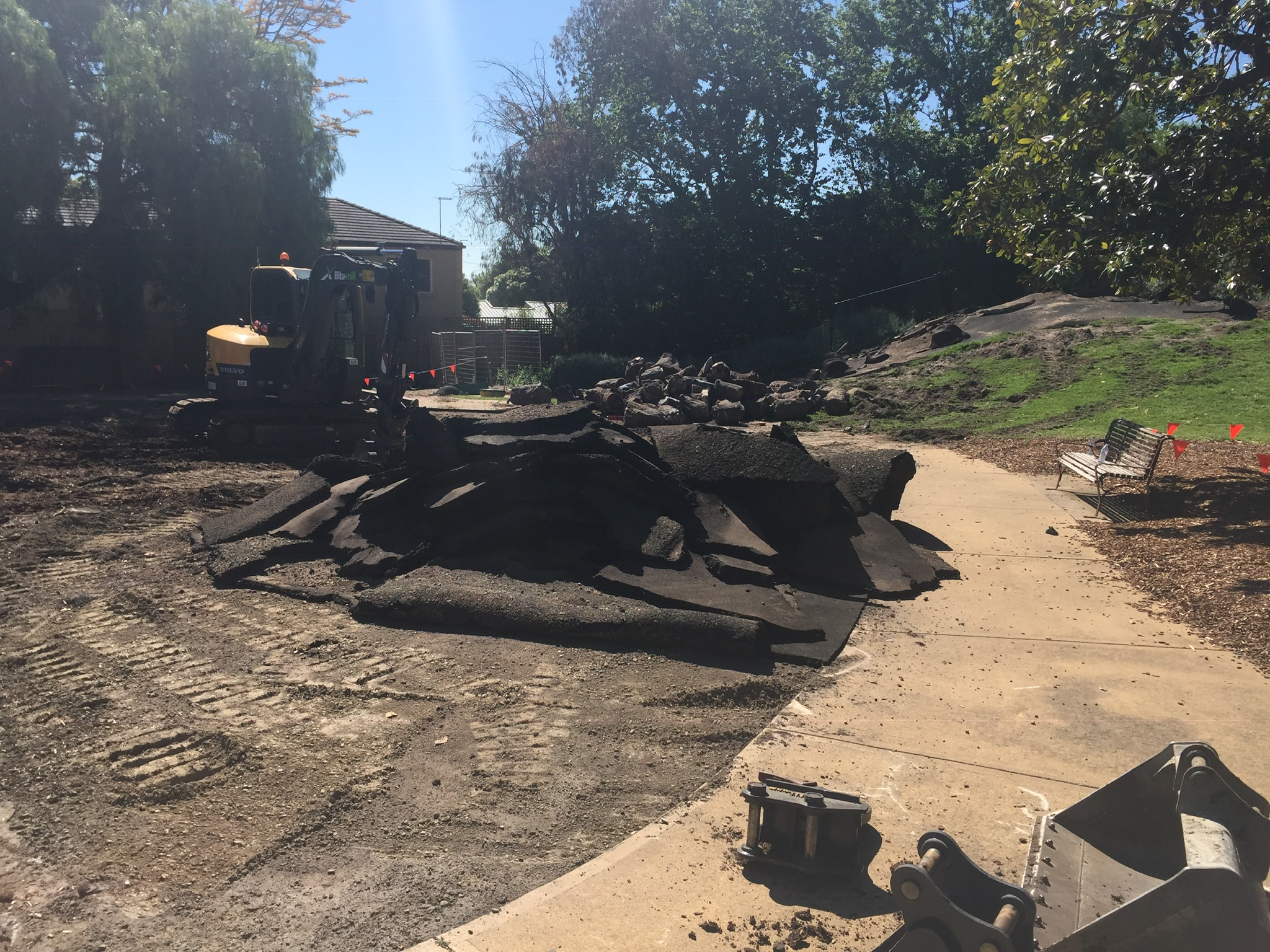
The photo (below) shows the removal of rubber matting that has only recently been installed and is probably still in very good condition. Again, how much did this cost?

Whilst there is cause for ‘congratulations’ that council is now responding to resident requests regarding the zoning of various areas within Glen Eira, we also find that the actions proposed fall far short of what is required.

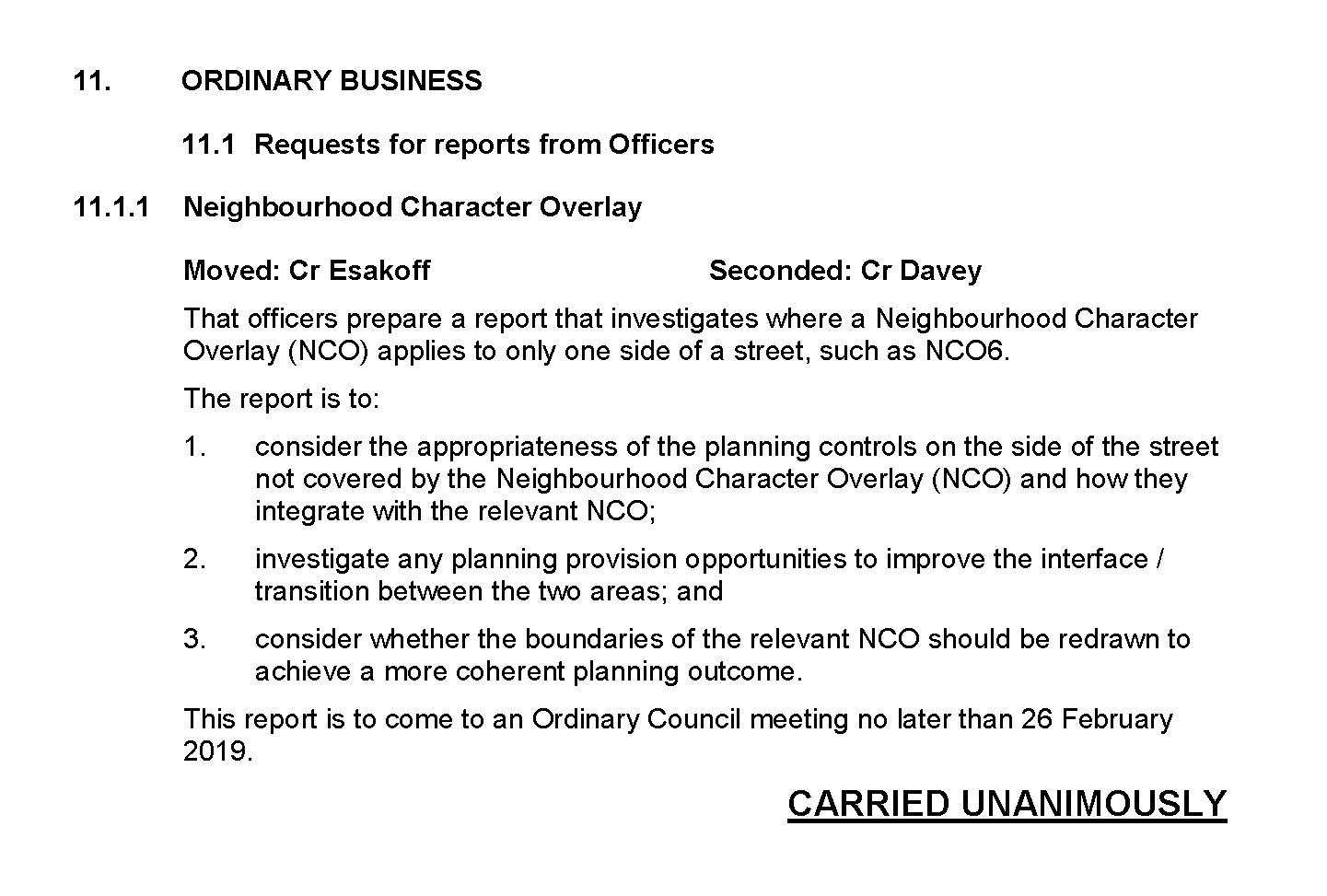
At last council meeting the application for Weeroona Road was refused by councillors. Much was made of the fact that there existed a Neighbourhood Character Overlay on the other side of the street and not on the side that included the application site. Hence we now get the following Request for a Report –

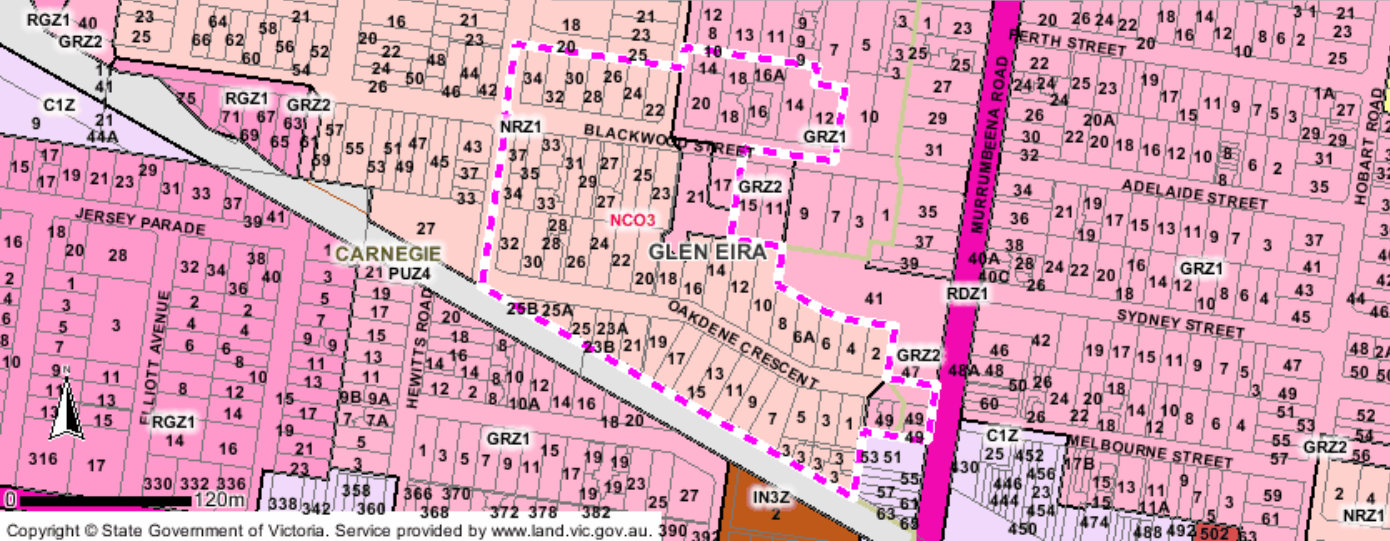
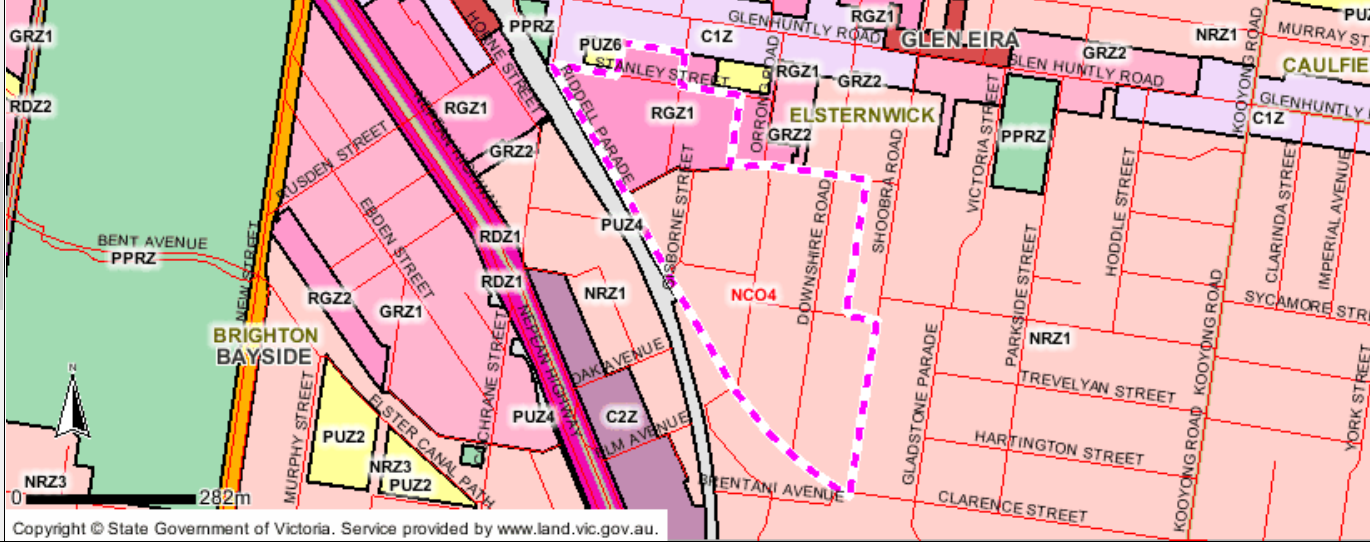
Instead of a total review of all NCO’s, the report only wishes to look at those areas on opposite sides of the street. It is also possible to see this as an explicit admission of how woeful Glen Eira’s planning has been. If planning was done properly to begin with we would now not be in the situation where it takes a huge resident outcry to get some responses underway. The incompetence of council’s planning is fully illustrated in the following screen dumps. Please note that these Neighbourhood Character Overlays also incorporate areas zoned as GRZ and RGZ. If the objective is to protect streets via the NCO, then it is really incomprehensible how these places could have been assigned the GRZ and RGZ zoning – which still stand. Thus, the issue isn’t simply about NCOs on the opposite side of the street, but the overall zoning embedded within existing NCOs – plus how many more streets and properties deserve to be granted an NCO. Thus we now have had 5 years of zoning and any amendment will likely take another 18 to 24 months – making this a 7 year issue where nothing has been done to correct previous glaring errors!

For all the spin that the Urban Design Guidelines will ensure the right buildings in the right places, recent events reveal how ineffectual such ‘guidelines’ really are. Here’s why:

  • They are ‘discretionary’ and NOT mandatory
  • They are Reference documents only and NOT part of any specific clause of the planning scheme
  • There is nothing in the recently gazetted structure plans which mandate developers to abide by the aspirations of this ‘reference’ document

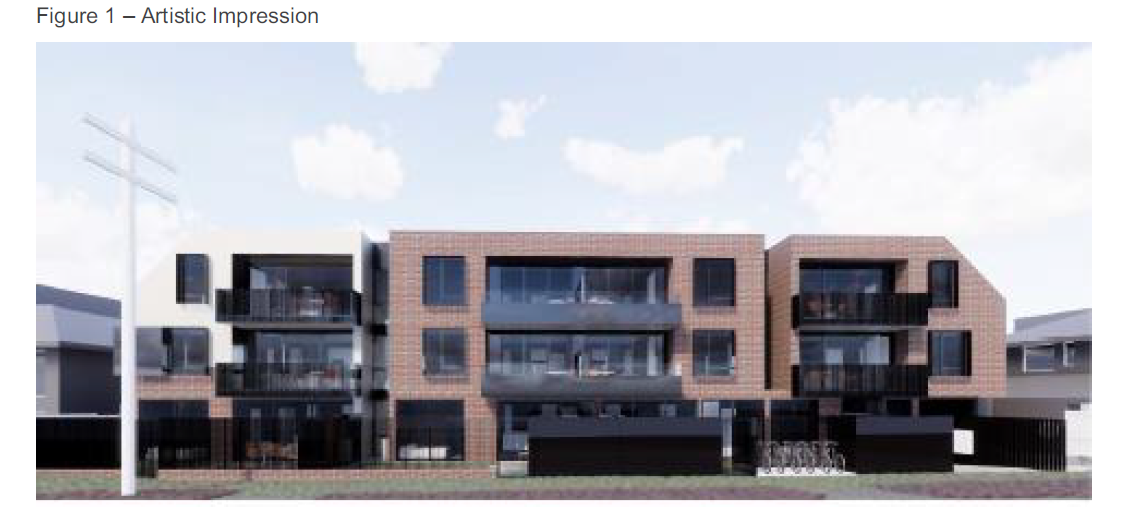
Best illustrating how council’s spin does not equate with reality, we have the example of 100-104 Mimosa Road, Carnegie. Originally an application came in for a 4 storey apartment block of 49 apartments. With the introduction of the structure plans we now have a ‘revised’ application for 3 storeys and 41 apartments. Height is the only aspect of the structure plans which are mandatory (only for Bentleigh & Carnegie), hence the removal of one storey. All well and good people might say. Except that Mimosa Road is, according to the structure plan, located in Precinct 2. And Precinct 2 is supposedly designated as ‘Garden Townhouse’ of up to 3 storeys, 11 metres. In other words, NOT an apartment block.  Yet this is what is now proposed – definitely NOT ‘townhouses’!

On the 28th February 2018, council minutes contained the following in regard to the Urban Design Guidelines –

The Quality Design Guidelines were produced to:

Respond to the aspirations of the Glen Eira community regarding neighbourhood character and to deliver on the vision for our neighbourhoods.

Encourage a high level of architectural design in new developments.

Provide clarity and certainty about Council’s expectations for new developments.

Support and supplement existing design guidance provided by the Glen Eira Planning Scheme and relevant State Government initiatives.

AND

Beyond ensuring better design outcomes are achieved across Glen Eira, implementation of the Quality Design Guidelines will deliver four significant benefits:

  1. Clarity and certainty for everyone
  2. Garden townhouses in residential streets
  3. Protection of character and human scale of shopping streets
  4. Maximising community benefit on strategic and urban renewal sites

Another ‘advantage’ of the Garden Townhouse aspiration was that –

  • Ground floor living reduces the impact of overlooking onto neighbouring backyards
  • Less dwelling density in residential streets address concerns of parking and traffic

The developer’s ‘revised’ application puts pay to all of this spin. We quote directly from the Urbis report:

…it is noted that the setback, landscaping, building design, landscaping and all other objectives are considered to be discretionary, whilst the specified height is considered to be mandatory. 

The built form currently proposed is an ‘apartment’ style building. It is considered that although a ‘town house character’ is encouraged by Amendment C157, it is noted that an apartment style character is a common characteristic within this neighbourhood setting 

It is noted that the proposed development does not provide the number of canopy trees required to be planted on the entire site and deep soil planting is restricted along the rear of the boundary and partly along the side boundaries. However, the street trees are proposed to be retained as part of this proposal and additional planting can be provided within the front setback of the development 

There are plenty of other problems with this application. For example:

Site coverage is 68%. Supposed to be 60%

Permeability is cited as 20% the required amount, but one has to query the following phrase attached to this number – ie deep soil area is 13% remains unchanged. What does this say about permeability per se, or the extent of the basement car park? Please remember that council’s ‘promise’ was to ensure that basement car parks did not cover practically the entire site!

What happens with this application will be instructive to say the least. More than anything it highlights once again the failure of this council to produce results that have real effect.

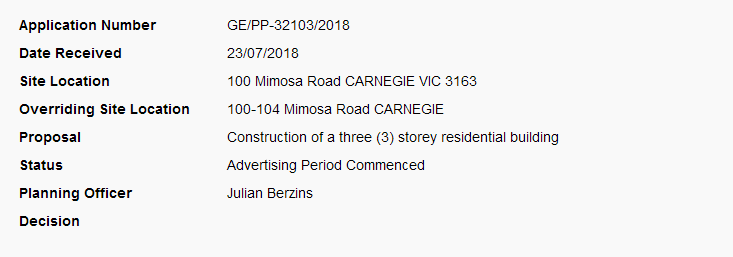
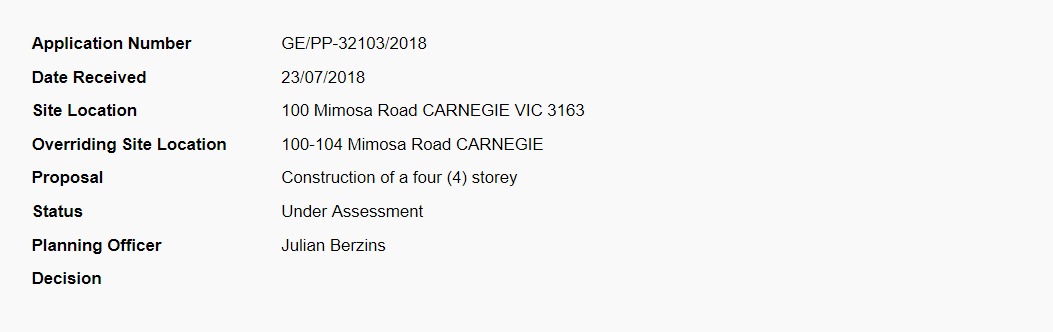
Finally a comment on governance and the continued monkey business that occurs with council’s online register. The application for 4 storeys came in months and months ago. It then disappeared entirely from the online register. Nothing such as ‘withdrawn’ was noted. It then made a reappearance as an entirely new application but still contained the SAME DATE as the original application for 4 storeys.

Online registers are required to contain information about every single application – their amendments, dates, decisions, etc. Far too often in Glen Eira inaccuracy and obfuscation replaces legal requirements!

Here are the two different applications and please note the dates:


Two successive items from Wednesday night’s council meeting produced 2 staggering decisions. We can speculate as to the reasons why these councillors decided as they did however, one thing is clear. When it comes to that holy of holies (ie planning law) this council and its crop of councilors have basically no interest in applying the law as it is written. So please, no more chest thumping and statements such as ‘we have to apply planning law’ when we make decisions!

The two items were:

7 apartments at 31 Weeroona Road, and

12 storeys in a heritage precinct at Derby Crescent, Caulfield East.

Councillors voted unanimously to REFUSE the Weeroona Road application and to grant a permit for the Derby Crescent application. Only Delahunty and Davey voted against this second application. In both instances planning law was totally ignored in our view. Could it possibly be that the reason the Weeroona road was refused was that there were 14 objections versus only 3 objections for the Derby Crescent application – this latter fact neatly pointed out by Magee and Strajt!

Please note that we are not discussing the merits of either application or whether they add to the overall housing ‘improvement’ in Glen Eira. What we are suggesting is that when time and time again councilors get up  on their hind legs and argue that their hands are tied by what the planning scheme says and therefore permits are granted, that the same should have happened with these two applications. Namely, that Weeroona should have got its permit and Derby Crescent should have been refused if there was to be consistency (and may we say integrity) in this councillor group. Sadly, these two cases are just another example of behind the scenes manipulation, vested interests, and a pro-development agenda that does not give a stuff about heritage in this municipality.

Here are some facts (as outlined by the officer report and Hyams for the Weeroona application –

  • It is zoned GRZ1 – ie an allowed height limit of 3 storeys (10.5 metres). The building is 9.4 metres.
  • Site coverage is 41%. The schedule allows up to 60%
  • Garden area is 37.61%. Requirement is 35%
  • Site area is 1024 square metres – council has granted other land subdivisions of barely 100 square metres!
  • Car parking requirements are met
  • Permeability is 42.371%. The requirement is 20%
  • Overshadowing meets the standards
  • Dwellings are 3 and 4 bedroom – meeting needs of ‘family’ living.

Thus on every major criterion upon which decisions should be based these councilors decided to REFUSE the application. Their reasons? – didn’t fit ‘neighbourhood character’ and there is a Neighbourhood Character Overlay on the other side of the street – in the NRZ zoned area. If council was so concerned about ‘neighbourhood character’ then why was this street zoned as GRZ in the first place?  Why hasn’t council got off its backside and rezoned these areas or at least provided a ‘preferred character statement’ that would have some bite at VCAT? Of course, nothing has been done! We would like to be as assured of winning lotto as this application will meet with success when it goes to VCAT. Council’s planning scheme is all the developer has to point to in order to win his case! More of our money down the drain ‘defending’ the indefensible!

Next there was the Derby Crescent application for a monstrous development of 12 storeys (outlined in one of our earlier posts) plus the total demolition of one of the two ‘contributory’ heritage listed buildings.  Although part of the Phoenix Precinct, and yes there are tall and taller buildings in the vicinity, this should not be seen as over-riding heritage constraints in this area. The arguments of Magee, Silver, Strajt, Taylor, Hyams and Esakoff, were lamentable and had nothing whatsoever to do with planning law as it applied to this specific site. Which makes us wonder what decisions have already been cooked up between council and the VPA for this entire area?

To her credit, and also Davey, Delahunty launched what must be the first ‘analysis’ of what the planning scheme actually has to say about heritage and the demolition of contributory buildings. Torres finally had to admit (through clenched teeth we assume) that ‘on balance’ heritage comes a poor second to development and that the planning report could have been better and more expansive in its commentary.

This is the first time in ages that any councillor has come close to challenging an officer’s report. She established that:

  • Council’s ‘expert’ heritage advisor’s recommendations were ignored
  • That demolition of a contributory building should only happen when it is not fit to be lived in – according to the planning scheme

Disappointingly, no one seemed to have too many qualms about sticking a straight up 10 storeys onto the top of a heritage 2 storey building so that it will literally protrude like a sore thumb – despite the fact that the planning scheme for this area is replete with statement after statement about preserving the height and ‘ambience’ of this area.

We ask that readers listen carefully to the audio on this item and to ask themselves the most crucial question – why has planning law been so flagrantly ignored in these two instances?

Finally, another reminder of what the majority of councillors believe is acceptable in a heritage precinct!


This is what council is recommending for a planning permit at 9-13 Derby Road, Caulfield East. Instead of 15 storeys we are supposed to swallow 12 storeys in a heritage precinct surrounded by 1 and 2 storey significant heritage buildings. This is the second application by this developer. The first was for 18 storeys and 158 student accommodation cubby holes. It was rejected by both council and VCAT. So we now have this new attempt for 15 storeys and 49 short term accommodation units. Council’s ‘solution’ is to lop off 3 storeys and reduce the number of units.

What is particularly disturbing about the accompanying officer’s report is the failure to fully acknowledge the comments made in the original VCAT decision PLUS the fact that council’s own urban planning advice together with the Planning Scheme requirements of the Phoenix Precinct are totally ignored. The only detail we get for the proposed southern setbacks is this vague sentence –

Setbacks have also been provided from the southern boundary to allow for future development of the adjoining site to the south. 

The report also relies heavily on a throwaway line in the 2017 VCAT judgement that a 10-14 storey development MIGHT be appropriate for the western site. This of course raises the issue of why council is determining applications on the basis of what VCAT MIGHT SAY, or what it has stated in the past. Planning decisions are meant to be determined on an individual case basis and NOT what might happen at VCAT!

More infuriating is that readers are not told that the member repeatedly stated that heritage and the low rise surrounding buildings should be the focal point of any proposal. More importantly we are not told that when council attended the 2017 VCAT hearing, their position at that time was (and we quote from the judgement) – The council felt something in the order of ten to twelve storeys would be acceptable provided that the tallest part of a new building above the existing level is located towards the rear of the site. (para.58) 

Thus over a year ago, council was prepared to accept a 12 storey building in its heritage area. Nothing has changed then. We are simply provided with a fait accompli.

Readers might be interested in the following statements from the 2017 VCAT decision. The full decision is available at – http://www8.austlii.edu.au/cgi-bin/viewdoc/au/cases/vic/VCAT/2017/1768.html 

A predominantly Edwardian shopping centre associated with the Caulfield Racecourse and having a distinctive urban form determined by its short length and accentuated by a double line of electric tramway. Its architectural significance is established by the diversity of its street architecture and railway station and is enhanced by their substantially intact state.

Council’s Planning Scheme/Phoenix Precinct states:

Encourage development no higher than the predominant existing height in Derby Road  and retain the scale and form of places in the Derby Road heritage overlay area

Encourage the design of new buildings in a contemporary style that respects the height, scale, rhythm of and proportions of the heritage buildings when adjoining buildings are located in a HO (Clause 22.06)

Member’s comments:

Paragraph 78 – While the building complies with the broad objectives of the State Planning Policy Framework and the Phoenix Precinct, we have decided that the building fails because of its height and detailed design execution. We are not persuaded that 18 storeys (or 19 storeys to the rear lane) is the appropriate height. We think that while the heritage fabric along  Derby Road  is of local heritage significance it is sufficiently intact and significant to temper the design response.

We are not persuaded that inclusion of the site within the Phoenix Precinct and its proximity to Caulfield train station are sufficient reasons to entirely disregard the local policy. The Phoenix Precinct is very large and has considerable development capacity. Not every site has to be maximised.

Paragraph 82 – We also think that at the height proposed, the tower will be visually dominant from important vantage points, including the station entry and the rail line itself. We think the building will be very prominent from the station entrance and from vantage points along Sir John Monash Drive, to a much greater extent than envisaged by planning policy.

Paragraph 93 – We are persuaded that the tower is too tall, and would result in an excessively bulky appearance that would be out of balance with the scale of  Derby Road . We are satisfied that with a significant setback from  Derby Road  and subject to an appropriate architectural expression, a tower higher than the existing form should be acceptable but scaled so as to reduce its visual impact from key vantage points.

Paragraph 101& 2 –  We encourage the council to complete the necessary strategic planning/urban design work to provide a coherent framework for decisions on new developments in this area.

  • Until that work is completed, we think a preferred approach to this site is to retain the two storey built form along the Derby road  frontage, a four to five storey podium with the setback to Derby Street increasing with height, and significantly more than the five metres proposed in this application. We think the tallest built form at the western end of the site could be in the order of ten to fourteen storeys, depending on architectural expression.

PS: An explanation is also required as to the following:

1. Council’s online register states that it received the above application on the 30th May, 2018.

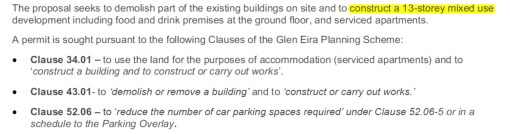
2. The Urbis planning report is dated August 2018 AND IT IS FOR A 13 STOREY DEVELOPMENT AND NOT A 15 STOREY DEVELOPMENT AS PRESENTED.

3. Thus why the difference and how much faith can be placed in council’s online register? Or is it simply that there has been an amended permit put in? If so, then this should be highlighted? If not, is it council playing funny buggers with the facts?

We’ve uploaded the following from the August 2018 Urbis report –
13


Councillors’ performance tonight in unanimously accepting the East Virginia structure plan signals how little these individuals are willing to stand up for residents and for common sense.

Magee’s grandstanding has become habitual plus lacking all logic when he can begin his statements with –‘I will be speaking against the motion but voting for it’!!!!

Hyams continues with the old arguments that this is only the first step in the process blah, blah, blah and then spending 9 minutes on regurgitating what the documents contain but in a totally uncritical way.

The only ‘news’ that came out of Hyams’ mouth was the naming of the individuals involved in the Community Reference Group – for the very first time. How on earth a COMMUNITY REFERENCE GROUP can function without anyone knowing who they are is beyond belief. If their role was to represent the community, then it is incumbent upon council to ensure that the wider community knows who these individuals are so that they may be contacted and ideas exchanged. But that is not the way this council functions. No agendas or minutes of these meetings have ever been published. We don’t even know how many meetings occurred. As for the individuals named what is their background? How many are associated with the development industry? How many were tapped on the shoulder and asked to apply? We note, and with no intent to cast aspersions on these individuals, that the vast majority have never asked a public question, have probably never attended a council meeting and certainly are not active on social media. Thus on what basis was this community reference group selected? For all the talk about transparency and accountability the way these Community Reference Groups have been set up and function is anything but transparent and accountable. The $64 question of course remains – how many suggestions made by OUR community reference group saw its way into this final structure plan? We would hazard a guess that very little produced the desired outcomes.

As a further example of council’s failure to address the gaping holes in this structure plan we present one speaker’s question (and statements) to council from this meeting. It is significant we believe that she received not a single word from anyone in response to her comments! So much for ‘public participation’. The only saving grace of tonight’s meeting was that it only lasted about an hour!!!!!!!

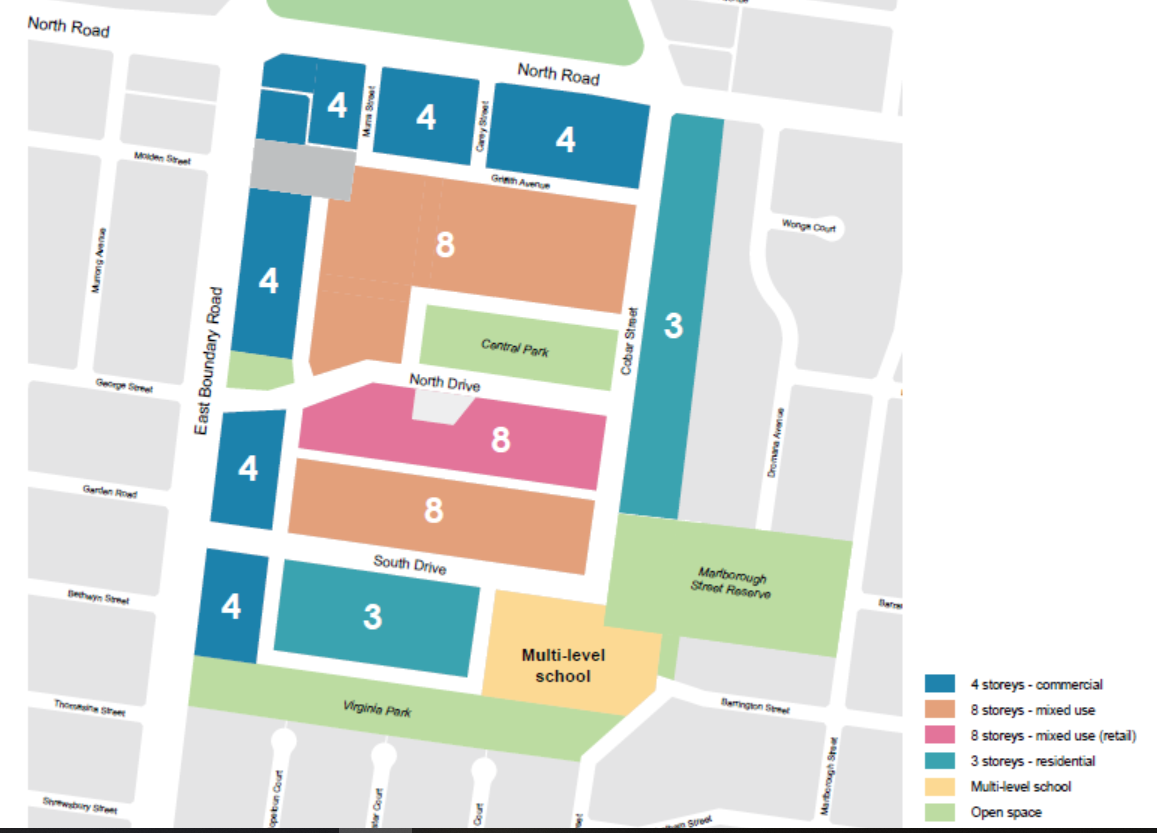
Council has released the proposed structure plan for Virginia Estate. The above map indicates the (indicative/preferred) height limits for the various precincts.

There is much in this set of documents that require comment. However, due to the paucity of detail, we can only surmise what will eventuate. One thing however is abundantly clear – once this structure plan and its accompanying Comprehensive Development Plan is passed by council, sent off to a Planning Panel, and it enters the Planning Scheme via its associated Amendment then community involvement and input will NOT EXIST. There will not be any objector review rights in exactly the same way that occurred with the Caulfield Village projects. Council is not even bound, according to the Schedule for this Comprehensive Development zone, to notify any resident. Hence, there are no guarantees that what is presented in these documents will be the final outcome.

Below we feature some points from the various documents which reveal the ‘wriggle room’ allowed to the developer.

COMPREHENSIVE DEVELOPMENT PLAN

  • Building heights are NOT MANDATORY! They are ‘preferred maximum heights’.
  • ‘SHOULD’ instead of ‘MUST’ dominates throughout all of the built form specifications. And we all know what ‘should’ means!!!!!!
  • For all the talk about rehashing the Open Space Strategy and considering overshadowing at the winter solstice, we still get the following – – Development must not cast any shadow on more than 75% of the area of any public open space described in Plan 2 of the incorporated CDP between 11am and 2pm on 21 June the winter solstice.
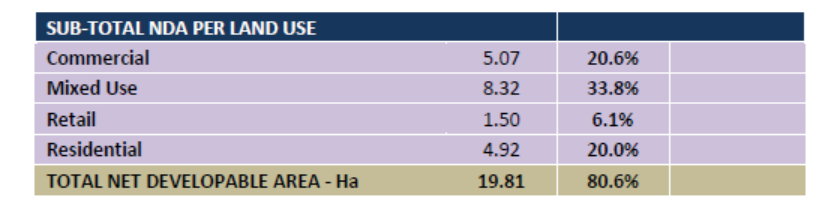
  • What is totally and deliberately misleading is the following breakdown of residential versus commercial/retail components of the site. The only areas specified as NON residential are the buildings to go along North Road, and East Boundary Road. All the rest will have residential dwellings built above the shops/offices located on the ground or several floors above. To therefore claim that only 4.92 hectares of the entire site is set aside for ‘residential’ is inaccurate and unacceptable.

THE SCHEDULE 

  • Exemption from notice and review

An application for the use of land is exempt from the notice requirements of Section 52(1)(a), (b) and (d), the decision requirements of Section 64(1), (2) and (3) and the review rights of Section 82(1) of the Act if it is generally consistent with the incorporated CDP. 

  • An assessment of the likely traffic impacts associated with the proposed development, including the ability of the Cobar Street / North Road / Crosbie Road to function effectively without signalisation. This is to include an assessment of the precinct’s existing and the proposed development traffic generation during peak AM and PM period. Where the traffic generation is expected to exceed 2,000 vehicles accessing the site in the PM peak, the Cobar Street site access intersection should be implemented. What this means is that the developer does not have to do anything UNTIL they determine that Cobar Street has 2000 cars travelling along it each day. Thus first get the permit, build and then worry about traffic and safety!

DEVELOPMENT CONTRIBUTIONS PLAN 

According to the figures provided in this document we are supposed to accept that the developer will fork out $60 million in infrastructure improvements to the site of which $16m will be for community improvements. What we query is given the flooding and drainage issues, plus contamination, that $1,199,835 comes anywhere near what the cost will be to ameliorate the potential for flooding and ensure contamination is eliminated.

On the positive side, council will get a ‘community hub’, a sports pavilion, and some open space. These will only come into operation however when ‘population growth is deemed to require the infrastructure’. So once again it is build first and then worry about the necessary infrastructure after the fact.

Even more concerning is the community infrastructure levy assigned to each dwelling of $831.65. Legislation allows a maximum of $1,150. Thus Gillon is getting a discount of $318.35 per dwelling. In total that amounts to just under a million dollars. Other councils have successfully exacted this full cost for major developments. Not so in Glen Eira!

SOME GENERAL COMMENTS 

  • Residents are presented with a 58 page Structure Plan that is so bereft of detail that it beggars belief. Of these 58 pages there are 22 that are frontispieces or pages with pretty pictures. The rest is primarily nothing more than vague motherhood statements such as this nonsense for ‘Transport’ – Explore innovative approaches to car parking and traffic management
  • No indication is provided as to how traffic and parking will be handled. Will we have subterranean car parks 3 levels down in a flooding area? Or will we have high rise car parks? Why is current traffic analysis focusing almost exclusively on PM peak periods?
  • If the proposed school is next door to 3 storey building then how high will this school be? – 3 storeys, 4 storeys, 5 storeys? And will the 1.2 hectares be sufficient to provide open space for up to 1150 students – or will they be expected to utilise fully existing open space next door?
  • The Section 173 agreement between developers and council will remain ‘secret’ according to the officer report recommendation – ie Direct officers to not commence exhibition unless the appropriate Section 173 Agreements are signed and executed by all parties and a summary of the purpose of the document is exhibited along with the planning controls. In other words, residents will not get to see the nitty gritty of this agreement we presume!
  • Affordable housing is another questionable aspect when so much of the officer’s report contains the following caveats:

One of the main difficulties with seeking an agreement at this stage, is that it needs to be ‘clear of outcome’ to enable the detail to be resolved later, while also being ‘tight enough’ to ensure it can be suitably enforced 

Past experience has demonstrated that the more restrictions placed by Council, the more difficult it is to make a project feasible. 

However, it is understood that this is an ambitious outcome to achieve, with many factors that are outside the landowners’ control. It is important that the agreement is written in a way that gives the landowners flexibility and the greatest chance to achieve this outcome.

As such it is recommended that the agreement is primarily focused on this outcome, with appropriate detailing of the mechanism only where required.

Finally, the VPA has today released another 10 updated ‘background’ documents from its 2017 versions. We will comment on these once we have had time to digest them fully. In total these documents amount to well over a 1000 pages. Yet councillors are expected to vote on these matters next Tuesday night. How many of them we wonder will have read even some of the documentation? What questions, if any, will this documentation bring to the fore from councillors?


Last night’s discussion on the Planning Scheme Review and the rehashed work plan 2018, illustrates once more how the tail continues to wag the dog in Glen Eira. Everything was passed unanimously with barely a whimper.

In theory, councillors are supposed to set priorities. They are supposed to determine policy, budgets, and overall direction for councils based on community expectations. What we find in Glen Eira is total subservience to unelected officialdom.

The discussion last night featured:

  • Some totally inane comments by Magee – ie ‘multi-racial development’ that has got nothing to do with planning per se. We do love the statement that planning policy should not be allowed to ‘stagnate’ – this coming from a councillor who has been there since 2008 and has condoned, aided and abetted the ‘stagnation’ time and time again!
  • Hyams’ deferring to the ‘experts’ that have to be trusted despite the Major Heritage review being 5 or 6 years away until full completion.
  • Delahunty’s desire to learn ‘the annoying lesson of having patience’ and it is ‘a little gut wrenching’ that heritage will be ‘drawn out over that period of time’. These words from another councillor who was quite happy that she ‘lost the debate’ in 2013 about refusing to go to community consultation for the introduction of the disastrous zones – which readers should note have now been acknowledged as failing to adequately protect residential amenity.
  • Taylor wishes to ‘surge’ ahead on ‘environmentallysustainable design’ yet votes for another ‘do nothing’ – it’s a State Government responsibility. Totally ignoring the fact that countless other councils have had such policies enshrined in their planning schemes for years and years. Nor does she mention one single word about earlier promises for increased permeability standards, etc.
  • Athanasopolous’ claim that Glen Eira is ‘leading many other municipalities’ because of its work on 3 structure plans simultaneously, in contrast to other councils who only work on one at a time! Wrong, wrong, wrong! Bayside managed to create draft structure plans for all its neighbourhood centres in one go, as did Boroondara. Further, are residents happy with the ‘outcomes’ of these structure plans – especially the 12 storey height limits in Elsternwick & Carnegie? To what extent do these structure plans reflect what the community said they wanted?

It’s also worth noting that not one councillor bothered to explain why they considered the proposed Quality Design Guidelines as a superior option to creating what was promised – ie a Neighbourhood Character Policy!

Here is the ‘discussion’, for it surely can’t be called a ‘debate’!!!!


Apologies for this long post but it highlights once again how residents have been lead down the garden path in so many ways by our representatives.

The current agenda includes an item on the 2018 Planning Scheme Review – done without consultation. There is an updated Work Plan that stretches out for years and years, or simply does not provide any time schedules. The promises of 2016 are in tatters. Instead we get a euphemistically labelled Planning Scheme Review, that is anything but a comprehensive ‘review’. The objective of any Planning Scheme Review, according to Practice Note 32 is to:

….assess whether the scheme provisions, such as local planning policies, zones, overlays and schedules have been effective and efficient in achieving the objectives and strategies of the planning scheme.

What has been dished up now does not contain one single word of analysis for any of the above. Even the purported VCAT decisions are nothing more than summaries. No recommendations have been made on how to tighten the scheme, what to scrub, or what needs including.

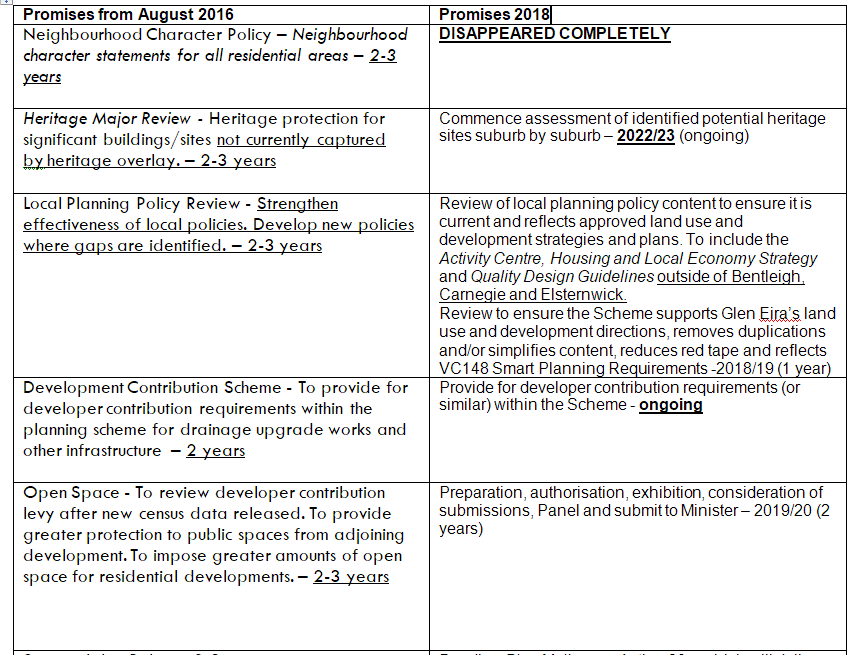
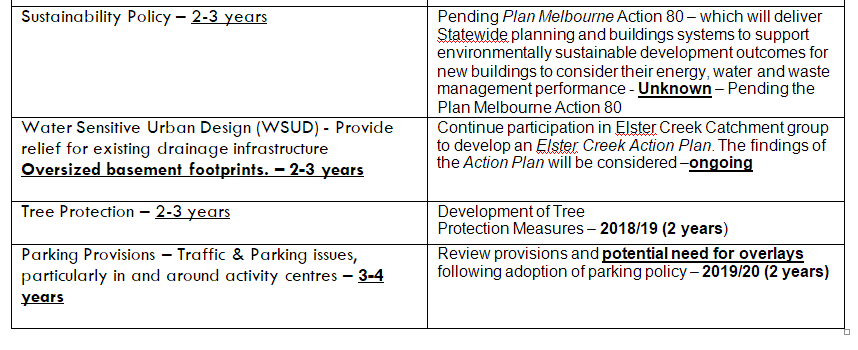
Of far greater importance however is the newly proposed Work Plan. We have created a table below which features the promises from 2016 and put them alongside what is the plan today. One major difference between 2016 and 2018 that should be highlighted is the disappearance of any intention to introduce a Neighbourhood Character Policy. In 2016 we got these statements:

A Neighbourhood Character Policy is recommended to clarify when protection of existing character is required, and clarity on neighbourhood character design outcomes for ‘change areas’

AND

The work plan also recommends that the residential zones support the neighbourhood character policy by including additional neighbourhood character objectives and increased schedule standards to protect and enhance character.

In 2018, this has gone and with no explanation, justification, or further reference, is replaced with this single sentence – The implementation of the Quality Design Guidelines addresses the Planning Scheme Review 2016 Work Plan action to implement a Neighbourhood Character Policy. 

There are several things to note about these proposed changes:

  • The Quality Design Guidelines only apply to the existing structure plans of Bentleigh, Elsternwick and Carnegie. They are not mandatory.
  • Its status in the Planning Scheme is nothing more than a ‘reference document’ and hence is basically useless. At least a full blown POLICY, whilst also not mandatory, would at least have more weight at VCAT than an appended ‘reference’ document.
  • The 2016 statements applied to ALL housing diversity, not just the 3 Activity Centres of Bentleigh, Carnegie & Elsternwick.  Yet even in these latter activity centres nothing has changed in terms of the schedules for permeability, site coverage, open space, etc.

There is much, much more which has been tossed out in the 2018 version -ie

  • The major heritage ‘review’ is now set down for the Major Activity Centres with no time line as to when the entire municipality review will be completed.
  • Tree registers and open space amendments are years down the track
  • And poor old neighbourhood/localcentres such as Ormond, McKinnon, East Bentleigh, etc.will not have any protection for years and years. Council is only committing to ‘one or two’ urban design frameworks starting in 2021/22!!!! PLUS no longer any talk of ‘structure plans’ for these centres just Urban Design Frameworks!!!!.
  • Limiting the impact of car parking basements is also watered down so instead of definitive standards such as Bayside implemented years ago in its schedules to the zones (ie max of 75% site coverage) our council is happy with statements such as this in its so called QUALITY Design Guidelines – Buildings should minimise basement footprints within the front and rear setbacks to provide for deep planting. No ‘musts’, no numbers, no changes to the schedules throughout the municipality.

Here is the table which quotes verbatim the August 2016 report and the current 2018 report. We have only highlighted some of the most important issues. The dates in parenthesis for 2018 merely indicate the STARTING TIME AND NOT COMPLETION TIME.

Please read carefully and consider the consequences.­­­

This is anything BUT a Planning Scheme Review. Yes we acknowledge that after 15 years of doing nothing Glen Eira Council is certainly behind the eight ball. But this should not be the excuse for watering down what was promised in 2016 without consultation and most importantly, without any strategic justification. It is merely another example of why this council cannot be trusted!

« Previous PageNext Page »