GE Open Space


The lack of open space in Glen Eira has been known for years. It is high on the list of resident priorities for some dramatic change in council’s approach – for instance, the purchase of new open space. The claim to counter this is that Glen Eira is highly ‘urbanised’ and purchasing land is very expensive. Yes, land is expensive and council did raise the developer levy to 5.7%, (only after years of collecting a pittance). Objectors in 2014 argued that even this new levy was insufficient to meet the needs of the existing and future population. Now there is an officer’s report on whether council should seek to raise the levy even further. The recommendations read:

That Council:

Σ notes the report

Σ requests that a report update be prepared following the release of the 2016 ABS Census data

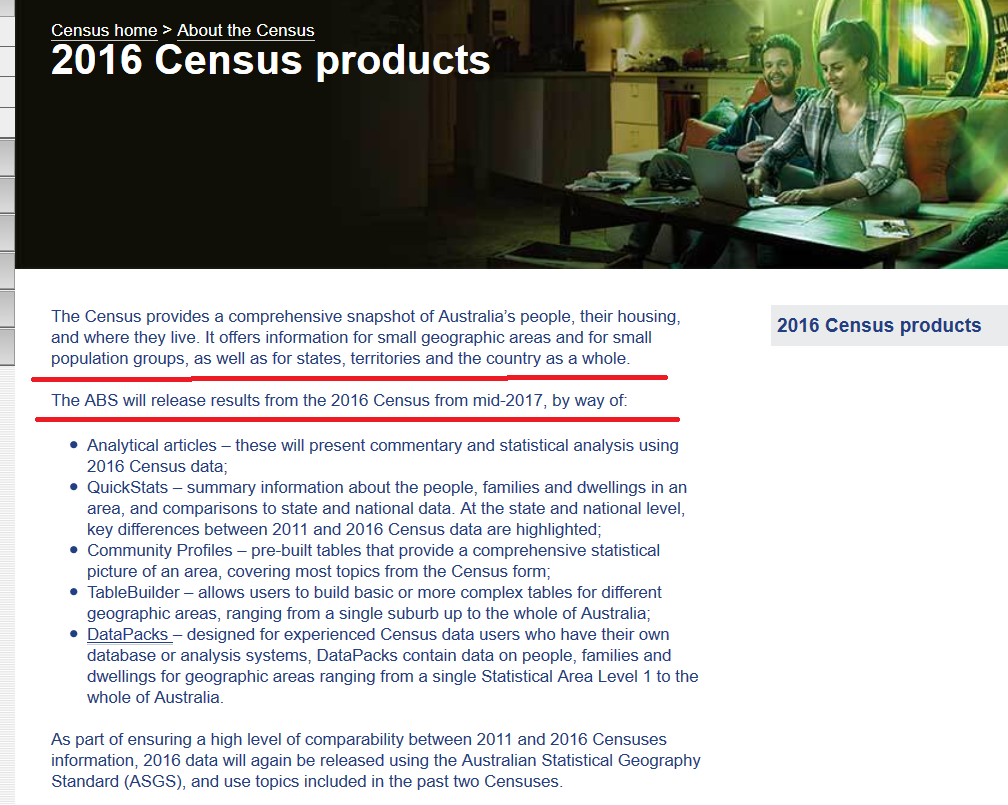
The report claims that the Census data will be released in ‘early 2017’. Another porky by Council. We prefer to rely on what the Australian Bureau of Statistics(ABS) tell us and not what features in officer reports. Here’s the ABS version:

census

Thus nothing will be done for at least a year, and then another year to go through the amendment process, consultation process, possible planning panel review, and then awaiting the Minister’s rubber stamping.

Further, we see absolutely no reason why council needs to wait. All of the relevant statistics should be available right now to council. They should know precisely:

  • The number of new dwellings built
  • The location of these new dwellings
  • The number of permits granted
  • What areas these permits are in
  • If council and the consultants relied on Profile.id prognostications in 2013/2014, then they can rely on the updated figures right now!

In 2014 it was obvious that council’s and the consultants’ prognostications were inadequate given the zones and the inundation of planning permits. It is our firm belief that if council had done its work properly back in 2013/2014, then the open space levy would not now be an issue. If a correct levy was sought, then residents would now have plenty of more open space, instead of a decline per individual as is happening. Contrary to what is currently claimed by the ‘consultants’, their report, based on the statistics provided by council was totally inadequate and inaccurate. At the time of the planning panel, objectors highlighted this again and again. For example:

  • The claim was that Caulfield Village would still only be 1100-1200 units, when the Development Plan for 2046 units had already been rubber stamped and would near completion by 2026
  • Virginia Estate was ignored
  • Countless amendment rezoning to Mixed Use were ignored
  • Council’s estimate of only 5.22 hectares being redeveloped in the space of 14 years in Carnegie had already seen this number exceeded in the space of a single year and the same was true for the other activity centres. How on earth council could claim that only 5 hectares is available from 3.8 square km and over a third zoned for ‘growth’ is beyond us!
  • Council’s ‘estimate’ of existing public open space was and is, literally a joke, since they had changed the ‘definition’ of open space and of course included car parks within this calculation.

There is absolutely no excuse waiting another year before an increase is even attempted. This of course fits right into the philosophy of this council – do nothing if you can help it!

Tonight’s meeting drew a big crowd. Over 100 people in attendance. Missing in action were – Lipshutz, Esakoff, Ho, Delahunty. Ms McKenzie (CEO) was present as were Lobo, Hyams, Magee, Pilling and Sounness.

The evening started with the facilitator introducing the format and then Ms McKenzie providing the ‘context’. Acknowledgement was given as to the criticism levelled at council and the amount of work that was required. This was followed by Torres providing feedback on the results of the community consultation and then Russell Smith (acting manager Strategic Planning) providing a synopsis of the planning tools available which could address the issues raised by residents. Residents were then invited to ask questions of planners.

The Positives

Despite years and years of refusing to undertake various initiatives, tonight possibly, maybe, perhaps, signalled a change in direction. Here is a brief list of what council proposes to do according to their stated ‘draft work plan’.

  • Structure planning
  • Water Sensitive Urban Design
  • Vegetation Protection
  • Environmental Sustainable Design
  • Preferred Neighbourhood Character Statements
  • Heritage Review
  • Development Contributions Levy for drainage
  • SBO – overlays to mitigate flooding
  • Update the Municipal Strategic Statement and Local Policies

Without unduly blowing our own trumpet, we wish to point out that these initiatives are what we, and countless residents, have been demanding for years and years and which council has steadfastly refused to implement! Whether this represents a real change in culture, attitude, and listening to residents remains to be seen.

The Negatives

Council’s ‘draft work plan’ was stated as:

3 structure plans to be carried out over first 5 years with a view to continue developing structure plans or Urban Design Frameworks over all activity centres after this period of 10 years……

Residents were also asked to ‘prioritise’ the list provided at the start of this post. Torres explained in response to a question that the 3 structure plans does not automatically mean that this will be the 3 major activity centres of Bentleigh, Elsternwick and Carnegie. People were free to suggest that the initial structure plans should involve such neighbourhood centres as Glen Huntly for example.

We do not deny the amount of work involved in preparing sound and competent structure plans. Nor do we deny the costs involved. Our concerns are as follows:

  • If only 3 are to be completed within 5 years and the rest subject to council’s budgets/finances and a time span of ten or more years, then the reality is that of the 10 neighbourhood centres, most will remain untouched for the next decade.
  • No ‘official’ reference was made to reviewing the zones, or the associated schedules. What this means is that if structure plans are developed for the major activity centres, then the neighbourhood centres and their surrounding residential areas, will continue to allow three and four storey overdevelopments for the next decade. Only at question time from the audience was the completely lame response given that the neighbourhood character policy review would safeguard these centres. We beg to differ! If the mandatory height limit remains at 3 and 4 storeys for large swathes of McKinnon, Ormond, Glen Huntly, Murrumbeena, Bentleigh East, Caulfield North, then no local policy will prevent this overdevelopment of local residential streets. Without reviewing the extent of the zones, then structure plans alone will not safeguard residents from overdevelopment!

Our next post will focus on the questions asked by residents and the often unsatisfactory responses received. Overall, whilst this planning scheme review has seen changes that are positive, and explicitly acknowledged by the new CEO of council’s failure to address planning issues over the past decade, there is still room for major scepticism as the answers to the questions revealed. More on this in the days ahead.

The Gillon conglomerate has now released its next phase of ‘consultation’ for Virginia Estate. Residents should note:

  • The site keeps expanding. It now includes the area between Griffiths Avenue and North Road. We estimate that the site is approximately 25 hectares.
  • Detail is non-existent and several of the maps in relation to NEW OPEN SPACE are contradictory.
  • Terminology is obtuse (ie Mixed Use Development we argue should be read as a euphemism for residential development).
  • Solution to traffic is the installation of two sets of traffic lights within 100 metres of each other along East Boundary Road.

Readers should consider the following carefully in terms of:

  • If all the buildings marked as ‘redundant’ are to go, will they be replaced with apartments?
  • Are we really looking at an ‘employment hub’ that covers 90% of the site, or is this simply doublespeak for 2 shops and hundreds of apartments above? Remember that the centre of the site has already been rezoned and ‘permission’ granted for 10 storey developments.

Conclusion?

Until the Gillon group is prepared to be upfront with residents and to provide full detail then little credence can be given to these ‘concepts’.

Pages from Design-concepts-final-May-2016-1

Councillor camps out at Caulfield Racecourse to campaign on public space

Date: May 30, 2016
Councillor Jim Magee at his Caulfield Racecourse camp site.Councillor Jim Magee at his Caulfield Racecourse camp site. Photo: Jason South

Jim Magee is camping out. Conservative by nature, the Glen Eira councillor is not the type to conduct a sit-in, or break his own council’s by-laws banning camping on public land.

But he was worried his long-running campaign to draw attention to the little-used public space inside Caulfield Racecourse might end up going nowhere with the state’s new environment minister, Lily D’Ambrosio.

So last week he dug the family tent out of the garden shed. “Finally in my old age, I’ve become an activist,” says Cr Magee, sitting by a fire, outside the five-person tent he pitched on Saturday by the racecourse.

Jim Magee at his Caulfield Racecourse camp sit-in.Jim Magee at his Caulfield Racecourse camp sit-in. Photo: Jason South

There are local laws against camping on public land, which Glen Eira is usually quick to enforce.

“But this is a political sit-in,” says Cr Magee, who has been told by council officers that unless there are complaints from residents, they are unlikely to issue him with a notice to vacate.

Cr Magee will stay put until Saturday afternoon, by which time he hopes to have met Ms D’Ambrosio to discuss the fate of the 54 hectares of land in the centre of Caulfield Racetrack.

The reserve, set aside for the public more than a century ago, is hard to get to, because of the racing infrastructure that must be navigated. It’s open from 9.30am each morning until sundown, and many locals don’t even know it’s there.

Cr Magee was concerned that, with Ms D’Ambrosio only recently taking over environmental matters, she might not pay enough attention to a review under way by the Andrews government.

There’s little chance of that now, with the land at the centre of a fight that has led to much debate – and a scathing Auditor-General’s report. It found the public land was being used almost exclusively to serve the interests of the Melbourne Racing Club.

Cr Magee has five more nights ahead of him before his hoped-for meeting with the minister, and a rally of sporting clubs who want ovals built on the land, which equates to 15 MCG playing surfaces.

“I’ve been here through two very cold nights so far – I’ve made friends with a couple of foxes,” says a slightly blurry Cr Magee, who says he is waking every 90 minutes or so. “I’m doing more sitting than sleeping – I’m actually right next to a very busy roundabout.”

The Andrews government is reviewing the status of how the land is governed and controlled, and Cr Magee – who was once a member of the trust that controls the land – says it must change.

He wants Ms D’Ambrosio to step in as minister and take control of the land and help Glen Eira council turn it into sporting fields and parklands for use at all times.

Ms Lily D’Ambrosio said she understood the high level of community interest in the public land at the racecourse and that the government had set up a bi-partisan working group to consider the issue.

“I’m expecting to receive this report next month and look forward to working with the community to reach a resolution,” she said.

For the second consecutive time, Theme 1 (Municipal Strategic Statement & Local Policies) contained in the ‘Discussion Paper’ for the review of the planning scheme has been neatly side-stepped and no discussion permitted. We therefore wonder how Council can ‘know’ what residents suggest, or want, if they haven’t even bothered to ask. What comments council officers have made in previous forums on this theme has been far from satisfactory. Torres simply admitted that the Municipal Strategic Statement (MSS) is well and truly outdated and will need to be ‘revised’. That’s it!

Given that the MSS and its associated Local Policies are perhaps the most important components of any planning scheme, it is unforgiveable that residents have not been provided with (a) enough information on these sections, and (b) that ‘discussion’ has been literally ‘censored’. That of course leads to the very obvious questions of:

  • Is this another Clayton’s consultation where ‘changes’ have already been predetermined but residents are kept in the dark like mushrooms?
  • Who decided to discard discussion on Theme 1? Was Ms Turner given her orders to do so or was it her decision alone?

Below is a screen dump from the Discussion Paper. Please note how bereft of detail this really is, yet how this Theme contains all the vital policies and which, of course, ultimately lead onto the zones and their schedules. From our perspective, it appears that council has done everything it can to avoid any discussion on the most contentious issue in Glen Eira – ie a review of the zones and their respective schedules.

Pages from Pages from april05-2016-agendaPS: also worthy of note – the only councillor to front last night was Lobo. No sign of Lipshutz at any of these ‘forums’ and Magee’s 5 minute appearance at the first one! Delahunty has also been a noticeable absentee.

Untitled

The lack of public open space in Glen Eira has been known for decades. It was acknowledged in 1987, again in the open space strategy of the nineties and once more in 2013. Residents were lead to believe in the 1996 strategy that 50% of revenue raised would be used to purchase NEW open space. In 2013/14 ratepayers were promised even more (via council resolutions) – ie that all monies raised from the levy would be put towards the purchase of NEW open space and not used for ‘development’ of existing open space. Thus twice residents have been dudded and promises literally thrown out the window.

Council’s record on dealing with this issue is appalling. Monies have been frittered away on lawyers, pavilion developments that come in double the original monetary proposals, always late, and inevitably turn parks into more concrete and parking at more expense. Even when council had the opportunity to purchase land they removed the public acquisition overlay on Magnolia Road Gardenvale only to re-impose it 8 years later and pay the then current market price! Their largesse to the MRC has thus far garnered a paltry $575,000 for 463 units on over a hectare of land which at today’s prices will not even buy half a suburban block!

The result? Instead of increasing public open space through proper planning and budgeting, residents are now bequeathed less public open space per individual given the population increase. To add insult to injury there is now the Request for a Report to consider whether council should be seeking a higher levy when objectors argued this point years ago. When other councils can exact levies of 8% and even more for some of their areas, this council has always been unwilling to impose anything that may be seen as an impediment to more and more development.  Present and future residents are ultimately paying the cost for such generosity.

Last night’s community forum had a good turnout of residents. We estimate that 50+ people attended. Many new ideas were proffered as well as some old perennials – ie community gardens; tree register and protection, traffic, etc.

Whilst there are undoubtedly time limits and such meetings cannot go on all night, we were very surprised by the fact that Theme 1 of the Discussion Paper (ie the Municipal Strategic Statement (MSS)and all council’s Local Policies) did not get a guernsy. In fact, the ‘discussion’ went immediately to Theme 2. Given that the MSS is arguably Council’s most significant document since it sets the framework for all land use together with the Local Policies, and has not had a revamp for well over a decade, it is disappointing that residents were not provided with the opportunity to voice their views on this important component of the planning scheme. It should also be noted that only two councillors were in attendance – Sounness and Lobo.

Below is a ‘snapshot’ summarising the feedback on the Environmental Sustainable Design theme as it went up on the overhead projector. (apologies for the poor quality!)

151

A sample of the other feedback provided throughout the evening was:

  • Review Urban Design for Racecourse, Caulfield Station, Monash Uni
  • Rubbish bins on roads
  • More family sized apartments
  • Open space levy increase to purchase land
  • More permeable surfaces for footpaths
  • One way streets to reduce congestion
  • All new dwellings to have solar power and green roofs
  • Significant tree register
  • Increased permeability for developments via schedules
  • Population density has impact on resources
  • Bicycles for short distance travel

Opening comments from some residents were also informative –

  • Heritage Update 2002 is not part of the Planning Scheme and that’s why VCAT does not have to consider it.
  • What is the capacity of population growth for Glen Eira and what does this say about density and all that follows from this?
  • As one commentator has said in our previous post, residents appeared to favour a 4 storey height limit for commercial dwellings/zonings.

Our thanks to Urban Melbourne for these pics!

In what can only be seen as a total admission of failure (and straight out incompetent planning) Hyams and Delahunty moved this Request for a Report at last Tuesday night’s council meeting –

Crs Hyams/Delahunty

That a report be prepared on whether Council should apply for a planning scheme amendment to raise the Public Open Space Contribution Levy above the current 5.7%.

Thus, just on one year since the amendment was gazetted, council is now acknowledging that 5.7% falls far short of what is required. The ‘excuses’ provided were that Council’s ‘assumptions’ and conditions have changed. Nothing could be further from the truth! The so called building boom owes much to the introduction of the new zones which date from August 2013 – 2 years before the open space amendment was gazetted and a year after the deficient open space strategy was made public. The writing was literally on the wall and council needed to introduce a far higher open space levy to ensure that funds were available – but more importantly that the amount of public open space per individual did not decline.

Nor does this sudden interest in open space account for 11 years of doing absolutely nothing to raise funds to purchase open space. The levy from 2004 to 20015 was not only miniscule, but a gift to developers. Exacerbating the situation was the failure of council to purchase additional space apart from 2 house blocks in Packer Park even though the lack of public open space in Glen Eira was known and stated in both the 1987 and 1998 open space strategies.

What is even more disgraceful is the repeated and continuing slurs (including last Tuesday night) cast on the 2 objectors to this open space amendment and the completely bogus claim that their objections cost council in the vicinity of $1 million. How much did council cost ratepayers from 2004 to 2015 with its laughable levy rate? And how dare the likes of Hyams and Lipshutz in particular cast slurs on residents who decided to exercise their legal rights and object to council’s inadequate proposals and shonky strategic planning?

It is now obvious that 2 residents were able to forecast  what would happen a lot better than ‘consultants’ who cost $130,000 and councillors who were determined not to listen and bureaucrats who were only intent on limiting the damage for developers.

FYI, here is part of one of the submissions presented to the Planning Panel that argues strongly that a 5.7% levy is inadequate – especially since Stonnington with the second least amount of public open space opted for an 8% levy. In the end Stonnington achieved its 8% levy for 4 major suburbs – South Yarra, Windsor, Prahran and Armadale. The total area of these 4 suburbs at 8% will alone bring in more than Glen Eira’s 5.7% across the entire municipality. Further, Stonnington’s objective is to keep creating further open space with its $36 million in the kitty as opposed to Glen Eira’s splurging on mega palaces and concrete and disowning its twice passed resolution that the levy would go for the purchase of open space and not the ‘maintenance’ of existing open space!

“NEED FOR AN INCREASED LEVY

Contention: The proposed contribution levy of 5.7% is inadequate to meet the open space needs of the existing and future populations of Glen Eira.

Throughout this submission I have pointed out that:

  • The projected population figures are extremely conservative
  • The cited potential land development area is well and truly underestimated
  • The rate of development in Glen Eira has risen astronomically
  • The stated land values are well below the current market figures
  • Infill development figures and how they impact on potential revenue is ignored
  • Impact of strategic development sites is ignored

As a consequence of all the above, a 5.7% levy, and the overall recommendation to create (at a maximum) another 11 or so hectares of public open space will not meet the needs of the community. I acknowledge fully that there is no standardised methodology for determining what an appropriate contribution levy could be. I also acknowledge that the consultants were to a great extent dependent on figures provided to them by council. It is precisely these figures which I believe are suspect and need to be fully reviewed and updated.

Without access to current council data I can only hypothesize on what would be an appropriate levy given all the above factors. What I do find telling however is the comparison with the current Stonnington proposed contributions levy and the analysis done by their consultants. As pointed out in an earlier table, Stonnington is two-thirds the size of Glen Eira, has a smaller population, and has the second lowest amount of public open space in the state, behind Glen Eira’s record of having the least amount of public open space. Yet Stonnington’s consultants find that:

Based on current provision of open space throughout the City, the Strategy identifies that acquisition of 53 hectares is required to meet the benchmark. When factoring in population growth acquisition of 108 hectares would be required to meet the benchmark[1]

The Glen Eira OSS provides no quantifiable benchmark to work towards. If no targets are set, then I’d argue that it is extremely difficult to calculate what revenue is required in order to meet the most minimalist standards of open space per individual – especially if the data is highly suspect. At a maximum, the OSS recommends the acquisition of another 11 hectares of open space in the entire municipality.  The  least recommended would only equal another 2.2 hectares, and the ‘average’ is given as 6.51 hectares. None of these possibilities are adequate. If Stonnington is currently finding a deficit of 53 hectares then Glen Eira’s claims to need only an additional 11 hectares at best, does indeed appear well below the mark.

There’s also Stonnington’s request that their contribution levy be raised to 8%. Why a council with the second least amount of public open space should ask for an 8% levy, and the council with the least amount of public open space only demands 5.7% levy is quite frankly, beyond me.

Nor do the consultant’s reports provide any historical breakdown of levy contributions per precinct as does Stonnington. All that is cited are the cumulative figures for each financial year. Without such a breakdown it is incredibly difficult to gauge where the majority of subdivisions are occurring; the nature, scope, and size of these subdivisions and how these may indicate what occurs in the future – especially in the urban growth centres.

Stonnington has also created a list of proposed projects for its entire 20 year plan and its figures are based on the anticipated costs. Apart from disclosing 3 projects in the current budget, Glen Eira has not revealed whether in fact it even has such a long term plan and what the specific projects might entail and hence their probable costs. Again, a highly dubious basis upon which to calculate what needs to be done over the next 13 years.”

AND THE CONCLUSION

“Based on all the above I would strongly urge the Panel to recommend a higher contributions levy than what is currently proposed. I am not able to provide a definite figure since I have no access to the current data and I do not consider it my task to do so. That belongs to council and the consultants.

If the residents of Glen Eira are to be well served via the acquisition of the necessary public open space, then I urge the panel to recommend a total review of what has been proposed and that this is based on the most up-to-date and accurate data. Glen Eira residents cannot afford to undergo any further loss of open space which is inevitable I believe, if the current proposed amendment remains unchanged.”

[1] SGA Economics & Planning. (2013). Assessment of Mandatory Open Space Contributions – Page 16

Council’s record with GESAC, Caulfield Park pavilion, and countless other major works has one thing in common – the doubling of costs! GESAC was supposed to be roughly around $28m. We estimate that it is in the realm of $50 to $60m. The same with other projects. Now we have the Booran Road Reservoir.

In 2008, the estimated cost was ‘over $5m’. (Minutes of 1st July, 2008). Admittedly costs have gone up over time and there are always unexpected expenses. However, should this mean a doubling of expenditure? What does this say about ‘business plans’ and sound management and oversight?

Given the way in which council provides data it is extremely difficult to come up with figures for how much this development is actually costing ratepayers. What we do know is what is contained in the minutes and to put it simply – these figures do not add up!

In 2011 the budget stated – Booran Road Reservoir – The SRP allows for the reinstatement and redevelopment of the Booran Road Reservoir Site – $4m in 2017-2018 and $3.5m in 2018-2019. (minutes of 27th April 2011) That’s $7.5 million.

In 2013 the figures became – reinstatement and redevelopment of the Booran Road Reservoir Site as Public Open space – $5m in 2015-2016 and $4.5m in 2016-2017 (minutes of June 25, 2013) – $9.5million

In 2015 this became – Booran Reserve – reinstatement and redevelopment of the former Glen Huntly Reservoir Site as Public Open Space $4.84m in 2015- 2016 and $3.93m in 2016-17 (includes State Government funding of $585k). (Minutes of 23rd June 2015)

In the meantime of course, there has been massive expenditure on a variety of tenders and other ‘expenses’. Here are some – all taken from the minutes.

  • Booran Road Reservoir site – allow $50k for site investigation works. (Minutes of 1st July 2008)
  • Booran Road Reservoir Consultation and Master Plan Development $60k AND Feasibility Study – Booran Reservoir – $15K (minutes of 28th June 2011)
  • BOORAN RESERVOIR SOIL CONTAMINATION $60,000 (minutes of 30th August 2011)
  • BOORAN ROAD RESERVOIR COMMUNITY CONSULTATION AND MASTER PLAN DEVELOPMENT – $200,000 (minutes of  2nd September 2014)

Tenders are also interesting – especially toilets:

  • Toilets – ($473,000.00 including GST (1st September 2015)
  • electricity station – $50,215 (Inc. GST) (MINUTES 21ST September 2015)
  • The result of this tender was not published in the minutes – Supply and Installation of two double Automated Toilets – $400,000  (MINUTES OF JUNE 30TH, 2015)
  • Demolition of Sections of Existing Concrete Walls, Floor Slabs, Earth Embankments andAssociated Works for an amount of $838,504.32 exclusive of GST ($922,354.75 including GST). (23rd September 2014)
  • More toilets – $359,693.40
  • Playgrounds – ($1,886,475.80 including GST) – 11th August 2015
  • The Water Play Feature – $1.9 m24th November 2015

But the best is what’s in the current agenda – an estimated $4.01 million for ‘lighting and landscape works’ with only 3 selection criteria!!!! Please note that other councils often have 6 or 7 selection criteria.

Adding up these figures, the grand total is well and truly above $9 million ($7m alone for 2015/6) and we expect plenty more to be spent.  Yes, there might be ‘carry forwards’ but this still does not equate with what the budget figures state. Thus, the question of ‘how much is this really costing’ is worth asking – especially in an era of supposed ‘cost cutting’ and ratecapping!

« Previous PageNext Page »