GE Planning


The following is taken from the Moonee Valley Council website. Comparisons between Glen Eira’s and Moonee Valley’s attempts to safeguard social amenity for residents is self-evident.

Planning & Building

Draft master plan and rezoning for Moonee Valley Racecourse

Moonee Valley Racecourse

29 July update

The State Government’s Advisory Committee has commenced a six week consultation process on the Moonee Valley Racecourse revised Master Plan and Council’s proposed heritage controls for the site. Residents living around the site would have received something in the mail from the Advisory Committee.

The community is encouraged to view the documents and put in a submission to the Advisory Committee.

Council is currently working on its own submission as part of this process.

Information sessions

To help the community stay informed and to understand the process, we are holding information sessions at the Clocktower Centre on Mt Alexander Road Moonee Ponds.

Sessions are:

  • Sunday, 11 August, 2pm-4pm
  • Thursday, 15 August, 6.30pm-8.30pm

To RSVP contact 9243 8888 or email mvrcmasterplan@mvcc.vic.gov.au

Council continues to be concerned about the major information gaps in the revised version of the Master Plan. These gaps and concerns are summarised below in the 18 June update.

More information on consultation process, how to have your say as well as copies of the Master Plan and heritage amendment documents can be found on the DPCD website.

18 June update

Council has responded to the questions asked by the State Government’s Advisory Committee about the revised racing club’s master plan.

While the revised master plan does make some concessions in terms of the scale of the proposed development, it still does not address some key issues that Council previously raised with the club. There are still concerns that the proposed master plan does not provide enough detail. Some of the gaps include:

Car parking and traffic congestion
The revised plan does not adequately show how the substantial increase in vehicles in the area will be managed. This includes both daily vehicle movements and vehicle movements when events and races are taking place.

Public access and safety
Council has concerns over the proposed access to the racecourse, where the majority of patrons would be funneled through a single entry point.

Layout of the site, new residential buildings and the new grandstand
Council doesn’t feel that the proposed layout is the best outcome for the site, and it is of concern that there would potentially be a negative impact on neighbouring properties.

Lack of significant open space
The location and size of open space within the site is insufficient.

Public transport capacity
The revised plan has still not addressed how the significant increase in demand for public transport in the area would be managed.

Drainage and infrastructure impacts
The site has significant drainage issues that have not been considered in the design of the master plan.

Heritage and significant trees
The proposed development would not retain any important heritage features of the site.

We are now waiting for the Advisory Committee to confirm the next stages in the process and dates of when they will undertake community consultation.

Council has mastered the technique of not answering all aspects of a public question. What is responded to often becomes a game of semantics, half-truths and not so subtle acts of omission. We illustrate this from the following examples of public questions tabled at last week’s council meeting. The bolded sections represent those aspects that have been entirely ignored.

QUESTION: The residential development at 175 Balaclava Road, North Caulfield, is a toxic site which was not comprehensively remediated. The amount of permeable surface, if any, is much less than the minimum required. There is zero setback from Balaclava Road where the standard is six metres. There is zero setback from the side street, Elmhurst Street. Balconies and awnings extend from this development over both Balaclava Road and Elmhurst Street, and no fees, rents or other charges are applied to this occupation of public space. How does council account for this generous flexibility in application of the planning rules, and what is the estimated financial benefit that has accrued to the developer from this?

ANSWER: “The Town Planning Application in relation to the residential development at 175 Balaclava Road which incorporated balconies that extended beyond the title boundary was refused by Council. An appeal against Council’s decision to refuse the application was lodged at the Victorian Civil and Administrative Tribunal (VCAT). VCAT directed the grant of a permit which retained the balconies beyond the title boundary. This was not Council’s preferred town planning position given that Council had refused the application. However, VCAT did apply a permit condition requiring the applicant to enter into an agreement which, amongst other things, acknowledges Council’s ownership interests and would absolve Council of any risks associated with the balcony overhangs.

A condition of the VCAT directed permit related to the provision of a Statement of Environmental Audit prior to the commencement of the development. In order to comply with this condition, the Applicant was required to submit a Statement of Environmental Audit that confirmed that the site is suitable for the use and development allowed by the planning permit. In December 2008 the Statement of Environmental Audit was received and, as a result, the abovementioned condition was met.”

COMMENT: What is not stated is that the VCAT order was not the result of the first appeal, but the result of ‘mediation’ between Council and the developer. In other words the VCAT decision merely formalised what council agreed to previously.

++++++++++++

QUESTION: What is Glen Eira Council’s current policy on rooms, balconies, and awnings that extend over public space from a/. residential buildings, and b/. commercial buildings? Is the public space so occupied leased or sold or is it a gift of space to developers? What legal liabilities might accrue to ratepayers from this use of public space? 

ANSWER: Council does not support developments with balconies and rooms that overhang the title boundary. However, as was the case with 175 Balaclava Road, Council does not always make the final decision in relation to these matters. In those situations, it is Council practice to advocate for VCAT to require, via a permit condition, that the applicant enter into a Section 173 agreement with Council.

Section 173 agreements apply in those circumstances where controls are required outside title boundaries. Typically Section 173 agreements address property rights and protect Council, and in turn ratepayers, from risk.

A Section 173 agreement in such cases would explicitly state that ownership of the area outside the title boundary does not pass to the owner of the land being developed. The agreement also sets out restrictions on the owner’s use of the balcony /encroaching area. These restrictions allow Council to tightly control use and minimise risk. Generally, Council does not charge owners for use of the airspace, unless there is a commercial use. Owners are required to have appropriate insurance for public liability in relation to their use of the airspace. Section 173 agreements are placed on the title of the property and bind current and successive owners of the property.

Section 173 agreements are not required for awnings.

Council may enter into a licence or lease of the airspace above Council land.

Decisions of this nature are made on a case by case basis.”

COMMENT: what a wonderful word ‘generally’ is. It can encompass a multitude of sins without disclosing a single thing. This response makes it clear that:

  • There is no formal policy on gifting the public realm to developers
  • Nor are they asked to always pay for this largesse
  • Contradictions do not appear to worry Council either – for example, please compare the opening and penultimate sentences in this response (underlined)!

++++++++++++

QUESTION: Will Council be undertaking community consultation on the residential zone reforms? 

ANSWER: The extent of consultation would depend on the extent of any departures from the current Housing Diversity/Minimal Change arrangements and that is not known at this time.”

COMMENT: Here is further evidence that there will NOT BE ANY PUBLIC CONSULTATION on the residential zones, except in the most trivial and unavoidable areas such as amending the East St.Kilda student housing areas from Minimal Change to Housing Diversity since this is already fait accompli with 5 storey permits granted and Council’s failure to adhere to its own policy as pointed out several times by VCAT members. As for the rest of the municipality it is clear that council intends to rubber stamp the current  scheme without community input!

Agenda items for Tuesday night feature several important items

DELEGATIONS

Once again councillors are largely sidelined when it comes to planning matters and the most important powers are ceded to officers. We reiterate what we’ve said in the past:

  • No councillor ‘call-in’ on applications – ie. countless other councils deem it essential that a councillor be given the right to insist that a planning application be decided by a full council rather than 3 bureaucrats as happens in Glen Eira under the Delegated Planning Committee (DPC) structure
  • The criteria for determination remains vague and unquantified. For example: the Schedule to the DPC states that this committee may decide upon applications when “There has been significant objection/s in terms of substance or number received to an application, amendment or any other matter”. Precisely what ‘significant’ entails is of course not stated. Are we talking 5 objections, 10 objections, 50 objections? We note again that numerous other councils specify the number of objections that will automatically see the application go to a full council meeting.
  • There are other nebulous phrases contained in this schedule for the DPC: ‘significant departure from policy”. Again, what does significant mean in this context, and who is to decide? Certainly not councillors!
  • We refer readers to a previous post where the significance of such delegations is outlined in greater depth: https://gleneira.wordpress.com/2011/01/17/delegations-the-glen-eira-way/
  • We also note that Newton’s spending power has now reached $750,000. This amount does not require a council resolution!

COMMUNITY CONSULTATION COMMITTEE

The farce of ‘consultation’ in Glen Eira continues with the minutes for this meeting. The positions for community reps will be readvertised since according to the spin – “The committee discussed the lack of diversity of applicants in relation to young people and families and thought that it was important to seek applicants from a broader range of community members.” Strange that we happen to know of at least 2 applications from well versed residents who just happen to also be ‘family’ members with young children. Their ‘rejection’ has more to do with whom council doesn’t want representing the community voice than with whom they do want. Intelligent, articulate, and pro-community people we suspect would be anathema to the powers that be!

There’s also a paragraph on the review of the overall consultation strategy itself. We find the following particularly relevant: “In section on engagement tools and techniques include: disadvantage to meetings and forums as ‘can be dominated by interest groups, and disadvantage of social media as ‘individuals may submit multiple times’. Does this augur the demise of ‘multiple methods’ of community consultation?

Finally, the proposed terms of reference for the committee when it is eventually reconstituted with community reps includes the rider that VOTING POWER will only be granted to councillors! Reps will be selected on ‘agreed criteria’. Of course, these criteria remain top secret!

RECORDS OF ASSEMBLY

See the following as items of real interest:

“Cr Lipshutz – a development in Inkerman Road that has a Condition requiring that a laneway be properly made that will cost the developer. Asked that this Condition be reviewed.”

“Cr Delahunty – advised that she had met with the Chairperson of the Caulfield Racecourse Reserve Trust who had updated her on thek Trust’s current deliberations. Said that she understood that there is nothing preventing the Councillor Trustee members keeping the full Cpouncillor group updated on the Trust’s deliberations.”

Readers should also peruse the report on the ABC studios site and its potential sale for residential development.

PS: A very quick search has revealed some further fascinating comparisons between Glen Eira Council and its neighbours regarding the delegation to the CEO. Unlike Glen Eira, these other councils have imposed certain limitations on the powers of their CEOs. Glen Eira appears to set no limits!

Stonnington – without the concurrence of the Mayor communicated to the delegate at a meeting or conference convened by him or the Mayor for the purpose of informal discussion (http://www.stonnington.vic.gov.au/your-council/about-council/council-delegations/)

Bayside – If the issue, action, act or thing is an issue, action, act or thing which involves:

4.1 awarding a contract exceeding the value of $300,000 for an annual capital works contract;

4.2 awarding a contract exceeding $100,000 per annum for the supply of goods and services for a period exceeding 5 years;

4.3 approving a contract variation that exceeds 20% of the original contract sum, where the original contract sum is $250,001 or greater;

(http://www.bayside.vic.gov.au/10.15_Instrument_of_Delegation_to_CEO_-_2013.pdf)


Boroondara – A new power to acquire or dispose of other interests in land to the value of $500,000 or less (excluding GST) is inserted.

Under the existing delegation, the Chief Executive Officer also has the power to vary contracts which were approved by Council. The power is conditional upon expenditure limits, being: [if] the value of the contract is greater than $500,000, the aggregate value of the contract (taking into account the value of expenditure for the further term and the value of the variation) may not increase by more than or 10% or $100,000 whichever is lesser.

(http://www.boroondara.vic.gov.au/~/media/Files/Your%20Council/Meetings%20and%20Agendas/Council/20130527/Report7%20Instruments%20of%20Delegation.pdf)

Monash – Increase the maximum value of contracts that can be awarded by the Chief Executive Officer, to $250,000.

(http://www.monash.vic.gov.au/reports/pdftext/cp28may13/6.1.pdf)


concern

letters

We’ve received the following correspondence from a resident. It reveals another very worrying aspect of governance and planning within Glen Eira Council.

Saga of 175 Balaclava Road

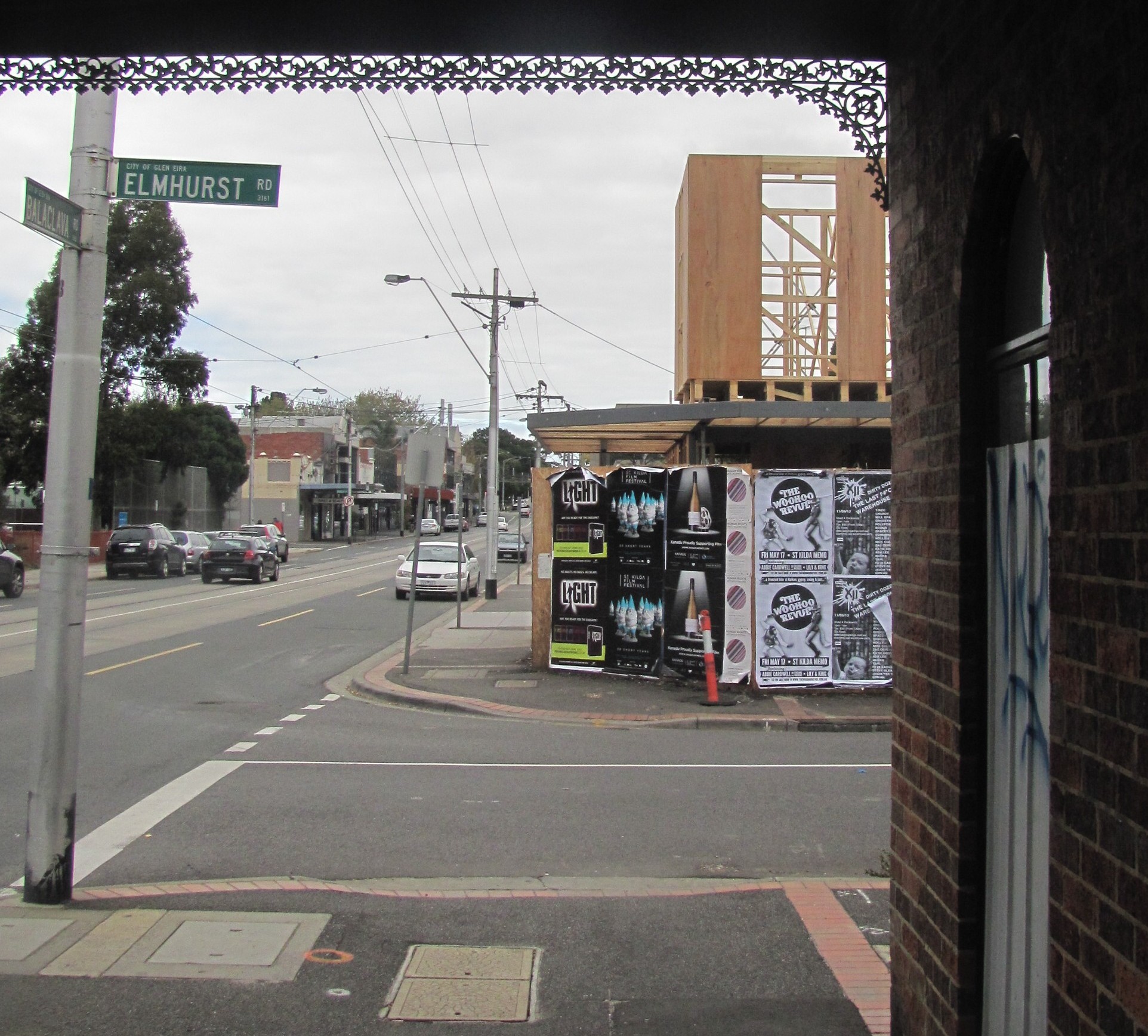
The development at 175 Balaclava Road in Caulfield North is a corner block facing onto the south side of Balaclava Road and on the western side onto Elmhurst Road. It is zoned Residential 1. It is a narrow, elongated block, approximately 9 x 46 metres. In previous incarnations the land housed a petrol station and a car repair shop, but for many years after that the site was vacant.

A planning application was made in 2006 by a developer for a three storey building comprising 8 units on the site.

The final resolution of planning issues was by mediation at the Victorian Civil and Administrative Tribunal (VCAT). The VCAT order which confirmed the mediation conditions became the planning permit. A planning permit was issued in January 2007, followed by a corrected permit in May 2007.

That proponent went bust and the site and the permit passed to another developer.

The site had toxicity issues – hydrocarbons, asbestos, and heavy metals. A site environmental assessment report was produced July 2008. Some underground storage tanks were removed, but a complete clean-up of the site did not occur. Instead, the remedy was to cover the whole site with concrete, with the agreement of the Environment Protection Authority (EPA).

While the standard setback in Balaclava Road is 6 metres, here there was none. At the rear of the block is a sewerage easement. This became the place for a tree (we will see if one appears or not). Little or no permeable area, or open space was provided.

Construction began early in 2013.

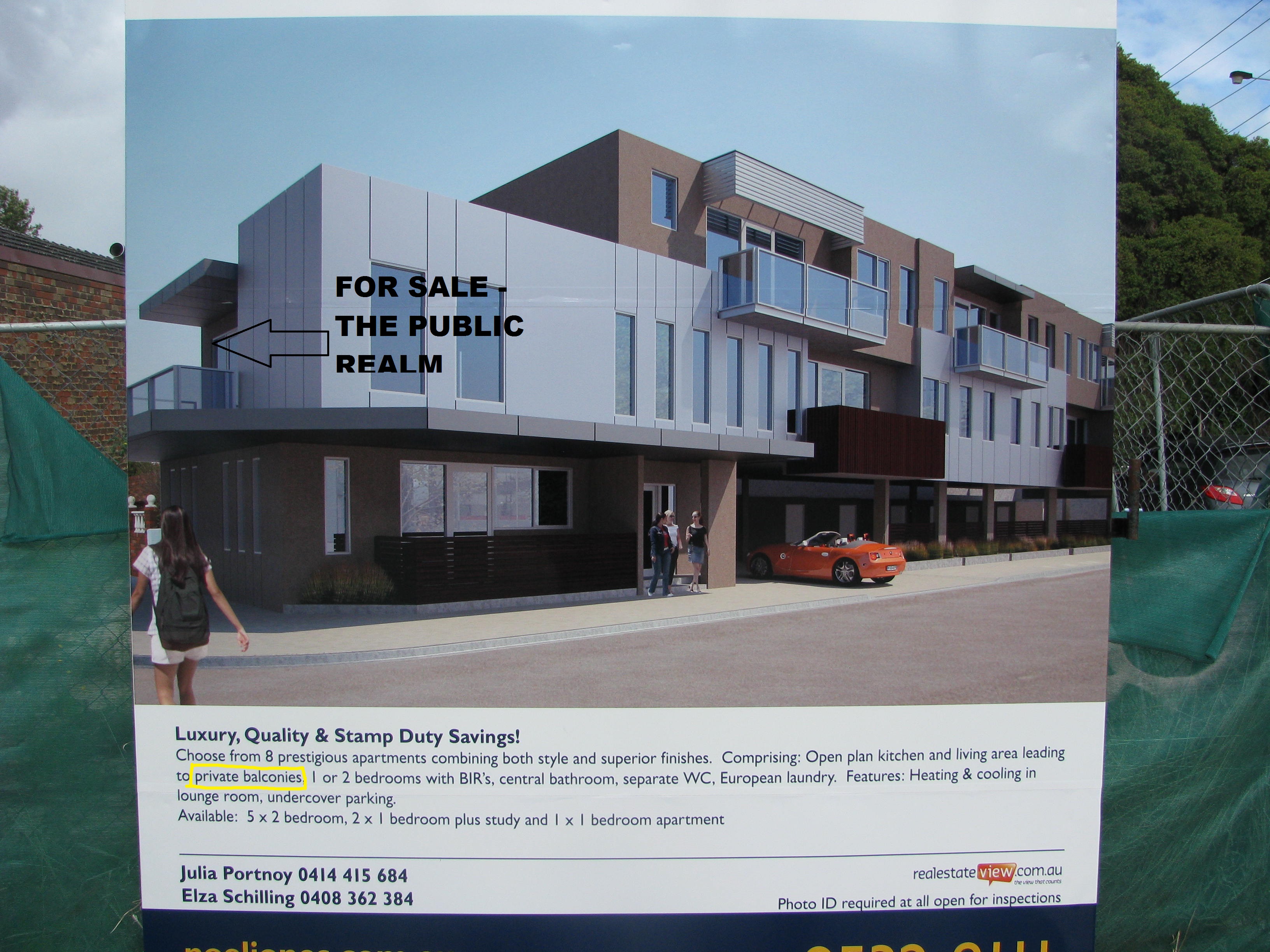
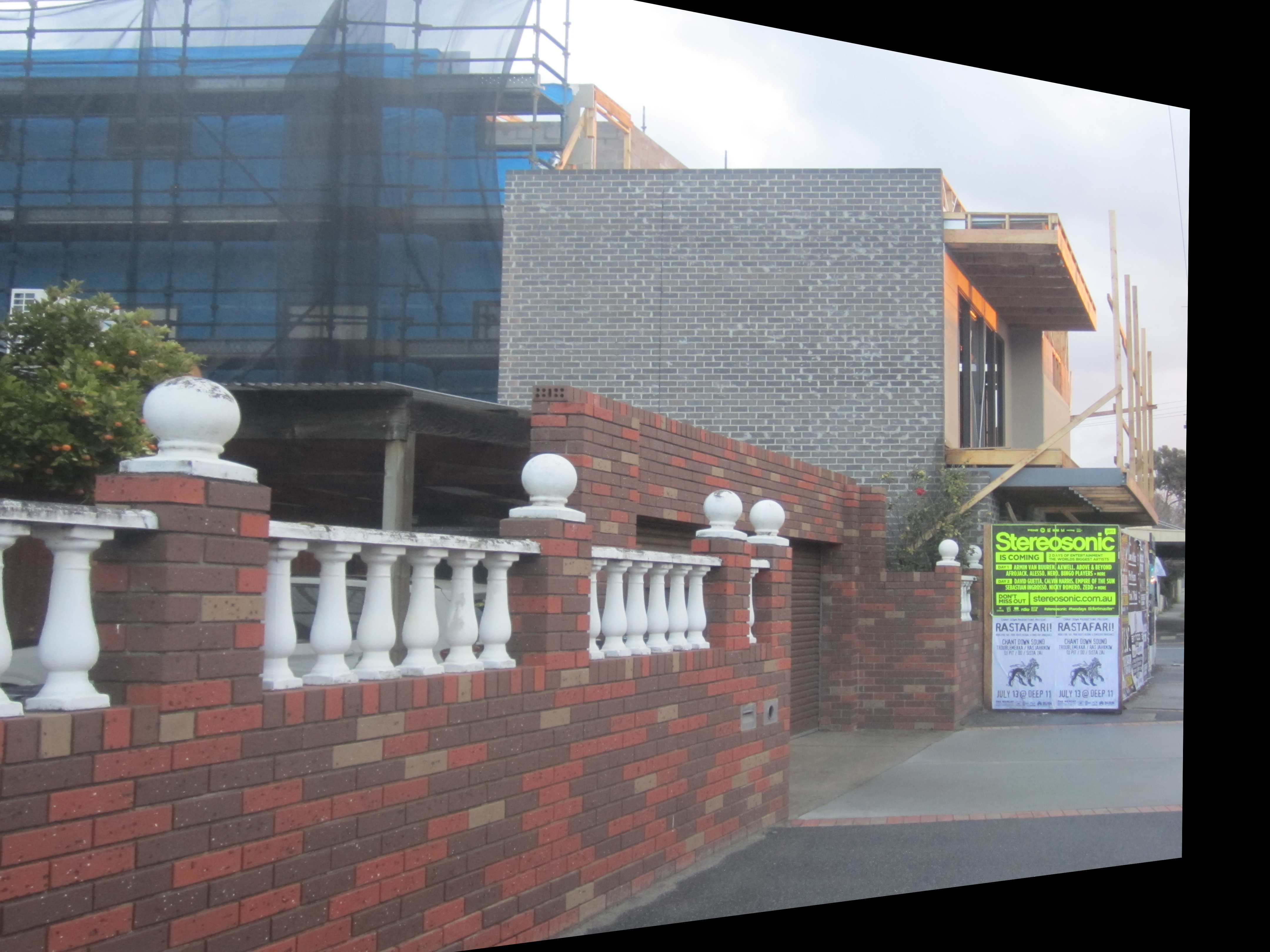
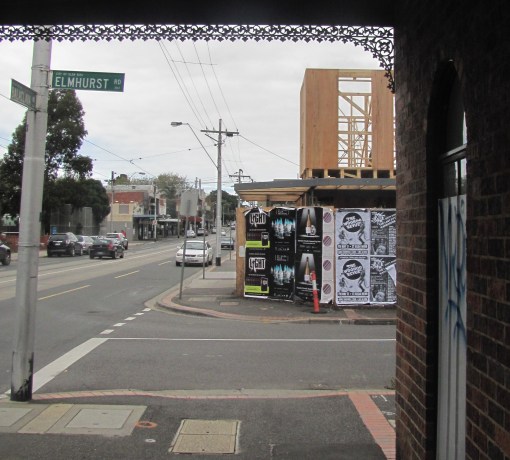
In May a framework for balconies appeared over Balaclava Road and Elmhurst Road. Although impressions of the completed building had been put on hoardings around the site it was not apparent balconies were projecting over the street (and casual observers probably did not consider such a thing possible). Clarification was repeatedly sought from the local council. A building inspector said he had visited the site and suggested the projections were verandahs rather than balconies and that they were in accordance with the permit. The permit stated that these balconies should not impinge more than 1 metre into the public domain.

An inquiry was made at the council office to see the plans for the development. The plan showed balconies extending over both roads. The plan was approved on 10 September 2010. At least three extensions of time must have been granted.

There was also a request to see the planning permits for the site. A member of council staff said that the request would incur a fee of $52 for the ‘history’ of the site. Section70 of the Planning and Environment Act was cited: “The responsible authority must make a copy of every permit that it issues available at its office for inspection by any person during office hours free of charge.” A staffer said she would get a copy of the permit and went away.

She came back without the permit and accompanied by a man named ‘John’ who said he was an enforcement officer. John explained that viewing of the permit was not necessary as it was ‘more or less’ the same as the VCAT order.

Glen Eira Council said there would be a delay in providing the permits because the permits had to come from archives offsite. A couple of weeks later, council said that the files could not be located in the archives, and later still that the files had been located and forwarded to the council, but had been mislaid in the council offices. Further inquiry was met with polite but firm hostility – more inquiry was not welcome, and council would forward advice when the files were found. That was weeks ago, and the advice is still not forthcoming.

And what of the public space occupied by developers in this way?

In the case of 175 Balaclava Road, if setback and permeability rules had been applied it is likely that two units would have to be removed from the development – a loss of over $1million to the developer. The occupation of public space over the footpath is equivalent to a gift of at least $50,000 to the developer. Indeed the developer advertises the ‘private’ ‘huge balconies’ as a key feature of the place.

On May 6th this publicity was downloaded –

SMALL BOUTIQUE DEVELOPMENT – HUGE STAMP DUTY SAVINGS! – 1 + STUDY

175 BALACLAVA ROAD – CAULFIELD

 Selection of designer 1 and 2 bedroom apartments starting from $450,000. Buy now off the plan for massive stamp duty savings. Ideally suited to owner occupiers or the astute investor. In a sought after location close to shops, cafes, bars, Monash University, Chadstone Shopping Centre, parklands and with easy access to public transport and within close proximity to the CBD.

 Features include: high quality fittings throughout, designer kitchen with granite bench tops and glass splashbacks, reverse cycle air conditioning, security entrance, individual secure undercover car park with storage cage, huge balconies, open plan living.

 Charles Marvelli: 0423 530 172

On Friday 24 May 2013 the Estate Agent for this site rang back to tell me there were 3 units left, a ground floor unit with one bedroom and a study was selling at $550,000, while a two-bedroom unit on the first storey was $612,000. The units would become available early next year.

According to the ‘responsible’ authorities spoken to at local and state government level there are no rules regarding the occupation of public space by developers. It is terra nullius – free for the taking, by developers at least. Our loss their gain, all facilitated by government authorities and the courts.

Who bears the legal liability for private occupiers of public open space? Is it the council (and therefore rate payers) who issued the permit? Who has the right of use of this public space? Is it exclusive to the building occupant? Is a homeless person who sleeps on a balcony occupying public space committing trespass? Can someone store goods there rent free? Can anyone attach posters or banners to these balconies? If there’s an accident who pays? What is council’s policy on allowing developers to extend into the public realm?

Reflecting on my experience with the above, it is clear that

1/ It is often very difficult to discover what the history of a development is, especially when conducted over such a long time frame. Many residents come and go in that time.

2/ The operation of planning in Glen Eira, and in the State, is unduly complex and not especially transparent.

3/ There is a distinct lack of clarity in the operation of planning rules – in Glen Eira and in  planning generally there is a strong tendency for abandonment of rules in favour of development of any kind. Exception is the rule.

4/ Developers, Glen Eira Council and VCAT appear to use complexity in planning schemes and processes to subvert opposition from communities.

5. Council’s planning register which is a legal requirement is far from accurate and up to date. Much detail in missing and even what’s there is impossible to decipher.

Simple planning rules would be adequate – areas for development prescribed, mandatory height limits applied, and open space and permeable areas mandated on a scientific basis.

Where planning rules and their implementation is not transparent the public is right to be suspicious.

++++++++++++++++++++++

COMMENT

Worthy of mention is the fact that we believe that some of the public questions that suddenly went astray and hence weren’t read out by Burke, concerned this development and these issues! Questions galore arise:

  • Does the community receive any compensation for this encroachment on public land? If not, why not?
  • Does council have a policy on such issues? Where is it? Other councils do have extensive policies that state clearly the conditions upon which public land can be used and the cost to the developer. (uploaded here)
  • How many other ‘gifts’ have developers received from Council – especially in residential areas?
  • Why have so many standards contained in the planning scheme been ignored – ie setbacks, excessively high walls on neighbouring properties, failure to respect neighbourhood character and countless others?
  • What does all this say about council’s mandatory record keeping processes?
  • Why are residents subjected to false claims for payment?
  • Is there a ‘cover-up’ going on here?

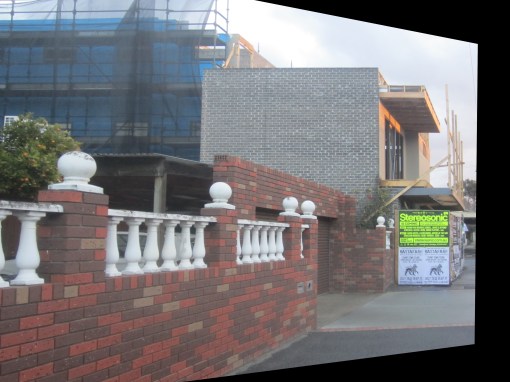
We’ve also received the following photographs: (a) the developer’s ‘vision’, and (b) the construction phase at two different angles and at different time periods.
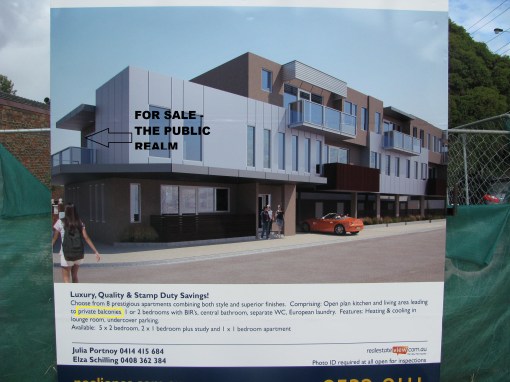
balconies

balcony2-1

bala2p-1

New planning scheme speeds up planning approval in suburbs

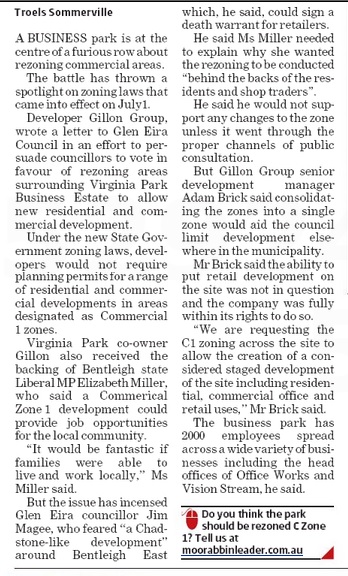
DEVELOPERS can now build restaurants, larger shops and high-density apartments without troublesome permits.

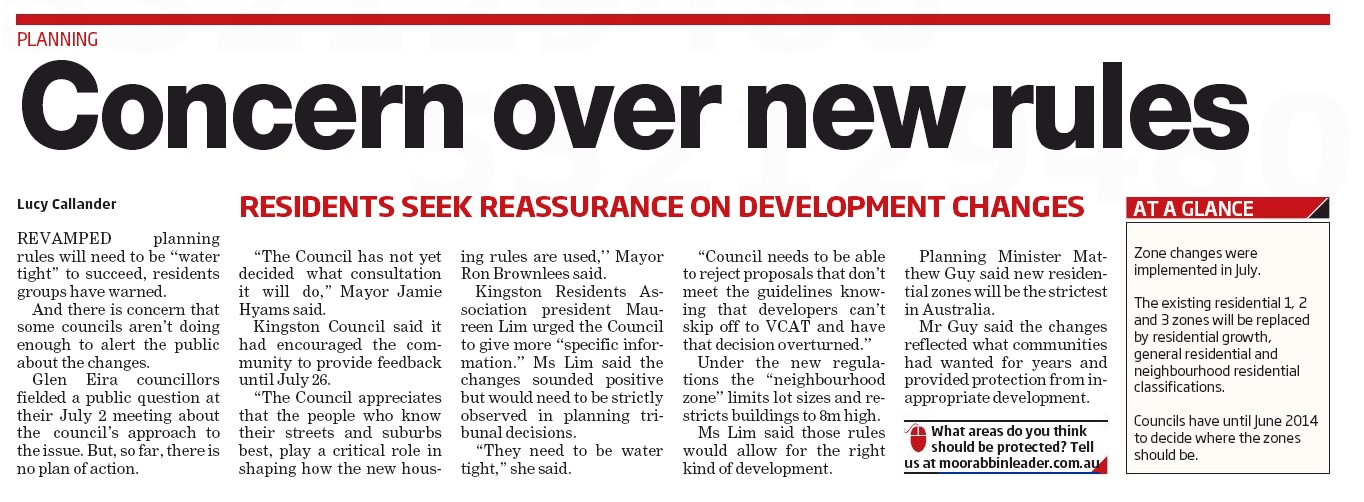
The planning zones changes came into effect on July 1 and have split councils.

Planning Minister Matthew Guy said the changes would simplify commercial and industrial zones, provide more retail floor space and encourage investment, particularly in Melbourne’s urban fringe.

Whitehorse Council fears the changes could open parts of the municipality to uses not contemplated for these areas, and displace industrial activities.

Whitehorse city development general manager Julie Reid said the council endorsed a submission to Mr Guy in September outlining concerns with the changes.

“In particular, there is a concern with the commercial zones significantly changing the range of uses permissible in the existing zones,” Ms Reid said.

“This will have the effect of opening up parts of the municipality to a range of uses not contemplated for these areas and potentially in contradiction to many of the council’s policies for these locations.”

She said there was support for some of the changes to industrial zones.

“Council has the flexibility of being able to determine how much office floor space is appropriate in ­industrial precincts across the municipality.

“Some of the other changes to the industrial zones could, however, displace industrial activities.”

Ms Reid said it was not known whether the changes would benefit commercial and industrial property owners in Whitehorse, or whether housing demand would increase in the commercial 1 zone.

She said the changes would result in fewer uses requiring planning permission, and where a permit was required, the guidance for assessing applications had been improved.

Changes support council plans

Meantime, Maroondah Council has applauded the changes to planning zones that allow apartments in Ringwood and Croydon’s main business areas.

But council is reserving judgment on the effect of the changes on the rest of the municipality, and will spend the next 12 months working out which areas will need special protection.

Maroondah Council’s director of city development Phil Turner told the Leader because Mr Guy had only just released the zone reforms last week, council officers were still reviewing those changes.

They would make a full briefing to the council later this month.

However, Mr Turner did say that the new planning zones supported Maroondah’s plans for the Ringwood Central Activities Area and the Croydon Town Centre Structure Plan.

“Council has specifically encouraged a mix of higher density residential and commercial developments within the Ringwood Activity Centre,” Mr Turner said.

“Croydon has also been the focus of major residential development over the past few years, with high density, apartment-style living encouraged in and around the town centre.”

ON JULY 1, five business zones were consolidated into two commercial zones with relaxed rules on the types of businesses that could open or expand without a planning permit

VICTORIA’S three industrial zones have also been amended to remove floor space restrictions and allow small supermarkets up to 1800sq m, which were previously not allowed

CONVENIENCE shops will be allowed in Industrial 3 land to create commercial opportunities and competition

MORE information can be found on the Department of Planning and Community Development website.

– with Melanie Gardiner and Emma Hastings

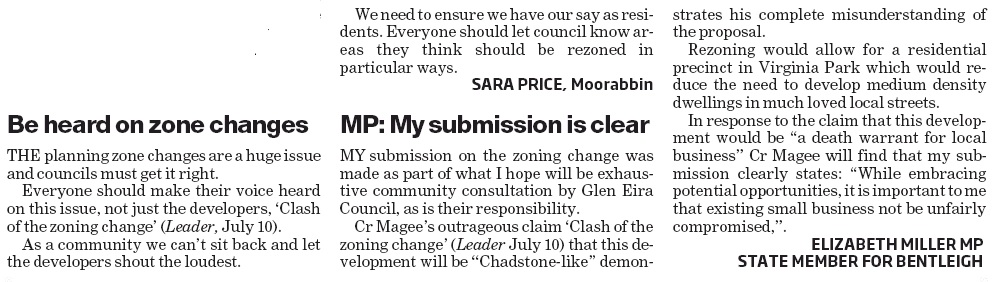
zone1

zone2

Over the past week there have been numerous announcements about the Residential Zones and their implementation. First off the 7pm ABC News stated that Boroondara and Glen Eira were to be the first to introduce the new zones. Next came 2 Age articles where again Glen Eira was mentioned as being first cab off the rank. Even the Minister’s Media Release this week highlighted the fact that he thought that many councils would introduce the zones within 4 months.

We don’t for a second think that there is nothing to these stories. Such stories don’t just happen. They must have originated from somewhere! You don’t just pluck one or two councils out from 79! What irks us even more is that for the past year not a single statement has come out about the new zones from Glen Eira councillors or administrators – except for the formal submission. Residents have not been informed about a single thing. We do not know:

  • Whether there will be any public consultation – which has already been ongoing in countless other councils
  • Whether the shambles that constitutes Housing Diversity and Minimal Change will remain untouched?
  • What the available height limits will be. Remember nothing is mandatory in Activity Centres.
  • Whether Council will abide by the minimalist ResCode standards or attempt to introduce their own?
  • Or whether this council is content to rely on plans drawn up eons ago with no further local analyses and comprehensive planning – despite the burgeoning population and the growth of dwellings?

What makes us even more suspicious regarding the intent of excluding the public is that under Section 20 of the Planning and Environment Act, Council has the power to simply request the minister to authorise an amendment without formally notifying residents or seeking submissions. Further, Council’s response to 2 public questions on Tuesday night has only added fuel to the suspicion that residents will be left out in the cold and that the new zones are already a fait accompli.

One question specifically asked when council would begin its public consultation process. The answer was incredibly brief – “Council has not yet decided” and typically uninformative. The other question noted the media reports. Council’s response was that they don’t control the media. True, but when the Leader has in the past published negative articles Council was very quick to denounce and deny the articles. No denial was proffered to this question. We do not for one moment believe that nothing has been decided. And, if ‘undecided’ then what does it say about the overall planning capability of this council and getting their act together in a timely fashion? These zone reforms are important. Council has had a year to decide on the appropriate time. It is far more likely that this answer has as much veracity as countless other public statements by council. We firmly believe that:

  • This council will secretly and surreptitiously introduce the new zones
  • There will be no public consultation whatsoever
  • The anomalies and injustices of planning will continue

If we are right, then every single resident in Glen Eira should be outraged. The Minimal Change and Housing Diversity zoning is a failure. It is a myth that 80% of the municipality is protected. Housing Diversity areas have expanded and expanded to now include all major roads and those roads with trams. Activity centre and neighbourhood centre ‘borders’ have also grown – especially if they are anywhere near a railway line. Thus if anything, it is no longer 80/20 but a conservative 70/30. Furthermore, most high density is in these growing areas where we’ve had 8, 10 and 12 storeys approved. It is no longer a single application for dual townhouses. Blocks of land are now seen to quite comfortably accommodate 3-4 storeys and 30 units. And even in the much lauded Minimal Change, if the land is on a corner block, or happens to be a tad larger than the average, or lies a few hundred metres from an Activity Centre, then it’s become the norm for multi-unit development.

Our guesstimate is that as a result of this cramming, perhaps 50% of Glen Eira’s population now resides in these areas. Council of course hasn’t undertaken a ‘review’ of its Housing Strategy since the dark ages and it wouldn’t surprise us at all if they have absolutely no idea of population densities in each suburb. That’s the sort of work that needed to be going on over the past few years and definitely needs to be going on now – BEFORE any arbitrary zoning lines are drawn on the municipal map. If any of these figures are available, then we simply challenge this council to produce them and argue its case.

What is even more discriminatory is that these high density areas are not accorded the basics of social and environmental amenity according to this planning scheme. They lack adequate open space provision; landscaping; onsite car parking. They are also subject to greater site coverage and it is not considered too bad if 25% of dwelling don’t get natural sunlight. That is the legacy of this planning scheme and its creators. And this is what will continue if the zones are simply rubber stamped. In 2002 people did not realise the repercussions of the amendment which established all this (c25). Now it is clear to everyone. Residents must have a say on their future. If not, this council should be dismissed.

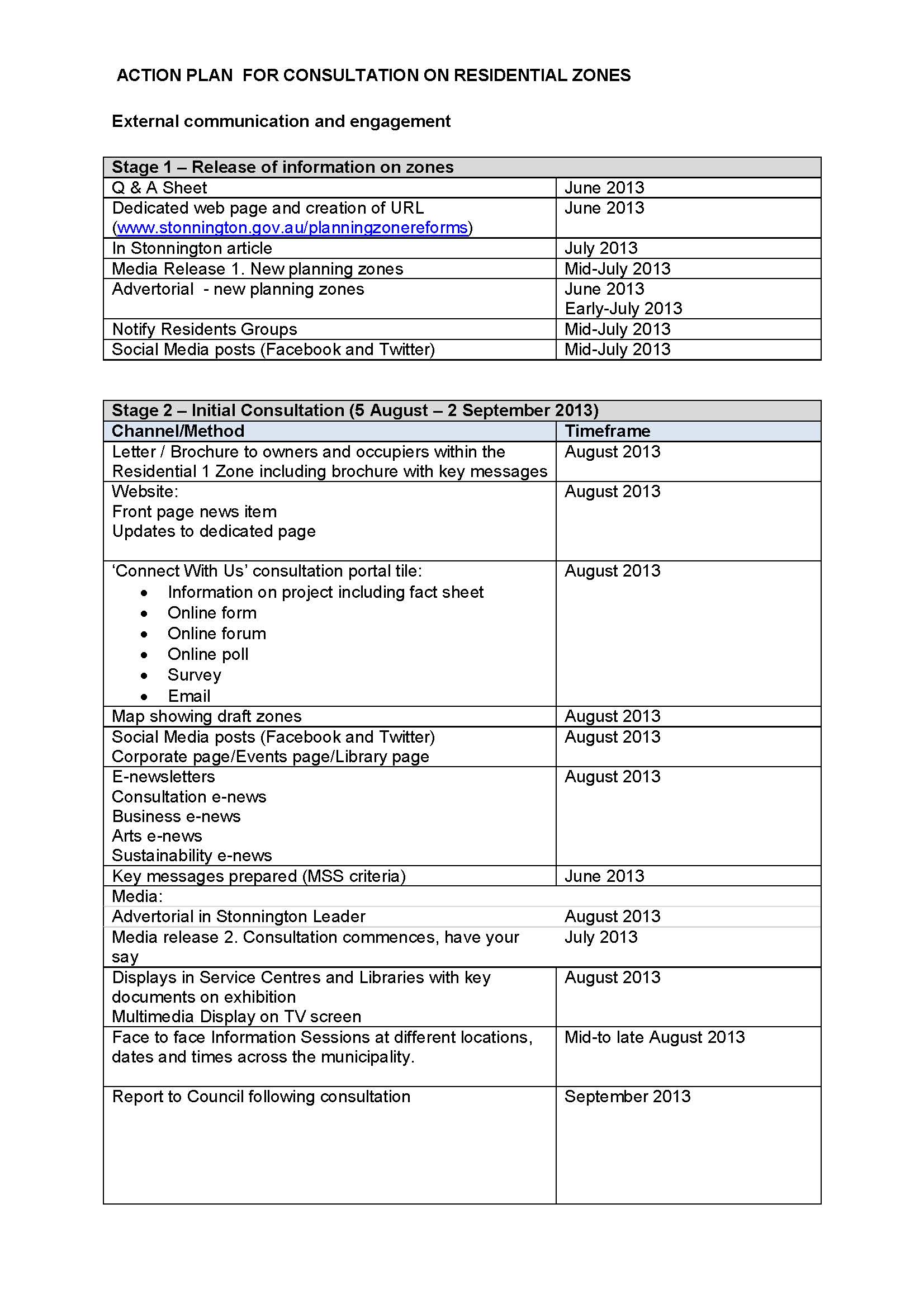
Finally, we include the consultation program that Stonnington has set out for the next few months. Its willingness to engage and encourage residents is the total reverse of what happens in Glen Eira on so many fronts.

Pages from stonnington consultation_Page_1 Pages from stonnington consultation_Page_2

A joint letter/petition containing 116 signatures was tabled at last Tuesday night’s council meeting. The letter/petition, as presented in the draft minutes, reads:

We the undersigned, supported by our concerned neighbours, pedestrians, and users of Tucker Rd Bentleigh, wish to bring to your attention the following:-

  • The above referred to property, has been left vacant for over seven years, except for the recent buildings at the rear of the property, on Box Court.
  • The original house has been, and continues to be vandalised, and defaced by graffiti. Squatters have been a regular problem.
  • The unattended plant growth is harbouring vermin (as reported by neighbours) and possibly reptiles, which could pose a threat to the health and safety of nearby residents and the many pedestrians.
  • Disregarding the recent temporary fence, it can also be a safe and welcoming haven for the unsavoury characters who may prey on the ’unsuspecting’ who frequently use the adjacent footpath throughout the day and into the late evening (anyone, from school children to the aged).
  • The site is an absolute disgrace and an ‘eye-sore’ which degrades our beautiful Bentleigh Street. Property of neighbouring houses could be devalued because of this shameful and neglected site.
  • The Old House was once a magnificent building and the garden greatly admired. It was, we believe, regarded as a ‘Heritage Listed’ property. It is such a shame to see it so dilapidated.”

 Crs Lobo/Magee

That the Petition be received and noted.

The MOTION was put and CARRIED unanimously.

All well and good. EXCEPT, that when minutes are created and parade themselves as the honest to goodness literal and verbatim truth, then they should be precisely that – accurate to 100%. These minutes are not. When Paul Burke read out the letter/petition he stated the address of the property – 150 Tucker Road, Bentleigh. This has now vanished – although there is nothing to indicate to the reader that there is anything missing. No “…..” to indicate an excision, or any comment to this effect. Without knowing any better the general public would have to assume that this is what the letter/petition stated. History re-written for the official record – and not for the first time!

But there’s more to this story than the simple omission of an address. The history of this dwelling goes all the way back to 2006 according to council’s application register. In short, this is a clear case of ‘land banking’ and permit extension after extension. The result is the ‘eyesore’ and derelict property at 150 Tucker Road.

Last year there was an agenda item where councillors had asked for a report on collecting statistics related to permit extensions.  (See: minutes of June 12th 2012). Instead of responding to the actual request the report tried its darndest to do nothing of the sort. Here are some quotes:

 Council does not currently keep statistics in relation to requests for extensions of time. As mentioned previously, a process change would be required to enable statistics to be recorded– in other words, ‘we won’t do it’.

Then there’s also this – …what is the purpose or insight provided by keeping extension of time statistics? There would appear to be limited value to be gained in extracting these statistics. It may be thought that they are some form of economic or lead indicator about development. If this is so, a better lead indicator is building approvals.

The final recommendation included: “Not commence statistic recording in relation to the requests received for extension of planning permits”.

The final resolution carried by councillors stated that statistics should START being collected. One year on there have been no reports on how many applications for extensions there have been, nor how many have been granted in this time. What should have happened is that officers be ordered to collate data for the past decade at least. In that way the true picture of what is going on in Glen Eira would be apparent.

When developers hold onto blocks of land granted a permit, or allow derelict houses to remain standing for years on end, the result isn’t merely the vandalism and eyesore of 150 Tucker Rd or the generally increased value of the land for development. Extension after extension equates to piecemeal planning all over again since there is no recognition of what is happening in surrounding properties or areas. Kingston insists that requests for permit extensions are not automatically approved by officers, but that these applications come back to councillors for re-appraisal. Six years down the track many things may have changed. Drainage, parking, noise, traffic – all may be reasons to amend the old permit and not simply rubber stamp it again with another extension.Simply rubber stamping extensions does no-one a favour except perhaps the developer.

Which takes us back to the beginning of the post and the attempt to rewrite history. 150 Tucker Rd should be visited by all those concerned with how this council deals with planning issues and how it appears to bend over backwards to support developers rather than maintain the amenity of residents. Readers should also question why the address of this property just happened to disappear from the transcript. Or is this simply another case of ‘clerical error’!!!!!!!

We have learnt that the Alma Club application has already been sent off to VCAT PRE-EMPTING, in all probability, any council resolution on Tuesday night. Why? Because Council did not finalise the application within the required 60 day limit.

This is both extraordinary and inexcusable and, in our view, raises serious questions about process, and potential secret deals that may have to ability to completely sideline both councillors and resident objectors. To refresh people’s memories here are the facts:

  • The application was received by Council on the 19th March 2013 according to the planning register.
  • It was not until EARLY MAY that the yellow notice went up. Residents had until 14th May to register their objections. That makes it roughly 6 weeks that Council sat on this application before presumably doing anything about it or informing residents.
  • A planning conference was held on the June 5th.
  • The item was set down for decision this coming Tuesday – the 2nd July.

There cannot be any excuse for this inaction, especially since Council would have been fully aware of the contentious nature of the application and its value in monetary terms. All stops should have been pulled out to ensure that the time limits were adhered to. Why weren’t they? What are the possible outcomes for the current situation – given that we’ve learnt that mediation and a 5 day VCAT hearing has been timetabled for several months down the track? Several potential scenarios now rear their ugly heads:

  1. Any possible councillor resolution on Tuesday night is now a moot point and probably won’t go ahead
  2. The developer ‘in consultation’ with officers will either submit amended plans directly to VCAT, or again in consultation with officers work out various ‘conditions’. In both cases the parameters will be set and both residents and councillors will not have a say.
  3. Since a permit has not been granted, the prospect of ‘amended plans’ coming to a full council is most unlikely.

All of these scenarios raise serious questions about governance within Glen Eira; the role of the planning department and most importantly, who knew what and when. For example:

  • When did council officers know that the developers would be going to VCAT?
  • When did officers know or decide that the 60 day limit could not be met?
  • Do councillors know? Or do some councillors know since we’ve been informed that one particular councillor has been telling objectors to forget about appealing since VCAT will overrule anyway?
  • Even MP Southwick has got in on the act with an offer of ‘mediation’! Why, and what does he know that residents possibly don’t?
  • Why didn’t this well paid planning department get its act together on time?
  • Was this ‘delay’ in fact planned right from the start?
  • What ‘discussions’ went on between developer and planners? How often? When did these ‘discussions’ start?
  • Was there ever any discussion about time lines?
  • Has any officer actually kept records of these meetings and/or discussions as required under the Records Act?

There are many, many, other such questions – all of which only cement the already existing perception that all is not 100% kosher within Glen Eira– especially when it comes to planning matters!


« Previous PageNext Page »