GE Planning


A very quick summary of the decisions from tonight’s council meeting. There were no surprises. The same old cliches, contradictions, and lamentable arguments were trotted out on cue. The gang has now definitely recruited another member – Thomas Sounness to join Pilling!

We will provide a full account of the ‘debate’ in the days ahead. Here are the outcomes:

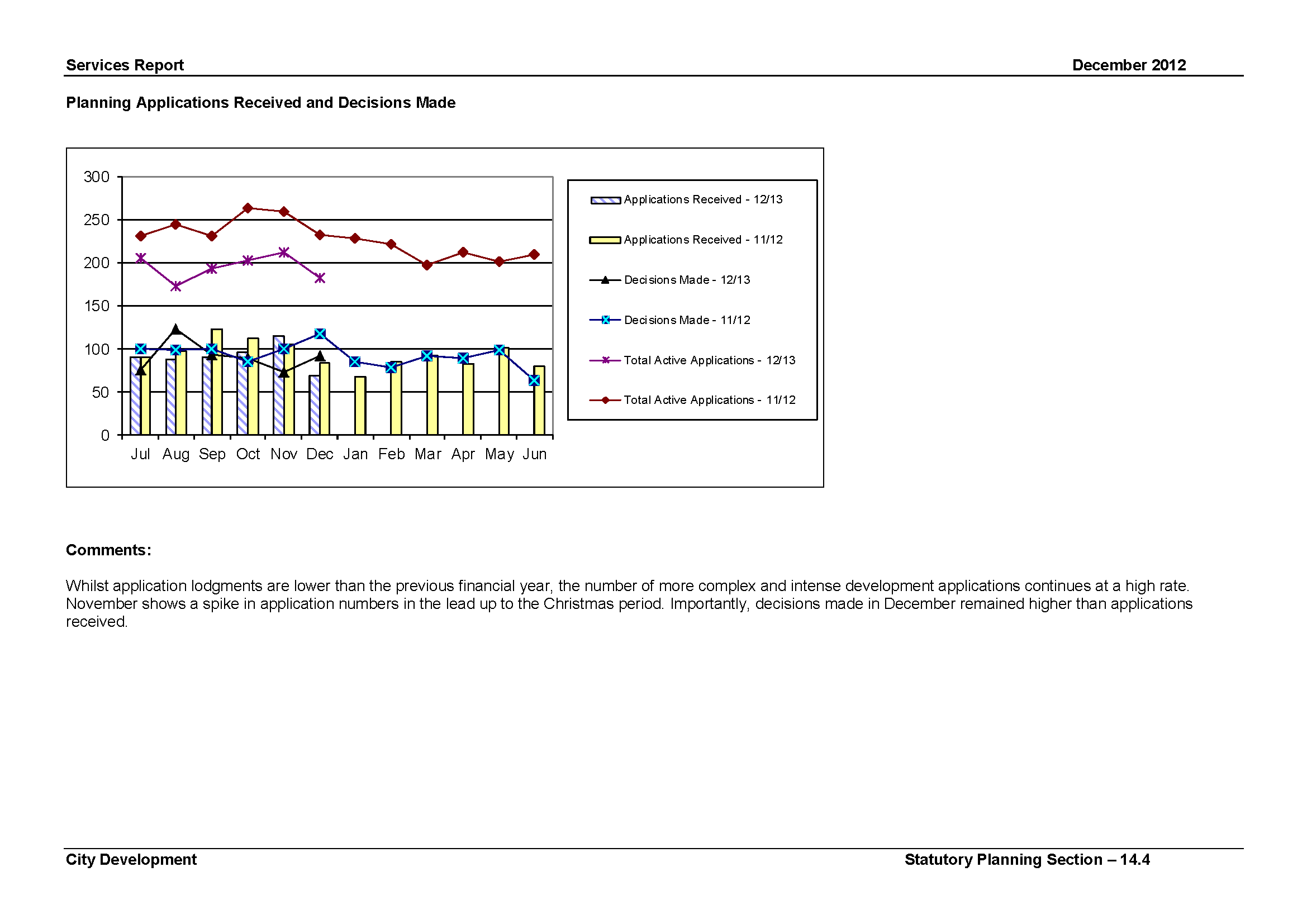
1. 8 storey Glen Huntly Rd – reduced to 6 storeys.

2. 4 storey Glen Huntly Rd – reduced to 3 storeys

3. James St – reduced by one unit

4. Tree Register – passed – but all in the hands of officers and will account for less than 1% of trees

5. Car sharing – another ‘review’ in a year’s time!

6. Public questions – none answered satisfactorily

7. Magee’s Request for a Report – after much argey bargey finally got through plus $15,000 expenditure on ‘external’ report by consultant.

In our opinion, many of the items set down for next Tuesday night’s council meeting are nothing short of disastrous for residents. We apologise for the length of this post, but the issues are extremely important.

Item: 483-493 Glen Huntly Rd

Application is for 8 storeys; 4 shops, 57 dwellings and car parking and loading bay waiver. Ron Torres recommends acceptance of application with some minor conditions thrown in. We do not really have to say anything but let the report itself tell the full story. Here are the relevant extracts:

Taking up opportunities for more intense development in the appropriate locations gives Council greater legitimacy and credibility in limiting development in Minimal Change Areas. In other words, it’s okay to sacrifice 20% of Glen Eira without ever defining what “intense development” really means!

It is considered the building itself is of a high quality architectural design that compliments the rhythm of the narrow Glen Huntly Road shop fronts and will make a positive contribution to the emerging character of the Urban Village. In this context, it is considered the proposed building at a height of 8 sotreys is consistent with the policy expectation for this site. Here is it in black and white! 8 storeys is the benchmark for this council! Beware the Planning Zone Reforms! We could also be quite pedantic and wonder what on earth ‘rhythm’ has got to do with ‘planning law’ as so constantly noted by Lipshutz, Pilling, Hyams. How exactly ‘rhythm’ is quantified is of course another question. We suppose it just sounds good and will surely now feature regularly in future officer reports.

The report however gets even better! –It is proposed to provide 66 on site car spaces within 3 levels of basement car parking. The planning scheme requires 82 car parking spaces. Torres goes on with this feeble rationalisation – In this case, a reduction in the visitor car parking requirement is justified. If sustainable transport modes are to be promoted, then a reduction in the visitor car parking requirement should be encouraged. It is considered appropriate to provide a modest level of visitor parking. However providing additional on-site parking for visitors will only encourage more vehicle traffic to an area which anecdotally has issues with traffic. It is also noted that a visitor parking rate of 1 space per 10 dwelling (as proposed in this case) has been supported previously in activity centre locations. The logic is incredible here. Visitor parking will encourage more cars – but allowing 8 storeys and countless dwellings presumably won’t – or at least this isn’t mentioned. Readers should also note the reference to ‘anecdotal’. Pity that there is not one scrap of data in any part of this report to substantiate any of the claims made!

But the best is yet to come! The Transport Department had this to say – Providing less than half the required number of residential visitor spaces on the site is not appropriate. A minimum of 9 on-site visitor car spaces is recommended.

Urban Design then has this to say: There are several trees on the property to the north which have the potential to be impacted upon by the proposed development. The size and extent of basement will mean there are no realistic opportunities for tree planting and the concept landscape plan is not supported. So, here we have traffic and urban design saying ‘nay’ – yet the proposal gets through. Residents should be asking exactly how many ticks in the boxes does it take before a proposal is rejected? What is the priority listing for all these boxes? For example: is parking given greater weighting than landscaping or natural light?

Then there’s this further icing on the cake: The existing street tree can be removed at the permit holder’s expense.  So much for a ‘green, gregarious garden city’!!!!

Item 687-689 Glen Huntly Rd.

The application was for a 4 storey, 29 dwellings, 2 offices, and a reduction in visitor car parking. Recommendation was to accept, but with 28 dwellings! There’s also an interface with Minimal Change Area. The report notes that the property has a permit for 3 storeys and 19 dwellings + 2 offices. This application is to increase dwellings and height. The ‘reason’ not to grant the full 29 dwellings but rather 28 is: ….it is recommended that Units 401 and 402 on the third floor be consolidated to form one 3 bedroom dwelling, thereby contributing to housing diversity and reducing bulk/mass impacts. Wow! Does this mean that out of 29/28 units ONLY ONE will be a 3 bedroom outfit? That is really encouraging ‘housing diversity’ to cater for families, etc.!

On car parking we have this gem: It is proposed to provide 33 car spaces in the basement. This satisfies the planning scheme for the dwellings and offices but not for visitor parking. Only one visitor space is proposed whilst the planning scheme asks for five. Council’s Transport Planning Department has suggested that at least 3 on-site car spaces should be provided for visitors.

Item 6 James Street, Caulfield South.

The application is for 3 storeys and 10 dwellings. Interestingly, the site is labelled as South Caulfield. It is Glen Huntly! Officer’s recommendation is for 9 units. A notation states: In 2011, an application was refused which proposed a two storey building with seven dwellings. It was found to be an overdevelopment of the site…..The current proposal is for ten dwellings. It is however, not an overdevelopment like the previous proposal. Reasons given are that car parking is now ‘adequate’ and site coverage has ‘fallen from 59% to 46%.’

What’s particularly galling is the argument that is then trotted out: …the proposal is more akin to the characteristics of the emerging character of the area. Recently approved, at the direction of VCAT, is a 27 dwelling, four storey development at 18-20 Etna Street, Glen Huntly, located two properties east from the subject site. Once again, the folly of lack of height limits is exposed. Now the argument becomes because the precedent is already there so further development is okay.

One other very important aspect of this application concerns the destruction of a liquidamber. We highlight this aspect given the spin that is the item on Significant Tree Register also in the agenda. The comment reads: There is a tree located at the rear of the site (Liquidambar) that is proposed to be removed. Its removal is considered acceptable given the site’s location in a Housing Diversity area where this type of development is envisaged and where replacement trees can provide for more appropriate landscaping.  Housing Diversity Areas are again sacrificed. They do not need trees, open space, or normal amenities. Exactly what “appropriate landscaping’ means is again not explained.

ITEM TREE PROTECTION

We remind readers that the issue of a Significant Tree Register has been rearing its ugly head since at least 2003.  That’s ten years of doing absolutely nothing. The unnamed officer’s report on this issue is another piece of spin, dissembling, and the failure to adequately inform. Given the comments from the James St. application the irony of the comments found in this report should be obvious to all readers. We quote:

The normal processing of town planning applications provides on going protection of over 200 valued existing trees and the planning of over 1,000 future canopy trees each year.

Where values trees are identified, the town planning assessment will regularly incorporate permit conditions which require protection during construction and a tree management condition to ensure the ongoing retention of the tree/s. Where a tree to be retained is near a proposed building, further conditions are applied for special foundations which do not disturb or damage the root system. Similarly, the proposed building is protected from future damage from the tree roots. Such foundations often add thousands of dollars to construction costs. Wonderful isn’t it?  Who identifies ‘valuable trees’? Certainly not residents or councillors! How many trees have been allowed to be cut down (as with James St) in order to squeeze more units onto a block? How well ‘safeguarded’ are such trees by the planning processes?

We’re then told that there are penalties for removal of trees without a permit. We wonder how many prosecutions this council has carried out in the past decade?

After a page and a half of self praise, the report finally gets to the nitty gritty, with:

Approaches to supplement existing levels of tree protection include the following.

Introduce a Local Law to require a permit to remove any tree of more than a specified size, usually measured by circumference of the trunk. This involves property owners applying for a permit, paying a fee, possibly requiring a report by an arborist, with the Council determining whether to grant the permit or not. Many Councils have this approach.

Introduce a Classified Tree Register where there is a Local Law requiring a permit but only for those high quality trees which Council has included in the Register.

That’s it as far as details go. Nothing about resident rights to object to street tree removal; nothing about private versus public property; nothing about giving residents the opportunity to have input into ‘valued’ trees; nothing to restrain this council from chopping down tree after tree without producing a qualified arborist’s report.

There are many other items in this agenda which deserve to be severely criticised. We will do this in the days ahead.

PS: Just for the heck of it, here’s the 6 James St. proposed development PLUS THE ‘INSIGNIFICANT TREE’ that’s about to get the chop!

Untitled

This post is simply pointing out some ostensible patterns or trends and is positing some questions for residents’ consideration.

Over the years there have been many complaints about the running of the so called ‘planning conferences’  – ie. how objectors are not given the opportunity to ask the developer questions (that’s when they deign to even show up as with the centre of the racecourse debacle); how the planner’s final report is only available on the Friday before the council meeting, and so forth. The stated objective is that these planning conferences function as opportunities for dialogue and the potential resolution of differences. We wonder how much dialogue and subsequent compromise ever eventuates – especially when no real reports or ‘satisfaction survey’ results are made public.

Related to these conferences is the question of who chairs them. Should only local councillors chair such meetings if the application relates to their ward? Or should everyone be sent throughout the municipality since, as Lipshutz so often delights in telling people, he doesn’t just represent Camden Ward, but all of Glen Eira! It’s very strange then, that the vast majority of his chairmanship just happened to involve applications that were located in Camden!

Next is the NUMBER of planning conferences chaired by the various councillors, and the nature of the respective applications. Our analysis tells us that when the stakes are pretty big (such as major high rise developments, or important amendments such as C87, or applications that have garnered large numbers of objections) then the ‘big guns’ – ie Hyams, Lipshutz and early on, Magee – are dragooned into action. What also stands out is that throughout the duration of the last council, Penhalluriack DID NOT CHAIR ONE PLANNING CONFERENCE! Why, we wonder?

Here are some stats outlining the number of times each councillor chaired a meeting. We’ve omitted Staikos and Whiteside.

Hyams – 28

Lipshutz – 23

Magee – 25

Esakoff – 14

Tang – 5

Pilling – 19

Lobo – 7

Forge – 8

When we start looking at the individual councillor and the individual application, then there is definitely a trend. For example: on the few times that Lipshutz ventured out of his electorate it was to chair pretty contentious development proposals, that either drew heaps of objections or, were ‘unusual’. (ie the sell off of Station St to the Port Phillip Housing Association for $3.1m; Mavho St with stacks of objections). Magee was the ‘jack of all trades’, especially early when he was presumably ‘one of the boys’ – so he also got a few major projects. Then there’s our erstwhile Mayor. He’s indispensible, peripatetic, and seemingly most available – especially for many of the really top notch and contentious proposals (C87 Amendment; 10 storeys in Glen Huntly Rd.). Most of the other councillors were left with run-of-the-mill stuff such as double storey applications in minimal change areas. The over-riding impression is that the gang, including Pilling of recent times, generally get the really important proposals and the rest of the councillors all the left-overs.

Some other questions to consider:

  • Are these conferences allocated or do councillors ‘volunteer’?
  • If allocated, what is the rationale for picking which councillor chairs each meeting? (availability assumed)
  • And the $64 question? How many ‘discussions’ has the chair already had with the developer prior to the conference as opposed to the number of discussions had with objectors? And as revealed at a recent council meeting with Lipshutz and his ‘volunteer’ in handing out how to vote cards, what about the potential for conflict of interest?

All in all, like everything else to do with planning, there is plenty of opportunity for manipulation and rigging the game – especially when there’s the oft repeated ‘threat’ of closing the meeting if too many people ask too many embarrassing questions!

First some background to refresh people’s memory. An application for a 3 storey, 10 unit development on Mavho St., Bentleigh was rejected unanimously by all councillors in March 2012. Planning officers had recommended a permit. The earlier planning conference was severely criticised by residents. Lipshutz was accused of gagging residents (See our earlier post: https://gleneira.wordpress.com/2012/02/23/tansparency-accountability-who-do-councillors-really-represent/). Objections then ensued from the applicant and residents and the case was set down for a VCAT hearing this Monday and Tuesday (21st & 22nd January).

We present below an email exchange between one of the objectors and Hyams. Names are deleted.

Dear Jamie & Oscar

It is with great disappointment that I write to you both about the recent correspondence from the Council’s planning office (received today) (Thursday 17th January). Attached is the Planning departments proposal for VCAT hearing which arrived today! The hearing is on the 21st & 22nd of Jan. Your Planning department is putting forward a proposal for 10 apartments! Were you aware of this situation? Did you follow up with the so called planning experts as to how they planned to stand their ground at defending the councils decision to reject the development? I fully understand that:

While Council has prepared suggested conditions in accordance with this VCAT requirement, it is emphasised that Council continues to oppose the proposal.”

Please explain why the residents, that have so vehemently rejected this entire development, not been privy to this compromised proposal by your planning department till the last minute?  Is this draft proposal a joke? It beggars belief that the person representing the Council (and by default, the residents of the area) is committed to the decision that the Mayor and all Councillors took in the Chambers.

You will recall that the meeting of the erstwhile Councillors (elected representatives of the residents of Glen Eira) had rejected the development outright. Is the representation at VCAT not to defend the councils decision on the day? The rather late receipt of this draft simply reinforces belief that the developers are in cahoots with the planning department and the residents are mere fools, misled by those in power. Let me assure you that as residents we oppose this draft. We are left with no time to question anyone in the planning department.

We are shocked that the amendment has been sent to all of us a day before the hearing is set? A clever ploy by the Council’s planning department to avoid any discussion on the matter. You leave us with no time to question the draft.

Jamie, in all you correspondence to me, you had assured me that the Council representative at VCAT would be an independent person. It seems otherwise. Whilst the Council would not be using a qualified legal representative, it would have an expert, independent planning authority. Correspondence received today leaves us with little hope and confidence.

The representation should be without FAVOUR or FEAR. This hearing/case will set a precedent for all of Bentleigh and it should be monitored and dealt with extreme due diligence. Given the timing of this draft proposal (attached above) by the council, perhaps, you are happy for the develpers to PLUNDER the residential streets of not just Bentleigh, but all of Glen Eira. The preparation for the VCAT hearing should focus on complete rejection and NOT COMPROMISE in favour of the developer.

Please treat this as a matter or urgency and reply ASAP.

Thank you

Regards

Xxxxx

 ++++++++++

Dear xxxx

Thank you for your email. I understand your concern as to how this looks. However, it is a requirement of VCAT that whenever Council refuses an application, it must still draw up a set of conditions to assist VCAT. This is the requirement set out in Practice Note PNEP1, referred to in the covering letter. It is a legal requirement, but does not in any way mean that Council will not be defending its decision to refuse the application.

Council’s representative at the hearing will be independent of Council’s planning department, as you mentioned I had previously advised you. We will be using a well-regarded private planning consultant named Andrew Crack.

If you have any further enquiries, please do not hesitate to contact me.

Good luck with the hearing.

Regards,

Jamie

+++++++++

 Dear Jamie

I am certain that you do not understand my concerns. The key issue has not been answered by you. Why have the concerned residents been informed of the proposed, back up draft plan at the nth hour? The planners in all their arrogance have assumed that what they recommend will suit the residents. This development, if approved, will have an adverse impact on lot of people. The correct process is that the objecting parties have to be kept in the loop about all suggested changes to the plans.

I request you to explain why we have received the draft suggestions a day before the hearing?

+++++++

Dear xxxxx,

I agree that the short notice given was inappropriate. The VCAT requirement is that such notices are sent out 5 business days prior to the hearing. In this case, the notices were sent out later than that. I am informed that this was a rare lapse, and was because the relevant officers were just returning from their annual leave. 

However, the important point is that, as I mentioned, Council will be defending the refusal, not advocating for the draft plan.

Regards,

Jamie

+++++++++

Dear Jamie

Once again you defend the planning departments shortcomings. The VCAT requirement gives you more than 5 days. I have a copy of the PNEP. A rare lapse? I had made it very clear to you in my email in December that given the timing of this hearing and the holiday season, particular attention needs to be paid to this case. I had pre empted the planning departments lack of diligence and bought the timing to your attention. Lo and behold! You come back to me saying the employee concerned was on annual leave!! This once again reflects on the inefficiencies of your planning department and further consolidates our belief about how the departments favour the developers. 

What your planning departments treats with such non chalance is blood, sweat and tears for the residents of Glen Eira. We need some answers and someone needs to be made accountable.

Thank you

COMMENT

The hearing took place as scheduled. We have been told that the ‘expert’ consultant spent most of his time holding up photographs of ‘high’ buildings already located in the street! A strange way to argue a case AGAINST DEVELOPMENT we suggest! The question thus becomes:

  • Why is council spending ratepayers’ money on consultants if this is the best they can do, or the best they are ‘allowed’ to do?
  • How can a planning department get things so wrong so often? Even if staff take leave, surely they must have some procedures in place to ensure that all runs smoothly over the xmas holidays? Further, they MUST know what cases are coming up and require attention? Or is it simply that no-one cares – after all these are only residents?
  • Whilst we commented from the start that we believed the councillor vote was largely due to an election year and the volume of loud protest, it still does not excuse the failure of officers to actively, diligently and professionally support councillors’ decision and residents.
  • The usual excuse will be that the planning department should enforce planning law (ie the planning scheme). Councillors will (pretend?) outrage no doubt and blame VCAT when the decision is handed down. What they have never done is to demand a total and full review of the planning scheme. What they have never done is ask for detailed justification as to how and why a house that sits 100 metres on one side of a street is in a Housing Diversity area, and a house that sits directly opposite is in Minimal Change.
  • Okotel recently asked for a report on the information provided to residents and applicants. The result was a glowing endorsement by her and other councillors. It’s time that the following happened:
  1. Delegatory authority to officers on planning be cut back substantially and councillors have ‘call in options’
  2. Councillors be informed BEFOREHAND and IN DETAIL of any DPC scheduled meetings. We believe that currently they often do not even know what is up for decision.
  3. Councillors attend DPC meetings or this officer love-in be disbanded and a formal special committee instituted to consider planning applications as happens in so many other councils.
  4. A total review is required of notification processes
  • Finally, we’ve uploaded the Practice Note (here) and invite residents to compare the wording of Hyams’ email with what the Practice Note actually says!

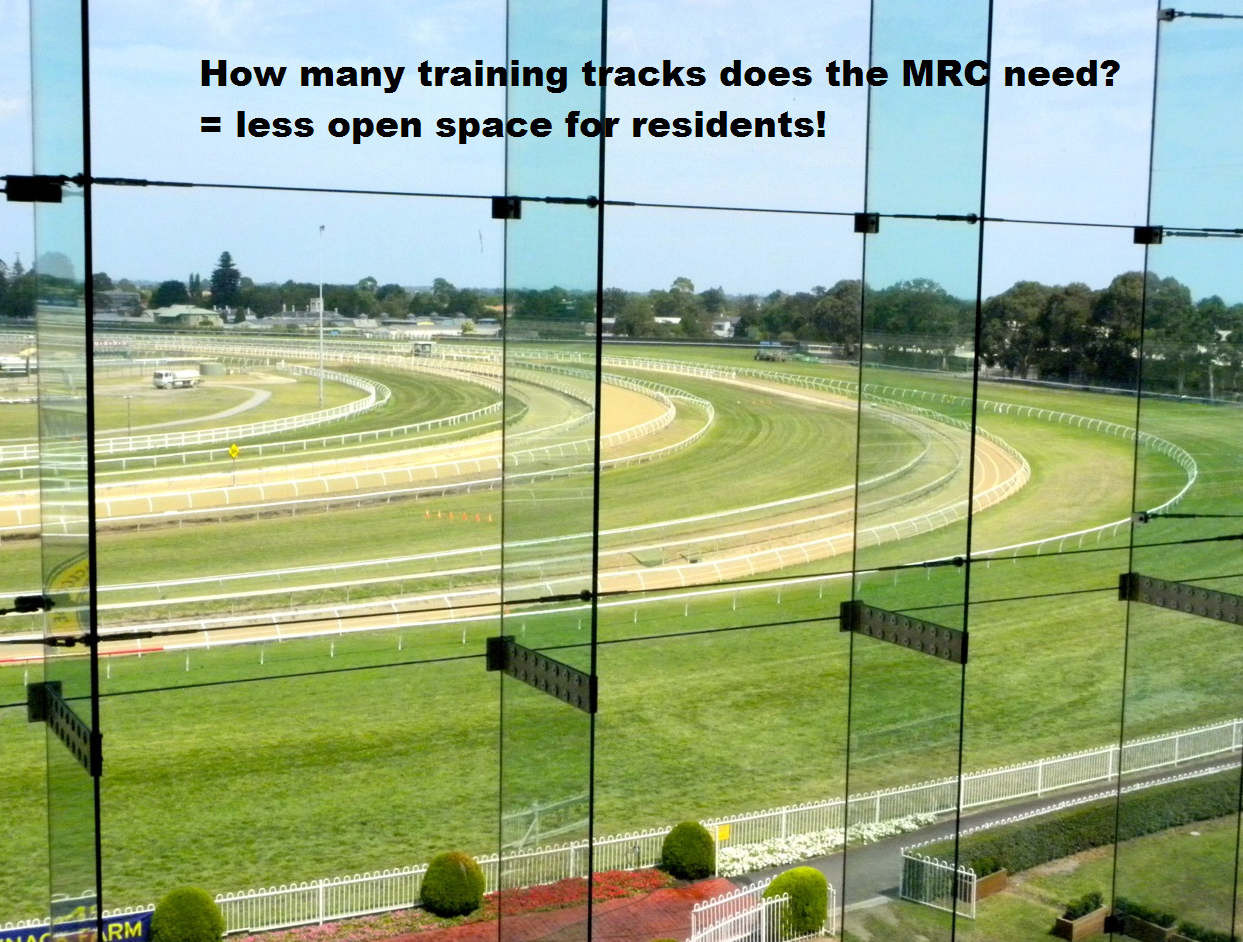
“The Melbourne Racing Club and the Beck Probuild Consortium are pleased to announce that they have concluded an agreement to develop 5 hectares of land adjacent to the Caulfield Racecourse, Caulfield Train Station and Monash University.

The winning consortium is a joint venture between the Beck Property Group and Probuild Constructions.

Caulfield village will create a thriving, integrated, mixed use community with access to major transport routes, shopping and recreation designed to integrate with the character and facilities of the surrounding community.

The development is expected to take up to 15 years to complete and include in excess of 1,500 dwellings of varying product mix and configuration, office and retail offerings including a full line supermarket, pharmacy, cafes, restaurants and lifestyle health and gym facilities.

Source: http://www.beckpropertygroup.com.au/beck-caulfield-village

COMMENTS:

  • 1000 – 1200 originally cited dwellings has now ballooned out to ‘in excess of 1500’! Will this mean 28 storeys?
  • The Panel in its wisdom stated: “The scale of the amendment area and its location is that development will occur over an extended time period, the Panel expects up to 10 years.” We’re now looking at 15 years! Terrific news for locals!

PS: We’ve received an email with the following link. It features the Moonee Valley Council’s response on open space to their racecourse proposals. Once again, the contrast with how this council works to protect its residents in contrast with our illustrious lot is simply staggering. We urge readers to at least look at the Executive Summary and note the work that has gone into this.

Glen Eira Council has in the past distinguished itself through its less than staggering performance in the VEAC submission on open space. Now there is the formal submission to the Minister’s Planning Zone reforms. It is barely two and a half pages long.

We are not suggesting that length is commensurate with quality but, when one reads the following submissions, the detail and arguments provided certainly put Glen Eira’s effort to shame. Further, whilst the Glen Eira opus barely mentions third party rights, this is prominent in most of the other council submissions.

Port Phillip – 39 pages

Greater Geelong – 26 pages

Boroondara – 64 pages

Maribyrnong – 12

Brimbank – 18

Casey – 27

Manningham – 23

Frankston – 14

Melton – 49

Cardinia – 31

Bayside – 45

VLGA – 37

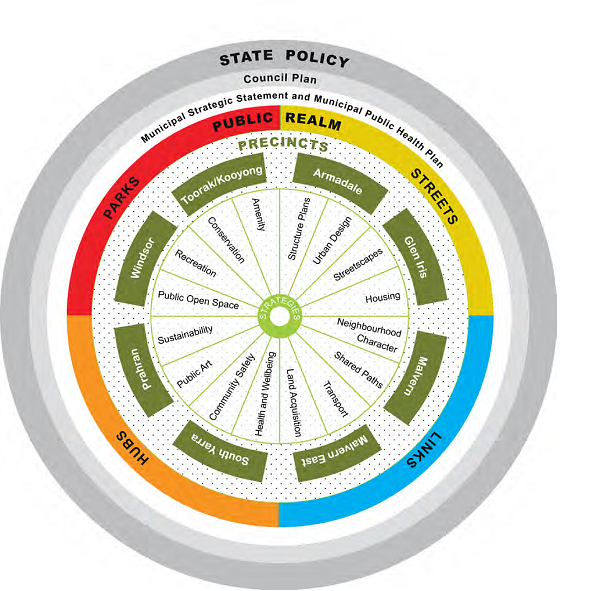
Council is about to embark on a revamped Open Space Strategy. That’s great but, we have to wonder whether this will simply be another exercise in spin judging by the actions that have failed to be implemented from the 1998 strategy. Below are some extracts from this 1998 version. Please consider how many of the following objectives/statements/promises have been translated into concrete actions and how many that were mooted 15 years ago are still to be realised!

Where open space contributions are required for multi-unit developments, Council impose the maximum monetary open space contribution about of 5% wherever possible.

A 50% split between acquisition and improvement is suggested.

Constantly review opportunities to expand open space, particularly where sites may become available adjacent to existing parks in the precinct and allow opportunities to increase the size of these parks.

Retain a Public Acquisition Overlay to no 53 Magnolia Road, Gardenvale to complete the concept plan for Gardenvale Park (shown in the City of Caulfield Local Parks Strategy, 1987) and purchase the property when it becomes available, subject to current budget priorities

Changing recreation trends and an aging population indicate that informal open space is an increasingly important component of Glen Eira’s open space system

There is community support to get involved in the planning development and management of open space

Encourage government authorities ie schools to make their open space available for community use (especially where there are identified open space deficiencies) and investigate opportunities to provide additional open space if school sites are redeveloped

There is a community perception that there is a lack of unstructured open space in Glen Eira and changing recreation trends and an ageing population indicate that informal open space will be an increasingly important component of Glen Eira’s open space system.

The general community ‘feeling ‘ is that there is adequate provision of active open space that that future strategies should focus on ensuring a balance between active and informal recreational pursuits

Some sports require additional expanded facilties but generally the provision of improved maintenance and/or upgrades to existing facilities would satisfy current and future sporting demands

Concern for traffic management within and around various parks to ensure safety for users of open space.

Investigate opportunities to expand existing open space in the Gardenvale neighbourhood of the West precinct

Increase outdoor events in Glen Eira’s open space system, ie jazz festivals, open-air movies, art/sculpture displays of local artists work, flora and fauna displays

Organise community events in Caulfield Park to coincide with and complement the Spring Racing Carnival

Capitalise on the amphitheatre in Caulfield Park for a wide range of outdoor community events

Through the statutory planning permit process support and encourage the provision of open style fencing for new residential development that directly abuts open space

Review the provision of buildings in open spaces, including the provision of scout halls and other affiliated groups, and determine their possible rationalisation/reduction as part of the process of preparing park Masterplans.

Encourage and generate ‘friends”/community groups and school children to be involved in the development and on-going maintenance of parks.

Ensure that existing informal open space is not encroached on, inhibited or placed with any further restrictions, unless some form of compensation is negotiated ie land swaps

Design playgrounds to include fences, paths, seats, shade trees/shelter to provide comfort for parents supervising children

Build on the educational programs run by Council’s Park Services unit and develop an education centre in Caulfield Park to complement the native bushland reserve and bird aviary where education programs can be run with interactive facilities provided for community members to learn about Glen Eira’s natural heritage

Work closely with the Glen Eira Environment Group and the Society for Growing Australian Plants and utilise their knowledge and expertise to continue to enhance and maintain environmental open space in the city.

Negotiate with the National Trust to allow some form o community access into the gardens of Rippon Lea ie residents could be issued with a ticket to allow them 10 free passes per year into Rippon Lea

80% of open space system functions as outdoor sports/local parks combined

Develop a Masterplan for Elsternwick Plaza keeping in mind this park potentially forms an important recreational element to the Elsternwick urban village concept. The Masterplan should open the park up to invite pedestrian activity and integrate with Glen Huntly road

Work with the Society for Growing Australian plants to develop the original route of the old Elster Creek trail into a native vegetation corridor/nature walk with interpretative signage and encourage private property owners along the route to plant appropriate native vegetation to increase havitat potential.

A dominant portion of open space in each precinct is restricted at certain periods by sports activities, with the North-East and South-East precincts having the larger proportions of their open spaces used for organised sports at certain periods.

The dominant landscape setting in all precincts is sporting which ranges between 55% in the South-West to 88% in the South East

Readers will remember the 12 storey, 173 dwelling application for Dandenong Rd. that went to council on November 13th 2012. Lipshutz, Magee, Sounness and Pilling all thought that 12 storeys was fine but the rest of the councillors reduced this to 8 storeys and 90+ dwellings. The officer’s report had the following to say about traffic –

“The proposal is considered to activate the Dandenong Road Frontage

It is acknowledged that the proposal will result in an intensification of vehicle movements in the area. This is a by-product of both State and Local Planning policies channeling more intensive development and use into activity centres such as Carnegie. An opportunity to exit onto Dandenong Road is considered to be a significant advantage for this development site.”

We’ve since come across a Youtube video created by a Monash student (see below). What is most striking about the video is the sound. Listen carefully and ask yourselves, is this really a ‘significant advantage for this development site’.

Another example of councillors doing nothing is evidenced by their resolution on the car sharing item from last Council meeting. Please note that the issue itself is not our focus. What is our focus is the process that this council adopts in the attempt to get anything done. Here’s the recommendation and the ensuing resolution

That Council:

i) Notes the report.

ii) Notes that car share systems could be used within new developments in the future.

 Crs Sounness/Lipshutz

That the recommendation in the report be adopted with the addition of the following:

(iii) That a further report be provided on how car sharing policies operate in other Victorian Councils (eg Cities of Melbourne, Stonnington and Port Phillip), and the effectiveness of these policies in improving public and private sustainable transport options.

The MOTION was put and CARRIED unanimously.

So, here we go again. Another report, another time lag, another example of inefficiency, added cost, and temerity. The inefficiency relates to both councillors and officers. The supposed objective of this first report was to outline the “benefits/impact’ of car sharing. What we ended up with in the Akehurst version was waffle, generalities, and the predicted recommendation to look to the ‘future’. The only other council mentioned, as we’ve already noted was Melbourne City Council. Surely any report attempting to fulfill the terms of ‘benefits/impact’ would provide a far more extensive analysis than simply looking at one council? Why didn’t Akehurst include commentary/analyses from these other councils to begin with? How about some real statistics? Our take is that when you’re trying to push a particular line you never give too much away – especially if the ‘findings’ of the analysis are all ‘positive’ and your position is one of ‘do nothing’.

Councillors should not escape unscathed either. So they’ll get another report which will undoubtedly say that although there are some positives in these councils’ plans it will cost too much; nothing is budgeted for and hence Glen Eira needs to delay until funds are available. The hidden issue of course is what this might mean for the entire parking allocation system in the municipality. When development after development is allowed to get away with waiving car parking spaces and nearby streets are permitted as surrogates, then to create car share spaces could be a major problem. Instead of looking at the entire system, we have another tinkering with the periphery and thus not even coming close to addressing the real issues.

The ‘report’ will come in at some stage and given past history councillors will meekly accept whatever recommendation is put before them. End of story!

Readers may be aware of the proposed Moonee Valley Racecourse development and that the Minister had decided to create an ‘advisory committee’ in response to a request from the racing club. Featured below is the Moonee Valley Council’s official response to the Minister. We have highlighted those sections that we believe are significant and which reveal what can happen when a council and a community work in unison – in stark contrast to the history of Glen Eira City Council and the farce that remains the C60 and the centre of the racecourse development!

mvcc_Page_1 mvcc_Page_2 mvcc_Page_3 mvcc_Page_4

« Previous PageNext Page »