GE Service Performance


After years and years of cow towing to the MRC and well after the fact of the Caulfield Village machinations, Cr Lipshutz is now on the side of the angels. Yes, the MRC are ‘bullies’ and yes, the MRC are the tenants and should not be setting their own terms on leases. Well, if this isn’t a Johnny come lately approach we don’t know what is! Only problem is – where was this defiance and public advocacy five years ago?

More to the point is that on today’s Jon Faine program, Lipshutz announced that Council was not opposed to racing and didn’t want training to go from the course! The removal of training is part of the original agreement between council and the MRC. If this position has changed then:

  • Where is the council resolution ratifying such a change in position?
  • If no resolution has been passed then what right does Lipshutz have to make such statements?
  • Or, is all of this again, decision making behind closed doors?

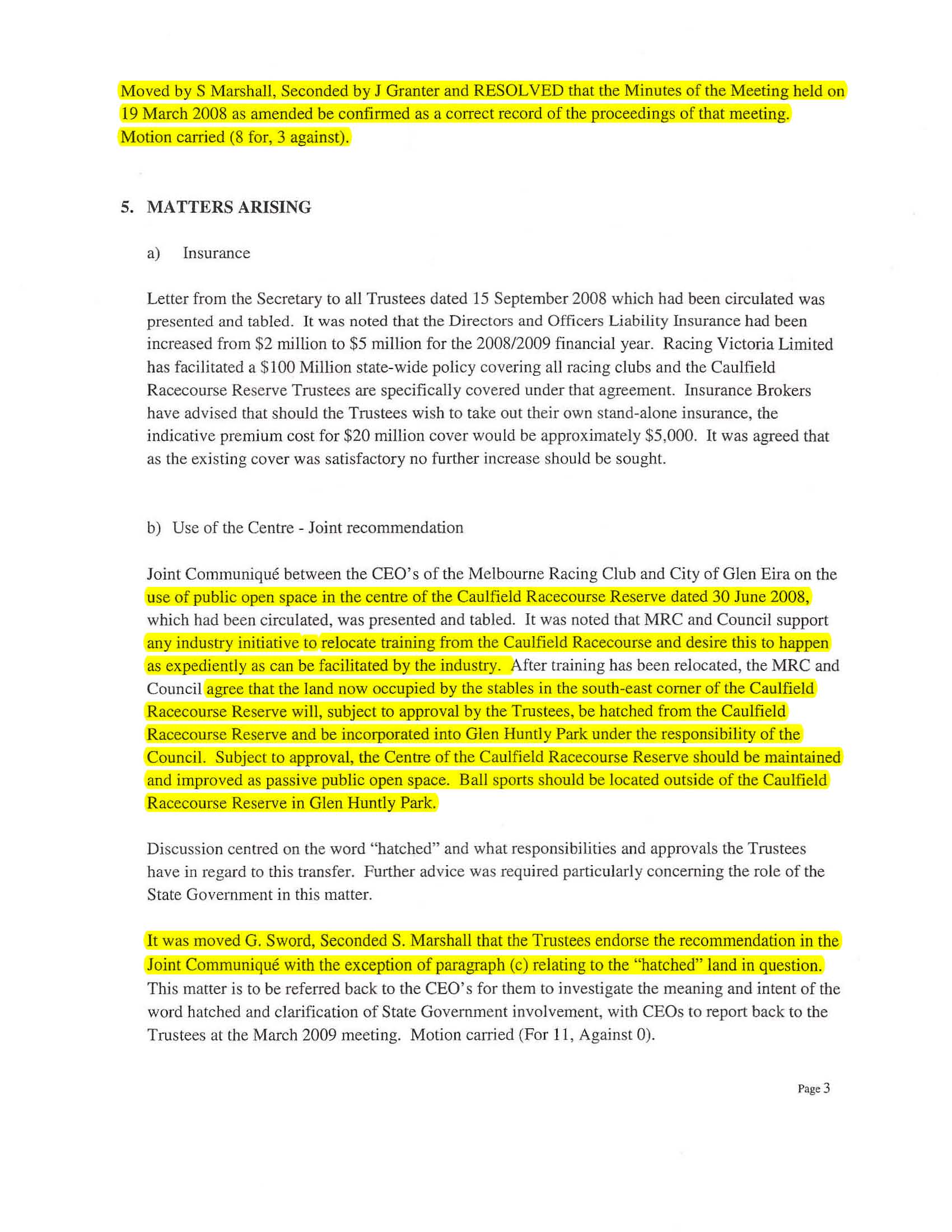
We present below the once lost, but now miraculously found, minutes of a 2008 Trustee meeting where readers will find that the issue of the removal of training was discussed and then subsequently endorsed by council resolution. The full document is then uploaded HERE.

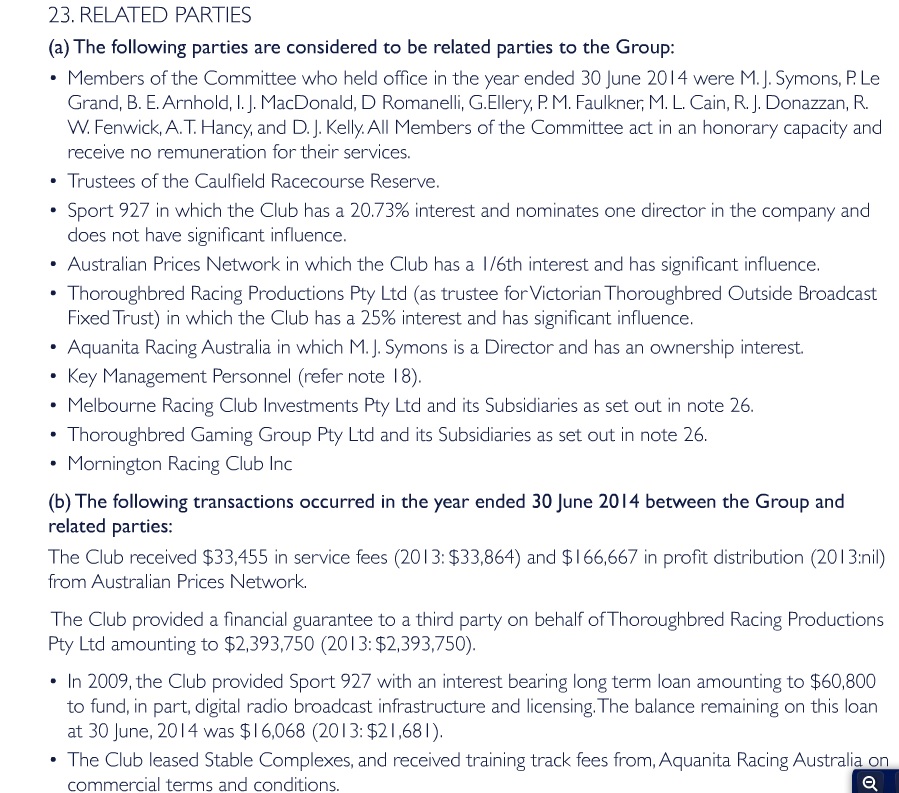
Pages from Trust Minutes 25 September 2008PS: FOR SOME MORE INTERESTING READING, HERE ARE SOME SNAPSHOTS FROM THE MRC’S 2014 ANNUAL REPORT. Please note the reference to Symons as paying ‘commercial rates’ for the training facitilities and for his ‘membership’ of the group but of course, no ‘conflict of interest’ according to our previous post on the Sword claims. The full Annual Report is available from: http://mrc.uberflip.com/i/393091

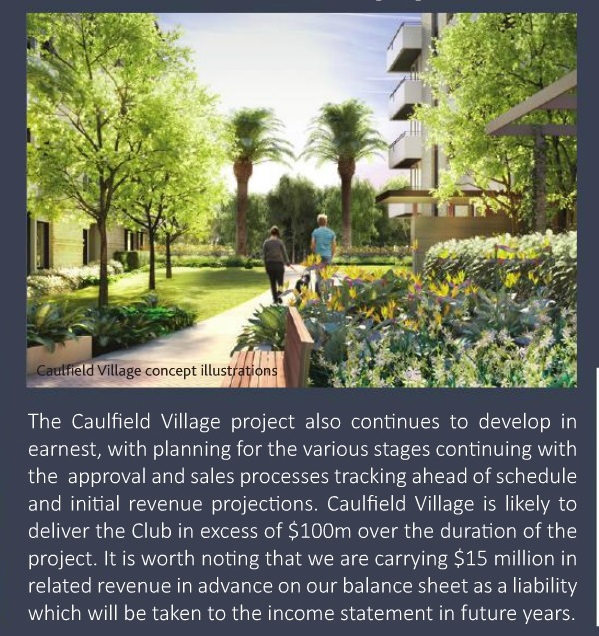
mrc2AND THE PROFIT EXPECTED FROM CAULFIELD VILLAGE!

mrc

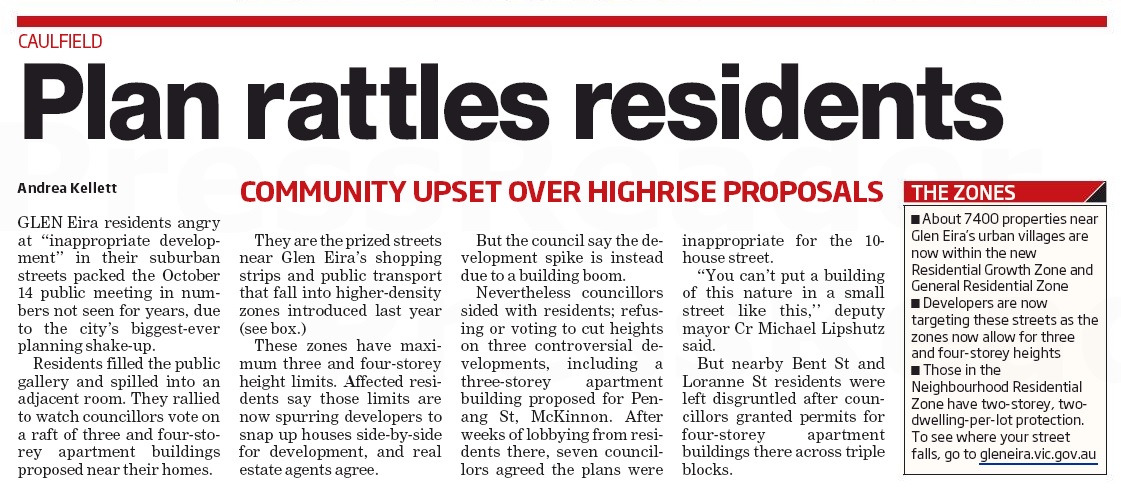
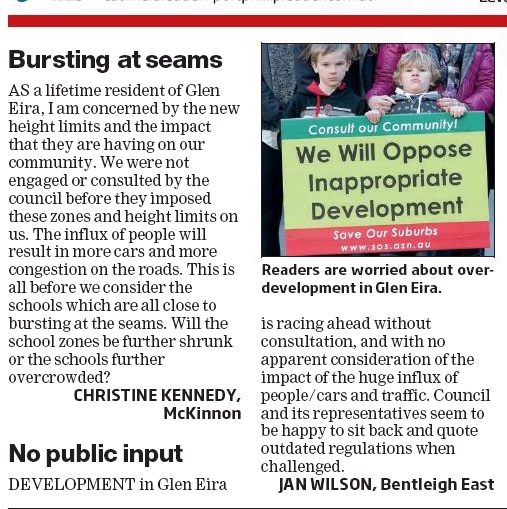
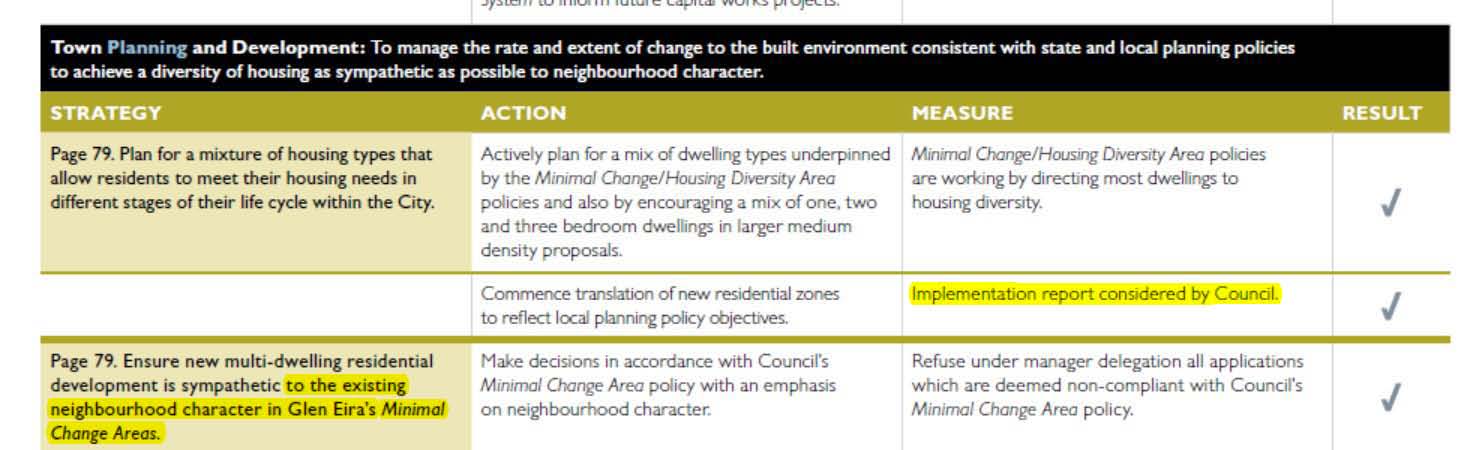
Untitled2Untitled3PS: We also direct readers’ attention to the following snap shot from the latest Annual Report. Please note:

  • Neighbourhood character’ only applies to Minimal Change – in contradiction of council’s own planning scheme!
  • No ‘resolution’ provided to council re introduction of the new zones – simply an ‘implementation report’ – and after the fact of course!

Untitled

Labor promises reform to consider planning objections

Date: October 20, 2014 – 12:15AM
Henrietta Cook

The number of objectors to proposed developments will have be taken into account by the state’s planning tribunal if Labor wins the election.

In a pledge likely to appeal to voters in seats where planning is a sensitive issue, Labor has vowed to change the state’s planning laws to give locals a greater say in controversial new developments.

Opposition planning spokesman Brian Tee said the changes would let the Victorian Civil and Administrative Tribunal listen to the community.

“The move would see significant community responses like that at Tecoma McDonald’s or against the Orrong Road Towers in Prahran taken into account in decision-making at VCAT,” he said.

“This is about ensuring that development works in the community- we are putting people first.”

Under Labor’s promise, the Planning and Environment Act would be changed so that “where appropriate” VCAT must have regard to the extent of community opposition to planning proposals.

They hope this will restore confidence in third-party participation in planning decisions.

Labor’s proposed changes would not apply to minor renovations or major projects where consultation is already a requirement.

The contentious Orrong Road apartment towers in Armadale and the Tecoma McDonald’s are two high-profile planning cases where VCAT has been criticised for approving development despite vocal community opposition.

No McDonald’s in the Dandenong Ranges campaign spokesman Garry Muratore said the fast food giant would have never been granted permission to build in tranquil Tecoma if the volume of community opposition had been taken into account.

“We knocked on the door of every single house in Tecoma and found that nine out of 10 people didn’t want McDonald’s. That was something VCAT should have taken into consideration, as should McDonald’s. The weight of the public opinion should matter.”

In 2011 the Shire of Yarra Ranges voted unanimously against the fast food giant’s proposal to open a restaurant on the main street of Tecoma. But McDonald’s successfully appealed the decision in VCAT, despite hundreds of submissions from the fired-up community. The chain restaurant’s initial application to council attracted a record 1100 objections.

In their decision, VCAT said, “We acknowledge there is considerable opposition to this proposal…However the tribunal has consistently found that planning decisions are not to be based on the numbers of objections. Our decisions must be based on the planning merits.”

Mr Muratore said Labor’s proposed changes would give VCAT clarity and restore the democratic process.

“Although we aren’t critical of VCAT’s decision – they made that decision within the current legislative framework – if this had been in place this development wouldn’t be able to go ahead.”

In the marginal seat of Prahran – which Labor hopes to take from  Liberal MP Clem Newton-Brown at next month’s state election – community concern has been brewing for some time over a four 12-storey tower development on Orrong Road.

The developer Lend Lease’s plans for the site were rejected by Stonnington Council, which was inundated with more than 600 objections. VCAT overruled its decision in 2012 – despite receiving 450 objections – and the council later lost a Supreme Court challenge to the decision.

“The number of objections to the proposed development was an irrelevant consideration,” VCAT said in its decision regarding the Orrong Road proposal.

Under current laws, social effects must be taken into account when assessing proposed developments. But this does not include the volume of objections.

Unrest over living space the key in battle for Bentleigh

Date
October 19, 2014 – 9:21AM

Robyn Morgan leftPrahran a decade ago in search of suburban serenity. Like others escaping the inner city, she wanted more: more time away from traffic congestion, more educational choice for her children, more peace of mind when she walked down the street.She didn’t have to travel far. About 20 minutes south-east, the electorate of Bentleigh was the quintessential family dream: spacious houses on leafy streets. Decent roads and transport options. One of the most sought-after public schools in Melbourne.

Lately, though, the winds of change have accelerated at an uncomfortable pace. State government planning reforms have paved the way for higher-density development in prized areas near shopping strips and public transport. Once sleepy streets are being earmarked for large-scale apartments. And the very blessings that draw people to the area in the first place – good amenities, quiet neighbourhoods – are suddenly in danger of becoming a curse for the locals who want to preserve what they have.

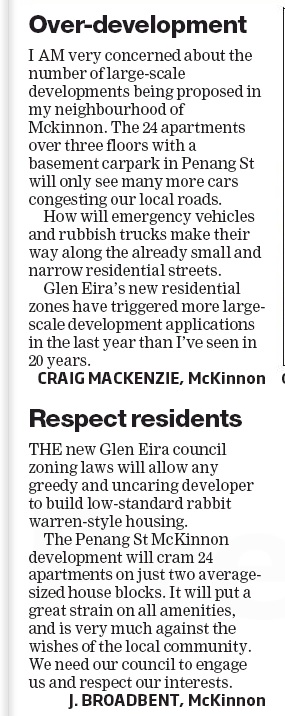
For residents like Mrs Morgan – whose street in McKinnon recently came under threat of an “inappropriate” three-storey apartment proposal – planning has become such a sensitive issue it will determine her vote at next month’s state election.

“We moved here from Prahran to get away from high-density development and traffic congestion, and we specifically bought in this area to be as close as we possibly could to McKinnon Secondary, to put our kids into that school,” says the self-described swinging voter.

“But what’s happening will completely change the demographic and the whole amenity of this area. So in terms of political choice next month, I definitely won’t be voting Liberal.”

It’s an ominous sign for the Napthine government, which came to power only four years ago riding on a similar wave of discontent against Labor in this very seat – only then, the flashpoint issue was overcrowding on the Frankston train line.

At the 2010 state election, Bentleigh was the last Labor-held electorate to fall, giving Ted Baillieu the 13 seats he needed to win government. So tight was the contest that only 522 votes separated incumbent MP Rob Hudson and Liberal counterpart Elizabeth Miller, a former nurse who emerged from relative obscurity to swing the election in the Coalition’s favour.

Fast forward to present day and the government has spent much of its first term lurching from one political headache to the next, making the task of holding on to sandbelt seats like Bentleigh even tougher.

What also makes this contest unpredictable is the area’s volatility. Taking in suburbs such as McKinnon, Moorabin and Hampton east, Bentleigh is a mix of the old and the new: ageing residents who have lived there for decades; aspirational young families who can afford the average house price ($925,000 for three bedrooms); a multicultural melting pot where 45 per cent of locals have parents who were born overseas.

But the seat has changed hands repeatedly over the past 50 years, with voters tending to switch their allegiance based on policy or personality, rather than stick with the same party for the sake of tradition. Come November 29, the government needs an anti-Liberal swing of only 0.9 per cent for the electorate to switch, yet again.

Miller’s main challenger, Nick Staikos, is your quintessential politician who’s worked his way from the ground up: a Labor member since he was 16; Glen Eira’s youngest councillor at 19; a staffer to former federal MP Simon Crean; and a life patron of the local senior citizens club, which has about 500 members.

“There are a lot of things we need to get done for our community – rebuilding our schools, removing level crossings, ensuring that our significant senior citizen community is looked after,” says the ambitious 28-year-old.

Miller, on the other hand, joined the Liberals only in 2006 and has cut a fairly elusive figure on Spring Street ever since. She’s softly spoken and has a tendency to avoid the media, but those who know her will tell you she’s fiercely committed when it comes to her electorate.

When Melbourne was hit with flash floods in 2011, resulting in extensive damage to streets in McKinnon and Ormond, the newly elected Miller doorknocked every house on Cadby Avenue and Station Avenue to ensure residents had appropriate food, shelter and heating. Drain pipes were eventually installed with her assistance, and months later, when severe rains hit the area again, she spent hours driving up and down the streets to make sure water was draining properly.

In a rare interview at Parliament last week, Miller, 47, admitted the battle for Bentleigh would be tight, but believed people would vote on her record as an “active, hands-on, grassroots member”.

“I’m living and breathing my community, and overall, they undoubtedly have confidence in this government,” she says.

Still, there are plenty of factors that could prove her wrong. Like many other electorates, Bentleigh is growing –  but with that comes growing pains.

McKinnon Secondary College, for instance, now has 1850 students – and countless others are trying to enrol –  which can put a strain on facilities and space without additional resources, says principal Pitsa Binnion. She welcomes both parties promising $9 million for building upgrades (Labor committed in March; the Coalition last Monday) but admits the popularity of her school has led to other challenges in the area.

“The problem is there’s such growth in the area and the demand is so high it creates other issues like traffic and buildings going up everywhere,” she says. “What are we to do?”

Others are asking the same question. On Tuesday, it was standing room only at the Glen Eira council as nine planning applications were debated. One of them was the three-storey proposal for Penang Street, where the Morgan family live, which was ultimately rejected – although it is not yet known whether the developer will challenge at VCAT. Other residents, like Greg Wilkinson – who lives in Loranne Street where a four-storey apartment block was approved – weren’t as lucky.

“I’m not against change, but I am against intense change,” say Wilkinson, who voted for Miller at the last election but insists he won’t do so again on the back of the government’s planning reforms.

And what about transport, the critical issue that became emblematic of Labor’s inability to manage population growth in 2010? About 191 weekly services have been added on the Frankston line since then, resulting in punctuality averaging 90.2 per cent over the last 12 months – up from 70.9 per cent over Labor’s last year in office.

But Public Transport Users Association spokesman Daniel Bowen, who also happens to live in the electorate, says that while there have no doubt been improvements in punctuality, cancellations remain an issue, while the government’s own figures show cancellation rates on the Frankston line worsened slightly in the 12 months to September.

The good news is, with only six weeks until the election, critical issues such as planning, education and transport will remain in the spotlight. Labor has already pledged to remove the Centre Road level crossing; both major parties have promised upgrades to schools in McKinnon and Bentleigh; and both also have grand new plans to bolster jobs.

As for voters like Robyn Morgan and her neighbours? They simply want whoever wins in November to stand up for the community when it comes to neighbourhood change. “We’re not against new development, but it just has to be appropriately sited,” she says.
photo

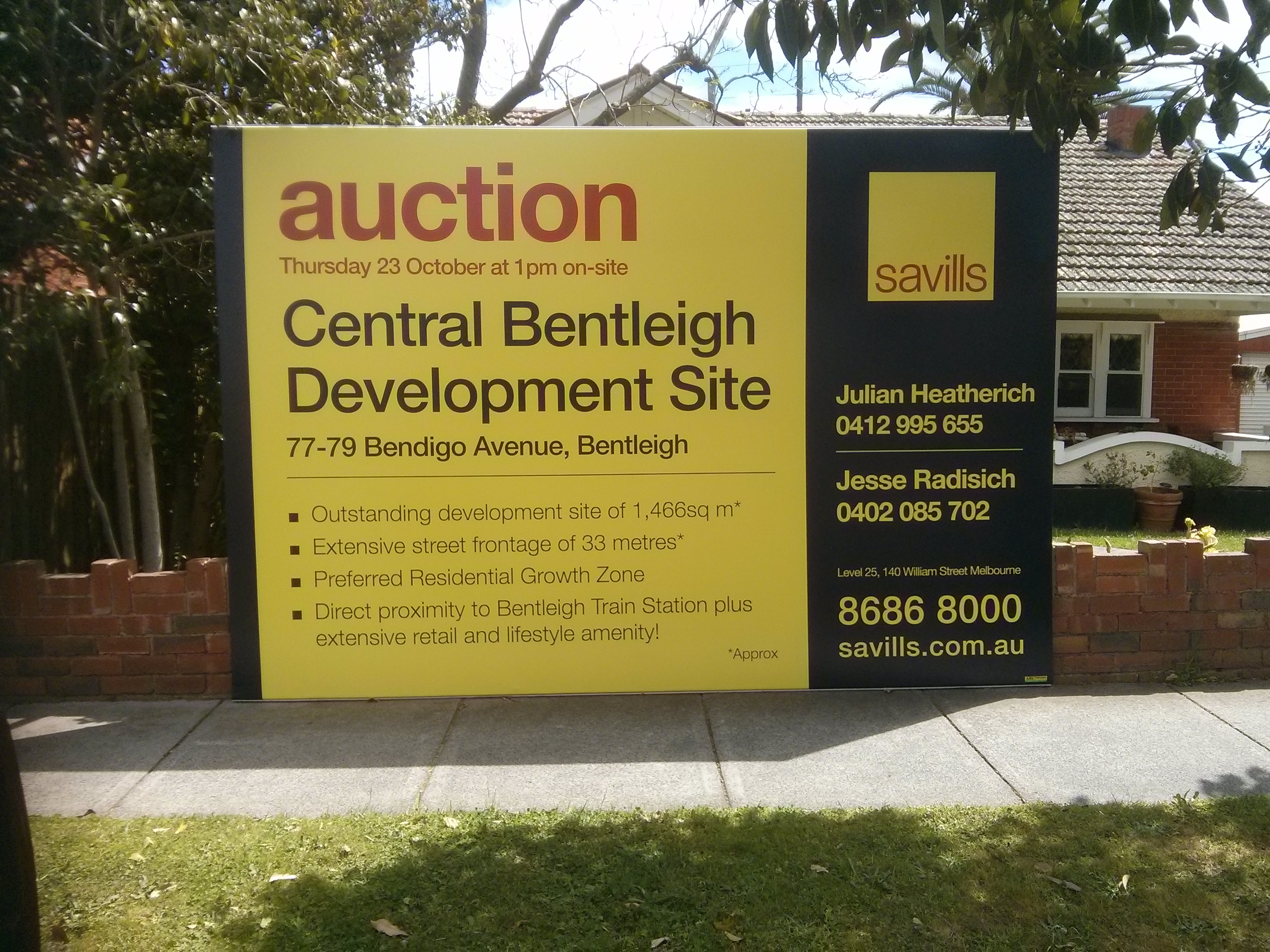
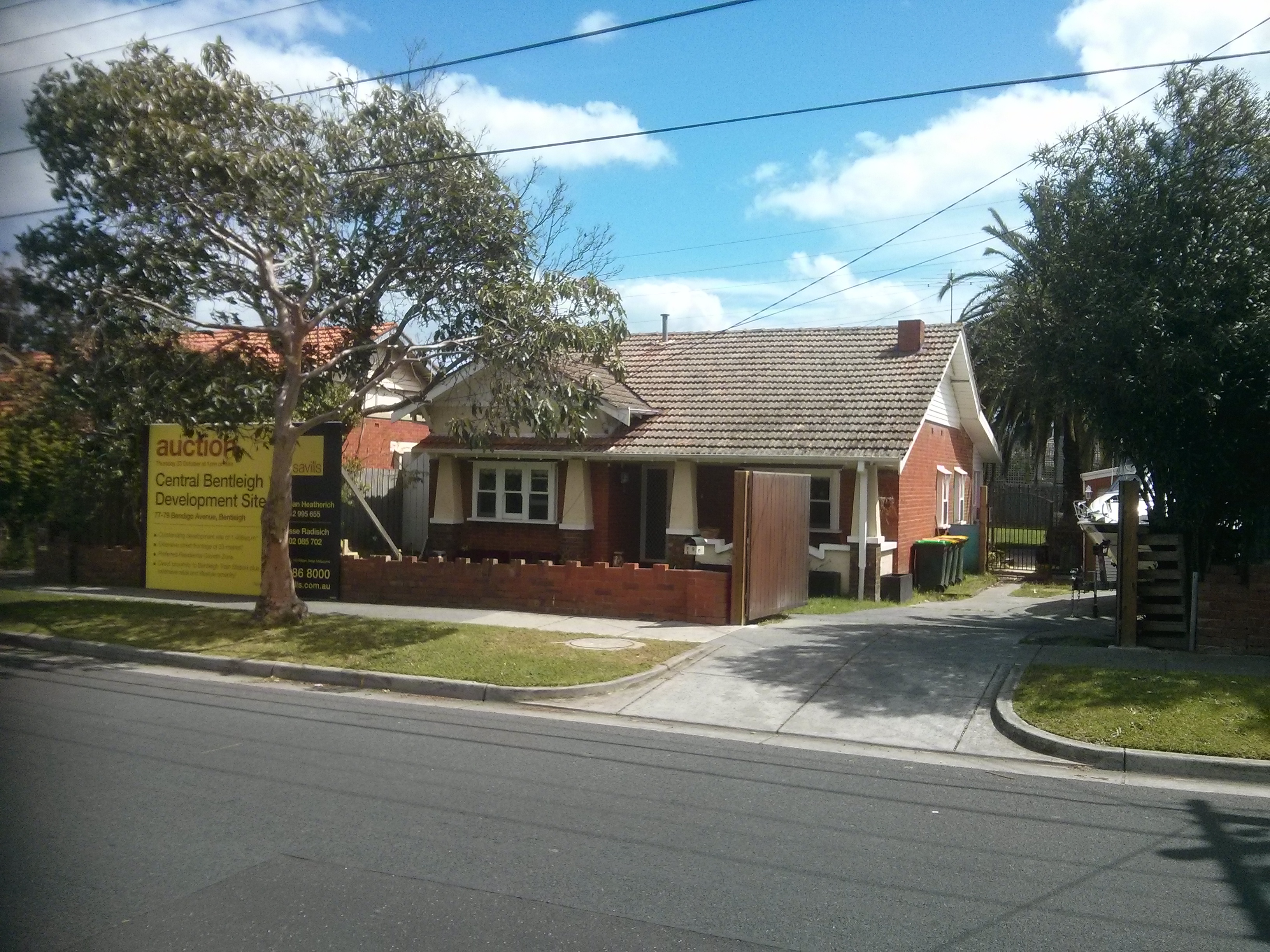
Sign at front 79 Bendigo Avenue

79 Bendigo AvenuePS: We forgot to mention that parts of Bendigo Avenue are in a Heritage Zone. A four storey block should do wonders for heritage no doubt and will really fit in with ‘neighbourhood character’. Well done council!

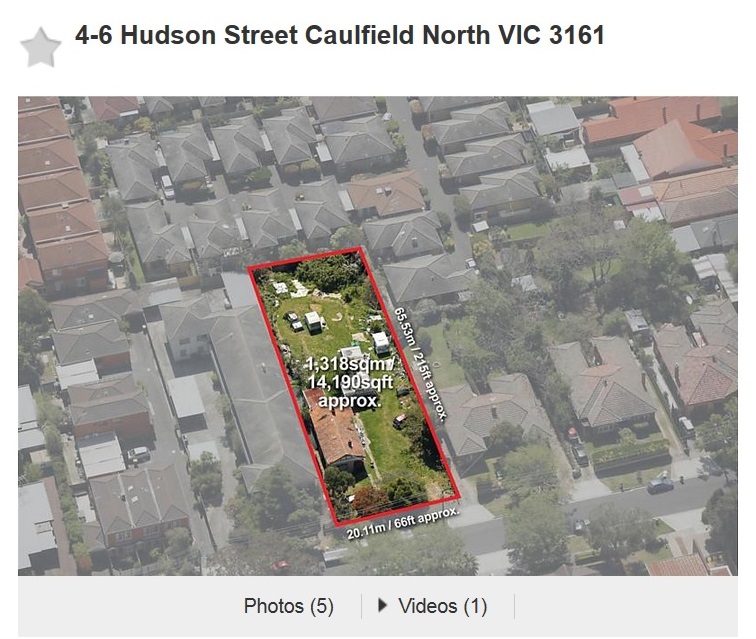
PPS: Here’s a test for council – a double block in a Neighbourhood Residential Zone!

hudson street

Hyams moved to accept the Akehurst report on the new zones ‘as printed’. Sounness seconded.

HYAMS: began by quoting the figures on the influx of new people to Victoria and that ‘obviously they need to go somewhere’. Said that the zones were introduced in 2013 and that Glen Eira had its minimal change/housing diversity from 2003 and that was after ‘at least two years of consultation’. ‘The new zones exactly mirror the old zones’ ‘except for one property in North Caulfield’. Claimed that all that is different is that because of the schedules council has ‘increased the protection to any resident who lives in those zones’ (ie Residential Growth, General Residential Zone and Urban Villages). Repeated that the there’s nothing that developers couldn’t do before. Gave example of an old application in Mavho street that council refused but it went to VCAT and got a permit. But what might have got built before ‘now can’t be built’ because of the height restrictions. Also said that even though there’s a height limit that doesn’t mean that everything will be built ‘to that height’. Therefore there are plenty of developments that previously got permits but now they wouldn’t with the new zones and that includes the RGZ and GRZ zones. Went on to say that there are lots of people blaming the zones for all the new applications but that’s not true because ‘Carnegie has had this sort of stuff going on for a while’ and the same holds for Murrumbeena and Elsternwick where an 8 storey building went up. So all this was happening before and even though ‘they have accelerated’ it isn’t ‘because of the new zones’. But it’s only ‘now that they have reached Bentleigh’ and he thought that it was ‘inevitable that they have spread out from the centre’.

Referred to the argument that council should have ‘consulted’ before ‘bringing in the new zones’. But council wanted to ‘achieve the best possible results’ for the municipality , Claimed that in ‘all’ the discussions with the government it was about ‘convincing them not to expand the high density zones’ and even though they might have wanted to make them smaller ‘no government from either side’ would allow this ‘no matter how much we consulted’. Said that ‘I haven’t heard anything from the ALP on the new zones’ so Labor has ‘no interest in challenging or changing those zones’.

Admitted that post zones there was criticism but this came from the ‘development industry’ about how restrictive the new zones were. Quoted various sources. So by ‘getting in early’ council was ‘able to achieve these height limits’ and ‘other councils haven’t been so lucky’ and Kingston has had their 13.5 metre height limits ‘preferred’ and they are ‘not absolute as they are here’. Government now looks like it’s ‘leaning’ towards higher limits so Glen Eira has ‘done very well’. Thought it was important that people understood the zones and not what some people are saying about ‘encouraging sales’.

SOUNNESS: Said that the report is ‘brief’ but identifies that there are opportunities for development but also ‘tools’ to ‘limit inappropriate development’. Sadly they ‘have to allow development to take place somewhere’ like urban villages and close to transport.

DELAHUNTY: wanted to ask Akehurst a question because the report was basically about neighbourhood residential zones and there were plenty of people ‘here’ who are facing applications not in the residential zones. So she wanted Akehurst to explain how those zones came about and what they mean.

AKHURST: admitted that the paper he wrote was basically about the Neighbourhood Residential Zone but that there are other zones. Said that the Mixed Use Zone is common to all councils and is determined by the government as is the Commercial zones. Neither have height limits and the commercial zones have different uses and explained how these changed with the introduction of the zones.

LOBO: said that height limits ‘sounds good’ but that it is ‘an umbilical cord to the residential zones’. Hyams explained ‘nicely’ how the zones had been ‘transcribed’ from the old zones but in the old zones with minimal change and housing diversity ‘councillors had the option of either accepting or refusing’ as they did with 32 Mavho street where council refused and vcat gave the permit. Said that VCAT doesn’t always ‘get it right’. Said that there is ‘certainty’ but that ‘this certainty is for the builders’ and for ‘real estate agents’ both of whom are ‘laughing to the bank’. (applause). Said that residents vote councillors in and that their role is to uphold what it says on the front of every agenda. Read out the blurb about working in the best interests of residents. Said that he recognises that Ministers have been given ‘carte blanche’ about planning but that ‘we should have gone to consultation’ and at ‘least give a chance’ to people. Said that ‘I asked for it’ and that he ‘voted to be part of the team’ when he was ‘deputy mayor’ and he now thinks ‘I have done wrong’ and ‘mea culpa’. Thought that ‘now we have to do something about it’ and for the next government to ‘do something to repair this damage’. (applause)

OKOTEL: ‘acknowledged’ what Hyams said about ‘direct translation’ of what was there before. However her position was that instead of ‘simply adopt policy’ that ‘council should have engaged in community consultation before making a submission to the planning minister’. (applause) This was because the consultation goes back to 2003.

ESAKOFF: point of order that ‘when I asked about consultation’ she was told that it wasn’t 2003 but 2010.

PILLING: said that the review of the Planning Scheme was in 2010. Said there were 2 consultation: one in 2003 and the last in 2010.

OKOTEL: said that she ‘didn’t feel comfortable’ about not consulting but that she notes that the new zones’ do preserve 78% of the municipality’ and that she does support the report and its comments that ‘compared to other councils’ that Glen Eira’s ‘protections’ are far more than these other councils. But she is also ‘sympathetic’ to the remaining 22% of the municipality ‘which don’t have those protections’ and ‘weren’t invited for consultation’. Even though there are the new zones council still has to ‘refer’ to its policies that ‘require us to look at’ things like Neighbourhood Character. Read out part of a VCAT judgement on an application for Prince Edward Avenue where the member rejected it and said that in terms of Neighbourhood Character it didn’t fit the street even though it was zoned for medium density. Okotel then went on to say that even though there are height limits council still needs to consider policy.(applause)

DELAHUNTY: said she was ‘confused’ about what’s going on. Referred to Hyams and his views about Labor. Said that Brian Tee has made a public statement on the zones and so has the current Labor candidate Nick Staikos who was in chamber. Said that there were ‘conflicting views’ ‘around this table tonight’ and that she was ‘confused’. Said that when they ‘discussed going to consultation’ on the zones and ‘bringing them in quickly’ and ‘with some certainty’ she was ‘certainly on the side of some public consultation’ and ‘I thought I was very much alone there but I’ve got some friends tonight’. Said that the information she got was about the consultation of 2010 and that ‘the arguments’ that were put up then ‘won me over’. Said that in 2010 people wanted ‘height limits and they wanted certainty’. So if the community ‘hasn’t changed’, with the new zones she thought that they were giving people what they had asked for. Post the new zones at a public forum held by LARGE she thought it would be a ‘good idea’ for council to have some public meetings to explain the zones and she remembers ‘being friendless at that time too’. So ‘I am very confused about the sentiments’ being expressed tonight. Wants sensible decisions on the applications before council tonight and hoped that the group could do that. ‘We have to be very careful about saying one thing inside and another thing outside’.

PILLING: supported Hyams and said that ‘these are the correct analyses’. Reminded councillors that ‘this was a unanimous decision a year ago’. The time ‘was to speak out and vote then’ so ‘trying to rewrite history now is a bit rich’. Repeated that it was ‘a unanimous decision fully supported by every councillor here’. Said that 97% of the municipality is protected except for the commercial zones by height limits and Glen Eira is probably ‘the only council in Victoria to have that’. Said that council had been ‘vilified’ by developers and academics but when ‘you get attacked’ by these people then ‘you’ve got the balance about right’. The zones have ‘restricted development into certain areas’. Thought that over time there would be ‘less intense development in these areas’. Said that in Murrumbeena they were applying for 5 storeys and above but now ‘you can only get four’. Repeated Hyams’ words about taking a while to get to Bentleigh but it was inevitable that it would also ‘happen in those areas as well’. Thought that council had done ‘the right thing by the community’ and that ‘we should stand by that decision’. Said that other councils are struggling and that for many it’s a ‘mess’. Said that they had given protection and that it’s something that council ‘should be proud of’ ‘I certainly am’.

Calls from gallery ‘’There’s no democracy’

HYAMS: their aim was to get ‘the best result’. Said that they could have ‘consulted until the cows come home’ and could ‘have gone to the government with anything’ and they would have knocked it back. If they had gone to consultation they ‘would have taken so long to get around to it’ that ‘other councils’ would have got in before them to show how ‘great they were’. If council had waited then ‘we would have got the deal that Kingston or Bayside’ got with ‘larger residential growth zones’. Even though people mightn’t like it ‘we got you the best deal’ and that was by ‘putting popularity’ aside unlike other councils who tried to be popular. He prefers ‘sticking to our decision’ and ‘acknowledging’ that they did the ‘best we could’. Said that in 2010/2011 there was consultation about the whole planning scheme and the results were that people wanted neighbourhoods protected and this was achieved with the Neighbourhood Character Overlays; height limits ‘which we now have’ and ‘transition zones’ and ‘we now have that as well’ via the ‘schedules to the new zones’.

Said that his ‘memory’ is different to Delahunty because he remembers Okotel also arguing for consultation. He also was persuaded that consultation wouldn’t get them a ‘better deal and might get us a worse deal’. Said that there was a ‘rush of applications’ last ‘July and August’ and the reason for this was that ‘all the developers knew that we were about to put these new zones in’ and they knew that what they could get before the zones they couldn’t get with the new zones. So they ‘rushed their developments in’.

GALLERY : how did they know in July when the zones didn’t come in until August?

HYAMS: referred to Lobo’s comments about options to refuse previously. Said he ‘doesn’t follow that’ because they ‘still have all the options that we previously had’. Picked Lobo up about VCAT ‘answering to the Government’ but VCAT ‘independent from the government’. Said that councillors have to carry out their ‘functions’ and that means ‘applying the planning law’. ‘We did the best we could’ and those people who are criticising the zones are doing it for ‘legal purposes’ or ‘have a lack of understanding of planning law’.

OKOTEL: asked a question about ‘adopting the new zones were not unanimous’ and reiterated that ‘my position has always been that we should have engaged in consultation’ and she was never ‘persuaded otherwise’. Said that looking at the minutes of 13th August the ‘achievements’ about height controls ‘was not carried unanimously’ and said that she can’t find ‘the minutes’ relating to the ‘adoption of the zones other than that’.

PILLING: said he would be ‘happy to get the details’ and that it was an ‘unanimous decision by council’

OKOTEL: said that the decision to ‘ratify them’ was unanimous but that the ‘decision to put them to the Minister without consultation was not unanimous’. ‘I did not vote in favour of that’ and repeated that her position was that there should be consultation. (applause)

PILLING: said he would take her question on notice..

MOTION PUT. ONLY LOBO VOTED AGAINST.

Untitled

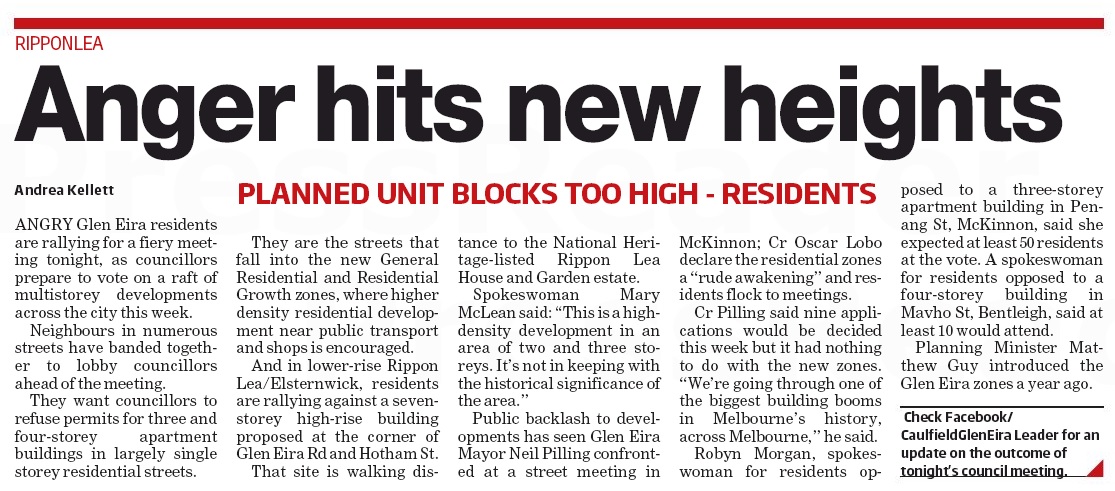
Hotham St – 7 storeys 104 dwellings

The Leader Article above referred to the 168 Hotham St. application with 137 objections. There is far more to this application than meets the eye we suspect. Given the magnitude of this proposed development, and its significant location, we believe that residents have the right to know everything that the officer’s report fails to mention, namely:

  • This site was the subject of previous applications
  • This site became Amendment C54 which rezoned the land to a Mixed Use zone (circa 2007-8)
  • A Panel Report was issued
  • The site was (and perhaps still is) owned by Adass Israel and their application at the time involved the construction of 8 shops and 23 dwellings in a three storey building.
  • At the Planning Panel hearing council officers queried the ‘intensity’ of proposed development and traffic management/car parking facilities that were proposed for a mere 3 storey development.
  • The Planning Panel report had plenty to say about height, intensity, etc.
  • Port Phillip council had major concerns about Heritage
  • Ripponlea had major concerns about parking
  • Traffic reports done at the time (2007) stated that Glen Eira Road and Hotham Street had 13,000 and 16,000 cars travelling on these roads daily

Given this history, and the doubts entertained at the time, how on earth can council now turn around and accept a 5 storey building with huge traffic and parking problems– especially when at last council meeting it rejected the Hawthorn Road application for 6 storeys? Where is the consistency? Or have ‘special dispensations’ been handed out to the select few? How many permit extensions has this site received? Or was the permit withdrawn; did it lapse? If either, then why isn’t any of this information found in the planning register? And why, when so many other officer reports include the history of the site is there not one single word about any of this?

lettersrail

The Belsize Ave (4 storey 52 dwellings) Application

The building will be prominent in its existing context (due to the relative scale to neighbouring single storey dwellings) and will be visible from various vantage points. However, the design of the building through its use of alternate materials, breaks in the building length, side/rear setbacks and graduation of the height is considered acceptable.

COMMENT: Please define ‘acceptable’ especially when it is admitted that a 4 storey dwelling next to a single storey will be ‘visible’!

The proposed crossover from Belsize Avenue requires the removal of an existing street tree (Queensland Brush box located in front of 15 Belsize Avenue). Council’s Parks Services Department have consented to the removal of this street tree provided the cost is borne by the developer

Prior to the commencement of the development, a fee of $798 must be paid to the Responsible Authority for the removal and replacement of the existing street tree (Queensland Brush Box located on the nature strip of 15 Belsize Avenue). Removal of the street tree may only be undertaken by the Responsible Authority.

COMMENT: Is the tree healthy? How big? How old? What does it add to the street. Not a word about any of this.

22-26 Bent St Bentleigh – 15 properties notified – 36 objections – Another 4 storey

More intense building forms are emerging in the surrounding areas and this trend is expected to continue. Accordingly a 4 storey development of this nature is considered, in general, an acceptable response to policy, zoning, the site context and emerging neighbourhood character.

COMMENT: translated this means ‘more to come’

The building will be prominent in its existing context (due to the relative scale to neighbouring single storey dwellings) and will be visible from various vantage points.The design of the building generally seeks to reduce these visual impacts through its use of alternate materials, breaks in the building length and graduation of the height between each respective floor.

COMMENT: So currently the building is ‘prominent’ but given the rubber stamping of this street for 4 storeys Council can’t see anything wrong in getting the ball rolling

Balconies consequently reduced and such that they do not intrude into the increased setbacks by more than 2.5m (width).

COMMENT: why have setbacks at all if they can be overhung by 2.5 metres? Or are the setbacks there only to accommodate the developers design so he can squeeze some balconies in and not lose any apartments?

The amenity impacts to the private open space at the rear of 3/23 Vickery Street may experience overshadowing from 2pm onwards. The building should be redesigned so that this area remains unaffected by shadows up to 2pm.

COMMENT: This one we simply adore. Overshadowing ‘may’ occur but they are not sure. To compensate the poor resident at 3/23 Vickery St should have sunlight only up to 2pm. Never mind the hours of overshadowing post 2pm.

Loranne St -19 properties notified – 28 objections – another 4 storey

It is acknowledged that the proposed building at 4 storeys in height represents a change to this neighbourhood. However, in considering the merits of the proposed height, a number of contextual factors must be considered:

Σ The character of the wider area in general is undergoing change and will continue to do so, in accordance with State and Local Policy.

Σ Surrounding properties are within the Urban Village and may be subject to future redevelopment in line with policy and zoning.

Σ The design has been carefully sited with generous (in excess of 14m) setbacks from the street and will be appropriate to the scale and character of the area and the emerging character

COMMENT: oh dear – no problems here about setting a precedent – unlike the arguments that went with last meeting’s Hawthorn Road application. 14 metres set back sounds amazing until one realises this is referring to the 4 th storey level and not anywhere else. Pity this wasn’t made absolutely clear! Readers should also note that this is the ONLY application that has been accorded the privilege of having a distinct subheading – Neighbourhood Character. We presume that the other applications to not have any ‘neighbourhood character’ or simply aren’t worthy of this consideration since they have already been allowed to go to the dogs.


The latest and crudest example of Council’s desperation and public relations gone mad is the pathetic exercise that comes in Item 9.1 of the current agenda. It is Akehurst’s puerile attempt to gild the lily and to justify the new residential zones. We have to say that this must go down in the annals of Glen Eira City Council as its most ineffectual and lamentable effort – and we also suspect that Akehurst must in his heart of hearts feel the same. Poor man. Council is obviously feeling the heat from a growing chorus of outraged residents and this is the corporate response – propaganda, and mistruths at the drop of a hat!

The stated purpose is quite grandiose – To inform the Council of changes which may increase building height and density in other municipalities but which will not apply in Glen Eira. Please note the careful equivocation here. Nothing is certain, things ‘may’ change in other councils. The premise is set – Glen Eira is above and beyond the best council; untouchable because of its wonderful residential zones. Of course, the only point that is made is HEIGHT and the assumed resulting density. But more on this later.

Akehurst is quite correct when he writes – Authority to re-zone land rests with the State Minister for Planning. No Council has the power to zone or rezone any land. It’s just a great pity that Akehurst didn’t go on to say that it is Councils who do the planning and designing and analysis of their municipalities and then go on to figure out where zones should be. That is then put to the minister and department for approval. He also neglects to say that the role of council is to advocate strongly on behalf of residents. Hard to advocate we say when residents haven’t been asked and the zones as they currently stand are based on figures and projections from the 1990s. At least Akehurst had the sense not to cite ‘consultation’ from 2010 which was the previous excuse. Now it is strictly 2003. Yes, the zones are based on “consultation” that took place in the dark ages.

There’s also the usual sleight of hand with this next sentence – The Minister announced that he would rezone land into the three new residential zones by way of Ministerial Amendments. No, that is not what he said and in no way does it present the full picture of that time. In fact Guy’s Media Release of 5th March 2013 contained this statement – “Importantly, these zones will be at the discretion of local council and it will predominately be the view of the local community that informs which zone should be applied where.” http://premier.vic.gov.au/media-centre/media-releases/6183-reformed-residential-zones-bringing-new-certainty-to-melbournes-neighbourhoods.html

Casting further doubt on Akehurst’s claims is the Governments Advisory Note 50 dating from July 2013. Of relevance here is this quotation from page 3 for those councils who feel that their policies are ‘ready to go’ – as Glen Eira claims – ie the ‘neutral translation’ line. It states categorically –

A council can begin preparing an amendment to implement the new residential zones. This may include a request to the Minister for Planning to prepare the amendment and use his powers under Section 20(4) of the Planning and Environment Act 1987 to exempt himself from the requirements of giving notice depending on the earlier consultation informing the housing and development strategy and its implementation

http://www.dtpli.vic.gov.au/__data/assets/pdf_file/0011/229871/AN50-Reformed-residential-zones-July-2013.pdf

So we’ve again got the ‘may’ word. As for the ‘earlier consultation’ bit, we wonder if it ever entered the Minister’s head that such consultation might also apply to data originating in the last century. We doubt it! The import however is that the onus is again on council to REQUEST the minister to act, whereas the Akehurst claim would like everyone to believe that it was the minister acting unilaterally and without any input or consultation from council. What this page 3 also makes very clear is that council had various options it could have taken. It did nothing except operate in secrecy and in deliberately misleading its residents when asked specific public questions.

Akehurst then rambles on about council’s letter and how adamant it was in maintaining the current status quo of minimal change and housing diversity. Height again rears its ugly head but no mention is made of all the other ‘protections’ that could have been afforded via the respective schedules and which countless other councils have taken up.

Other claims made by Akehurst are also very very suspect. Of course nothing is council’s fault – the Alma Club rezoning had nothing to do with them. They didn’t even know about it. Factually Akehurst is dead wrong here too. In claiming that the Alma Club was the only ‘change’ is incorrect. Tovan Akas was rezoned. Large sites were now under the standards of General Residential Zones and not the previous minimal change zones. They also put their heads together to concoct the wonderful escape loop of subdivision prior to applications in order to subvert the very policy of two dwellings per lot in Neighourhnood Residential Zone. Of course, none of this gets a mention.

The most incredible porkies in the entire document come towards the end of the Akehurst effort. If the wording of the ‘purpose’ is changed, then why should Glen Eira be exempt? Akehurst then makes the following extraordinary statement –

Glen Eira is understood to be the only Council which has this mandatory height limit.

What utter nonsense! Here are some examples of other councils having height limits in their RGZ that are lower or equal to Glen Eira’s –

LATROBE COUNCIL – RGZ2 – HEIGHT LIMIT OF 9 METRES (http://planningschemes.dpcd.vic.gov.au/schemes/latrobe/ordinance/32_07s02_latr.pdf)

STONNINGTON – RGZ2 – 13.5 metres – (http://planningschemes.dpcd.vic.gov.au/schemes/stonnington/ordinance/32_07s02_ston.pdf)

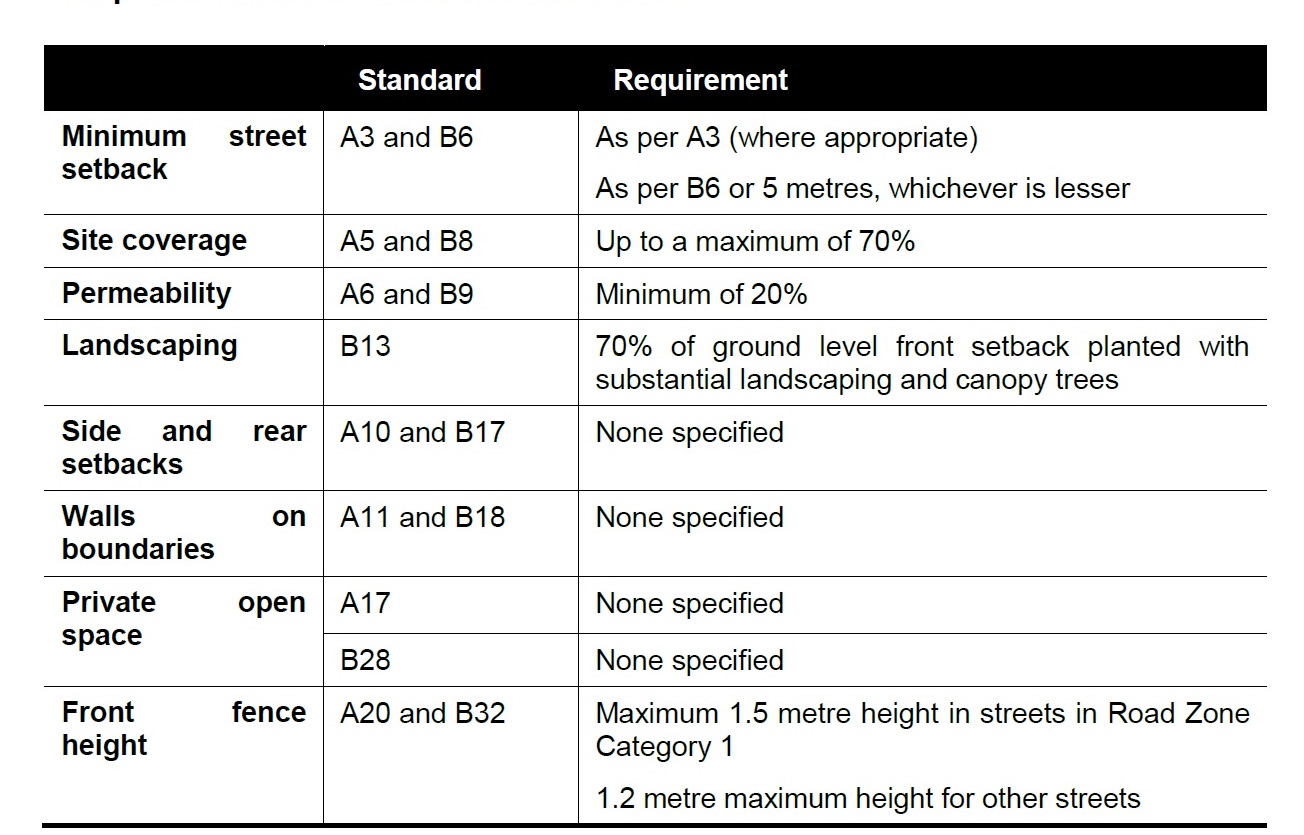
It should also be pointed out that there are quite a few councils that don’t even have RGZ in their planning schemes. Instead, they have relied on numerous General Residential Zoning schedules to implement their finely grained schemes. As we’ve noted before, Stonnington and Bayside have plenty of GRZ schedules that include some that have a 9 metre height limit. Further, even for Greater Dandenong which was the second council to have their zones ratified their attempts to limit the damage is evident in their schedule to the RGZ. Note all that they have included in comparison to Glen Eira’s cave in. Greater Dandenong was able to achieve a site coverage of 70%. Glen Eira has 80%. Greater Dandenong has standards on landscaping, fences etc. Glen Eira is silent on all of this.

greater dandenong

The most outrageous statement of all comes in the final recommendation – That Council notes that the maximum height limits achieved last year are providing greater protection to Glen Eira than in other municipalities.

Height is only a fraction of what could be seen as constituting ‘protection’. Of far greater importance is:

  • Where the RGZ zones are placed – are they only along main shopping strips or main roads which people could live with, or do they engulf entire quiet residential streets that are now being destroyed – such as Mavho, Penang, Loranne, Bent, Glen Orme and hundreds of others?
  • If 52 units can be crammed onto one site, then ‘density’ is not exclusively dependent on height, but on size of dwellings, permeability and site coverage, landscaping requirements, etc. All of these considerations do not rate a mention in Council’s view of planning and do not feature in the zoning for RGZ and neither do they feature in the GRZ zones.

The more Council insists on issuing such misleading and deceptive public relations exercises the more residents should start thinking that this is not the sort of council that is serving its populace as it should. When trust is lost, when public pronouncements can’t be believed, when self aggrandisement and continual cover ups occur, then there is definitely something rotten at the heart. Right now it is reeking to high heaven!

« Previous PageNext Page »