GE Service Performance


This paragraph featured in our post of March 23rd, 2011 –

We’ve written that secrecy and transparency do not mix. Secrecy invites speculation; it encourages distrust; and it reinforces a siege mentality – all counterproductive. Yet this is the way that this council has been perceived for years. Residents are not viewed as colleagues and/or collaborators in planning, setting visions for the future, or merely partaking in democratic processes. They are viewed as troublesome cash cows that need to be managed, sidelined and ignored whenever the legislation unwittingly allows for such manoeuvres.

Item 9.11 in the current agenda is another case where secrecy rules the roost – the Municipal Emergency Management Plan. For a council which has one of the highest flood risks in the metropolitan area and where hundreds of homes and businesses were inundated by the floods of February 2011 it is frankly unconscionable that the following statement is made by Waite –

A copy of the current version of the Plan is available in the Councillors’ Room for Councillors to view. As it contains personal information, it is not a public document.

There can be no excuse as to why this document is kept under wraps, especially not when it has the potential to impact on countless lives. Residents have every right to know exactly what the ‘changes’ are and how well positioned this council is in order to respond to any kind of large-scale emergency. Resorting to claims of ‘personal information’ simply will not do – and especially not when all of the following councils (to name but a few!) see no problem in publishing their Emergency Plans on their websites!

As always, the focus needs to be on councillors and whether they have the will to ensure that such practices are put to an end.

http://www.moreland.vic.gov.au/about-moreland/emergency-management/municipal-emergency-management-plan.html

http://www.whitehorse.vic.gov.au/Municipal-Emergency-Management-Plan.html

http://www.centralgoldfields.com.au/?id=23510100B6A0B1D9AEE15DBACA25799900168F98

http://www.maroondah.vic.gov.au/MEMP.aspx

http://www.geelongaustralia.com.au/council/governance/documents/item/b9ccbf99.aspx

http://www.bayside.vic.gov.au/search_results.php?q=municipal+emergency+plan

http://www.kingston.vic.gov.au/Services-and-Support/Emergency-Information/Emergency-Information


Apologies for this long post – but it’s important!

Item 9.2 for Tuesday night’s council meeting exemplifies in our view the continued ‘con job’ that this administration foists on residents and probably most councillors. Here are some very illuminating facts:

  1. The bogus Planning Scheme Review of 2010 resolved to review all policies
  2. In June 2012, Amendment C102 first reared its ugly head
  3. GE DEBATES at the time provided the following commentary –

Agenda items for Tuesday night feature another 2 Planning Scheme Amendments. We will concentrate on the Non-Residential Uses in Residential Areas.

Generally when council introduces an amendment the argument is that it is necessary to fix up zoning issues, or that many of the clauses/phrases/wording in the existing planning scheme is repetitious, not clearly expressed, the legislation has changed, etc. etc. Our analysis of the proposed Non-Residential Uses reveals an entirely different picture. Yes, some changes are due to legislation but many represent nothing more than a watering down of previous conditions and thereby providing far more opportunity for developers to set up in residential areas. We have no problem with the position that amenities such as doctor surgeries, vets, etc. should be located where people live. What we do object to is the chipping away at conditions that help safeguard the existing amenity of residents.

Below we feature a table which presents side by side the current clauses and phrases from the existing Planning Scheme and what is proposed. Many of the changes are indeed subtle – just a word here and there – but the ramifications of these changes are immense. Please note that we have not covered everything – just the main concerns such as location, car parking, and protection of trees.

EXISTING POLICY PROPOSED   CHANGES
To encourage the development and location of new non-residential uses in areas   which are compatible with the residential nature of the area and comply with orderly and proper planning principles.


Proposed development sites abut a main or secondary road and have vehicular access from a service road or side.   Other locations may only be considered where it can be demonstrated that residential amenity will not be compromised.


The   proposal be located within easy walking distance of public transport.


Existing dwelling stock be retained in preference to purpose built facilities.


Sufficient car parking be provided on-site for all users.


he  standard car parking requirement will only be reduced where the Responsible Authority is satisfied that the area is supported with suitable levels of public car  parking and public transport.


The retention of any significant trees or landscape features be a high priority in the design.


Where  car parking is in the front setback, a generous landscape buffer between the car park and the street frontage be provided.


Where car parking areas abut residential dwellings, an adequate landscape buffer (suggested width of 1.5m) be provided and be heavily planted with large shrubs and trees.


Stormwater runoff directed into garden areas to reduce watering and demand on drainage infrastructure.

To  encourage the development or extension of non-residential uses, in suitable locations which comply with orderly and proper planning principles.


Encourage the   location of non-residential uses in “preferred locations” including main or secondary roads and on corner sites with vehicular access from a service or side road. Consider other locations where it can be demonstrated that residential amenity will not be unreasonably   compromised.


DISAPPEARED   and replaced with: Discourage the location of non-residential uses on local streets within Minimal Change Areas   (as defined in Clause 22.08)


Retain existing dwelling stock, where practical, and any associated extensions/alterations maintain or enhance its residential character.


To ensure that adequate provision is made for on-site vehicle parking, bicycle parking and (where necessary) drop off/pick up areas for all non-residential uses/s in a safe manner.

Car parking facilities be provided to the side or rear or basement of the premises, unless the use is in a preferred location abutting main or secondary roads (as defined in Clause 21.12) or in   a Housing Diversity Area (as defined in Clause 22.07)


Reduced on-site car parking must be supported by a Traffic and Parking Report


Retain any high priority significant trees  or landscape features within the design where possible.


Ensure that where car parking is proposed in the front setback (in limited circumstances where the use is in  a preferred location), a generous landscape buffer between the car park and the street frontage must be provided.


Where car parking areas abut residential dwelling, an adequate landscape buffer (minimum width of 1.0m) be provided and be heavily planted with large shrubs and trees.


DISAPPEARED

At the July 2012 Council meeting an unanimous resolution was passed to DEFER THE AMENDMENT. Here is the what Tang, Hyams, Esakoff, and Lobo stated at the time –

Tang moved that this item be deferred. Esakoff seconded.

TANG: Started off that the two amendments on the agenda came out of the Planning Scheme Review and that for the previous Amendment (rezoning) he was ‘satisfied’ with the ‘strategic’ justification and ‘merit’. Although ‘there may be some strategic merit in the suggestions’ for C102 there are also come ‘concerns’ and Council should be ‘prudent’ in ‘trying to address those concerns before proceeding’. Said that a resident had pointed out the ‘blog’ and that the moderators ‘were certainly very dedicated’. Tang went on to state that he was concerned about the ‘accuracy’ of the blog  and ‘balance of the views expressed’ but in a ‘democratic society’ people are permitted to express their viewpoint. He then went on to state that as a ‘community representative’ he was happy to ‘review’ those views  and if they had support to ‘bring them to council’. Said that he wanted to be 100% ‘satisfied’ about the concerns raised ‘in relation to the watering down of restrictions’….’expansion of the breadth of the policy….’and descriptions…..around significant trees’. ‘Council should consider what else it can do….before proceeding’.

ESAKOFF: Agreed but with ‘slightly different reasons’ to Tang. ‘ I would like some more time to work on this….’

LOBO: ‘it is a good idea to defer this’….’many (of the changes) are in favour of a developer’

HYAMS:  Said he understood the ‘aims in redrafting in making it more streamlined….(claimed he hadn’t read the blog) ‘for some time’ and that he’d come to the conclusion himself that ‘there were concerns with this’ such as putting in Housing Diversity as ‘preferred’ locations. Stated that he would be ‘more comfortable with some further consideration’.

TANG: ‘acknowledged’ that Hyams brought up ‘similar concerns’ to his own.  Said that the only reason he mentioned the blog is that ‘it is so often used ….as a vehicle for hate…spreads innuendo….or inaccurately assesses council’s performance….without checking the veracity of the underlying information’. Went on to state that ‘in this instance….the blog has done a good thing’ in comparing past policy with draft suggestions. ‘That’s fine and in fact very useful in the democratic debate’…..’regardless of how councillors have come to the conclusion I just hope they will take on board concerns’.

CARRIED UNANIMOUSLY

https://gleneira.wordpress.com/2012/07/03/the-whiff-of-revolution/

https://gleneira.wordpress.com/2012/06/29/chip-chip-chipping-away/

So now, AFTER A 2 YEAR DELAY, Amendment C102 makes a comeback! Has it changed? Has it addressed all the concerns that were evident in 2012? Not by a long shot. Admittedly some things have changed as a result of the New Zones – but the basics, such as protecting ‘significant trees’, setbacks, drainage, and many of the other points we raised are still valid, relevant and represent a bonus to applicants and not residents!

That of course raises the very serious question of:

  • Where is corporate memory, and especially the memory of councillors who (pretended?) at the time that they weren’t satisfied with the proposed changes? Since the 2012 and 2014 version are practically identical, and so is the officer’s report (word for word) why did they permit this amendment to be advertised as it stood? And the $64 question – how will they vote? Surely if it wasn’t good enough in 2012, it can’t be good enough now?
  • Or was this all smoke and mirrors – with knowledge of what was to come via the new zones legislation and the 100 metre extension around activity centres for uses without permits? There can be absolutely no excuse for a delay of 2 years from Version 1 to Version 2, when there have hardly been any changes whatsoever except the removal of the car parking measures and objectives.
  • Do the powers that be simply rely on poor memory so that they can ram through whatever accommodates developers rather than doing their jobs of trying their utmost to protect neighbourhood amenity? It would seem so we believe.
  • The councillors ‘excuses’ this coming Tuesday should be a highlight!

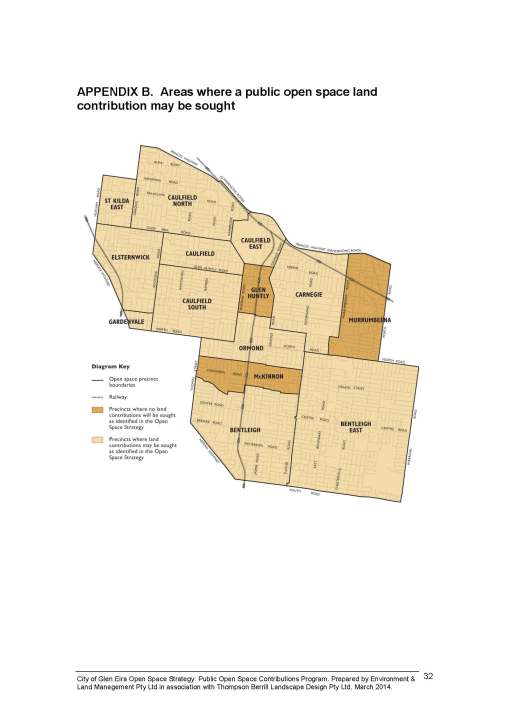
Residents and readers also need to take a very, very close look at Amendment C120 (open space levy) and how this has been manipulated. We will comment in detail on this in the coming weeks.

The agenda for Tuesday night’s council meeting is quite literally a ‘doozy’! What stands out clearly is the ceding of more and more power to unelected bureaucrats and removing the ‘influence’ of councillors even further. This has been done via suggested changes to the Planning Delegations. Councillors have never had (unlike other councils) the option of ‘legalised’ ‘call ins’. That is, if one councillor decides that an application should come before council for decision, that option is open to him/her. This does not exist in Glen Eira. What is now up for decision makes the sidelining of councillors even more ‘efficient’. The proposal is that if no more than 3 objections come into an application, then officers may decide. They may also decide if an objector has received a phone call from a planning officer and thereby had the ‘opportunity’ to voice concerns! Even worse is that the power to grant an amended permit for three storeys is now also in the hands of the unelected if they have previously been involved.

Akehurst provides SOME details of other councils’ delegations and how Glen Eira fares in comparison. For example, he cites that Port Phillip requires 15 objections, Stonnington 6 objections. However, what is conveniently omitted in relation to these other councils is the option for a single councillor to insist that the application come before council – ie. even on parking dispensations the Port Phillip delegation states: Non-compliance with residential parking requirements (except that a minor dispensation can be determined by the Manager City Development or Neighbourhood Coordinators unless a councillor requests that the application be determined by Council.

The best line however comes in the conclusion  to his report – Even with the recommended 3 objection limit our delegations would be more conservative than all the above mentioned Councils but our decision making performance would significantly improve. How effective ‘decision making’ is predicated on the number of objections is, of course, unstated and ultimately quite ridiculous.

But there’s even more of totally unsubstantiated and suspect logic. We quote directly from Akehurst’s report –

Attendees at DPC are dropping. Increasingly objectors and even applicants are not attending. This is likely the outcome of town planning rules which are now clearer.

Council also proposes to shorten the ‘lay off period’ over Christmas since this disadvantages the applicant and ‘benefits the objector’. During this time, phone calls may suffice! – On the last dot point, it is proposed that each objector has been spoken to either in person or telephone by a senior planning officer as delegated by the manager (the outcomes of which would be formally recorded on file). The senior officer will repeatedly attempt to contact an objector over a 48 hour period, after which a decision can be made.

This approach would still satisfy a fundamental principle of Glen Eira’s town planning process by allowing objectors an opportunity to elaborate on their objection with the decision maker. This would build on and follow the recent ‘consultation/mediation’ process adopted for applications with 1 objection.

Ironically we also have in this same agenda more evidence of how poorly council informs residents of what is going on in their direct vicinity. As we’ve pointed out repeatedly, the practise of minimal notification whenever many objections are anticipated, is alive and well. Item 9.1 features an application for 13 double storeys in Carnegie. Only 13 properties were notified, 16 notices sent and 44 objections received.

There is much more more that we will be commenting upon in the days ahead. However of real interest is this in camera item

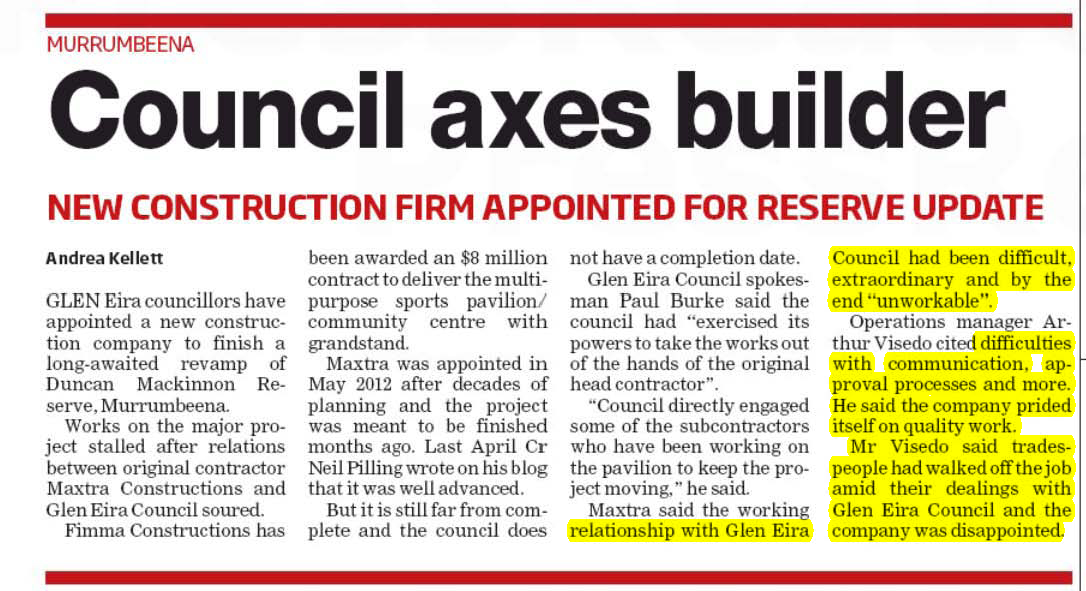
12.2 which relates to the awarding of the contract for 2014.036 Duncan Mackinnon Pavilion – New Building, Civil Works and Landscaping.

Number of tenders received Four

Number of evaluation criteria tenders assessed against Three

Estimated contract value $8m

Surely residents deserve some public statement on what is happening at Duncan Mackinnon and why a project that originally was costed at 7 million has blown out to nearly ten million and now another 8 million possibly? And why the years and years of delay?

PS – UNRELATED, BUT WE’VE RECEIVED A PHOTO TAKEN TODAY BY A RESIDENT WHICH REVEALS THE CARNAGE ALREADY UNDERWAY FOR THE CAULFIELD VILLAGE. Location is corner of Bond/Station Streets.

031

Bayside has implemented what the latest bill before parliament proposes – the setting up of a CEO employment committee. How this will ultimately impact on the ‘job for life’ approach taken in Glen Eira is open to debate. We remind readers that since Newton was appointed in 2000 his contract has NEVER BEEN ADVERTISED; the community is not privy to the Key Performance Indicators of the contract, and legal battles have raged periodically.

Below is the Bayside Media Release and a rundown of neighbouring councils and the dates of their CEO appointments.

CEO Employment Matters Committee – Chairperson

Bayside City Council invites applications from suitably qualified persons for appointment to Council’s Chief Executive Officer Employment Matters Committee as Chairperson for an initial term of up to three years with an option to review annually.

It is proposed that the Chief Executive Officer Employment Matters Committee will meet approximately five (5) times per year.  A per meeting remuneration fee is offered with this role.

The Chief Executive Officers Employment Matters Committee will operate as an Advisory Committee to Council in accordance with the Local Government Act 1989.  The key functions and responsibilities of this Committee are:

  • To make recommendations to Council on contractual matters relating to the Chief Executive Officer or the person appointed to act as the Chief Executive Officer including the following:
    • The appointment of the Chief Executive Officer;
    • Remuneration and conditions of appointment of the Chief Executive Officer
    • Any extension of the appointment of the Chief Executive Officer under section 94(4)
  • To conduct performance reviews of the Chief Executive Officer; and
  • To perform any other prescribed functions and responsibilities.

Applications received for the role of Chairperson will be assessed against:

  • Demonstrated human resource management skills, senior business experience and qualifications;
  • Experience in senior management recruitment;
  • Recognised ability in relation to performance management and development of Executive level staff; and
  • Previous experience or facilitation experience working with Executive Governance bodies or Board Members in membership and/or facilitation roles.

Chief Executive Officer Employment Matters Committee Charter (PDF, 902KB)

Source: http://www.bayside.vic.gov.au/about_the_council/latest_news.htm

Bayside – Adrian Robb – 2008

Port Phillip – Tracey Slatter – 2013

Kingston – John Nevins – 2005

Stonnington – Warren Roberts – 2009

Boroondara – Philip Storer – 2012

Manningham – Joe Carbone – 2012

Monash – Andi Diamond – 2012

The next Kingston Council Meeting set down for June 2nd should be well worth watching on their live streaming. Several Notices of Motion stand out for their call for greater transparency and accountability and hence overall governance practices. None of these, of course, could ever happen in Glen Eira given the current status of Meeting Procedures as well as a culture that shuns public scrutiny on all matters.

Here are the most ‘interesting’ items –

(Councillor Bearsley) – I Move

A. That council launches an independent review of the following areas in order of priority:

a. Community Engagement

b. Economic Development

c. Communications

d. Statutory Planning

B. That council scopes a tender process for an efficiency and effectiveness report for whole of council to be compiled by a reputable accounting/auditing firm and completed no later than August 2014.

C. That council develops an annual assessment and review process of efficiency and effectiveness of the council organisation with appropriate reporting measures which improve accountability and transparency.

D. That performance reporting KPIs be incorporated as part of an annual review.


(Cr Eden) – I move that:

Kingston Council seek to appoint an independently appointed observer to explore whether there are poor practices at Kingston Council, and whether Councillors have been acting in a questionable manner with respect to Planning matters.


(Cr Bearsley) – I move :

I move that planning officers prepare a report that details all developments, over the past two years, that have significantly breached the approved permit conditions and required amendment/resolution. The report is to indicate the breach, address, owner/applicant and final outcome. The report should include ways Kingston identify and minimise such breaches occurring and be provided by the 30th June.


(Cr Eden) – I move :

1. Council record the ‘in camera’ part of the Council meeting, so that if & when the item(s) are later made public the debate / discussion accompanying the confidential item will also be available to the public.

2. That officers report to Council on the reasons for ‘glitches / errors’ in the live recording and streaming of council meetings, and possible actions to rectify these problems, including:

a) That officers explore alternative mechanisms for recording the sound generated at meetings to ensure that regardless of whether the person speaking has their microphone on, their comments will be recorded – this will ensure if there is debate /discussions around the room that such comments are captured.

b) Officers implement a system to ensure that the live recording / streaming is working during meetings, and that Councillors are immediately notified if there are ‘technical issues’.

++++++++++

Another agenda item includes an indepth report on items declared ‘confidential’ which is well worth reading.

carnegie

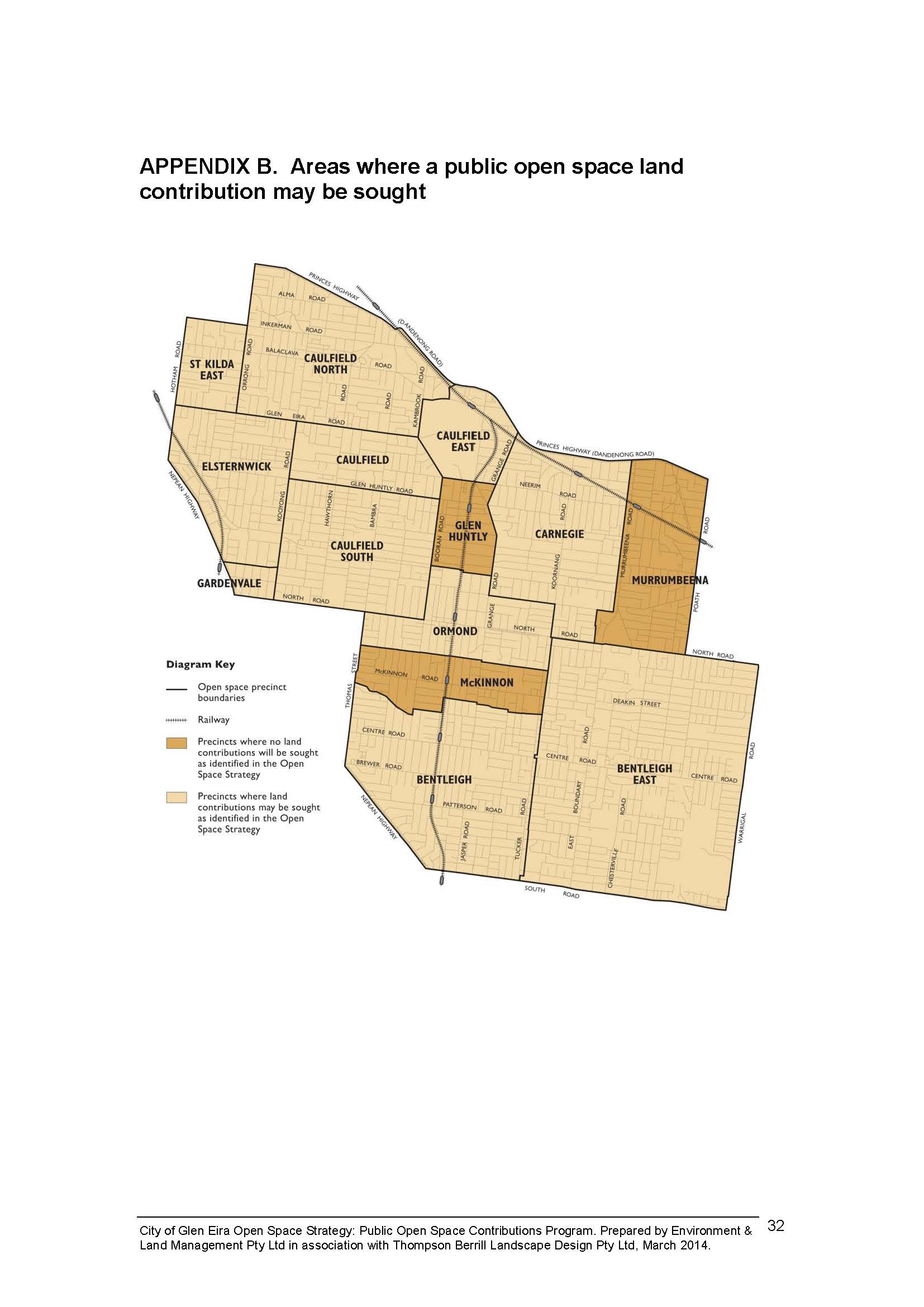
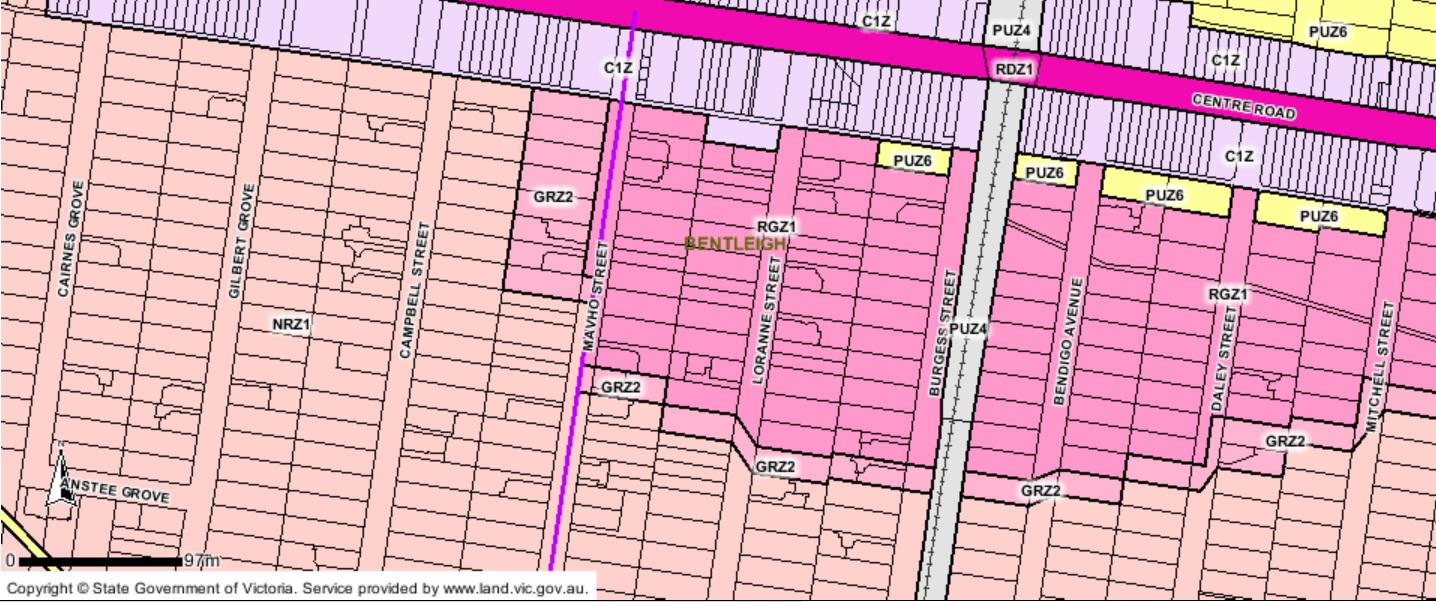
The above graphic is the perfect illustration of how inept and indifferent to residential amenity this council really is. Newton and his band of willing accomplices (ie councillors) have succeeded in creating thousands upon thousands of second class citizens in Glen Eira. These residents do not deserve open space, sunlight, “diversity” of apartments and parking. In short, if people happen to dwell within cooee of an activity or neighbourhood centre then they have become the sacrificial lambs to rampant over development and, all achieved of course, in secret, and without any public consultation.

The featured map makes a mockery of any suggestion of ‘buffer zones’. Zoning a commercial centre that has no height limits, right up against a residential zone is planning gone mad and, if not ineptitude, then total disregard for those particular residents and their rights.

217 Koornang Road is a recent VCAT decision which approved a three storey building, 13 dwellings, 3 offices and waiver of car parking. Council did oppose this application, but its zoning, and therefore planning scheme was the chief culprit in the decision. The inequity of standards is made starkly real in the following statements by the member. We quote from the judgement –

“Ms Rawadi was particularly concerned about overshadowing of her north facing windows and the open space of her dwelling to the south of the subject land. In RPC architects Member Cimino, having discussed in some detail the reasonable amenity expectations of a dwelling in a Commercial 1 Zone (then the Business 1 Zone) when confronted with the redevelopment of another site in the Commercial 1 Zone to the north reached the following conclusion:

  1. Given this, it is unrealistic to expect that solar access in accordance with the relevant standard of Clause 55 be maintained to north facing windows or that the backyard will not be overshadowed to a substantial extent.
  • I agree with this assessment. The overshadowing impact of the proposed development on Ms Rawadi’s windows and open space will be significant and would not be acceptable if both properties were located within a residential zone. However, the properties are located within a Commercial 1 Zone and in that context the amenity relationship including that in respect of overshadowing which will result from the construction of the proposed building is an acceptable outcome. It should be noted that the dwelling and open space to the south will not be overshadowed for the entire year. I would expect that for approximately 5 months of the year the north facing windows of the dwelling will receive some sunlight ranging from relatively unfettered solar access at the summer solstice to more limited solar access towards the middle of the day close to the equinoxes. A greater level of solar access will be enjoyed by the open space areas”.

http://www.austlii.edu.au/au/cases/vic/VCAT/2014/561.html

The take home message? For all the spin and propaganda there are no ‘buffer zones’ in Glen Eira. Even in NRZ1 zones where 2 storeys are permitted, there is no guarantee that neighbours will not be deprived of sunlight and bear the brunt of significant overlooking.

PS: Residents should also note the following. On the 30th August 2011, Council passed unanimously the following resolution:

Seeks authorisation from the Minister for Planning to prepare and exhibit Amendment C90 which proposes to alter the Housing Diversity Area Policy and Urban Village Policy to include prescriptive guidance for development at the interface of Housing Diversity and Minimal Change areas.

In December 2011, according to the Quarterly Reports the Minister had given ‘conditional’ approval for exhibition. This was supposed to be exhibited in March 2012. The next Quarterly Report noted that the exhibition period would now be May/June 2012. Then, in the minutes of 30th November 2012, there is this buried little sentence – “Amendment will be withdrawn. The issue of transition will be addressed through the New Zones”.

No public statement explaining why this amendment was not exhibited as the resolution mandated has ever been given. As per usual, residents have been left in the dark. Whilst C90 was full of loop holes, the ensuing Residential Zones ignored much of what was then stipulated. Stealth, secrecy and keeping the public as ignorant as possible is the continued and unacceptable modus operandi of this council.


11.2 Right of reply
(a) Cr Delahunty.

“I feel that my decision making has been misrepresented by comments made by the friends of Caulfield Park president David Wilde and reported in today’s Caulfield Glen Eira Leader on-line and I seek to restore the balance to the public debate. In other mediums by the same person purporting to represent the entire group I and one of my colleagues was described as grossly incompetent and treacherous. In a further public flyer it was intimated that I said the conservatory was an icon and that I was hypocritical and deceptive. In yet another piece of correspondence I along with other Councillors were described as arrogant and deceptive. About these comments I would like to say that I will always defend the rights of people to disagree with me but I will not stand by and allow unprofessional and seemingly contradictory insults to be used. I condemn those comments as I have done in the past.

So onto the misrepresentation of my decision making in the comments today. The comments today suggest that we have snubbed our nose at the community. So to address the survey results. The report showed that the structural issues were so great that retention as the community called for was not really an option. Instead, as I spoke about at the Council Meeting
at the time the conservatory would have been a substantially new one if we were to go ahead with it. I therefore felt that the community consultation was based on a now unrealistic premise that there was an option to actually retain the conservatory in the first place. The advice we received also said there is no heritage value in to current structure. Instead it is largely, like my house, owed to 1970s architecture.

The cost is significant not as the comments say today merely insignificant and I take all decisions on costs very seriously regardless of how minor they might seem in the overall budget. The comments today also suggest that we should be condemned for the money we are spending on open space in other areas of the municipality areas that do not have parks let alone ones as large as Caulfield Park. Areas where residents get into a car to drive to find access to public space. It is money well spent and it is spent at the behest of the wider municipality. We could go back into consultation and check with the community and we could ask. So substantially the question would probably be; would you like to build a pretty much new conservatory using elements of an old conservatory without any historical significance in Caulfield Park for around half a million dollars at the very least. If so, please nominate which areas of Glen Eira you would like us to remove services from or which areas of open space you would like us to forego in order to provide this or please indicate if you are happy to have your rates increased to accommodate this expenditure. See, I don’t need to spend more ratepayers money to have this conversation because I already know what the answer will be. With the cost of living increases that families are facing in Glen Eira in the face of a cruel Federal Budget it seems rather elitist to insist that Council reach into the pockets of residents to deliver a conservatory to Caulfield Park and I hope this goes some way to balancing the public debate in this area.”

The continued ‘musical chairs’ between Esakoff, Hyams and Lipshutz on the issue of conflicts of interest show no sign of abating. What was a new step on Tuesday night is that both Hyams and Esakoff did not declare a conflict in relation to the MRC giant screen application under the clauses they had previously used (78B), but instead declared a ‘personal interest’ under Section 79B. The minutes record the following:

Cr Hyams applied for a Conflicting personal interest under s79B of the Local Government Act stating that there is no Conflict of Interest as such but as he is a member of the Caulfield Racecourse Reserve Trust which has also needed to look at this issue.

Cr Esakoff applied for a Conflicting personal interest under s79B of the Local Government Act as she is a member of the Trust that has looked at this issue.

8.48PM Cr Hyams and Cr Esakoff left the Chamber.

In the interests of complete accuracy, here is what Section 79B of the Local Government Act States. We draw readers’ attention to clause 2 and 5.

Conflicting personal interest

    (1)     This section does not apply to a Councillor or member of a special committee who has a conflict of interest in the matter.

    (2)     If a Councillor or a member of a special committee considers that he or she has a personal interest in relation to a matter that is in conflict with his or her public duty in relation to the matter, the Councillor or member may, immediately before the matter is considered at the relevant meeting, apply to the Council or special committee to be exempted from voting on the matter.

    (3)     If a Councillor or member of a special committee makes an application under subsection (2), he or she must give reasons in support of the application.

    (4)     A Council or special committee may consent to an application made under subsection (2) and must not unreasonably withhold consent.

    (5)     If a Council or special committee consents to an application under subsection (4), sections 79(6), 79(7), 79(8) and 79(9) apply as if the personal interest that is the subject of an application under subsection (2) were a conflict of interest specified under this Act.

Lipshutz remained in the chamber, seconded the motion, spoke to it and voted! His ‘explanation’ and comments were –

LIPSHUTZ: began by declaring that he doesn’t have a conflict of interest in this item ‘because I am not a member of the MRC’ and that ‘when I look at this (application) it is appropriate‘. Since one of the purposes of the racecourse is ‘racing’ and the screen isn’t any ‘bigger than the one in NSW’ and that racing brings in a ‘lot of revenue for the State’ and ‘I think it’s important’. Said that this doesn’t mean that it’s ‘more important than the other two purposes’ (ie park). This is ‘appropriate’ and won’t have any ‘impact on houses nearby’ and isn’t an ‘amenity issue’. He saw ‘no reason to refuse it’.

All in all quite staggering we say. How one councillor continually adjudges that his position is different to two other councillors in the identical situation is mind boggling. And of course, this application has never rested on the premise as to whether anyone is a member of the MRC. That is a nonsense, since it is the Trust which has legal oversight of the MRC. Even more disturbing is that not one single councillor has challenged Lipshutz in his refusal to leave the chamber, or possibly to leave councillor assemblies. So much for adhering to the principles of ‘conflict of interest’.

Lipshutz moved some amendments (balconies to be 8 square metres; on site visitor parking increase to make up for lost car spots – ie 130 spots; peak hours for paid parking; screening allowed for ‘alternate methods’). Sounness seconded.

LIPSHUTZ: called this a ‘vexed issue’ and that Council has been accused of being ‘treacherous but the reality’ is that the government has given the development the ‘go ahead’ and therefore ‘Council has an obligation’ to do things properly. Said that ‘we can refuse’ the plans but all that would mean is that the developer will go to VCAT and they ‘will get what they want’. Went on to say that all councillors had looked very carefully at the plans and that they had seen some ‘defects’ and are now correcting these defects. Said that C60 is ‘going to go ahead’ and that it’s going to be a ‘very high class village’ and that this is ‘unstoppable’. Council now has to deal with this ‘appropriately’ and the conditions put ‘satisfy this’. Claimed that he has always been ‘concerned’ about car parking and traffic. Since there will be a loss of car spots then council is ‘increasing’ the number of car parking spots ‘up to 130’. Mentioned that the Tabaret’s permit is for 127 off site car parking spots and that has to be maintained and ‘how the developer does that’ is his problem. On balconies he was ‘concerned’ that they get a ‘high quality development in this area’ so ground floor balconies should all be at least 8 square metres because he doesn’t like the situation where people buy and they have ‘very small balconies’. Went on to explain that there are 373 dwellings above the ground floor ones and these balconies on average are over 7 square metres but only ‘22% are greater than 8 square metres’. Council is trying to make sure that these dwellings are ‘in accord’ those on the ground floor and ‘so when you have this people have open space’ and people can ‘walk around and enjoy some of the gardens and balconies’. The developer will have to ‘relocate’ parking machines and pay for this. Overlooking is another issue and ‘fixed glazing’ is one method, ‘there may be other methods’ and if council is satisfied then ‘we have to go ahead with that’.

Kept saying that this is only ‘the first stage’ since over the next 10 to 15 years more development plans will be coming in. Admitted that the issue of ‘social housing’ isn’t part of the plans for this stage but it will be in future stages and if not then council ‘will have something to say about that’. Concluded by saying that he thought that with the amendments they had ‘improved’ the plans.

SOUNNESS: called the history of the development a ‘strange beast’ and ‘contentious’ and claimed there is ‘little capacity’ for councillors to do much within the ‘framework’ of the legislation. So given the ‘current form’ of the application ‘there is only so much that Council can do’. Said that car parking was ‘one of those features’ that had been ‘taken away’ from council to look at. This also applies to ‘active open public space’ and the relationship to the racecourse has ‘also been removed from consideration’. Said that all this is ‘complicated, confusing’ and ‘vexed’. Claimed that ‘grounds to say ‘no’ to it are very limited’ and therefore ‘saying ‘yes’ to it is where we’re at’. He thought that if there has to be higher density then ‘where better to do it’ than ‘next to a train station’ and in a place ‘that’s already been affected by urban development’. He would rather see it here than in undeveloped land in the ‘peripherary of Melbourne’.This also applies to infrastructure so ‘I would rather see it here than elsewhere’. The Residential Zones only came in with ‘so much protection’ because of developments like this. This is part of a Glen Eira, Melbourne and ‘Green’s story’. Thought that the development ‘ticks a lot of boxes’. Said that he ‘wasn’t entirely happy with it, but it’s suitable enough’.

DELAHUNTY: said that even though something had to be built there, she thought that the ‘premises’ were wrong and that she’s got 3 major objections to the plan. First was the ‘lack of social housing’ which was included in the planning panel report and in the Incorporated Plan and she was ‘disappointed’ that it isn’t in this part of the Residential Precinct. It shouldn’t be ‘an after thought’ and it belongs here. Second was the ‘shortfall in the car parking’ and the amendment won’t fix it because people who know the area know that ‘there’s an enormous demand’ for car parking there. There is still too much of a ‘shortfall in my mind’. Thirdly the plan ‘falls down’ in the ‘provision of open space’. Said that the panel rested its recommendations on the fact that there was open space in the centre of the racecourse and Council’s Open Space Strategy found that there wasn’t enough accessible open space via the racecourse centre. So if the panel recommended rezoning based ‘on this premise’ and if the premise is wrong then the whole plan falls down.

MAGEE: agreed with Delahunty on social housing. Said that hearing that the Incorporated Plan is now going to ‘be looked at through fresh eyes’ and when the MRC sold it off to a developer and that developer looks at the Incorporated Plan and decides that this isn’t ‘what I want to build here’ so this leads to a ‘situation’ where council ‘thought’ one thing and another thing is happening. Said that since this will take 10 to 15 years and these councillors won’t be there it’s important that future councils keep tonight’s ideas in place. Said that in planning terms for the city this ‘is a race to the bottom’ and won’t benefit Caulfield or ‘amenity’ of Caulfield. Won’t help people trying to ‘commute to an from the city’ and if ‘we don’t do the job properly now then parking’ will be decided ‘in ten year’s time’ . Said ‘there’s questioning’ about rail, the superstop tram stop and whether this will even be built. Said that Caulfield could have ‘another 7 or 8 thousand people’ living here and how does everyone survive in ten years time and ‘how do we make a decision today’ when they don’t even have the ‘foresight to see exactly what’s going to happen’? The Incorporated Plan has changed so taking away commercial areas means ‘more units’ therefore ‘more people’ and ‘more stress on car parking’.

When there are events on at the racecourse then car parking is impossible and that’s ‘why roads are closed off’. The ‘perfect storm’ will be when people are living there already, and there’s races and Monash and then people will ‘look at us and say how did you get this so wrong’? Lipshutz’s amendments are ‘commendable’ but he has ‘still got some severe concerns’ about it. Said that if the motion is defeated then he’s got an alternate motion to put up.

LOBO: after listening to both sides he thought that it was ‘unfortunate’ that when the Special Committee made their decision on the C60 they now ‘have to keep that decision going’. Said that if he would have been in the position of deciding he would have sent it back and asked them to come up with something else. Said it wasn’t the ‘right development’ because there will be a ‘lot of traffic problems’ and because of the railway the ‘chaos will be unimaginable’. Ended up by saying that ‘I am not happy with this at all’.

HYAMS: agreed that this has a long history and goes back to the C60 and that it’s ‘important to remember’ that this involved a ‘long consultation process’ and an ‘independent panel’. When the Panel reported back ‘we ameliorated the original proposal’ and with the panel’s report ‘we ameliorated it a bit further’ so ‘given the outside constraints’ Hyams claimed that they did the ‘best we could have done’. ‘It clearly is an appropriate site for a large development’. Said that ‘a lot of work has gone into this’ and praised the planners. Said that this is the ‘first’ and the ‘less intense’ of all the precincts and with drainage and traffic plans council is looking both at bits and the entire 3 precincts. Even though there have been changes such as less office space, the ‘building envelopes comply with the incorporated plan’ and Council even got ‘independent legal advice’ on this. Said that he didn’t think anyone would be advantaged by ‘forcing’ the developer to ‘build offices’ and then ‘no-one is going to use them’. Stated that council used ResCode as a ‘guide’ even though they weren’t ‘applicable’. Even though council’s traffic department was ‘comfortable’ with 73 car parking spaces on site, and even though he has ‘respect for our traffic engineers’ he doesn’t ‘always agree with them’ and this is where he thought they were being a bit ‘conservative’ about what was needed. So councillors are now asking for 130 which equals the spaces lost on Station Street. Since there won’t be any residential parking permits issued this means that ‘eventually’ there will be Residential Parking Permits for ‘surrounding streets’ so the residents ‘won’t have the option of clogging up nearby streets’. Said that the Transport Plan ‘is not acceptable to us’ or Vic Roads but this latest version is now ‘acceptable’ to everyone. Summarised what else was required such as Waste Management and Construction Plans as well as amended Section 173 Agreement. Admitted that ‘this won’t please everyone’ but it’s a ‘huge site’ near shops and transport so ‘we need to strike a balance between protecting neighbourhood amenity’ and accepting ‘appropriate development’.

ESAKOFF: said that she was ‘satisfied’ with the conditions placed on overlooking and setbacks since they are ‘ResCode compliant’ but didn’t agree that private open space ‘on the ground should be less than 8 square metres’ and agreed that private open space for balconies above was good. Thought that the Integrated Transport Plan ‘must be addressed now’ . Agreed that ‘parking will be an issue’ but it’s an ‘issue throughout all of Glen Eira’ and that ‘replacement of some of these lost spaces is imperative’.

OKOTEL: although the original decision was made in 2011 these current plans have raised concerns by residents and councillors but Lipshutz’s amendments do ‘address those concerns’. The motion will ‘strike the right balance to ensure that’ the development will be ‘satisfactory for the residents’ and for use of ‘future infrastructure in the area’ and it will ensure that there won’t be ‘interruption to traffic flow in the area’.

PILLING: supported Lipshutz’s amendments and thought there was ‘much merit in the application‘ especially in light of Plan Melbourne. Said it was ‘about a sustainable city’ and seeing that people have more ‘accessible public transport’. Pilling did note that there still ‘would be reduction in car parking’ from what’s ‘there now’ but that’s ‘in keeping with our policies, with State Government policies’ in that for such areas the priorities ‘won’t be cars‘. Said again that this ‘reflects’ state and council policies and how they are all trying to create a ‘sustainable city’. Thought that ‘the grounds for refusal are fairly weak’. This is only stage one and social housing will be ‘pushed’ for later since this is only ‘early days’. The racecourse ‘was considered’ but not tied in ‘legally’ to a condition here so the grounds for refusal are ‘relatively weak’. Said that councillors and the planning department had ‘spent a lot of time on it’.

LIPSHUTZ: quoted Bismark about politics being the art of the possible and community would like to still rage and fight the battle over C60 but ‘that’s come and gone’ and the ‘reality’ now is the development plan.Councillors have to look at this and ‘see how best we can deal with it’. Claimed that ‘everyone here’ has really considered this carefully and ‘given a great deal of thought’ including from the officers. His motion was the ‘product of a lot of people’. Claimed that they asked officers to ‘consider’ what a refusal would mean but that the grounds for refusal were ‘weak’ and ‘in my view would have been knocked out very quickly’ at VCAT. But if it still goes to VCAT as a result of the conditions put on it then Council can then go to VCAT and say ‘here are our reasons why’ and ‘we could have a proper argument’ and ‘that’s a far better way’. Not about VCAT though but about ‘community’ and they’ve ‘looked very carefully’ about all such concerns as parking, screening, open space, traffic. It’s not ‘perfect’ but it ‘ensures’ the best for residents. Again, it’s only the ‘first stage’ and they will keep ‘looking at it again’ at each stage. In terms of traffic there will be road redesign and this will ‘improve things’ to ‘some extent’ and there will definitely be ‘more traffic, more parking’ problems but people who will ‘live there will live there knowing these are the restrictions’. Council has ‘ensured’ that there is no overlooking and that there is ‘open space’ . In his view ‘it is a bonus to Caulfield, not a detriment’.

MOTION PUT AND CARRIED

COMMENTS

  • Not one word mentioned about permeability, PUBLIC open space, site coverage, sunlight. Questions on these aspects were asked at the Planning Conference. The answer was that officers were ‘investigating’ and had not finished their analysis. Yet not one single word in either the report, nor any of the councillor comments touches on these aspects. What makes it even more outrageous, is that for the other applications on the agenda (ie Neerim Rd – 16 units) Esakoff was very concerned about the number of units which would not have access to natural light. What all this means is that people living in Activity Centres and potentially high density commercial zones have greater protection of their amenity than will those residents who end up in the Caulfield Village!
  • How many more times will that old scapegoat of VCAT be pulled out of the hat by Lipshutz and his ilk? What this red herring totally ignores is: (1) Lipshutz, Esakoff, Hyams and Pilling had the option way back to reject both the rezoning as PDZ and the C60. The clandestine machinations in setting up the Special Committee when there was no need for one was deliberate with the purpose of facilitating what is now a fait accompli!
  • Not one single word by any councillor or the report talks about Design as such or even the Planning Scheme for that matter? Residents are supposed to grovel in sheer gratitude that ResCode has been applied, even though it is not applicable! Why then couldn’t other aspects of the Glen Eira Planning Scheme also be applied such as site coverage, permeability, etc. In the end, all we have to go on is that self proclaimed expert on everything (Lipshutz) that the Caulfield Village will be ‘high quality’.
  • Council’s ‘legal advice’ is simply that – advice. It is not fool proof, nor is it set in concrete. It could have been challenged as other councils have challenged Ministers and VCAT. But of course to do this would mean that the old argument of ‘the Minister will call it in’ or ‘VCAT will make it worse’ would go out the window.

Finally it is worth noting that for all the Lipshutz talk about the amount of effort that councillors put into this decision, we have to wonder:

  • Did every councillor bother to read every submission? Were these submissions (apart from VicRoads) treated with the respect they deserved given the time and effort that people put into them?
  • When were they handed the submissions? For example, we know that councillors were not privy to any documents until the Planning Department deigned to provide councillors with something. As late as April councillors had not clapped eyes on anything to do with the plans is the rumour.
  • If these councillors put in hours of toil in discussing, arguing, arriving at consensus on the biggest residential development in the history of the municipality THEN WHY IS THERE NOTHING IN THE RECORDS OF ASSEMBLY leading up TO LAST NIGHT’S MEETING? One could be forgiven for thinking that something of such a scale should have been discussed over and over and over again at assemblies. It either wasn’t, or the other possible alternative is that the minutes of the Records of Assemblies are nothing more than figments of someone’s imagination!

We pass on our sincere condolences to all those residents currently living in North Caulfield for the sheer destruction of their amenity that this project will cause and the unmitigated chaos that they will have to endure for the next 15 years. That is the legacy that will be left by Newton and his gang.

Tonight’s council meeting could arguably be said to represent the nadir of councillor/community relations. At the start of the meeting Esakoff began to give her ‘report’ on the MAV State Conference. She actually started to disclose not only some motions which Glen Eira council had put forward, but how they voted! A first – but always after the fact and never as a tabled document for a full Council Resolution but discussed and decided in secret assembly meetings.

Following about a minute of her report, approximately 50 to 60 residents carrying placards entered the chamber and once assembled started chanting ‘Save the Conservatory’. The chants continued for about 4 to 5 minutes. THROUGHOUT THIS ENTIRE TIME ESAKOFF CONTINUED SPEAKING AS IF NOTHING WAS HAPPENING. NO COUNCILLOR UTTERED A WORD ALTHOUGH AT ONE POINT PILLING DID ‘CONFER’ WITH BURKE. Whilst many may regard disrupting a council meeting as inappropriate, in our view, what is even more inappropriate is that Esakoff’s actions speak volumes. Not only is this totally ignoring ratepayers and refusing to even acknowledge their presence, but it embodies the ‘us and them’ mentality which is the hallmark of this council and its attitudes and treatment of residents. The latter simply do not exist. Their opinions, aspirations, and even presence in chamber, does not matter! This is more than rudeness. It says very, very clearly ‘get stuffed’ to residents and we will continue along in the same autocratic and anti-community fashion.

The complete betrayal by the ever growing ‘gang’ was in relation to the C60 Development plans. It was voted in by 6 to 3 with some pathetic little cosmetic amendments put up by Lipshutz – ie peak hour times were now 8.00am; more visitor car parking which still doesn’t cover the loss of existing car parking spots. Trivial, insignificant, and just tinkering. The arguments presented were woeful in their inconsistency and in their self-serving. We will report on this in detail in the next day or so. Suffice to say that those who voted to accept the Development Plans were (and this shouldn’t be a surprise) –

LIPSHUTZ, ESAKOFF, HYAMS, PILLING, OKOTEL AND SOUNNESS.

Voting against were – LOBO, MAGEE AND DELAHUNTY

The big screen was voted in unanimously (Okotel had left the meeting at this stage). More fun and games were evident by the fact that both Hyams and Esakoff left the chamber, but not by declaring a conflict of interest – but this time a ‘personal interest’ as Trustees. Lipshutz not only stayed in chamber – he seconded the motion and voted!

« Previous PageNext Page »