GE Service Performance
Archived Posts from this Category
July 9, 2014
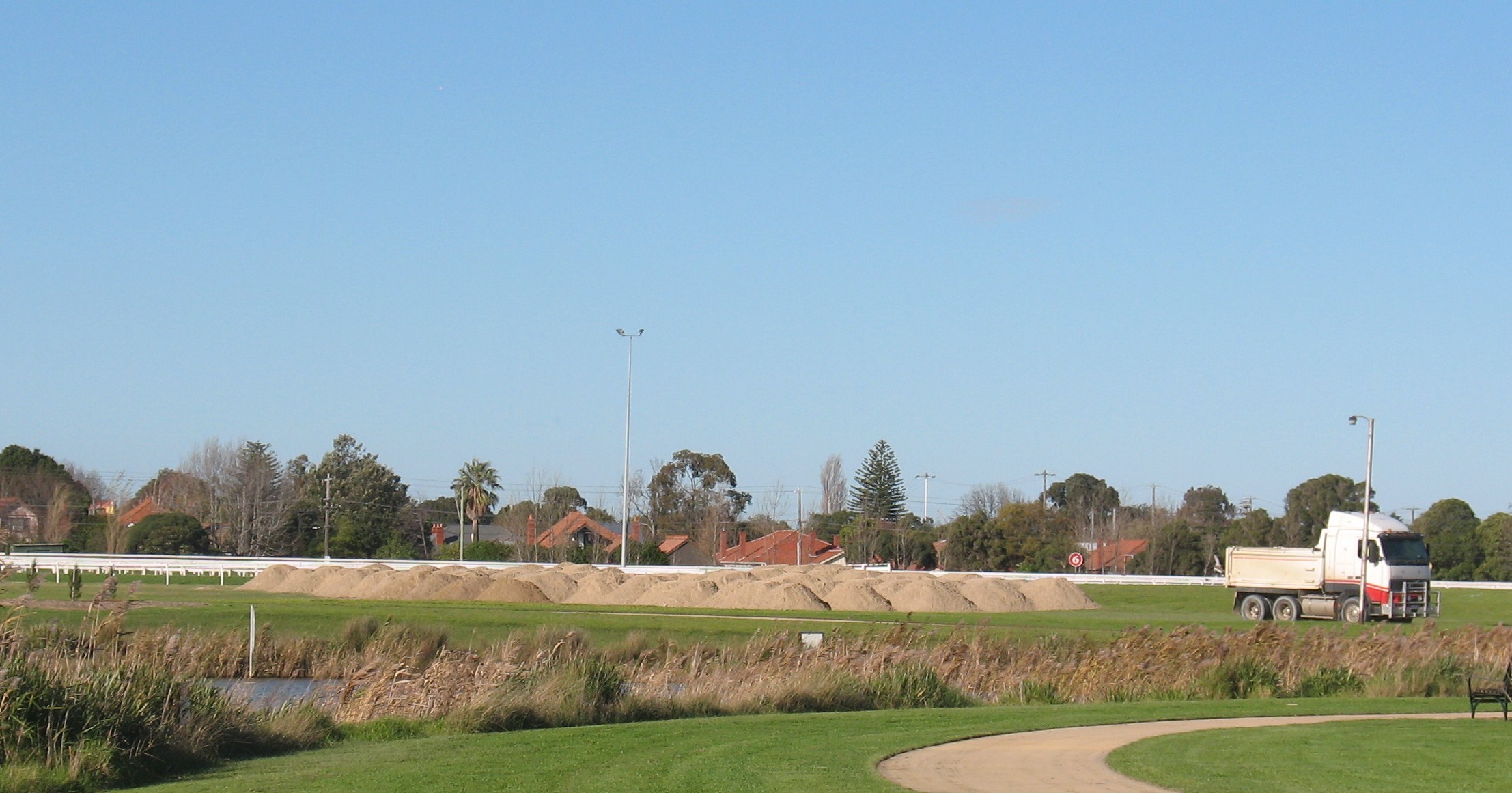
Crown Land As Dumping Ground
Posted by gleneira under Caulfield Racecourse/C60, Councillor Performance, GE Governance, GE Open Space, GE Service Performance[4] Comments
July 8, 2014
MRC: ‘Tearing The Walls Down’ Or Building Them Up & Up?
Posted by gleneira under Caulfield Racecourse/C60, Councillor Performance, GE Governance, GE Planning, GE Service Performance[27] Comments
PS: Clearly the MRC and its associates do not like the negative publicity they are receiving. Their response? To pull the promo video from YouTube! As always, actions speak louder than words, and this action ‘screams’ louder than most!
Towards the end of this video we are informed that the Smith St. Precinct will now contain two 22 storeys in height. By the time the plans come in, no-one should be surprised if this becomes much, much higher. So much for Council’s 20 storey “height limit” that was announced with such fanfare years ago! We also have to chuckle at the gloating, phrase of ‘the might of the MRC’. There are also countless other ‘changes’ to what the Development Plan envisaged.
This ‘might’ and council’s total impotence and lack of trying perhaps, is brought out via another public question that was asked last Tuesday night. Residents should be told:
- what has council done about this further breach of the ‘agreement’?
- why has council remained silent on any aspect of the agreement for the past 3 years?
- what ‘negotiations’, if any, have taken place between the MRC and council in relation to meeting the terms of the ‘agreement’?
The public question –
In June 2008, a Joint Communique was signed by the Melbourne Racing Club and Glen Eira Council which related to the use of Public Open Space in the Centre of the Caulfield Racecourse. With regards to relocation of training from the Caulfield
Racecourse, included in the Joint Communique, is the statement that; “The MRC will provide Council with an annual update on progress” Could Council please provide all annual progress updates received from the MRC since the Joint Communique was signed.
Council’s ‘response –
Council has received no updates.
The management of the Caulfield Racecourse Reserve Crown Land is currently the subject of a Performance Audit by the Auditor General for Victoria.
July 8, 2014
Audit Committee & ‘Transparency’
Posted by gleneira under Councillor Performance, GE Governance, GE Service Performance[3] Comments
After years and years of secrecy, there just might be some changes in the appointment of independent members of the Audit Committee. Based on past history, we had quite reasonably assumed that the selection of an independent member was done and dusted but this resolution shows otherwise.
Crs Delahunty/Magee
1. That Council endorse the recruitment process to appoint an Independent Member to Council’s Audit Committee. That Council endorse the transparency of the process and that Council move forward from this point to find the appropriate candidate for the City of Glen Eira.
2. That this resolution be incorporated in the Public Minutes of this Meeting.
The MOTION was put and CARRIED unanimously.
Yet, the phrasing of the resolution, and the very fact that it was done behind closed doors does not assist in entirely alleviating suspicions. For example:
- Why couldn’t this item have been tabled in open council and announced to all and sundry as other councils do? Surely it can’t be a state secret that a member is going and that council will now be embarking on a recruitment process?
- How ‘transparent’ can something be when it is conducted behind closed doors?
- What does ‘move forward from this point’ really mean? What ‘robust discussions’ possibly took place to even achieve this minute step?
- Other questions hang in the balance – what role will officers have in the appointment? Will ‘selection committees’ of a few councillors be chosen? Will a recruitment company be involved? If so, at what cost to ratepayers? Will anyone receive an ‘invitation’ to apply for the position?
- And the most important question of all – will this really change what happens in the Audit Committee?
Here’s how some other councils do things –
http://www.portphillip.vic.gov.au/Report_12_-_audit.pdf
http://www.monash.vic.gov.au/reports/pdftext/cp29apr14/6.1.pdf
July 6, 2014
Oops! – Another ‘Error’!
Posted by gleneira under Councillor Performance, GE Council Meeting(s), GE Governance, GE Open Space, GE Service Performance[5] Comments
The officer’s report –
A recent example was the Alma Club where Council officers attempted to secure land for an additional local open space in Caulfield North but, owing to the impact on the design, suitable land could not be made available and a cash contribution was made instead.
The Public Question –
Item 9.8 of the agenda cites the Alma Club site as an example of a cash rather than land contribution. For this site, I ask:
1. What was the undeveloped land value placed on the site?
2. What was the full cash contribution that council received?
3. Was this amount paid in one lump sum?
4. Why was any contribution paid prior to subdivision and as stipulated by law?
The ‘Answer’ –
The report at item 9.8 was correct in saying that Council tried to secure agreement to an open space contribution of land at the former Alma Club. It was right to say that, following a period of negotiation, that was not feasible and the open space
contribution will be in cash.
The report was mistaken to say that the contribution had been paid. What has been paid is back rates of $67,430. That was paid on 30 May 2014. (Back rates are payable when a property ceases to be eligible to be rated under the Cultural and Recreational Lands Act and becomes rateable under the general rating system. )
The misunderstanding between the payment of the back rates as opposed to the open space contribution was made during the writing of that section of the item between the Planning Conference on the evening of 25 June and the Item being finalised on 26 June. Council apologises for the mistake. The open space cash contribution will be payable in cash at the time of subdivision and calculated according to the value of the land at that time. If Amendment C120 is in effect, it would be 5.7% and could not be appealed to VCAT. While Amendment C120 is not in effect, it would be 5% or less and could be appealed to VCAT.
A difference of 1% would equate to approximately $75,000 for this one subdivision.
July 4, 2014
Dear Dorothy Dix………
Posted by gleneira under Councillor Performance, GE Council Meeting(s), GE Open Space, GE Planning, GE Service Performance[10] Comments
Sounness moved the motion to accept and added the clause that the financial report ‘disclose’ open space contributions. Delahunty seconded.
SOUNNESS: said that the amendment ‘follows on’ from the Open Space Strategy. Acknowledged the ‘problem’ of lack of open space and that with new development people should have access to ‘new public open space’. Went through some features of the Open Space Strategy such as biodiversity, and how to ‘fund these developments’. Importantly the amendment wants to increase these contributions. Said that the ‘standard rate is 4% and lots of councils have 4%. When there were greenfields developers may have been happy to give a bit ‘of dirt’ but in developed residential areas they wouldn’t want to give up a ‘unit 2 of the third storey’ and so prefer to pay cash. Spoke about the objections and ‘some very good points were put forward about transparency’ and consequently there has been a ‘robust conversation’ amongst councillors and there’s been a ‘number of conversations’ about ‘what’s fair, what’s reasonable’ and comparing to other councils and how all this ‘refers to our future expectations’. Asked a question of Akehurst about why under this amendment the contributions wouldn’t ‘be appealable to VCAT’?
AKEHURST: said that currently there’s a ‘base rate’ based on numbers and that ‘other factors can add to tne percentages’ and these are ‘subjective’ and so can be challenged. He gave the example of ‘proximity’ to existing open space. Went on to say that council assesses one cost and the developer assesses this differently and figure that the money spent on challenging council is worthwhile. This also costs council money in going to VCAT. With the C120 there’s no sliding scale and there’s one rate for ‘every case’ and everywhere and the developer doesn’t have ‘grounds to argue for a discount’. Said that the amendment was there to give ‘more certainty’, more ‘revenue’ and without the associated costs of going to VCAT.
SOUNNESS: said that one of the objections had noted how the money was ‘expended’. He gave the example of the alma club developer paying money and asked how this money was spent in helping achieve open space around the Alma Club. Wanted to know if the amendment ‘speaks’ to the ‘direction’ of expenditure of the levy.
AKEHURST: said that the amendment was ‘about how you raise revenue’ and that the amendment ‘optimises that collection’ and then it becomes ‘up to council how it is spent’. That is then ‘expenditure’ and ‘council has a policy’ that stipulates spending the money on acquisition of ‘new open space’. Council would also have to spend money outside of its collected levies to bring these places ‘up to standard’.
SOUNNESS: then asked that when the amendment goes to the panel whether they have ‘the capacity to direct expenditure’?
AKEHURST: ‘no’ – the panel is bound by the law which says that money raised is ‘spent on land acquisition and improvements to existing public open space’. Said that every council then makes up its mind about spending on existing and additional open space and repeated the policy about spending 100% of the levy on ‘additional open space’ in Glen Eira and ‘zero’ of these contributions on ‘existing open space’. Went on to say that the policy is ‘binding on all staff’ and the use of the ‘revenues’. There will be accounting of the money in ‘each budget and each annual report’ and that ‘there is nothing that council could do’ which isn’t ‘already in place’.
SOUNNESS: reiterated that the amendment basically ‘seeks to increase the revenue’ and that there’s ‘only so much that can be done’ with how the money is spent. Summed up that the amendment wants to implement what the community has ‘endorsed’ in the Open Space Strategy. Said that the objections had ‘raised some issues that have been quite valuable’ and like the landswap it’s ‘very good to see where the money goes’ and that’s why he’s added the clause about reporting in the financial review.
DELAHUNTY: said that open space issues has ‘occupied a lot of councillors’ time’ and that when she first thought of becoming a councillor, open space was one of the ‘platforms’ that she wanted to run on. As a parent she sees ‘how important’ even ‘small pockets of green’ is. The problem is big and it will take a ‘step by step’ process and this included the Open Space Strategy and ‘getting the right people to write the strategy’ and have the ‘public contribute’ to the strategy. Council also ‘took a policy change initiative’ to ‘fence off the funds’ that would be received from contributions. The amendment is now the ‘next really important piece’ in the process. This is the end result of a long ‘calculation that is done by the right people’, and had public consultation. There is now the motion to put this to a panel and she asked Akehurst ‘what does this mean’?
AKEHURST: said that the Minister ‘appoints a panel’. Council and the objectors then ‘put their view’ before the panel. The panel then reports back to council ‘in the form of a recommendation’. Their recommendations could be that the amendment be adopted by council as exhibited, or ‘in some other form’. Council doesn’t have to accept the panel’s recommendations ‘but it would need to have serious reasons not to do that’. It then goes to the minister for approval if council has adopted the recommendations of the panel.
DELAHUNTY: ‘What’s the downside risk’?
AKEHURST: said that the panel might think that the 5.7% ‘is too high’.
DELAHUNTY: councillors had read the submissions and thought that many of the points ‘were correct’. Other things could be ‘clarified’ but she again asked Akehurst ‘what this would do to the process’?
AKEHURST: said that there were a ‘couple of errors’ and these were corrected. Amendments are a ‘statutory process’ and that council can’t change things in any ‘material way’ if it’s already gone on public exhibition. So even if there are submissions that ‘have merit’ but weren’t ‘part of the exhibited’ amendment ‘they could not be incorporated into’ this amendment because they would ‘depart’ from what’s already been exhibited.
DELAHUNTY: then asked whether Akehurst ‘was surprised’ that there were no objections to the 5.7%
AKHURST: ‘yes’
DELAHUNTY: said that she was ‘surprised and delighted’ and that at ‘heart’ everyone ‘understands’ that there are challenges that have to be fixed and she was pleased with community involvement because it’s an ’emotive issue’ but council wants to ‘move on’. Said that Sounness’ amendment will increase ‘transparency’ in ‘making sure they are reported upon’ in a ‘separate and visible line item’ in the financial report. Thought this was good and ‘goes some way’ to answering the submitters ‘concerns’. Said that the submitters ‘did a good job in pointing out those errors’ and that they are ‘pleased that we could provide a stronger submission’ as a result.
OKOTEL: glad that council is a ‘step closer’ to raising the contribution levy. Said that the 5.7% levy is one that was ‘supported by the Open Space Strategy’ and that this provided for a ‘strong reference base’ for this amount. The rate is ‘evidence based’ and she hoped it ‘would be accepted’. She then asked Newton a question about the officer’s report stating that 7 months would be added to the process if it went to a panel and that around $2 million would be lost from revenue and whether projects set down for implementation ‘would be impacted’?
NEWTON: said that when exhibited they estimated that the ‘revenue’ would rise from $2.2 million a year to $6.1 million. Continued that the Strategic Resource Plan is ‘based on current arrangements’ and the ‘extra revenue’ hasn’t been ‘taken into account’. Said that the current budget is resourced but what’s planned for the future in open space will only happen if the ‘amendment is put into effect’ and ‘the longer it takes the less money we will have’ for ‘next year and every other year’.
OKOTEL: then asked what council ‘mightn’t be able to complete’
NEWTON: gave two examples. One was the Booran Road Reservoir which is a ‘very expensive project’ and ‘because the meeting went so well’ council was thinking of ‘accelerating’ the works such as ‘demolishing the walls this current year’ and that’s ‘not budgeted’ but they could with the extra revenue and ‘complete the work earlier’ ‘if the money is available’. The second example was ‘another road intersection’ in North Caulfield and would be ‘similar’ to the Gisborne St/Riddell Parade closure. ‘At the moment there is no money in the ten year plan for that’ but if the amendment came in quickly ‘there would be more money’ so that ‘next year there would be more open space’.
MAGEE: said this could be a very ‘happy story’ that everyone wants. If developers pay the 5.7% then the money will ‘accumulate very quickly’ and council could implement the things listed in the Open Space Strategy. Referred to Newton’s examples and how important the Reservoir is given that council has been ‘talking about this for at least 5 years’. Said that it’s about ‘communities coming together and working together’. Stated that there could be times ‘when processes’ are different and other times when people can say ‘I don’t agree with you but I should work with you’. The amendment ‘benefits all of Glen Eira’ and council is ‘very passionate about’ this. The money isn’t from residents but ‘developers’ and the ‘cost to us is open space’ which council has to keep improving the open space. They can’t do this ‘by procrastinating’. Individuals might have ‘issues’ but the ‘overall good’ is for the community. ‘I’m saying don’t hold it back, don’t stop us’. Some people might say they ‘don’t like’ how council operates, but ‘suck it up’. ‘we need the money’ and it’s the ‘number one issue’ for Glen Eira that everyone should be ‘working towards’. ‘The process we can argue about’ but ‘let’s move on’.
DELAHUNTY: asked Sounness as a green, what the Greens would ‘say’ about the Open Space Strategy and the levy.
SOUNNESS: said that with open space then it’s about ‘improving, expanding’, ‘community access’, ‘equity and fairness’, letting people access a ‘safe, healthy, clean’ space, so the greens and every party would support this.
DELAHUNTY: then asked that since there’s all this ‘passion’ and ‘feelings around the table’ whether there is ‘another path’ that could be taken so that the projects and money ‘could happen quicker’.
NEWTON: said that there’s ‘only one option’ if there are submissions and that’s to appoint a Panel. There would be a Panel in October and they’d report back to council which council would then consider and report back to Minister. ‘That’s a long time’ and council ‘would not be getting 5.7%’. He was like Delahunty ‘surprised and delighted’ that no one had objected to the 5.7%. Went on to say that if there hadn’t been submissions then council could have ‘adopted’ the amendment ‘tonight’ and written off to the minister tomorrow and it could have been in operation by August.
DELAHUNTY: since there are admissions, then the whole process has to be gone through – ie panel, report back to council, decision by council, sending off to minister and waiting for his approval.
NEWTON: so ‘if the submissions remain, the panel remains’ and all the other processes have to take place.
ESAKOFF: said it was ‘disappointing’ when this is on the agenda and the added costs that will happen. So there will be ‘delays’ or the inability to ‘accelerate’ projects. ‘It’s very disappointing’.
HYAMS: was ‘very p0leased’ that no submissions came from developers but thought that ‘once they cotton on’ to this that they may go directly to the minister and ‘try not to give us as much money’ as council is asking and others might be ‘rushing their applications through’. Said that consultants did ‘the strategic work that justifies the 5.7%’ so they are ‘pretty confident’ that even if developers object they would still get this rate. Perhaps even the developers looked at the ‘documentation’ of the amendment and ‘realised that we do have a solid case’ and they didn’t want to ‘waste their time’ on this knowing that ‘it was going to get through’. Sumbissions pointed out ‘2 errors in the documentation’ which might have ’caused confusion’ so ‘it’s good’ that this has been fixed. Thanked submitters and said that the submissions also ‘raised a number of policy’ questions. Hyams then ‘sought clarification’ from Akehurst by asking whether Public Acquisition Overlays are something that council ‘could or should do as part of this amendment’?
AKEHURST: said ‘no’ that it wasn’t ‘lawful’ and that ‘no council could do it’. Said that public acquisition overlays can only happen by ‘amending the planning scheme’ and to ‘identify the land to be applied’ and the ‘purpose for which it is being acquired’. The minister would have to approve exhibition and wouldn’t get the go ahead if council asked for more ‘land than required’. Council would also have to prove that ‘it has the financial resources to buy the land’ and this is ‘accepting financial responsibility’. If this is in the planning scheme then ‘council can be asked immediately to buy the land’. It can also cause anguish to the owners and that’s why councils only have ‘small numbers of overlays’. Councils generally start by getting the money from levies and then being in a position to buy the land, put in acquisition overlays.
HYAMS: stated that as one submitter said that it’s ‘unreasonable’ that all the money coming in would go to ‘catering for new residents’ and that the ‘140,000 people currently living in Glen Eira miss out’. Asked Akehurst whether it would be applied in this way.
AKEHURST: said council has go ‘not choice’ and that’s why it’s phrased as it is. Said that the amendment isn’t ‘justified if it’s not raising money for future residents’. Claimed that this ‘isn’t bad news for existing residents’ since the Open Space strategy has got projects where the money will be spent and apolicy that council will spend money ‘by other means’
HYAMS: asked Akehurst about the choice of ‘acquiring land or acquiring money’ and that the amendment only has 3 areas for cash contributions listed as preferable, so how is getting a ‘little’ piece of land at the back of a development ‘better than getting money’?
AKEHURST: said that ‘it’s not better’ and that council would be very stringent in what land it accepted and this would really only be if there was a ‘significant development’ and that this wouldn’t ‘happen very often’ because ‘Glen Eira is substantially developed already’. Council would get cash mainly because development is generally on ‘small to medium sized lots’.
HYAMS: repeated how pleased he was that there weren’t any developer submissions and he thought that the two objectors would have thought that there would be others so they wouldn’t have expected that their submissions would be holding up council. Said that if the submissions ‘are withdrawn we can go straight to the minister’.
SOUNNESS: said this was ‘all about money’. Didn’t want to ‘see concrete’ but ‘useful’ parks, and gardens and the amendment want to ‘seek the mechanism for improving that capacity’. Said councillors ‘elswhere would love to get 5.7%’. Whitehorse is 4% and their plan was done by the same consultants and they’ve now bought 3 residential lots over time. Getting the cash means that council ‘can adjust to cicrumstances’. In western Australia there’s 5% and ‘compulsory acquisition overlays’. When this happens ‘people go nuts’ and say ‘my home is being removed’. Thanked submitters because ‘it’s a champion thing that democracy does’ but was worried that developers will now see that ‘there’s a cut off time’ and will take advantage of this by council getting a ‘rush of subdivisions’ and therefore receiving less money.
MOTION PUT AND CARRIED UNANIMOUSLY
July 3, 2014
Parks, Depots, Money, Money, Money…..
Posted by gleneira under Councillor Performance, GE Council Meeting(s), GE Open Space, GE Service Performance[16] Comments
Delahunty moved to ‘note the report’ and added that council seeks information about the money that was paid by the MRC to the government and that this include ‘advice’ from the Valuer General about the ‘reasons’ for the landswap and the amount paid, when the money was received, how much and ‘the Department that received the funds’. She also asked for a ‘copy’ of documents that the then Minister Gavin Jennings spoke about in parliament at the time. If necessary, council should use FOI to get the information ‘if required’. Sounness seconded.
DELAHUNTY: Began by saying that the landswap was before her time but clearly something that’s grated on people. Said she was surprised that the money paid was so large when it was claimed to be ‘compensation’ for the ‘inequity of the swap itself’. She wanted to know more ‘about that money’ since the MRC’s last 3 annual reports writes about $8 million being set aside for the buying of land and this could be the buy out of private properties but also contain the money paid to the government. Therefore no one knows how much they actually paid and what they thought it was for. Hansard mentioned this several times in response to members asking questions. Said that David Davis was asking whether the swap was equitable and he referred to the panel he was chairman of and that he was ‘still uncomfortable’ about the Trust and land swap. Sue Pennicuik has also been a long time advocate and been a ‘great help’ for the community. She also asked ‘a lot of questions at the time’ from Gavin Jennings and wanted to ensure that the community could ‘derive’ some benefit. Jennings answered that the land would be valued, and that this then would be approved by ‘the Government Land Monitor’. This would ‘ensure’ that the government isn’t ‘disadvantaged’. Jennings then went on to say that the swap was contingent on the approval of these bodies and that there would be commercial rates paid for the land. The act was then passed. Delahunty then said if these assurances ‘were given’ but the public still doesn’t know the details such as ‘where the money went’ and ‘what it should have been used for’ so that when the vote was taken in parliament they voted on the assumption that things would happen, but none of this has happened. She ‘presumes’ that the money went into general revenue. Thought that ‘this money should come back to provide the community’ with the ‘equity it was supposed to deliver’. Said that council was ‘more than happy’ to move the depot to the Booran land site which ‘we never wanted in the first place’. Council would need to spend ‘residents’ money’ or ‘get residents’ money back’ from the landswap. Summed up by saying that want to restore Caulfield Park, and get the ‘best use’ out of the Booran site and for ‘the money that is owed to the community’ to be returned. Thought that 2012 was when the money was handed over and that it was intended for ‘the people of this community’. They want all the information to ‘inform the public debate’ and that people should know ‘where their money has got to’.
SOUNNESS: said the the whole issue including racecourse, c60 etc. can ‘fire up’ people and that the best option for getting to the bottom of things is to ‘follow the money’. Pennicuik tried this. Said there was ‘still a long path to go down’ and they’re trying to find ways to ‘move the depot’ and find ‘better array of services’. Good that council is trying to ‘achieve a better outcome’ for residents.
MAGEE: said this would be ‘win-win’ for everyone in that the depot would be moved, and that so far there ‘is no community benefit’ from the landswap and the money which was paid by the MRC. This money could be used to achieve this. Said that government’s job is to ‘assist the community’ and for Glen Eira with the least amount of open space, that the government should ‘give it to us’ (the money). SAid this was a ‘great opportunity’ to get a good result and ‘banging on forever’ about the landswap, trustees is useless. This is positive and they will ‘keep the pressure on’ both government and Southwick. Wanted everyone to ‘work together’ for a ‘community benefit’.
OKOTEL: reiterated that this was an ‘important issue’ and that Pilling had already met with government and that council would continue to ‘agitate’ on the issue.
HYAMS: said this was a ‘mess’ from the start and council wasn’t happy from day one but that both sides (Liberals and Labor) voted the landswap in. The Trust also voted for it and of the 3 council reps ONLY 2 VOTED AGAINST IT, which is ‘disappointing’. Council never wanted it and from the start they wanted a depot but the MRC said ‘no’ they didn’t want a depot and the department put it aside for ‘recreation’. Buildings also went which is ‘unfortunate’ because they ‘might have been useful’. Said that now government has given permission to put the depot there and that for once it’s ‘good to see that the MRC’ isn’t having it all it’s own way but, that council ‘needs the money’ for this to occur. Asked Delahunty what she ‘expects’ the ‘legally binding document’ to contain. Delahunty said ‘I don’t know’ and that this was mentioned in the actual debate in parliament but that she expects to find ‘some wording about the exchange’ and whether the money was to ‘come back to the community’.
DELAHUNTY: said it’s a mess and was ‘outside the control’ of council. But the ‘opportunity’ is now due to Media Release by Southwick where he claimed that he was ‘excited’ to be ‘able to reinvigorate’ Caulfield Park. With this there’s Hansard where Davis ‘sought assurances’. So ‘there’s no better time’ to get things done than ‘right now’. To succeed they ‘need to understand all the information’. All this can ‘put to rest some of the ill will’.
Delahunty then went on to say that the letter published in the agenda which was sent to Southwick ‘some time ago’ had as yet ‘not reached his office’. On Twitter, Southwick claims that he first saw it with the agenda.
MAGEE: asked that if council doesn’t get the money ‘can we still afford to do the landswap’?
NEWTON: according to the Strategic Resource Plan ‘there’s no money in any of the ten years to do this’ and the ‘only way you could do this is to lower the priority of some other projects’.
MAGEE: summed it up by asking ‘No money, no move’?
DELAHUNTY: answered and repeated ‘no money, no move’.
MOTION PUT AND CARRIED UNANIMOUSLY.
July 1, 2014
Council Meeting
Posted by gleneira under Councillor Performance, GE Council Meeting(s), GE Governance, GE Open Space, GE Service Performance[23] Comments
A brief note on tonight’s meeting. Lobo, Pilling and Lipshutz were all absent. This inevitably lead to the circus of musical chairs, and three separate motions nominating individuals to attend a councillor ‘weekend’. Since nominated councillors had to declare a conflict of interest, and leave the chamber, there would not have been a quorum – hence the repeated motions/resolutions and the musical chairs.
Just how orchestrated council meetings are, how carefully scripted, was in full evidence tonight with countless Dorothy Dixer’s thrown at both Akehurst and Newton in the context of the ‘debate’ on Amendment C120. The dead give-away, was that Akehurst on numerous occasions read his answers from a prepared script! So much for impromptu ‘councillor questions’ that arise directly from the ‘debate’.
A public question on the assertion within the officer’s report that the Alma Club site had paid its open space levies, rather than a land allocation, was admitted to be ‘in error’ and an apology was tendered. Perhaps a council first, but again, this shows not only another stuff up, but that in all likelihood the offending paragraph was intended to mislead and deceive!
On the Caulfield Park depot removal to the Booran Rd/Glen Eira Rd, the infamous landswap was the primary feature with Delahunty moving a motion that if necessary council apply under FOI to see the legal documents involving the landswap, the valuation of the land, etc.
More on all of the above in the next day or so.
July 1, 2014
Open Space Levies
Posted by gleneira under Councillor Performance, GE Consultation/Communication, GE Governance, GE Open Space, GE Planning, GE Service Performance[5] Comments
As a result of objections, council has gone out of its way to fudge the facts and to assert what can only be described as unreasonable ‘pressure’ on two objectors to withdraw their concerns and thereby avoid a Panel hearing. The argument as presented in the officer’s report is simple: cave in, don’t object, or you will cost the community $2 million. Utter rubbish we say! Some basic facts:
- The cited $6 million dollars as ‘revenue’ is NOT cash in hand. This includes the so called estimated land contribution value. Council’s Strategic Resource Plan provides figures of a paltry $2.2 million in cash for the next ten years. We also remind readers that when council was granted the status of ‘manager’ of the Booran Road Reservoir it entered the ‘value’ of this land ($24m) onto its books but it was made absolutely clear that this had NO IMPACT on its financial and operational base. See the minutes of 3rd November 2010.
- Here’s another incorrect assertion – Public Acquisition Overlays are more likely to be disputed. It would be unfortunate if an Amendment was not supported by a Panel because of a proposed acquisition but the Amendment also included the higher contributions rates which were, as a result, not approved. A panel can disagree with one or two points and still make its recommendations to accept the amendment overall. Many panel decisions include some rejections or modifications of council proposals. It then comes back to council and they have the choice of accepting the panel’s full recommendations as they stand, abandoning the amendment, amending the amendment, etc. It is never an ‘either/or’ situation as these sentences pretend. Ultimately, this is nothing but scare-mongering.
There’s much, much more we could comment upon based on this agenda item. We will conclude with the view that every single resident has by law the option of objecting to amendments. Every resident also has a right to expect that when an amendment is advertised, it is devoid of errors, widely available, and easily accessible. None of these fundamental aspects of process have been carried out by council. The C120 Amendment (that is an actual draft of the amendment) has NEVER been included in council’s agenda papers, nor in its minutes – unlike some of the less contentious amendments! Even for tonight’s decision, the amendment itself is not available in the online agenda items. Residents would be hard put to find any announcements on council’s website for example or, if they happen to have missed the one and only advertisement in the local paper, then they also wouldn’t be any the wiser. Being hidden away behind the desks at libraries also does not fulfill our expectations of fully ‘engaging’ the public. So much for the Community Engagement Strategy with its empty promises and motherhood statements. Actions always speak louder than words and that remains the only worthwhile standard of evaluation.
Council has had years and years of doing nothing about its open space levies. Now suddenly, amendments are rushed through and, as so often happens, are full of errors that can only be ‘fixed’ up later. Instead of thorough planning that looks ahead and avoids countless further amendments to rectify anomalies or gaps, this council appears content to allow such poor practice. The residential zones and lot sizes are the most recent examples of inadequate planning. Other councils like Kingston for example, saw this ‘problem’ straight off and included lot sizes in their first draft of the schedules. Not Glen Eira! Not good enough we say. And to then blame residents for holding up ‘progress’ simply does not wash.
June 28, 2014
Agenda Items
Posted by gleneira under Councillor Performance, GE Consultation/Communication, GE Council Meeting(s), GE Governance, GE Open Space, GE Planning, GE Service Performance[23] Comments
Audit Committee
There finally appears to be some ‘movement at the station’ with the following statement – The Chairman recommended that the process for the recruitment of a new Independent Audit Committee Member commence. The in camera items suggest that this process is near completion with this one liner – under s89 2(a) “personnel” which relates to the Audit Committee. Conclusion? That the reign of either Gibbs or McLean is about to end. Reasons for one of these departures is of course not mentioned, and nor has there been any public announcement that we are aware of for the advertising or recruitment of a new member.
Several other items also drew our attention –
The CEO noted that post implementation reviews of previously sub-contracted major projects, had resulted in the tender and referee evaluation process focusing more on how companies managed their subcontractors.
Following consideration of the Land and Buildings valuation paper, the Chairman requested that Council’s top ten open space assets be verified for accuracy of area size.
And from the Charter – An independent minute taker shall be responsible for keeping the minutes…… . A few sentences later there is this sentence – An appropriate officer shall act as independent minute taker to the Committee. We remind readers that for Councillor Assemblies, the municipal inspector had recommended, and council took up the recommendation (for at least some time) of obtaining a completely external minute taker.
Community Consultation Committee
Once again, two of the selected community representatives were absent! If memory serves us correctly, this would mean that only once have all four reps been present at such meetings. Hardly a result to write home about!
Amendment C120 – Open Space Levies
There is much in this item that we will comment upon in the coming days. One thing however is staggeringly clear – the inability of this planning department, plus the State Government’s offices to get something right the first time around. How an amendment can be drafted, sent off for permission to be advertised, given the go-ahead and STILL CONTAIN FUNDAMENTAL ERRORS of fact and accuracy is simply beyond belief. Who is responsible for vetting such documents? Why do these errors occur? What does this say about the entire shemozzle that is the process of drafting and implementing amendments? And most importantly, what does this say about the processes adopted by council. For example: submissions on the amendment closed on the 23rd of June. Submitters were notified on the 24th June that there would be a planning conference held on the 25th June. More indecent haste? More disregard for the public?
June 25, 2014
Council: The Developer’s ‘Friend’!
Posted by gleneira under Councillor Performance, GE Planning, GE Service Performance[16] Comments
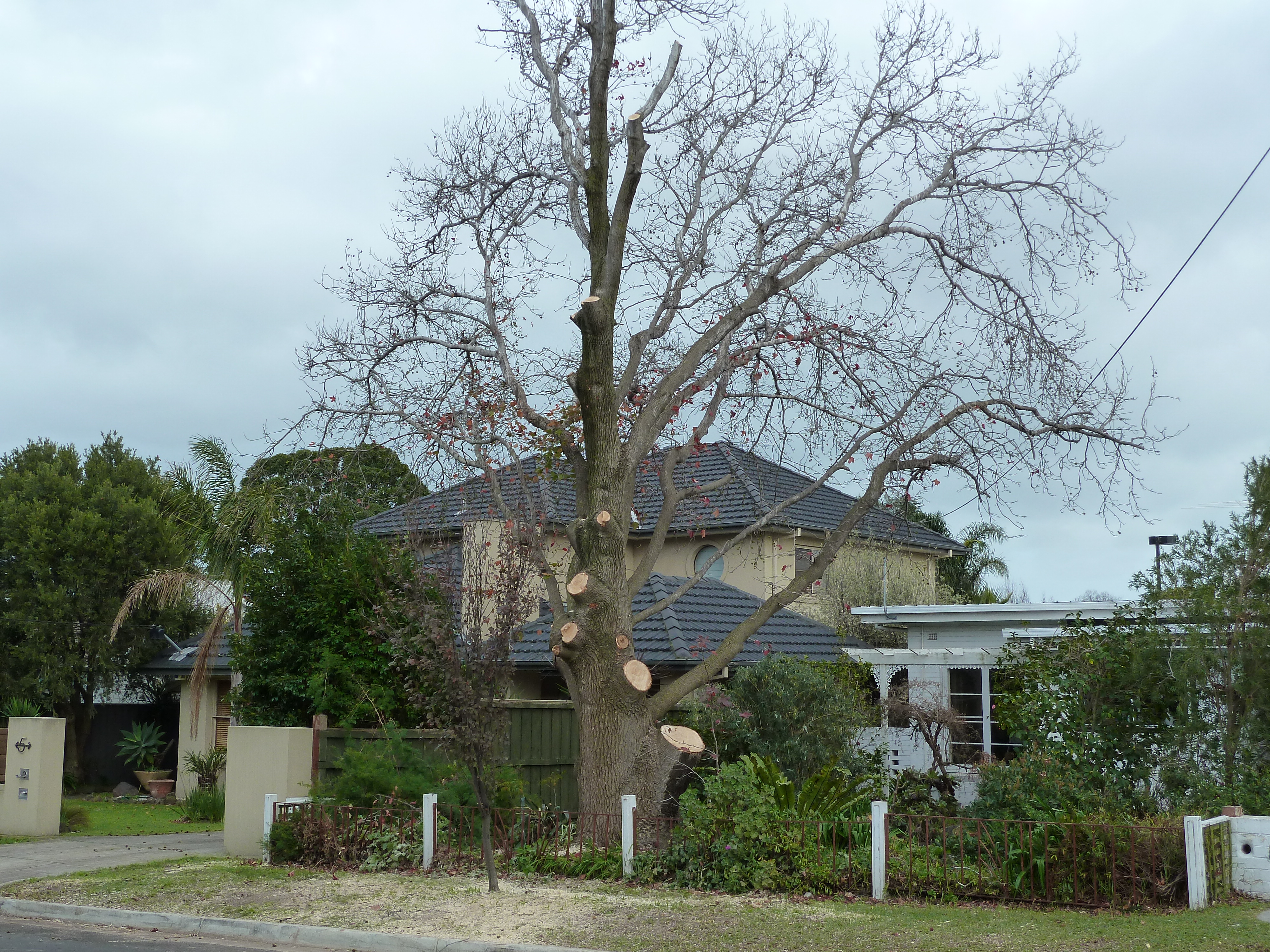
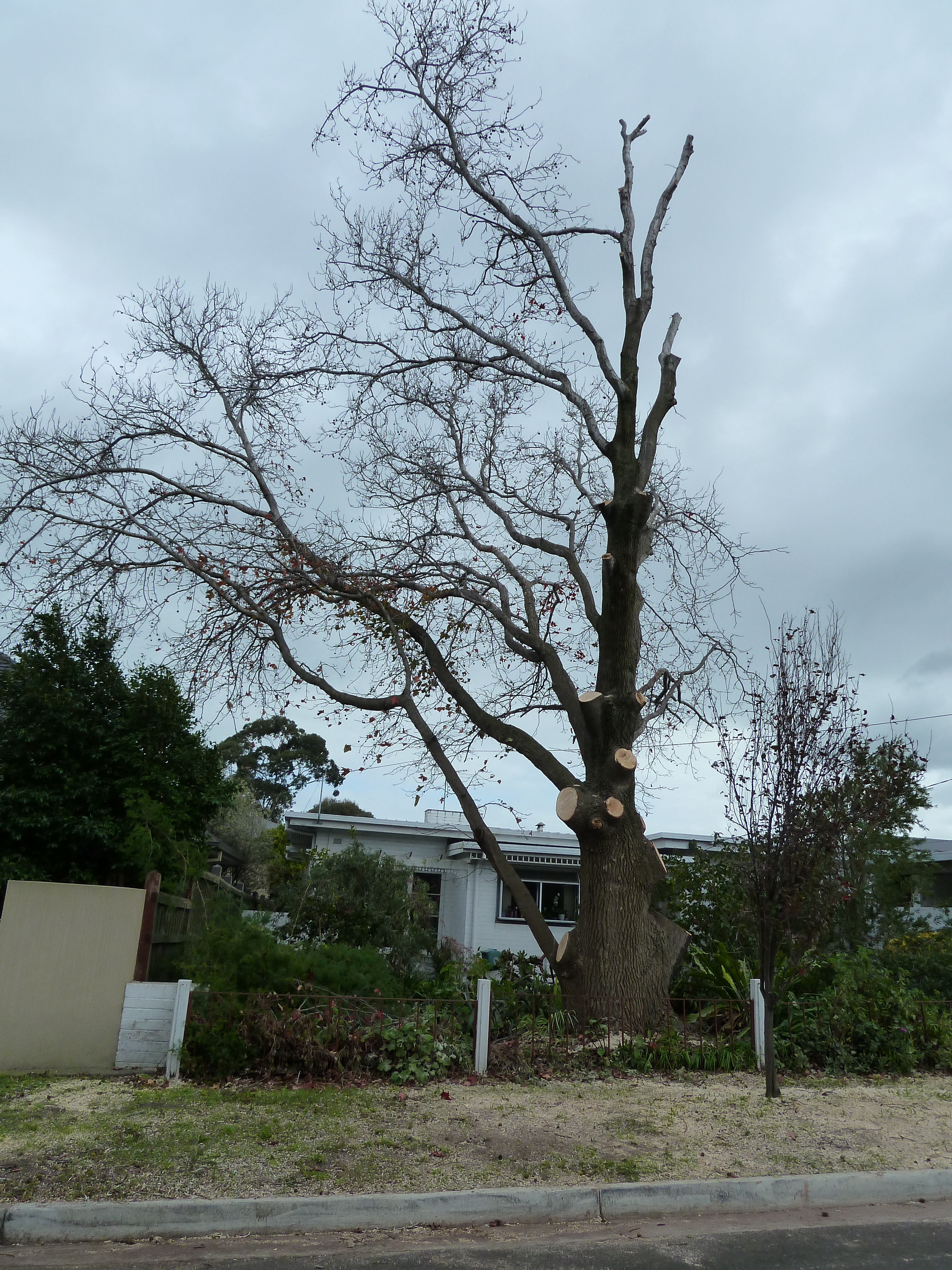
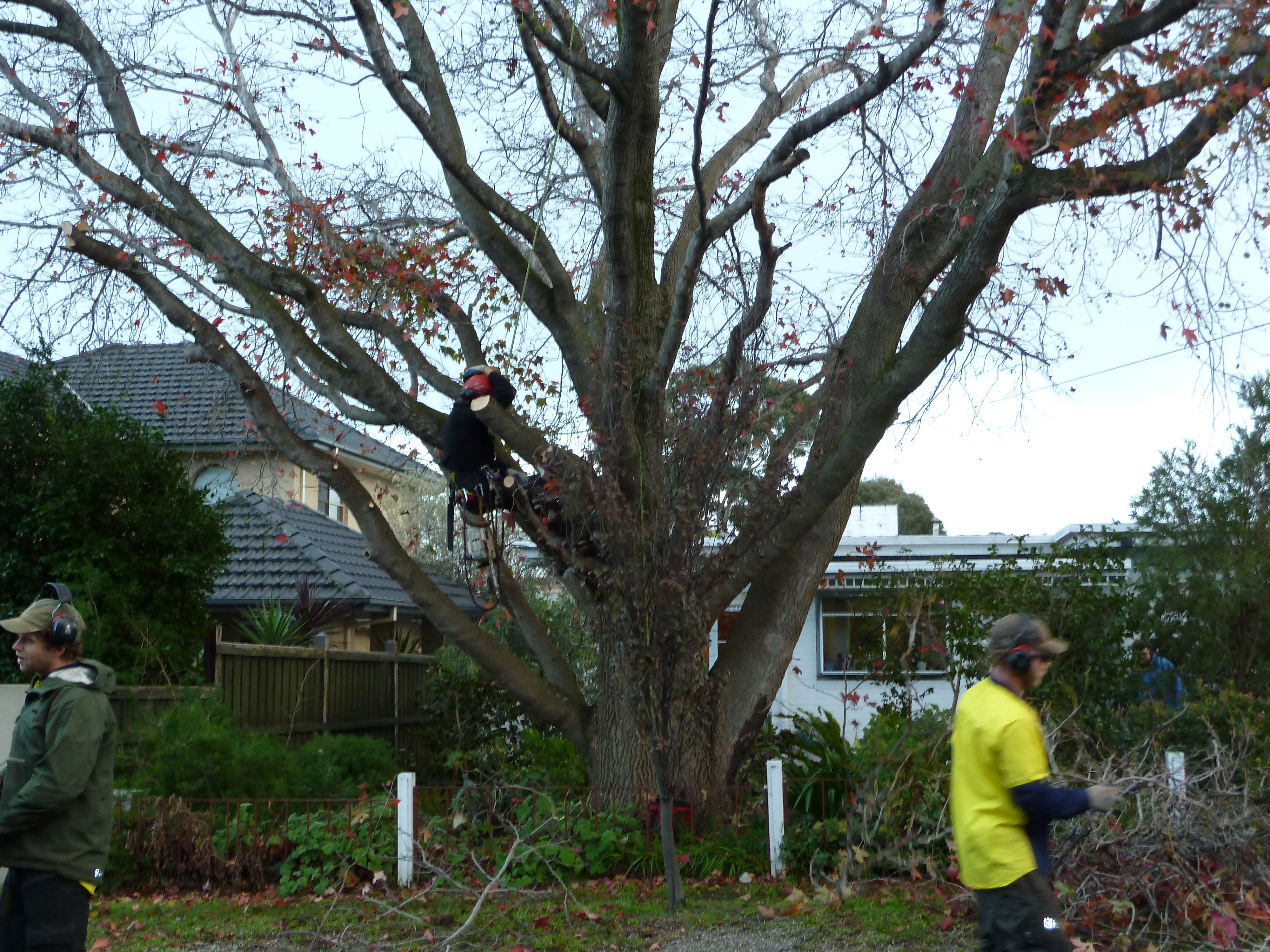
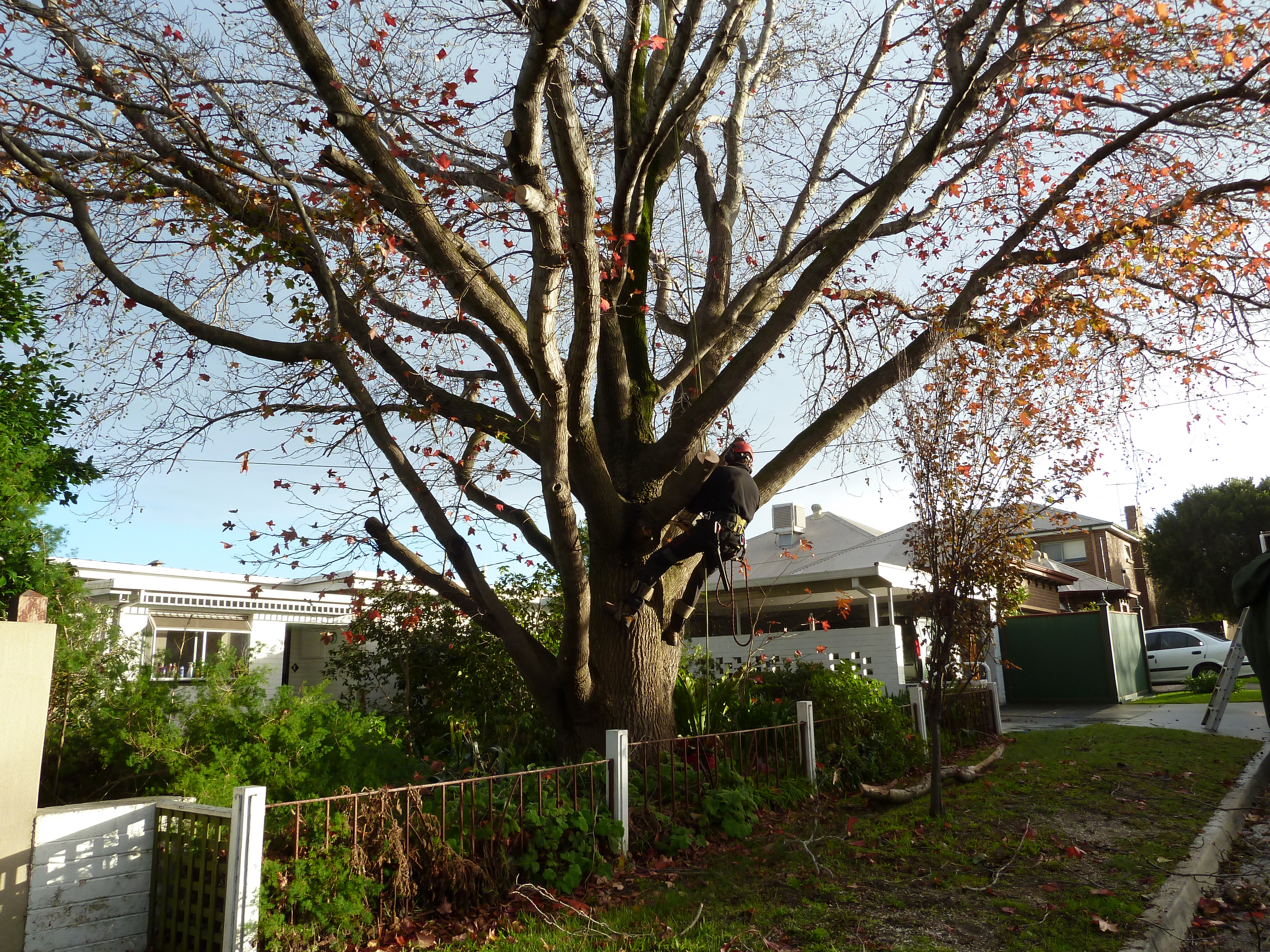
If anyone ever doubted that Council was the developer’s ‘friend’ then the photos below will provide plenty of food for thought. For over a decade now the issue of a significant tree register has been waltzed around by councillors and administration. In the meantime countless properties have been moonscaped and countless mature and significant trees have been butchered and removed so that another unit can conveniently be built. Technically, permits to chop down some trees are required but only if an application has gone in. If a tree is chopped down and an application goes in before a year is up then council may ‘fine’ the developer (generally a slap on the wrist) or insist that another tree is planted in its place. How ludicrous – since the original tree is already gone and no new planting can equal what 80 or 90 years of nature has produced.
The facts of this case are:
- The property was sold to a developer in September 2013. It has been rented out since then
- The tree is at least 70 or 80 foot high and is a major feature of this quiet residential street
- No application for development is currently before council – that will follow. We have previously asked what happens if an application goes in one year AND ONE DAY after the tree is removed? No fine in that case according to the current ‘law’ in Glen Eira.
- What makes this particular case even more outrageous is that the owner of the property claimed adverse possession against council to further extend his property line. In other words, there was this added bonus of additional land for literally NOTHING!
The abject failure of this council and its councillors to protect such trees, to dilly dally for a decade, to promise a local law that is still to be sighted, is in our view unconscionable. Yes, development will occur, but it must be regulated so that profit does not always come before the destruction of the environment.
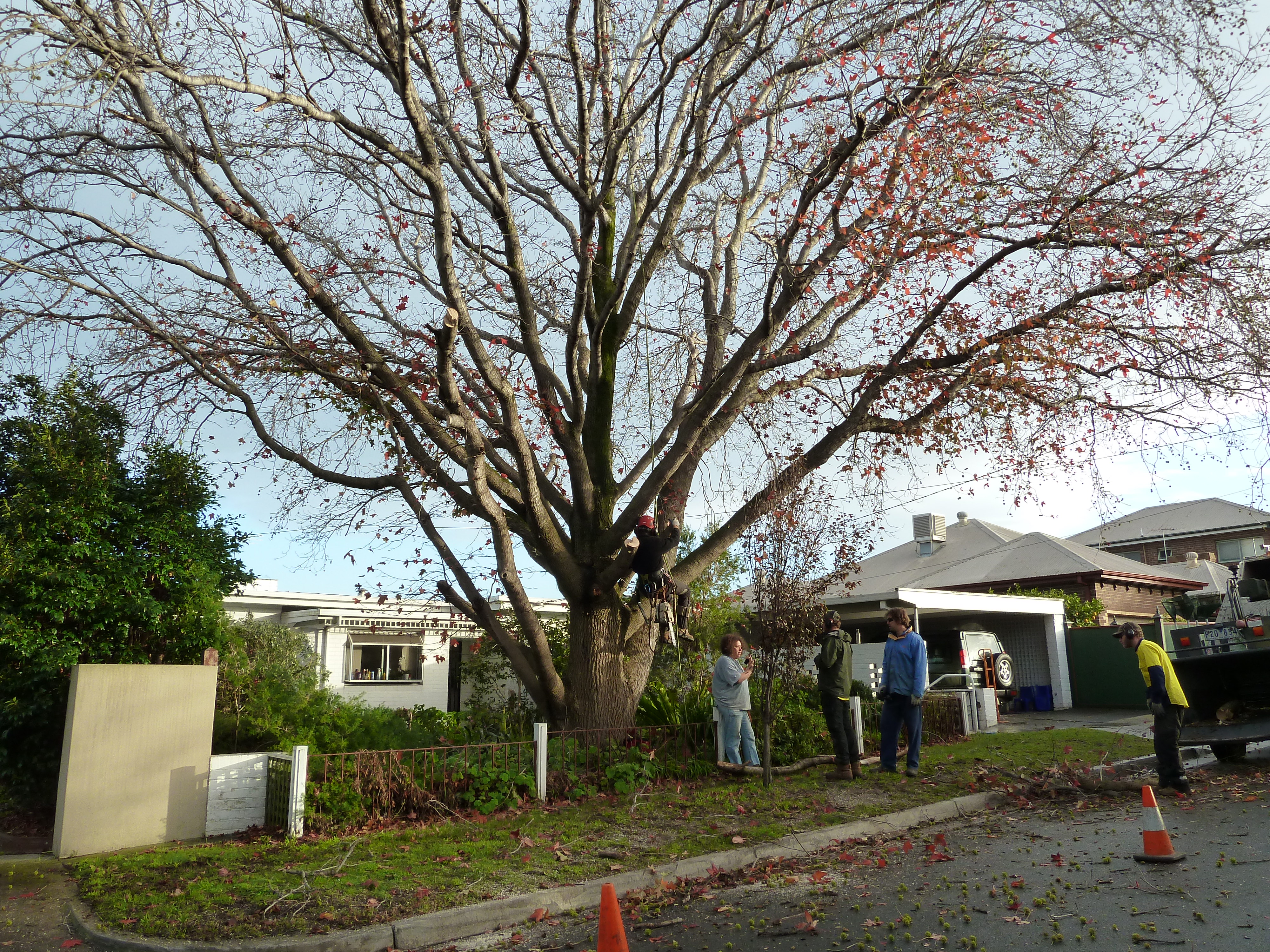
PS – 24 HOURS LATER!