Lipshutz moved motion to permit 6 storeys, 4 shops, reduction in car parking and 45 dwellings.  Seconded by Sounness.

LIPSHUTZ: was ‘conscious’ of residents around area and that there were lots of high rise with ‘no infrastructure’ to go with them. Traffic is a problem especially with 6 storey development very close by. There is ‘creeping development’ and therefore he’s seeking to ‘reduce it to 6’ storeys which is ‘more in line’ with what’s already going up.

SOUNNESS: did ‘recognise’ that an urban village has got ‘certain features’ and that if this was close to a train station 8 storeys would be suitable. Since it’s not, then 6 storeys is “appropriate”. ‘Recognised’ that the ‘design of the building is good’. Said he was “a bit uncomfortable with 6′ but ‘can’t see any compelling reasons to refuse’ the application. For him, ‘6 is a compromise’. It’s not ideal but is better than refusal which ‘may not stand up to scrutiny at VCAT’.

DELAHUNTY: favoured a ‘refusal’. Said that there are more and more ‘high quality apartments’ and she does support high density living but ‘not at the expense of infrastructure’. Spoke about real estate agents telling people that Glen Eira is not like Richmond because Glen Eira doesn’t have the same open space problems, traffic problems, etc. But that in time ‘the more we allow’ these sorts of building to go up, then the more ‘we’ve moving towards being like Richmond’ and it’s the residents who have to put up with this. Said that until developers leave the city ‘as they found it’ (ie with open space, ‘and traffic catered for’) she won’t support this application/motion.

LOBO: Said that councillors had promised not to ‘encourage development of such monstrosity’. Said that people want to know the definition of ‘intense development’. Lobo then asked Akehurst to define it. Akehurst  said that the terms of ‘low, medium, high’ density aren’t defined in the Planning Scheme. Lobo then quoted from the planning scheme about being as ‘sympathetic as possible to neighbourhood character’ and wanted to know how the state was going to achieve a population of 5 million people. Asked ‘why are we ignoring’ transport’… ‘this is beyond my comprehension’. Said that the policy from 1999 ‘needs a review’ and that Rescode recipe for parking spaces ‘is a joke’ since most dwellings have 2 cars and people don’t always use public tranport. Went on to talk about overshadowing, and overlooking ‘neighbours bathroom’ so people can’t have showers ‘in their birthday suits’ and will possibly end up ‘using pyjamas’ whilst showering. Said that it’s ‘disappointing’ that councillors are now reneging on the election promises.

PILLING: ‘sympathised’ with Lobo and Delahunty but refusing isn’t the answer as it ‘will lead to’ vcat perhaps giving 8 storeys. This solution of 6 storeys is ‘more practical outcome’. Also said that ‘looking at the bigger picture’ there are issues about height and that there’s ‘increasingly’ a diversion of views between councillors and the community about ‘what is a reasonable height’. Said that that’s where the ‘heart of the issue lies’ and that all they’ve been doing is ‘tinkering’ at the edges and that ‘we really need to develop a more solid approach’ so that when developers come to council they fully know ‘what’s expected’. Said that this is worse than the previous 12 storey application in Carnegie because the Carnegie one was at least a ‘commercial’ area but this one is smaller and backs onto 2 storey places. Said that there ‘needs to be more guidance’ about height levels and expectations because ‘at the moment the sky….is the limit’. Said he ‘wasn’t sure’ about the answer, but knew that they ‘had to do something’ because at ‘the moment it’s become increasingly ad hoc’.

HYAMS: asked Lobo whether he said that Lipshutz was ignoring the recommendations of transport planning. Lobo answered that he didn’t say that and Hyams then ‘confirmed’ that Lobo ‘didn’t say that we were ignoring’ transport recommendations. Said that Lobo talked about what councillors said in election campaigns but that he only said that he would ‘be opposing inappropriate development’ and ‘inappropriate’ is all in ‘the eye of the beholder’. It doesn’t mean ‘oppose everything’ and that people have to ‘apply the planning law’ in order to decide whether an application is ‘appropriate or not’. Said this was an urban village and went on to list the cirteria such as size, orientation, etc. He agreed that ‘8 storeys is too high’ but since there was going to be 6 storeys near Coles, that this one was ‘probably appropriate’. Went on to talk about how the impact was taken into consideration by the waste management plan and other imposed conditions. Agreed with Pilling’s concerns about height and said that ‘it is a bit of a dog’s breakfast’. Said that a problem was that if you set height limits then ‘people will build up to that height and you can’t stop them’ but if you don’t have height limits and let each application be ‘judged on its merits’ then you could get ‘better outcomes’. Also council policies ‘aren’t enforceable at VCAT’. Talked about the zoning reforms and that these would be ‘prescriptive’ so the ‘greater certainty’ that they want will ‘come in’ in the next year or so. In this case he thought that Lipshutz’s motion was ‘appropriate’.

LIPSHUTZ: said that both Lobo and Delahunty had identified ‘deficiencies in the planning system’. Said that Melbourne was going to get higher density without sufficient transport, but all this isn’t ‘for us to decide’. Said that things aren’t going to stay the same. Councillors have to make decisions on planning law and they are a ‘quasi tribunal’ and the ‘law is not scientific’ and on what each individual regards ‘as appropriate or inappropriate’. Said he’d like to see no changes along Glen Huntly Rd but ‘that isn’t going to happen’ and that by voting against he’s ‘not doing anyone a service’ because the ‘developer will go to VCAT and get his 8 storeys’. Putting down 6 storeys means that ‘you can go to vcat and argue that cogently’/ It’s ‘nice’ to be populist but that’s not ‘realistic’ and ‘I’d rather be realistic’. 6 storeys ‘is a compromise’ but which ‘vcat more than likely will support’.

MOTION PUT. Lobo asked for a division.

IN FAVOUR – PILLING, ESAKOFF, LIPSHUTZ, HYAMS, SOUNNESS, OKOTEL

AGAINST – DELAHUNTY, LOBO, MAGEE
A very quick summary of the decisions from tonight’s council meeting. There were no surprises. The same old cliches, contradictions, and lamentable arguments were trotted out on cue. The gang has now definitely recruited another member – Thomas Sounness to join Pilling!

We will provide a full account of the ‘debate’ in the days ahead. Here are the outcomes:

1. 8 storey Glen Huntly Rd – reduced to 6 storeys.

2. 4 storey Glen Huntly Rd – reduced to 3 storeys

3. James St – reduced by one unit

4. Tree Register – passed – but all in the hands of officers and will account for less than 1% of trees

5. Car sharing – another ‘review’ in a year’s time!

6. Public questions – none answered satisfactorily

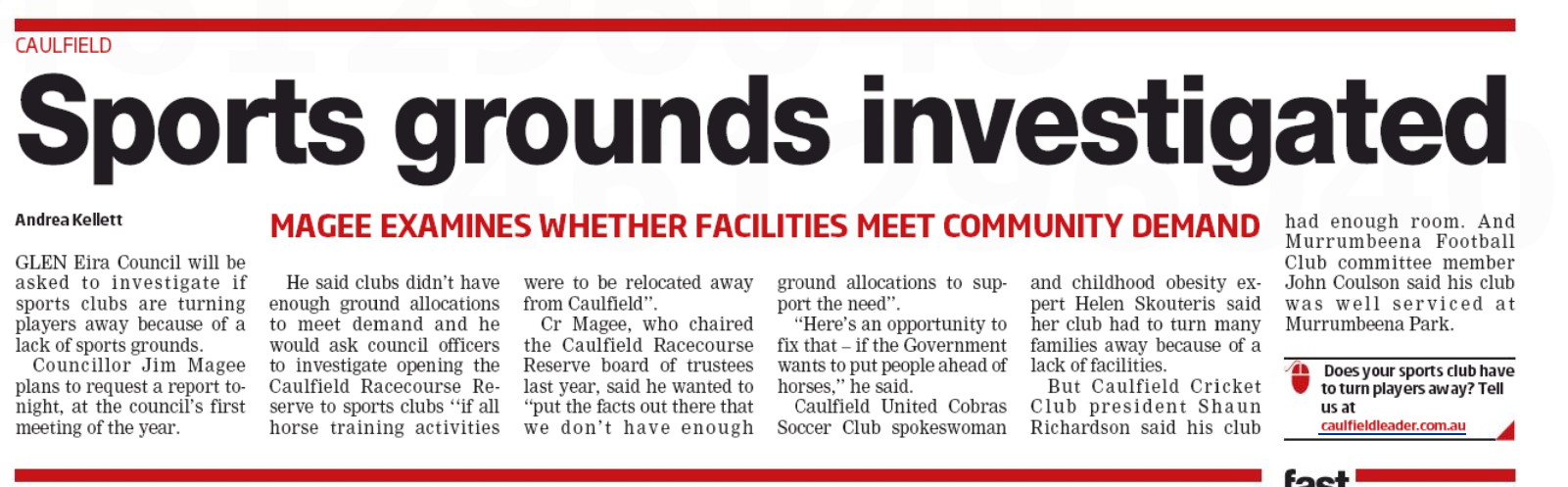
7. Magee’s Request for a Report – after much argey bargey finally got through plus $15,000 expenditure on ‘external’ report by consultant.

sports

letterstreescrossing

Trees are our most valuable asset. But not in the eyes of this council it would seem. No Tree Register after years and years. No safeguard against moonscaping. Park trees barely rate a mention in Street Tree Policy. No details of regular maintenance such as pruning, watering, tendering and general loving care – in contrast to the set in stone policies of other councils. It is a mentality that would prefer to raze and destroy rather than prune and safeguard. After all, it is a hell of a lot cheaper to get rid of a tree than to prune and nurture it. Even when limbs fall there is no attempt to protect the tree from subsequent disease as the slideshow illustrates. Nor do we get any figures as to what happens with the dollars collected from developers when trees are ripped out for crossovers – how much is collected? how is it spent? how often does council come along and tend this tree since they’ve been paid to look after it?

Then we have the claim year after year that council plants 1600 trees per year. Anything from 500 to 1000 are claimed to be ‘replacement’ trees. What residents are not told is how many of these ‘replacement’ trees require ‘replacement’ after 3 months? 6 months? one year? The streets and parks are littered with new plantings that have died because they have either been planted in the wrong place, or the wrong species has been planted in the wrong place, or there has not been the required attention paid to ensure that all these young trees have a chance of surviving. How much has all this inefficiency cost and how much will it continue to cost? The most important question is – who is to blame?

The slideshow below features individual trees within just one specific park. Multiply this across the entire municipality and we fully expect that half the trees will be gone within a decade.

Send us your photos. The more evidence we accumulate of gross inefficiency, neglect and the inexcusable waste of ratepayers’ money, the greater the chance of improved performance!

Last but not least, we have to point out how other councils treat the issue of safeguarding their natural environments. Bayside for instance has emblazoned on its homepage a call to residents for focus groups, submissions. They include a consultant’s report, a detailed ‘discussion paper’, a balanced and comprehensive online survey, and a draft. What happens in Glen Eira? A paltry two page effort by an unnamed author! and of course, no genuine public consultation on anything! Here’s the Bayside webpage – http://www.bayside.vic.gov.au/Tree_controls_in_Bayside.htm

This slideshow requires JavaScript.

Another item on the agenda for Tuesday night is car sharing. As expected, the Akehurst report is another ‘do nothing’ recommendation. We quote:

“Overall, the sharing of cars may be most viable where the availability of car spaces is lowest and the cost of provision highest, such as in the inner city. A significant number of developments have been approved in both City of Melbourne and Port Phillip comprising dwellings with no car spaces. To the extent that this phenomenon appears in Glen Eira, the viability of car sharing may increase.”

However, what irks us even more is the (deliberate?) distortion of the facts and an unholy game of semantics. Akehurst claims: “Only Melbourne and Port Phillip City Councils have policies adopted by council”. Not true, incorrect, and pure bunkum!

After only half an hour of investigation, we have discovered that NUMEROUS OTHER COUNCILS INCLUDE CAR SHARING SCHEMES in their respective Transport Policies. Others such as Stonnington have already run year long trials. Please note – all of these are policies which have gone through the normal channels – ie. public consultation and accepted by full council meetings and subsequent formal resolutions. So, either Akehurst has not done his homework adequately enough, or the claims in this report are far from “clerical errors”!

Here is our evidence taken directly from the respective policies. We have even uploaded the full Moreland policy where car sharing is given major prominence. Below are some extracts from other councils –

Car sharing is one way of limiting car ownership for people with very occasional car use.  Such schemes are generally used by people who would not be able to make the journey by public transport, cycling or walking or who don’t use a car frequently enough to merit owning one.  Council is supportive of car share schemes as they can reduce the need for numerous car parking spaces and unnecessary car ownership. Council currently provides parking spots and signage to car share companies and in addition encourages support through promotion at Council events and in the Yarra News. (Yarra City – Strategic Transport Statement – 2006)

“Policy 26: Council will support the expansion of car sharing in Maribyrnong

Issues and Justification

The popularity of car sharing schemes across Melbourne has increased significantly in recent years. Car sharing allows registered members to book and rent a ‘pool’ car for, generally, short term usage, typically ranging from a few hours to a day or two. Car sharing is most effective in mixed-use areas with good public transport, cycling and pedestrian networks, which make it possible for residents and workers to undertake most of their daily activities without a car, while offering the flexibility of car usage for special occasions. Car sharing can also be effective as an alternative to owning a second car…….

Actions

Action 26.1: Support the provision of at least one car sharing space to be installed on-street adjacent to all new high density residential and commercial developments.

Action 26.2: Exempt car sharing vehicles from parking fees in all Council-controlled off-street carparks.

Action 26.3: Explore mechanisms to extend parking privileges to car sharing vehicles (similar to vehicles displaying Resident Parking Scheme permits) – in selected areas throughout the municipality in support of short-term parking access while avoiding unintended consequences such as long-term commuter parking.

Action 26.4: Explore mechanisms to provide car share parking spaces (in addition to car share ‘pods’) in highly sought after locations as an incentive to car share users. These parking spaces would not be associated with a particular parking management policy – council resolvedvehicle or car share company, but could only be used by car share vehicles. (page 84)

(http://www.maribyrnong.vic.gov.au/Files/Maribyrnong_Integrated_Transport_Strategy_2012.pdf)

In our opinion, many of the items set down for next Tuesday night’s council meeting are nothing short of disastrous for residents. We apologise for the length of this post, but the issues are extremely important.

Item: 483-493 Glen Huntly Rd

Application is for 8 storeys; 4 shops, 57 dwellings and car parking and loading bay waiver. Ron Torres recommends acceptance of application with some minor conditions thrown in. We do not really have to say anything but let the report itself tell the full story. Here are the relevant extracts:

Taking up opportunities for more intense development in the appropriate locations gives Council greater legitimacy and credibility in limiting development in Minimal Change Areas. In other words, it’s okay to sacrifice 20% of Glen Eira without ever defining what “intense development” really means!

It is considered the building itself is of a high quality architectural design that compliments the rhythm of the narrow Glen Huntly Road shop fronts and will make a positive contribution to the emerging character of the Urban Village. In this context, it is considered the proposed building at a height of 8 sotreys is consistent with the policy expectation for this site. Here is it in black and white! 8 storeys is the benchmark for this council! Beware the Planning Zone Reforms! We could also be quite pedantic and wonder what on earth ‘rhythm’ has got to do with ‘planning law’ as so constantly noted by Lipshutz, Pilling, Hyams. How exactly ‘rhythm’ is quantified is of course another question. We suppose it just sounds good and will surely now feature regularly in future officer reports.

The report however gets even better! –It is proposed to provide 66 on site car spaces within 3 levels of basement car parking. The planning scheme requires 82 car parking spaces. Torres goes on with this feeble rationalisation – In this case, a reduction in the visitor car parking requirement is justified. If sustainable transport modes are to be promoted, then a reduction in the visitor car parking requirement should be encouraged. It is considered appropriate to provide a modest level of visitor parking. However providing additional on-site parking for visitors will only encourage more vehicle traffic to an area which anecdotally has issues with traffic. It is also noted that a visitor parking rate of 1 space per 10 dwelling (as proposed in this case) has been supported previously in activity centre locations. The logic is incredible here. Visitor parking will encourage more cars – but allowing 8 storeys and countless dwellings presumably won’t – or at least this isn’t mentioned. Readers should also note the reference to ‘anecdotal’. Pity that there is not one scrap of data in any part of this report to substantiate any of the claims made!

But the best is yet to come! The Transport Department had this to say – Providing less than half the required number of residential visitor spaces on the site is not appropriate. A minimum of 9 on-site visitor car spaces is recommended.

Urban Design then has this to say: There are several trees on the property to the north which have the potential to be impacted upon by the proposed development. The size and extent of basement will mean there are no realistic opportunities for tree planting and the concept landscape plan is not supported. So, here we have traffic and urban design saying ‘nay’ – yet the proposal gets through. Residents should be asking exactly how many ticks in the boxes does it take before a proposal is rejected? What is the priority listing for all these boxes? For example: is parking given greater weighting than landscaping or natural light?

Then there’s this further icing on the cake: The existing street tree can be removed at the permit holder’s expense.  So much for a ‘green, gregarious garden city’!!!!

Item 687-689 Glen Huntly Rd.

The application was for a 4 storey, 29 dwellings, 2 offices, and a reduction in visitor car parking. Recommendation was to accept, but with 28 dwellings! There’s also an interface with Minimal Change Area. The report notes that the property has a permit for 3 storeys and 19 dwellings + 2 offices. This application is to increase dwellings and height. The ‘reason’ not to grant the full 29 dwellings but rather 28 is: ….it is recommended that Units 401 and 402 on the third floor be consolidated to form one 3 bedroom dwelling, thereby contributing to housing diversity and reducing bulk/mass impacts. Wow! Does this mean that out of 29/28 units ONLY ONE will be a 3 bedroom outfit? That is really encouraging ‘housing diversity’ to cater for families, etc.!

On car parking we have this gem: It is proposed to provide 33 car spaces in the basement. This satisfies the planning scheme for the dwellings and offices but not for visitor parking. Only one visitor space is proposed whilst the planning scheme asks for five. Council’s Transport Planning Department has suggested that at least 3 on-site car spaces should be provided for visitors.

Item 6 James Street, Caulfield South.

The application is for 3 storeys and 10 dwellings. Interestingly, the site is labelled as South Caulfield. It is Glen Huntly! Officer’s recommendation is for 9 units. A notation states: In 2011, an application was refused which proposed a two storey building with seven dwellings. It was found to be an overdevelopment of the site…..The current proposal is for ten dwellings. It is however, not an overdevelopment like the previous proposal. Reasons given are that car parking is now ‘adequate’ and site coverage has ‘fallen from 59% to 46%.’

What’s particularly galling is the argument that is then trotted out: …the proposal is more akin to the characteristics of the emerging character of the area. Recently approved, at the direction of VCAT, is a 27 dwelling, four storey development at 18-20 Etna Street, Glen Huntly, located two properties east from the subject site. Once again, the folly of lack of height limits is exposed. Now the argument becomes because the precedent is already there so further development is okay.

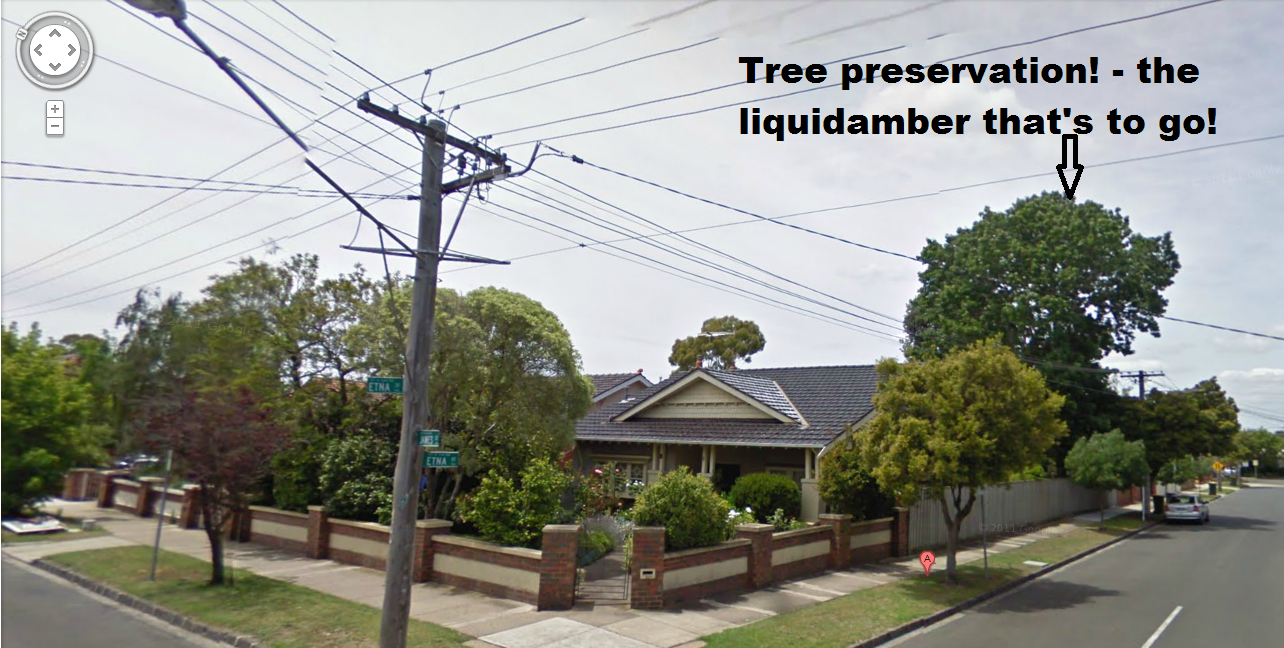
One other very important aspect of this application concerns the destruction of a liquidamber. We highlight this aspect given the spin that is the item on Significant Tree Register also in the agenda. The comment reads: There is a tree located at the rear of the site (Liquidambar) that is proposed to be removed. Its removal is considered acceptable given the site’s location in a Housing Diversity area where this type of development is envisaged and where replacement trees can provide for more appropriate landscaping.  Housing Diversity Areas are again sacrificed. They do not need trees, open space, or normal amenities. Exactly what “appropriate landscaping’ means is again not explained.

ITEM TREE PROTECTION

We remind readers that the issue of a Significant Tree Register has been rearing its ugly head since at least 2003.  That’s ten years of doing absolutely nothing. The unnamed officer’s report on this issue is another piece of spin, dissembling, and the failure to adequately inform. Given the comments from the James St. application the irony of the comments found in this report should be obvious to all readers. We quote:

The normal processing of town planning applications provides on going protection of over 200 valued existing trees and the planning of over 1,000 future canopy trees each year.

Where values trees are identified, the town planning assessment will regularly incorporate permit conditions which require protection during construction and a tree management condition to ensure the ongoing retention of the tree/s. Where a tree to be retained is near a proposed building, further conditions are applied for special foundations which do not disturb or damage the root system. Similarly, the proposed building is protected from future damage from the tree roots. Such foundations often add thousands of dollars to construction costs. Wonderful isn’t it?  Who identifies ‘valuable trees’? Certainly not residents or councillors! How many trees have been allowed to be cut down (as with James St) in order to squeeze more units onto a block? How well ‘safeguarded’ are such trees by the planning processes?

We’re then told that there are penalties for removal of trees without a permit. We wonder how many prosecutions this council has carried out in the past decade?

After a page and a half of self praise, the report finally gets to the nitty gritty, with:

Approaches to supplement existing levels of tree protection include the following.

Introduce a Local Law to require a permit to remove any tree of more than a specified size, usually measured by circumference of the trunk. This involves property owners applying for a permit, paying a fee, possibly requiring a report by an arborist, with the Council determining whether to grant the permit or not. Many Councils have this approach.

Introduce a Classified Tree Register where there is a Local Law requiring a permit but only for those high quality trees which Council has included in the Register.

That’s it as far as details go. Nothing about resident rights to object to street tree removal; nothing about private versus public property; nothing about giving residents the opportunity to have input into ‘valued’ trees; nothing to restrain this council from chopping down tree after tree without producing a qualified arborist’s report.

There are many other items in this agenda which deserve to be severely criticised. We will do this in the days ahead.

PS: Just for the heck of it, here’s the 6 James St. proposed development PLUS THE ‘INSIGNIFICANT TREE’ that’s about to get the chop!

Untitled

The latest Census figures literally make a mockery of both the State Government’s, but more importantly, council’s pronouncements. The over-riding rhetoric has been that people who live near railways, major transport routes (in essence, Housing Diversity Areas) will not require as many cars. This myth, and its associated problems, has been further compounded by council’s failure to:

  • Implement Parking Precinct Plans across the municipality, and especially in Activity zones even though the planning scheme still contains clauses that promise to do this. We’re still waiting!
  • Council continually waives car parking requirements in development after development. The argument is that residents will avail themselves of public transport!
  • There is no home-grown analysis of the impact of parking in adjacent streets or the creation of ever increasing ‘rat-runs’.
  • Potential, albeit partial ‘solutions’ such as car share are pooh-poohed by administrators and put on hold
  • Residential parking permits are handed out almost willy-nilly with no thought, or follow up, of what happens in all those ‘adjacent’ streets
  • We also remind readers that there was the promise to ‘incorporate’ all the latest Census figures into the Community Plan once they were available. The community plan is coming up for review. We won’t hold our breaths however for any radical revisions!

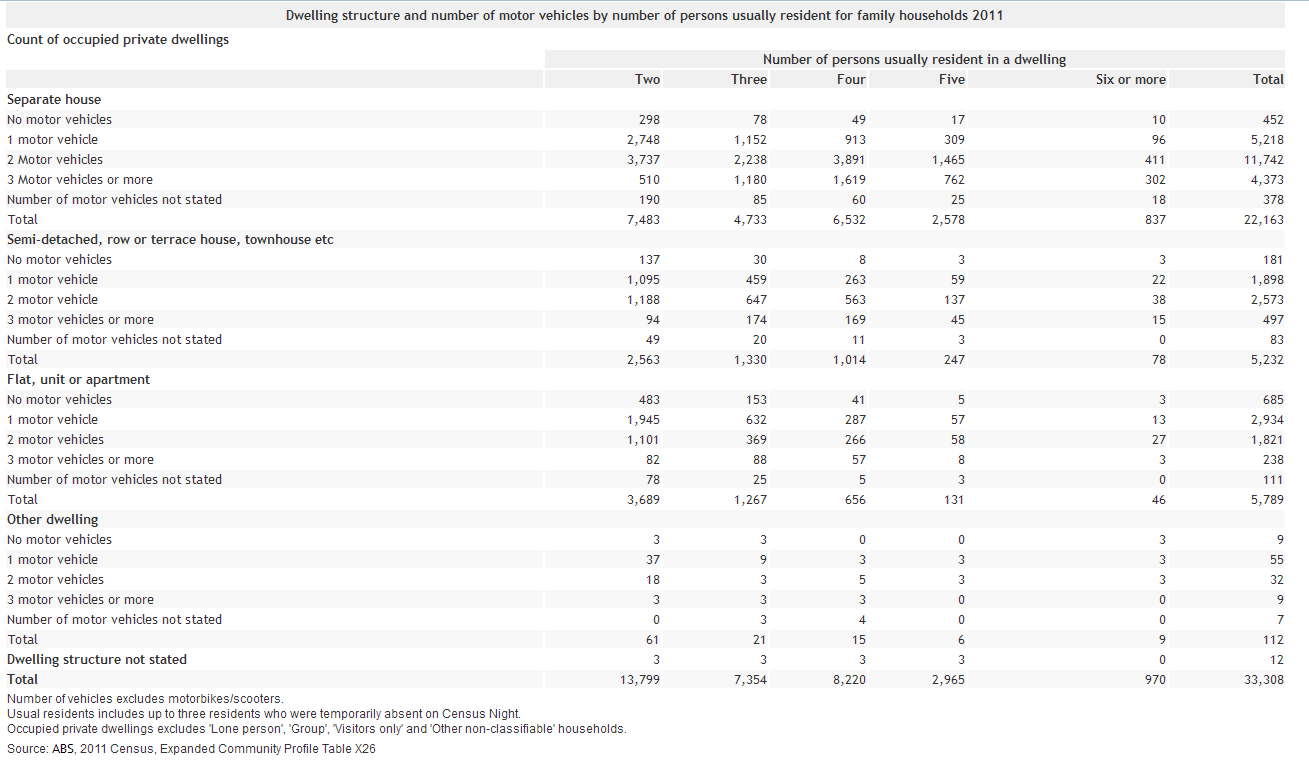
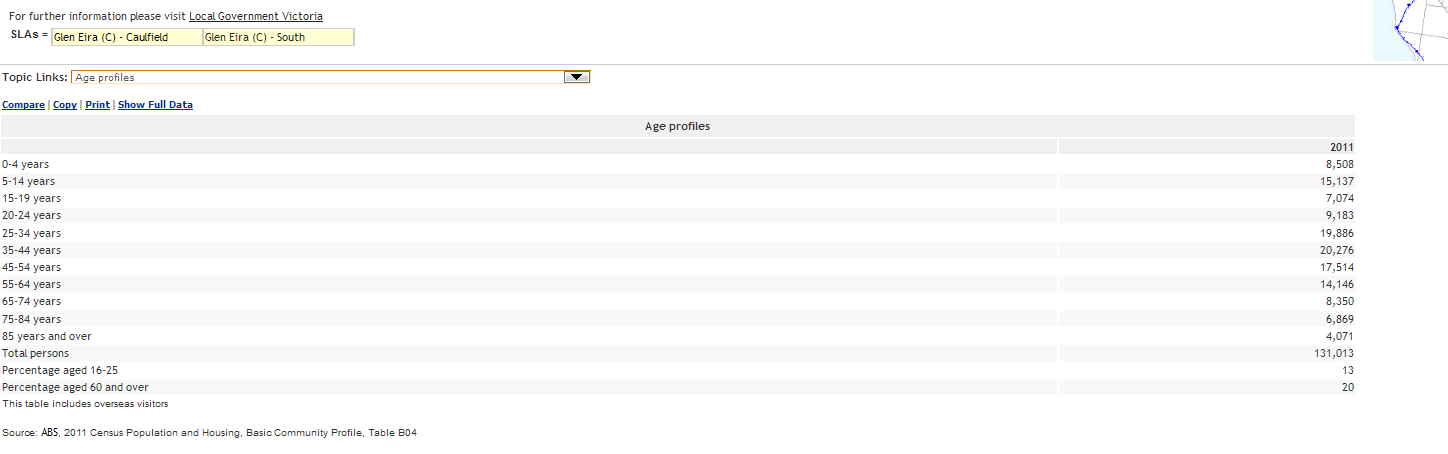
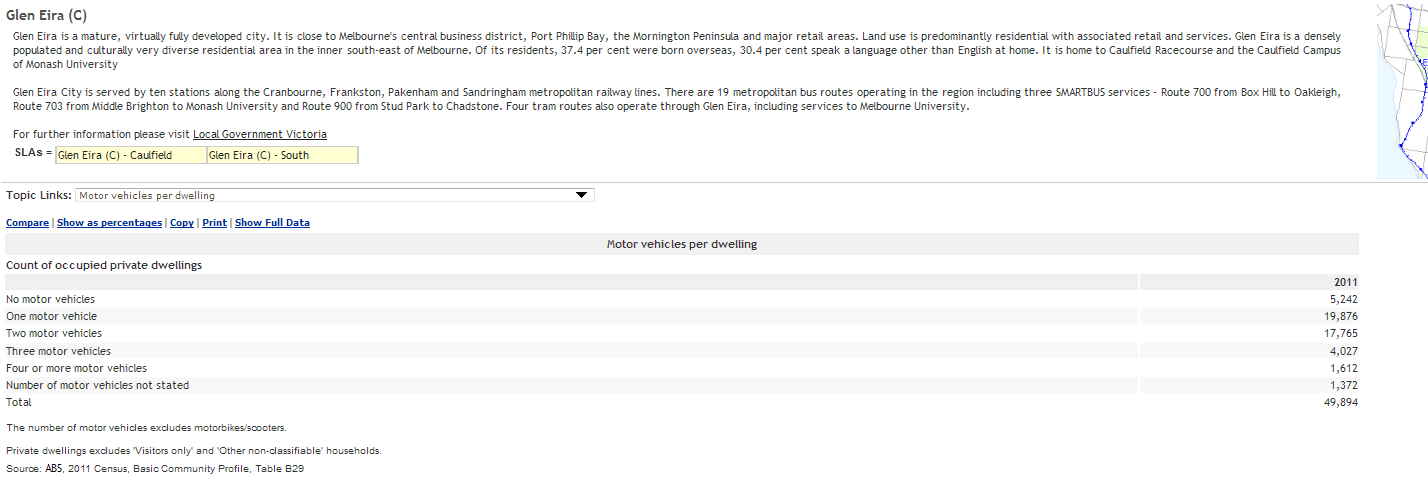
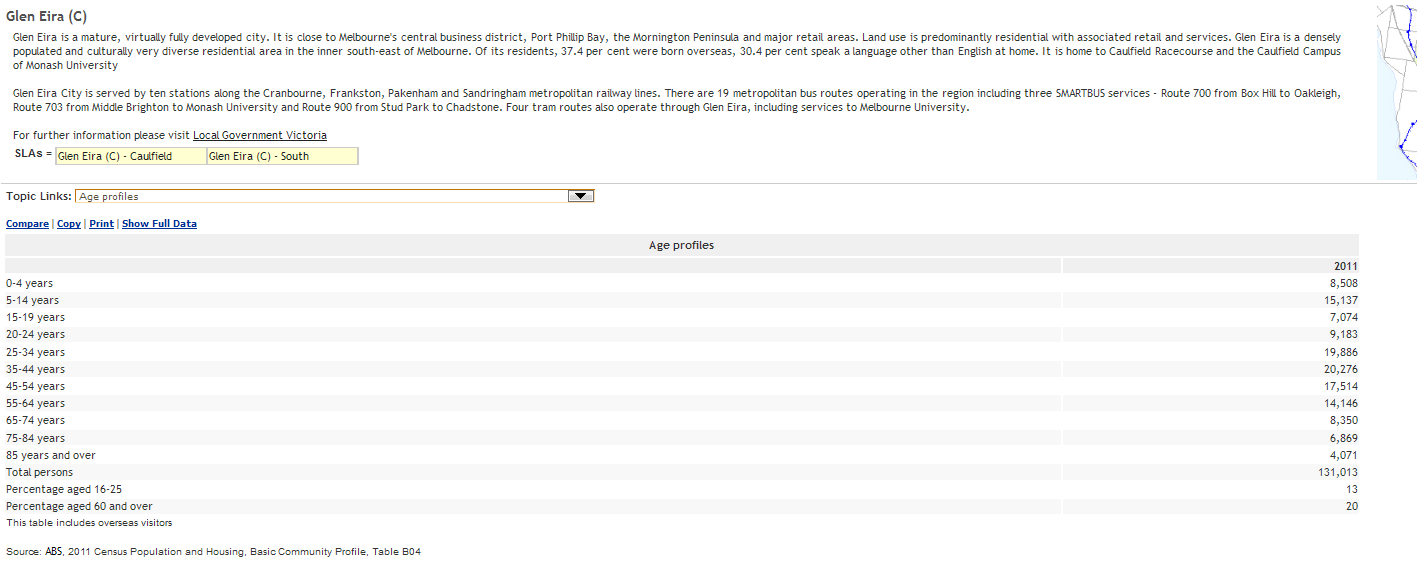
The following statistics taken from the VicRoads Transport Portal (http://www1.transport.vic.gov.au/VTSP/homepage.html) should be carefully assessed by all residents. They reveal what we already know – a steadily worsening situation!

  • We learn that there are about 48,500 cars in Glen Eira.  Of the 131,000 estimated population, just on 30,000 are 19 years or younger. That means there is close to one car in Glen Eira for just about every 2 people eligible to drive.
  • We also learn that the numbers of people driving to work has increased by 2,200 since the 2006 census. Bike riding has only gone up by 170 individuals.

The ramifications of these figures must be addressed. The problems associated with parking and general traffic management have been brought up again and again by residents. Yet Council, true to form, has done practically nothing except produce ‘policies’ that are good on rhetoric and spin, but totally deficient in action, planning, and real analysis that should form the bedrock of all action plans. Real vision and long term planning simply does not exist.

Here are the stats. Click on each image to enlarge.

cars age2

age2

car numbersage profile


For nigh on a decade now, residents have been clamouring for this council to establish neighbourhood vegie gardens. Of course, all has fallen on deaf ears and nothing has been done. Well now we wish to introduce Council’s ‘accidental vegie patch’.

Following the desecration of the Elster Creek Trail, where vast stretches of green open space were turned into a stinking mess via the insane application of “commercial mulch”, locals have been having a grand time. Even with the regular poisoning of everything in sight, nature refuses to give up the ghost and insists on sticking her head up time and time again. But with new additions! Glen Eira is suddenly home to tomatoes, roses, pumpkins, zucchini, and other assorted vegies and plants. For this we have to thank the so called “commercial” mulch that was undoubtedly put down at great expense. So in spite of all its efforts to resist the start of a community vegie garden, nature has taken the matter out of council’s hands.

The tomatoes taste great!

This slideshow requires JavaScript.

Refreshing Park News

The Fixer gets the right fix for popular plaza

Andrea Kellett

ELSTERWICK plaza has finally received the green light to start its transformation from eyesore to community gateway.

After the Leader’s The Fixer  column publicised the problem (“Park goes from lovely to eyesore, October 22, 2012), community leaders called for a revamp of the prime land next to the railway station, backed by Transport Minister Terry Mulder.

Caulfield state MP David Southwick has now negotiated a 20 to 25 year lease from the landowner, railway authority VicTrack.

It is conditional on a commitment from Glen Eira Council to “invest substantially in the improvement, beautification and upgrade of the park”, he said.

We’ve secured this as public open space,” Mr Southwick said. “This is a prime piece of real estate and we want it to be a community asset.

The council has sought a lengthy lease from VicTrack, which would justify a costly revamp, and has been trying to change its year-by-year lease arrangement since 2007.

Mayor Jamie Hyams said the council had not wanted to invest ratepayers’ money without a long lease. He, Mr Southwick, traders and residents agree the plaza and historic rifle range are dilapidated, unsafe and overdue for a facelift.

“Council has been pushing for this for a long time,” Cr Hyams said. “I would hope funding for the park would be in the next council budget so works could be carried out in the next financial year.”

Elsternwick Main Street Committee chairman Brent Howard said he was delighted. “We want to encourage as many people as possible to come and the more vibrant it is, the better retailers will do,” Mr Howard said.

Camden Ward Cr Mary Delahunty described the outcome as a “victory for the people of Elsternwick”.

This post is simply pointing out some ostensible patterns or trends and is positing some questions for residents’ consideration.

Over the years there have been many complaints about the running of the so called ‘planning conferences’  – ie. how objectors are not given the opportunity to ask the developer questions (that’s when they deign to even show up as with the centre of the racecourse debacle); how the planner’s final report is only available on the Friday before the council meeting, and so forth. The stated objective is that these planning conferences function as opportunities for dialogue and the potential resolution of differences. We wonder how much dialogue and subsequent compromise ever eventuates – especially when no real reports or ‘satisfaction survey’ results are made public.

Related to these conferences is the question of who chairs them. Should only local councillors chair such meetings if the application relates to their ward? Or should everyone be sent throughout the municipality since, as Lipshutz so often delights in telling people, he doesn’t just represent Camden Ward, but all of Glen Eira! It’s very strange then, that the vast majority of his chairmanship just happened to involve applications that were located in Camden!

Next is the NUMBER of planning conferences chaired by the various councillors, and the nature of the respective applications. Our analysis tells us that when the stakes are pretty big (such as major high rise developments, or important amendments such as C87, or applications that have garnered large numbers of objections) then the ‘big guns’ – ie Hyams, Lipshutz and early on, Magee – are dragooned into action. What also stands out is that throughout the duration of the last council, Penhalluriack DID NOT CHAIR ONE PLANNING CONFERENCE! Why, we wonder?

Here are some stats outlining the number of times each councillor chaired a meeting. We’ve omitted Staikos and Whiteside.

Hyams – 28

Lipshutz – 23

Magee – 25

Esakoff – 14

Tang – 5

Pilling – 19

Lobo – 7

Forge – 8

When we start looking at the individual councillor and the individual application, then there is definitely a trend. For example: on the few times that Lipshutz ventured out of his electorate it was to chair pretty contentious development proposals, that either drew heaps of objections or, were ‘unusual’. (ie the sell off of Station St to the Port Phillip Housing Association for $3.1m; Mavho St with stacks of objections). Magee was the ‘jack of all trades’, especially early when he was presumably ‘one of the boys’ – so he also got a few major projects. Then there’s our erstwhile Mayor. He’s indispensible, peripatetic, and seemingly most available – especially for many of the really top notch and contentious proposals (C87 Amendment; 10 storeys in Glen Huntly Rd.). Most of the other councillors were left with run-of-the-mill stuff such as double storey applications in minimal change areas. The over-riding impression is that the gang, including Pilling of recent times, generally get the really important proposals and the rest of the councillors all the left-overs.

Some other questions to consider:

  • Are these conferences allocated or do councillors ‘volunteer’?
  • If allocated, what is the rationale for picking which councillor chairs each meeting? (availability assumed)
  • And the $64 question? How many ‘discussions’ has the chair already had with the developer prior to the conference as opposed to the number of discussions had with objectors? And as revealed at a recent council meeting with Lipshutz and his ‘volunteer’ in handing out how to vote cards, what about the potential for conflict of interest?

All in all, like everything else to do with planning, there is plenty of opportunity for manipulation and rigging the game – especially when there’s the oft repeated ‘threat’ of closing the meeting if too many people ask too many embarrassing questions!