We are committed to facilitating genuine debate within Glen Eira. Your views on planning, environment, open space, CEO and councillor performance matter.
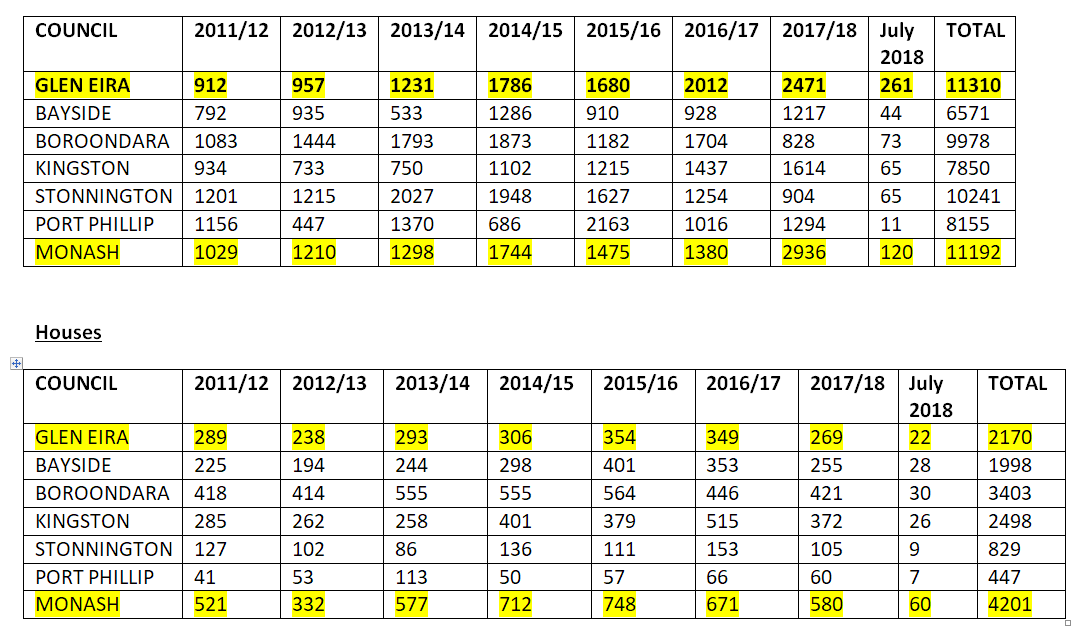
The latest ABS building approvals show Glen Eira still well ahead of all dwelling projections. These figures simply make a mockery of council’s claims that there is the need for doubling the size of activity centres and the newly introduced height limits of 12 storeys in Carnegie and preferred 12 storey height limits in Elsternwick.
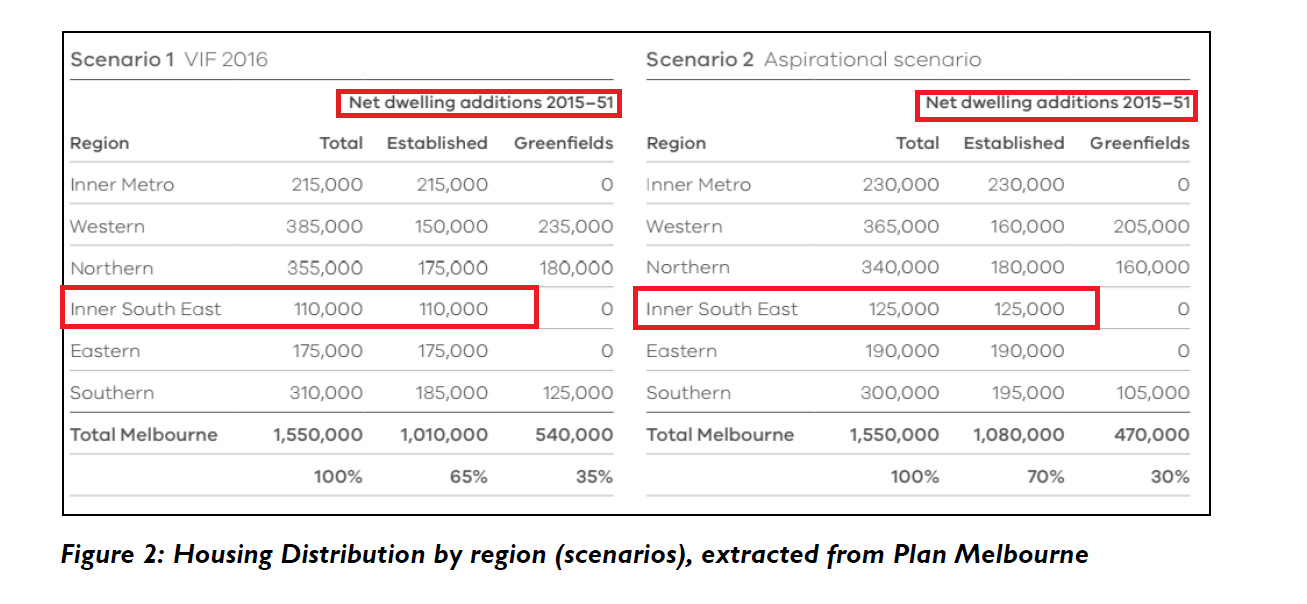
We remind readers that Plan Melbourne Refresh includes projections from 2015 to 2051.
Council insists on using figures that ignore the 2015 projections and start from 2016. Even granted this sleight of hand, Glen Eira is well and truly meeting its obligations . Plan Melbourne Refresh sets an aspirational figure of 125,000 net new dwellings in the 4 municipalities (Bayside, Boroondara, Stonnington & Glen Eira). Even if Glen Eira is supposed to accommodate 30% (rather than 25%) of these new dwellings, that means 37,500 dwellings by 2051. Thus 2015 to 2051 equals 36 years and produces a requirement of 1041 net new dwellings per year.
The ABS building approvals reveal that Glen Eira is tracking on average at close to double those figures. Furthermore, the overwhelming majority of these permits will have been enacted well before 2051!
For the last 3 years alone (ie 2015-July 2018) Glen Eira has had 6424 building permits issued. When we remove the ‘houses’ numbers (ie no net increase) then the figure for this period is 5430. That’s an average of roughly 1750 for this entire period and Plan Melbourne Refresh data requires only a tad over 1000 net new dwellings per year.
We’ve uploaded the ABS data HERE and ask that residents pay careful attention to the following tables that capture the long-term dwelling increases.
The figures that council produces simply don’t add up. And, as we have repeatedly stated, if the figures are awry, then all that follows is also awry. Council is yet to produce one single scrap of hard evidence that supports 12 storeys nor the doubling of activity centre sizes.
We’ve received the following email from a resident –
There is very little transparency or accountability in Glen Eira. Most decisions are made by Council officers, possibly under delegated authority, but with little public evidence about who made what decision, why they made it, or what relevant considerations were actually considered.
14-22 Woorayl St is a case in point. I was an objector to a permit amendment request. There was no record in the Planning Application Register of a permit extension, so I went along to the Planning Conference to find out why the original permit hadn’t elapsed after some years. It was only at the conference that I was told, verbally, that an extension had been granted.
I asked whether the extension request had been assessed against the Kantor principles. Council claimed it had. That was extremely unlikely given the circumstances so I asked for a copy of the report that should have been written documenting the assessment. The council officer refused, but the Mayor in his role as chair said it would be made available to me.
Also at the meeting a lady asked why it was acceptable for her elderly parents to be in permanent shade on an abutting property. Council couldn’t explain why but the applicant expressed the pious hope that “it would have been carefully considered at VCAT”. The published VCAT decision makes it clear it wasn’t carefully considered.
Eight minutes before the Council meeting to consider the amendment request I received an email from the Mayor making a half-hearted attempt to explain the decision to grant an extension. There was an attached document, written only a few hours earlier. No officer was identified as making the decision, there was no date on the document, but there was metadata in the PDF identifying the author and creation date.
Critically the document didn’t mention Kantor principles, nor the “seriously entertained planning proposal” principle. It argued that policy hadn’t changed and therefore the outcome was likely be the same if a fresh application was lodged. That was far from truthful. Council had resolved to request Amendment C148 5 months earlier. It was a seriously entertained planning proposal, it was public knowledge, it changed planning policy, and as we now know, it did become part of the planning scheme. It introduced height controls to the Scheme that 14-22 Woorayl didn’t comply with.
I don’t support the officer recommendation to give officers unlimited freedom to undermine Council policy. There’s a lot of things that need to change about the culture first. The Planning Application Register should contain details of all decisions, including permit extensions. It should contain the date when each Permit expires, and be updated when extensions are granted. There should be a publicly accessible record of reasons for decisions made under delegated authority. There should be checklists of all matters that must and should be considered when making planning decisions, and those checklists used to verify compliance. Delegated authority should be constrained or limited to implementing Council policy. If there are inconsistent policies, get Council to resolve them.
Council’s planning register is the perfect example of the lack of transparency. It fails to:
pinpoint who made any decision (ie delegate, council or VCAT)
provide details of amendments
collate all information pertaining to the site in one record
and certainly no indication as to any payments made
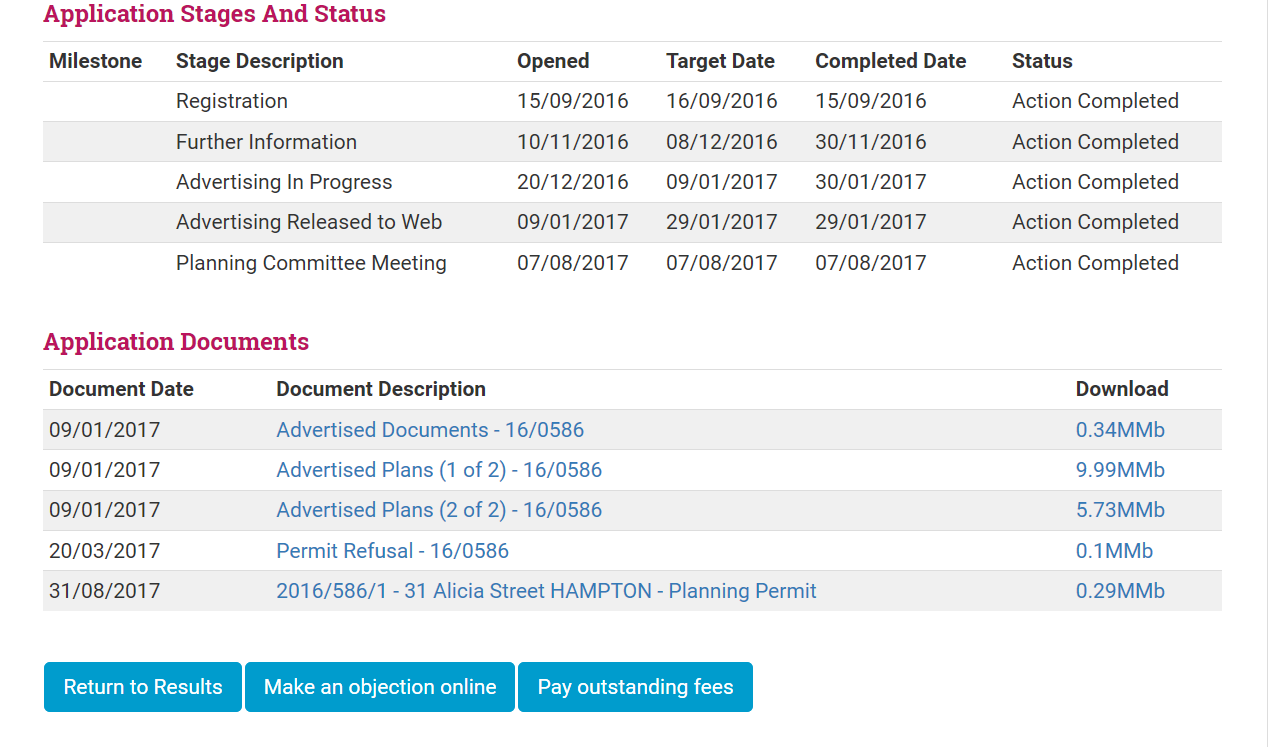
By way of contrast and what can and should go into a planning register, we present one example from Bayside. Readers should note the final permit is available; reasons for refusal are available; dates and times for every single action are provided.
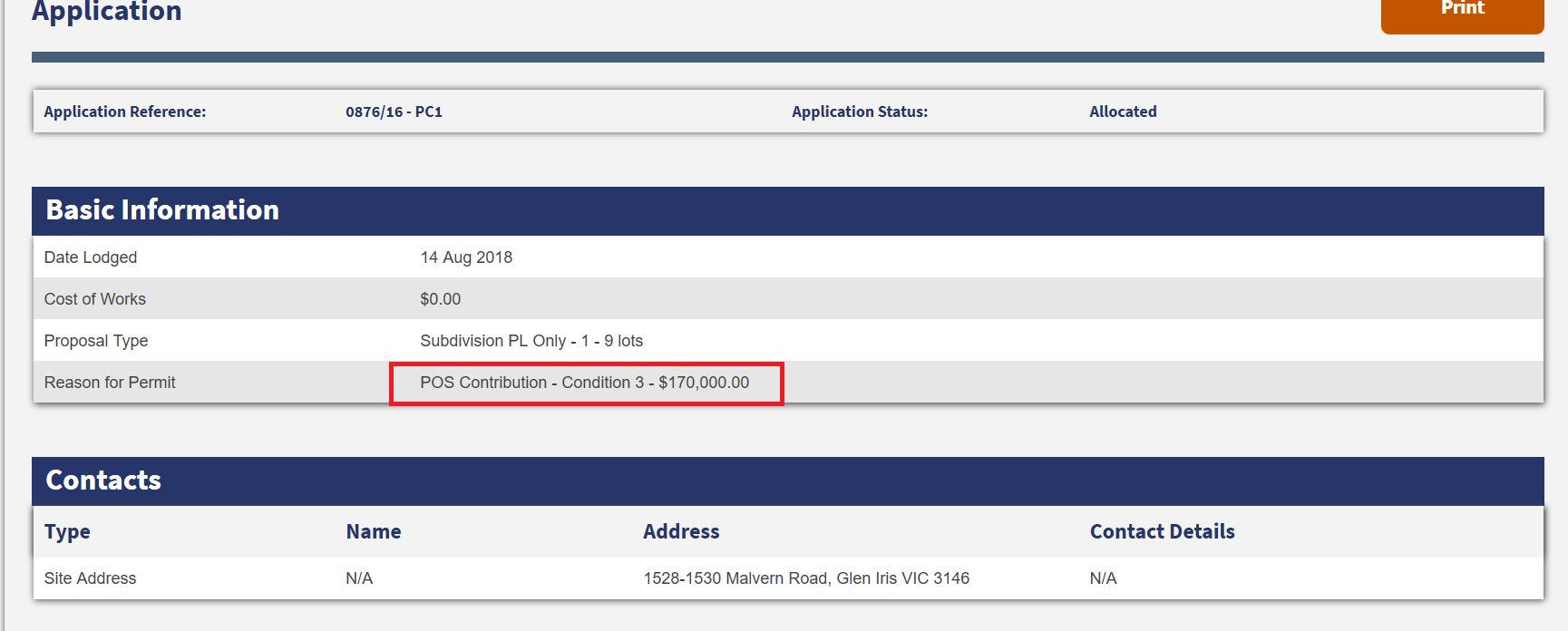
Even more interesting is the following example from Stonnington where the amount paid in the Open Space Levy is there for all to see. Given that Glen Eira council has admitted that not all levies are paid (as they should be) such information becomes essential –
In Glen Eira the philosophy is to make it as difficult as possible for residents to have any idea as to what is going on – particularly when it comes to planning and finances!
The agenda set down for tonight’s council meeting illustrates once again how little has been achieved in a decade and how governance continues to fail miserably.
First off, we have the recommendation to create a heritage overlay on the former ABC studio site in Elsternwick. It currently has no heritage coverage. Originally zoned Neighbourhood Residential council decided to rezone it as Residential Growth Zone in 2013 and according to its draft structure plan, this became 8 storeys. Wynne’s recent intervention will make it 10 storeys.
Given all of the above, and considering that council knew in 2013that the site was being sold, why has it taken 5 years at least to even start considering a heritage overlay? The property has now been sold and plans are surely on the drawing board for major residential development. This is made absolutely clear by council’s archaic planning scheme itself and their report into the studios in 2013 where it was stated – Given the size of the land (8000m2) and Residential zoning, it is likely that the site will be sold to developers for residential purposes.(Minutes of July 23rd, 2013). Why couldn’t council get off its backside in 2013 and initiate some positive action?
The second issue, concerns the use of school grounds. Nothing new here since the minutes of 26th February, 2008 contained this resolution –
Crs Esakoff/Whiteside
That a report be prepared into any opportunities that may exist for Council in the provision of additional/improved areas of open space that could be used for both passive and active recreation within Glen Eira’s existing school network.
The resulting officer’s report was tabled on 20th May, 2008 and basically concentrated on all the ‘problems’ associated with sharing school grounds. The councillor resolution was watered down to ‘let’s write a letter’ –
Crs Esakoff/Spaulding
That Council write to all primary and secondary schools in Glen Eira along the lines of Attachment A and send a copy to the Victoria Department of Education The MOTION was put and CARRIED unanimously.
The issue popped up again 8 years later when there was another Request for A Report –
CRS HYAMS/MAGEE
That Officers prepare a report into the potential for Council to collaborate with schools in Glen Eira to utilise their open space and grounds for use by sporting clubs and the wider community.
The MOTION was put and CARRIED UNANIMOUSLY. (Minutes of 19th July, 2016)
Thus history repeats itself. Motion after motion and nothing is done or reported back on. In fact this 2016 request for a report WAS NEVER TABLED AT ANY COUNCIL MEETING. The ghost of Newton is well and truly still alive in Glen Eira it would seem!
We therefore have 2 issues that have been on the cards for at least 5 and 10 years respectively and council has been satisfied to sit back, be reactive and achieve a big fat zero during this time.
Finally, we turn to planning and ask readers to consider the following officer’s comments for the planning application for Pearce St., South Caulfield. Is it really too much to ask that when plans come in, that council insists that they are accurate, and if it is impossible to ascertain whether they are, that they be referred back to the developer?
The plans will be required to demonstrate that the proposal provides at least 20% permeability across the site, as this is unclear when looking at the provided landscape plans.
In regards to site coverage, the proposal appears to come in above the required maximum percentage. To further assist the development to integrate better with the neighbourhood character it is recommended that the proposal does not exceed this maximum percentage of site coverage.
Incompetence, laziness, indifference? You make up your mind!
The issue of granting permit time extensions is important, especially when planning schemes and their controls have changed. The officer’s report for this item included this paragraph –
From 1 January to 30 July 2018 there have been 102 requests for an extension of time. In the 2017 calendar year 157 requests were received. This represents a relatively high volume of work and indicates that such requests are common.
This is literally a staggering amount of applications. Yet the community has no idea how many of these requests for time extensions were granted, or refused. Most importantly we have no idea as to the reasons why they were either granted or denied.
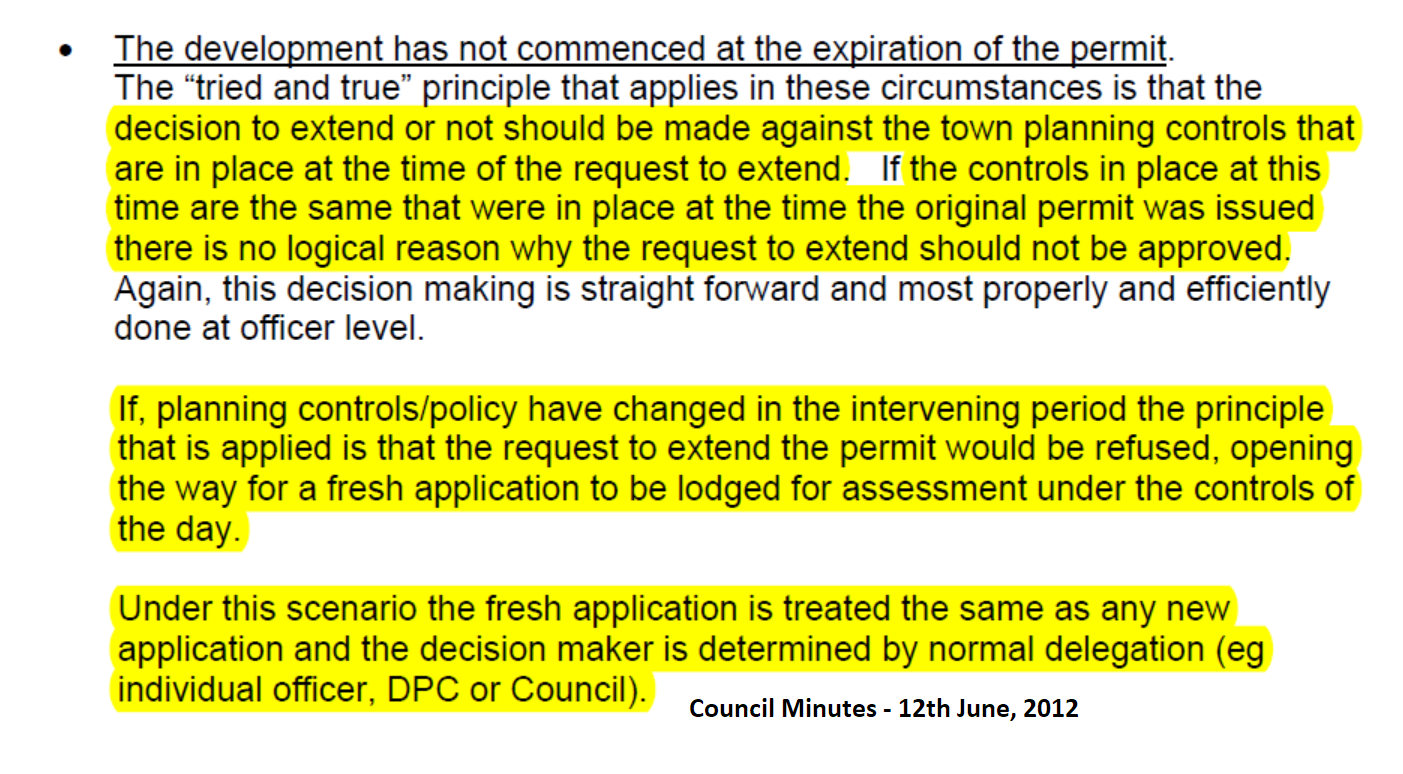
The issue of time extensions is important and has already been shown to have a decided impact on land use in this municipality. The most blatant example concerns an approved permit for 7 storeys in Centre Road Bentleigh. When the permit was granted by VCAT, there were no interim heights. In November 2017, after the amendment was introduced a council planner granted a time extension. Had the time extension not been granted then the developer would have had to put in a new application where the height restrictions applied – ie lower. Council thus provided the developer with a free pass to build his 7 storeys despite the fact that it is council ‘policy’ to NOT GRANT TIME EXTENSIONS IF PLANNING CONTROLS HAVE CHANGED. Below is an extract from a 2012 officer report which makes this abundantly clear. So why was this permit granted and if this is council’s policy then what were the reasons for the approval?
Since the approval was granted under delegation, the question of how council handles its delegations becomes vital. More importantly, it raised questions of transparency and accountability. In March 2018, there was a request for a report to consider the issue. It’s only taken 5 months for this report to make it into the agenda! Excuses have been that council is reviewing its delegations! Please remember that it only took 3 weeks for council to change its delegations from one council meeting to the next (ie 1st May proposed delegations were deferred until 22nd May, when some major changes were added!). There is nothing (legally) to stop councils changing their delegations at any time. Thus why are we still waiting until the ‘near future’ as stated in the officer’s report? And what does ‘near future’ actually mean – 3 months, 6 months, another year?
The officer’s report provides councillors with 4 options. They are:
Do nothing
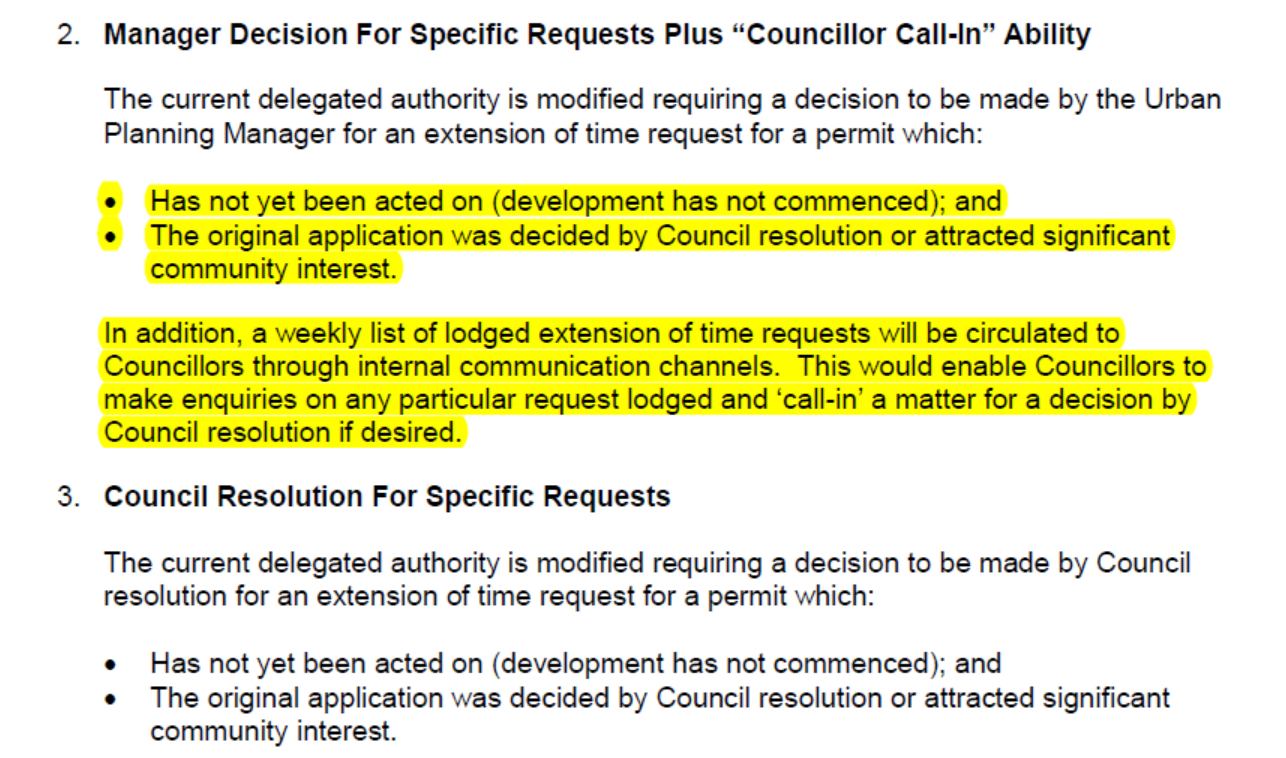
Make it a ‘manager decision’ plus the ability of councillors to ‘call-in’ the application
Make it a formal council resolution
All decisions be via council resolution
The report recommends option 2.
Whilst this is a marked improvement, it still fails to address residents’ major concerns. Here is option 2 & 3 as presented in the officer’s report –
The wording of the recommended option 2 is far from satisfactory. (1) It limits applications to those which were the result of council resolutions alone or which fall under the category of ‘significant community interest’. Very few decisions are made by councillors in planning – less than 5% of applications. Plus, who is to decide what constitutes ‘significant community interest’. Are we talking 10 objections, 15 objections or must the magic number approach more than 50? The final sticking point is that there will be no public disclosure of which applications have been lodged since this will only go to the councillor briefings. The online planning register does not detail this information – or certainly not on a regular basis.
Option 3 is slightly better in that it calls for councillor resolution and takes it out of the hands of ‘managers’. There is however the repetition of what was stated in Option 2.
If council is genuine in its attempts to improve transparency and accountability then these 4 options will not do the job. The public has a right to know:
Which developments are seeking time extensions and what the outcomes are
The reasons for any decisions
An online register that is comprehensive, up-to-date and accurate
Delegations which work in the community’s interests, not the developers!
— On Monday the Minister for Planning visited Carnegie to make a pretty big announcement for both Carnegie and neighbouring Bentleigh. My community in Carnegie specifically are acutely aware of the devastation caused by the former government and the then planning minister, now the Leader of the Opposition — I think they called him Mr Skyscraper — changing the rules to allow developers to take over Carnegie, and people have paid the price since then.
I am really pleased that on Monday the Minister for Planning came to Carnegie and announced everything that the Glen Eira City Council had asked for in relation to height controls — that is, maximum mandatory height controls in Carnegie, which will help protect the remaining character of that wonderful suburb. I am really pleased that the minister visited. I think it was his third visit to Carnegie, and I appreciate his support. He understands the need to balance development with community expectations, and that is exactly what he delivered on Monday.
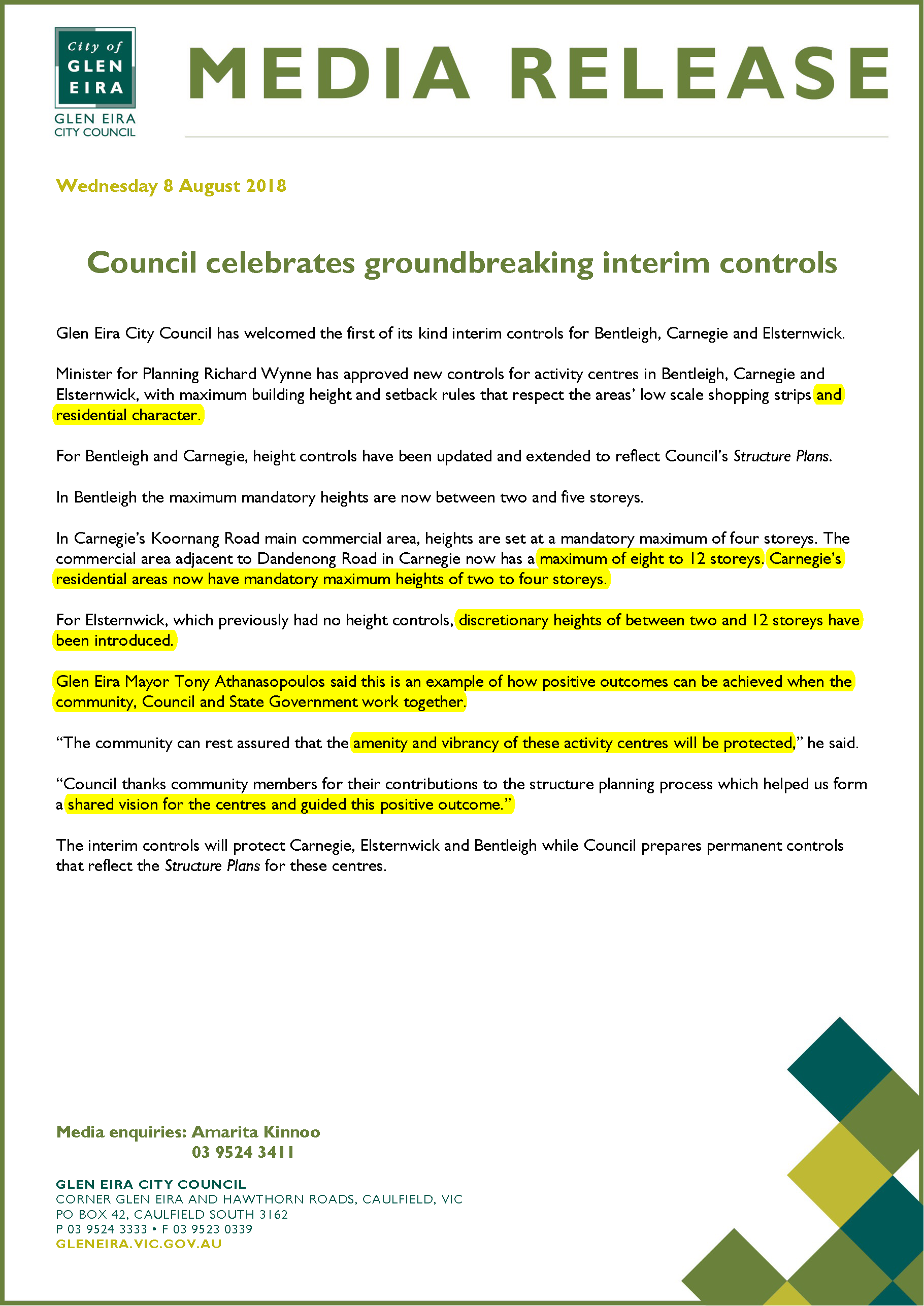
Please pay careful attention to our highlighted sections given that:
No mention is made of the fact that hundreds upon hundreds of current properties will be upgraded from 2 to 3 or 4 storeys when the final amendment sees the light of day
‘Discretionary’ height limits basically mean nothing when challenged at VCAT
Exactly what are the ‘positive outcomes’ and what is the data to justify 12 storeys?
Amenity is defined in the dictionary as – “anyfeaturethatprovidescomfort,convenience, or pleasure”. We doubt very much whether increased traffic, increased shadowing, decreased open space per resident qualifies as providing ‘comfort, convenience or pleasure’ for the vast majority of residents.
As for the ‘shared vision’ bullshit we suggest that councillors go back and read residents’ comments about what they wanted for their activity centres! These documents are anything but a ‘shared vision’ – they are the vision of a council determined to progress its pro-development agenda at the expense of ‘amenity’ and community representation!
Elsternwick and Carnegie development height limits: Residents blast plan
Emma-Jayne Schenk, Caulfield Glen Eira Leader
August 7, 2018 11:30am
NEW height limits for Elsternwick and Carnegie have been blasted by residents who claim they’ve been cheated because they don’t live in a marginal seat.
The interim State Government planning rules approved this week outline discretionary heights of two to 12 storeys in Elsternwick and eight to 12 storeys for the commercial area on Dandenong Road in Carnegie.
Lower limits of two to five storeys were approved for Bentleigh — a marginal seat — and two to four storeys in Carnegie’s Koornang Rd commercial area and surrounding residential zones.
Planning Minister Richard Wynne said the limits respected the area’s low-scale shopping strips, residential heritage and gardens, and “would provide certainty for developers and residents”.
Woolworths’ development proposal for 10-16 Selwyn St, Elsternwick.
But key campaigner and Caulfield South resident Sandy Togias questioned how such high-density living respected the area and said politics and the upcoming election had clearly come into play.
“It’s interesting that a marginal seat like Bentleigh gets two to five storeys but a safe seat like Elsternwick gets 12,” she said.
The measures will be in place until Glen Eira Council develops permanent controls, including the Elsternwick Structure Plan, which details 12-storey limits and opposed by more than 100 residents.
Ms Togias said much of the community staunchly opposed high-rise development in Glen Eira, especially Elsternwick, but had not been listened to.
“Once 12 storeys is applied for, the chances of reducing this to six, eight or 10 are very difficult,” she said.
“This now gives about a year’s grace for developers to build whatever the hell they like.”
It comes as residents fight against Woolworths’ plans for a 13-storey, 180-apartment complex at the former ABC studios on Selwyn St. Under new guidelines, it’s believed the maximum height allowed would be 10-storeys.
Opposition planning spokesman David Davis said a Liberal government would review the 12-storey height limit in Elsternwick with an intention to lower it, if elected in November.
He said the Liberals would also restore Neighbourhood Residential Zone protections.
“The caps in Bentleigh and Carnegie are too little too late and allow an absolute open season in the surrounding streets of these areas where the neighbourhood zone protections have been stripped away by Daniel Andrews,” Mr Davis said.
“These small residential streets will now become the target.”
He said Labor’s recent scrapping of visitor parking requirements in large side-street developments would cause further chaos and compromise residential amenity and parking.
In 2017, the government approved height limits up to five storeys in Bentleigh and seven storeys within Carnegie.
The Andrews Labor Government has unveiled new planning rules for Glen Eira that will protect neighbourhood character and put local residents first.
Minister for Planning Richard Wynne has approved new controls for activity centres in Bentleigh, Carnegie and Elsternwick, with maximum building height and setback rules that respect the area’s low scale shopping strips, residential heritage and gardens.
For Bentleigh and Carnegie, height controls have been updated and extended to reflect planning work by Council.
In Bentleigh the maximum mandatory heights are now between two and five storeys.
In Carnegie’s Koornang Road commercial area and surrounding residential growth zones, heights are set at a mandatory maximum of two to four storeys. The commercial area adjacent to Dandenong Road in Carnegie now has a maximum of eight to 12 storeys.
For Elsternwick, which previously had no height controls, discretionary heights of between two and 12 storeys have been introduced.
While the new controls are interim measures, Glen Eira City Council will prepare permanent controls to be exhibited for public consultation.
Former Planning Minister Matthew Guy approved skyscrapers that lined the pockets of developers but the Labor Government is putting residents first, protecting our famed liveability with transport infrastructure, growth corridors and fair height limits.
Quotes attributable to Minister for Planning Richard Wynne
“These interim controls will protect these communities while Council develops permanent controls.”
“This will provide certainty for both developers and residents as to what can be built in these important shopping precincts.”
Quote attributable to Member for Oakleigh Steve Dimopoulos
“The mistakes made by the previous Liberal Government are obvious to everyone who lives in my community. The changes announced today are a massive win for local residents.”
Quotes attributable to Member for Bentleigh Nick Staikos
“As a lifelong local, I am pleased to have secured height controls in Bentleigh. Unlike the local Liberal candidate, who has supported 30 storey buildings in our suburbs, I will always act to protect Bentleigh’s liveability.”
We, the residents of Glen Eira have tried to appeal to the integrity of Glen Eira City Council-we now realise that there is no conscience and no integrity to be found amongst our ‘representatives’
We are witnessing the destruction of our city through overdevelopment. Our homes are deprived of sunlight as the Council ignores our pleas to safeguard our habitable areas and gardens. We are not against developing more housing in our city. However, we would have expected our representatives to research how best to manage that development for the greater good of all. We now know the close relationship our Council have with developers and business (GECC mtg 24/7/18). Residents are not consulted about planning for future growth, but traders and developers are. Logic and reason have been ignored. Whilst the Council and the developers may well have joined together to restructure our city without any concern for the impact on the residents, we seem to have forgotten that the residents of the city of Glen Eira far outnumber the developers and Council. We are now numbering over 150 000.
We need to show our force in numbers…………perhaps a ‘People’s March’ in our streets might gain the Council’s attention.
Past generations established laws to protect the citizens of a democracy. These laws still stand.
We need to review the Statutory Regulations which our council assumes have no relevance to them:
Charter of Human Rights and Responsibilities Act 2006
Local Government Act 1989
Local Government Bill Exposure Draft 2018
Planning and Environment Act 1987
Environment Protection Act 1970
We have no time to waste…………each day more streets are taken, residents’ lives are dismantled.
We need now to think collectively……….How can we unite to ensure our voices are heard?
This post concerns last night’s ‘discussion’ on VCAT Watch. The cases brought up involved Royal Avenue and Manchester Grove, both in Glen Huntly. The former application was for a 5 storey development in the Commercial Zone. True to form, councilors voted for 4 storeys only to be knocked on the head by VCAT with the developer getting his 5 storeys and car parking waivers. The second application also got the nod from VCAT where the site is zoned GRZ (ie 3 storeys).
VCAT certainly is no friend to residents. But neither is council!!!!! Until councilors stop pretending that all the blame should be laid at the feet of VCAT, and that poor old Glen Eira is a ‘victim’ of this autocratic institution, then nothing will change. Glen Eira is in the state it is because that is what was decided and the major culprits are Hyams, Esakoff, Magee, and Delahunty who oversaw the introduction of the disastrous zones without community consultation, and now again attempting a 20(4) appeal to the Minister for 12 storeys in Bentleigh & Carnegie. These same individuals have sat for years and years as our ‘representatives’ and have achieved zero when it comes to proficient planning. Worse is that they still insist on pulling the wool over residents’ eyes, when they certainly should know a lot better.
We urge all readers to listen carefully to what Hyams, Esakoff & Silver said in the following. We will then comment.
HYAMS stated that the member said that ‘the site didn’t need visitor parking because it is near a station” NO, THIS WASN’T WHAT WAS SAID. Paragraph 57 of the judgement states – I am satisfied the provision of one visitor parking space is acceptable. The member also states – I understand the provision of one or two visitor parking spaces rather than three spaces was supported by the Council’s professional planning and traffic engineering officers
So Hyams is taking issue with VCAT because some visitor car parking is waived. Yet officer reports repeatedly use the same arguments as the VCAT member. If Hyams and Esakoff are so concerned about the waiving of visitor car parking, then how come they voted for permits on the vast majority of the following cases? Why didn’t they stand up on their hind legs and ask the traffic department to justify its recommendations? If council’s own traffic department uses the same arguments as VCAT, then is VCAT really the villain or does the fault lie with a council that has no parking precinct plans, or decent parking overlays, even though these were promised in 2004?
Here are some quotes from officer reports for various applications – most of which got their permits from council and were voted through by the likes of Hyams and Esakoff and lately Silver. The quotes are all verbatim from the various reports found in the agenda papers (dates provided so people can check)
Application for 13 storeys, 117 dwellings – Glen Huntly Road/Ripon Grove
The Planning Scheme requirement is for a total of 213 car spaces to be provided on site. There is a total shortfall of 43 car spaces proposed.In relation to the car parking reductions proposed, this is considered reasonable given the commercial location, opposite a rail station, tram line and with short term on street parking available. (agenda of December 17th, 2017 – officer report)
13-15 Hamilton Street, Bentleigh – (10th April 2018 – officer’s report)
The reduction in visitor parking is considered acceptable. The applicant has provided a car parking assessment which outlines that peak visitor demand would likely be up to two, visitor car parking spaces. Given the site is within an area highly serviced by public transport, and there is sufficiently available space within the vicinity of the site to cater for 1 car space to be accommodated (as there is 1 space in the basement), this waiver is considered acceptable in this instance.
21st March 2017 – It is also noted that the site has good access to public transport. A tram route runs along Glen Huntly Road which operates between Melbourne University and Carnegie. The nearest tram stop is approximate 50 metres to the east. Glen Huntly station is also a short walking distance from the subject site (approximately 400 to the west). 1254-58 Glen Huntly Road, Carnegie – 6 storeys, 79 dwellings)
The proposal is seeking to waive the requirement for one visitor parking space. Given the proximity of the site to the Ormond Train Station (less than 100 metres), this reduction is supported. It is noted that Council’s Traffic Engineers did not raise any concerns with the waiver of the visitor car space. (12th April, 2018) 532 North Road Ormond
9 Royal Avenue Glen Huntly – Given the strategic location of the site, proximity to public transport and the availability of short-term car spacesavailable within the immediate vicinity, a reduction of 2 visitor car spaces is consideredacceptable. .(26th September 2017)
So we have the paradox of councillors now blaming VCAT for something their own transport department endorses!
Adding further salt to the wounds is that councillors have voted in the Integrated Transport Strategy. As we’ve pointed out previously, council’s intent is clear. When parking overlays are eventually introduced, they WILL NOT maintain the current requirements of Clause 52.06. Council will REDUCE the statutary requirements for parking in its activity centres. Thus instead of 1 spot for a 1 or 2 bedroom apartment this will in all likelihood be reduced to 0.8 spots and visitor parking (currently 1 spot for every 5 dwellings) cut back to maybe 1 in ten. Offices and other commercial properties will get even greater dispensations. All one has to do is read the document and ponder what the following (again quoted) has in store –
Where it is demonstrated that office parking usage is lower than the planning scheme requirements due the high level of public transport provision, explore a reduction in the statutory parking requirements for office use. When determining appropriate parking rates, the site specific conditions of the development and the corresponding ability for the centre to adapt to an increase mode share of sustainable travel, should be taken into account. (page 38)
Where it is demonstrated a public parking availability is underutilised during the evenings, explore a reduction in the statutory parking requirements for these commercial uses. When determining appropriate parking rates, the site-specific conditions of the development and the corresponding parking utilisation of the centre should be taken into account. (page 38)
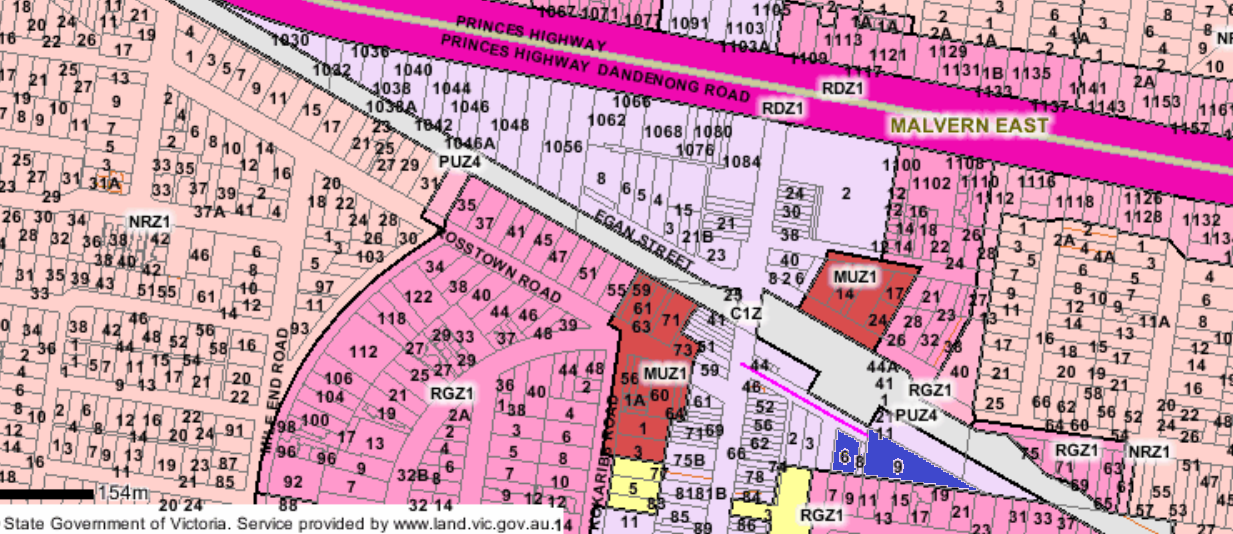
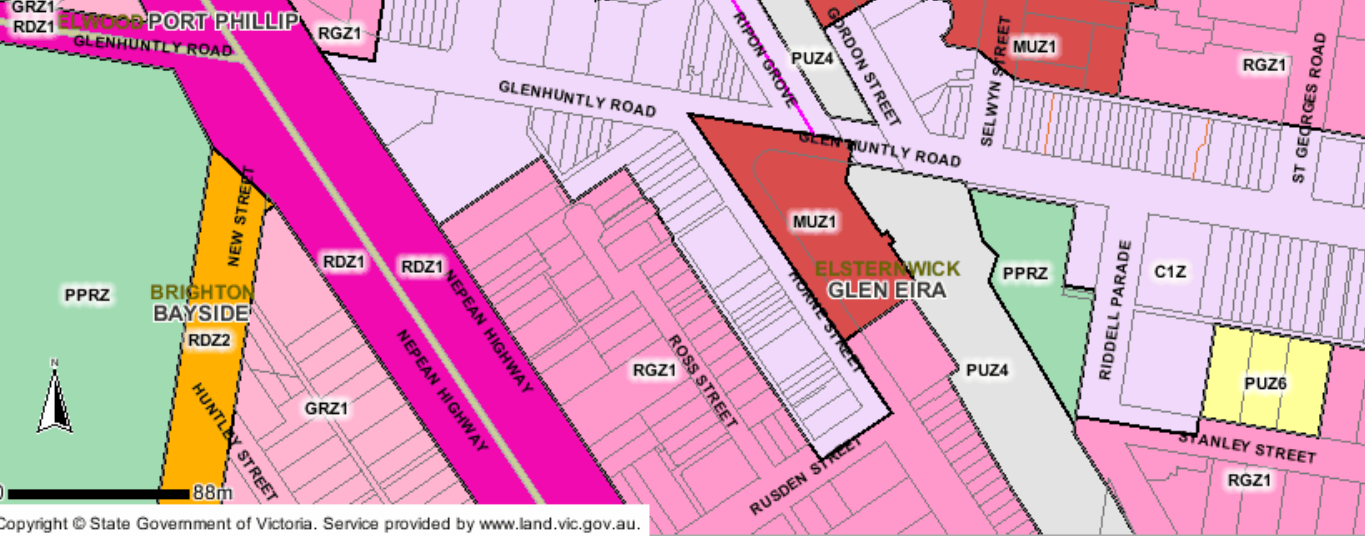
Next we’ve got the the Esakoff view. Her argument that Royal Avenue isn’t in the ‘core’ of the commercial centre is literally stunning. Since when is the interpretation of a commercial ‘core’ taken to mean a LINEAR line drawn down the major arterial road? That’s not what the planning scheme says. Neither the Urban Villages policy, nor the Housing diversity policy differentiates between commercial sites along the main road and those commercial sites that sit adjacent to the main road. It’s a great pity that Esakoff didn’t think of this ‘problem’ when she voted for the Carnegie structure plan with its proposed 12 storey height limits in Commercial centres that are all over the place and definitely NOT LINEAR! For example Woorayl, Egan, Arawatta. In Elsternwick the same non-linear configuration applies – ie Horne Street branching off Glen Huntly and earmarked for 12 storeys.
Then there’s Silver and his bemoaning of the fact that Manchester Grove’s ‘neighbourhood character’ was overlooked by the VCAT member. We wonder if Silver has even ventured down this street and attempted to define its ‘neighbourhood character’ since council certainly hasn’t! We remind readers that council DOES NOT HAVE any character statements for its housing diversity areas. It does not have ‘preferred character statements’ like other councils. In fact there is nothing except the zoning of GRZ and the go ahead for development. And Manchester Grove is being ‘developed’ constantly. There are already 22 units at 15-17 Manchester Grove and across the road the Coles car park followed by a long series of 3 storey townhouses. Asking VCAT to respect ‘neighbourhood character’ when council doesn’t is the supreme joke!
So ultimately the question becomes – when will these councillors fess up to their mistakes and apologise to the community instead of continuing to spout utter bullshit that shows no respect whatsoever to those they are meant to represent.

 Glen Eira Debates