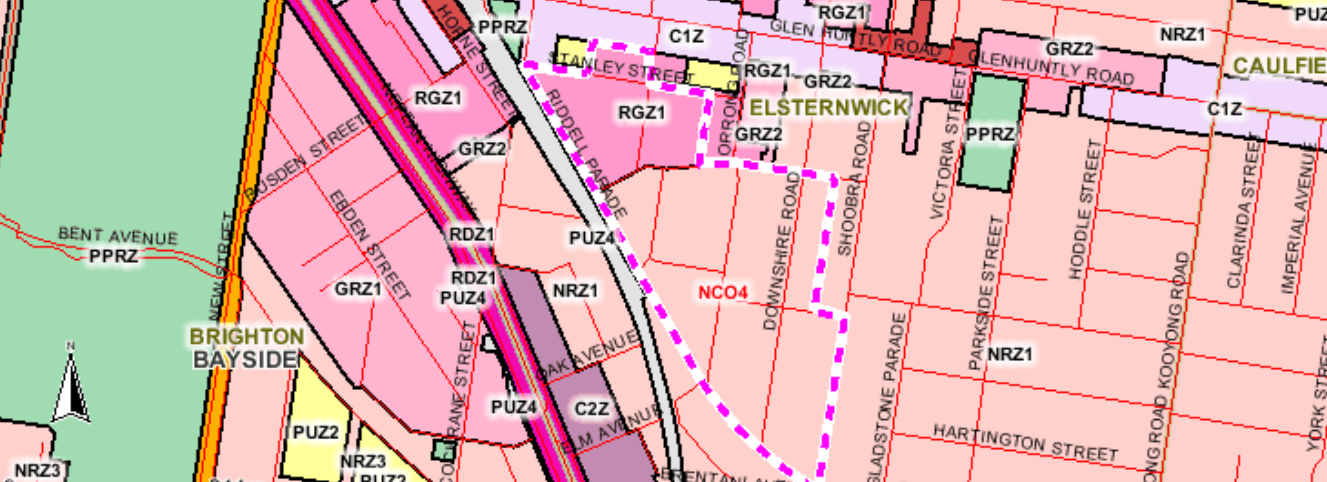
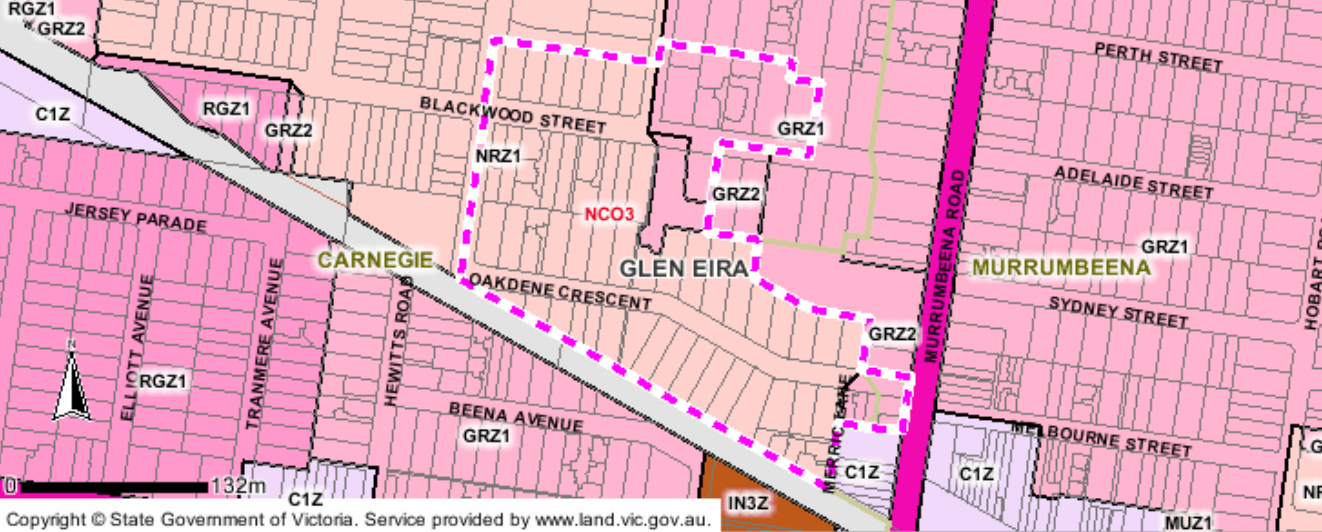
In January 2013 Amendment C87 was gazetted. This amendment introduced some revised Neighbourhood Character Overlays into the planning scheme with the objective of ‘protecting’ certain streets and areas of the city. Council’s stated objectives in the recently completed planning scheme review is to implement more of these overlays.

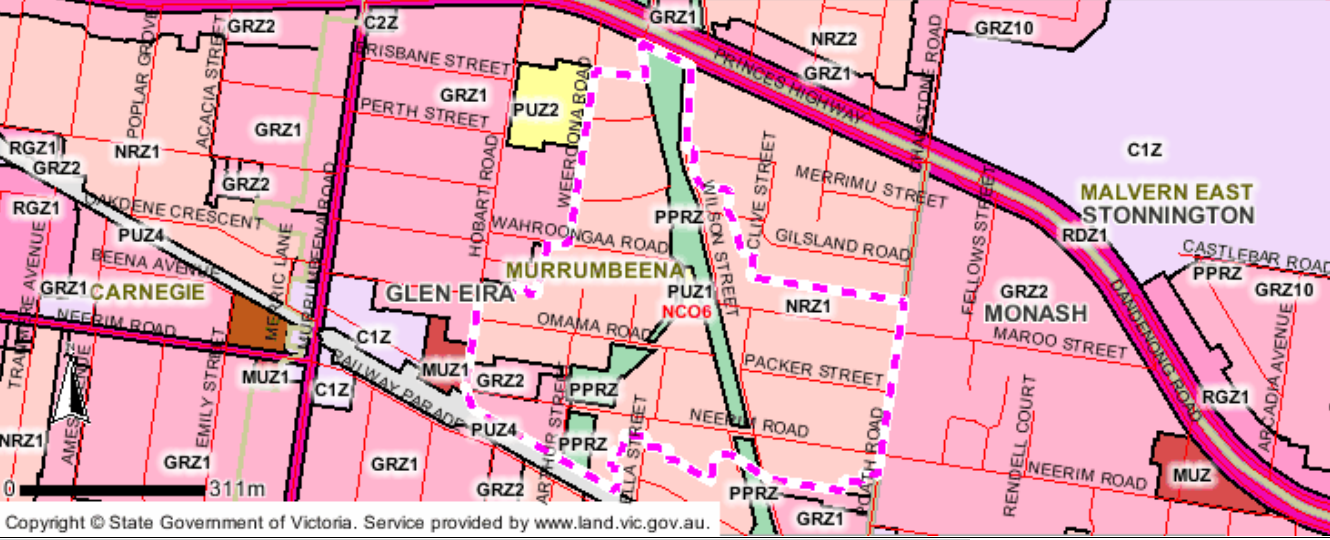
But there is a major problem with council’s planning as illustrated in a  recent VCAT decision which calls into question whether council is totally incompetent, or simply so pro-development that nothing they do to foster more development should come as a surprise to residents. This latest VCAT decision involved an application to build a 2 storey building containing 4 townhouses. The site was in Murrumbeena and included in a Neighbourhood Character Overlay (NOC6), plus a Design and Development Overlay, plus a Special Building Overlay (ie flooding). Yet, council in its wisdom also ZONED THIS AREA UNDER GENERAL RESIDENTIAL ZONE 1.

This raises a multitude of important issues –

  • Why has council included areas that have NCO’S in the GRZ and RGZ zones?
  • Discussion on the introduction of the new zones was already happening in 2013 and probably well before. Didn’t council planners know what they were potentially undermining? Or didn’t they and councillors care?
  • What happens now to the several hundred properties that find themselves in the same boat as this Murrumbeena application?
  • Why can’t council write amendments that actually mean something, instead of the contradictory and useless waffle that they continually produce? And who ultimately is responsible for vetting their nonsense? Here is an example of two statements that come from this NCO6. We maintain that they contradict each other –.

To ensure that new dwellings or extensions to existing dwellings respect the dominant building height, form, façade articulation, materials and roof forms of the streetscape..

New buildings should interpret the detailed elements of older dwellings that contribute to the neighbourhood character significance of the area in an innovative and contemporary manner that complements, rather than replicates, period dwelling styles.

Thus we have an NCO that is seeking to protect existing neighbourhood characteristics on the one hand (ie ‘respect) and then there is the injunction NOT TO ‘replicate’ but merely ‘complement’ the area. No definition of course exists as to the meaning of these two terms. You could literally drive a truck through any of these statements, decision guidelines and objectives!

The VCAT decision went the developer’s way with the member making this important point –

The construction and application of the zones, overlay controls and policies to this locality creates a tension within the planning scheme with respect to the future built form character of the area. This is a locality identified as a diversity area in which the Council seeks to encourage redevelopment and increased residential densities. It is one of a confined number of diversity areas in this municipality in which redevelopment is directed and specifically encouraged. Simultaneously the Council has applied an NCO to this locality, the purpose of which encourages development to be in accordance with a preferred neighbourhood character that is largely based on the protection of existing neighbourhood character. Notwithstanding this site’s diversity area location the Council opposes the demolition of a modest and relatively non-descript (my description) dwelling because it is a dwelling originating from the interwar period. (Source: http://www.austlii.edu.au/au/cases/vic/VCAT/2016/1494.html)

As for the other ‘protections’ afforded this site, they are useless. The Design and Development Overlay only applies to fence heights (like another 2 from council’s ‘generous’ 5 DDOs) and hence was irrelevant. The member also makes the point that council’s opposition to demolition should not be based on a Neighbourhood Character Overlay, but on a Heritage Overlay! Melbourne Water had no objections to the Special Building Overlay requirements following amended plans.

What does all this ultimately mean? We believe that:

  • No property should be zoned GRZ or RGZ if it is also covered by a Neighbourhood Character Overlay. This of course means changing the zoning – a definite ‘no-no’ for this council since they are ‘perfect’ and got everything right the first time around
  • At least another 200 properties now find themselves in the same boat as this Murrumbeena site. What will council do to ensure that they are fully ‘protected’?
  • Until there is a complete and utter re-write of the planning scheme, and eschewing reliance on useless waffle, then no resident anywhere can expect that his neighbourhood or street  is ‘safe’.

In the public interest, we provide some screen dumps of the other areas that are covered by an NCO, but also zoned for increased density. Residents in these areas – BEWARE!nco2

nco1

nco3


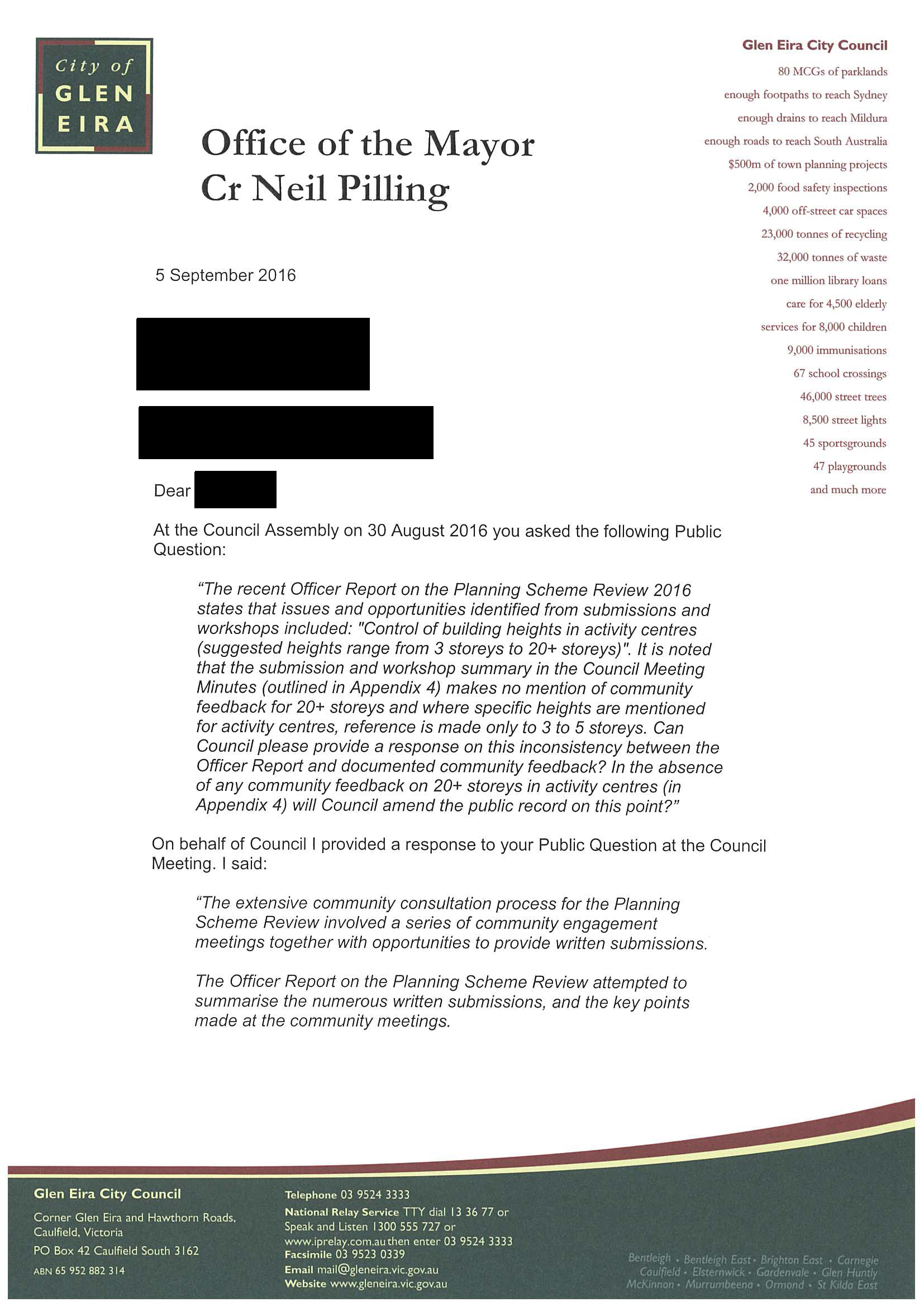
With the new Public Questions format introduced recently, the wider community  literally has no idea as to what the public question was, nor the answer, if the questioner was not present in the gallery at the time the item comes up in the agenda. Given that public questions occur at the end of the meeting (and this can be hours and hours later) it is no wonder that some residents might simply give up and leave or simply cannot abide the thought of 2 to 2 and a half hours of woeful arguments and plenty of hot air and grandstanding. Nor do these new protocols take into consideration that someone might be ill and unable to attend.

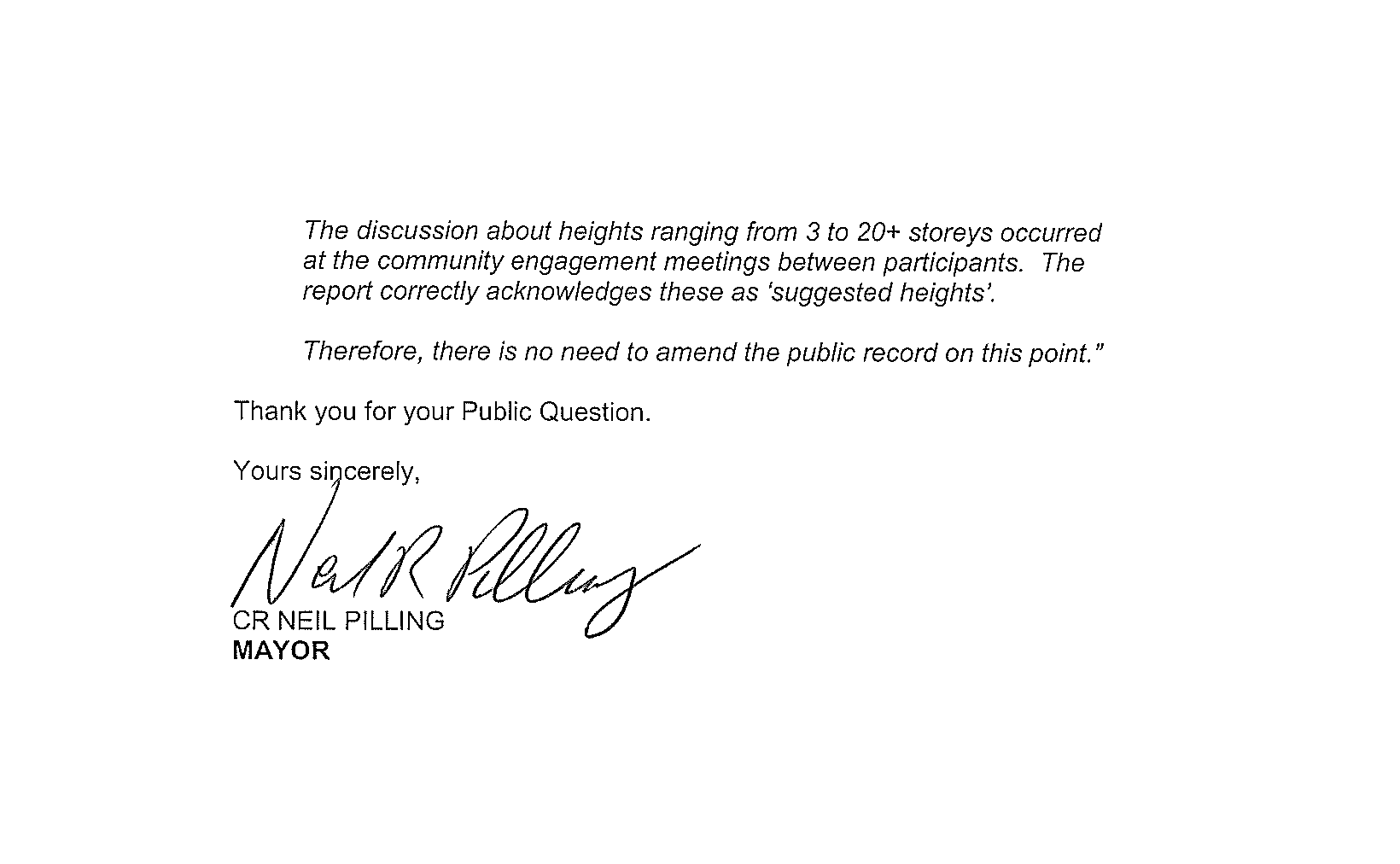
Councillors Hyams, Lipshutz, Esakoff, Pilling,and Ho have therefore successfully limited public access to resident views and queries since the questions and responses are not recorded in the minutes. We’ve however been able to subvert this anti-democratic practice by publishing one of these questions! Please note the answer and make up your own minds as to its veracity and faithful ‘reporting’ of events.

public-question_page_1public-question_page_2

untitled

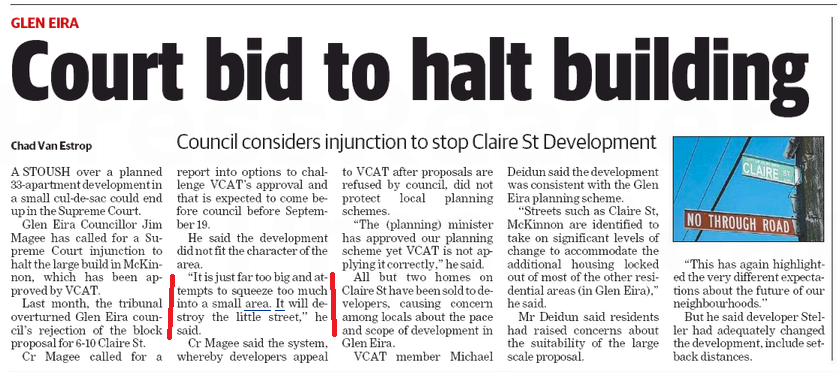
Are we asking too much for both journalists and councillors to actually portray the truth? Here are the facts:

  • Magee did NOT ASK FOR AN INJUNCTION. His motion asked officers for ‘options’ to ‘challenge the VCAT decision’ and to provide some figures on ‘costs’ and chances of ‘success’.
  • This site in Claire Street is far from a ‘small area’ as Magee would have readers believe. It is 2053 square metres – fulfilling council’s planning scheme objective to ‘encourage’ the ‘consolidation’ of sites!
  • In his chest thumping speech where VCAT was again the sole villain, Magee stated in part – This application ‘failed ResCode, failed the Glen Eira Planning Scheme’ but the VCAT member who refused the original application for 34 units has now granted a permit for this application for 33 units. The member said ‘Council encourages dwellings of this scale’ and he ‘could not be more wrong’. Council ‘does not encourage development of any scale’. ‘Council simply says what are the height limits’ and what the Planning Scheme allows and this was ‘set up via consultation’ in 2004 and in 2010 ‘our residents said to us very clearly’ that they wanted ‘increased set backs and height limits’. ‘We got’ these things but ‘VCAT again are not applying our planning scheme’. No point in ‘having a planning scheme then’ if VCAT ignores it and that’s why ‘mandatory controls are very important’. Nearly everyone in Claire St., ‘has sold out’ so council needs to ‘dissect’ the VCAT decision.
  • Several things to note in the above: (1) the VCAT member does NOT STATE that council ‘encourages dwellings of this scale’. What he does say is that council policy and the zoning makes Claire Street an ‘ideal’ location for 3 storey developments. (2) as for council not ‘encouraging’ ‘development of any scale’, perhaps Magee should have a read of the planning scheme he is supposed to administer!
  • The word ‘encourage’ occurs 352 times in the planning scheme. In the vast majority of these occurrences, ‘higher density’ is the goal. Here are some examples with the relevant clauses in parenthesis.

Higher density housing is encouraged within and adjoining the commercial zoning (Clause 21.03 )

Single dwellings and multi unit development are encouraged immediately adjoining the commercial areas of these centres.(21.03)

Industrial sites surrounded by residential areas are encouraged to convert to residential where appropriate.

A targeted approach involves identifying areas throughout the City where multi-unit development is encouraged and facilitated through local planning policies and statutory controls.(21.04)

Encourage a mix of housing types, increased residential densities and mixed use developments within urban villages and neighbourhood centres

The encouragement of residential development within and around commercial centres is a key strategy aimed at giving additional support to centres (21.06)

Where a small retail centre is in danger of losing its retail role, alternative land uses should be encouraged to fill vacant premises. Favourable consideration should be given to uses such as small business, clean light manufacturing, service business, residential and community use. This is particularly the case in centres such as McKinnon, Murrumbeena, Hughesdale and a number of local centres (such as Patterson).

Encourage conversion of derelict industrial sites to residential or mixed use activity where appropriate. (21.07)

Encourage highest residential densities in preferred strategic locations such as urban villages. (22.05)

To encourage increased densities within and around commercial/transport nodes which respects transition to the surrounding residential area

Where opportunity does exist,however, appropriate infill development at increased densities is encouraged.(22.05)

Buildings along Centre Road be encouraged to increase in height to provide for office,commercial and residential uses……

Where opportunities exist, medium density housing be encouraged in the residential areas surrounding the centre.

Encourage higher-density residential development.

Encourage site consolidation and redevelopment to support increased development densities.

Consolidate properties in the area west of Koornang Road to encourage more intensive development.

Commercial development on lots with frontage onto Neerim Road be encouraged

Increased density residential developments be encouraged

Increased density residential development be encouraged in Chestnut and Blackwood Streets with medium to high density development occurring on lots with frontage to Dandenong Road.

The re-development of 314 Neerim Road for medium density dwellings be encouraged

Increased density housing be encouraged, particularly along Rippon Grove.

Site consolidation to facilitate increased densities be encouraged

Encourage the higher and more intensive development in the southern and eastern parts of the precinct facing Station Street and the new road.(22.06)

Encourage the consolidation of sites to promote development opportunities.(22.07)

Encourage gradual changes in building heights between existing buildings and new developments.

CONCLUSION

Election time is definitely the top most consideration for many of the incumbents. Magee is excelling in his attempts to portray himself as a concerned councillor. We’ve had crocodile tears at VCAT, the demand for mandatory height controls instead of discretionary, and now the latest ploy – a request for a report on the Claire Street VCAT decision. We certainly doubt that this will go any further since appealing to the Supreme Court can only be done on a point of law and would cost the earth. Also, if council were stupid enough to vote in this course of action, then any determination would only be after the election. Thus, if Magee was so concerned about what is happening to McKinnon and other neighbourhood centres then where has he been for the past 18-24 months? Why does this crop up only now – 2 months out from election? Why all his votes for permits that we’ve previously pointed out? And why oh why, is so much of what comes out of this councillor’s mouth simply wrong, incorrect, and the opposite of the truth? What would help Magee’s election ambitions is that instead of lambasting VCAT again and again, he and his colleagues undertook to act upon resident wishes and review the appalling zones and rewrite the incompetent planning scheme. That would surely get him votes!

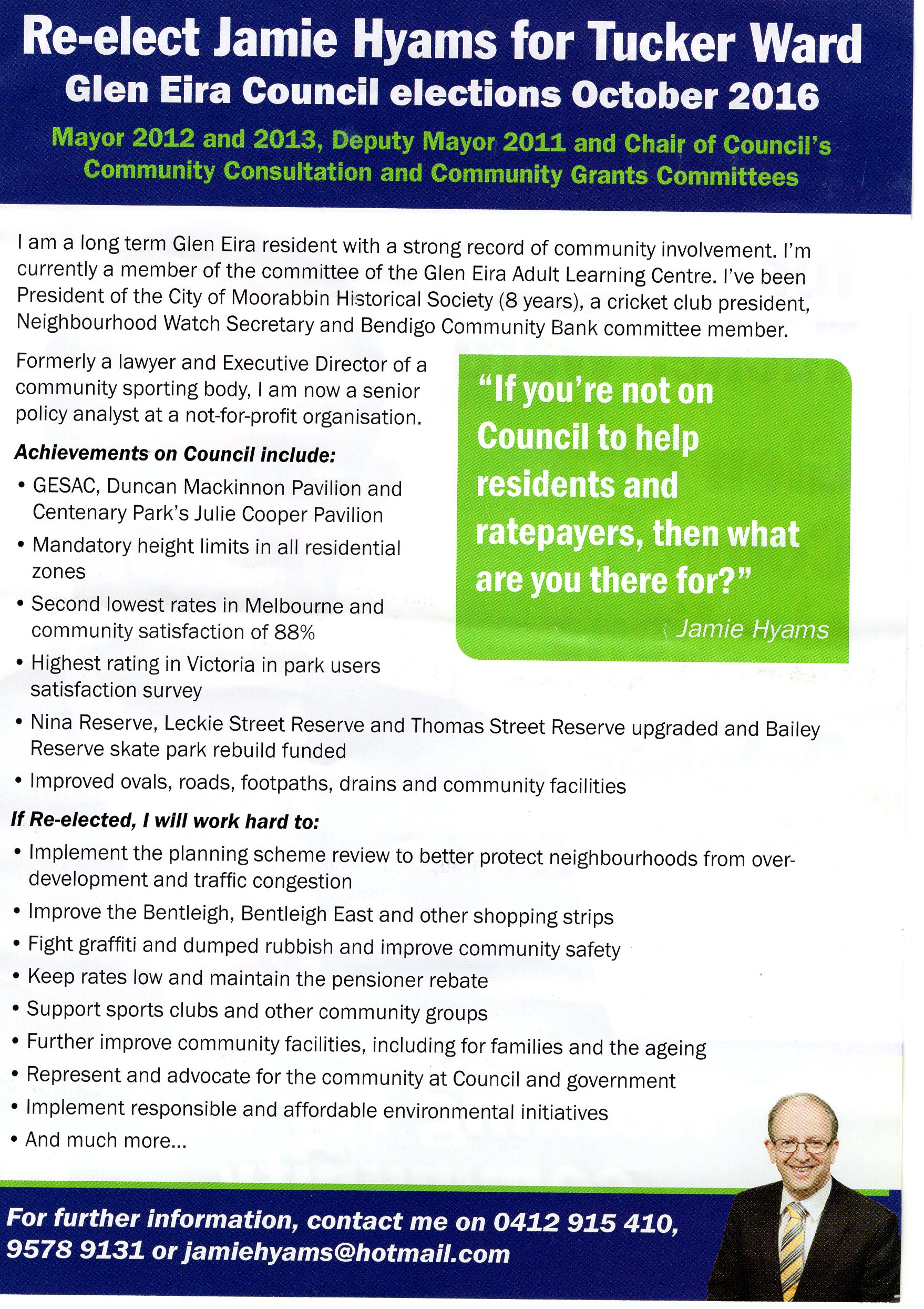
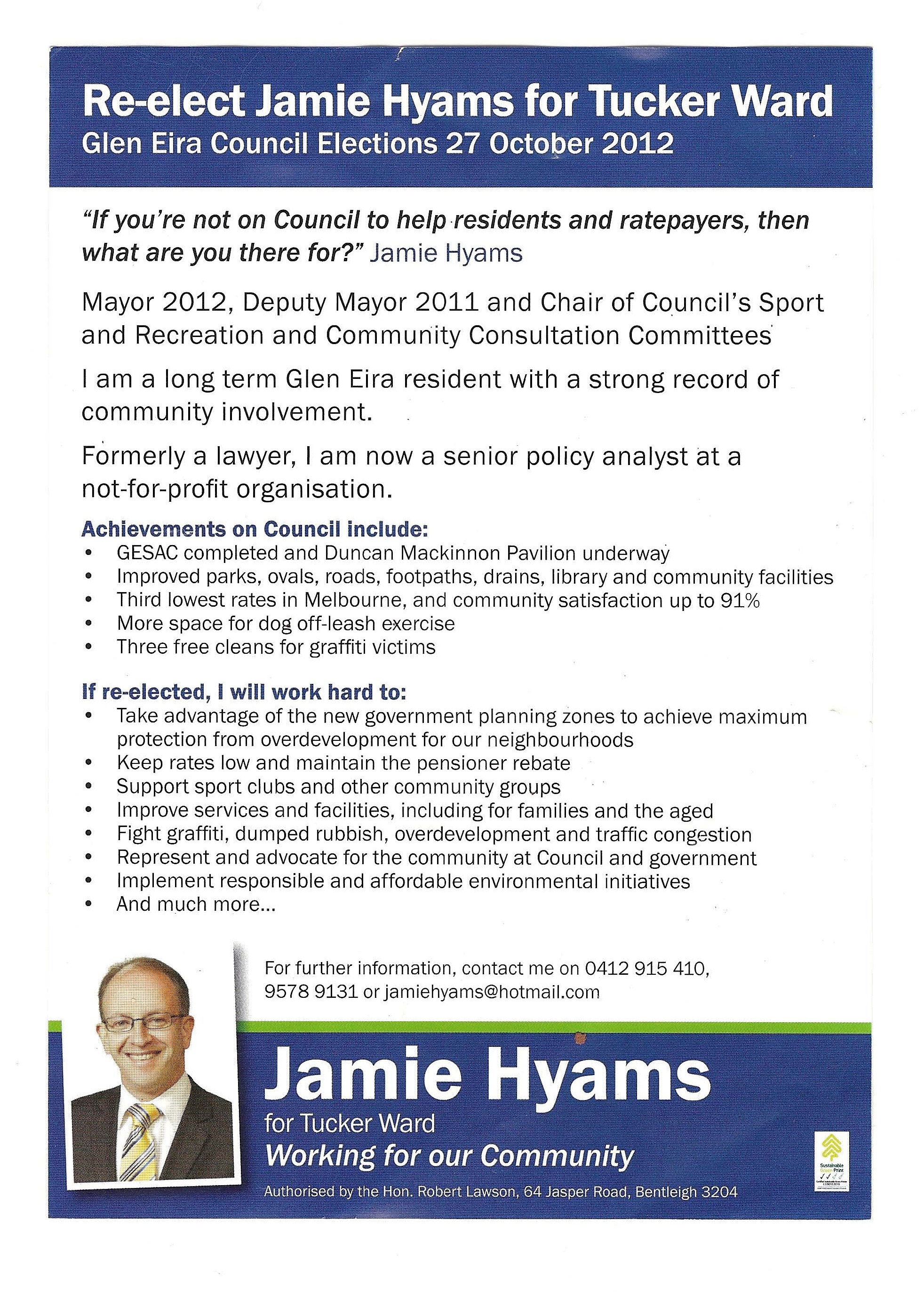
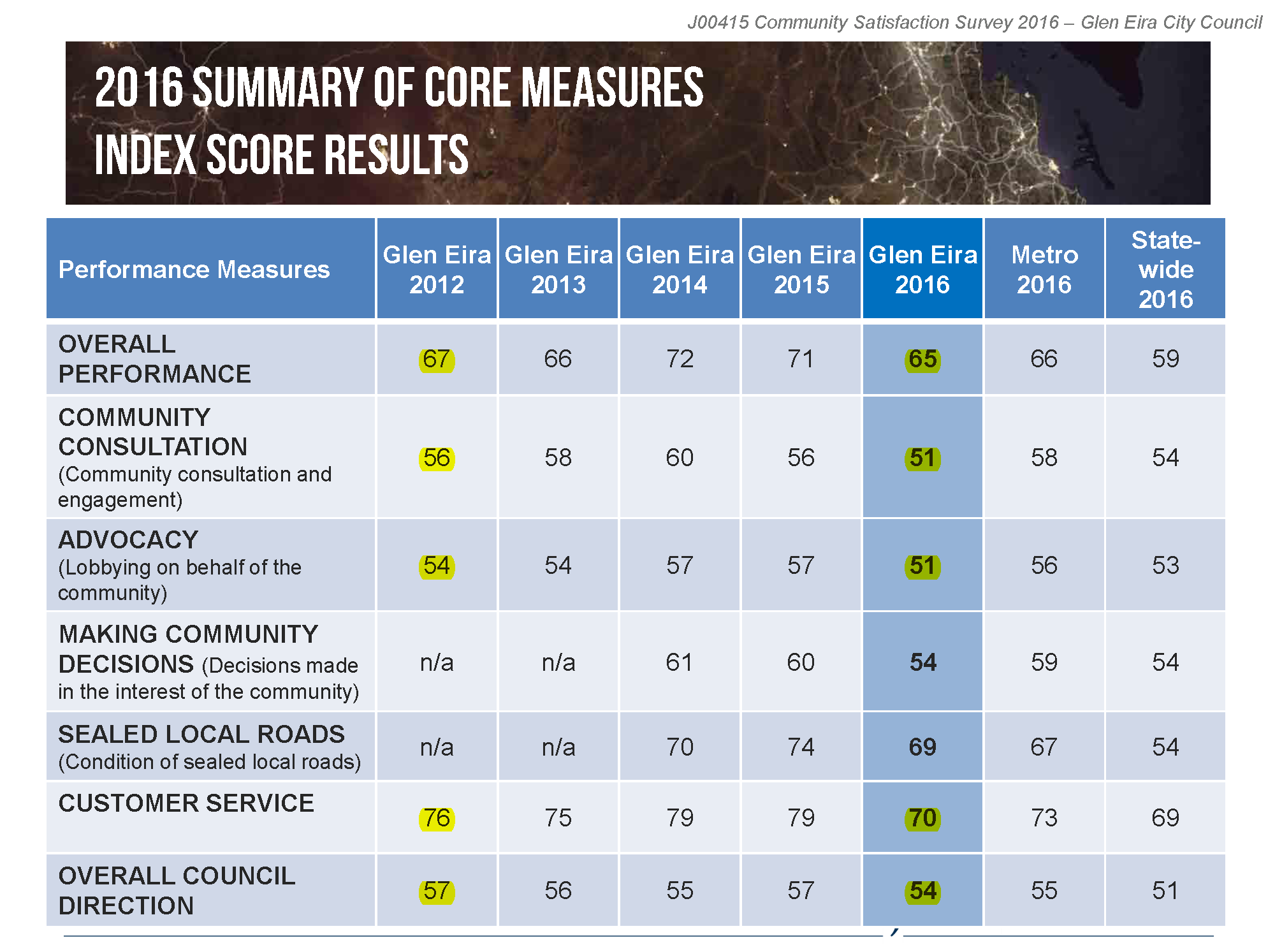
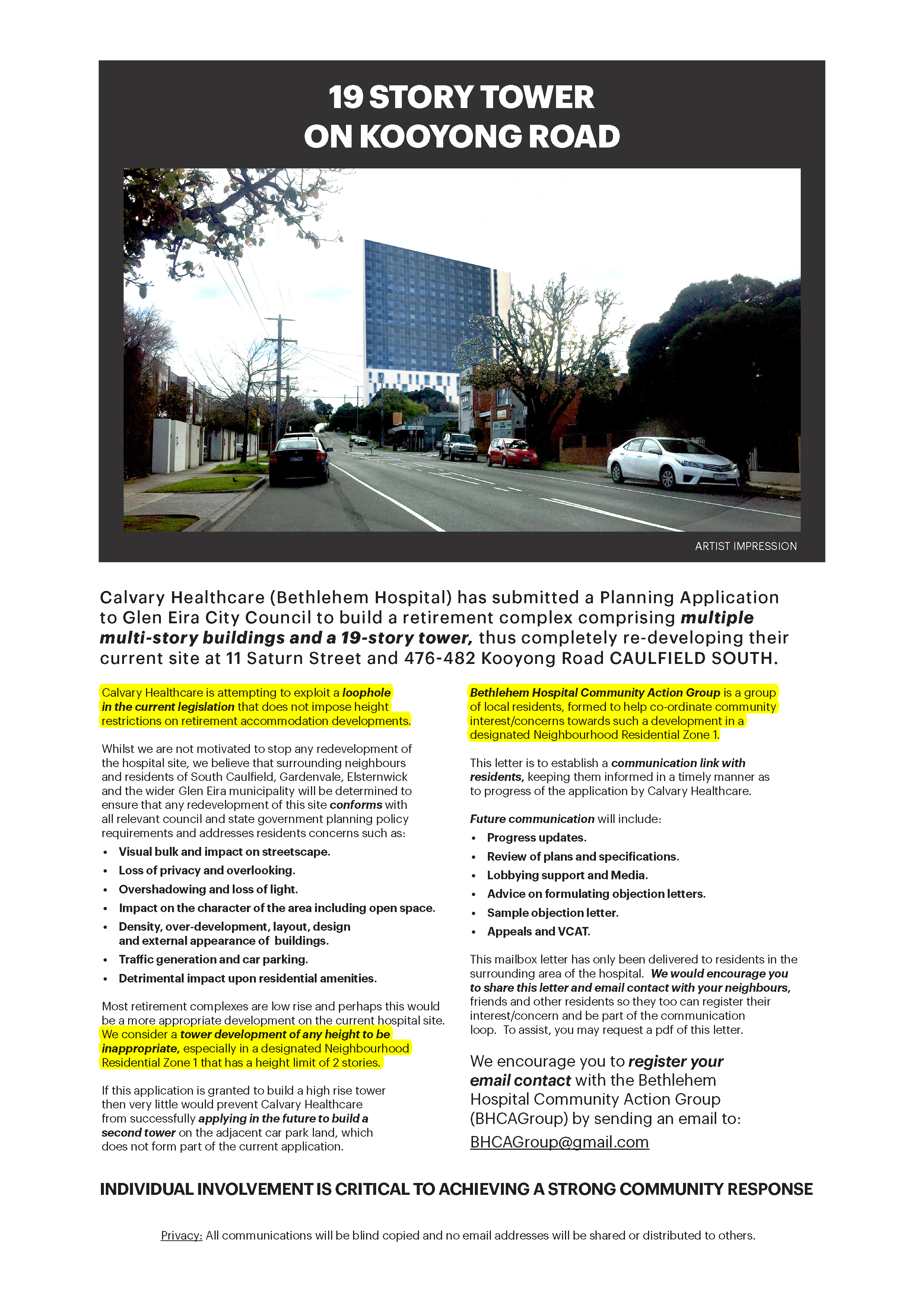
img001Scanned Image 122670000-1Pages from Community-Satisfaction-Survey-2016

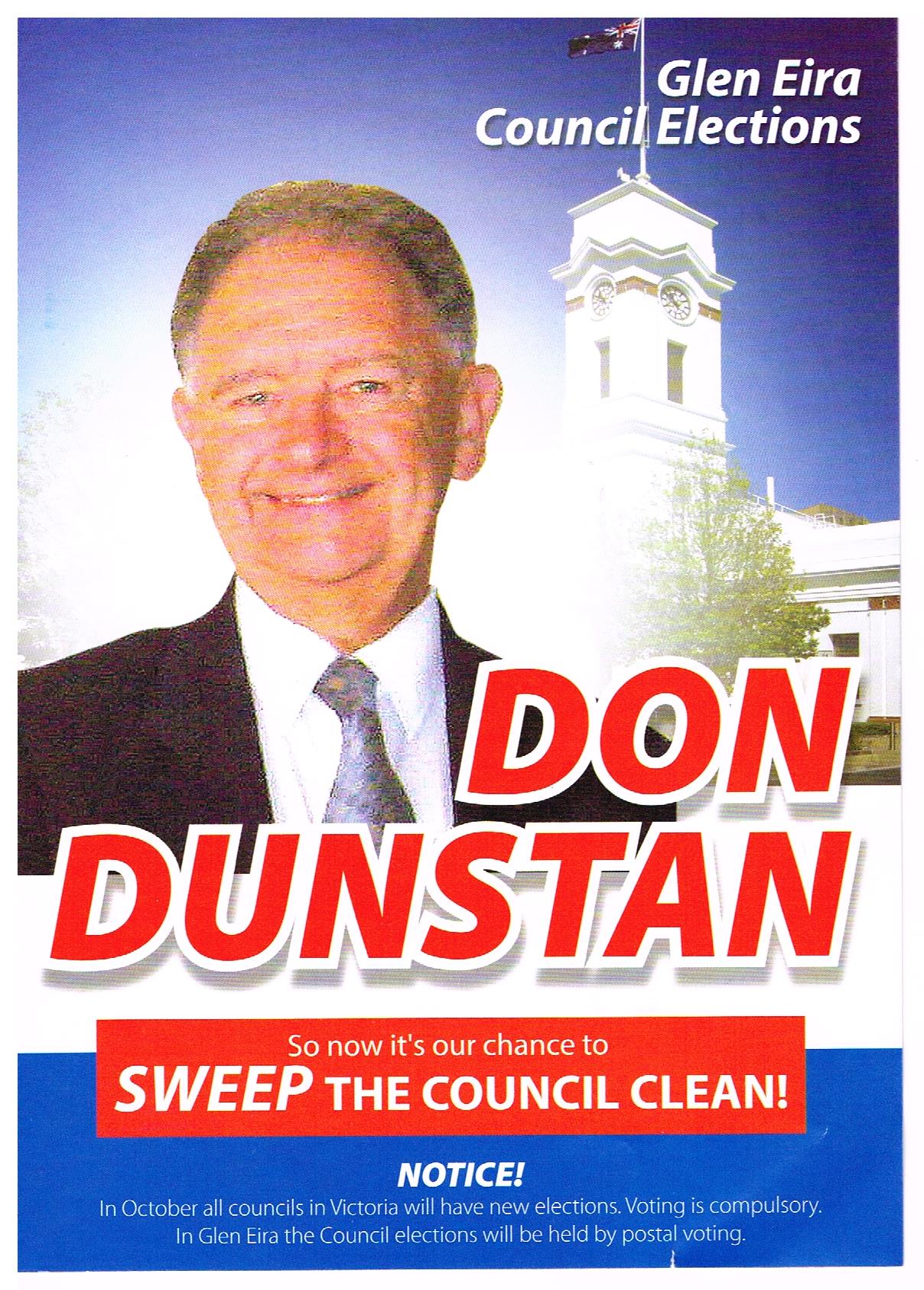
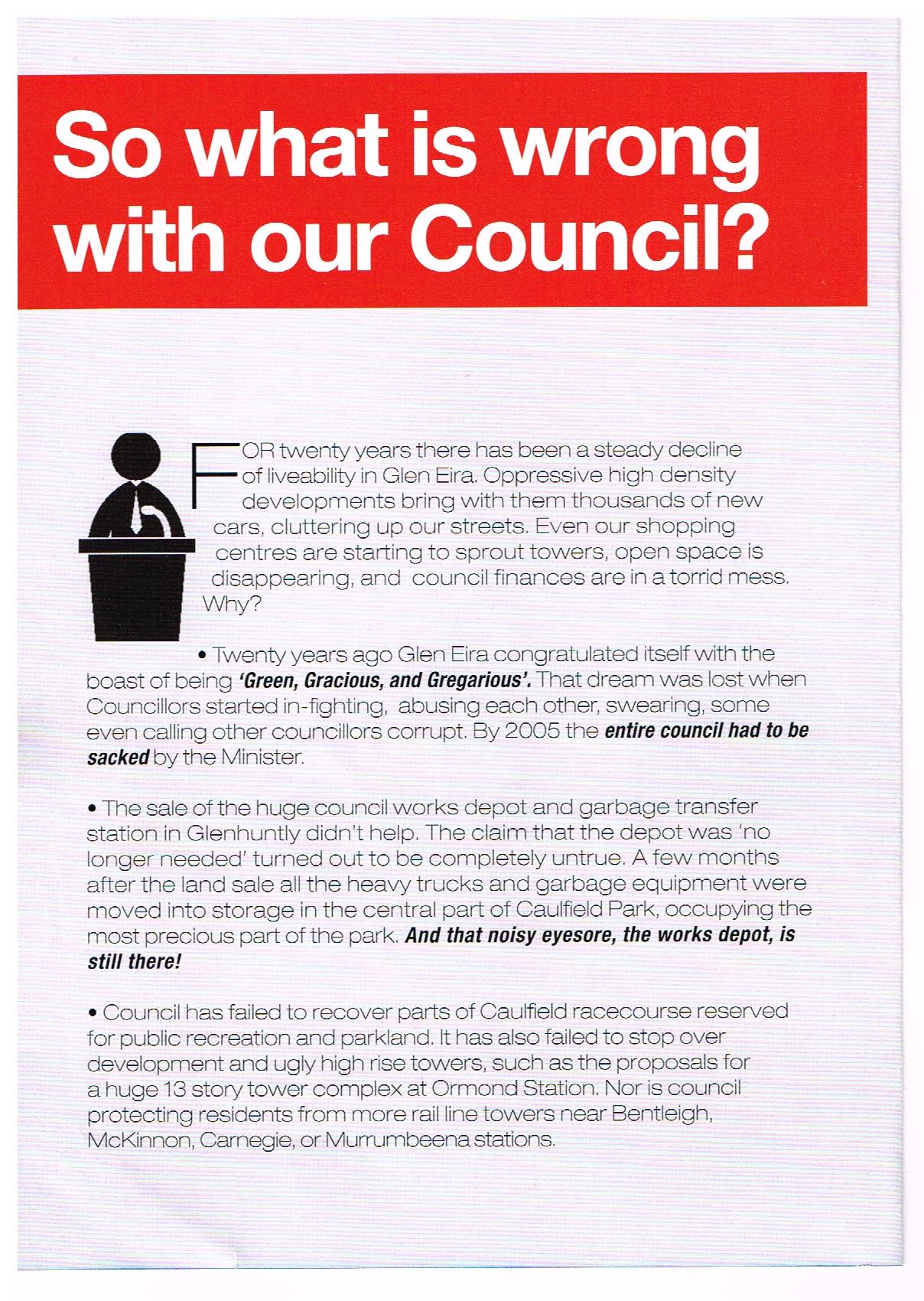
We reproduce only part of the 4 page flyer here.

p3 001

Page 1

Page 2

Page 4


Greens, independents say council fight set to be fairer after how-to-vote cards scrapped

Megan Bailey, Cranbourne Leader

September 2, 2016 2:15pm

CHANGES to postal ballot packs could make council elections fairer by making it harder for hopefuls relying on dummy candidates to get votes. State politicians last week voted to ban how-to-vote cards in postal ballot packs.The move was sought by the Liberals and backed by the Nationals and Greens.

Labor voted to keep the cards in the packs earlier this year, saying removing them would increase informal voting.

The change will mean that election candidates who plan to use dummies will have to spend more money sending their preference information to voters or pay to mail out brochures for dummy candidates running on their behalf.

“This is a good move but we’re yet to hear whether the VEC have been told by the government that these will be the rules for the election,” Victorian Greens leader Greg Barber said.“We hope the government doesn’t do something dodgy to try and reinstate preferences and stooge candidates.”

Former Casey councillor Steve Beardon, who said he was now planning to run in October, said the decision was great news.“Independents have the greatest opportunity now more than ever to take control of council and return it to the people, to our communities,” he said.

Rex Flannery, who earlier in the year told Leader he felt he had no choice but to use dummy candidates in this election, said it would even the playing field for independents. “Four years ago when I ran in the Springfield Ward, I was subjected to eight candidates out of eleven placing myself at the bottom of the ballot paper,” he said. “This will make way for fewer dummy candidates running and give all independents a fairer chance of winning. “Only those candidates who want a chance to become a councillor will publish a brochure to send out to the residents and they will see who the real candidates are.”

Cr Gary Rowe, who will stand for election this year, said the decision may stop the manipulation of the election process.“There will still be “dummies” running in every ward but hopefully fewer of them,” he said. “They can be identified by lack of a genuine campaign, checking the flow of preferences and where they end up.“The ‘real’ candidate is the ultimate beneficiary of the preference flow.”

Monash councillor Geoff Lake said changes to how-to-vote cards were ‘overwhelmingly opposed’ by councils.  “If the opposition consulted councils, like the government recently did on this very issue, they would be aware that the overwhelming majority of the local government sector opposed this change,” he said. “Voters who are used to receiving a how to vote card whenever they vote are now going to be on their own when voting at these elections — in some situations with more than 20 boxes to number.”

Source: http://www.heraldsun.com.au/leader/south-east/greens-independents-say-council-fight-set-to-be-fairer-after-howtovote-cards-scrapped/news-story/ba230ecff55d88bf39bbdb56b38031df

COMMENT

We welcome the absence of How-toVote cards in the election packs sent out to residents. This will not remove dummy candidates  but it will ensure that it makes it that much more difficult for votes to be steered and manipulated in a specific direction.

The Leader article however is not 100% correct. Those councils undertaking attendance voting will still be permitted to hand out How-to-Vote cards in their election packs. Glen Eira has opted for postal voting.

Below we feature part of the ‘application’ process that candidates have to fill out. Question 4 is basically useless in that it asks candidates if they are ‘endorsed’ by any political party. Given that only the Greens officially ‘endorse’ candidates it reveals nothing about the candidates political leanings, nor does it reveal if they happen to be a member of either the Libs or Labor. When the flyers start arriving in letter boxes we urge all residents to carefully scrutinise candidates’ preferences.

Q'naire-pt2


ESAKOFF: began by asking Torres to explain the ‘differences in the recommendations’ for Bentleigh and Carnegie.

TORRES: said that the ‘centres are different’ in ‘physical characteristics’ – ie Bentleigh is ‘east-west running linear’ precinct and Carnegie is ‘north -south’ centre ‘that is concentrated in the middle’. This ‘leads to different considerations especially in terms of shadowing’ and in Carnegie ‘commercial properties shadow each other’ but in Bentleigh the shadowing is on homes. Plus ‘the scale of development’ is ‘different’ which ‘leads to this different treatment’.

ESAKOFF: said she wouldn’t repeat what councillors had already said about ‘mandatory’ versus ‘discretionary’. Went over the consultation meetings for the Planning Scheme Review and highlighted – ‘amenity’, ‘traffic’, ‘visual bulk’, ‘congestion’, etc. Because ‘it will take some time to go through’ with structure planning, that’s why council is ‘asking for’ the interim controls. The zones ‘are currently being reviewed by the State Government’ so ‘until we are informed of that outcome’ they need to work ‘accordingly and that’s why we’re starting here’ even though she thinks that ‘it is the impact on those residential zones which is the most concern’. Repeated that for outside the major roads, ‘we need to see what the government does in those’ areas. ‘As I understand it’ council will be ‘looking at schedules to preserve those’ areas ‘better’ and ‘some further work at transitioning from zone to zone’. The interim controls ‘will give us some time to work through in greater detail’. Other councils ‘sometimes failing in their bid’ to have mandatory heights such as in Mentone who wanted 4 storey mandatory but the Minister made this discretionary, ‘they have already started receiving applications for 6 storeys’ and ‘that seems to be what we will have to expect’. Boroondara did have mandatory but ‘those have actually been overturned’ in the main activity centres. Said she was ‘hopeful’ and ultimately ‘moving along to other areas of Glen Eira that do need to be addressed’.

LIPSHUTZ: stated that ‘every councillor’ has ‘had concerns about height limits throughout our municipality’. Years ago 3 storey buildings ‘were too high’ but now it’s 6, 7 and 8 and ‘because we don’t have height limits’ and ‘the interpretation by VCAT has changed’ and they are ‘allowing buildings to go up which do not accord with what we and residents want’. ‘Politics is the art of the possible’ so ‘it’s not what’s right, what’s best’ but ‘what is actually attainable’. Said he would ‘love’ to see limits ‘across the board but realistically that’s not going to happen’. Said he saw an email from a resident who had written that if councillors ‘really cared’ they would ‘go for mandatory’ height limits. ‘We do care’ and we’re doing ‘this because (all mandatory) is not obtainable’. ‘It’s a huge risk’. The Minister could agree with mandatory ‘but realistically I don’t think that’s going to happen’. The Minister could also say ‘I”m rejecting it all; go back to the drawing board and start all over again’ or all discretionary. ‘We have to turn our mind to what we see as important’ and ‘we have a better chance of getting this’ than getting ‘nothing’. This is ‘interim’ so he hopes that ‘in two years time’ they will have done their ‘reasonable’ structure plans and this will enable them to ‘go to the Minister’ and say ‘some of the discretionary height limits should now be mandatory because of our research’.  ‘I would rather see something than nothing’ and this ‘plan is likely to be accepted’. ‘If we go the other way which is certainly the popular way to go’ then councillors would be ‘popular’ but it ‘isn’t the attainable way to go’.  As councillors ‘we have to ensure that we do the best for the city’ and ‘residents’.

LOBO: ‘we have rattled our residents with all the zones’. The forums let councillors hear ‘loud and clear’ how they are ‘destroyed’ and how their homes ‘have been taken by these residential zones’. There’s also the ‘ripple effect’ from the State Government’s ‘directives on parking’ and there’s the infrastructure ‘which will obviously have to be replaced’ and end up as ‘increasing rates’. One resident was so angry ‘he kept me for 2 hours in his house’ and told him ‘this is not the way to insult our intelligence’. ‘If we want to settle the anxiety of the residents’ then there shouldn’t be discretionary height limits. With discretionary then ‘vcat can do the opposite’. ‘This is not a solution’.

PILLING: thought that ‘we’re all on the same page here wanting the best possible protection’ but council needs to put the ‘strongest case forward’ and the ‘most likely’ to get approved and ‘then work towards getting even stronger controls’. According to the ‘best advice’ the option is to go for a ‘targetted approach’ which ‘gives full justification for the mandatory areas’ instead of doing a ‘blanket approach’. The north sides of both Carnegie and Bentleigh ‘do have car parks’ so their impact on residential zones is limited. Council is ‘calling for what residents have been asking for’. Thought that ‘we are addressing’ resident concerns and ‘doing it in a measured way’. As for what Lobo has said, he attended many of the forums and council is addressing what residents wanted especially about the southern sides of Neerim and Centre Roads. ‘We are listening to the community’.

MOTION PUT AND CARRIED

VOTING FOR: PILLING, LIPSHUTZ, HYAMS, ESAKOFF, HO, DELAHUNTY, SOUNNESS

VOTING AGAINST: MAGEE, LOBO.


COMMENTS

  • If Lipshutz is, and was, so concerned about height limits in Glen Eira, then perhaps he can explain why on on a 12 storey application and 173 units he espoused the following (dates are from our posts) – Went on to ask ‘why is 12 storeys wrong’? Agreed that there would be an impact on traffic though but that would happen regardless of whether it was 8 storeys or 12 storeys. Further, this is a ‘high quality building’ and not cheap and nasty. The area is mainly commercial/industrial and there’s nothing really nice about it and this would ‘improve the area’. If the application was for anywhere else he would support the alternate motion but not this time. “I see nothing wrong with this building in this particular site”. (13/11/2012).
  • Contradictions abound. Lipshutz says that the ‘research’ will be done in the next two years for the structure plans. Pilling says that council’s ‘targetted approach’ of only partially mandatory heights will have ‘full justification’. Thus has ‘research’ really been done already? Or has bugger all been done over the past 12 years and this is simply buying council time whilst fulfilling Wynne’s orders? Or has council via the back door already had confirmation that this will get through so no need to do all the hard yakka?
  • Esakoff like so many others fails to reveal the full truth. Boroondara gained mandatory height limits for 31 of its shopping areas. This included 28 ‘neighbourhood centres’ strips and 3 main commercial strips in the major activity centres. Wynne then did remove the mandatory height limits on the 3 major shopping strips but Boroondara has kept its three storey maximum in 28 neighbourhood centres. Further, because Boroondara had done its work there was ONE AMENDMENT which covered everything. In Glen Eira we face the prospect of 20 years work before all our 10 neighbourhood centres are protected.
  • The old tactics of fear dominate. Amazing how other councils refuse to wait and implement their own policies well before the State Government gets around to it – (ie Water Sensitive Urban Design) and parts of Moreland’s Residential Code. Surely it is time that instead of saying that things are ‘unattainable’ that council is prepared to have a go? Other councils do!
  • Finally, where is Ho on this vital issue? Why his silence? In fact, Ho uttered approximately 50 words in the entire council meeting! We guess that his developer interests might make his contribution(s) somewhat suspect?

Contact request W_image2

Pilling moved motion to accept recommendations as printed. Sounness seconded.

PILLING: started off by going through the various height limits proposed in both amendments. Then said that this ‘came about’ because of the ‘extended consultation’ and how council ‘adopted’ residents views at last council meeting. Plus the motion to apply to the Minister. Claimed that the current motion ‘sets out’ what council ‘hopes to achieve’ via the interim height controls ‘while we do the work of the workplan‘. Called it a ‘targetted approach‘ and that council would ‘advocate strongly’ that the areas abutting residential zones ‘need more protection’. ‘We need to have more controls’ in those areas because they are the ‘most vulnerable’. The Minister has said that ‘mandatory’ height limits in commercial zones ‘will only be given in exceptional circumstances’ and council believes that ‘what we are doing tonight’ has ‘exceptional circumstances’. Said that ‘it is important that we do the work’ and in ‘putting in our reasons to the Minister which are quite reasonable’ and this ‘allows us in the interim to do the work’. Thought that ‘this addresses’ community concerns about ‘what will happen in the next couple of years’ and that this is a ‘good balance’ between ‘putting in some real protection’ and not putting in something that ‘will be rejected’.

SOUNNESS:  stated that this ‘is a contentious issue’ for people and that they want ‘more security’. Council can ask for measures and then the Department and the Minister will make their responses. Fearful that the two areas (Bentleigh/Carnegie) amendments will be rejected because ‘not founded with sufficient cause‘. Other councils have applied and they ‘haven’t been successful’. He thinks that ‘having a relatively simple application’ over ‘part of Glen Eira’s development areas and not all of it’ will be ‘more sympathetically received by the Minister’. If ‘we were asking for something more’ then the chances of rejections are greater. Said ‘we don’t know until we apply’ but it’s better to aim for ‘what we can get’ and what ‘the community wants’. ‘There does need to be some development taking place in Glen Eira’ and council wants to be ‘able to control that’ but like with the Level Crossings Removal Authority, they do what they want and ‘council doesn’t have oversight over everything’.  Saw this as a ‘fairly good attempt at getting a positive outcome’.

MAGEE: said that councillors had ‘sat around this table’ for 8 years and others 4 and there are two words that he has ‘come to dislike’ – ‘discretionary’ and ‘plan’. Said he’s ‘never seen’ either come ‘back in our favour’ from VCAT. When the VCAT member sees the word ‘discretionary’ then he says ‘great, leave it up to me’ and the same for plan, since ‘this isn’t law – it’s just a guide’. Council can only control things by ‘implementing mandatory height limits’ as they did with the new zones. ‘I’m more than happy with the 5 storey area’ but he is ‘unhappy with anything that is discretionary’ and gave the example of the 13 storeys around the Ormond Station where the ‘government has already made the determination that 13 storeys is acceptable’. With discretionary ‘we are leaving ourselves open to getting something we just don’t want’. These are interim while they do the structure planning and he’s not a ‘great fan of structure plans’ although they do ‘show where controls can be brought in’ and it’s just ‘what you think should be there going into the future’. For the Carnegie amendment ‘I don’t mind the 7 storeys’ but ‘again it’s got that word discretionary’. ‘There’s no win, there’s no gain for us having discretionary height limits’. They need mandatory especially when in ‘2 years time we’ve seen what the structure plan looks like’. The Minister has ‘asked us’ to do this not because ‘he thinks we are doing a bad job but because we actually wrote to him, asking could we do it’. Claimed council has got the ‘support’ of Staikos, the department and the Minister. Although there are car parks behind some of the discretionary 5 storeys in Bentleigh, who’s to say that this doesn’t become ‘6 or 8 storeys’ when applications come in. He again ‘cites what’s happening at Ormond’ where the government has ‘said that 13 storeys is acceptable’. So if it’s ‘acceptable there’ then Centre Road is ‘only a couple of hundred metres away’. He is worried that during the 2 years taken to do the structure plans ‘we’ve already got the sevens and eight’ storeys and ‘that becomes the pre-requisite’.  They’ve got 2 years to do the structure plans which will ‘point us in the right direction’ for the next 10 or 20 years and ‘council has always done this’ since they were ‘one of the first to actually have different zones’ and that’s ‘why it was so easy to transfer over’ to the new zones. ‘Mandatory is the protection we need’ and ‘I believe we have the will of the Minister’ and ‘we’ve got a lot of people on our side’. Said he is a ‘firm believer in seize the moment. If the opportunity arises, grab it’.

HYAMS: wanted to go through some ‘history’ since people are asking ‘why’ council is only doing structure plans now and ‘not earlier’. Stated that they had Jeff Akehurst and he was the ‘doyen of town planning’ and he got the first ‘town planner of the year’. ‘So when Jeff said something about town planning, we listened’. Back then you ‘couldn’t get mandatory height limits’ but only discretionary and Akehurst told them that ‘discretionary height limits tended to be in those days’ ‘to act as a minimum’. That meant with 4 storey discretionary ‘they would start at 4 storeys and then go up’ and that council ‘had policies that would protect us from that sort of thing’. Claimed that ‘that worked well until recently’ when VCAT ‘changed its interpretation’ and ‘all of a sudden our policies didn’t work so well’. The policies of council hasn’t changed but ‘VCAT’s interpretation’ of them. Since many other councils have got height limits, and the other policies like ‘overshadowing and setbacks’ don’t count. Council then ‘found ourselves in a position where we had to play catchup’. Claimed that ‘about a year ago’ as a result of ‘various VCAT decision, I and others’ thought that council has to now do something about it and ‘that’s why we are where we are’. Thus even though ‘discretionary may not be so great’ it is still ‘better than the alternative’. Strcuture planning ‘takes a long time’ because ‘you need to provide justification’ for the plan. So there is these interim height limits but ‘anything we do as a council’ still needs government ‘approval’. And council has to ‘prove to the government that we have the capacity to cater for the population growth’. Council can’t say that there are other councils which can handle this and that ‘we’re not going to’. Said that ‘I would like to put mandatory protection over all these areas as well’ but that’s only allowed in ‘certain circumstances’. Read from the officer’s report about the ‘exceptional circumstances’. Spoke about Mentone’s mandatory heights and how they ‘were peeled back by the Minister’. Hoped that council ‘could get mandatory’ height limits for those commercial areas that backed onto Neighbourhood Residential zones. Went through what the amendments asked for. Said that Carnegie is ‘less linear, has more development’ is it is therefore ‘justified’ that they have 7 storeys. The amendments also include other things apart from height such as ‘streetscape’, ‘neighbourhood character and amenity and so on’. He would prefer mandatory but ‘there’s no point in asking for what we won’t get’. If they ask for everything to be mandatory ‘without discerning where we have a strong case and don’t ‘ then the Minister ‘is likely to come back and say I’ll give you the height limits but’ they will be ‘all discretionary’. Said ‘I firmly believe’ that council will get ‘a better outcome’ by putting the case that ‘this area is special’ so it should be mandatory and ‘this other area we can accept discretionary’. ‘If we ask for all mandatory we don’t have the opportunity to put that case’. Plus the minister ‘might throw it out all together’ because he might think ‘we are being unreasonable and tell us to do it all again’.

COMMENT

Wouldn’t it be wonderful if we could have councillors who stood up and revealed the truth, the whole truth and nothing but the truth? That of course requires an admission that Council’s planning over the years has been abysmal, and represents a dereliction of duty. Further it would tell residents that the zones are all wrong and that council sat back and did nothing, even when it knew things were going belly-up for residents over the past decade.

Things to bear in mind:

  • Akehurst might have been the ‘doyen’ of planners – but did councillors ask for ‘evidence’ that their planning tools were working? When did they last ask? What answers were given? How many of them have even read the planning scheme?
  • Could we please stop resorting to the ‘fear tactics’ that have become endemic in this council – first warning off objectors from going to VCAT, and now the Minister has become the bogeyman. Of course, any chance of ‘success’ relies on the contents of council’s planning scheme and any ‘strategic justification’ that has been put together. Recent history suggests that both are sub-standard.
  • Hyams also neglects to include the basic point that with the introduction of the zones, Council did have the opportunity to have mandatory height limits on Mixed Use Zones. They didn’t of course!
  • And what in the end is the real ‘council vision’ except to have more and more development coming into Glen Eira via the zones and prior to that the carving up of the municipality willy-nilly into housing diversity and minimal change?
  • What on earth have our planners been doing for the past 8 months when the order from Wynne came in December 2015? The statistics and analyses of Bentleigh and Carnegie and Elsternwick should already have been well under way- besides, why spend a fortune on computer systems if they can’t provide the necessary data at the push of a button?
  • Wynne did tell council to pull its finger out because it has had a deplorable history in planning and is so out of kilter with every other municipality that he was forced to act!

Finally we wish to comment on something we have written on peviously. VCAT HAS NOT CHANGED ITS INTERPRETATION AS HYAMS WOULD HAVE US BELIEVE. We could literally pinpoint hundreds of VCAT decisions prior to 2013 and even as far back as 2005/6, where the decisions in favour of permits refused by council could have been written yesterday by the VCAT member. The reason is clear: permits granted have had absolutely nothing to do with VCAT changing its interpretations and EVERYTHING TO DO WITH COUNCIL’S OWN PLANNING SCHEME. Below are just two more examples of this – both from 2006 and both concerning developments in the so-called Urban Villages. We challenge anyone to indicate how these comments are any different to what VCAT members are saying today!

it was put to me that the proposal is an over-development of the site in being too high and/or out of character with the locality, or alternatively that the proposal will have unacceptable amenity impacts on neighbouring occupants. The critical issue in this opposition was clearly the acceptability of having a four level building compared to a three level one. I conducted a view of the site and locality after the hearing.
3 In summary, subject to a proviso listed below, I am satisfied that the proposed four storey building can comfortably sit on the site. I rely here on the strong policy support for the higher density residential use of the site, the context of other 2/3 storey existing buildings nearby, the quality of the design, and my view that any amenity impacts on the neighbours is within acceptable parameters. While I can see his arguments, I am not convinced that it would be a good planning outcome to shave one storey off the proposal as put to me by Mr Fleming.

It is clear to me that Elsternwick Village is one of a relatively few places in the Glen Eira municipality where the Planning Scheme is actively encouraging a bolder approach to new residential development. That is, in light of the reality that the Planning Scheme classifies much of Glen Eira as areas where minimal or possibly moderate residential change is encouraged, it is very significant that Elsternwick Village is one of relatively few locations where the Planning Scheme sends a very different message. It follows that if Glen Eira is to play a legitimate role in accommodating the population growth of Melbourne as per Melbourne 2030 in the face of these constraints on residential development in much of the Glen Eira “residential hinterland”, this arrangement only makes planning sense if urban village locations in the municipality such as Elsternwick make a major contribution to urban consolidation.
36 In this important overall policy context, I have highlighted above those sections of clause 22.05 (Urban Villages Policy) and the draft “Design Vision for Elsternwick” document which seem most applicable here. The key text from these documents send a clear message that higher density residential development is being encouraged in Elsternwick Village.
37 In summary, there is strong policy support for robust residential development in this part of Elsternwick Village, rather than an inappropriately timid approach. This policy situation reinforces the general “rule of thumb” that residents who live in or near an activity centre such as this cannot just expect the built form character in this locality to remain static, and also cannot expect the same levels of residential amenity as persons living in the “residential hinterland”. http://www.austlii.edu.au/au/cases/vic/VCAT/2006/83.html (2006)

As indicated earlier, the Bentleigh shopping centre has been identified as the focal point of 1 of the 3 “urban villages” identified by the council. The MSS states that urban villages are based around the major shopping centres within the municipality. Further, the MSS states that the urban villages are the places where smaller scale office development and higher density housing is encouraged both within and around the commercial zoning.[12] The MSS specifically contemplates that the “Urban Villages Policy” will be used to “promote higher development densities”.
47 The “Urban Villages Policy” at clause 22.05 then goes on to say that these areas are the “preferred location for the municipality’s highest densities of residential development”.

Under the policy, the site is located within precinct 2 – “The Retail Hub”. Outcomes envisaged for this area include the strengthening of retail activity at ground level; offices and residential uses to be located on upper floors and buildings along Centre Road to increase in height. We acknowledge that “parameters” for increased height with respect to matters such as the impacts of shadows, building articulation and the provision of a transition with the surrounding residential area; however, the policy makes a clear statement that increases in building height are to be expected.
49 We acknowledge that the policies and strategies within the scheme call for built form outcomes that respond to the context and character of the area. However, in our view, there can be no escaping the fact that the thrust of the strategic approach advanced by Melbourne 2030 and supported by the council’s own policies is to encourage intense redevelopment and the highest densities in and around the Major Activity Centres and/or Urban Villages.
50 Increases in building height are an inevitable consequence if the intensity of development is to be increased in a particular area and this is acknowledged in the Urban Villages Policy.

We appreciate that the height of the proposed building represents a reasonably significant departure from 1 and 2 storey height buildings that have traditionally been found along Centre Road. However, we do not consider that the assessment of whether the height of the proposed building is acceptable or “fits in” can be solely based on a comparison with what now exists. To do so would present a somewhat confusing scenario whereby on the one hand, the scheme’s policies encourage higher densities, more intense development and therefore “change”; only for this to be stifled by the requirement that new development must “fit in” with what now exists

Part 2 will follow shortly!

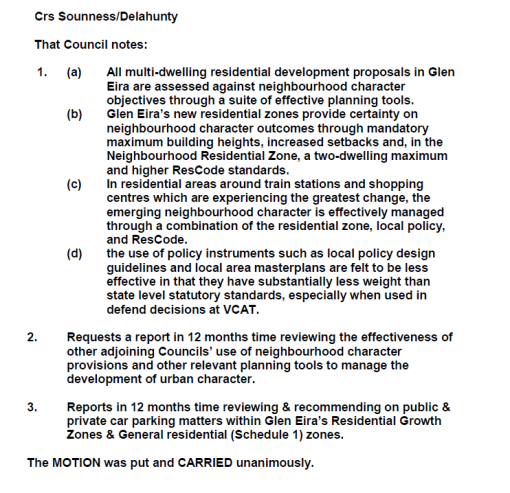
PS – We thought it worthwhile to remind readers of the following resolution from the minutes of May 2015 – just a little over a year ago! Please note that the requested reports ‘in 12 months time’ did eventually come up and councillors again voted in their usual manner – let’s do nothing! Thus, when Hyams opens his mouth and starts telling the gallery that he and others were becoming ‘concerned’ about the zones and VCAT, about a ‘year ago’, it is even more remarkable that he could vote for a motion that mandates the ‘do nothing approach’ and how wonderful the existing planning policies are! The gulf between words and action are greater than the Grand Canyon!may 19 2015
A quick report on tonight’s marathon council meeting:

  • Development applications went according to officer recommendations
  • Hard copy again different to online agenda in terms of the in camera item – more monumental stuff ups regarding potential purchase of open space with no explanation or apology offered
  • Amendments C147/8 on interim height limits were passed with Magee and Lobo voting against on the basis that everything should be mandatory. Arguments (if they could be called that!) put up by Lipshutz, Hyams, Esakoff, and Pilling, were once more based on ‘trust us, we know what we are doing because if we went for all mandatory, then the Minister would be likely to make it all discretionary’.
  • Caulfield Racecourse another monumental ‘let’s wait for the Minister to act, rather than have council reps resign now’ because there is a danger here in what the MRC could do!
  • Public question time reminiscent of kindergarten playtime, where the CEO asked questioners to put up their hands if they were present in the gallery. By this stage, after 2 hours of councillor waffle and woeful debate, most people had left and who could blame them given the fact that most of these councillors simply like the sound of their own voices and the quality of ‘debate’ is totally underwhelming! Please remember that if the questioner was not present then the question nor answer was read out and neither will this appear in the minutes. Thus the wider community has no way of knowing what the issues are, nor council’s responses. This is called open, accountable and transparent government – for which we’ve got Lipshutz, Hyams, Esakoff, Pilling, Ho to thank!
  • Magee being Magee – a useless request for a report on the Claire St VCAT decision. Asking what recourse council has – ie whether an appeal to the Supreme Court has any merit? No doubt the eventual report will come back and state that there is no grounding in law for an appeal and that it would cost hundreds of thousands. We suggest that the cheaper and quicker remedy would be to change the zones, which after all is what the community has been demanding for ages!

Full reports in the coming days.