Councillor Performance


This is a first for Glen Eira Debates in that for this particular post we only feature the final summation by Lipshutz on the tree register issue – the report on the full ‘debate’ will ensue. We simply ask readers to contemplate the following words and to pass their own judgement.

LIPSHUTZ: Said that on Heritage ‘how many times has it come back to council because we don’t necessarily agree with the Heritage advisor?’ This is like ‘someone coming along and saying that tree is significant’. Then someone will appeal that decision and then it will be ‘red tape and a bureaucratic issue’. Whether something is a significant tree ‘is in the eyes of the beholder’. As an analogy Lipshutz said that clients going to court are told ‘to settle because it is in your control’. When the judge decides ‘you’re gambling’ as to the decision. ‘This is exactly the same thing here’. People ‘gamble on somebody saying this is not a significant tree’. Stated that those claiming that a tree is significant won’t be the owner of the tree but a neighbour. ‘It’s a matter of property rights’. Agreed that ‘trees do add a great deal to the community’. Hyams has spoken about asking the community what they think on the issue but that’s a ‘very cute argument because we all know’ that when you ‘consult with people that ‘the vast majority’ ‘don’t give their view’ and it’s only those people ‘who have a strong view about the issue’. Those who give their view are the voters and it’s those people who ‘will in fact say yes or no’. Going to community consultation means that ‘you will get’ the views of ‘activists and who have strong views’ and the ‘vast silent majority don’t care’. And ‘they don’t care’ because they are ‘satisfied’ about the ‘way council operates’.

Developers odds-on to win at planning tribunal

Date:  March 21, 2015 – 6:28AM

Jason Dowling

Councils have almost become redundant in the decision-making process for controversial residential developments, according to a RMIT University study.

The house always wins, or in the case of Victoria’s planning tribunal – big housing developments nearly always win, new research indicates.

Councils have almost become redundant in the decision-making process for controversial residential developments in Melbourne’s suburbs, according to a RMIT University analysis of permit applications.

When councillors refused a permit, almost nine out of 10 permit applicants went to the Victorian Civil and Administrative Tribunal and in 73 per cent of cases the council’s decision was set aside and the permit granted.

When councillors supported a development and residents appealed to the tribunal, the tribunal upheld the council’s approval in 85 per cent of cases, the report by RMIT planning researchers Joe Hurley and Brendan McRae showed.

Once councils and the state government set strategic planning rules for an area, the power of a council to influence contentious individual planning applications diminishes considerably, an extract of the draft report indicates.

Although councils and third-party objectors, such as residents, may be able to slow or modify a development – often at a cost of millions of dollars to the project – they are rarely successful in stopping it.

The researchers looked at 759 development applications across the 31 metropolitan Melbourne councils in 2011 using minutes from council meetings, with the full report expected to be published later this year.

The research focused on new residential development applications considered by councillors to highlight decisions in the context of urban consolidation policy.

The report, Competing objectives, interests and politics in development assessment, said in contentious planning cases the tribunal has become an entrenched part of the application process and the tribunal offered developers “another spin of the wheel” at attractive odds.

It said given the number of cases where council planning officer recommendations were overturned, “[the tribunal] is going beyond providing oversight on the political influence of councillors”.

Dr Hurley said planning law was often not black and white and included a level of discretion that assisted both developers and councils to deliver planning outcomes tailored to individual sites and the character of an area.

The research indicated a “protectionist impulse of local-level elected representatives and the role of the tribunal in making decisions that significantly diminish this protectionist influence”.

“The system at the moment is doing a pretty good job of papering over the fact that local representative decision-making is really being circumvented,” Dr Hurley said.

“For contentious issues, they are effectively withdrawing that delegation from the local level of government,” he said.

Going to Victoria’s planning tribunal is not cheap.

Another report by Dr Hurley showed a tribunal case can cost developers several millions dollars and residents more than $100,000.

Asher Judah from the Property Council said the report indicated the planning tribunal was doing its job and councils were not.

“[The tribunal’s] job is to determine points of law, in these cases, planning law,” he said.

A spokesman for Planning Minister Richard Wynne said the government was preparing legal changes so that the Victorian Civil and Administrative Tribunal must, where appropriate, take into account the extent of community opposition to permit applications.

Municipal Association of Victoria president Bill McArthur said councillors had “the complex task of considering an application in the context of the planning scheme and local planning policy, not based on councillors’ personal views, while also fairly representing community views”.

Source: http://www.theage.com.au/victoria/developers-oddson-to-win-at-planning-tribunal-20150320-1m3mrb.html

AND – http://www.theage.com.au/victoria/residents-rarely-win-says-seasoned-vcat-campaigner-20150320-1m39cz.html

Item 9.1 of the last council meeting is another example of amendments going horribly wrong for residents and wonderfully well for developers. Here again is the essential background in order for readers to accurately interpret what occurred. We also ask that special attention be paid to the ‘arguments’ of the various councillors.

  • As with the Virginia Estate amendment, this Glen Huntly Road land has a long, long history going back a number of years. It was originally zoned ‘industrial’ so an application was made to rezone the land and put an Environmental Overlay on the property. Quite coincidentally we assume, the property next door to this site also submitted an application for a ‘recycling plant’ that dealt with plastics and other toxic materials. What was quite incredible about this is that council for some time actually entertained the idea of having a recycling plant right next to future residential land and surrounded by residential land – in total breach of its planning scheme, state legislation and plain old common sense. As was stated at the time – in Glen Eira’s planning department the right hand does not know what the left hand is doing. (See: https://gleneira.wordpress.com/2012/07/31/pilling-foot-in-mouth-disease/)
  • The application for rezoning became known as Amendment C80 and also included a permit application for 5 storeys and 62 dwellings. Readers should note that the current sought after, and accepted, amendment is for 6 storeys and a whopping 117 dwellings. Thank you to the new zones!
  • The amendment went to a Planning Panel, but after much messing about, council decided to drop the development application and have the panel only consider the rezoning to Business2 zone. The introduction of the new zones which automatically changed Business zones to Commercial zones were already well known – yet council still persisted in wanting this area zoned Commercial.

Here are the most important facts:

  • The site IS NOT in council’s view a Major Activity Centre. It is on the extremity of the Glen Huntly Neighbourhood Centre and surrounded by people’s homes to a large degree – hence development should never be at this scale.
  • Rezoning to commercial, means that all control that council might have had for any developments on the site has largely been lost since Commercial zoning has practically no restrictions.
  • Council, if it had wanted to really protect its residents, should have opted for rezoning to either a Mixed Use Zone or a Residential Growth Zone – both of which, via the schedules, would have given Council and residents a far better outcome than what has now happened – ie the approval of a 6 storey development with 117 units!

Please consider what each councillor has said in what follows. It largely provides a synopsis we believe of every single thing that is wrong with planning in Glen Eira. – IE – not one single word on internal amenity; not one single statistic on traffic/parking; not one single response as to why the planning scheme itself is ignored by the recommendation and the vote!

Delahunty moved motion to accept with changes to required setbacks and increase in visitor parking. Seconded by Pilling.

DELAHUNTY: thanked residents for their ‘help in determining best use’ of the site and they provided ‘very well thought out’ arguments and reasons as to why the original application wasn’t the ‘best use of commercial space’ and not the ‘fairest use of the land’ for neighbours ‘at the back’. The final changes ‘make quite a difference’ to the development so that the ‘mix’ of commercial to residential is ‘more appropriate’. Said that the street will have ‘more intense development’ with more ‘vacant’ land close by. Thought that ‘given the zoning’ council had limited the ‘amenity impacts’ for residents and is ‘fair’. ‘Hoped that the applicant and the residents can accept that’. Said that the overshadowing argument put up by neighbours was reasonable since ‘it’s not fair’ that in certain hours their ‘backyards and frontyards are in shadow’. ‘Commended’ the motion and thought that this is where ‘sensible development needs to go’.

PILLING: ‘endorsed’ Delahunty and said that there’s a tramline, close to station, and in a Commercial zone and this is ‘where we want development to go’. Delahunty’s changes ‘do go a fair way to addressing residents’ concerns’. The setbacks are in a ‘wedding cake tier’ so would help in reducing visual impact. ‘In an ideal world’ they would prefer less height but ‘we can’t predict when things will be developed’ and they have to ‘look at each application as they come in’. Said that ‘in the future’ there would be ‘increased development’ between Grange Road and the railway line. Thought that ‘this development is in keeping with what we are expecting there’. Changes do address concerns of residents ‘but maybe not all concerns’ and overall thought that ‘it is a fair compromise in this situation’.

ESAKOFF: said she didn’t ‘like this application at all’ and ‘regardless of zoning’ the site is a neighbourhood centre, and ‘not even in the centre’ of this centre. Thought that ‘something of the size and scale of this is not appropriate’. There are only a ‘handful of properties’ in the area that ‘have an industrial or commercial type use’ and ‘outside of those properties it is residential’. Didn’t think that the conditions improve amenity for one surrounding property but ‘certainly not enough’. Although on a tramline, council isn’t ‘seeing six storeys’ along tramlines but ‘seeing it at 3’. Said that 3 ‘and even at four would be a more appropriate outcome’.

OKOTEL: supported Esakoff and thought that the conditions imposed ‘goes someway’ to ameliorating the concerns. But for this site ‘this is an overdevelopment’. To both the North and South it is a General Residential Zone so ‘we should be seeing a transition’ and the proposed 6 storeys ‘doesn’t’ support this transition. Thought that with just one building between commercial and general residential zone isn’t enough to provide the necessary transition. In terms of visual bulk, Okotel said that even the officer’s report admitted that with the setbacks, the 4th, 5th, and 6th storeys the building would still loom large. So properties from the front of Glen Huntly Road would ‘be faced with an enormous building’. Stated that a reduction in floors ‘would be appropriate so we would have that transition’.

LOBO: Called the development ‘a monstrosity’. Said that people know his views on the new zones so ‘I won’t be a broken record’. Said that Carnegie is ‘going, going, gone’. The suburb has been ‘ripped’ apart in terms of privacy, ‘devaluation of their homes’, but not a government concern even though ‘people have spent their life savings’ on their homes.

SOUNNESS: in his view the ‘reasons to refuse’ are whether it is ‘excessive in the area’, whether there is ‘sufficient transition’ to the residential areas, if it’s a ‘good use of the land’ and ‘whether it fits in with strategic objectives’.   Said he would ‘find it offensive’ it there was major overshadowing, and if the design lacked ‘character’. He would also ‘find it offensive’ if the developer hadn’t provided enough space for landscaping but he has so ‘it’s another tick’. Even though 6 storeys is ‘a large substantial building’ but with the setbacks ‘you won’t see’ it as this height. The impact for residents ‘will be much reduced’.

HYAMS: started by saying that this site is for development because it is on a ‘fairly large block’ and in a Commercial zone on ‘a tramline’. But ‘the question’ is about intensity of development. If there is a commercial zone then the greatest intensity ‘belongs in the middle of the commercial zone’ and further out it should be less. Here, it’s only commercial ‘on one side of the road’ and is opposite single storey homes, so 6 storeys and even 5 storeys ‘is too much’. He would ‘accept four storeys but nothing more’.

LIPSHUTZ: ‘concurred’ with Sounness. Said he ‘went down and had a look at the site’ and when first seeing the plans thought that 6 storeys was not on. But now with the steepled design it will ‘look like a three storey building’. Parking is ‘always’ one of his concerns and Delahunty’s conditions ‘are appropriate’. Setbacks also make it not ‘as bulky nor intrusive’. Another concern he had was overshadowing but ‘that’s been dealt with also’.

DELAHUNTY: said she ‘understood’ why other councillors might not support the application and conditions imposed. Reiterated that the overshadowing concerns that neighbours brought up at the planning conference have now been ‘dealt with’ by the conditions. With the Special Building Overlay on the property the application had to be changed and this has also been done satisfactorily. Said that she wanted to ‘touch’ on the financial statistics about homes in Carnegie. ‘Everyone wants to live in Carnegie’ and this ‘gives that dream (ie owning their own home) to more people’. Some live in ‘beautiful, beautiful suburbs’ and ‘it’s right that we share this with others’. ‘this will allow other people to live in and around Carnegie’. Said that there also hadn’t been ‘any devaluation of homes up to this point’ and wouldn’t be ‘post this point’.

MOTION PUT. OKOTEL CALLED FOR A DIVISION. VOTING FOR – DELAHUNTY, PILLING, LIPSHUTZ, SOUNNESS, MAGEE. VOTING AGAINST – ESAKOFF, HYAMS, LOBO, OKOTEL. MOTION CARRIED 5 TO 4.

Item 9.6 Virginia Park Estate

Prior to reporting on this item, some background information is vital so that readers can put the following into perspective.

  • In the past few council meetings alone, 3 proposed draft amendments have been rejected by councillors. Not one single councillor stated why this should not occur with this particular amendment. Instead there was the ad nauseum repetition of the ‘first step in the process’ etc. Past history shows that this is generally nothing more than double-speak for ultimate ‘approval’ of the amendment.
  • Not one single councillor stated that third party objection rights did not exist beyond the amendment. For all the talk about the community expressing their views (when they know absolutely nothing about the ‘detail’ of the proposed plan) is precisely what happened with the Caulfield Village fiasco. The only difference between this proposal and the Caulfield Village is that it will be 9 councillors to decide instead of the annointed 4, and the doubling at least of the number of dwellings.
  • The machinations and back room dealings over this site go back many, many years. Amendment C75, restricted residential development to only the centre of the site. Only one tiny sentence in the original officer’s report mentioned the fact that ten storeys was envisaged. Now it is proposed to make the entire site ‘suitable’ for residential. Magee claims that council and councillors were left in the dark and the Gillon letter of June 17th was asking ‘assurance’ that Council would support the amendment. Then in an email written by Andrew Newton on the 30th July 2013 to Richard Brice of the minister’s department, as an ‘inducement’ for the introduction of the new residential zones, he wrote – Viginia Park industrial estate (12 hectares): Amendment to be exhibited to rezone all to C1. Expected to be finalised next year. We have to query whether councillors knew of this ‘promise’! Needless to say, no resolution has surfaced which would support such ‘approval’. Nor is Virginia Estate mentioned in any of the Records of Assembly for this period. Again, either the records are are not an accurate representation of the topics discussed or councillors were not informed that this new upcoming amendment had received the nod of approval from the bureaucrats!
  • There has been no explanation provided, following a public question, as to why the limited constraints of Amendment C75 are now to be removed with this new amendment (ie setbacks in particular). Basically, we fear, that this is another Caulfield Village in the making and all the bluff and bluster that follows is nothing more than individual grandstanding, and ensuring that all the legal t’s are crossed and the i’s dotted!
  • As for Magee’s silencing of Lobo, we suggest that Magee refer to the Local Law meeting procedures. Any councillor has the right to raise a point of order as to ‘relevance’. Gagging councillors with ‘you wouldn’t be allowed to do that’ is in our view not only incorrect but abuse of his position.

Magee moved motion to accept ‘as printed’ from the chair. Sounness seconded. We point out at this stage that in other councils Mayors must vacate the chair if they move or second any motion. Not so according to the Glen Eira Meeting procedures. More on this throughout the ensuing discussion!

MAGEE: said that the last council group passed an amendment on this in ‘2011 or 2012’. Said that the amendment is up again because it is currently commercial 1 and commercial 2 and with the new zones this gives the developer the ‘opportunity’ to have it all rezoned as commercial one. Claimed that the ‘reasons’ for rezoning are ‘all fair’ but that he has got some ‘serious concerns’. Council got a letter from the Gillon group on the 17th June a ‘few years back’ in 2013. Quoted from the letter which said that they had had ‘discussions with senior officers of the department’ who are in favour of rezoning and that this was to coincide with the introduction of the new zones on July 1st. ‘We seek written confirmation from Council that they would be supportive’ of this rezoning. Magee then said that the ‘developer went straight to the Minister’ and that ‘they had in principle support from them’. Then on the 28th June councillors got ‘some advice from officers’ that the owners hoped this would happen ‘without public consultation’ and that the ‘minister was supportive of this process’. Then there was a ‘follow up letter’ from Elizabeth Miller dated the 24th June when ‘councillors aren’t even aware of this as yet’. Magee quoted her as writing she is ‘supportive of the proposal’ and that this would ‘serve as a model for other precincts to replicate’. Said that the last to ‘know about this were us” the ‘residents of East Bentleigh’. Called this the ‘perfect storm’ and here’s commercial zone in a ‘predominantly’ residential zone with the ‘potential’ for 12, 4 and 6 storeys plus ‘four and a half thousand’ apartments. It would be a ‘mini chadstone’. It will affect amenity and ‘will not be good’. Said every school is ‘full’ with no ‘railway station’ and only ‘one bus that runs along North Road’. Ultimately ‘there is nothing here to support this’. But ‘this is the process of putting it out’ and of ‘going to the community’ and that’s what council ‘wanted’ all along. Magee didn’t think that the community ‘would be supportive’ of the amendment. Went on to say that there is an ‘opportunity’ to develop the land and that the ‘developer has every right to do that’. Magee would prefer that the developer ‘went for a neighbourhood residential zone’.

SOUNESS: called Magee an ‘angry tiger’. Accepted that this is part of the ‘process’ and that there would be many ‘queries’ about the impacts. Said there would also be ‘infrastructure matters’ that shouldn’t fall to council to fix. Talked about the surrounding residential areas and the transition. If a large development is going to happen then he would ‘be looking for’ ‘transport opportunities’ and ‘there are none along here’. But ‘we start to go down this process and see where this process takes us’.

DELAHUNTY: said that Magee reminded them of the ‘dark times’ in planning and the ‘Point Nepean disaster’ when councillors ‘were shocked’ that ‘this sort of process would go on’ in Glen Eira with ‘such an obvious site’. Wondered if any ‘investigative journalist’ would get to the bottom of the relationship between the Gillon Group and the former government. Thought that this is ‘probably a lead worth pursuing’ and that ‘it could have gone ahead without this proper process’. So ‘Council is at step one of a proper process’. Whatever happens the ‘community will have their say’. It’s a ‘massive site’ and does ‘provide’ some jobs and she was looking forward to submissions from businesses because she understood that there were some ‘ownership rights’ involved. Repeated that this is ‘step one of a proper process’ and is the way ‘things should be done’.

PILLING: acknowledged Delahunty’s ‘passion’ but this is the ‘start of the process’ and thought it was ‘quite proper’. Said that with the ‘redevelopment of the site’ there are ‘opportunities there’.

ESAKOFF: said that she was ‘really disappointed with the sorts of comments that I’m hearing’ which make it sound like there is ‘something very underhanded’ going on and that there had ‘been some sort of dealing’ happening. Said that the ‘political side to this’ is both ‘unnecessary and uncalled for’. As a local council they are dealing with an ‘amendment’ and she is ‘very disappointed in what I’ve been hearing’. Said that ‘Mr Burke’ should make sure that ‘we retain those tapes’ of tonight about the ‘comments that have been made’. Went on to say that in comparing what ‘is there now’ to what was there ’50 years ago’. Currently it’s ‘bits and pieces’ but ‘East Bentleigh believe me is coping’ and if there are ‘some residents living there too, they will also cope’. Said she ‘grew up with the North Road bus’ and that it ‘took me ten minutes’ to walk to the bus and ‘three minutes to get to Ormond Station’ – ‘it really didn’t kill me, yet’. ‘The overdramatisation of this item is beyond belief’ plus the ‘political innuendo is moreso – very disappointing’.

HYAMS: asked Torres when the rezoning request came to council.

TORRES: didn’t remember the exact date but it was ‘relatively recently’. Hyams then asked ‘this year?’ and confirmed by Torres

HYAMS: didn’t see anything ‘underhand’ in the developer ‘approaching’ the local member and that the Labor members had also found ‘to their cost’ that they should be ‘advocating’ for East Bentleigh. Apart from the politics the owner is applying for commercial rezoning. The site is ‘underutilised’ and Amendment C75 ‘set up certain heights’ and this amendment ‘won’t change those heights’ or the setbacks. He ‘shares the reservations’ about the impact on the community but this is a ‘step’ in the amendment process. Couldn’t see ‘any reason’ for opposing the amendment ‘going out to the community’. So once they get feedback they ‘might’ decide to go to an ‘independent panel’ or ‘decide otherwise’.

LIPSHUTZ: joined others in saying that he didn’t ‘like the political aspects to this’. But he has some ‘reservations’ about how ‘this property will be developed’. Said that there’s a saying that ‘if you build it they will come’ but if this were Chadstone ‘it might be a good thing’ but whether it’s a good thing or not will ‘come down to the community’ giving their views. Regardless of what councillors might think about ‘appropriate or inappropriate’, the ‘community will have their say’. Said that it is ‘important to do that’ because it’s a huge site and ‘underdeveloped’. Said he doesn’t ‘lionise the developer’ and all this has to be ‘checked very carefully’ because this is a ‘site that can prove’ to be a ‘great benefit to East Bentleigh’ or a detriment. So ‘the community will have their say’.

LOBO: said he could have told Magee to ‘speak to the motion’ (moderators: this comment is in regard to Magee telling Lobo on a previous item to ‘speak to the motion’)

MAGEE: ‘you wouldn’t be allowed to do that!’

LOBO: said this would turn out to ‘be a big Chadstone’ and will impact on ‘neighbouring businesses’ in Tucker,East Boundary and Mackie Roads. They will be ‘suffering’ and ‘maybe closing as a result’. Said that ‘we did not consult on zones’ and ‘we are going to consult on this’.

MAGEE: told Lobo he was ‘incorrect’ in that council did consult in 2010. Said that for ‘clarification’ his comments on Guy ‘were not political statements’ but ‘statements of fact’. He simply quoted from the letters. Said that to the ‘north there is another industrial estate’ and more commercial sites. Thought that ‘in the future’ ‘more will follow’ so if this is to have ‘5000 apartments’ then ‘next door could see the same’. Said that in East Bentleigh there would be ‘upwards of ten thousand’ new dwellings. Called all this a ‘major impact’ on the area, on amenity, and on transport and if there’s a new shopping centre then another impact on existing businesses. ‘But it is Stage 1’ where the community is asked ‘what do you think’. Councillors will then ‘adjudicate’ and have the option of a panel, or do ‘whatever we please’. Said that he thinks the ‘community has a right to know’ what is ‘in store’. Said that he ‘could bet that this has been planned to the last doorway’. Said that the developer ‘knows exactly’ what will be on the site and that the only ‘people who don’t know are you and me’.

MOTION PUT AND CARRIED UNANIMOUSLY

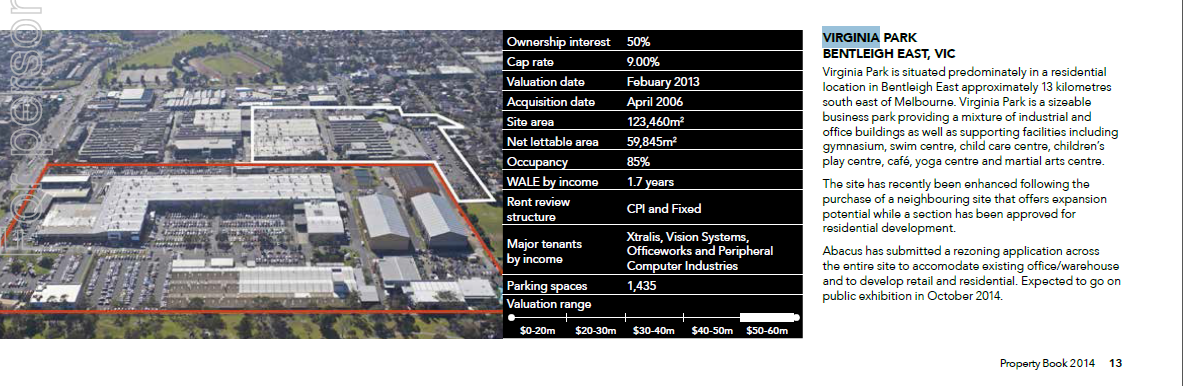
PS; THE PLOT THICKENS EVEN MORE ON WHO KNEW WHAT WHEN AND HOW THIS ALL CAME ABOUT. PLEASE SEE THE SCREEN DUMP BELOW AND NOTE THE DATE OF THIS PUBLICATION. Source is: http://www.asx.com.au/asxpdf/20141104/pdf/42th5bhxvbgp45.pdf

Untitled

wynne

Caulfield Racecourse Reserve
Following petition presented to house:
To the Legislative Council of Victoria:
The petition of residents of Victoria draws to the attention of the house the potential conflict of interest of Caulfield Racecourse Reserve trustees in their commercial relationships with the Melbourne Racing Club.
The petitioners therefore request that the Legislative Council of Victoria take action to instigate a public inquiry into past commercial transactions between the trustees and Melbourne Racing Club, and call on the minister for environment and the Minister for Racing to end further alienation of this public land, ensure management by the trustees is transparent and accountable, and enforce the three uses of the reserve defined by the Crown grant.
By Ms PENNICUIK (Southern Metropolitan)
(794 signatures).
Laid on table.
Ordered to be considered next day on motion of Ms PENNICUIK (SouthernMetropolitan).

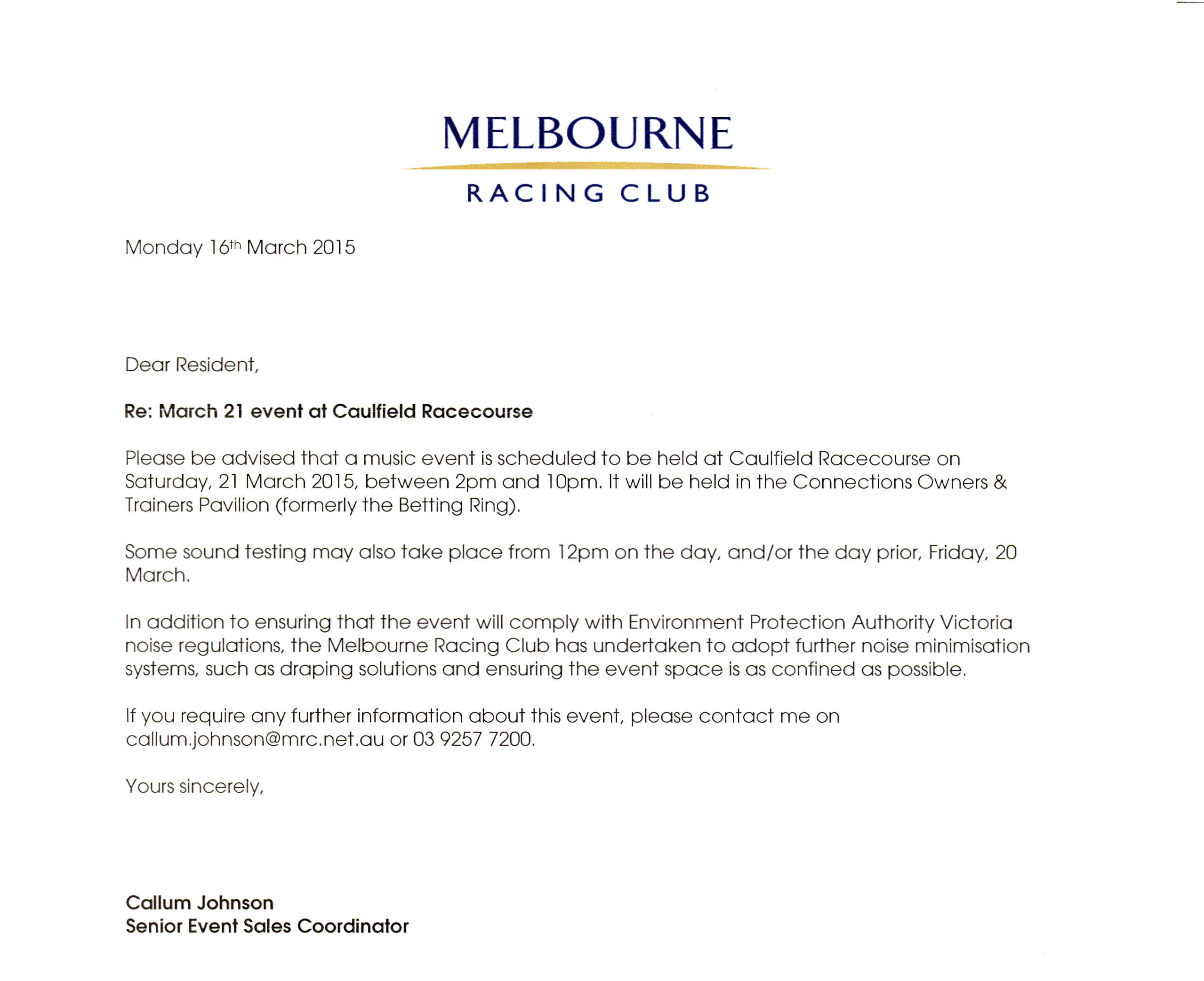
PS: we have received the following notice from a resident. Once again local amenity will be disturbed by the MRC money making ventures. We wonder:

  • has a permit been granted for this new event?
  • has a lease been signed as yet?
  • what guarantee do residents have that the sound will be within EPA limits? Who will supervise and ensure that the legal requirements are met?

2015 03 21 Concert0001

Here’s a brief rundown of council decisions this evening:

  • Tree Register ‘abandoned’ – moved Lipshutz. Final vote in favour of ‘abandonment’ was – Lipshutz, Esakoff, Lobo, Magee, Okotel. Voting against – Delahunty, Pilling, Sounness, Hyams
  • Virginia Estate Amendment – voted in unanimously with much grandstanding by Magee and others.
  • Glen Huntly Road – 6 storey, 117 units – permit. Voting for Delahunty, Sounness, Okotel, Magee, Pilling, Lipshutz. Voting against – Lobo, Esakoff, Hyams
  • Amendment to ‘legalise’ office use at 305 Kooyong Road. Motion put by Sounness and Lipshutz. Motion lost and new motion to abandon amendment put up by Hyams won out.

We will report on each of the above in full in the next few days.

In Council minutes of November 13th 2012, there is included the ‘minutes’ of the then Community Consultation Committee. Recorded in these minutes is the sentence – Committee minutes to be distributed to all members of the Committee prior to adoption by Council

In the current agenda we have the latest ‘minutes’ from the new Community Consultation Committee. Here are two sentences from these minutes – A list of action items from minutes of 8 October 2014 was tabled for information. It was suggested that community representatives have the opportunity to review committee minutes prior to them going to Council for approval.

So nearly three years down the track nothing has been done to ensure that minutes from this committee (and probably others) are provided first of all to the relevant committee members for checking, comment, and acceptance as a ‘true and accurate’ representation of what occurred at the meetings. The fact that this is twice recorded as a concern indicates that community reps were, and are, far from impressed with the ‘official’ version of what occurred. The ‘doctoring’ of minutes, and selective editing occurs unabated it would seem.

Once again governance and transparency are the victims in Glen Eira. God forbid that community reps get the chance to vet officer produced versions of reality and to offer their views on these supposed ‘accurate’ representations of what occurred!

On the 26th May 2003 a public question asked whether or not Council had a significant tree register and if one wasn’t in existence, when it would get off the ground. Twelve years later, residents are still waiting for any sign of a tree register. After numerous revisits to the issue, there is yet another officer report in this week’s agenda. Mind, not a report by the Local Law Committee which for the past 2 years has been charged with delivering the ‘framework’ for the introduction of a Local Law. Residents remain excluded from the documentation, the reasoning, any actual draft. What is now put into the public domain is an unnamed officer report that finally reveals the real agenda of council. One of the recommendations is designed to scuttle the issue of a tree register for good. – ie Resolve not to proceed with Item 7i in the Community Plan Action Plan for 2014-15. 

Given past voting on anything to do with this issue we anticipate that trees will continue to be an endangered species in Glen Eira and developers will continue to moonscape sites without fear of penalty. This judgement is based on previous councillor comments and, unless they have seen the light, we do not anticipate any change. (See: https://gleneira.wordpress.com/2013/10/16/still-going-round-the-mulberry-bush-10-years-on/ AND https://gleneira.wordpress.com/2013/10/14/the-saga-of-the-tree-register/

The other ‘advantage’ in killing off the idea for a tree register now is that it will then not proceed to be part of any ‘review’ of the Local Law. That means that there will be no public consultation on the issue since any amendment to the Local Law mandates public submissions. The intent in our view is clear – to do nothing and to prevent the community from having any say in the matter! This is again in spite of the specific resolution passed on the 27th April 2011. Another example of where resolutions in Glen Eira mean absolutely nothing! The resolution read:

Crs Pilling/Tang

That Council:

  1. Creates a classified tree register based on identification of trees whichmeet the criteria in attachment 1, and
  1. Drafts a Local Law to give effect to management and protection of trees listed on the classified tree register.

The MOTION was put and CARRIED.

It is quite unconscionable that the unnamed officer report can only manage two pages on an issue that is so contentious and when report after report (especially the recent Open Space Strategy) emphasises the importance that residents place on trees. Further, this report makes no mention of the above resolution. It refers only to the ‘aspirational’ component of the Council Plan! And of these two pages, the first page is nothing more than gobbledygook – short on truth, facts, and relevance. It again parades the nonsense of how well Glen Eira protects ‘200 valued trees’ via its planning application process. Given the admission that over 1200 applications come in each year (and one Magee claim is for over 1500 applications per annum and likely to be far more by now) then this surely represents a paltry figure of ‘protection’ – even granted that many applications will not have ‘valued trees’ on the property. What this also does not take into account is how many amended permits are submitted to REMOVE trees from a development and how many of these Council approves.

The greatest distortion of reality comes with this set of sentences – The ResCode mechanism is that any tree removed within 12 months of a town planning application being lodged must be assessed as though the ‘removed’ tree is still in place. This has proven to be somewhat of a defacto tree retention control because it has effectively removed any advantage a developer could gain from moonscaping. This means that any town planning application for medium density dwellings needs to consider existing tree/vegetation.

A truck could literally be driven through this nonsense – and it has. None of this takes into account land banking where a developer purchases a property, and possibly rents it out for years, BEFORE any planning application is lodged. In the meantime of course, every ‘significant tree’ is removed.

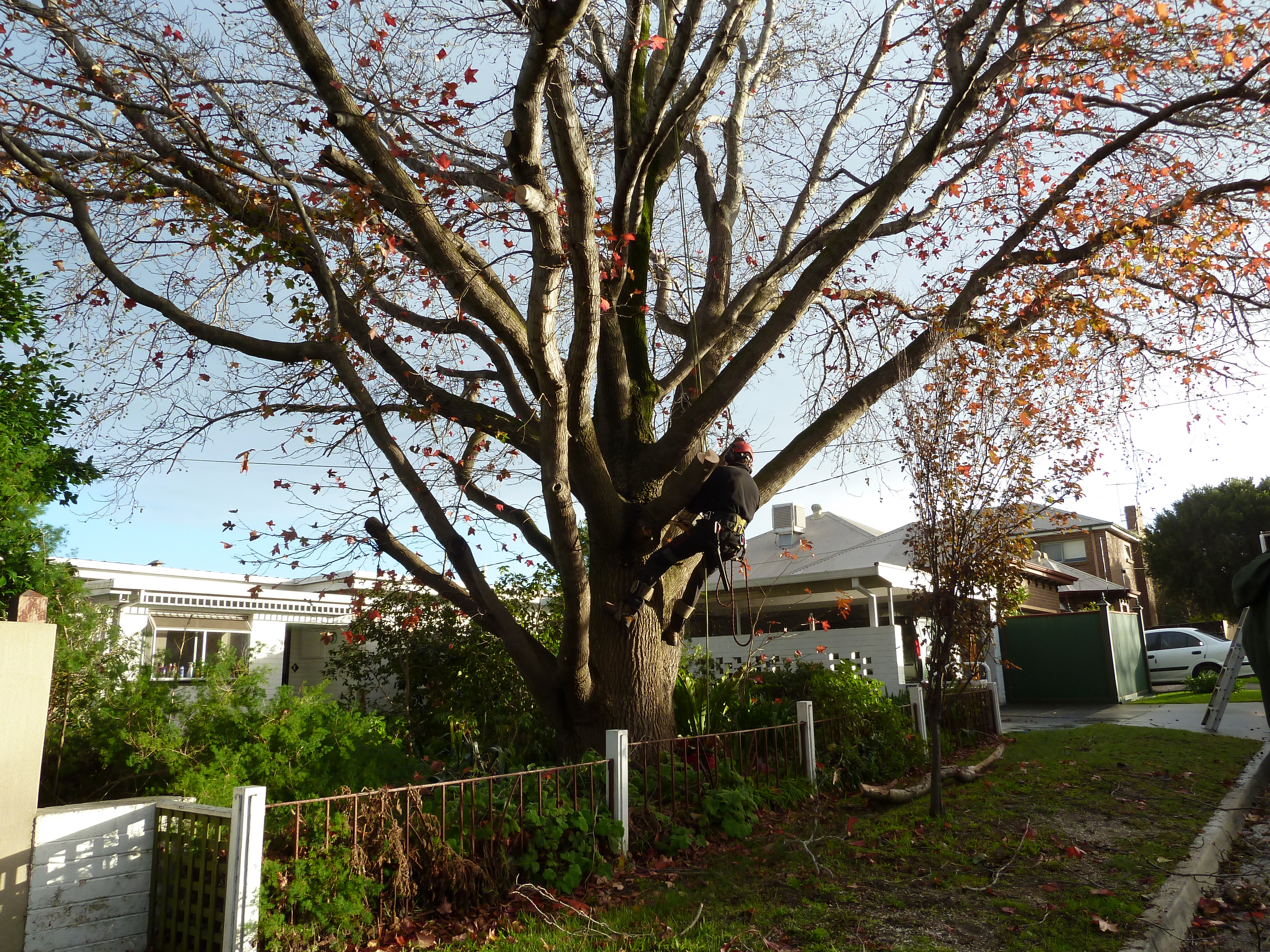
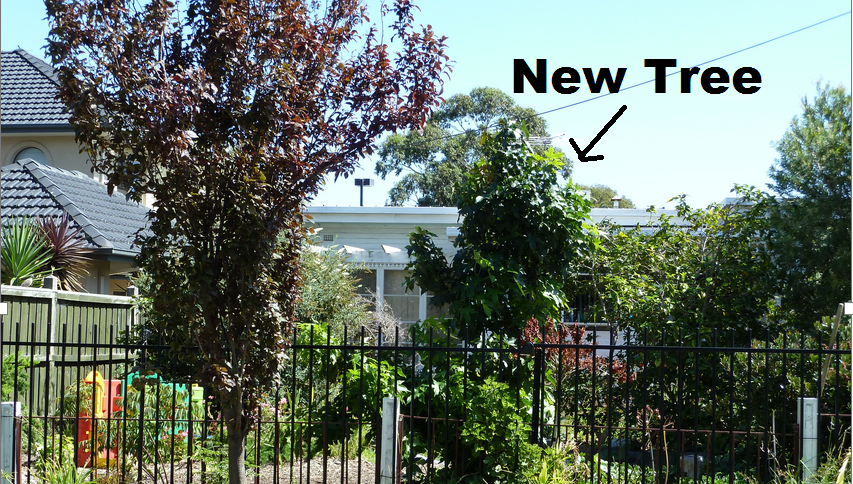
In June last year we featured a post where a healthy and huge tree sitting on the title border was destroyed after the property had been purchased by a developer. A new tree has now been planted in this exact spot. Thus, when the planning application eventually goes in, council will simply determine that this sapling is anything but a ‘significant’ tree and grant permission for its removal. The developer escapes unscathed, unfined, and literally untouchable since he has exercised the wonderful ‘escape loop’ in the far from ‘effective’ planning process.

Here are the BEFORE AND AFTER photos of this site –

P1000301

Untitled

We have commented numerous times on this ‘no action’ council and how often it flies in the face of community views. Resolutions are passed only to be ignored and reneged upon. We reiterate: the community values its trees – not just on public land, but also private land. Given the rate of development, it is incumbent on councillors to ensure that every single avenue is pursued to protect the environment. We would go even further and suggest that Local Law protection is basically limited to mere officer decision making with again no decision making capacity by councillors (unless specifically spelt out) or by residents. Plenty of other councils (ie Whitehorse, Moonee Valley) have tree registers as part of their Planning Scheme. Such an option is naturally ‘verboten’ in Glen Eira since it would impinge on the current power structures and involve far more transparent and accountable decision making.

If residents thought that the Caulfield Village was a mass overdevelopment then they should think again! Item 9.6 of the current agenda features the latest plans for the Virginia Estate on East Boundary Road, Bentleigh. In short, what is proposed is the following:

  • Rezoning all of the land to Commercial 1 – meaning that there is now the legal entitlement for far greater residential development
  • Buried in the documentation for this rezoning is this paragraph – At this stage any detailed information about the likely development for the estate should be regarded as indicative. It seems clear however that significant development is envisaged. Likely or possible developments are a shopping centre including a supermarket, office development and some 4,400 dwellings
  • As with the Caulfield Village, the same approaches are being used – namely, an Incorporated Plan, constant rezoning, and then we assume the eventual rubber stamping of a Development Plan!
  • The ‘magnanimous’ open space contribution by the developer is for a 20 metre width ‘open space link’ – specifically the developer has offered to provide a strategic open space link of approximately 20 metres width within Virginia Park Estate to connect Virginia Park Reserve and Marlborough Street Reserve. No 1 Barrington Street is owned by the developer and could form part of the open space link.
  • For a 12.5 hectare site and over 4000 dwellings the developer will only be required to pay 5.7% in an open space levy. Again laughable especially when other councils have successfully included in their open space schedules the options of exacting a higher levy than for ‘normal’ subdivision for ‘strategic development sites’. Glen Eira refused to entertain such an idea in its recent amendment.

We should also point out that in this current agenda, officer reports give the green light to a further 153 new dwellings.

There is also, after years and years of waiting, a two page report on the Significant Tree Register. Most of this is unmitigated waffle and the recommendations so limiting that they basically mean nothing – except in maintaining the current status quo! We will comment in detail in the days ahead.

For this post we feature two seemingly unrelated issues: quotes from the latest VCAT decisions which all overturned council refusals to grant permits and, an article from today’s Age, which addresses developers’ concerns about community voices at VCAT and Labor’s stated intention of ensuring that ‘community’ opposition to applications is enshrined in legislation and incorporated into VCAT’s decision making. What these two areas do have in common is that whilst community involvement is indeed welcomed with open arms, unless Councils’ planning schemes are amended and all the ‘loopholes’ closed off, then little will change in our view.

The following extracts taken directly from these latest VCAT hearings illustrate clearly why the Glen Eira Planning Scheme is currently failing its residents and is a boon to developers.

144-144A Hawthorn Road, North Caulfield – Zoned Commercial – The construction of a six-storey building (plus basement) accommodating two shops, 37 dwellings and associated car parking

There is nothing in the Planning Scheme to indicate that a uniform height is sought for buildings within this centre. Indeed, as noted during the course of the hearing, the land within the activity centre is not affected by any overlays that regulate built form outcomes, such as a Design and Development Overlay or Heritage Overlay. Activity centres are commonly characterised by a varied skyline or building profile. Heights vary, and it is not unusual to find that one building is taller than the others. It may well be that this building will be the tallest in the activity centre. If this were to eventuate, we do not consider it to be an unacceptable planning outcome as, ultimately, it is likely that the disparity in the height with other buildings would be confined to something in the order of two storeys. We consider this to represent an acceptable graduation in height within this context.

We acknowledge the Council’s concerns regarding the impacts associated with a series of incremental approvals that reduce parking requirements for new developments. We also recognise that this centre lacks an off-street public car park. Parking provision in the activity centre is a broader strategic planning issue that should be approached on a centre-wide basis. If warranted, such an exercise may lead to the introduction of a Parking Overlay, for example, that would assist the Council in achieving its objectives in respect of satisfying the car parking requirements of the centre over the longer term.

Source: http://www.austlii.edu.au/au/cases/vic/VCAT/2015/204.html

252-254 Tucker Road, MCKINNON – Zoned Neighbourhood Residential – To construct a two storey building over a basement, to use the land for a child care centre and to erect a business identification sign. The child care centre would accommodate up to 132 children and 33 staff.

Mr O’Leary advised that Council would not prosecute ground 6 on the Refusal to Grant a Permit as the trees referred to in the grounds of refusal have been removed.

  • The responsible authority says the child care centre should be located within a housing diversity area because it is a large centre. The responsible authority says that non residential uses such a child care centre in minimal change areas should be smaller, less intensive activities than this proposal, and the larger facilities should locate in housing diversity areas. Council says that clauses 21.08 and 22.11 encourage non residential facilities such as medical clinics and child care centres to be small and operate from existing dwellings. This approach would enable dwellings to be retained (possibly for housing choice and neighbourhood character reasons) and to limit possible off site amenity impacts.
  • While I accept the policy encourages the use of existing dwellings, I am not persuaded clauses 21.08 or 22.11 explicitly distinguish between small and large facilities. Policy does not contain any indicators of intensity such as number of staff, children, floor area, car parking spaces or the like that could distinguish a large centre from a small centre.
  • Furthermore, I note that Council has had the opportunity to distinguish between larger and smaller centres. Amendment C123 proposes to amend clause 22.11 but it does not refer to larger or smaller centres. The amendment does not seek to include conditions in the table to the NRZ that could prohibit larger centres from the zone.

Source: http://www.austlii.edu.au/au/cases/vic/VCAT/2015/201.html

10 Bolinda Street, Bentleigh East – Zoned Neighbourhood Residential – Construction of a two double storey dwellings above a basement level

The applicant pointed out that Council had incorrectly assessed the proposal against the Character Area 13 precinct and the review site is within Character Area 15 East Bentleigh, south of Centre Road.

Source: http://www.austlii.edu.au/au/cases/vic/VCAT/2015/199.html

THE AGE ARTICLE

Don’t give Victoria residents a bigger say – developers

Date: March 12, 2015 – 12:15AM

Residents should not be given a bigger say at Victoria’s planning tribunal because it would not be “fair”, according to a developer lobby group.

In a letter to the Premier and ministers, the Property Council’s Victorian executive director Jennifer Cunich said they opposed  “the Government’s plans to add additional weight to community opinion in regard to VCAT decision-making”.

“Such a move goes against the very basis of a just and fair legal system. We would consider any attempt to make such changes a fundamental deterioration of Victoria’s legal apparatus,” it said.

Labor has pledged to amend the Planning and Environment Act “so that, where appropriate, the Victorian Civil and Administrative Tribunal (VCAT) must take into account the extent of community opposition to planning proposals”.

“The changes would see significant community opposition – such as that in response to Tecoma McDonald’s or Prahran’s Orrong Rd Towers – formally taken into account,” Labor said in its election commitments.

Labor said the changes were not about appeasing a noisy minority and instead would give locals a fair hearing and recognise a community standing together.

James Larmour-Reid, from the Planning Institute, urged caution in relation to the proposed reforms.

“Community engagement is central to our planning system, but we need to make sure  that VCAT decisions are based on planning principles and policies,” he said.

While it was completely reasonable for the planning tribunal to take into account community sentiment, “sentiment alone cannot be allowed to drive the outcome”.

Opposition planning spokesman David Davis said the government’s promised tribunal changes were “light on detail”.

“What does it really mean and how will this actually operate?” he said.

“If the plan is to make the capacity of people to object more accessible in a reasonable way, we’re in favour of that,” he said.

The Property Council’s priorities letter also called on the government to sell Victoria’s share of the Snowy Mountain Hydro Scheme, old school sites and disused rail land to help fund new infrastructure.

It also calls for a flexible urban boundary – “a firm urban growth boundary will unnecessarily restrict supply” and calls on the government to continue support for the Victorian Energy Efficient Target Scheme to reduce energy bills and emissions.

Some of the former Coalition government’s planning actions were criticised in the letter.

“The former government’s decision to undertake rezoning prior to the release of the masterplan or vision for the precinct (Fishermans Bend) has caused widespread confusion and uncertainty,” the Property Council said.

On new housing zones, Ms Cunich said: “As they currently stand, the zones have caused much community angst, and will adversely affect Melbourne’s housing supply and affordability”.

Municipal housing targets should be set based on up-to-date population and demographic modelling.

A spokeswoman for planning minister Dick Wynne said: “The Andrews Labor Governnment promised it would give communities a fair go at VCAT, and this is what we will do.”

Source: http://www.theage.com.au/victoria/dont-give-victoria-residents-a-bigger-say—developers-20150311-141cq3.html
« Previous PageNext Page »