Councillor Performance


Here we go again! Officer reports that are incomplete, inaccurate and which deliberately neglect to mention, much less highlight, crucial factors that would impact on any decision making in a normal and transparent council. Add to this councillors who either haven’t been adequately briefed, or the more plausible explanation we believe, is that they quite willingly go along with this deception.

We are referring to the Council Meeting of 18th December, 2012 when Council passed the resolution that another $600,000 (estimated) be spent on GESAC car parking. This is on top of the near $1,000,000 already spent in extending the existing Bailey Reserve car parking and to ‘relocate’ the playground. The motion that was passed in December read:

Crs Lipshutz/Lobo

That Council endorse Option A, additional car parking on the Bailey Reserve side of Gardeners Road, in order to provide additional car parking around Bailey Reserve. That Council continue to examine Option C, timed parking restrictions on the Bailey Reserve side of East Boundary Road, and Option D, East Boundary Road Median Strip parking.

Cr Sounness was the only councillor to vote against the motion. We also remind readers that the argument against the installation of an underground car park was the estimated cost of $1.5 million dollars. Now, when council has already spent this amount and it still hasn’t solved the problem, the argument switches to the laughable claim that underground parking was rejected primarily because women did not feel safe! No such excuse was proffered at the time of the original decision back in July 2011, yet it surfaces on this occasion. Some real scraping of the bottom of the ideas barrel here! Then there’s Lobo’s claim that ‘safety’ is an issue and therefore council is unable to ‘consult’. Quite ludicrous we think. From the architect’s drawing it would appear that cars will be parking perpendicular to the reserve. That means that they will have to either reverse into the spot, or more than likely, reverse back out into Gardiner’s Rd in order to exit. This street is also a bus route and it is extremely narrow. (So much for at least 2 years of”advocating’ that the bus route be switched to East Boundary Rd!) So we now will have cars reversing, buses passing, kids alighting, – all on a narrow residential street. Another great solution in averting ‘risk’.

The argument we love the best however is the one about councillors not wanting to see poor old cricketers and baseballers having to park in ‘residential streets’, or worse, Centre Rd. According to this logic, Gardiner’s Rd does not qualify as a ‘residential street’. Readers should go back to the December ‘debate’ and have a good laugh at the appalling level of argument, and plain old humbug. (See: https://gleneira.wordpress.com/2012/12/19/gesac-read-weep/)

But it gets even worse in terms of what happened on December 18th  and the total failure of this administration and its councillors to be transparent and accountable. There cannot be any excuse for failing to fully inform residents that more open space will be lost and that bitumen and car parking are the priorities in Glen Eira regardless of cost. Here’s what was not written or stated:

  • Throughout the entire officer’s report there is NOT A SINGLE MENTION of the fact that open space WITHIN BAILEY RESERVE will be diminished and turned into more car parking spots. The only sentence of any relevance on the issue is this feeble, and ultimately misleading one-liner – “A guiding principle has been to try to avoid any further reduction of public open space”.
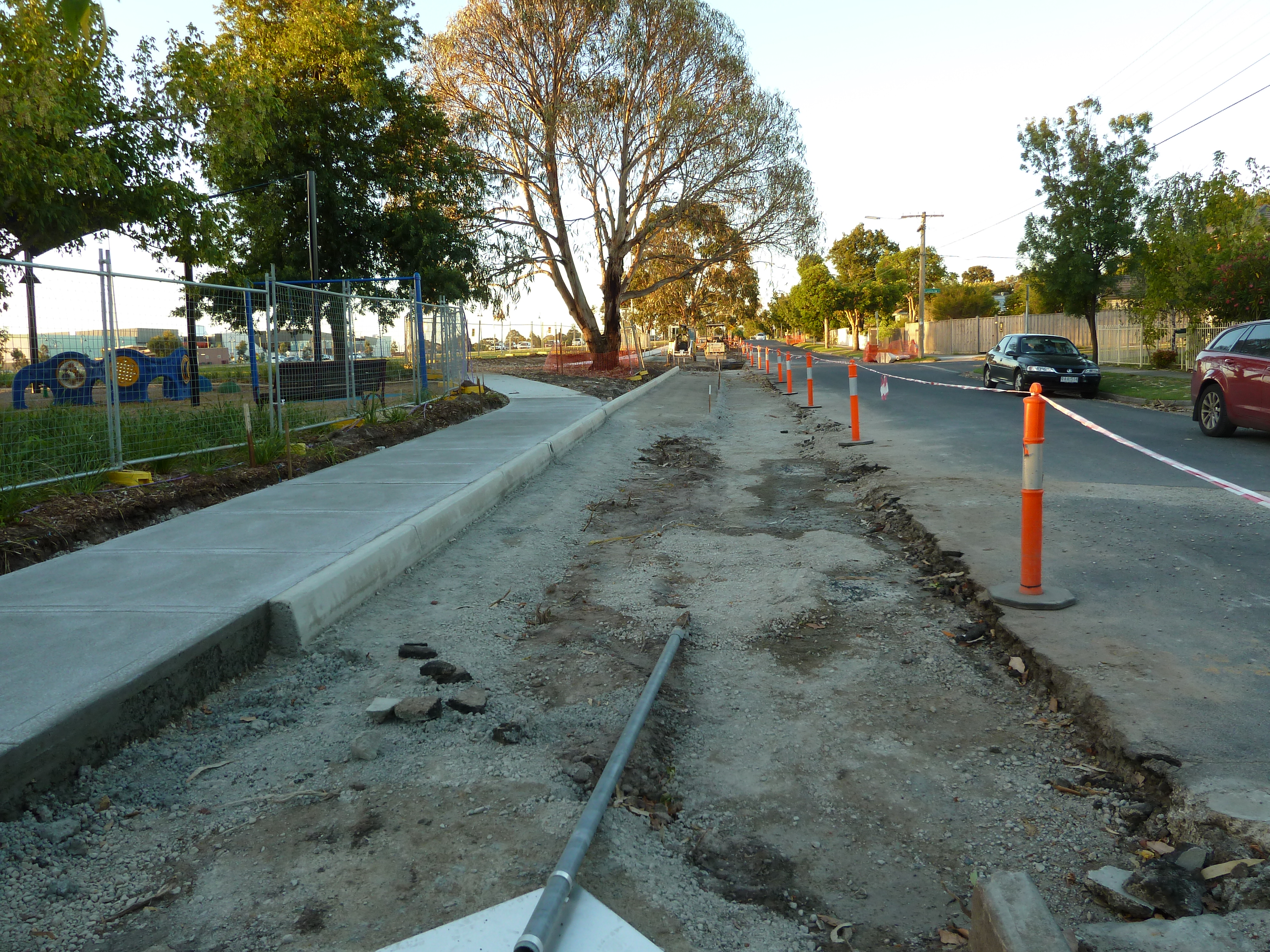
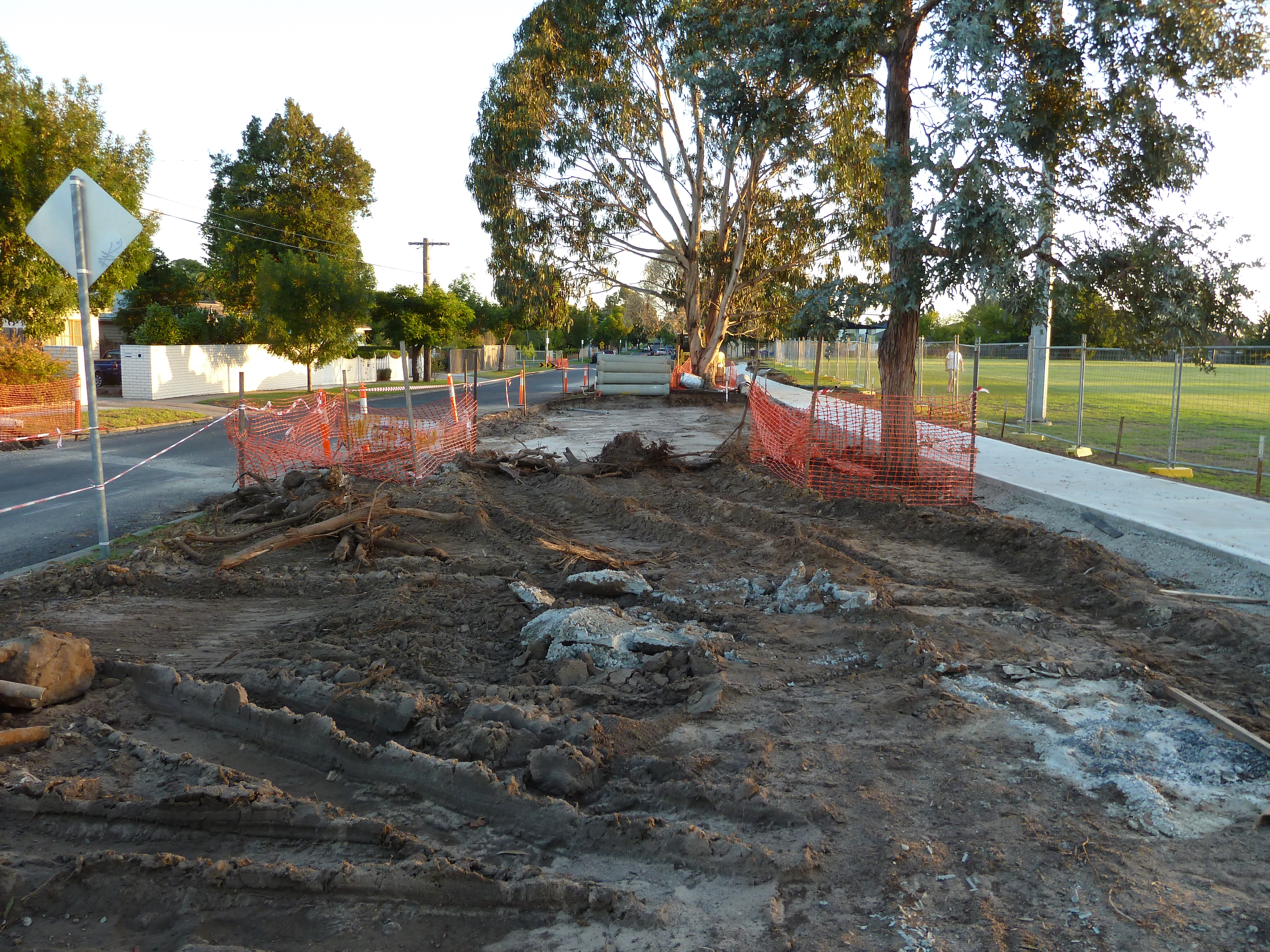
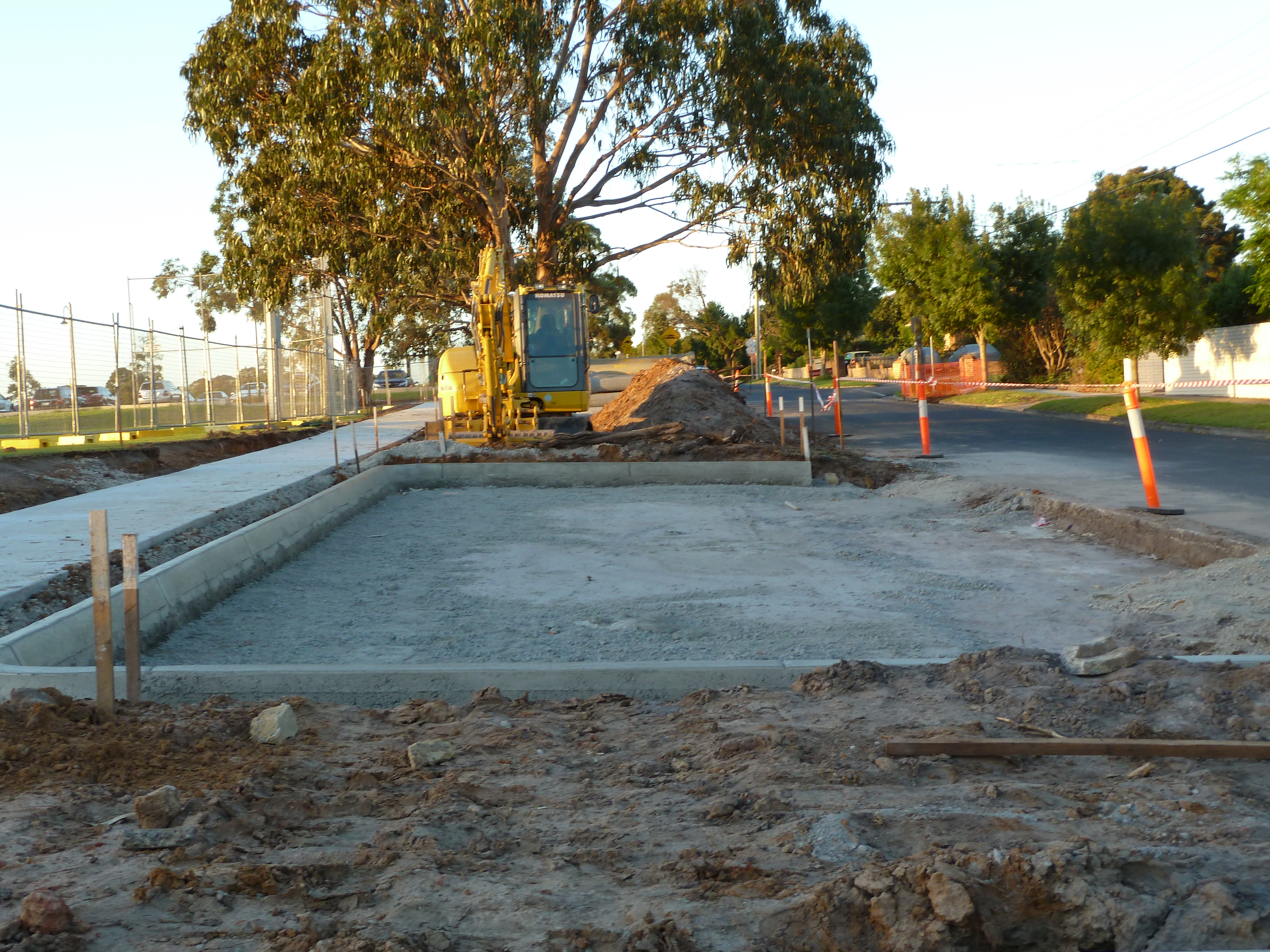
  • Not one councillor in the ‘debate’ referred to the encroachment on Bailey Reserve itself. In fact, Magee proudly proclaimed: “WE’RE TAKING AWAY A BIT OF NATURE STRIP AND GETTING A MUCH NEEDED CAR PARK”. The photos below show that much, much more than a ‘bit of nature strip’ is going. Lipshutz in turn could only say that as ‘victims of our success’ that more car parks “won’t have any impact’ on the reserve. So much for accuracy, and so much for revealing all the facts.
  • Yet, the plan that was part of this item, makes it absolutely clear that Bailey reserve itself would be hacked to pieces and that more open space will be lost. Didn’t any councillor look at this? Didn’t the author of the item (unnamed of course!) look at the plan? Or was all this done in the hope that NO-ONE would bother looking at the detail so residents could once again be easily duped into believing the half-truths and mistruths that issue from this council?
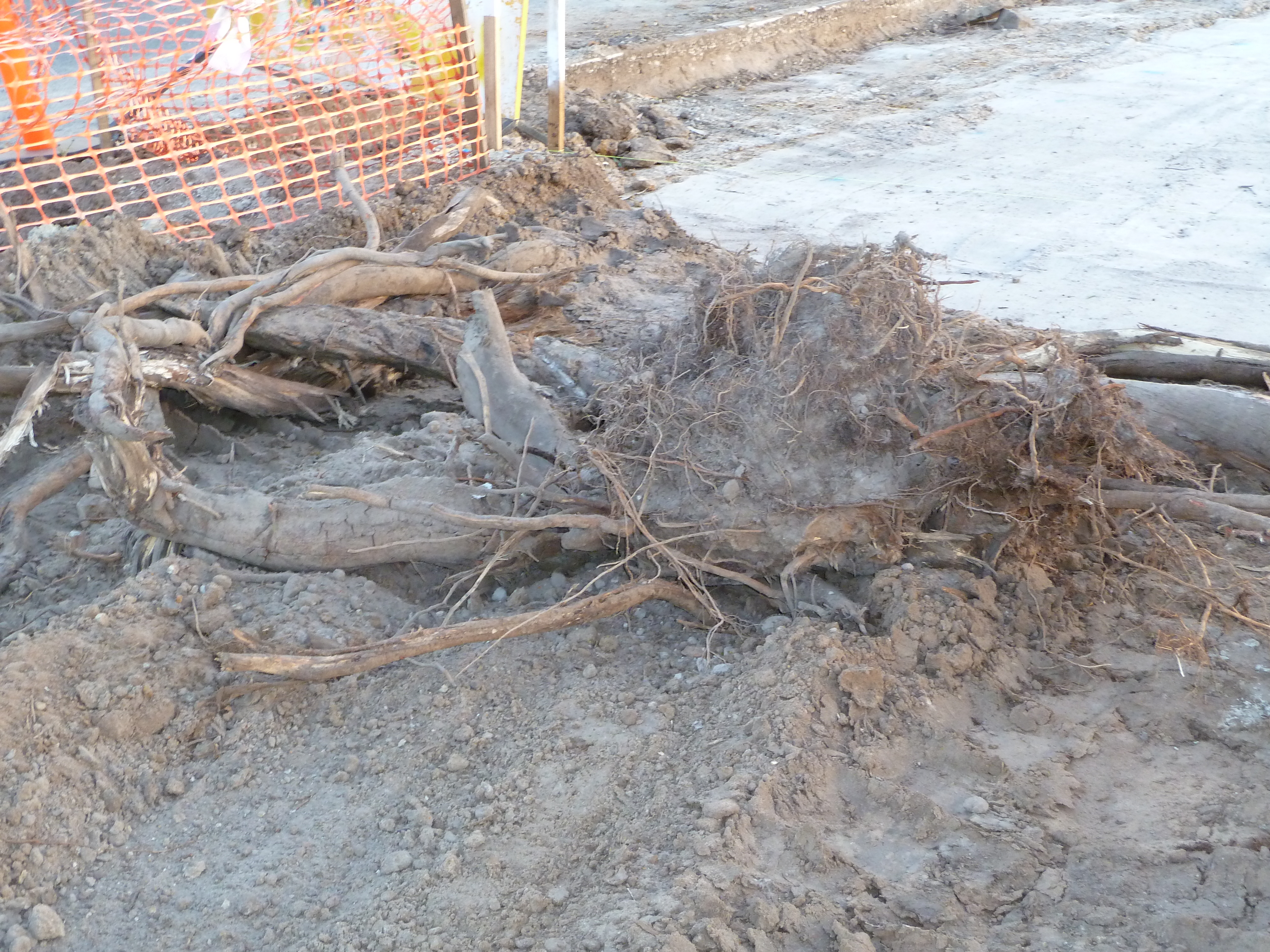
  • Finally, what of the trees? The almost illegible table on the left hand side of the diagram states ‘No. of trees to be retained’ and ‘no. of trees to be removed’. The actual figures are impossible to read. Yet, no-one even uttered the word ‘trees’ and it does not appear anywhere in the officer’s written report. The plan certainly has no trees actually included in the diagram! The root systems have been badly mauled and it would not be any surprise to find council’s arborist in the very near future reporting that the tree is “unstable’ or “diseased” or “unsafe” and that it has to be removed! After all, this is Glen Eira so what are a few fine gum specimens, or other long established trees, or even recent landscaping that cost the earth no doubt, compared to a GESAC car-park extension?

We’ve visited the site in the past few days and below are some photos taken over  several days of the ongoing works. We’ve decided to present them in their full glory, rather than as a slide show.  Please note:

  • Photo 1 displays the area cordoned off WITHIN BAILEY RESERVE before work started
  • Photo 2 displays the original footpath/nature strip which is located to the LEFT of the gum and has now been removed
  • Other photos reveal the new ‘path’ that is well inside Bailey Reserve itself, plus the shredded roots of the gum.

GESAC 13Feb13 IMG_0612

GESAC 13Feb13 IMG_0614

P1000036

P1000035

P1000041

P1000047

P1000045

P1000042

P1000043

P1000046

P1000038 - Copy

P1000044

Untitled

Here is the second part of our email which continues on from the quotes derived from the 2002 Housing Strategy.

“There is plenty more in this document and it reads well. I have just concentrated on residential development, population estimates, and the public realm issue in the wider sense. It would be good if Councillors concerned with overdevelopment, high rate of residential development and the type of development and its consequential very high population increase could pursue the review of the Housing and Residential Development Strategy. It only needs 5 Councillors and it seems that Cr Lobo and Cr Sounness, as the one with some town planning background could start the ball rolling by first asking how many action points have been implemented. So how did Glen Eira actually develop? Let me expand on the issues raised and its problems.

The residential development is always greater than forecast by a significant amount. In 1996 it was 300 dwellings per year, 2001 over 600 dwellings per year, and 2006 and beyond nearly 900 dwellings per year. And the current building applications are close to 1200 per year. It is not clear if building application means 1 dwelling or a number of dwellings. Clearly, the rate of development is much greater than anticipated and there has to be a reason for that. Is the Council doing its job to ensure that infrastructure, public realm and services are there for such a large development rate?

The result of all that development is the population explosion in Glen Eira (http://profile.id.com.au/glen-eira/population-estimate ). In 1996 it was around 115,000 with projected figures of 121,000 by 2020. In 2001 it was 123,000 with a forecast of 130,000 by 2021. In 2006 it was 130,000 with estimates of 136,000 by 2011, 148,000 by 2021 and 157,000 by 2031 (forecast2.id.com.au/templates/forecast2/Clients/133Glen/PDF/10.pdf ).

In the 2002 document the capacity for multi-dwelling developments (lot availability) was estimated to be in the order of 10,000 dwellings to be used up by 2020.  This estimate depends on the density of dwellings built. We suggest it is a gross underestimate. Over 6,000 dwellings have already been built. The service reports indicate that 80% of those are in the housing diversity areas, so 5,000 dwellings have already taken up the available lots. With greater density being built one can safely assume another 10,000 dwellings can be built in the housing diversity areas. The population under such condition is likely to grow to 160,000 by 2021 and 180,000 by 2031. Properly conducted structure plans as suggested in 2002 would elucidate more accurately the lot availability and density of dwellings. As it is now, Councillors and the community are left deliberately in darkness.

But there is more. The sleeper issue is the minimal change area. Once the pressure is on to develop it will. So what is the capacity for developments in this area since it is 4 times bigger than housing diversity area. The 2002 report gives a figure of 5,000 dwelling opportunity for low density developments in housing diversity area. With the existing rules for dual occupancy, single or double storey units, flats and subdivision, all allowed in minimal change area, the end point of 20,000 dwellings is not unreasonable. Assuming a very low no. of 2 to 3 people per dwelling we get a whopping population of over 220,000 perhaps by 2041. The population density in 1996 was 29.7 per hectare growing to a 41.4 by 2021 and 56.9 persons per hectare by 2041. Clearly, such an influx of people with nearly double the density will have major implications on the character, lifestyle and liveability of Glen Eira. Is there evidence of minimal change areas developments? YES. Take Bentleigh East with the largest minimal change area and the smallest population density. The dwelling growth of medium density housing between 1996 and 2011 was 127% as opposed to only 26% in Glen Eira overall i.e. more than 4 times the average. Councillors should ask for details of each suburb growth patterns in terms of medium density and high density. The pressure to develop is on everywhere. What are we building? Is the Council ready for it?

Nearly all developments outlined are suitable for small time developers, who like Glen Eira Council focus on a single project at a time. Koornang Rd Carnegie has exceeded its electricity power capacity and requires a new sub-station to be built. Jemena, the infrastructure provider will not provide more electricity than necessary if it is a case-by-case approach rather than an area approach.  Ormond has a number of recently built apartment blocks erected from concrete. When you flush a toilet, you can hear it throughout the building. Quality is not there and they will become rental slums. Ormond – Glen Huntly reached the dubious distinction of the greatest population density increase of suburbs in Melbourne (http://chartingtransport.com/2012/09/21/first-look-2011-density/ ). Why? And what about water supply and drainage? Are we sufficiently ready for the over 200,000 people living in Glen Eira?

Now to the level crossings of which Glen Eira has 9. Work on North Rd level crossing begins with Murrumbeena Rd being next. The Department of Premier and Cabinet website says: “A program of level crossing removal will contribute to improved productivity and safety outcomes in Melbourne and improved land use outcomes by supporting urban renewal to cater for Melbourne’s growth.” (http://www.dpc.vic.gov.au/index.php/featured/infrastructure-australia-update/ia-appendix). One of the criteria for priority level crossing removal is urban renewal, which means more residential development in the area. Lowering of the rail provides more opportunities than having a flyover rail line, although it is probably cheaper. With $100m to remove a level crossing the State Government is looking for funding from private corporations. They are willing to do that for a price (http://www.afr.com/p/national/cash_cocktail_for_melbourne_rail_Sgxu1YvQcayPIEk9lqWwoK ). If private capital is to fund the level crossing removal then what development would cover such a cost?

Caulfield Village development gives a clue to that with about 7 to 10 times the value of level crossing removal i.e. $700m to $1billion. That would provide a huge injection of capital into the Ormond area. Businesses and traders will support it wholeheartedly. The result for residents may not be that great. The Dorothy Ave bridge would disappear and Dorothy Ave, Royal Ave, Katandra St, and the land around Ormond station redeveloped. This development is for the ‘big boys’. Similar consideration goes for Murrumbeena Rd. Of course if the Committee for Melbourne would have their way they would prefer to do a sequence of level crossings e.g. from Caulfield to Patterson (Frankston line) and from Caulfield to Oakleigh (Dandenong line). Each level crossing removal could add few thousand people into the area. With 9 of them in Glen Eira we could see another 20,000 to 30,000 people. How long would it take? Committee for Melbourne claims they can do it in 20 years. So by 2041 we could see a population of 250,000 (http://blogs.crikey.com.au/theurbanist/2011/08/16/should-replacing-level-crossings-be-given-high-priority/).

One has to ask how all this development affects the Public Realm, which is the responsibility of every Local Government. Glen Eira Council has no definition of Public Realm and has a narrow focus on Open Space. Stonnington Council has developed a Public Realm Strategy (http://www.stonnington.vic.gov.au/your-council/strategies/ ) – “This Strategy extends the typical open space strategy, which includes ‘green spaces’ such as gardens and parks, to the broader understanding of the public realm, which includes all external space that is available for public use”. And it illustrates the concept with the following diagram

public realmThe diagram illustrates the context in which this Strategy operates. The outer layer identifies the broader State policies that govern public space policy in Victoria. The next layer identifies the Council Plan as Stonnington’s key strategic document. The next layer shows both the Municipal Public Health Plan and the Municipal Strategic Statement. The Public Realm follows, and includes streets, parks, hubs and links. Stonnington’s public realm is further divided into suburbs and the many elements from across Council that form the core of the Public Realm Strategy.

Glen Eira Council is conducting a Survey to review its Open Space Strategy – “Open space is all publicly owned land that is set aside primarily for recreation, passive outdoor enjoyment and nature conservation” and the Strategy “includes planning ahead for the provision and design of open space to meet the needs of the anticipated future population”. How they can do it without an integrated approach to planning and by letting developers drive the City growth is a question to be asked. When one examines Glen Eira Council Strategies one gets the feeling it is for administrative/public relations purposes. Look at the Stonnington Council Strategies and one feels more confident in their ability to plan comprehensively and manage their plans in an integrated way.

Perhaps we may as well ask again after Cr Lobo – ‘are we building Calcutta or Richmond’. Over to you Councillors.

We thought it might be extremely informative following our last few posts to investigate what’s been happening in other councils in terms of reviewing and updating their Housing Strategies. What a surprise! Countless other municipalities are at it hammer and tongs and their reviews include lengthy periods of community consultations ranging up to a year! Please note, we are not commenting on the quality, processes, outcomes, nor the various strategies themselves. We are simply highlighting that unlike Glen Eira City Council, these municipalities have not been sitting on their hands doing nothing. Glen Eira has been stagnant since well before 2002 and bases its policies on statistics that are woefully out of date. There are only two possible conclusions here: either this council is entirely incompetent, or the strategy is to do nothing whilst Rome burns because it benefits development and more development.

We remind readers that a bare minimum of the recommendations from the 1998 Open Space Strategy has been implemented. Even less has been implemented from the 2002 Housing Strategy. The sham of the Planning Scheme Review and its recommendations are also in limbo – the only things that have been pushed through facilitate further development! This is Glen Eira in a nutshell. Maintain the status quo and do nothing to safeguard local neighbourhoods, social amenity, and so forth.

Here are the URLs plus the dates that accompany other councils’ reviews of their housing strategies:

http://www.bayside.vic.gov.au/Draft_Housing_Strategy_April_2012.pdf (April 2012)

https://www.banyule.vic.gov.au/Assets/Files/Housing%20Strategy%20%28Adopted%2016%20March%202009%29.pdf (March 2009)

http://www.cardinia.vic.gov.au/files/Strategic_planning/HS_PP1_IssuesPaper_Feb2009.pdf (Feb. 2009)

http://www.yarracity.vic.gov.au/planning–building/studies-strategies-and-guidelines/Housing-Strategy/ (October 2010)

http://www.maribyrnong.vic.gov.au/page/Page.aspx?Page_id=7505 (October 2011)

http://www.darebin.vic.gov.au/Page/Page.aspx?Page_Id=9798 (2012 – current)

www.brimbank.vic.gov.au/…/Adopted_Brimbank_Housing_Strategy… (August 2012)

http://www.yarraranges.vic.gov.au/Residents/Planning/Planning_Strategies_Studies/Housing_Strategy (May 2009)

http://www.portphillip.vic.gov.au/default/o24750.pdf (June 2007)

http://www.whitehorse.vic.gov.au/hanc.review.html (current)

http://www.campaspe.vic.gov.au/hardcopy/112123_190784.pdf (March 2011)

http://www.casey.vic.gov.au/policiesstrategies/article.asp?Item=5332 (2005)

http://www.southgippsland.vic.gov.au/Page/Page.asp?Page_Id=1126 (current)

http://www.greaterdandenong.com/documents.asp?ID=23637&Title=Housing+Strategy (July 2012)

http://www.whitehorse.vic.gov.au/hanc.review.html   (2012 – current)

We have long bemoaned the failure of this council to actually ANSWER a public question. More often than not, residents receive replies that neatly dodge the central concerns of the query or, the response is padded out with superfluous nonsense and irrelevancies. The most common tactic, is the tendency to engage in semantics. When it suits, council seems quite incapable of understanding the question. On only two occasions from the recent past, has any councillor objected to either the tone or content of these answers – presumably penned by Paul Burke. They sit there dumbstruck, and hence complicit in allowing such practices to continue. To add further insult to injury,  councillors often do not even get the time to READ the public questions prior to the council meeting. At most, they might spend 5 minutes at the end of their assembly meetings and are confronted with the already written responses. If there have been numerous questions, then there is no time to even read the responses and to contemplate their import. None of this is good enough.

We’ve decided to keep a running score on public questions and their responses. Readers will be able to access all questions/responses from our new category in the header – ‘Public questions’. They will be arranged in chronological order of council meetings and be classified according to our categories – ie governance, transport, performance, etc. After each council meeting we will also be featuring a separate post on some or all of these questions and responses. If appropriate, we will comment directly on the responses given and invite, as always, your feedback. Here is one from last week’s effort:

QUESTION 1 – Glen Eira Council is reported as having made a submission to the Ministerial Advisory Committee investigating Development Contributions under the Planning and Environment Act. Will Council make this submission public and accessible to all? When was this issue discussed with councillors?”

ANSWER: The Mayor read Council’s response. He said: “In September 2012 Councils were asked a standard list of specific technical questions relating to the DPCD position paper entitled Standard Development Contributions Paper – A Preferred Way Forward. Council officers provided answers to these technical questions in October 2012.

Councillors were informed of this during that time.

It is understood that Councils and members of the public will be given opportunities in the future to make further submissions.”

COMMENT: The question is clearly not answered! Will residents get to see the submission? Your guess is as good as ours! Not for the first time are formal council submissions done in secret. Secondly, if this submission did involve councillors being “informed” then why, oh why is there no mention of it in the relevant records of assembly? Or was it a tiny one liner in some briefing paper that could so very easily be overlooked by councillors? Did councillors in fact ever discuss this issue? Did they have any role in the writing of the document, vetting some of the ideas/suggestions, did they in fact have any say whatsoever? Or worse, did they even know this was happening?

As an aside, we remind readers that Glen Eira in its wisdom scrapped the levy. Thus, we assume that no monies are being collected from developers for drainage and other infrastructure whilst high rise apartments are mushrooming everywhere. The State Government has now released its response to the committee’s report and is again seeking submissions. We note that other councils have publicised this submission process. Glen Eira of course, keeps it under wraps. Please see: http://www.dpcd.vic.gov.au/__data/assets/pdf_file/0020/130727/Fair-and-simple-development-contributions.pdf

When will the sheer, unadulterated arrogance of Lipshutz cease? When will the level of argument in this council rise above the facile and puerile? When will logic and fact, replace hyperbole? When will residents finally listen to debates that are worthy of that name? When will the truth, the whole truth and nothing but the truth actually be stated? These questions arise out of the ‘debate’ on the Significant Tree Register. Please read carefully and make up your own mind whether many of these individuals are worthy of their soon to be voted in pay packets that will cost ratepayers approximately $340,000 per annum!

Pilling moved the motion: “That Council proceed to introduce a classified tree register where there is a Local Law requiring a Permit but only for those high quality trees which Council has included in the register”. Delahunty seconded.

PILLING: Stated that Glen Eira ‘doesn’t have tree protection on private property’. He thought the motion was ‘appropriate’ and that it was a ‘fairly moderate scheme’ and that it would probably effect only 100s of trees rather ‘than thousands’. Said that the other option available was to ‘introduce a local law’ that’s ‘governed by the size’ of the tree which would ‘catch a lot’ of trees. The ‘previous council’ agreed upon ‘a moderate start’ and that the local laws committee had already done some of the work and he would ‘like to see that work continue’ and that council introduce the register to ‘protect significant trees’. ‘It’s a step in the right direction’ and that there are ‘different views around the table’ but that council does ‘regulate’ things on private property such as fences and that he sees ‘significant trees in the same way’. He thought that ‘most people do look after their trees’ but ‘this will stop the unnecessary removal’ of trees and ‘goes some way to achieve that’….it’s a short step, it’s a modest step’

DELAHUNTY: agreed that it’s a ‘moderate’ step and probably ‘a little too moderate for my mind’. Said that regardless of what her values might be ‘it’s in the community plan’ and for the community is ‘clearly important’ and ‘this is what we’ve been elected to do’….’I’ll be gutted if we can’t introduce’ the register and the city will stand in clear contrast ‘to some of our neighbours’ if we can’t ‘protect some of our most beautiful trees’.

OKOTEL: talked about the expense of this and trees on private property that can’t be removed. There will be ‘ongoing costs…..increased red tape’ and ‘continuous discussion’ about what is or is not a significant tree. She thought that residents ‘are more than sensible enough to know’ what’s a good tree and ‘what’s appropriate to maintain’ and ‘to make those decisions for themselves’.

ESAKOFF: didn’t support ‘tree protection’ and that people in general ‘do appreciate the value of trees’ and that people don’t remove trees ‘without good reason’ ( such as property damage, or dangerous). Thought that people ‘should have the right of choice’ over their own property and shouldn’t have to pay to get a permit to prune, or ‘being forced’ to hire an arborist to ‘report on whether they should be allowed to prune’. Accepted that there are a ‘range of views’ and that some people would feel that ‘they are over-governed’ and to introduce a tree register ‘will only cement that view’. Existing mechanisms include town planning, so that if there is a significant tree then town planning conditions are ‘put in place to protect them’. There are also ‘large penalties’ for ‘breach of those conditions’. Other safeguards are landscape plans, 4 metre setbacks and open space requirements which means that more trees can be planted. ‘There are enough hoops to jump through’ without adding to them.

MAGEE: said that a property in Mckinnon was sold but before it sold 2 lovely jacaranda trees went. Developer then had ‘no problems’ in applying for a permit. Believed that he should decide what trees are on ‘my block’. This will ‘only cover 1% trees in Glen Eira’. Trusted council’s arborist to say what’s a ‘significant tree’ or not. Said he’s ‘got a problem’ with cutting down trees ‘in suburban streets’ just for the sake of ‘cutting them down’. ‘We have to start somewhere. This is a moderate approach’. There are beautiful trees in East Bentleigh. One was a redgum in the school and it was removed because it provided ‘too much shade’ and he would ‘hate to think’ that this can happen because someone thought that a tree had ‘too much shade’. Something is needed to ‘protect significant trees like that’. ’We should have some say in what happens to the amenity of our suburbs’.

SOUNNESS: Glen Eira is ‘lush’ and not ‘concrete city’. Should start ‘negotiations’ with private property owners if they have significant trees. It won’t be simply ‘ah this is 2 metres’ it’s got to be significant. Said he wasn’t a ‘tree expert’ but ‘trusts people who are’ and then can be considered if ‘those things’ are worthy of putting onto a tree register. It won’t stop trees being cut down but the ‘start’ of a discussion. So he supports a tree register.

LIPSHUTZ: said this has been up to council a ‘number of times’ and council has changed its mind a few times. Doesn’t support a tree register for the reasons basically outlined by Esakoff. Said that his worry is that ‘I don’t trust the arborist’…’I don’t trust the people who make the heritage decisions’. He sees heritage advisors saying it’s heritage but ‘I see nothing heritage about it’….’it’s in the eyes of the beholder’ since there’s ‘no scientific way of saying this is heritage or this is a significant tree’. Said that laws exist. Reflected on his personal trees but ‘over the last 20 years’ they’ve gone because they were ‘ordinary specimens and they’ve been replaced’, Now he’s got ‘nicer’ and ‘better trees’….It was my choice to do that’. Doesn’t want people telling him ‘this is the way to do it’. Local laws committee has ‘investigated’ this and ‘gone a fair way down the track’. In the end it’s about ‘making a decision on your tree’. Didn’t believe it’s ‘our’ role to ‘implement this law which infringes on our rights’.

HYAMS: no ‘right or wrong’, 2 solid arguments and where to ‘draw the line’. 1st argument is that people should have the right over their own property and ‘if you took that to the absolute limit’ then no one would ever need ‘a planning application’. Second argument is ‘desire to preserve amenity’. Take this to the ‘absolute degree’ and you’d ‘never allow anyone to change anything’. Most people are in the middle. The issue has a ‘long history’ and it’s being considered again because there is a ‘new council’ and they wanted to ‘ascertain’ that there was ‘council support’ ‘before we do any further work on it’. Said that they’d looked ‘at various ways of doing this’ such as planning scheme amendments. That wasn’t feasible because it would mean that putting in a tree ‘would take forever to do it’ and if a tree was ‘dangerous’ it would involve a very ‘cumbersome process’ to get rid of it. Other councils have measures (ie diameter, height) but ‘just because a tree is big doesn’t mean’ it’s good. Claimed they looked at other councils and it just involved a lot more ‘red tape’ to get permission to cut down a tree. Last council decided upon a tree register which provides a ‘degree of flexibility’ because dangerous trees or trees that damaged property could be ‘removed ‘fairly quickly’. Said this was similar to heritage &  planning applications which council opposes because it will have ‘an undue impact’ so this is a ‘small step’ in ‘preserving what is good about our neighbourhoods’. He thought it would ‘be far fewer than 1% of trees’ and that the goal is to protect the ‘absolutely outstanding trees’ that ‘anyone would be devastated to see cut down’. When comparing amenity and people’s rights then ‘the way to go’ is for ‘limited tree protection’

PILLING: Hyams is right because it’s about ‘striking the right balance’ and will ‘make an improvement’ to the city. Mentioned the c87 and minister’s approval and thought ‘that’s a good thing’ and this is ‘a good thing for the community’. It’s the ‘right balance’ between ‘going too far one way’

MOTION PUT AND CARRIED – VOTING FOR: Pilling, Hyams, Sounness, Delahunty, Magee, Lobo

VOTING AGAINST: Lipshutz, Esakoff, Okotel

COMMENT: And so ends the saga of ‘significant trees’. At least ten years in the making and probably another two years before the compilation of any miniscule register is completed. We wish to point out:

  • No real mention of ‘moonscaping’ in this discussion – developers suddenly do not exist
  • No statements on who will decide what goes on the register and what the criteria will be. For example: will residents be provided with the opportunity to nominate trees – either their own or others? Will councillors? Or will it all be left in the hands of officers and their paid for ‘consultants’?
  • What of ‘objection rights’ by residents? Or will council ensure that the butchers come in the dead of night and ‘poof’ the tree is gone – aka Packer Park?
  • What’s the policy (versus practice!) on notification?
  • What processes of ‘verification’ will be in place? Will arborist’s reports be made public especially since everything is ‘in the eye of the beholder’ according to Lipshutz
  • Will this be cemented into the Local Law for the next 10 years and not ever reviewed in the meantime?
  • Why can other councils hold forums, public consultations, provide discussion papers on this important issue, and in Glen Eira residents don’t receive any opportunity to comment – apart from the sham call for submissions when the Local Law must be advertised?
  • Why are the stated objectives of the Community Plan nothing more than empty words on paper that amount to nothing?

PS: Following an email from an alert reader we’ve done a little more digging and discovered the following resolution dating from the 27th April, 2011 –

“Crs Pilling/Tang
That Council:
1. Creates a classified tree register based on identification of trees which meet the criteria in attachment 1, and

2. Drafts a Local Law to give effect to management and protection of trees listed on the classified tree register.
The MOTION was put and CARRIED. ‘

Further, the minutes of this meeting include a draft ‘tree selection criteria’  (uploaded here) of which one reads: “outstanding size”. Perhaps Cr. Hyams needs to refresh his memory given his remarks re size?

Hence, we interpret the latest resolution that passed as a complete watering down of the 2011 resolution. We must also question the governance issues that surround this. For example:

  • Should the 2011 resolution have been formally rescinded first – especially since it is not within a bull’s roar of the current resolution? (of course, Glen Eira Meeting Procedures do not have such a clause! – how convenient!)
  • Why wasn’t there any ‘selection criteria’ included in this last meeting?

We will cease and desist for now, since the questions are numerous; answers non-existent, and due process and good governance totally lacking.

Why is Glen Eira Council doing absolutely nothing about height limits, urban design frameworks, heritage reviews and controls, ESD’s and much more? And of course, there’s that absolute ‘no-no’ of structure planning! Why are residents fed the continual clap trap about better to lop off a few storeys than to reject outright? Why must there be this moratorium until the proposed Planning Zone Reforms come in and are rubber stamped with glee by Newton, Akehurst and the gang? The only amendments that have come up in council are all to do with preparing the ground for further development, or extending the Housing Diversity areas. The C87 for instance was nothing but a sham that resulted in the ‘protection’ of barely a thousand or so dwellings and, of course, all suggested ‘inclusions’ into these significant character areas were made by officers and NOT residents and councillors.

Other councils are not sitting on their backsides doing nothing. Amendments after amendments are flowing, each designed to add protection after protection to its neighbourhoods and residents. Yes, many of these amendments are subject to Ministerial approval, and yes, many will require a huge amount of budget expenditure, and yes, they will take time. And yes, some may not get up. But at least the will, drive, and vision are there. And above all, there is the recognition that something must be done. Allowing municipalities to descend into high-rise ghettos (or as Lobo has called them, new Calcuttas) is not sound planning and certainly not what the majority of residents want.

It’s really farcical that now, after thirteen years of doing nothing about height controls, some councillors are lamenting the fact that Glen Eira does not have these limits. The argument of course goes – ‘oh well with the new zone reforms we will be able to set limits’. We dread to think what these ‘limits’ will be!

There’s one agenda item set down for 12th February from Port Phillip which is worthy of highlighting. It’s an amendment that proposes to introduce an Urban Design Framework for St. Kilda Rd as well as mandatory height limits for this zone. They are also seeking to speed up the process by requesting Ministerial intervention. We’ve uploaded the full officer’s report, but present below some extracts which should provide a clear example of what can be done when the will, vision, and welfare of a municipality is at stake.

“This report recommends that Council request that the Minister for Planning introduce interim planning (mandatory height) controls for the St Kilda Road South precinct via a Ministerial Amendment to the Port Phillip Planning Scheme.

1.4 It is further recommended that Council commit to the preparation of an Urban Design Framework for the precinct which would inform a planning scheme amendment to introduce permanent built form and height controls for the area.

While the current strategic framework directs growth to this area there is no detailed urban design framework or planning controls to guide the form, style and height of new development. In addition there has been increasing development pressure on St Kilda Road south.

3.11 This increase in development activity, coupled with the absence of height and built form controls has contributed to uncertainty regarding desired planning outcomes and the future character of the precinct

Recent planning approvals and development applications in this area include:

• 26 storey (91 metre) apartment tower at 3-5 St Kilda Road;

• 18 storey apartment tower at 42 Barkly Street (fronts St Kilda Road, pending VCAT hearing)

• 18 storey (56 metre) apartment tower at 2-8 St Kilda Road

• 13 storey apartment at 181 St Kilda Road

• 8 storey, 88 Carlisle Street (pending VCAT hearing)

• 8 storey, 3-7 Alma Road; and

• 8 storey, 25-29 Alma Road.

3.13 In all of the above applications, the lack of detailed design and height controls in the planning scheme were determining factors in the overturning of Council’s decisions by VCAT and the granting of the permits.

3.14 To ensure that the planning of the development of this area is orderly and consistent with Councils strategic vision, detailed planning controls are required for the area. These planning controls can only be developed from the preparation of a detailed urban design framework for the precinct.

Interim controls will provide time for Council to develop detailed urban design guidelines and height controls for the precinct.

3.20 A request for interim controls generally requires a commitment from Council to the preparation of an urban design framework and permanent planning controls.

Stage 2: Urban Design Framework and Permanent Height Controls

3.21 Council would then need to undertake a detailed planning assessment of the precinct, prepare urban design guidelines and a planning scheme amendment to introduce permanent planning controls through the normal planning processes.

3.22 This would include community and key stakeholder engagement.

It is anticipated that this work will cost approximately $160,000 in 2013/14. Funds will need to be allocated in the 2013/14 budget to progress the study.

5.5 LEGAL & RISK IMPLICATIONS

5.5.1 The interim height controls will provide a degree of certainty whilst a detailed Urban Design Framework and permanent planning controls are prepared. Interim controls would also provide a statutory framework for assessment of future development applications in this area.

5.5.2 There is some risk that the Minister will not agree to introduce interim mandatory height controls.

5.5.3 This risk may be reduced if there is a commitment by Council to undertake the preparation of the Urban Design Framework and permanent planning controls though a detailed planning process that will include extensive community and industry consultation.”

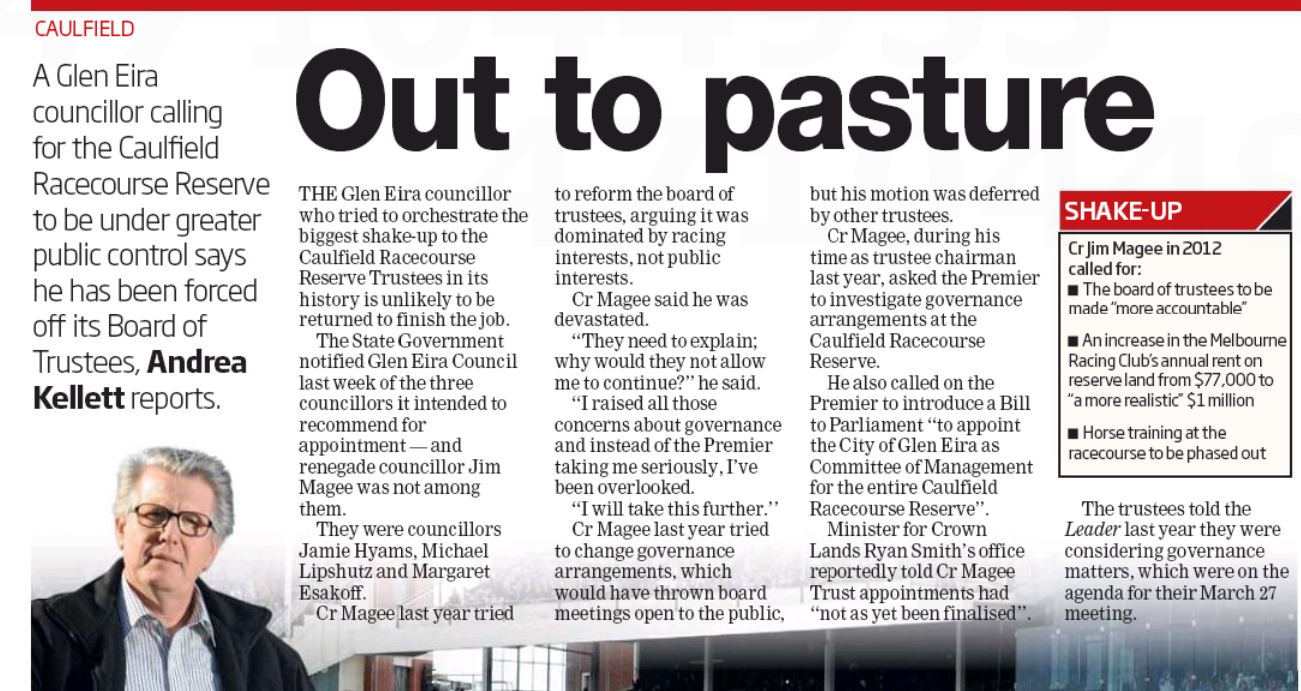
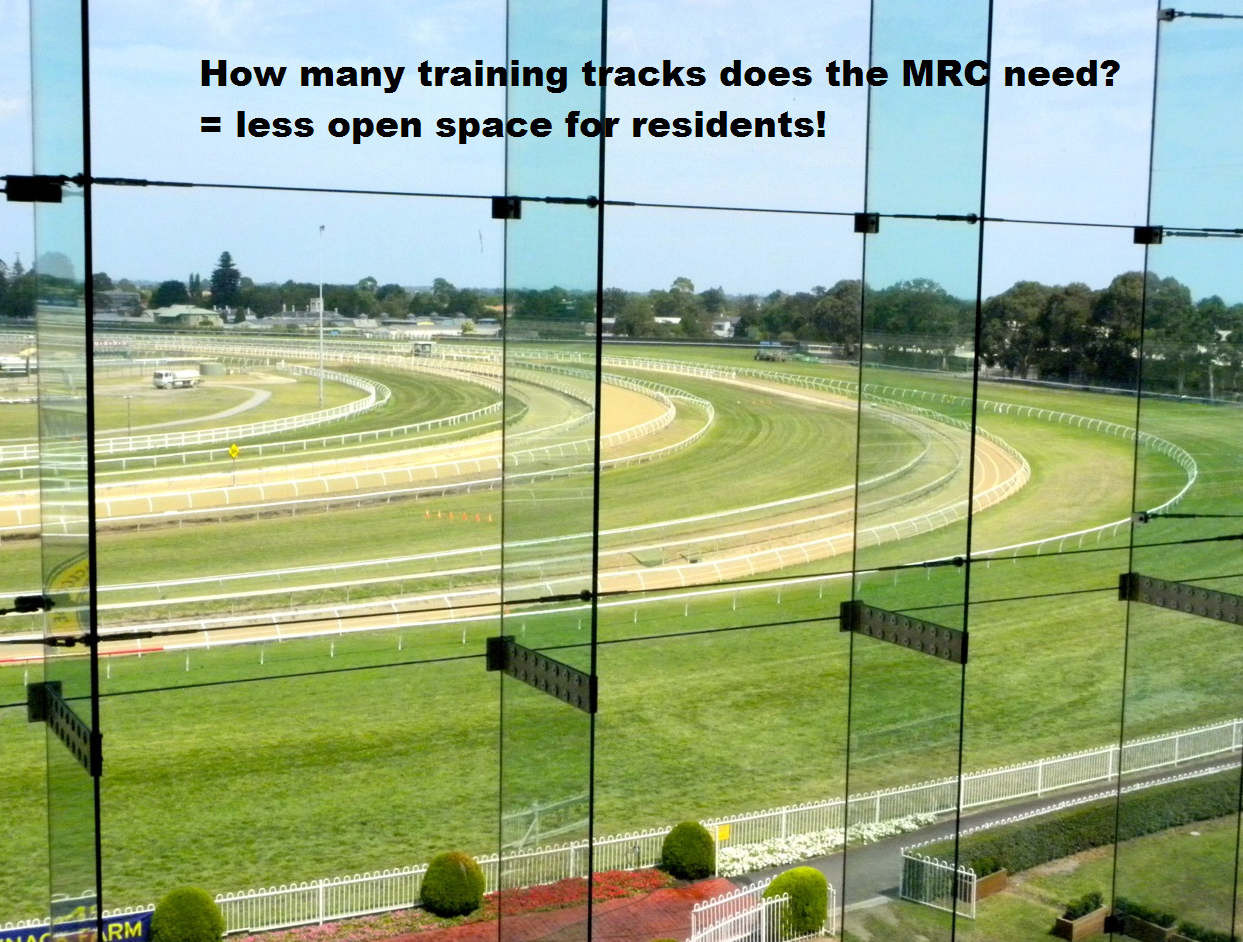
Magee’s report asked for whether in the ‘last few years’ demand has been ‘matched’ by supply for sports grounds. He also asked that included in the report be information on whether clubs have ‘exceeded their allocation’ and whether players have been turned away. Also asked for ‘advice’ on recreational ‘uses of the land’ in the ‘centre of the racecourse reserve’ if horse training was gone. He wanted this information in a ‘conceptual format’ rather than a ‘detailed format’ and that it should look at both ‘active and passive recreation’ and ‘not limited to soccer, football, netball’ and cricket. ‘all weather surfaces’ should also be looked at. This report should be ‘attained’ via external, qualified consultants. Delahunty seconded.

MAGEE: said his past experience has shown that they could have had more teams but these couldn’t be ‘accommodated’ because of lack of allocations and grounds so they had to tell kids to ‘go to Murrumbeena’ to ‘make sure they played somewhere’. Claimed that many clubs complain that they’ve applied for so many allocations but only been given a minimum of grounds. ‘how do we turn away these children?’ Said that there are 40 or 50 extra teams that ‘we can’t accommodate’ so its ‘throughout the municipality’ and not just one club. Went on to say that he looks at the racecourse and after ‘going through contract after contract’ (as a trustee of the racecourse) and knowing what the centre ‘was meant to be’ (park, recreation, racing). ‘It has never been used’ as a recreational park. Said that in 2 years time there is the end of one maintenance lease and that the view of the trustees is to get rid of this and ‘incorporate the centre of the racecourse into a 21 year lease’ so that in ‘2 years time we will miss the opportunity’ to do anything. He wants an ‘independent’ assessment and if the report come back saying that the ‘centre of the racecourse is not suitable’ he would accept it but ‘doubts’ that this will be the outcome of the report. He wants to know how many kids have not been part of organised sport because they couldn’t be ‘accommodated’. Not fair on administrators and clubs and having to say to kids ‘you’re a victim of your own success’. this is an opportunity to ‘get all the facts, all the figures’. Could cost $10,000 but thinks that ‘at some point’ this council has to say – “here is our plan for the centre of the racecourse’ and sport in Glen Eira. ‘Where are we in ten years time’ whether council will still be saying ‘bloody racecourse – we should be using that’ space. Said that people ask where ‘training is going to go’ and that he’d pulled out press releases which showed the government pouring ‘heaps of money’ into Packenham and Moe racecourses who are welcoming new trainers. Moving training to these areas shouldn’t ‘upset too many people’ but will ‘make a huge difference to the people of Glen Eira’. Mentioned the agreement which said that the MRC ‘wanted training removed’ because it costs them 1 million per annum but noone is doing anything. Council ‘needs to be proactive’ because nothing ‘has happened’ in the past decade and unless they get active, nothing will happen in the next ten years except that in 2 years time ‘a 21 year lease will be signed’. With state and federal elections looming council should be ‘advocating’ for the proper split of the racecourse (park, recreation, racing). councillors shouldn’t oppose this request for a report because it’s ‘not an action’ and not saying that we’re ‘doing anything’ just calling for information ‘so we can plan’ about the next 5 or ten years.

DELAHUNTY: supports the motion. Need for ‘strategic thinking’ because ‘there’s no bigger issue’ in Glen Eira. Said council has to get it right and decisions have to be ‘underpinned’ on the ‘basis of knowledge’ and ‘independent reporting’. Said that with the MRC current ‘financial status’ she doesn’t see how they can turn away training and its their job as councillors ‘to make our position known’ that ‘they need to seek training elsewhere’ and ‘rearrange their business’. Said that the Caulfield Village will provide them with money so they should be able to move training elsewhere. But the c60 also says ‘how many more people are going to be calling for open space’ and if council does nothing then those people will have a ‘brilliant view of those horses training’ and they won’t have anywhere to do their own jogging. That’s ‘not right’. The report will tell them the potential uses of the land.

Lipshutz asked how much the report would cost. Burke replied that it would be in the ‘vicinity’ of between $8000 – $15000

LIPSHUTZ: ‘commended’ Magee’s ‘passion’ but logic was needed because Council doesn’t ‘own the racecourse’ and even the MRC doesn’t – it’s the trustees. The only way to settle the issue about the centre of the racecourse is to ‘advocate’ that the trustees be abolished and that a committee of ‘community management’ be set up which is ‘independent’. Everyone knows that the ‘majority’ of trustees are ‘in control of the MRC’ so this has to be dealt with first. Said that the agreement was ‘the best we could get’ at the time. He also wants to see ‘training go’. Council could spend the money and get the report ‘based on a theory’ and the future lease ‘will be signed irrespective of what we do’ because the MRC ‘controls the trust’. He supports the first part of Magee’s request for a report but not the. second. You can look now and see what you can put there. You don’t need to ‘plan that’. Recalled the Caulfield Master Plan and said that when they implemented that, council was criticised because they were implementing a plan that ‘was ten years old’. So getting a ‘conceptual plan’ that only tells us what we ‘already know’ isn’t ‘going to achieve a hell of a lot’. Part 2 of Magee’s request is ‘nonsensical’ and a proposal which isn’t ‘appropriate’ and to spend $150000 on a plan that is only going to ‘gather dust’ and a ‘total waste’. ‘Let’s advocate’.

OKOTEL asked whether the open space strategy review will be looking at the ‘actual uses’ of that open space. Burke answered ‘not in relation’ to the racecourse. It also won’t ‘go into detail’ because it’s not land that is ‘directly under council’s control’. Okotel repeated and clarified her original question asking whether the open space strategy would look at the ‘potential uses’ of open space. Burke then said ‘It will’ but not necessarily ‘in relation’ to the MRC site.

LOBO: said that what they’re not realising is that if the report is $15,000, then the value of the land is $2 billion. Said that ‘we need to exercise our authority’ and help all those kids who are missing out.

SOUNNESS: supports the first part of the report ‘wholeheartedly’ but the second part lacks a ‘little clarity’. He understands ‘the principle’ and wants to see how the relationship with the MRC develops.

PILLING: said that the request was unusual because ‘it does involve cost’ and request for reports don’t usually do this. Because elections are coming up he did see ‘some merit’ in having an ‘advocating tool’. Thought that the money was ‘reasonable’ to ‘move things forward’

HYAMS: even though Glen Eira is short of open space, the centre of the racecourse shouldn’t be ‘seen as a panacea’. races will continue on Saturdays so you wouldn’t have sporting games then. You’d also have to build pavilions and other facilities and this would mean that people couldn’t see ‘right across the racecourse’ which is necessary. Supports the request except for the call for an independent consultant becaue he has ‘faith’ in council’s recreation department to do the job ‘more quickly’ because no need for tender and they’d probably get ‘the same result’. Asked Burke if ‘he felt officers would be capable’. Burke said ‘yes’ that they’ve got the sufficient ‘experience’ and skill.

Hyams then wanted to move the amendment that the last sentence be removed. Magee didn’t agree so Hyams moved the formal amendment. Okotel seconded.

Magee spoke against the amendment saying that ‘it was crucial’ that this remain not because he doubted officer’s ability but if they’re going toj present this to outside parties like government it was important that it be seen as entirely objective.

DELAHUNTY: also didn’t see the request for independents as a ‘comment’ on officers. It was a step to ‘ensure’ that it be seen as ‘independent’. It’s not ‘frivolous’ spending of money.

LOBO asked about the indpeendent off leash review how much it cost and was it independent. Hyams said he didn’t know off hand. Burke confirmed that it was done by an independent. Hyams then followed up with saying that on this issue officers didn’t have the necessary ‘expertise’ in the area so that’s why it was independent. Lobo then reaffirmed that it was ‘independent’ and that it would ‘be good’ to also get independent ‘advice’ here.

AMENDMENT PUT AND LOST. VOTING FOR THE AMENDMENT – OKOTEL, LIPSHUTZ, ESAKOFF, HYAMS.

VOTING AGAINST AMENDMENT – MAGEE, DELAHUNTY, LOBO, PILLNG,SOUNNESS

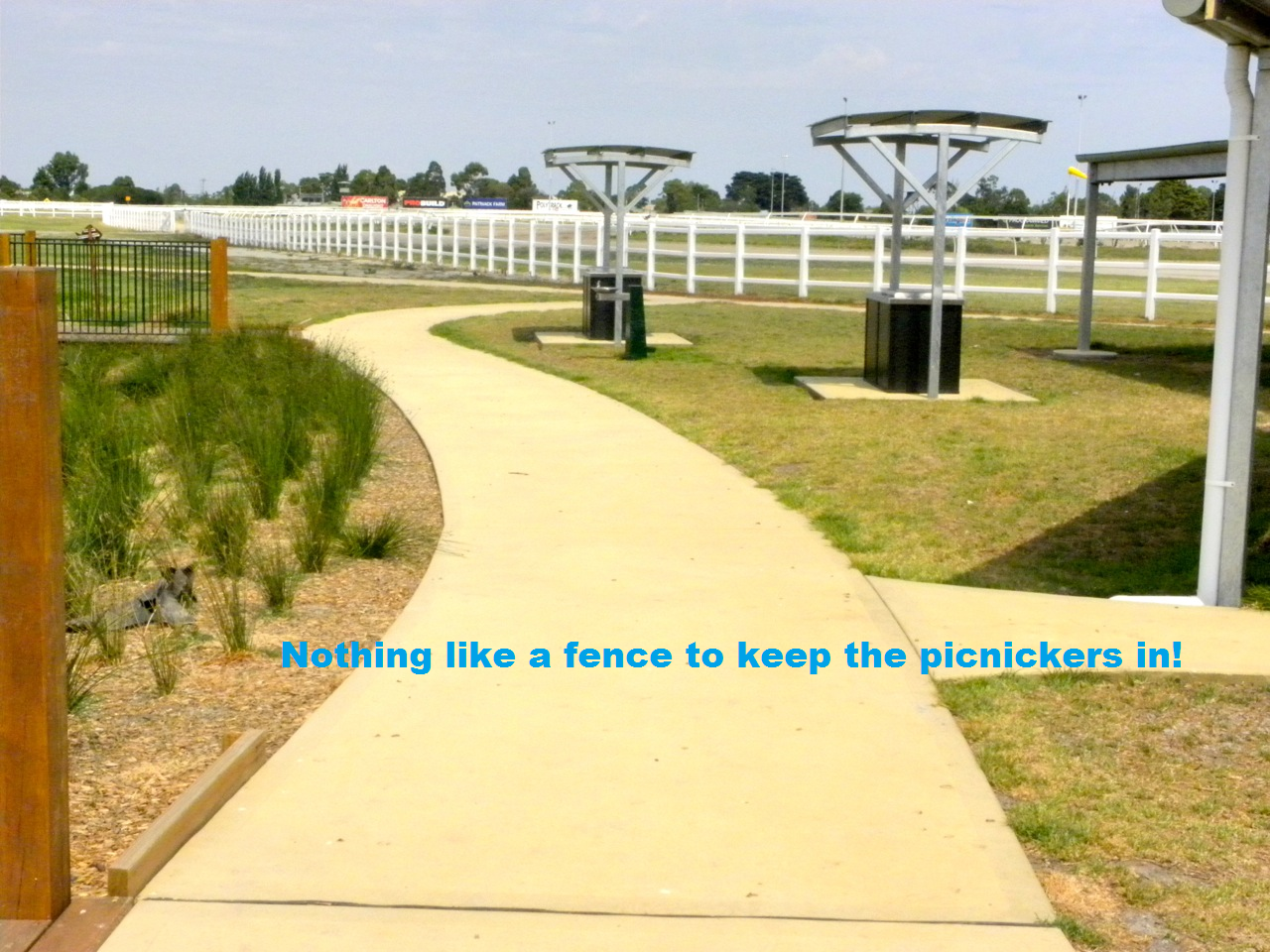
MAGEE: summed up by answering Lipshutz’s statement that the land was MRC’s land. He said ‘it’s crown land…it belongs to you and me’. Trustees are ruling body and that government has been called upon to review this. Went into the make-up of the trustee and said that ‘it’s in the mind’ of the premier and minister’s that ‘there is an issue here’ , Said that positive ‘comments’ had been coming from local MPs such as Southwick  that ‘he would like to see training gone’. Repeated that ‘this is a call for a report. Nothing more’. The money is ‘well spent’. Council needs to start ‘developing a policy, a framework, a direction’. For ten years nothing’s been done and no council has done anything about ‘opening up the centre of the racecourse’. There’s been a lot of talk but he’s seen ‘very, very little’. Said that there’s now a pathway and toilets but years ago those who parked in the centre of the course complained that they were ‘getting dirty’ getting to the stands because the grounds were muddy and if they ‘had to go back to their car’ there were ‘no toilets’. So the MRC did this and called it a ‘community thing. It’s for racing’. ‘It’s a great community asset if the community can get in there’ when they have to wait for the ‘gate to be opened…if the gate opens’. Said we need report and councillors to support him.

MOTION PUT AND CARRIED. VOTING FOR MOTION – MAGEE, DELAHUNTY, LOBO, PILLING, SOUNNESS, ESAKOFF

VOTING AGAINST – OKOTEL, LIPSHUTZ

PS: Here’s the Leader’s story/article on this issue –

Glen Eira Council to spend up to $15,000 investigating the availability of sports grounds.

  • Andrea Kellett
  • February 08, 2013 1:09PM

GLEN Eira Council will spent up to $15,000 investigating if local sports clubs are turning players away because of a lack of sports grounds.

An independent recreation specialist will be paid to advise the council, instead of council officers.

The specialist will also be instructed to look into opportunities for more sport in the city if horse training was relocated away from the Caulfield Racecourse Reserve.

Councillors clashed over the cost of a specialist, but agreed on the need for more open space, the need to look into claims that sports clubs were turning children away and the need to consider opportunities at the racecourse reserve.

Councillor Jim Magee told the meeting there were “40 or 50 extra teams that we can’t accommodate”.

Does your sports club have to turn players away? Tell us below.

“How many children in Glen Eira have missed out on playing sport?” he said.

“It’s crucial to the credibility of this report that it’s independent.”

CAR SHARING

SOUNNESS moved the motion that council ‘monitor’ the car sharing work done by other councils and that a report come back to council ‘in twelve months time’. Delahunty seconded.

SOUNNESS: started by saying that we all ‘drive cars’ and therefore need to park them ‘somewhere’ and that some people even have more than one car. Car sharing is one option but it’s ‘an idea’ and it needs to ‘mature’ which ‘isn’t here at the moment’. ‘Personally’ he thinks it’s a great idea and that it would be a ‘worthwhile community asset’ but only ‘when the time is right’.

DELAHUNTY: supports car sharing ‘very strongly’ and as this ‘moves forward’ in other councils, then Glen Eira should also have it. As a municipality close to the city it makes great sense to have car sharing especially around train stations. When others come from other muniicipalities and park in the car sharing spots then it’ll be good for local traders and environment. ‘we will keep a close eye on this’ and in 12 months she is of ‘no doubt’ that the report back to council will show that a trial ‘especially around Camden ward will be welcomed’.

MOTION PUT. PASSED UNANIMOUSLY

Below is our report on the second Glen Huntly Rd application. We suggest that readers pay careful attention to the following:

  • The total inanity of Sounness’ arguments – ie admitting that this is an ‘overdevelopment’ but that’s not ‘compelling’ enough reason to deny a permit! From a planner, this is an astounding statement!
  • Magee’s inconsistency! Vote in favour of no permit first off, and then turn around and vote for 3 storeys. Incomprehensible!
  • Please, please councillors, can we please discover a new vocabulary to justify the unjustifiable – “appropriate’ is becoming incredibly tiresome and meaningless
  • Consistency or lack of, is really baffling. Why not a motion to reject 8 storeys, but one to reject 4? especially when they’re on the same road and the planning scheme indicates this as a major transport/arterial road?

Here’s the discussion. It is not worthy of the label ‘debate’!

Lobo moved to reject on grounds of consistency with ‘urban design’, setbacks, streetscape, car parking, etc. Delahunty seconded.

LOBO: went into the history of the site (ie previous application for lesser no of storeys and dwellings). Said that previously there was ‘already the issue of overlooking’ and with a bigger size development now this will be worse for traffic. Lobo said that Glen Eira is ‘already a busy suburb with trains…..making a nuisance’. Said he was ‘concerned’ and asked himself ‘whom am I working for?’ – residents or developers? Mentioned the interface with minimal change, mass, overshadowing and the health issues associated with this. Will be a problem for residents who ‘pay their rates’ and will soon cop the fire levy.

DELAHUNTY: thought that Lobo summarised the ‘main issues’ such as car parking pretty well and protection of amenity. She therefore supported the motion to refuse.

PILLING: went into the history slightly but said that the developer had ‘redesigned’ the building and that this was a ‘reasonable site’ for this kind of application. Foreshadowed that if the motion failed he was going to move an alternate motion to accept.

ESAKOFF: thought that it was ‘an over-reaction in refusing’ but would wait for the foreshadowed motion.

LIPSHUTZ: supports Pilling ‘in what he said’. Went on to state that they’ve just approved a 6 storey building and this is only 4 storey so ‘it’s a little harsh’ to reject and he won’t support the motion.

MAGEE: said that Glen Huntly Rd had been ‘identified as a major opportunity for developers’ to ‘go for broke’ – ‘go for 8, go for 10, there is no height limits’…’have a crack and see what you can come up with’. Probably their applications would be ‘halved’ but ‘this is a failure of councils over many, many years’ (but not just the recent council or Glen Eira alone). Said that the planning scheme ‘doesn’t protect municipalities’. This is not in the shopping centre and they’re ‘still looking at 4 and 6 storey buildings’. Claimed that what was happening was ‘filling in the gaps’ and the reduction of 2 storeys here and there was pointless when it came to a 10 storey development. The result will be that ‘Glen Huntly Rd is (no longer) Glen Huntly Rd. ‘We need to show some courage here’, and reject the application. People live around here and ‘it’s not fair’. He wouldn’t want to ‘live next to sit’ so he’s not giving his vote for something that he wouldn’t like next door to him.

HYAMS: agreed that 4 storeys was ‘inappropriate’ because there’s nothing similar in the area ‘unlike the previous application’ – so 3 storeys is appropriate. Talked about ‘taking off the top floor’, setbacks, and laneways which meant that the impacts ‘wouldn’t be so severe’. By refusing it’s saying that this is ‘no good’ and it will go to vcat and vcat ‘will be relying on precedent’ and that what a rejection means is that ‘basically wasted council’s time’. Said that the question arose about whether councillors work for developers or residents but that when applications come ‘we’re not working for anyone’ and that what they are doing is function as a ‘judicial body’, ‘we’re applying planning law according to the planning law’. If ‘we were working for the residents’ then they’d be refusing ‘everything’ that there was an objection to. Then the govt would ‘in very short order say this is a complete farce’ and council’s power to decide would be ‘removed’. ‘What we need to do is apply the planning law appropriately’. Referred to Magee’s statement about failure of planning law. Hyams said that this is the result of ‘successive state governments’ so ‘you can’t blame councils’ who have to abide by the parameters. Soon with the reforms there will be hopefully the opportunity to ‘produce better outcomes’ when councils can have a say. Said that they work for residents in trying to produce the best law for Glen Eira and therefore they have to be ‘impartial’.

LOBO: didn’t have any more to say.

MOTION WAS PUT AND LOST. Voting in favour of motion – Lobo, Delahunty, Okotel, Magee.

AGAINST: Lipshutz, Esakoff, Hyams, Pilling, Sounness

Pilling then moved his foreshadowed motion to accept 3 storeys, etc. Seconded by Lipshutz

PILLING: said that the ‘size and scale’ of the building is pretty close to the original application that was approved by VCAT. Thought this was ‘a reasonable outcome’ and that by taking off one storey this ‘satisfies some of the residents’ concerns’ and is a ‘reasonable outcome to the streetscape’ and it’s ‘in line….with council policy’.

LIPSHUTZ: 4 storeys isn’t ‘appropriate’ and that there aren’t any longer ‘issues of overlooking’ or Lobo’s ‘concerns about people’s bathrooms’ and therefore ‘it is appropriate’.

SOUNNESS: just wanted this ‘for the record’ that he recognised tht there’s a permit for 3 storeys and 19 units that he would ‘prefer’ that now there is something ‘close’ to that number again, but council is increasing the number. Would prefer a greater reduction in units but even though ‘it’s an overdevelopment of the site’ that’s not ‘a compelling enough reason to refuse it’.

PUT TO THE VOTE. MOTION CARRIED. VOTING IN FAVOUR WERE – MAGEE, HYAMS, LIPSHUTZ, ESAKOFF, SOUNNESS, PILLING

AGAINST – OKOTEL, LOBO, DELAHUNTY

Lipshutz moved motion to permit 6 storeys, 4 shops, reduction in car parking and 45 dwellings.  Seconded by Sounness.

LIPSHUTZ: was ‘conscious’ of residents around area and that there were lots of high rise with ‘no infrastructure’ to go with them. Traffic is a problem especially with 6 storey development very close by. There is ‘creeping development’ and therefore he’s seeking to ‘reduce it to 6’ storeys which is ‘more in line’ with what’s already going up.

SOUNNESS: did ‘recognise’ that an urban village has got ‘certain features’ and that if this was close to a train station 8 storeys would be suitable. Since it’s not, then 6 storeys is “appropriate”. ‘Recognised’ that the ‘design of the building is good’. Said he was “a bit uncomfortable with 6′ but ‘can’t see any compelling reasons to refuse’ the application. For him, ‘6 is a compromise’. It’s not ideal but is better than refusal which ‘may not stand up to scrutiny at VCAT’.

DELAHUNTY: favoured a ‘refusal’. Said that there are more and more ‘high quality apartments’ and she does support high density living but ‘not at the expense of infrastructure’. Spoke about real estate agents telling people that Glen Eira is not like Richmond because Glen Eira doesn’t have the same open space problems, traffic problems, etc. But that in time ‘the more we allow’ these sorts of building to go up, then the more ‘we’ve moving towards being like Richmond’ and it’s the residents who have to put up with this. Said that until developers leave the city ‘as they found it’ (ie with open space, ‘and traffic catered for’) she won’t support this application/motion.

LOBO: Said that councillors had promised not to ‘encourage development of such monstrosity’. Said that people want to know the definition of ‘intense development’. Lobo then asked Akehurst to define it. Akehurst  said that the terms of ‘low, medium, high’ density aren’t defined in the Planning Scheme. Lobo then quoted from the planning scheme about being as ‘sympathetic as possible to neighbourhood character’ and wanted to know how the state was going to achieve a population of 5 million people. Asked ‘why are we ignoring’ transport’… ‘this is beyond my comprehension’. Said that the policy from 1999 ‘needs a review’ and that Rescode recipe for parking spaces ‘is a joke’ since most dwellings have 2 cars and people don’t always use public tranport. Went on to talk about overshadowing, and overlooking ‘neighbours bathroom’ so people can’t have showers ‘in their birthday suits’ and will possibly end up ‘using pyjamas’ whilst showering. Said that it’s ‘disappointing’ that councillors are now reneging on the election promises.

PILLING: ‘sympathised’ with Lobo and Delahunty but refusing isn’t the answer as it ‘will lead to’ vcat perhaps giving 8 storeys. This solution of 6 storeys is ‘more practical outcome’. Also said that ‘looking at the bigger picture’ there are issues about height and that there’s ‘increasingly’ a diversion of views between councillors and the community about ‘what is a reasonable height’. Said that that’s where the ‘heart of the issue lies’ and that all they’ve been doing is ‘tinkering’ at the edges and that ‘we really need to develop a more solid approach’ so that when developers come to council they fully know ‘what’s expected’. Said that this is worse than the previous 12 storey application in Carnegie because the Carnegie one was at least a ‘commercial’ area but this one is smaller and backs onto 2 storey places. Said that there ‘needs to be more guidance’ about height levels and expectations because ‘at the moment the sky….is the limit’. Said he ‘wasn’t sure’ about the answer, but knew that they ‘had to do something’ because at ‘the moment it’s become increasingly ad hoc’.

HYAMS: asked Lobo whether he said that Lipshutz was ignoring the recommendations of transport planning. Lobo answered that he didn’t say that and Hyams then ‘confirmed’ that Lobo ‘didn’t say that we were ignoring’ transport recommendations. Said that Lobo talked about what councillors said in election campaigns but that he only said that he would ‘be opposing inappropriate development’ and ‘inappropriate’ is all in ‘the eye of the beholder’. It doesn’t mean ‘oppose everything’ and that people have to ‘apply the planning law’ in order to decide whether an application is ‘appropriate or not’. Said this was an urban village and went on to list the cirteria such as size, orientation, etc. He agreed that ‘8 storeys is too high’ but since there was going to be 6 storeys near Coles, that this one was ‘probably appropriate’. Went on to talk about how the impact was taken into consideration by the waste management plan and other imposed conditions. Agreed with Pilling’s concerns about height and said that ‘it is a bit of a dog’s breakfast’. Said that a problem was that if you set height limits then ‘people will build up to that height and you can’t stop them’ but if you don’t have height limits and let each application be ‘judged on its merits’ then you could get ‘better outcomes’. Also council policies ‘aren’t enforceable at VCAT’. Talked about the zoning reforms and that these would be ‘prescriptive’ so the ‘greater certainty’ that they want will ‘come in’ in the next year or so. In this case he thought that Lipshutz’s motion was ‘appropriate’.

LIPSHUTZ: said that both Lobo and Delahunty had identified ‘deficiencies in the planning system’. Said that Melbourne was going to get higher density without sufficient transport, but all this isn’t ‘for us to decide’. Said that things aren’t going to stay the same. Councillors have to make decisions on planning law and they are a ‘quasi tribunal’ and the ‘law is not scientific’ and on what each individual regards ‘as appropriate or inappropriate’. Said he’d like to see no changes along Glen Huntly Rd but ‘that isn’t going to happen’ and that by voting against he’s ‘not doing anyone a service’ because the ‘developer will go to VCAT and get his 8 storeys’. Putting down 6 storeys means that ‘you can go to vcat and argue that cogently’/ It’s ‘nice’ to be populist but that’s not ‘realistic’ and ‘I’d rather be realistic’. 6 storeys ‘is a compromise’ but which ‘vcat more than likely will support’.

MOTION PUT. Lobo asked for a division.

IN FAVOUR – PILLING, ESAKOFF, LIPSHUTZ, HYAMS, SOUNNESS, OKOTEL

AGAINST – DELAHUNTY, LOBO, MAGEE

A very quick summary of the decisions from tonight’s council meeting. There were no surprises. The same old cliches, contradictions, and lamentable arguments were trotted out on cue. The gang has now definitely recruited another member – Thomas Sounness to join Pilling!

We will provide a full account of the ‘debate’ in the days ahead. Here are the outcomes:

1. 8 storey Glen Huntly Rd – reduced to 6 storeys.

2. 4 storey Glen Huntly Rd – reduced to 3 storeys

3. James St – reduced by one unit

4. Tree Register – passed – but all in the hands of officers and will account for less than 1% of trees

5. Car sharing – another ‘review’ in a year’s time!

6. Public questions – none answered satisfactorily

7. Magee’s Request for a Report – after much argey bargey finally got through plus $15,000 expenditure on ‘external’ report by consultant.

« Previous PageNext Page »