
October 20, 2015
October 19, 2015
October 16, 2015
Here’s an important question. How do you ‘prove’ that as an organisation you’re going from strength to strength? That you are giving value for money to your clientele? That you are efficient, responsible, and client oriented? Well, for local government we have what is known as the Best Value Reports. The aim of these, according to legislation, is to quantify and prove that you’re on the road to ‘continuous improvement’.
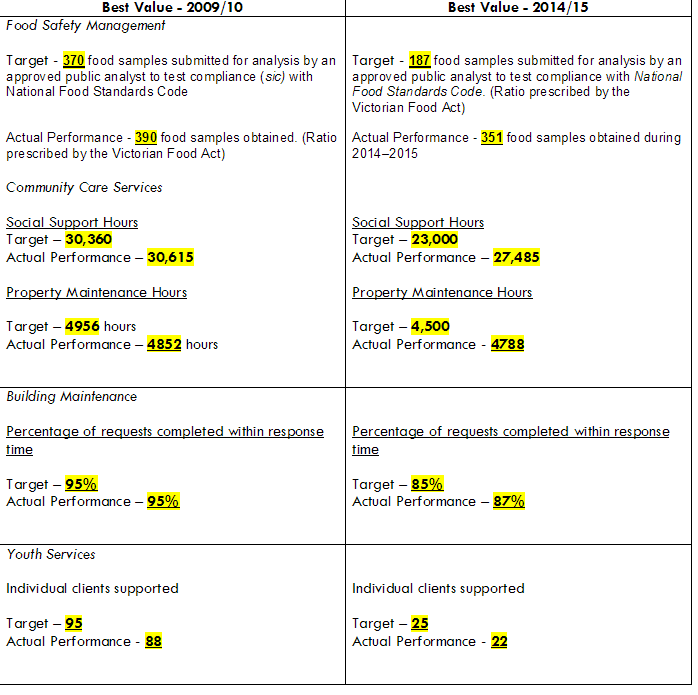
Glen Eira City Council has developed its Best Value reporting into a fine art. They manage to show ‘continuous improvement’ by literally changing the goal posts. For example: there are ‘targets’ set and then actual performance for the year is stated against those targets. Thus, if this year the target for home care building help is 4,500 hours and council achieves 4,788 hours, not only is the target exceeded, but council is an unmitigated success here. Wrong! Because back in 2009/10 the target for this identical service just happened to be 4956 hours and the stated performance was 4,852 hours! Thus 5 years ago council was offering more and doing better than it is today! And remember, we’re supposed to be a municipality with an ageing population and thousands of residents who are entitled to pensioner or disability assistance.
When the 2009/10 Best Value Reports are compared to the 2014/15 version, then we really see how many services have gone backwards and how many goal posts have been shifted in order to gild the lily and to make council appear as wonderful performers. Nothing could be further from the truth on many of the areas listed on this comparison. That should make residents ask the obvious –
Here is a mere sample of some of comparisons between the 2009 and the 2015 versions of the Best Value Reports. We’ve upload both HERE (2009/10 and 2014/15) and urge readers to check these for themselves. Please also consider the waffle that constitutes the ‘continuous improvement’ sections and the often meaningless criteria attached to evaluating ‘success’ – such as publishing 4 editions of something.
Once again, it would appear that facts are malleable. If they don’t fit the image you are trying to project, then simply change those facts to accord with the success you need to fabricate. And whilst you’re at it – don’t tell your residents that this is what you are doing. We congratulate Council again on its superb sleight of hand!
October 14, 2015
PS – MORE SPIN!!!! – MAGEE ON 3AW YESTERDAY
PPS: 4 houses left in Elliott Avenue, Carnegie. Thank you council!
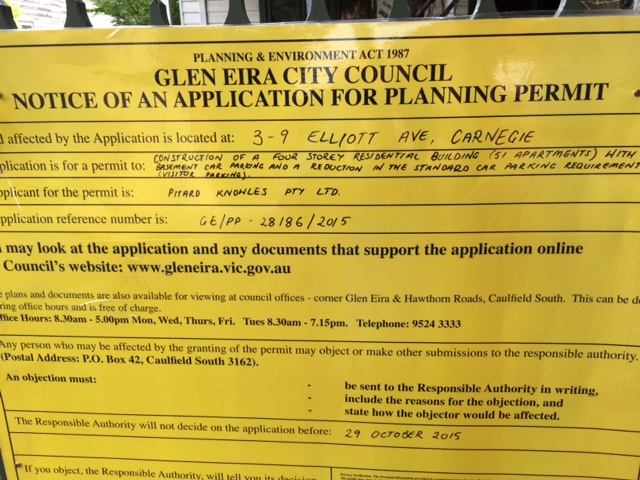
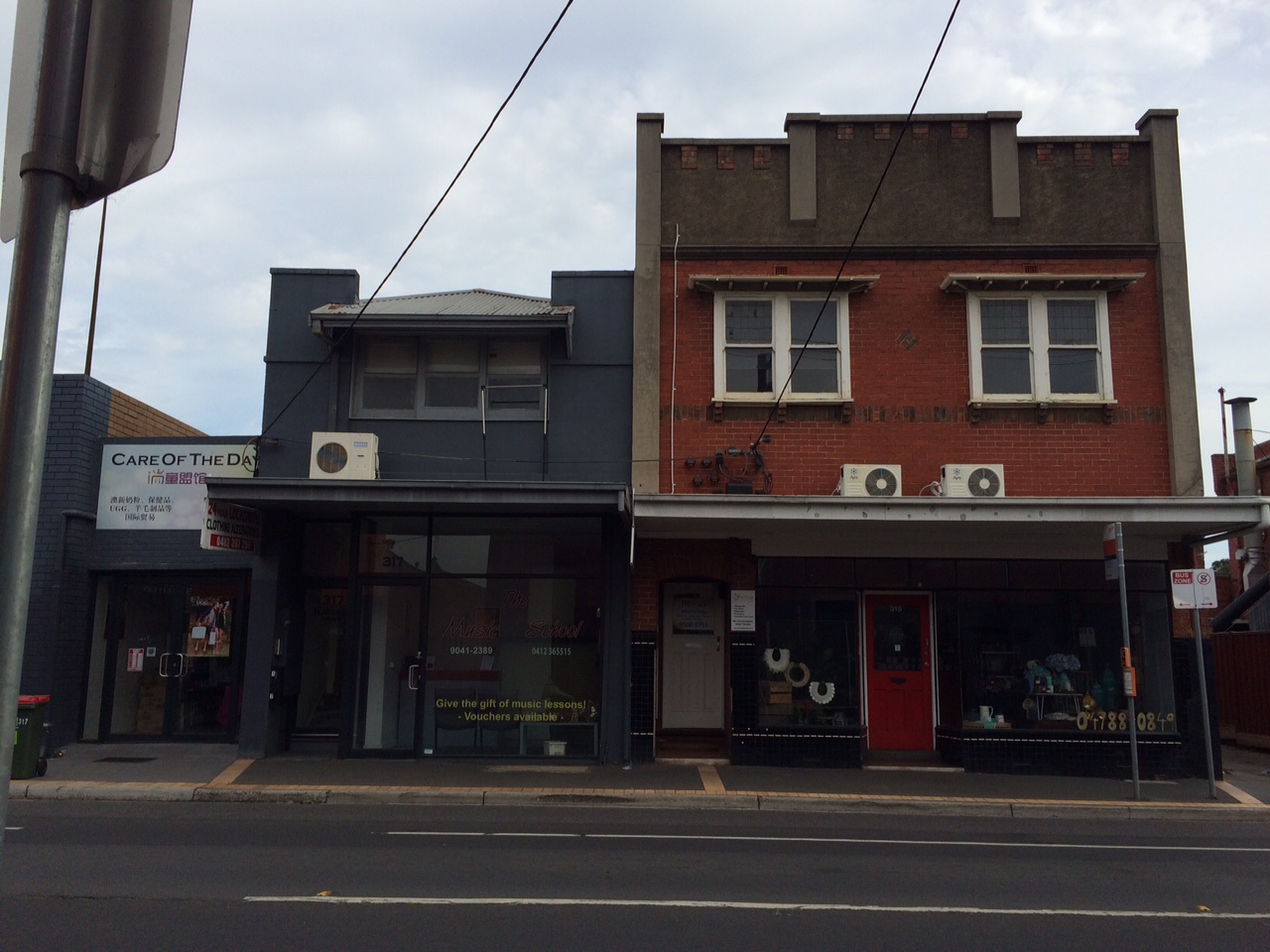
PLUS 7 STOREY APPLICATION FOR 317-319 NEERIM ROAD – BELOW!
It is one thing for a council to disseminate its rose coloured glasses view of its performance. Spin comes with the political territory. It is another thing entirely for a council to use public funds to promulgate falsehoods with the intention of misleading and deceiving residents.
The latest outrage comes with council’s announcement on its website that it will print and distribute a letter/flyer to every single resident in the municipality. (UPLOADED HERE) The claim is that this will cost 11 cents per letter. Be that as it may, please remember that all monies collected by a council are meant to be spent for the benefit of the community and NOT to engage in damage control, or to evade responsibility for the woeful planning performances that we have witnessed in the past few years. Council can spend thousands of dollars blaming everyone else except itself, but it can’t spend this same amount of money in ‘consulting’ the community when it really matters – ie the introduction of the residential zones.
What is absolutely inexcusable is the fact that in its epistle council has committed the sin of omission – or to all intents and purposes – it has lied. Whoever wrote the letter should be hauled over the coals, and whoever authorised it, should be dismissed. In our view, the buck stops at Newton’s desk. Such behaviour and deviousness is literally beyond the pale. And this cannot be another of council’s famous ‘clerical errors’. It is without doubt deliberate, premeditated, and disgusting!
We are referring of course to the ‘conveniently’ edited table presented below – 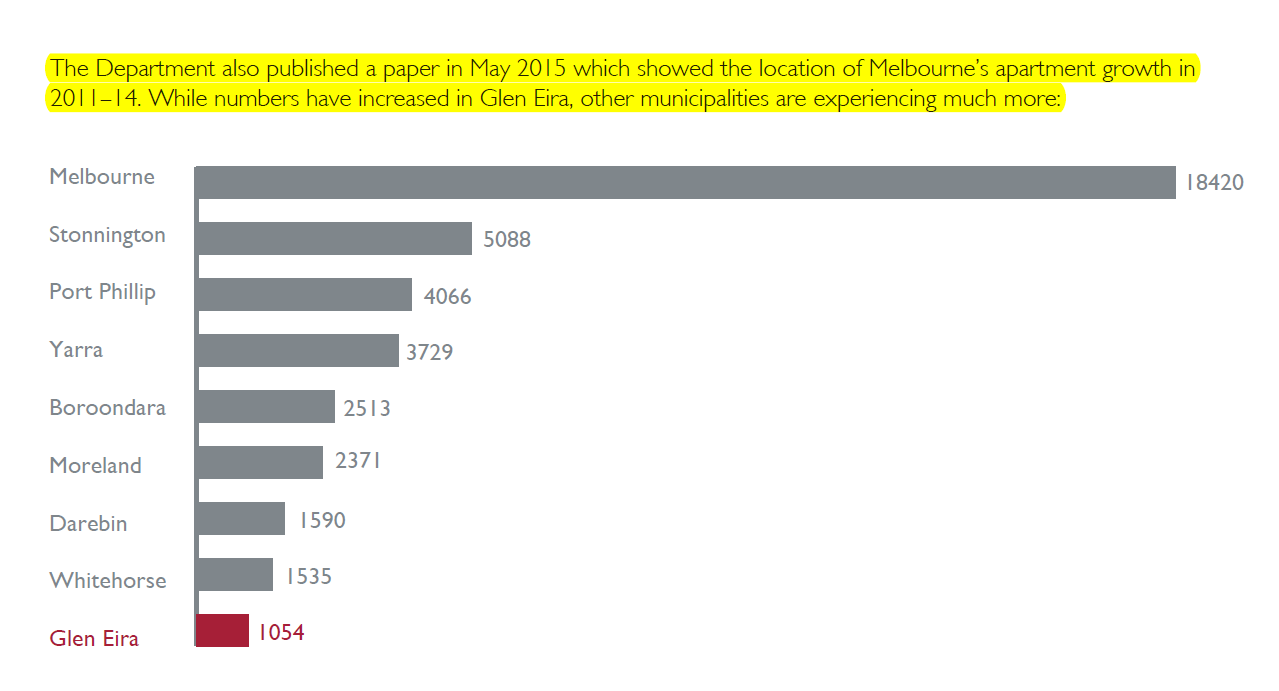
Any resident reading this could be forgiven for thinking that Glen Eira’s total number of new apartments equals 1054. The sentence speaks of ‘apartment growth’ – full stop. What this table deliberately avoids mentioning is that the figures relate to the NUMBER OF APARTMENTS ERECTED IN BUILDINGS OF 4 OR MORE STOREYS. Nor is the table itself complete. Glen Eira is ranked THIRD in this list – which has again been conveniently cropped so that the full story is not told. Never mind the fact that many of those municipalities with greater dwelling numbers also happen to have commercial zones 2 and 3 times the size of Glen Eira’s and that is where most 4 storeys dwellings have gone. (ie Stonnington has over 6% of its area zoned as commercial. Glen Eira has 2.2%)
Yet what makes matters even worse, and which points to the fact that either we are dealing with total incompetents with no corporate memory, or that this is another example of council’s manipulation of the facts and the truth. Council minutes of June 30th, 2015 (a short 3 and a bit months ago) featured an officer’s report on the State Government’s ‘Better Apartments Discussion Paper’ – where in fact this bar chart was first published. On page 110 of these minutes we find the following –
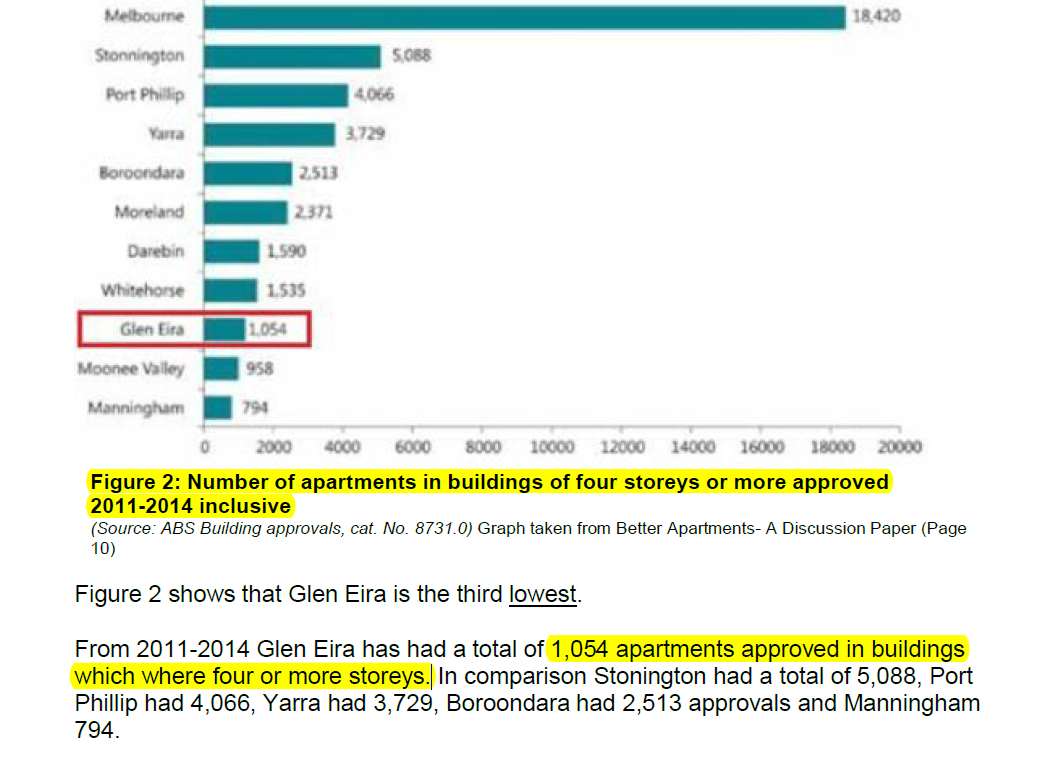
How convenient that residents:
We doubt that many residents bother to read council minutes. Thus they will be assailed with ‘information’ that is skewed, inaccurate, and intended, we believe, to deceive and mislead. Finally, when residents cannot trust the information that is disseminated by its council, then we are really in trouble.
October 14, 2015
Item 9.1 – MRC application for 30+ radio towers
Esakoff, Hyams and Lipshutz all declared a conflict of interest and left the chamber. Magee moved to accept the motion to refuse, plus that council write to the Minister & Department, plus all relevant MPs seeking permission to create 6 sporting ovals in the centre of the racecourse. Seconded by Delahunty.
MAGEE: stated that the application ‘in itself’ was fairly ‘innocuous’ but ‘far reaching’ since it ‘encroaches further and further’ onto crown land. For years there has been this encroachment by the MRC – ie ‘training track after training track being developed’, ‘large screens being built’ and application to ‘increase the size of the Tabaret’. There are 3 purposes for the racecourse (park, racing, etc) and that racing is ‘well and truly catered for’. Said that this application is to set up a ‘permanent structure on usable crown land’. Went over the lack of open space, the number of kids unable to play sport because of lack of grounds, and that ‘teams are capped’ turning away stacks of kids. There is a master plan being done and all the sporting clubs are saying this is a ‘great opportunity’ to have this open space for sport in the centre. Now council has the ‘opportunity’ to apply for use of the land. The MRC writes to the ‘authority’ and council is now wanting to do the same. Claimed that it ‘would be very hard’ for the Minister and Department to ‘actually refuse us’ given that they have approved the screens, etc. ‘We have waited far too long’ and ‘this open space belongs to you’. Said with this motion council will see who opposes them so they will have ‘someone to talk to’.
DELAHUNTY: said that it’s a ‘hard act’ to follow Magee since he is so ‘passionate’ and speaks so ‘eloquently’. Racing is already ‘well catered for’ so ‘this doesn’t meet the objectives of’ the Crown Land Grant. Council takes the Open Space Strategy ‘very seriously’ and the application ‘flies in the face of those strategic objectives’ so it behoves council to refuse the application. The motion is moving forward towards achieving sporting fields and open space.
SOUNNESS: said he wasn’t speaking against the spirit of the refusal but thought that the bit about the ‘tipping point is weak’. If this went to VCAT it would ‘prove to be a less than successful’ outcome. Endorsed the other part of the motion and there should be the opportunity for the ‘public to enjoy’ the course. Repeated that he has got ‘reservations’ about the ‘tipping point’ since there have been ‘other applications’ that were equally the ‘tipping point’.
PILLING: endorsed part 2 of the motion but on the refusal said that while he understands Sounness’ points he doesn’t agree since there will be visual impact to Queen’s Avenue since the land is already raised and did think that council ‘can justify’ the motion.
OKOTEL: supported the motion because this would create a ‘visual impact’ and park users ‘aren’t being adequately catered for at the moment’. Said that ‘at the moment’ access is ‘restricted’ and ‘what’s pleasing’ is that ‘now action is taken’ in the attempt to ‘move forward’ and ‘discover who might be responsible for that blockage’ to permission. The motion ‘will weed out’ those responsible ‘for the blockage’.
LOBO: all applications are about ‘horse racing, horse racing’ and they ‘don’t regard’ the community. They have ‘denied the rights of the community’. There is a lack of sports grounds and council even had to hire ‘independent consultants’ to work out what sporting grounds are needed. The MRC has ‘done nothing but given grief to the community’. The lease ‘has expired’ and hasn’t been ‘renewed for years’; the Auditor General delivered his report and ‘caulfield racecourse does not seem to care’. Council ‘doesn’t get a cent from huge earnings of Caulfield racecourse’ in fact they pay reduced rates.
MAGEE: said that the 2008 report from the parliamentary committee was ‘scathing’ and so was the VEAC report and then the Auditor General’s report. A year down the track and none of his recommendations ‘are yet to be implemented’. Stated that ‘in his heart’ he thought there would be ‘changes’ and that the new Minister would do her best to make things change. Said that the motion means that council is ‘moving forward’ and they can see if there is anyone who is trying to ‘stop us’. The MRC do ‘look after the racecourse very well’ and is one of the best courses in the world and council wants racing to stay but they also want to ‘share the ground’.
MOTION PUT. ONLY COUNCILLOR TO VOTE AGAINST – SOUNNESS
COMMENTS
October 13, 2015
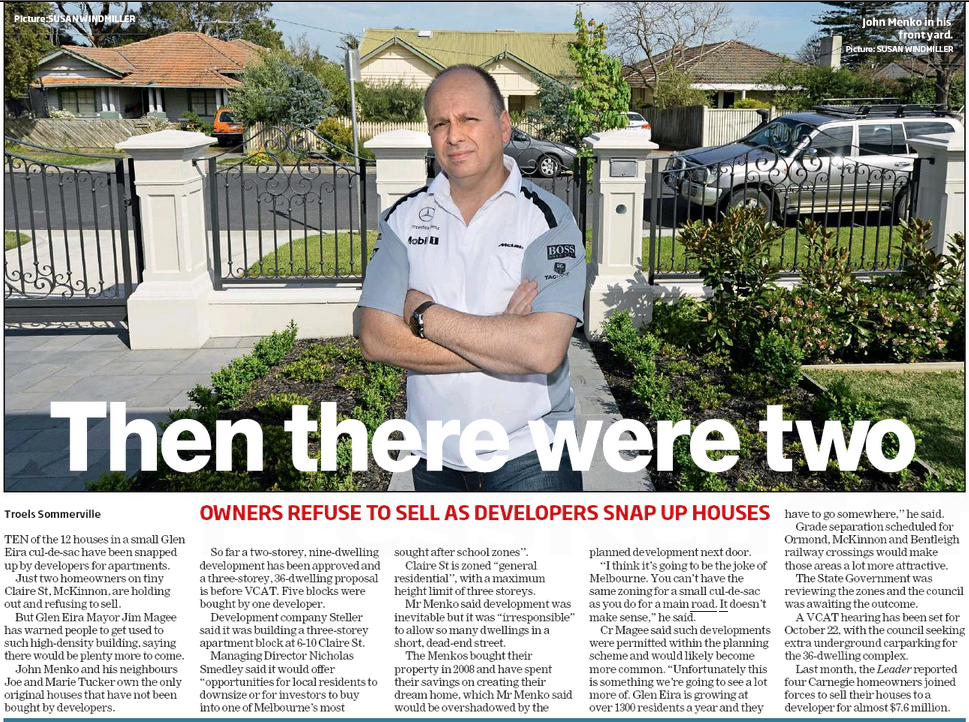
WATCH THE VIDEO FROM ‘THE AGE – DOMAIN’. IT SAYS IT ALL!
CLICK TO ENLARGE
October 11, 2015
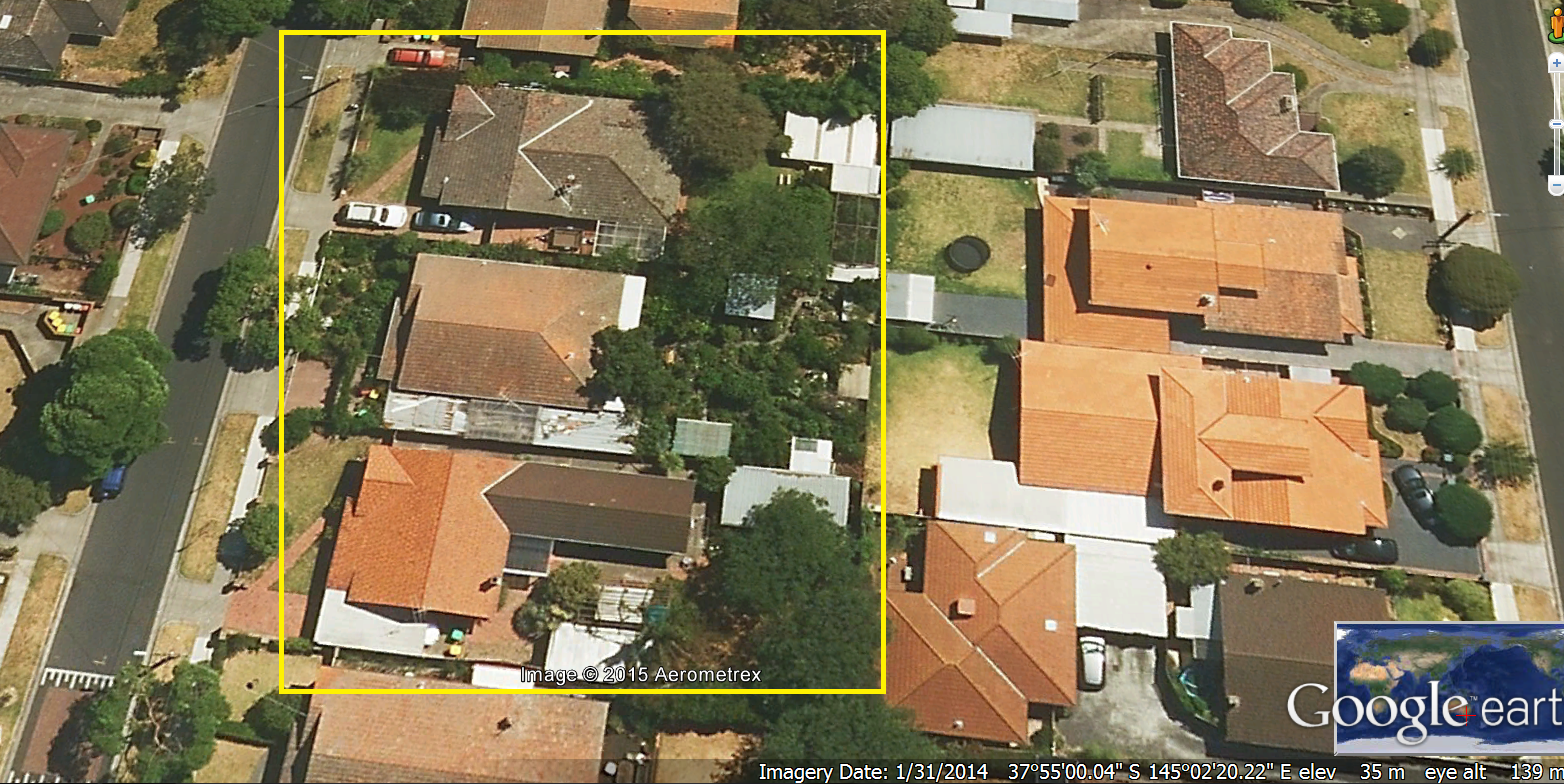
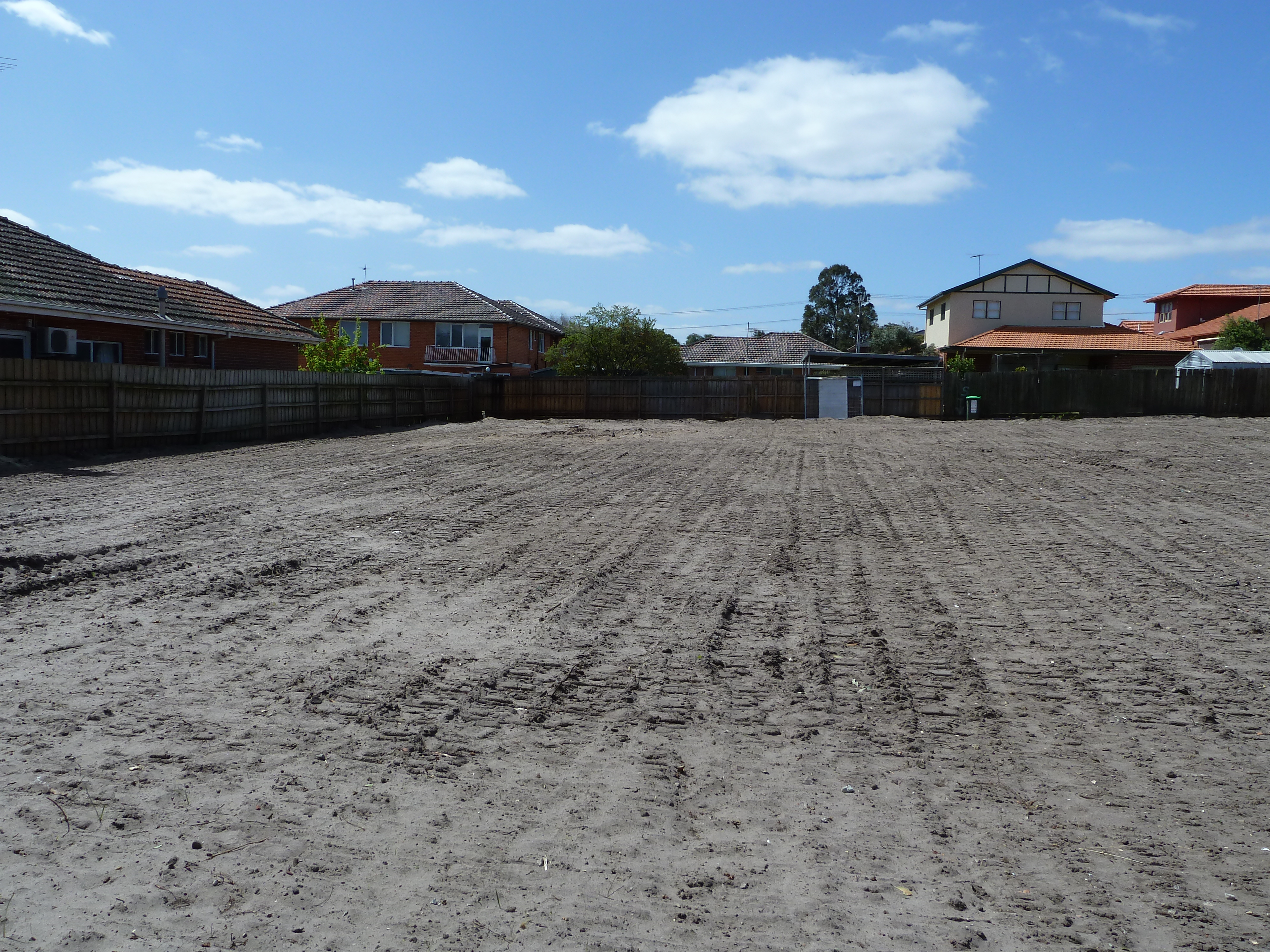
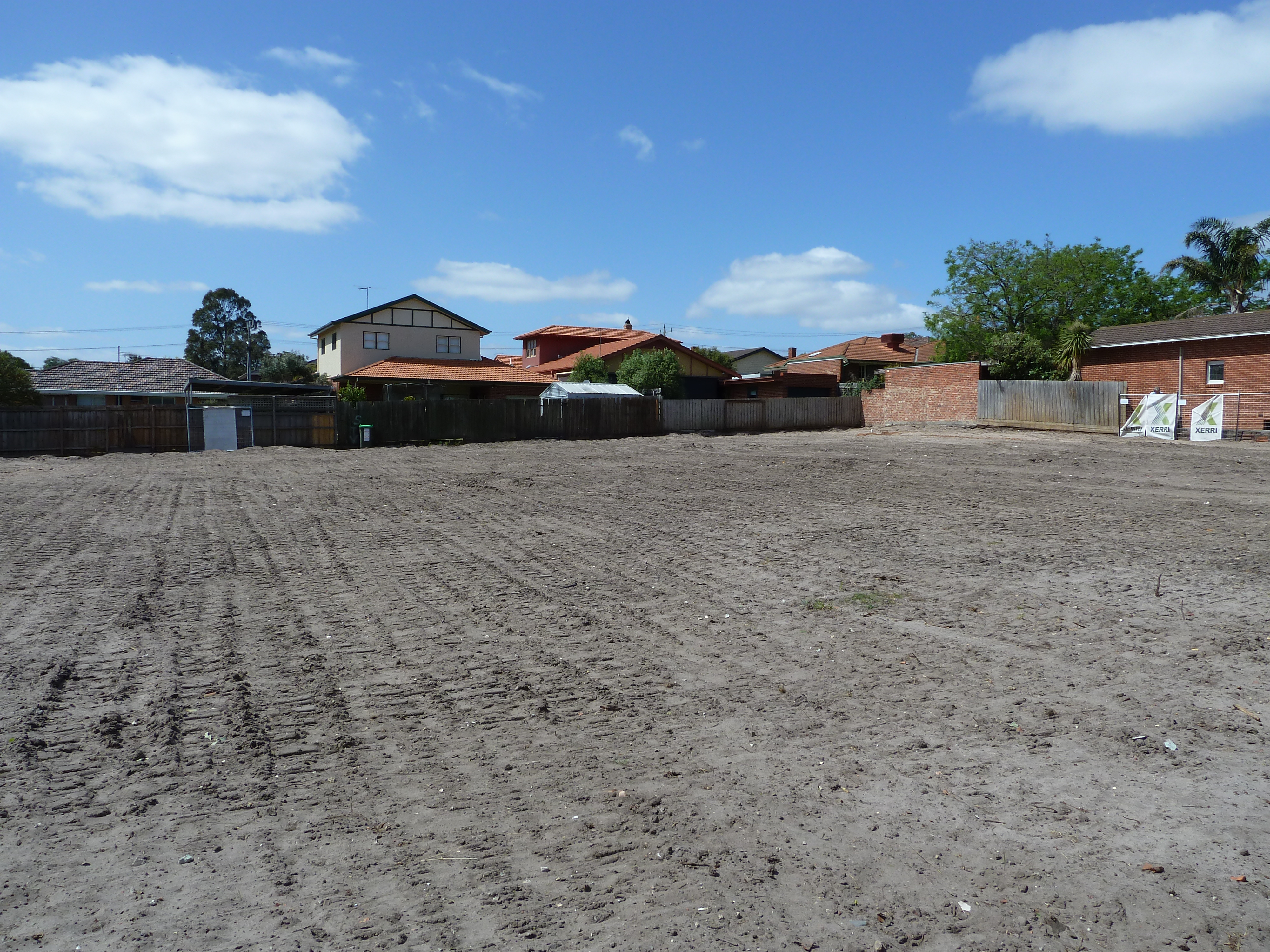
PS: An amended permit is now being sought for this development. Whilst there is a reduction in the number of single bedroom apartments and an increase in two bedroom ones, the vast majority of changes include a REDUCTION IN SETBACKS! Next door to this development is a single storey dwelling, and next door to this, another consolidated site of 3 properties has also been razed to the ground without a single blade of grass remaining.
The photos below depict the ‘before and after’ of the first 3 property sale in Bent Street, Bentleigh. Yet, this council has the gall to claim that its planning scheme is sufficient to protect against moonscaping!
October 9, 2015
We congratulate council for producing an agenda that will set a new benchmark for incompetence, plain old bullshit, waffling generalisations, as well as fulfilling the ‘damage control’ agenda given the looming election. We literally could not stop laughing at some of the arrant nonsense produced by so called ‘professionals’.
A caveat! We are not suggesting that the following are worthy of permits. What we are focusing on is the quality, or rather the lack of quality so evident in the officers’ reports.
Item 9.1 – MRC application for the radio (timing) towers –ie the erection of 30+ antennaes and bases on the reserve – with some on crown land. Council officer recommendation is a ‘refusal’. We draw readers’ attention to the following quotes from the Ron Torres report –
It is acknowledged that other buildings and works including construction of a permanent infield electronic screen have been approved in the past. However, these are mostly at the northern end of the Crown Land where the bulk of the Race Course infrastructure is located. It is considered that the number, location and height of the purpose built poles are contrary to the purpose of the Public Park and Recreation Zone which seeks to ‘recognise areas for public recreation and open space’. It is considered the current application represents a ‘tipping point’ where the proposed works represent on over-emphasis of the use of the land as a racecourse. It is considered that the application does not adequately respect the balance of the use of the land as a public park area or the adjoining residential interface.
COMMENT: a 4 storey screen and now an outdoor ‘gourmet cinema’ with booze is NOT the ‘tipping point’, but this application is! And, a 4 storey screen plus a cinema also meets the criteria of a ‘public park’! And naturally a falling down fence along Queen’s Avenue that was supposed to be removed eons ago does wonders for the ‘residential interface’!
The proposed works do not contribute positively to local urban character and sense of place
COMMENT: urban? Really scraping the bottom of the excuses barrel on this one! That’s why Telstra towers and others are given permits everywhere – even on top of the town hall! These surely fit in with the ‘urban character’ and ‘open space’ of the municipality!
The works do not ensure the highest possible standards of built form and architecture
COMMENT: please explain! What are the ‘highest’ architectural standards for a radio tower?!!!!!!!!
Seven (7) of the purpose built poles are proposed to be installed along the eastern boundary, having direct views to the residential properties along Queens Avenue.
COMMENT: A road separates the poles and houses plus the poles are not directly on the fence. Hence, if this were an application for a three storey building and 40 units, we guarantee that we wouldn’t have such concerns when a road intervenes between properties. Please note that the poles will have ‘direct views’ – a euphemism perhaps for ‘overlooking’ for the possums/birds?
The proposed works do not reflect the particular characteristics, aspirations and cultural identity of the community (in particular; to retain public open space that is free from visual clutter)
COMMENT: what were the ‘aspirations and cultural identity of the community’ when C60 was rubber stamped? When a permit was given for a 4 storey screen on crown land? When an outdoor cinema got the green light? We also assume that council’s penchant for felling countless trees is really to reduce the ‘visual clutter’ within our parklands.
CONCLUSION: It is going to be absolutely fascinating to listen to the inevitable squirming that comes out of the mouths of most councillors on this one, especially when there is such limited ‘planning law’ to rely upon. Will Sounness vote ‘for’ on the basis of his usual stance – ie there are not sufficient ‘tools’ in the planning scheme to reject and it will go to VCAT anyway? Will Hyams and Lipshutz be consistent and vote ‘for’ since they keep claiming they have to apply ‘quasi-judicial’ planning law? Will any of these councillors have the guts to vote for a permit when the officer’s report says ‘no’?
And what of the Torres recommendation in itself? What to make of this refusal? In our view it does not stand a hope in hell of getting tossed out at VCAT – not because of VCAT’s generosity, nor even because of the power of the MRC and its political allies. The bottom line is that the officer’s report is simply woeful and sub-standard (as shown by the above airy-fairy quotes, lack of detailed reference to the planning scheme, etc’). This is not a planning application rejection. It is passing the buck to VCAT as has now become customary for Glen Eira.
++++++++
ITEM 9.2 – planning application for 3 storey, 14 units at 86 Truganini Road, Carnegie. Torres continues the political agenda with a recommendation for refusal. The site is zoned GRZ2. We again urge readers to consider the following:
However, the policy (housing diversity) also seeks that the growth encouraged by the policy is sensitive of the interfaces with existing residential development on adjoining sites and respects the scale of existing residential development on adjoining sites.
The proposal fails to comply with several ResCode standards relating to neighbourhood character, street setbacks, site coverage, side and rear setbacks, north facing windows, design detail and front fences. The non-compliance with these standards is indicative of a design that is not site responsive and is an overdevelopment of the site.
Σ Maximum overall building height of 9.45 metres
Σ Site coverage of 60.9% per cent
Visual dominance of the development within the existing streetscape.
14 Apartments in total (12 x 2 bedroom apartments & 2 x 3 bedroom apartments)
Σ Basement car parking comprising of 28 car spaces in 14 stackers
Σ Reduction of 1 visitor car space
If the proposal is to proceed the street tree would need to be removed and replaced at cost to the permit holder. This is due to the location of the proposed crossover.
Visual dominance of the development within the existing streetscape.
We’ve refrained from commenting on each of the above, except to remind readers that:
86 Truganini Road CARNEGIE VIC 3163 – Construction of a three (3) storey building above basement car park comprising of up to fourteen (14) dwellings and a reduction of visitor car parking requirements on land affected by the Special Building Overlay
90 Truganini Road CARNEGIE VIC 3163 – The construction of a three (3) storey building above basement car parking comprising of thirteen (13) dwellings on land affected by the Special Building Overlay (Notice of refusal issued – 17/4/2015)
93-97 Truganini Road CARNEGIE VIC 3163 – Construction of a three-storey building comprising twenty-eight (28) dwellings with a basement car park and reduction of the dwelling (visitor) car parking requirement on land affected by the Special Building Overlay – Amending the endorsed plans to include changes to dwelling layouts, changes to windows and building setbacks and the addition of a front terrace on the second floor level. (amended permit issued – 22/12/2014)
98-100 Truganini Road CARNEGIE VIC 3163 – Construction of a 3-4 storey building comprising 28 dwellings with 2 levels of basement car parking on land affected by the Special Building Overlay (amended permit issued – 25/11/2014)
115 Truganini Road CARNEGIE VIC 3163 – Construction of a three (3) storey building comprising six (6) dwellings (amended permit issued – 16/9/2015)
9 Truganini Road CARNEGIE VIC 3163 – Construction of a four storey building comprising up to 20 dwellings above basement car park
44 Truganini Road CARNEGIE VIC 3163 – Construction of two (2) double storey attached dwellings on land affected by the Special Building Overlay (planning permit issued – 30/4/2015)
21-25 Truganini Road CARNEGIE VIC 3163 – Construction of a four (4) storey residential building comprising forty-one (41) dwellings plus basement car parking and a reduction in the associated visitor car parking requirements on land partially affected by the Special Building Overlay (amended permit issued – 23/2/2015)
124 Truganini Road CARNEGIE VIC 3163 – Construction of two (2) double-storey dwellings on land affected by the Special Building Overlay – Amended (planning permit issued – 12/8/2014)
21-25 Truganini Road CARNEGIE VIC 3163 – Construction of a four (4) storey residential building comprising forty-two (42) dwellings plus basement car parking and a reduction in the associated visitor car parking requirements on land partially affected by the Special Building Overlay (first council refusal – vcat decision to grant permit on 6/6/2014)
October 8, 2015
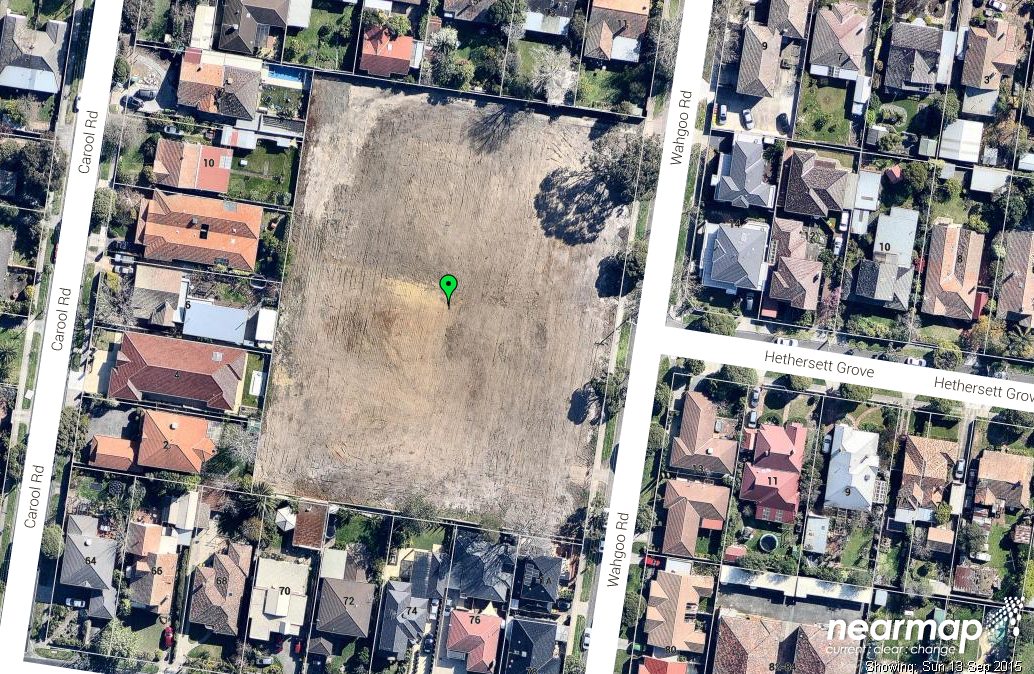
The skullduggery that has gone on over Frogmore and the Jewish Care aged care facility is literally scandalous. A permit application is currently waiting to be decided. It proposes to remove 88 of the 92 trees on site. Well, those trees no longer exist!
This says plenty about this council and its attitude to the environment. With no tree register and no will to stop moonscaping of sites, this is the result. We are also confident that council will not seek to impose any fine on Jewish Care for removing trees under the 12 months period stated in the planning scheme. We remind readers that the heritage report nominated 4 trees as having ‘significant’ status and to be given heritage status themselves.
It is quite appalling that this can happen. But since it is Glen Eira council, where profit and vested interests are far more important than environment, no-one should be surprised – merely outraged!
This Nearmap shot is dated 13 September 2015 – three weeks ago. They sure move fast!
October 7, 2015
The old saying of Lies, Damned Lies & Statistics depicts perfectly the spin department of Glen Eira. Definitions are non-existent and methodologies as to how various figures are derived remains unexplained. The spin doctors simply publish a figure with some neat ambiguous statement and these are purported to represent the truth, the whole truth and nothing but the truth. Far from it.
Several recent examples come from a Media Release and a sentence from last week’s Caulfield Leader (and repeated in a story this week)– “the tribunal (ie VCAT) approved 489 dwellings the council initially refused”(Caulfield Leader – page 9). The Media Release stated – “During the 2014-15 financial year, the Victorian Civil and Administrative Tribunal (VCAT) approved 489 dwellings that Glen Eira City Council had refused” (July 2015). What these quotes and figures don’t reveal is:
Much more significant, is the question of WHY VCAT granted permits for any of these supposedly refused applications? Over the past few months we have featured several VCAT decisions where the members have highlighted a litany of council stuff-ups and lack of adequate representation at the hearings. Time and again the public record of the decision shows that Council reps show up and are either ill-prepared, often provide spurious arguments, or are basically hamstrung by the Planning Scheme itself. We are in no way suggesting that VCAT is without fault and that the legislation governing this body is adequate. What we are alleging is that Council should start fixing its own house of horrors instead of continually and persistently resorting to the blame game where VCAT is portrayed as the sole villain.
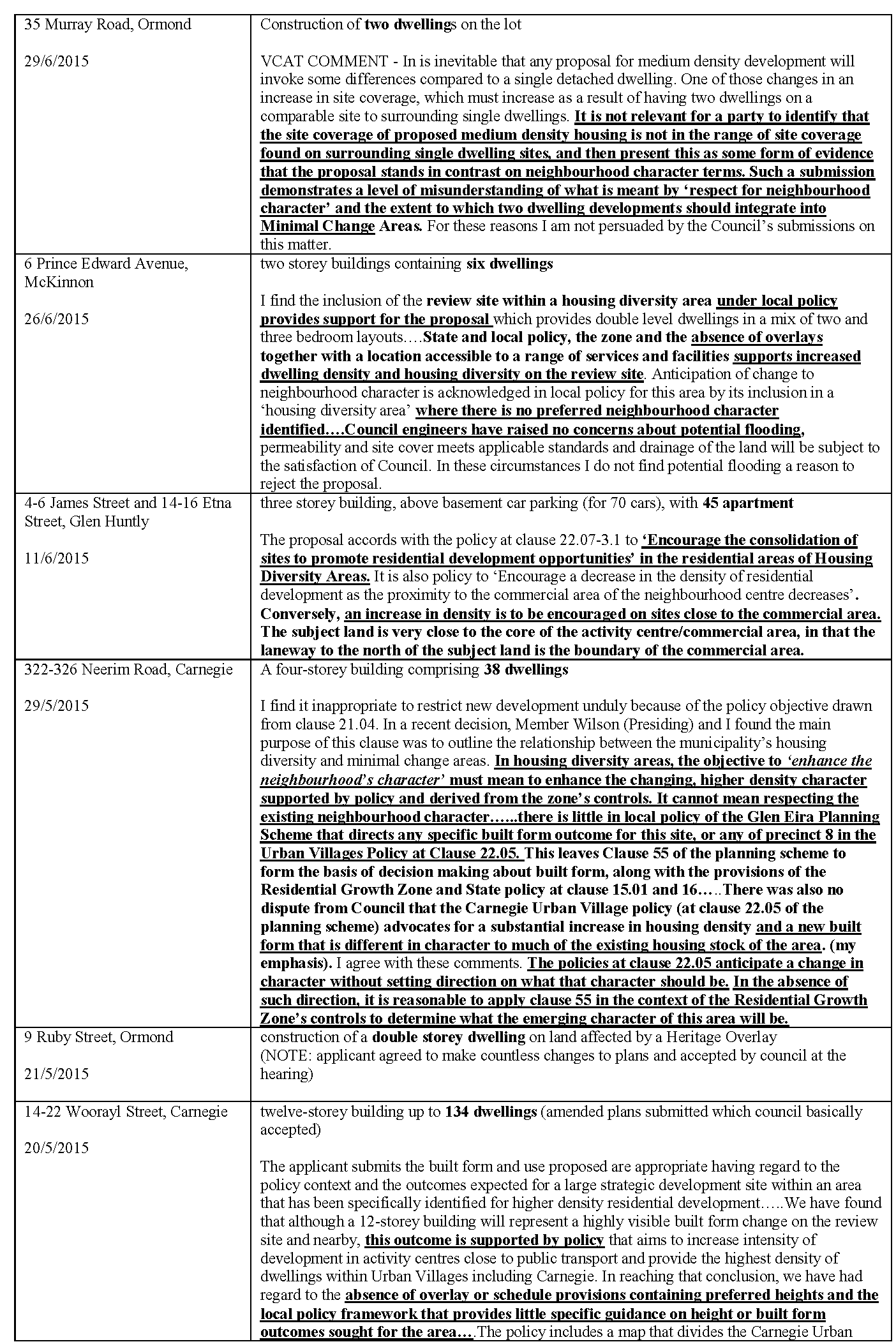
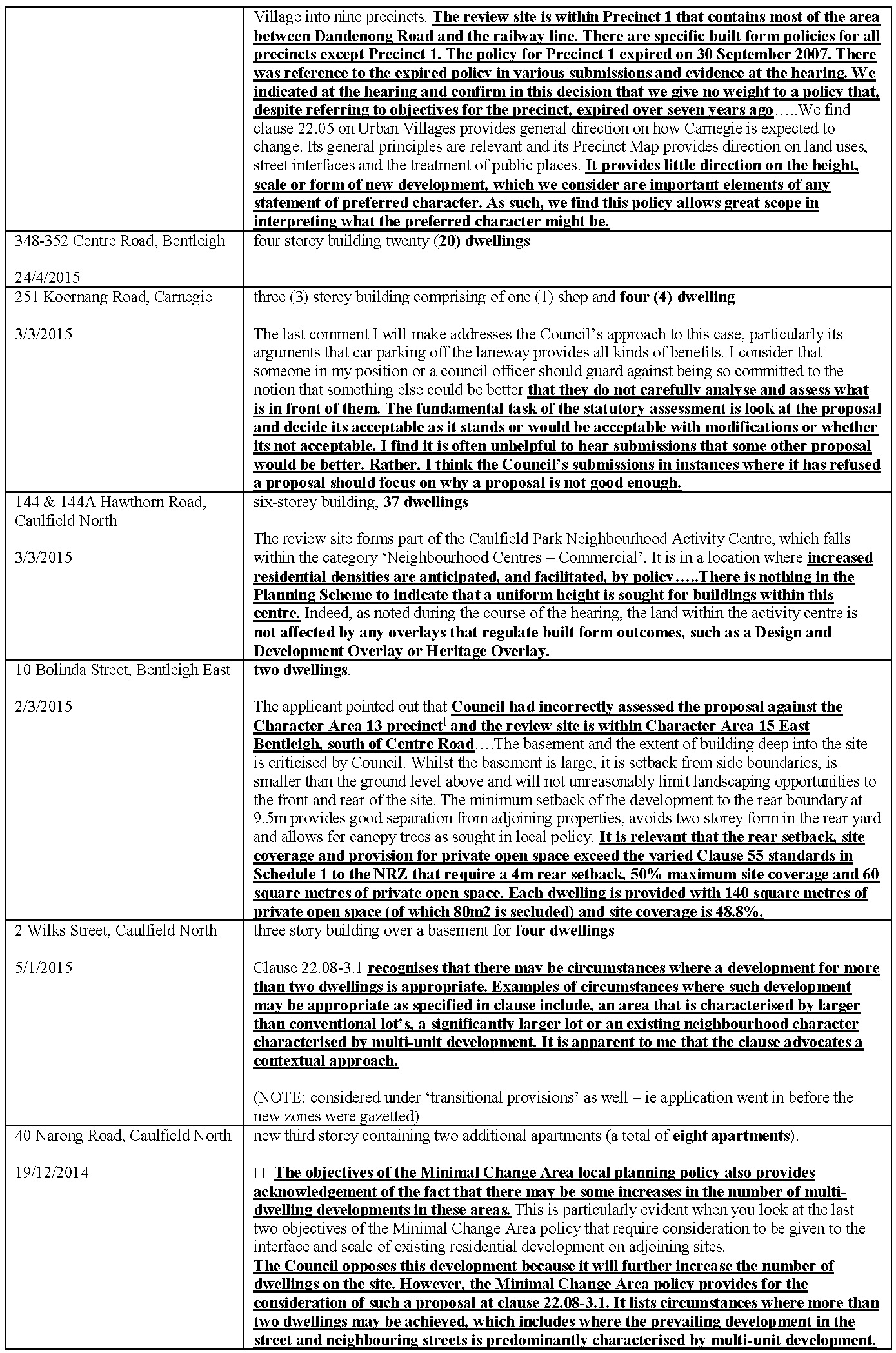
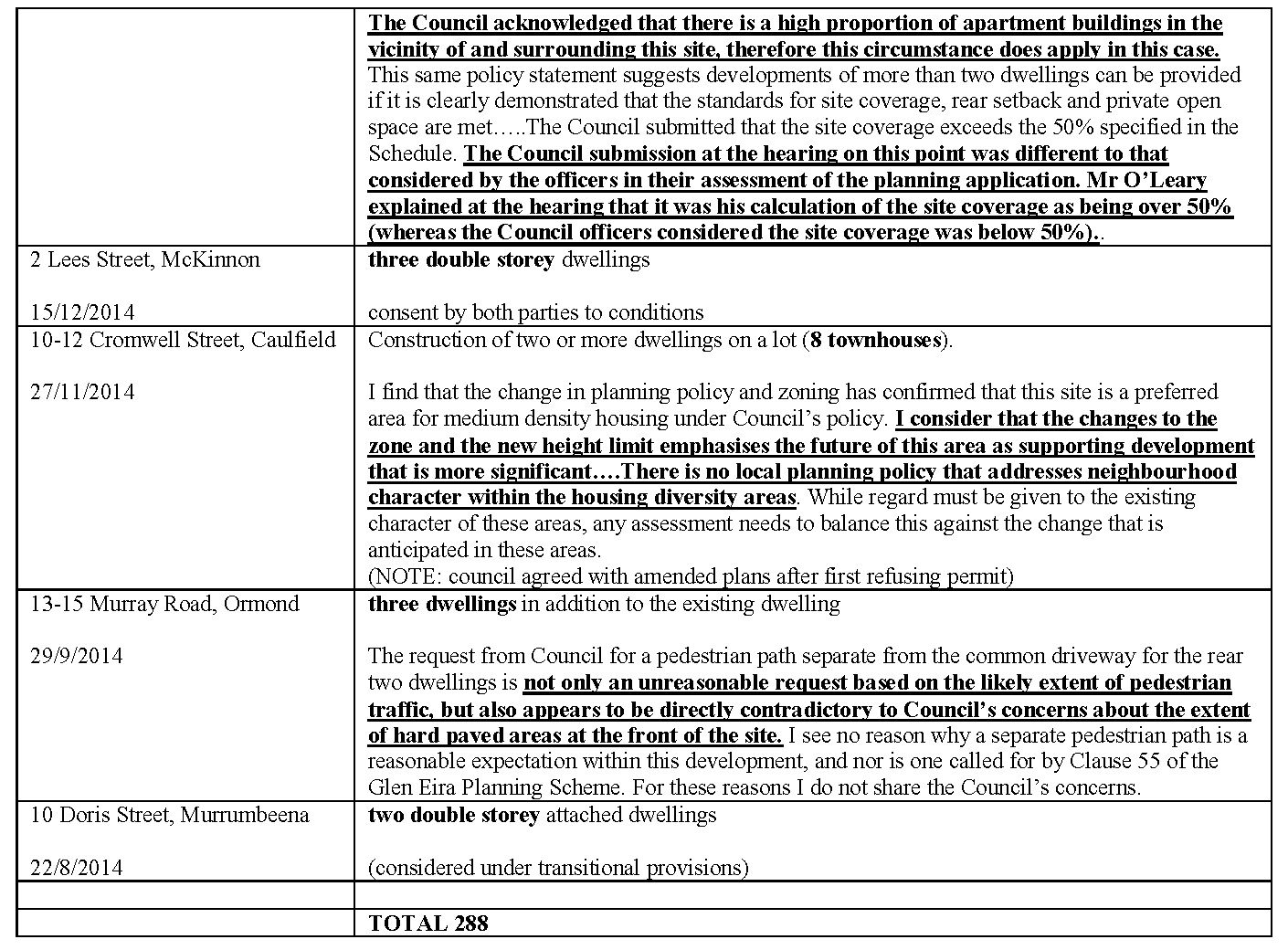
To justify our claims, we’ve taken the time to go through every single published VCAT decision for the past financial year. Council claims 489 dwellings were approved. Our total is 288! (see below). Of these decisions however, we urge residents to carefully consider the comments made by the members and to note:
All of this however begs the essential question. If council is finding that its claims are repeatedly knocked back by VCAT, then why, oh why, has there not been any attempt to ‘fix up’ the gaping holes in the planning scheme? Why, oh why, will there not be a planning scheme review for 6 or 7 years? And why oh why do our councillors continue to stand idly by and accept this situation?
Here’s the evidence. Hearing dates are provided together with address, proposal, and members’ comments. For ease of reading, we’ve uploaded a pdf version HERE as well as the png images below –
 Glen Eira Debates