GE Council Meeting(s)


A definite trend is coming to the fore where developers are seeking reimbursement of their costs from councils who fail to determine their applications  within the 60 day time limit. Glen Eira has finally been caught with its pants down and ordered to pay Pitard Knowles $2086.20. In the great scheme of things, the sum is paltry – a mere drop in the ocean when we consider the multi-million dollar business which is council. Yet, this decision on Vickery Street, Bentleigh reveals much about the planning department and councillors’ stupidity and inadequacy.

This is another example where councillors probably sought to ingratiate themselves to residents (39 objections to a 4 storey, 47 apartment block). Their resolution to again lop off one storey and reduce the number of proposed apartments came after the developer went to VCAT. Yet again they imposed conditions which were ludicrous given the planning scheme and yet again the VCAT member proclaimed the inadequacies of the planning scheme. Councillors just do not seem to get the essential point. We repeat – on EVERY SINGLE DECISION WHERE COUNCILLORS reduced the number of storeys and/or apartments, and the developer went to VCAT, the developer won. This has been going on for years and years – but our lot simply don’t get it. The fault is NOT VCAT per se – but the planning scheme. Thus thousands upon thousands of ratepayers’ money was been washed down the drain defending the indefensible at VCAT instead of addressing the real problem – the planning scheme, its zoning, its schedules, its lack of preferred character statements, its lack of real policy!

This Vickery Street case however, introduced a new element. The shoddy performances of the planning department. We have to wonder why, if council can spend $4,500 per day to solve its own internal squabbles, why can’t it spend money on ensuring that the planning department is properly resourced. We’ve already pointed out in a previous post the number of staff involved in ‘public relations’ compared to the number of staff working in planning and traffic combined!

Here is part of what the VCAT member stated –

This is a review under s79 of the Planning and Environment Act 1987 because the responsible authority failed to grant a permit after considering the application for 104 days. Section 115CA of the Victorian Civil and Administrative Tribunal Act 1998 provides the opportunity for an applicant to request the Tribunal’s fee to be reimbursed in these circumstances. At the completion of the hearing the applicant requested the reimbursement of its fee, being $2086.20.

  • The responsible authority requests the application to reimburse fees be dismissed because the permit application is complex, there were unavoidable scheduling constraints caused by the Christmas holiday period and it facilitated discussions with the applicant and objectors by convening a planning forum in January 2016 before it was to be presented to a Council meeting in February 2016. These reasons are rejected by the applicant.
  • I agree with Mr Bromley that the proposed development is not particularly difficult or complex for the following reasons:
  • The Council has considered many three and four storey apartment buildings in Bentleigh and its other urban villages in contexts similar to Vickery Street.
  • The proposed development comprises a design, height and massing that is similar to many other developments designed by Steller. The proposed layout does not differ in any significant respects to other proposals previously considered by Council.
  • The planning policy, amenity and car parking issues are well known to Council.
  • The planning scheme has not changed for some time and provides a well-known and understood assessment framework. There are no recently approved planning zones, policies or overlays that add complexity to the assessment.
  • No external referrals were required that may have added complexity to, or delayed the assessment.
  • The Council has had the benefit of multiple Tribunal decisions on similar applications to guide its assessment.
  • With regard to the conduct of the applicant, the responsible authority accepts it has not contributed to undue delays by not providing information in a timely manner, delaying public notification, or in any way acting vexatiously or unprofessionally.
  • Mr Bromley says the Council took an unreasonable time from the completion of public notification in mid-November 2015 to intending to decide the application early February 2016. He says the time required to arrange and conduct a planning forum on 13 January 2016 resulted in unnecessary delays. He says the application could have been presented to a Council meeting in December.
  • Mr Bromley says the planning forum in January 2016 made no positive contribution to the resolution of issues or the merits of the proposal. It only enabled the objectors to express their concerns with the development. He says Council did not actively engage with the parties between November 2015 and late January to mediate an outcome.
  • The responsible authority says it processed the application with reasonable promptness, the time periods were not unusual for a larger development, and the planning forum is a necessary part of Council’s assessment process. The Council could not truncate the application process over the Christmas holiday period.
  • While I agree with Mr Bromley that a three week period to give directions for public notification following the submission of all information is frustrating, it is not unusual in a busy planning office, and would be generally acceptable. If that were the only delay, the claim for reimbursement of fees would have limited weight.
  • Hence I have to decide if a delay in the order of six weeks (between Council meetings in mid-December 2015 and early February 2016) to enable the application to be discussed at a community planning forum was justified, and whether Council proactively sought to resolve outstanding issues in this period.

AND HERE’S THE REAL STING IN THE TAIL –

  • By contrast effective mediation requires considerable time and meetings needs to be led by expert mediators. Time is needed to enable parties to express their concerns, for the real issues to be identified, and for solutions to emerge. Parties often have to be actively encouraged to collaborate to resolve their differences and to find acceptable solutions.
  • I understand that Council only arranged the planning forum between mid-December 2015 and February 2016, and I accept Mr Bromley’s assertion that Council made no efforts to conduct mediation outside the planning forum.
  • In my view, Council made the conscious decision to defer considering the application in December 2015 so it could convene the planning forum. It was aware there was limited prospect the planning forum would be likely to resolve the issues or add new information that was not already available on the file (provided with the application, referral advice and objections) and summarised in the officer’s report.
  • It did so knowing it would delay its consideration of the application for at least six weeks. It did so knowing that it could face a review at the Tribunal under s79 of the Act, and consequently it would be likely to have to respond to an application to reimburse fees. It took no other actions such as mediation to resolve the planning application in this period.
  • it is not acceptable that the arrangements for a planning forum commence after the technical assessment has been completed. I consider Council has to arrange these much earlier in the assessment process. The planning forum should not unduly delay the presentation of an application to a Council meeting for a decision. It is not acceptable the permit applicant has to wait some weeks for a decision that could be made earlier, particularly if the planning forum is highly unlikely to add new information or does not form part of a genuine mediation process.
  • I am satisfied the Council unduly delayed its decision on the application and the applicant’s fees should be reimbursed.

Source: http://www.austlii.edu.au/au/cases/vic/VCAT/2016/920.html

COMMENT

Council’s Planning Conferences are not there to achieve real ‘compromise’ in our view. Their function is primarily a public relations exercise. It would be most informative if council were to provide the following data so that residents could assess for themselves council’s processes and their efficacy –

  • How many times has the developer not shown up at these conferences?
  • How many times have MAJOR changes occurred to the plans as a direct result of the conference?
  • How many times has the officer failed to include all residents’ views in his/her report to council?
  • How many times has the developer or the objectors walked away satisfied that a ‘consensus’ has been arrived at?

The agenda for Tuesday night’s council meeting is interesting not merely for what it contains, but more so, for what is not included. A few examples:

  • No mention in any of the records of assembly of council’s ‘discussion’ on the appointment of Ms Fiona O’Brien to investigate allegations of bullying. Pilling has been quoted as stating that council ‘engaged’ Ms O’Brien to undertake this work. Hence, we wonder when and where this decision was made. Even if ‘confidential’, our reading of the Local Government Act would still require a note that some item of a confidential matter was being discussed. No such notation exists.
  • On the 26th April (that is two council meetings ago) there was a request for a report on the potential for an increased open space levy. The report has not yet materialised – meaning that if it does appear for the next council meeting, it will have taken 2 months for a document to be tabled. In our view, not good enough!
  • The records of assembly meeting of 24th May include this item – (a) CFO – outcome of loan re-structuring negotiations. No item in the agenda to inform residents of what this will mean in terms of late payments, the new interest rate, or in fact any information whatsoever. We assume that ratepayers will be required to plough through the new Strategic Resource Plan (when it appears) and try and figure out what is really happening! Surely some media release or official statement would not go astray at this point in time?

One item reported in the minutes from last council meeting is certain to have major financial repercussions in the years ahead. The timing, rationale, and the potential risks this decision embraces, says much about council’s decision making of the past, and the state of its current finances.

Pages from 051716-MINUTES

Council borrowed $25 million at the astronomical FIXED RATE of 8.04% for 15 years under Newton. There is still a decade to go on this loan. Comments made in chamber over the past year or so indicated that council could not afford to get out of this arrangement without paying some hefty penalties (we believe in the order of $4 million). According to the draft Strategic Resource Plan (page 11) it will cost council $2.88 million in principal and interest repayments for 2016/17 and council would still owe at the end of the next financial year $18.71 million.

Countless questions arise:

  • Is negotiating another fixed rate contract nothing more than a long term gamble?
  • What does this resolution say about council’s current financial situation?
  • Will council be attempting to borrow another $6+ million to bring it back up to the original $25 million?
  • Will council be paying interest on the interest?
  • What penalty rates will the bank impose?
  • If repaying the loan early is so vital, then why wasn’t this undertaken years ago? Could it in fact be related to the departure of Newton? Or is council so cash strapped that it has to do this now?
  • Why is the Chief Financial Officer ALONE ‘authorised’ to ‘negotiate’ and sign off on the massive deal? Where is the full council in any such decision making?

The history of council’s financial dealings are nothing to write home about. Readers should also remember that as a result of the $25 million loan for GESAC, council was unable to borrow (as other councils did at a much lower interest rate) to repay the $7.1 million Superannuation costs and thus were paying 7.5% instead of a far reduced interest rate if they could have borrowed this money.

Ratepayers deserve nothing less than a full and comprehensive account of what is happening and why.

Residents need to consider carefully the following from last night’s council meeting. In our view it encapsulates fully the hypocrisy, inconsistency, and decision making that has already been determined, despite the ongoing planning scheme review.

Item 9.1 was an application for a 7 storey and 24 dwellings in Centre Road, Bentleigh. Officers recommended 6 storeys and 22 dwellings. True to form, councillors decided that they would lop off another storey and a handful of units so that the motion was for 5 storeys and 19 dwellings. This was moved by Hyams and seconded by Lipshutz.

HYAMS: started off by saying that objectors did not attend the planning conference. Said that there is a ‘quandary’ here because ‘we have our beliefs’ about what is appropriate for Centre Road and ‘on the other hand’ there is the recent VCAT decision for 8 storeys up the road. If it wasn’t for this decision then ‘5 storeys would be pretty much a lay down misere’. So the questions is ‘do we change our opinion’ because of the VCAT decision and make a further decision based on this ‘which we think is wrong’ and ‘hope’ that VCAT ‘gets it right this time’. His motion is because he thinks that ‘five storeys is appropriate’ in Centre Road. ‘Currently’, the ‘tallest building in Centre Road is 5 storeys’. Didn’t think ‘that we should compound the mistakes made by VCAT’  which they ‘would be doing’ if a permit was granted for 7 storeys. Spoke about setbacks and car stackers and that ‘they are accepted by the government’. Thought that ‘5 storeys is reasonable’ since it ‘backs onto 4 storeys’.

LIPSHUTZ: Centre Road has got ‘3 and 4 storeys’ and even though this might look like a 3 storey from the ‘street, it is nevertheless a 7 storey building’. “I think that’s wrong’. ‘I think the appropriate level is 5 storeys’. Didn’t think that they should say that because VCAT ‘will approve it’ that they should change their minds. Thought that ‘we have to stand up for our principles and residents’ since ‘we know what we want’. ‘This council has policies and I think we have to maintain our position’ and if ‘vcat overrules us, well so be it’. ‘We have principles and we have to stand by them’ and that he thinks that ‘5 storeys is the appropriate level’.

LOBO: give the developer ‘an inch’ and he will ‘take large square metres’ to build ‘inappropriate’ buildings. Said that Mavho ‘has a uniformity of 4 storeys’ and giving this 5, then with VCAT, there is the possibility of ‘giving 9 or 10’ storeys. Residents ‘have said’ that Bentleigh is ‘completely destroyed’. Said that since the Minister ‘has asked us to review’ the planning scheme he thinks that the commercial zones shouldn’t change until the review is done. Said that ‘I have never accepted anything over 3 storeys’ and apart from the General Residential Zone, the ‘new zones don’t say that’. After ‘the destruction of Bent St and Mavho Street’, Loranne and Campbell street are now the ‘targets’ and developers have also ‘encroached East Bentleigh where there is no public transport’. This has ‘created chaos as far as traffic is concerned’. Gave examples of residents who could not get out of their driveways and ambulances could not get in. Said that councillors ‘have to look after the residents’ and that they are ‘elected not for any political party’. ‘If we are not doing this, then we had better stay home’.

PILLING: said that Hyams motion is for a main road, in a commercial zone and not residential. Thought that the ‘five storeys’ is ‘appropriate’.

HYAMS: said that Lobo implied that there weren’t 4 storey developments before the zones came in, but there were, especially in Carnegie and Murrumbeena. So he ‘hoped that people don’t draw that parallel because it wouldn’t be true’. Said that the ‘problem’ is that ‘we have policies in place’ to protect Centre Road, but VCAT ‘has suddenly started interpreting it as if we don’t’. thus ‘our policies haven’t changed but VCAT’s interpretation has changed’.  Didn’t think that ‘under planning law’ council can put a ‘hold on developments’ waiting for the review. Repeated that he thought that 5 storeys ‘in commercial zones is appropriate’.

MOTION PUT AND PASSED. LOBO VOTED AGAINST

COMMENTS

The hypocrisy and inconsistency of both Hyams and Lipshutz is simply mind-boggling. Truth, consistency, and above all, integrity, goes out the window when it comes to getting their motions up. Here are some quotes that these two individuals have said in the not too distant past. Please compare their above comments with what follows –

HYAMS


  • ‘it’s not as if you will get a six storey building in a row of shops’. (https://gleneira.wordpress.com/2013/06/19/hyams-can-we-believe-him/).
  • HYAMS: Said that a problem was that if you set height limits then ‘people will build up to that height and you can’t stop them’ but if you don’t have height limits and let each application be ‘judged on its merits’ then you could get ‘better outcomes’. (6/2/2013 – ie on application for Glen Huntly Road – 6 storeys and 45 dwellings which got a permit from council.) Then post zones we get this diametrically opposed statement – Hyams – ‘The new zones are limiting development’ because of the height limits and that ‘anyone who tells you otherwise doesn’t know what they are talking about’ or ‘is deliberately seeking to mislead you’.(25/9/2014)

LIPSHUTZ

  • LIPSHUTZ: He also needs to be ‘practical’ in that he could ‘easily reject’ this but it will go to VCAT and they will say that ‘I haven’t turned my mind to it properly’ since he has to sit here in a ‘quasi judicial’ position and ‘working on planning laws’. These laws ‘allow this building to happen’. (on 7 storeys for Glen Huntly Road, Elsternwick – 26/11/2014)
  • LIPSHUTZ: said he was ‘in two minds’ on this application. First he thought ‘no’ because ‘it goes against our policy’ but after looking at the site he thinks that ‘we have policy but policy is not law’….’I don’t think we want to be hard bound by policy’. All policy does is ‘gives us a framework’ and ‘you have to look at each site individually’ (on double storey application for rear in Bolinda St., Bentleigh East – 15/11/2013)
  • LIPSHUTZ – Glen Eira is the first council to ‘adopt these plans’ and that’s because they have ‘vision’ and that’s because years ago Akehurst and ‘his team’ saw that ‘we neeed to have distinct areas to protect our suburbs’. Because these plans already exist they were ‘able to translate very quickly’ into the new zones ‘and that’s a credit to our officers’….The zones are ‘protecting our neighbourhood, we are protecting our municipality and that’s important’. (30/12/2014)

There are literally countless other statements we could have included in the above. Some simple questions will suffice –

  1. How much longer will these councillors continue the sham of blaming VCAT for their inaction and lack of sound strategic planning?
  2. How many more times will Lipshutz get up and try to warn off objectors from going to VCAT?
  3. How many more times will half-truths be portrayed as gospel in the chamber?
  4. And how much longer will residents put up with such self-serving incompetence, especially from these two councillors?

PS: We now learn that Council is to receive the pittance of $575,000 as the open space levy for Precinct One of the Caulfield Village development (ie 463 units). In their wisdom only a 4% fee was exacted for this part of the development.

Item 9.2 – Riddell Parade, Elsternwick. Application for 12 storeys and 40 dwellings.

Whilst the officer’s report recommends a ‘refusal’ there are several fascinating aspects to this application.

  • Council in its wisdom decided last year to sell the owner of the site a 60 sqm splay from its council owned car park that is also the corner edge of a laneway. This was done in order to “allow them to build a first floor above and a basement below the splay but still allow sightlines along the adjacent laneway.” (Minutes of May 19th, 2015). In return, council received the princely sum of $59,015 and the developer was to pay legal costs of $26,222.
  • The proposed development is deemed as Stage 2 since Stage 1 is for an 8 storey development (under construction) and both sites belong to the same owner.
  • Only 14 properties were notified and 3 objections received.

All the above is merely the ‘background’ to some extraordinary aspects of Rocky Camera’s report. The question is: does this report represent some ‘radical’ change in council’s approach or is it merely Camera once again scraping the bottom of the barrel in order to come up with any justification for a refusal?

For the first time, as far as we know, we have statements such as:

…..the development fails to adequately encourage economic development. A building of this height, scale and location should provide for more economic development opportunities than one ground floor office space.

No communal facilities are proposed within either the approved development (Stage 1- 28 Riddle (sic) Parade) or within the proposed development. This is considered to be a poor outcome for a development of this scale.

A total of 58 car spaces are provided on-site. A reduction in the residential visitor and office car spaces is sought. However, the allocation of car spaces is unclear due to the oversupply of residential car spaces. Further, no disabled car space has been provided.

The application proposes vehicle access through ‘Stage 1’ of the development at 28 Riddell Parade. However, there is no formal legal accessway provided between both properties currently.

These are literally extraordinary ‘reasons’ for refusal – especially when seen in light of previous decisions. For example:

  • In November 2012 the officer report for 1056 Dandenong Road recommended ‘approval’ for a 12 storey and 173 dwellings. Councillors knocked this back to 8 storeys and 97 dwellings. The developer got what he wanted at VCAT. However, there was not a single word in this report on ‘communal facilities’. Nor do we find any mention of this in the recent 9 storey application in Centre Road, Bentleigh – nor in countless others!
  • The current Camera report also just happens to conveniently ignore other sections of the Planning Scheme that were included in the 12 storey application. Omitted here are – To consolidate retail functions within existing strip shopping centres; To encourage increased densities within and around commercial/transport nodes which respect transition to the surrounding residential area; To ensure future development is appropriate to the constraints of infrastructure and vehicular traffic movement (including parking). We must also remember that the site is within the Elsternwick Urban Village, where everything in the planning scheme promotes higher density.
  • If there is an ‘oversupply of residential car spaces’, then why not simply turn these ‘residential’ spots into ‘visitor’ car parking spots as done in countless other application conditions?
  • If the developer owns both sites, then is ‘formal legal accessway’ nothing more than a furphy? It will be interesting to see how VCAT views the issue.
  • Surely the argument regarding ‘employment’ and ‘economic development’ is on very shakey ground considering that the rationale has always been that increased populations in urban villages via higher density dwelling, will ‘invigorate’ centres and help sustain them?

Thus we are again faced with the conundrum of a planning scheme that facilitates high rise development and planners engaged in major ‘damage control’ forced to come up with ‘reasons’ for refusal that anyone can drive a truck through – especially developers with stacks of money for ‘expert witnesses’ and reports! Residents are now paying the full price of a planning scheme that administrators and councillors have refused to touch since 2002. As we’ve stated previously, the only valid response is a total revamp of the zones and a major overhaul of the planning scheme.

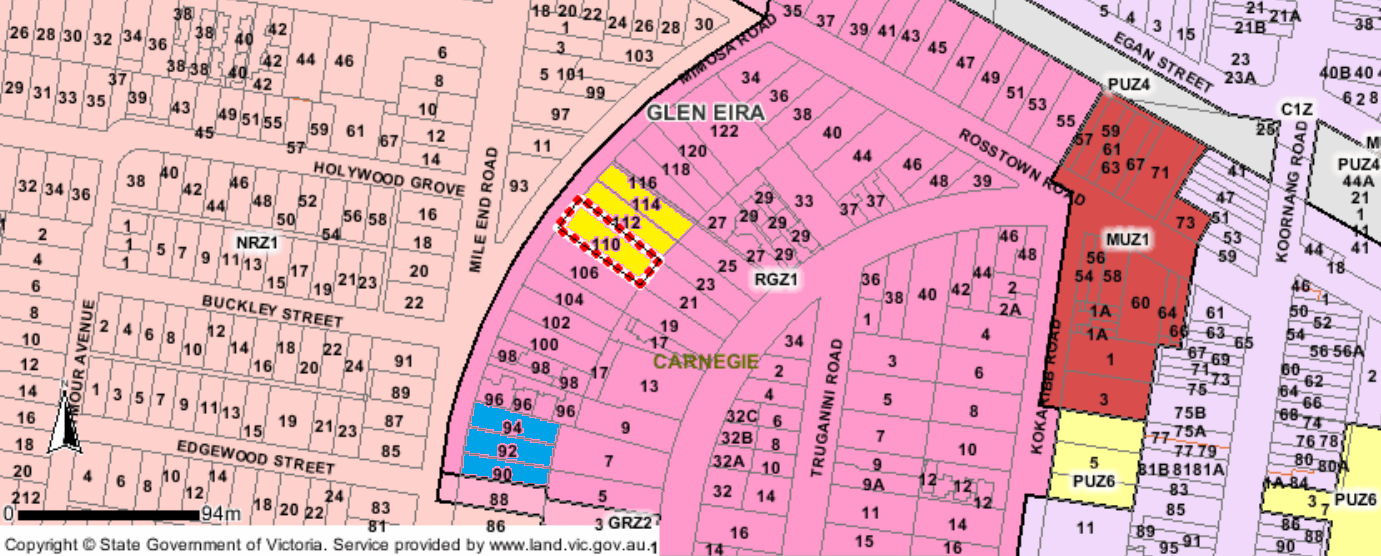
God help us if this is the quality of planning application reports by officers! We are referring to an application for 4 storeys and 49 units at 90-94 Mimosa Road, Carnegie. The area is zoned Residential Growth Zone, and a permit has already been granted by VCAT for 4 storeys and 50 units at 110-114 Mimosa Road – just a few doors down the same road. Of course, this is not even mentioned in the Camera report!

Untitled

The recommendation is to refuse the permit. We wonder whether the correlation between refusals and the number of objections has again reared its ugly head (ie 56 objections). Please note, we are not disagreeing with the recommendation to refuse, but are merely pointing out how Rocky Camera is literally scraping the bottom of the barrel to come up with any valid reason to refuse the permit given council’s current planning scheme. In our opinion, the officer’s report is not only sub-standard, but hasn’t got a hope in hell of convincing VCAT.

Then of course, there is the argument that if council didn’t want ‘consolidation’ of lots, or 4 storey developments along Mimosa Road, then why did they zone this as a Residential Growth Zone? Trying to put the genie back in the bottle now, is far too late. If instead of simply drawing a circle on a map, council had done its work properly at the time of introducing the zones, we wouldn’t be having the farce that is now standard practice for council. Nor would we be having to cough up tens of thousands of dollars for officers and consultants to go to VCAT on wild goose chases and at ratepayers’ expense. This is literally money thrown down the drain.

Here’s why:

Camera writes – Policy encourages that the highest residential densities be located in Urban Villages, particularly for sites in closest proximity to a commercial activity Centre. The case is different here noting the subject site is located on the outer edge of the Residential Growth Zone with lower intensity zones located to the south and west.

COMMENT: decision after VCAT decision has already commented on the fact that proximity to the centre of an urban village is not an argument, and that if anything it is the GRZ2 zones which are to be taken as the ‘transition buffers’.

This illustrates that the subject site in a more sensitive ‘transitional’ location on the ‘fringe’ of the Residential Growth Zone, with lower density residential zones to the south and west.

COMMENT: When VCAT considers that a 2 storey differential is not enough to refuse a permit, then the difference between RGZ (4 storeys) and GRZ (3 storeys) will not carry any weight whatsoever. Readers should also remember how many developments that directly abutt Neighbourhood Residential zones (ie 2 storeys) have been granted permits by council alone.

Whilst policy also supports a degree of change in this area, the proposal is not site responsive nor is it contextually appropriate having regard to the disparity in scale and massing between the 4 storey building and prevailing single storey development pattern on the west side of Mimosa Road (and beyond).

COMMENT – Again a totally ludicrous argument when back yards in countless streets are the ‘buffer’ between RGZ and the other zones. Or, streets become the buffers between the various zones – ie one side of Garden Avenue Glen Huntly is zoned for 3 storeys (GRZ1) and the opposite side is 2 storeys (NRZ). One section of Balaclava Road is also zoned RGZ and across the road it is NRZ. The same applies for Kambrook Road and Newington Road; Blackwood St in Carnegie as well – or Rowan Street in Elsternwick. There are countless examples of this throughout the municipality. Does this mean that Camera’s argument applies to all? Or is it only that the decision has been made to refuse this application and something has to be coughed up in the attempt to justify the pre-determined decision?

The building will be highly prominent and further exacerbated when viewed at street level and from the wider area due to the site’s overall area (as a result of the consolidation of three lots). As such the development will unreasonably detract from the character and residential amenity of this transitional location (between zones).

COMMENT: All of a sudden ‘residential amenity’ is a concern, when the schedules to the zones do not provide any consideration of ‘amenity’ in the RGZ areas. And doesn’t the planning scheme after all actively ‘encourage’ the consolidation of lots?

Whilst redevelopment of the site at a higher density (than what currently exists) is not opposed, it is considered the proposal fails to adequately respect the neighbourhood character due to excessive mass, bulk and scale of the building (thereby resulting in unreasonable visual bulk impacts to the streetscape and adjoining properties).

COMMENT: how can one speak of ‘neighbourhood character’ when ‘change’ is the purpose and there is no ‘preferred character statement’ whatsoever in the planning scheme for housing diversity. As pointed out numerous times in VCAT decisions.

The development has a Planning Scheme car parking requirement of 62 car spaces (53 resident spaces and 9 visitor spaces). A total of 58 car spaces are proposed on-site (53 allocated to the residential dwellings and 5 to the visitors). This results in a shortfall of 4 visitor spaces. Council’s Transport Planning Department does not oppose the proposed shortfall of 4 visitor car spaces for the development

COMMENT: and the final insult to injury is that council itself does not insist on the requisite number of visitor car parking spaces.

The flood gates have now opened on Mimosa Road – as they have in every street that is zoned RGZ and GRZ. Council can continue to blame VCAT but in our view the fault basically lies with a planning scheme and a planning department that has failed dismally to undertake proper strategic planning. What residents are now faced with is council’s ‘damage control’ tactics. It is very, very easy to refuse application after application and continue to blame VCAT. As for the quality of the Camera report – in our view it is not only sub-standard, but not worth the paper it is written on. There is not one single ‘fact’ – ie what is the percentage of overshadowing? what is site coverage? Compared to the depth and comprehensiveness of other council’s reports on planning applications, Glen Eira should literally hang its head in shame!

We continue our ‘series’ which we started in February on councillor decision making on applications and the results at VCAT. Now that there is finally a planning scheme review being undertaken, council must address the core issues of what is missing in council’s planning scheme.

In our February post (https://gleneira.wordpress.com/2016/02/17/dumb-or-complicit-1/) we asserted that councillors have not learnt from their mistakes; that they have been content to play to the gallery and repeatedly knock off a level or two, or the number of apartments, and think they have done their job. History shows that in every single decision involving a reduction in height or dwellings and where the developer has subsequently gone to VCAT such councillor decisions have been well and truly trounced.

When decision after VCAT decision spells out in lurid technicolor what is amiss with the planning scheme and nothing has been done to address these gaping holes, then as we stated in our header – either councillors are incredibly dumb or completely complicit in a pro-development agenda!

With elections around the corner, readers need to take careful note of who voted for what!

COUNCILLOR DECISION – #5 – 8 Railway Crescent, Bentleigh. Application was for 3 storeys and 10 apartments. Officer recommendation – permit granted. Esakoff and Lipshutz moved motion for 3 storeys and 8 units. Motion was carried unanimously. Developer went to VCAT and was awarded his 10 units. Member decision included: I could perhaps understand Council seeking to remove Dwellings 9 and 10 if there were direct and unacceptable amenity impacts, such as overshadowing of neighbouring properties, or if the site was on the boundary with land included in a Minimal Change Area and in the Neighbourhood Residential Zone.  But neither of those circumstances applies here. The land is well away from the boundary of a Minimal Change Area and the only adjoining property affected by overshadowing is to the east and any shadow is only cast in the mid afternoon to the non-secluded front yard. I note that Mr Wood, Mr O’Brien and Mr Filatov do not live adjacent to the site and are not directly affected by the two dwellings proposed to be deleted. Ms Snell agreed that the development complies with all the numeric ResCode standards

COUNCILLOR DECISION -#6 – 24-26 Mavho Street Bentleigh. Application was for 4 storeys and 28 dwellings. Officer recommendation to grant a permit. Hyams and Lobo moved motion to grant permit for 3 storey and 25 units. This motion was carried with Pilling voting against it. Developer went to VCAT and got his 4 storeys and 28 units! The decision reads in part – I am not persuaded by Council’s zoning submissions that the surrounding zoning will in some way perform the role of limiting development or height in this case on this site. This site is clearly in the Residential Growth Zone and does not share a boundary with any other zone….I am not persuaded that this site is to perform a transition role. The is a zone and an area of intensive development. Other sites further will peform this transition role. The fact that Council has rezoned 24 Mavho Street Residential Growth as is the adjoining lot at 22A and 22B Mavho Street and then the zone changes to a General Residential Zone at 20 Mavho Street, tells me that the transition site and role is performed at 20 Mavho Street.

In what can only be seen as a total admission of failure (and straight out incompetent planning) Hyams and Delahunty moved this Request for a Report at last Tuesday night’s council meeting –

Crs Hyams/Delahunty

That a report be prepared on whether Council should apply for a planning scheme amendment to raise the Public Open Space Contribution Levy above the current 5.7%.

Thus, just on one year since the amendment was gazetted, council is now acknowledging that 5.7% falls far short of what is required. The ‘excuses’ provided were that Council’s ‘assumptions’ and conditions have changed. Nothing could be further from the truth! The so called building boom owes much to the introduction of the new zones which date from August 2013 – 2 years before the open space amendment was gazetted and a year after the deficient open space strategy was made public. The writing was literally on the wall and council needed to introduce a far higher open space levy to ensure that funds were available – but more importantly that the amount of public open space per individual did not decline.

Nor does this sudden interest in open space account for 11 years of doing absolutely nothing to raise funds to purchase open space. The levy from 2004 to 20015 was not only miniscule, but a gift to developers. Exacerbating the situation was the failure of council to purchase additional space apart from 2 house blocks in Packer Park even though the lack of public open space in Glen Eira was known and stated in both the 1987 and 1998 open space strategies.

What is even more disgraceful is the repeated and continuing slurs (including last Tuesday night) cast on the 2 objectors to this open space amendment and the completely bogus claim that their objections cost council in the vicinity of $1 million. How much did council cost ratepayers from 2004 to 2015 with its laughable levy rate? And how dare the likes of Hyams and Lipshutz in particular cast slurs on residents who decided to exercise their legal rights and object to council’s inadequate proposals and shonky strategic planning?

It is now obvious that 2 residents were able to forecast  what would happen a lot better than ‘consultants’ who cost $130,000 and councillors who were determined not to listen and bureaucrats who were only intent on limiting the damage for developers.

FYI, here is part of one of the submissions presented to the Planning Panel that argues strongly that a 5.7% levy is inadequate – especially since Stonnington with the second least amount of public open space opted for an 8% levy. In the end Stonnington achieved its 8% levy for 4 major suburbs – South Yarra, Windsor, Prahran and Armadale. The total area of these 4 suburbs at 8% will alone bring in more than Glen Eira’s 5.7% across the entire municipality. Further, Stonnington’s objective is to keep creating further open space with its $36 million in the kitty as opposed to Glen Eira’s splurging on mega palaces and concrete and disowning its twice passed resolution that the levy would go for the purchase of open space and not the ‘maintenance’ of existing open space!

“NEED FOR AN INCREASED LEVY

Contention: The proposed contribution levy of 5.7% is inadequate to meet the open space needs of the existing and future populations of Glen Eira.

Throughout this submission I have pointed out that:

  • The projected population figures are extremely conservative
  • The cited potential land development area is well and truly underestimated
  • The rate of development in Glen Eira has risen astronomically
  • The stated land values are well below the current market figures
  • Infill development figures and how they impact on potential revenue is ignored
  • Impact of strategic development sites is ignored

As a consequence of all the above, a 5.7% levy, and the overall recommendation to create (at a maximum) another 11 or so hectares of public open space will not meet the needs of the community. I acknowledge fully that there is no standardised methodology for determining what an appropriate contribution levy could be. I also acknowledge that the consultants were to a great extent dependent on figures provided to them by council. It is precisely these figures which I believe are suspect and need to be fully reviewed and updated.

Without access to current council data I can only hypothesize on what would be an appropriate levy given all the above factors. What I do find telling however is the comparison with the current Stonnington proposed contributions levy and the analysis done by their consultants. As pointed out in an earlier table, Stonnington is two-thirds the size of Glen Eira, has a smaller population, and has the second lowest amount of public open space in the state, behind Glen Eira’s record of having the least amount of public open space. Yet Stonnington’s consultants find that:

Based on current provision of open space throughout the City, the Strategy identifies that acquisition of 53 hectares is required to meet the benchmark. When factoring in population growth acquisition of 108 hectares would be required to meet the benchmark[1]

The Glen Eira OSS provides no quantifiable benchmark to work towards. If no targets are set, then I’d argue that it is extremely difficult to calculate what revenue is required in order to meet the most minimalist standards of open space per individual – especially if the data is highly suspect. At a maximum, the OSS recommends the acquisition of another 11 hectares of open space in the entire municipality.  The  least recommended would only equal another 2.2 hectares, and the ‘average’ is given as 6.51 hectares. None of these possibilities are adequate. If Stonnington is currently finding a deficit of 53 hectares then Glen Eira’s claims to need only an additional 11 hectares at best, does indeed appear well below the mark.

There’s also Stonnington’s request that their contribution levy be raised to 8%. Why a council with the second least amount of public open space should ask for an 8% levy, and the council with the least amount of public open space only demands 5.7% levy is quite frankly, beyond me.

Nor do the consultant’s reports provide any historical breakdown of levy contributions per precinct as does Stonnington. All that is cited are the cumulative figures for each financial year. Without such a breakdown it is incredibly difficult to gauge where the majority of subdivisions are occurring; the nature, scope, and size of these subdivisions and how these may indicate what occurs in the future – especially in the urban growth centres.

Stonnington has also created a list of proposed projects for its entire 20 year plan and its figures are based on the anticipated costs. Apart from disclosing 3 projects in the current budget, Glen Eira has not revealed whether in fact it even has such a long term plan and what the specific projects might entail and hence their probable costs. Again, a highly dubious basis upon which to calculate what needs to be done over the next 13 years.”

AND THE CONCLUSION

“Based on all the above I would strongly urge the Panel to recommend a higher contributions levy than what is currently proposed. I am not able to provide a definite figure since I have no access to the current data and I do not consider it my task to do so. That belongs to council and the consultants.

If the residents of Glen Eira are to be well served via the acquisition of the necessary public open space, then I urge the panel to recommend a total review of what has been proposed and that this is based on the most up-to-date and accurate data. Glen Eira residents cannot afford to undergo any further loss of open space which is inevitable I believe, if the current proposed amendment remains unchanged.”

[1] SGA Economics & Planning. (2013). Assessment of Mandatory Open Space Contributions – Page 16

Why is it that Glen Eira is so out of kilter with every other council, especially when it comes to providing information to residents on vital issues, or even providing decent, informative answers to public questions.

On Tuesday night, several questions were asked in relation to meetings with the Minister (Jacinta Allen) on Skyrail. Here is one question and the response –

“Jacinta Allan met with the Kingston City Council on Thursday 21 April to discuss level crossing removals through their area. Has Ms Allan or the LXRA met with GlenEira Council to discuss crossing removals through Glen Eira, and if so what was the outcome of those discussions?

The Mayor read Council’s response. He said:

“At the invitation of the Minister for Public Transport the Mayor and the Chief Executive Officer met with her on 8 March 2016. Councillors and Council Officers have met with representatives of the LXRA on many occasions. Such meetings have involved the exchange of information and views. Council has, on each occasion, taken the opportunity to strongly advocate for community consultation on the grade separation projects.”

What is staggering about this reply is:

  • The failure to answer the most crucial part of the question (ie outcomes of discussion)
  • Why it should take a formal public question for council to even acknowledge that a meeting has taken place

Thankfully, not all councils are as secretive as Glen Eira. Kingston put out a Media Release within days of their meeting with the Minister. Here is what they had to say –

Kingston Council meets with Transport Minister to pass on community concerns

26 April 2016

Kingston Council met with Victorian Transport Minister Jacinta Allan last week to raise community concerns about the Level Crossing Removals project.

Minister Allan, Mordialloc MP Tim Richardson and LXRA representatives visited Council’s Cheltenham offices to hear directly from the Mayor and councillors and discuss upcoming community consultation on the project.

“The meeting was incredibly productive and we were able to pass on community concerns and advocate for a well-planned strategic approach that makes the most of this once-in-a-generation infrastructure project to deliver great long-lasting results for our community,” Mayor Tamsin Bearsley said.

The Minister confirmed in principle that the next stage of community consultation, due to take around the middle of this year, would include detailed information on different options available at each individual site including environmental impacts, engineering analysis, acoustic reports and estimated costs so our community can make an informed decision and have their opinion clearly heard and taken into account,” Cr Bearsley said.

The Minister’s visit followed recent calls from Kingston Council for improved community consultation by the Level Crossing Removal Authority before any decisions are made about level crossing removals in the area.

“We presented a short video from the Chelsea and Bonbeach Train Station Group to show positive approaches and ideas being generated by our community that are alternatives to a skyrail,” Cr Bearsley said.  

“Minister Allan had also been briefed by local MP Tim Richardson on the heritage issues surrounding the Mentone station and the unique sensitivities along the Frankston line due to the close proximity of Port Phillip Bay.”

Mayor Tamsin Bearsley said councillors had received strong community feedback opposing a skyrail option for the Frankston line and criticism of recent public consultation sessions held by the Level Crossing Removal Authority (LXRA).

“Kingston Council will continue to work closely with our community, the LXRA, local MPs and the Minister to ensure our community is kept well-informed and actively involved in this project.”

The Victorian Government’s list of 50 level crossings for removal includes seven in the City of Kingston – Centre Road Clayton on the Dandenong line and six level crossings on the Frankston line.

Source: http://www.kingston.vic.gov.au/About-Us/Media/Media-Releases/Transport-Minister-visit

Another public question asked on Tuesday night was this –

A group of around 20 residents met Jacinta Allan last Thursday 21/11/16 at 10.40
am outside Kingston City Council following a meeting regarding Skyrail for the
Frankston line. The Kingston city Council CEO John Nevins, Mayor Cr Tamsin
Bearsley, Mayor Cr John Ronke and MP Tim Richardson can also attest to
Jacinta’s promise to meet and finally meet and respond to unanswered
correspondence and questions with our community. She indicated she was happy
to meet and to organise a meeting through Tim Richardson (or presumably our local
member). Will the Gleneira Council please follow up on this invitation and cite this promise?

And Council’s woeful response?

“If, as you say, the Minister for Public Transport has said that she is happy to
organise a meeting through the Member for Mordialloc then it would be best for
you to contact either the Minister or the Member for Mordialloc directly. You may also wish to direct your request through either the Member for Bentleigh or the Member for Oakleigh who are other members of the Government with grade separations happening in their electorates.”

PS: it is also worth pointing out that the 100 or so public questions which were taken on notice from the previous council meeting are not included in the minutes – as required by the Local Law!!!!!

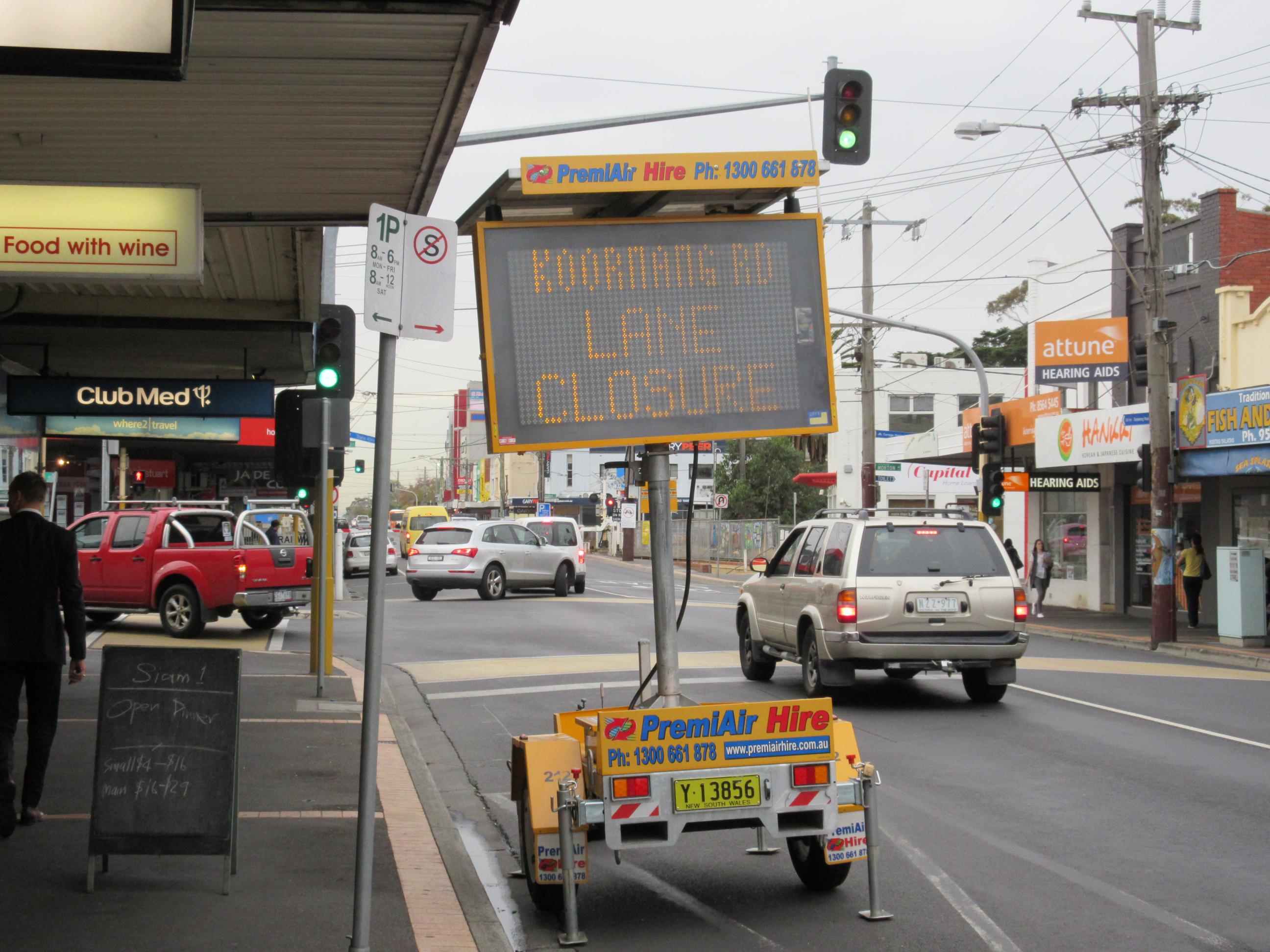
PS: here’s a photo we received in conjuction with a comment. It shows a trailer parked (in a No Standing Zone) as part of the LXRA operations and presumably without a permit. Yet, council in its responses to public questions claimed that only 5 permits had been granted for ground works. The trailer has been there for well over a week! Thus, how much faith, credibility, can residents place in any response they receive from council?

car

Once again the faction of Lipshutz, Hyams, Esakoff, Pilling and their newest recruit, Kelvin Ho, have successfully undermined open democratic processes in Glen Eira. In the following ‘debate’, we urge all readers to carefully consider the tenuousness, if not inanity of their arguments, the deliberate misleading and misrepresentation of the facts and what can only be seen as the self-serving motivation of their position. Years and years of appalling anti-community decisions are alive and well in Glen Eira!

ITEM 9.6 – LOCAL LAW AMENDMENT (MEETING PROCEDURES)

Lipshutz moved motion to accept recommendation. Seconded by Hyams.

LIPSHUTZ: began by saying that he chaired the Local Laws Committee and that they had met several times over the past year. Said that the motion is only to go out to public consultation. Said that the proposed amendment on Urgent Business was to facilitate councillors raising an issue that occurred between meetings. Conceded that the ‘most controversial’ proposal concerned public questions. Claimed that public questions ‘had become anachronistic’ because technology (ie webpages, email). Said that he spends many hours answering emails and getting ‘numerous phonecalls’. So ‘if you want to ask a question’ people can via their councillors. In his view ‘public questions have been abused’. ‘We have seen question after question from the same sort of people’ who ask ‘multiple questions on the same things simply to embarrass the council’.  Said that ‘the question could have been asked of a councillor’ and they would ‘have been given an answer’. So the amendment wants to move back the time for submission of public questions to 12 pm of the day preceding the council meeting. Also changing ‘should not exceed 150 words’ to ‘must not exceed 150 words’. He doesn’t want the situation ‘where one person dominates’ so they are limiting this to 2 questions. If people ask more then they won’t be read out. Further, ‘if you really want to know what the answer is, come to the council meeting’. ‘If you’re not here at the council meeting’ they will not be read out but will be answered but ‘will not be part of the minutes’. This is ‘important’ because people just want things in the minutes and ‘have no interest in coming to council meetings’.  ‘If you want it in the minutes, come here and hear us’. On right of reply, the amendment proposes to remove the clause about it having to be in writing. ‘As long as councillors have notice’ a reply can be made. They don’t want to be ‘caught by surprise. We know when someone is going to say something’.  Was sure that there would be ‘some people who do not agree’ with these changes but they can have their say and ‘we will consider’ the views.

HYAMS: said that he was ‘reasonably sure’ that in the past public questions were submitted under aliases. Currently questions come in on the day so can be taken on notice which means that people come to council meetings to hear the answers only to find that they have been taken on notice and no answer given on the night – ‘so having it a day earlier there is a better chance’ that the questions won’t be taken on notice. Also when questions come in on the day there are officers and councillors ‘running around trying to do the research’ to answer the questions.

DELAHUNTY: said she doesn’t agree with all the proposed amendments but will not oppose the motion because it is basically setting up the process for ‘further input’. Thought that the changes ‘limit the ability to participate’ for residents and it ‘almost distances’ council from ‘ratepayers’ by attempting to put in ‘more controls, less talking, less engagement, less interaction’. ‘Local government is about being the closest to the people’. Lipshutz talked about emails and phone calls from residents asking questions, so putting in these conditions is in fact ‘making it more inconsistent’ by making it harder for residents to communicate with council. When people write emails to councillors ‘we don’t say that’s enough’, you’ve asked your two questions, so why should this apply here? Wanted ‘consistent principles’ applied. Council ‘should embrace’ being more ‘interactive with the public’. Didn’t think that the proposed changes ‘embrace best practice’.

HO: said he was ‘happy to listen to any issues’ that residents raised and that he would be every second Tuesday of the month in the Carnegie shopping centre and people could talk to him between 10-12.

SOUNNESS: supported the motion to let people have their say on the amendments. Said that people had told him they were dissatisfied with the local law and one of the previous issues was about ‘frisbee’ was ‘an issue of the local law’ as well as how the ‘meeting procedure works’. He has had ‘strong conversations’ with people on this as well.

LOBO: said that ‘we need uniformity’ with other councils. There should be one law for all councils and ‘not let’ councillors ‘twist and turn what is good’. ‘The local law has to be spoken by the people’. They should be able to ‘speak in the gallery’ and not be restricted to 150 words. ‘Residents should get an opportunity to stand up and ask questions’.

MAGEE: said that councillors are available 365 days a year to the community and 24 hours on the phone, via email. They are ‘available at any stage’. Claimed that in his 8 years there have only been ‘a handful’ of questions that needed to ‘be asked at a council meeting’. He understood the part about 150 words, but he also gets emails of ‘3 to 4 pages’ and he answers. When letters come in to the mayor and councillors, then the mayor answers on ‘behalf of all councillors’.  Said that you ‘can’t have one local law’ because they cover ‘everything from dogs to footpaths’ and every council is different. Also silly to say that people should come to council meetings to ‘voice their opinion’. People have ‘voiced their opinion for hundreds of years’ and if this was permitted with the skyrail issue then the meeting would have ‘gone to 2 or 3 or maybe 4 o’clock’ in the morning. It ‘is easier if questions are taken on notice because the answer’ is mostly the same. There is plenty of opportunity for residents to ‘speak’ with councillors ‘one on one’ or via email.  Coming to a council meeting and asking a question so that it goes into the minutes you ‘have to wonder why those questions are being asked’. Said that ‘every question’ will be answered but ‘it is not up to council to sit here and have 3 or 4 hundred’ questions answered ‘one by one’.  Like Hyams said, councillors are ‘chasing answers’ to sometimes 7 very ‘detailed’ questions. ‘Those questions could have come in 3 weeks earlier’ but ‘they come in at the last minute and expect an answer’. Said that ‘we would never ever try to stifle debate or the opportunity for questions’ but ‘it’s got to be reasonable’. Said that public questions ‘tend to be about a range of things’ and he believes that they should be ‘about the agenda’. Everything ‘else can come through as a question, a letter, as an email’ to councillors.  He ‘never shirks’ his responsibility in answering questions.

ESAKOFF: agreed with speakers. Said that ‘public questions have been abused’ and that some years ago a question came in from an empty ‘block of land’ as the address, so ‘it does happen’. ‘We are available pretty much 24/7’.  Said that on some days she gets lots of calls and on other days it might only be one. As for questions on the agenda, well people could have rung councillors ‘right up to 7.30 and asked us’ rather than waiting until the end of the meeting to get the answer.

DELAHUNTY: moved a very long amendment which included: NOTICE OF MOTION; PUBLIC PARTICIPATION; PUBLIC ADDRESSING COUNCIL; QUESTIONS FROM PUBLIC WITHOUT NOTICE. Lobo seconded.

DELAHUNTY: said that there had been a report prepared on ‘best practice’ in September 2013. Said that Glen Eira was ‘the only council in Victoria not to have the ability to raise a notice of motion’. Her motion isn’t about changing the local law ‘immediately’ but is seeking public input. A notice of motion doesn’t ‘take away the ability’ in any shape or form for a request for a report. It doesn’t stop councillors from researching whatever they want, but it does give ‘your elected representatives’ what other councillors have got. Said that ‘you may hear arguments’ about political motivations. She is ‘seeking standards’ and giving residents the opportunity to bring issues ‘to the fore’. ‘It gives us the ability to put something on the agenda without the faint ability to put something on the agenda’ where ‘we have to actually wait for 2 meeting cycles’. Now they have to call for a report, have a discussion, ‘use officers’ time’ when ‘we know what it is that we’ve researched anyway’. ‘we’re all adults, we’re all capable of getting a grasp on issues’.  Officers’ time means ‘ratepayers’ money’. This doesn’t happen in other councils and ‘the sky has not fallen in’. Arguments about political purposes is totally wrong – ‘it has nothing to do with political purposes’. ‘It shows a complete disrespect for your elected representatives and disrespect for the public’.  Wanted more public participation since ‘local government should be engaging, should be closest to the people’. Questions without notice from the public is like what Esakoff said about receiving phone calls and emails everyday, ‘so why shouldn’t this be another forum where those questions can be answered?’ Said that with questions without notice from the public this would ‘echo’ what other councils are doing and also what Glen Eira keeps saying to government about ‘wanting to be the closest to the community’.  Said she remembered the resolution about skyrail where council said ‘it is not fair that residents do not get to voice their opinion to their elected representatives in a group forum’ and this is ‘the exact same thing that happens here’. ‘It is not fair that residents come into this chamber’ and can’t voice their opinion or ask questions in the same way that they can on the phone and via email. ‘It is inconsistent’ that you can do this via phone and not in chamber.

LOBO: said that ‘local laws can be created as a web’ by ‘spiders’ and when ‘the spider is the author of the local law it doesn’t apply to the people’. ‘our local law has been represented by the same councillors every year’. In a democracy there should be ‘sharing’ amongst councillors and to a ‘lay person’ so ‘we don’t have clauses that can be taken against someone who is not liked’. Was not sure if this is ‘democracy’ and people should check over the last ten years how voting has been taken in council. ‘The power should be with the gallery and not with us’. ‘we are here to represent the grassroots’ and if ‘we can’t do this then councils should be closed’.

LIPSHUTZ: said that Delahunty ‘sees the world through rose coloured glasses’. Asked the CEO if what Delahunty said about Glen Eira being the only council without a notice of motion whether this is ‘true or false’.

CEO: said that ‘I need to check for absolute accuracy’ but she understands that ‘there are other councils who do not have notice of motion’ or if they do have this, then ‘they have particular rules around how and when those particular notices of motion can be used’.

LIPSHUTZ: in ‘theory’ notice of motion is good and ‘in theory every councillor should be able to raise notice of motion’. ‘In practice it doesn’t work’. People do use it for ‘political purposes’. Councillors are Liberal, Labor and others and people have political views and that’s ‘all right’.

DELAHUNTY: point of order on relevance.

LIPSHUTZ: said it was ‘relevant’.

Delahunty again raised the point of order and asked Pilling to ‘rule on the point of order’ and that Lipshutz should be ‘silent’ until the point of order is ruled upon.

PILLING: asked Lipshutz ‘to stay on the subject’.

LIPSHUTZ: ‘it is a political issue and the fact is’ that ‘any councillor’ can use this for ‘personal reasons one after the other and hijack the meeting’. In Kingston and Monash there were notices of motion ‘one after the other’ and they ‘stayed up to 3am in the morning’.It can be used to hijack meetings’ and even though ‘we might like to think’ it won’t happen, ‘it does happen’. Also when people raise the notice of motion there is ‘no background to it’ and ‘without real research’. He brought up the issue of a ‘councillor wanting to close the mulch heap’ and he ‘came along with his own data’. ‘It was false but he did convince the majority of councillors at the time that he was correct’ but only ‘later was it discovered that it was false’. If they had had ‘guidance and a report from the officers’ and ‘had the research we would have made the right decision’.  Requests for a report are a ‘better way forward’ because ‘we then get the research’.  Lobo talks about ‘democracy’ and ‘we have what’s called an election’ and ‘councillors are elected to make decisions’. ‘That doesn’t mean we make decisions without consulting’. What ‘we don’t want’ is for councillors to ‘sit around this table and the meeting is hijacked by questions from the public or by councillors’.  Delahunty laughed and Lipshutz then said ‘I don’t think it is very funny and I ask’ the mayor to tell her to ‘behave herself’.  More laughter from Delahunty and the gallery. Councillors make decisions on planning and other things that ‘affect people’s lives’ and they have to ‘make those decisions fairly and squarely’. They can’t do that because a ‘councillor or councillors decide they want to have a personal agenda’ and they want to ‘move something which is in their party political or personal interests’.  On public questions the ‘same people invariably are asking the same questions’. You don’t see large numbers of people coming along to ask questions. Every councillor is available. ‘It is very easy to get a group of people to come together to hijack a meeting and make sure this council is not workable’.

HYAMS: accepted Delahunty saying that she wasn’t against the motion but that that was a ‘pre-emptive’ move for her motion.

DELAHUNTY: point of order that ‘that is improper’.

PILLING: asked Hyams to speak to the topic

HYAMS: public consultation is ‘reasonable’ but ‘when you think something is not going to definitely work’ then you shouldn’t put it out to public consultation and Delahunty’s amendment ‘is in that category’.  ‘We don’t need notice of motion. We have better ways of doing things’ like requests for reports. It’s better that officer reports come to council even if we ‘don’t follow officer advice’ as with the example from Lipshutz’s mulch heap where ‘we didn’t follow officer advice and possibly we should have’.  All very well for Delahunty to say that ‘we’re all adults’ but sometimes ‘we don’t know what we don’t know’ so officer reports are important.  Repeated the example of Marrickville council who voted to boycott Israeli products and then had to rescind the motion when they realised their computer systems were reliant on Israeli products. There’s always room for improvement but ‘the way we have it now’ is better because other councils that have notice of motion don’t have requests for reports. In the past people had to write their public questions down before the meeting started and the vast majority were then taken on notice for answers. So this means ‘how do you unask a question’ or stop someone from asking a question if ‘they’ve got the microphone?’ People would get ‘frustrated’ because they’ve sat there throughout the meeting only to ask a question that wouldn’t be allowed or get it on notice of motion later. The amendments are ‘trying to make sure’ that unless there is a ‘massive deluge all questions get answered’. Said that this issue isn’t ‘anywhere near’ what skyrail is. Also all recommendations from the Local Laws advisory committee ‘had to come to a council meeting’.

SOUNNESS: ‘My name is Thomas and I’m here to represent you!!!!’.  Said the motion is about ‘how you and us communicate’. On notice of motion he ‘hadn’t made up’ his mind as yet because that could be a case of making up his mind before due process. Couldn’t see why notice of motion couldn’t sit alongside request for a report. Strong opinion from community and this is what council should be ‘considering or not considering’ so this is an ‘opportunity’ to get feedback and ‘see what the community wants’ then council can ‘debate’ the issue. ‘Until we have the evidence in front of us’ he didn’t think that they can make the decision about whether something is right or wrong. Even if the motion fails people can ‘still write in’ and say they want notice of motion and the other things. And ‘councillors are encouraged not to have a closed mind on things that are put forward’. Originally he was ‘mildly against’ notice of motion and now ‘I am mildly for it’. Thought that the ‘community should be given the opportunity to consider another way of communicating’ with council.

HYAMS: asked the CEO for her understanding of Winky-pop and whether this applied to things like the local law

CEO: said that her ‘understanding’ is that the Winky-pop decisions ‘relates to actions in terms of administrative decisions’ and delegations and ‘powers of the council rather than the types of discussions we are contemplating this evening’.

DELAHUNTY: wanted clarification from Pilling as to whether or not Lipshutz said that a meeting is ‘hijacked’ if a councillor uses notice of motion

PILLING: said his ‘recollection’ was that ‘issues can be raised by councillors’ to ‘score points’.

DELAHUNTY: asked Hyams whether he ‘was aware’ that her amendment allows for notice of motion’ must be given 6 business days before the meeting’ so that discussion can take place in assemblies. Also asked asked Hyams if something goes out for consultation that he doesn’t think is a good idea and people say it is a good idea whether he would ‘reject that’?

HYAMS: said he didn’t think ‘I said’ that there wouldn’t be time to discuss the notice of motion. On Delahunty’s second question ‘I can’t answer that’ because it is ‘hypothetical’.

MAGEE: on public questions said that this isn’t something that he would ‘probably support’ because if there were 150 people wanting to ask questions then ‘that would make our council unworkable’. But he would support a ‘time frame before council meeting’ which was informal and direct questions from the gallery. Thought that ‘during a council meeting is very problematic’. He will ‘reserve’ judgement until he hears ‘from the public’ but he thinks that if the ‘majority ‘ want to ask questions at a council meeting ‘I may still vote against that’. ‘I can only do what I believe is right’. The ‘business of council is very important’. They run a $150 million dollar business and ‘operates 24 hours a day’ and the council meetings are to ‘conduct the business of council’. ‘Answering questions from the public, that happens 365 days a year’. However, ‘I would welcome that interaction before a council meeting’. On notice of motion that has ‘raised it head’ countless times and there are good reasons for it as well as ‘opposition’ and ‘it can be misused’. ‘If you think that’s a way of getting things through without all the information coming out, why wouldn’t you do that?’ With an officer’s report you ‘get all the pros and cons, the costs’.

AMENDMENT PUT TO VOTE AND LOST

VOTING FOR AMENDMENT – DELAHUNTY, LOBO, SOUNNESS, MAGEE

VOTING AGAINST – LIPSHUTZ, HYAMS, ESAKOFF, PILLING, HO

« Previous PageNext Page »