GE Governance


The only decision making that is lawful must occur at full council meetings, special committee meetings, or under delegated authority. The role of Assembly of Councillors is to consider ‘matters that are likely to be the subject of a Council decision” (Local Government Act, 1989). Further, the VLGA states that ‘Briefings are a means by which councillors can ensure that they have all the information and advice required to debate and decide matters.” (Submission to discussion paper on ‘conflict of interest’, February, 2010).              

In theory, this works fine. Yes, councillors need to be briefed on important upcoming issues. Yes, they need to be in possession of all the facts and figures prior to informed decision making taking place. This is the theory – but in reality we find that in Glen Eira the so called ‘Assembly of Councillors’ is a defacto decision making forum. Debate obviously occurs, but there is also the unofficial ‘straw vote’ that in the end equates to behind the scenes decision making.

How do we know all this? We’ve received two sets of documents obtained under FOI. The first (uploaded here) is the infamous ‘Frisbee Report’, obviously tabled some time in late November, 2010 at a councillors’ briefing session. The document basically details a number of breaches of the local law by various ‘unauthorised sporting groups’, and its stated purpose is for councillors to ‘consider and approve ‘one of the options set out in the report”. The actual options are:

  • “Council can monitor the situation
  • Council can uphold reasonable laws reasonably enforced. Council can take the following action for unauthorised groups: issue a warning in the first instance; issue a formal warning in the second instance; issue a penalty infringement notice if the group continues to play,
  • Council can do nothing”.

The second document is Version 1 of the minutes of the Sport and Recreation Advisory Committee meeting of 22nd November, 2010. (uploaded here). This document underwent at least three revisions, so that from 735 words, it was reduced to a mere 97 words. What’s important about this document is that the note-taker, whom we assume to be Linda Smith, recorded the following:

“Cr Tang advised that council had made the decision not to take any action with the Frisbee group back in November”.

In the first place, no Council meeting has ever made such a decision and secondly, we do not believe that Ms. Smith misheard or misquoted, or misunderstood the gist of the conversation at this point. If so, then the above November Assembly of Councillors to all intents and purposes did make a binding decision. Such incriminating ‘evidence’ therefore had to be expunged, and that’s the reason we suspect, behind Hyams’ emails and determination to ‘censor’ these minutes.

Readers may also recall that Lipshutz’s son was ‘associated’ with the Frisbee group, as well as some of Tang’s acquaintances. Then there was the instance of Lipshutz’s email to Burke requesting that he ‘look into the matter’, and now Hyams’ request to Burke that the minutes be changed – not once, but time and time again!

Whilst it is true that the Municipal Inspector found no ‘official breach of the act’, in regards to conflict of interest by both Lipshutz and Tang, this is small comfort to residents. The ‘decision’ not to prosecute, or even act, were not made in council meetings – hence there was no ‘official’ vote. But these documents suggest that consensus and de facto decisions are occurring time and time again – but behind closed doors and away from public scrutiny. Even more concerning is the manner in which official documents are pared away so that all context and substance is removed. Yes, this may be ‘legal’, but it certainly is not ethical, or in the best interests of good governance. When there is no transparency, there is no accountability. All that we are left with is a rotten taste in our mouths and the further disrepute that has for a decade dogged this Council. 

We urge everyone to  read these documents carefully and to ask themselves:

  • Do Tang, Lipshutz and Hyams have a case to answer?
  • Do these documents promote confidence in the transparency and good governance of this council?
We have received a copy of the $5,000 consultant’s report into the now closed mulch facility in Glen Huntly Park. In recent days there has been much publicity and reaction to this closure with allegations of ‘conflict of interest’ against Cr. Penhalluriack. It really seems that the response has in large part been an orchestrated attempt to either discredit Penhalluriack, or create a neat diversionary tactic from what is a far bigger issue for the residents of Glen Eira – the C60 and the complete acquiescence of this council to the will of the MRC. It also just happens to be Cr Penhalluriack who has been the chief opponent of the MRC (and council) in this whole ‘negotiation’.  So we ask: is the current furore mere coincidence or deliberate? If the latter, then by whom? Who has most to gain by discrediting Penhalluriack is the question that needs answering!

We’ve also written previously about the whole saga and the important sequence of events (See: https://gleneira.wordpress.com/2011/04/09/how-good-is-newtons-alibi-part-2/.  To reiterate:

  1. Newton is responsible for ensuring the complete health and safety of his work force and residents
  2. Newton had the consultant’s first draft on his desk for at least 12 days before it was handed over to the audit committee. The Audit Committee (comprising Lipshutz (6 years straight) and the ‘evergreen’ Gibbs and McLean (12/13 years straight) basically did nothing.
  3. Why the need for several versions of this report? Was anything altered between version 1 and version 2? If so, why?
  4. Why did councillors have to ‘request’ a copy of the report instead of it being distributed to all immediately – especially since the report did recommend that Council take specific actions to ameliorate the potential risks?
  5. Who was responsible for the placement of the mulch heap at Glen Huntly park in the first place? Why didn’t Council’s Health Section recognise the potential dangers and veto such placement? Why did it take Penhalluriack’s persistence to finally initiate a scientific consultant’s report only after two months of his badgering the Audit Committee? Surely risk management needs to be acted upon immediately?
  6. Why has Newton not provided councillors with a copy (if it exists) of the Adcock (Dept of Health) advice? Was this in fact a real ‘report’ or ‘advice’, or simply a phone conversation? Again, we remind readers that this very same Department of health has on its website the following statement: Legionellae are ubiquitous in the environment. They are often isolated from water and wet areas in the natural environment such as creeks, hot springs, seawater, woodchips, mulch and soil. Potting mix is often colonised with Legionella species….”
  7. Why were graphic photographs ‘accidentally’ omitted from Newton’s response to Penhalluriack. This is not the first time that ‘selective editing’ has occurred!
  8. How ‘intellectually dishonest’ is the sign that was subsequently placed over the now defunct mulch facility? The intent was obviously to blame councillors.
  9. Why is Penhalluriack copping all the flack, since the vote was 7 to 2 – that means that at least another 6 councillors were persuaded by his arguments and evidence!
  10. Why should the Leader suddenly feature this story on its front page, when as we’ve stated previously, there has been a heap of much more important news happening in Glen Eira. Who also put 3AW onto the story today – all primed with the Darren Cooksley’s of this world to ‘have a go’ at Penhalluriack. Serendipity, or an orchestrated campaign?
  11. Residents should be more concerned with the fact that a tin shed, and an ineffective sprinkler system is cited as costing $160,000. Tenderers and other contrctors must be laughing their heads off at the cost/benefit analyses that this administration runs. Seems like it’s money for jam!

Finally, the report itself. For those who can’t be bothered reading the entire report, we’ve highlighted some of the important findings. They are quoted verbatim –

“Based on a literature review of the health and safety risks associated with composts, soil conditioners and mulches, and the warnings applied to commercially available mulch, users may still be potentially exposed to bacteria and fungi, despite the favourable air quality testing results.”

“the current warning signage was assessed and is not adequate, hence additional warning signage is required’.

‘Exposure to shredded mulch, potting mix, or compost, including general garden compost and commercially available products can carry a risk of exposure to various fungi (yeast and moulds) and bacteria, including Legionella”.

‘Longbeachae is the strain of legionella most commonly associated with composts, mulch and potting mix” (compare this statement with the supposed ‘advice’ from Adcock as claimed by Newton!)

“Some commercially available mulch products are not considered to present a risk of exposure to Legionella where they have undergone a pasteurisation process. However, mnay commercially available composts and mulch products present a risk of exposing users to fungi and bacteria for eg. Legionella.”

“The material stored at Glen Huntly Park is not pasteurised or treated and therefore has the potential to exposure workers, users and the general public in the surrounding area to elevated levels of bacteria and fungi above background. Potentially most at risk groups are members  of the (public) who collect and use the mulch material for gardening, the compact truck loader driver and other council workers who regularly work with the mulch material’

“Bulk sampling of the mulch stock pile for legionella was not carried out as this is a difficult test to conduct and based on literature and other information sources there is certainly a potential for this to exist, although it may quite likely not show up in sampling. Air sampling for Legionella is not considered an effective method of sampling due to the short time span of the bacterium in air.” (NOTE: THE ACTUAL MULCH HEAP ITSELF WAS NOT TESTED)

So, what does all this mean? We conclude:

  • Correct risk management practices were not carried out in a timely fashion
  • Poor decision making as to location means that attention must be diverted from this central question
  • Penhalluriack has been the target of a deliberate smear campaign
  • The consultant’s report conflicts with the ‘advice’ Newton claims to have received from Adcock
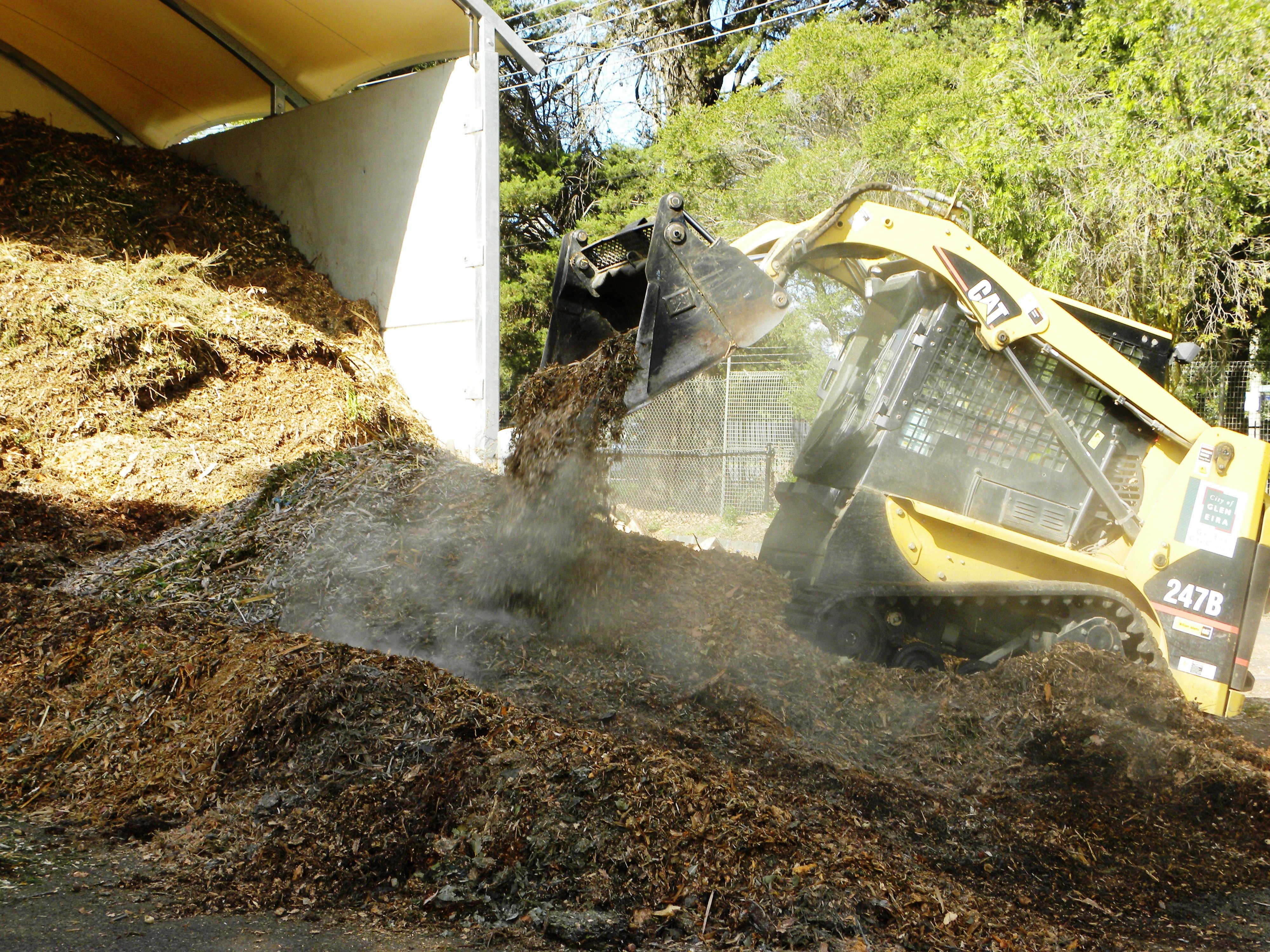
  • Penhalluriack’s coloured photos (conveniently omitted at first) clearly show the dust spray and the dangerous incline that the loader is working at. Both situations should not have been allowed to occur.
  • Why should something as simple as a tin shed cost the earth?
  • The reluctance to disseminate important information to all councillors represents a failure of good governance
  • here’s the missing photo – in glorious technicolour!

From Supporters of Caulfield Reserve

OPEN LETTER OF PROTEST

TO ALL POLITICIANS

MEMBERS OF LOCAL, STATE & FEDERAL GOVERNMENTS 

The proposed C60 Amendment for theCaulfield Villageand the Centre of the Caulfield Racecourse redevelopment will change the face of Caulfield forever. As residents of the municipality we protest in the strongest possible terms to:

  • The failure of state, federal and local authorities to  have in place a democratic and transparent process for the development of a holistic plan which involves all stakeholders
  • We decry the current situation where democratically elected councillors are denied the right to represent their constituents as a result of spurious ‘conflict of interest’ claims
  • We denounce the abandonment of the original Phoenix Precinct Plan and the progressing of this MRC proposal in a piecemeal but wilful fashion that deliberately undermines the Public view and wishes
  • We maintain that the MRC proposal fails to adhere to the underlying tenets of the Planning and Environment Act in protecting residents’ amenity
  • We denounce the failure of the current proposals to adequately consider the consequences of high rise and high density residential and commercial development on the immediate surrounding areas and the permanent social, economic and environmental damage this will cause
  • We denounce the secrecy and failure to keep the community informed as to the alleged progress of this development

 If this proposal is accepted the Caulfield and wider Glen Eira community faces the inevitable:

  • Reduction in quality of life and liveability
  • Unacceptable increase in traffic congestion, and destruction of urban amenity.
  • Loss of public open space as agreed to by the Queen Victoria grant and George VI reaffirmation of the grant in 1947
  • Economic downturn of local shopping strips
  • The ceding of Crown Land to private interests
  • Public perceptions that horses have more rights than public citizens 

We Urge All Councillors And All Members Of Parliaments To Immediately Resolve To: 

  1. Ensure the C60 Amendment is abandoned.
  2. Institute a fully representative panel to co-ordinate the development of the  Phoenix Precinct Structure Plan followed by Master Plans, and
  3. Ensure that all stakeholders are represented on this panel: Zagame Corporation,MonashUniversity, VATC (trading as) Melbourne Racing Club, Caulfield Racecourse Trustees, Victorian Government, Federal Government, and those affected by the changes – Ratepayers and/or Residents or their Representative bodies. 

SUPPORTERS OF THE CAULFIELD RESERVE

Informing Glen Eira Community 

http://melbournecommunities.org.au/caulfieldheath.html 

We’ve received a set of correspondence between a resident and councillors in regard to the meeting scheduled for the 28th April. We also include a letter from Cr. Penhalluriack in response to this resident.

This first letter/email was address to Mr. Torres (planning dept) and cc’d to all councillors –

Dear Mr Torres,

 Thank you for your undated letter received on the 20th April notifying us of the sitting of the Caulfield Racecourse Precinct Special Committee meeting on the 28th.

As you will have discerned from the attendance of over 130 people at the recent meeting at the Caulfield Park Community Centre, there is a very large interest in this matter.  Although there is no provision to address the councillors at the proposed meeting, it may be expected that a large number of those people who attended the previous meeting will want to attend to observe the actual decision process.  Consequently, the decision to schedule it at short notice in a week’s time at this time of year is most unfortunate.

This is the Easter/Passover period, when very many people are away enjoying the Easter break.  For this reason alone, the date is inappropriate.

However, it also coincides with a forum (Phoenix Precinct Rising) regarding the very same topic on which councillors are making their decision.  This forum includes the mayor of Glen Eira as a participant.  This will mean that since the two items are both of crucial interest, and on largely overlapping matters, that even those who are not away will be split in which meeting to attend.  Again, the scheduling is inappropriate.

 Further, one might have thought that given the nature and focus of this forum, with several well-known and distinguished panellists, that the councillors on the committee would have wanted to maximise their knowledge, prior to making such an important decision.  So again, unless they have no interest in gaining more input, the scheduling is inappropriate.

 We are sure that you did not intend it, but to many, it will seem that this hasty scheduling is a attempt to avoid public attendance and observation at this most important meeting.  It is said that justice not only needs to be done, it also needs to be seen to be done.

We suggest that you reschedule this meeting in order to allow all the above matters to be properly addressed, and so that people can be given adequate notice of the meeting so they can arrange to attend and observe.

 Yours sincerely,

Michael and Bridget Cramphorn

Cr. Penhalluriack responded to this missive and cc’d his response to all councillors –

Dear Mr Cramphorn,

I empathize with you. 

Councillors themselves have had only one brief meeting to discuss the C60 development.  I don’t recall seeing any of the “Caulfield Racecourse Precinct Special Committee” members attending the C60 Panel Hearings.  If any of them attended it was only briefly.   

You have correctly observed that the C60 decision is being rushed.  So too is the decision on the proposed public (car)-park and the seven-lot subdivision.   

Council posted letters out inviting objectors to a “planning conference” for C60 AND the  proposed public (car)-parkuntil somebody realized they were actually obliged to have a “public consultation” and not a “planning conference”.  More letters went out correcting their error.  Then the MRC pulled the plug on their “public (car)-park” planning permit application, realizing that they would be better off negotiating with selected Councillors and the CEO behind closed doors than facing an angry public meeting.  The CEO promptly declared the negotiations “confidential”, and that was the end of any pretense that we Councillors care about public opinion. 

The Council Meeting on the 27th April will now decide what happens with the proposed public (car)-park in the centre of the Reserve.  The following night (28th) the Special Committee Meeting (Crs Esakoff, Hyams, Lipshutz and Pilling), will meet to railroad through C60 and the seven-lot sub-division.   It is all so rushed that the obligatory advertisement  in the Leader  announcing that meeting was overlooked, and an advertisement had to be placed in the Age instead.  


The team negotiating with the MRC have achieved virtually nothing by way of concessions towards a workable park in the centre of the Caulfield Racecourse Reserve.  As already mentioned, the situation is exacerbated because the CEO slapped a gag on public discussion – although from noon today Council’s web-site should contain both agendas.  

I can say, however, that only one of the seven important demands passed by Council at its meeting on the 15th March has been achieved.  You will recall, at the meeting on the  4th April, how some Councillors were extolling the negotiating skills of the family-law lawyer, Cr Lipshutz – and at the same time denigrating Cr. Forge and me as “too emotional”.  (I took that as a compliment.  It means that, unlike some of my fellow Councillors, I care.)   However it now seems those negotiating skills were phantasmal, and the MRC team was able to get just what it wanted.

You may get a better understanding of why this has been so rushed, and why your request to reschedule the meeting will fall on deaf ears, if you ask which Councillor is taking leave of absence from the 1st May. 

Cr Frank Penhalluriack.
 
COMMENT: Mayor Esakoff will now NOT BE MODERATING NOR ATTENDING the community forum. The ‘excuse’ was that there is a Special Committee meeting at Council. We however note, that Esakoff’s attendance was requested for 9pm to moderate a discussion panel. Since we expect the C60 to be rubber stamped within minutes, she would have had plenty of time to drive the 5 minutes to Monash and make an appearance!! We can only assume that she did not receive ‘permission’ to attend from Newton and Lipshutz?
 

A comment by Reprobate, reproduced here as a post:

If Council has all the information it needs to make a decision, then it should make a decision. In that sense its not indecent haste. I seriously doubt though that Council *does* have the information it needs, and I further doubt the Special Committee has mastered the detail.

Regardless of the merits of C60, it is appalling that Council has failed to provide an up-to-date Incorporated Plan for residents to inspect. The members of the Special Committee have a moral obligation to ensure the documents being published under their imprimatur are kept current, especially before the recent meeting that ostensibly was to listen to the community. Those who attended might still not be aware that what is being proposed doesn’t match the published Incorporated Plan (dated 2008). [The Panel commented on this.]

I’ve explained before why this matters, but as a reminder, C60 removes third-party rights except in very narrowly defined circumstances involving the Incorporated Plan. The Explanatory Report, published under the aegis of Council, reveals why. Its to help the developer make more money (thats the reference to “facilitate”).

There is no compelling need to make the area a Priority Development Zone (PDZ), despite the claims of the Explanatory Report. The proposal is primarily for residential development in a Residential Zone (R1Z) and mixed development in a Mixed Use Zone (MUZ). It does however seek to obtain Crown land and change its zone to build MRC’s beloved tower. Additionally it seeks closure of some inconvenient roads. This can all be done without a PDZ.

Loss of third-party rights is something *every* non-developer resident of Glen Eira should be concerned about. Council has already argued, successfully, at VCAT that standards designed to protect residential amenity should be waived when it involves multi-unit development. While most attempts to insist on compliance with the Planning Scheme are doomed, nevertheless third-party appeal rights keeps pressure on Council to have to explain itself. Its a sad fact that Council rarely explains itself until it appears before VCAT.

At both the recent C60 community meeting and planning conference re an MRC 8-lot subdivision, Cr Lipschutz has attempted to intimidate attendees. This is unacceptable. Far from helping people understand the process and listing all the matters that the Responsible Authority *must* and *may* consider, he has provided his own, and I would argue erroneous, interpretation of the Planning and Environment Act. This has extended to mentioning VCAT explicitly in his assessment of planning permit applications in Council. Somebody as aggressive and clumsy when dealing with the public on controversial topics is not an ideal choice for chairing such a Committee.

There is a curious double-standard used by Planners (spelt with a capital P), whereby they cling to anything that supports what they want, and ignore anything that contra-indicates support. So it is that Cr Lipschutz (without apparent consultation with his Committee colleagues) has decided narrowly what matters the committee will consider, regardless of the considerable powers PAEA confers. It was the MRC that thought it appropriate to include photos of a few thousand cars parked in the centre of the Caulfield Racecourse And Public Reserve. In a submission from their partner, Monash University, parking in the centre of the racecourse was explicitly mentioned. Further, both Council and VCAT disagree that a Use of land should meet its own parking needs. That’s why non-compliance with parking requirements as specified in the Planning Scheme are so universally waived for developers. Creating traffic and parking problems is a de facto Council policy in and around Activity Centres.

The Panel probably correctly identified the interface with existing residential areas as the most sensitive interface. The published Incorporated Plan as far as I can tell seeks to build 4 storeys closer to existing single-storey dwellings than the Standards (guidelines if you’re VCAT) specify. If increased traffic isn’t an issue (the Panel doesn’t think it is), and proximity of 4 storeys to existing single-storey dwellings isn’t an issue (Council doesn’t think it is), then its time to scrap the Minimal Change Area policy as being manifestly unfair (fairness is a key Objective of Victoria’s Planning Provisions).

There is something really really odd when so many documents that Council has published re C60 have “Supporting_document” as part of their name. Its almost as if the matter has been prejudged.

I repeat that nobody knows what the development that C60 is designed to facilitate will look like. Not Council, not its officers, not the MRC, not the Panel, not successive State Governments. There is a rough concept, which has met considerable community resistance. The powers that have aligned behind the proposal desperately wish to silence critics up front, secure their funding and valuable crown land, and move on with the development, safe in the knowledge they cannot be scrutinized by people whose amenity they are impacting

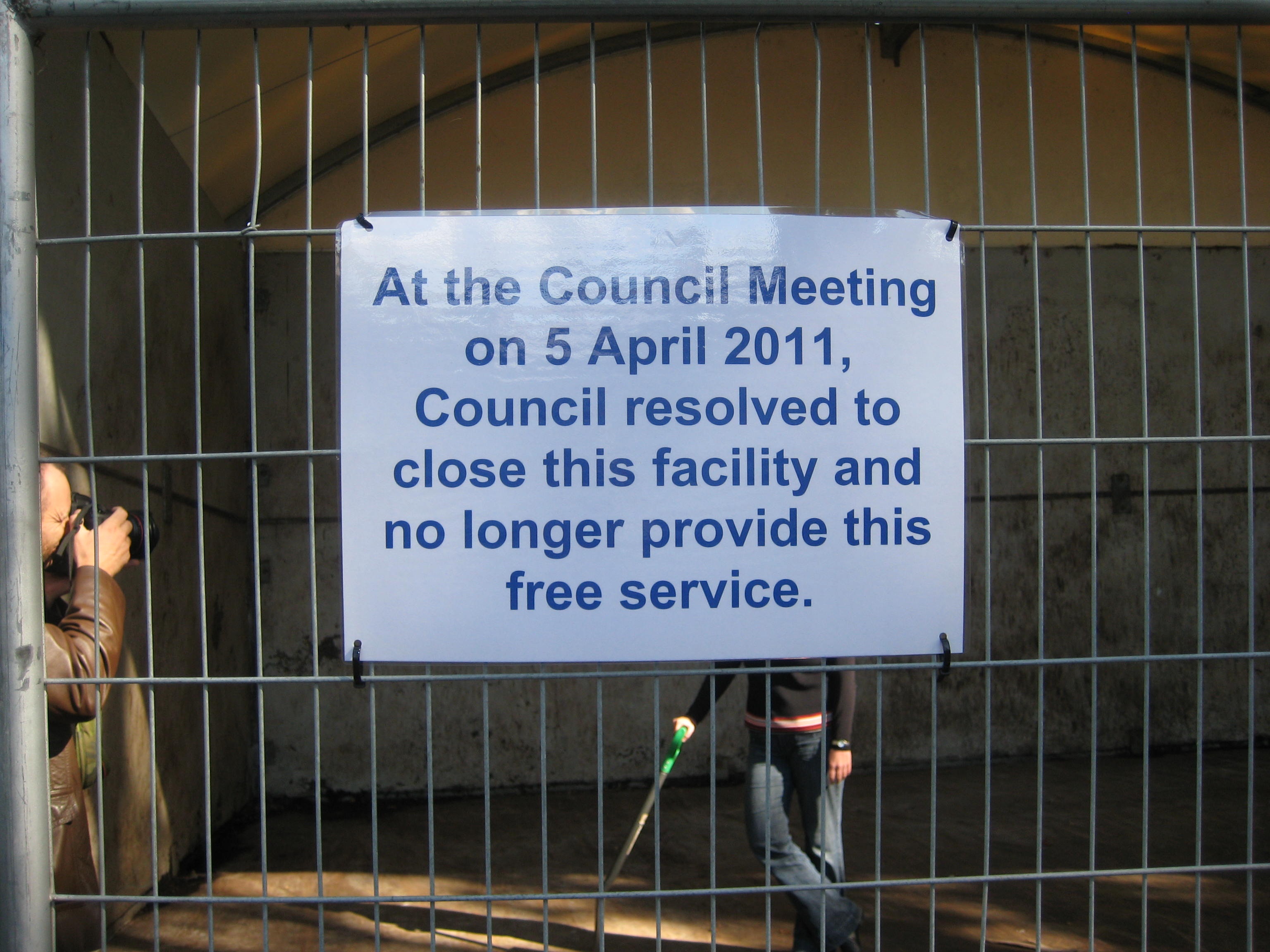
The sign placed at the now defunct mulch heap attempts to lay the blame for the closure of this facility squarely at the feet of councillors. What the sign does not disclose is the reasoning behind councillors’ decision – namely, that it represented a risk to both employees and the public. No matter how remote this risk may have been, councillors acted appropriately – in stark contrast to the audit committee and the CEO in failing to provide the scientific consultant’s report to ALL councillors at the earliest opportunity and initiating action.

In the minutes of 3rd March 1997, a report written by Newton states that it was ‘decided that it would be desirable to have a comprehensive set of written policies on all areas(s) of Council activity’. He goes on to state that “in most cases policy ought to be approved by Council. This would give clear authority to the policy being laid down. It would also require reconsideration by the Council itself if the policy is to be amended (good corporate governance)”.  So, it is Council, who is to set policy, or to change policy. Under the same item, the ‘Occupational Health and Safety Policy’ was voted on. It states:

“Management has a duty to provide and maintain so far as is practicable, a working environment that is safe and without risk to health. All staff have a duty to report and assist management to correct unsafe conditions”.

“…the organisation makes the following commitment – We will not knowingly engage in any activity or provide any service unless we can perform the activity or provide the service safely”.

“This policy recognises that the health and safety of all employees of the City of Glen Eira is the responsibility of Management…..”

One of the tasks and procedures adopted was to ‘Promote proactive risk identification, assessment and control programmes that embrace the principles of effective risk control”.

It should never have taken the persistence of one councillor to get things done. It also should never have been ignored by the Audit Committee, and it should never have had to come to a vote at council meeting. The onus was on management to ensure that the mulch heap was 100% safe. The fact that it was even moved into an area adjacent to a playground, school, and public park is beyond belief. As Mr. Newton stated so many years ago – the blame must be laid at management’s feet!

Caulfield Racecourse Precinct Special Committee Meeting 28 April 2011  
Notice is given pursuant to Section 89(4) of the Local Government Act 1989 that a meeting of the Glen Eira City Council Caulfield Racecourse Precinct Special Committee will be held on Thursday 28 April 2011 in the Council Chambers, corner Hawthorn and Glen Eira Roads, Caulfield commencing at 7pm.
The business to be transacted at this meeting will be:
 
 
 Melbourne Racing Club (MRC) Planning Scheme Amendment C60 to consider either approval (adoption) or abandonment of the amendment; and
 Melbourne Racing Club (MRC) to consider a planning application for a 7 lot subdivision.
 
 
Amendment C60 was exhibited on 19 November–21 December 2009, was the subject of six days of hearings by the independent panel in May 2010, the panel’s report was released publicly on 30 July 2010 and the Special Committee considered further submissions at a meeting on 4 April 2011.


Newton’s response to Penhalluriack’s questions about the timely and/or adequate handling of the ‘mulch affair’, relies heavily on:

  1. Communication with the Victorian Department of Health, and
  2. Implementation of consultant’s recommendations 

Department of Health 

Penhalluriack’s first question was: “On what investigatory grounds did Council twice deny that there was any danger to the community’s health……”.  Newton responded with: ‘The advice was from the Victorian Department of Health’. We go on to learn that this ‘advice’ derives from Mr. Adcock from the Legionella section of the Department.  Of interest is the fact that  Penhalluriack is not restricting his question exclusively to legionella here, but any potential ‘danger’. Further, when arguing against the closure of the mulch depot at Tuesday night’s council meeting, Lipshutz claimed that council had received a Department of Health ‘report’. So what was it? ‘Advice’, or an official ‘report’? The difference is immense.  ‘Advice’ could simply mean a note, a letter, a conversation? It could perhaps even be in response to carefully crafted questions that were forwarded to the Department? Or such ‘advice’ might also be the result of a phone call from one bureaucrat to another – possibly an old mate from the past? 

What we do know is that Newton is meticulous in his use of language. We also know that selective editing, as evidenced in the first version of the agenda items with the deletion of telling and graphic photographs, is also a possibility. A little research reveals that Mr. Adcock is not a medico or researcher, but rather a bureaucrat charged with overseeing the legislation. His section deals exclusively with legionella and the link to water cooling systems. There is nothing on the section’s webpage that mentions anything else apart from cooling towers and other systems of that ilk. So did Newton, or his officers, subsequently ask about ALL POTENTIAL DANGERS, or did he restrict his queries (and answers) to legionella alone – even after Penhalluriack broadened his concerns to other pathogens? Unfortunately, we do not know what was asked, and neither do we have the complete ‘advice/report’. All we have are a couple of sentences without the necessary surrounding context. 

Penhalluriack also queries why it has taken a ‘third warning’ before ‘expert opinion’ is sought. Newton simply responds with ‘It is difficult to imagine a more expert source?” (ie. The Health Department). Yet, we’ve already been told that the ‘advice’ from the Department was restricted to legionella alone. Penhalluriack’s broader concern is thus ignored. 

But that’s not the end of the story. We also have the following inconsistency. Adcock, as a representative of the Department of Health, has basically ruled out the possibility of contracting legionella from woodchip/mulch. So how come that the Department of Health can publish the following?

Legionellae are ubiquitous in the environment. They are often isolated from water and wet areas in the natural environment such as creeks, hot springs, seawater, woodchips, mulch and soil. Potting mix is often colonised with Legionella species….” http://www.health.vic.gov.au/__data/assets/pdf_file/0003/19902/bluebook.pdf 

Curioser and curioser! How can we, on the one hand be told by a Department of Health official that ‘there is no evidence’ for the link between legionella and wood chips, yet the same Department finds it necessary to issue the above warning? We urge readers to simply do a Google search on these terms to locate literally hundreds and hundreds of scientific articles from reputable organisations and researchers, as well as government publications that highlight the potential link between legionella and mulch – not to mention the countless other conditions that are linked to woodchips and/or mulch. 

What really caught our eye however, was this directive from a Western Australian council dating from 2007 that ordered its staff to wear protective masks, etc. We’ve uploaded this document and urge readers to note the precautions that this one council can take 4 years ago – and not necessarily in relation to legionella, but to other ‘dangers’. 

Implementation of consultant’s recommendations 

Newton states:  “Of the six recommendations, five have been implemented and one is in the process of being implemented. None has been “ignored”. 

Please note the use of language – ‘implemented’ is very definitely past tense, implying completion, gone, dusted, finished. Yet, when we come to the specific actions regarding these recommendations several pages later, we find sentences such as: 

R4. An upgrade to the spray mist unit to allow manual dosing of mulch with water to suppress dust is being designed by engineers.

R5. Fact sheets are being made available on site.

R6. Signage at the site is currently being manufactured by Road Management Solutions Pty Ltd in accordance with the recommendations contained in the report. 

So how many of the recommendations have actually been COMPLETED? Is it 5 as Newton would like to have us believe, or is it merely 2?  The more important issue revolves around time lags. The first draft of the consultant’s report was in Newton’s hand on Feb. 2nd. It went to Audit committee members on Feb. 18th. Newton’s response was in the April 5th Agenda. Hence a time lag of two months! Two months to ‘manufacture’ signs? Two months for adequate ‘fact sheets’ to be made available? Two months for the ‘design’ of dosing equipment? And as Penhalluriack pointed out at Council meeting, the most important words in the ‘temporary’ warnings, somehow omitted to mention the nasty ‘legionella’.

We invite readers to draw their own conclusions as to the role of the audit committee in this ‘mulch affair’ and the validity of Newton’s responses. Do these ‘answers’ reveal a potential ‘cover up’ and the failure of correct risk management? Were residents, and employees unnecessarily exposed to potential health risks?

Council has posted its minutes for the C60 meeting on Monday night. We’ve uploaded it and ask:

  • Could any set of minutes be any less informative than these?
  • Why was it necessary to name one speaker when they obviously did not wish to be named by refusing to give a surname? What is the motive behind such actions?
  • One motion reads: ‘That the minutes of the Caulfield Racecourse Precinct Special Committee Meeting held on 17 March 2010 be confirmed”. Unless we are terribly mistaken, these minutes have never been put out in the public domain which CONTRAVENES THE LOCAL GOVERNMENT ACT. As a ‘Special Committee’ of Council, both agendas and minutes are to be freely available.  Our questions are: who has seen these ‘minutes’ apart from Committee members? Have other councillors set eyes on these minutes? If not, then again, doesn’t this contravene the motion unanimously passed by council?
  • Secrecy and more secrecy – that’s the only possible conclusion that comes out of this entire farce!

CORRECTION: We have made a mistake. The Special Committee minutes were from 2010 and not 2011. We misread the item. Unlike Council however, we openly admit our errors! Our other criticisms still stand! Why bother to produce minutes when they reveal absolutely nothing of what went on? Yes, these minutes are ‘legal’, but given the wide interest in this issue, the elecorate has every reason to expect a full and extended report of what occurred. As numerous residents said, so very, very little respect for the community!

« Previous PageNext Page »