GE Governance


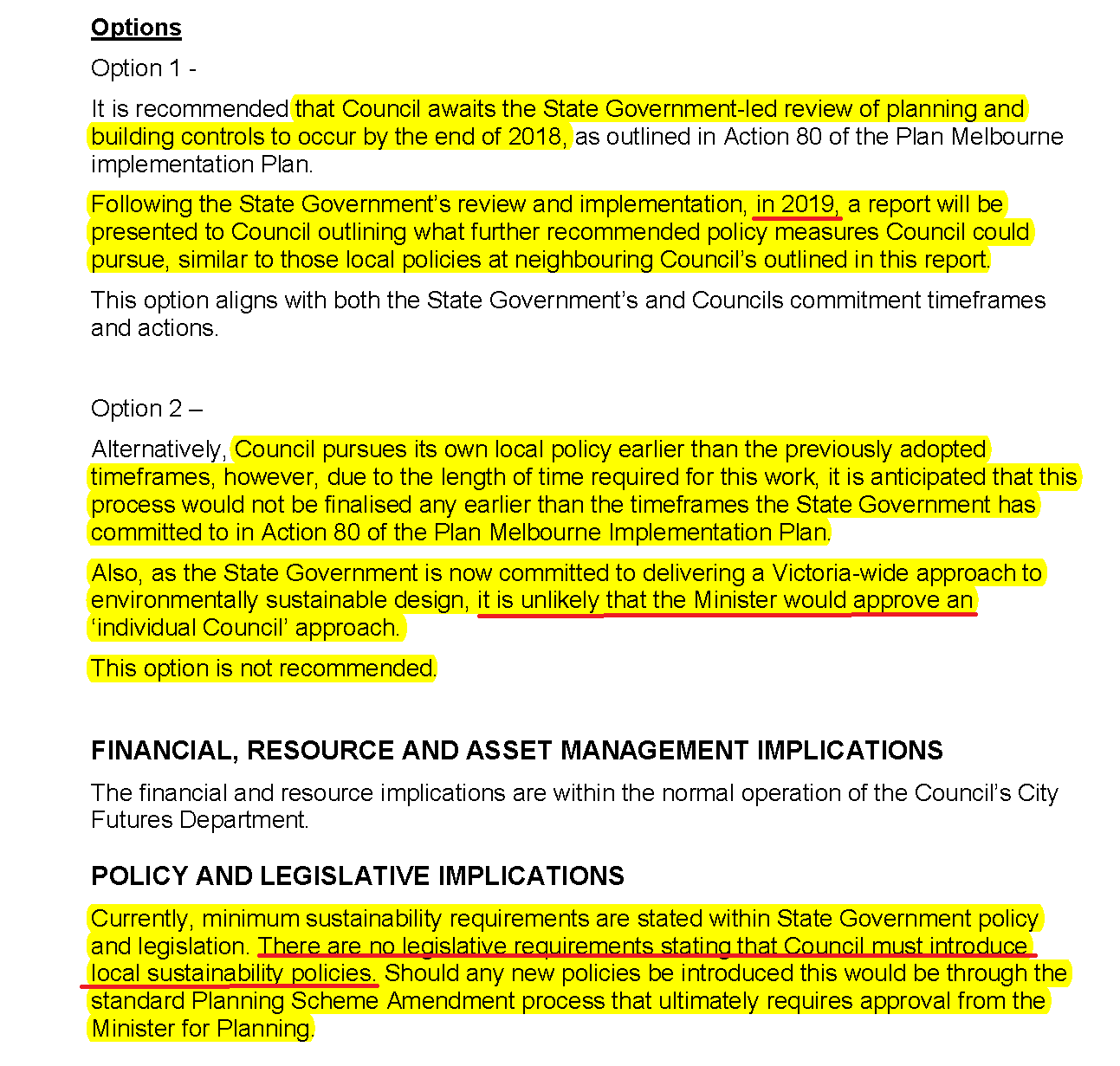
Item 9.8 of the current agenda features council’s approach to Environmental Sustainability. That is, let’s not do anything and wait another two to three years for the State Government to introduce legislation. This ‘recommendation’ is despite all resident feedback on the need to increase open space in developments; to increase permeability and to introduce some decent amendments that will address the lack of any decent environmental measures in the current planning scheme.

We must also point out the complete lack of ‘objectivity’ in the officer’s report. Six metropolitan councils have been successful in introducing their own Environmental Sustainability Design amendments. Admittedly, these expire at the end of December 2017 as noted in the report. What is not noted is:

  • Are these councils seeking to extend their sunset clause?
  • What benefits have already been derived by having policy in place for nearly 3 years?
  • What damage will continue to occur in Glen Eira over the next 3 years whilst this council sits on its hands?
  • What of Water Sensitive Urban Design policies that these councils have with NO expiry date?

Every time that there is the possibility of introducing some new measure to protect the environment, or residential amenity, this council resorts to its old tricks – let’s wait for a couple of years because it is a state responsibility and not ours! Imagine how many more trees will go and how much more concrete will be poured whilst this council does nothing!!!!!!!

Here are the ‘unbiased’ officer recommendations –


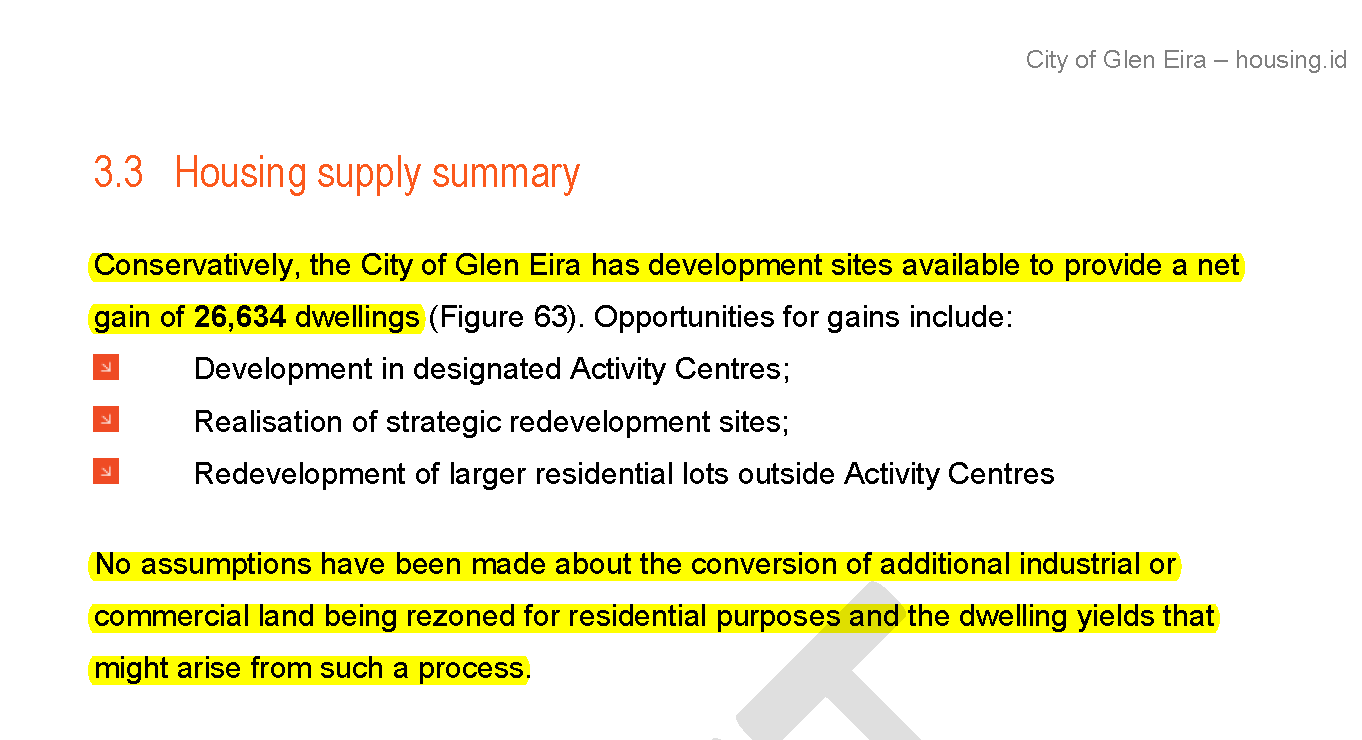
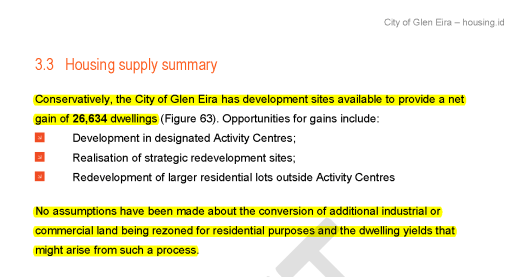
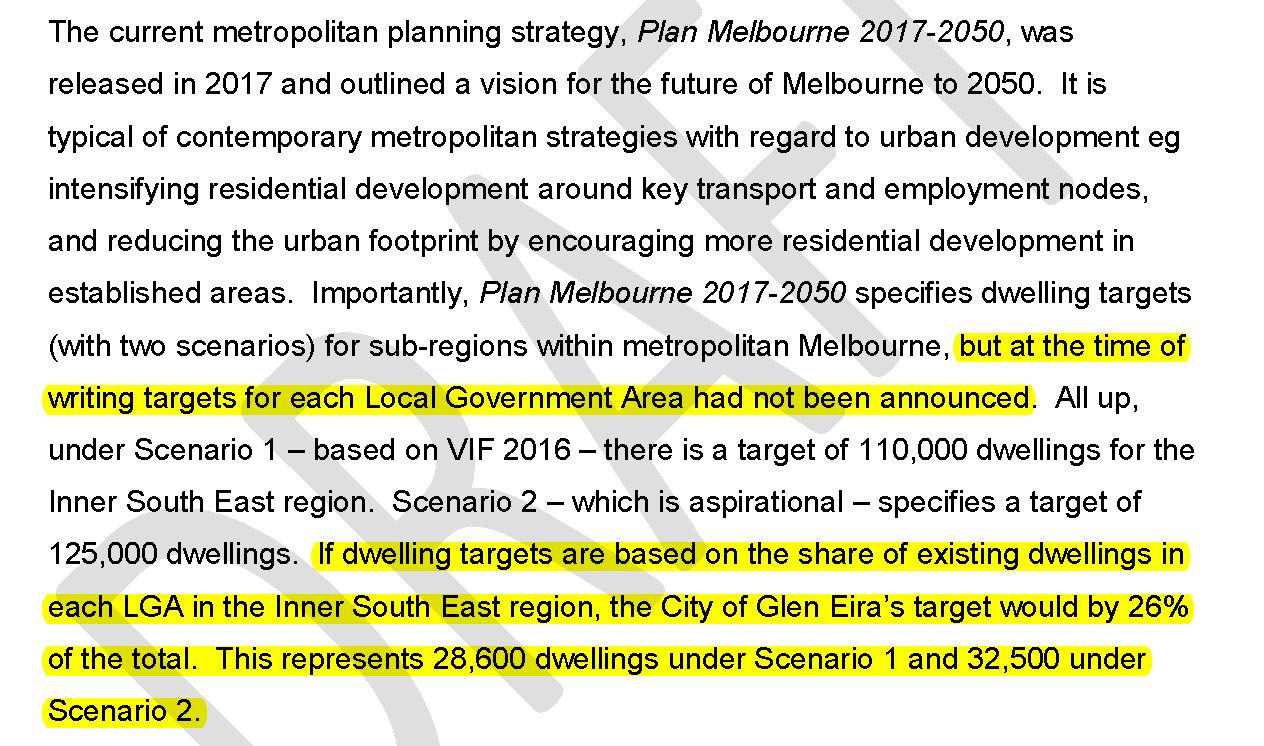
The above image comes from page 93 of council’s commissioned Housing Report. We highlight this paragraph because it illustrates completely how statistics can be used to distort situations, especially when only half of the story is presented.

Both Plan Melbourne and Victoria in Future 2016 are cited, leading to two possible scenarios required  to meet Glen Eira’s population growth – either 28,600 net new dwellings, or 32,500 required dwellings. Thirty two thousand certainly sounds a lot, and is intended to. What readers need to remember is that these figures are projections for the next thirty-three (33) years up to 2050 or 2051. Thus if we are indeed in need of another 32,500 new dwellings, then all Glen Eira has to average is 970 net new dwellings per year! And for the past 5 years this pro-development council has averaged 2000+ per annum – OVER DOUBLE WHAT IS ‘REQUIRED’!!!!!

Why couldn’t the document state this simple fact? Why do residents have to perform some basic arithmetic in order to come up with a scenario that is far more ‘realistic’ and accurate? When put into perspective isn’t the issue that Glen Eira doesn’t need to:

  • Expand its activity centre borders as we suspect will happen
  • Maintain a growth that is double and triple what is required
  • Maintain a growth that increases density per square km that is totally unsustainable
  • Make Glen Eira the development ‘capitol’ of the Southern Region?

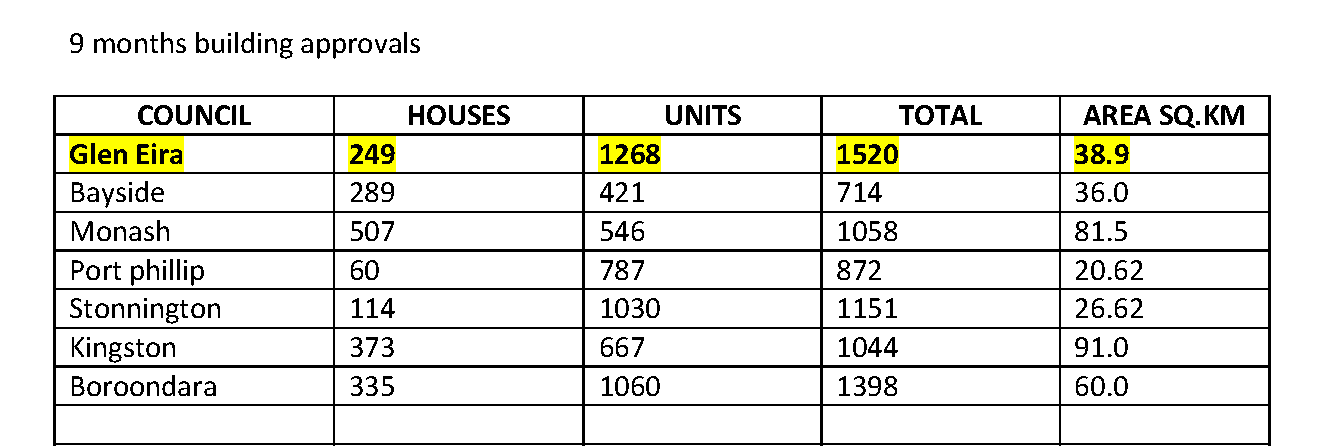
To illustrate all of the above here are the ABS building approval figures up to the end of March 2017 – that is, 9 months of building approvals. At this rate the year’s total will be approximately another 2000 new dwellings.

Residents need to understand that council’s mantra is and has always been to welcome development irrespective of its cost to residential amenity, sustainability, and overall density. Residents also need to demand answers as to why this council isn’t screaming blue murder as a result of Wynne’s recent amendments and why no genuine attempt is being made to rein in development?

Finally, it is also worth pointing out that the very figures presented by Plan Melbourne are highly questionable. Victoria in Future 2016 only shows projections up to the year 2031. Yet Plan Melbourne sites this source as projecting to 2051. There’s also the question as to how Glen Eira is supposed to represent 26% of the required new dwellings when there are only 4 municipalities included in the Inner Southern Region – Glen Eira, Stonnington, Bayside and Boroondara? Surely that’s 25%? Plenty of other stats in all of these documents can and should be called into question.

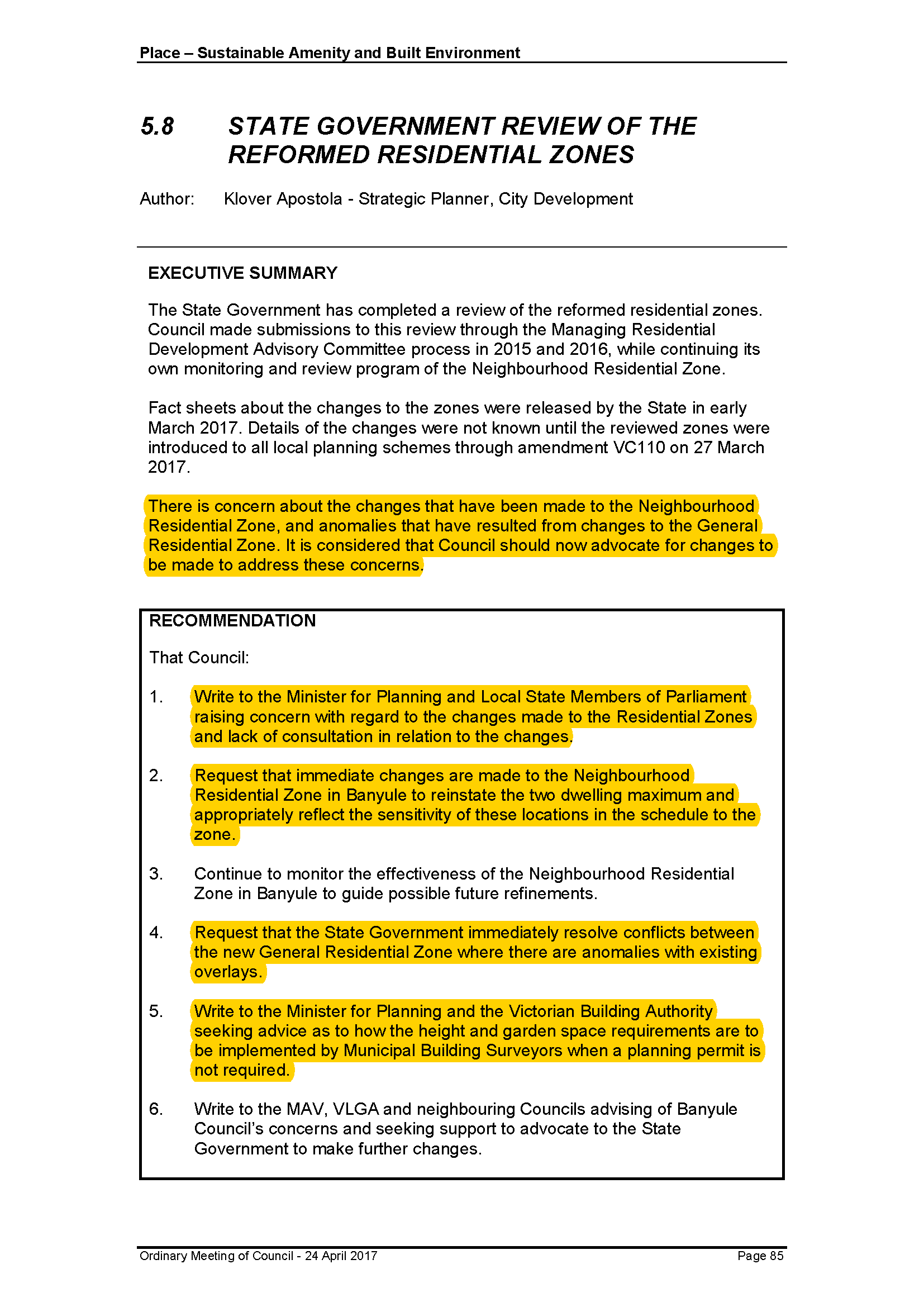
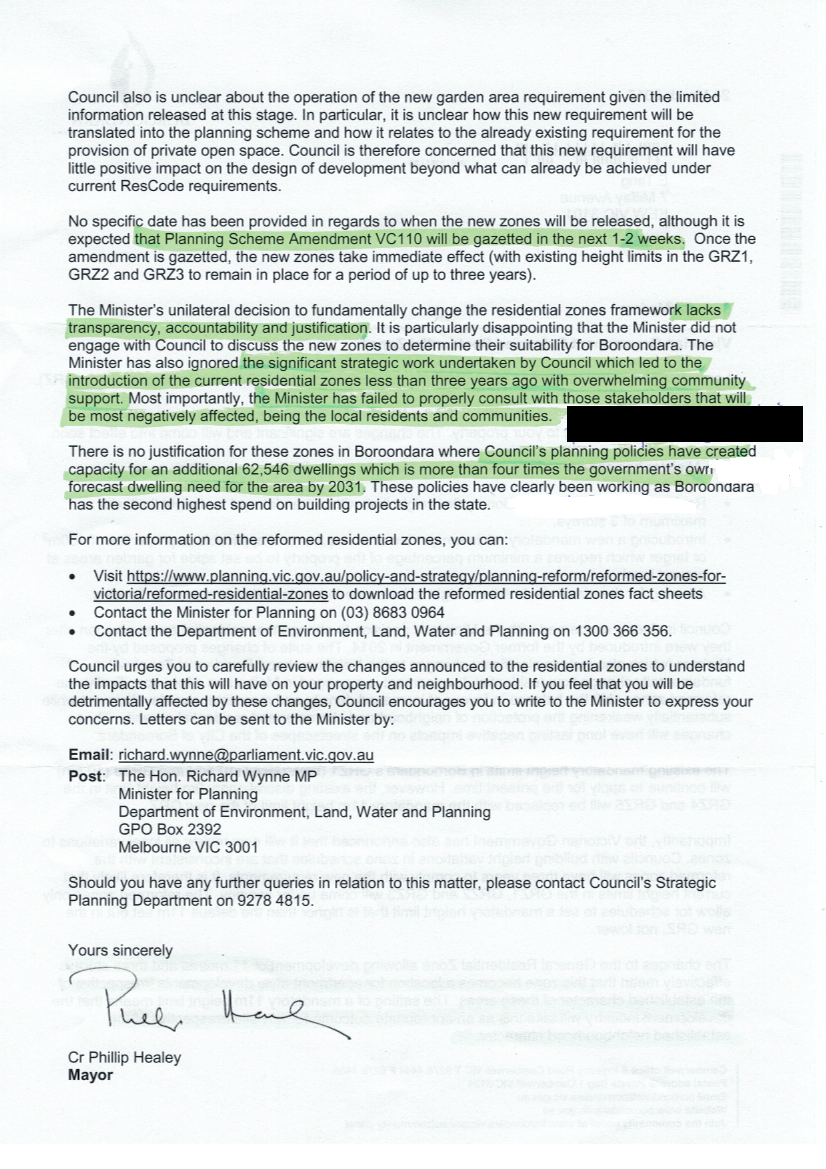
In March 2017, Wynne gazetted Amendment VC110 which is the latest version of the residential zones and the one trumpeted to ‘save our backyards’. Practically every other council has at least put up on its website information about this amendment. Many have included an officer’s report in their agenda papers and some like Banyule and Boroondara (see images below) have voiced strong concerns/objections to the amendment. Glen Eira on the other hand has maintained a stony silence! Not a public peep has come out from any councillor and certainly not from any administrative quarters via a media release, a web page announcement. Nothing but silence! Why? Is this another foray into keeping the public ignorant? Or is it more to do with not wanting to ‘antagonise’ Wynne and the Labor party so that brokered secret deals can go through? How much is politics at play here rather than transparent planning? Why, when after years and years of patting itself on the back for achieving such ‘largesse’ from Matthew Guy (ie mandatory heights, 2 dwellings per nrz) is council now silent when these very ‘achievements’ are about to go down the drain?

And if we are correct, then the rot has already started for the Neighbourhood Residential Zones. An application is in for 76 Bignell Road, Bentleigh East. This is a site in the NRZ of 580 Sqm and was sold in September 2016 for $1m. The application is for 3 attached double storeys! And all is ‘legal’ since March 2017 thanks to Wynne. We therefore urge all residents in both the NRZ and GRZ zones to be on the look out for this new threat to our neighbourhoods – one that council is hoping will slip through unnoticed no doubt! Wynne’s amendment we suggest sits well with council’s long history of a pro-development agenda. Like VCAT it will eventually become the convenient scapegoat for over a decade of appalling strategic planning and gang after gang of complicit councillors.

We will report on the potential impacts of Wynne’s amendment in posts to come. In the meantime, here are some screen dumps from a recent Banyule council meeting and the letter that Boroondara sent out to its residents –

We have received several emails asking us to elaborate on our statement that council will be enlarging the activity centres and thus paving the way for more intense development throughout Glen Eira. This post explains our reasoning.

According to the planning scheme the ‘housing diversity’ areas include all those sites zoned as General Residential Zone, Residential Growth Zone, Commercial and Mixed Use. NO NEIGHBOURHOOD RESIDENTIAL ZONING (NRZ) IS INCLUDED IN HOUSING DIVERSITY. These come under the umbrella of ‘minimal change’ – ie the NRZ zones.The image below makes this clear

Thus we have the current situation where each and every ‘activity centre’ is zoned as either RGZ, GRZ, C1Z OR MUZ. Where these sites meet ‘minimal change’ (ie NRZ) then that determines the border of the respective activity centre.

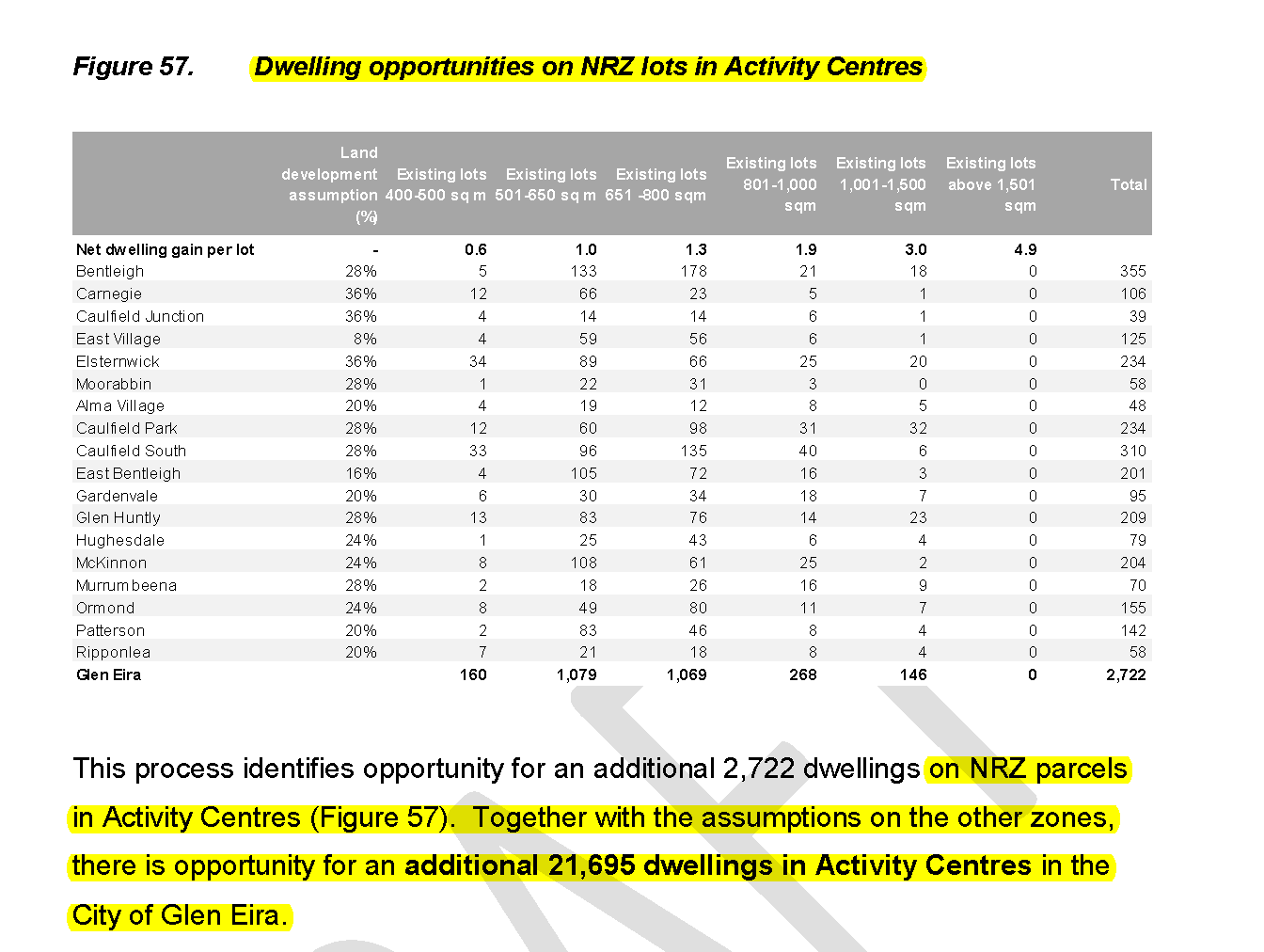
If we are to believe what is written in council’s commissioned housing report, then all this is about to change. Here are a couple of screen dumps from this document which refer to NRZ sites WITHIN ACTIVITY CENTRES! As we’ve stated – there are no NRZ sites in any activity centre. The fact that this ‘research’ is done on this basis can only mean one thing in our view – council will be extending the borders to most activity centres. And once extended we would bet that the classification of these sites will not be NRZ any longer!

Isn’t it about time that council came clean on what it is really doing? How much longer will residents be kept in the dark? And how about council answering the most basic questions concerning:

  • definite time lines
  • what is ‘capacity’ and why do we even contemplate the need for another 20,000+ dwellings?
  • how sustainable is any of this?
  • what is council doing about parking and traffic management?
  • what is council doing right now about amending the schedules to the zones?
  • why can other councils keep working on amendment after amendment and council has done bugger all, except to rezone land for more development?

There can be no doubt that council is gearing up for:

  • Facilitating increased major development throughout Glen Eira
  • Expanding the borders of activity centres

Residents need to question why given:

  • That Glen Eira is already the third most densely populated municipality in the state – only behind Melbourne and Port Phillip – both of which are special cases anyway.
  • That no estimates of infrastructure costs, traffic management costs, etc. have been included in any forecasts
  • No realistic estimates of what Wynne’s new legislation will mean for accelerated development in both Neighbourhood Residential Zones and the General Residential zones. The housing paper we believe fails to adequately account for these changes and their potential for much more development.
  • No realistic estimates of what demands will be placed on open space and how much meeting the most minimalist standards will cost
  • No consultation with residents as to whether or not they are accepting that various activity centres should be able to have a dwelling ratio of over 200 dwellings per hectare! A hectare is 10,000 square metres. If we assume that the average housing block is 500 square metres, this means that 20 houses will be replaced by over 200 in countless residential streets.

Featured below is the more detailed prognosis for our suburbs from council’s commissioned report –

Carnegie – Assumed 36% of developable land in the centre for future residential development of at least 200 dwellings per hectare.

Caulfield Junction (inc. Caulfield Village) – …. it is assumed that 36% of developable land in the centre for future residential development of at least 200 dwellings per hectare.

Elsternwick – development. Assumed 36% of developable land in the centre for future residential development of at least 150 dwellings per hectare.

Bentleigh – Assumed 28% of developable land in the centre for future residential development of at least 150 dwellings per hectare.

Moorabbin – Assumed 28% of developable land in and around the centre for future residential development of at least 150 dwellings per hectare

Murrumbeena – Assumed 28% of developable land in and around the centre for future residential development of at least 150 dwellings per hectare

Caulfield South – Assumed 28% of developable land in and around the centre for future residential development of at least 100 dwellings per hectare.

Glen Huntly – Assumed 28% of developable land in and around the centre for future residential development of at least 100 dwellings per hectare.

Caulfield Park – Assumed 28% of developable land in and around the centre for future residential development of at least 100 dwellings per hectare.

Hughesdale – Assumed 24% of developable land in and around the centre for future residential development of at least 100 dwellings per hectare.

McKinnon –  Assumed 24% of developable land in and around the centre for future residential development of at least 100 dwellings per hectare.

Ormond – Assumed 24% of developable land in and around the centre for future residential development of at least 100 dwellings per hectare.

Ripponlea – Assumed 20% of developable land in and around the centre for future residential development of at least 75 dwellings per hectare.

Gardenvale –  Assumed 20% of developable land in and around the centre for future residential development of at least 75 dwellings per hectare.

Alma Village – Assumed 20% of developable land in and around the centre for future residential development of at least 75 dwellings per hectare.

Patterson –  Assumed 20% of developable land in and around the centre for future residential development of at least 75 dwellings per hectare.

East Bentleigh –  Assumed 16% of developable land in and around the centre for future residential development of at least 75 dwellings per hectare.

We urge all residents to read the Housing commissioned paper and to digest its message. (UPLOADED HERE). Query the assumptions! Query the figures and finally query the (secret) agenda! We will be doing this in future posts.
http://www.theage.com.au/victoria/melbournes-ugly-scaffolding-set-for-a-makeover-20170525-gwcze9.html

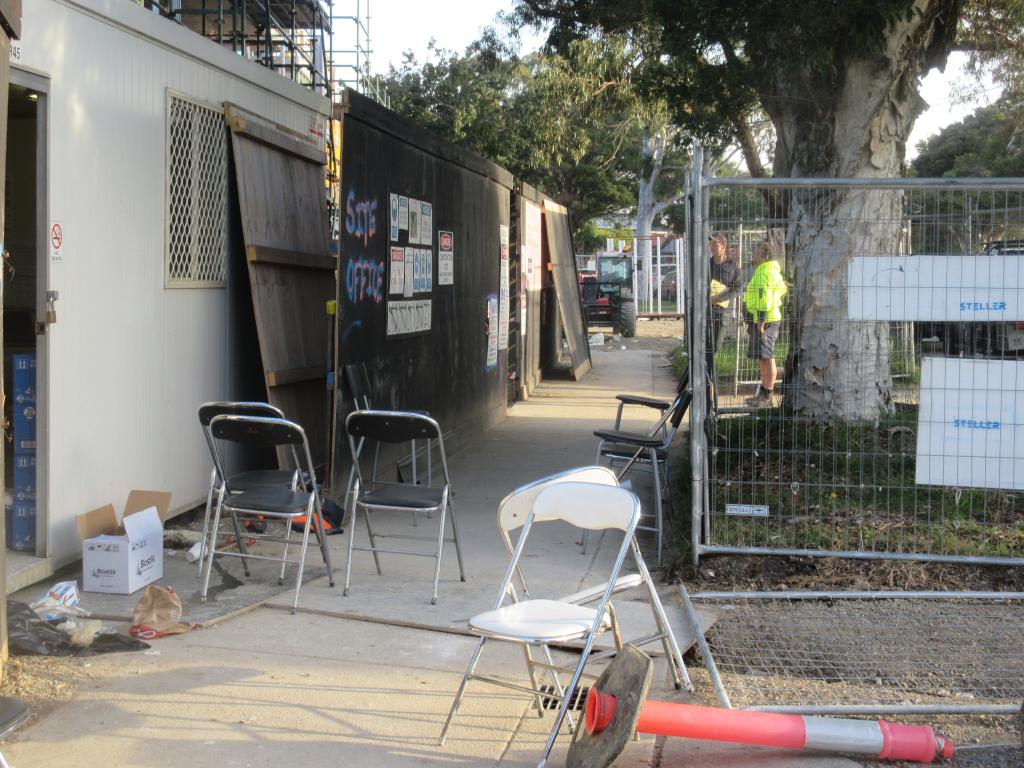
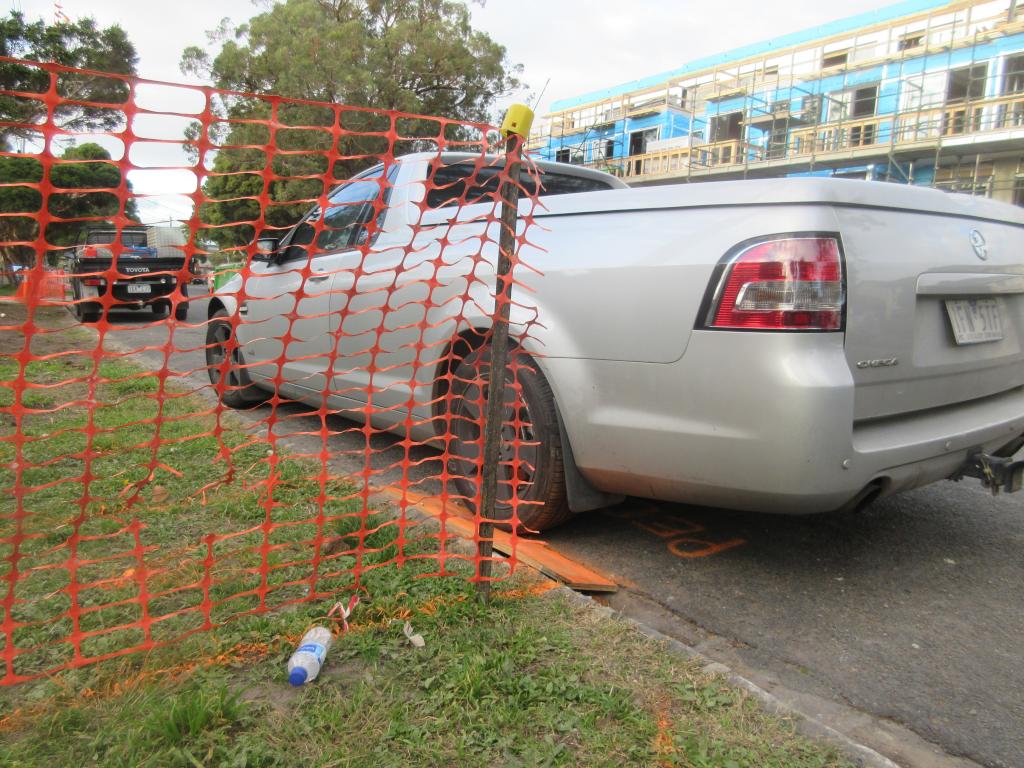
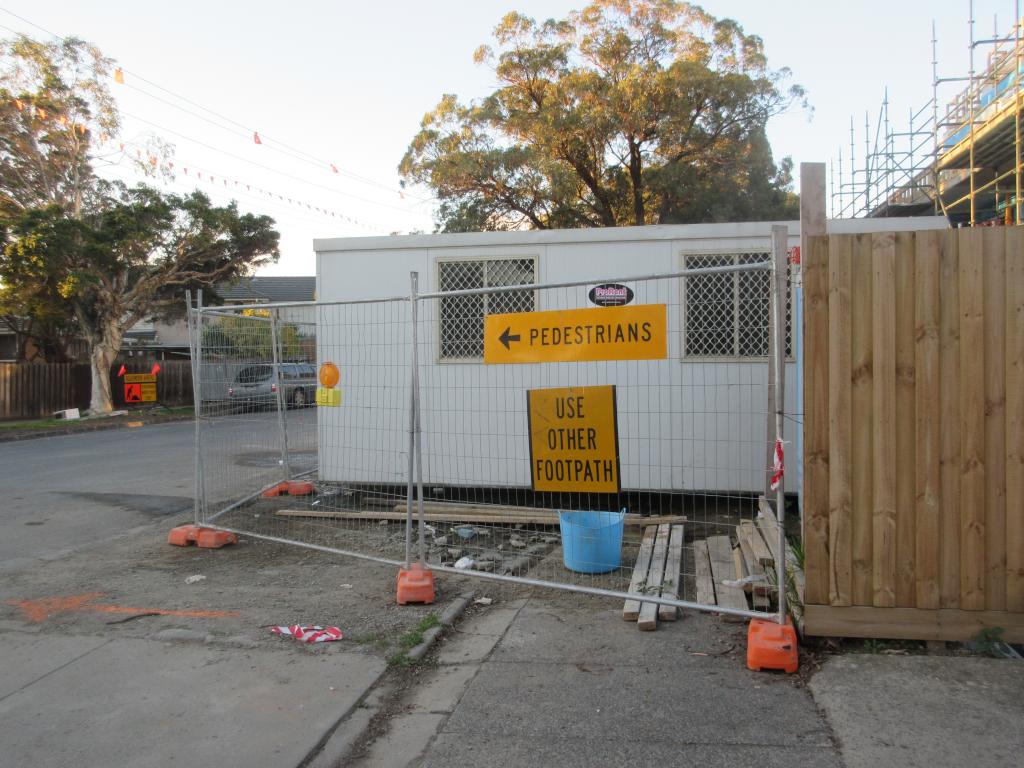
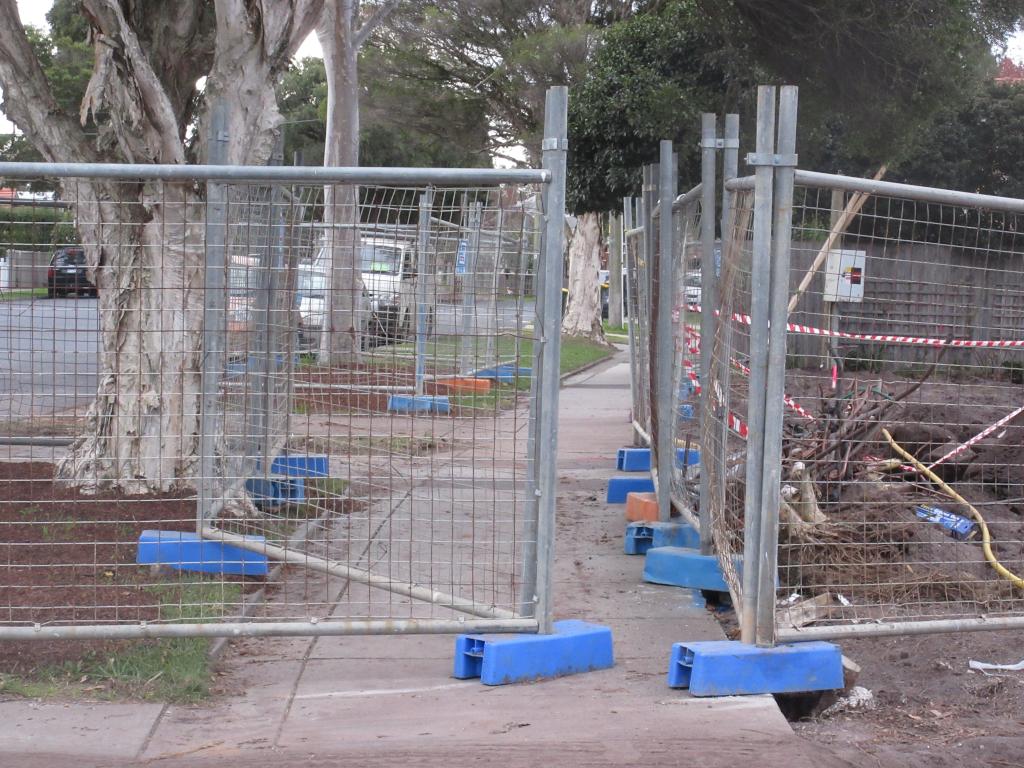
Aesthetics as covered by The Age article above is one thing. Public safety, and treating council’s laws with absolute disdain is another. Not for the first time have we featured photos sent to us by residents of development sites that should be closed down or at the very least fined severely on a daily basis. Council however seems to be unable to enforce its own and state regulations – or worse, simply turns a blind eye despite the fact that residents do ring through time and time again over individual sites and complain bitterly.

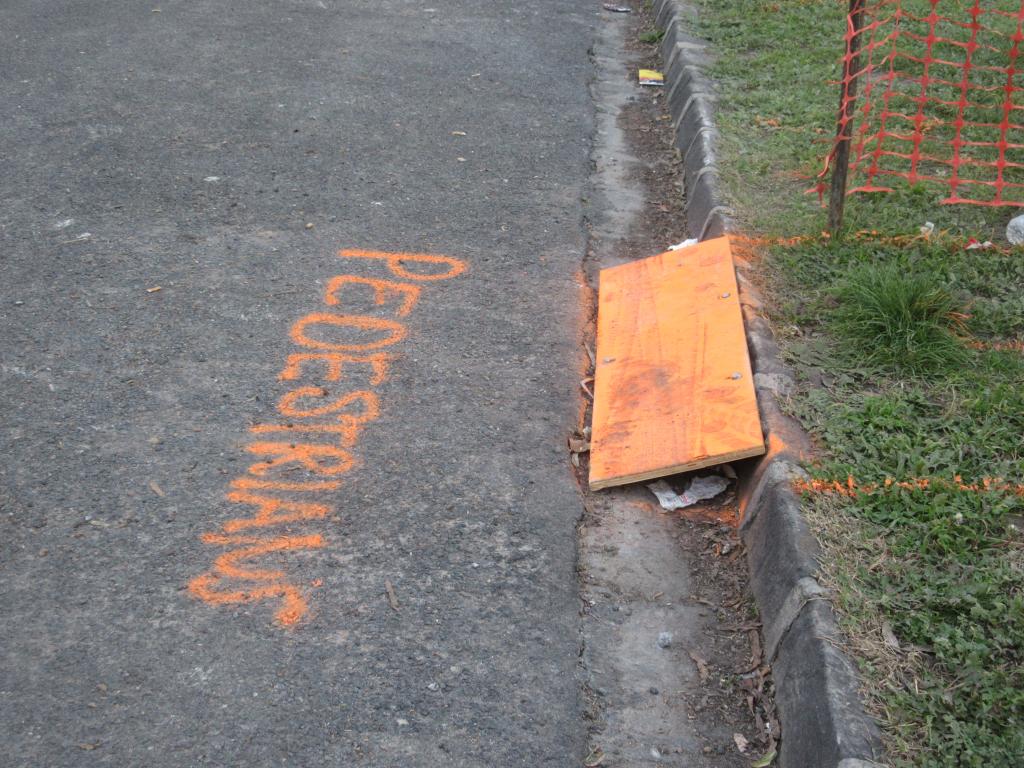
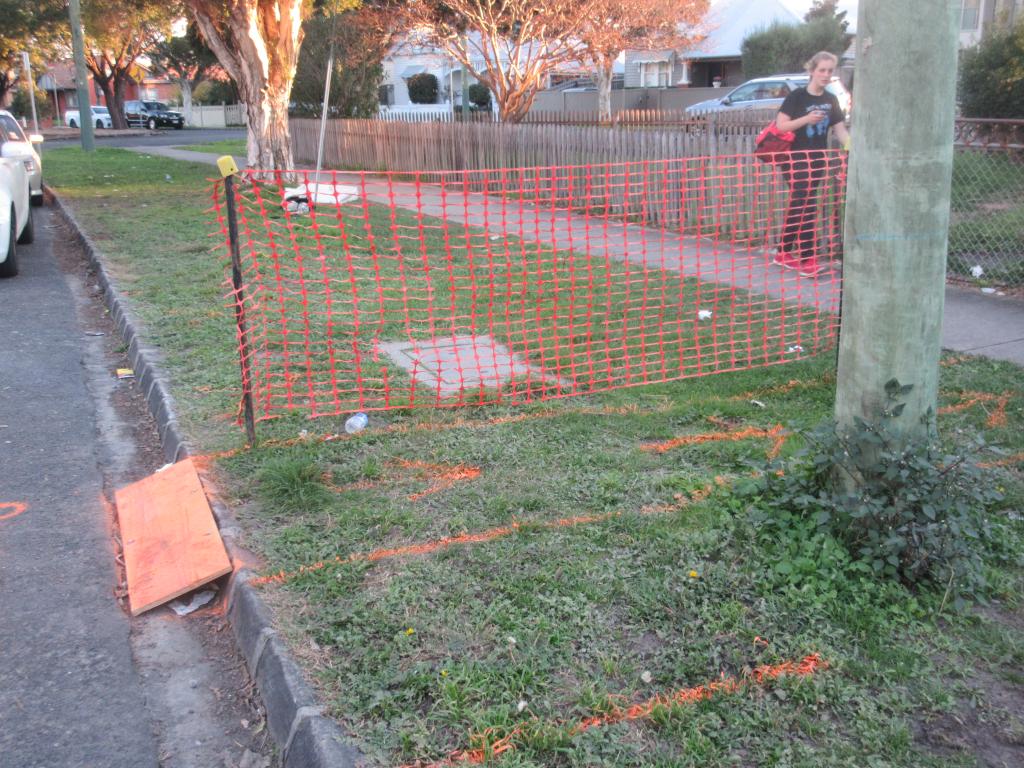
The following photos all come from Mimosa Road, Carnegie where two major 4 storey developments are currently under construction. Please note the following which are all contraventions of council’s Local Law as well as state legislation:

  • No display of any hoarding permit which mandates that there must be at least 1.5 metres provided for pedestrian use. Plus, non securely attached hoardings!
  • Turning footpaths into lunch areas with chairs etc. contravenes council’s Local Law and also represents a pedestrian/disability hazard by blocking the footpath
  • Forcing people onto the road without clear sightlines is another no-no and the orange etching on the grass plus the pathetic piece of wood designed to act as a plank for wheelchairs is also unacceptable. Then, simply parking over this ‘access’

Council could literally be raking in thousands of dollars per day if they were to do their job properly. Are they? And if they’re not, then why not?

Last night’s council meeting was another marathon of posturing, self congratulations, and inconsistency from one item to the next. Developers of course had a field day!

Below is our report on one of these items – a six storey building, 12 units and one shop of 37 square metres at Kokarrib Road, Carnegie. We are highlighting this decision since it features all of the negatives outlined above. Surely after 6 months as councillors we should expect a far better ‘performance’ than what is currently being dished up?

Hyams moved motion to grant permit with added conditions regarding screening and visitor and shop car parking. Seconded by Athanasopoulos.

HYAMS: said that the recently approved interim height guidelines ‘allows’ for a 6 storey building. Claimed that ‘it does fit in’ with recent developments in Rosstown Road and issues of ‘overshadowing’ are within ResCode provisions because the overshadowing basically occurs across a ‘driveway’.  Didn’t want a waiving of visitor car parking because he was there on Sunday and it was ‘certainly all parked out’ in the area. Said that the additional car space could be accommodated within the plans so ‘it wouldn’t be like we’re knocking back’ an apartment. There’s a ‘small shop’ so that ‘fits with the commercial area’ but doesn’t divert shopping from Koornang Road. Overlooking is an ‘issue’ because the building next door is ‘actually screened’ and the applicant himself asked for screening to prevent overlooking so ‘that’s what we’ve done’. Admitted that traffic is ‘onerous’ but 12 apartments is ‘unlikely to be significant’ impact on the roads. Thought it was a ‘reasonable application’.

ATHANASOPOULOS: asked Torres whether there will be ‘consideration’ given to road changes with the structure plan work they are currently doing?

TORRES: said that the ‘accessibility of our centres’ would be looked at as well as ‘pedestrianisation’ and ‘safety’.

ATHANASOPOULOS: thought it ‘was great’ that there is enough area to ‘squeeze’ the visitor car parking into the plans. Said that they need to understand ‘how these places actually work’ and how they might work in the future. He asked Torres the question because residents need to ‘understand’ that there might be some changes. If you can’t house people 100 or 200 metres ‘away from a train station I don’t know where you’re going to house them’. ‘Is 6 storeys too tall? – I don’t know’. Currently ‘I can’t say it is too tall’ based on ‘policies in place at the moment’. ‘It fits all the other aspects reasonably well’. Said that on the issue of the commercial area, people have ‘complained’ to him about the amount of housing they’ve also said that there ‘isn’t enough work, whether it be service or retail’ but you ‘can’t have growth’ by increasing population and not increasing commercial zone. Chapel Street ‘died’ over time because ‘there was no increase in amenities’ despite huge increase in population and ‘rentals went through the roof’. All of these things ‘have to be taken into consideration’. So the plan fits into the zone but will ‘hopefully’ help the ‘amenity as well’.

ESAKOFF: started by saying she is ‘struggling with this one’. To the north there’s another apartment block and the residents there said they would be ‘impacted severely’. They will be ‘virtually walled in’. ‘It’s a 6 storey building. It’s a large edifice’. Said she ‘understands’ that setbacks ‘have been applied’ and that the open space isn’t ‘considered as private open space’ and ‘I just can’t fathom that’. ‘They are not going to get any light’ into ‘their properties’. Even that block of flats will probably also be redeveloped. because it’s in the same zone. ‘I am struggling with the amenity issues around this’ and the ‘transition’ of more residential further down Rosstown Road. This ‘sits close to the edge of the zone’. Finished by saying she will listen to the ‘debate’ and decide.

SZTRAJT: agreed with Esakoff and said ‘I too am torn’. Said there’s an issue with zoning in ‘allowing a 6 storey building’ to occur in ‘places like this’. Said that looking at all the items on the agenda tonight that as a council ‘we are providing guidance to developers’ by ‘changing some subtle things in the plan’ by allowing a ‘visitor spot that they asked an exemption for’ yet ‘we couldn’t do it for another development’. Therefore ‘what we are teaching developers’ is that if they want to build in Glen Eira and don’t want to ‘fork out the extra’ for a car parking spot then all they have to do is ‘make sure they’ve got a stacker system’. Said he would have been against the application if council went with the waiver but they’ve now got the ‘additional parking spot. We managed to fit it in’. ‘This applicant was unlucky that we managed to fit that in’ by putting the shop car parking spot into the stacker thereby ‘creating this spot’. Said he is leaning towards approval because the ‘overall amenity’ isn’t going to be ‘too bad’. ‘I shudder to think how developers will learn from out actions’. They will realise that there is a simple way to ‘lead council by the nose’ by telling them that in every application they put in ‘there is no additional space’ for car parking so ‘I need a waiver for additional car parking’. ‘And we’re now so frightened about what VCAT will say that we are approving’ such applications.

DELAHUNTY: said she was conscious that ‘we have been veering off in our discussions tonight’. Council makes decisions and ‘tries to be consistent’ but applications are decided on the individual merits of the ‘application in front of us’ and ‘sometimes those decisions can seem to be in constrast to one another’. They look at the transport ‘around’ and ‘it’s always taken in context’. She takes the point that maybe they are giving developers a message but there are also other instances where council says ‘it’s not good enough’ and they ‘redesign’. Also going to VCAT has an ‘imposte’ on residents in terms of money spent and officer’s time so ‘there’s an element of that that needs to be taken into consideration’. Said she was in favour of the motion.

HYAMS: said he wouldn’t have done what Sztrajt did by ‘pointing out’ to developers what they might do. Disagreed with this anyway because ‘the site is the size that it is’ and developers ‘aren’t going to buy a site’ thinking ‘oh I can’t fit’ car spots in. Esakoff’s concerns were with amenity impacts but at the planning conference it was clear that these residents weren’t ‘going to be overshadowed’ because they were over on the ‘other side of the driveway’. They ‘will be looking at a unit in front of them’ but there will be other development ‘anyway’. Admitted that this is a concern he didn’t think it was a ‘reasonable’ concern to refuse.

MOTION PUT AND CARRIED. Esakoff voted against.

COMMENTS

  • When 5 of the current councillors decided WITHOUT CONSULTATION that 6 (preferred height) storeys in this spot was okay, surely it is a bit late to start wondering whether or not 6 storeys is too big?
  • 95% of discussion avoids planning issues per se and certainly any intelligent commentary on the application itself. Credit to Esakoff here as the only councillor to even attempt to enunciate what ‘amenity’ impacts are likely to be.
  • An officer’s report that is devoid of all detail, including how many 1, 2, or 3 bedroom apartments nor detail as to how this accords or doesn’t accord with ResCode and the planning scheme.

This is what should happen if a council is determined to be transparent and accountable in its planning decisions – a simple table outlining all the issues and whether or not the application is compliant. Maybe then we could also get councillors to speak to the application rather than regurgitate the nonsensical officer’s report or simply enjoy the sound of their own voices!

There is an extraordinary officer’s report for a planning application at tonight’s council meeting. The application is for Kambrook Road, Caulfield North. It proposes a 5 storey and 61 unit development. The problem with this, is that the site is zoned as Residential Growth Zone (RGZ) – ie a mandatory 4 storey height limit!

So what does our wonderful council do? Simple – the Camera report recommends that a storey be lopped off to bring the development down to 4 storeys with a height of 14.5 metres due to the slope of the land.

A multitude of questions arise from this –

  • Since the application was ‘illegal’ to begin with, why wasn’t this rejected outright at the start when the application first landed on council’s desk in December 2016 – and we are sure in the countless earlier pre-application meetings with the developer?
  • Why is council doing the developer’s job? – ie instead of forcing the developer to come up with an entirely new application, it is council, and council’s officers’ time that are doing the work of the developer. That of course means that ratepayers are again subsidising developers
  • No mention is made of the number of apartments that council is now willing to grant a permit for. The Camera report is silent on the repercussions of deleting one storey.
  • The use of the word ‘generally’ occurs 7 times in this officer report. In other words, planning scheme conditions are not FULLY met, but only ‘generally’ met. We have to again ask why on earth have standards and guidelines when they can be so easily overlooked?
  • The final important question is – how far will council go to accommodate developers?

Council has finally released its draft Activity Centre Strategy. We are left speechless at both the quality and the deliberate camouflage of council’s intentions. Not only is the document a vapid, repetitious , and totally uninformative vision of the future but it lacks everything that an Activity Centre Strategy should include. For example:

  • No detail on proposed height limits
  • No detail on proposed building form
  • No detail on proposed open space requirements
  • No definition as to what ‘urban renewal’ really means
  • Plenty of promises that largely repeat the promises made in 2003/4 but without any timelines
  • Statistics that are wrong, wrong, wrong!

Worse still is the tone! Lack of detail is one thing, but when a strategic document of this importance includes the following rubbish it is totally unacceptable. We quote directly from the strategy and invite ‘interpretations’ as to the true meaning of any of these sentences –

As our local centres become more affected by globalised and mobilised markets, it becomes more and more important to create community rich experiences within these centres that cannot be bought online

Explore opportunities to facilitate local flexible working opportunities such as co-working spaces or expanded library areas.

Strategically locate future parcel pick-up stations and other digital transactions facilities within activity centres that encourage community interaction

Strengthen the heart of the community

Foster ‘bottom-up’ change through a focus on place-making.

Ensure key community needs are provided in each centre (such as banks, post office, grocers, butchers and bakers). (Please remember that council has no control over banks, post offices, nor private retail!!!)

Housing capacity and building scale can be separated from activity centre hierarchy by clearly identifying housing typologies that can accommodate growth in strategic locations that respond to their immediate context and neighbourhood character, and also reduce impacts on amenity.

We also have succinct vision statements for each centre that belong to the world of Forrest Gump or the Wizard of Oz, rather than a local government strategic document. Here is the ‘summary’

We acknowledge that Plan Melbourne has foisted some conditions onto council – ie Caulfield Junction as a Major Activity Centre, plus Moorabbin, etc. However, this does not excuse the production of a document that is full of meaningless waffle and motherhood statements, plus similar promises to what has been made and not been acted upon in the past 15 years! It is surely time that council comes clean and informs its residents in a straight forward and honest manner exactly what it proposes! We would also welcome a submission period of longer than the 3 weeks indicated.

Finally, by way of contrast, we have to again bemoan the fact why  other councils can do things so much better and with so much more clarity, and dare way say, honesty! Here are a couple of Activity Centre Strategies from other councils. Please compare and contrast!

STONNINGTON – UPLOADED HERE

MORELAND – UPLOADED HERE

Finally some potential action on flooding and the Elster Creek catchment area! But what is so disappointing is that residents have to find out about this initiative not from their own council, but from the agenda items of Port Phillip! Given that the first meeting occurred in March, that surely provided enough time for some Glen Eira Council comment, or even a media release. Instead there has been silence.

This will also have major significance for Glen Eira which is ‘home’ to about 70% of the Elster Creek catchment – and that includes the upcoming Virginia Estate development. How much this will all cost the individual councils remains to be seen. But wouldn’t it make a great change for once if residents were informed as to what was happening and the likely costs – instead of being always kept in the dark like mushrooms!

We’ve uploaded the full Port Phillip officer report HERE

« Previous PageNext Page »