GE Governance


On the 28th April 2011, the select group of 4 councillors passed a resolution that a Section 173 Agreement be entered into with the MRC. It is our contention that:

  • This Agreement must be redrafted and renegotiated PRIOR to any approval of the Development Plan
  • The existing Agreement represents a financial windfall for the MRC and a burden on Glen Eira ratepayers.

Here is what the Agreement states:

  1. Certain infrastructure requirements are listed as ‘Required Infrastructure Projects’ and pertain almost exclusively to land within the boundaries of the Incorporated Plan – apart from traffic management at the corner of Koornang and Station Street and as listed in the works contained in Schedule 2.
  2. ‘Additional Infrastructure Projects’ is defined as being tied in with Part 3B of the Planning and Environment Act. Since this part of the legislation refers to Development Contributions, and Council has removed this section from its Planning Scheme, there is no way for council to exact payment from the MRC for anything ‘additional’ without the MRC’s agreement.

What the Agreement ensures is that approval for its Development Plan (even with conditions) comes first! Then there is the necessary argey bargey for ‘additional infrastructure’ works. In other words, Council is signing a blank cheque! Having approved the Development Plan, they would then need to go cap in hand and ask the MRC for ‘additional infrastructure works’. Nothing would compel the MRC to agree with any such request once they have got their Development Plan approved.

Here’s some extracts:

The development of the land within the parameters of the Incorporated Plan will generate a need for certain infrastructure to be provided. Some of that infrastructure is identifiable as at the date of this Agreement while the need for other infrastructure may only become apparent upon the approval of development plans under the Schedule to the Priority Development Zone.

Required Infrastructure Projects means infrastructure works not included in Schedule 2 that are fairly and reasonably required as a result of the development of the Subject Land under the Planning Scheme and which are included as a conditlon in the approval of a development plan or a planning permit pursuant to Schedule 2 of the Priority Development Zone.

We then get to Additional Infrastructure Projects with the wonderful ‘escape clause’ for the MRC –

the Additional Infrastructure Projects may benefit other land owners in the vicinity of the Subject Land and that it may be fair, just and equitable for contributions for the provision of this infrastructure to be provided by other persons in addition to the Owner.

if, at any time, Council introduces a development contributions plan, pursuant to Part 38 of the Act or otherwise, then any payment made by way of contribution for an Additional Infrastructure Project may be credited towards any payments required for works, services or facilities pursuant to the development contributions plan.

The Parties acknowledge and agree that:

7.1.1 the plans and specifications required for the Required Infrastructure Projects are intended to facilitate works to a standard required only by the development of the Subject Land within the parameters of the Incorporated Plan and not to a standard required to compensate for any inadequacy in the infrastructure that currently services existing developments or as a result of development on any other land.

7.1.3 the amount of contribution required for the Additional Infrastructure Projects will be determined as far as practicable having regard to the principles developed through relevant Victorian law which would apply to the assessment of a contribution pursuant to an approved development contributions plan under the Act.

COMMENTS

Approving any Development Plan without first analysing the overall potential impact on surrounding areas and demanding adequate compensation is sheer folly. It is simply not good enough that the Transport Plan only looks at a handful of adjoining streets and totally ignores the flow on effects of 2046 units and 13,500 square metres of retail/commercial space.

It is also not good enough that in catering for a possible 2046 units that the MRC be responsible for drainage and other service infrastructure ONLY within the bounds of the Precincts and expect residents to pay for the additional necessary upgrading of infrastructure that exists outside of the land’s borders.

Here we have a Section 173 that is not only reliant on the MRC agreeing to pay for anything that someone might struggle to define as ‘reasonable’ but is largely reliant on a Development Contributions Levy which does not exist and even if it did exist would not go anywhere in meeting the costs of the additional infrastructure that is undoubtedly required.

For this situation we can thank our brilliant ‘negotiating’ team of Newton, Pilling, Hyams, Esakoff and Lipshutz. Having stuffed up once before, it is imperative that this not happen again. Development Plan approval must come after a fully detailed and updated Agreement that itemises all necessary works throughout the entire 3 precincts and all the surrounding areas. Ratepayers should not be subsidising the profit making enterprises of any developer.

PRECINCT 1 (with more to come!)

442 dwellings comprising 5 buildings and 8 double storey townhouses that are either 3 or 2 bedroom.

BUILDING

HEIGHT

ONE BEDROOM

TWO BEDROOM

THREE BEDROOM

1A 6 storeys

29

27

1

1B 6 storeys

65

29

9

2A 5 storeys

36

24

0

2B 4 storeys

34

8

4

3A 5 storeys

88

66

14

TOTAL

252

154

28

THUS 58% OF PROPOSED NEW DWELLINGS ARE SINGLE BEDROOM! Only 28 dwellings (excluding the 8 townhouses) will be 3 bedroom apartments, equalling a paltry 6.45%!

How many of these little boxes will have direct sunlight is never clearly enunciated. Instead we have such qualifications as – Where possible, new dwellings have been orientated to achieve optimum solar access to balconies and internal living areas. We can only surmise that this means that most bedrooms will be devoid of natural light!

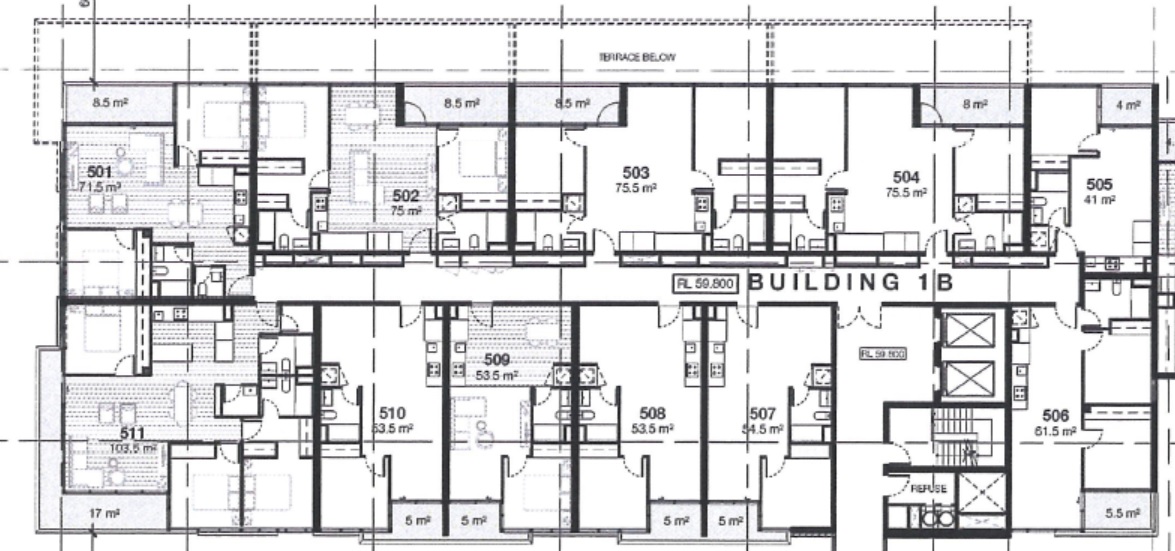
PS: For those with an eye for looking at plans, we’ve included a ‘snap shot’ from part of the Development Plan which is repeated throughout. Please note at the top right hand corner the size of apartment and the size of balcony – a miniscule 4.0 sq. metres. This should be read in light of the following Age article where the City of Melbourne is considering plans to ensure that apartments do not become chicken coops because of size and where London has enforced a 50sq.m minimum size for one bedroom places. See: http://www.theage.com.au/victoria/council-considers-minimum-floor-size-for-citys-shrinking-apartments-20130727-2qrhi.html

plan

This post concerns what happened at the final council meeting of last year (December 17th). In response to an earlier Request for a Report, the following motion was put and carried. We draw readers’ attention to the fact that Hyams, Esakoff and Lipshutz voted against the motion. We also highlight the fact that what purports to be the actual motion/resolution is NOT what Delahunty said. Two significant words have been omitted from 3 (a) and 3(b) thereby totally changing the outcomes and meaning of the resolution. The entire motion as presented in the now accepted and doctored minutes reads:

Crs Delahunty/Magee

That Council notes:

1. A further part of the process for the amendment of C60 is the consideration / approval of development plans which will involve further community consultation.

2. The first development plan has already been submitted to council and will be the subject of community consultation in early 2014.

3. The report sought to address the area surrounding the Caulfield Racecourse as a whole not just the area comprising C60 and as such further requests:

a. That the recent traffic study conducted on Queens Avenue, Caulfield East including the area around the Neerim Road intersection and the Sir John Monash Drive intersection,

b. That the recent traffic study conducted on Eskdale Road Caulfield East showing the impact, if any on the local street of the changed traffic conditions on nearby Kambrook Road; and

c. That any studies of pedestrian movement along Queens Avenue be examined for potential improvements to safety and accessibility.

4. That the Minutes of this Item incorporate the Resolution of 9 April 2013 in full and the Planning Conference held on 4 April 2011 in Attachment 2.

When Delahunty moved this motion she included in Clause 3 (a and b) the phrase “be provided”. In other words, Delahunty’s motion was asking that the traffic reports which have already been done be given to councillors, or possibly even be made public. By omitting these words from the minutes the entire resolution is exiled to some never-never land of inaction.  Yet, not one single councillor at last night’s meeting commented upon this omission. We have to wonder if Delahunty herself would have asked that the minutes be corrected.

The full significance of all this becomes obvious when one follows the ‘discussion’ that took place on the motion and the pathetic and duplicitous arguments proposed by Hyams, Esakoff and Lipshutz. Here’s what happened:

DELAHUNTY moved motion. Magee seconded.

DELAHUNTY: stated that some traffic studies had been done in the ‘Caulfield East area’ and that ‘a number of residents have contacted’ her about the traffic and she doesn’t want to be ‘dismissive’ of these people.  Said that she thought that residents need ‘actions now’ and that it’s ‘wise’ to understand ‘what might occur in the future’. Wanted this done in a more ‘informal discussion’ and ‘incorporated into community consultation’ and wanted the community consultation committee involved in this. For now, she just wanted that councillors ‘get more information about’ traffic studies on top of what was done in 2011.

MAGEE: Magee did not speak to the motion.

HYAMS: began by saying ‘it’s not so much the substance’ of the motion but the ‘timing’. Said that there would be lots of ‘changes’ to the area and that noone could say that they were ‘all right’ and that there were still going to be ‘a lot’ of changes in the next couple of years especially to the ‘road structure’ and that council had ‘put in’ a ‘lot of conditions’. Thought that all this ‘might be a bit premature’ and didn’t want to have ‘all this effort’ put into ‘producing reports’ when it could all be ‘out of date reasonably soon’. Conceded that it’s important to ‘keep an eye’ on things but wasn’t sure ‘whether this is really the time to do this’.

SOUNNESS: started off by saying that the C60 is ‘controversial’ and that residents were worried about what was ‘going to happen’ and how it was going to work. Said that the processes are ‘confusing to the community’ and therefore there was a ‘need for help to explain to the community’ what is happening. ‘It’s a process of being clear and transparent’ and that’s the role of council. Developers can work within their own area, but the changes and processes should be made clear. Thought that the motion was a ‘good way’ that ‘council does do its communication’ and that the community consultation committee would be ‘a very good place’ to explore all the options. Reiterated that this was ‘confusing’ and that there is ‘uncertainty, there is doubt’ and ‘Council has a role in trying to mitigate that fear’.

ESAKOFF: agreed with Hyams in that the motion is ‘too premature’.

LIPSHUTZ: agreed with Sounness that there was ‘angst’ in the community and although Delahunty’s motion is something that ‘should happen, but not right now’. Said that the ‘first step is to let the development plan come through’ so the community ‘can see’ what’s there. Only then should council ‘look at the whole precinct’. What’s happening now is that the motion proposes to look at roads without knowing what the whole precinct is going to look like. ‘When it does come in things may change’. Residents need ‘to know from an informed position’ and ‘doing it now is not an informed position’. ‘What we should be doing is allowing it to happen and then have consultation’ once the development plan is in so that then ‘everyone can become involved’.

PILLING: thought the motion had enough ‘merit’ for it to be passed.

DELAHUNTY: said that she had ‘changed what I originally wanted to ask’ as to whether there was an ‘additional work’ and there wasn’t because the traffic studies had already been done. Said that the motion isn’t asking for additional or any consultation but the methods of consultation are the focus. Wanted to ‘include the whole precinct’ and not just one area. Wanted to know how council or the consultation committee could ‘increase the scope’ of consultation. Wanted some ‘scope’ to ‘understand pedestrian movement’ along Queen’s Road because people had notified her about ‘safety’

MOTION PUT AND CARRIED – ESAKOFF, HYAMS, LIPSHUTZ VOTED AGAINST.

COMMENT

Residents should consider very carefully WHY Esakoff, Hyams and Lipshutz voted against a motion that requested information on traffic and parking. Their nonsense argument of ‘premature’ is an insult to the intelligence of residents. This is akin to saying ‘let’s wait til the tsunami hits and then see what our emergency plans are like’!!!! Utter rubbish! When the MRC proposes 2,046 units, with no provision for on site visitor parking, no real and plausible explanation of what is going to happen to the displaced MRC members’ car parks on race days, and when Monash is booted out of its current car parking arrangement at the racecourse and staff and students have nowhere to park, then residents have every right to ask that information is supplied BEFORE any of the disasters happen. Making matters worse, nothing in the MRC parking plan, and absolutely nothing from councillors, talks about the flow on effects of both parking displacements and the hordes of new residents congesting an already over-congested area.

Further, if council has actually done some traffic analysis of nearby streets then how can this be ‘premature’? The accompanying report states unequivocably that the Development plan was already in council’s hands. Hence, Lipshutz knows full well (if he bothered to read it) what the plan entailed. If by chance he wasn’t privy to it, then this is just another black mark against an administration that keeps its councillors (or some of them) completely in the dark until things are sufficiently ‘massaged’ and vital decisions are made on the basis of LACK OF RELEVANT INFORMATION.

Regardless of whether or not all councillors had clapped eyes on the Development plan by December 17th, any information that may shed further light on decision making must be available. Council will be deciding again in a piece meal fashion – development plan, by development plan. Who knows when the next Development plan for the second precinct will be forthcoming. But in the meantime, the MRC will already have ‘cemented’ the residential component of the project and the traffic mayhem will have been let loose on unsuspecting residents.

A truck could literally be driven through the gang’s arguments. Lipshutz wants to ‘wait’ for plans for the ‘whole precinct’. Somebody should tell him that the documents DO REVEAL the plans for the ‘whole precinct’ – however briefly! Also included in this first Development Plan are 3 documents relating to traffic management for the entire area. But, and this is a big BUT, the MRC have basically only looked at 4 streets and not Queens Ave, Sir John Monash Drive, Eskdale Road, etc. If council has done what the MRC ignored then this is crucial information that should be given not only to councillors, but provided to the public at large.

What Lipshutz, Esakoff and Hyams are in fact doing, in our view, is to push the MRC agenda. We have no idea when the subsequent development plans will be released. It could be years away, but in the meantime, the residential precinct will be underway and traffic chaos will ensue. And that’s what Lipshutz, Esakoff and Hyams are basically arguing for. Let’s wait and see they say. Our view is ‘forewarned is forearmed’. And once this particular development plan is rubber stamped by the gang, whatever follows will be too little, too late. The wheels will be set in motion and undoing what’s been done becomes an impossibility. You can’t undo something after the fact. Traffic analysis of all the area, especially those streets not included in the MRC development plans, are essential to decision making now. They are essential for the public to understand what will happen and will provide residents with the grounds for objections – that of course assumes that the council investigation is indeed ‘objective’ and honest. We have our doubts.

Governance overall continues to be a major problem. How many more times will minutes create fiction out of fact? How many more times will this councillor group allow inaccurate and distorted versions of what really occurred to enter into the formal record and thus aid and abet the continual rewriting of history?

But most important is the very fact that these three councillors are Trustees. This inevitably calls into question whether or not they really have the interests of residents at heart, or are basically MRC stooges. Remember, they and Newton are responsible for C60; they and Newton are responsible for setting up a Special Committee where 4 councillors (a minority!) decided the fate of thousands, and they are responsible for the failure to listen to the community. This latest incident is only further evidence of why their actions, their words, and their hidden agendas, require a full Royal Commission.
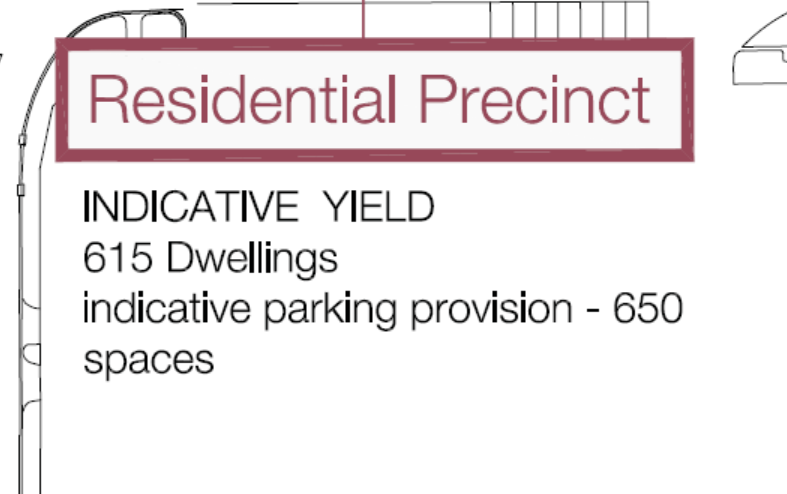
Buried in the fine print of several of these documents, some truths are finally revealed. Residents were repeatedly told by council and the MRC that the project envisaged 1200 dwellings, plus commercial and retail areas. It then burgeoned into 1500 units. Now we are looking at the possibility of 2040 of which the vast and overwhelming majority are SINGLE BEDROOM apartments! We can only wait with baited breath for stages 4 onwards, when height for the remaining buildings are revealed.

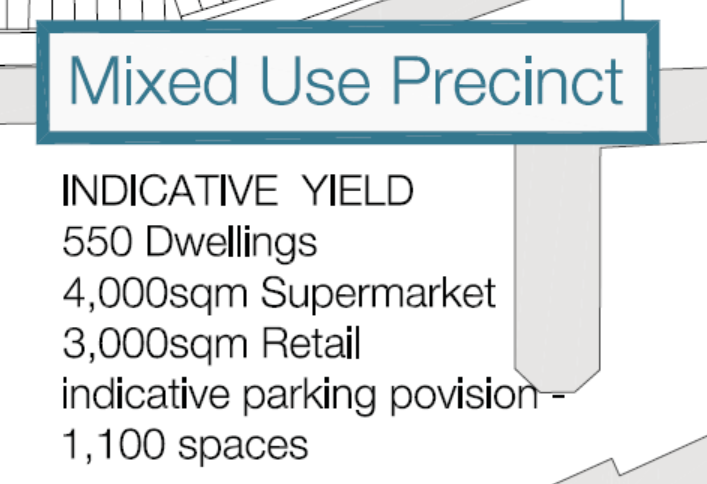
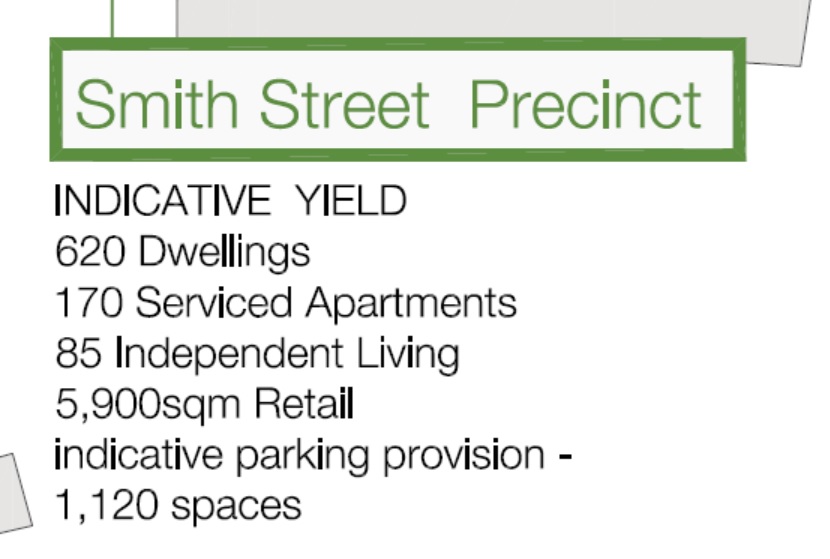
Below are the figures taken directly from the ‘Precinct Plan’ and the argument is that this is still in line with the Incorporated Plan!!!!! What bunkum and what collusion!

3

2

1

c601c602c603

PPS: All the documents are available from:

http://www.gleneira.vic.gov.au/Council/Planning_and_building/Planning/Caulfield_Village/Development_Plan_1

PS: From ‘The Age’ today!

Victoria’s racing industry pay rates run a distant last

Date: January 27, 2014 – 9:38PM

Illustration: Matt GoldingIllustration: Matt Golding

Strappers and stablehands in Victoria’s racing industry earn the lowest pay and have the worst conditions, according to the national workplace ombudsman.

An audit by the Fair Work Ombudsman of ?eastern seaboard racing tracks resulted in Victoria chalking up the worst performance in properly paying strappers and stablehands – the people who groom, feed and saddle racing horses and clean and maintain their stables.

Only a third were found to be paying their staff properly, far worse than in other states.

The audit followed the ombudsman receiving almost 100 complaints over pay and conditions from people in the industry, 35 from Victoria.

Of the horse-training businesses checked in Victoria, only 31 per cent complied with workplace laws. In NSW 86 per cent of businesses paid staff properly as did 76 per cent in Queensland.

In all, ombudsman inspectors checked the books of 86 horse trainers in metropolitan and regional NSW, Victoria and Queensland late last year.

A report to be released by the ombudsman on Tuesday cites the case of one horse trainer in Victoria whose business employed stablehands hired for periods of less than the legal minimum of three hours.

One Victorian trainer interviewed as part of the report said he was not aware there was a minimum amount for shift lengths and paid back $1985 to eight of his employees.

The correct rate of pay for strappers and stablehands is about $21 an hour depending on which state.

A trainer who was noted in the ombudsman’s report was found to be paying her casual staff a flat rate of $20 an hour, despite many working on Sundays when penalty rates applied.

The trainer back paid almost $16,000 to eight of her workers.

Of the 86 horse trainers audited, 34 were found to have underpaid a total of 61 employees almost $40,000.

Read more: http://www.theage.com.au/victoria/victorias-racing-industry-pay-rates-run-a-distant-last-20140127-31j5f.html#ixzz2rddD7MkD

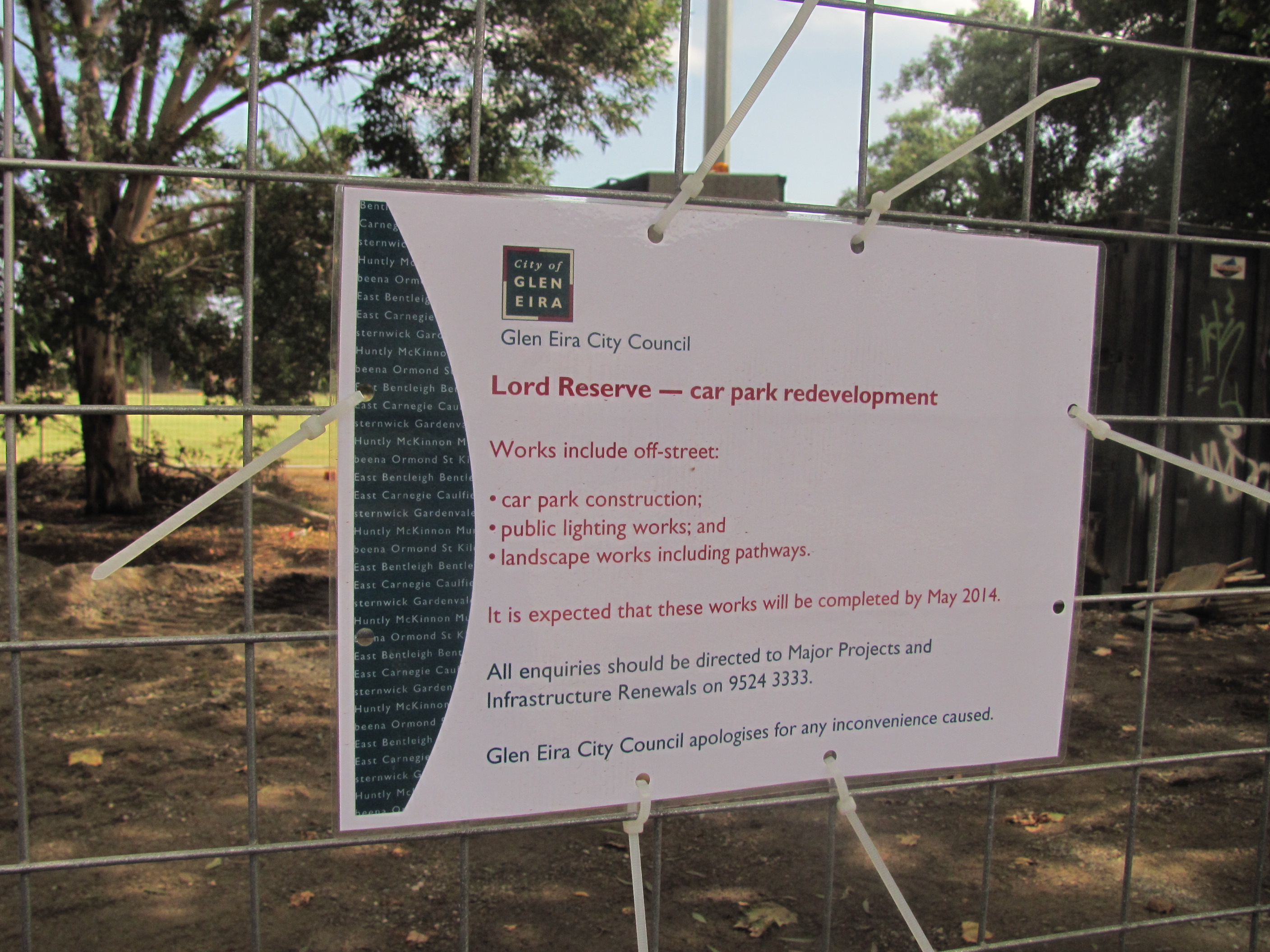
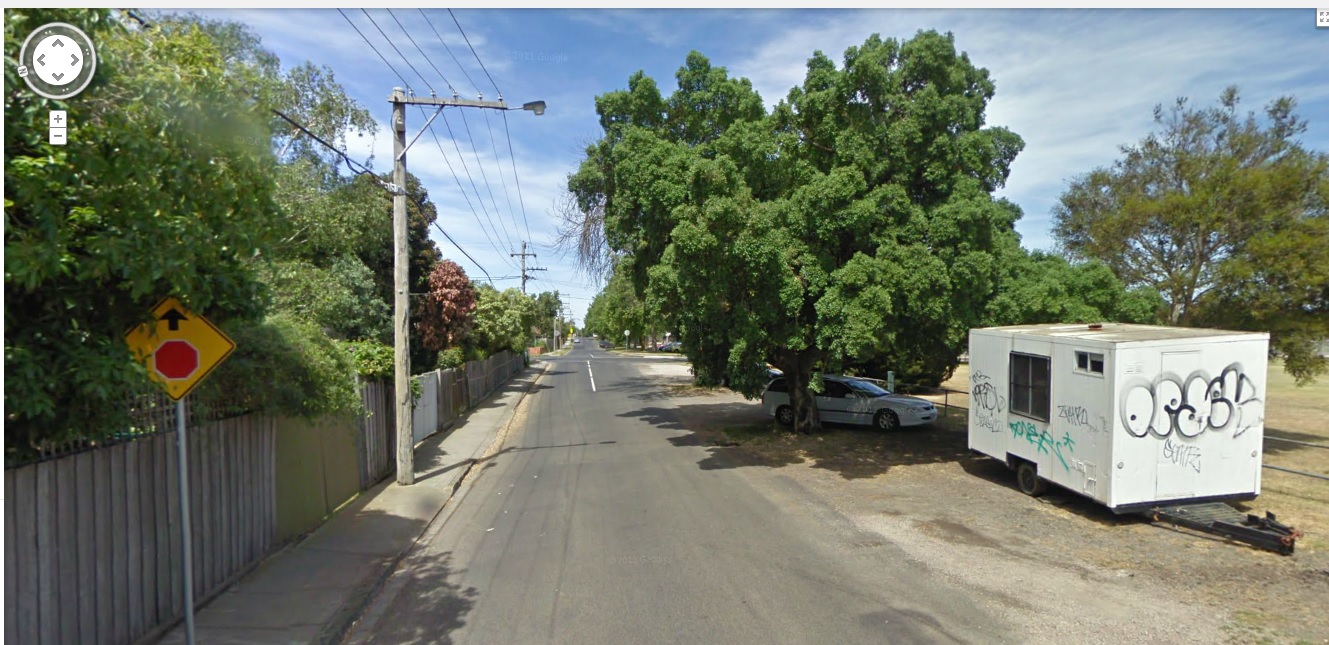
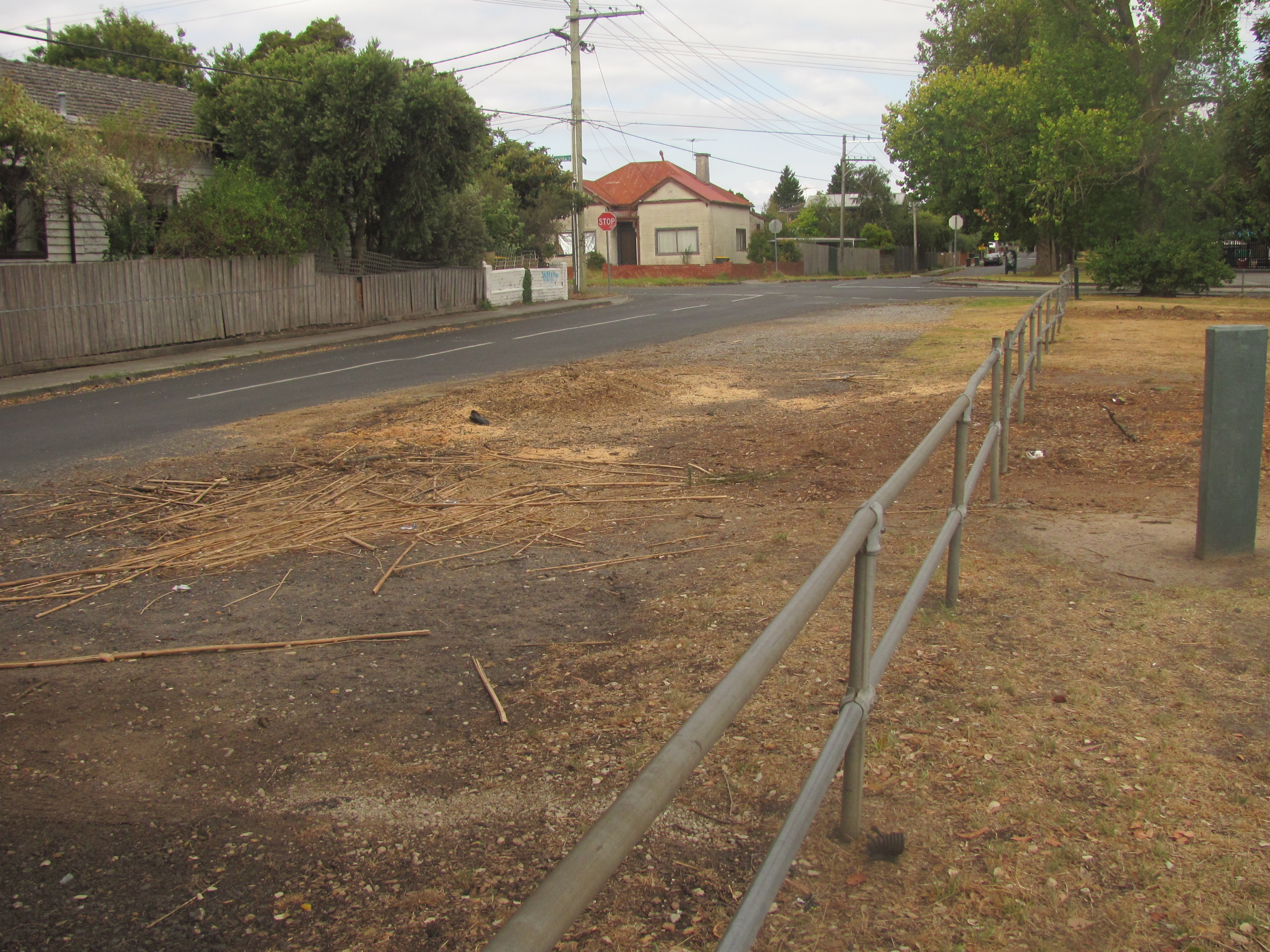
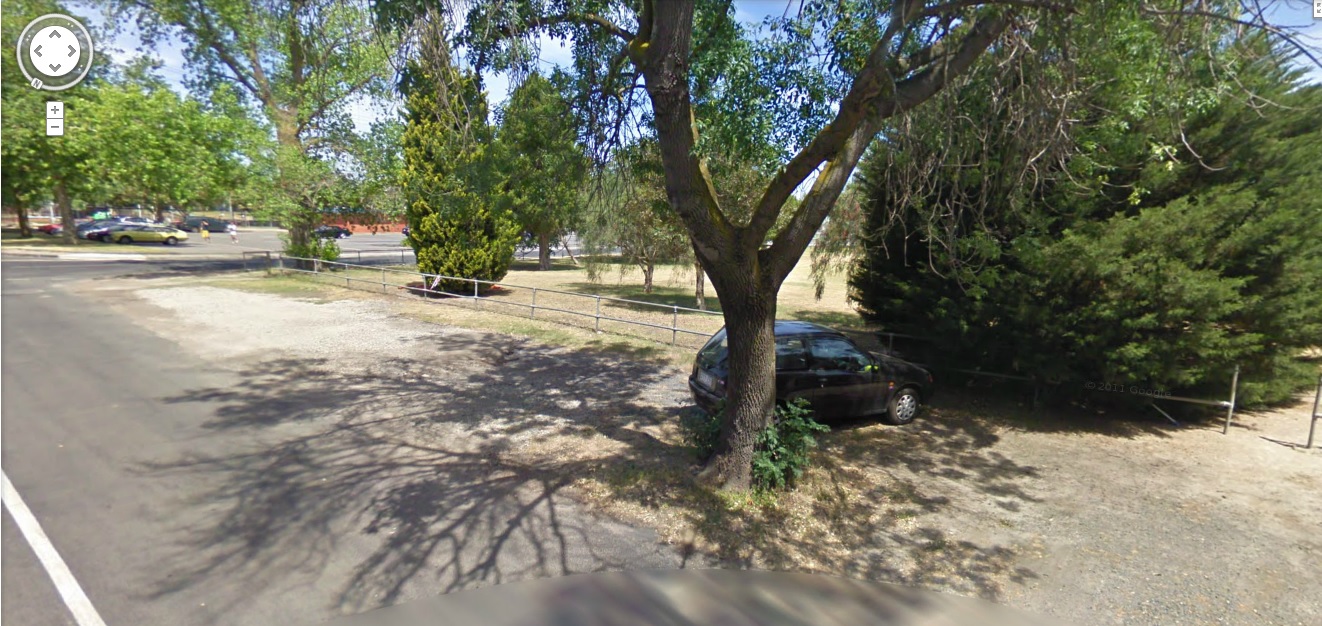
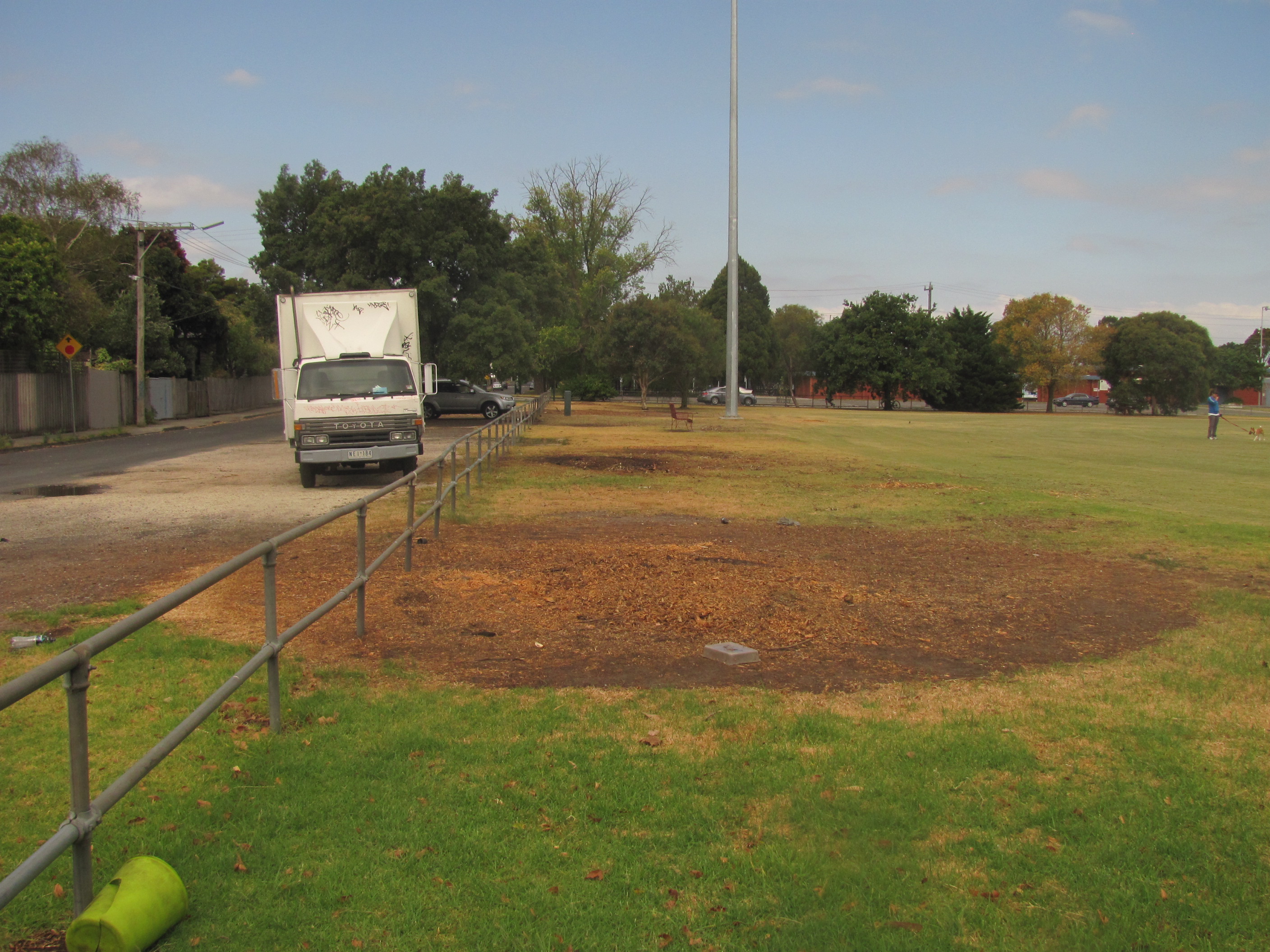
Council can certainly get things rolling very quickly when they want to. The latest is the Lord Reserve car park development at the cost of $542,000. Tenders were advertised on November 16th and closed on 6th December. The decision was made on the 17th December. Quick as a wink, without telling residents exactly what is happening, the contractors moved in, and what a surprise, a further bunch of at least 8 mature trees were removed.

We do not for one instance believe that the speed and timing of this project is a coincidence. If you expect community opposition, and certainly questions, then January is the best time to get the ball rolling.

Please note: we are not suggesting that this section doesn’t require work. What we are questioning is:

  • Why were so many trees removed? Could any have been saved?
  • How much open space will be lost and turned into a bitumen car park?
  • Why can’t residents be given a clear picture of what is happening?

PS: By way of contrast, residents should take a look at how Bayside City Council deals with car park extensions and the value of trees and consultation. The following is taken directly from the agenda set down for January 28th.

The Beaumaris Reserve Masterplan was adopted by Council in September 2008. The masterplan identified a range of initiatives to be implemented over the lifetime of the plan, including works to the car park adjacent to the sportsground at the rear of the Reserve.

The design for the car park was subject to a period of community consultation between May and July 2013. Key design features reflected the endorsed 2008 masterplan and included; reducing the area available for car parking by turning the area behind the Arts Building into an extended Village Green, proposed removal of six trees to the north of the existing car park to facilitate additional car parking spaces and the installation of a rain garden. 

Following this phase of community consultation, it was evident from the comments received that the proposed design no longer met the needs of the community or the users of the Reserve. As a result, a revised design was developed to take into account issues raised by users, including retaining the existing car park footprint, retaining six trees proposed to be removed and reducing the extent of asphalt surface to the entry road. As the revised car park footprint differed significantly to the endorsed 2008 masterplan, a revision to the masterplan was required.

A revised masterplan detailing the amended car park footprint was presented to Council and adopted at its 29 October 2013 Ordinary Meeting detailed in Attachment 1.

Source: Agenda item 10.1 – 28th January 2014 – http://www.bayside.vic.gov.au/documents/governance/28_January_2014_Ordinary_Meeting_Agenda_without_confidential.pdf

lord

Here’s the ‘before and after’ –

Untitled

lord3

Untitled2

lord2

Glen Eira Council spares no expense in pursuit of Frank Penhalluriack

  • Andrea Kellett
  • January 22, 2014 4:32PM

LAWYERS for Glen Eira Council have embarked on a massive hunt for witnesses in their criminal court case against former councillor Frank Penhalluriack.

Melbourne Magistrates’ Court this morning heard council lawyers subpoenaed 27 organisations in December ahead of a court battle due to start in March.

Tony Burns, for Glen Eira Council, said council lawyers were looking to “ascertain account holders so further witnesses can be identified”.

The list includes banks, taxi companies, power companies the Australian Customs and Border Protection Service, Victoria Police and even entertainment company Blockbuster Australia.

The council has charged Mr Penhalluriack, his company K.I Penhalluriack Nominees Pty Ltd and former tenant Tomer Rabba with breaching the Public Health and Wellbeing Act 2008.

It alleges they ran an illegal rooming house from a rental property owned by K.I Penhalluriack Nominees Pty Ltd on Hawthorn Rd, Caulfield, between May and June 2012.

All have pleaded not guilty and are due to battle it out in the Melbourne Magistrates’ Court in March.

Council lawyers are searching for a man known only as “Brent”, who is alleged to have had a crucial discussion with a council building inspector at the Hawthorn Rd rental property.

That discussion allegedly relates to how many people were staying at the property.

Tony Burns, for Glen Eira Council, told this morning’s special mention that the subpoenas had produced a “large volume of documents” in the search for witnesses.

Mr Penhalluriack maintained outside court that the council is wasting ratepayers’ money pursuing him, and has hired a QC to represent him.

Ratepayers already copped an $11,800 legal bill in November after a crucial omission by council lawyers on day one of the case.

The council was ordered to pay defence teams’ costs for their wasted appearance after the council’s legal team did not give adequate notice of crucial witness evidence.

The contest is due to start March 3.

Source: http://www.heraldsun.com.au/leader/central/glen-eira-council-spares-no-expense-in-pursuit-of-frank-penhalluriack/story-fngnvlpt-1226807721547

gecko1gecko2gecko3

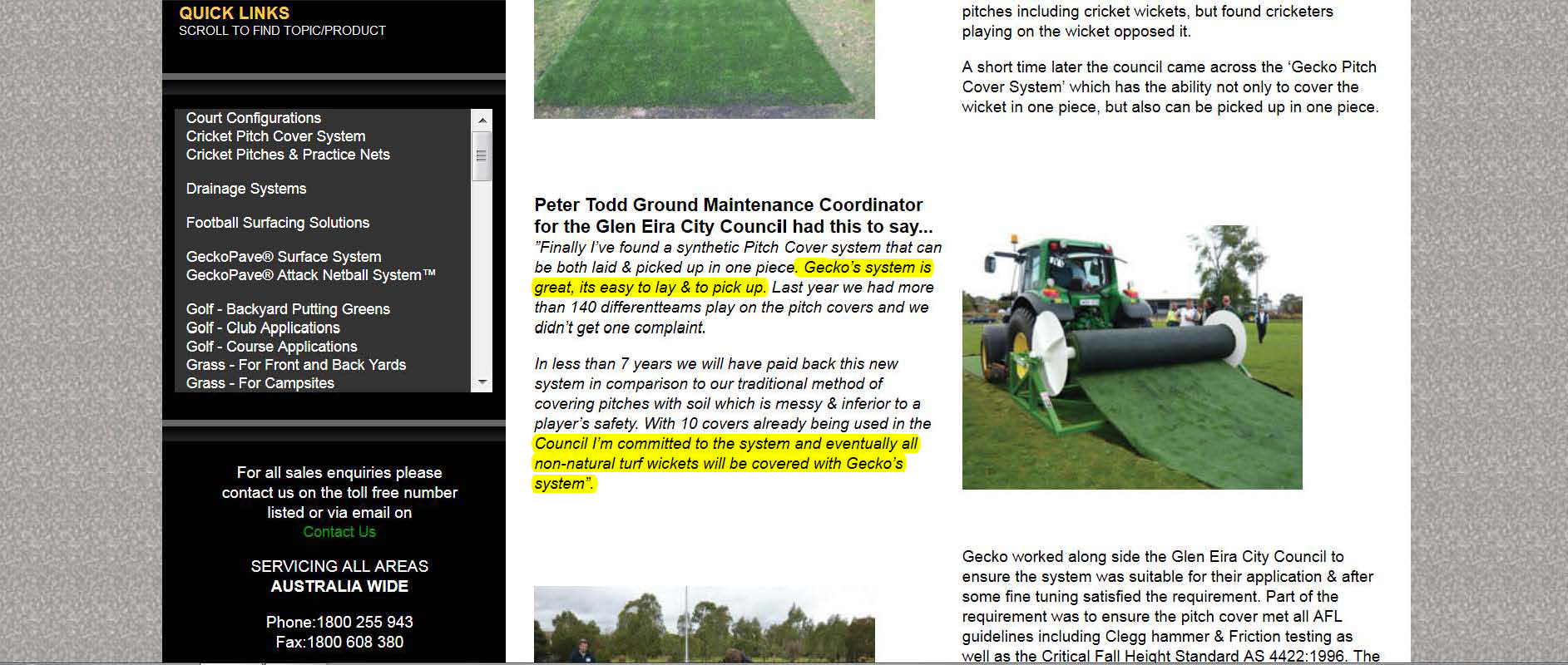
Source: http://geckograss.com.au/case_studies/cs_shire_councils/cs_shire_glen_eira_general

140117_Powell_-_Tough_new_powers_for_mayors_to_raise_standards__Page_1140117_Powell_-_Tough_new_powers_for_mayors_to_raise_standards__Page_2


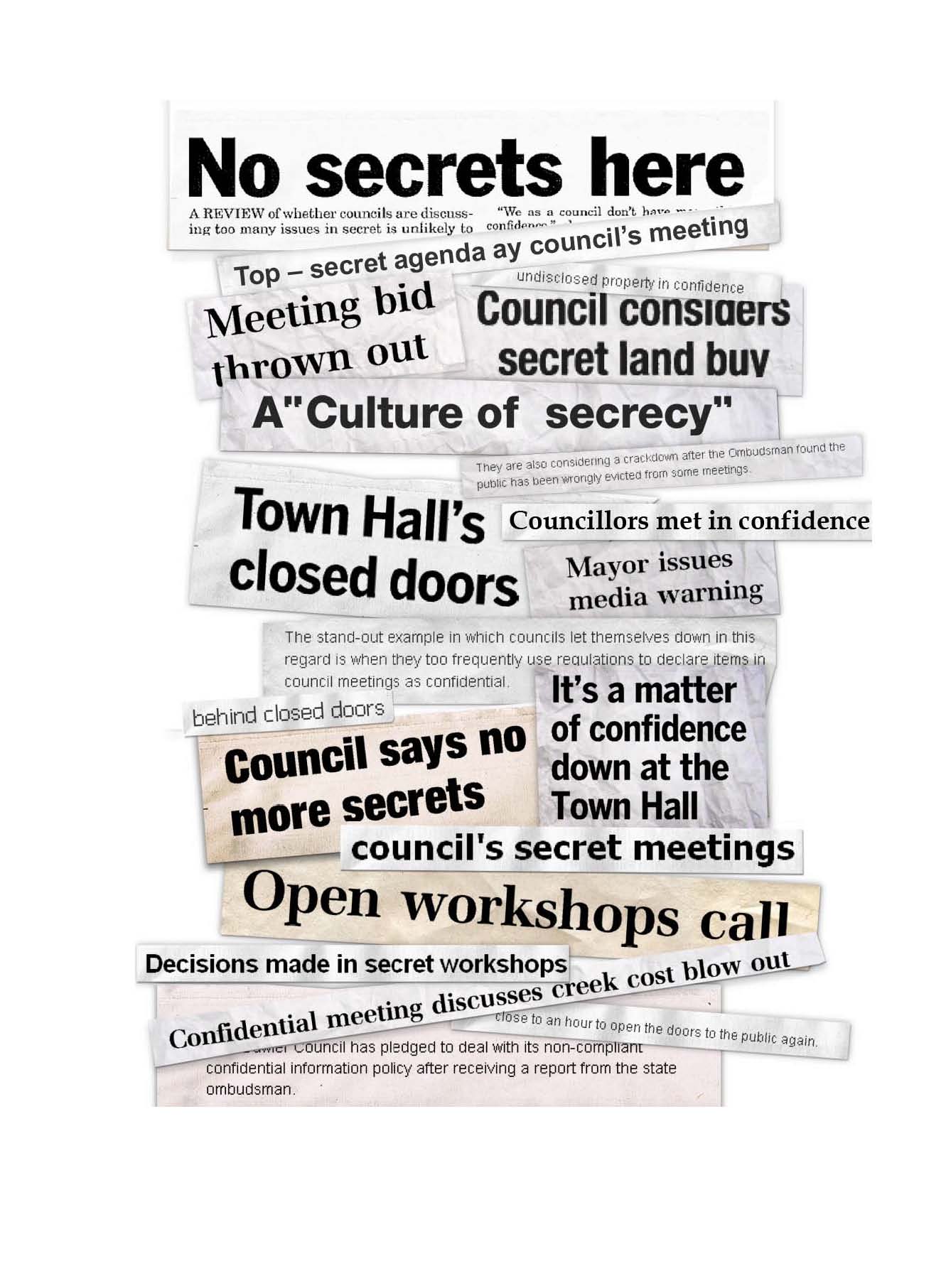
Pages from councils_confidentiality_audit_2012The above graphic derives from the South Australian Ombudsman’s audit of 2011 into local councils’ use of confidentiality clauses within their Act. Whilst slightly different to the Victorian Local Government Act, the overriding principles and objectives remain the same – ie. local government decision making must be transparent and accountable.

We have repeatedly commented on the secrecy which permeates much of what goes on in Glen Eira Council and our firm belief that countless decisions, or ‘straw votes’ which amount to the same thing, are made behind the closed doors of assembly meetings. Discussion of items in camera is another well used, and over used tactic by this council. An earlier post (https://gleneira.wordpress.com/2011/12/17/a-record-to-be-proud-of/) detailed how many agenda items were ‘relegated’ to back room discussions and the appallingly low number of council decisions which were then made public. Not much has changed with this new council. Of the 50 agenda items decided in camera since November 2012, council announced only 30 decisions – many of which were straight out tenders.

The Local Government Act sets out the broad parameters for when a council may CHOOSE to exclude the public. Please note – this is not mandatory, but optional. The Act also requires councils to provide reasons for their barring of the public. In Glen Eira this requirement has reached the state of sheer farce. Time and again the ‘reasons’ provided are nothing more than tautologies designed to keep the masses ignorant – ie under s89 (2)(d) “contractual” which relates to a contractual matter. (in the minutes of 3rd September and 15th October 2013. Please note that neither outcome was reported upon.) Other in camera items not reported upon and which we believe have major import for the expenditure of council funds included: 

  • 9th April – 12.2 under s89 (2)(a) “personnel” and s89 (2)(d) “contractual” which relates to compliance with the Local Government Act. (More lawyer fees, we wonder?)
  • 2nd July – which relates to the contract for internal audit services (Given the jobs for the boys approach of this Audit Committee, we wonder which company was ‘rewarded’ with another contract and how much this cost ratepayers?
  • 13th August – under s89(2)(d) “contractual” which relates to completed capital works approved by Council. (Another stuff up? – GESAC, Duncan Mackinnon perhaps?)
  • 6th November – An item of Urgent Business under s89(2)(a) personnel and 89(2)(f) legal advice which relates to a personnel matter. (More lawyers, councillor code of conduct panels and more witch hunts? Our bet is Lobo!)
  • 17th December – under s89 (2)(d) “contractual” which relates to the contract for the Duncan Mackinnon Pavilion (Has Maxtra gone? Is this a new contract to fix up the problems? How much is this costing ratepayers?)

All of the above have remained ‘secret’. Yet they undoubtedly involve hundreds of thousands of ratepayer funds and residents are no wiser as to why this money is being spent, and whether or not, it is money spent wisely. A culture of secrecy does not serve the public interest and neither does it serve sound financial management.

In conclusion here are some extracts from the South Australian Ombudsman’s findings. (full report uploaded here).  We believe that they are most relevant to the situation in Glen Eira and probably many other councils in this state.

Audit opinion

The evidence from this audit indicates that councils commonly use the confidentiality provisions of the Local Government Act without fully considering or explaining the reasons for excluding members of the public from council meetings. This also results in too many meeting and document confidentiality orders being issued.

Some councils incorrectly believe that they are required to close meetings when they consider certain topics. It also appears that the special circumstances intended in the Act are being misinterpreted by some as a shield to protect their council from ‘pressure from the public’ when debating sensitive topics.

Other councils are misunderstanding or misinterpreting specific provisions in the Act when making an order to close a meeting to the public. They are consequently making orders which would be unlikely to withstand legal challenge.

I formed the view that councils are sometimes moving into confidence over matters of local sensitivity or controversy in an attempt to debate issues without pressure from the public. Such intent is contrary to the democratic objects of the Act.

Consideration should be given to amending the Local Government (Procedures at Meetings) Regulations to specify that the minutes of a council or key committee meeting must include a record of any document tabled at the meeting and/or any verbal briefing given to the meeting on a matter of council business. 

A commitment to compliance with the Local Government Act is essential to accountable administration and sound governance. It is important that councils are sensitive to the public’s demand for the open and transparent exercise of municipal power. As such, attention to both the letter and the spirit of the Act is a means of strengthening and improving relations with the community. This builds public confidence in local government.

In my view councils must, after identifying the relevant paragraph of section 90(3) of the Act, then articulate the reasoning behind the order. Details of the reasons for relying on the particular paragraphs in section 90(3) must be provided in order to allow the public to better understand the council’s decision for moving into confidence. This is part of good administrative decision-making. Further, articulating reasons would also help both the administrative staff and councillors to think more carefully about why the public should be excluded from the meeting. In the latter case, this may also help add an appropriate measure of caution to weighing up recommendations for secrecy.

As shown in Figure 3, I found that for 45 of the 80 agenda items examined there were no valid grounds for the council to exclude members of the public. On many other occasions I made the judgement that the order to invoke section 90(2) had been too broad and that many of the details of the discussion could have been held in public. The effect of this would be to limit the in camera deliberations to only those items which were properly the subject of a valid confidentiality order.  A recurring example of this is the issue of CEO performance reviews conducted regularly by councils. I advised councils that I could see no good reason to exclude the public from discussions and, consequently, from access to documentation, which covered, inter alia, the key performance indicators established for the CEO position and the criteria for assessing performance. I made the observation on a number of occasions that I can find no compelling reason for considering the matter of CEO performance reviews exclusively in confidence.

On another level, a common risk encountered by many councils during informal gatherings is the building of consensus. I note the advice on this prepared by the Queensland government for its local government sector:29

Building consensus, even in an informal manner, can effectively result in the ‘rubber stamping’ of decisions during subsequent council meetings.

Councillors are required to attend meetings with an open mind and without having predetermined the outcome under consideration. As such, avoiding situations where debate and discussion result in consensus building is imperative. 

In my view there can be neither public nor council benefit in suppressing knowledge of how a council is providing its ratepayers with value for money in a tender process. As suggested, a redacted report or ‘blind bidder’ approach can be used if names and amounts are a sensitive issue. My preference is for councils to consider these decisions in public with appropriately modified or redacted reports which can also be made public promptly when the decisions are made and the contract is awarded.

Second, there is a discrete issue with regard to the tabling of documents in confidential meetings. The concern I have is that sometimes documents which are part of the material considered by council in making a decision are not referred to in the minutes. As such, people wishing to understand a particular council decision, or the basis upon which it was made, may have difficulty following the logic and authority of the decision. I found records of meetings where a document has been considered by the council but no reference note or copy made of the material for the minutes.


« Previous PageNext Page »