GE Governance


Glen Eira Council spares no expense in pursuit of Frank Penhalluriack

  • Andrea Kellett
  • January 22, 2014 4:32PM

LAWYERS for Glen Eira Council have embarked on a massive hunt for witnesses in their criminal court case against former councillor Frank Penhalluriack.

Melbourne Magistrates’ Court this morning heard council lawyers subpoenaed 27 organisations in December ahead of a court battle due to start in March.

Tony Burns, for Glen Eira Council, said council lawyers were looking to “ascertain account holders so further witnesses can be identified”.

The list includes banks, taxi companies, power companies the Australian Customs and Border Protection Service, Victoria Police and even entertainment company Blockbuster Australia.

The council has charged Mr Penhalluriack, his company K.I Penhalluriack Nominees Pty Ltd and former tenant Tomer Rabba with breaching the Public Health and Wellbeing Act 2008.

It alleges they ran an illegal rooming house from a rental property owned by K.I Penhalluriack Nominees Pty Ltd on Hawthorn Rd, Caulfield, between May and June 2012.

All have pleaded not guilty and are due to battle it out in the Melbourne Magistrates’ Court in March.

Council lawyers are searching for a man known only as “Brent”, who is alleged to have had a crucial discussion with a council building inspector at the Hawthorn Rd rental property.

That discussion allegedly relates to how many people were staying at the property.

Tony Burns, for Glen Eira Council, told this morning’s special mention that the subpoenas had produced a “large volume of documents” in the search for witnesses.

Mr Penhalluriack maintained outside court that the council is wasting ratepayers’ money pursuing him, and has hired a QC to represent him.

Ratepayers already copped an $11,800 legal bill in November after a crucial omission by council lawyers on day one of the case.

The council was ordered to pay defence teams’ costs for their wasted appearance after the council’s legal team did not give adequate notice of crucial witness evidence.

The contest is due to start March 3.

Source: http://www.heraldsun.com.au/leader/central/glen-eira-council-spares-no-expense-in-pursuit-of-frank-penhalluriack/story-fngnvlpt-1226807721547

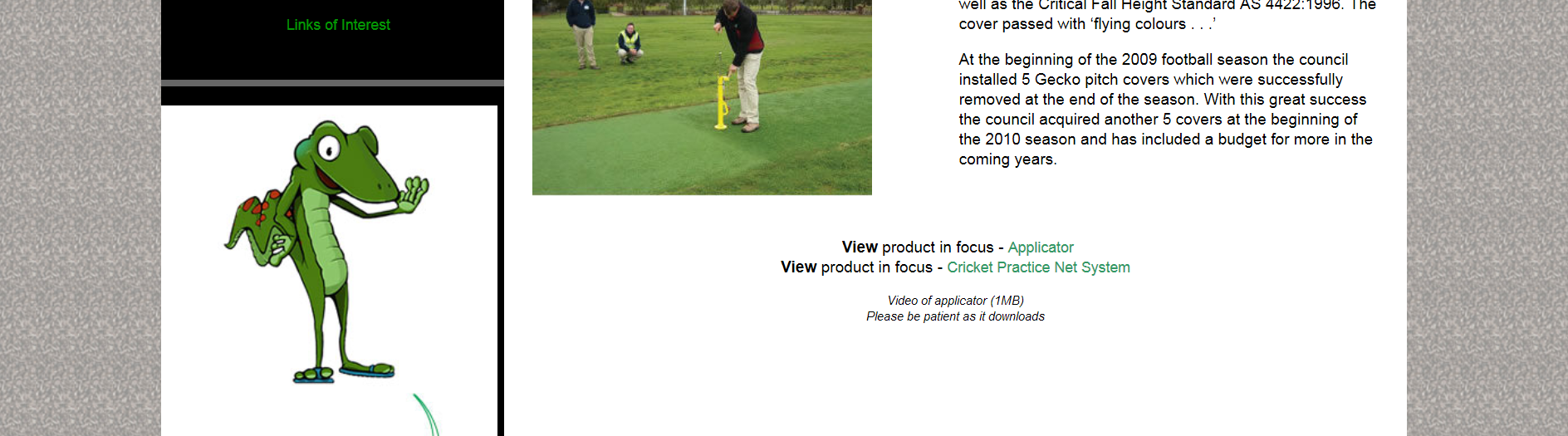
gecko1gecko2gecko3

Source: http://geckograss.com.au/case_studies/cs_shire_councils/cs_shire_glen_eira_general

140117_Powell_-_Tough_new_powers_for_mayors_to_raise_standards__Page_1140117_Powell_-_Tough_new_powers_for_mayors_to_raise_standards__Page_2


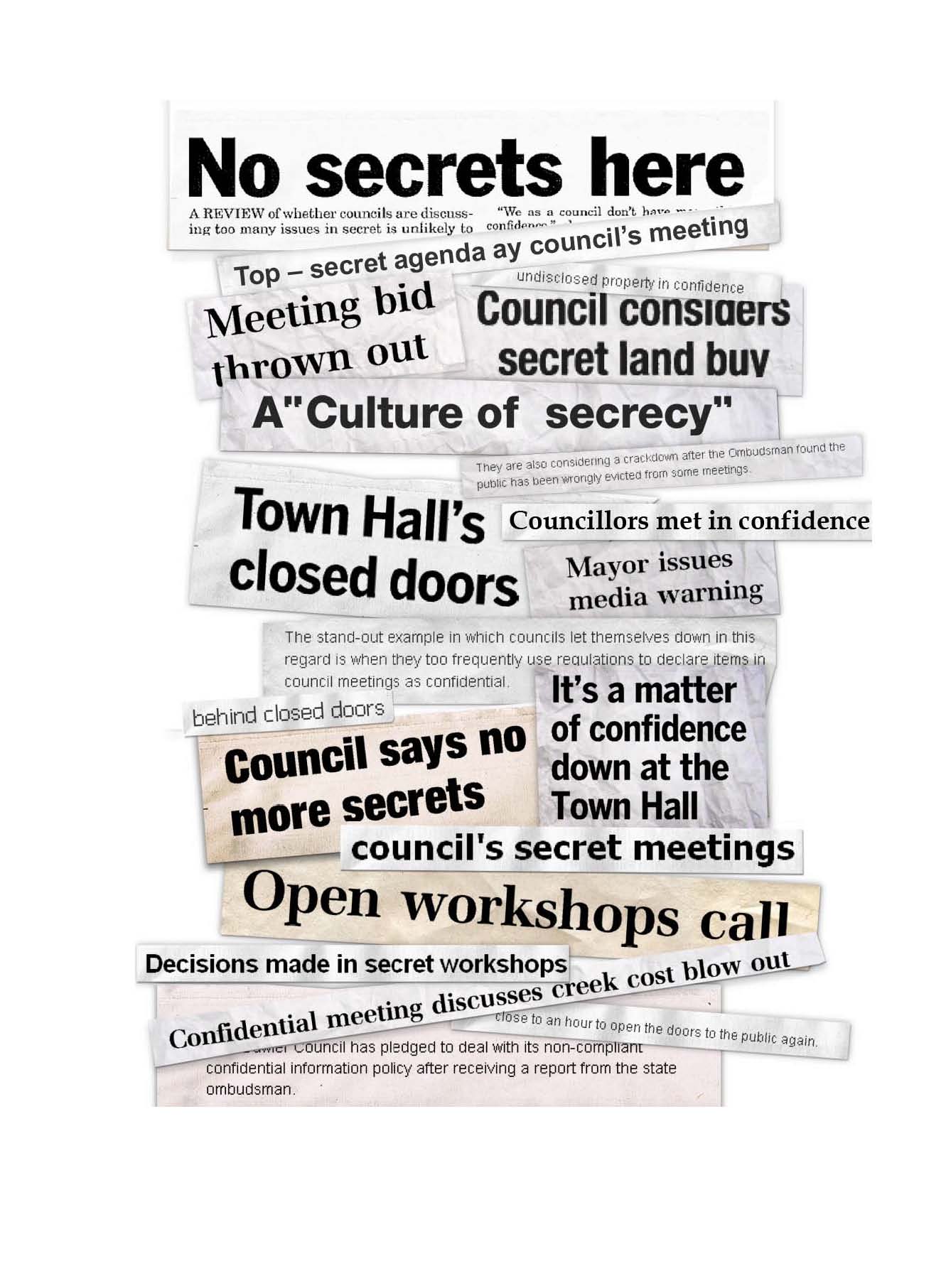
Pages from councils_confidentiality_audit_2012The above graphic derives from the South Australian Ombudsman’s audit of 2011 into local councils’ use of confidentiality clauses within their Act. Whilst slightly different to the Victorian Local Government Act, the overriding principles and objectives remain the same – ie. local government decision making must be transparent and accountable.

We have repeatedly commented on the secrecy which permeates much of what goes on in Glen Eira Council and our firm belief that countless decisions, or ‘straw votes’ which amount to the same thing, are made behind the closed doors of assembly meetings. Discussion of items in camera is another well used, and over used tactic by this council. An earlier post (https://gleneira.wordpress.com/2011/12/17/a-record-to-be-proud-of/) detailed how many agenda items were ‘relegated’ to back room discussions and the appallingly low number of council decisions which were then made public. Not much has changed with this new council. Of the 50 agenda items decided in camera since November 2012, council announced only 30 decisions – many of which were straight out tenders.

The Local Government Act sets out the broad parameters for when a council may CHOOSE to exclude the public. Please note – this is not mandatory, but optional. The Act also requires councils to provide reasons for their barring of the public. In Glen Eira this requirement has reached the state of sheer farce. Time and again the ‘reasons’ provided are nothing more than tautologies designed to keep the masses ignorant – ie under s89 (2)(d) “contractual” which relates to a contractual matter. (in the minutes of 3rd September and 15th October 2013. Please note that neither outcome was reported upon.) Other in camera items not reported upon and which we believe have major import for the expenditure of council funds included: 

  • 9th April – 12.2 under s89 (2)(a) “personnel” and s89 (2)(d) “contractual” which relates to compliance with the Local Government Act. (More lawyer fees, we wonder?)
  • 2nd July – which relates to the contract for internal audit services (Given the jobs for the boys approach of this Audit Committee, we wonder which company was ‘rewarded’ with another contract and how much this cost ratepayers?
  • 13th August – under s89(2)(d) “contractual” which relates to completed capital works approved by Council. (Another stuff up? – GESAC, Duncan Mackinnon perhaps?)
  • 6th November – An item of Urgent Business under s89(2)(a) personnel and 89(2)(f) legal advice which relates to a personnel matter. (More lawyers, councillor code of conduct panels and more witch hunts? Our bet is Lobo!)
  • 17th December – under s89 (2)(d) “contractual” which relates to the contract for the Duncan Mackinnon Pavilion (Has Maxtra gone? Is this a new contract to fix up the problems? How much is this costing ratepayers?)

All of the above have remained ‘secret’. Yet they undoubtedly involve hundreds of thousands of ratepayer funds and residents are no wiser as to why this money is being spent, and whether or not, it is money spent wisely. A culture of secrecy does not serve the public interest and neither does it serve sound financial management.

In conclusion here are some extracts from the South Australian Ombudsman’s findings. (full report uploaded here).  We believe that they are most relevant to the situation in Glen Eira and probably many other councils in this state.

Audit opinion

The evidence from this audit indicates that councils commonly use the confidentiality provisions of the Local Government Act without fully considering or explaining the reasons for excluding members of the public from council meetings. This also results in too many meeting and document confidentiality orders being issued.

Some councils incorrectly believe that they are required to close meetings when they consider certain topics. It also appears that the special circumstances intended in the Act are being misinterpreted by some as a shield to protect their council from ‘pressure from the public’ when debating sensitive topics.

Other councils are misunderstanding or misinterpreting specific provisions in the Act when making an order to close a meeting to the public. They are consequently making orders which would be unlikely to withstand legal challenge.

I formed the view that councils are sometimes moving into confidence over matters of local sensitivity or controversy in an attempt to debate issues without pressure from the public. Such intent is contrary to the democratic objects of the Act.

Consideration should be given to amending the Local Government (Procedures at Meetings) Regulations to specify that the minutes of a council or key committee meeting must include a record of any document tabled at the meeting and/or any verbal briefing given to the meeting on a matter of council business. 

A commitment to compliance with the Local Government Act is essential to accountable administration and sound governance. It is important that councils are sensitive to the public’s demand for the open and transparent exercise of municipal power. As such, attention to both the letter and the spirit of the Act is a means of strengthening and improving relations with the community. This builds public confidence in local government.

In my view councils must, after identifying the relevant paragraph of section 90(3) of the Act, then articulate the reasoning behind the order. Details of the reasons for relying on the particular paragraphs in section 90(3) must be provided in order to allow the public to better understand the council’s decision for moving into confidence. This is part of good administrative decision-making. Further, articulating reasons would also help both the administrative staff and councillors to think more carefully about why the public should be excluded from the meeting. In the latter case, this may also help add an appropriate measure of caution to weighing up recommendations for secrecy.

As shown in Figure 3, I found that for 45 of the 80 agenda items examined there were no valid grounds for the council to exclude members of the public. On many other occasions I made the judgement that the order to invoke section 90(2) had been too broad and that many of the details of the discussion could have been held in public. The effect of this would be to limit the in camera deliberations to only those items which were properly the subject of a valid confidentiality order.  A recurring example of this is the issue of CEO performance reviews conducted regularly by councils. I advised councils that I could see no good reason to exclude the public from discussions and, consequently, from access to documentation, which covered, inter alia, the key performance indicators established for the CEO position and the criteria for assessing performance. I made the observation on a number of occasions that I can find no compelling reason for considering the matter of CEO performance reviews exclusively in confidence.

On another level, a common risk encountered by many councils during informal gatherings is the building of consensus. I note the advice on this prepared by the Queensland government for its local government sector:29

Building consensus, even in an informal manner, can effectively result in the ‘rubber stamping’ of decisions during subsequent council meetings.

Councillors are required to attend meetings with an open mind and without having predetermined the outcome under consideration. As such, avoiding situations where debate and discussion result in consensus building is imperative. 

In my view there can be neither public nor council benefit in suppressing knowledge of how a council is providing its ratepayers with value for money in a tender process. As suggested, a redacted report or ‘blind bidder’ approach can be used if names and amounts are a sensitive issue. My preference is for councils to consider these decisions in public with appropriately modified or redacted reports which can also be made public promptly when the decisions are made and the contract is awarded.

Second, there is a discrete issue with regard to the tabling of documents in confidential meetings. The concern I have is that sometimes documents which are part of the material considered by council in making a decision are not referred to in the minutes. As such, people wishing to understand a particular council decision, or the basis upon which it was made, may have difficulty following the logic and authority of the decision. I found records of meetings where a document has been considered by the council but no reference note or copy made of the material for the minutes.


Pages from SEP13 CCL AGENDA ITEM 6.2 REVIEW OF COUNCILS GENERAL DELEGATIONS POLICY

Featured above is an item from a recent Melbourne City Council agenda. (We’ve also uploaded the full document here). What caught our eye was:

  • The existence of a ‘Delegations Policy’ – which of course is non-existent, or secret in Glen Eira.
  • The limitations put on officers
  • The clear role of Council and committees to decide important issues that affect the community – again entirely ‘verboten’ in Glen Eira.

If such a policy were to exist in Glen Eira, then the included ‘criteria’ would have ensured that ALL of the following controversies would have been the domain of councillors and not unelected officials.

  • The surreptitious removal of trees in Caulfield Park
  • The GESAC basketball allocations fiasco
  • The introduction of the Residential Zones
  • Countless Planning decisions decided exclusively by the Delegated Planning Committee (ie officers)
  • Lawyer fees that are astronomical and we believe unnecessary.

Under the present regime at Glen Eira, the community is basically disenfranchised since councillors have willingly ceded all control to the unelected, faceless and extremely well-paid public servants. Councillors have been willing accomplices in their own emasculation to the detriment of residents.

The latest example of Glen Eira secrecy and decision making behind closed doors comes with the December 6th closing date for submissions on the State Government’s Plan Melbourne – arguably the most important document since Melbourne 2030.

Other councils:

  • Have published their submissions and had the drafts ratified at council meetings. Glen Eira has done neither of these things
  • Have involved the community in drafting their submissions. Glen Eira has been totally secretive.
  • Glen Eira has not made a ‘submission’ but written a ‘letter’.
  • Glen Eira stated on December 17th that the ‘letter’ would be put on on its website. It is yet to appear.

We certainly do not expect this ‘letter’ to be anything other that a page or two of waffle, self congratulations, and total endorsement of Plan Melbourne. Other councils, in contrast, have taken the time and effort to analyse and (often) criticise what they perceive to be the major failings of this document. Below are some extracts taken from these submissions. We wait with bated breath for the Glen Eira version to appear so that residents can clearly see how Glen Eira is failing its ratepayers.

Port Phillip  (41 page submission): Source – http://www.portphillip.vic.gov.au/Report_7_-_Plan_attach_1.pdf

Council highlights its concern that the detailed initiatives and actions proposed in Plan Melbourne do not always align well with ‘issues’ identified in the Plan, nor adequately support implementation of the Plan’s strategic objectives and directions. Proposed initiatives are often lacking in detail and clarity of intent. There are also notable ‘gaps’ in potential actions which offer greatest opportunity to effectively deliver on the objectives of the Plan.

Plan Melbourne does not address how government will respond to the impacts of climate change – specifically climate adaptation to heat waves and flooding/sea level rise. This is considered a major gap in a long term strategy for the development of Melbourne.

Plan Melbourne proposes several initiatives to ‘streamline’ the planning system, including applying VicSmart to medium density housing and affordable housing projects. Proposals which limit community involvement in the planning process, or reduce Local Government’s decision-making responsibilities are not supported.

The new commercial zones reflects a ‘one size fits all’ approach and are contrary to the emphasis in Plan Melbourne on protecting the ‘distinctiveness’ of local areas and to the recognition given to Local Government’s role in planning for Activity Centres.

BOROONDARA – (59 page submission) Source: http://www.boroondara.vic.gov.au/~/media/Files/Your%20Council/Building%20and%20planning/Strategic%20planning/Metro%20planning%20strategy%20discussion%20paper%20submission.pdf

Council wishes to express its disappointment at the short time frame given to local governments, the community and stakeholders for reviewing the Strategy and providing submissions. The initiatives and actions in the Strategy will have many local impacts and therefore consultation with communities is very important.

The Strategy does not state whether Local government will have an opportunity to comment on the revised SPPF. Considering that councils use the SPPF in their decision making, it is considered important that they are consulted before the SPPF is finalised.

Clarification is required as to how new locations for Activity Centres will be determined, and what measures will be used to determine the need for new centres. It is unclear if there are State-driven targets for retail or commercial floorspace that the State Government will be seeking to meet. The implications of rezoning land for commercial purposes would need to be looked at on a case by case basis.

The publishing of annual housing development data to inform the development and monitoring of municipal housing strategies is supported, however the ability to gain such information on an annual basis is questioned. It is also unclear what the next step will be once this data is obtained, for example, are there going to be annual reviews and changes to the application of the new zones in response to the data received? Given that the new residential controls have been introduced prior to undertaking the strategic work of projecting housing needs, it is unclear how those projections will be accommodated in the controls.

Updating the design guidelines and introducing measurable standards for high density residential and mixed use development is supported, as is a review of the design, layout, internal living amenity and balcony needs of apartment development. Clarification as to how this will be implemented is required, beyond a consideration of current planning and building controls identified in the Strategy.

STONNINGTON (18 page submission)

Council notes the strategic importance of this Strategy in planning for the City over the next 40 years, and is disappointed that further time wasn’t allowed for Councils and the community to fully consider and respond to this consultation particularly in light of the timing around locally applying the residential planning zone reforms.  In addition, Council notes that the State Government expects to release the final Plan Melbourne in January 2014, and is concerned that adequate time and consideration will not be given to the comprehensive comments provided by the City of Stonnington and other submitters

We are aware that the comment period for the Plan Melbourne – Metropolitan Planning Strategy closes on 6 December 2013.  To this end, Council has held two Drop-in Information Sessions for the community, launched a dedicated consultation web page on Council’s website, placed information regarding the Strategy in the Stonnington Leader, distributed an email alert and undertaken hard copy and electronic surveys to gauge local opinion on the proposed Strategy.  These views have helped inform this submission

Plan Melbourne to delete the reference to within 400 metres of an Activity Centre and instead refer to identification of suitable areas in locally specific structure plans and planning controls.

The Caulfield Urban Renewal Area should not extend north of the major barrier of Dandenong Road / rail line.

Strategies requiring State Government lead, include Design Guidelines for higher and medium density development including internal amenity, ESD (Environmental Sustainable Design), WSUD (Water Sensitive Urban Design), licensed venues and liquor licensing policy, and developer contributions schemes.

The Metropolitan Planning Strategy lacks clarity with regard to ‘Activity Centres’ and ‘Neighbourhood Centres’. In some instances these terms are mutually exclusive and in others, Neighbourhood Centres are considered as a subset of Activity Centres.

There are numerous areas around the Stonnington rail lines that are important in terms of heritage and neighbourhood character. Areas suitable for additional residential and mixed-use development, including provision for new open space, should be identified through locally specific structure plans and planning controls

A key concern for Stonnington residents is inappropriate higher density development and the impact on neighbourhood character and internal and external amenity. Robust principles and performance-based guidelines are needed to inform good design outcomes that are responsive and respectful of the local context.

Another key concern is the increasing provision of one person homes to poor standards which can be seen to create ‘slum-like’ areas.  Stonnington therefore advocates that greater emphasis needs to be placed in the Strategy on minimum design standards for residential apartments.

Council believes it is not appropriate for Plan Melbourne to specify that land within 400 metres of an Activity Centre are key areas to accommodate higher density housing. Concerns raised are mainly because of the confusion as to which takes statutory and regulatory precedence; Plan Melbourne (which identifies areas within 400 metres of an Activity Centre to be intensified) or the Local Planning Policy Framework, which could potentially have protected areas within this 400 metre radius.

At present there is no evidence-based link between public transport capacity to accommodate increased demand and development approvals. Council believes there needs to be greater emphasis on projected public transport capacity in the application of the new residential zones, whereby lack of public transport capacity is sufficient reason to reduce the intensity of development. For example in saturated road conditions, developments should not be approved on tram or rail corridors until it can be established the that demand created by the development growth can be accommodated.

Levels of parking provision in development proposals must also take into account transport impacts, and not solely market demand. This is of particular importance when the responsible authority considers there are alternative options to the private car available, where several public transport modes are within walking distance such as the Forrest Hill urban renewal area.

Council has noted that there does not appear to be any specific Directions or Initiatives in relation to ESD or WSUD.  Stonnington Council wishes to reaffirm the importance of metropolitan-wide strategies requiring State Government lead in both these areas, and the importance of water sensitive urban design in better managing stormwater run-off. 

Finally, we’ve uploaded the Save our Suburbs analysis which clearly outlines why Plan Melbourne has the potential to be a boon to developers and a blight on neighbourhoods. We urge all readers to please read, consider and then compare with what kind of effort eventually surfaces from Glen Eira administration and its bunch of ‘yes sir’ councillors!

In terms of transparency, accountability, and genuine community engagement, it is our view that this council has slipped even further into the mire. Nothing that we can see would indicate any change in the culture, objectives, and policies of the ruling clique. If anything, the situation has worsened with the continued defection of Pilling, and the gang’s ‘recruitment’ of Sounness and Okotel and at times, Delahunty.

2013 will stand as testimony to the failure of this council and its councillors to achieve anything approaching the principles of good governance and working for the community. We base our judgement on the following list of catastrophes –

  • The continued reappointment of Newton without advertising the position PLUS a 30 to 40 thousand dollar pay hike!
  • The introduction of the new Residential Zones in secrecy and as per norm, without any public consultation
  • The continued presence of Lipshutz, McLean and Gibbs on the most vital advisory committee – the Audit committee.
  • The riding roughshot over residents’ views – GESAC car park extensions; devious destruction of Caulfield Park trees; Koornang Rd and Centenary park proposed tree destruction.
  • The above demonstrate the failure to plan in a prudent and cost effective fashion. When literally millions are spent as an ‘afterthought’ on bitumen and concrete plinths, what does this say about prudence, business planning, and overall financial management?
  • The failure to introduce a Notice of Motion and other democratic reforms
  • The continual reappointments of Lipshutz, McLean and Gibbs to the Audit Committee
  • The formation of a ‘consultation committee’ that hasn’t played any role in any ‘consultations’ for the past 18 months and the failure to appoint the original submitters since they presumably did not meet the ‘pliable/ignorant’ requirements of the ruling clique
  • The failure to ensure that those who fork out the money (ie residents) are given priority in any sporting allocation especially the McKinnon Basketball Club at GESAC, and Ajax Seniors
  • The continual doctoring of minutes, and failure to produce answers, rather than ‘responses’ to public question
  • The continued approval of substandard dwellings of 8, 10, 12 storeys
  • The continued waiving of car parking requirements without justification
  • The failure to introduce proper reporting standards in planning
  • The failure to pursue developers for breaches of permits or the law
  • The continued cow-towing to the mrc
  • The continued ‘top down’ approach to consultation
  • The failure to include community representation on most committees

There is much, much more that could be mentioned. Much needs to happen in order for this council to be dragged screaming into the realm of good, open government. We remain committed to working towards this objective and continuing to highlight the shortcomings and duplicity of these councillors and their overlords.

We unequivocally condemn this council for its continued and flagrant breaches of the Local Government Act, 1989. The latest instance of this is in response to several public questions. A little background first.

The LGA clearly defines the legal function and composition of an ‘assembly of councillors’. It says –

assembly of Councillors (however titled) means a meeting of an advisory committee of the Council, if at least one Councillor is present, or a planned or scheduled meeting of at least half of the Councillors and one member of Council staff which considers matters that are intended or likely to be

(a) the subject of a decision of the Council; or

(b) subject to the exercise of a function, duty or power of the Council that has been delegated to a person or committee—

but does not include a meeting of the Council, a special committee of the Council, an audit committee established under section 139, a club, association, peak body, political party or other organisation

Being a representative of Glen Eira Council to the MAV state conference is a ‘delegated’ position – ratified by a council resolution. Esakoff is thus a ‘delegated person’. The LGA then goes on to state:

Where a Council is empowered to do any act, matter or thing, the decision to do the act, matter or thing is to be made by a resolution of the Council.

For the purposes of subsection (5), resolution of the Council means—

(a) a resolution made at an ordinary meeting or special meeting;

(b) a resolution made at a meeting of a special committee;

(c) the exercise of a power, duty or function delegated to a member of Council staff under section 98—

but does not include any business transacted at an assembly of Councillors.

What all of this means is that:

  • Decisions CANNOT be made at assemblies
  • DECISIONS must be made via formal council resolution and tabled in the minutes

So, we then come to the crux of the matter – How can Esakoff, the delegated representative of council vote for various motions at the MAV conference, when NO FORMAL RESOLUTION HAS BEEN PASSED WHICH LEGITIMISES THESE VOTES?

The only mention of a MAV conference occurred in the Records of Assembly meeting dated the 14th May, 2013 and which eventually made an appearance in the council minutes of July 2nd, 2013. The minutes of this assembly read –  Cr Esakoff – MAV State Council Motions – Fire Services Levy, 11, 15, 13, 18, 20, 32, 37, 48, 55, 59, 60, late No. 4, 6, 7.

At last Tuesday night’s council meeting a public question queried Esakoff on her voting at the State Conference. It asked:

“At a recent council meeting Cr Esakoff reported on the MAV’s State Conference without actually reporting on how Glen Eira City Council voted on any of the motions. I therefore ask Cr Esakoff, how she voted on behalf of Glen Eira, on the Melbourne City Council 3 part motion entitled “Transparency in Local Government Decision Making”. That is: did she vote in favour, against, or abstained and would she please explain the rationale behind any such actions?”

The response was:

Cr Esakoff provided a response. She said:

“The Melbourne City Council motion referred to was actually a four part motion, with the fourth part stating that Councils should provide at least five data sets in an open format to a common platform.

Being the consensus of the councillor group and as Council’s delegate, I voted against this motion, the reasons being that we felt the motion was overly prescriptive and that it was not the role of other Councils to tell Councils how to govern themselves. That is something for each Council to decide, within the required parameters.

The motion was defeated by close to two thirds at the State Council Meeting and, judging by the debate, many Councils shared these concerns.”

COMMENT

Here’s what the actual motion was – taken directly from the MAV agenda for this meeting in October 2013.

Motion 40: Transparency in Local Government Decision Making
Submitting Council: Melbourne City Council

Motion:
That the MAV State Council encourages member councils to voluntarily embrace the following transparency measures in order to maintain Victoria’s position as the best governed and most transparent local government sector in Australia.

1.Residents or other interested parties should have at least one 15 minute opportunity each month to ask general unscripted verbal questions at a formal meeting of all councillors.
2. Councils should endeavour to maintain a publicly accessible audio archive of council meetings in order to provide a fuller public record of proceedings than can be made available in the formal written minutes.
3. In the event of council decisions which are not unanimous, the council minutes should record how individual councillors voted on a particular item, without the need for a division being called.
4. All Councils commit to open and transparent government by providing at least 5 data sets in an open format to a common platform such as CKAN, the free platform currently used by the Federal Government and many other international governments.

Not only is Esakoff’s vote PRE-EMPTING COUNCIL DECISIONS, since we are still waiting for a report on audio recordings, but more importantly, the word CONSENSUS has no legal standing. It is not present in the Local Government Act, the Councillor Code of Conduct, nor in the Local Law. Consensus means bugger all – legally and ethically. In order to have voted for, against, or abstained from ANY motion, a resolution of full council had to occur. It did not and never does. That represents a flagrant breach of the Local Government Act and is simply another instance of DECISION MAKING THAT IS ILLEGAL AND CONDUCTED BEHIND THE CLOSED DOORS OF ASSEMBLY MEETINGS. We will be pursuing this matter further.

Below we feature the incredible ‘discussion’ on the Sporting Ground Allocation Policy. We urge readers to carefully note:

  • Delahunty’s turncoat performance
  • Okotel’s remarks
  • Lipshutz’s inanities and little games of semantics
  • Both Hyams and Lipshutz’s attempts to win favour with Ajax – quite frankly we do not believe a word of it!
  • Control vested 100% in the hands of Burke and his cohorts, especially in regards to Expressions of Interest since the policy gives these bureaucrats the authority to ‘invite’ submissions!
  • Not one councillor commented or provided any reasons as to why ‘indoor recreation facilities’ (ie GESAC BASKETBALL ALLOCATIONS) are EXEMPT from this policy! To our mind the reason is obvious – so that the Warriors can continue unimpeded and no one will ever know whether or not they are fulfilling to the cent the obligations of their allocations!

ITEM 9.12 – SPORTING GROUND ALLOCATION POLICY

Delahunty moved motion with some changes – ie. putting policy up on website; to help public understand role of local government in sport; the policy would apply to Expressions of Interest by ‘inviting applications from any party’ and ‘Eoi’s will only be called if there is a permanent vacancy’. Hyams seconded.

DELAHUNTY: said this was a ‘long time coming’ but it doesn’t mean that the ‘operational’ processes ‘haven’t been applied’. Said that she’s always believed that if ‘we are applying something operationally’ then there should be a policy that is clearly ‘understood’ and ‘available’ to the public. This ‘helps the public understand’ council’s ‘role and commitment’ to local sport which is the ‘fabric of our society’ and helps people participate. Council is the ‘guardian of the places’ where this happens but council shouldn’t be ‘managing that in a different way to other people in Victoria’. Said that her objectives with the amendments were to ‘make it clearer what sort of’ principles are involved, but not ‘to differ terribly much from our municipal neighbours’. Went on to say that if Glen Eira did ‘differ’ then it would cause ‘operational chaos’. Also stated that by putting in ‘subjective’ criteria this would help people understand how council sees its ‘role’ BUT there may be times when ‘we may not be able to apply those principles’. This is something that officers have always ‘grappled with’ and the policy won’t cause a major ‘upheaval’ in regards to this since it’s important to have a ‘transparent policy’. She ‘recommends’ the amendments since they don’t basically change the ‘operational’ nature of what has already been happening. The amendments just ‘make it clearer’. The changes to ‘purpose’ explain ‘why we have written the document’. Second amendment was to ‘better explain the scope and not to change it’. Said she found that the McKinnon Basketball Association and some of its members use the terms ‘allocation’ and ‘expression of interest’ as ‘interchangeable’ and this has been ‘widely misunderstood’. The third change was in regards to the table and this sought to ‘clarify how many points were available’. On the expressions of interest she wanted it better understood so ‘that’s why I put in some subjective points’ that extend parts of the community plan, health plan into this policy. Importance of community sport ‘can’t be underestimated’ but ‘operationally’ it’s important that council doesn’t ‘differ that much’ from other councils.

HYAMS: said the policy sets out in a ‘straight forward and transparent way’ how grounds are allocated. The policy isn’t ‘being done for a particular football club’ but that’s ‘not so’. Said that they ‘brought to their attention’ the ‘need for policy’ and that ‘one incident brings shortcomings to our attention’ and this is an example of that. Claimed that council even decided to have a policy before all the public questions started flooding in from Ajax. Said that the policy shows that ‘we don’t throw’ out existing clubs if they are meeting their ‘obligations’. Some people might be suggesting this but he plays for a club that isn’t in Glen Eira and wouldn’t want that to happen so he could play in Glen Eira. Some ‘suggestions’ have been that council should consider the ‘number of residents in each club’ but ‘doing that may be difficult if not impossible’ but ‘we do it for community grants in a slightly different way’. The EOI ‘supposes a community connection’ and that’s ‘important’. ‘Personally’ he would like to have junior and seniors of the same club ‘playing together’ but he ‘understands’ that ‘that was not the will of the group’. Thought that Delahunty’s changes ‘improve’ the policy ‘especially’ on the tables and explaining that these also apply to EOI’s. The real solution is more open space and the policy sets out the plan for the racecourse and will be reviewed then or other times deemed necesary.

OKOTEL: appreciated the ‘work of officers’ and councillors for the policy but ‘I have been highly disappointed with the process that council has undertaken’. Said that she had ‘asked for a process of consultation’ with sporting groups and community ‘before we put this policy to the vote’ because this is a ‘new policy’. Previously council had been merely operating ‘on tradition’ and there was ‘no written documents before us’. Because this is new and ‘none of us are experts’ it ‘would have been appropriate’ for council to ‘engage in some form of’ consultation. Therefore she ‘doesn’t feel comfortable voting on a motion’ that she’s ‘unfamiliar with’ and therefore making a decision on behalf of people was ‘inappropriate without some level of feedback from the community’.  As a result she contacted some sports clubs herself and asked them if they had any comments. Said that the feedback ‘wasn’t that much’. When she raised the need previously she was told that inviting comments would only invite feedback that ‘might polarise the community, cause division’ therefore ‘it is best not to engage in consultation’. ‘I think that was entirely inappropriate and misconceived’ and that ‘we should never shy away from consultation with the community’. Quoted Delahunty saying that council is ‘guardian’ of sport. She thought that ‘partners’ is better so ‘it’s important that we do have feedback from our community’ on ‘such policies’. Said that the feedback from clubs was that there ‘was a lack of clarity in our policy’ as to clubs losing their allocations, and ‘what the deduction of penalty points would mean’ and she also ‘felt that there was uncertainty in that respect’. She’s ‘disappointed that such recommendations haven’t been taken into consideration’. She hoped that councillors vote against the policy but if not that any future review looks at these issues.

MAGEE: said he ‘disagreed with all speakers so far’. There is not ‘need to consult’ on sporting policy since ‘all that matters is longevity’. Said that clubs ‘don’t look at it as a seasonal allocation’. Said he can accept the policy ‘because it’s simple’. Said that they’re trying to do a ‘policy by committee’ and that’s not working. ‘This is a policy looking for a purpose’ and the purpose is that people who have a ground ‘are used to it’. Said that the argument that people who live around a ground have got a ‘greater connectivity’ to that ground and therefore ‘should score higher’ is not right. Didn’t think that any clubs would ever ‘fold up and move out from Glen Eira’ or that there would ever be enough grounds. Even if the racecourse is opened up he would bet that ‘Glen Eira would not be the committee of management’ and therefore allocations ‘would not be up to us’, so ‘this policy won’t matter’. He can’t see anything that would mean that ‘this policy is actually needed’. ‘The policy needs to be kept simply because the clubs don’t care’. All clubs worry about is ‘tenure’ and that’s ‘all this is about’. ‘You don’t need to go ask them that’. Said he was ‘disappointed’ that ‘we’re trying to make something that is relatively simple’ and ‘complicate’ it.

LIPSHUTZ: brought up a point about ‘incorporated’ bodies and ‘incorporated associations’. After some confusion, Delahunty didn’t accept. Lipshutz then said Magee is right in that ‘not much is going to change’. However, pavilions and grounds are important to council and clubs don’t have ‘adverse possession’ claims. So council does have an ‘obligation’ to act in accordance with policy. Said that if there is no policy then it’s ‘open slather and let the officers do as they wish’. A policy ‘gives a framework’ on how ‘things should be done’. Referred to Okotel saying that council should consult but ‘council does not consult on policies. Council consults on strategies’. Said that like Hyams he would like to see seniors and juniors together but that ‘the group’ didn’t agree on ‘this one’. Referred to sport and the ‘corruption’ that went on in Brimbank council where ‘clubs’ took ‘allocations for clubs or money or whatever’ but this ‘can’t happen here’ because there’s a ‘policy that doesn’t allow that’. In Glen Eira ‘council doesn’t get involved, council doesn’t have a say in who gets allocation’ because ‘the officers make that decision’. But ‘we set the framework’. Said that every corporate body has a ‘group’ that sets policy but then ‘officers implement that policy’. At this point LOBO VOTED AGAINST GIVING LIPSHUTZ A TIME EXTENSION. Lipshutz went on with ‘we have to have a franmework that is clear and unambiguous’. Said that the issue ‘didn’t come to council today out of the blue’ and that ‘every councillor’ has discussed it.

LOBO: said that if ‘I don’t know how minutes are taken at an assembly’ then Lipshutz should know the difference between operations and policy. Said that the latter is established on ‘legal matters’. Here ‘smooth functioning of sports club is all that is required’. If people don’t complain then this shouldn’t be ‘a big hassle’. He will ‘stick to the officers’ recommendation’.

DELAHUNTY: started by saying that it’s not like the officers ‘have been operating without guidelines’. They’ve had strategies and ‘conversations’. Said that there’s not this policy because of the ‘commitment to transparency’ so what’s been previously done under ‘operational’ they are now done under policy and this should be ‘open to the public’. Said this should be true for ‘all operational decisions’ but particularly for decisions that ‘affect so many people’. Council is ‘guardian’ of the facilities so they have to make sure to ensure the ‘longevity’ of these facilities. Said there are ‘principles written into the policy’ because Glen Eira doesn’t have a ‘strategy’ on community sport. Said again that her changes do not alter ‘operational’ matters but that ‘they do seek to make those decisions more transparent’.

MOTION PUT AND CARRIED. VOTING FOR – Delahunty, Esakoff, Hyams, Lipshutz, Pilling, Sounness. VOTING AGAINST – Lobo, Magee, Okotel

Readers will remember that we queried the accuracy of the last set of draft minutes in that the Sounness comments on the removal of Caulfield Park Trees were omitted – despite the fact that other councillor statements were included in the draft minutes. Selective editing and the rewriting of history all over again. Sadly, the minutes (as drafted) were accepted without any single comment by any councillor!

When it came to the minutes of assembly meetings, the following occurred. Lipshutz and Magee moved to accept. Lobo then said:

LOBO: quoted the draft minutes from the 29th October where Hyams brought up the issue of ‘councillor conduct’ and said that ‘these minutes are not a true reflection of what happened’. Went on to say that ‘next year’ council needs to ‘review’ how it does things because it’s pointless to put in ‘a line which has no sense’ and ‘we can’t remove things from the assembly of councillors just because we don’t like something’. Concluded by saying that he wants a ‘proper process’.

HYAMS: claimed that Lobo ‘seems’ to want minutes to ‘record specific comments’ but the minutes only ‘record’ the ‘topics covered and nothing more’ and he thought they were ‘fine’.

LIPSHUTZ: stated that the minutes were ‘perfectly correct’ and that Lobo doesn’t ‘understand’ the purpose about listing topics only.

MOTION PUT: Lobo voted against.

COMMENT

The minutes of councillor assemblies are merely another tool in the armoury of this administration and its compliant councillors. Far from only recording broad topics, the minutes have been used to either place pressure on individual councillors who have not toed the party line, or to further the public relations agenda in portraying council as simply ‘wonderful’. Hyams and Lipshutz really need to revisit some of these minutes to see the complete mistruths of their above statements. Here are just some examples of what we mean and ask readers to contemplate whether these ‘minutes’ are in fact indicating far more than mere ‘topics’.

Minutes of 5th July, 2011 – Hyams – Leader newspaper story on the community satisfaction survey. Said that he had telephoned the Editor of the Caulfield Lead who had conceded that the paper had misinterpreted the facts and had corrected the story of their website. Cr Hyams said that the newspaper had indicated that they would print a corrected story in their next edition.

Magee – GESAC basketball courts allocations. Asked officers to provide councillors with a copy of the ‘brief’ that has been given to the legal practitioner following the Resolution adopted by Council at the 28 June 2011 council meeting (Agenda Iem 12.4 refers)

Hyams – that public questions on matters relating to particular long running issues at Caulfield Park may not constitute harassment under Local Law 232 (j) (iii). How to deal with this issue from hereon.

26th July, 2011

Penhalluriack – Nic Varvodic. Council decision to declare his public questions to be harassment. Need to change the Local Law

9th August 2011 – 12.2 ‘confidential’ – Magee access to two other legal opinions and his conversation with the Ombudsman

PLEASE NOTE: In our report on the council meeting of 27th November, Lobo mentioned his ‘interview’ with the Municipal Inspector. Magee jumped up with a ‘point of order’ (upheld by Pilling) and Hyams then had his say – “Went on to say that ‘the last time’ he spoke with an ‘integrity agency’ he was told all discussions were confidential and commended Magee for the point of order in order to prevent Lobo ‘from breaking that law’.

Our knowledge of such investigations is that not only are discussions ‘confidential’ but investigations themselves are ‘confidential’ and participants are not permitted to reveal their participation. Yet here we have an official record of assembly that confirms Magee’s ‘interview’ with the ombudsman! The Records of Assembly are therefore never an innocuous list of topics discussed. They become as we said another weapon in the attempt to ensure that all councillors toe the party line and thus power and control remain vested in those that compose and distribute the minutes!

PS: AUDIT COMMITTEE MINUTES

Lipshutz moved to accept with amendments to certain words. Sounness seconded.

LIPSHUTZ: repeated the officers’ report that the committee met 4 times during the year and looked at many issues. Emphasised tenders and how ‘this council has got an outstanding record’ when it comes to tenders. Risk management is another area that the council is ‘outstanding on’ and Newton even gives presentations in NSW on risk management. He felt that ‘overall we are kicking goals’ and ‘rated number one’ by various bodies.

Sounness reported on community grants. Okotel then asked a question.

OKOTEL: asked about item 4 of the audit committee meeting minutes where it referred to risk A’; ‘B’ and ‘C’ what ‘these things actually refer to’.

NEWTON: said that the ‘internal auditors’ raised these issues so that they are ranked according to ‘importance’ and ‘A’ is ‘most serious’ and down the scale. These things are ‘reviewed at every meeting, so every meeting knows’ what actions have been taken.

COMMENT

Okotel’s question raises a number of important issues regarding governance, communication, and work done by councillors. There are several ways of interpreting this question:

1. Most importantly – the Audit Committee does not communicate its deliberations and problems back to full council. It remains a closed shop with Lipshutz, Magee, McLean, Gibbs, and Newton running the show and controlling the flow of information?
2. Okotel after being a councillor for one year does not really know what is going on in Audit Committee meetings?
3. Okotel may be asking for the ‘benefit’ of the community. However, that begs the question of why such reports are couched in double-dutch so that the community would not have the foggiest of what the A, B, and C refers to.
4. Has Okotel been performing her duty by asking such questions ‘in-house’ and privately, or has she only picked up on this after one year on council? Or, has she asked and not been provided with an adequate response, so she is now forced to ask in a public forum where a response is required. We note that Newton’s response was certainly bereft of much detail!
5. The Audit Committee has been pronounced by councillors as the most important committee on council. If other councillors do not know what the hell goes on, if they aren’t provided with regular updates, then we can only speculate as to how on top of things the entire group of councillors really is.

We finally note that in the countless records of assembly published for 2013 there is NOT ONE SINGLE MENTION OF THE AUDIT COMMITTEE MEETINGS AND ITS DELIBERATIONS.  So, either there are no reports back to all councillors or, as Lobo tells us, the minutes of assemblies are nothing more than fiction!

« Previous PageNext Page »