GE Open Space


The Davis motion to revoke the Ormond Tower Amendment was passed in the upper house today. The vote was 21 for and 16 against. The Greens voted with the Liberals.

We’ve uploaded the document HERE. Please turn to page 7 to start reading – that is, if you have the stomach for the political games on display here from all sides!

By way of summary here is a list of points –

  1. All seemed to believe that council’s position on eight storeys had community support – that council had in fact ‘consulted’ with its residents!
  2. Hypocrisy all round – as pointed out from both sides of the political fence
  3. Asher Judah’s previous role on the Property Council highlighted by Labor
  4. Nick Staikos’ silence and no such developments proposed for Bentleigh & McKinnon seen by the Libs as protecting a marginal seat. (Seems that Council is doing the govt’s dirty work on this one via their draft structure plans!)
  5. The total inconsistency of the Greens – on the one hand arguing that 13 storeys is too high for a Neighbourhood Centre and this would be even higher than what exists in the Urban Villages, but then arguing that 8 storeys is fine!

The level of debate that exists in our parliaments and council chambers is frankly appalling. The only winners are lawyers and the development industry. Certainly not communities!

We admit that we are not statisticians, planners, nor demographers. We’re just ordinary residents with some modicum of intelligence trying to understand the inconsistency and unexplained assumptions in so much of council’s data.

Council admits to basing its current planning on prognostications about future housing needs. They are basically working on a formula which states that roughly another 9000 net new dwellings are required by the end of 2031 which becomes an average of 600 per year – totally ignoring of course the fact that for the past 3 years at least this figure has been close to triple!

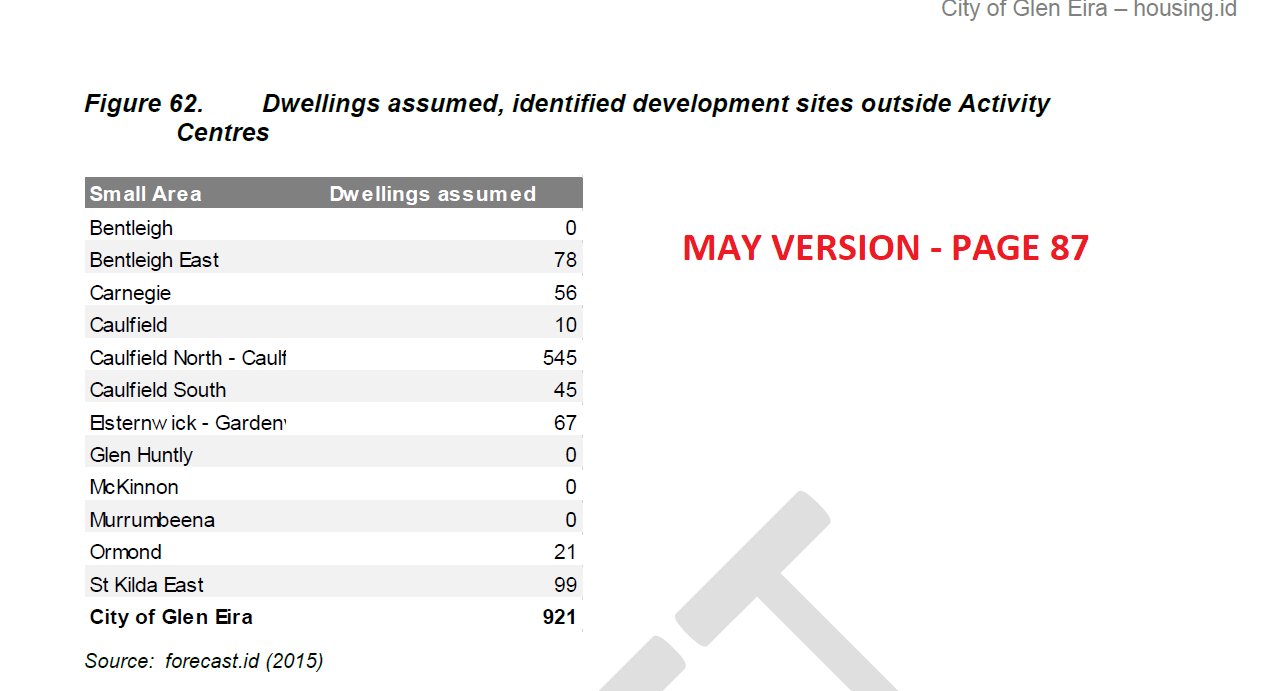
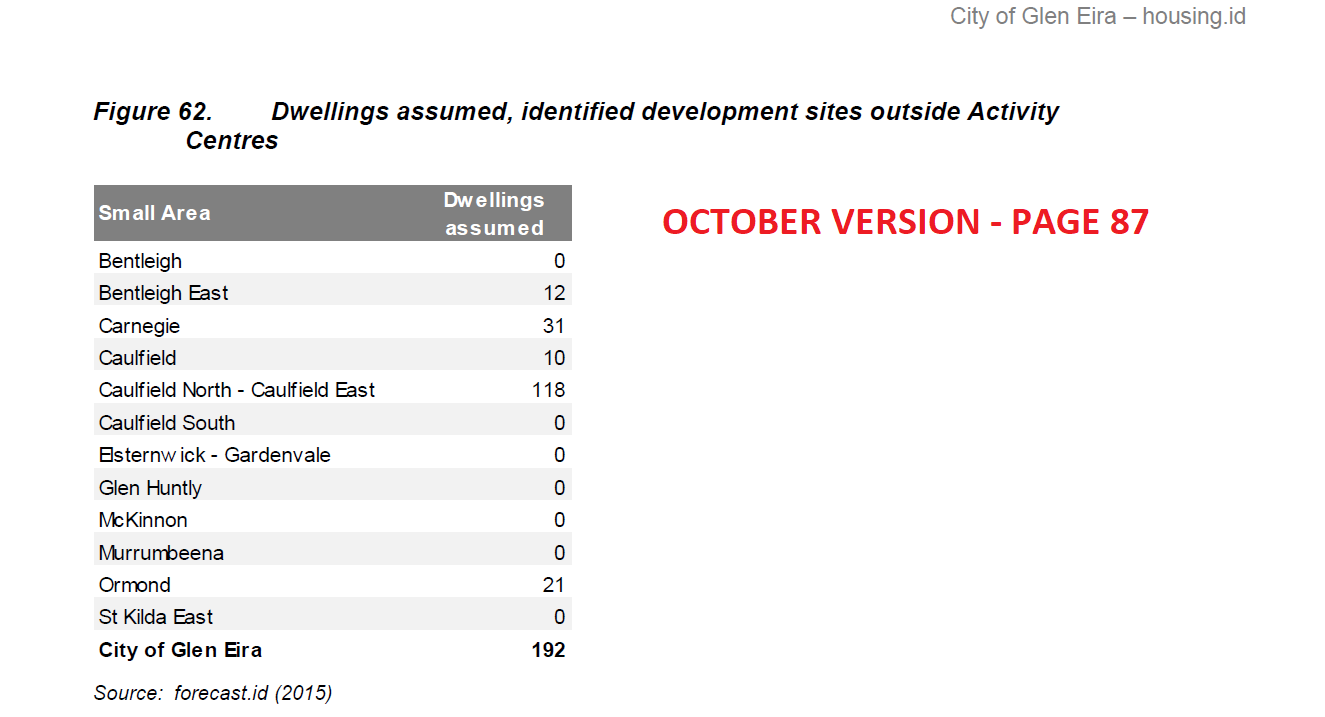
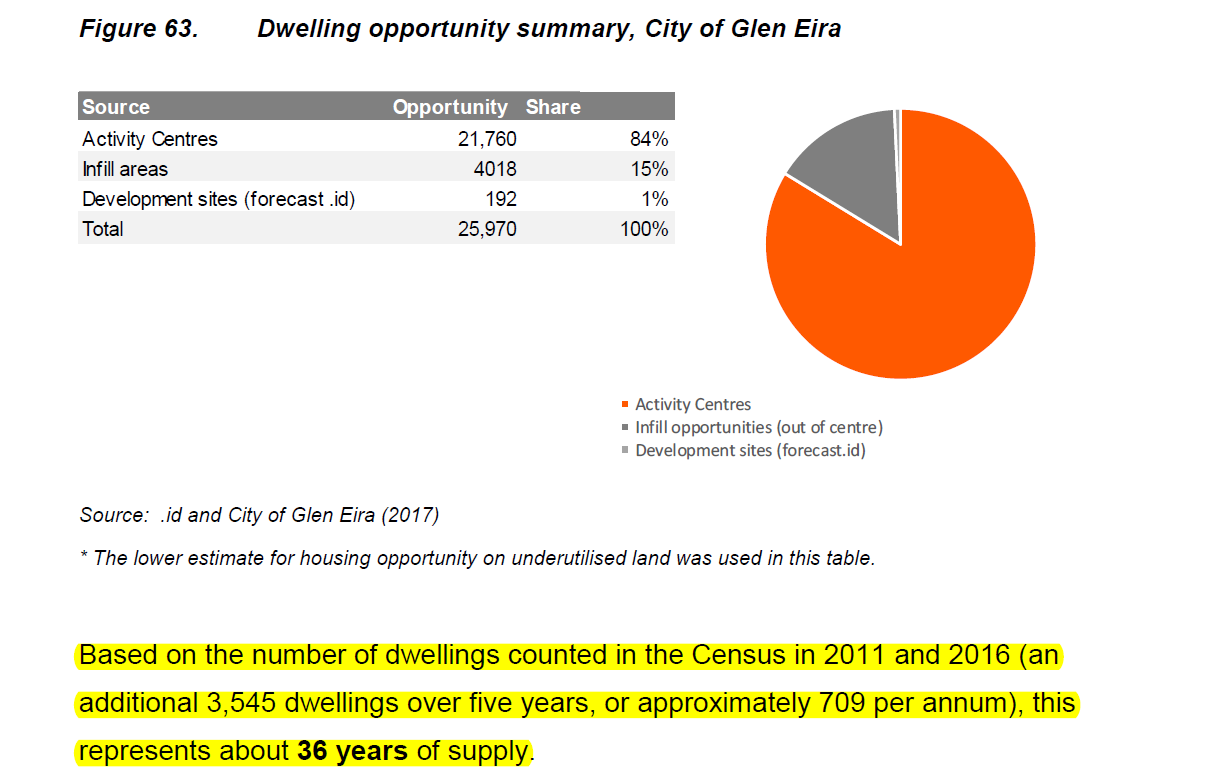
Confounding the analysis even further we find that figures over a period of 5 months are indeed very ‘flexible’ – again with no explanations proffered. Below are a couple of screen dumps from the Housing Id reports. The first one is dated as May 2017 and the second one is dated October 2017.

When comparing these two sets of figures, please consider:

  • The criteria for both sets of figures are identical (ie 2015) – so why the difference?
  • The ‘study areas’ are identical
  • Since nothing has changed in the planning scheme (ie no new amendments apart from Wynne’s VC110 and those applications coming in post VC110 are still to be decided) – why the difference?
  • If we accept 500 for Caulfield Village as now developed, then why not add in another 1000 plus as ‘development sites’ for the rest of Caulfield Village?
  • ‘outside activity centres’ would basically mean minimal change areas. Have we really had major multi unit development so that in 5 months we find Bentleigh East for example going from 78 sites down to 12?

The most questionable aspect of all the above is to be found in the differing May and October conclusions. Note that we’re told that there is capacity for 4018 dwellings as ‘infill capacity’. In May this was given as only ‘outside’ activity centres. The October version figure is identical. So what’s happened to all those potential areas outside the expanded activity centre zones? Or was the May figure already a clear sign that council intended to double the size of activity centres but without being upfront about this to residents?

More unfathomable is the claim that even with the admitted 3000 (preliminary) figures for Virginia Estate, this only reduces the ‘years of supply’ by 1 – from 37 years in May, to 36 years in October! Plus, how can the May figure tell us that there is an average of 713 dwellings per annum which equals 37 years supply and the October figure tells us that there is now an average of 709 per annum but the supply has dropped by a year? Surely if the average per year goes down, then the overall years of supply must go up not down?

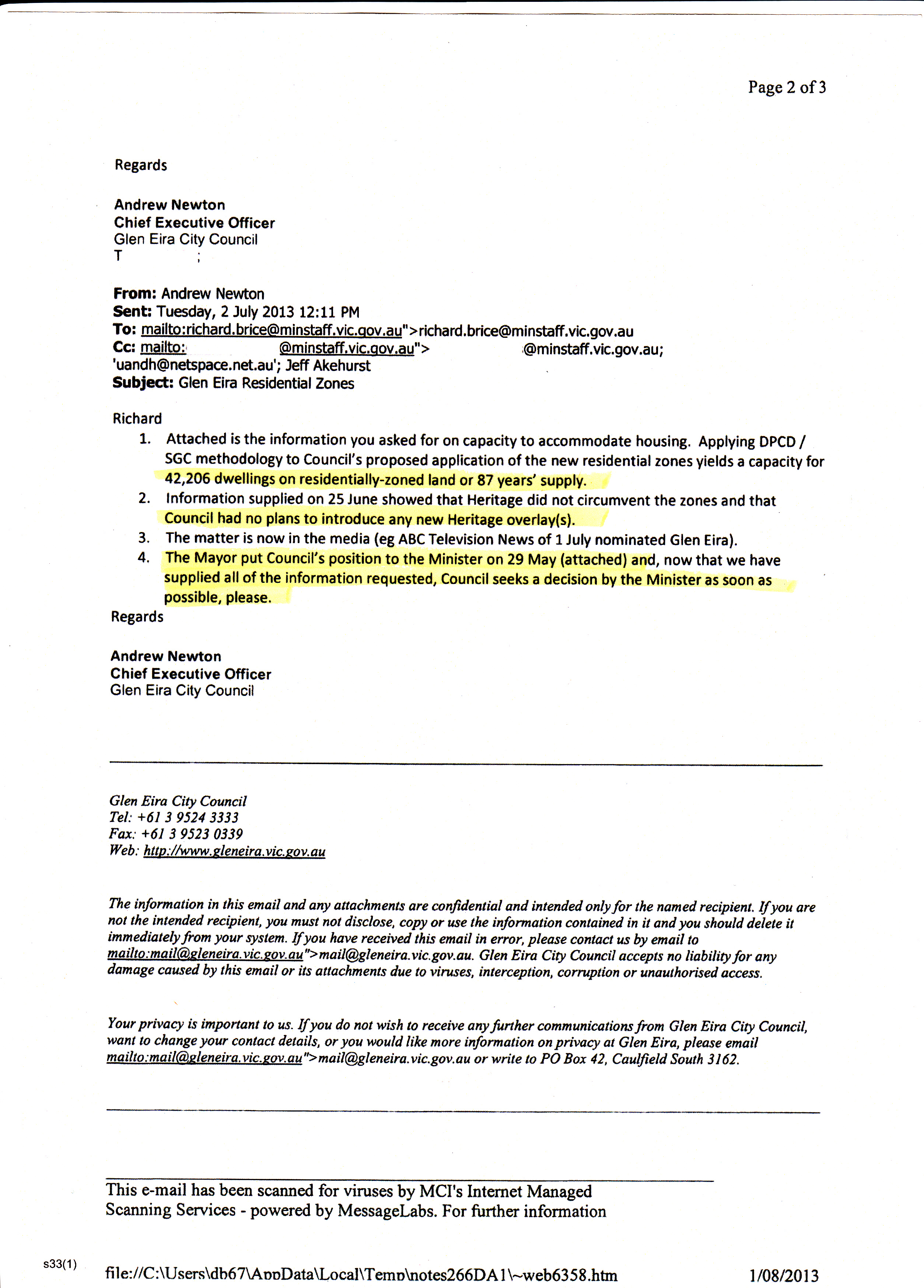
To show how rubbery every single figure is, we republish an email from Newton to the Department written in July 2013 – before the zones were gazetted. The claim then was that with the new zones Glen Eira would have 87 years of supply and over 100 years once commercial was included. With the new zoning, Newton trotted out a figure of a 42000 dwelling supply. If true, does this therefore mean that since 2013 Glen Eira has experienced the equivalent of 14000 dwellings in the space of 4 years? Certainly not! So how much faith can be placed in anything that council produces? And why is council even considering 87, 37, or 36 years down the track when no government is doing this with housing!

In recent times Council has made much of heritage such as correcting the errors from 2013 by proposing to rezone these sites from their current four storey zoning to two storey. Yet when it comes to Carnegie, we find the same lunacy applies as happened in 2013 – ie no respect for heritage, for neighbourhood character overlays or Design and Development Overlays. We are of course speaking of Chestnut Street!

In the latest draft structure plans residents are offered two equally inappropriate choices in regard to this street and its surrounds. These are –

  • Option 1 — Retain the existing Neighbourhood Character Overlay and further protect Chestnut Street by providing a clear transition to Chestnut Street by stepping down in height, building type and zoning.
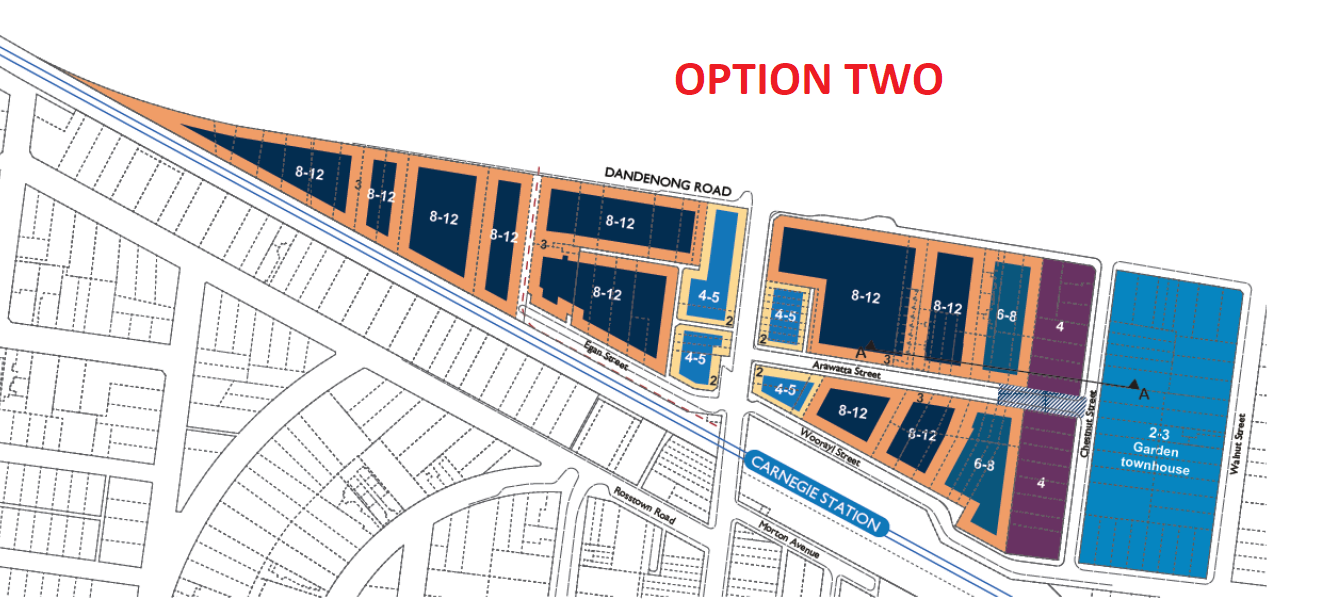
  • Option 2 — Remove Neighbourhood Character Overlay (NCO) in Chestnut Street and include the west side of Chestnut Street in urban renewal area and seek to extend Arrawatta Street

Here’s the ‘visuals’ of what’s proposed –

The lowlights of this ‘choice’ are:

  • Potential 4 storey development backing onto rear back yards of single storey places
  • Moving further west, the heights range from 4-8 to 8-12 storeys – surely visible from Chestnut?
  • Questions of overshadowing not addressed – especially since the sun sets in the west.

Option 2 lowlights are quite incredible –

  • The total removal of any heritage, neighbourhood character overlay on both sides of Chestnut
  • To be replaced by rezoning to three storeys to the east and 4 storeys on the western side of Chestnut
  • Maintaining the range of heights envisaged for the western sections of the area.

We find both of these options as simply mindboggling and inexcusable and standing in stark opposition to what the planning scheme and the proposed heritage updates state.

Council’s planning scheme states categorically at Clause 22.01 that the objectives are –

  • To recognise and preserve the aesthetic and cultural characteristics of heritage places which are held in high esteem by the community of Glen Eira.
  • To protect places identified as having architectural, cultural or historic significance and which demonstrate the various eras of Glen Eira’s development.

Next, we have the relevant Design & development overlay (DDO9) that covers Chestnut Street. It states:

To ensure that development along any residential interface be sympathetic to the scale and amenity of the residential area

With the introduction of Amendment C87 which created the NCO9 we are told that:

Chestnut Street and the McPherson Avenue Area, Carnegie are characterised by their many larger scale Edwardian era dwellings and several early California Bungalows. The key components of the character of these areas are the consistency of building forms and materials, the spacing between dwellings and the established planting themes (2013).

The 2014 Planisphere Updated report commented that there was a High degree of neighbourhood character significance. Additional controls warranted.

The Planning Panel Report of the time, and for which there were no objections submitted, also stated that –

Chestnut Street has a high degree of neighbourhood character significance and is distinct from surrounding residential areas.

It is recommended that Chestnut Street is maintained as an area of neighbourhood character significance and afforded statutory protection via Local Policy and NCO, thereby requiring a permit for demolition and construction of all buildings, including single dwellings. The NCO for Chestnut Street should highlight the distinct Edwardian era character.

So how does council arrive at the above options given its position on heritage? Here’s the ‘answer’ –

CHESTNUT STREET

The majority of submissions received related to the proximity of urban renewal area to Chestnut Street with calls from residents of Chestnut and surrounding streets to remove the Neighbourhood Character Overlay and incorporate the western side of Chestnut Street into the urban renewal area. It was thought that neighbourhood character in this area has been significantly compromised already and would be further compromised by the urban renewal behind, that many homes had deteriorated beyond repair and that the area can accommodate growth. In contrast there were also submissions requesting to retain the neighbourhood character protection. Some residents would like to see images to illustrate how the transitions may look.

The various submissions to the previous round of ‘consultation’ do include a score of identical proforma requests for removal of the NCO from the western side of Chestnut Street. The logic however is far from convincing. We are told that –

If the GECC is to meet the stated objectives of the Draft Concept Plan and key outcomes stated within the Building Transition Plan the NCO2 on Chestnut Street should be removed and the western side of Chestnut Street should be incorporated in the Urban Renewal Development area.

Surely the answer can’t be to simply remove the NCO so that it fits in more neatly with Council’s expansionist/prodevelopment plans? Wouldn’t a more logical response be that instead of giving the green light to anything from 4 to 12 storeys, that this ‘objective’ be curtailed and heritage maintained as stated in the planning scheme?

We also take issue with council’s apparent ‘endorsement’ of the idea that the ‘area has been significantly compromised already’.  A check of council’s planning register reveals that very little has been done to Chestnut street itself. In fact, the only applications coming in from 1999 are the following. Hardly a destruction of what was thought to be an area deserving of heritage and an NCO plus DDO!

13 Chestnut Street CARNEGIE – Partial demolition and alterations and additions to a dwelling on land affected by a Neighbourhood Character Overlay

8 Chestnut Street CARNEGIE –  Demolition and construction of front fence on land affected by the Neighbourhood Character Overlay and the Design and Development Overlay

7 Chestnut Street CARNEGIE- Demolition of existing dwelling and construction of a two storey dwelling on land affected by the Design and Development Overlay and the Neighbourhood Character Overlay. (refused)

1 Chestnut Street CARNEGIE – Partial demolition and construction of alterations and additions to the existing dwelling on land affected by the Neighbourhood Character Overlay.

20-22 Chestnut Street CARNEGIE – Construction of alterations and additions to the existing dwellings and buildings on common property (refurbishment of the existing apartment building)

Unit 1 16 Chestnut Street CARNEGIE – ALT/ADD TO DUAL OCC (CAR PARKING )

We should also point out that one resident’s wish to remove his/her property from the heritage/ddo/nco overlays was because it didn’t face Chestnut street and  – Given its position and the nature of the new planning overlays that surround our property, we believe we are now seriously exposed and financially disadvantaged by its inclusion.

CONCLUSIONS

Chestnut Street proper contains 23 properties.

  • The only ‘modern’ building is ON THE EAST SIDE OF CHESTNUT STREET.
  • THE DOUBLE STOREY BLOCK OF 1960’S FLATS IS ON THE EAST SIDE OF CHESTNUT STREET
  • SO HOW ON EARTH CAN WE HAVE A RECOMMENDATION TO REMOVE PROTECTION FROM THE WEST SIDE OF THE STREET AND THE ARGUMENT STILL CLAIM THAT THERE HAS BEEN MUCH CHANGE!

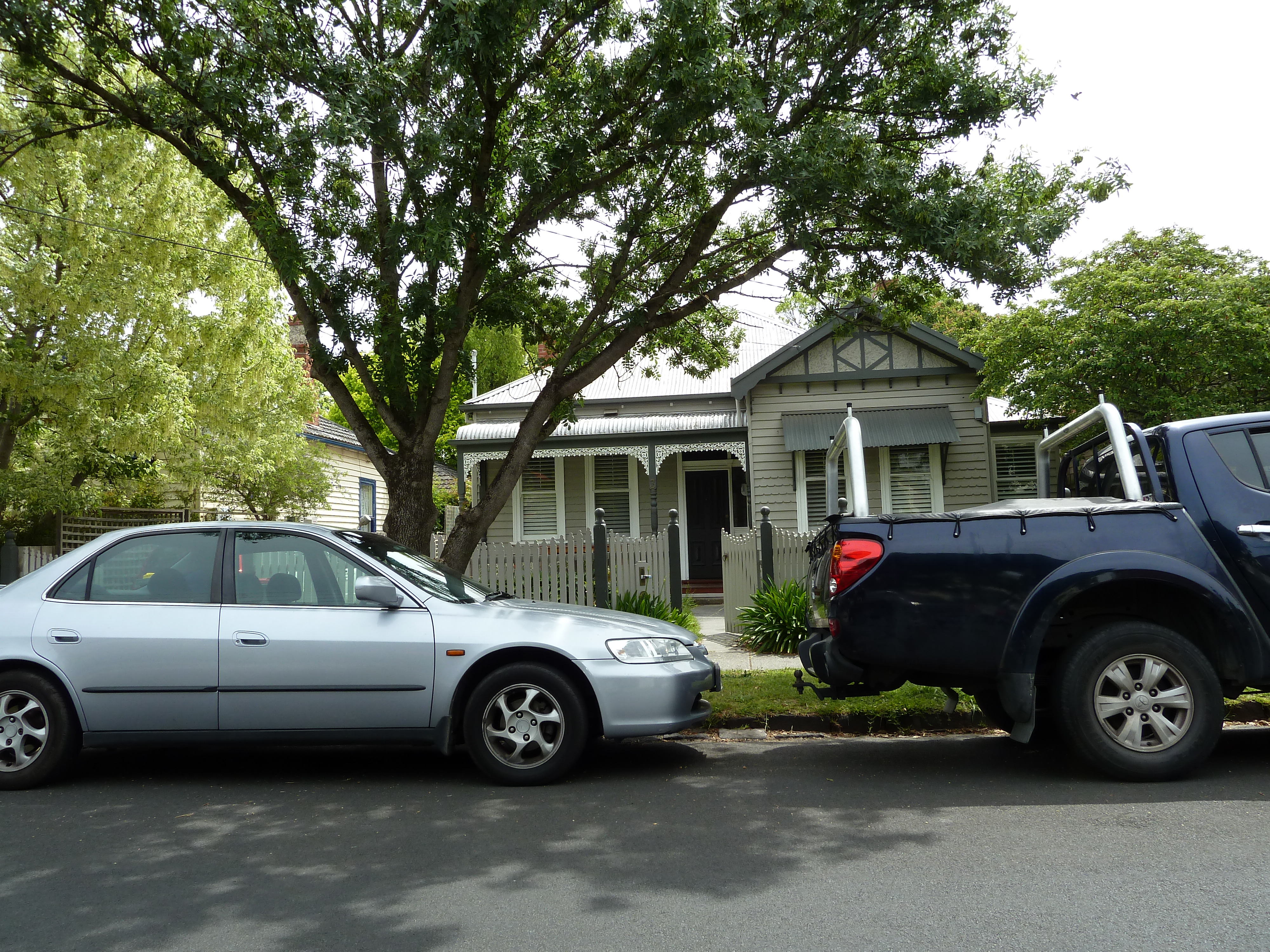
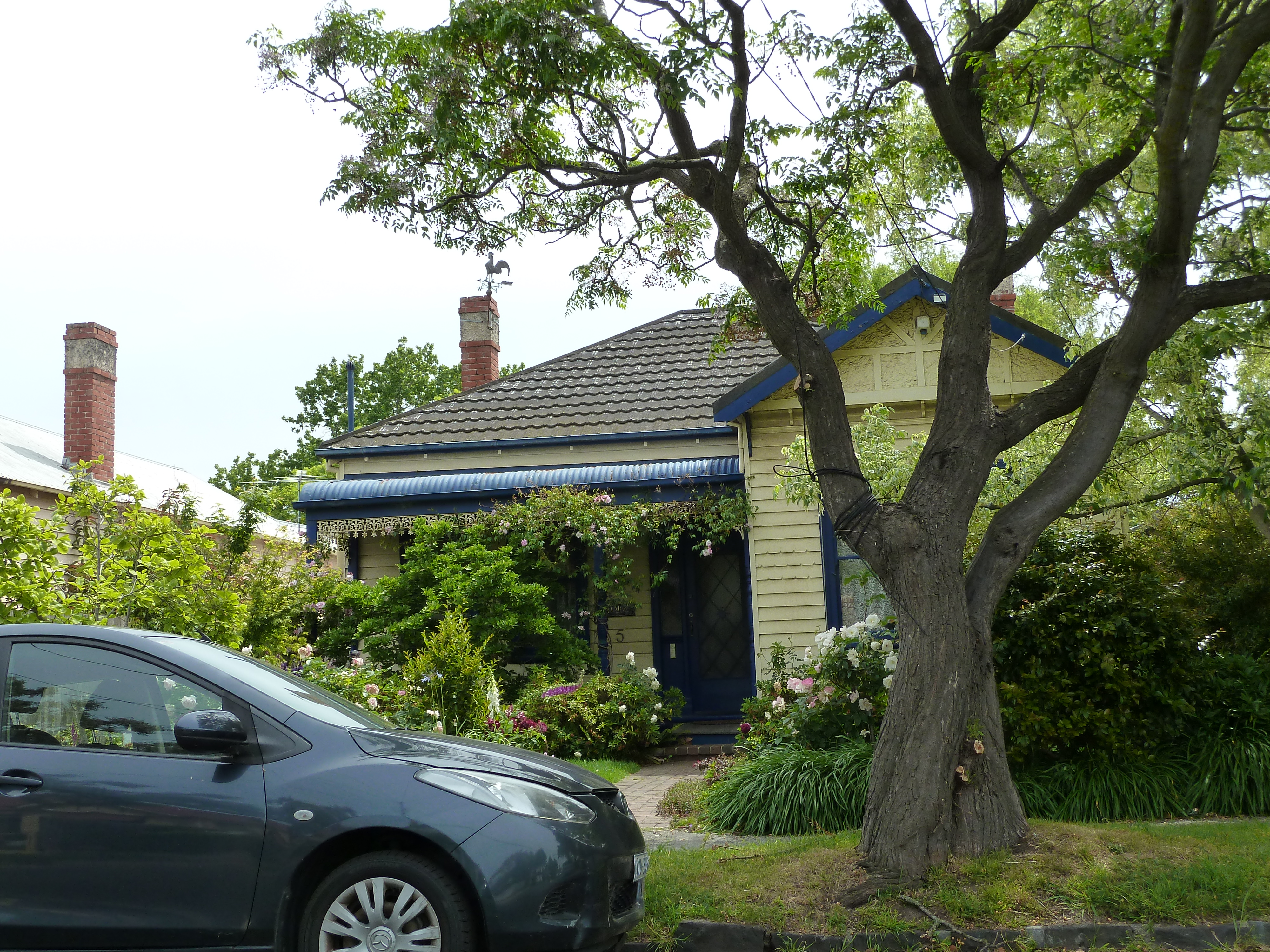
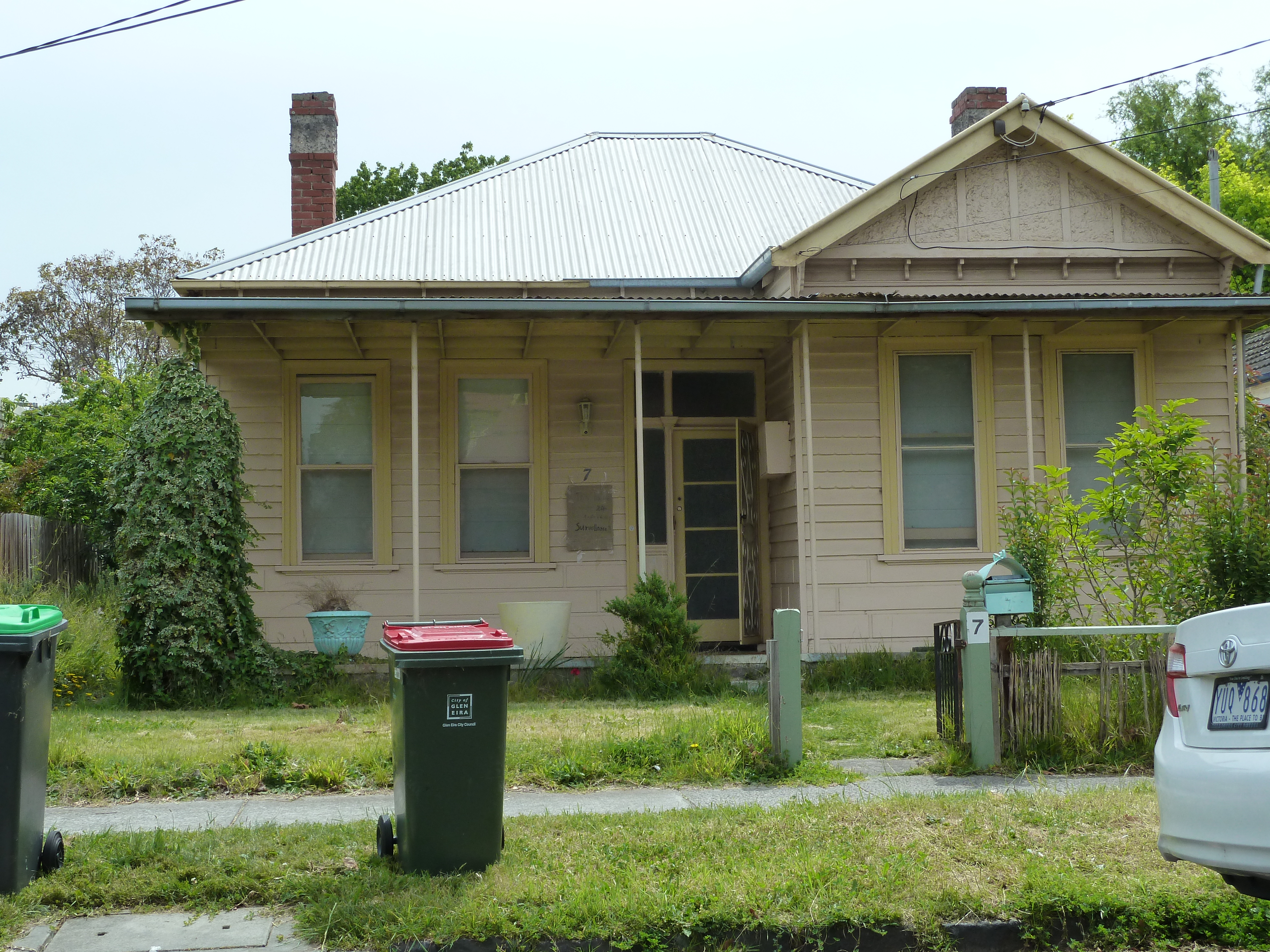
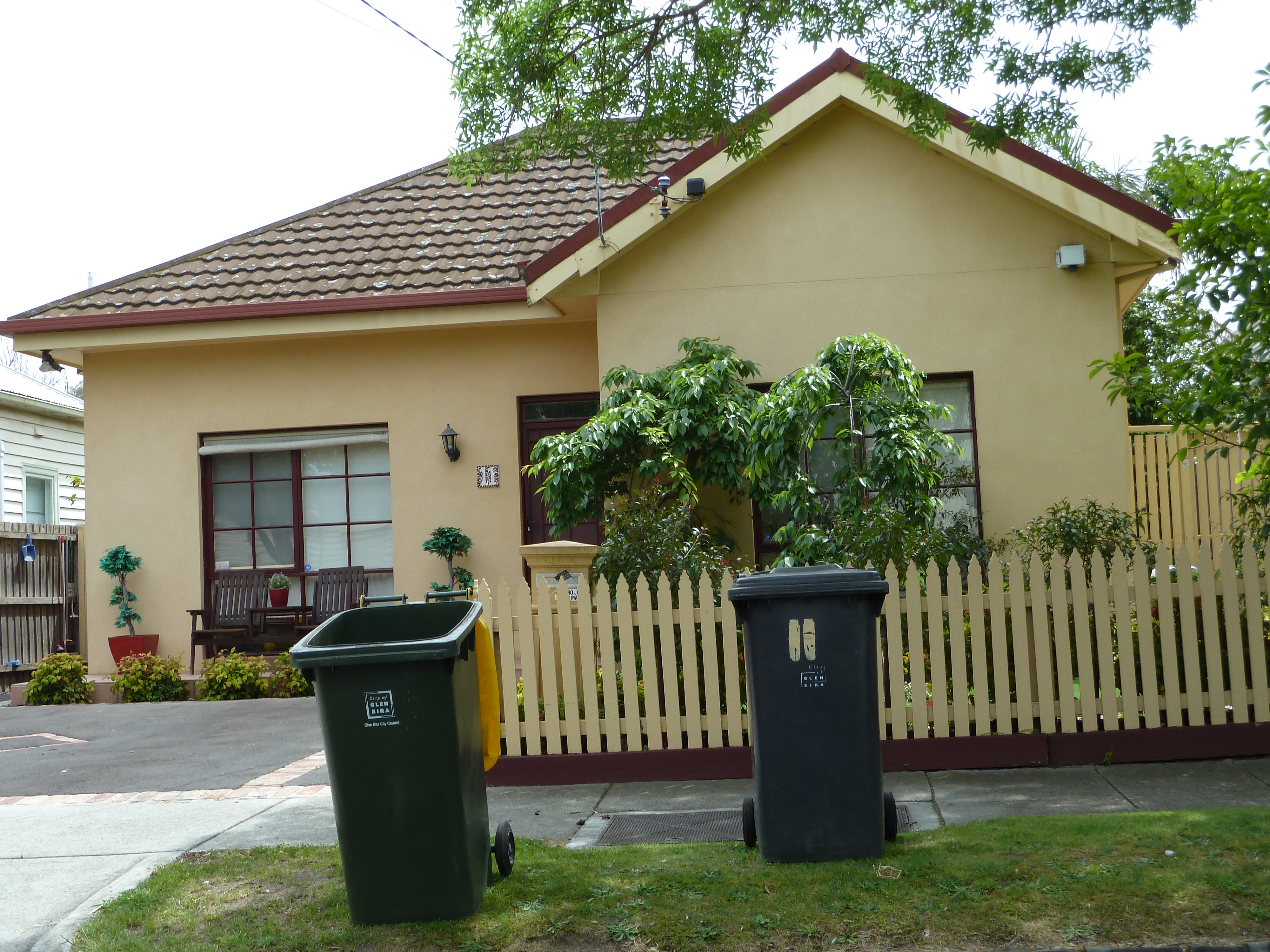
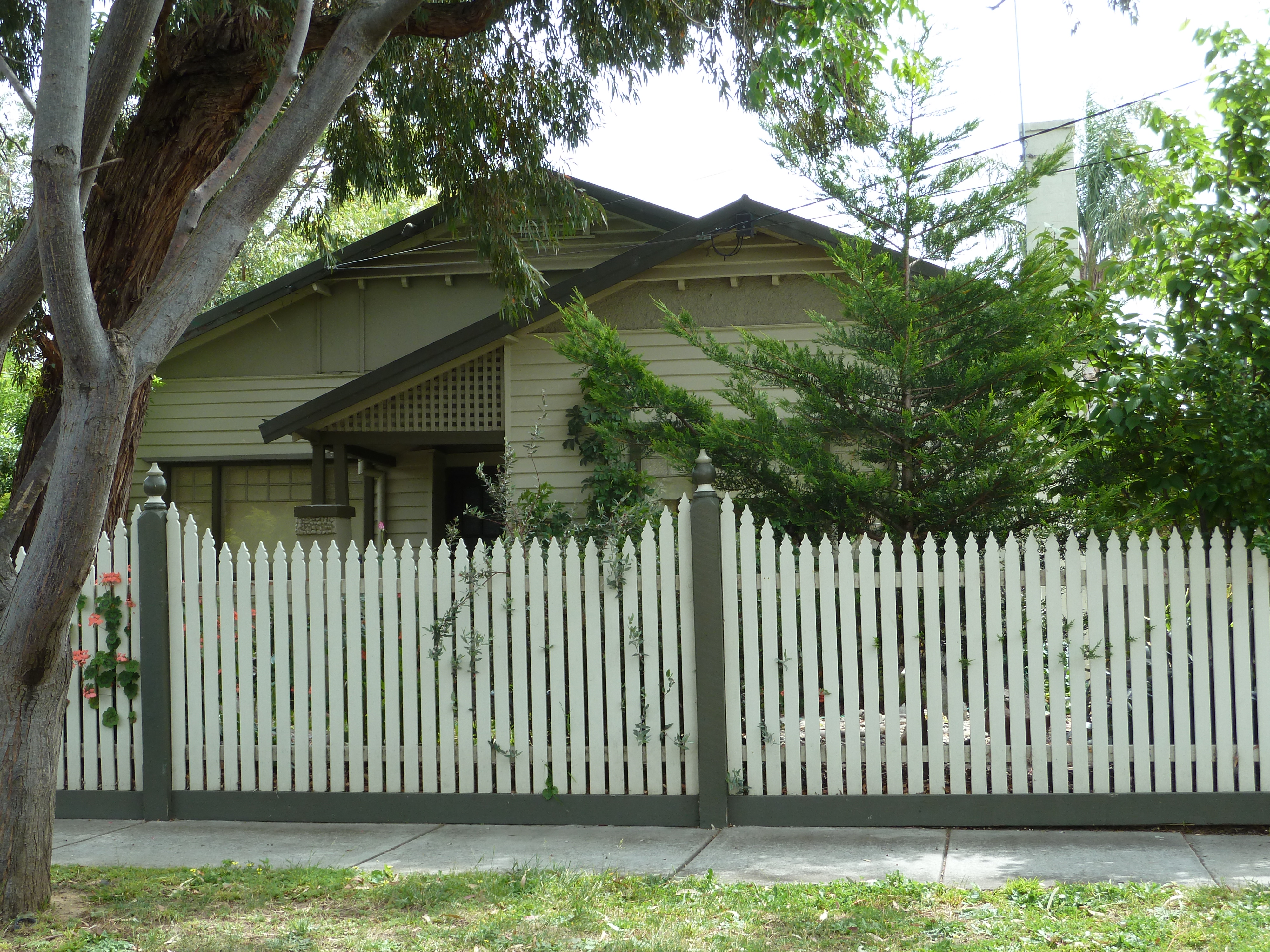
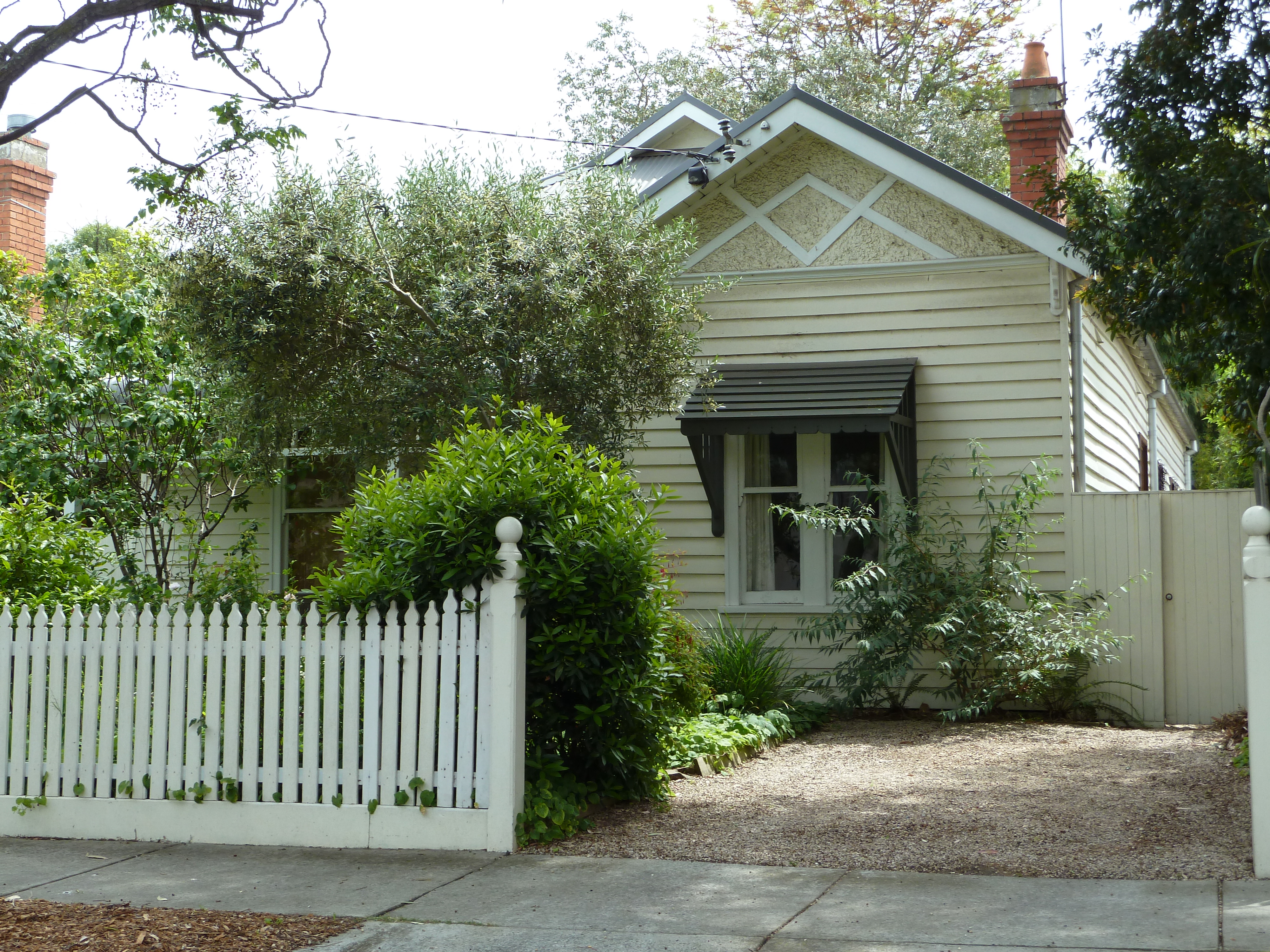
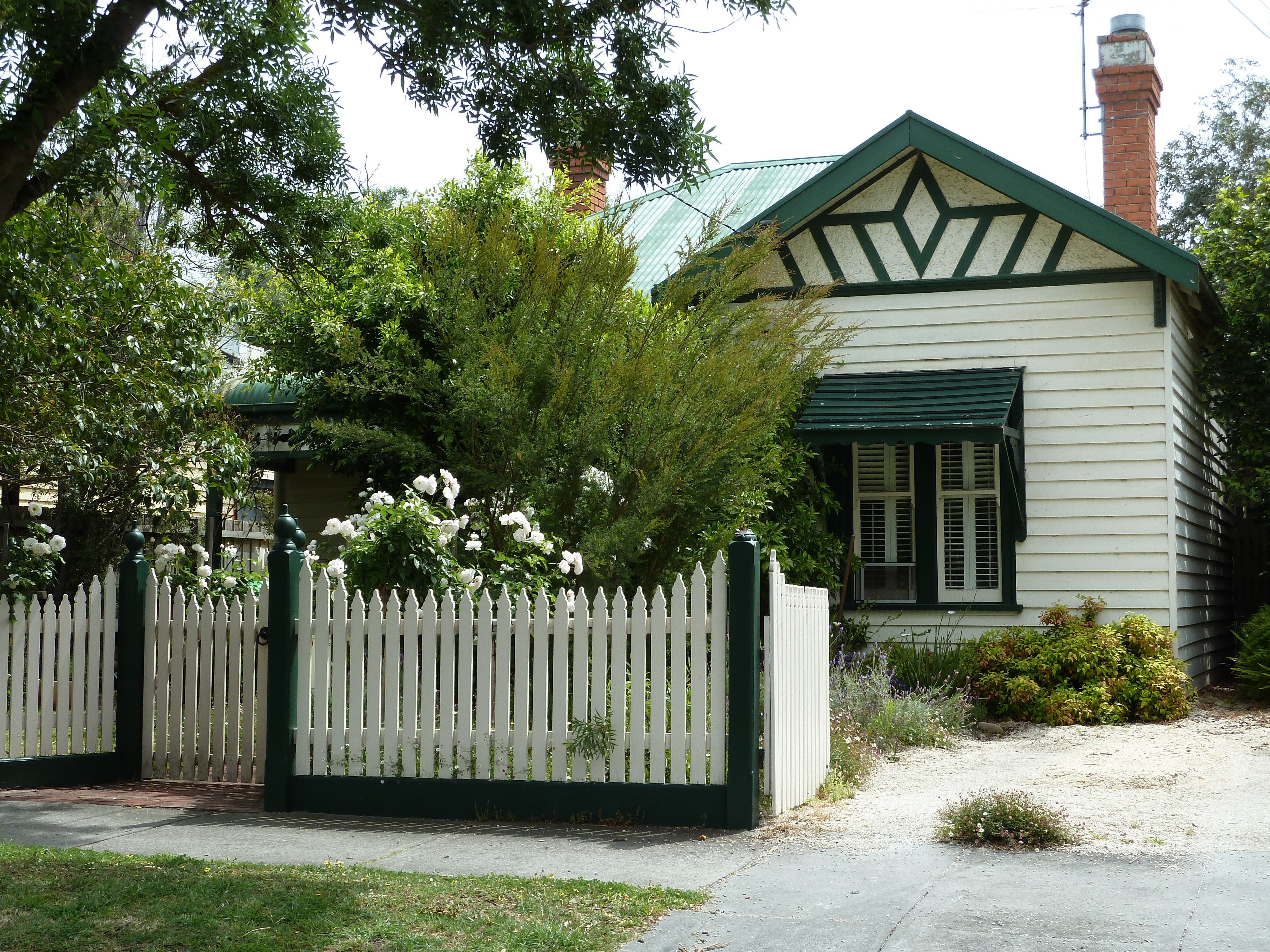
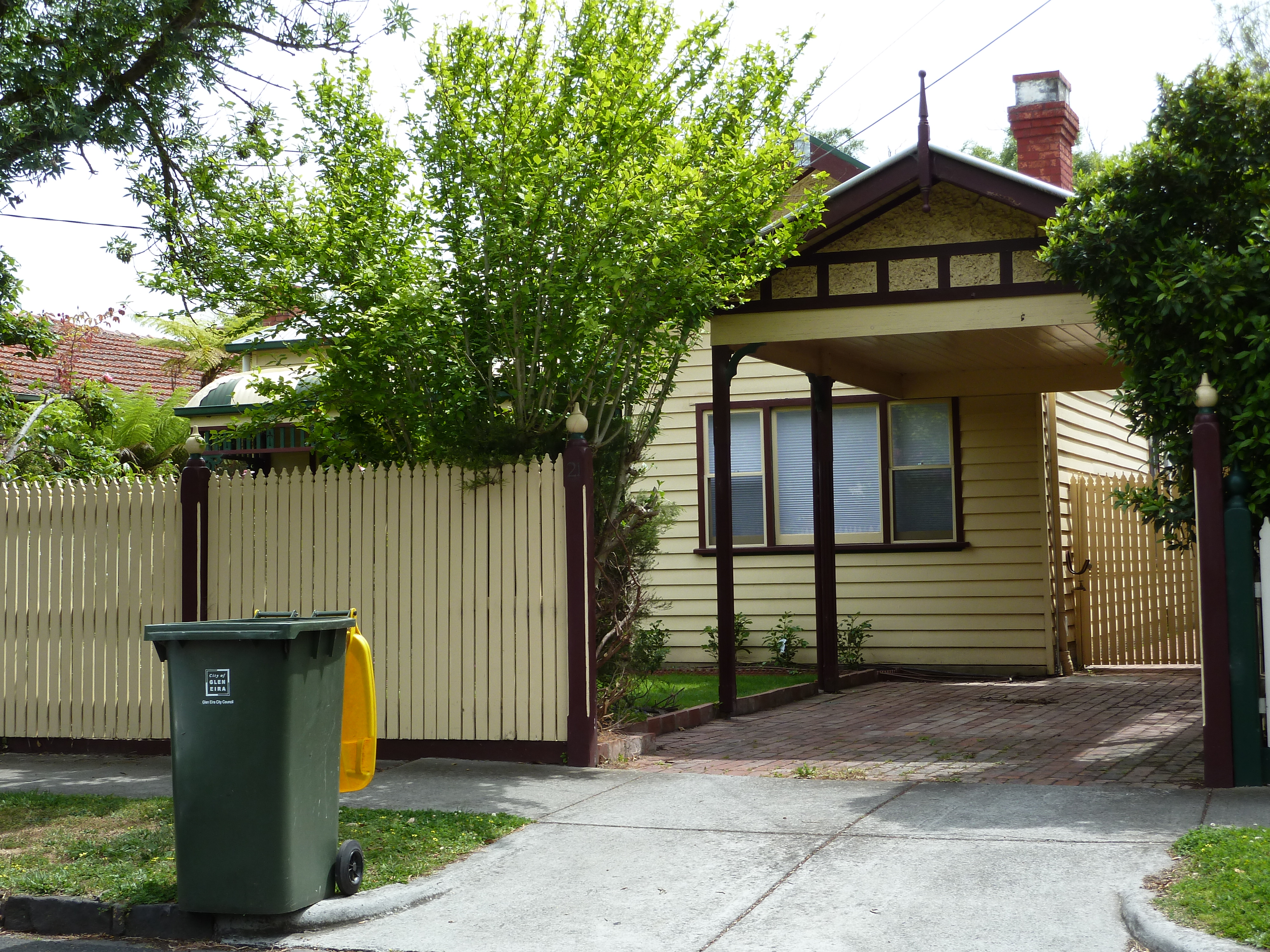
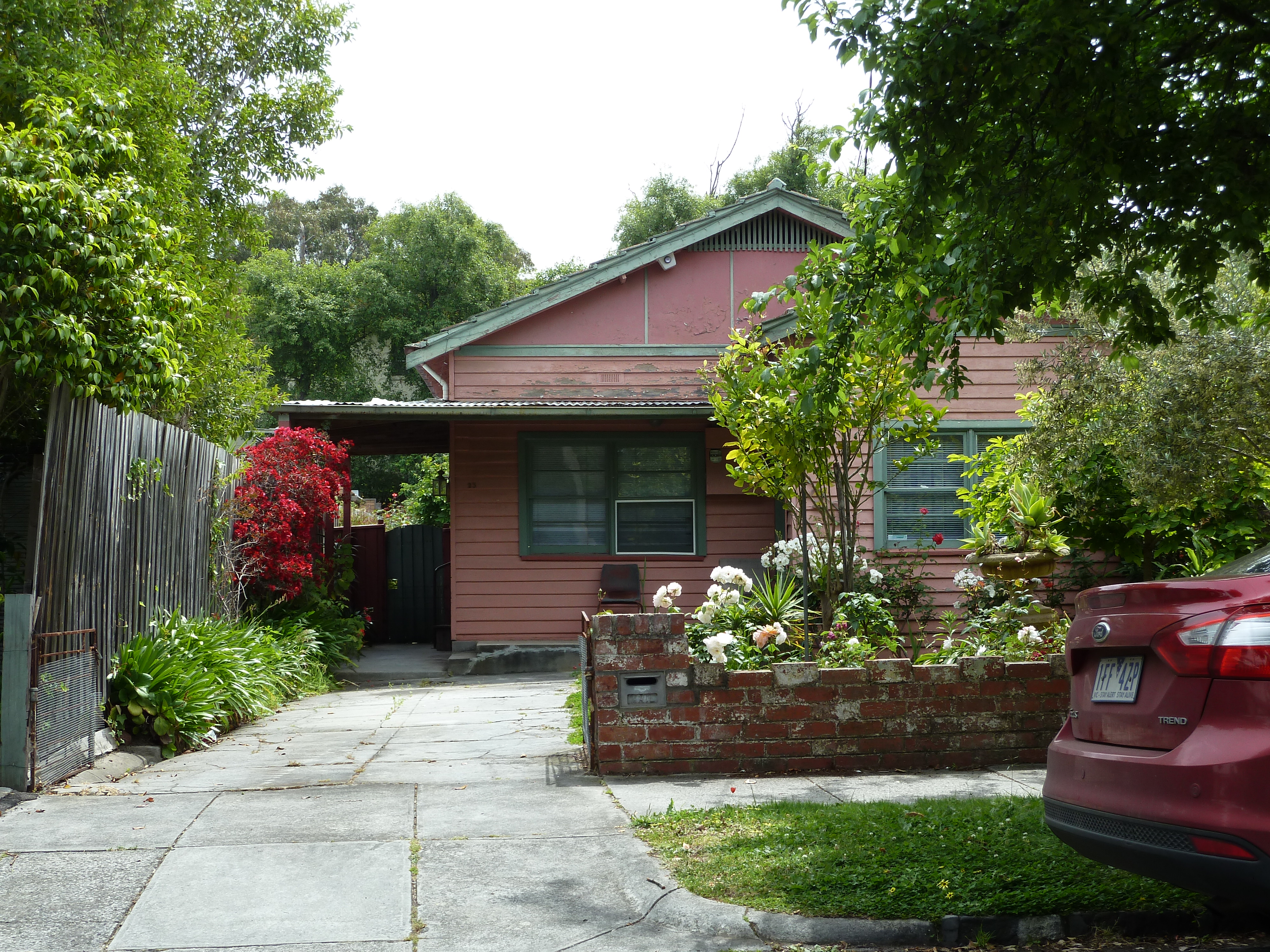
To prove our point here is the entire WEST section of all of Chestnut Street. Photos were taken today!

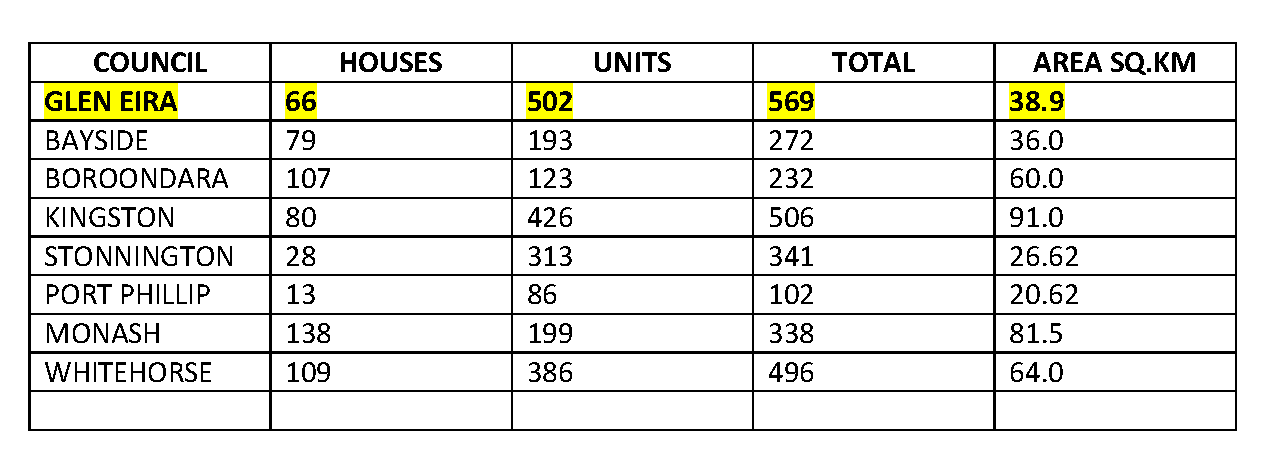
The ABS has today released its latest figures for building permits covering the first quarter of the 2017/18 financial year. Glen Eira remains streaks ahead. When the size of this municipality is taken into account compared to some of the others, plus the fact that it has the lowest amount of public open space in the state, then these figures speak volumes about what is being imposed on the community in terms of density, sustainability, and general residential amenity!

We’ve uploaded the ABS data HERE 

Below is our summary –

Whilst there are undoubtedly some improvements to version 2 of the Bentleigh Structure Plan, it is still a long way off from meeting residents’ expectations and previous feedback. Council is now conducting another ‘survey’. How valid any results gleaned from this latest ‘consultation’ is definitely open to question, especially when only half the story is revealed to residents.

Here’s the first part of the ‘consultation’ and residents are then asked to rate council’s proposed actions based on these select statements:

CLICK TO ENLARGE

PS – WE FORGOT TO MENTION THAT COUNCIL NOW ADMITS TO A ‘PRELIMINARY’ FIGURE OF 3000 DWELLINGS FOR VIRGINIA ESTATE! WE FORECAST AT LEAST 3500 BY THE TIME ANY OFFICIAL PLANS COME IN!

This is a long and complicated post so we beg your forbearance.

Council’s planning is largely based on the projected population figures plus available ‘developable’ land as stated in the Housing id reports. We then get a few draft scenarios that seek to apply the new housing styles (ie garden townhouse, garden apartment, commercial, etc) to the various zones such as Neighbourhood Residential (minimal change), General Residential (3 storeys) and Residential Growth Zone (4 storeys).

As we’ve stated previously, some mention is made of Wynne’s introduction of Amendment VC110, but this is almost exclusively related to the requirement for the ‘garden areas’ in the General Residential Zone. No specific mention is made of the impact of removing the 2 dwelling mandatory condition for the Neighbourhood Residential zone. From what we can tell, this does not even feature in the multitude of so called ‘calculations’ council uses to justify its draft position.

Worse still is the Housing Report’s and council’s claim that areas zoned NRZ will in all likelihood achieve a dwelling capacity of 18 dwellings per hectare. The areas zoned GRZ are forecast to achieve a dwelling density of  anything between 75 if it is designated as a ‘garden townhouse’ to 150 dwellings per hectare if it happens to be labelled ‘townhouse and apartment mix’.

Both of these calculations are so off the mark, given recent trends, that it is not funny. Thus, if we can’t trust the data, how can we trust the recommendations and the overall planning decisions that are being made?

NEIGHBOURHOOD RESIDENTIAL ZONE (POST VC110)

Below is a list of the first 9 applications to have come in following the gazetting of Amendment VC110 in March 2017. Assuming that all will receive a permit, the results indicate that instead of a dwelling density of 18 per hectare, these 9 applications alone will bring in a dwelling density of 38 dwellings per 0.8 hectares!!!!!! We must then ask – what does this do to council’s planning? If the NRZ is now set to become a pseudo GRZ, do we need to firstly expand the activity centres and secondly have vast swathes zoned GRZ in all our neighbourhood centres?

Here are the figures for these 9 applications. Please bear in mind that we followed the ‘methodology’ used by council and the Housing report! Also worthy of noting is that Council’s document where the above table came from (UPLOADED HERE) does not include NRZ examples in its appendices!

76 Bignell Road, Bentleigh East – 3 units, 600 sqm

27 Draper St., McKinnon – 3 units, 1010 sqm

4-6 Hudson St., Caulfield North, 1300, 8 units

36 Mawby Road, Bentleigh East – 4 units, 700sqm

2 Newman Ave., Carnegie – 6 units, 1033sqm

22 North Ave., Bentleigh – 3 units, 777sqm

1 Ridell Parade, Elsternwick – 3 units, 700sqm

2 Shanahan Cresc., McKinnon – 3 units, 778sqm

3 rigby Ave., Carnegie – 5 units, 1134sqm

38 UNITS ON = 8032SQM = 0.8 HECTARES!!!!


GENERAL RESIDENTIAL ZONE (3 STOREYS)

Council does include some ‘sample’ permits granted in this zone. Why these specific ‘examples’ were selected, we have no idea, and nor was any explanation provided!

We have tried to be far more ‘objective’ and the list below is the outcome from consecutive VCAT decisions in descending order. Only 2 are identical to the ‘examples’ provided by council. The site coverage cited come directly from the VCAT decision itself.

In complete contrast to council’s prognostications, we find that the GRZ establishes an average of just under 195 dwelling per hectare – well and truly above both figures that council provides. We are yet to see what real impact Wynne’s mandated ‘garden area’ will have on the GRZ. We are not hopeful given that anything above 1 metre in width can be deemed as part of the garden area and if land is subdivided first and is less than 400 square metres, then there is no need for garden area at all! So we again have to ask what does this mean for our overall planning if these figures are so off the mark?

33-35 Belsize Ave, Carnegie – 29 units – 1357sqm

291 Grange Road and 4 Walsh Street, Ormond – 23 units -1254

27 Elizabeth Street, Bentleigh East – 10 units – 878

137-139 Murrumbeena Road, Murrumbeena – 27 units – 1629

6-10 Claire Street McKinnon – 33 units – 2053 (council notes 1744sqm)

19-21 Rothschild Street, Glen Huntly – 23 units – 1366

466 Dandenong Road, Caulfield North – 14 units – 800

132 Hotham Street, St Kilda East – 16 units – 964

12-14 Quinns Road, Bentleigh East –  22 units -1276

10-12 Station Avenue, McKinnon – 21 units – 1449

1 St Georges Avenue, Bentleigh East – 12 units – 822

817-819 Centre Road, Bentleigh East – 24 units – 1231

2-4 Penang St., McKinnon – 22 units (1388sqn)

143 – 147 Neerim Road, Glen Huntly – 32 units – 1672

130 Murrumbeena Road, MURRUMBEENA – 16 units (883sqm)

91 McKinnon Road, McKinnon – 10 units (566sqm)

64-66 Bent Street, McKinnon. – 31 units (1371.29 sq m – not the 1500+ recorded by council)

2 Ormond Road, Ormond – 15 units (846sqm)

90-92 Hawthorn Road, Caulfield North – 24 units (1240sqm)

135 – 137 Neerim Road, Glen Huntly – 39 units – 1654

4-6 James Street and 14-16 Etna St., Glen Huntly – 45 units (2462sqm)

UNITS – 488

Area = 25,161sqm = 2.51 hectares. = 194.42 DWELLING PER HECTARE.

Council has finally released version 2 of its draft structure plans – together with a bevy of other documents. The result is that residents are literally drowning in paper – much of it repetitious, uninformative, and still failing to present information that justifies what is proposed.

In summary, here is a breakdown of what was published together. The total number would apply to all of Glen Eira and not just the individual activity centres. If a resident wanted to glean what was proposed for the entire municipality then they would be facing the herculean task of reading all the documents.

Residents can make up their own minds as to why documents which carry dates of July couldn’t have been made public earlier but had to be consigned to this single inundation. We certainly doubt that many residents would have the time, energy, or even willingness to plough through so many pages. As for councillors themselves – our bet is that none of them would bother either! That perhaps is the plan anyway?

Bentleigh Concept Plan consultation responses – 85 pages

Draft Bentleigh Structure Plan – 67 pages

Bentleigh Draft Activity Centre Structure Plan – Background Report –  93 pages

Bentleigh Transport Analysis & forecasting – 61 pages

Analysis of Housing Consumption & Opportunities – 103 pages

Peer Review – Urban Design Guidelines etc. – 77 pages

Planisphere Urban Design Guidelines – 50 pages

Community Benefits Discussion Paper – 19 pages

Assessment of Economic Impacts – 58 pages

Planning Strategy Impacts on Housing Opportunity – 35 pages (no links on Bentleigh site)

TOTAL = 648 pages!!!!!!

CARNEGIE

Draft structure plan – 65 pages

Background report – 94 pages

ELSTERNWICK

Draft Structure Plan – 71 pages

Background Report – 100 pages

TOTAL 978 PAGES

Council presumably pays big bucks for its expert consultants. Residents should therefore expect a lot more than what is ultimately produced. Featured below is an extract from page 30 of the recently released ‘economic analysis’. Putting it bluntly, we do not know whether to laugh or cry at the arguments presented and the assumptions inherent throughout.

THE ASSUMPTIONS

  • a given amount of office space in one location will equate in agglomeration benefits to the same amount of office space at a different location. And let’s not worry about car parking provisions which are far less for office space, etc.
  • The largest assumption of course is that companies will decide to rehouse to Glen Eira. In a March 2017 article written by the paper’s economic editor, the reverse was found to be the case – that companies are drawn to the CBD rather than the suburbs or regional centres. See: http://www.smh.com.au/victoria/melbourne-booms-while-the-rest-of-victoria-wilts-and-itll-only-get-worse-20170307-guslcg.html

Thus we have a 58 page document that is basically endorsing council’s proposals rather than objectively analysing and backing up its recommendations with sound data. A couple of other paragraphs from this report provide the overall tone and we believe, intent.

While there would be expected to be strong demand for office suites from various small businesses, the capacity for office development within activity centres is limited by developer‘s preference for apartment development. Council has the opportunity to facilitate office development on its car park sites through either planning controls or conditions placed on the sale of these sites.

There is the opportunity for Council to play a leading role in facilitating the development of new office space through its ownership of a number of car park sites within the Bentleigh, Carnegie and Elsternwick activity centres. This may take the form of either office suites or co-working spaces. Additional opportunities also exist within Commercial 2 zoned precincts on the Nepean Highway in Elsternwick and Moorabbin

Council‘s ownership of the two car park sites provides the opportunity to influence the scale of development and size of individual apartments in order to meet the needs of downsizers and families.


For the past year we have illustrated time and again how development in Glen Eira is at least double what is required to meet the housing needs for the various population growth projections. Residents have queried council’s reports since they all fail to answer, much less address the most crucial questions:

  • where is the justification for the claim that another 9000 net new dwellings are required in the period from 2016 to 2031?
  • Where is the existence of any calculations that include the addition of anywhere between 4000 – 6000 net new dwellings as a result of the Caulfield Village and the Virginia Estate developments?
  • Given the above, how on earth does council justify the expansion of the activity centres and the proposed rezoning of hundreds upon hundreds of properties to cater for higher, and hence denser, development?

To reiterate:

  • Plan Melbourne Refresh sets two rough targets for the Inner South Region of 4 councils – Bayside, Boroondara, Stonnington and Glen Eira. The period for this ‘required’ growth goes out to 2051 and not 2031. There is the ‘aspirational’ target of 132,000 dwellings and the other target of 125,000 divided between the four councils. Glen Eira’s ‘share’ is thus roughly either 33,000 or 31,000 over this time period. Divide these numbers by the 35 year time spread and Glen Eira’s ‘quota’ becomes a mere 942 dwellings per annum, or 885 dwellings per annum.
  • Since the zones were introduced in 2013 Glen Eira has been averaging more than double the ‘quota’ figures stated above. Last year alone the number of building approval permits granted totalled 2012. Planning permits for the first quarter of the current financial year tally 453. Thus we are looking at a full year of at least another 1800 net new dwelling permits granted. To argue as council has done that less than half will be built is sheer nonsense in our view. Once a developer goes to the expense of buying the land, hiring architects, planners, and eventually getting a permit, there is every incentive to build and sell in order to recoup his costs. Even with land banking, we would find it extraordinary for any developer to sit on his land for 35 years!

Until council and its hired guns directly answer the questions posed above (as promised), we have little faith that what is occurring is any different to what has gone before – ie a council determined to stick to its pro-development agenda to the detriment of the community.

Council has this afternoon published its draft structure plans for Bentleigh, Carnegie & Elsternwick. The East Village plans are yet to make an appearance. A quick summary of what is now proposed includes:

  • Bentleigh’s 8 storeys is now reduced to 5 storeys – although areas that were previously earmarked for a MANDATORY 4 storeys can now rise up to 5 storeys!
  • Carnegie and Elsternwick are still in line for 12 storeys but these areas are reduced.

The most disappointing aspect of these new plans is that residents are still to receive any details on:

  • Potential costings
  • Strategic justifications for heights proposed
  • No mention whatsoever of Caulfield Village and Virginia Park developments and how these might factor into council’s figures for meeting projected housing needs
  • Continual reference to ‘minimal change’ (ie NRZ) as containing 1 or 2 dwellings when council is already facing a dozen applications for multiple dwellings in the NRZ!
  • No real explanation as to why the borders of the activity centre, especially Bentleigh, has to double in size.

What irks us the most however is the question as to whether council is really committed to genuine consultation. If so, then perhaps they should explain why this advertisement appeared in Saturday’s Age on page 22 of the classified section, when we are being told that nothing is as yet set in concrete. It would appear that much is already predetermined – otherwise why spend a squillion on a tender before residents have even had the opportunity to consider much less comment upon the proposal?

We will comment in greater detail on these new plans once we have fully digested the content.

« Previous PageNext Page »