GE Planning


The C87 Amendment was passed unanimously as expected. What was, in our view,  most revealing was the superb crocodile tears performance put on by several councillors. They literally shed buckets in bemoaning the fact that the Amendment was incapable of including residents’ recommendations for inclusion into the Significant Character Areas – especially Normanby Rd. We shake our heads in wonderment and ask:

  • Are councillors that impotent or stupid or guilty of collusion not to realise that when they allow the cart to be put before the horse this will be the inevitable outcome? One of our previous posts commented on the fact that the only recommendations sought came from council officers and Planisphere. Even councillors and of course residents were totally excluded from making suggestions! To now turn around and say that our hands are tied is indeed laughable. All that was needed was a motion that residents could submit their own proposals for inclusion. Simple and democratic – but obviously something that is anathema to those running Glen Eira.
  • Instead, we now have further expenditure on ‘legal advice’ to ensure that nothing can be done with this amendment! It all has to start again via a new amendment if residents are to have a say.  Oh yes, the  crocodile tears flowed in Oscar winning performances.
  • We also suggested in our earlier post that the chances of the Planning Panel actually accepting, much less listening to residents’ submissions on areas that should be included was buckleys and none! We stick with this conclusion!

The ‘debate’ went as follows:

Esakoff declared a conflict of interest and left the chamber. Lipshutz moved that C87 be exhibited with the removal of properties from Poath Rd. Seconded by Penhalluriack.

LIPSHUTZ: started off by saying that VCAT ‘basically ignores’ council’s policy and that policy by itself is not the ‘appropriate method to ensure’ that neighbourhoods are protected. ‘The way to go about it’ is to pass the motion so that there’s an overlay on these areas. Said that this was a ‘vexed’ issue because some people didn’t want it and others did. Said that the Normanby Rd people ‘believe that their street has such significance’ that they should be included. ‘Unfortunately the motion…..does not provide for this…..the motion seeks to preserve their current position and will allow for a panel to consider their submissions….‘. People who think that their properties shouldn’t be there are also free to make a submission to panel. Spoke about The Highway and if the amendment would ‘restrict’ the possibility of ‘dual occupancy’ in that street. Said that wouldn’t impact adversely and that ‘panel can consider this’ and that council ‘can then determine the issue’. Amendment ‘starts the process’….‘we’ve had the submissions, we’ve had the conferences’…’the intent of c87 is to provide stronger safeguards’….(and those areas outside heritage) ‘can at least be preserved’.

PENHALLURIACK: The motion is ‘disappointing’ since ‘so many’ people around the c60 and racecourse, especially along Normanby Rd ‘are missing out’. Said he looked at old maps of the area and that there are some beautiful old homes and ‘I can’t read the mind of the town planner who said this area isn’t worthy of being included’….’but because he made that decision we are now caught between a rock and a hard place’. Said that people can go to the panel, but the amendment is ‘lacking the jewel in the crown’ (Park, Kambrook, Normanby Rd). ‘I can’t do anything, I’m tormented, I think this is a tragedy….but the officers assure me there is no option….(ultimately has to come back to council and start whole thing again. Said that maybe council should look at heritage overlays as well).

HYAMS: Reassured everyone that the status quo remains until the ‘amendment goes through’. Explained that the Significant Character Area only covers double dwelling and doesn’t protect against someone building a terrible single dwelling..’policy doesn’t have the strength at VCAT…these are less than heritage….you can demolish….pros are …protects the neighbourhood….cons are….restricts what people can do with their own houses….so not something we would impose without going through….thorough community consultation process’. Said that community does generally support this as spoken about in the various community forums. Claimed it was ‘disappointing’ that after all the letters sent out council only got 59 submissions back ‘you could read that as people being apathetic’….’people happy with the amendment’ so no need to write in. Said that the planning conference that was held had more people in favour than against the amendment. Claimed to have ‘door knocked a couple of the streets’ to get a feel for what people wanted and ‘overwhelming majority’ supported the amendment. Admitted that some areas are ‘out of character, but still worth preserving of what remains of character’. Agreed that Normanby Rd is ‘a very nice area’ and that he was ‘disappointed’ that it wasn’t included. Said that there was some discussion at the planning conference whether it could be included and that council had obtained ‘further legal advice’ which concluded that once something is ‘exhibited’ you ‘can’t put other areas in’ because it ‘denies natural justice to those people’ in that area…..’that’s the legal advice so we can’t do that unfortunately’. Summarised the processes of the panel, what they will do and how they will look at the submissions ‘in depth’….’still quite a few steps to take’.

LIPSHUTZ: Admitted that people of Normanby Rd have been ‘badly done by’ and ‘very unfortunate that they can’t be included’….(that this is the )’best we can do in the circumstances’….(Urged people who thought they should be included) ‘to make submissions to the panel’….’Id be very supportive of inclusion’. Explained process – ie goes to panel and then council will decide whether to accept or reject. Process is ‘independent and fair’. said that heritage overlay is ‘very, very restrictive’ and that there’s a difference between Normanby Rd and council’s heritage areas.

MOTION CARRIED UNANIMOUSLY
Residents have every right to expect that information provided in council reports is accurate, comprehensive, and not a misrepresentation of the facts – or worse, ‘likely to deceive and mislead’. This is not the first time that we find VCAT reports presented to Council which do not adhere to these basic principles. We believe that the reason(s) for such doctored reports are:

  • To disguise inadequacies in council’s planning scheme
  • To disguise inadequacies in council’s presentations at vcat and planning officer decisions
  • To deflect criticism onto VCAT itself, rather than the shortcomings of Council

We illustrate the above with the recent VCAT decision on 14 Holloway Rd., Ormond. Council states:

ADDRESS

44   Holloway Rd., Ormond

Proposal Construction   of 2 double storey attached dwellings
Council   Decision Refusal   (DPC)
VCAT   Decision Permit
APPELLANT Furman   Constructions (Applicant)


 The land is zoned Residential 1 and is located within a Minimal Change Area.

 The application was refused by the DPC as the development of the land would result in the removal of a mature Golden Elm located in the front setback of the site.

 Although the Tribunal recognised the Minimal Change Area Policy did support the retention of existing trees, the Tribunal considered that the tree had outgrown its setting and would be more appropriate if it was replaced with another tree after the land was developed.

As a result of finding the tree could be removed, the Tribunal determined to direct a planning permit be granted.

Reading this, most people would simply think that the only sticking point was about a tree that ‘had outgrown’ its setting and that the Delegated Planning Committee was terribly concerned about maintaining the greenness of Glen Eira. The truth of the matter however reveals a totally different story and factors. We cite directly from the judgement which can be viewed in its entirety at http://www.austlii.edu.au/au/cases/vic/VCAT/2012/309.html

“The planning scheme’s policies (clause 22.08, Minimal Change Area Policy) seek to retain the garden character of Glen Eira, which includes landscaping and trees as a major element in the appearance and character of its residential areas. Specific policy requires the retention of existing healthy and valued vegetation.

The Ormond precinct’s prevailing character elements include “well-established domestic gardens containing low and medium scale planting.”

7.              The permit applicant provided Council with an independent arborist’s report, prepared by Mr David Sampson of P. S. Tree Care. Mr Bowden did not call Mr Sampson to give expert evidence. Mr Sampson has concluded that the Elm had been in decline for some years, that its vigour is diminished, it lacks sufficient vitality to maintain itself, has a poor structure and is prone to wood decay due to various surface lesions. He concluded that the tree should be removed and, further, that its removal “would not impact on the streetscape or any form of green infrastructure within the immediate area”.

8.              Council’s Landscape Officer reviewed the P. S. Tree Care report, accepted its conclusions and agreed “that retention of the large Elm sited within the front setback is problematic” and had no objection to the tree’s removal.

In finding that the tree can be removed, I note the following points. Firstly, the tree has reached a size which in my view is quite out of scale with either the existing dwelling or the proposed new dwellings. The tree is unreasonably large for either its existing or intended setting and is of a scale that would be more appropriate to a park-like setting. Secondly, the dominant vegetation in the street is created by the reasonably sized, evergreen street trees. These are so dense that the Elm cannot be readily seen at close quarters, only in more distant views. Thirdly, I accept the view expressed by Mr Sampson and not contested by Council’s Landscape Officer that the tree is in somewhat poor condition and, by clear implication, has a somewhat reduced life expectancy.

I therefore find that there are overall advantages in relation to the longer-term neighbourhood and streetscape character in replacing the Elm with a more appropriately scaled, canopy-forming tree. In the circumstances, it would be reasonable for such a tree to be planted in a semi-mature form. That is a requirement that can be identified as part of the landscape plan”.

Council’s other contention (which is not mentioned in the VCAT report they produced) is “Council’s Delegated Planning Committee had concluded that … the proposed development will generally complement the neighbourhood character and will integrate well with the street, subject to the separation of the first floors (i.e. – providing a gap) to lessen visual bulk and mass impacts to the street (Parker Street) and to the adjoining property to the east.” The member’s conclusions on this are also worthy of citing –

“Council’s intention was that an observer should see that the two structures were clearly separated at first-floor level.

Mr Bowden submitted a plan that illustrated a 2-metre gap between the dwellings’ first floor levels, overlaid over the proposed 1.5 metre deep recess. He thereby sought to demonstrate that the visual break of the 2 metre, full-depth gap would, as seen from the street, be so little different to the proposed deep recess as to not justify the inconvenience that would be caused to the internal room layouts.

18.          I accept Mr Bowden’s submission on this point. A 2-metre gap would only be discernible as such from within a very short length of Parker Street, immediately adjoining. I find that the presumed benefits of the proposed gap in terms of the perceived scale of the whole building mass, as compared to the effect of the proposed deep recess, would be marginal at best. In effect, I find that Council’s that a full-depth, 2-metre wide gap would not “lessen visual bulk and mass impacts to the street (Parker Street)” to any significant or useful degree.

With respect to the proposal’s southern interface, the boundary setbacks of the southern two-story wall vary between about 2.2 and 2.3 metres. Mr Bowden submitted, and Mr Bromley did not dispute, that the setbacks more than satisfy Standard B17 of clause 55.04 – 1 of the planning scheme and therefore the related objective.

I accept Mr Bowden’s submission and find that council’s contentions cannot be supported in relation to the provision of the gap between the first-floor sections. Likewise, if the building’s setback from the southern boundary meets the relevant objective of clause 55, then there is no justification for requiring additional setback”.

COMMENTS

Once again, it appears that instead of honest and full reporting to councillors and community, we are subjected to nothing more than public relations exercises determined to either disguise the inadequacy of council’s policies,  planning officer recommendations, and/or performance at VCAT. In itself, this one instance may be viewed as relatively minor. However, when it happens time and time again, then it is definitely not a ‘clerical error’ but a deliberate campaign of subterfuge and obfuscation to the detriment of open and accountable government.

GESAC

We report that:

  • Once again no Pools Steering Committee report – even though this group are meant to meet every month and keep councillors informed as to progress
  • Of the 5 Records of Assembly (ranging over a month) GESAC is mentioned ONCE!
  • Council is still losing money hand over fist. The Financial Report lists revenue loss as now standing at $1.93 million due to the delay.
  • Also of significance is the nearly $4 million that capital works is behind schedule. Maybe the principle at work here is:  don’t spend what you promised to spend because that would drive the liquidity ratio well below the danger level of 1! Hang on to the money for as long as you can and use this to artificially boost the cash base.

RECORDS OF ASSEMBLY

5 records of assembly are provided. We have to again question the accuracy and/or selective nature of these ‘records’. Lipshutz does not rate a mention once – it’s like he doesn’t exist. Either he is not doing his job by raising issues, or those issues simply aren’t reported. We certainly do not believe that he sits in these meetings totally mute. That then raises the question of how slanted these various records of assembly are.

We’ve gone through these and noted the number of times that individual councillors get a mention (apart from the declarations of interest).  It’s therefore fascinating as to what is put in and what is left out and the bigger question of WHO DECIDES – especially when we’re told that the meeting adjourned and reassembled but only councillors are listed. Does this mean that officers departed? If they didn’t, then why aren’t they listed as present? If they did leave then who took the minutes? Was it an independent note-taker as recommended by the Municipal Inspector?

The individual councillor mentions are:

Penhalluriack – 17

Hyams – 7

Magee – 5

Lobo – 4

Forge – 7

Pilling 1

Tang 3

Esakoff was absent for all meetings; Pilling was absent for 1.

Readers are free to draw their own conclusions as to what this signifies. However, it should raise alarm bells as to the possible distortion(s) that these ‘records’ might represent.

C87

Overall recommendation is to go to a Planning Panel. However, the convoluted logic is worthy of highlighting. Apparently there were 59 submissions. Some favoured the Amendment, others opposed. What is important is that of these 59,

“27 submitters support the intent of the amendment but are “objecting” because their properties have not been included in the amendment”.

Since council did not INVITE comments from the community in preparing this amendment nor determining which areas are worthy of greater protection, they now turn around and argue – “This category of submissions request changes which go beyond the scope of this amendment in the form it was exhibited to the community. Any property that was not included as part of the exhibited amendment cannot now be included in this amendment.”

This somewhat patronising advice is then offered to those 27 submitters – “The suggested way forward for this category of submitters is to encourage them to put their views to the independent panel. The panel may, through their reported recommendations to Council, come to the view that some properties, not currently part of the amendment, are nonetheless worthy of NCO or DDO protection. It would then be open to Council to consider a new amendment process to include these properties.”

In other words, tough luck! We believe that the chances of the Panel investigating something outside their terms of reference is zero! Another Amendment must be devised, advertised, calls for submissions, Ministerial approval, etc. etc. As Hyams is so fond of saying, this could take years!

Our conclusion? Another tinkering with the edges of the planning scheme to deliver pre-determined outcomes that have deliberately excluded consideration of the majority of areas within Glen Eira. This is Sir Humphrey at his absolute best!

MULCH

Finally, there’s the recommendation to re-install the mulch facility exactly where it’s been – Glen Huntly. Residents are expected to believe that there is absolutely no other area within Glen Eira that could accommodate this facility and that relocation would probably cost $3 million!

We’ll comment on this in far greater detail in the days ahead.

The State Government’s latest report Victoria In Future 2012 has been published. (Uploaded here). The report contains population projections for the next 20 years, however it is important to note that these are ‘estimates’. Hence it will be interesting to compare with the ABS census figures due to come out later this year and their projections.

The figures for Glen Eira (featured on page 10 of the report) are:

  • A population increase of 18,000 people
  • A household increase of 9,500 residences
  • An increase of just under 4% for residents aged over 65
  • Bayside, Kingston, Stonnington, Booroondara, Manningham all have lower projected population figures!

How reliable these figures are remains to be seen of course. What it does indicate is that it is now incumbent on Glen Eira to ensure that its Planning Scheme is totally overhauled to ensure the greatest protection possible for residents.

Caulfield woman’s concrete objection

10 Apr 12 @  05:00am by Andrea Kellett

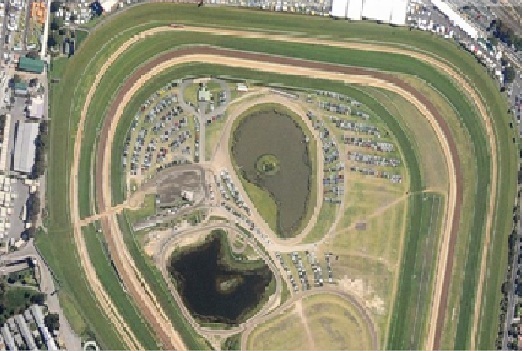
A SINGLE objection has put a $1.8 million upgrade to Caulfield Racecourse Reserve on hold. A Caulfield North woman has lodged an appeal with the Victorian Civil and Administrative Tribunal (VCAT) against the project.

Glen Eira Mayor Jamie Hyams said the appeal could delay the project up to a year.

Mary Healy is opposed to a planned concrete path in Glen Eira’s “precious open space”, and will put her case to the tribunal on May 31. She said she would propose an “alternate” gravel path. “There’s too much concrete,” Ms Healy said.

The appeal is a massive blow to the Melbourne Racing Club, which has hoped to create a public park in the racecourse infield before the Spring Carnival.

It is also a blow to Glen Eira Council, which has for years wanted to increase recreational use at the reserve. The council voted unanimously to grant Melbourne Racing Club a permit in August last year.

The plan includes a lakeside picnic and barbecue area, a large off-leash dog area, walking and jogging paths, a junior soccer pitch, a playground and fitness equipment. The racing club will pay for the design, construction and maintenance of the facilities.

Cr Hyams said the VCAT appeal had “stymied” a much-needed community facility. “It’s disappointing because this was going to be a really good park for the whole of Glen Eira,” Cr Hyams said.

Melbourne Racing Club development and strategic planning manager Brian Discombe said the appeal had delayed the project. “Any delay is not a good outcome for the club or the community,” Mr Discombe said.

PS: The most expensive piece real estate used as a car park. Photo 20th March!

We’ve received the following email from a reader –

In planning permit GE/PP-24534/2012, the Elsternwick Club, already a privileged operator in a residential zone with a 24 hour liqour licence, machine gambling, food and its expensive and non-green bowling green (massive use of chemicals and insecticides at present well beyond that expected in a “garden” region) had applied to Glen Eira Council to have a licence to run a restaurant and cafe business for the financial benefit of its members (who will retain non-exclusive use of the bar and gambling areas as well as the green and surrounds).

The current use is already a burden to particular residents (including the correspondent) in terms of loss of amenity. The officers have advised Council that the matter be considered by the Delegated PLanning Committee tomorrow 28/3/2012, on the basis that the matter is either insufficiently significant of there have not been enough respondents.

Council sent information to the immediate neighbours including… (a) neighbour in hospital recovering from hip surgery, the corner owner spending a large amount on a major renewal without advance warning of the potential reduction of amenity, notices to new residents unaware of the potential impact a fully commercialised business might have in a previously exclusively residential area.

I doubt that anyone else except me saw the second and smaller notice of application to the Justice Dept for a second licence for alcohol provision in addition to the 24 hour existent licence for gamblers and club members (and their “guests”) in time to protest this as well.

My wife is caring for her recently widowed mother who is in hospital after fracturing her hip, I am (phrase deleted to maintain anonymity) and don’t have the time or a great deal of energy to go door to door to arouse local interest in this matter, sufficient to draw actual councillors’ attention to what appears to be an underhand way of achieving what is in reality, a highly significant and fundamental alteration to the character and amenity of our block of Elsternwick.

This area is already well served by the RSL and local pubs and restaurants. What next? Private hotels, bars, home based restaurants and shops, even brothels in our streets?

I doubt that the local business folk know that the club, which has the unique advantage of the attraction of a summer bowling attrraction and open access  machine gambling is intending to take customers from their doors. The only advantaged groups are the club and the council which may be able to charge better rates for a business than for a private club.

Is anybody out there aware of this or concerned about the subtle changes council officers are able to create without necessarily bringing matters to council attention?

The Grattan Institute yesterday released its insightful report Social Cities. We’ve selected a few extracts and ask readers to contemplate what can be done and how well our councillors and planners are moving in this direction – if at all? The full report is available from: http://www.grattan.edu.au/publications/137_report_social_cities.pdf

“…quality of open space is just as important as the quantity. A small park that is well maintained and watered, with established trees to provide shade, vibrant flower gardens for visual pleasure, quality seating and creative playgrounds, will be used far more actively than a park that is far larger but less inviting. In fact without appropriate design, parks can be too big for comfort. In his pioneering work William H Whyte demonstrated that people prefer to congregate on the edges of public spaces (see Figure 18). So if seating and play equipment are stranded in the middle of large open areas they will not get much use, because people will feel exposed and vulnerable. This is particularly true when a park is bounded by busy roads, blank walls and fences or vacant and derelict land.

Some of the most successful parks are intimate mini-parks or ‘pocket parks’. Pocket parks are often created on irregular-shaped patches of land that are too small for building, or on vacant lots between other developments. Sometimes the developers of major projects are required to include pocket parks as part of their planning approval. In response to the sub-prime mortgage crisis, the City of Los Angeles is transforming foreclosed properties into pocket parks with the aim of adding amenity and raising the value of surrounding houses and neighbourhoods at the same time.

In the 1980s in the UK, Northamptonshire planner Alan Teulon pioneered the idea of pocket parks by involving local residents in identifying, creating and maintaining small, local parks. This evolved into the Doorstep Greens program that, for a small investment, has transformed more than 100 neglected public areas into popular green spaces. Strong public engagement and volunteering has helped to keep costs and vandalism down. The process of developing these pocket parks has brought local residents together and helped to foster social connection.(p.23)

Traffic

In his pioneering work on streets, Donald Appleyard showed that residents in a street with light traffic flow (2,000 vehicles per day) had three times more friends living in the street (and twice as many acquaintances) than residents on a street with heavy traffic flow (16,000 vehicles per day).

The heavily trafficked street had little or no sidewalk activity while on the street with light traffic, front steps were frequently used for sitting and chatting, and there was play and casual conversation on the pavement.

More recent studies confirm the impact that traffic has on the time people spend on the street. In New York, 44% of people who live on streets with heavy traffic say they respond by going out less often. This compares to only 7% of people who live in medium traffic areas, and 3% of people in light traffic areas. (p.36-7)

There are many ways to shift the role of streets from the car dominated default. The first and most obvious is to reduce speed limits in residential streets. In recent years the default speed limit in built-up areas in many Australian cities has been reduced from 60 to 50km/h. Road safety experts say Australia should follow the Swedish example and further reduce residential speed limits to 30km/h, a speed below which pedestrians have dramatically improved chances of surviving the impact of being hit by a car.

Perhaps counter-intuitively, a significant reduction in speed limits is predicted to have only a minor impact on average travel times (p.38)

The table below comprises:

  • decisions made by this group of councillors (Dec. 2008  until February 2012)
  • decisions which represent mere ‘tinkering’ with the original applications
  • not included are all those decisions which were simply passed without such ‘tinkering’
  • not included are those decisions which Council did refuse (that will come in a separate post)
  • not included are those decisions which councillors went against officers’ recommendations – (again, a separate post)

Our constant claim has been that this Council is not doing enough to protect its residents – especially in so called Housing Diversity Areas which dominate this table. Reducing the number of units, or even the number of storeys, is applying cosmetic treatment rather than the required radical surgery – the complete makeover of the Planning Scheme.

We further restate our belief that many decisions made over these years have nothing to do with existing planning policy, but resident opposition. It would seem that anything over 40 objections suddenly has traction, especially in 2012 with the election looming large. Our sacrosanct planning policy is  thus receiving a hell of a battering from certain councillors suddenly aware that their jobs may be on the line.

ADDRESS

APPLICATION

DECISION

40   Koornang Rd, Carnegie 5 storeys   & 26 units 4 storey   & 16 units
135 Neerim   Rd., Carnegie 3 storey   & 44 units 3 storey   & 33 units
309   Hawthorn Rd., North Caulfield 2 storey   & 7 units 2 storey   & 6 units
7-13   Dudley St., Caulfield North 4 storey   & 112 units 4 storey   & 100 units
273 Grange   Rd., Ormond 3 storey   & 19 units 2 storey   & 14 units
19 Parker   St., Ormond 4   dwellings 2 double storey and 2 single storey at rear 1 double   storey & 3 single storey at rear
1902 Glen Huntly   rd., Glen Huntly 3 storey   & 10 units 3 storey   & 8 units
29   Holloway St., Ormond 2 storey   & 14 units 2 storey   & 10 units
846-848   Centre Rd. Bentleigh 2 storey   & 14 units 2 storey   & 10 units
341-55   Murumbeena Rd., Murrumbeena 4 storey   & 40 units & 6 shops 3 storey,   23 units & 6 shops.
443-57   Hawthorn Rd., Caulfield 5 storey,   42 units, 7 shops 4 STOREY
400   Dandenong Rd., Caulfield Nth 3 storey   & 18 units 3 storey   & 17 units
894-900   Glen Huntly Rd., Caulfield 4 storey,   24 units & 1 shop 3 storey, 16   units & 1 shop
2-4   William St., Murrumbeena 4 storey   & 41 units 3 storey   & 29 units
111-113   Poath Rd., Murrumbeena 4 storey,   10 units & 2 shops 3 storey,   8 units & 2 shops
15 Dudley   St., East Caulfield 5 storey   & 29 units 4 storeys   & 27 units
17 Railway   Pde., Murrumbeena 3 storeys   & 19 units 3 storeys   & 16 units
243-247   Glen Huntly Rd., Elsternwick 10 storey   & 130 units 8 storeys   & 95 units
41   Murrumbeena Rd., Murrumbeena 2-3 storey   & 59 units 2 storey   & 50 units
385-95   Neerim Rd., Carnegie 4 storey   & 32 units

17 double   storey units (Emily St.)

3 storey   & 25 units

12 double   storey units (Emily St.)

2 Anzac   St., Carnegie 3 storey   & 22 units 2 storey   & 19 units
16 Malane   St., East Bentleigh 2 storey   & 8 units 2 storey   & 6 units
221-29   Glen Huntly Rd, Elsternwick 14 storey   & 3 shops & 109 units 7 storey   & 46 units & 2 shops
22 Station   St McKinnon 7 double   storeys units 6 double   storey units
54-56   Rosstown Rd., Carnegie 5 storey   & 20 units 3 storey   10 units
402-4   Dandenong Rd., Nth Caulfield 3 storey   & 37 units 3 storey   & 32 units
276-280   Neerim Rd., Carnegie 5 storey   & 42 units 4 storey   & 30 units
188   Hawthorn Rd Caulfield 3 storey   & 8 units 3 storey   & 6 units
259-61   East Boundary Rd, East Bentleigh 3 storey   & 9 units & shop 3 storey   & 5 units & shop
127-129   Murray St., Caulfield 4 storey   & 31 units 3 storey   & 21 units


The Mahvo Street development was the second application to be tossed out at Tuesday night’s Council Meeting. A terrific result and we once again applaud the efforts of residents. But, as with the previous Morrice St decision, consistency has never been a hallmark of this council. We note that telling a few porkies to the assembled throng in order to back up spurious arguments also doesn’t hurt.

What needs to be strongly emphasised is:

  • Mahvo Street is anything but INTACT – a word employed by several councillors. Of the 40 plus houses in the street proper, countless are recent developments and multiple single and double storey units are common. There are also old, run down weatherboards just waiting to be picked off by developers.
  • Council’s own Online Planning Register reveals that from March 2000 there were 20 applications for this street. 9 were for 2 lot subdivisions. Of these 20 applications only 2 were refused and 1 withdrawn. Far from an ‘intact’ area!
  • The claim that it is ‘predominantly single dwelling’ is thus also dubious. What WERE once single lots have now been subdivided and replaced by two and more dwellings Just under half of the street features these subdivisions and most are now double storey dwellings.

When councillors get up and propagate falsehoods in support of their arguments, then there is something drastically wrong with our council, our system, and the ability of these people to represent us! Either these councillors never visited the street and are relying on dubious reports, or they are deliberately misrepresenting the situation. Neither possibility is enough to excuse them.

We provide our ‘evidence’ below. These photos were all taken on the 22nd March, 2012. Two photos feature the view facing onto Centre Rd and are taken from Mahvo Street itself. There were many other residences which included long driveways with units nestled in the back which we didn’t bother to photograph and encroach on people’s private property.

This slideshow requires JavaScript.

As for the ‘debate’, here’s what happened.

Lobo moved the motion to refuse on the grounds not compatible with urban and neighbourhood character, mass, bulk, streetscape, neighbourhood character, set back, parking, design, ‘detrimental impact’ on surrounding areas/neighbours. Magee seconded.

LOBO: ‘predominantly single dwelling’ (street and family oriented). Stated that the planning conference ‘clearly showed the troubled state of mind of the residents’. Claimed that this proposed development is ‘nothing but insane’ and a ‘monstrosity’. Height will cause lack of privacy and enjoyment of lifestyle. Also will be ‘traffic chaos’ because of proximity to Centre Rd, train station and bus stops. Ambulances therefore wouldn’t have a clear run with all this congestion and people parking on the street and nature strips. Flow on effect to other streets and would set a precedent ‘for other builders’. Impact will be on streetscape and the ‘investment’ of people. Size of objectors must be ‘acknowledged’. Government’s attempt to have 5 million people settled in Melbourne shows ‘who cares a rats for the value of the property’. Stated that the government needs to get its act together and that ‘before long’ film producers will be making the equivalent of Slum Dog Millionaire in Melbourne.

MAGEE: ‘Mahvo street at the moment is INTACT’ unlike Lillimur St. There’s an ‘opportunity’ to save ‘not just this street but’ (most of Bentleigh and East Bentleigh). Said that because these are in an ‘urban street’ he would ‘treat them as a Minimal Change Area’ (because) ‘there’s no difference from this house to my house up in East Bentleigh’…..’deliberate overdevelopment of this site’…’beginning of the end for this street’ (if we let developer go through with this). Claimed that this was the perfect example of ‘inappropriate development’ and that at last election councillors had vowed to fight this..’Let’s save this street, let’s save Bentleigh, let’s save East Bentleigh…’

LIPSHUTZ: Admitted to chairing the planning conference and hearing objections. Stated that as councillors they have to ‘approach this from the point of view of planning law’ (disagreed with Lobo’s claim about loss of value of property). Reminisced about when he was growing up there were many red clinker brick properties in the street and on a recent visit to that street they were now gone, and ‘street is ruined’. So with a street like Mahvo, which is ‘INTACT’, ‘I think that’s an issue that has to be considered’. Thought that 3 stories was too high although thought that the street would ultimately have development….’this development is not sympathetic’ to neighbouhood. Spoke about traffic and lack of trees that were ‘on paper’ in the plans but weren’t there in reality. In the end it’s an ‘inappropriate development’.

FORGE: It’s a Major Activity Centre and there’s a ‘problem with grade separation’ because of the station, leading to terrible traffic jams. 3 storeys would set a precedent. Knows the area very well and until there’s grade separation then there’s going to be ‘constant gridlock’. Safety is another concern.’ we have to take care of the local community….overdevelopment’.

HYAMS: Mahvo St is in an ‘urban village’, on regular sized lot, ‘there’s nothing like it in the street at the moment’. Stated that even ‘in an Urban Village we should still be respecting’ neighbourhood character. He and people are ‘looking for sympathetic development’. When he visited there were cars coming down both ends of street and they didn’t have ‘anywhere to go’ because the street is ‘narrow’ and ‘parked out’. Denied the rumour that council wanted to change the planning for that street and that policy has been in since 2004 and ‘only after….extensive consultation’ of 4 years.

TANG: ‘wrong development for the block’. Disagreed with some points such as property values and said that 3 storeys would increase value of properties because of development potential. Tribunal would reject this argument. Reminded councillors that ‘our policy promotes change in this area’….’Mavho st residents will have to accept more applications’…‘we can’t say ….that it’s not (entirely our) fault’ (since we’ve set the areas where there will be development). ‘There will be change’….(and that some will) ‘go into residential streets like Mahvo’.

LOBO: thanked Tang and Lipshutz. Said he understood the policy from 2004 but that some residents weren’t living here in 2004. Admitted that he himself ‘didn’t know what was happening in 2004’. This development will create traffic problems and should be considered.

CARRIED UNANIMOUSLY

COMMENT: When countless other applications have NOT BEEN REJECTED OUTRIGHT and mere cosmetic conditions put on (ie 8 storeys instead of 10; 8 units instead of 12, etc) and the consistent argument for such decisions is that VCAT will permit what the developer wants, if not more, then all we can conclude is that elections are indeed around the corner! If these councillors are going to reject applications outright, then at least be consistent in both words and actions for all unreasonable applications!

It’s  quite fascinating what a packed gallery of over 150 people, plus formal objections totalling close to a hundred can do to certain councillors. They miraculously discover that they are not bereft of social conscience. ‘Residential Amenity’ become the buzz words for the night and the constant refrains of the past – such as ‘we can’t refuse because the developer will go to VCAT and get more’ – is suddenly swamped by concern over noise, environment, traffic, parking, mass, height, etc. Instead of passing development applications with conditions, last night saw the outright rejection of 2 such proposals. And not a whimper about VCAT, or administering ‘planning law’, from previous doom sayers – Lipshutz and Hyams. Esakoff was absent!

Please note: we are extremely pleased for the objectors’ and admire the obvious effort they’ve put in. All we’re commenting upon is the lack of consistency in the arguments presented when weighed up against previous contentious applications. It is very definitely an election year!

Morrice St Child Care Centre

LIPSHUTZ moved motion to refuse planning permit on grounds of not meeting child care policy of planning scheme; ‘detrimental impact’ of traffic; noise. Lobo seconded.

Started off by stating that it’s in his ward and that he knows the area very well and knows both ‘many of the objectors’ and ‘the developers’ so he’s got a ‘totally open mind’. Admitted that there was a ‘need for a childcare centre in Glen Eira….(and if this was positioned on Glen Eira Rd then he probably would be voting for it)…’but it is in the wrong place’….(Morrice St is small, residential, and plenty of schools near by and ‘traffic flows through the side streets’….(Stated that there was staggered traffic peaks but that there would still be an impact on traffic and ‘most days there has been a lot of traffic’….(and this will) ‘impact on a quiet residential area’…..’inappropriate’…(basement car parking also not good for entry and exit. Stated he’d like childcare centres throughout the municipality ‘but they’ve got to be in the right place’…(Said that entrances aren’t in Glen Eira Rd. because Vic Roads wouldn’t give permission)….(asked whether he ‘wants’ a childcare centre of 120 kids or) ‘do I want to adversely impact on the neighbours…..simple. It’s a high quality residential area….(and doesn’t want traffic to disrupt people’s amenity). (Applause)

LOBO: Read out from the planning scheme about developments having to be ‘sympathetic’ to the local environment. ‘If this was fair dinkum (then the proposal) would not be the subject of debate this evening...(said that the plans are incompatible with surrounding houses and if allowed would) ‘destroy existing streetscape’. Mentioned that it was a ‘commercial enterprise’ and didn’t fit in the street. Said that traffic is already ‘chockablock’ and if more are allowed then the area will become a ‘living nightmare’. Spoke about the times he had gone down to view the area and traffic and that people are concerned about double parking, traffic, and 3 playgrounds including a rooftop that will create ‘noise’. Named other child care facilities already close by …’business enterprises….should go in suburbs where we have a dearth’ (of these facilities). Said that if approved then the only solution to the traffic problems would be by becoming ‘spiderman’. The decision would be important for lifestyle of residents for the future.(Applause)

PILLING spoke against. Supports ‘good planning policy’ and ‘community child care centres’ and ‘good residential amenity’. …’I believe that all three have been supported by’ (the recommendation of officers). …’always a balancing act’ (and the developer has tried hard to) ‘get balance right’. (booing)

HYAMS: tried to stop booing by saying that he didn’t mind heckling but he thought that councillors ‘had a right to express their views’

MAGEE: Started by asking where childcare centres should be placed. Since Council doesn’t have the money to keep ‘building them, we are in a way reliant on developers’….’disappointing when it has such a great impact on local amenity’….’we have to weigh up one against the other’. Stated that every centre and school is in a residential area. Had an email from a resident about traffic so he went down to view the area at peak hour. On one occasion only 7 cars left the street and on another only ‘9 exited and 1 entered’. ‘I sort of wonder where the grid lock is’. Appreciated the impact but also ‘concerned’ about population growth in the municipality ‘what do we do?’…(there are 15,000 to 18,000 children) ‘council has to weigh up where do we put them’ and when ‘developers come along’ and are willing to put in ‘6 or 7 million dollars council has to look at this seriously’….’is the noise worth the benefit……do we send out children to the industrial area of Moorabbin….we have to put them where people are….(the need is weighed up against amenity and Council doesn’t have the money) ‘and I must put the children of Glen Eira ahead of residents’.

FORGE: Went to school at Shelford and Caulfield Grammar….’even back then it was a very very busy site’. Had spoken with headmistress of  Shelford and the most important thing was ‘safety for the children’. ‘To me (with buses) it is an accident waiting to happen’….’a great idea but the wrong place’ (applause). Spoke about a letter from a resident who does shift work and how the noise is ‘intolerable’…’blood curdling screams’. Shelford has got a few vacant places but ‘not in competition with local areas’ (Applause)

TANG: ‘vexed question’. Said that the issue is ‘community benefit versus community benefit’. ….it’s about our community’ (including children and it’s this versus residential amenity). Said that the decision ultimately hinges on ‘traffic and parking’ and on the other grounds supports the provision of childcare. Mentioned that there is a policy because ‘we want to provide a framework’. Argued that the situation is bad at the moment because of the schools and existing parking situation ‘but it won’t be this development that ruins residential amenity….this development will not have an unreasonable impact …based on traffic and parking….we don’t throw out the baby with the bath water and reject the proposal…..I fall just on the side of it being acceptable’. Had further conditions that if knocked back he believed would ‘help ameloriate’ the noise impacts. Difficult because of ‘competing interests, but in my mind competing community benefits’

PENHALLURIACK: ‘this should not proceed’ (Applause) Spoken to many of the people involved and developer. ‘The problem lies squarely with our planning regulation….this should not go in this area’. Read a resident’s letter from someone who lived at the back of a child care centre and which outlined the noise and ‘screaming children’ and ‘cleaners’ at night. The letter went on to say that even when complaints are made the community’s feelings are never taken into account. The writer would never live near a childcare centre again. Penhalluriack spoke about how people enjoy their back yards and being able to park on the street and if the project goes ahead it will ‘threaten all that’. Said that child care centres are important and needed but ‘in the right location’. (Applause)

HYAMS: spoke about non residential uses policy. Said that ‘benefit to the community is a legitimate aspect’ but planning issues also need to be taken into account. ‘tough decision….I do come down on the side of councillors who are against’ (APPLAUSE). Gave other reasons such as the size of the block and that it extends way down Morrice Street; with Lobo saw 6 cars trying to get out of the street. ‘there certainly are traffic concerns’. Also mentioned that the buildings are ‘slightly higher than is permitted by the codes’.

TANG then jumps up and wants to ask a question. Hyams permits this. Tang asks Penhalluriack why he said that ‘council policies are wrong’ especially since Council has adopted unanimously the recent Child Care Policy…’what particularly should Council do to amend its policy?’

PENHALLURIACK: answered that the central point is whether uses are ‘sympathetic with the neighbourhood’ and that’s a judgement that councillors need to make ‘but so does Mr Akehurst’s department in their advising future applicants’. Said it has to be discretionary and that ‘we are part of the community’ when these sorts of decisions are made. Said that he’s suggesting that the system needs to be clearer because this ‘poor developer has spent a lot of money, a lot of time….going as far as this and it could have been nipped in the bud’ through discussions with councillors and the planning department.

LIPSHUTZ: Agreed with Tang that it’s about ‘community benefit’. Stated that centres have to be where the people are but didn’t agree with Lobo that there are ‘sufficient’ centres …(but the issues is ultimately about the traffic) Said that the traffic report by the developer and council ‘must have been taken on Friday night’ (when there were no cars. He goes every day and) ‘I can see where the cars are…on most days there is a great deal of traffic in the area….balancing act…’the other side is….I’ve looked at it and I think the community benefit is on the other side…amenity (is that you) ‘dont’ want a facility like this in this area’. (if on Kooyong Rd, Glen Huntly Rd, then that would be okay but not Glen Eira Rd.)….’confluence of issues’ (which means that this will be a very)’poor development in this area’….appropriate approach is to reject it’. (Applause)

MOTION CARRIED – VOTING AGAINST WERE: TANG, MAGEE, PILLING


« Previous PageNext Page »