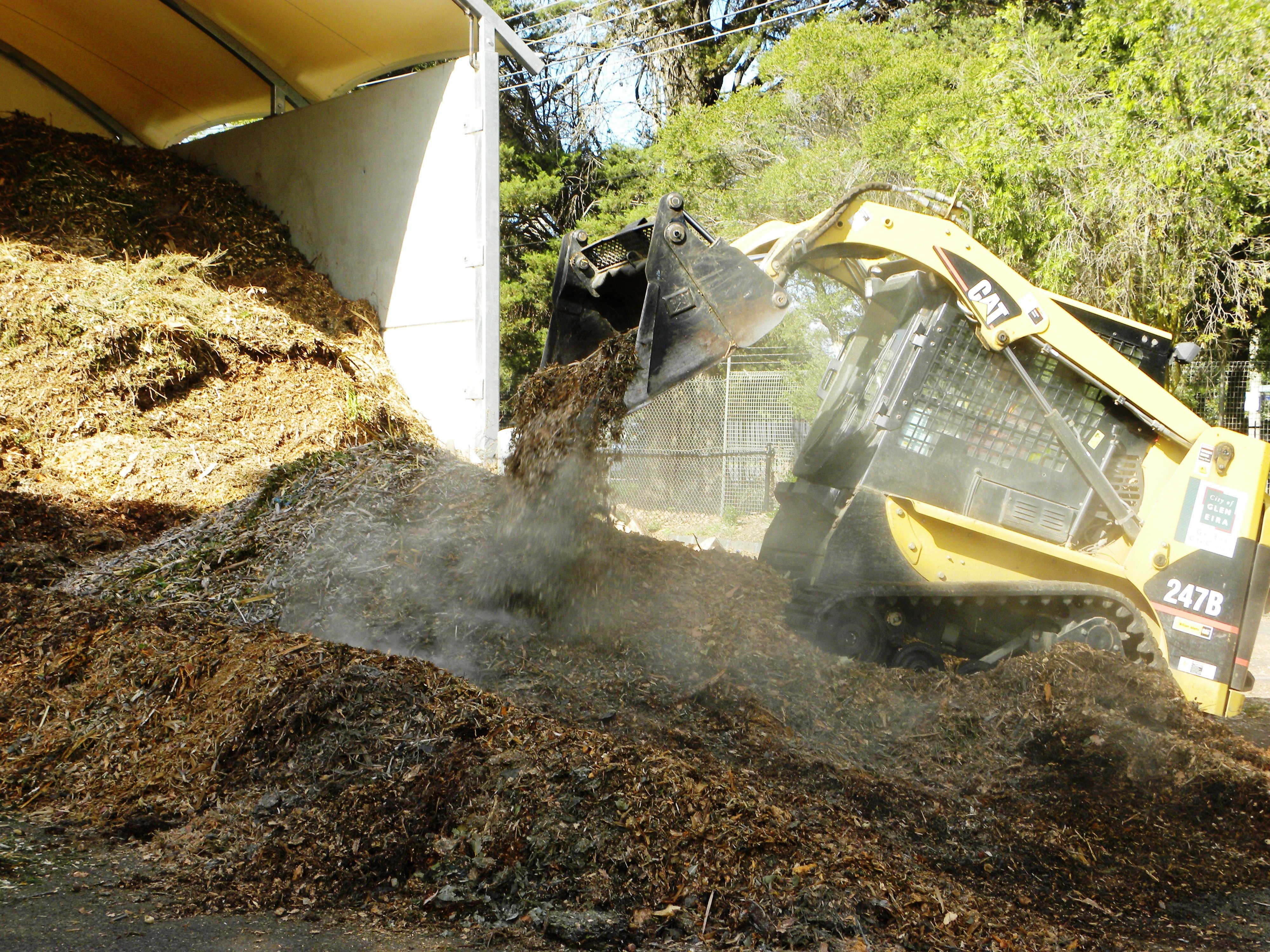
GE Service Performance


Passing the buck  

I REFER to your front page article (‘‘Drain blame game’’, Leader, March 2). I live in Grange Rd, Carnegie, and have raised this issue with the council and I got a letter back saying the issue was being investigated. I was not given a timeline as to when I would be given the council’s findings, or what they intended to do about it. It appears to me Glen Eira Council and Melbourne Water will both play the pass the buck on this subject. Grange Rd has no drains on the side I live on. But who is responsible for this – council or Melbourne Water? 

Cramming has to stop  

GLENHUNTLY Rd is already overcrowded with cars (‘‘Still no to Coles plan’’, Leader, March 1). The trams are also overcrowded. We cannot keep on with this endless cramming in of more people. It is wrecking the whole character of the area as well.  

Time to Wake Up 

THIS sort of excessive development should never be allowed (‘‘Still no to Coles plan’’, Leader, March 1). Wake up, council and State Government, we don’t want this!

David a great MP  

DAVID Southwick was out there when flooding hit Caulfield, clearing drains for flooded-out residents and helping locals to get other essential assistance (‘‘Big pride, little policy’’, Leader, February 22). This is typical of David: when someone needs help, he pitches in to make things better. Many throughout the community already know about his generous spirit and ability to cut through the static and get things moving. That is why so many local people backed him so enthusiastically when he first ran for office in 2004, and why they have stuck with him ever since. He will be a great member for Caulfield.

A media release from Andrew Robb, MP

Defence against disaster in Glen Eira

04-March-2009

Goldstein Media Releases, Environment, Funding

Glen Eira City Council has been allocated $40,000 to undertake a stormwater flood mitigation study as a part of the Government’s Natural Disaster Mitigation Program.

“The Glen Eira study aims to accurately assess the level of flood risk across the municipality, identify priority flood protection works and incorporate land use and development overlay controls into Glen Eira City Council’s planning Scheme.

“Competition for these funds is fierce, and I congratulate the Council on its successful application,” Andrew Robb, Federal Member for Goldstein, said.

For more information about the Natural Disaster Mitigation Program visit the Emergency Management Australia website:
http://www.ema.gov.au/agd/ema/emainternet.nsf/Page/Communities_Natural_Disasters_Australian_Government_Assistance_for_Natural_Disasters

Media contact: Skye Buttenshaw, 9557 4644

QUESTIONS:

1. Where is the report?

2. What were the outcomes/actions resulting from this report?

3. What if any changes were made to the Planning Scheme as a result of this study?

4. What has eventuated as a result of the other grant listed – ie. 2006: $50,000 for Natural Disaster Mitigation Programme – stormwater disaster risk management

5. $90,000 grants in the past 5 years for Storm Water mitigation/risk management – what has this council learnt that could have prevented the Feb 4th floods? – or is this simply a case of $90,000 down the drain?!!!!

There’s a new Media Release  put out by Council which states: 

“Glen Eira City Council is pleased to report that all children have been offered a place (for 4 year old kindergarten) — including the nine children who have decided to remain on the waiting list for their first preference. Glen Eira Mayor Cr Margaret Esakoff said 736 places have been accepted.”

If true, then this is indeed fantastic. However, there are a few points that are not made clear and which perhaps cast some doubt on the veracity of the above claim.

As late as June 2010, the Age carried this paragraph in its story of kindergarten shortages: “Glen Eira mayor Steven Tang said 285 four-year-olds would miss out on a kindergarten place if no further funding were provided. In order to provide the 15 hours, Glen Eira would need $4 million to build six new kindergartens and replace another facility.”

The Caulfield Leader (18th May, 2010) also said – “Mayor Steven Tang said there were fears three-year-old kindergarten places would also be cut.” And “Murrumbeena Kindergarten teacher Michelle Ball said parents and teachers were concerned the extended hours could sacrifice three-year-old kinder children”.

From Council’s own commissioned report  ‘Universal Access’ there is the following paragraph:

“The clear view of the Glen Eira community is that implementation of 15 hours universal access should not be at the expense of the current service system (particularly three year-old kindergarten) and additional kindergarten facilities should be built to meet this new Council of Australian Governments (COAG) policy requirement. Three-year-old
kindergarten is seen as important in Glen Eira, and is in high demand. Many of the kindergartens that offer three-year-old kindergarten programs report extensive waiting lists. Any reduction in the overall availability of three-year-old programs in future would exacerbate already excessive demand.”

We therefore ask:

  • How has Council achieved such a remarkable turnaround in the space of 6 months?
  • What has happened to 3 year old kindergarten places? Have these been ‘sacrificed’ in order to fill 4 year old places?
  • What other cost cutting has taken place in this ‘achievement’?
  • Is the Media Release merely another example of not telling the whole story?

Council slashes funds

A lobby group finds finance for childcare centres has been cut by $400,000

 FREEDOM of Information documents obtained by a childcare lobby group show Glen Eira Council has been stripping funding from childcare centres since 2006.

Save Local Childcare Coalition spokeswoman Bronwyn Burton said the documents show ‘‘the council has slashed a $500,000 investment in 2006/07 to $95,000 in 2009/10’’.

A petition to save the Elsternwick Children’s Centre will be handed to the council this month.

More than 900 residents and traders have signed the petition after the council announced the closure of the Kooyong Rd centre in May. The building’s owner, Alfred Health, said it could not extend the centre’s lease beyond December. The council, which has ruled out buying the building or finding a replacement, voted in October to lobby the State Government to ensure land continued to be used for child care.

In a letter sent this month, Glen Eira Mayor Margaret Esakoff reiterated the council’s interests to Alfred Health. Alfred Health chief executive Andrew Way said the board of directors was ‘‘cognisant of the problems caused by the uncertainty’’ around the centre. ‘‘The board of directors has asked me to explore with the Victorian Department of Health ways in which this uncertainty can be overcome more quickly than the currently anticipated timescale of June/July,’’ he said.

 COMMENT: Our new members of Parliament should take careful note of this report. Glen Eira’s tactics have always been to ‘pass the buck’ onto State and Federal Governments or taking the Clayton’s approach of ‘action’ such as ‘advocating’ and ‘making representations’ to authorities.  Perhaps if State and Federal funding to Council was also cut by $500,000 then the blame game would stop and Council would be forced to budget appropriately and responsibly.

+++++++++++++++

Drain blame game  

Climate changes after flow map revealed 

GLEN Eira Council has slammed Melbourne Water’s drainage system and defended its response to flash floods which wreaked havoc across the city. Mayor Margaret Esakoff has called for a r eport into the February 4 event, and is seeking ‘‘urgent attention’’ from the water authority and the Government to improve main drains to reduce repeated flooding. 

The report will cover damage to Glen Eira properties, response times, Melbourne Water and the council’s drainage maintenance programs and Melbourne Water’s plans to reduce flooding in riskprone areas. It follows nearly a decade of council lobbying after Melbourne Water released a map of areas which would experience ‘‘overland flows’’ during intense rainfall because the capacity of the drains would be exceeded. 

‘‘The flooding of housing and businesses which occurred on February 4 closely matched this map,’’ a council report said. More than 100 Glen Eira homes were significantly affected. Cr Michael Lipshutz said Melbourne Water needed to ‘‘get its act together’’. ‘‘We are seeing climate change and we’re seeing more flooding in our areas,’’ Cr Lipshutz said. 

Cr Esakoff had admitted that the council had not adequately responded after outraged residents slammed its ‘ ‘ slow and uncoordinated’’ reaction. But at last week’s council meeting, she did a backflip, saying: ‘ ‘ Since then, information reviewed showed that this was not the case. The council was not slow to respond’’. But Melbourne Water floodplain manager Phillip Neville said Melbourne’s drainage system ‘‘does a great job’’. ‘‘We saw in excess of a one-in-500year storm in some parts of Melbourne,’’ Mr Neville said. ‘‘ An event of that magnitude would stretch the capacity of any drainage system.’’ 

THOUGH authorities have touted the recent flood as a ‘‘one-in-500-year storm’’, Glen Eira residents will tell you otherwise. Downpours cause repeated flooding in parts of the municipality, including the underpass on Normanby Rd near Caulfield racecourse and Boyd park in Murrumbeena.

Councillor Michael Lipshutz said his neighbours had been flooded four times in 12 months while Cr Jim Magee’s Bentleigh street has been flooded twice.  

In 2000 Melbourne Water, responsible for nine drainage systems in Glen Eira, released a map identifying areas expected to flood because the capacity of drains would be exceeded. Those areas include streets west of Orrong Rd in Ripponlea, streets either side of Hawthorn Rd south of Glenhuntly Rd, between Glenhuntly and Koornang roads in Carnegie, and between Murrumbeena and Poath roads in Murrumbeena. Melbourne Water floodplain manager Phillip Neville said when new properties were built, ‘‘ they’re built to a standard which would lessen the consequences if flooding does occur’’

COMMENT: We repeat our previous questions. How much of the flooding is a result of lack of maintenance of COUNCIL’S DRAINS and not Melbourne Water’s? How much of the flooding could have been avoided? Will Council produce a map of the drains under its responsibility? And if Council performed so ‘adequately’, then surely it can’t be mere coincidence that in the Tender Section of Saturday’s Age newspaper we find this advertisement: “Contract No.: 2011.014 Provision of Reactive Drain and Pit Cleaning Services

Requirement: Provision of stormwater drain/pit cleaning, jetting and root cutting services using a purpose built combination vehicle to supplement Council’s own service. Three year contract with an option on the part of Council to extend for a further period of two years”.

 +++++++++++++

Letters to the Editor

Take public open land discussion seriously  

GLEN Eira Council (councillors and administration) should be publicly pilloried for their appalling response to the Victorian Environment Assessment Council discussion paper on public open land. 

Glen Eira, which has the least public open space in Melbourne and numerous highly paid executives, should have been able to put together a detailed submission that was more than a hastily written onepage letter that lacked substance. Neighbouring councils and individual residents prepared detailed submissions – why didn’t Glen Eira Council?


Editorial: We have right to a review  

RATEPAYERS across Melbourne have a view about how much their council chief executive is paid. It is one of those perennial topics that takes on a particular pungency when rates go up. Now, one council has decided to approach the State Government to review CEOs’ salaries. 

The decision by Hobsons Bay Council sets up a debate about what constitutes a fair deal for those nonelected officials who run our councils. It seems contrary at best that Melbourne City Council’s CEO package of between $360,000 and $379,999 is more than either the prime minister or premier’s wage.

The average council CEO’s salary package is about $307,000, up almost $40,000 in four years. 

These are big packages that are designed to ensure councils attract the best people for the job. While most ratepayers understand the sentiment, they would quite rightly argue that capping a salary at even $250,000 is not likely to downgrade the position much at all. At a time when thousands of households are struggling, it is entirely appropriate that CEO salaries be reviewed. 

But to make no attempt to review the generous packages looks like a lost opportunity to help increase council accountability and transparency at the corporate level. 

Letter to the Editor: Wash excuses down drain  

GLEN Eira Council should better represent the needs of our community. The areas of Ormond and McKinnon flooded by storm water on February 4 are known flood areas. Our council should have been more proactive in preventing an inundations of this scale (‘‘Storm devastation’’, Leader, February 8).

If the contention is that Melbourne Water did not upgrade the drainage, why did Glen Eira not advocate more strongly for this to be done? Why did Glen Eira not put the drains in itself? Enough of the cost-shifting excuse. 

Why was the drain over which the Frankston railway line runs not adequately maintained? If this is not directly a Glen Eira responsibility why was it not advocating for this to be done by the responsible authority? Ironically, three days later, council contractors were blowing grass clippings into the drains just to clog them up again!

People’s lives and livelihoods have been severely impacted by this extreme event the scale of which could have been prevented with a more proactive council.

We need a council that is less obsessed with cost shifting and more interested in representing the needs of the community that it is supposed to represent.  Further, our council needs to remember that Glen Eira’s boundary extends south of North Road.

Item 9.7 – Flooding – Melbourne Water Overlay

We’re told the purpose of this paltry one page report is to “recommend further representations to Melbourne Water to improve drainage in areas susceptible to flooding” – in other words, another example of passing the buck, or the pretence of doing something following last Friday’s disastrous flood and the damaging media in this week’s Leader! The emphases throughout is on ‘MW drains’ and Melbourne Water responsibilities. What is unclear from the included map is where MW responsibility lies and where Council responsibility lies. The SBO came into force in 2002 and since then it appears that all Council has done is “made representations to MW asking it to improve capacity in order to avoid flooding of housing and businesses during intense rainfall.” 

The recommendation is: “That Council make further representations to Melbourne Water and to the Government to improve Melbourne Water main drains to reduce the risk of flooding of housing and businesses”. In other words, more of the same!!

Far too much is left unanswered and unaddressed here. Firstly, how much of the flood damage is due to the drains ‘capacity’ to handle the volume of water, and how much is due to the lack of maintenance by council and its role to clear and clean drains? If the drains were largely free of debris, could much of the flooding have been avoided? Once again we have reports handed down that contain no detail, no facts or figures. All is smoke and mirrors and passing the buck  It is far easier for council to simply lay the blame at the door of Melbourne Water and that’s the end of the story! Yet, on council’s own website there is this notice:

Local drainage network
   
Council looks after approximately 450 kilometres drains and 16,000 drainage pits. Council undertakes a range of services to ensure that stormwater is discharged effectively throughout the City. It not only maintains the existing drainage infrastructure by cleaning and repairing Council pits and drains, but also by upgrading or replacing them as necessary.


http://www.gleneira.vic.gov.au/Page/Page.asp?Page_Id=222&h=1

The 2008/9 Annual Report tells us that of this 450 km of drains only 30 km were cleaned. And in 2009/10 the huge achievement of 25 km was reached. We figure that at an average rate of 30 km per year, this should take about another 10 years! Again by way of contrast, Bayside has a ‘Drainage Management Strategy’ as well as a ‘Municipal Emergency Recovery Plan’ – all available online. All Glen Eira can tell us is that it will continue to ‘update’ its Municipal Emergency Plan (Item 9.8) and that the ‘Plan is available for Councillors to view in the Councillors’ Room.” As for future ‘action’ – there is this ‘after the horse has bolted’ recommendation – 

“During 2012 the MEMPC plans to develop a flood emergency sub-plan for the MEMP as well as review existing pandemic and heatwave sub plans” 

What’s wrong with 2011? Or does Glen Eira live in the hope that nothing will happen in the next 2 to 3 years that would again reveal the shortcomings of maintenance and emergency planning?

Floods fallout fury in McKinnon

Moorabbin Leader: 16 Feb 11 @ 07:00am by Jessica Bennett

OUTRAGED residents in McKinnon and Ormond have slammed Glen Eira Council’s reaction to flash flooding that has left them homeless and facing a mammoth clean-up.

More than 40 homes were extensively damaged and the streets Station Ave, Murray Rd, Cadby Ave and Wheeler St resembled a war zone when flash flooding hit on February 4.

Twenty-five residents attended a heated meeting with Glen Eira Council last Thursday.

Some were reduced to tears over the extent of their homes’ damage.

“There are fences down, couches and mattresses on the street and rubbish strewn every where,” Cadby Ave resident Fran Harkin said.

Ms Harkin and her husband, Tim, had spent six months renovating their home and were due to move in the day after more than 100m of rain hit the area.

“In the street the water was up to our chests and cars were floating away, ” Mr Harkin said.

“Our house will be uninhabitable for another six months … the damage will be about $150,000-$200,000.”

Residents at the meeting slammed the council’s reaction to the flooding, claiming it was too slow and not co-ordinated.

“No one from council came to see us until Thursday,” Ms Harkin said. “They did not recognise this as an emergency and failed to respond in time.”

Resident Chris Spencer slammed the council’s maintenance of stormwater drains, which he said exacerbated the flooding.

But council engineer Peter Waite said two of the drains were operated by Melbourne Water, which had refused to pay for upgrades.

Mayor Margaret Esakoff admitted the council had not adequately responded to the floods.

“We have relied on a chain of reporting … that feeds down to us and the communication has failed somewhere,” she said.

“We understand this is a devastating time and we will do everything we can to meet the needs of the people whose lives have been turned upside down.”

We reported last year on the number of officers receiving over $200,000 per annum in Glen Eira as opposed to most of our benchmarking councils. We’ve repeated the exercise for 2010 and note that nothing much has changed. Our figures come from the published Annual Reports of the various councils, as well as the latest ABS population predictions for each of these areas for 2009. The numbers exclude CEO salaries.

Residents need to ask themselves why other councils can apparently manage with a leaner and less top heavy bureaucracy?


Glen Eira

Stonnington Monash Kingston Bayside Port Phillip

Size(sq.k)

38.7 26 82 91 37 20.62
Pop. 133,000 99,000 176,000 147,000 96,000

97,000

Officers over $210,000 5 1 1 2 1

1

We thought it would be instructive to see how Glen Eira may have changed over the years – to discover whether processes, services, and governance practices have actually improved in the past 6 years. Our guide has been public and councillor questions dating mainly from 2004. We conclude that basically residents have the same concerns today as they did six years ago – childcare, aged care, openness and transparency, effective communication/consultation and planning issues. Reading these questions it is obvious that nothing much has changed in Glen Eira – except that public questions are no longer taken on notice. The quality of current answers however is another issue!! These questions provide a sad commentary on how little has actually been achieved.

“As Council has made a profit from selling of aged care facilities within the City and not actually increased places in the City, I ask what is being done with the profit and further what is being done to seek government funding in order to increase aged care facilities in the City?” (26th May, 2003)

“What are Council’s public policy objectives for child care and how do they achieve them?”(3rd May, 2004)

“The treatment of Childcare under the State Government’s new competitive neutrality policy requires the implementation of a public interest test prior to the application of CN pricing because of the inherent public policy issues associated with childcare.Can Council please explain why it has failed to undertake a public interest test prior to applying CN pricing policies to childcare services?” (3rd May, 2004) 

Cr Sapir referred to a public interest test and asked if one had been carried out and if so to what degree. She further asked; “what consultation process did Council take to advise parents that there was a proposed fee increase”? (24th May, 2004) 

“Why Minutes of Council Meetings are not available for distribution on request at the Caulfield Library? Should not that be part of standard policy of engagement of the community? Ready availability of such documents should add to the proper governance of the Council?” (24th May, 2004) 

“Can you please advise why did the Council cut down several 25 to 30 metre high trees on the corner of Jasmine and Birch without consultation with the near byresidents?” (9th Feb, 2004) 

“Since the Glen Eira Council has decided to stop subsidizing childcare centres with ratepayer income in the next financial year, will Glen Eira ratepayers see a reduction in rates as a result?” (22nd March, 2004) 

“Re Council Statement of Financial Performance to 29 February. Can you please reveal the source or sources of the above budget revenue of $954,000 from ‘other’sources in above budget? Have our drillers struck oil?” (22nd March, 2004) 

“How does Council justify that public questions that were asked in March 2003 have received a response on 6 April 2004 advising that the questions do not conform with Council’s public question time procedure. Please provide appropriate and specific explanations as this does not comply with acceptable time frames to me as by now I have given up on getting adequate answers from Council.” (13th April, 2004) 

“Why won’t Council undertake a ‘Public Interest Test” on childcare to assess community response?” (15th June, 2004) 

“The Community Plan that was passed this evening is supposed to provide a plan for the community to use as a means of measuring Council’s performance up to 2010. The indicators for 2010 however need further clarification. Which 3 park masterplans are intended for development? What does Council mean by consulting with the University? What are the character amendments that are to be adopted?Which community centre is to be built? What about the 3rd community centre? What are the implications of keeping rates to at least 10% below our 7 Benchmark Councils? These are but a few questions that need to be answered in a Community Plan that purports to be a vision for the future?” (15th June, 2004) 

“We would be most grateful if a meeting could be arranged with relevant councillors and staff (prior to the release of second round offers scheduled for 27th August), in order to discuss the Council’s enrolment policy which fails to give priority to the children currently attending ‘3 year old kinder’ and who wish to continue on with their pre-school education at the same kinder the following year?” (16th August, 2004) 

“As Cr Erlich has observed the report to tonight’s meeting is interesting but unless a measure of input is used together with output, it is largely meaningless from the point of view of effectiveness. Will Council consider reporting the appropriate ‘INPUT’ as well as ‘output’ in future service reports?” (6th September, 2004) 

 “Will the Council apply its generous concessions given to tennis clubs to childcare centres and if not could it please explain why the council’s policy that services used by a minority of the community should be cost neutral and not subsidized by ratepayers, applies to childcare centres but not tennis clubs?” (27th September, 2004) 

“The Agenda papers for Council Meeetings have for some time included public questions and answers. I note that the Agenda papers have, for the last 2-3 meetings, not included Public Questions and Answers. Can Council explain why this is so? Is there anything preventing Council from continuing with this practice?”(8th November, 2004) 

“Of all C type Amendments proceeded with a statutory process:1. How many have used the full statutory process of 6 steps? 2. How many use only 2 steps? 3. How many used broad community consultation prior to step 1 of the statutory process? and 4. How many used a public discussion paper as part of broad community consultation prior to step 1 of the statutory process?” (29th November, 2004) 

“Will Council put the proceeds from sale of Council land toward purchase of alternative open space in Glen Eira, & that purpose only.” (29th November, 2004) 

“The Minister for Planning announced that Councils may apply for a number of interim height controls to provide for greater certainty for residents & developers. Will Council take up on this initiative?” (29th November, 2004)

Moorabbin Leader, Nov.17th 2010

Fury over attack in park

Residents say their concerns over Memorial Park safety after dark are ignored

 McKINNON residents are outraged a man was attacked and robbed in Memorial Park after their calls for lighting to be installed in the park were ignored. The 27-year-old Malaysian man was assaulted by a group of men while he was walking through the park, at the corner of Wattle Grove and McKinnon Rd, about 12.45am on Saturday, November 6. One man punched the victim in the face, and when he fell to the ground two other men began kicking and punching him before stealing his backpack. 

Embona Taskforce Sgt Andrew Collison said police did not believe the assault was racially motivated. But the incident has appalled residents, who say they have asked Glen Eira Council for years to put lights in the park to improve safety. The park’s complete darkness provided a ‘‘haven for scumbags’’ resident Annie Morrell said.

‘‘This attack could have been prevented,’’ Ms Morrell said. ‘‘I rang the council and asked them to do something about it and I was brushed off. It’s ludicrous. Someone will be attacked again.’’ Kate Deneiffe said she wrote to the council four years ago asking for lighting be installed at the park. But director of community relations Paul Burke said one reason the council did not install security lighting in parks was because it could ‘‘encourage the very antisocial behaviour we all try to discourage’’.

‘‘Council is working with the Caulfield police on this matter and we will have regard for any suggestions that they may have.’’

*************************************************************************************

 Costly artificial grass cheaper to keep, says council

 GLEN Eira Council has taken the unusual step of laying hundreds of metres of artificial grass on an Ormond roadside median strip. The median strip, between Tucker and East Boundary roads, separates a service lane from busy North Rd. Similar strips on the west side of North Rd are filled with concrete.  

Director of community relations Paul Burke would not reveal the cost of installing the synthetic grass, but Mary McKay from Easy Turf Melbourne said most companies would charge $ 65-$ 80 a square metre. This meant the cost of the median strip turf could have run to tens of thousands of dollars. Mr Burke said the council installed the turf because the narrow strip posed a ‘‘significant safety risk’’ to workers mowing and maintaining real grass. ‘‘(This) meant traffic management controls had to be put in place each time the strip was maintained. ‘‘While these controls protect the safety of the men and women in the work area, they can be a cause of frustration to busy motorists.’’ Mr Burke said the synthetic grass would be cheaper to maintain than real grass and ‘‘a further positive outcome was grass clippings that used to end up in the stormwater network no longer do so’’. 

*************************************************************************************

With this logic, we can assume:

  • Safety of staff is valued more highly than safety of residents
  • Spending millions on sports lighting is more important that lighting for safety

« Previous PageNext Page »