SPEAKER 11 – an ex racing goer. Concerned about people living in high rise and the prospect of high unemployed people living there right next door to Tabaret. Professionals such as doctors, dentists who have surgeries there will also add to traffic.

When Lipshutz said that this speaker’s three minutes were up, speaker responded by saying that she had been to about 3 or 4 of such meetings and would finish what she had to say since Lipshutz had not shown up to any of the meetings – loud applause.

SPEAKER 12 – concerned about the power and the relationship of the MRC with State government when they can ‘reverse’ what was Crown land into private property. Reports in media that liveability reduced by high rise. Traffic congestion – have to wait ten minutes to get across railway line. Spoke about wind tunnels with high rise buildings. (loud applause)

SPEAKER 13 – Bayside resident who asked for a document which analyses ‘all issues impartially’ and that council should provide that sort of information. Amazed at the project, too much argument against high rise, but must look at the next 100 years. Got to come to grips with development. Developers should have obligation to provide car parking. Is there underground car parking with this? The obligation should be ‘to deal with the car parking’.

SPEAKER 14 – asked about process and what the next steps will be. Lipshutz replied that ‘at a date to be fixed’ the committee will ‘debate’ and make their decision. ‘the four of us’ have to make the decision. One woman then asked ‘what about the other councillors?’

PENHALLURIACK then answered the woman’s question stating that in his election campaign highlighted the issue and in the past 15 years the MRC has ‘stealthily’ taken over the park. It’s a non for profit organisation. (laughter). The upper house report stated that the profit should be shared with the community and ‘not one cent has come back’. Instead they’ve bought up surrounding land and ‘taken over crown land’ for training. They’ve also moved the training tracks ‘in and in and in’. What’s left is going to be a public park ‘except when they want to use it for car parking’.  Also important that people know part is crown land and impossible to get access to. The MRC has made it difficult for people to use what is supposed to be their park. I was elected by cambden ward ‘I should be sitting over there’ (loud applause). Reason that I’m not is ‘because I want the racecourse’ opened. Southwick also campaigned and he was also elected on that platform and he can vote, but Forge and I can’t vote.

Lipshutz restated that the centre of the racecourse is not on the agenda and that ‘we are charged with making a decision on C60’. Interjections and lipshutz stated ‘if you interject I’ll close this meeting down’ (again interjections). Centre of the racecourse not the purpose of this meeting. We’ve already heard about the centre and carparking –  ‘keep it on topic’.

SPEAKER 15 – who appointed you to the committee? What’s happened to the money that MRC is making?

LIPSHUTZ: we’re not trustees. Explained about advisory committees and special committees. ‘We are in fact the council when it comes to making a decision about the C60’. Hyams then spoke about the importance of ‘neutrality’ because the MRC could appeal in court.

SPEAKER 16 – the MRC presentation made it seem as if they’re magnanimous in paying for roads and infrastructure. So they should – it shouldn’t come out of ratepayers pockets. There’s also development levy on development where it’s stated that council will get about $3 to $5 million. They should be paying ten times that amount for land that is worth millions. The MRC withdrew its planning application for the centre of the racecourse, why can’t council delay consideration of the C60 until the MRC finally submit their application? Obligation of council is to look after residents and not to sell out for a ‘piffling’ $5 million. (loud applause)

SPEAKER 17 – totally disappointed with what’s been suggested. Important for students, but ‘doesn’t think John Monash’ would be pleased.

SPEAKER 18 – before 9 o’clock there is no way to get through – ‘please go there at half past 8 and stand there on the corner’. Placed 10 dollars on table inviting councillors to go to Dan Murphy’s have a beer and watch the cars that are piled up. ‘it’s madness’. (very loud applause)

SPEAKER 19 – the centre of the racecourse is relevant to all the people here. ‘to us it is ludicrous’ that this can be considered in isolation. Development will be inevitable, but tragic waste of opportunity to fill up with apartments, office space instead of looking at the whole picture that includes Monash. ‘This could be fantastic’ with proper planning for students. ‘Need to think of this land in a broader context’. Issue should be referred to State government. This ‘isn’t adequate’. No open space ‘just ridiculous’.

SPEAKER 20 – wanted further explanation on extent of committees powers. How can they limit the proposal and what conditions can they put on it? What are the next steps? Torres (planning manager) talked about the panel report which he claimed that only a certain area ‘could be adjudicated on’. Committee can accept, adapt, or reject the amendment. Should they reject then ‘it may not be the end of the matter’ Minister could get involved and call it in.

It was standing room only tonight at the Caulfield Pavilion with people literally hanging out the door. Channel 9 took footage of various speakers. David Southwick was also present.

Lipshutz opened the meeting warning people that they had 3 minutes to speak; that he would stop people if they concentrated on issues that had already been spoken about such as traffic and that comments should concentrate exclusively on the C60 and not the centre of the racecourse. To howls of dismay however, he introduced Mr. Discombe of the MRC to give a ten minute ‘presentation’ including Powerpoint slides taken from the original application. The audience was told that they were lucky because he as a councillor had had 40 minutes of presentation earlier in the day!!!!

The presentation did however reveal certain new information – instead of twenty storey towers, the MRC was now planning 23 storeys. The ‘excuse’ was that Monash was contemplating an even higher one, so this was okay! The towers would accommodate 2000 parking spaces. No mention of what would happen to car parking on race days or commercial MRC ventures such as Pet Expo, flower shows, etc. The floor was then thrown open to members of the audience.

SPEAKER 1 – if council were to pass the C60 they would be acting against the best interests of the people of Caulfield and Glen Eira. No social impact study, no consideration of people west of Kambrook Rd. 3 main reasons for thinking this is appalling – (1) that it’s a Priority Development zone because if implemented it would effectively prevent the community from having any say on individual developments . The amendment is conceptual in nature and when new developments are brought up over the years, the community will have no say. “there will be incremental and cumulative impact’. Neither council nor the panel considered that at all. (2) scale of development – in excess of what the Phoenix precinct was about originally; this is a residential area, open space is lacking (3) connection between C60 and centre of racecourse because MRC want this separated but ‘they are inextricably linked’ . They want to park their cars for racecourse events in the centre. ‘What’s going to happen to all those parked cars? Where are they going to go?” Amendment should be thrown out and MRC told to go back to the drawing board. (loud applause)

SPEAKER 2 – 35 years ago the centre was visible, kids played, we’re now abused by the jockeys when we walk inside. The MRC have progressively intruded into crown land. With the C60 it’s going to get worse. They already use it for racing and 73 days for ‘private commercial activities’. These things have nothing to do with racing and to pass the C60 is like giving the keys to the blood bank to Dracula. No thought has been given to issues of traffic management and increased traffic generation. To use crown land for private development and car parking is inconsistent with the crown grant. (loud applause)

SPEAKER 3 – spoke about amenity because this was ignored. Defined this legally as what people ‘currently’ enjoy. Spoke about the panel report which said that the C60 will provide ‘improvements’ to the public realm. How this conclusion was reached ‘is not explained’ and since this is not a built environment how building on it will improve ‘amenity’ is farcical. We know that replacing open space with retail, 23 storeys will have a negative impact on the environment ‘and what people currently enjoy’. Hence this means it will have a negative impact on the amenity of the area. Scope is unclear and lack of detail makes it impossible to quantify the impact on the amenity of the area. If this goes through it means that the MRC can do whatever they want with the land as they go along. Since we don’t know the plans then the impact on amenity is ‘incalculable’. ‘We would be at the mercy of the MRC’; ‘they would be able to get away with anything they want once this amendment is passed’. This should be contrasted with the rules and regulations for ordinary people if they want to extend or improve their homes. We don’t get a blank okay, yet this is what the MRC will be getting. The impact on amenity will be throughout the 8 year period of construction, not to mention the ‘long term effect on generations to come’. (loud applause)

SPEAKER 4 – in direct breach of council’s planning scheme since the scheme states that developments must not affect the amenities of the land in three areas – transport while building, visually because of building heights and noise, artificial light, smell. Well thousands of cars produce pollution, cafes, etc. will bring all of these negative impacts on environment. (loud applause)

SPEAKER 5 – liveability and will damage area. No evidence of appropriate environmental study; if it will take 8 years then enormous impact on liveability; each phase of development will mean more traffic, pollution and stress. Loss of open space and increase in carbon footprint that ‘will inevitably occur’. Size, design, privacy, road safety, daylight, have simply been ignored. ‘there has not been an appropriate study undertaken on these matters’. Traffic management studies presented by the MRC were skewed since they were based on 2007 criteria. (loud applause)

SPEAKER 6 – 2000 cars will not stay in 2000 car spaces – they will move about. Poath Rd, Neerim road, are ‘horrific’ in peak hour traffic. This development will compound the whole problem. Should be put on hold until there are underpasses or overpasses. (loud applause)

SPEAKER 7 – traffic congestion. Recent caravan show showed us what it will be like every day. There was competition with Monash Uni normal days. Traffic mayhem. With shopping, Monash, this is going to be permanent parking problems. The recent caravan show revealed that with all the carparks full including the centre of the racecourse, ‘we had cars parked all over the streets of Caulfield’. Would like all areas around racecourse to have one hour 7 days a week time limit. Parking should be on land owned by the MRC and not crown land (loud applause).

SPEAKER 8 – parking, traffic and amenity are important. Is council sure that it’s got the best outcome since calculations are based on current criteria. How can council make a decision ‘given that the goalposts have changed so much’. The MRC need to be asked whether they’ve done a quantitative analysis on what overflow effect of lack of parking will be; ‘we need to have a proper audit done of the traffic’ and what will be in the future. Another question – why is Kambrook Rd the one to have all the traffic ‘shunted’ down there? This doesn’t make sense to have one street alone bearing the brunt. Can’t believe that with a shopping complex that there won’t be further impact on traffic and parking. Councillors need to ensure that they have the most up to date information at their disposal. (loud applause)

SPEAKER 9 – there should be a master plan that also looks at Monash. Currently the C60 is looking at things in isolation. It’s a huge community and there needs to be a proper masterplan that looks at this diversity and conflicting interests.

SPEAKER 10 – racecourse and communication. These are all linked and the centre of the racecourse is part of the C60. MRC are secretive and should be reported to the Governor in Council. There are many issues relating to this whole hub. ‘Council’s lack of communication skills overwhelmingly let the community down”. The Leader advertisement was perfect for putting people off attending the meeting tonight. ‘How easy would it have been to organise an interview with a councillor’ informing the community about the main issues? The council should have created interest in ‘this major strategic project’. There was nothing in the Glen Eira News about background, history of the racecourse. This is what good communicators do! ‘Why are staff and councillors media shy’ why do they lack communication skills in such major projects? (very loud applause).

There were many other speakers that followed. We will report on the rest of the meeting in the next few days.

We’ve just learnt that Channel 9 will be attending tonight’s meeting at the Caulfield Pavilion.

Other media have also expressed an interest and will be following up on the events. Channel 9 will be present from 6pm. The meeting is scheduled to start at 7pm.

High-rise plan for racecourse

Jason Dowling
April 4, 2011 The proposed development site at Moonee Valley Racecourse.

The proposed development site at Moonee Valley Racecourse.

A $1.4 BILLION project to build more than 2000 apartments and townhouses at the Moonee Valley racecourse – including four high-rise towers – will put the historical track at the forefront of Melbourne’s battle to provide housing for its booming population.

The proposed residential and commercial development, including four towers more than 20 storeys high, is the centrepiece of a master plan to be released by the Moonee Valley Racing Club within weeks.

The towers will be built in existing car parks, with all parking at the track that holds one of Australia’s premier race meetings – the Cox Plate – to be moved to the centre of the course.

The Moonee Valley club has briefed Planning Minister Matthew Guy and Racing Minister Denis Napthine on its development plans and is working with the Moonee Valley Council on the final touches of the master plan for the 40-hectare site that could house 6000 people.

Mr Guy said that while he was not responsible for approving the master plan, he was ”supportive of inner-city urban renewal on sites such as this”.

Melbourne’s other racecourses – Flemington, with its own dedicated rail line, and Caulfield, next to a major train station – are also keen to unlock their abundant land for residential developments.

The push for racecourse housing will be boosted by figures revealed by The Age last week showing Melbourne is Australia’s fastest-growing capital city – adding more than 1500 people a week. The figures showed that the four fastest-growing municipalities in the country were on Melbourne’s fringe.

It also comes as Latrobe City Council in the Latrobe Valley seeks the rezoning by the state government of 574 hectares of land for residential housing on the edges of its major towns: Traralgon, Morwell, Moe/Newborough and Churchill (see story page 6).

This is in addition to 232 hectares in Latrobe that the government recently rezoned for residential housing. In total, the land-release package would provide enough area to develop an estimated 8055 to 12,090 properties.

The Baillieu government is desperate to identify quality sites in Melbourne for new residential development as the population booms, and racecourses are considered ideal development areas close to public transport and with lots of land now used for car parking.

But the size of the proposed Moonee Valley development has angered some local residents, who are concerned about the impact on services of thousands more people.

The racing club’s chief executive, Michael Browell, said extensive public consultation would be undertaken before the master plan for Moonee Valley, where races were first held in 1883, was finalised.

”We have got a full and comprehensive community consultation process set to begin at this stage in late April, early May,” he said.

He said it would be a ”10 to 14-week community consultation process where the local community will have the opportunity to have a look at what we have proposed, provide feedback and then we will amend our plans accordingly”.

Mr Browell said the residential towers would overlook the racetrack furthest from existing housing. ”The majority of the development would be on the western side of the existing racecourse land, which is Dean Street, McPherson Street, down through Thomas Street,” he said.

Mr Browell said the racing club was in a ”fantastic” position with freehold land in an area designated for major development.

”All up, we are projecting the gross value in the redevelopment could be upwards of $1.25 to $1.4 billion, and then the club would be looking to net roughly $300 million, so that we can invest that back into a new racetrack and grandstands and have some surplus funds left over,” he said.

Opposition planning spokesman Brian Tee questioned why the minister was being briefed on the plan before the local residents.

”Here we have got the minister and the developer hand-in-hand and the public are being left out,” he said. ”Why is the public always the last to know?”

In response to concerns about Melbourne’s rampant growth, Premier Ted Baillieu said yesterday that his government was being forced to play catch-up with its planning policies because the former Labor government had done so little to deal with the city’s unprecedented population boom. Mr Baillieu said Labor had virtually ignored the consequences as it chased a higher population to sustain economic growth.

The Age revealed last week that Melbourne had grown by 605,000 residents, the equivalent of six Ballarats, in the nine years to 2010, pushing out the city’s urban boundaries and increasing pressure on transport infrastructure and housing affordability.

Mr Baillieu said his government was concerned about the boom and its effects on Melbourne’s infrastructure. ”In the last 10 years … we haven’t seen the planning or the investment,” he said.

”What we’ve seen is population growth become an end in itself. ”The previous government became dependent on population growth for economic growth. [The state government] is going to be in a situation where we have to catch up because this state has fallen behind in the investment in the core infrastructure and the core facilities … It’s not something that we can do overnight.”

But Mr Tee said Mr Baillieu had still not presented an alternative vision on how to fix Melbourne’s problems. ”Mr Baillieu is choosing to act like an opposition leader rather than a premier by failing to outline how he will make sure Victorians have access to the services and facilities they will need in the future,” he said.

”It’s time Mr Baillieu wakes up and realises reviews, delaying important projects and dithering over every decision won’t build new infrastructure, hospitals or schools. Only vision, planning and hard work will.”

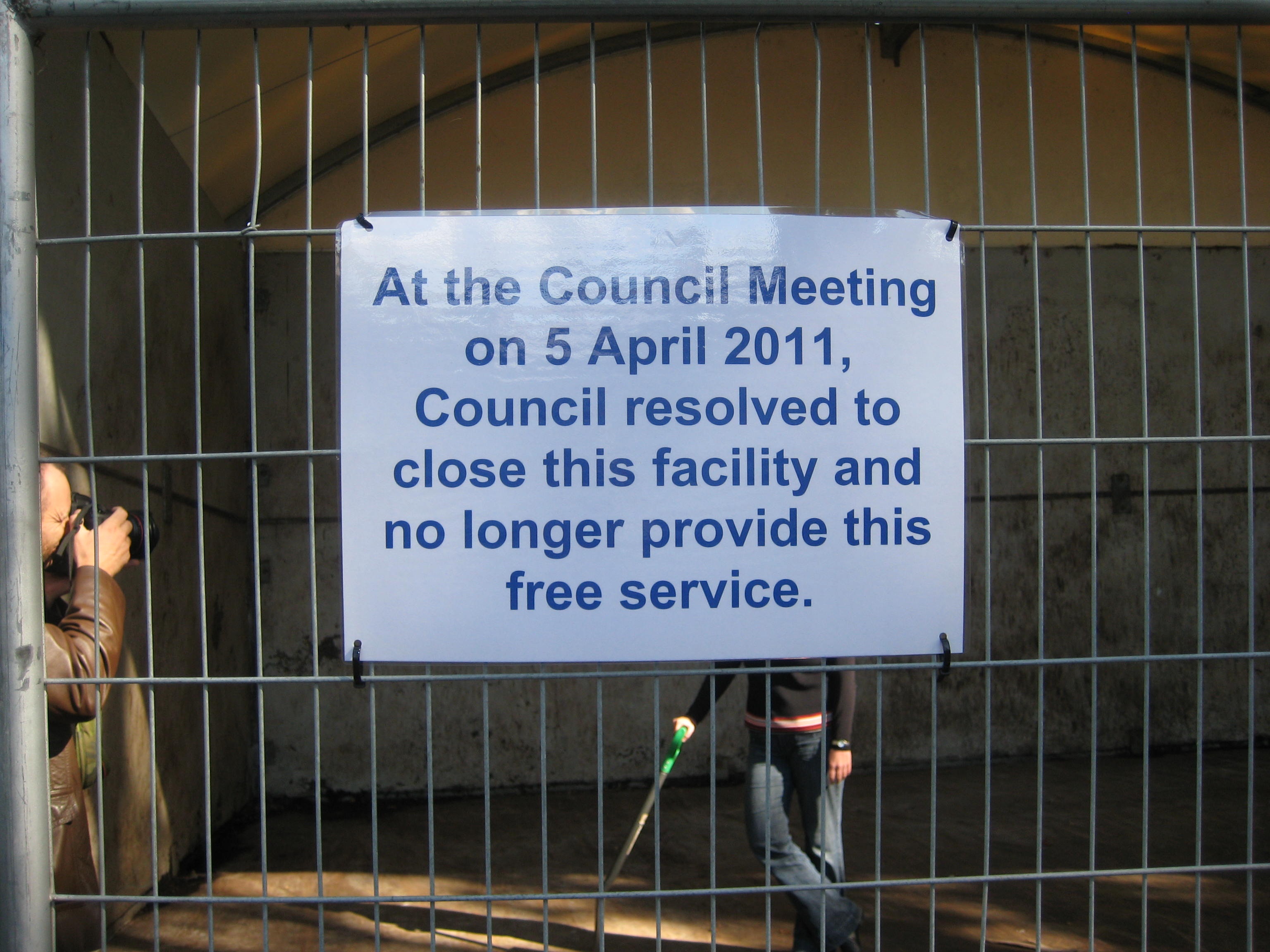
The agenda items for Tuesday night’s council meeting contain Newton’s response to Penhalluriack’s questions regarding the potential dangers of the Glen Huntly Park mulch facility. We offer our analysis of the response and are seeking readers’ comments. Mr. Newton is also free to respond. We guarantee that we will publish his reply intact.

Right from the opening sentence we have some concerns as to the connotations that the wording might have for readers not in the know. It begins: “Purpose: To respond to questions without notice at the ordinary Council meeting of 15 March 2011”. Notice does not have to be given when addressing a question to a council officer. Councillors are free to ask as many questions as they like. Readers should therefore ask themselves what is the motivation and purpose in including such phrases when it has no legal or material relevance to the issue? 

Only after an irrelevant one page waffle about the mulch heap itself do we come close to the nitty gritty of the issues. We’ve categorised these into broad topics. 

Questions about dates 

On the 19th November 2010, Penhalluriack ‘tabled’ a request at the Audit Committee meeting. The attached Penhalluraick document makes it clear that he had concerns well before the 19th November – ie. “I have raised this matter with council officers on two occasions”. Thus management knew of the concerns well before the Audit Committee meeting of the 19th November. This document also reveals that the opinions gleaned from the Dept. of Health do not completely allay Penhalluriack’s fears as to the potential risks. Given that a scientific report was subsequently called for, indicates that the Department’s advice wasn’t all that conclusive or fully convincing. Newton does not directly address these additional concerns. Further, and most importantly, Penhalluriack’s attached document is incomplete  – it ends in mid sentence! So, how many pages are missing? Why aren’t these pages included? What did they contain? If correspondence between councillors and/or committees is suddenly (and conveniently) made public then surely it behoves Newton to ensure that the entire document is available – not just selected sections?  Again we ask: what is the motivation and purpose behind this action? 

Newton then tells us that “The consultant, Noel Arnold and Associates, conducted an assessment and their report was submitted to the next meeting of the Audit Committee on 25 February 2011.”  There is much confusion here. In response to the question ‘when was the first draft of this Opinion received?’, Newton responds that it was the 2nd February. But we also have the sentence “The report was received by Council on 14th February”. [Note the crafty, and some might say, devious use of language! COUNCIL did not receive anything – otherwise they would have known about the report! It was received by management and possibly the Mayor only! ] That leaves us with two distinct dates and a time lag of twelve days. So, are we meant to assume that there was some careful editing between the reception of the first draft (Feb 2nd) and the final draft on Feb 14th? If so, why the need for ‘redrafting’? Who determined this need? What changes were possibly made between the first and final draft? And the 64 dollar question – if changes were made, then WHY WERE THEY MADE? What was the motive behind such changes?

Why did the Audit Committee even have to REQUEST information? Why wasn’t it simply handed over to them (regardless of official meeting dates)? The report was distributed to the Audit committee on the 18th Feb, one week prior to the formal Audit Committee meeting. In the end it’s taken at least 5 months, since Newton confirms that Penhalluriack first raised the issue in September. One must therefore ask whether the issues that Penhalluriack raised were expedited in the most timely manner. 

Playing with words 

“The minutes of the Audit Committee’s meeting of 25 February 2011 are included at Item 8 on the agenda for this Meeting. They state: “The Chairman noted the report the report (sic) on the mulch bin at Glen Huntly Park and concluded that no action was required by the Audit Committee. If Councillors had any issues, they could raise them with the Council.” No one raised any issues with any officers at the Audit Committee’s meeting of 25 February.” 

Two essential points need to be noticed here. The chair of the audit committee (Gibbs) announced that no further action is required. The Audit Committee had therefore washed its hands of the matter and tossed the ball over to ‘THE COUNCIL’ – meaning the full council as constituted at an Ordinary Council Meeting. Newton, ever so subtly, then attempts to downgrade the significance of the report by inferring that since ‘no one raised any issues with officers’ it does not warrant attention. Wrong! The matter as expressed by Gibbs was to go to COUNCIL if anything was to happen. There was therefore no point in ‘raising’ the issue with officers. Besides, Penhalluriack had already raised the issue twice with officers! Would a third time have made any difference? Hence, Newton’s claim that no-one said anything is simply irrelevant to the issue since there was no longer any point in raising the matter with this group. Newton’s ‘excuse’ that no councillor spoke up at this meeting is spurious. If the matter was to proceed to full council, then there is no need for any councillor to say anything at such a meeting!!!!! 

The other point that needs to be made relates to the question of the Audit Committee’s role, function and purpose. According to the Minister’s gazetted Guidelines, it is the responsibility of the Audit committee to provide information to councillors and THE COUNCIL. It is for THE COUNCIL to determine the direction that it wishes to go – not the Audit committee. In this, the audit committee has not fulfilled its function in warning THE COUNCIL and hence has placed THE COUNCIL and councillors in peril. Councillors are bound to fulfil their fiduciary duties based on the information that is presented to them. It is inconceivable that (1) the audit committee has to first ask for information from management and (2) that this information (the scientific report) is then not passed on to ALL COUNCILLORS and THE COUNCIL. This is a failure of governance and contrary to best practice of audit committee and management principles. Page 13 of the Minister’s recently released guidelines makes this absolutely clear. We quote: 

Role of the LGE (Local Government – ie. THE COUNCIL)

The role of the audit committee, as an advisory committee to the LGE, is to assist the LGE to discharge its oversight and corporate governance responsibilities, whereas the role of the LGE is that of a constituting and governing body.

Responsibilities of the LGE

The LGE:
􀁏 Establishes the audit committee with an appropriate charter, membership and level of resources (including the provision of a secretariat) to enable it to effectively carry out its activities having regard to this Guide.
􀁏 Ensures that there are appropriate reporting mechanisms in place between the LGE and the audit committee.
􀁏 Periodically reviews the performance of the audit committee as a whole, and of the independent members of the audit committee. The audit committee performance review can be (and often is) by self-assessment.
It is important for the members of the audit committee and the LGE to recognise that the advisory activities of the audit committee do not absolve the LGE members of their responsibilities. Individual LGE members are obliged to reach their own decisions based on a proper assessment of the information, which includes, but is not limited to, audit committee advice and report”. 

So, how are councillors meant to fulfil their ‘responsibilities’ if they are not in possession of the full facts? How can the audit committee function if it has to ‘request’ information from management? And when was the last time that COUNCIL actually ‘reviewed’ the performance of both audit committee members, and external members? 

In the interests of brevity, we will conclude our analysis at another time. However the points that readers should bear in mind are: 

  • Has management acted in a timely manner in regards to the potential risks
  • Has management fulfilled its duty of keeping councillors, as well as the audit committee fully informed in a most timely fashion
  • Have both the audit committee and management lived up to the standards required and acted in accordance with best practice guidelines?
  • Is Newton’s response an adequate and acceptable reply to Penhalluriack’s questions?
  • What does this episode tell us about management in Glen Eira?

The pattern continues – the more likely there will be objections to development applications the less notification residents receive. Readers should note that Nicholson St., is exceedingly narrow and contains well over 100 properties along the entire stretch of road and surrounds. Hence 13 properties is barely 10%! 

Site Proposal Notifications Objections Officer’s Recommend’s
95 Nicholson St. 3 storey; 25 dwellings 13 properties; 28 notices sent 87 Yes – 22 dwellings
650 Centre Rd 3 storey; 16 dwellings 18 properties; 42 notices 27 No
Tennis courts – Bignell Road Flood lights 35 properties; 43 notices 1 Yes


Audit Committee Minutes: 

“The Chairman noted the report on the mulch bin at Glen Huntly Park and concluded that no action was required by the Audit Committee. If Councillors had any issues, they could raise them with the Council.”  

“Councillor Lipshutz stated that Councillors and the Mayor should have a bigger role to fulfil in an emergency situation, particularly in relation to media releases and public communications”.

Racecourse Advisory Committee Minutes

“At the invitation of the Chair, the Mayor reported on a meeting by the Mayor and CEO with the Minister for Planning, the Minister for Racing and the Member for Caulfield held on 1 March.

The Committee discussed the issues.” (Very informative!)

Readers should note the apologies!!!! – Tang and Lipshutz!!! 

Record of Assembly

“Cr Pilling – Council free Mulch facility to be closed immediately”.

The audit committee doesn’t see a problem with the mulch heap, but obviously other councillors apart from Penhalluriack do! 

Marlborough Reserve Consultation 

In typical Glen Eira fashion, the ‘results’ of this two month ‘consultation’ process are fudged, distorted and do not accurately portray the comments made by residents. We’re told that:

“Of the submissions received:

  • 7 comments generally supported the plans;
  • 4 submissions suggested either replacing or incorporating a multi purpose sports area;
  • 3 people suggested the dog enclosure needed to be modified to meet their individual needs;
  • 2 people raised concerns about additional users to the park;
  • 2 comments suggested additional facilities such as walking tracks;
  • 1 submission would like to see the open space retained; and
  • 1 submission suggested another use (community garden)”. 

This summary is not only very selective, but misleading. There are at least 3 comments which support the idea of a native/community garden. There are also comments made about the location of the proposed dog agility park – these are not recorded! What we do get is the same old pattern of dismissal without evidence and without a clearly explained rationale. For example: “A community garden was suggested as part of the online feedback; however there is not an identified need for a community garden in this area and this has not been considered further.” Exactly what does ‘identified need’ mean – especially when no analysis has been undertaken to even determine whether this is ‘needed’. Spin, and more spin, that simply discards out of hand suggestions which do not fit into the pre-determined plan! 

NEWTON’S RESPONSE

A response to Penhalluriack Questions were taken on notice. We’ll report on this in the coming days. 

COMMUNITY ENGAGEMENT STRATEGY

The preamble to this ‘engagement’ policy states: “The strategy provides clear guidance about how Council will engage with the Glen Eira community and outlines its approach to community engagement including methodologies, tools and techniques”. Yet when we get to the actual detail of how and when this policy will operate we simply find the following nebulous, and vague assertions. Residents will be ‘engaged’ only when an issue – 

significantly affects the community”

considerably affects the way services are provided”.

likely to generate community concern”

Where Council needs more information on which to make an informed decision which will have a major impact.”

What is the definition and the difference between ‘significant’, ‘considerable’, and ‘likely’? Who makes these decisions? On what bases are they made? What multiple methods will subsequently be employed? What is the criteria for when multiple methods be employed? 

In short, we believe that the ‘engagement’ policy is nothing more than an extended version of the current 6 step consultation policy. The only difference is the abundance of motherhood statements, the soft and fluffy feel, and generalities upon generalities. Detail as always is absent. Perhaps the best summation is the following: 

“Community engagement processes will be regularly reviewed and evaluated to ensure that they adequately capture community views, that methods are accessible, timely and easy to use for community members and any appropriate improvements be made to Council processes.” No mention as to HOW this evaluation will be conducted and by WHOM! Nor is there any definition of ‘regularly’ and ‘adequately’. Words and words and words that signify nothing – apologies to Bill Shakespeare!

The final sleight of hand occurs in the table that claims “This information has been taken from the International Association for Public Participation.” Do not be deceived! The Glen Eira version of the Association’s Toolkit is like comparing chalk and cheese. We’ve uploaded the original so that readers may compare what’s been left out; how language has been ‘massaged’ and the limited interpretation that Glen Eira sets on objectives, methodology and rationale.

The month of March has seen Glen Eira Debates break all records. We’ve had our highest monthly total of hits (12,018 as at 10pm) as well as our highest weekly total – 3,395.

Please continue spreading the word. Glen Eira Debates is the community forum where we can express views, debate issues and share information. Let us know what you think and any suggestions are always welcome. Our target now is to double our hits by the end of the year and really give the council website a run for its money!

VCAT has allowed a 6 storey development at the Coles supermarket site in Elsternwick. The decision allows for: 99 dwellings; basement carparking; 500 square metres of retail in a Residential zone 1 area, and a waiver of car parking requirements. Councillors rejected the application  – Officers recommended adoption.

The member states: “It is our conclusion that there is strong policy support for this development and council’s position that we do not need to push the boundaries for residential development when other issues are coming into play are not supported. We consider developing this site to its full potential will relieve development pressure in other parts of the city that are purely residential in nature and often covered by heritage controls.”

Policy, policy, policy. Again we ask: Are Glen Eira’s planning policies tight enough? What can and should be done? Why hasn’t it been done?

There is also one incredibly interesting sentence in the judgement – Council raised an issue indicating that with regard to its required provision of additional housing that the rate that they are currently achieving housing growth is sufficient and that this site would put the level above what is required.”

In document after document from Council, residents are presented with the argument that thousands and thousands of new residents need to be provided for; that hundreds and hundreds of new dwellings are required. What’s happened to this argument? How can Council now claim after all the preceding propaganda that the rate is ‘sufficient’? Have we been sold a furphy all along?

Finally, there is the question of resident support from council. The previous Ripon Grove/Glen Huntly Road developers had Chris Canavan QC, Barnaby Chessell, barrister representing them. They also called ‘expert witnesses’ in Vaughn Connor (town planner of Contour); Mark Shepherd (Urban designer of David Loch) and Stuart McGurn (town planner of ERM). Council had Ian Pridgeon, solicitor of Russell Kennedy. In this latest supermarket decision, developers were represented by J. Gobbo QC; B. Chessell (solicitor). Experts were A. Biacsi (town planning); M. Sheppard (Urban design) and J. Walsh – Traffic. Council had C. Bowdern (town planner). Memories from the panel hearing for the C60?

In many major decisions, residents have every right to feel that Council does not represent their interests adequately enough and that the support they receive is negligible. Perhaps it is time that the playing field is levelled out and that Council ensures its resources are marshalled to properly defend cases and the community? If we can spend millions and millions on sporting venues, then surely a proper and sustained legal defence in major cases is also warranted?

PS: On the 24th November 2004 the following public question was asked by Robilliard – that is, prior to her becoming a councillor. As far as we know, no response was given, no action taken, and the current situation still persists.

“The Minister for Planning announced that Councils may apply for a number of interim height controls to provide for greater certainty for residents & developers. Will Council take up on this initiative?”

 The question was taken on notice for reply.


It looks like all chickens have finally come home to roost with VCAT’s decision to allow the Elsternwick 10 storey development to go ahead. Readers will remember that:

  • Lipshutz’s argument was that if council doesn’t approve 8 storeys instead of ten, that the developers will go to VCAT AND GET WHAT THEY WANT
  • Tang equivocated by arguing that 7 storeys is better than 8
  • Magee said that he wouldn’t like to live anywhere near the development but still voted for it
  • Lobo called it a ‘monstrosity’.

The sheer stupidity (and we use this word advisedly) of such arguments has finally been shown up for what they are – vapid, empty rhetoric with no foundation in law, fact, or good planning policy. Councillors should be ashamed of their efforts on this one and the ramifications of such decision making. Will they now, on the 14 storey application, vote in favour of 12 storeys and use the argument that since VCAT has approved the Ripon Grove development we can’t do anything?

The VCAT member made the point clearly and logically when he stated:

“Council recognised the importance of this key site in granting a conditional permit, however restricted the height of the building to eight storeys rather than the ten storeys applied for. One need to ask what difference either eight or ten storeys would make to the locality or the broader context of the major activity centre of Elsternwick”.

What this decision demonstrates is not the arbitrary nature of VCAT, but the failure of council planning policies (NO HEIGHT LIMITS, NO PRECINCT PARKING PLANS, NO STRUCTURE PLANS). Councillors have now successfully opened the flood gates in Elsternwick and they will bear the brunt of resident disaffection.

We highlight one recent VCAT judgement   where the application for a three storey extension to a shop and the waiving of car parking was accepted by the member. Council’s position was that the fronting car park should not be utilised as car parking for the development, and that there be onsite parking. 

This sounds reasonable – on the surface! Closer examination reveals the flaws in current planning policy and the agendas which guide such policy. In the end it’s all about leaving as many options open as possible for future development. Structure plans, height limits, and precinct car parking policies would in effect limit such development. The members judgement below makes this absolutely clear – 

“The Council’s opposition to the proposed rear shopfront also appears to be partly based on a potential future scenario where the car park may be redeveloped in an intensive manner. The concern is that any such redevelopment may be constrained by the fact that the shop has its only access and outlook to this area, and/or that any such future development will detrimentally affect the visibility and viability of the shop by effectively concealing it from view. While I can understand Council’s concerns, it is highly relevant that there are currently no plans to redevelop the car park.

There is no Structure Plan for the activity centre, no planning policy in the Planning Scheme which identifies this as a potential outcome, nor any Council-adopted strategy or other policy which nominates the public car park as a redevelopment site within the centre. It appears to me to be a case of the Council, somewhat understandably, wishing to ‘keep its options open’ but there is no evidence that this potential outcome will, in fact, materialise. The necessary strategic work has not been undertaken, and to constrain the redevelopment of neighbouring sites on the basis of something that ‘may’ happen some time in the future (in the absence of any policy or strategy) does not seem to me to be reasonable.” 

The following section also raises questions as to how well council prepares in its VCAT defence. The lack of logic, shown up by the member, speaks for itself –

“I was advised that the Council’s Building and Properties Department does not recognise any carriageway rights the review site may have over the laneway. It is noteworthy that the Certificate of Title identifies the laneway as a ‘Road’. I was not provided with any evidence to demonstrate that the review site does not have a legal right of carriageway over this road. Nonetheless, I perceive an inherent contradiction in the Council’s position on this issue. It is willing to support the proposal subject to the provision of four car spaces on the land (as I will detail in the following section of these reasons) and therefore acknowledges rights of carriageway over the laneway for the purposes of accessing these desired car spaces, but it is not willing to acknowledge these carriageway rights for pedestrians accessing the proposed shop. As I see it, the review site either enjoys carriageway rights over the laneway, or it does not. I was not referred to any document which states that the review site can rely on the abutting road (laneway) for vehicular access, but it cannot do so for pedestrian access”.

Conclusion? We merely repeat the member’s comments – ie. ‘necessary strategic work has not been undertaken’; ‘no evidence; ‘contradictory’ and so on……..