Councillor Performance


Refreshing Park News

The Fixer gets the right fix for popular plaza

Andrea Kellett

ELSTERWICK plaza has finally received the green light to start its transformation from eyesore to community gateway.

After the Leader’s The Fixer  column publicised the problem (“Park goes from lovely to eyesore, October 22, 2012), community leaders called for a revamp of the prime land next to the railway station, backed by Transport Minister Terry Mulder.

Caulfield state MP David Southwick has now negotiated a 20 to 25 year lease from the landowner, railway authority VicTrack.

It is conditional on a commitment from Glen Eira Council to “invest substantially in the improvement, beautification and upgrade of the park”, he said.

We’ve secured this as public open space,” Mr Southwick said. “This is a prime piece of real estate and we want it to be a community asset.

The council has sought a lengthy lease from VicTrack, which would justify a costly revamp, and has been trying to change its year-by-year lease arrangement since 2007.

Mayor Jamie Hyams said the council had not wanted to invest ratepayers’ money without a long lease. He, Mr Southwick, traders and residents agree the plaza and historic rifle range are dilapidated, unsafe and overdue for a facelift.

“Council has been pushing for this for a long time,” Cr Hyams said. “I would hope funding for the park would be in the next council budget so works could be carried out in the next financial year.”

Elsternwick Main Street Committee chairman Brent Howard said he was delighted. “We want to encourage as many people as possible to come and the more vibrant it is, the better retailers will do,” Mr Howard said.

Camden Ward Cr Mary Delahunty described the outcome as a “victory for the people of Elsternwick”.

This post is simply pointing out some ostensible patterns or trends and is positing some questions for residents’ consideration.

Over the years there have been many complaints about the running of the so called ‘planning conferences’  – ie. how objectors are not given the opportunity to ask the developer questions (that’s when they deign to even show up as with the centre of the racecourse debacle); how the planner’s final report is only available on the Friday before the council meeting, and so forth. The stated objective is that these planning conferences function as opportunities for dialogue and the potential resolution of differences. We wonder how much dialogue and subsequent compromise ever eventuates – especially when no real reports or ‘satisfaction survey’ results are made public.

Related to these conferences is the question of who chairs them. Should only local councillors chair such meetings if the application relates to their ward? Or should everyone be sent throughout the municipality since, as Lipshutz so often delights in telling people, he doesn’t just represent Camden Ward, but all of Glen Eira! It’s very strange then, that the vast majority of his chairmanship just happened to involve applications that were located in Camden!

Next is the NUMBER of planning conferences chaired by the various councillors, and the nature of the respective applications. Our analysis tells us that when the stakes are pretty big (such as major high rise developments, or important amendments such as C87, or applications that have garnered large numbers of objections) then the ‘big guns’ – ie Hyams, Lipshutz and early on, Magee – are dragooned into action. What also stands out is that throughout the duration of the last council, Penhalluriack DID NOT CHAIR ONE PLANNING CONFERENCE! Why, we wonder?

Here are some stats outlining the number of times each councillor chaired a meeting. We’ve omitted Staikos and Whiteside.

Hyams – 28

Lipshutz – 23

Magee – 25

Esakoff – 14

Tang – 5

Pilling – 19

Lobo – 7

Forge – 8

When we start looking at the individual councillor and the individual application, then there is definitely a trend. For example: on the few times that Lipshutz ventured out of his electorate it was to chair pretty contentious development proposals, that either drew heaps of objections or, were ‘unusual’. (ie the sell off of Station St to the Port Phillip Housing Association for $3.1m; Mavho St with stacks of objections). Magee was the ‘jack of all trades’, especially early when he was presumably ‘one of the boys’ – so he also got a few major projects. Then there’s our erstwhile Mayor. He’s indispensible, peripatetic, and seemingly most available – especially for many of the really top notch and contentious proposals (C87 Amendment; 10 storeys in Glen Huntly Rd.). Most of the other councillors were left with run-of-the-mill stuff such as double storey applications in minimal change areas. The over-riding impression is that the gang, including Pilling of recent times, generally get the really important proposals and the rest of the councillors all the left-overs.

Some other questions to consider:

  • Are these conferences allocated or do councillors ‘volunteer’?
  • If allocated, what is the rationale for picking which councillor chairs each meeting? (availability assumed)
  • And the $64 question? How many ‘discussions’ has the chair already had with the developer prior to the conference as opposed to the number of discussions had with objectors? And as revealed at a recent council meeting with Lipshutz and his ‘volunteer’ in handing out how to vote cards, what about the potential for conflict of interest?

All in all, like everything else to do with planning, there is plenty of opportunity for manipulation and rigging the game – especially when there’s the oft repeated ‘threat’ of closing the meeting if too many people ask too many embarrassing questions!

First some background to refresh people’s memory. An application for a 3 storey, 10 unit development on Mavho St., Bentleigh was rejected unanimously by all councillors in March 2012. Planning officers had recommended a permit. The earlier planning conference was severely criticised by residents. Lipshutz was accused of gagging residents (See our earlier post: https://gleneira.wordpress.com/2012/02/23/tansparency-accountability-who-do-councillors-really-represent/). Objections then ensued from the applicant and residents and the case was set down for a VCAT hearing this Monday and Tuesday (21st & 22nd January).

We present below an email exchange between one of the objectors and Hyams. Names are deleted.

Dear Jamie & Oscar

It is with great disappointment that I write to you both about the recent correspondence from the Council’s planning office (received today) (Thursday 17th January). Attached is the Planning departments proposal for VCAT hearing which arrived today! The hearing is on the 21st & 22nd of Jan. Your Planning department is putting forward a proposal for 10 apartments! Were you aware of this situation? Did you follow up with the so called planning experts as to how they planned to stand their ground at defending the councils decision to reject the development? I fully understand that:

While Council has prepared suggested conditions in accordance with this VCAT requirement, it is emphasised that Council continues to oppose the proposal.”

Please explain why the residents, that have so vehemently rejected this entire development, not been privy to this compromised proposal by your planning department till the last minute?  Is this draft proposal a joke? It beggars belief that the person representing the Council (and by default, the residents of the area) is committed to the decision that the Mayor and all Councillors took in the Chambers.

You will recall that the meeting of the erstwhile Councillors (elected representatives of the residents of Glen Eira) had rejected the development outright. Is the representation at VCAT not to defend the councils decision on the day? The rather late receipt of this draft simply reinforces belief that the developers are in cahoots with the planning department and the residents are mere fools, misled by those in power. Let me assure you that as residents we oppose this draft. We are left with no time to question anyone in the planning department.

We are shocked that the amendment has been sent to all of us a day before the hearing is set? A clever ploy by the Council’s planning department to avoid any discussion on the matter. You leave us with no time to question the draft.

Jamie, in all you correspondence to me, you had assured me that the Council representative at VCAT would be an independent person. It seems otherwise. Whilst the Council would not be using a qualified legal representative, it would have an expert, independent planning authority. Correspondence received today leaves us with little hope and confidence.

The representation should be without FAVOUR or FEAR. This hearing/case will set a precedent for all of Bentleigh and it should be monitored and dealt with extreme due diligence. Given the timing of this draft proposal (attached above) by the council, perhaps, you are happy for the develpers to PLUNDER the residential streets of not just Bentleigh, but all of Glen Eira. The preparation for the VCAT hearing should focus on complete rejection and NOT COMPROMISE in favour of the developer.

Please treat this as a matter or urgency and reply ASAP.

Thank you

Regards

Xxxxx

 ++++++++++

Dear xxxx

Thank you for your email. I understand your concern as to how this looks. However, it is a requirement of VCAT that whenever Council refuses an application, it must still draw up a set of conditions to assist VCAT. This is the requirement set out in Practice Note PNEP1, referred to in the covering letter. It is a legal requirement, but does not in any way mean that Council will not be defending its decision to refuse the application.

Council’s representative at the hearing will be independent of Council’s planning department, as you mentioned I had previously advised you. We will be using a well-regarded private planning consultant named Andrew Crack.

If you have any further enquiries, please do not hesitate to contact me.

Good luck with the hearing.

Regards,

Jamie

+++++++++

 Dear Jamie

I am certain that you do not understand my concerns. The key issue has not been answered by you. Why have the concerned residents been informed of the proposed, back up draft plan at the nth hour? The planners in all their arrogance have assumed that what they recommend will suit the residents. This development, if approved, will have an adverse impact on lot of people. The correct process is that the objecting parties have to be kept in the loop about all suggested changes to the plans.

I request you to explain why we have received the draft suggestions a day before the hearing?

+++++++

Dear xxxxx,

I agree that the short notice given was inappropriate. The VCAT requirement is that such notices are sent out 5 business days prior to the hearing. In this case, the notices were sent out later than that. I am informed that this was a rare lapse, and was because the relevant officers were just returning from their annual leave. 

However, the important point is that, as I mentioned, Council will be defending the refusal, not advocating for the draft plan.

Regards,

Jamie

+++++++++

Dear Jamie

Once again you defend the planning departments shortcomings. The VCAT requirement gives you more than 5 days. I have a copy of the PNEP. A rare lapse? I had made it very clear to you in my email in December that given the timing of this hearing and the holiday season, particular attention needs to be paid to this case. I had pre empted the planning departments lack of diligence and bought the timing to your attention. Lo and behold! You come back to me saying the employee concerned was on annual leave!! This once again reflects on the inefficiencies of your planning department and further consolidates our belief about how the departments favour the developers. 

What your planning departments treats with such non chalance is blood, sweat and tears for the residents of Glen Eira. We need some answers and someone needs to be made accountable.

Thank you

COMMENT

The hearing took place as scheduled. We have been told that the ‘expert’ consultant spent most of his time holding up photographs of ‘high’ buildings already located in the street! A strange way to argue a case AGAINST DEVELOPMENT we suggest! The question thus becomes:

  • Why is council spending ratepayers’ money on consultants if this is the best they can do, or the best they are ‘allowed’ to do?
  • How can a planning department get things so wrong so often? Even if staff take leave, surely they must have some procedures in place to ensure that all runs smoothly over the xmas holidays? Further, they MUST know what cases are coming up and require attention? Or is it simply that no-one cares – after all these are only residents?
  • Whilst we commented from the start that we believed the councillor vote was largely due to an election year and the volume of loud protest, it still does not excuse the failure of officers to actively, diligently and professionally support councillors’ decision and residents.
  • The usual excuse will be that the planning department should enforce planning law (ie the planning scheme). Councillors will (pretend?) outrage no doubt and blame VCAT when the decision is handed down. What they have never done is to demand a total and full review of the planning scheme. What they have never done is ask for detailed justification as to how and why a house that sits 100 metres on one side of a street is in a Housing Diversity area, and a house that sits directly opposite is in Minimal Change.
  • Okotel recently asked for a report on the information provided to residents and applicants. The result was a glowing endorsement by her and other councillors. It’s time that the following happened:
  1. Delegatory authority to officers on planning be cut back substantially and councillors have ‘call in options’
  2. Councillors be informed BEFOREHAND and IN DETAIL of any DPC scheduled meetings. We believe that currently they often do not even know what is up for decision.
  3. Councillors attend DPC meetings or this officer love-in be disbanded and a formal special committee instituted to consider planning applications as happens in so many other councils.
  4. A total review is required of notification processes
  • Finally, we’ve uploaded the Practice Note (here) and invite residents to compare the wording of Hyams’ email with what the Practice Note actually says!

Boats on streets ‘unreasonable’ in Glen Eira

  • Troels Sommerville, Moorabbin Leader
  • January 20, 2013 12:00AM

BOATS, campers and trailers are clogging up roads and taking up parking spaces in Glen Eira, Deputy Mayor Oscar Lobo says.

Boats, trailers and campers are allowed to park indefinitely in carparks that do not have time restrictions, as long as they carry a valid registration and are shorter than 7.5m.

But Cr Lobo said it was time for change, as carparks had become harder and harder to come by in the city.

He said the vehicles were not only detracting from residents’ access but were taking up an “unreasonable” amount of space.

He has written to local Bentleigh Liberal MP Elizabeth Miller and hopes she will be able to push something at state level.

Ms Miller said the deputy Mayor had been left “red-faced” over his request.

“Councils already have existing powers under the Local Government Act 1989 to move vehicles that pose an obstruction on local roads,” Ms Miller said.

“Neighbouring councils have used these powers and I encourage the deputy Mayor to read the relevant provisions in the Act and enforce them if necessary.”

PS: Here’s some more mumbo-jumbo from this administration! At the last council meeting the ‘minutes’ of the Local Law advisory committee were tabled. It featured a section on caravans –

Cars and caravans parking in the street

Council had been requested to consider the issue of regulating the length of time cars and caravans could be parked on roads in the municipality. Jeff Akehurst advised that State laws regulated the parking of cars and caravans on roads, and provided the vehicle was registered, there was no restriction of time limits on parking. Accordingly Council was unable to make a Local Law in respect of this matter.

The Committee noted the advice and agreed that the matter could not be taken further.”

Apart from what the Local Government Act states, and the fact that Akehurst is only referring to ‘length of time’, there are many, many avenues that Council could pursue if it really wanted to – and, they could also be income producing! For example, Boroondara in its Amenity Local Law of 2012, does not seem to have any problem with incorporating the following clauses:

A person must not allow any vehicle or trailer whether or not registered with VicRoads or equivalent interstate road authorities, to be placed or remain on any road if the placement of such vehicle or trailer would cause a danger, hazard or substantially interfere with another vehicle or any person’s use of the road, or obstruct the clear view of traffic controls by a person on the road or adjacent land.

Penalty: 5 Penalty Units (Page 15)

A person must not, without a permit or licence: occupy or put anything on Council-controlled land, including but not limited to, boats, cars, trailers, caravans;  (page 16)

Moreland and countless other councils also have residential parking permit schemes that will not provide permits for trailers, boats, caravans etc. Glen Eira’s parking schemes in contrast, say nothing about requiring a permit for such vehicles in residential streets! When everything is done on an ad hoc basis and policies aren’t reviewed for decades, then this is the inevitable result!

We continue our ‘expose’ of the shortcomings of the Glen Eira Council Meeting Procedures by comparing them with what happens in other councils and asking readers to again consider the consequences of what this means for democratic rule.

The Chairperson/Mayor

Banyule: The Chairperson must vacate the chair to move a motion and a temporary Chairperson shall be appointed for the conduct of that item

Bayside: The chair is unable to move or second a motion, and may only if necessary debate a motion when all Councillors who wish to speak to it have done so, and just before closure of debate by the mover of the motion.

BUT IN GLEN EIRA: In 2012 Hyams moved 4 motions, seconded 3 and moved an amendment! The motions all involved vital issues – ie community plan, budget, and of course, anti-Penhalluriack!

Councillor Access to Information/Documentation/Recordings

Stonnington: A Councillor may, at a Council Meeting, require the production of any documents kept in the municipal offices and directly relevant to the business being considered. Upon any demand being made, the Chief Executive Officer must apply best endeavours to produce the documents at the meeting or, if this is not feasible, as soon as practicable after that time.

AND

A Councillor may request an audio copy of a Council Meeting or Committee meeting (if recorded).

Dandenong: A Councillor may request at a Council meeting to immediately make available any documents kept in the municipal offices and relevant to the business being considered. Upon any request being made, the Chief Executive Officer must use his or her best endeavours to make available the documents.

BUT IN GLEN EIRA: Unthinkable! All our councillors can do is ‘ask for a report’. Information is the exclusive domain of officers. They undoubtedly drip feed what they want, when they want. Requests for audio recordings meet with the Burke response of “I will have to consider that’.  It was never made available! Even spending thousands of dollars on lawyers to fight FOI applications for information is also not beyond them.

Petitions

Please note that in Glen Eira there is NO FORMAL POLICY on petitions. The word petition does not exist in the Local Law except as the token reference in the ‘order of business’. Instead, the website states that petitions must be handed in 2 days prior to Burke, who then presumably ‘vets’ them and is permitted to make his own editorial comments. Below is a list of those councils who see fit to empower the elected representatives (ie COUNCILLORS) to take responsibility for petitions and that it be councillors who table such petitions at ordinary council meetings.

Ararat

Ballarat

Baw Baw

Benalla

Boroondara

Brimbank

Buloke

Campaspe

Casey

Colac

East Gippsland

Frankston

Gannawarra

Golden Plains

Greater Dandenong

Greater Shepparton

Hepburn

Hindmarsh

Hobsons Bay

Horsham

Hume

Indigo

Kingston

Knox

Latrobe

Loddon

Macedon Ranges

Manningham

Mansfield

Melton

Mitchell Shire

Moira Shire

Moorabool

Moreland

Mount Alexander

Moyne

Murrundindi

Nillumbik

Northern Grampians

Pyrenees

Queenscliff

South Gippsland

Southern Grampians

Strathbogie

Swan Hill

Towong

Wangaratta

Warrnambool

Wellington

Whitehorse

Yarra City

Yarra Ranges

The words ‘dissent’ and ‘rescission’ are non-existent in Glen Eira’s Meeting Procedures – unlike other councils. Why? What is the result of the exclusion of such clauses and who profits by their exclusion?

We believe the answers are quite obvious. With no power to rescind a resolution everything must stand for time immemorial. The gang rams something through and that’s it – enshrined in law forever more. Then there’s the ability to question the chair’s ruling. With no authority to dissent, especially on points of order, then councillors are again gagged, knobbled, and rendered impotent – especially when the Mayors have been of the calibre that puts notions of fair play and good governance to shame.

Here’s part of our record of a May 2012 council meeting:

“HYAMS: said he wanted to ask Burke a ‘couple of questions’.

Is there anything in our Local Law at all that would have allowed me to do that?’ (ie put the dissent motion to a vote). Burke answered ‘No there’s not’. Next question was whether the Local Law permitted the Mayor to ‘decide all points of order?’. Burke stated that ‘the Local Law is quite clear….absolutely clear…’.

And there’s also this from April:

“HYAMS: ‘I have ruled that your question is improper’ and asked him to stop.

PENHALLURIACK dissented from the ruling and said that he moves a motion and that he would like Hyams to ‘call a vote of councillors’

HYAMS: ‘could you point to me in the Local Law where it says you can dissent’?

PENHALLURIACK: ‘I ask that you put it to a democratic vote’

HYAMS: said he would if he could find that section which would allow him to do this.

PENHALLURIACK: said that it should be council and councillors that make decisions and not the mayor that the mayor is simply ‘first among equals’

HYAMS then read out the section from the Local Law which says that the chairperson is the ultimate arbiter on points of order.”

Glen Eira Council and its lackeys operate on the principle of: if it’s not in the Local Law we can’t do it – unless of course, we want to. Then we simply change the rules! If is for this very reason that the notion of Dissent and Rescission be included in the Meeting Procedures. Mayors are not God’s gift to jurisprudence, especially recent Mayors of this municipality. One individual should not have the absolute right to stifle debate, squash opposition, and to undermine democratic process. If Council as a group votes to dissent from the Chair’s ruling, then that is democracy in action – not the opinion of one individual alone!

Below are some of the councils which have provision within their Local Law for councillors to dissent from the chair and to move the motion to dissent. They obviously believe in the right to disagree, the potential fallibility of the Chairperson and the imperative for democratic rule.

Bass Coast

Banyule

Baw Baw

Bayside

Benalla

Boroondara

Brimbank

Buloke

Campaspe

Cardinia

Colac

Corangamite

Darebin

East Gippsland

Frankston

Gannawarra

Golden Plains

Dandenong

Geelong

Greater Shepparton

Hepburn

Hindmarsh

Hobsons Bay

Horsham

Hume

Indigo

Kingston

Latrobe

Loddon

Macedon Ranges

Mansfield

Maribyrnong

Maroondah

Melton

Mitchell Shire

Moira Shire

Monash

Moonee Valley

Moreland

Mount Alexander

Moyne

Nillumbik

Northern Grampians

Pyrenees

Queenscliff

South Gippsland

Southern Grampians

Stonnington

Strathbogie

Surf Coast

Swan Hill

Towong

Wangaratta

Warrnambool

Wellington

West Wimmera

Whittlesea

Wodonga

Yarra Ranges


Graphic-2

How committed local government is to democracy, transparency and full accountability is most easily measured via its Local Law Meeting Procedures. Forget all the spin, all the tens of thousands of dollars spent on fancy words, posters, logos, mottos, and plain old bulldust. How council meetings are run, what is allowed and disallowed provides the real picture of how open, honest and community minded a council is.

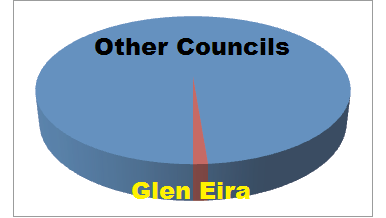
The chart provided above reveals the full story of the abuses currently perpetrated by this administration and its select band of self interested councillors. We have gone to great lengths to verify our data. EVERY SINGLE Local Law from EVERY SINGLE council in the State has been analysed. Of the 79 councils in Victoria GLEN EIRA IS THE ONLY COUNCIL THAT DOES NOT HAVE A NOTICE OF MOTION in its meeting procedures. Unbelievable, and unforgiveable!

Year after year the same old drivel is trotted out by Lipshutz and his masters – ‘if it ain’t broke don’t fix it’. Well, we believe there is plenty that is ‘broke’ in Glen Eira and it all stems from the Local Law and associated policies. Here are some facts:

In Glen Eira, Newton has total control of the agenda. Again, no other council in the state has had the gall to include what is in our Local Law – “Other than for special meetings of Council called under section 84(1) of the Local Government Act 1989, the notice papers and agenda for all meetings of the Council shall be prepared by the Chief Executive Officer or his/her delegate”. That means that officially no councillor can get anything onto the agenda without Newton’s consent. A Notice of motion would allow issues to be put on the table and discussed/debated in an open council meeting. All that is required is a mover and a seconder. The motion may not result in the resolution being carried, but that’s democracy at work! The furphy that mechanisms currently exist via ‘urgent business’ provisions are sheer nonsense. For something to ‘qualify’ as ‘urgent business’ it has to occur after the publication of the agenda and before the subsequent council meeting – ie a few days! Then there’s also the pathetic option of a request for a report. Again, this may take months to surface and all it does is provide officers with the time and opportunity to skew the information in whatever way they wish. History shows that such reports are simply ‘noted’ on most occasions and/or recommendations fully accepted. Without a Notice of Motion councillors, in trying to represent their constituents are hamstrung, silenced, and basically knobbled.

When every other council in the state sees fit to include a Notice of Motion in its meeting procedures, then Glen Eira’s reluctance to afford its residents and councillors this fundamental right needs to be carefully examined. Who stands to lose out if a Notice of Motion is codified? Why doesn’t Glen Eira embrace this democratic principle? Who are the culprits that oppose such rights and why? It’s worth noting that when this issue came up in June 2011 the councillors who then voted against having a notice of motion were Tang, Lipshutz, Hyams, Esakoff. Forge had removed herself from chamber and Lobo was absent. The general gist of the arguments was that a Notice of Motion was ‘dangerous’ (Lipshutz), ‘irresponsible’ (Hyams), and that voting against it was ‘protecting future councils’ (Esakoff).

More on the travesties that currently exist in the Local Law in following posts!

There’s one item from the last council meeting that we have not as yet commented upon – the Stormwater Harvesting/Flood Mitigation at Boyd Park. This item has a long and convoluted history, culminating in the unbelievable ‘debate’ that occurred in the chamber last December. Here’s some background:

The item first surfaced in December 2010 and its stated purpose was “For Council to consider a proposal to harvest stormwater for park and street tree irrigation from a Council drain in the Outer Circle Linear Park, Murrumbeena.”. A huge underground tank would supposedly hold 1.5 million litres of water. Flood mitigation was an ‘add on’ and certainly not the prime objective. The report noted that Council had been ‘offered’ a government grant of $529,000 but the entire project would cost approximately $1.1 million.  Mention was made of ‘soil contamination’ but considered ‘unlikely’. The recommendation requested council’s approval of the expenditure to match the grant and that this would come from the allocated, budgeted funds for drainage. The project was required to be completed by June 2013.

Pilling and Lipshutz moved the motion for the project to go ahead, PLUS that there be an “on-site” session with residents to “explain” the project. Penhalluriack, Forge and Magee voted against. They argued that a huge water tank would not necessarily prevent flooding (ie. what happens once it’s full; where does the water go?) plus that councillors had not been provided with enough facts and figures to justify the expenditure. Even Lobo (although he voted for) argued that it was a “big waste of money” and that a “cost-benefit analysis” was required.
The final vote was 6 to 3 in favour of accepting.

A year later on December 13th 2011, there was this request for a report –

Crs Penhalluriack/Forge

Please provide a report at the next Council Meeting on the Boyd Park underground water storage and holding tank which council passed on the 14th December last year, and for which council has budgeted some $600k and is expecting a Federal Government Grant of $529k. Councillors were under considerable pressure to approve this project at that Council Meeting since confirmation was required by the end of the December. Has the expected cost of the facility escalated, and what is the currently expected cost? When will the public consultation occur and when will the project commence?

The MOTION was put and CARRIED unanimously.

The ensuing report (February 2012) had only one paragraph of relevance – the remainder was a regurgitation of the December 2010 report. This solitary paragraph read: “The feasibility was the subject of the 14 December 2010 report. With funding available this financial year, officers plan to complete Stage (b) works by the end of June 2012. Council can then complete the balance of the work by June 2013 in-line with the funding agreement with the Government.”

We note that 14 months down the track there is:

  • No comment on potential soil contamination
  • Part (b) (ie concept planning & design) is still not complete
  • No facts, figures to ‘prove’ any of the claims made a year ago or now.

Then suddenly at the last council meeting (ie 10 months further on) the project rears its ugly head again! This time however, we find:

  • Major pollution which it is claimed will blow the budget completely
  • A new addition to the original objectives – “Help reduce the amount of gross pollutants and sediment entering Port Phillip Bay by trapping materials from the Council drain in Nangana Road”
  • A revisiting of Penhalluriack’s argument that the drought has broken. In the end the report argued: it is difficult justify the full scope of works as originally envisaged. Instead, officers recommend that Council delete the stormwater harvesting component (it could be retrofitted later if necessary) and consider the following options….” The options were: improving storm water & flood mitigation by the building of a pollutant trap at the estimated cost of $290k to $350K or just flood mitigation. Cost – $190k – $230k!

Of course, Option B was carried with Sounness, Delahunty and Magee voting against.

COMMENTS

This entire project, now over 2 years in duration, has been a total balls up from what we can see! Not once has any statistic of real import been provided to the public or councillors. Not once has there been any explanation as to why the thorough soil testing was not done immediately. Not once has any attempt been made to quantify the extent to which flooding will be reduced. It’s all been on a wing and a prayer and compliant councillors for the most part accepting whatever is put before them!

The debate of December last year is extraodinary for its sheer spin and smoke and mirrors and telling over 200 families who live in the area that they aren’t worth spending any extra money on! Here’s the gist of what was said!

Lipshutz: council had funding but now with discovered contamination this changed things. The minimum that council can do is flood mitigation. Said that the other option of trapping debris would affect 200 houses but this won’t have any real effect throughout the whole municipality.

Esakoff talked about “changed circumstances” and the “relatively small benefit’ versus cost therefore she supported option B.

Sounness said he realised that there were issues and that the storm water authority had to ensure that run off was disposed of safely. Said that he didn’t think the cost to do it properly is that much and if you don’t address debris then more flooding happens. Need option A because it will last for a long time and improve the quality of storm water and reduce flooding and this will improve the park itself.

Delahunty said that there’s an obligation to the wider community and here’s the opportunity to remove ‘gross pollutants from the storm water drainage system. Said that the argument was nonsensical’ to say that because the trap doesn’t do enough we shouldn’t do anything. Said that they’ll soon be hearing about the fantastic financial report ‘so the financial argument doesn’t stack up either’. Hoped that in the years to come they do make decisions that serve the wider community.

Magee: he doesn’t like to spend money ‘recklessly’ but to argue that we won’t do it is not an argument. For $120,000 council has a responsibility to do something. It might only make a small difference but if every council did it then there would be vast improvement. It’s the responsible thing to do.

Okotel- Magee’s suggestion was good but we can’t ‘in all good conscience’ do option A, ‘one drain, in one council’ when a lot of the drains are the problem. Won’t have any benefit. Better to advocate on behalf of residents to state government to fix the problem.

Hyams – question of degree, everyone agrees that money not spent recklessly. Small area, small difference it would make. Have to spend money on ‘things that would benefit them all’. Hoped that Delahunty wasn’t suggesting that just because the financial performance was good that council can now be less vigilant in how it spends its money.

Lipshutz – people have to make a decision. This is going to be a ‘drop in the ocean’ and won’t make much difference. Large downpours cause flooding everywhere and money can be used better in other areas. ‘Let’s do it overall, let’s do it all rather than one”.

“The Melbourne Racing Club and the Beck Probuild Consortium are pleased to announce that they have concluded an agreement to develop 5 hectares of land adjacent to the Caulfield Racecourse, Caulfield Train Station and Monash University.

The winning consortium is a joint venture between the Beck Property Group and Probuild Constructions.

Caulfield village will create a thriving, integrated, mixed use community with access to major transport routes, shopping and recreation designed to integrate with the character and facilities of the surrounding community.

The development is expected to take up to 15 years to complete and include in excess of 1,500 dwellings of varying product mix and configuration, office and retail offerings including a full line supermarket, pharmacy, cafes, restaurants and lifestyle health and gym facilities.

Source: http://www.beckpropertygroup.com.au/beck-caulfield-village

COMMENTS:

  • 1000 – 1200 originally cited dwellings has now ballooned out to ‘in excess of 1500’! Will this mean 28 storeys?
  • The Panel in its wisdom stated: “The scale of the amendment area and its location is that development will occur over an extended time period, the Panel expects up to 10 years.” We’re now looking at 15 years! Terrific news for locals!

PS: We’ve received an email with the following link. It features the Moonee Valley Council’s response on open space to their racecourse proposals. Once again, the contrast with how this council works to protect its residents in contrast with our illustrious lot is simply staggering. We urge readers to at least look at the Executive Summary and note the work that has gone into this.

Council is about to embark on a revamped Open Space Strategy. That’s great but, we have to wonder whether this will simply be another exercise in spin judging by the actions that have failed to be implemented from the 1998 strategy. Below are some extracts from this 1998 version. Please consider how many of the following objectives/statements/promises have been translated into concrete actions and how many that were mooted 15 years ago are still to be realised!

Where open space contributions are required for multi-unit developments, Council impose the maximum monetary open space contribution about of 5% wherever possible.

A 50% split between acquisition and improvement is suggested.

Constantly review opportunities to expand open space, particularly where sites may become available adjacent to existing parks in the precinct and allow opportunities to increase the size of these parks.

Retain a Public Acquisition Overlay to no 53 Magnolia Road, Gardenvale to complete the concept plan for Gardenvale Park (shown in the City of Caulfield Local Parks Strategy, 1987) and purchase the property when it becomes available, subject to current budget priorities

Changing recreation trends and an aging population indicate that informal open space is an increasingly important component of Glen Eira’s open space system

There is community support to get involved in the planning development and management of open space

Encourage government authorities ie schools to make their open space available for community use (especially where there are identified open space deficiencies) and investigate opportunities to provide additional open space if school sites are redeveloped

There is a community perception that there is a lack of unstructured open space in Glen Eira and changing recreation trends and an ageing population indicate that informal open space will be an increasingly important component of Glen Eira’s open space system.

The general community ‘feeling ‘ is that there is adequate provision of active open space that that future strategies should focus on ensuring a balance between active and informal recreational pursuits

Some sports require additional expanded facilties but generally the provision of improved maintenance and/or upgrades to existing facilities would satisfy current and future sporting demands

Concern for traffic management within and around various parks to ensure safety for users of open space.

Investigate opportunities to expand existing open space in the Gardenvale neighbourhood of the West precinct

Increase outdoor events in Glen Eira’s open space system, ie jazz festivals, open-air movies, art/sculpture displays of local artists work, flora and fauna displays

Organise community events in Caulfield Park to coincide with and complement the Spring Racing Carnival

Capitalise on the amphitheatre in Caulfield Park for a wide range of outdoor community events

Through the statutory planning permit process support and encourage the provision of open style fencing for new residential development that directly abuts open space

Review the provision of buildings in open spaces, including the provision of scout halls and other affiliated groups, and determine their possible rationalisation/reduction as part of the process of preparing park Masterplans.

Encourage and generate ‘friends”/community groups and school children to be involved in the development and on-going maintenance of parks.

Ensure that existing informal open space is not encroached on, inhibited or placed with any further restrictions, unless some form of compensation is negotiated ie land swaps

Design playgrounds to include fences, paths, seats, shade trees/shelter to provide comfort for parents supervising children

Build on the educational programs run by Council’s Park Services unit and develop an education centre in Caulfield Park to complement the native bushland reserve and bird aviary where education programs can be run with interactive facilities provided for community members to learn about Glen Eira’s natural heritage

Work closely with the Glen Eira Environment Group and the Society for Growing Australian Plants and utilise their knowledge and expertise to continue to enhance and maintain environmental open space in the city.

Negotiate with the National Trust to allow some form o community access into the gardens of Rippon Lea ie residents could be issued with a ticket to allow them 10 free passes per year into Rippon Lea

80% of open space system functions as outdoor sports/local parks combined

Develop a Masterplan for Elsternwick Plaza keeping in mind this park potentially forms an important recreational element to the Elsternwick urban village concept. The Masterplan should open the park up to invite pedestrian activity and integrate with Glen Huntly road

Work with the Society for Growing Australian plants to develop the original route of the old Elster Creek trail into a native vegetation corridor/nature walk with interpretative signage and encourage private property owners along the route to plant appropriate native vegetation to increase havitat potential.

A dominant portion of open space in each precinct is restricted at certain periods by sports activities, with the North-East and South-East precincts having the larger proportions of their open spaces used for organised sports at certain periods.

The dominant landscape setting in all precincts is sporting which ranges between 55% in the South-West to 88% in the South East
« Previous PageNext Page »