GE Council Meeting(s)


Just a very brief report on tonight’s council meeting. Full details in the days ahead. However, tonight’s events distinguished themselves by disclosing to a good sized gallery how governance and unity do not exist in Glen Eira. The animosity in chamber was palpable.

The lowlights –

  • insult after insult hurled across the chamber between various councillors – Lobo, Magee, Lipshutz, Hyams the main culprits
  • open government again the loser to the gang of six (Magee an enthusiastic joiner)
  • inconsistency in argument on vivid display once more
  • public questions basically fobbed off with non answers

On planning applications the results were –

  • 9 storey for Centre Road – unanimous refusal
  • Bent Street – permit (Lobo voting against)
  • Centre Road 5 storey and 63 units – permit
  • Murrumbeena 4 double storeys – permit
  • Nicholson Street Bentleigh – permit

Watch this space for our reports on what happened!

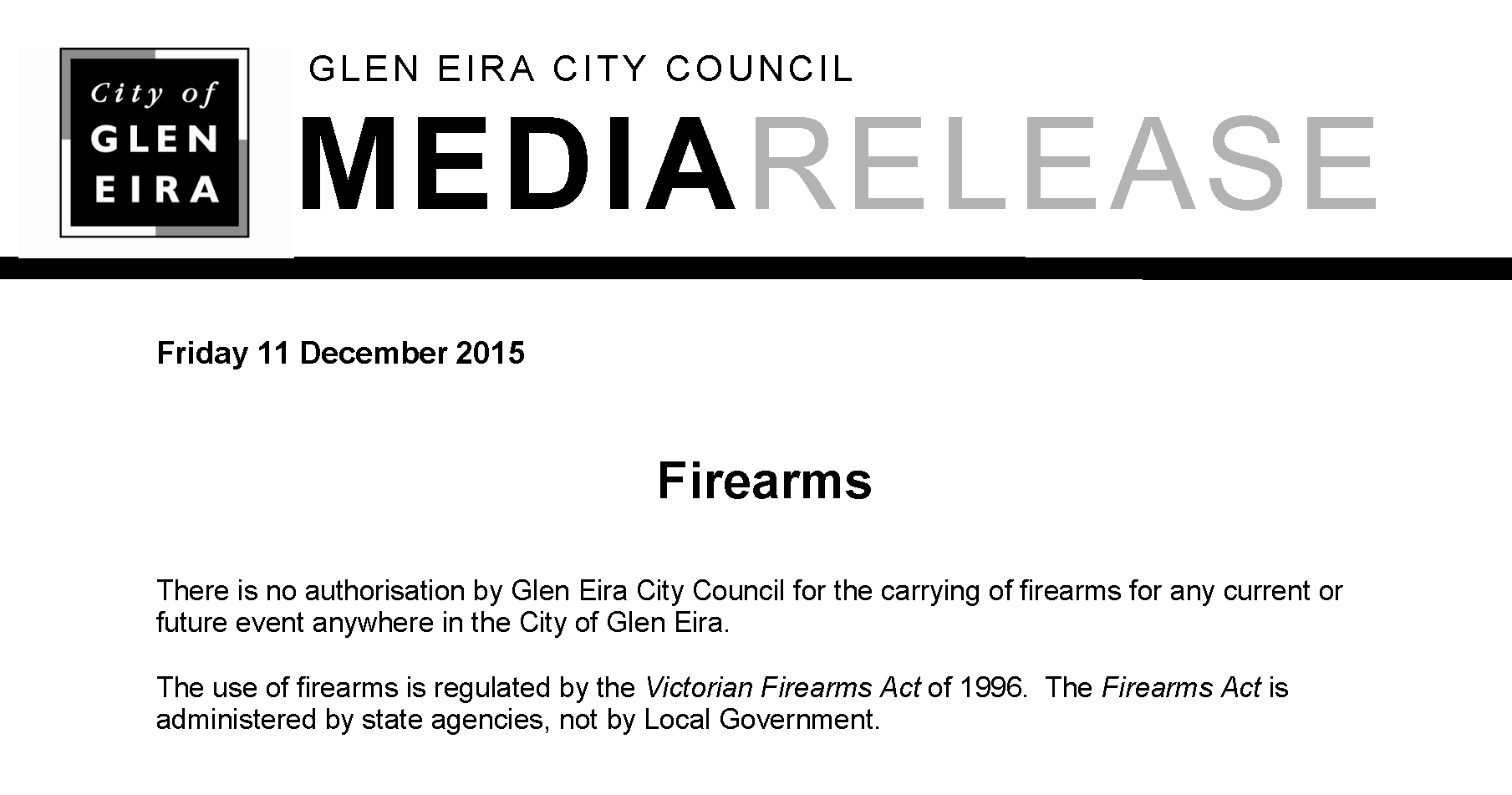
Apologies to the author for our misquoting this line in our heading. However here is a very carefully worded council Media Release designed no doubt to deflect recent public criticism of the Lipshutz/Hyams’ sponsored ‘guns in parks’ fiasco. Yet, it is the wording itself which only succeeds in raising numerous questions –

  • The media release refers to ‘current’ and ‘future’ events. What of PAST events – ie the Shabbat Project and (possibly) Chanukah in the Park?
  • The media release speaks of ‘administration’ of the Firearms Act? Surely ‘administration’ of an Act is distinct from seeking permission for licences? So the question becomes – did council seek permission from the ‘commissioner’, ‘police’ or anybody else with authority?

GECC_-_Firearms

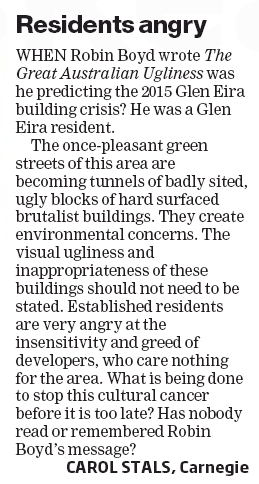
PS – SOME LETTERS TO THE EDITOR

g

let

Item 9.2 – Centre Road/Browns Road, Bentleigh East.

Application is for a part 3 and part 5 storeys building and 67 dwellings. Officer recommendation is ‘up to 63 dwellings’. Of the 67 proposed dwellings 60 are to be single bedroom apartments, 6 double bedroom apartments and one 3 bedroom apartment. Officer recommendation is to ‘amalgamate’ some of these so that another 3 two bedroom apartments are created and one additional 3 bedroom apartment in the revised dwelling numbers of 63 units.

Whilst this represents an interesting new position in that this is the first time we remember an officer’s report commenting specifically on the issue of ‘diversity’ and imposing conditions that will only marginally increase the number of 2 and 3 bedroom apartments, we remind readers of the following comments made by our wonderful councillors in previous decisions. Once again the question of consistency and arguably integrity (depending on who the applicant is) raises its ugly head.

HYAMS on the MRC Amended Plan for Caulfield Village where 3 bedroom apartments were gutted to create more single bedroom units so that just on 61% of the proposed 463 dwellings got the nod to be single bedroom dog boxes – “I don’t know that there needs to be that diversity in every site – there needs to be diversity across Glen Eira’. . So even though there will be many one and two bedroom places there are ‘family sites around the area’ so that’s the diversity.

PILLING (on same item) – On profit council has to look at the ‘planning process’. 26 3 bedroom places ‘are a plus’ but’ not for us to determine’. Said that council ‘can encourage but we can’t actually have that law’. And this also applies to ‘social housing’. This will ‘happen’ at some point and ‘it’s up to the developer to provide it’ even though council might like it in ‘every part of the development’. Just because council doesn’t ‘like’ it isn’t enough reason to vote against. Council has to make its decisions on ‘good planning’ processes such as the planning scheme, incorporated plan and development plan.

OKOTEL (same item) – was ‘concerned’ about the reduction of three bedroom apartments but she accepts that these could ‘be difficult to sell’ and ‘nobody wants to see vacant dwellings’ especially when ‘there is such a need for housing’. ‘It’s better that apartments are built and purchased’.

The above quotes speak for themselves!


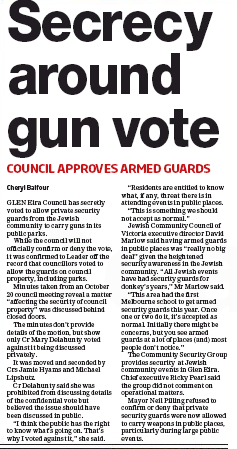
The recent outcry against the secret vote for ‘guns in parks’ highlighted once again how Glen Eira continues to operate behind a veil of secrecy and abuse of the legislation. In 2011 we featured a post which itemised the number of decisions made in camera and the number of decisions which were subsequently reported in the minutes (See: https://gleneira.wordpress.com/2011/12/17/a-record-to-be-proud-of/

Not too much has changed since. Countless items that feature in the agenda papers for in camera decision making are not reported in the subsequent minutes and what is even worse, there is no explanation as to why only some items include the number of applicants for the tender, the criteria, and most importantly the estimated cost. Countless others simply describe the vague nature of the tender and that’s it!

But the most damning indictment of all is that an examination of the minutes proves once and for all how decisions are made behind closed doors and away from public scrutiny.  On the 8th April, 2014 the following tender appeared in the in camera agenda items –

under s89 (2)(d) “contractual” which relates to the awarding of a contract for refurbishment of the Caulfield Park Conservatory Number of tenders received 8; Number of evaluation criteria tenders

assessed against 3

Estimated contract value $250,000

No outcome for this item was recorded. Yet at the very next Council Meeting (29th April, 2014) there is the extraordinary report and subsequent vote to demolish the conservatory – despite 2 rounds of public consultation and 2 previous resolutions that demanded it be maintained and restored. So what happened on the 8th April that caused this change of heart? What did it cost to produce and advertise the tender documents? Or is it the case that behind closed doors on the 8th April it was decided to scuttle the debate and the subsequent meeting was merely to ‘ratify’ an already made decision? Even if we are wrong here, it does not say much for council and councillors when public money is wasted on tendering and within three weeks this all comes to nought!

Things get even worse with the following –

12.1 under s89 (2)(d) “contractual” which relates to awarding of the contract for Tender 2015.049 Booran Reserve Construction of New Playground and Associated Works (21st July 2015)

Nothing was forthcoming. Hence residents had no idea – (1) if a contract was awarded (2) what was the price and (3) exactly what does ‘associated works’ really mean.

There are other gems too which illustrate the nastiness and internal bickering that has been part of Glen Eira ever since Newton set foot in the place. Here are some examples – again not disclosed and we can only wonder how much more of ratepayer funds went into lawyers’ pockets without disclosing the amounts –

Crs Lipshutz/Esakoff

That the meeting be now closed to members of the public under Section 89(2) of the Local Government Act 1989 in order to consider:

12.2 under s89 (2)(a) “personnel” and s89 (2)(d) “contractual” which relates to compliance with the Local Government Act.

The MOTION was put and CARRIED unanimously. (9th April, 2013)

Crs Hyams/Lipshutz

That the meeting be now closed to members of the public under Section 89(2) of the Local Government Act 1989 in order to consider:

An item of Urgent Business under s89(2)(a) personnel and 89(2)(f) legal advice which relates to a personnel matter. (6th November 2013)

Crs Lipshutz/Magee

That the meeting be now closed to members of the public under Section 89(2) of the Local Government Act 1989 in order to consider:

12.3 Under s89(2)(d) contractual, which relates to the contract for Community Energy Efficiency Program.

12.2 Under s89(2)(d) contractual, which relates to the GESAC construction contract dispute resolution.

The MOTION was put and CARRIED unanimously.(11th June 2013)

The results of the following items were not disclosed in the minutes –

under s89 (2)(d) “contractual” which relates to the awarding of the contract for the provision of legal services.

Number of tenders received 5

Number of evaluation criteria tenders assessed against 5

12.4 under s89(2)(d) “contractual” which relates to completed capital works approved by Council

under s89 (2)(d) “contractual” which relates to the contract for the Duncan Mackinnon Pavilion (17th December 2013)

which relates to the contract for internal audit services

under s89 (2)(d) “contractual” which relates to the appointment of prequalified supplier panel for the procurement of trucks

under s89 (2)(d) “contractual” which relates to the awarding of the contract for processing of organic waste

12.4 under s89 (2)(a) “personnel” which relates to the appointment of Community representatives to the Citizen of the Year Awards Committee


But the one we love the best is the ubiquitous nonsense of – under s89 (2)(d) “contractual” which relates to a contractual matter.

12.4 under s89 (2)(f) ‘legal advice” which relates to the Code of Conduct.

12.1 under s89 (2)(a) “personnel” which relates to Council’s Audit Committee (4th February 2014)

12.3 under s89 (2)(d) “contractual” which relates to insurance

12.3 under s89 (2) (f) “legal advice” which relates to “Code of Conduct – Possible Additions” (july 22nd 2014)

12.2 under (f) “legal advice” which relates to the Code of Conduct. (18th March 2014)

12.5 under s89(2)(e) “proposed developments” which relates to additional open space.

under s89 (2)(d) “contractual” which relates to the contract for Tender 2014.043 Provision of Wide Area Network (Wan) Infrastructure

12.5 Under section S89 (2)(e) “proposed developments” Open Space Strategy – gap areas. This report does not recommend any acquisition of any housing. (5th September 2015)

 12.1 under s89 (2)(d) “contractual” which relates to awarding of the contract for Tender 2015.049 Booran Reserve Construction of New Playground and Associated Works 21st july 2015

12.2 under s89 (2)(d) “contractual” which relates the appointment of a contractor for the supply of fuel for Council’s vehicle fleet.

12.2 under s89 (2)(d) “contractual” which relates to disposal of general household waste

12.0 under s89(2)(a) “personnel”, minutes of Community Consultation Advisory Committee meeting of 19 February 2015 relating to nominations received for Community Representatives on the Committee

Thus it goes on an on. Why on earth residents can’t be told who is the contractor for disposal of general household waste’ or who will be the supplier for fuel and how much this will cost, is literally beyond us. Why the secrecy? Or is it all designed to make it that much more difficult to follow the money trail and to see who is getting what?

We should also be prepared for the fact that when the new Code of Conduct comes out post election that there will be the attempt no doubt to gag councillors even more. You don’t spend thousands upon thousands on lawyers and then maintain the status quo! And please remember that the legislation does not MANDATE in camera decision making. It merely suggests that councils ‘MAY’ decide to deem certain items confidential. In Glen Eira this has come to mean practically everything whilst other councils are prepared to publish their decision making on commercial tenders Glen Eira doesn’t. Whilst other councils are prepared to publish their ceo performance assessments, Glen Eira doesn’t. And whilst other councils are far more specific in their descriptions of confidential items Glen Eira is content to say again and again – under s89 (2)(d) “contractual” which relates to a contractual matter. That is double speak at its absolute best and indicative of a council who pays no credence to their obligations of transparency and accountability.


PS – AND HERE’S PILLING’S EFFORT WITH NEIL MITCHELL -http://www.3aw.com.au/news/glen-eira-mayor-refuses-to-answer-sensational-gun-claims-20151208-gli2e4.html

Delahunty’s interview on yesterday’s Neil Mitchell program –

https://audioboom.com/boos/3912931-glen-eira-councillor-mary-delahunty-with-neil-mitchell

leader

Our following comments are directed to the processes that surround the in camera Special Council Meeting of 20th October 2015.

Council’s Local Law categorically states that ‘urgent business’ will only be entertained under Section 225(1) if a matter of an urgent nature has arisen since circulation of the notice paper and the Council resolves to consider the matter as urgent business

How can something be considered as ‘urgent business’ when –

  • The records of assembly for the 6th October contain the following – Cr Lipshutz – letter to Cr Hyams from the Jewish Community Security Group. With the Shabbat Project approaching Council needs to deal with the issues raised in the letter AND
  • From the records of assembly for the 13th October – Agenda Item 10 – Urgent Business – Cr Lipshutz, Security at community events.

The Shabbat Project is an annual event. It is not something that crops up at the last minute. We also don’t know the date of the letter to Hyams and why it should come not from the official organisers, but the ‘security group’. If the matter was really that urgent then legislation provides the means for a Special Council Meeting to be called at any time – either by the Mayor alone or with the signatures of 3 councillors.

The whole process appears to be continually mired in controversy and is fast becoming a divisive item. Here is an extract from the Minutes of September 23rd, 2014. Poor process and lack of good governance are evident – ie ‘the rescinding of a ‘council decision’ via email – when no such decision is recorded in any of council’s minutes as far as we know!

URGENT BUSINESS

Crs Lipshutz/Hyams

That a matter of the Shabbat Project be regarded as an item of Urgent Business.

The MOTION was put and CARRIED unanimously.

(a) Crs Lipshutz/Hyams

  1. That Council rescind its decision contained in the email to Mr Tom Winter on 19 September 2014.
  2. That subject to any prior bookings that Council hire the meeting room at the Caulfield Park Pavillion to the organisers of the Shabbat Project (the organisers) for the 25 October 2014 (the date) on Council’s usual terms and conditions and grant a permit to the organisers for the use of Caulfield Park on the date for the purposes set out in their application including a permit for the use of fireworks subject to Council’s usual terms and conditions including but not limited to:

(i) Compliance with all safety requirements in relation to the use of fireworks;

(ii) There being no interference or damage to the cricket pitch area; and

(iii) There being no interference with the use of the ovals for sport on the date and the following day.

DIVISION

Cr Sounness called for a DIVISION on the voting of the MOTION

FOR                 AGAINST

Cr Lipshutz     Cr Delahunty

Cr Hyams        Cr Sounness

Cr Okotel        Cr Magee

Cr Pilling         Cr Lobo

The MOTION was put and CARRIED on the Casting Vote of the Chairperson.

The Shabbat Project mentioned in the first record of assembly for 2015 featured numerous events in Melbourne (October 22nd).The Age also ran a story including this paragraph – In Melbourne, meanwhile, Jews of all ages and from all denominations were united in the spirit of the occasion, with more than 2400 people baking challah and attending the havdalah concert at Caulfield Park, and hundreds attending dinners, lunches, shul services, picnics, talks and everything in between.

Thus the question remains whether Council’s secret resolution was to provide ‘security’ for the Shabbat Program alone, or to ensure that Chanukah in the Park was able to switch from Caulfield Park to the racecourse once fears arose it might be cancelled altogether.

Further complicating matters is this Age report from November 23rd 2015 reporting on the ‘cancellation’ of Chanukah in the Park (See: http://www.theage.com.au/victoria/security-risks-prompt-cancellation-of-jewish-event-chanukah-in-the-park-20151123-gl5po9.html). Of interest in this article are the views of several prominent Jewish Leaders who claimed that the event should still have occurred at Caulfield Park and that security was not a problem. The Leader (December 1st issue) claims that the event at Caulfield Park was cancelled on November 25th and once again it is claimed that the event could have gone on as originally intended. Whatever the ‘official’ date for ‘cancellation’ it is clear that ‘security’ was well and truly on the minds of Lipshutz and Hyams from early October. Whether this was strictly for the Shabbat Project events or intended to carry over to Chanukah in the Park is anyone’s guess.

In a ‘memorandum’ dated the 15th October Magee called for a Special Council Meeting. An Age advertisement appeared on the 16th October. That makes it 4 days prior to the actual Special Council meeting. The legislation (Section 89(4) requires 7 days notice. If notice is any shorter then the legislation also requires that Council MUST – specify the urgent or extraordinary circumstances which prevented the Council from complying with subsection (4) in the minutes. This has not been done.

We could also question whether the reasons given to conduct the meeting in secret are valid (ie security of land, etc) since the clauses quoted are only applicable to council meetings and Special Committee Meetings. There is nothing in the cited legislation which provides Special Council Meetings to be closed to the public!

Thus we get to the Special Council Meeting of 20th October and the highly questionable reasons for excluding the public. We quote –

“matters affecting the security of Council property” AND “any other matter which the Council or special committee considers would prejudice the Council or any person”.

The final phrase of the motion is important – which relates to the provision of security services for events on Council property.

If the switch to the racecourse was the objective, then we maintain that the above justifying clauses are entirely spurious since –

  • The Racecourse is NOT ‘COUNCIL PROPERTY’
  • What ‘prejudice’ to council or ‘any person’ could exist? And what does this even mean?
  • Did the Trustee’s who have responsibility for the Reserve give their permission?
  • Did any ‘negotiations’ take place with the MRC?
  • And who has the final authority to allow the carrying of firearms by anyone?
  • Who grants permits for the carrying of firearms?
  • What are the implications for long term = does this mean that at every Ajax footy or cricket game residents can expect guards with firearms?
  • And what if Ajax is playing ‘away’ – since the clause specifies ‘council property’, or
  • Was this all designed only for Chanukah in the Park, or for the Shabbat Project and what of the future?

And of course, there is the perennial question of WHO LEAKED to the Leader? Only officers and councillors would have been present at this secret tete-a-tete. Will the Leader journalist now be hauled off to court in the attempt to reveal his source as happened years ago with Matthew Dunkley? Hasn’t this Council learnt anything? – that secrecy only breeds suspicion and distrust.

Yes, Glen Eira Council is definitely one happy bunch of campers where so much is done behind closed doors. Countless questions remain as to what really goes on behind these closed doors and how the ‘victim’ is always transparency and good governance.

PS: a new application has just gone in for a 7 storey, 24 dwellings in Centre Road, Bentleigh. A few doors away from the 9 storey application on the old Broadbent’s site. Because they can – THEY WILL as long as the planning scheme is without direction, without clear policy, and without any review!

Adding more insult to injury, it appears that ratepayers are now footing the bill to fix up the mess that developers leave as a result of their constructions. In response to a public question asked at last council meeting on who is paying for road reconstruction at 2 Morton Avenue, Carnegie, the response was:

In recent years, property development in the street has resulted in various utilities
excavating the road pavement to access underground services. On each occasion,
the utilities repaired the road, most likely at the developers cost to Council
standards. The end result of all this work, however, was a patchwork of repairs. In
addition to the repairs, sections of the road pavement had begun to fail due to
general wear and tear. To address the patchwork of repairs and to remedy the
failed sections of pavement, Council recently removed the road surface in the
affected area and applied a uniform patch. These final works were undertaken by Council’s Asphalt Crew at Council’s cost.

++++++++

Speaking of cost, here is another example of how to waste money defending the indefensible. Councillors responded to Wynne’s kick up the backside letter by ordering more ‘investigations’ into VCAT decisions. How many hours of officer’s time will be devoted to this? How much will this little exercise in futility cost? And why can’t this time be spent in drawing up worthwhile amendments to the planning scheme so that VCAT has some real guidance on planning applications? Thus, more ratepayer funds wasted on maintaining the illusion that all blame can be laid a the door of VCAT instead of council’s planning failures.

1st dec

The following reports come from 2 agenda items – (1) comments on the VCAT decisions, and (2) the Bent St application. We have decided for this first item to highlight some of the comments made by Magee. The reasons should be obvious!

MAGEE: said he spent the day at VCAT with residents of Claire St., McKinnon and that the judgement shows that VCAT ‘does have the capacity’ to look at the Glen Eira Planning Scheme and listen to what the residents of Glen Eira ‘have said they want in the area’. The Planning Scheme has ‘been put together over many years with vast community consultation’ (sniggers and jeers from the gallery). Said he represents the 140,000 people and not the few who claim to do so. Continued that the planning scheme was voted on by all councillors. It then ‘went to the Minister’ who approved it. After doing ‘so much work, we know what our residents wanted’ and ‘that’s what our planning scheme actually says’. With the new zones, Claire Street has height limits and the developer got it wrong by wanting to ‘build almost fence to fence’. ‘He had scant disregard for our planning scheme’. The VCAT member ‘applied our planning scheme’ – he applied ‘what we as a council’ and what ‘we as residents have said is appropriate to Glen Eira’. Every council has a scheme but that sits on what councillors and ‘residents think is appropriate’ for that municipality. The member ‘applied our planning scheme’ and ‘when he did, this building did not fit’. And when he applied the rules that ‘residents put to us that they wanted, it did not fit’. Said that unfortunately not all VCAT members are as ‘educated’ as this member and not all of them ‘do their homework’ nor ‘appreciate the level of detail we have in our planning scheme’.

Said that 97% of the municipality has got height limits and 3% commercial with no height limits. Putting height limits on commercial areas has to be done through an overlay, and then community consultation, ‘permission from the minister’, and ‘through a long and detailed process’. ‘If council decides at some point in the future’ to do this, then he would ‘welcome that’ but to do ‘that we would need legal opinion, planning opinion’ and the Minister’s approval. There are some other things that might be done with the commercial zones but he is ‘very, very happy that’ the zones ‘cover 97% of our municipality’. This ‘in conjunction with our planning scheme’ is what ‘makes it work’. When VCAT doesn’t apply the planning scheme ‘that’s when it goes wrong’ but for Claire St., they did apply it.

COMMENT

  • 97% of the municipality DOES NOT HAVE HEIGHT LIMITS!
  • Mixed Use Zones (apart from 2 specific sites) DO NOT HAVE HEIGHT LIMITS. No mention of course about this little fact
  • Once you remove parkland, VicRoad land, Special Utility zones, etc from the total acreage then the percentage of land zoned commercial and mixed use is far greater than the 3% this council would like residents to believe is the truth. Also given council’s penchant for transforming sites zoned C2 (ie no residential dwellings) into C1 (allowable residential dwellings such as Virginia Estate amendment) then the percentage skyrockets even further. Then add on all the amendments which have already and are still waiting to be rezoned from ‘industrial’ land into Mixed Use or Commercial and the figures literally go much higher.
  • Magee is obviously under the illusion that if you repeat something often enough people will believe you – ie ‘vast community consultation’. Perhaps he and the other councillors should ask residents whether they believe the planning scheme does in fact represent resident views?

BENT STREET APPLICATION

Before we report on the actual ‘debate’ readers need to take a look at what the zones have meant for this street and the surrounds. It is our estimate that since the zones were introduced the area has had 378 new dwellings permitted. This rivals Neerim Road’s 548 new dwellings. (click to enlarge the image)

bent street latest

Here is what councillors said. It took roughly 7 minutes!

Proposal 4 storey, 20 dwellings. Hyams moved motion to accept plus introducing some conditions for the street trees. Seconded by Sounness.

HYAMS: said he chaired the planning conference and that objectors’ ‘concerns’ have been ‘addressed by the officer recommendations’. This is the ‘right place for a 4 storey development’ ie next to supermarket and station and ‘sufficient’ parking. Went through some of the conditions such as increased setbacks for basement car parking to allow for landscaping. Basically read out the other conditions from the officer’s report. Thought that all of this meant a ‘reasonable compromise’.

SOUNNESS: said he is supporting the application in order to be ‘consistent with the planning scheme’ designed for the area. ‘Being part of the Bentleigh Urban Village it does have criteria’ and meets those criteria. There has also been a lot of 4 storeys surrounding this development and others higher in surrounding area given by VCAT.

LOBO: said that in 2011 ‘I predicted that Glen Eira will be like Calcutta’ and he ‘got told off’ for saying that. ‘Well the writing is on the wall’.

DELAHUNTY: said she remembers Lobo’s comments and is an ‘indication’ of what is happening in Bentleigh and ‘especially around this area’. Bent Street ‘have taken more than their fair share’. However she wanted to draw people’s attention to ‘housing affordability’ and the high cost of renting. A report came out showing that some families spend up to 50% of their income on rent. So they need more development and then the rental will drop because more development ‘will push the prices down’ for ‘people to be able to live around infrastructure’. Thought that Lobo’s values would also support the idea that people should be able to afford to live where there are good health services and ‘good infrastructure options’ and ‘Bentleigh certainly has’ those things. She ‘understands that it is a balancing act’ so will support the motion.

MOTION PUT AND CARRIED. Lobo only councillor to vote against.


We urge all residents to read the following carefully. It illustrates completely how resident wishes are completely ignored and distorted. It reveals the complete failure of strategic planning in Glen Eira and the unwillingness to remedy this situation. When hundreds of residents demand a review of the total planning scheme, when they demand a review of the entire zones, the argument becomes distorted into maybe, possibly, perhaps years down the track, we might consider something for the commercial zones. This is not councillors representing their constituents. It is councillors representing developers above the community!

Item 9.8 The Minister’s Letter

Hyams moved the motion to accept the report plus adding two more clauses – (1) that officers prepare a report on vcat decisions which show “contradictions on similar applications’, and (2) that ‘officers ascertain’ from the Minister what he allegedly stated to residents regarding structure planning. Seconded by Magee.

HYAMS: said the minister’s letter was ‘disappointing’ although council couldn’t expect him to suddently change everything. He had hoped that he might have said that this could be the start of a ‘process’ where VCAT would have to ‘take account of our planning scheme’. Went on to say that council’s policies have to be approved by the minister and that before they even get to the minister council goes through an ‘exhaustive process’ and the housing diversity/minimal change ‘went through about 2 years of exhaustive consultation’ and the zones were a ‘direct translation’ of this earlier 2004 policy. They also did a ‘lengthy consultation on the whole planning scheme’ and people said ‘they wanted transition zones’ and height limits and more character overlays which ‘became neighbourhood character overlays’. Claimed that a ‘lot of work goes into these’ and it’s a ‘shame’ that VCAT doesn’t pay them more attention. Said the Minister said we should look at zones and overlays because they are more ‘stringent’. Some parts of the zones are mandatory but others remain ‘discretionary’. Problem now is that VCAT is inconsistent and that two members can look at identical applications and give different decisions. That’s why he has moved the second part of the motion and with these examples ‘perhaps this will’ bring more ‘pressure on the government’ to act. The third part of his motion is because some residents in Bentleigh who ‘have taken it upon themselves’ and who are ‘quite eager about changing our planning scheme’. They met the Minister and he ‘apparently gave them an undertaking’ that ‘we were to put in some strategic plans or structure plans’ and that he would be ‘quite ameniable’. ‘That would be nice if it was true’. He wasn’t sure and gave an example of Moreland who asked for ‘ten storey limits’ in their commercial centres and the Minister responded with 13 storey discretionary height limits. So even if there is the possibility of ‘improving the amenity of our commercial zones’ then ‘we’re obliged’ to find out exactly.

MAGEE: claimed that 97% of Glen Eira has ‘a mandatory height limit’ and 3% could ‘possibly’ have council ‘put in some overlays’. Said that ‘regardless of what we are told by some of our residents’ structure plans ‘are nothing more than a plan’. ‘It’s not a law’ but only a ‘look at an area in the future’ that says ‘how it should look like and how do we get there’ and cater for transport, etc. ‘It doesn’t actually say that we have to apply any of that’ and VCAT doesn’t have to do anything either. Claimed that if council wanted VCAT to do anything then ‘it would have to be in the form of an overlay’. Overlays need a panel assessment and they could end up saying that ‘Carnegie is quite suitable for 13 storeys’ and Bentleigh ‘quite suitable for 6’. Council would then ‘have to argue against that’, then the Minister would ‘have information’ saying the opposite. S0 ‘there is a risk in asking for something’ that ‘you don’t get what you want’. Said he was ‘open minded’ about what the Minister said to residents. He and Hyams had met with residents and when they heard what Wynne had said they were both ‘enthusiastic’ because these were different to ‘the comments’ heard ‘in the past’. Previously they ‘had heard’ that commercial zoning was ‘the responsibility of the State Government’. Council only assesses according to the planning scheme. Repeated that if council got mandatory height limits in commercial zones or activity centres then ‘it would have to be in the form of an overlay’. Council will write to the minister to ‘clarify’ what he said. If he is ‘going to be supportive’ of overlays then ‘I would be very willing’ to support ‘going along that line’. But ‘before that’, there has to be a motion, and before that ‘there would have to be information coming back to an assembly of councillors’ so councillors know ‘what is proposed’ and that would need ‘legal advice’, ‘strategic planning’ advice, and they would ‘have to assess that at an assembly of council’ and ‘if there was support to see that go further’. First off, council ‘needs the minister to clarify his comments’ because ‘this process could take anything from one to two years’ and cost over $100,000. He doesn’t want to do this if the minister ‘says no – that’s not what I said’. Need to clarify what he said but overall supportive of an ‘overlay’ around commercial zones.

LIPSHUTZ: said that ‘before we go ahead’ he wants things ‘in concrete’ that it will be accepted and ‘not simply some political speech’. Also have got to be careful about ‘what we wish for’ since might ‘get something we don’t wish for’. Before they start anything they need to get ‘proper advice as to what we actually want’. Earlier Delahunty had spoken about affordability of housing and so ‘maybe we actually want’ some areas to be ‘growth zones where we have higher density’ rather than putting overlays on ‘carte blanche’ and this may ‘not be what we want’. Said it is easy as ‘some residents have said’ to put on overlays of no more than 5 storeys ‘over this whole area – but is that what we want?’ Said that what ‘we have to do’ is have ‘measurable’ facts about ‘areas that aren’t covered’ and ask ‘what is the strategic vision’ and once they’ve got it, then they will ‘go to the minister’. Repeated that ‘sometimes the cure is worse than the disease’ and here ‘it may well be’.

DELAHUNTY: supports Hyams’ motion. Thought that Lipshutz was ‘quite right’ that there is a ‘requirement for high density’ in some areas. Third part of the motion asks for ‘clarification’ from the minister and that ‘this would be a change in direction’ and leads to the question of ‘whether we should go down that road of structure plans’. She likes structure plans because it allows ‘residents to have a say’ on areas in contrast to what is happening now such as ‘piece meal’ planning in ‘making decisions application by application’. But even though she likes the ‘process’ it ‘doesn’t necessarily result in better outcomes’.

OKOTEL: said that council has been ‘frustrated’ by VCAT decisions ‘many times’ as illustrated by the Claire St decision where policy was applied and in McKinnon road was ignored. The inconsistency ‘makes it difficult’ for council because they have to think how VCAT ‘might approach’ the decision and council has to try and be consistent ‘in our decision making’. Also ‘frustrating for residents’ because a lot depends on which VCAT member is making the decision. Claimed that the ‘only way’ to get consistency from VCAT is via the State Government. The minister’s response to council’s letter was ‘disheartening’ in that it said that VCAT could continue and completely ‘disregard our planning laws’, despite ‘the extensive work we’ve put in in developing those policies’. Hyams’ second part of the motion is ‘looking’ for evidence to ‘highlight that inconsistency’ in VCAT decision making. Regarding the third part of the motion, she is ‘eager’ to see the minsiter’s response.

HYAMS: the commercial areas are the only parts in Glen Eira that don’t ‘have a zoning’ and ‘everything is discretionary’. So he is looking to ‘get greater certainty’.

MOTION PUT AND PASSED UNANIMOUSLY

A quick note on tonight’s council meeting. Much, much, more to follow!

  1. Frogmore application for Jewish Care Aged Care Facility – refusal passed unanimously with both Esakoff and Delahunty declaring conflicts of interest
  2. Truganini Road application – permit
  3. Bent St – permit with conditions about protecting street trees
  4. North Road 6 storey application – Esakoff moved motion to lop off two storeys and reduce number of dwellings. Motion passed.
  5. Minister’s letter – officers to prepare another report on inconsistencies with VCAT decisions and follow up on resident claims regarding Wynne being amenable to structure plans and zones. This was suddenly a discussion only about COMMERCIAL ZONES!
  6. Lobo gagged from asking questions by Magee, Pilling, Lipshutz
  7. Magee taking on the mantle of chief council promoter!

Level of consistent and cogent argument remains appalling. Political expediency the winner!

We beg your indulgence for this extremely long post, but we believe it is important that residents get the full and true picture of what has happened in Glen Eira, and what is still occurring as a result of Council’s inept and atrocious planning.

Item 9.8 of the current agenda features Minister Wynne’s response to Council’s letter requesting that the Planning & Environment Act, 1987 be amended to ensure that VCAT implements, rather than ‘considers’ local planning policies. Sounds good and fits in nicely with Council’s current campaign of scapegoating VCAT for all the ills faced by residents through rampant overdevelopment of the municipality. Sadly, this Rocky Camera report is another illustration of the ‘sins of omissions’ and therefore should be seen as entirely and deliberately misleading.

The Minister’s Response

It is no accident that the Camera report does NOT cite two paragraphs of the Minister’s letter. Why? Because if we were to read between the lines, Wynne is basically giving this council a glorious kick up the backside for its failures to do what it was meant to do! Here is what Wynne wrote:

A local planning policy is a guide to decision making in relation to a specific discretion in a zone or an overlay. It helps the responsible authority and VCAT to understand how a particular discretion is likely to be exercised. It is not seen as a mandatory requirement, nor do I consider that it should be mandatory as each proposal should be assessed on its merit against relevant State and local policy objectives. Nevertheless, a local planning policy that is well written, clear and unambiguous can reduce challenges at VCAT and make the whole decision process more transparent.

I appreciate the Council’s concern but I am not satisfied that legislative change is appropriate in this instance as other mechanisms such as zone and overlay provision can be used to achieve Council’s objective if strategically justified.

It is our view that what the Minister is in effect saying to Council is– get your act together through the existing mechanisms of zones and overlays and ‘well written, clear’ statements. All of which of course must be based on CURRENT, fully documented and reasoned ‘strategic justification’. Something that Council has never done. Its planning scheme is a mish-mash of contradictions, archaic data, and woefully expressed concepts. Nothing can be ‘strategically justified’ if the data that council relies upon, even if it wanted to do something, dates back to 1996, and is based on an Amendment (C25) that was seen by the Planning Panel to be “interim”. The easy option taken by council has been to do nothing and cosy up to Matthew Guy to rubber stamp more inept planning.

VCAT and Council Policy

We have reported numerous times on VCAT decisions and WHY council’s decision making is often overturned. In 99% of cases it has nothing whatsoever to do with whether policy is mandatory or not, and everything to do with what is missing from the planning scheme – ie Urban Design Frameworks, Structure Planning, Design and Development Overlays, Parking Precinct Plans, Tree Protection, Water Sensitive/Environmental Sustainability policies and most importantly – Preferred Character Statements for housing diversity. For an expose of Council’s inadequacies we refer readers to a recent post where we cited member statements that reveal fully how hopeless Glen Eira is – https://gleneira.wordpress.com/2015/10/07/statistics-glen-eira-style/

Statement after statement by VCAT members tells council that:

  • Either its imposed conditions aren’t supported by the planning scheme
  • Either there is no urban design framework to guide decision makers in what is ‘acceptable’
  • Either the imposed conditions are contradictory and so forth.

The errors, the poor performances, and the failure to have a decent planning scheme means that most developments (especially in housing diversity) get through. Again, this has nothing to do with whether policy is ‘mandatory’. Councils MUST HAVE POLICIES TO BEGIN WITH. What has Glen Eira got apart from the zones that arbitrarily carved up the municipality over a decade ago.

Mandatory Policies

Plenty of other councils have taken Wynne’s message to heart and introduced Design & Development Overlays that legally ARE MANDATORY. Manningham, Mornington Peninsula, and plenty of others have succeeded in having their various overlays gazetted as mandatory. Boroondara for example has ensured that NO development zoned Commercial in its Neighbourhood Centres can exceed 3 storeys. Unlike the countless instances of sheer waffle found throughout the Glen Eira Planning Scheme (ie “encourage”, “advocate”, “discourage”, “ensure”) these other councils use the explicit and legally binding language of “MUST”. Here’s part of the various Manningham Design and Development Overlays  –

For Doncaster Road area – Planting within the building setback area must include a row of avenue trees.

For Activity Centres – Development must: Include only one vehicular crossover, wherever possible, to maximise availability of on street parking and to minimise disruption to pedestrian movement. Where possible, retain existing crossovers to avoid the removal of street tree(s). Driveways must be setback a minimum of 1.5m from any street tree, except in cases where a larger tree requires an increased setback.

For Warrandyte & Tempelstowe areas – – Each lot must not be developed with more than one dwelling. A permit cannot be granted to vary this requirement.

BOROONDARA

For its Willesmere area – Buildings and works must be constructed in accordance with the following requirements:

􀂃 The density for a multi-dwelling development must not exceed 25 dwellings per hectare.

􀂃 A minimum of 60 percent of all dwellings within Areas B and C shown on Map 1 to this Schedule must be detached houses or dual occupancy.

􀂃 All low voltage electricity supply mains and all telephone lines must be located underground unless otherwise agreed by the responsible authority.

􀂃 On detached house lots, at least 50 percent of the area between the dwelling and road boundary must be free of paving to allow for lawns and other planting. On the balance of the site, there must be sufficient area free of buildings, paving, pools and tennis courts to enable a garden environment to be created.

We could of course go on and on, citing all the MANDATORY PROVISIONS that other councils have been able to achieve (some, years ago – ie the above Boroondara overlay dates back to 2006) and which Glen Eira Council has nothing to compare except for about 1500 dwellings included in Neighbourhood Character overlays. This alone, should be indictment enough for residents to start asking why this council has been so negligent?

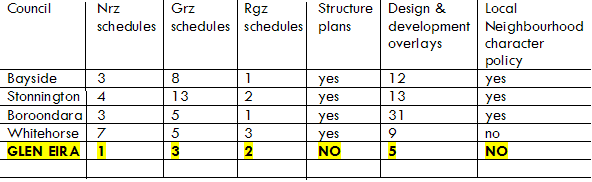
Now to the zones themselves. Even here, Glen Eira has done nothing except change the dates from 2004 (ie C25 gazetted) to 2013 (C110). Again, other councils put Glen Eira to shame in terms of the number of schedules to their various zones, and the increasing numbers of amendments they have put through post the introduction of the zones to provide further protections. We’ve tabulated the evidence below –

cw

Please note that GRZ3 is a ‘belated’ addition to accommodate the rezoning of several sites – the Alma Club in particular. Basically, there are a paltry 2 General Residential Zones in Glen Eira. Also Yarra Council has had its RGZ removed entirely, and Bayside is awaiting the approval of its removal.

The Rocky Report

The Rocky Camera report continues the Glen Eira tradition of publishing misleading and deceptive information. We are supposedly given 4 cases where ‘VCAT has ruled contrary to Council’s planning policies’. Not true! We will examine a few of these in turn.

495 Glen Huntly Road, Elsternwick – In the first place, this application was for a 7 storey building, shops, and 44 dwellings. The officer’s report of 25th November, 2014 recommended a five storey building and 32 dwellings. The site is zoned MUZ (no height limit). Councillors accepted this recommendation and the vote was 7 to 2 with only Esakoff and Lobo opposing the motion. Thus it was NOT VCAT, but council itself which approved this application – minus the reduction in dwellings and 2 storeys. Further, given that there is no record of this on the VCAT website, we must assume that at the hearing, Council again caved in to the developer and either accepted his amended plan entirely so that no full hearing proceeded!

Numerous ludicrous statements are contained in the officer’s recommendations for this development. For example: It is recommended that changes to the building form in terms of height are required to respond to the preferred character for this location. How on earth can there be reference to ‘preferred character’, when there is no preferred character statement in existence?!!!!! And no urban design framework which includes height limits for such sites!!!! Readers may also wish to revisit the so called ‘debate’ that took place in chamber for this application – https://gleneira.wordpress.com/2014/11/26/are-councillors-really-representing-you/

322-326 Neerim Road, Carnegie – application was for 4 storeys, 38 dwellings. Here is part of what the member says. Ultimately, the application is supported to the hilt by council’s policies!!

In submissions, the Council says it took account of the site’s location in the Carnegie Urban Village where planning policies encourage substantial change. It acknowledged that the character of the north side of Neerim Road is rapidly changing as three and four-storey apartment buildings replace single attached and brick pair housing. In this context, it says that only some aspects of the development were unacceptable. These aspects are:

  • the inadequate space for landscaping; and
  • its setbacks from the frontages and the side and rear boundary;
  • a reasonable transition to the lower scale residential development to the north.
  • This implies that a four-storey building is an acceptable response to the site’s context if its scale and mass is proportionate to the site and its surrounds. Conversely, it implies the existing single-storey development to the north and west does not reflect the built form directions sought by planning policy for this area.
  • I find this is the case. I accept the Applicant’s submission that local policy at clause 22.05 specifically targets the delivery of higher density residential development within the municipality’s Urban Villages. Policy at clause 22.05 identifies the site as part of Precinct 8, which encourages ‘a mix of density and housing types’ to ‘accommodate different household types, especially the elderly’.
  • This policy direction justifies the application of the Residential Growth Zone to the site and surrounds. This Zone’s purpose is consistent with policy for Precinct 8 and its provisions envisage buildings up to 13.5 metres in height. Its decision guidelines anticipate site consolidation and larger buildings. .
  • The proposed building responds to the policy direction and the zone controls. It adopts a four-storey form and provides a form of housing that differs from the detached housing that dominates the municipality. The building contains one and two- bedroom dwellings serviced by a lift. These dwellings would suit elderly people seeking to downsize while remaining in the area in which they live. The building also takes advantage of the opportunities created through site consolidation and proposes a larger building.
  • It is substantially larger than the dwellings along Elliot Avenue. Yet the same policy direction and zone controls apply to these properties. I find this gives more weight to these properties’s development potential than it does to their existing low-scale form.
  • As such, I find the building responds to the site’s context.

And here are the real killer comments – .there is little in local policy of the Glen Eira Planning Scheme that directs any specific built form outcome for this site, or any of precinct 8 in the Urban Villages Policy at Clause 22.05. This leaves Clause 55 of the planning scheme to form the basis of decision making about built form, along with the provisions of the Residential Growth Zone and State policy at clause 15.01 and 16.

[6] There was also no dispute from Council that the Carnegie Urban Village policy (at clause 22.05 of the planning scheme) advocates for a substantial increase in housing density and a new built form that is different in character to much of the existing housing stock of the area. (my emphasis)

I agree with these comments. The policies at clause 22.05 anticipate a change in character without setting direction on what that character should be.

COUNCIL CANNOT HAVE IT BOTH WAYS! IT CANNOT ARGUE THAT VCAT IGNORES COUNCIL POLICY, WHEN POLICY IS NON-EXISTENT, ARBITRARY, OR CONTRADICTORY! Thus the statement that (e)ach (of these cases) are examples of VCAT not applying local policy is total bunkum.

Several other Camera statements need to be challenged. We’re told –

In 2000 Council refused a planning permit application for a residential development in Norwood Road, Caulfield North. Council refused the application primarily on noncompliance with its housing policies. VCAT overturned Council’s refusal. Council subsequently challenged VCAT’s decision at the Supreme Court on grounds that VCAT had not considered Council policy. The Supreme Court found that “to consider is not necessary to adopt or follow”.

Yes, it is true that Council (stupidly!) went to the Supreme Court, and probably spent a fortune on lawyers defending a case that should never have gone to court. Appeals to the Supreme Court against VCAT decisions can only be made on points of law – ie did VCAT err? The Justice of the Supreme Court found that there was no error in interpreting the law. In fact, Council simply had a planning scheme which did not make sense. We’ve gone back to the records of the time and here is what happened.

The VCAT decision was Gory v Glen Eira and council’s refusal to grant a permit was made under delegation by the Manager of the time. At the time, and it took over 4 years to change, Council had a policy which it labelled ‘incremental change’. This terminology and the policy itself was severely criticised by VCAT members on numerous occasions. Here are parts of the Gory decision and also another case – Anderson v Glen Eira (30th April 2000). We cite verbatim from the VCAT records –

This involves converting the rear split level apartment into two separate self contained dwellings. Each apartment is to have living, service areas and two bedrooms. All the additions and alterations are to be contained within the existing building envelope. The proposal involves a building in a courtyard at the lower level to increase the floor area of the ground level apartment. This is slightly compensated by the removal of the north-west corner of the building in order to provide ground level private open space. The upper floor is to have private open space consisting of two balconies totalling 11 sq. metres of inside area but both are narrower than the 1.6m depth parameter of the Good Design Guide. The ground floor open space is approximately 25 sq. metres. A new single driveway is proposed at the south-west corner of the frontage to an open car space within the frontage area now containing some dense vegetation.

The City of  Glen Eira  has a particular policy in relation to incremental change and this area is of one of those specified as an incremental change area. A number of tribunals including this one have commented on this incremental change policy in recent times and those comments have generally been negative ones. However, the City of  Glen Eira  keeps rolling the same policy out at any application for review of residential development. It insists that incremental change does not only mean an increase but a decrease in the number of dwellings per site for locations where higher densities already exist. Incremental change does not mean no change.

The Council’s grounds of refusal included reference to its Municipal Strategic Statement’s objectives. This proposes that, apart from key areas which are set aside for increased densities around shopping centres, transport nodes and the like, its residential areas should remain unchanged although some incremental growth will be provided for medium density housing. In the context of this policy one wonders what incremental growth is. The Oxford Dictionary defines incremental as “where something variable increases by a small amount”. This I believe could only be considered to be normal growth. The MSS also indicates that incremental does not mean no change and I agree with this. The problem here is that the responsible authority seems to consider it does mean no change. That is the perception I have gained from a number of recent submissions made to me. Incremental means normal. Normal growth should include some medium density housing and one would hardly consider the occasional house behind an existing house or a dual occupancy to meet the true meaning of multi unit development, which is why they were separately defined as “Dual Occupancy”. (Anderson versus Glen Eira) (30th April 2000)

The Municipal Strategic Statement of the time had this doozy in it –

 Incremental  change could vary from location to location within the municipality. It could mean, for example, a dual occupancy on a conventional site in a location predominantly characterised by detached housing. It could also mean several dwellings on a site where the site is significantly larger than conventional sized lots in a given location. The level of development would be limited to the extent that change could be said to be  incremental  . Conversely,  incremental  change could mean no increase or in fact a decrease in the number of dwellings per site for locations in which higher densities of development are not encouraged but already exist.

It’s no wonder then that in another judgement (Bedrega v  Glen Eira  CC [2001] VCAT 2400 (3 September 2001) – the member said –

Council’s view is that a dual occupancy development on the subject land would be  incremental  change, but 3 dwellings as proposed would not be. In fact the Council issued in September 2000 a planning permit for a dual occupancy development on the land. But what is ”  incremental  change”? This Tribunal has previously expressed its difficulties in interpreting the term and the policy as it is expressed in Clause 21.04, most notably in Brichon Developments Pty Ltd v  Glen Eira  City Council (2000/086932; 8 VPR 10), a case dealing with a situation similar to the one before me in that the proposed development was for three dwellings, but the Council refused to grant a permit on grounds including that the degree of change represented by the proposal would not accord with the  incremental  change policy. In the Brichon case Mr Read analysed in detail the  incremental  change policy and made a number of trenchant criticisms of it, perhaps best illustrated by the following statement:

“Another difficulty that I have had interpreting the “  incremental  “change policy is that it is almost impossible to convert it into any meaningful or objective measures (e.g. an  incremental  change in what: the height of the dwellings, the amount of open space, building bulk, driveway crossings, neighbourhood character?). The question of what degree of change is  incremental  is almost impossible to explain and the possibility of getting two independent people to agree on what or what is not an acceptable increment seems remote.”

Thus when judgement after judgement goes against council because of its nonsense and poorly worded policy of “incremental change”, council decides to spend a fortune and go to the Supreme Court. How much did this cost ratepayers, and for what?

The final Camera transgression comes with this –

Council’s local planning policies are “well written, clear and unambiguous”. If implemented, they can “reduce the challenges at VCAT and make the whole decision process more transparent”.

Perhaps Camera did not notice that Wynne is NOT TALKING ABOUT GLEN EIRA. He is stating the principle that all policies should be ‘clear and unambiguous’ – then they might have some hope of getting up. In Glen Eira a miracle needs to happen. It may have started with the departure of Newton and Akehurst, and hopefully all of these 9 councillors!


« Previous PageNext Page »