GE Council Meeting(s)


ITEM 9.7 – MRC

(ESAKOFF, LIPSHUTZ & SOUNNESS WERE APOLOGIES FOR THIS MEETING)

Delhunty moved an alternate motion that included: that the MRC has entered into a lease with the Alliance group involved with the level crossing removal project where “commuters’ will be allowed to ‘park for free’. This is a ‘sub lease arrangement’ and is ‘valued at approximately $90,000 -$100,000’ for 2 months. Motion also said that council write to the Trust to ensure that ‘they are aware’ of the arrangement. Also copies go to Minister for Environment & Climate Change, Lisa Neville, Auditor-General and members of parliament. Seconded by Magee.

DELAHUNTY: said that the report was first off about access arrangements for the public and what has been happening. Not a lot has been happening but there are ‘other current arrangments’ including a ‘commercial’ deal that has ‘been struck between the Alliance’ and the MRC ‘that values the Guineas car park, conservatively’ for $90,000 for 60 days. That’s just over $1,400 per day. In the ‘stalled’ lease negotiations between the Trust and the MRC ‘their offer and their apparent independent valuation’ is ‘offering the community 30 cents a day’. From this disparity, we ‘can see how absolutely outrageous’ the MRC’s offer on the lease is. ‘It shows what contempt they hold the community in’. ‘We won’t put up with it’ when the MRC itself values the land far more highly. Thus in the private arrangement the MRC ‘are making now what would cover’ their current lease. Even the 95,000 for the lease is a ‘poor outcome’ for the community when there is a valuation which says they should be paying closer to a million dollars for the lease of the land. Said that the starting point for any negotiations should be ‘what they have valued’ the car park land as. She is ‘hopeful’ that in passing this information on to ‘ those negotiating’ the lease that there will be ‘a better outcome for the community’.

MAGEE: started off by saying that the MRC ‘doesn’t seem able to put their hands on the agreement’ of 2011 and he suggests that ‘they look in the same filing cabinet’ where they can’t find the documents for the leases for the ‘northern stables’ and Aquinita Lodge. Ratepayers and taxpayers of Victoria are ‘paying in excess of a billion dollars’ for the grade separation but the MRC is ‘making a profit out of it’. They think that ‘you need us’ so we are ‘happy to sub-let Crown Land which you own’ and make you pay for the land that you own’. When the price they are paying for t’that small car park’ is ‘extrapolated’ across the 50 hectares of land then the ‘one million dollars is insignificant’ because it becomes more like ’40 or 50 million dollars’. Said that the MRC ‘are not what they portray’ themselves to be – they aren’t community minded nor a ‘friend of Glen Eira’. They have the ‘absolute need to profiteer’ and to ‘charge’ the taxpayers of Victoria to ‘park on their land’. ‘This is not only appalling. This is sickening’. Said that the ‘minister should be aware of this. The minister should be commenting on this’. If the MRC are ‘allowed to sublet’ the Guineas car park, then they can ‘sublet any part’ of the racecourse. Question is ‘what are they allowed to do’. Said there is ‘no lease in place’ and that it is an ‘ongoing, day by day’ process. Plus ‘anyone who sits back and accepts this’ is equally in contempt with the MRC.

OKOTEL: endorsed the motion and ‘queried how genuine’ the MRC are about ‘talking with council’. From the ‘invitation’ in the letter printed in the agenda, council has ‘sought’ a meeting with the MRC but it is ‘disappointing that they don’t seem to be able to make the time’. Said that there is no time set aside ‘as yet’. Thus, whilst the tone of the letter suggests they are ‘willing to have an open discussion’ that’s not happening but it’s important for council to ‘continue to advocate strongly’. ‘Despite’ the letters they get ‘very little progress is being made’.

HYAMS: asked for an amendment that when ‘further information’ is received that a report be tabled. This amendment was accepted by the mover of the motion and seconder.

DELAHUNTY: what needs to be finalised is the lease but negotiations ‘have broken down’ because there is ‘an incredible discrepancy between valuations’. The MRC has for the last 20 years paid about $90,000pa. They think it’s valued at $100 per year and the ‘council obviously thinks much higher’. The lease to the alliance shows that the MRC doesn’t value the land at $100 per year but much more and they are ‘trying to take the trust and the community for fools and we won’t stand for it here’. Their subletting will ‘help move the lease’ negotiations forward because it shows their own valuation of the land.

MOTION PUT and CARRIED UNANIMOUSLY


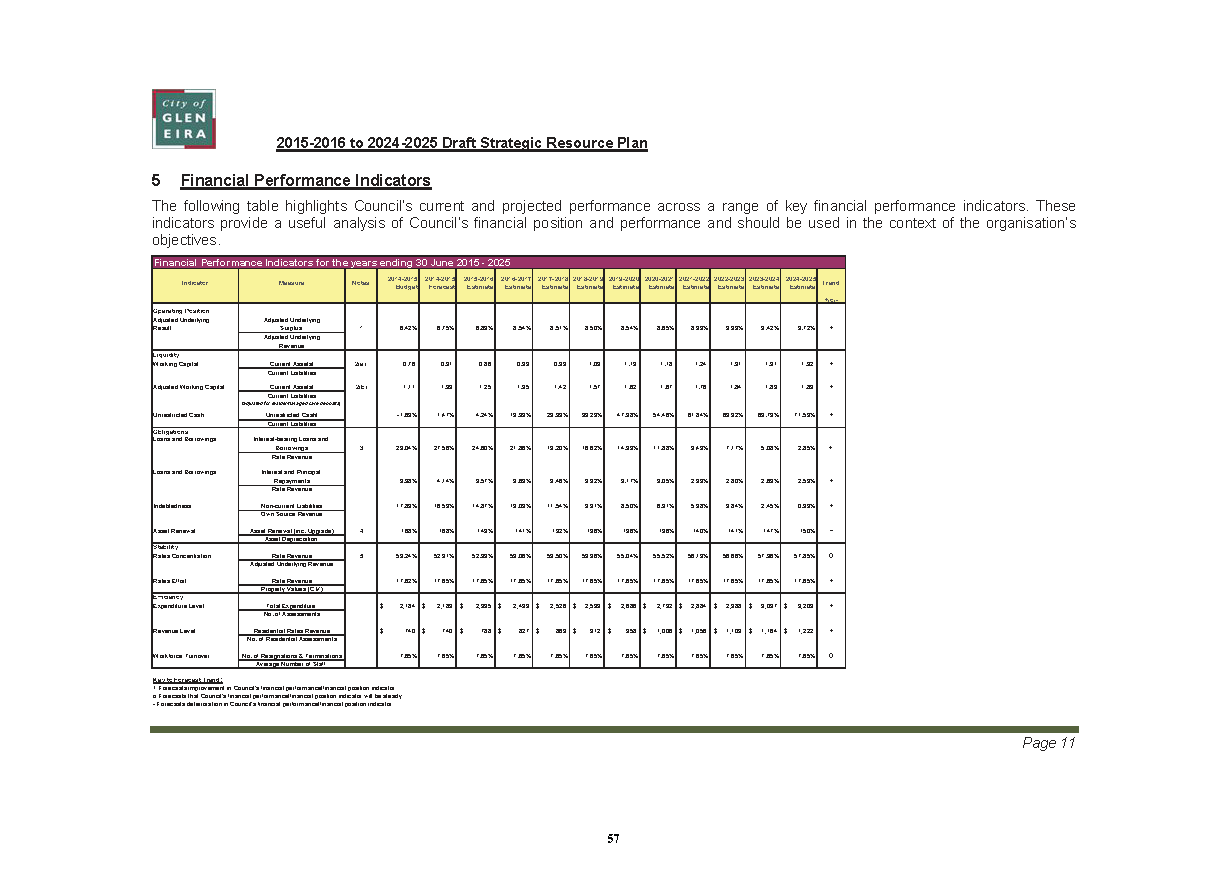
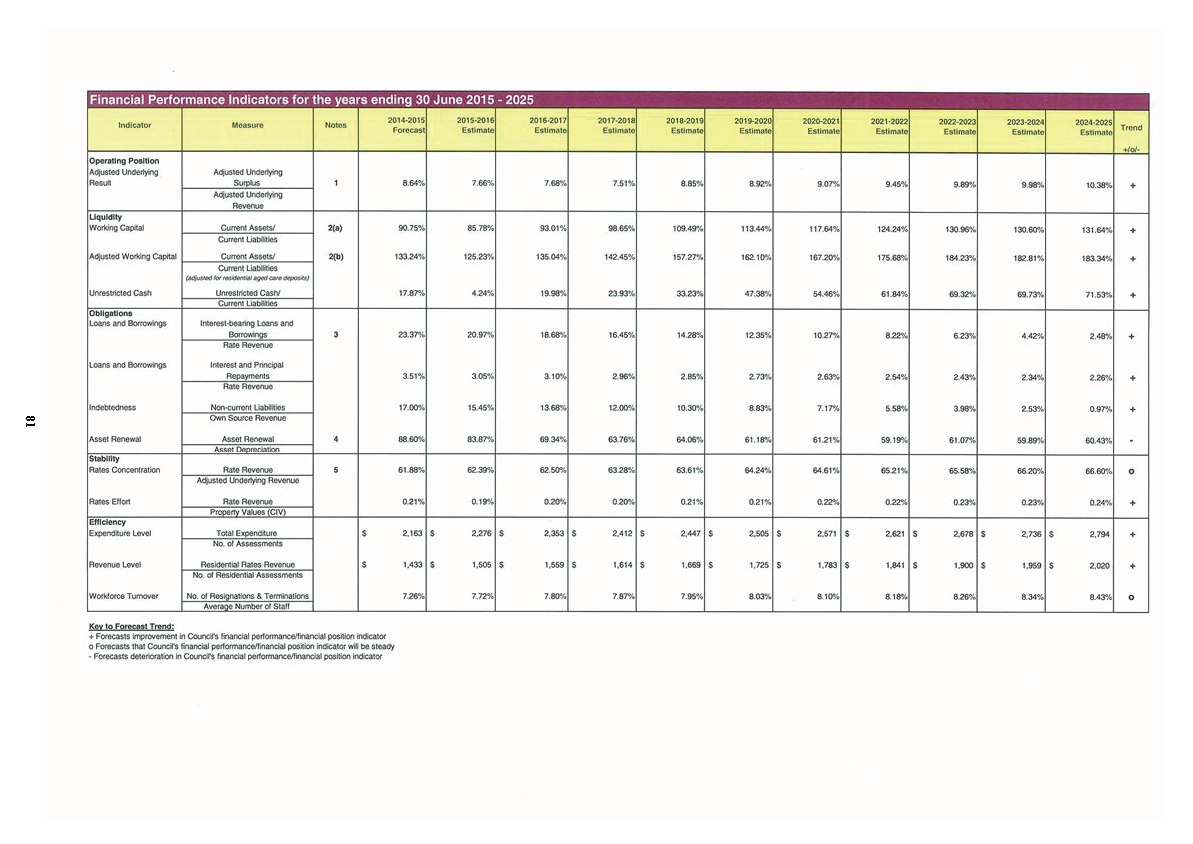
How on earth does a council stuff up so badly on financial reporting when:

This is all about Item 9.12 of the current agenda where we find the following unbelievable admission –

On assessing the financial indicators as part of the end-of-year accounts review, officers identified a number of formulaic inconsistencies and errors in the indicators listed in Council’s Strategic Resource Plan compared with the calculations in the LGPRF template.

To ensure consistency with the Local Government Performance Reporting calculations, officers have recalculated the financial indicators and have reproduced these (refer attached). They will be updated in Council’s Strategic Resource Plan.

So readers may judge for themselves the magnitude of these errors, we ask them to compare the ‘original’ SRP (passed and accepted without question by our wide awake councillors) and the current version. Simply click on each image to enlarge. We do apologise for the quality of the images – that of course is dependent on the formats that council chooses to publish its material. Otherwise readers should go directly to the minutes of these council meetings.

CIRCA MAY/JUNE 2015

Pages from June23-2015-SPECAIL-AgendaAUGUST VERSION

Pages from Agenda_11_August

PS: We’ve received the following email from a resident and believe it needs highlighting. We have edited out the address.

Dear gedebates.
Our street, Elliott Ave Carnegie has now lost 8 houses, between Neerim Rd and Jersey Pde (railway end) not including the corner blocks on Neerim Rd to the rampant development.  We were rezoned 2 years ago to RGZ1 and there are only 7 out of 15 remaining. We live at XXXXX Elliott and have found out the three houses next to us, to the north have been sold. We will also be facing 5 houses opposite us, all of which will be 4 stories, in a street of single dwellings. The dramatic increase in traffic, people and loss of our community is devastating after a peaceful and lovely 35 years.
I know this is happening everywhere. We feel helpless and incredibly angry with the council.
where to from here?

We featured Elliott Avenue several months ago – a street that was full of beautiful well kept homes that has now been sacrificed like much of Carnegie. See: https://gleneira.wordpress.com/2015/02/09/one-little-local-street/

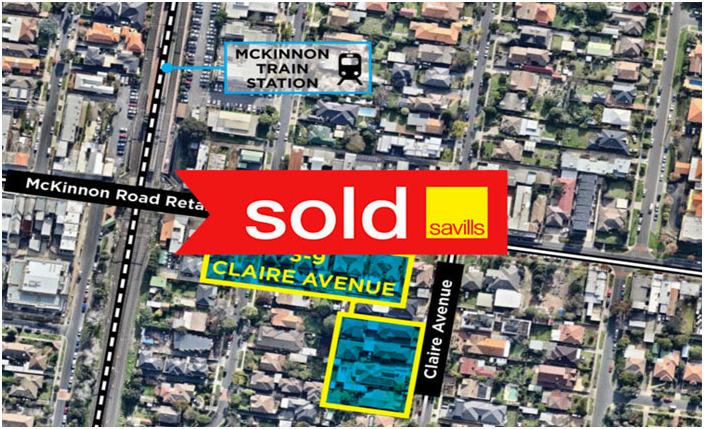
Six McKinnon neighbours sell combined residential development site for $8.88 million

Untitled

Six home owners at McKinnon in Melbourne’s south-eastern bayside, have reaped a $8.88 million, off-market sale of their residential development site.

Savills Australia’s Julian Heatherich brokered the sale of the 3 to 9 Claire Street offering.

Sold at what is believed to be a record $2913 a square metre for the area, six neighbours came together with the common aspiration to create a one-off opportunity by combining their properties to form an attractive development prospect.

“Six home owners have reaped a circa 40% price windfall,” Savills Australia’s Julian Heatherich said.

The property, comprising four residential sites totaling 3049 square metres and six individual properties (six owners), is zoned General Residential, has 60 metres frontage to Claire Street, minutes walk to McKinnon Road retail strip and railway station.

Source: http://www.propertyobserver.com.au/finding/commercial-investment/reits/44120-july-15-comm-prop-six-mckinnon-neighbours-sell-combined-residential-development-site-for-8-88-million.html

COMMENTS

  • How many dog boxes will the developers have to build in order to recoup their money and make a profit? 60? 80? 100? All feasible on 3000+ square metres zoned for 3 storeys!
  • How much longer will council continue with their bullshit that the zones have nothing to do with this rampant over-development?
  • What is ‘capacity’ for a dead end street that contained 10 lots (two of which each contained 2 single storey units) making a total of 14 dwellings in the street not so long ago.
  • Since the zones have come in, this has all changed and the population of this street is set to increase by at least 1000%. That’s right – 1000%! Here’s why –

1 Claire St (with land size of just under 800 sq metres has recently been sold). A permit has been granted for 3 double storeys

6-10 Claire St is now heading to VCAT for an adjudication on a three storey development consisting of 36 units and a reduction in visitor car parking. Council refused the permit.

Then there’s 11 Claire St, with a permit for a two storey dwelling and 9 units – achieved after three VCAT visits. The first two refused permits for (a) 4 two storey dwellings in June 2012; (b) 2 storeys with ten units (October 2012) and finally in August 2013 a permit for 2 storey and 9 units. When granting a permit for this last decision the member stated – I am similarly satisfied that the design and scale of the building generally represents an appropriate response to the existing and envisaged character of the area in that the two storey scale ensures the development does not dominate the streetscape. The building includes elements that sympathetically respond to the prevailing architectural typology. These elements include wide eaves, pitched roof forms, good fenestration, basement garaging, and (subject to conditions) reasonable front, side and rear setbacks in order to provide for appropriate landscaping.

So now we’ve gone from two storeys to the blank cheque handed to developers for 3 storeys – all with flat roofs, removal of every single tree and vegetation on site, and setbacks that are a joke! And the total number of dwellings in a street barely 50 metres long has gone from 14 to possibly 130-150 dwellings. Thus hundreds of cars and all having to enter and exit onto McKinnon Road!

This is planning madness for sure and the blame must be laid at the feet of this council. The inconsistencies, the contradictions and the lack of justifiable strategic planning is unforgiveable. And what must never be forgotten is the simple fact that residents were the last to know about the zones. Like mushrooms we were kept in the dark – not worthy of being ‘consulted’, and not worthy of anything except paying rates that have been going up year after year by 6.5% – all needed to pay for increased staff and huge pay rises to the CEO! That’s the culture, the ethos, and the ethics of this administration and its lackey councillors!

Hyams moved to abandon amendment plus ‘affirming’ Amendment C75 (which set up the C1 in the centre and 10 storey heights) and Plan Melbourne. Lobo seconded.

HYAMS: went basically went through the officer’s report outlining the history of the site and what occurred with C75 amendment in 2010. There was ‘maximum of 2000 square metres of retail’ with this amendment so that ‘it would service the people who work there’. Council sent 600 notifications and got 15 submissions – objectors didn’t turn up to the Panel hearing. In 2012 Minister changed zoning and now developer wants to put up to 1250 apartments and 12000 square metres of retail. Said that there are two options before council – to send to a panel or abandon amendment. On officer’s recommendation to go to panel said that this was ‘not an unreasonable recommendation’ because that would mean ‘we do some more investigation’ and the panel would ‘weigh up’ the evidence and make their own recommendations which council is then ‘free to accept or reject’ or modify. It then goes to the Minister. However, he thinks that sending it to a panel ‘would be a waste of everyone’s time and money and effort. ‘ Claimed that this view was only formed ‘late last week’ after he read the objections. In fact, ‘I can’t see myself ever supporting what the applicant is asking for’. Has ‘grave concerns’ about the ‘residential component’ and the impact on traders and ‘allowing this to proceed to the Development Plan Process’. Stated that Gillon ‘proposed’ that the amendment be changed to 1250 apartments but officers’ advice was that this may not have ‘statutary weight’. He thought that even 1250 and 3000 people is ‘still too many for this site by a long way’.

Unlike Caulfield Village this isn’t a ‘transport hub’ with only buses and would ‘increase population’ by 10% in East Bentleigh, plus the retail component could do ‘significant’ harm to local traders and shopping strips. Said council received a ‘peer review’ on the applicant’s retail impact statement and that ‘points out’ that shops ‘on the border of Glen Eira’ were ignored by the applicant’s consultants.

Said that ‘neither’ the residential or retail ‘fit our strategy for this site’ which is for Virginia Estate to ‘continue to be an employment hub’. His ‘concern’ with the Development Plan process was that if the amendment is passed and they make a ‘subsequent decision on the Development Plan’ that is ‘ultimately reviewable by VCAT’ and ‘I absolutely have no faith in VCAT’. He wants ‘something of this significance to remain under Council control’ and not the ‘whims of VCAT’.

On the survey it was ‘not from Council’ and people have two choices – either they believe it is a conspiracy or incompetence and he sees it as incompetence because he doesn’t believe that ‘the applicant actually intended to mislead’ people. But ‘the nature of the questions’ were ‘fairly distasteful’ and ‘designed to produce the desired outcome’. But ‘distasteful as is it’ they ‘don’t make planning decisions to punish’ people and so ‘this hasn’t influenced my decision’.

Wanted to address some comments made at the Planning Conference. Once was from Staikos who ‘said that it is the new planning zones that are causing development’. Said that ‘our new planning zones are not causing development’ since apart from ‘one small patch’ developers can’t build what they could before and there’s only been a ‘rush in development’ between the announcement and the gazetting because developers tried to get their applications in on the old system. Others question why council is ‘only getting 5.7%’ as an open space levy. Said that ‘experts’ determined how council ‘could get the most money’ and they said that a ‘flat rate’ for all areas was better because if they wanted more for sites such as Virginia Estate then ‘we couldn’t have got’ the 5.7% for the rest of Glen Eira. In fact the ‘person who raised that at the conference was responsible for holding up’ the amendment and costing council ‘one million dollars’. So ‘that’s what you call chutzpah’.

Now the applicant can ‘get on’ with developing the park according to Amendment C75 ‘which is in accordance with our strategy’ or they can put in a new amendment together with a planning application and ‘that way we know what we’re getting’.   This was one major cause for worry for residents and councillors because ‘beyond broad parameters’ no-one knows ‘what they’re getting’. So with an amendment and planning application ‘we know what we’re getting and we make the decision’ and ‘not VCAT’.

LOBO: ‘I rise to speak for the people of East Bentleigh’. ‘People elected me to represent them and I will’. Said he won’t support amendment because ‘people do not want’ it. ‘My loyalty is towards the people of East Bentleigh’.

PILLING: said he chaired the planning conference which was a ‘good meeting’. Wanted to thank the community for their input. Said he supports the motion for 2 ‘chief’ reasons – lack of public transport and it’s not like the Caulfield Village which has a major transport rail line. Other reasons was ‘concern’ from the traders’ associations. The amendment isn’t ‘suitable and doesn’t fit our strategy’. Agreed with Hyams on the new zones that ‘you can’t get something now that you couldn’t before’ and that ‘you could probably get less now’. Plus ‘drawing a long bow’ then all parties at federal level are responsible because they ‘encourage population growth’. ‘Our job is to manage that population growth and set standards’. There’s been a lot of ‘criticism’ of council. Most ‘constructive’ but some ‘over the top’ and that’s like ‘criticising an umpire before the decision is made’. ‘Overall’ he ‘welcomes the community’s input’.

DELAHUNTY: said that in ‘making my mind up’ she is concentrating on ‘three particular areas’ – strategic reasons, planning reasons and community input. If she lets this go to a planning panel then didn’t think that she would be ‘upholding’ the premises of ‘local government’ – ie ‘listen to the community’ and then apply the strategic and planning ideas. Said mainly to the ‘applicant’ that when ‘you seek community consultation’ this must be done with ‘integrity’ and is ‘about a two way conversation’ and not just about ‘telling the community what you are about to do’. So it’s listening, ‘taking on board’ what people say and then ‘making some changes along the way’. Conceded that there ‘had been some belated attempts to do so’ and she commended the applicant on that. SAid that the Municipal Strategic Statement from the planning scheme identifies this as moving from industrial to a ‘really important employment node’. Said that ‘I don’t see any strategic reason’ why this objective should ‘go’. On planning grounds, if there is to be the upholding of this site as an employment zone then ‘commercial 2 is the best way to do this’. So, ‘I don’t find that there are planning reasons to move this forward’.

LIPSHUTZ: said that he suggested at one point that a panel would be the ‘best way to go’ so that residents could go and make submissions and it would come back and ‘we could look at it’. But he then ‘thought’ about it and decided that even if it went to a panel “I couldn’t support it, so why go to a panel in the first place?’ Repeated that ‘we intended this to be an employment hub’ and won’t be ‘under this proposal’. ‘I don’t think you can trust what the developer has said’. Hyams said incompetence, he suggests ‘conspiracy and they’ve been ‘deceptive’. Said there’s been ‘bandied around’ 4000 and 1250 units but ‘I don’t know what’s going to happen and I don’t trust them’. But ‘that’s not the reason’ why he is voting as he is. This ‘isn’t C60’ and isn’t CaulfieldStation and it will ‘kill business in this whole area’. Said he wanted to see the area ‘developed’ and for it ‘to go forward’. ‘Not something that is forced on the community’.

SOUNNESS: Said he was sure that the applicants don’t consider the issue as ‘dead’ and there will ‘have to be a discussion and the presentation of something new’. For people in the gallery there ‘will be more discussion in the future’ on ‘how is this going to be the best thing for Glen Eira’ and how ‘to meet the needs and expectations of residents’. He expects the applicant will now ‘have a chat’ with the community and officers. Suggested that ‘you maintain an eye out’ and ‘stay aware’ of any developments and ‘be part of the conversation’. It’s the ‘applicant’s land’ but ‘your city’ and the job of council is to ‘mediate’ between the two to achieve the best outcome. Said there are gaps in the planning scheme and that’s made him ‘uncomfortable’.

ESAKOFF: said that this has a ‘long history’ and she remembers her childhood when it was W.D & H. Wills. Glad that there has been such a great response from the community because it’s been a ‘terrific exercise in community consultation’. The amendment ‘doesn’t meet council’s strategic planning’ or council’s ‘sustainable transport’ strategy that seeks higher density in transport hubs. This isn’t one of those transport hubs. Admitted that council ‘tried hard’ to get the bus to go down East Boundary for GESAC but ‘to no avail’ and if council ‘can’t get it’ she didn’t know how the developer could.

OKOTEL: thanked both applicant and residents for the ‘amount’ of ‘information that was provided’ because ‘this was critical in our decision making’ and ‘helped us raise questions with the officers’ . Agreed with others and mainly about the impact of ‘density’ and what this means for residents in the area in terms of ‘traffic and infrastructure’. Even though she wasn’t a councillor when C75 came in, she thought this was a ‘better fit for the area’ than leaving it as ‘industrial’. However, ‘changing the zoning would lead to over-development’ and therefore can’t see ‘any reason why’ the amendment should go to a panel.

MAGEE: said that in his 7 years on council ‘nothing has scared me more’ than this. He lives in East Bentleigh and the weight of the decision meant many ‘sleepless nights’. Accepted that the ‘developer’ is trying to ‘maximise the return on his investment’ but the ‘cost is our community’. East Bentleigh was the most liveable city but not if this goes through. ‘Something will be built on this site’ but if it’s about ‘land’ then every inch is important in Glen Eira. Said that council has to ‘maximise’ open space ‘where we can’ but ‘more importantly we have to maximise the amenity’. We know that there will be ‘change’ because there are 1000 residents each year who ‘want to come and live with us’. SAid the developer has to think whether it’s all about ‘maximising’ profit or also giving residents ‘something that benefits them’. Amendment C75 is not ‘in place’ and thought that ‘we will be back here in 18 months time’. Ultimately ‘it’s about maximising the best use of the land’ and he doesn’t ‘want this change’.

MOTION PUT AND PASSED UNANIMOUSLY (APPLAUSE FROM GALLERY)

Planning Permit Activity reports are now available for the entire financial year of 2014/15. The figures represent ‘net new dwellings’. From July 2014 to June 2015, another 2885 dwellings have received permits. This is on top of the 1713 from the previous year. Population projections for Glen Eira tell us that in order to meet housing needs the municipality will require 9000 new dwellings by 2031. Since the zones have come in the numbers have gone through the roof – 934, 1713, and now 2885 – for a grand total of 5532. Hence in the space of three years Glen Eira has achieved an average of roughly 1800 dwellings per year – triple what is stated in the fossilised Planning Scheme. At this rate, the 9000 new dwellings will be reached in 2018 and not 2031!

Given these figures, today’s Letter to the Editor, is very relevant.

Untitled

The officer’s report for the proposed Virginia Estate Amendment recommends that the Minister appoint an ‘independent’ Planning Panel. No surprises there! Nor is the ‘quality’ of the report itself a surprise. Once again it is short on justification, short on comprehensive analysis, and most importantly fails to adequately address and answer residents’ concerns.

By way of contrast, we feature below the officer’s report from 17th March 2010, which recommended sending the Caulfield Village Amendment C60 off to a planning panel. Whilst this Amendment itself is steeped in controversy and back room wheeling and dealing, we ask readers to carefully consider the far greater detail that went into this report – in contrast to what’s been dished up now with the Virginia Estate amendment. We also acknowledge that the C60 was based on what was called an ‘incorporated plan’ rather than a Development Overlay as with Virginia Estate. However, the end result is basically the same – ie setting height limits, etc and both needing a Development Plan in the future.

Please compare the two and note the details that are lacking for this current amendment. It highlights once again in our view:

  • The failure to present all the relevant information
  • Questions need to be asked regarding how ‘unbiased’ and ‘objective’ the report actually is?
  • And the most vital question – why are residents once again ignored, spurned, and not listened to?
  • FYI – we’ve uploaded the officer report HERE

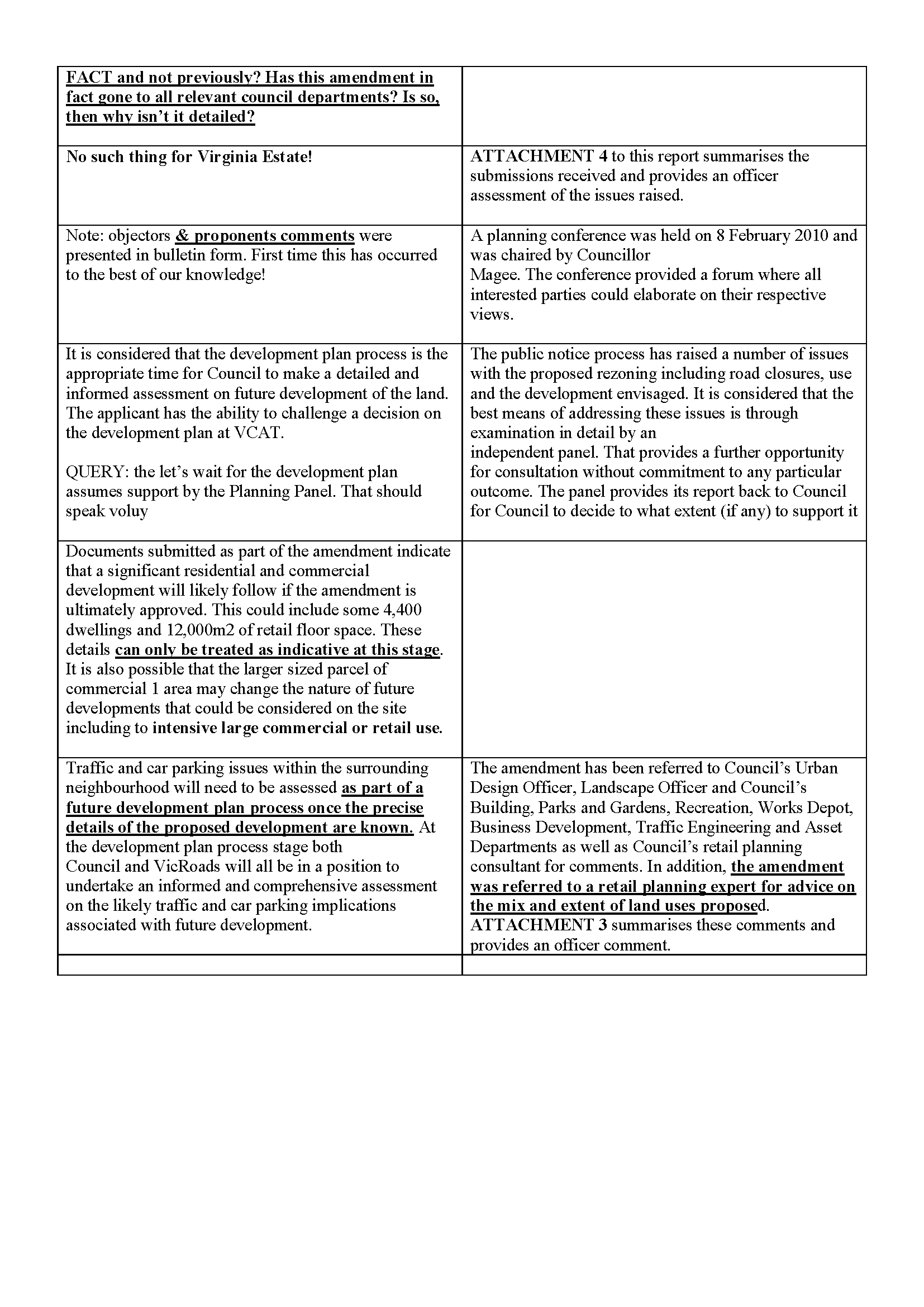
VIRGINIA ESTATE_Page_1VIRGINIA ESTATE_Page_2

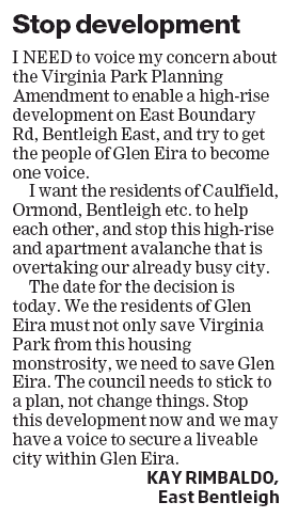
Bentleigh East high rise development hangs on Glen Eira Council’s rezone vote

Rodney Andonopoulos is worried a new development at Virginia Park, Bentleigh East, will c

Rodney Andonopoulos is worried a new development at Virginia Park, Bentleigh East, will cause traffic chaos around the neighbourhood. Picture: Valeriu Campan

HUNDREDS of objections to a rezoning proposal to allow for a high-rise, high density development have been filling Glen Eira Council’s mailboxes.

And Mayor, Cr Jim Magee said he expected “a gallery filled with protesters and placards” at the next council meeting.

The large development complex planned forBentleigh East’s Virginia Park, hangs on a crucial rezoning vote at the July 21 meeting.However, speaking on behalf of developer Gillon Group, one of the project’s development managers, Adam Brix from Brix Property Group, said there would be 1250 houses and not 4000 as objectors have been printing on distributed flyers.

Mr Brix said an engineers report, commissioned by the developer, worked on “an absolute maximum development scenario” when investigating services in the area.

That report, which is on exhibition as part of the rezoning process, assumed that the site would be developed for 12,000 square metres of retail floor space and 4,462 residential dwellings.

“The dwellings numbers referred to in the infrastructure report should not be construed as what is intended to be developed,” Mr Brix said.

But community members, who fear the developer would build as close to the maximum capacity as possible, have submitted more than 250 objections already and more were expected, Cr Magee said.

Councillors must make a decision on rezoning the estate from Commercial 1 and 2 to Commercial 1 which would allow for the residential and shopping centre development, by either recommending it to an independent panel or voting against a rezone.

It can’t simply urge the planning minister to approve because of the community objection.

Cr Magee said the said the community response had been “one of the most vocal” in his time on council.

“It’s very, very rare that we see a response like this and it just shows how protective the residents are of their suburb,” Cr Magee said.

“And I suspect come the meeting we will see the gallery filled with protesters and placards like they used to be.”

There is also a Facebook group opposed to the development.

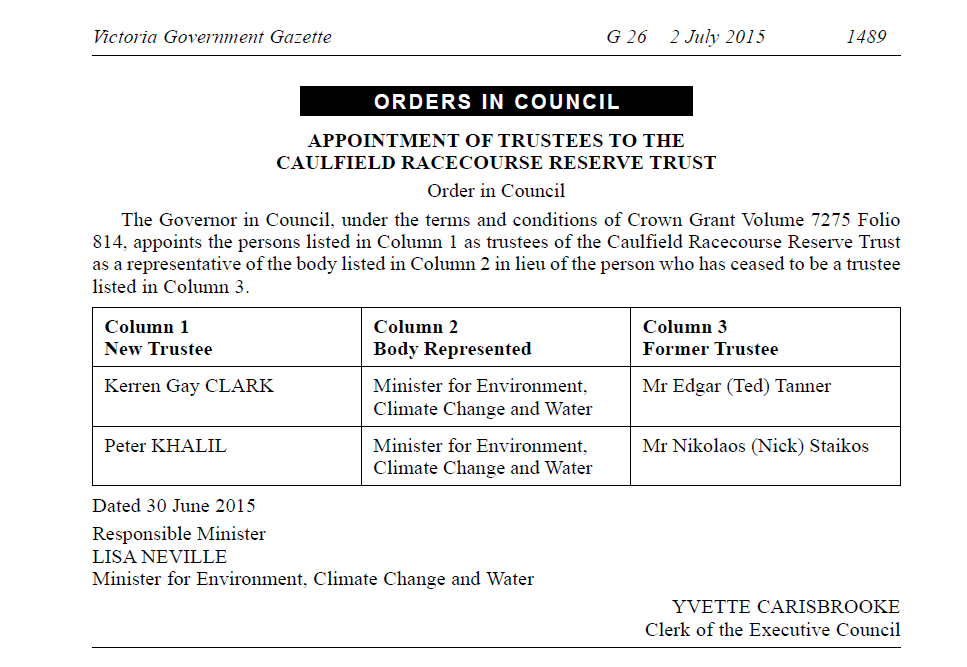
PS: OFF TOPIC BUT OF INTEREST TO RESIDENTS. FROM YESTERDAY’S GOVERNMENT GAZETTE

Untitled

Before we report on the farce that occurred at last Tuesday night’s council meeting we wish to make the following comments and ask residents to carefully consider what occurred and the questions raised.

Why is it that in Glen Eira resolutions mean bugger all – that they can be ignored, changed, forgotten about, and reneged upon at will, or presumably at the behest of vested interests? Not for the first time have those same councillors (Lipshutz, Hyams and Pilling) totally ignored resident views and aspirations. It is significant that not one single councillor mentioned the fact that a petition of near a thousand signatures was tabled seeking to preserve Frogmore, nor that over 300 submissions came in supporting the amendment for a heritage overlay.

We also find it extraordinary that at the very last moment both Delahunty and Esakoff just happened to discover that they’ve got a conflict of interest. We remind readers that this conflict did not exist when both voted to go to Heritage Victoria and then to draw up the amendment a few short months ago. Surely aged relations couldn’t have aged that rapidly to suddenly find themselves in need of an aged care facility that will take at the very least two years to be operational? We certainly anticipate plenty of objections once the plans are submitted and people trot off to VCAT so it is likely to be even longer than two years.

The result is that 3 councillors – a minority – decided what happens in Glen Eira. That isn’t ‘representative government’ and nor is it listening to the community. Just as with the C60, residents are being duped and dudded and repeatedly ignored.

And as always, the level of argument is abysmal. How on earth Okotel can speak about costs, and then in the very next sentence ask for 3 additional heritage reports, is mind numbing. Or more to the point, how all her arguments suggest opposition to going to the panel and then to vote in favour of going to a panel is equally mind numbing.

For a council that repeats ad nauseum that it is ‘planning law’ and ‘policy’ that determines decisions, ‘planning law’ fails to get a mention in the ‘debate’. Not one word on ‘planning law’ from councillors and not one word from the officer’s report. Instead it’s all smoke and mirrors and pure unadulterated gibberish and misrepresentation of the facts – as so clearly pointed out by the National Trust (see link below). Further, how dare Hyams and Okotel argue that cost should be the determinant of whether or not something goes to a panel, or (worse) what is financially ‘viable’ for the prospective developer. Even here, Hyams’ claims are far from the truth when he asserts that ONLY a 120 bed facility is worthwhile for the developer. In Glen Eira  there are currently plenty of aged care facilities that offer far less than 120 beds and have managed to stay in operation for eons – eg: Estia Health Bentleigh has 45 beds; Claremont Terrace has 94 beds; Lovell House has 40 beds; Victoria by the Park has 70 beds; Hammond Care has 60 beds and Montgomery has 30 beds and there are plenty of others in this category.

We might also quibble with Hyams’ assertion that the Churches of Christ were forced to sell because 60 mere beds is ‘not viable’. In the first place, the current owners are based in Queensland. They only have 3 aged care premises in Melbourne and are currently looking to invest far more heavily in their own home state as their Annual Reports and corporate strategy documents indicate. Perhaps it’s simply the old adage of ‘charity begins at home’ – ie Queensland – and not because a 60 bed home that has been in existence for decades is suddenly going to the wall?

All of this leads us to ask these fair and reasonable questions:

  • Is it coincidence that Delahunty and Esakoff suddenly discovered a conflict of interest? Or is their ‘maybe’ conflict nothing more than a political shirking of the necessity for a vote?
  • Have some of these councillors learnt their lesson about Planning Panels and Heritage – ie remember the Esakoff Seaview property fiasco where the Panel came down in favour of objectors? Is that why going to another Panel was deemed too great a risk– especially in light of the damning comments of the National Trust and the most recent (and hence valid) heritage assessement? See: http://www.trustadvocate.org.au/frogmore-soon-to-be-no-more/?
  • If the prospective buyer was other than Jewish Care would the Frogmore case now be firmly set for a panel hearing rather than demolition?

Here’s what happened. Please read carefully.

Delahunty declared a conflict of interest under Section 78(b)(1a) of the Local Government Act in that she’s a ‘manager of a company’ that ‘may have an interest’ in the proposal. Pilling then assumed the chair. Esakoff then declared a conflict under Section 79(b) under ‘conflicting personal interest’ in that she has ‘very close relatives’ who are ‘currently looking for aged care places’ and that she ‘feels’ that this wouldn’t be out of the question for them as a residence. ‘On that basis I request leave’ to declare the interest.

Pilling said that ‘I understand that I have to put that to a vote’. Hyams then said that ‘our current practice’ is for those making the request to leave the chamber. Esakoff left the chamber, vote was put and passed unanimously.

Lipshutz then moved to accept the motion (ie abandonment of heritage amendment) ‘as printed’. Hyams seconded.

LIPSHUTZ: said that he had gone down to have a look at the Wahgoo property and it is ‘old’ and just because it is old does not ‘make it heritage’. Said that council had gone ahead with Heritage Victoria and they reported that the building was ‘not significant’ and that ‘in my view council should abandon the proposal’ for a heritage overlay.

HYAMS: called this item a ‘tough one’ since he claimed that ‘I do care’ about history and heritage as a member of the Historical Society. Also said that ‘council’ cares a lot about heritage and ‘that’s why there are 3,893 properties’ in Glen Eira listed under heritage zones and this includes over 100 individual properties. Said that ‘we conducted an exhaustive heritage assessment between 1996 and 2003’ and Wahgoo property was ‘not quite considered worthy’. Reason for this is that ‘it can’t be seen from the street’, and ‘modern additions obscuring it’ and there have been ‘fairly significant changes made’ to the building. Heritage Victoria ‘looked in detail’ and from the 8 criteria ‘determined that 3’ are ‘likely to be satisfied’ but ‘not at the State level’. Said that the 3 criteria relate to ‘historic’ and not ‘aesthetic’ reasons. Read out some of the judgements – ie that Frogmore is ‘one of a vast number’ of this type of buildings throughout Glen Eira. It also doesn’t have ‘novel or outstanding features’. The report ‘certainly doesn’t state’ why it should be heritage protected. If the additions hadn’t been added and if it was visible from the street then he thinks it would be ‘heritage worthy’. Council needs to balance the ‘benefit to the community’ and that would be ‘120 beds’ for aged care. ‘We have to accept’ that aged care places need this number of beds ‘to be viable’. So it’s ‘not a matter of having fewer beds’ and the ‘previous facility’ was ‘shut down because it was not viable’ and it had 60 beds. ‘We also need to respect the integrity of our planning system’ and the ‘would be purchaser’ and the current owners ‘rely on our planning system’ and that ‘we did exhaustively assess the heritage value’ of properties in Glen Eira in 1996 to 2003. Thus it is ‘preferable on the balance’ that the amendment is abandoned and that ‘we allow’ the plan to be submitted. ‘It is a reluctant decision on my part’.

SOUNNESS: said he was against the recommendation and concerned about ‘process’ – that if there is benefit that needs to be ‘documented’ and looked at closely and ‘that is the process that is in place for amendments’. Said that this ‘isn’t due process’ and it should go to those people who have greater ‘understanding’ of heritage. If it goes to a panel they might decide against heritage or they might determine that there is heritage value. What’s going to happen to the site ‘is not finished’ because plans are ‘sitting to one side’ and there are ‘many good sites’ that make an ‘effort to do heritage interpretation’. Acknowledged that when heritage ‘was done’ years ago the ‘problem’ of significant vegetation ‘wasn’t mentioned’. Said he suspects that many residents would believe that council isn’t really protecting minimal change areas and that this ‘is further proof that Glen Eira is not doing things effectively’ and not protecting minimal change areas ‘in the way that residents feel it should be done’. He is voting against because ‘at the very least due process’ means going to a panel. It will ‘delay things – that’s the process’ and that from the purchasers point of view this is being held up. He ‘regrets that’, but ‘we have a process’ and that’s the role of council who has the ‘authority’ and is representing residents. If the motion is defeated, then he is foreshadowing a motion to send to a planning panel.

OKOTEL: said that this isn’t ‘an easy decision’. Said the prospective purchasers acted in ‘good faith’. They did their research, and searches. As councillors they have the ‘initial assessment’ from heritage which said that there was no ‘heritage significance’ and ‘provided a grading of C’. If it had been C+ then ‘it would have been put in the register’. ‘More recently we’ve had the independent assessment’ and that decided there was ‘local significance on 3 grounds’ . Council then went to Heritage Victoria and they decided there ‘wasn’t any state significance’ but ‘acknowledged and agreed with the 3 grounds’ of the independent assessment’ but stopped short of endorsing ‘heritage significance’. (Member from gallery then stated – ‘at the State level). Okotel corrected and said ‘state level’ but it ‘didn’t conclude that there was’ significance at the ‘local level’. (again gallery comment – ‘they didn’t have to’) Okotel – ‘all right’. So the two reports are saying opposite things – early one no heritage value and independent assessment that there is heritage value. Okotel’s ‘difficulty’ is that there isn’t ‘sufficient detail as to whether or not’ to ‘warrant heritage’. Said she asked Heritage Victoria whether there was ‘evidence’ to warrant ‘local signficance’ and they replied that any ‘written’ statements would not ‘be specifying whether or not’ there was local significance’. Didn’t think that there is ‘enough evidence at this time’ for council to make the decision about whether Frogmore is worthy of local heritage protection and to ‘refer this matter to a panel’. Said that if referred to a panel as Sounness wants, then this would ’cause delay’ and would put the parties involved into ‘significant financial expenses’ such as ‘engaging lawyers’ planners and other ‘experts’. It would also ‘cost Council about $10,000’ and would ‘likely cost other parties that amount’. This would result in ‘two non-profit groups’ experiencing ‘significant additional expenses’ and even cost community groups is ‘they were to advocate on this issue as well’. So ‘it would be unfair to progress the matter’ to a panel. She thought it ‘would be more appropriate’ for Council to get ‘more information’ by engaging ‘three additional independent heritage assessors’ so then’council might make a decision, a more informed decision’ about whether to go to a panel.

LOBO: said that Frogmore mightn’t be ‘heritage’ listed but it’s been in ‘existence since 1889-90 so ‘it has been a part of people’s upbringing, culture, education’.   He ‘understands the needs of an ageing populating’ but deciding on the issue ‘without another opinion’ from the panel is also fraught. The site ‘may or may not be an ideal place’ for an aged care facility. In order to vote on this, he said he needs to ‘depend on an independent panel’.

PILLING: thanked residents for their strong campaign and emails, posters, and ‘kudos for raising the issue’. Said he is trying to ‘make a balanced decision’ and looking at the ‘long term best interests of the community’. In 1996 they had a heritage assessment and ‘at the time the property wasn’t protected’ and the most recent assessment did recommend protection. The director of Heritage Victoria found that of the 8 criteria, the building only met 3 of the criteria and ‘last Thursday Heritage Victoria voted’ not to grant state level protection. Said ‘all councillors’ visited Frogmore ‘this morning’ and the pictures that some of the gallery are holding isn’t what the site looks like now. Said it is ‘a compromised site’ and at present is ‘derelict’. The two parties want to settle and Jewish Care wants to put in a 120 bed facility. He ‘feared’ that if this wasn’t ‘settled’ then the site ‘could be rezoned’ for residential and have ‘multi-unit developments on it’. He would ‘much prefer a community asset’. Said that ‘if someone wants to come along with $10 million to develop’ like Ripponlea then great but ‘I don’t think that is going to happen’. As Lipshutz said ‘we live in the real world’. Said he ‘understands’ the issue of ‘losing our older’ buildings such as the Boyd House in Murrumbeena but they are now faced with making a ‘decision on balance’ as to what is best for the community. Going to a panel when state institutions ‘won’t protect it’ and just because a former mayor lived there, and there are other houses where councillors/mayors have lived ‘does that make it heritage?’ This ‘is a compromised site’ and ‘it is not pristine’ and ‘I will be voting in favour of abandoning the amendment’.

LIPSHUTZ: said that ‘perhaps’ they should have ‘preserved heritage’ before. There was a property in Bambra road that was an ‘old mansion’ and was ‘turned into a hospital’ and ‘someone came along’ and put a home there and he thinks ‘it’s great’. ‘this property has been certainly compromised’ and isn’t the ‘pristine property it was when it was built’. Also ‘it doesn’t accord with the requirements of heritage’.

MOTION PUT AND CARRIED ON CASTING VOTE OF PILLING. VOTING IN FAVOUR OF ABANDONING AMENDMENT – LIPSHUTZ, HYAMS, PILLING. VOTING AGAINST – LOBO, SOUNNESS, OKOTEL. PILLING, AS CHAIR, THEN HAD THE DECIDING VOTE.

And for the last few bits of info, see The Age article at: http://www.theage.com.au/victoria/residents-fail-in-attempt-to-preserve-historic-frogmore-house-from-demolition-20150610-ghkyz7.html

Also an audio interview with resident Jan Armstrong – http://www.magic1278.com.au/news/historic-home-to-face-the-wrecking-ball-20150611-ghlcfs.html

Plus a posting from Glen Eira Residents’ Association – http://geresidents.wordpress.com

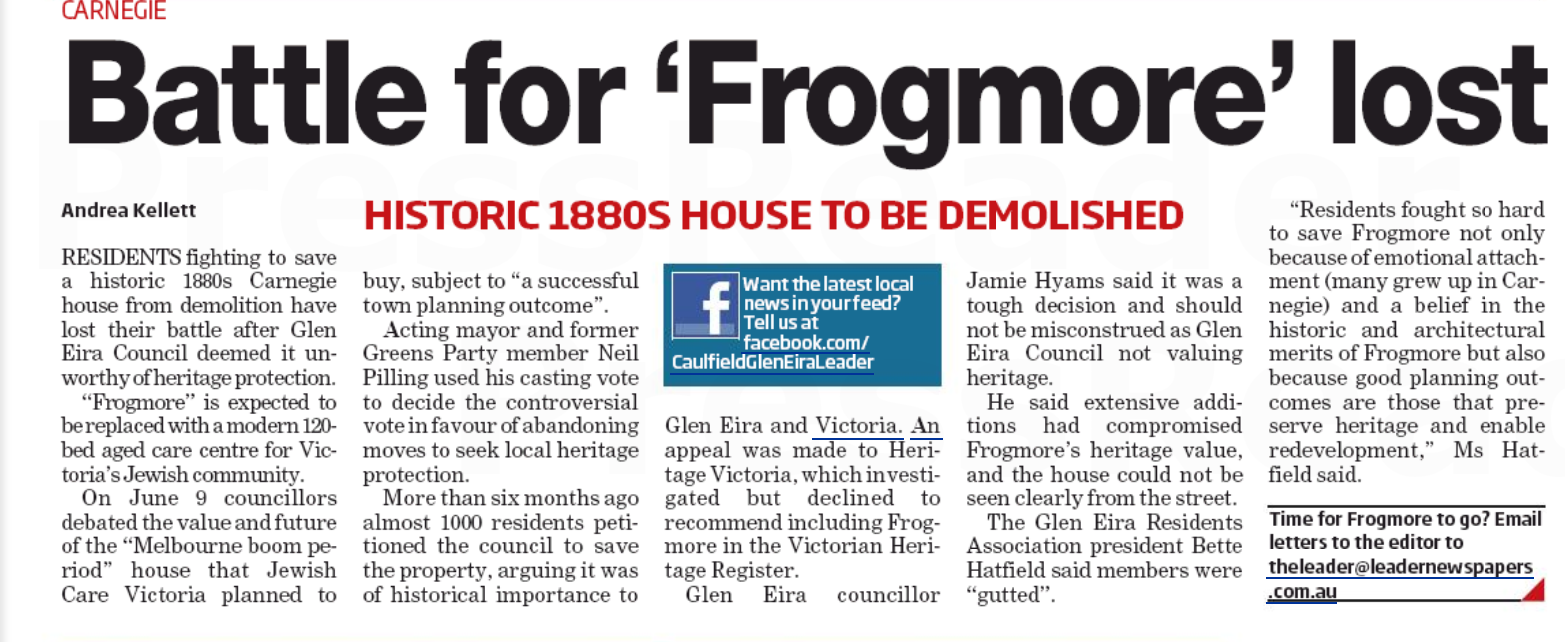
and last but not least, the Leader’s contribution –
Untitled

Magee was an apology. Delahunty took the chair.

Hyams moved motion to refuse application on the grounds that it is an ‘overdevelopment’ and doesn’t ‘respect’ the ‘existing character’ – latter repeated countless times. Seconded by Lobo.

HYAMS: called the officer recommendation ‘reasonable’ and that they’ve ‘done a professional job of it’. He just happens to ‘disagree’ with them. Said that the officers believe that since this property abuts a commercial zone that they don’t have to ‘adhere’ to ResCode quite so strictly. He believes that it is ‘still a residential zone and should be treated as such’. Also, this is a single block and you ‘wouldn’t have four storeys’ on a single block ‘unless it was pretty large’. Thought that the recommended conditions (ie car parking, setbacks) ‘are good’ but not enough. Street and side setbacks, ‘don’t comply with ResCode’ and neither does permeability and site coverage. So this ‘convinces’ him that ‘the only reasonable thing to do is refuse it’. The application fails to ‘tick the box’ and ‘too many things about this that don’t comply’. Said that parking issues were mentioned at the planning conference because ‘the street is getting very busy’ and that ‘builders in the area’ are not ‘complying’ with the law. So ‘in the next few weeks’ there will be ‘investigating’ and ‘we are cracking down’ on enforcement especially about parking. He will ‘pass on’ the results when they come back.

LOBO: said he has consistently opposed developments because they have ‘domino effects on the people’. Mavho is an ‘avocado street’ – ie ‘the builder now has butter, jam, and avocado on his toast’. The street ‘is gone’ and has experienced ‘tears and sleepless nights’ by residents. Itemised all the developments in Mavho in the recent past and that another two properties have now been sold together. Said that ‘oversupply’ was a concern and that ‘many dwellings will be occupied by pigeons’ and other birds. Said that to ‘put dwellings’ in Mavho which is a ‘lovely street’ and which backs Loranne is ‘catastrophic’. In about 100 metres of street there are now ‘almost 130’ new dwellings which ‘in any language’ would suggest that ‘this is not a place to live’. There was an application for a massage parlour with the first application and now with all these new apartments ‘there will be the need for 2 or 3 massage parlours’.

LIPSHUTZ: Lobo mentioned 2 ‘things that resonate with me’ – agreed that the street ‘has gone’. Other point was about more developments in the street. Claimed it was ‘unfortunate’ because when the first application came in ‘I voted against it’ but it lost and went to VCAT and VCAT gave the developer what he wanted. Said he could ‘stand here and be popular’ and say all the things that people ‘want to hear’ but this wouldn’t be ‘doing anybody any favours’. He has for 6 years been talking about VCAT Watch and again VCAT in today’s agenda ‘overturned council’s decision’. SAid that ‘none of us’ want this kind of development ‘in our streets’ and that council ‘has been advocating very strongly against’ such developments. Reality is that ‘the government wants these types of developments’ and VCAT ‘is approving them’. Said if the application is refused it ‘will go to VCAT’ and he ‘guarantees’ that VCAT ‘will approve’ and therefore ‘some of the things that council has put in’ will be gone. That’s what happened with one of the applications in VCAT Watch. Council tried to make ‘things better for residents’ and VCAT ‘said ‘no’ we can’t allow that to happen’. Said he ‘would rather have something there than nothing’. This wouldn’t be very ‘popular’ with people because they want rejection of application but he has to do this ‘properly and unemotionally’ and therefore he has to ‘support the’ recommendations. Claimed that officers have tried to make a ‘bad situation’ better. Wouldn’t like this development in his street but ‘because’ the ‘street is gone’ ‘VCAT is going to allow it’.

ESAKOFF: this application ‘is so far removed from what is a normal requirement’ that she can’t support it. ‘On principle’ she can’t support the recommendation just because it abuts commercial zones. Said that 78% site coverage ‘when it ought to be 60 is too far over’. Can be ‘lenient’ but this is too much. It’s also ‘not meeting’ permeability and setbacks. Thought that council needs ‘to maintain the limits we have on things’ like permeability and site coverage. Also wouldn’t ‘support reduced parking’.

PILLING: admitted that when there are ‘two zones there is always a tension’. The planning department ‘has done the best to alleviate’ this tension. Listening to the arguments that the application is ‘too far over’ the limits so they’ve got nothing to lost, he will ‘probably’ vote to refuse.

SOUNNESS: said he is ‘conflicted’ since he knows that council tried to improve its planning by ‘taking what was offered’ by the minister via the new zones. Said this was a bit like Ford – you can have any colour but all that’s available is black. Said that in ‘negotiations’ about the zones ‘we were given a limited range of tools’. Since this abuts a commercial zone ‘quite large buildings can go there’ and this mightn’t be ‘comfortable’ for everyone. The recommendations ‘propose’ what ‘may happen in the commercial zones’. Said that in 15 years time people won’t be saying that ‘this is grossly’ out of place. His ‘concern’ was that in ’20 to 25 years time’ there won’t be ‘any street trees’. Said he wants a ‘condition’ about appropriate landscaping area. in 20 years time ‘we will have a different streetscape’ but still needs trees. Recognises that this is a ‘development’ area and he is ‘uncomfortable’ now but in ’20 years time I do not think I will be uncomfortable’. Said he is against refusal and if the motion doesn’t get up he will introduce a new motion to increase front setbacks to enhance landscaping.

OKOTEL: supported refusal and disagreed with Lipshutz on VCAT’s record. Whilst it’s likely to end up at VCAT it isn’t ‘an inevitability that it will’. Hoped that the ‘applicant would put in more appropriate plans’. Even if it goes to VCAT she doesn’t think it’s a ‘certainty’ that he will get what he wants. Said there could be amended plans, negotiations, and then mediated agreement. Said that council has to apply ‘policy and planning law’ and therefore agreed with Lipshutz that because ‘we sit as a quasi tribunal’ emotion can’t be part of decision making. Hyam’s motion is ‘based on policy and law’ and the refusal isn’t ‘based on flimsy reasons, not emotional reasons’.

DELAHUNTY: thought all arguments were well put and that there is a ‘reasonableness to refusal’ because it’s an ‘unusual application’. With permeability and landscaping ‘issues’ she would lean towards refusal. Said that she is concerned about arguments that say that ‘bringing apartments into a street means that the neighbourhood is gone’. Said that people want to live where ‘some of us live’ and ‘we know how gorgeous’ these places are. It doesn’t detract from ‘how beautiful it is’ by ‘having more people there’. Talking about the ‘neighbourhood going is emotive’ and ‘potentially unfair to people moving in’. Supports the idea that ‘there should be more development there’ even though the application might ‘lack’ some important things. Whatever ‘ends up there’ will be ‘good’ for the area and for the people coming in.

HYAMS: didn’t think that ‘the street is gone’ – ‘people still live there’. ‘we should live and die by ResCode in our policies and not by populism’ and ‘not by what we think VCAT may or may not do’. Gave example of VCAT refusing Ames Avenue when council approved it which was a ‘surprise’. Thought that VCAT would ‘impose further conditions’ on ‘ones we refuse’ rather than on ‘ones we approve’. Regardless of what VCAT might do, councillors have to do ‘what we think is right’.

MOTION PUT and CARRIED. VOTING AGAINST REFUSAL – LIPSHUTZ AND SOUNNESS

COMMENT

  • Lipshutz has no problem in presenting half truths when it suits his nonsense arguments. For example: the first application (March 2012) for a major development in Mavho Street was refused unanimously by all councillors. It was not a case of Lipshutz voting against and other councillors voting for the development – as could be interpreted from his comments. Secondly, the development was for 3 storeys and ten units only – a far cry from the 4 storey largesse that council has now granted to large slabs of Mavho Street – thanks to its zones. PS; also worth pointing out that for this first application only 10 properties were notified and there were 47 objections!
  • The old bogey of VCAT is trotted out again and again – opposed to that nasty old concept of ‘populism’. Well, the facts of the matter are incontrovertible – councillors (apart from the Caulfield Village) vote with one eye on their re-election chances. Refusals by councillors are either recommended by officers, or when the number of objections become too large to be ignored. Countless phone calls and emails from residents also exert the necessary pressure. The message to all residents is clear – object, object and keep objecting.
  • We also find it quite laughable that Hyams’ grounds for refusal focus on ‘existing character’. The ‘existing character’ of Mavho Street is now 3 and 4 storey developments – thanks again to council’s new zones. With no preferred character statement for housing diversity developers have been handed a carte blanche to do what they like with council’s blessings.
  • Hyams’ claim that you ‘wouldn’t have’ four storeys on a single block is also quite laughable. Here are two examples of single blocks that have received permits from council (one admittedly for 3 storeys, but that is big enough in itself). The examples – 1100 Dandenong Road (4 storeys and 22 dwellings. The land is roughly 570 square metres); 1170 Dandenong Road (3 storeys and 23 dwellings)
  • Delahunty’s and Sounness’ arguments deserve close attention by residents. We invite comments as you see fit.
  • Not one councillor had the courage to state the obvious – a pathetic and sub-standard officer’s report that is anything but ‘professional’ and ‘reasonable’. And of course, not one councillor had the courage to question the efficacy and wisdom of the new zones.
  • Please note that nearly every single ‘local centre’ in Glen Eira is now zoned commercial and directly abuts residential zones – and quite often Neighbourhood Residential Zones. Another instance of shocking planning by Glen Eira. Will we therefore see a repeat performance of this circus every single time an application comes in from these areas?

The officer recommendation is 4 storeys and 23 units instead of 25 units. Worthy of pointing out is that for this application there were 2 planning conferences held since first time around not all objectors were notified, and one objector received his letter the day after the meeting was held! The excuse and the culprit? Australia Post of course and not the inefficiency of council!

Then there’s the so-called ‘justification’ for recommending a permit. Please consider this extract as just one example:

The development does not satisfy some of the numerical requirements of ResCode in relation to street setbacks, side setbacks and walls on boundaries, site coverage and permeability. However, the design of the development will provide for an appropriate transition from the adjoining commercial properties to the north and east, to the residential sites to the south, particularly when the recent approvals and recommended changes are taken into consideration.

COMMENT – note the terminology used. ResCode is no longer referred to as ‘prescriptive’ as has occurred in recent applications, but has morphed into ‘numerical requirements’ that can be overlooked at will by council when it suits their purpose. The farce gets much worse however when it is admitted that side, and street setbacks do not meet these ‘requirements’; nor does site coverage and permeability. But it is still okay and ‘appropriate’ to grant a permit. What we are left with is the completely spurious, nonsensical assertion that ‘design’ and the imposition of questionable ‘conditions’ is enough to compensate for the failure to protect the most minimal residential amenity demands of ResCode. How many ‘standards’ can be breached before an application is refused outright? How many more times will VCAT have to inform council planners that insisting that the developer puts up a sign regarding residential parking permits is not on and does not belong in the formal ‘conditions’ part of a permit?

Even more disconcerting is the inclusion of the developer’s argument into a document that is supposed to be ‘neutral’, ‘objective’, ‘unbiased’ and which relies solely on ‘planning law’. Whilst the ‘argument’ does not win out, we question why it is even there, and especially why it features far more prominently and extensively than resident objections.

The rear dwelling of 38 Mavho Street is provided with two north facing ground floor habitable room windows that are within 3 metres of the boundary of the subject site. The development does not comply with the minimum requirements of ResCode for these windows. The applicant has indicated that one of habitable rooms is provided with a secondary light source and both rooms are not considered to be primary living areas. It is also noted that the existing boundary fence is 2.5 metres high. On this basis they have sought a variation from the minimum setback requirements of ResCode.

Planning conferences according to council have the prime objective of hearing resident and developer views and (if possible) reaching consensus and compromise. Below is what this developer had to say. No attempt made to reach ‘consensus’; no offer of ‘compromise’. In our experience this is par for the course given that developers know they are on ‘easy street’ in Glen Eira!

DEVELOPER – – said that the site was surrounded by commercial zones and that there is a ‘brand new’ 3 storey apartment block ‘across the road’. Site is in Residential Growth zone so allowed 13.5 metres height so this is ‘the best place’ to be allowed to develop to ‘that density’. On car parking they are meeting the standards of 1 car park per dwelling but asking for a reduction of 3 visitor parking because ‘the history and the facts are on our side’ since ‘no visitors ever use basement car parking’. They hired a consultant to do a ‘study on general impact’ of parking and traffic. Consultants are ‘respected’ by councils, ‘traffic engineers’ and ‘are well respected by VCAT’. What they propose is going to have a ‘minimum impact’. Doesn’t matter if it’s 25 apartments or 5 apartments or 100 apartments ‘it’s irrelevant’ since it’s ‘what development does to the neighbourhood’ and their study shows that the impact is ‘minimal’.


« Previous PageNext Page »