GE Governance


A comment by Reprobate, reproduced here as a post:

If Council has all the information it needs to make a decision, then it should make a decision. In that sense its not indecent haste. I seriously doubt though that Council *does* have the information it needs, and I further doubt the Special Committee has mastered the detail.

Regardless of the merits of C60, it is appalling that Council has failed to provide an up-to-date Incorporated Plan for residents to inspect. The members of the Special Committee have a moral obligation to ensure the documents being published under their imprimatur are kept current, especially before the recent meeting that ostensibly was to listen to the community. Those who attended might still not be aware that what is being proposed doesn’t match the published Incorporated Plan (dated 2008). [The Panel commented on this.]

I’ve explained before why this matters, but as a reminder, C60 removes third-party rights except in very narrowly defined circumstances involving the Incorporated Plan. The Explanatory Report, published under the aegis of Council, reveals why. Its to help the developer make more money (thats the reference to “facilitate”).

There is no compelling need to make the area a Priority Development Zone (PDZ), despite the claims of the Explanatory Report. The proposal is primarily for residential development in a Residential Zone (R1Z) and mixed development in a Mixed Use Zone (MUZ). It does however seek to obtain Crown land and change its zone to build MRC’s beloved tower. Additionally it seeks closure of some inconvenient roads. This can all be done without a PDZ.

Loss of third-party rights is something *every* non-developer resident of Glen Eira should be concerned about. Council has already argued, successfully, at VCAT that standards designed to protect residential amenity should be waived when it involves multi-unit development. While most attempts to insist on compliance with the Planning Scheme are doomed, nevertheless third-party appeal rights keeps pressure on Council to have to explain itself. Its a sad fact that Council rarely explains itself until it appears before VCAT.

At both the recent C60 community meeting and planning conference re an MRC 8-lot subdivision, Cr Lipschutz has attempted to intimidate attendees. This is unacceptable. Far from helping people understand the process and listing all the matters that the Responsible Authority *must* and *may* consider, he has provided his own, and I would argue erroneous, interpretation of the Planning and Environment Act. This has extended to mentioning VCAT explicitly in his assessment of planning permit applications in Council. Somebody as aggressive and clumsy when dealing with the public on controversial topics is not an ideal choice for chairing such a Committee.

There is a curious double-standard used by Planners (spelt with a capital P), whereby they cling to anything that supports what they want, and ignore anything that contra-indicates support. So it is that Cr Lipschutz (without apparent consultation with his Committee colleagues) has decided narrowly what matters the committee will consider, regardless of the considerable powers PAEA confers. It was the MRC that thought it appropriate to include photos of a few thousand cars parked in the centre of the Caulfield Racecourse And Public Reserve. In a submission from their partner, Monash University, parking in the centre of the racecourse was explicitly mentioned. Further, both Council and VCAT disagree that a Use of land should meet its own parking needs. That’s why non-compliance with parking requirements as specified in the Planning Scheme are so universally waived for developers. Creating traffic and parking problems is a de facto Council policy in and around Activity Centres.

The Panel probably correctly identified the interface with existing residential areas as the most sensitive interface. The published Incorporated Plan as far as I can tell seeks to build 4 storeys closer to existing single-storey dwellings than the Standards (guidelines if you’re VCAT) specify. If increased traffic isn’t an issue (the Panel doesn’t think it is), and proximity of 4 storeys to existing single-storey dwellings isn’t an issue (Council doesn’t think it is), then its time to scrap the Minimal Change Area policy as being manifestly unfair (fairness is a key Objective of Victoria’s Planning Provisions).

There is something really really odd when so many documents that Council has published re C60 have “Supporting_document” as part of their name. Its almost as if the matter has been prejudged.

I repeat that nobody knows what the development that C60 is designed to facilitate will look like. Not Council, not its officers, not the MRC, not the Panel, not successive State Governments. There is a rough concept, which has met considerable community resistance. The powers that have aligned behind the proposal desperately wish to silence critics up front, secure their funding and valuable crown land, and move on with the development, safe in the knowledge they cannot be scrutinized by people whose amenity they are impacting

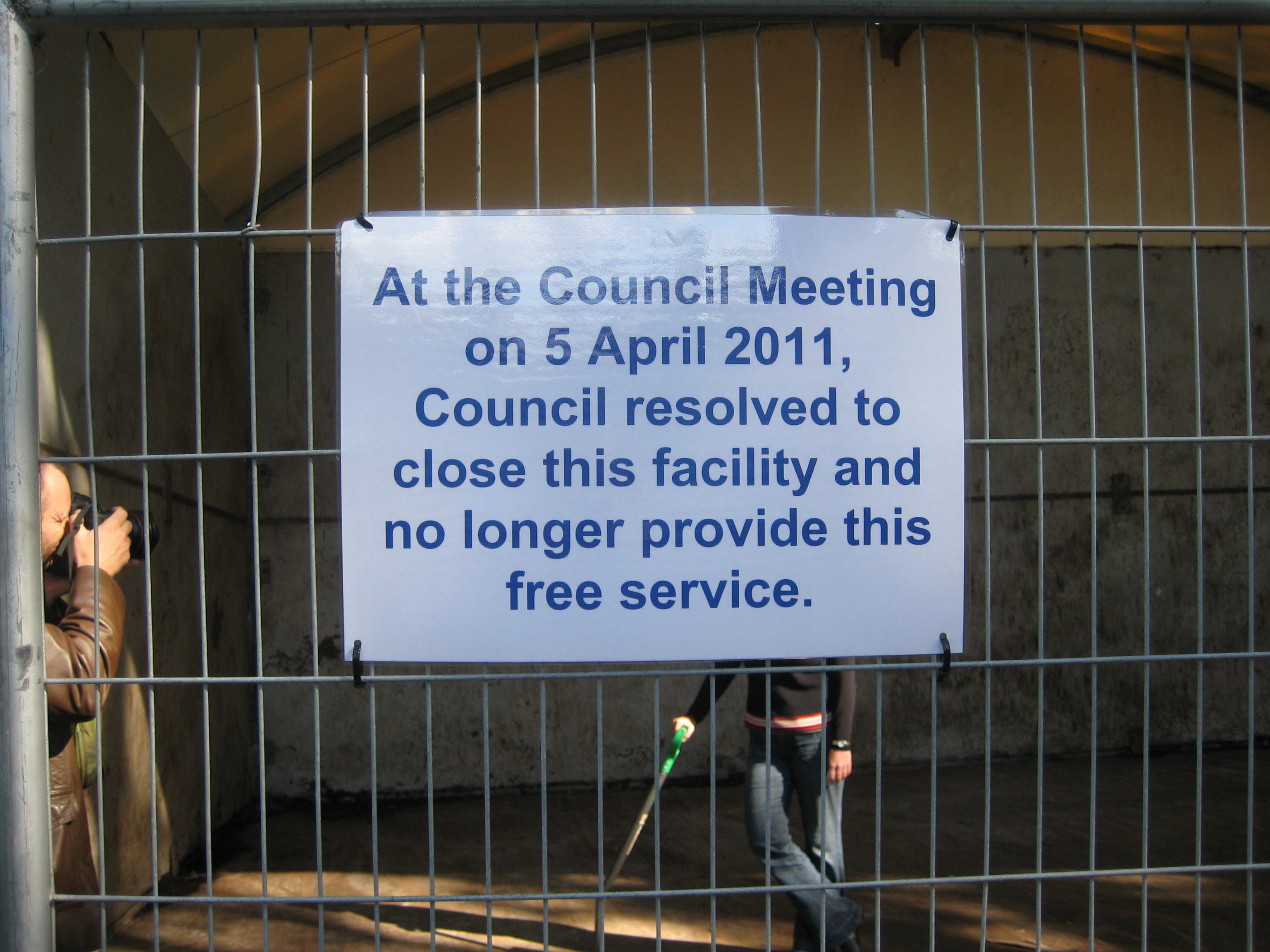
The sign placed at the now defunct mulch heap attempts to lay the blame for the closure of this facility squarely at the feet of councillors. What the sign does not disclose is the reasoning behind councillors’ decision – namely, that it represented a risk to both employees and the public. No matter how remote this risk may have been, councillors acted appropriately – in stark contrast to the audit committee and the CEO in failing to provide the scientific consultant’s report to ALL councillors at the earliest opportunity and initiating action.

In the minutes of 3rd March 1997, a report written by Newton states that it was ‘decided that it would be desirable to have a comprehensive set of written policies on all areas(s) of Council activity’. He goes on to state that “in most cases policy ought to be approved by Council. This would give clear authority to the policy being laid down. It would also require reconsideration by the Council itself if the policy is to be amended (good corporate governance)”.  So, it is Council, who is to set policy, or to change policy. Under the same item, the ‘Occupational Health and Safety Policy’ was voted on. It states:

“Management has a duty to provide and maintain so far as is practicable, a working environment that is safe and without risk to health. All staff have a duty to report and assist management to correct unsafe conditions”.

“…the organisation makes the following commitment – We will not knowingly engage in any activity or provide any service unless we can perform the activity or provide the service safely”.

“This policy recognises that the health and safety of all employees of the City of Glen Eira is the responsibility of Management…..”

One of the tasks and procedures adopted was to ‘Promote proactive risk identification, assessment and control programmes that embrace the principles of effective risk control”.

It should never have taken the persistence of one councillor to get things done. It also should never have been ignored by the Audit Committee, and it should never have had to come to a vote at council meeting. The onus was on management to ensure that the mulch heap was 100% safe. The fact that it was even moved into an area adjacent to a playground, school, and public park is beyond belief. As Mr. Newton stated so many years ago – the blame must be laid at management’s feet!

Caulfield Racecourse Precinct Special Committee Meeting 28 April 2011  
Notice is given pursuant to Section 89(4) of the Local Government Act 1989 that a meeting of the Glen Eira City Council Caulfield Racecourse Precinct Special Committee will be held on Thursday 28 April 2011 in the Council Chambers, corner Hawthorn and Glen Eira Roads, Caulfield commencing at 7pm.
The business to be transacted at this meeting will be:
 
 
 Melbourne Racing Club (MRC) Planning Scheme Amendment C60 to consider either approval (adoption) or abandonment of the amendment; and
 Melbourne Racing Club (MRC) to consider a planning application for a 7 lot subdivision.
 
 
Amendment C60 was exhibited on 19 November–21 December 2009, was the subject of six days of hearings by the independent panel in May 2010, the panel’s report was released publicly on 30 July 2010 and the Special Committee considered further submissions at a meeting on 4 April 2011.


Newton’s response to Penhalluriack’s questions about the timely and/or adequate handling of the ‘mulch affair’, relies heavily on:

  1. Communication with the Victorian Department of Health, and
  2. Implementation of consultant’s recommendations 

Department of Health 

Penhalluriack’s first question was: “On what investigatory grounds did Council twice deny that there was any danger to the community’s health……”.  Newton responded with: ‘The advice was from the Victorian Department of Health’. We go on to learn that this ‘advice’ derives from Mr. Adcock from the Legionella section of the Department.  Of interest is the fact that  Penhalluriack is not restricting his question exclusively to legionella here, but any potential ‘danger’. Further, when arguing against the closure of the mulch depot at Tuesday night’s council meeting, Lipshutz claimed that council had received a Department of Health ‘report’. So what was it? ‘Advice’, or an official ‘report’? The difference is immense.  ‘Advice’ could simply mean a note, a letter, a conversation? It could perhaps even be in response to carefully crafted questions that were forwarded to the Department? Or such ‘advice’ might also be the result of a phone call from one bureaucrat to another – possibly an old mate from the past? 

What we do know is that Newton is meticulous in his use of language. We also know that selective editing, as evidenced in the first version of the agenda items with the deletion of telling and graphic photographs, is also a possibility. A little research reveals that Mr. Adcock is not a medico or researcher, but rather a bureaucrat charged with overseeing the legislation. His section deals exclusively with legionella and the link to water cooling systems. There is nothing on the section’s webpage that mentions anything else apart from cooling towers and other systems of that ilk. So did Newton, or his officers, subsequently ask about ALL POTENTIAL DANGERS, or did he restrict his queries (and answers) to legionella alone – even after Penhalluriack broadened his concerns to other pathogens? Unfortunately, we do not know what was asked, and neither do we have the complete ‘advice/report’. All we have are a couple of sentences without the necessary surrounding context. 

Penhalluriack also queries why it has taken a ‘third warning’ before ‘expert opinion’ is sought. Newton simply responds with ‘It is difficult to imagine a more expert source?” (ie. The Health Department). Yet, we’ve already been told that the ‘advice’ from the Department was restricted to legionella alone. Penhalluriack’s broader concern is thus ignored. 

But that’s not the end of the story. We also have the following inconsistency. Adcock, as a representative of the Department of Health, has basically ruled out the possibility of contracting legionella from woodchip/mulch. So how come that the Department of Health can publish the following?

Legionellae are ubiquitous in the environment. They are often isolated from water and wet areas in the natural environment such as creeks, hot springs, seawater, woodchips, mulch and soil. Potting mix is often colonised with Legionella species….” http://www.health.vic.gov.au/__data/assets/pdf_file/0003/19902/bluebook.pdf 

Curioser and curioser! How can we, on the one hand be told by a Department of Health official that ‘there is no evidence’ for the link between legionella and wood chips, yet the same Department finds it necessary to issue the above warning? We urge readers to simply do a Google search on these terms to locate literally hundreds and hundreds of scientific articles from reputable organisations and researchers, as well as government publications that highlight the potential link between legionella and mulch – not to mention the countless other conditions that are linked to woodchips and/or mulch. 

What really caught our eye however, was this directive from a Western Australian council dating from 2007 that ordered its staff to wear protective masks, etc. We’ve uploaded this document and urge readers to note the precautions that this one council can take 4 years ago – and not necessarily in relation to legionella, but to other ‘dangers’. 

Implementation of consultant’s recommendations 

Newton states:  “Of the six recommendations, five have been implemented and one is in the process of being implemented. None has been “ignored”. 

Please note the use of language – ‘implemented’ is very definitely past tense, implying completion, gone, dusted, finished. Yet, when we come to the specific actions regarding these recommendations several pages later, we find sentences such as: 

R4. An upgrade to the spray mist unit to allow manual dosing of mulch with water to suppress dust is being designed by engineers.

R5. Fact sheets are being made available on site.

R6. Signage at the site is currently being manufactured by Road Management Solutions Pty Ltd in accordance with the recommendations contained in the report. 

So how many of the recommendations have actually been COMPLETED? Is it 5 as Newton would like to have us believe, or is it merely 2?  The more important issue revolves around time lags. The first draft of the consultant’s report was in Newton’s hand on Feb. 2nd. It went to Audit committee members on Feb. 18th. Newton’s response was in the April 5th Agenda. Hence a time lag of two months! Two months to ‘manufacture’ signs? Two months for adequate ‘fact sheets’ to be made available? Two months for the ‘design’ of dosing equipment? And as Penhalluriack pointed out at Council meeting, the most important words in the ‘temporary’ warnings, somehow omitted to mention the nasty ‘legionella’.

We invite readers to draw their own conclusions as to the role of the audit committee in this ‘mulch affair’ and the validity of Newton’s responses. Do these ‘answers’ reveal a potential ‘cover up’ and the failure of correct risk management? Were residents, and employees unnecessarily exposed to potential health risks?

Council has posted its minutes for the C60 meeting on Monday night. We’ve uploaded it and ask:

  • Could any set of minutes be any less informative than these?
  • Why was it necessary to name one speaker when they obviously did not wish to be named by refusing to give a surname? What is the motive behind such actions?
  • One motion reads: ‘That the minutes of the Caulfield Racecourse Precinct Special Committee Meeting held on 17 March 2010 be confirmed”. Unless we are terribly mistaken, these minutes have never been put out in the public domain which CONTRAVENES THE LOCAL GOVERNMENT ACT. As a ‘Special Committee’ of Council, both agendas and minutes are to be freely available.  Our questions are: who has seen these ‘minutes’ apart from Committee members? Have other councillors set eyes on these minutes? If not, then again, doesn’t this contravene the motion unanimously passed by council?
  • Secrecy and more secrecy – that’s the only possible conclusion that comes out of this entire farce!

CORRECTION: We have made a mistake. The Special Committee minutes were from 2010 and not 2011. We misread the item. Unlike Council however, we openly admit our errors! Our other criticisms still stand! Why bother to produce minutes when they reveal absolutely nothing of what went on? Yes, these minutes are ‘legal’, but given the wide interest in this issue, the elecorate has every reason to expect a full and extended report of what occurred. As numerous residents said, so very, very little respect for the community!

The agenda items for Tuesday night’s council meeting contain Newton’s response to Penhalluriack’s questions regarding the potential dangers of the Glen Huntly Park mulch facility. We offer our analysis of the response and are seeking readers’ comments. Mr. Newton is also free to respond. We guarantee that we will publish his reply intact.

Right from the opening sentence we have some concerns as to the connotations that the wording might have for readers not in the know. It begins: “Purpose: To respond to questions without notice at the ordinary Council meeting of 15 March 2011”. Notice does not have to be given when addressing a question to a council officer. Councillors are free to ask as many questions as they like. Readers should therefore ask themselves what is the motivation and purpose in including such phrases when it has no legal or material relevance to the issue? 

Only after an irrelevant one page waffle about the mulch heap itself do we come close to the nitty gritty of the issues. We’ve categorised these into broad topics. 

Questions about dates 

On the 19th November 2010, Penhalluriack ‘tabled’ a request at the Audit Committee meeting. The attached Penhalluraick document makes it clear that he had concerns well before the 19th November – ie. “I have raised this matter with council officers on two occasions”. Thus management knew of the concerns well before the Audit Committee meeting of the 19th November. This document also reveals that the opinions gleaned from the Dept. of Health do not completely allay Penhalluriack’s fears as to the potential risks. Given that a scientific report was subsequently called for, indicates that the Department’s advice wasn’t all that conclusive or fully convincing. Newton does not directly address these additional concerns. Further, and most importantly, Penhalluriack’s attached document is incomplete  – it ends in mid sentence! So, how many pages are missing? Why aren’t these pages included? What did they contain? If correspondence between councillors and/or committees is suddenly (and conveniently) made public then surely it behoves Newton to ensure that the entire document is available – not just selected sections?  Again we ask: what is the motivation and purpose behind this action? 

Newton then tells us that “The consultant, Noel Arnold and Associates, conducted an assessment and their report was submitted to the next meeting of the Audit Committee on 25 February 2011.”  There is much confusion here. In response to the question ‘when was the first draft of this Opinion received?’, Newton responds that it was the 2nd February. But we also have the sentence “The report was received by Council on 14th February”. [Note the crafty, and some might say, devious use of language! COUNCIL did not receive anything – otherwise they would have known about the report! It was received by management and possibly the Mayor only! ] That leaves us with two distinct dates and a time lag of twelve days. So, are we meant to assume that there was some careful editing between the reception of the first draft (Feb 2nd) and the final draft on Feb 14th? If so, why the need for ‘redrafting’? Who determined this need? What changes were possibly made between the first and final draft? And the 64 dollar question – if changes were made, then WHY WERE THEY MADE? What was the motive behind such changes?

Why did the Audit Committee even have to REQUEST information? Why wasn’t it simply handed over to them (regardless of official meeting dates)? The report was distributed to the Audit committee on the 18th Feb, one week prior to the formal Audit Committee meeting. In the end it’s taken at least 5 months, since Newton confirms that Penhalluriack first raised the issue in September. One must therefore ask whether the issues that Penhalluriack raised were expedited in the most timely manner. 

Playing with words 

“The minutes of the Audit Committee’s meeting of 25 February 2011 are included at Item 8 on the agenda for this Meeting. They state: “The Chairman noted the report the report (sic) on the mulch bin at Glen Huntly Park and concluded that no action was required by the Audit Committee. If Councillors had any issues, they could raise them with the Council.” No one raised any issues with any officers at the Audit Committee’s meeting of 25 February.” 

Two essential points need to be noticed here. The chair of the audit committee (Gibbs) announced that no further action is required. The Audit Committee had therefore washed its hands of the matter and tossed the ball over to ‘THE COUNCIL’ – meaning the full council as constituted at an Ordinary Council Meeting. Newton, ever so subtly, then attempts to downgrade the significance of the report by inferring that since ‘no one raised any issues with officers’ it does not warrant attention. Wrong! The matter as expressed by Gibbs was to go to COUNCIL if anything was to happen. There was therefore no point in ‘raising’ the issue with officers. Besides, Penhalluriack had already raised the issue twice with officers! Would a third time have made any difference? Hence, Newton’s claim that no-one said anything is simply irrelevant to the issue since there was no longer any point in raising the matter with this group. Newton’s ‘excuse’ that no councillor spoke up at this meeting is spurious. If the matter was to proceed to full council, then there is no need for any councillor to say anything at such a meeting!!!!! 

The other point that needs to be made relates to the question of the Audit Committee’s role, function and purpose. According to the Minister’s gazetted Guidelines, it is the responsibility of the Audit committee to provide information to councillors and THE COUNCIL. It is for THE COUNCIL to determine the direction that it wishes to go – not the Audit committee. In this, the audit committee has not fulfilled its function in warning THE COUNCIL and hence has placed THE COUNCIL and councillors in peril. Councillors are bound to fulfil their fiduciary duties based on the information that is presented to them. It is inconceivable that (1) the audit committee has to first ask for information from management and (2) that this information (the scientific report) is then not passed on to ALL COUNCILLORS and THE COUNCIL. This is a failure of governance and contrary to best practice of audit committee and management principles. Page 13 of the Minister’s recently released guidelines makes this absolutely clear. We quote: 

“Role of the LGE (Local Government – ie. THE COUNCIL)

The role of the audit committee, as an advisory committee to the LGE, is to assist the LGE to discharge its oversight and corporate governance responsibilities, whereas the role of the LGE is that of a constituting and governing body.

Responsibilities of the LGE

The LGE:
􀁏 Establishes the audit committee with an appropriate charter, membership and level of resources (including the provision of a secretariat) to enable it to effectively carry out its activities having regard to this Guide.
􀁏 Ensures that there are appropriate reporting mechanisms in place between the LGE and the audit committee.
􀁏 Periodically reviews the performance of the audit committee as a whole, and of the independent members of the audit committee. The audit committee performance review can be (and often is) by self-assessment.
It is important for the members of the audit committee and the LGE to recognise that the advisory activities of the audit committee do not absolve the LGE members of their responsibilities. Individual LGE members are obliged to reach their own decisions based on a proper assessment of the information, which includes, but is not limited to, audit committee advice and report”. 

So, how are councillors meant to fulfil their ‘responsibilities’ if they are not in possession of the full facts? How can the audit committee function if it has to ‘request’ information from management? And when was the last time that COUNCIL actually ‘reviewed’ the performance of both audit committee members, and external members? 

In the interests of brevity, we will conclude our analysis at another time. However the points that readers should bear in mind are: 

  • Has management acted in a timely manner in regards to the potential risks
  • Has management fulfilled its duty of keeping councillors, as well as the audit committee fully informed in a most timely fashion
  • Have both the audit committee and management lived up to the standards required and acted in accordance with best practice guidelines?
  • Is Newton’s response an adequate and acceptable reply to Penhalluriack’s questions?
  • What does this episode tell us about management in Glen Eira?

Secrecy is of course appropriate in some cases. But not when it denies residents access to vital policy documents, strategies and plans. Glen Eira is unique in its commitment to provide as little information as possible to its residents and if it is provided, to hide it away so that access and easy retrieval requires the skill of a Sherlock Holmes, together with the nose of a trusty bloodhound! Why?

We’ve written that secrecy and transparency do not mix. Secrecy invites speculation; it encourages distrust; and it reinforces a siege mentality – all counterproductive. Yet this is the way that this council has been perceived for years. Residents are not viewed as colleagues and/or collaborators in planning, setting visions for the future, or merely partaking in democratic processes. They are viewed as troublesome cash cows that need to be managed, sidelined and ignored whenever the legislation unwittingly allows for such manoeuvres.

The availability, or lack thereof, of major policy documents is a case in point. In contrast to neighbouring councils, Glen Eira’s website is deplorable in its content and design. No direct links on the home page to ‘policies’, ‘strategies’ or ‘plans’; searches under ‘policies’ lead to planning documents that are archaic, dating back as far as 1999 and so on…..

This we suggest, is more than poor web design but intended to make things as difficult as possible for residents AND to possibly cover up the fact that in contrast to other councils, Glen Eira is really bereft of up-to-date policy development that matters. For example: there is no sustainable design strategy; there is no transport strategy; there is no gambling strategy that we could find and it goes on and on. Our point is simple: all policies, all strategies should be out in the open and easily accessible.

Below are the policies/strategies from other councils, all accessible via direct links from the home page. Those with an asterisk indicate the areas that we believe Glen Eira does not have any official policy. Council plans, budgets, codes of conduct, etc. have been omitted from the list.

BAYSIDE:

Cultural collection and management policy

Cultural collection policy*

Economic development strategy*

Electronic gaming policy*

Municipal Emergency Recovery Plan – Municipal Arrangements

Municipal Emergency Recovery Plan – operational Arrangements

Register of significant trees policy*

Sports facility policy*

Tourism strategic action plan*

Whistleblowers/Improper conduct

Youth policy

PORT PHILLIP:

Heritage recognition program policy and strategy

Sustainable design policy*

Waste wise strategy

Youth framework

Playground strategy

Memorials and monuments*

Port Phillip Collection Management Policy

Festivals Framework*

Urban History consultative committee*

Inner Melbourne Action Plan*

Climate Change Commitment*

Active and Creative City Framework*

St. Kilda Botanical Gardens Future Directions Plan

Fisherman’s Bend Planning and Economic Development Strategy

Greening Port Phillip: An Urban Forest Approach 2011*

Industry and Business Strategy*

Housing Strategy 2007

Beacon Cove Planning

Activity Centres Strategy

Ormond Road Urban Design guidelines

Governance Statement*

Good Governance guide

KINGSTON:

Alcohol and Other Drugs Action Plan*

Fire Prevention Plan

Gambling (Poker Machines) Strategy*

Graffitti management Plan

Guide to Business Conduct*

Open Space Strategy

Public health Plan

Whistleblowers Act

Kingston Biodiversity Strategy*

Kingston Industrial Strategy*

Investment Policy*

Pandemic Influenza Plan*

(http://www.kingston.vic.gov.au/Page/Page.asp?Page_Id=2394&h=-1 – Policy Manual)*

STONNINGTON: 

Art Acquisition Policy*

Caretaker Policy

Cultural Diversity Policy*

Disaster Relief donations Policy*

Key to the City and Freedom of Entry Policy*

Responsible Gambling Policy*

Road Safety Policy*

Sustainable Transport Policy*

Stormwater Environmental Management Plan*

The Glen Eira Audit Committee Charter (Council Minutes: 22nd July, 2008) states:

Term of Membership
Independent members of the Committee are not officers or employees of Council and have no executive powers. Independent members shall be appointed for an initial term of three (3) years after which time they will be eligible for reappointment. No independent member is to be appointed for more than two consecutive three year terms unless Council resolves otherwise. Terms will be scheduled to facilitate continuity of the Committee such that no more than one Councillor and one independent member’s terms cease within the one year”

The current independent members of the Audit Committee (Gibbs and McLean) have been on the committee since at least 1997 in Gibbs case, and McLean possibly soon after. That makes it roughly 14 years straight – and now it looks like they may have been granted another 3 year ‘extension’ bringing the grand total of consecutive service to close on 17 years! Even more disquieting is the way in which these reappointments have been handled – all executed via single, camouflaged one liners in Council agenda items.

The in camera items of February 22nd,  2011 read: “under s89 (2)(a) “personnel” which relates to Audit Committee Membership”. Identical items are noted in the minutes of: 22nd May, 2006; 8th April, 2008; 24th February, 2009 and the 17th March, 2009. So it appears that each time either Gibbs or Mclean’s term of service is close to finishing, there appears this single innocuous and buried item that is voted on in camera. Yes, this fulfils the legal requirements of a ‘council decision’, but we have to ask:

  1. Why is this done in secret? Why is there no public announcement of reappointment? Why is there no recommendation from the audit committee that is minuted? Why on earth does such an item deserve the classification of ‘confidential’ unless the intention is to keep this from the public?
  2. Why does every other council we have looked up include such items in their Audit Committee minutes (ie. recommendation to reappoint or advertise) and some even issue a media release on the subject. Yet, Glen Eira is always silent, always secretive.
  3. Why does Newton insist on this practice – since he alone declares an item to be ‘confidential’ and determines that it be listed for in camera discussions?
  4. What of all the other councillors? Do they question? Do they want to know why the reappointment is so ‘secret’? Does anyone even think that 17 years of the same independent members of an Audit Committee is not according to current best practice and especially the recently released Minister’s Guidelines? Or is the simple fact that amidst the mountain of papers landed in councillors’ laps, this one single sentence is somehow engineered to escape notice?
  5. What does Newton have to gain by such secrecy? And what does this do to the public’s perception of the governance practices within Glen Eira?

Perhaps a few interesting examples from the minutes of Glen Eira’s Audit Committee meetings require reflection by residents –

Feb 5th, 2008 – “Mr McLean suggested that for future audit reports the internal auditor’s comments could be more positively stated. For example, under item 1 “Total purchase from vendors” on page 2 of the report, the wording “all the above appeared to be reasonably justified” be changed to “all the above were justified”. 

14th December, 2010 – “The Chairman stated that he and Mr McLean would meet separately with Management to discuss further enhancement of the BCP (Business Continuity Plan) documents.” 

Secrecy is the hallmark of Glen Eira and as we’ve said, the modus operandi of its administration. But it relies on complicit and compliant councillors in order to succeed. The result is to the detriment of the community and to the principles of accountability, transparency and good governance.

We have long maintained that the modus operandi of Glen Eira Council is secrecy and more secrecy.  In particular, there appears to be a distinct lack of ‘openness and transparency’ between administration and councillors. At last council meeting, our suspicions were verified.

In response to Cr. Penhalluriack’s question to Newton regarding the potential risk associated with the Glen Huntly mulch facility, Newton responded:

“The report that Cr Penhalluriack is referring to went to the Audit Committee at the Audit Committee’s request on the 24 February which is three weeks ago. All recommendations are being implemented. Had I been given notice of these questions I would have answered them tonight but I was not given any notice. I’ll have to take them on notice for later reply.” 

Now why on earth should the audit committee have to ‘request’ anything? If the organisation is at risk, then it is absolutely incumbent on Newton to table that information asap. This was obviously not done, and it appears that ‘action’ was initiated only as a consequence of Penhalluriack’s urging. 

This is not the first time that we have had to query exactly what information is disseminated to committees and councillors by the administration. There was the recent instance where Glen Eira faced over 40 criminal charges over the Clayton tip and a potential fine of millions. Nothing was published, and we suspect, that perhaps none, or very few councillors knew this was happening. Then there is also the MRC and Newton ‘negotiations’ where another ‘request for a report’ had to be turned into a formal Council resolution before any information was forthcoming. 

To make matters worse, the audit committee’s charter omits practically all reference to administration. Port Phillip on the other hand, makes it abundantly clear what it considers to be the role of administrators and their duty to keep committee members informed and cognisant of any potential risks. We quote:

“The Committee is to be kept informed by Council management regarding financial reporting, risk management and risk exposures of the organisation”.

Nothing like this appears in the Glen Eira charter, leaving councillors, committees and others, literally with their pants down! 

Newton must be accountable to council and he must explain:

1.    Why the report was not provided to the audit committee without being ‘requested’

2.    How long did it take for councillors to be made aware of the potential risk?

3.    Which delegated authority allows Officers to deal with such risk matters without reference to the Audit Committee and/or Council?

4.    Who are the Policy Officers who  administer risk matters of such nature?

6.    When will the charter be tightened up so that administrators are mandated to fulfil their obligations and cannot escape scrutiny because of poorly worded policies and documents? 


« Previous Page — Next Page »