Featured below are quotes from various VCAT decisions of the past year relating to applications in ‘housing diversity’ areas. They illustrate again the shortcomings of the current planning scheme and its lack of adequate safeguards for residents in these areas.
GE Service Performance
Archived Posts from this Category
March 1, 2015
Neighbourhood Character?
Posted by gleneira under Councillor Performance, GE Planning, GE Service Performance[3] Comments
February 27, 2015
Request For A Report
Posted by gleneira under Councillor Performance, GE Council Meeting(s), GE Planning, GE Service Performance[9] Comments
Crs Lobo/Delahunty
That a report be prepared outlining the number of new dwellings approved in the General Residential Zones and Residential Growth Zones. This report also to include the number of dwellings pending approval since they were created by the previous government. That the report show this information broken down by location. That the report also show a comparison to a previous relevant period.
The MOTION was put and CARRIED unanimously.
LOBO: said that the report is ‘self explanatory’ and he is ‘looking forward to the report’.
DELAHUNTY: said council could ‘make more use of the data’ and see the ‘comparative period’.
HYAMS: cautioned against ‘misinterpreting the information’ because if there is ‘a large number of dwellings being approved in certain areas’ then this isn’t ‘the result of any one factor’. Also ‘more buildings are being approved all over Melbourne’.
February 26, 2015
Has The Penny Finally Dropped?
Posted by gleneira under Councillor Performance, GE Council Meeting(s), GE Planning, GE Service Performance[9] Comments
Another very, very long post. Sorry! However, we believe it is essential for readers to appreciate some of what is going on within this council. In our view there are several possible interpretations:
- Councillors are starting to feel the pressure from residents regarding development, and deciding to play the ‘populist game’. Surely it is not mere coincidence that the number of objections appears to be directly correlated with the final decision? That in itself, should be a clear message to residents.
- The destruction of street after street is now apparent to all and sundry. Plus, with elections not too far away this only adds pressure to be at least ‘seen’ to be doing something.
- Is the ‘doing’ however, consistent, well thought out, and will it result in anything ‘positive’ for residents? These are the central questions!
The following report on the Bent Street application is indeed a clue to answering all of the above. Please note that:
- The existence of flat roofs had no impact whatsoever in October and December 2014, when councillors voted unanimously to allow one major development in Bent Street of 36 dwellings and another one of 55 dwellings where Lobo was the only councillor to vote against this application.Yet this current Bent Street attempt basically foundered on the fact that a ‘flat roof’ is not in keeping with ‘neighbourhood character’.
- In the October decision not one councillor spoke of ‘neighbourhood character’. In fact, Delahunty even claimed that this building would ‘fit in nicely’ with the surrounds. Only Okotel and Delahunty spoke on the item that lasted about 5 minutes!
- What is even more strange is that not one councillor mentioned these earlier decisions and the impact that they will have on ‘neighbourhood character’. Yet the current application is full of hand wringing about ‘neighbourhood character’ that has already been destroyed by these previous decisions!
- Just so that readers know what we are referring to, here are the flat roof plans for both the previous Bent Street decisions.
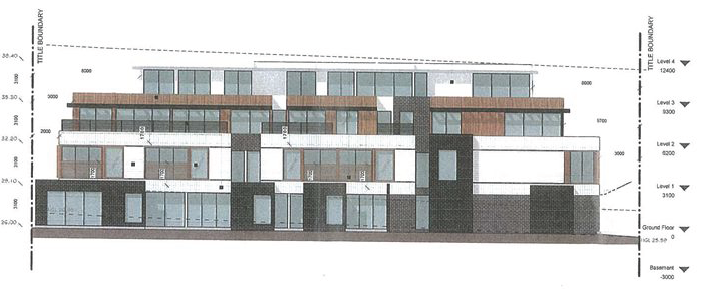
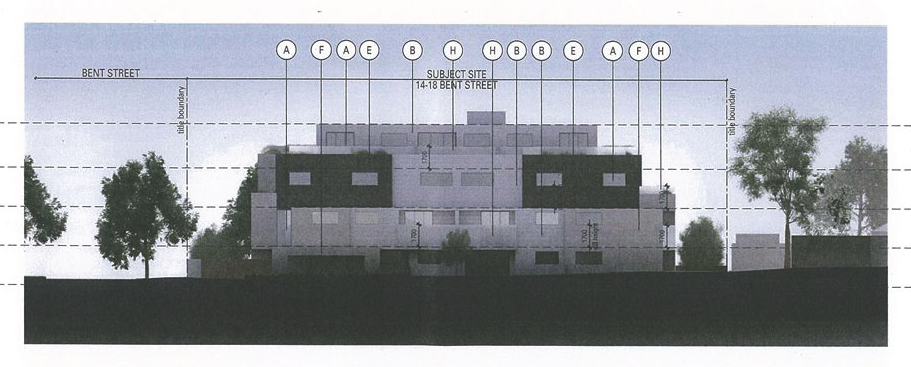 So, is anything changing for the betterment of residents and their amenity? All of these applications will end up at VCAT we predict and unless the planning scheme is reviewed, modified, and greater protection provided via the schedules, and a ‘preferred character statement’ for housing diversity that is made explicit, then we won’t be holding our breath. It is far too easy to blame state governments. Residents should be asking these councillors exactly what they have done in the past 6 months at least, to ‘reform’ the planning scheme. That is their duty, their obligation, and definitely within their powers. Thus far, they have done bugger all except talk of the need to do something! The time for positive action and not mere words is fast running out!
+++++++++
Sounness moved to accept with some changes – setback for south rear side and site coverage to meet ResCode standards. Seconded by Pilling.
SOUNESS: started off by saying that development in Bent St has been ‘subject to a lot of discussion’. ‘Representations’ had been made to councillors about other developments in the street. Sounness did ‘recognise that this is quite a substantial building’ and that 31 dwellings do represent a ‘significant increase into the streetscape’. Said that the housing diversity policy does ‘speak about’ density and this is one of those sites. Went on to say that given the planning scheme and the ‘regulations’ council doesn’t have the ‘ability’ to say that this application should be ‘reshaped’. He thought that this was a ‘fairly acceptable application’ and the conditions are ‘quite reasonable’. Even though he is ‘uncomfortable’ to ‘go down the path of refusal’ wouldn’t ‘be appropriate’ mainly because of the ‘defense point of view at VCAT’. Claimed that there was some ‘difficulty’ with the way that the planning scheme ‘manifests expectations’ and what ‘neighbourhood character should be’. Wanted ‘further discussion’ with officers and councillors about how to address this. Stated that ‘evolving neighbourhood character’ is different to ‘existing neighbourhood character’ and that should be discussed.
PILLING: thought it fulfilled all the ‘boxes’ since it was one step back from McKinnon Road and close to the station. Also meets the 10.5 metre height limit. Said that it is slightly unusual ‘because of the slope’ so it will be part 3 and part 4 storey. ‘It does fit within our guidelines’ and the zone. It mightn’t be ‘perfect’ but ‘in this area’ which is close to transport and shopping ‘this is where we want development to go’. Thought that refusing the application is ‘going too far. It doesn’t warrant refusal’ since it ‘ticks all the boxes’. This is the ’emerging nature of this area’.
OKOTEL: said that her primary objection was that it ‘isn’t in keeping with neighborhood character’ and would like to see applications that ‘fit in more appropriately’ with the area. Referred to 2 previous VCAT decisions and said that neighbourhood character is also something that VCAT ‘considers to be important’ (one in Prince Edward Avenue and in Carnegie). So if VCAT considers something important then ‘so too should our council’. Policies should be ‘applied strictly’. Ended by saying that considering the ‘neighbourhood character in that street’ council should refuse the application.
ESAKOFF: this is ‘further away’ from the Bentleigh activity centre and it’s in the McKinnon Neighbourhood Centre where there should be ‘slightly lesser density’ than at the ‘other end of Bent St’. Supported the proposed conditions to ‘make right the site coverage’ and the ‘northern light’ but it doesn’t address neighborhood character and ‘we’re looking at a flat roof’ where pitched roofs dominate. ‘There are too many things against this’ to give a permit.
HYAMS: said that ‘our job’ isn’t to agree with everything that objectors bring up but to ‘listen to objectors’ and ‘weigh up for ourselves’. Said he understands about the sloping land and that therefore it isn’t really four storeys and ‘under normal conditions that wouldn’t be considered’. He is concerned about the ‘bulk’ and ‘neighbourhood character’. The 10.5 metre height limit was put in because they anticipated that this would give ‘scope for pitched’ roofs and flat roofs that go the whole length does ‘have an impact on neighbourhood character’. ‘There’s no other building in the area that has a flat roof except in the commercial area’ in McKinnon Road. So it’s completely ‘out of character’. Said that since there is this flat roof council can either ‘accept’ or refuse the application as the ‘only alternative’. Said that there were other problems such as site coverage, overshadowing, and setbacks but these have ‘been dealt with by conditions’ so aren’t ‘fatal’ to the application because conditions have seen to them. But ‘bulk and character are fundamental’ and ‘can’t be dealt with by conditions’. At the planning conference people were talking about the impact of the new zones but this has not got anything to do with the zones and Hyams gave the example of Lee St/Nicholson Streets which was ‘built before the zones’ came in. ‘The new zones have nothing to do with this’ and ‘it could have been built under the old zones’.
LIPSHUTZ: was in favour of the application. Thought that the ‘problems’ had been dealt with ‘by conditions’ and that the ‘only issue’ is about the roof. He ‘doesn’t see that as fatal’. He would be more concerned about setbacks and overshadowing. If one house is flat roofed then he doesn’t ‘see’ this as a problem. Said that the application ‘looks like a very reasonable design’ and not too bulky.
LOBO: said that Bent Street ‘all began’ when a real estate company ‘invited an overseas developer’ to invest and ‘big money’ paid for some houses. Plenty of other offers came in and other builders arrived like ‘ants’ after the sugar. They offered to buy mostly from people ready to go to ‘nursing homes’ and ‘necessity is the mother of virtue’. Said that ‘greed’ is destructive and ‘destroys everything’. The application is another example of ‘being ripped open by developers’. Said that Tommy Bent is probably rolling ‘in his grave’ seeing all this destruction. Said that ‘no consideration’ is given to residents about parking, ‘loss of neighbourhood character’ and infrastructure ‘strain’ and schools. The street is ‘reaching a saturation point’ and he ‘hoped’ that the zones ‘would be looked at’ to care for the community. Labor has promised to review and he hoped that ‘they keep up to their promise’. Said he received an email late the previous night about developers trying to sell two bedroom apartments and thought that as a councillor ‘our loyalty should be to residents’ and if he stands for relection in 2016 he couldn’t do this with a ‘clear conscience’ if he isn’t loyal to residents. He stood for election on the promise to oppose overdevelopment so won’t break his pledge.
SOUNNESS: said the planning conference was ‘heated’ and that there needs to be a ‘conversation’ with community about the zones ‘we have at the moment’. In his view if there is going to be density then ‘you put it near a train station’. Said that the Mckinnon station is on a ‘fairly significant line’ even though if people are heading into the city at peak hour they ‘will be standing’ because of the crush. Said that council’s ‘capacity’ to refuse ‘is limited’ because ‘our zones don’t clearly say this is wrong’ and what they do say is ‘that this is the type of thing we want to have’. Said it’s up to councillors to ‘say what we want’. In this case the application is ‘good enough’ so he will support it. He had listened to objectors but thought that there wasn’t the capacity to refuse especially if it went to VCAT.
MOTION PUT AND LOST: voting against – Hyams, Esakoff, Okotel, Lobo, Delahunty. VOTING FOR: Sounness, Lipshutz, Pilling, Magee
Hyams moved motion to refuse permit on grounds of inconsistency with planning scheme; ‘excessive bulk’, neighbourhood character, setbacks, etc. Esakoff seconded.
HYAMS: said there are ‘objective’ and ‘subjective’ elements with town planning. With the objective elements then the application with the conditions meets height limits, parking requirements but ‘where it falls down to me’ is on the subjective parts. Councillors have to look at the ‘subjective elements as well’ to do their ‘role’. Not a question of ‘right decision or wrong decision’ but for him ‘this does not meet neighbourhood character’ for the area. Referred to Bent as being the main property developer of his time.
ESAKOFF: said that she had already stated her objections to the application.
PILLING: ‘acknowledged’ Hyams’ points but that to refuse the application because of the roof was ‘going too far’. Claimed that there were ‘a lot of merits’ with this development . Referred to Lobo’s statements and that councillors ‘are here’ to ‘make sound planning decisions’ and whilst they ‘acknowledge’ residents’ concerns they also have to look at the ‘processes’.
DELAHUNTY: said that she hadn’t spoken previously because she was ‘undecided’ on how to vote and wanted to hear what others had to say first. Even though she often agrees with Sounness this time was prepared to err on the side of caution about neighbourhood character. This is ‘one of those areas where you wish for a different tool’ but the roof doesn’t fit into neighbourhood character. Said that it’s a ‘weird balance’ between ’emerging neighbourhood character and existing neighbourhood character’ and councillors need to ‘understand what our role is’ on this. Said the application shouldn’t ‘mirror’ the shops on McKinnon Road, but the houses in Bent Street. Said that it would be ‘fantastic’ to see applications coming in that are ‘sympathetic to neighbourhood character’. This is right for people to live and is ‘close to a train station’ but you ‘can’t have it all your own way’ and it needs to be ‘sympathetic to the existing neighbourhood character’. So because of the ‘contemporary architectural style’ she will ‘err on the side’ of caution.
SOUNNESS: said that the motions grounds of refusal have about three clauses that speak ‘to the debate’ on neighbourhood character and didn’t think that these are ‘well worded’ . Said that it’s like the councillors saying ‘we don’t like’ what has been put up. It is then ‘a mediation story’. If the motion is successful he hoped that the developer would ‘substantially redesign’ the building. Hoped for a ‘successful outcome with the minimum of risk’.
LOBO: said that ‘it is nice to see the softening of the heart’ and hoped that this could be ‘helped further by the present government’. Answering Pilling Lobo said that ‘we’re not planners but representatives of the residents’ and even if officers ‘recommend something’ that doesn’t ‘mean we have to agree’.
MOTION PUT AND CARRIED. Lobo called for a division.
Voting for the motion to refuse – Hyams, Esakoff, Okotel, Delahunty, Lobo
Voting against the motion – Pilling, Sounness, Magee, Lipshutz
February 24, 2015
The MRC ‘Cinema’
Posted by gleneira under Caulfield Racecourse/C60, Councillor Performance, GE Council Meeting(s), GE Planning, GE Service Performance[17] Comments
Lipshutz, Hyams and Esakoff declared an ‘indirect interest’ and left the chamber.
Moved to accept ‘as printed’ by Pilling. Seconded by Okotel
PILLING: Thought that the conditions imposed by the officers addressed the ‘concerns’ of objectors such as ‘timing, the sound’ plus that the screen is ‘well away from residential areas’. Admitted that this is a ‘different usage’ but with all the ‘checks and balances’ he is ‘supportive of this recommendation’.
OKOTEL: said that there is ‘no designation’ for use of the land so council has to consider the application under ‘planning grounds’ . With the imposed conditions she thought it ‘appropriate’ since the cinema will only happen when ‘other uses are not occuring’. The screen is ‘350 metres away from the nearest house’ and that is ‘quite a considerable distance’ and hence ‘wouldn’t affect the amenity of the neighbours’. The liquor license is ‘available already’ and there won’t be any ‘additional’ licenses.
SOUNNESS: said that he was ‘speaking against the motion’ only because he felt that ‘there should be someone speaking against it’. The racecourse is a ‘site that is somewhat vexed’. Said that the reports and decisions that have ‘come down’ suggest that the operational aspects of the racecourse show that it isn’t ‘always a clean operation’ . He ‘supports’ the motion and the chance of use. Although the conditions ‘seem to be quite useful’ he doubts whether council has got the ‘capacity’ to ensure compliance. Was ‘sure’ that there were answer to such questions about who operates the land.
DELAHUNTY: asked Torres the question about the state of the lease.
TORRES: said he understood that ‘there is no current lease’
DELAHUNTY: would vote in favour but thought that the conditions were ‘perplexing’ since ‘they can’t be met under the current arrangements’. Said that in chairing the planning conference it was ‘interesting to hear the different interpretations of language’ from residents versus the MRC. Said that the department has ‘sent a letter to the MRC suggesting that’ it’s in favour of the permit if the Trust agrees to it. The MRC therefore has ‘interpreted this as under existing use’ and current lease, but there is no current lease. She will vote in favour because she is all for ‘more people using their land’ even though there will be ‘some profit taking’. She hoped that since the conditions can’t be met it ‘forces the parties back to the table’ to negotiate.
OKOTEL: asked whether the conditions imposed would be ‘enforceable’
TORRES: said that for any planning permit that ‘conditions are enforceable’ and that not only by council but that ‘any member of the public can apply’ to VCAT.
LOBO: said he was ‘surprised that the MRC is getting everything’. It’s supposed to be for public park as well as racecourse and ‘we are running short’ of sporting fields. Another ‘sicking point’ was that there is provision for 150 car spaces but ‘they are expecting 500 people’. So are they expecting families or ‘lovers’ to come?
MAGEE: said he doesn’t have any ‘problem with the screen being there’ and the community using the racecourse. He does have a ‘problem with the Auditor General’s report’. One of the recommendations was for a plan to be produced for the racecourse and when the plan is produced ‘it may not be consistent with’ the cinema. This cinema might not be ‘consistent’ with the wishes of the Trustees or the committee of management if it is formed. Said that the condition about Trustee approval means that ‘it must have unanimous approval’ and ‘not a majority of the trustees’ because there is no ‘trust, just a group of trustees’. Said that the Auditor General’s report was ‘scathing’ and he is ‘surprised they haven’t all resigned’. He would have resigned straight off. Said that the Auditor General’s report was ‘instigated’ in part by himself since he had written to the Auditor General. This ‘could be a community asset although there will be some profit taking’ from Crown Land. He has no problem with the MRC because they only do ‘what the trustees allow them to do’. ‘They are a good citizen’ and that ‘they run the racecourse very, very well’. They’ve been ‘allowed to do the wrong thing’ for 150 years. Hoped that things change this year.
DELAHUNTY: wanted Magee to confirm that she hadn’t been misunderstood about whether the conditions were enforceable if the lease negotiations fell apart. Magee confirmed that there was no misunderstanding. Reiterated that the new lease had to be a unanimous decision by all the trustees.
PILLING: acknowledged concerns about governance but this is a planning decision and that the Auditor general’s report was a ‘separate matter’. His decision is ‘purely on planning and he thought there were ‘merits’ to the proposal in ‘allowing community people in there’.
MOTION PUT: LOBO WAS THE ONLY COUNCILLOR TO VOTE AGAINST.
COMMENT
This discussion raises far more questions than providing answers. Here are some:
- Since when does the Trustee’s decision have to be unanimous? At the last trustee meeting, the vote was clearly split. (See: https://gleneira.wordpress.com/2014/10/22/news-flash-the-mrc-god-given-right-to-rule/
- Or is this a condition that the department has now imposed on the ‘negotiations’? If so, then why can’t the public be informed as to what is actually going on and what the parameters of the negotiations entail? Further, why is it taking so long to achieve a lease?
- Contradictions are apparent once again. When it came to the McKinnon Bowls Club renting out their third green the argument was that public land not be used for commercial profit. Delahunty was adamant on this. Not a mention this time around. So the question becomes – why is this different?
- Magee’s applauding of the MRC as ‘good citizens’ leaves us speechless!
February 22, 2015
The Zones’ Impact!
Posted by gleneira under Councillor Performance, GE Planning, GE Service Performance[11] Comments
When street after street has been given the green light for major redevelopment via the imposition of the new zones, with no thought to flow on effects, then no one is safe – not even those who are supposed to be ‘protected’ in Neighbourhood Residential Zones (NRZ). Bent and Mavho Streets in Bentleigh are the perfect example of poor planning. Sections of these narrow, small streets are multi zoned – from Residential Growth Zone, General Residential Zone, to a handful of houses in the NRZ.
Another application for a 4 storey and 25 apartments has gone in for Mavho – with the normal car parking waiver request. What is most telling however is how those residents living in Mavho, and in the NRZ sections are reacting. They are getting out as quickly as they can and hoping to at least break even. The future is writ large for them and for such streets. They clearly do not want to live surrounded by such density, such traffic chaos, and the loss of all amenities. They are also ‘doubling up’ and selling! This is the first ‘consolidated lot’ that we are aware of from residents living in Neighbourhood Residential Zones! What will happen here should be fascinating since there is no size limit on subdivision under the wisdom of this council. Will this NRZ stretch of Mavho, now become a defacto RGZ, or even GRZ, especially since it is a relatively large block of land?
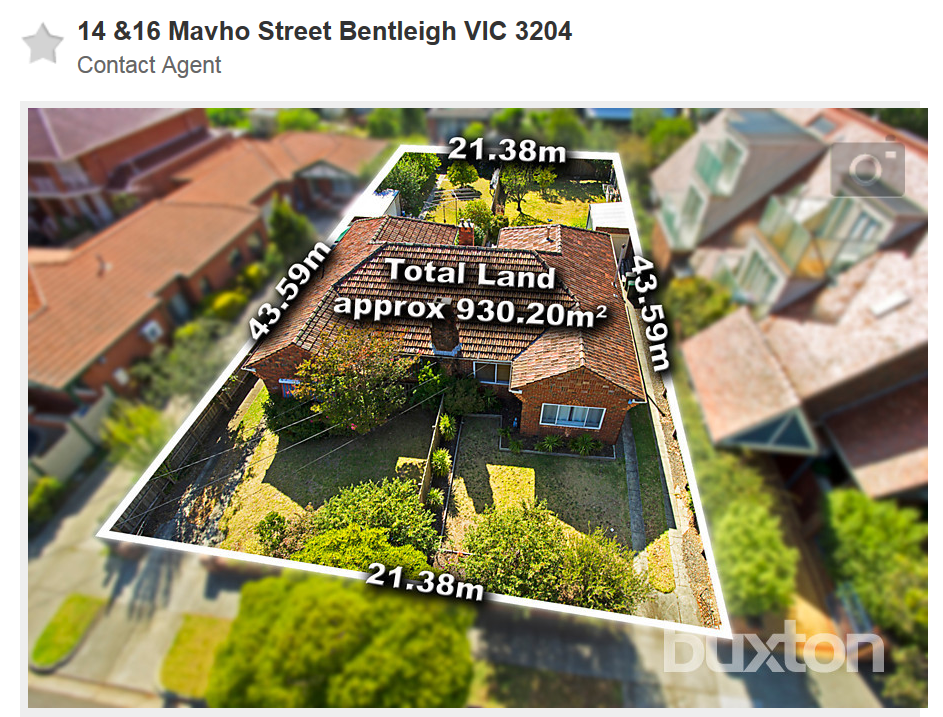 Bent Street of course is already gone. More applications are flowing in by the day and more properties are being sold.
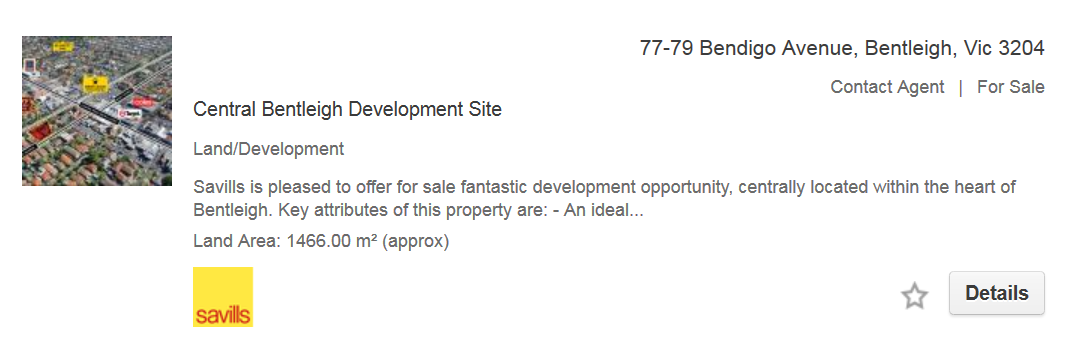
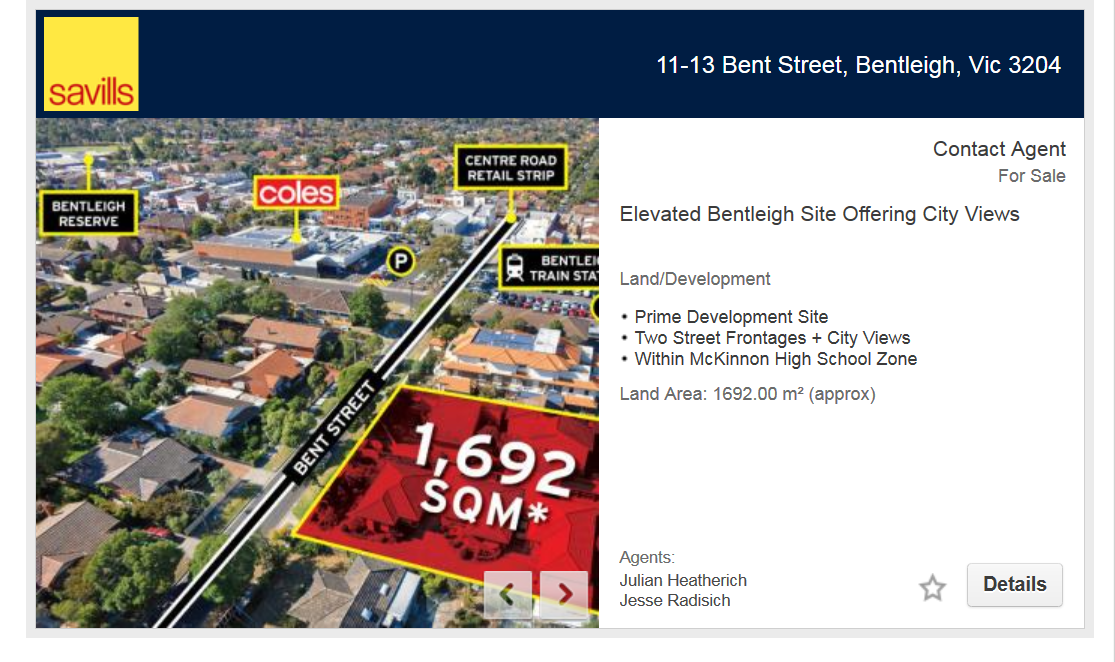 Other sales are imminent in Vickery and Bendigo Ave – some with heritage overlays. That does not matter of course!
 Residents should start asking themselves and their non-representatives –
- Does Council really care about the destruction of street after street? Or, is this all grist to the mill of pro development, more rates?
- What is ‘sustainable’ as we’ve previously asked? What are the actual figures? What are the costs? Who will pay and how much?
- How many streets is this council prepared to ‘sacrifice’ without lifting a finger to try and ameliorate the damage it has wrought?
PS: THE ROT HAS STARTED FOR BENDIGO AVENUE. HERE’S ANOTHER SELL UP RIGHT NEXT DOOR TO THE AD FEATURED ABOVE.
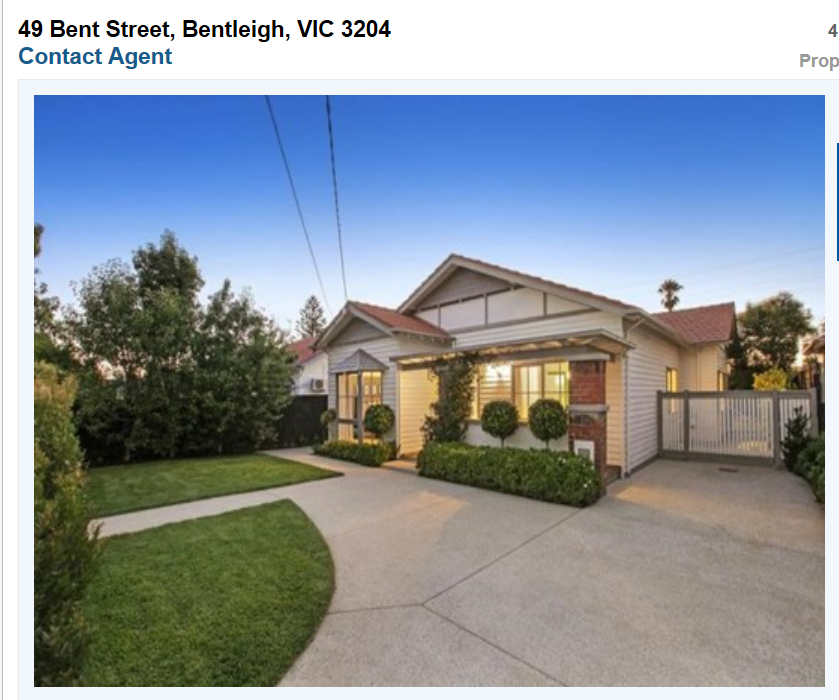
 PPS: HERE’S ANOTHER RESIDENT IN THE NRZ ZONE OF BENT STREET GETTING OUT ASAP!
February 20, 2015
Agenda: MRC ‘Quaddy’ & Bent St
Posted by gleneira under Caulfield Racecourse/C60, Councillor Performance, GE Council Meeting(s), GE Planning, GE Service Performance[7] Comments
The Melbourne Racing Club has scored the ‘quaddy’ with our new Manager of Strategic Planning signing off on their latest application for an ‘outdoor cinema’ from dusk until 1am throughout the year! In approximately one page as a bit of ‘useful’ commentary, Council has again agreed to all of the MRC demands. That makes it the perfect quaddy in our books – ‘yes’ to an incorporated and development plan that bore no resemblance to each other; ‘yes’ to a paltry open space contribution and no development contribution;’ yes’ to the 4 storey high racing screen, and now ‘yes’ to an ‘outdoor cinema’. No mention of who will police drunkenness; no mention of how many of these ‘events’ can be held? Are we speaking of once a month? Once a fortnight? Once a week? Or every single night throughout November to March, and then some more throughout the year whenever the MRC decides it might be a good idea?
Adding insult to injury is the fact that EPA legislation for ‘noise’ from “residential” areas has a time limit up to 11pm. Music production (which we can assume to accompany any soundtrack), also has a time limit of up to 11pm! S0 exactly how does Council grant a permit until 1am and for staff to leave (without noise presumably) by 1.30am.
The Bent St application has also got the nod for a 3 and part 4 storey development with 31 dwellings. 17 properties notified and 25 objections. McKinnon is now given the new nom de plume of an ‘activity centre’ (page 33). There is NO MCKINNON ACTIVITY CENTRE!
The paragraph which concerns us greatly and which is included as part of the conditions reads:
The second floor setback a minimum of 9.0m from the eastern boundary with any consequential changes absorbed within the approved building envelope. A balcony may encroach a maximum of 1.6m into this setback.
It is our contention that such a condition illustrates fully the myriad of shortcomings of the current planning scheme and also serves as a convenient scapegoat for this administration and councillors.
The property is located in GRZ1. As such ResCode setbacks apply. When council secretly introduced the New Residential Zones, it chose not to seek greater setbacks than ResCode for GRZ1. So now we have the ludicrous situation where planning officers recommend setbacks which go against their very own planning scheme. It will be no surprise that if this goes to VCAT the member sits back, laughs, and says – ‘but that’s not what the planning scheme states’! and of course, VCAT will again be the convenient scapegoat!
February 18, 2015
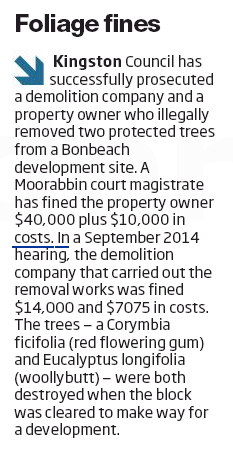
What Others Do!
Posted by gleneira under Councillor Performance, GE Planning, GE Service Performance[14] Comments
February 17, 2015
A Level Playing Field?
Posted by gleneira under Councillor Performance, GE Governance, GE Planning, GE Service Performance[6] Comments
On July 3rd 2013, Hyams uttered these incredible words in regard to the Alma Club development application – ‘council’s role is not to necessarily represent the people’. Perhaps Hyams needs to revisit the Local Government Act, where part of its objectives for local councils is the injunction to act ‘as a representative government!’ Not for the first time was the gallery assailed with the double-speak of ‘quasi-judicial’ functions and ‘planning law’ and the inference that all planning decisions and processes are therefore objective and strictly ‘neutral’. Council’s published ‘information’ on planning objections enshrines this notion of ‘impartiality’ when it states – Planners must act impartially as an assessor of an application.
So, we are left with the conundrum of – who does council really represent? The answer is clear in this screen dump!
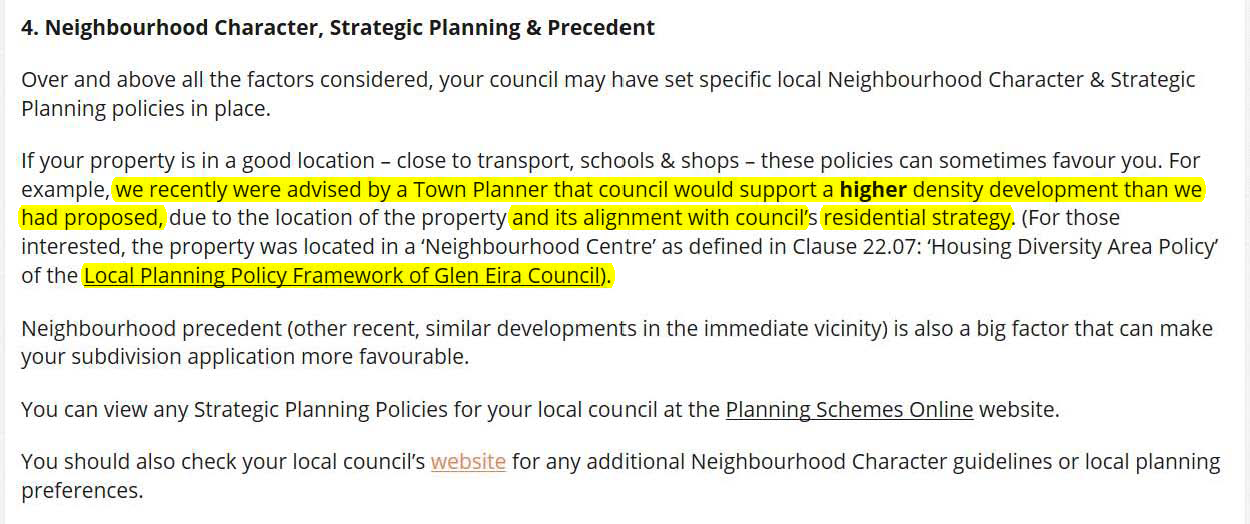 Source: http://pillarandpost.com.au/topics/neighbourhood-character/
February 16, 2015
Is This Sustainable?
Posted by gleneira under Councillor Performance, GE Open Space, GE Planning, GE Service Performance, GE Transport[6] Comments
Council’s Community Plan asserts that in order to meet population demand the city will have to provide for roughly 9,700 new dwellings in the period between 2011 and 2031. Victoria in Future 2014 predicts a higher figure – approximately 9,800. At the rate we’re going, and even if we assume a forecast figure of 10,000, this target will be reached within another 18 or so months. That is 15 years ahead of schedule! Plus, it does not even take into account what will be the final figures for the Caulfield Village!
Data from Planning Permit Victoria reveals the following numbers for ‘net new dwellings’ from 2011/12 onwards. Please take careful note!
2011/12 – 1280 dwellings
2012/13 – 934 dwellings
2013/14 – 1716 dwellings (council’s published data)
For the period from July to December 2014, another 1519 new dwellings were on the horizon according to Planning Permit Victoria. This makes it a grand total of 5449 in three and a half years. If the current rate of development continues, then the target of 10, 000 will be reached by the end of 2017 – even earlier once all the 2046 dwellings at the racecourse have been given the rubber stamp by our very accommodating administration and councillors.
So exactly what is council doing about this predicted future? What initiatives have they introduced, or even thinking about, that will ensure that such a rate of development is sustainable and doesn’t completely destroy the fabric and lifestyle of existing and future residents?
There are countless questions that should be raised and must be answered. For example:
- What is ‘saturation’ point? When will it be acknowledged that the city is fast approaching breaking point and that no further development is possible unless major environmental, social, and economic safeguards are implemented?
- How many speed humps in quiet residential streets have to happen, and at what cost, before proper Parking Precinct Plans in all activity centres are introduced and the waiving of car parking requirements ceases?
- How well is the drainage infrastructure coping and how well will it cope with another 10,000 dwellings?
- How many double levels of underground car parking will council allow before the water table becomes a real problem? How many of these have resulted in structural problems for the development and/or their neighbours?
- What happens post 10,000 new dwellings? How many more are feasible?
- How much will it cost to ensure that infrastructure is adequate?
- How much should developers contribute to this new infrastructure or is it council’s intention to keep subsidising development and keep raising rates?
- How much will open space provision decline per person as a result of population increase? Apart from the Booran Road Reservoir, what is council’s long term acquisition plan? Does one even exist, or are we to have more and more pavilions, car parks, and removal of trees and pretend that this is fulfilling our open space needs?
- Will councillors have the temerity to demand amendments that actually do something to alleviate congestion, shoddy building design, environmental sustainability, or are they as impotent as they appear?
- When will common sense prevail and council gets off its backside and starts proper strategic planning and consulting with residents as to the future of this municipality? And when oh when will the archaic, inept, and totally out of date planning scheme be reviewed in a proper consultative fashion with residents?
- And last, but certainly by no means least, when will standards that mean something be introduced and adhered to by this planning department and councillors?
PS: readers may be interested in the following application. Interestingly the developer has bought up surrounding GRZ properties and is now contemplating having 3 storeys alongside 7 storeys on East Boundary Road, which is already a disaster given recent applications and, of course, GESAC. We suggest that residents attempt a left hand turn from Centre Road into East Boundary Road to see for themselves the traffic conditions in this area. And East Bentleigh isn’t even a major activity centre! It merely is a de facto one!
795-807 Centre Road and 150 East Boundary Road BENTLEIGH EAST VIC 3165 – Construction of a part three (3) and part seven (7) storey building comprising 110 dwellings and 4 shops, use of the land for dwellings, reduction of statutory car parking requirements, waiver of loading bay requirements and alteration of access to a Road Zone Category 1
February 13, 2015
‘Density’ & The Zones
Posted by gleneira under Councillor Performance, GE Open Space, GE Planning, GE Service Performance[17] Comments
A long but important post – so our apologies!
In the past week, The Age has published several articles on high rise towers in the Melbourne CBD. The articles are based on research done by Leanne Hodyl, the 2014 Churchill Fellow. We’ve uploaded her full report HERE.
Whilst the report focuses primarily on ‘high rise’ towers and the city centre, some of the content applies directly to planning everywhere and especially to what is happening in Glen Eira. Hodyl recommends:
- Density controls
- Apartment standards
- Separation between towers/buildings, and she says –
- Planning policies should aim to ensure that this growth is managed well; to ensure that the cumulative effect of alldecisions made in the city make the city a better place to be and balance private and public benefit. (page 11)
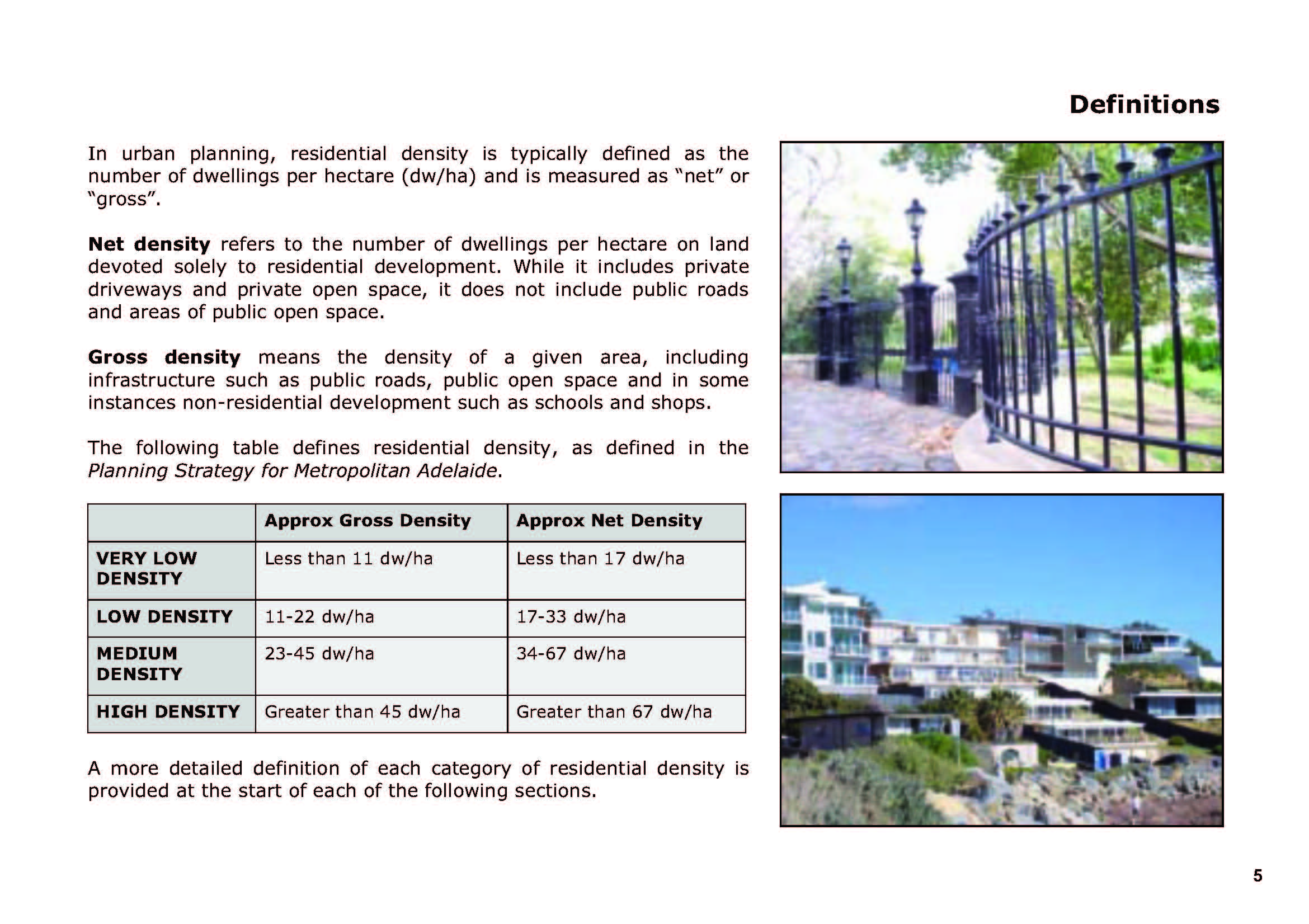
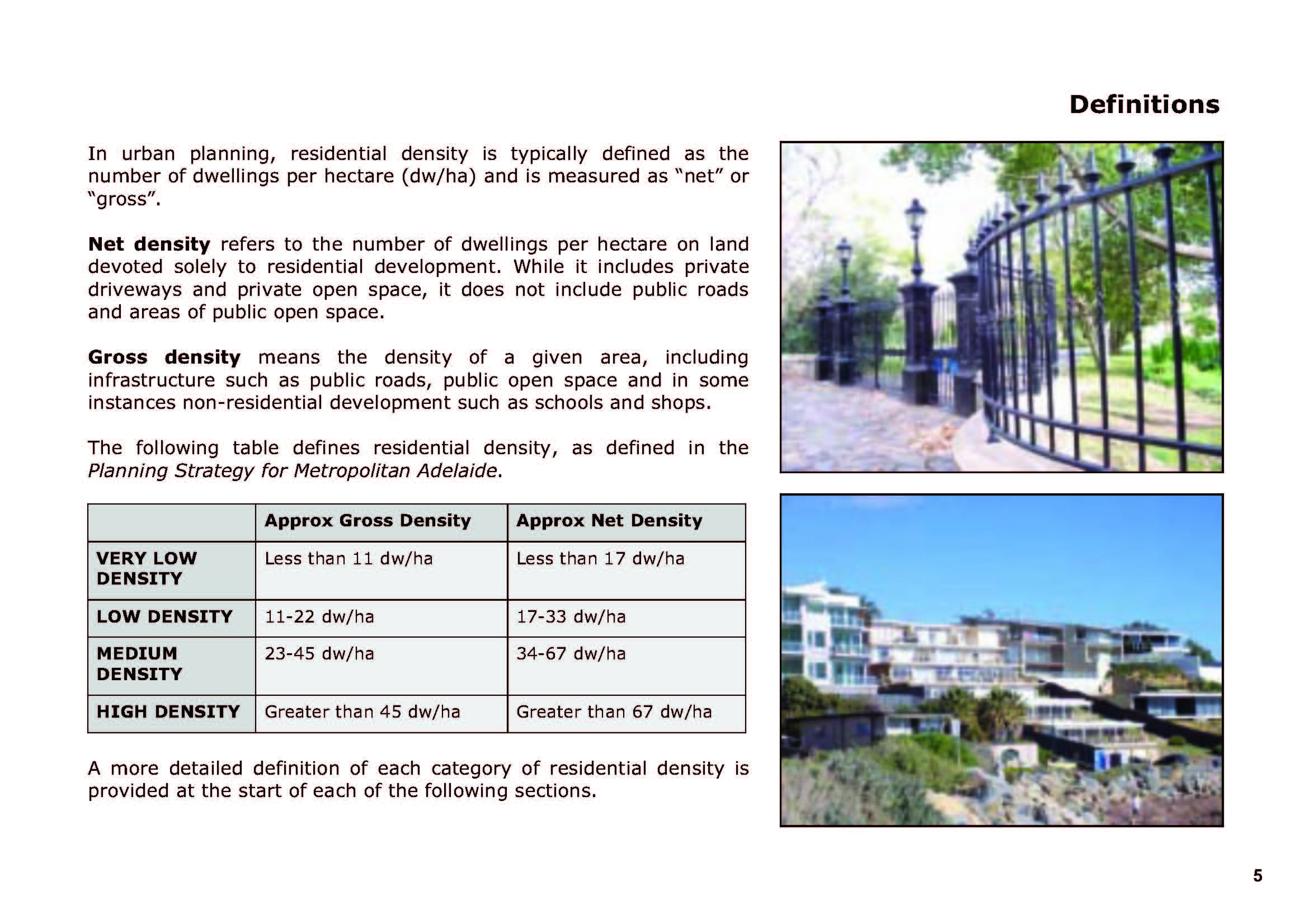
However, without clear definitions and standards of what constitutes ‘low’, ‘medium’ and ‘high density’ (in fact what ‘density’ even means and how these variable measures should be applied, and in which areas), we are in a state of anything goes.
Glen Eira’s new zones provide enough evidence to show that there has been no consideration whatsoever as to the cumulative impacts of rapid development. Nor has there been any attempt to gauge what is an appropriate ‘balance between private and public benefit’. Instead, lines have simply been drawn on a map consigning vast areas of residential land as booty for developers and speculators.
Below is a list of all the applications that have been submitted in the past 18 months or so, for one single stretch of road – Neerim Road. Some applications are still awaiting approval. Others have been granted permits either by council or VCAT.
We urge readers to carefully note the following:
- Many of these developments are literally side by side. We assume that over time the ‘gaps’ will be filled in with further 3 and 4 storey applications.
- Assuming that all of those still awaiting their permits will have them granted, this equals just on 2 hectares of Neerim Road that is going to be developed with 4 and 3 storey boxes and, in Mixed Use/Commercial zones, even higher. We anticipate that at least 40% of these new dwellings will be single bedroom apartments given current trends and the financial rewards.
- The total of new dwellings designated in just under 2 hectares of land will be around 400+ (366 known, and others unknown since council’s register is incredibly short on detail in many instances)
- According to Hodyl’s paper, this means that certain sections of Neerim Road, in terms of dwelling DENSITY, will outstrip what is happening in the CBD and even some of the other major international cities.
- What impact this will have on the public realm has NOT been considered by council. Much less has traffic congestion, lack of public open space, and general amenity – not to mention heritage, neighbourhood character, water tables etc.etc.
- So when is ‘saturation’ or ‘capacity’ (council’s latest buzz word) finally arrived at? When a few hundred yards of Neerim Road contains 600 dwellings? And how much will residents have to fork out to support drainage infrastructure, traffic management instead of developers providing their fair share via a development contributions levy, or a community levy?
As Hoydl implies, a one size fits all approach to huge swathes of land is nothing more than a recipe for environmental and social disaster on a grand scale.
We urge readers to consider the ‘facts’ about Neerim Road. They are indeed frightening – not only for this thoroughfare, but for all the neighbouring residential streets.
143-147 Neerim Road, Glen Huntly – Construction of a three storey building comprising 32 dwellings above a basement car park and alteration of access to a Road Zone Category 1 (GRZ1) (`1700sqm)
149-153 Neerim Road & 4 Hinton Road GLEN HUNTLY VIC 3163 – Construction of up to seventeen (17) double storey dwellings and alteration of access to a Road Zone Category 1 – Amended permit (GRZ1) (`1700sqm)
179 – 181 Neerim Road, CARNEGIE VIC 3163 – Construction of a three storey building comprising up to 19 dwellings and basement car parking. Amended permit (GRZ1)(`1200sqm)
247-251 Neerim Road CARNEGIE VIC 3163 – Construction of a four (4) storey building comprising 48 dwellings above 2 levels of basement car parking, reduction of statutory requirements for visitor parking and alteration of access to a Road Zone Category 1 (RGZ1) (`2100sqm)
253-255 Neerim Road CARNEGIE VIC 3163 – Construction of four (4) storey building comprising multiple dwellings (RGZ1) (`1150sqm)
257 Neerim Road CARNEGIE VIC 3163 – Construction of a three (3) storey building containing seven (7) dwellings and altered access to a Road Zone Category 1(RGZ1) (`630sqm)
259-261 Neerim Road CARNEGIE VIC 3163 – Construction of a four-storey building comprising twenty-eight (28) dwellings, associated car parking and alteration of access to a road in a Road Zone, Category 1 on land affected by the Special Building Overlay and Parking Overlay (permit) (RGZ1) (`1170sqm)
276-280 Neerim Road CARNEGIE VIC 3163 – Development and use of the land for the purpose of a five storey building with retail premises at ground floor, up to forty two dwellings and basement car parking, a reduction in the standard car parking requirements and waiver of a loading area (amended permit)(MUZ) (`1050sqm)
15-17 Belsize Avenue CARNEGIE VIC 3163 & 316-320 Neerim Road CARNEGIE VIC 3163 – Construction of a four storey building comprising up to forty seven (47) dwellings above two levels of basement car parking (permit)(RGZ1) (`1950sqm)
322-326 Neerim Road CARNEGIE VIC 3163 – Construction of a four (4) storey building comprising 38 dwellings and associated basement carparking (RGZ1)(`1350sqm)
328-330 Neerim Road CARNEGIE VIC 3163 – Construction of a four storey residential building comprising up to 16 dwellings with associated car parking, the waiver of three visitor parking spaces and alteration of an access way to a road in a Road Zone Category 1 (permit) (RGZ1) (`800sqm)
332-334 Neerim Road CARNEGIE VIC 3163 – Construction of a four (4) storey building comprising twenty six (26) dwellings above a basement car park; Reduction of the requirement for visitor parking; and Alteration of access to a Road Zone Category 1 (permit) (RGZ1) (`1130sqm)
339-341 Neerim Road & 19-21 Belsize Avenue CARNEGIE VIC 3163 – Construction of a four-storey building comprising up to thirty (30) dwellings and a basement car park and reduction of the visitor car parking requirement (permit granted for 3 storeys and 27 units)(RGZ1) (`900sqm)
365-367 Neerim Road CARNEGIE VIC 3163 – The construction of a three (3) storey building above basement comprising of sixteen (16) dwellings and creation of access to a road in a Road Zone Category 1(GRZ2) (`750sqm)
401-407 Neerim Road CARNEGIE VIC 3163 – Construction of a five storey building comprising of shops and dwellings above basement car park, a reduction in standard car parking requirements and to create access to a Road Zone Category 1 (permit)(MUZ) (`2030sqm)
Finally, we’ve linked to a South Australian Government Report , which at least attempts to define low, medium and high density. Compare what’s happening in Glen Eira with these figures and how our council still insists that RGZ zones are ‘medium density’!!!!!