GE Service Performance


The more we dissect Glen Eira Council’s new zoning, the more convinced we become of its total ineptitude. The latest atrocity is the manner in which the zones have been applied in relation to Heritage Overlays. The Planning Scheme contains the following statements in relation to Heritage – whether these overlays be in the equivalent of minimal change, or housing diversity. Here are some quotes –

The policy recognises that some locations in housing diversity areas may be constrained by their heritage significance or local flooding and that this could reduce their development potential.

Recognise that these areas may have a limited capacity for multi-unit development.

Ensure that residential development respects the scale, form and setbacks of buildings on properties affected by the Heritage Overlay and does not compromise heritage values.

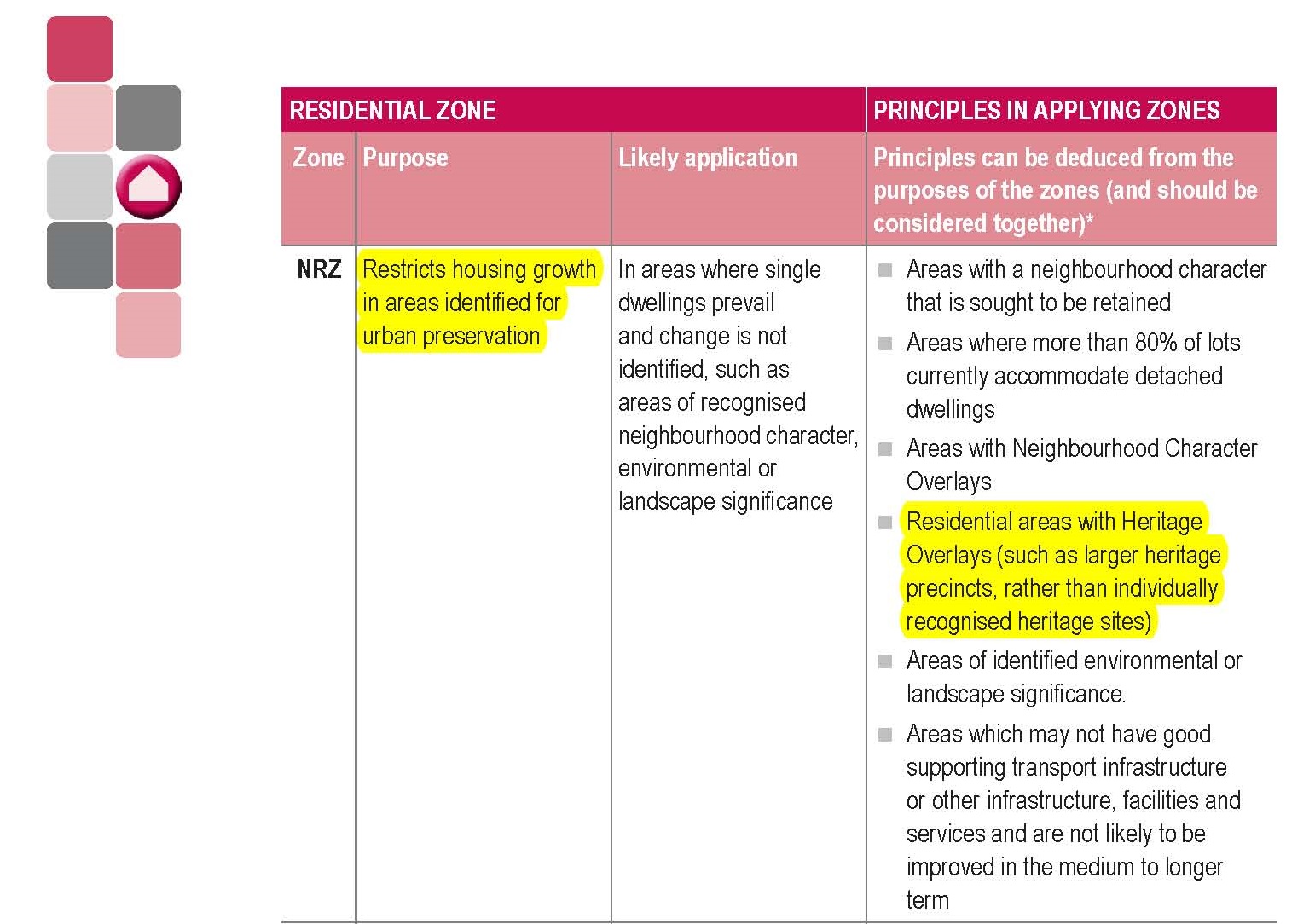
Even the State Government’s Practice Note 78, makes it very clear what should be included in Neighbourhood Residential Zones as shown by the following –

Pages from Practice_Note_78-2

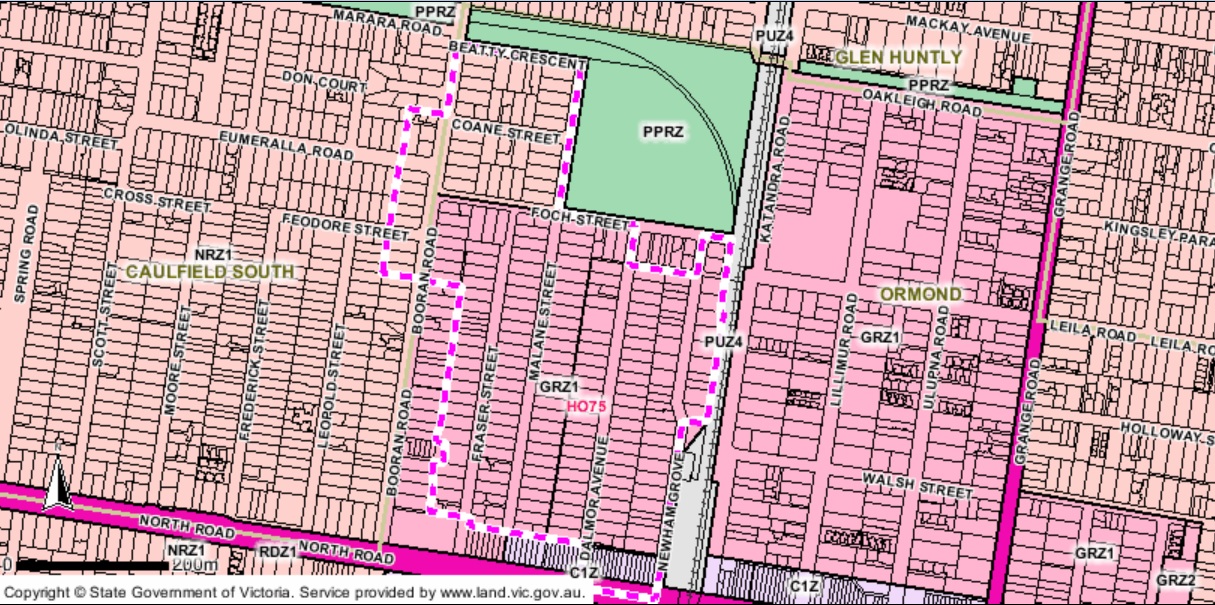
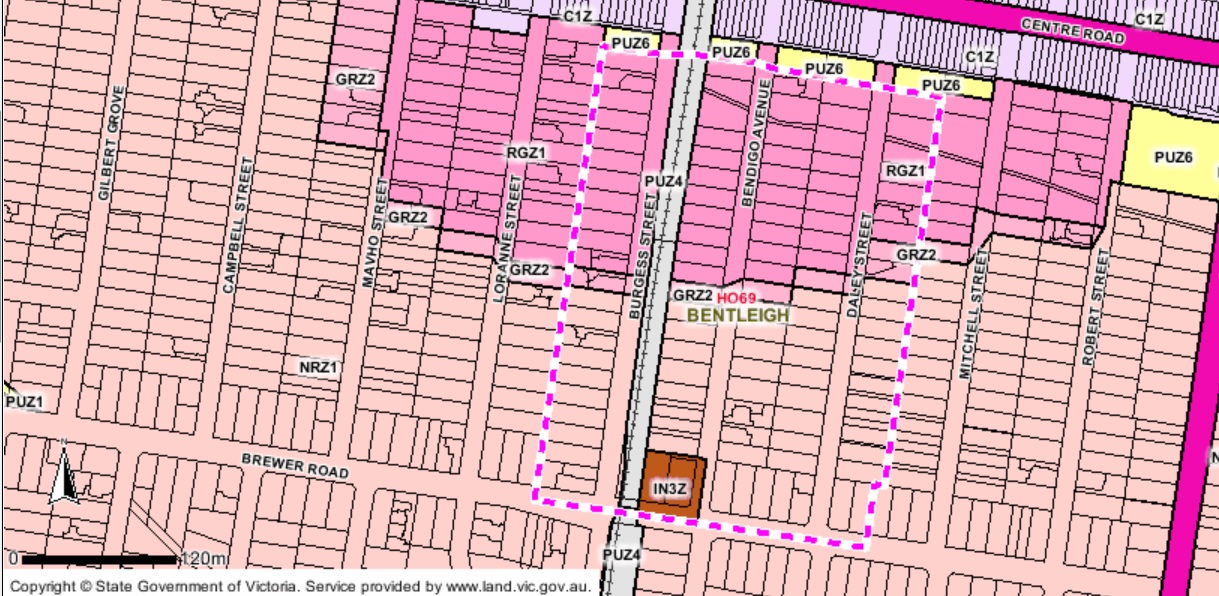
So what has our wonderful planning department done and which councillors have ticked off? Large areas that are included in Heritage Overlays have now been zoned as GRZ1 and even worse, RGZ– suitable for 3 & 4 storey developments respectively. The fate of these areas is now sealed. The pink lines in the maps below are the overlay borders for individual heritage overlays. Residents need to start asking how something like this has been allowed to occur?

heritage2 heritage

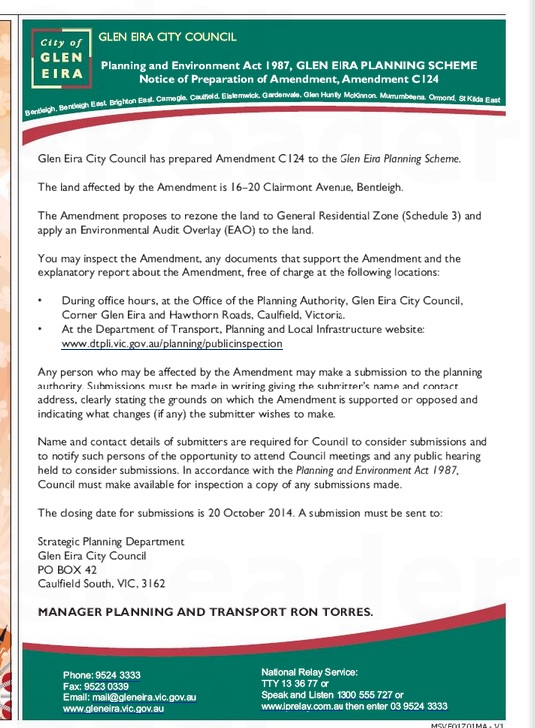
heritage2PS: The following appeared in today’s Moorabbin Leader.  Questions need to be answered on this latest use of GRZ3 – ie the Alma Club current zoning.

  • The advertisement states that this amendment has been ‘prepared’ by Council. If it is indeed a Glen Eira Council instigated amendment, (at the behest of the developer perhaps?) then why wasn’t a formal resolution passed which requested permission from the Minister to advertise?
  • If done under Section 20(4) then why hasn’t this proposed amendment been listed in any of the Quarterly Reports? Further, if it is a ‘fast track’ amendment, why does it even need to be done ‘secretly’ via this clause of the legislation? What’s the rush – or have plans for large residential developments already been discussed with officers?
  • If the amendment is the result of the developer going straight to the Minister and requesting the rezoning, then we expect that there should be some public item in the coming agenda. We expect the item to be as per normal – bereft of any real detail!
  • Has the Alma Club zoning (which council claims all ignorance of until it appeared) become the thin end of the wedge, where large land holdings (often stuck in the middle of minimal change) will now be rezoned to the GRZ3 ‘standards’ – as per the changes to the planning scheme? So much for a ‘neutral translation’ of the old minimal change/housing diversity to the new zones!

amend

The following extracts are taken verbatim from the MAV’s (Municipal Association of Victoria) guide to councillors on planning. (Uploaded HERE). Readers need to keep in mind that in Glen Eira:

  • No councillor is present at Delegated Planning Committee Meetings
  • One councillor chairs a Planning Conference – rarely do other councillors show up to these.
  • No minutes or public reports are published from the DPC meetings and for Planning Conferences the officer’s report is lucky to be more than 50 words and is a bullet point summary of ‘objections’.
  • Councillors have no ratified and hence legal right to application ‘call ins’
  • Residents can’t speak to planning applications at council meetings
  • Councillors continue to delegate away all their powers
  • We strongly suspect that half the time councillors don’t have a clue as to what is going on!

“Planning for the future needs of the community is a challenging and vital councillor responsibility. Planning decisions shape communities and influence the physical environment and quality of life. They have long term consequences and can affect people’s livelihoods and amenity. A councillor needs to understand the important opportunities that the planning system provides to shape the future of the local community.

Councils also have a key role as representatives of the local community to advocate on the community’s behalf, particularly in the assessment of projects of state significance or proposed changes to state policy.

Generally speaking it is the role of councillors to set planning policies and direction, and the role of officers to carry out the administrative functions of the council at the direction of the councillors acting as a collective body.

Councillors have broad and active involvement in the planning system

It’s a good idea to participate in consultation to have a full appreciation of the proposal and the objectors concerns and often councillors can play a useful role in mediating solutions, where all parties are willing.

A councillor has a responsibility to be informed about planning permit applications that are presented to a council meeting for decision. The council planner’s report is essential reading and should be discussed with council colleagues and the council planner well in advance of the meeting so as to have a full understanding of the relevant planning issues and any limits around the decision to be made

A councillor can initiate changes to the existing local policies in the planning scheme and request the development of new policies if required. If you are dissatisfied with the content or operation of an existing policy, discuss the concerns with council colleagues and identify options to improve the effectiveness of the policy with council management. A council resolution may be necessary to give the review or project a priority in the administration’s work program.”

And on the mandatory Planning Scheme Review:

“As the date for the review approaches, councillors should discuss with the planner an appropriate structure and process for the review. It may be appropriate to establish a small working group of councillors to develop a revised draft MSS. The review should involve consultation with stakeholders such as resident groups, government agencies and representatives of professional groups.”

The reality of what’s happening to our neighbourhoods is evident in the following data. In the space of just 9 weeks, there have been planning applications for well over 600 dwellings. Given the current zoning and council’s pro-development stance, combined with VCAT’s endorsements, we estimate that probably 95% of these applications will be rubber stamped. We also suspect that councillors don’t have a clue as to most of these applications!

Featured below are just those multi-unit proposals. We ignore the countless double storey attached that is rampant throughout all areas.

1170 Dandenong Road, Carnegie – 3 storey – 27 units

15 Belsize Avenue, Carnegie – 4 storey – 52 units

93 Truganini Road, Carnegie – 3 storey – 28 units

98 Truganini Road, Carneig – 4 storey – 29 units

401 Neerim Road, Carnegie – 5 storey – ???? units (Your guess is as good as ours!)

254 Jasper Road, McKinnon – 4 storey – 7 units and shops

45 Ulupna Road, Ormond – 3 storey – 11 units

630 North Road, Ormond – 4 storey – 14 units

482 North Road, Ormond – 4 storey – 23 units

269 Grange Road, Ormond – 3 storey – 13 units

2C walsh Street, Ormond – 3 storey – 12 units

85 Robert Street, Bentleigh – 3 storey – (again, your guess is as good as ours!)

75 Patterson Street, Bentleigh – 3 storey – 5 units

2 Tovan Akas Avenue, Bentleigh – 3 storey – 8 units

455 South Road, Bentleigh – 6 storey – 10 units

29 Loranne Street, Bentleigh – 4 storey – 42 units

22 Bent Street, Bentleigh – 4 storey – 41 units

24 Mavho Street, Bentleigh – 4 storey – 28 units

150 Tucker Road – 3 storey – 23 units

188 Tucker Road, Bentleigh – 3 storey – 10 units

PS; TO RUB MORE SALT INTO THE WOUNDS HERE IS THE LATEST APPLICATION BY THE MRC FOR THE RACECOURSE!

Use of land for a place of assembly (Outdoor Cinema)

So, what was supposed to be used for racing has now become another money making venture for the MRC. What was supposed to create no noise, will now be blaring out movies at all times presumably of night and day. What was supposed to be the end of the MRC’s manoeuvring according to some councillors is still well and truly alive. And naturally residents are still being kept in the dark as to what occurred at the VCAT mediation regarding the objection to council’s miniscule conditions on balconies and parking for the C60.  We’ve learnt that the VCAT member has made an order! When will council divulge whether they’ve caved in again or not?

We’ve received a comment from a resident concerning the Penang Street application and think it deserves to be put up as a post for 2 reasons:

  • So that residents may adjudge for themselves the kind of ‘representation’ they get from their elected members
  • The total impotence of these councillors and the continual spin that is perpetrated – ie. continually passing the buck onto vcat, the state government, etc. Utter hogwash we say. It is councillors who accepted the new zones; it is councillors who have the power to alter it and it is councillors in the end who are continually failing their constituency in so many areas.

Here’s the comment.

Well, the mayor came to Penang Street to listen ( I use the term loosely) to residents’ concerns about the development at 2-4 Penang Street. He clearly has not read or has chosen to ignore this decision. Made it very clear that traffic considerations would not be taken into account. Just one in a long list of things he said were not Councils’ concern or responsibility (eg drainage which he admitted has not been upgraded to cope with another 2011 incident). Completely dismissive of any prospect of revisiting or even tweaking the current scheme to provide additional protection for residential amenity. Said at least three times that we should keep “the politicians” (ie state representatives and candidates) out of it, notwithstanding that he simultaneously played the powerless Council card (ie it is all the state government’s planning scheme). I have read some of the material on here and thought it must be an exaggeration. But we got the same routine I have read here about consultation in 2002 and 2010, outcomes could have been worse if had consulted, how council has protected us all from unlimited height, blah, blah. Just as well he has resigned from the Greens, there must be a lot of grassroots members regretting campaigning on his behalf. Riding a push bike to the meeting really isn’t enough. Very disappointed by it all – not that I expected his to agree – but his complete dismissiveness of the concerns of those who put him in power was very disheartening.

PS: The Planning Scheme MUST be reviewed every 4 years, and within one year of the acceptance of the Council Plan. The Glen Eira Planning Scheme was last reviewed in 2010, and the Council Plan was last voted on at the Council Meeting of 10th June 2014. Previously it has been voted on at the 11th June 2013 meeting. Throughout this period, no planning review has been undertaken in the public limelight; no documents tabled as to findings of any such (internal) review, and certainly no public consultation.

The consistent and bogus claim by Council that residents were very well informed as to housing policy (ie minimal change and housing diversity) and that ‘extensive consultation’ took place in 2010 is literally laughable. We’ve uploaded here the euphemistically entitled ‘Discussion Paper’ on the Planning Scheme Review of 2010. Readers need to ask themselves several basic questions:

  • To what extent does this document actually INFORM residents?
  • To what extend does this document whitewash all the central concerns (ie the totally biased representation of Structure Plans)
  • Please note the list of ‘policies’ and it should be borne in mind that many of these ‘policies’ date back to neanderthal times and have not been ‘reviewed’ much less updated!

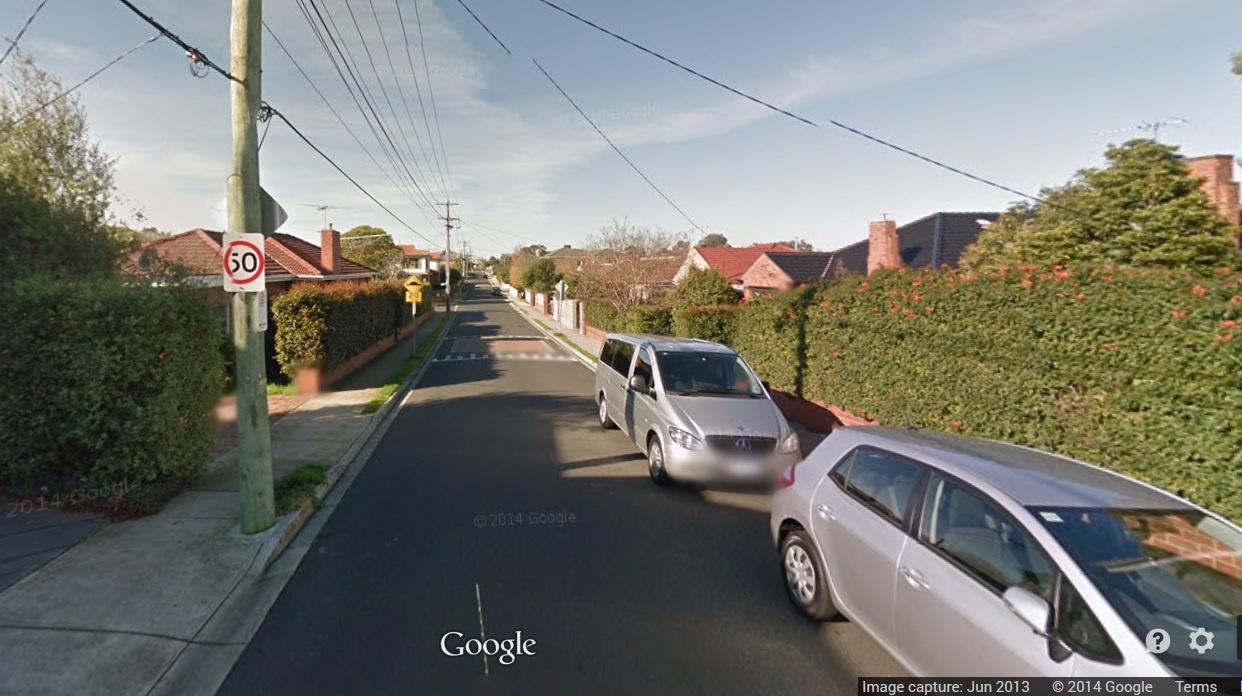
The sheer insanity of the GRZ zoning is evident in the screen dump of Murray Road, McKinnon below. The left hand side of the street is deemed as ‘suitable’ for 3 storey developments. The right hand side of the street is zoned as minimal change. Please note carefully the following:

  • Even with single storey dwellings huge shadows are already being cast – and it’s winter! What happens when 3 storey dwellings go up? What amount of overshadowing and loss of sunlight will those poor buggers living on the opposite side of the street experience? And what kind of light can neighbours living on the ground floor of a three storey block expect when GRZ1 zoning provides no protection in terms of adequate side, front and rear setbacks?
  • Note how narrow the street already is, so that 3 cars have difficulty in passing. What kind of landscaping and protection of the environment is possible with 3 storey chicken coops being permitted?
  • Residents need answers as to why such decisions were endorsed by councillors? What questions did they ask? What information were they given? Did they care?
  • Councillors must be held to account for accepting zones that were implemented in secret, were devoid of up-t0-date analysis, and which relegated huge swathes of Glen Eira into third world territory.
  • We repeat once more that other councils saw fit to do their homework (and to consult). For example: Bayside has 8 schedules to the GRZ ZONES; Boroondara has 4; Stonnington has 13; Manningham has 4. All Glen Eira could come up with was 3 – and one of these is exclusively for the rezoned Alma Club land (ie from minimal change to housing diversity and 76 units in a dead end local street!). Such is the woeful governance, transparency and planning that goes on in Glen Eira!

murray

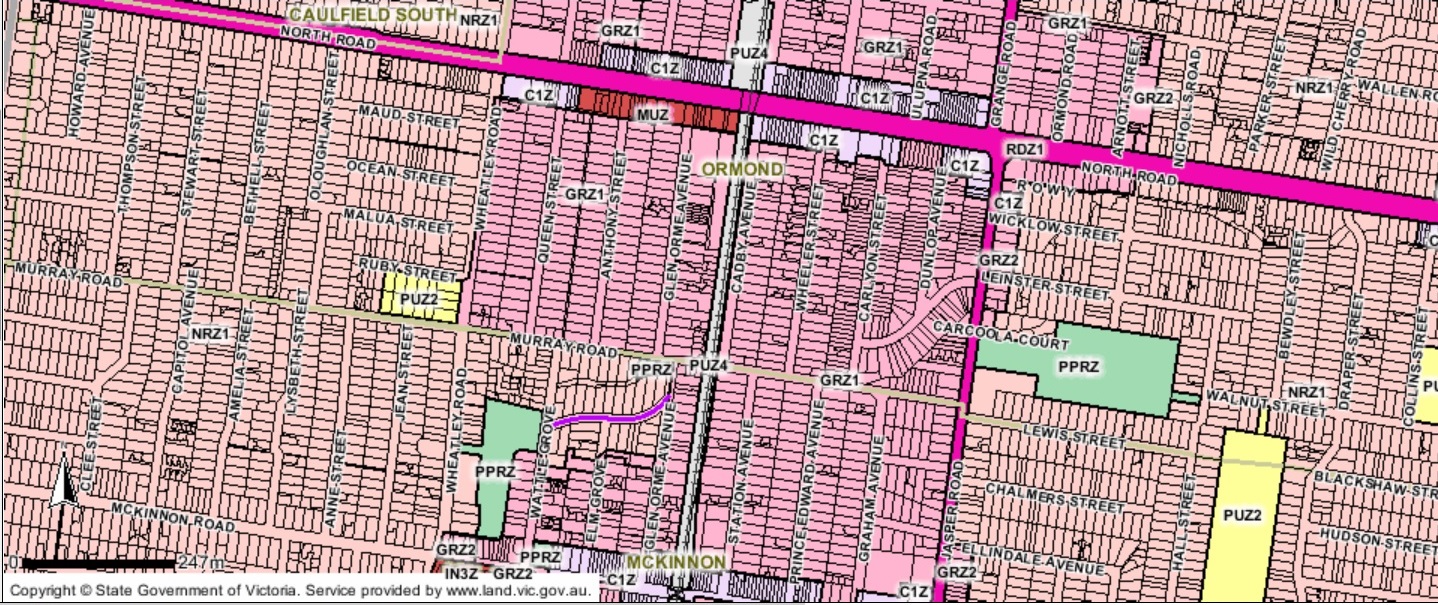
We urge all residents to have a very close look at the zoning map presented below.

mckinnon zones

It illustrates completely the utter incompetence, indifference, and shoddy planning processes that exemplify this administration and its councillors – the latter who are supposed to set policy, oversee strategic direction and most importantly, represent their constituents when they make decisions. Instead, residents are now paying the price for such shoddy planning and the egos that were so determined to be first cab off the rank when it came to introducing the new zones – without consultation we repeat!

The map focuses on the McKinnon Neighbourhood Centre. We would like residents to ponder the following and then ask the creators of this scheme, and especially the Mayor of the time (Hyams) who was party to the secret ‘negotiations’, to justify and answer the following:

  • The total inconsistency. If promimity to railway stations is the stated criteria, then why are some streets (ie Hawthorn Grove) zoned minimal change when they are one street away from rail, and other streets that are up to four blocks away are zoned GRZ?
  • If the argument is that there is a nearby park, then surely it would have made more sense that medium/higher density dwellings go into areas that are served by open space given the planning scheme’s failure to cater for open space requirements in the GRZ and RGZ schedules and council’s appalling record in acquiring open space?
  • How was this zoning drawn up? Is it concentric, rectangular, or more of a pin the tail on the donkey exercise? Did any officer, or councillor ever walk along these streets and get a ‘feel’ for the neighbourhood? Why can one side of a very, very narrow street (Murrary Road) be designated as minimal change and the opposite side of the street deemed to be general residential zone?
  • Why should the 12th house in a street be earmarked as suitable for 3 storey development and the 13th house be plonked into neighbourhood residential zone?
  • Why can other councils undertake exhaustive reviews of their Housing Strategies PRIOR to introducing their zones and Glen Eira hasn’t touched theirs since 2000?
  • How can Hyams and others keep repeating the inane mantra that there was no consultation because the outcomes would have been worse! This argument alone is the most damning indictment of all councillors and the administration. Not only does it reek of arrogance but displays a total disdain for all aspects of democratic process and transparency.

Liberal MP accused of breaking party ranks over ‘inappropriate’ development

Date:September 8, 2014 – 12:15AM

Henrietta Cook

MP Elizabeth Miller says she is merely supporting her local constituents. Photo: Michael Clayton-Jones

A Liberal MP has been accused of breaking party ranks after she opposed a proposed development that sits within new state government residential zones.

Bentleigh MP Elizabeth Miller wrote to Glen Eira City Council on behalf of residents last month to raise concerns about a three-storey block of units planned for a quiet residential street in McKinnon.

She labelled the proposed 24-unit development on Penang Street  “inappropriate”, saying it would “drastically alter the streetscape” and its height was a concern.

“It will also drastically change the local demographic and cause a shift away from a family-friendly area to apartment-style living,” she said in her planning objection,

“I urge you to consider protecting this family-friendly neighbourhood.”

Glen Eira was the first municipality to implement the new residential zones, which the government says are designed to create clarity about where development should take place and which areas are protected.

About 30 local residents have lodged objections, including some at a nearby retirement village who fear it will exacerbate traffic congestion and make it harder to get around the neighbourhood.

Ms Miller said last August that the changes would protect residents’ backyards and would be “welcomed by the many families who’ve spoken to me about protecting local streetscapes”.

Former premier Ted Baillieu’s mother-in-law Joan Jubb, who has a billboard spruiking Labor candidate for Bentleigh Nick Staikos in her front yard, lives on the same street as the proposed development and fears it will destroy local amenity and create traffic issues.

Ms Jubb blames the proposed development on the new zones, which allow a maximum building height of three storeys or 10.5 metres in her street.

“The planning zones have allowed people to develop such a monstrosity,” she said.

Robyn Morgan, who lives next door to the proposed units, is spearheading a community campaign against the development, which, if approved, will demolish two single-storey weatherboard houses from the 1920s.

She said Ms Miller’s objection contradicted the Liberal Party’s own policy.

“It’s inappropriate for a small residential street. If we allows this sort of development to go ahead, it will destroy local neighbourhoods. We will lose all our afternoon sun,” Ms Morgan said.

Opposition planning spokesman Brian Tee said the new zones were “taking a wrecking ball” to suburbs. He said Ms Miller had broken party ranks by criticising a development that had been put forward in compliance with the new zones. “Denis Napthine should take the advice of his own MPs, who are breaking ranks to end this destruction.”

Ms Miller denied she had defied the party line. She said she had been overwhelmed with residents opposed to the development and had simply taken up their concerns with the council.

“I believe residents’ concerns are warranted, so I have written to council. It’s an inappropriate development for the area,” she said.

She said she was happy with the new residential zones.

Planning Minister Matthew Guy said the new zones had given residents greater protection against inappropriate developments. He said under the previous system, the area had no mandatory height limits. “You could put a 50-storey building in the previous zone.”

Mr Guy said Ms Miller was being a good local member by lodging the objection and the new zones were working well.

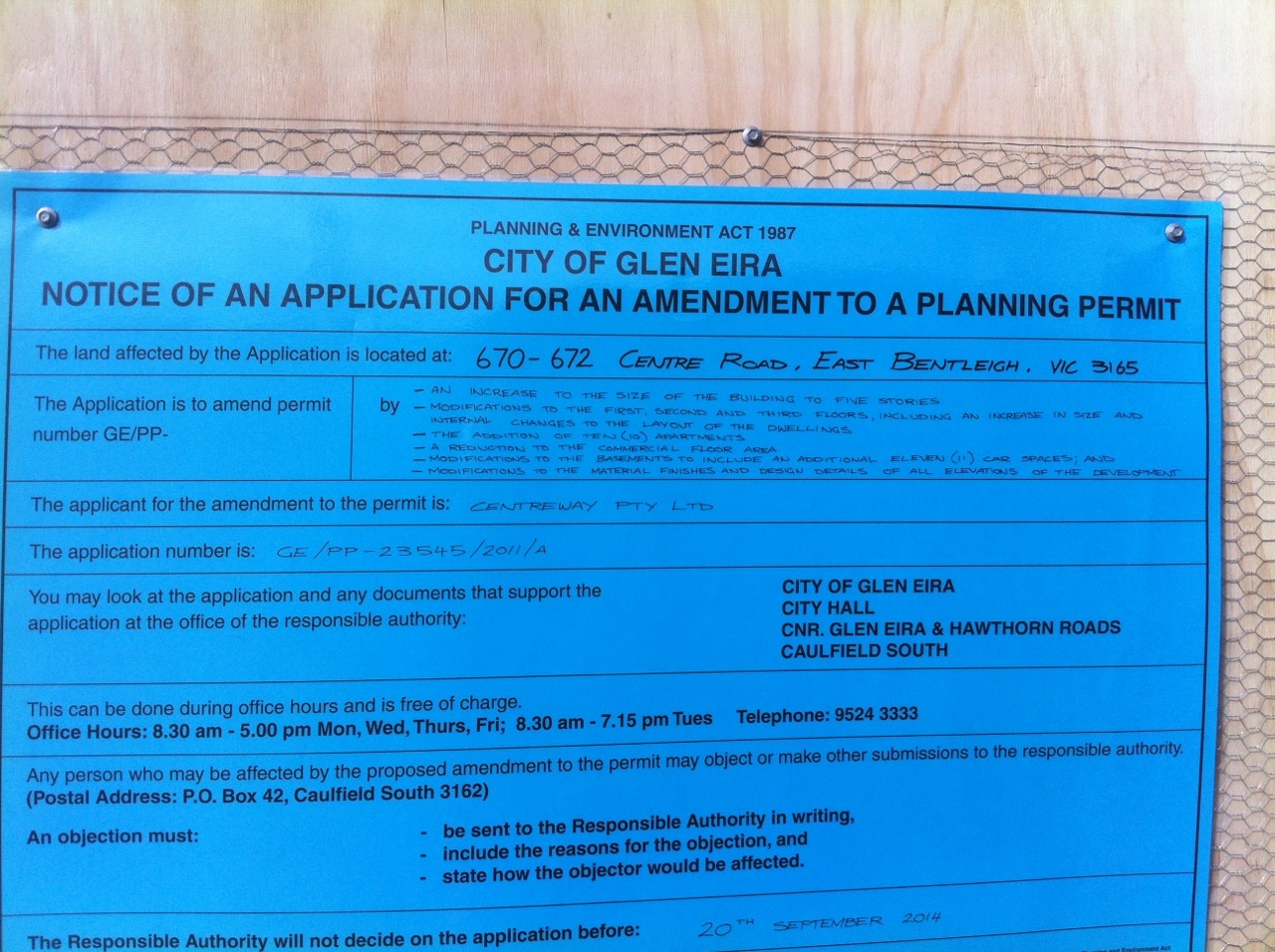
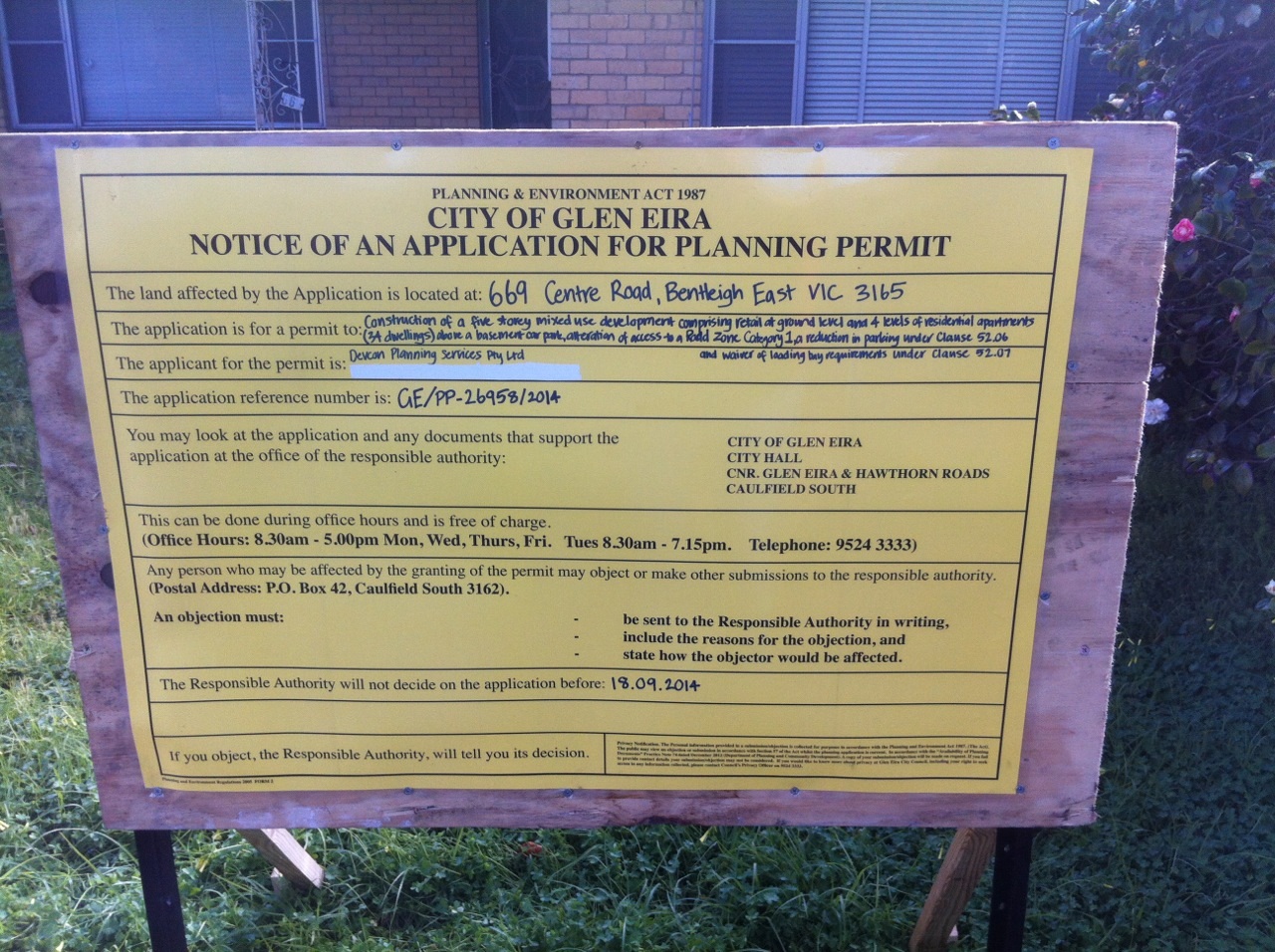
Readers might remember a planning application dating from 2011, where the developer applied for a permit for two buildings consisting of 80+ units, both 4 storey, and naturally reductions in car parking. Council bent over backwards to ‘assist’ in that they ceded part of their car park and were supposedly reimbursed with a public toilet worth about $300,000. Now, three years on, the developer wants more! We’ve also uploaded another application that give us a glimpse of the concrete canyons that are being created.

centre1

centre2

Below we feature some extracts from a very recent VCAT decision on an application for a 3 storey and 10 dwelling development in McKinnon. The area is zoned as General Residential Zone (GRZ1). Whilst council did refuse the application, the member still has quite a bit to say about the zones in general and council’s failure to even consider traffic!

Needless to say, such a decision has major ramifications for every other development in GRZ and RGZ and gives plenty of hope to residents – if they do their homework properly and if they are prepared to fight inappropriate developments.

Here are some quotes and the full judgement is uploaded HERE

1           This hearing has again highlighted the very different expectations about the future of our neighbourhoods and where we live. Different expectations about what we want for ourselves, for our families and our neighbours, and for our community.

2           On the one hand, I have heard from residents who, whilst accepting that some evolutionary change will occur in Prince Edward Avenue and nearby streets, do not accept the physical change which is likely to occur because of the controls and policies contained in the Glen Eira Planning Scheme.

3           As I observed at the hearing, the absence of demolition controls, the zoning of the land as GRZ1 rather than Neighbourhood Residential, the proximity to train station and shops, and the encouragement given to more intensive development in a Neighbourhood Centre, will eventually lead to a very different character for this area

4          I am not sure that existing residents appreciate the changes that will occur in response to development outcomes sought by the Glen Eira Planning Scheme

5           Open space is provided by way of relatively small balconies of at least eight square metres in area.

6           However I make the point that more intensive development does not necessarily mean that individual lots along Prince Edward Avenue will be capable of accommodating three storey apartment style buildings containing ten dwellings. It may be, for example, that individual lots are unable to comfortably accommodate such development and that lot consolidation will provide a means whereby such buildings can be comfortably accommodated in this area. It is certainly the case that policy at Clause 22.07-3 encourages lot consolidation to promote development opportunities.

7           Whilst I agree that the building is inside the 10.5 metre mandatory height limit in GRZ1, providing a three storey building on a relatively narrow site results in a building that dominates its surroundings. This is contrary to policy for these areas which is seeking to ensure that residential development is sited and designed so that it does not dominate the streetscape and that it be of a lower scale and density to that in the mixed use and commercial areas.

8           Lot consolidation will generally allow for higher and larger buildings because of the ability to achieve various ResCode standards, such as those for side and rear setbacks, over the whole site rather than trying to achieve the same setbacks for individual buildings developed on each separate site. Consolidation therefore makes for a much more efficient use of land and allows for intensification of built form without the adverse impacts that can arise from trying to achieve a similar level of intensification on a smaller lot.

9           In making these comments I acknowledge that there are newly constructed double storey dwellings in Prince Edward Avenue which have minimal landscaping and appear visually dominating. Aside from the fact that individual dwellings do not require a planning permit, they are not buildings which I would use to demonstrate acceptable built form. It is incongruous that, in most cases, individual dwellings do not undergo the same assessment against neighbourhood character and other policies as do developments comprising two or more dwellings, and that these individual dwellings can undermine the character of an area to a greater extent than medium density developments.

10        The request to reduce visitor car parking by two spaces and adverse impacts on the local street network did not form part of Council’s grounds for refusing the application. However these were issues of concern to residents.

11        Although the site is very close to the train station, as discussed at the hearing, I am concerned that far little attention is being given to the cumulative effect of allowing reductions or waivers in the provision of on-site carparking in suburban areas such as McKinnon. Whilst the radial rail network might be convenient for workers travelling to and from the city, the train network is less convenient for non-radial trips. It is less convenient to rely on bus services, particularly at weekends and evenings, when I am consistently advised by traffic witnesses that most visitation occurs. If that is correct then there should be even less justification for allowing a reduction in on-site visitor parking.

12        Given this is a street and an area earmarked for more intensive development, then a threshold will be reached where on-street parking will reach saturation point. Although I accept that might be some way off, I nevertheless consider it inequitable that this development does not provide for all its parking needs within the basement. Moreover, as I observed during the hearing, the encouragement being given by the State Government to train travel has not been, for the most part, matched by the provision of sufficient additional parking facilities at train stations. The result is an expanding level of commuter parking in nearby residential streets, which inevitably compounds parking congestion. I accept that the commuter parking is not such an issue in the evenings and weekends but the lack of parking is symptomatic of a failure to address parking needs in a holistic manner.

13        I also agree with Mr Fairlie that if existing parking and traffic arrangements are unsatisfactory to residents then they need to approach Council to see if improvements can be achieved.
If you happen to live in a street that is now zoned as Residential Growth Zone or General Residential Zone, then you might consider doing what countless Glen Eira residents have already started doing – getting the hell out of the municipality before the area really goes to the dogs and making some money in the process. We now know of 6 instances where owners are getting together and selling their properties as one lot. This trend will no doubt continue – especially when people start realising that their streets and their neighbourhoods are about to be over-run with inappropriate development thanks to Council’s welcome arms approach to development and their unwillingness to undertake current and proper strategic planning.

A perfect example of the insanity of this planning scheme can be seen by what is happening in Penang St. McKinnon which has now inconceivably been given the green light for 3 storey developments. Two properties at 2 and 4 Penang St were bought by the same developer and there is now an application for a 3 storey, 24 apartment, and of course, a reduction in visitor car parking. The combined land equals roughly 1360 square metres. However, that’s not the end of the stor(e)y.

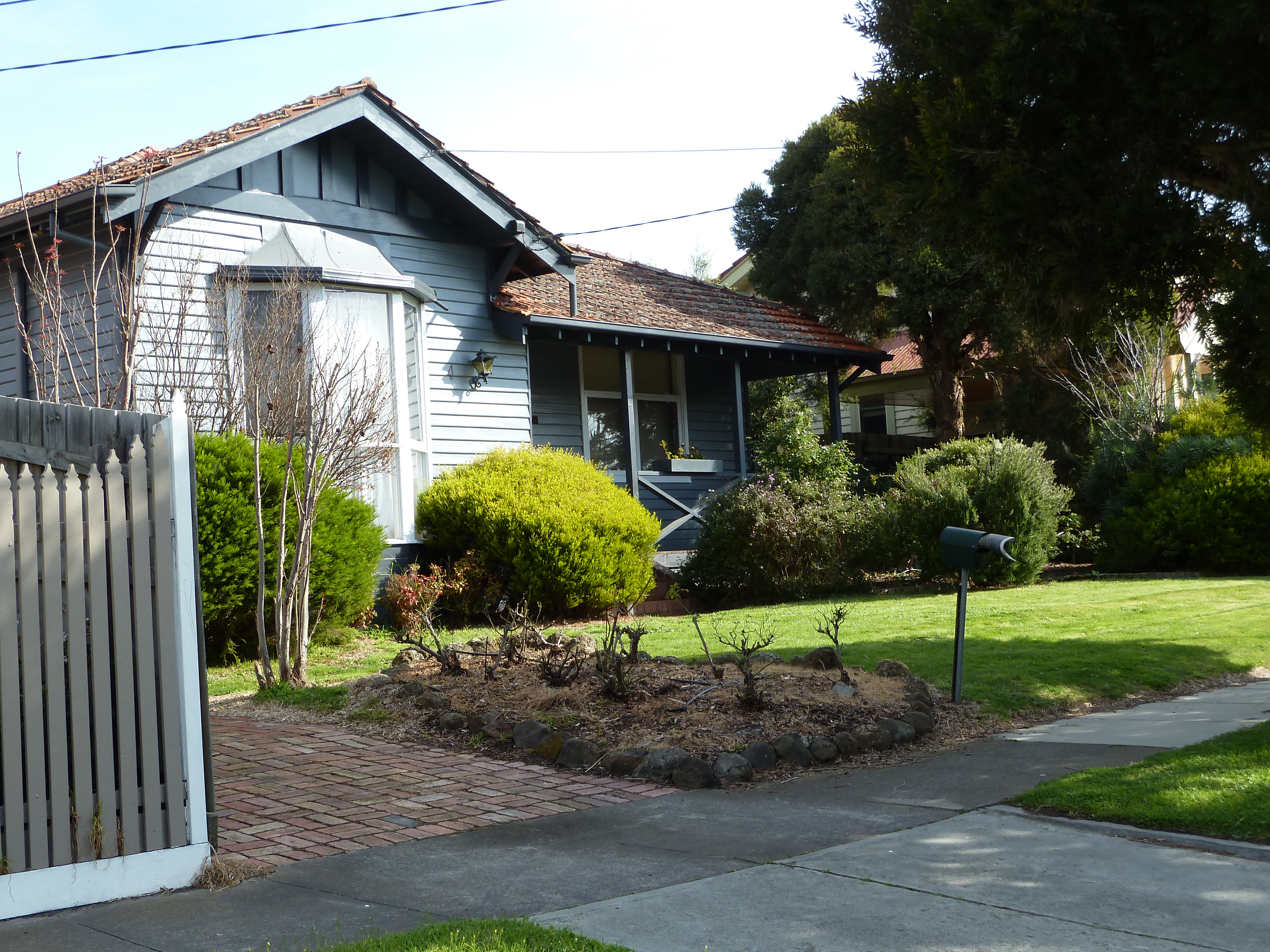
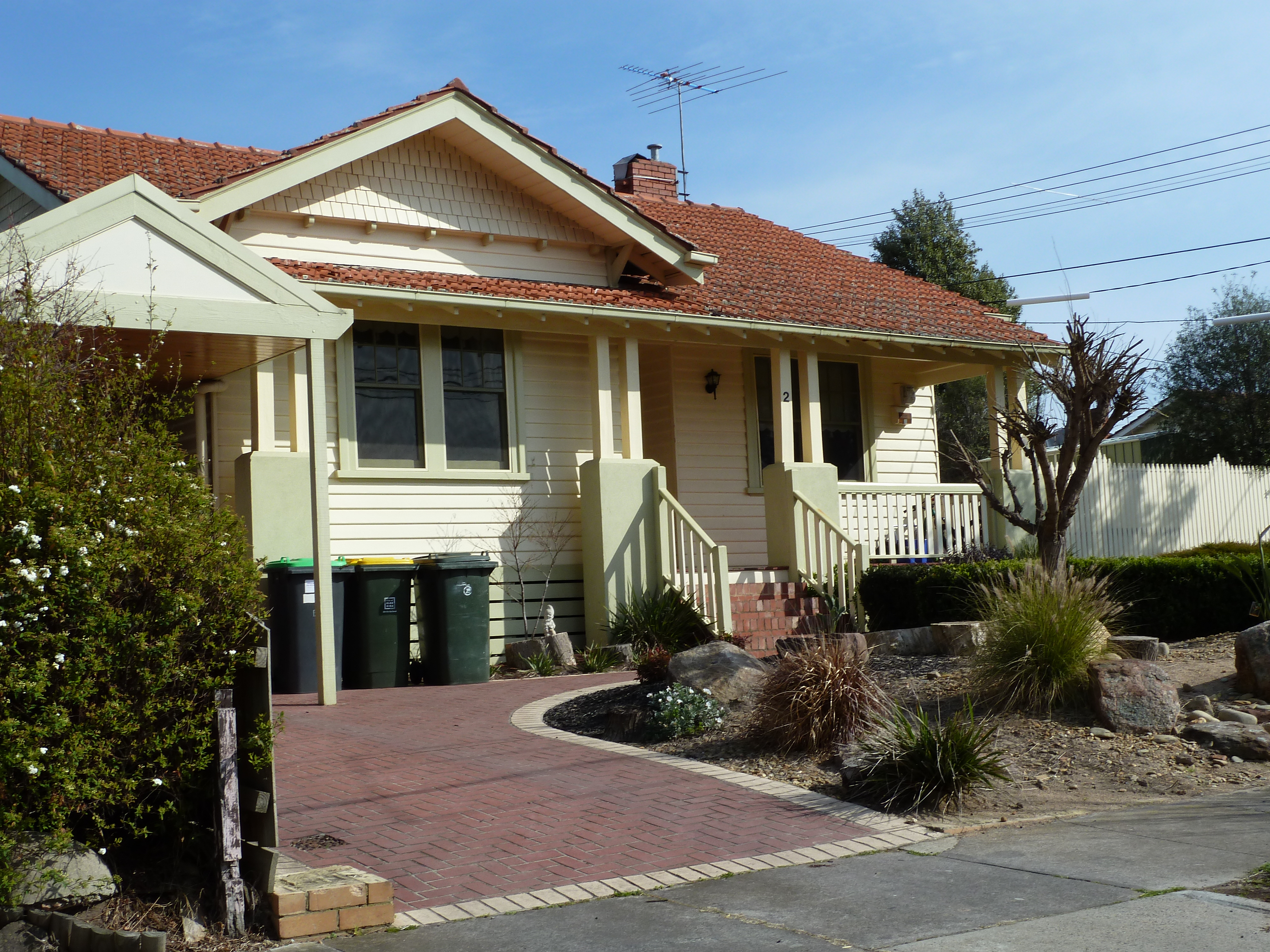
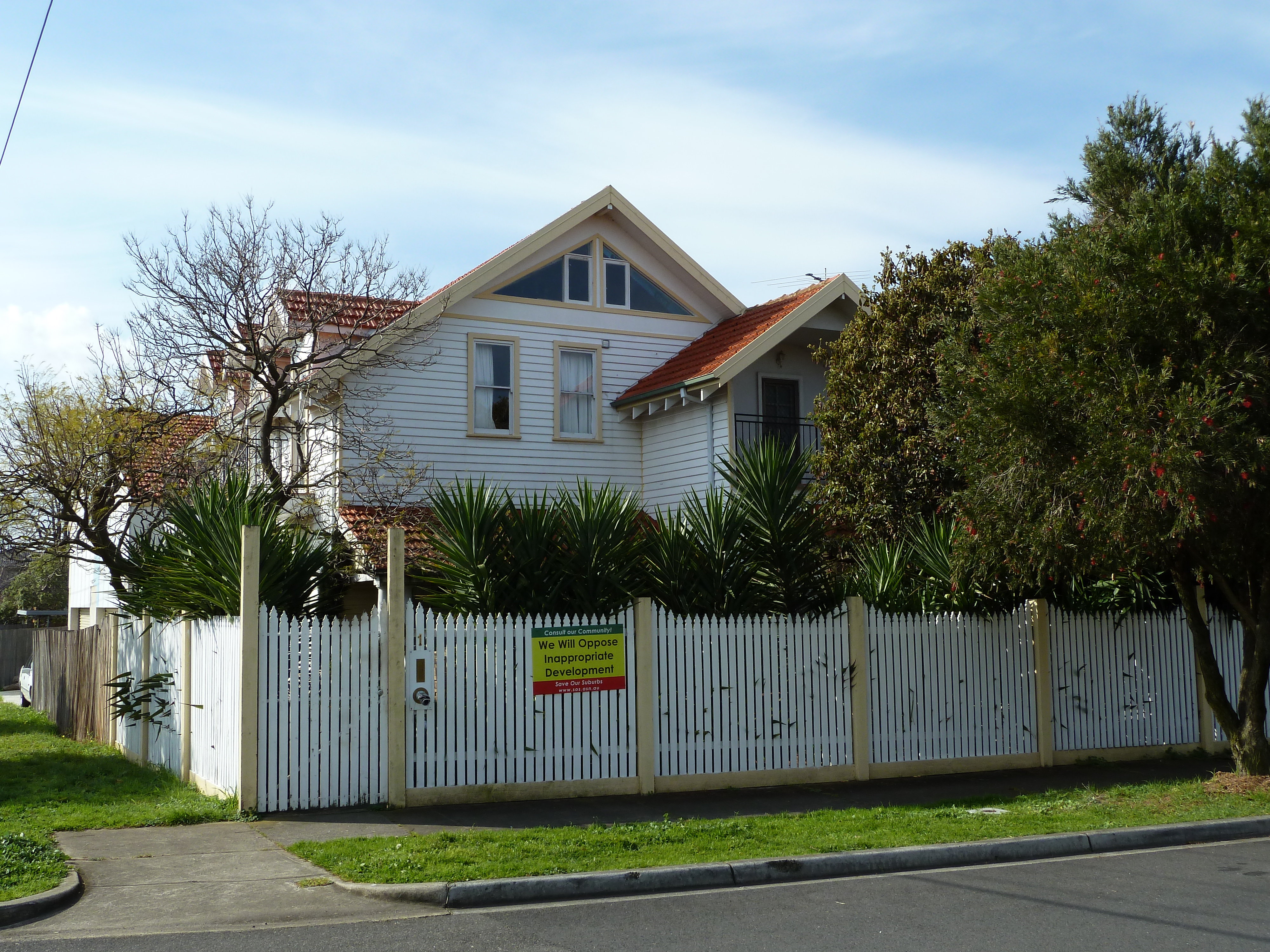
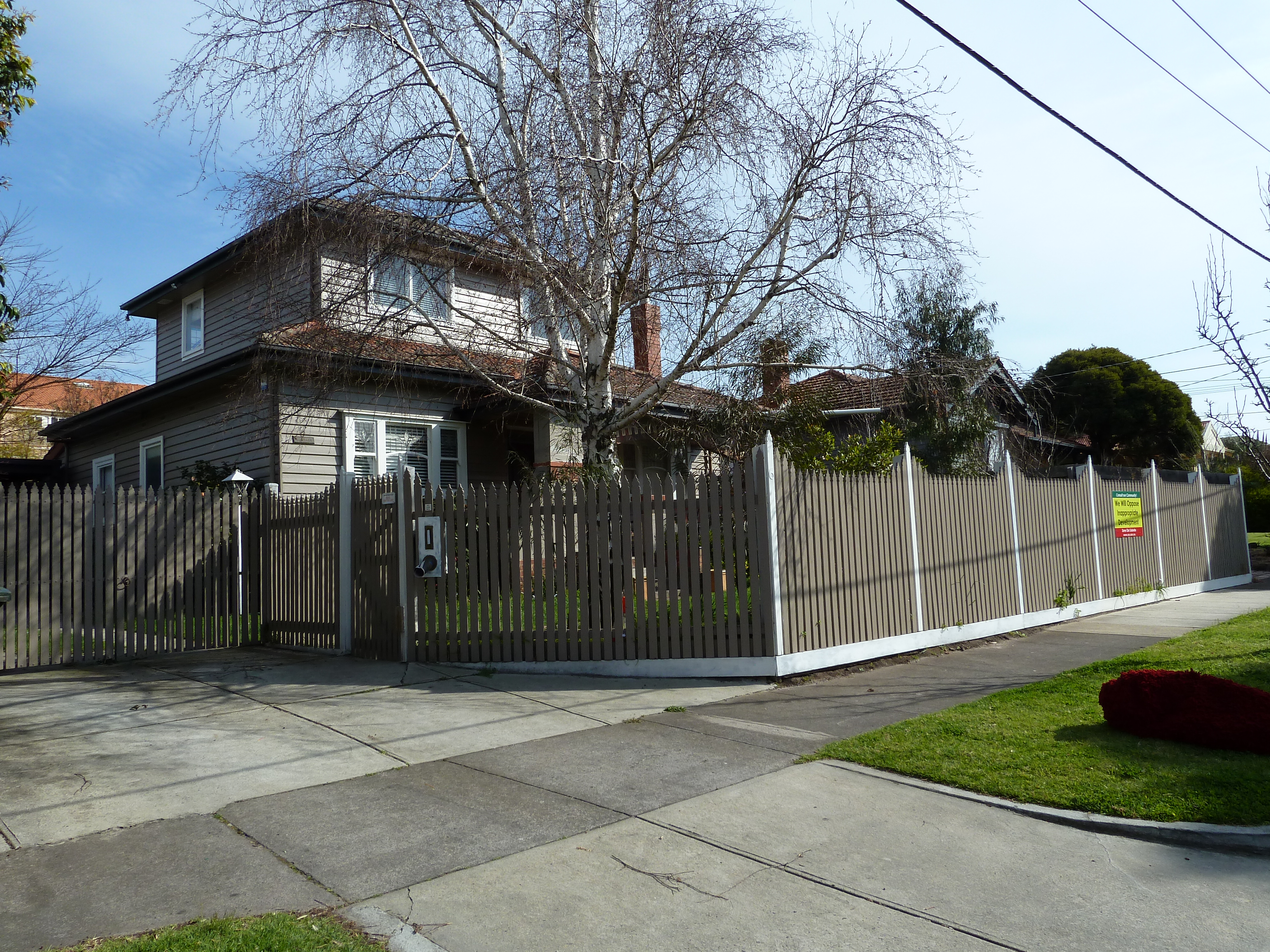
Penang is a quiet residential street consisting of only 9 dwellings and several which front Jasper Road. Many of these nine dwellings are single storeys and the double storeys add their own character to the street as the photos below will show. We cannot see any rhyme or reason why such as street has been placed in this zone, in contrast to say Wattle Avenue which has been left as minimal change, yet consists of several scruffy looking blocks of flats and units. As one commentator on this site has asked – no one from council could possibly be living in Wattle Avenue could they? In terms of another 24 apartments and growth in the surrounding streets, then Penang is the perfect setting for the latest rat run as drivers try to avoid the lights at the corner of Jasper and Mckinnon. Needless to say, there is no parking plan overlay for this Neighbourhood Centre!

To make matters worse, the houses at 2 and 4 Penang St. are ‘classical’ and with their demolition this will now create the precedent for more triple storeys in the street and surrounding areas. Here’s what will be lost and replaced with box like dwellings no doubt – the slums of the future!

P1000317

P1000319

Some of the other houses in the street look like this!

P1000320

P1000314

P1000312

P1000316

We remind readers that Council has:

  • Introduced these zones in secret & without consultation
  • Council has never stated what is the optimum population for Glen Eira
  • No Housing Strategy review has been done since the late 1990’s
  • A one size fits all approach based on antiquated data is unacceptable.

We urge all readers to inform themselves of what zoning they fall under and to protest and protest at whatever application comes in that they believe will threaten their amenity, lifestyle and environment. Remember, amendments may be made, but they can also be tossed out – especially with a new set of councillors who actually give a damn about what’s happening to neighbourhoods all through the municipality!

« Previous PageNext Page »