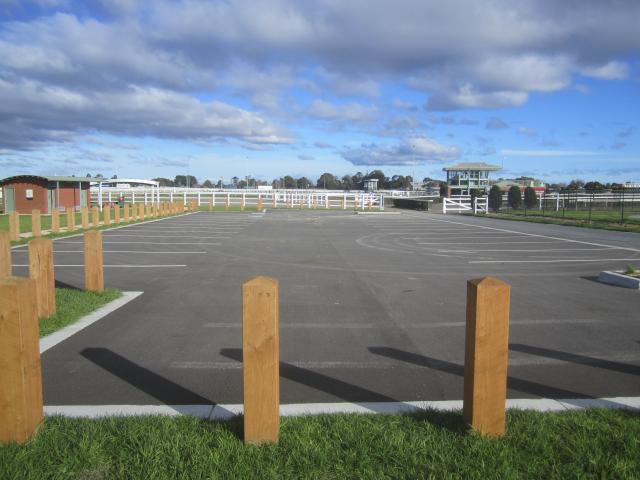
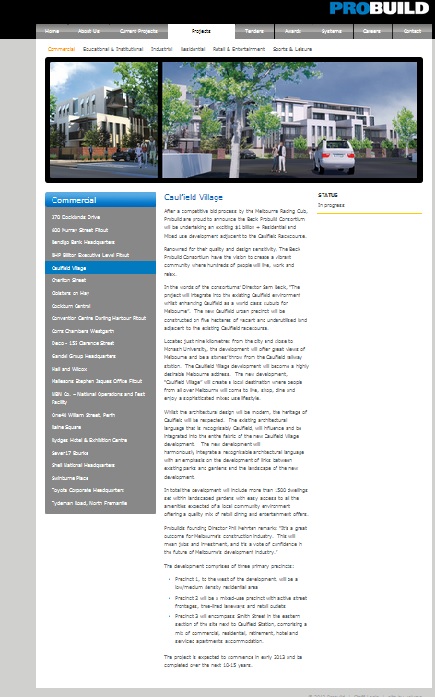
Source: http://www.probuild.com.au/projects/caulfield-village/
Click on image to enlarge.
August 13, 2013
August 11, 2013
Several agenda items set down for next Tuesday deserve comment. We will dissect the secret Amendment C110 once it is made public and the schedules are released. It’s worth repeating that this entire episode was devised and implemented without any community input and without any notification whatsoever. So much for claims of transparency and accountability from all concerned.
Records of Assembly
Comment: what a ludicrous situation! 3 councillor trustees who owe their first allegiance we’ve been told to the Racecourse group, yet sitting, listening and undoubtedly discussing how the Trust is a secret organisation not acting in accordance with governance guidelines. This is definitely Monty Python territory!
PUBLISHING OF SUBMISSIONS
We note again the lack of consistency by this council in making available public submissions that do not come under Section 223 of the Local Government Act (ie submissions on budget, council plan, local law, etc). The most important public responses are NOT MADE PUBLIC and incorporated into council minutes. Residents did not see the full submissions to the Planning Scheme Review of 2010 – although this is now the basis for the argument that there was extensive consultation and council is following the community viewpoint. What is made public are responses to issues that are far less controversial such as Toilet Strategy and now the Environmental Sustainability Strategy.
The extent of consultation is another inconsistency and a means of limiting public involvement – as well as achieving the desired and preset outcomes. The controversial Caulfield Park conservatory matter (which thus far has cost over $17,000) only managed to achieve the doctored ‘survey’ in both hard copy and on the Bang The Table online version. Others (less controversial and likely to draw only a minority of comments) have included a methodology that is far more expansive.
QUARTERLY REPORTING
Objective: Provide a fair, transparent and inclusive town planning decision making process.
Measure: Reduce the number of applications being referred to DPC for a decision by trialling a mediation process and report the results to Council. Provide an information video which explains the DPC role and purpose for the benefit of residents involved.
Progress June 2013: DPC Video has been finalised and is being shown to participants prior to meetings. 14 successful mediation meetings held and THUS NOT NEEDING A DPC OR COUNCIL DECISION BY RESOLUTION
Comment: How a video can achieve ‘transparency’ in all of town planning when it focuses on ‘mediation’ is mind boggling. The statistical validity of 14 ‘mediations’ also leaves us scratching our heads. Note – we’re not told how many were ‘unsuccessfully mediated’!
Our favourite mangling is:
Objective: Investigate ways of making proceedings for Council meetings easier to follow including the use of audio-visual technology.
Measure: Investigation completed
Progress: – Completed
Will this ‘investigation’ ever see the light of public scrutiny? We seriously doubt it!
ACTION PLAN – ENVIRONMENTAL SUSTAINABILITY
We highlight some of the officers’ responses to resident submissions:
Instead of introducing Environmental Sustainability policies into its planning scheme, council’s response was to produce a glossy booklet. When asked how effective such a booklet has been, this is the response: Council reviews publications on a regular basis. There are no plans to monitor whether recommendations are taken up because of the resource intensive nature of this.
In other words, let’s waste money producing something and then not worry about whether that money has been well spent since we don’t have the foggiest as to whether it’s serving its purpose!
August 8, 2013
August 6, 2013
The State Government and Council’s strategy is transparently obvious [reduce amenity for all but start with the significant minority in “targetted” areas] and it continues an inglorious tradition started by Labor when Melbourne 2030 was released. Remember this statement: “The character of established residential areas will be protected through Rescode, and increased densities will not be achieved at the expense of existing amenity.”? Not that Council or VCAT ever took it seriously.
Yesterday’s announcement reaffirms the Government’s belief that it should be able to reduce people’s amenity without consulting them; taxation without representation. It doesn’t matter whether Lib or Lab or Brown, that is the principle.
Look at the huge chunk of Residential 1 Zone properties that are now about to find themselves in Residential Growth Zones or General Residential Zones. Where once they had ResCode, which included a 9m height limit, now they don’t. Council argues quite shamelessly that people will be better off because now there is “certainty”, since previously Council and VCAT ignored ResCode if it suited them. The same people who repeatedly abused the planning scheme are still in charge. What guarantee do residents have that whatever the schedules might say (and of course these remain top secret) that this planning department won’t continue with its old ways of handing out dispensations on countless of these ‘standards’?
Remember too that height limits only apply to dwellings or residential buildings. It won’t be long before we see some imaginative applications that push the envelope, quite literally. And of course, there simply aren’t any height limits for the old major activity centres and the main roads they sit on. Glen Huntly Road already has 10 storeys. That is the future – minimal ‘commercial’ or ‘retail’ and stacks of apartments.
Then there’s some seemingly random choices made, all without any transparency. Glen Huntly, which is a major activity centre, is now to be surrounded by GRZ. It has a railway, a tramway, 2 State Arterial Roads, and open space. Then look at what Council is doing to a bunch of Edwardian homes and California bungalows in Carnegie, which instead is to be rezoned RGZ.
The media releases remain silent on the contents of the Schedules to the Zones, yet the map does give a strong hint that at least some content has been inserted to replace “none specified” for various amenity standards. Who decided what should be inserted? Council staff. Council couldn’t even be bothered to vote on it.
The recent decision to refuse a Permit for Wilks St (Alma Club) is suddenly looking shaky, until such time as people can evaluate the implications of being rezoned to GRZ and Schedule 1 (no increase in rear setbacks). It’s no surprise that this has suddenly dropped its Minimal Change status and is now designated as General Residential Zone. In other words, 3 storeys is fine and 75 units in a dead end street is perfectly okay.
If Elizabeth Miller believes “the Victorian Coalition Government is delivering on their promise of protecting residents’ backyards” then she should be prepared to state how many backyards have just been condemned to being buried underneath concrete. I wonder if she even knows. Yesterday’s obligatory soundbite was carefully filmed in a tree-lined street. There won’t be many trees left when there’s no permeable soil available for roots in the targeted areas.
Will the State Government accept responsibility for flood damage when the drains are inadequate for the rapid runoff of water from these concrete ghettos? Does it have a crime strategy for the consequences of creating an unhealthy imbalance in demographics? Has it identified where the new sports facilities will be located?
Expect traffic to be managed when areas that you have to pass through have their population swollen by several thousand residents? There are no amenity standards for traffic congestion, no money to eliminate railway level crossings in the municipality, and it’s not even safe to ride a bike since Council/VCAT encourages street parking for multi-unit development [count the number of applications which seek and obtain a waiver]. Besides, the speed limits are generally too high for the population density. Will people be walking to their nearest open space? Depends how far it is. Yesterday’s announcement ignored that element of community well-being.
Clearly the policies behind yesterday’s announcement are unstable. If you increase the population faster than the jobs in an area, then more people will have to be travelling further distances at a slower average speed by less convenient means. Council admits its planning for an extra 18000+ people over 20 years, so it should be able to show its traffic modelling along with documented assumptions like where they have to go for work, recreation, services. Of course such detailed planning is not Glen Eira’s forte. The irony is that when council officers front up at VCAT and argue that the municipality has already exceeded its population forecasts, then that only throws more doubt on the figures produced by council this time around.
Planning for a community is so much more than trumpeting a bunch of discriminatory height restrictions. This entirely begs the question of where council has been for the past 10 years? No height limits throughout this time; no structure plans; no parking precinct plans (then or now); no Environmental Sustainable Design (then or now); no Urban Design Framework (then or now). It’s been hell bent on more and more development. This latest announcement only provides further evidence that the philosophy, strategy, and ambition remains intact. Glen Eira will remain the developer’s paradise.
Finally, we remind readers that in March 2012 the officers in their wisdom wanted to introduce a greater percentage of permeable surfaces but ONLY FOR MINIMAL CHANGE. Councillors passed a resolution that in part read: “Prepare a Planning Scheme Amendment to lower the percentage of impervious surfaces within the Minimal Change Area and Housing Diversity Areas.”. No such amendment has seen the light, so we can only conclude that once again a council resolution has been ignored or conveniently forgotten and not acted upon in a ‘timely manner’ as required by law. Now we discover that the ORIGINAL recommendation of 25% permeable surfaces will only apply in what was formerly known as Minimal Change. This is how this council works and residents need to be not merely aware but alarmed at how their rights have been continually trampled upon.
Last but not least, here is a glimpse into the future for all those areas with the nice little light blue lines marked on them!
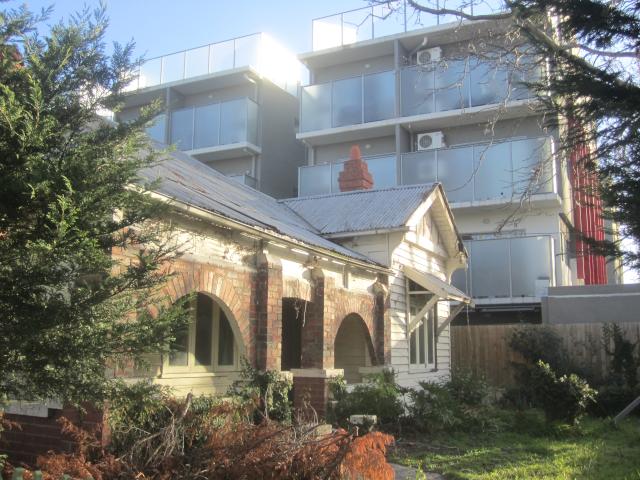
August 5, 2013
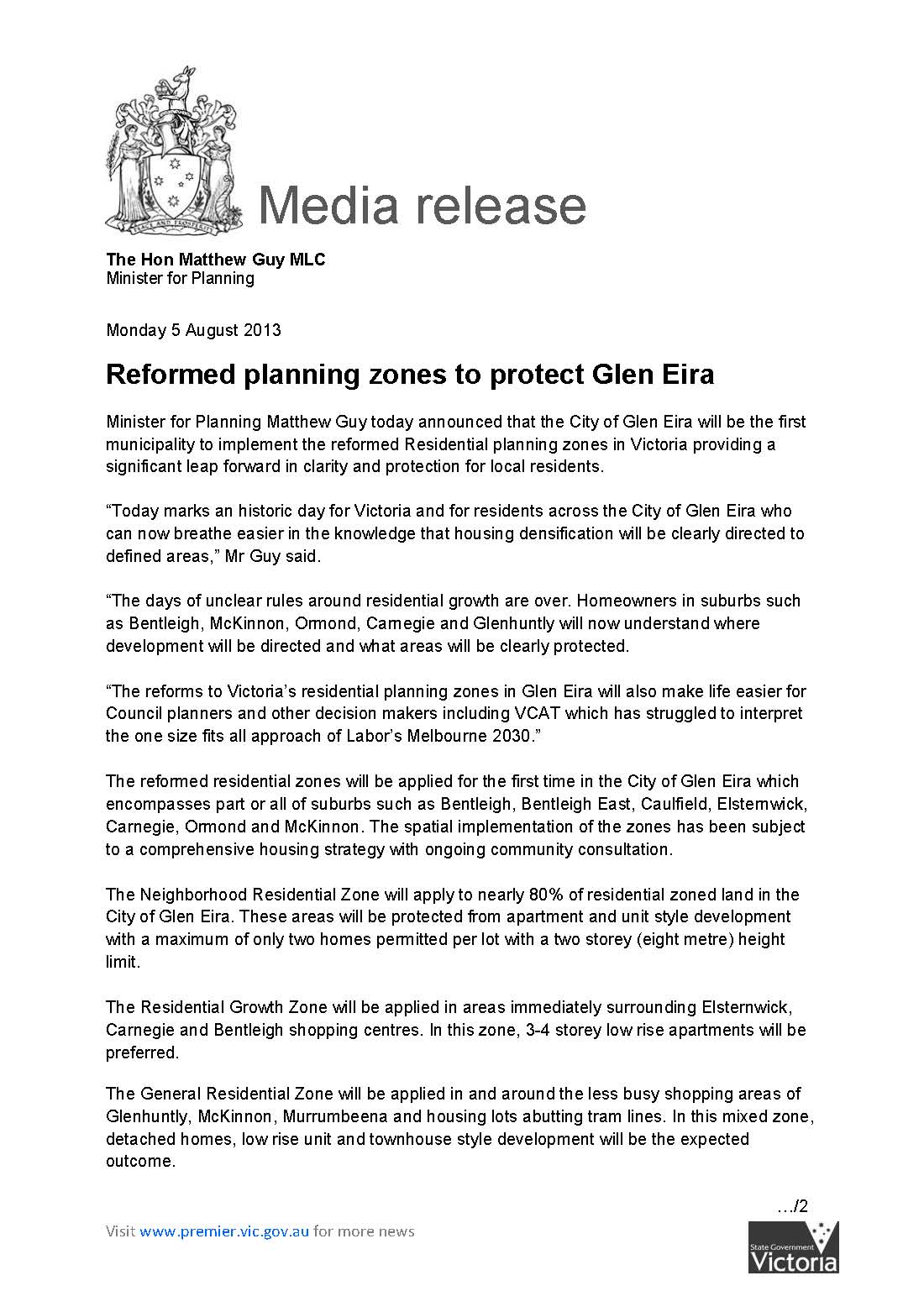
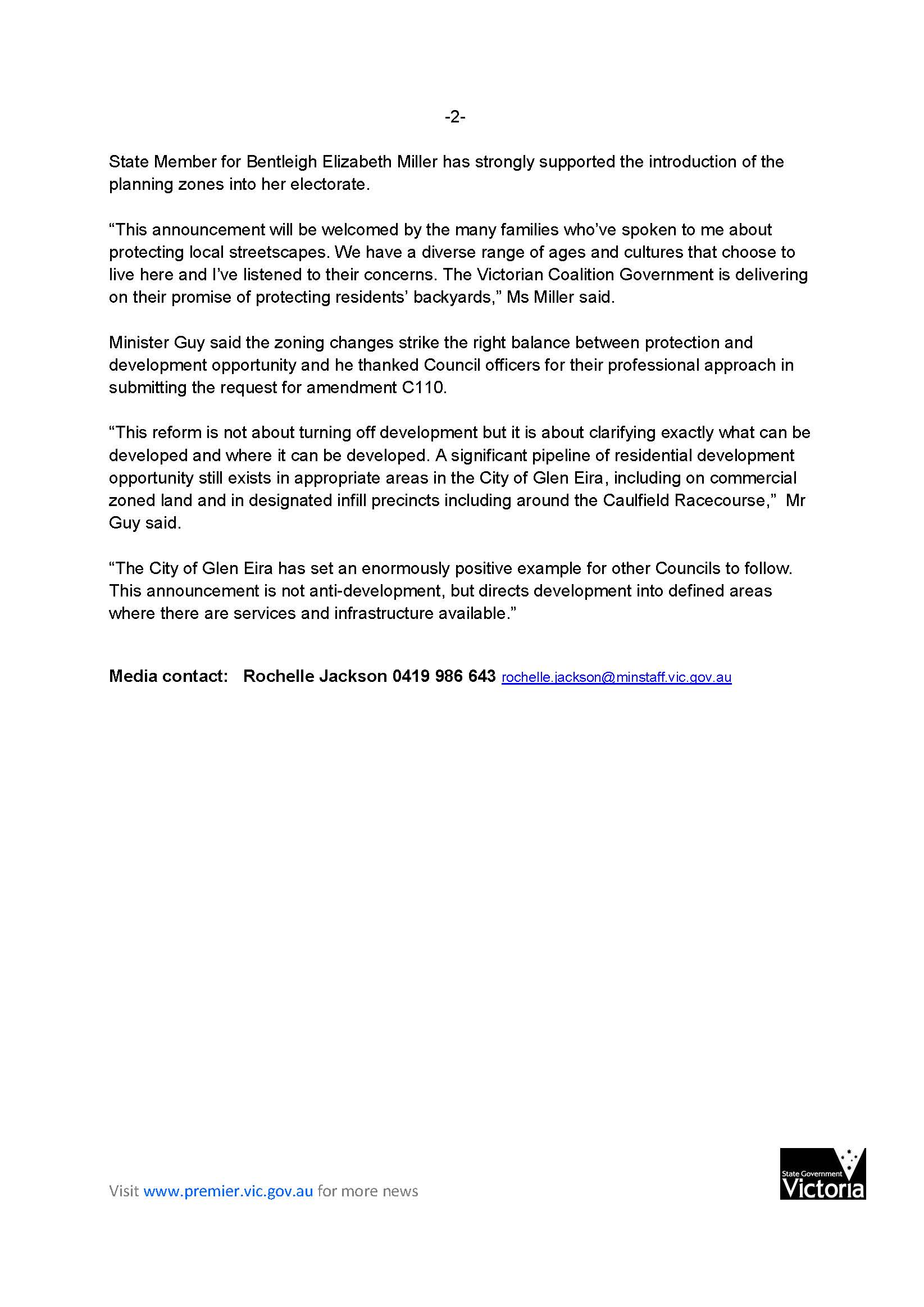
The following Media Release in our view exemplifies everything that is wrong with Glen Eira City Council. It typifies the secrecy, failure to inform much less consult, and the complete over-riding of resident aspirations. The inequity which is the Housing Diversity and Minimal Change areas are now ostensibly cemented via this announcement and it has been done without even the courtesy of informing the public. At the time of writing there is nothing on Council’s website. Councillors who silently sat by and allowed this to happen must be called to account.
PS: As an example of the deviousness of this council, we alert readers to the public questions which raised these issues and the blatantly dishonest answers. It is inconceivable that Council did not know what it claims not to have known, designed, and implemented.
“This evening 1 July, 2013 there was a news item on the 7p.m. news which featured a story about the new residential zone reforms in this state. It was stated that the Boroondara Council along with Glen Eira were the first two councils to be implementing these new residential zones.
Could you please explain to me why residents in this municipality have to learn these things via the media?
1. Has this council already submitted an amendment of the draft to the Minister? If this is the case then why were residents not told anything of the change?
2. The City of Boroondara has had this amendment C108 for discussion since March. What consultation is this council planning to carry out?”
The Mayor read Council’s response. He said:
“Council is not responsible for what is broadcast on any news program. Council does not know why the ABC reporter chose to mention Glen Eira, any more than we know why a similar story in today’s Age nominated neighbourhoods in Stonnington and Boroondara as the first to come under the new zones but did not mention Glen Eira. It demonstrates that you can’t always fully trust what you hear or read in the media, although, of course, the media is far more reliable than an anonymous blog.
Council has not submitted an amendment of the draft to the Minister. Boroondara City Council’s Amendment C108 proposes to apply planning controls to neighbourhood activity centres, which are shopping strips, and to enterprise
corridors, which are mixed commercial areas. It implements strategies and plans adopted or amended in 2011, and has nothing to do with the new residential zones. Council has not yet decided what consultation will be carried out in relation to the residential zones.”
Question 2 – “Given the significance of the proposed Residential Zone Reforms, when will council begin its public consultation on the introduction of the zones into the Glen Eira municipality?”
“Council has not yet decided.”
Question 3: (July 23rd, 2013)
“Will Council be undertaking community consultation on the residential zone reforms?”
The Mayor read Council’s response. He said:
“The extent of consultation would depend on the extent of any departures from the current Housing Diversity/Minimal Change arrangements and that is not known at this time.”
August 4, 2013
We found that CEO tenure affects performance through its impact on two groups of stakeholders—employees and customers—and has different effects on each. The longer a CEO serves, the more the firm-employee dynamic improves. But an extended term strengthens customer ties only for a time, after which the relationship weakens and the company’s performance diminishes, no matter how united and committed the workforce is.
But as CEOs accumulate knowledge and become entrenched, they rely more on their internal networks for information, growing less attuned to market conditions. And, because they have more invested in the firm, they favor avoiding losses over pursuing gains. Their attachment to the status quo makes them less responsive to vacillating consumer preferences.
These findings have several implications for organizations. Boards should be watchful for changes in the firm-customer relationship. They should be aware that long-tenured CEOs may be skilled at employee relations but less adept at responding to the marketplace; these leaders may be great motivators but weak strategists, unifying workers around a failing course of action, for example. Finally, boards should structure incentive plans to draw heavily on consumer and market metrics in the late stages of their top executives’ terms. This will motivate CEOs to maintain strong customer relationships and to continue gathering vital market information firsthand (http://hbr.org/2013/03/long-ceo-tenure-can-hurt-performance/ar/1)
A weak board will often after a period of seemingly successful management, effectively abdicate power to a CEO whose drive, charisma and ruthlessness have contributed to the earlier success. Lulled into a false sense of security by rising share prices and earnings, the board becomes reluctant to challenge the CEO’s judgement and falls into the habit of rubber-stamping his decisions. It stops scrutinizing detailed performance indicators, may allow executive compensation to spin out of control, and be content to accept management figures and explanation without serious question. Bruggisser, the CEO of Swissair, is a case in point. Here, a board of distinguished businessmen failed to challenge the flawed strategies that led to Swissair’s collapse. At the same time, as his power base expands, the dominant CEO begins to behave as though the company is his own creation, believing his own PR and no longer distinguishing between personal ambitions and those of the company. Senior management becomes packed with like-minded executives who owe their position to the CEO, and who are unlikely to challenge him. This compounds the lack of scrutiny and debate. The problem is exacerbated if the CEO role is combined with that of Chairman, removing another check and balance (http://www.imd.org/research/challenges/TC053-08.cfm)
…most evidence shows that CEOs stay too long, and can end up destroying value in a company. (http://www.ceoforum.com.au/article-detail.cfm?cid=6174&t=/Claudio-Fern%E1ndezAr%E1oz-Egon-Zehnder-International/The-timeserving-trap)
….after about 5 years, many execs start doing what they like to do and not what the organization needs them to do (http://www.transitionceo.com/news.php?id=41)
CEOs who also chair their boards naturally invite their cronies to serve on the board. Eventually you have a CEO surrounded with puppets who are only interested in preserving their board pay and privileges. They are not likely to welcome disruption or innovation, because that might mean more work.( http://www.lindabernardi.com/2011/10/03/when-should-a-ceo-leave)
August 2, 2013
The following is taken from the Moonee Valley Council website. Comparisons between Glen Eira’s and Moonee Valley’s attempts to safeguard social amenity for residents is self-evident.
The State Government’s Advisory Committee has commenced a six week consultation process on the Moonee Valley Racecourse revised Master Plan and Council’s proposed heritage controls for the site. Residents living around the site would have received something in the mail from the Advisory Committee.
The community is encouraged to view the documents and put in a submission to the Advisory Committee.
Council is currently working on its own submission as part of this process.
To help the community stay informed and to understand the process, we are holding information sessions at the Clocktower Centre on Mt Alexander Road Moonee Ponds.
Sessions are:
To RSVP contact 9243 8888 or email mvrcmasterplan@mvcc.vic.gov.au
Council continues to be concerned about the major information gaps in the revised version of the Master Plan. These gaps and concerns are summarised below in the 18 June update.
More information on consultation process, how to have your say as well as copies of the Master Plan and heritage amendment documents can be found on the DPCD website.
Council has responded to the questions asked by the State Government’s Advisory Committee about the revised racing club’s master plan.
While the revised master plan does make some concessions in terms of the scale of the proposed development, it still does not address some key issues that Council previously raised with the club. There are still concerns that the proposed master plan does not provide enough detail. Some of the gaps include:
Car parking and traffic congestion
The revised plan does not adequately show how the substantial increase in vehicles in the area will be managed. This includes both daily vehicle movements and vehicle movements when events and races are taking place.
Public access and safety
Council has concerns over the proposed access to the racecourse, where the majority of patrons would be funneled through a single entry point.
Layout of the site, new residential buildings and the new grandstand
Council doesn’t feel that the proposed layout is the best outcome for the site, and it is of concern that there would potentially be a negative impact on neighbouring properties.
Lack of significant open space
The location and size of open space within the site is insufficient.
Public transport capacity
The revised plan has still not addressed how the significant increase in demand for public transport in the area would be managed.
Drainage and infrastructure impacts
The site has significant drainage issues that have not been considered in the design of the master plan.
Heritage and significant trees
The proposed development would not retain any important heritage features of the site.
We are now waiting for the Advisory Committee to confirm the next stages in the process and dates of when they will undertake community consultation.
August 1, 2013
1 August 2013
Kingston Council will seek State Government funding for more CCTV cameras in up to five sites designated by police as potential trouble spots.
A Special Meeting was held by Councillors on July 29 to allow a decision to be made before the Government’s August 2 deadline for funding applications.
Councillors voted to seek $225,000 for up to 17 CCTVS to be placed in:
• Mordialloc
• Cheltenham
• Carrum
• Chelsea.
These were the priority sites recommended by local police as good locations for CCTVs, based on factors including need and the technical difficulty of installing the recording devices.
The decision follows Council accepting $125,000 last month for CCTVs to be installed at the foreshore car park off Gnotuck Avenue, Aspendale, the bus interchange off Station Street, Moorabbin and the exterior of an affordable housing complex on the Nepean Highway in Moorabbin.
This left $225,000 available from the total pool of $350,000 the Government had offered for CCTV installation applications from Kingston Council.
As with the Government’s previous offer, Council will be responsible for the management and maintenance of the CCTVs. If the estimated cost of $225,000 is exceeded after more detailed examination of the sites, the locations ranked as the highest priority by police will be implemented.
Kingston Mayor Cr Ron Brownlees OAM said CCTVs fitted within Council’s Community Safety Strategy.
“While CCTVs are not a guaranteed anti-crime measure, we have applied for more as our community overwhelmingly supports their installation and the cameras will act as an additional crime prevention tool for police,” Cr Brownlees said.
– See more at: http://www.kingston.vic.gov.au/Lists/News/Latest-News#sthash.cswP8rht.dpuf
July 31, 2013
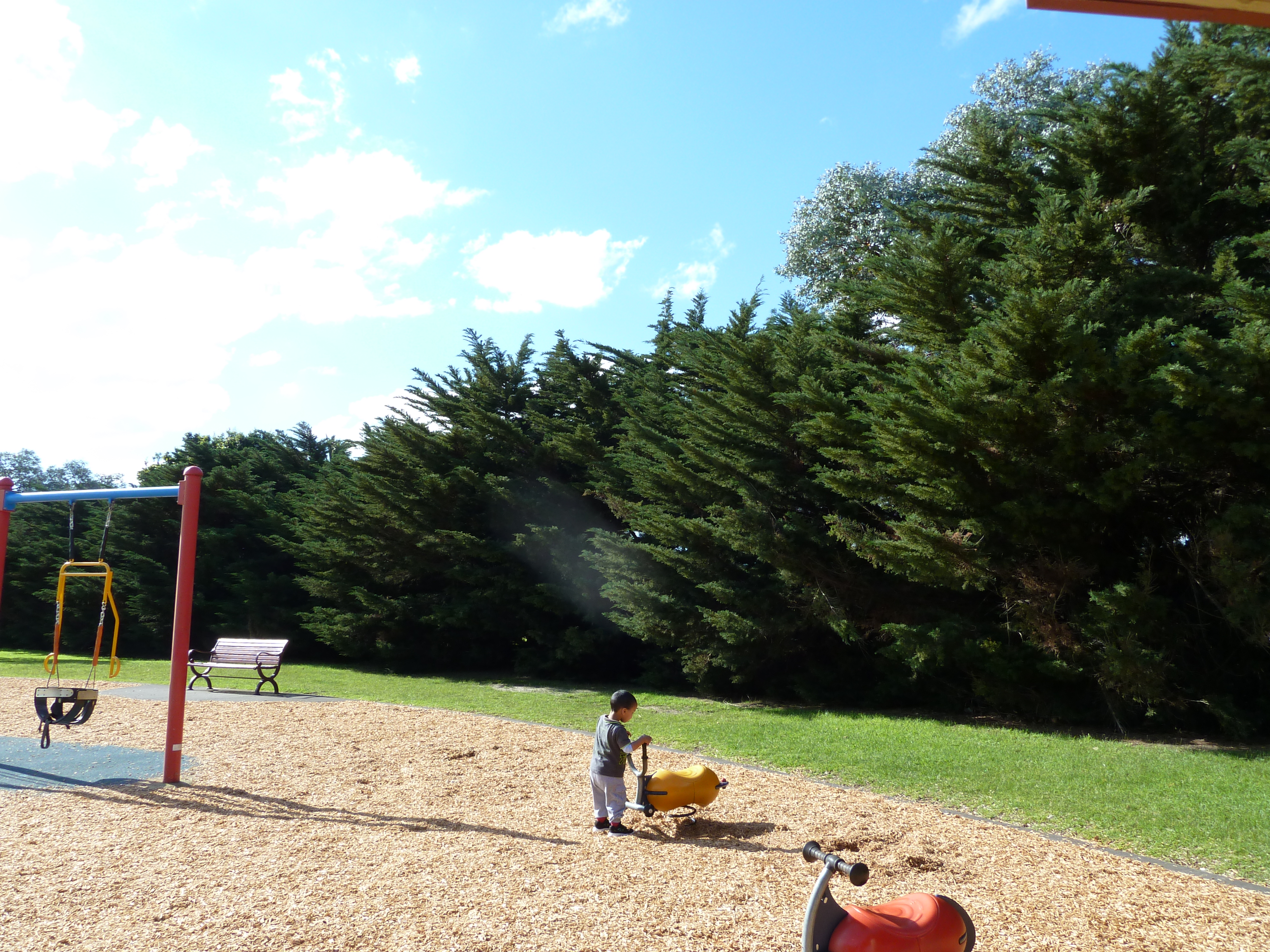
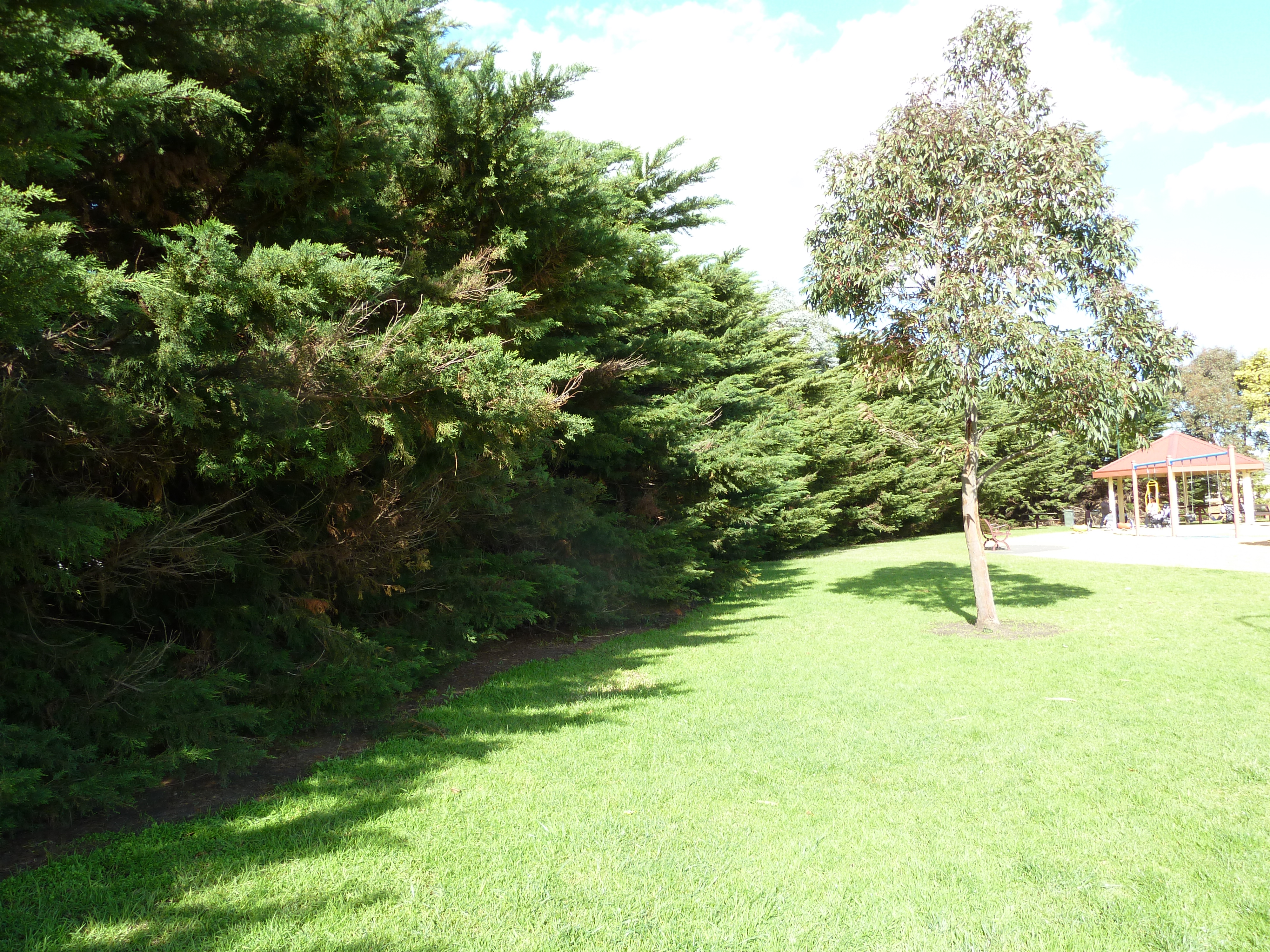
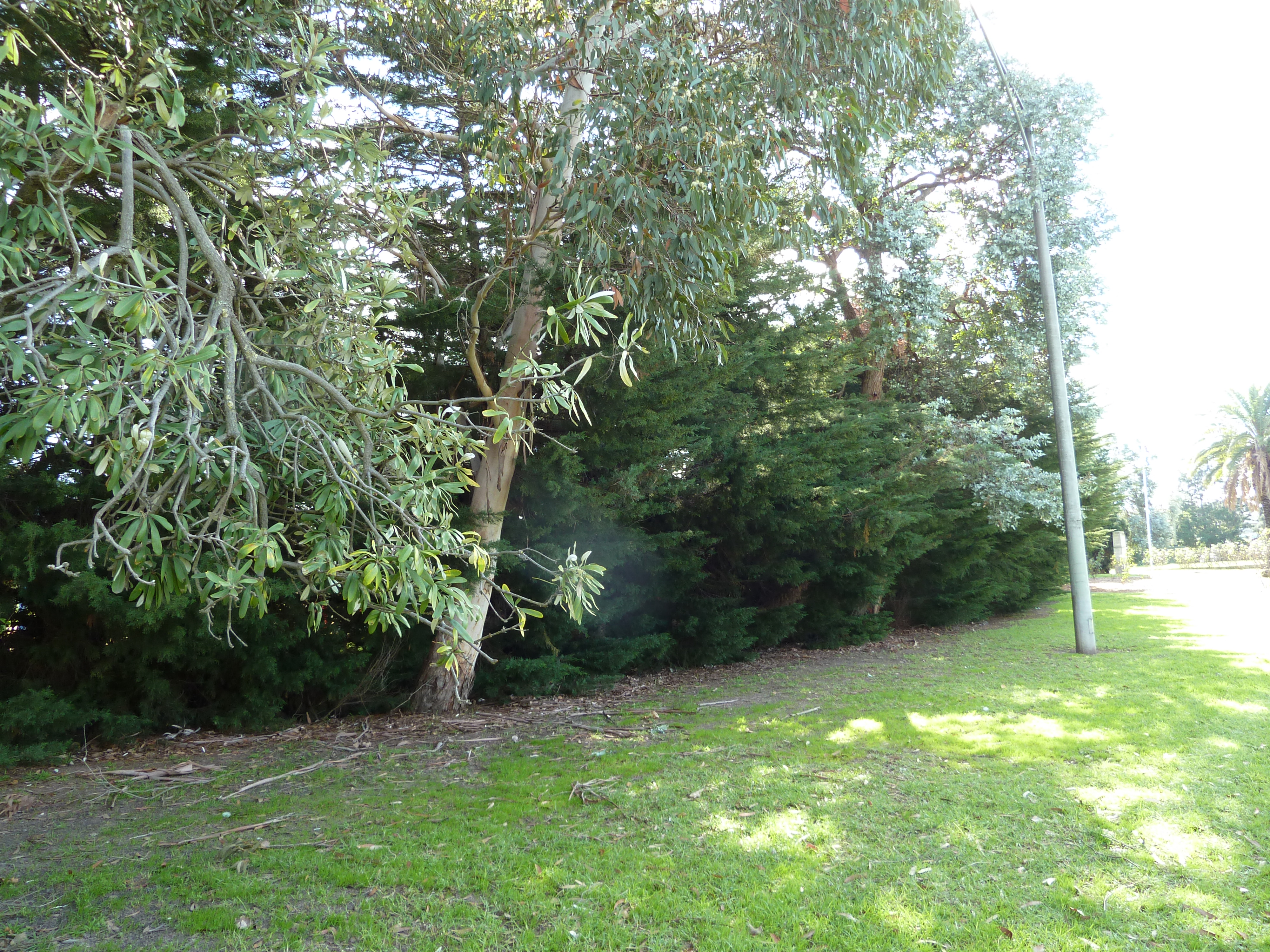
Council has announced another community consultation for a landscape plan at Koornang Park. The accompanying blurb states: “The plan sees the removal of the predominant row of over-mature Cupressus macrocarpa trees (Monterey Cypress) which are at high-risk of tree limb failure.” The blurb then goes on to say: “The development of the landscape plan has been guided by principles which prioritise safety, increase useable open space and promote environmental sustainability.”
Council has also provided a link to their ‘Have Your Say’ on their webpage. We acknowledge the fact that this time there is at least some form of ‘consultation’ (unlike the Duncan McKinnon episode) and the questions are open-ended. However, we are entirely sceptical as to the claim that ALL OF THESE TREES represent a physical danger, or if in fact, any of them do.
We ventured down to Koornang Park today and spoke with numerous residents who had no idea of what was going on. They also expressed alarm at the prospect of losing so many of these cypress trees. Please note that the ‘landscape concept’ does not indicate anywhere how many of these trees are to be removed.
What many of these residents did say was:
Apart from the fact of losing valuable and we maintain healthy trees, the safety issues in the above points would appear to go against council’s claim of ‘prioritising safety’. Rather, we are at a loss to understand why cypress trees have suddenly become public enemy number one for this council!
July 30, 2013
Featured below is the centre of the racecourse manifesto published by the MRC. That this features prominently in Council’s Resident’s Handbook is literally astounding given that:
That council sees fit to publish this version is to endorse the MRC completely and to abandon, we suspect, all attempts to ensure that the Melbourne Racing Club adheres to the terms of the original ‘communique’. Surely council could have refused to publish this document at the very least?
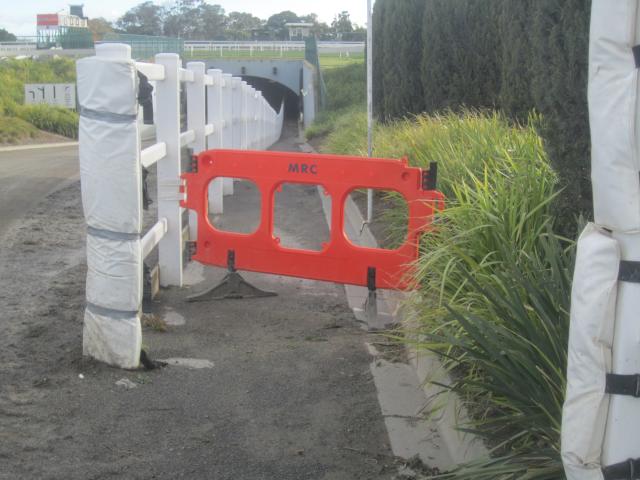
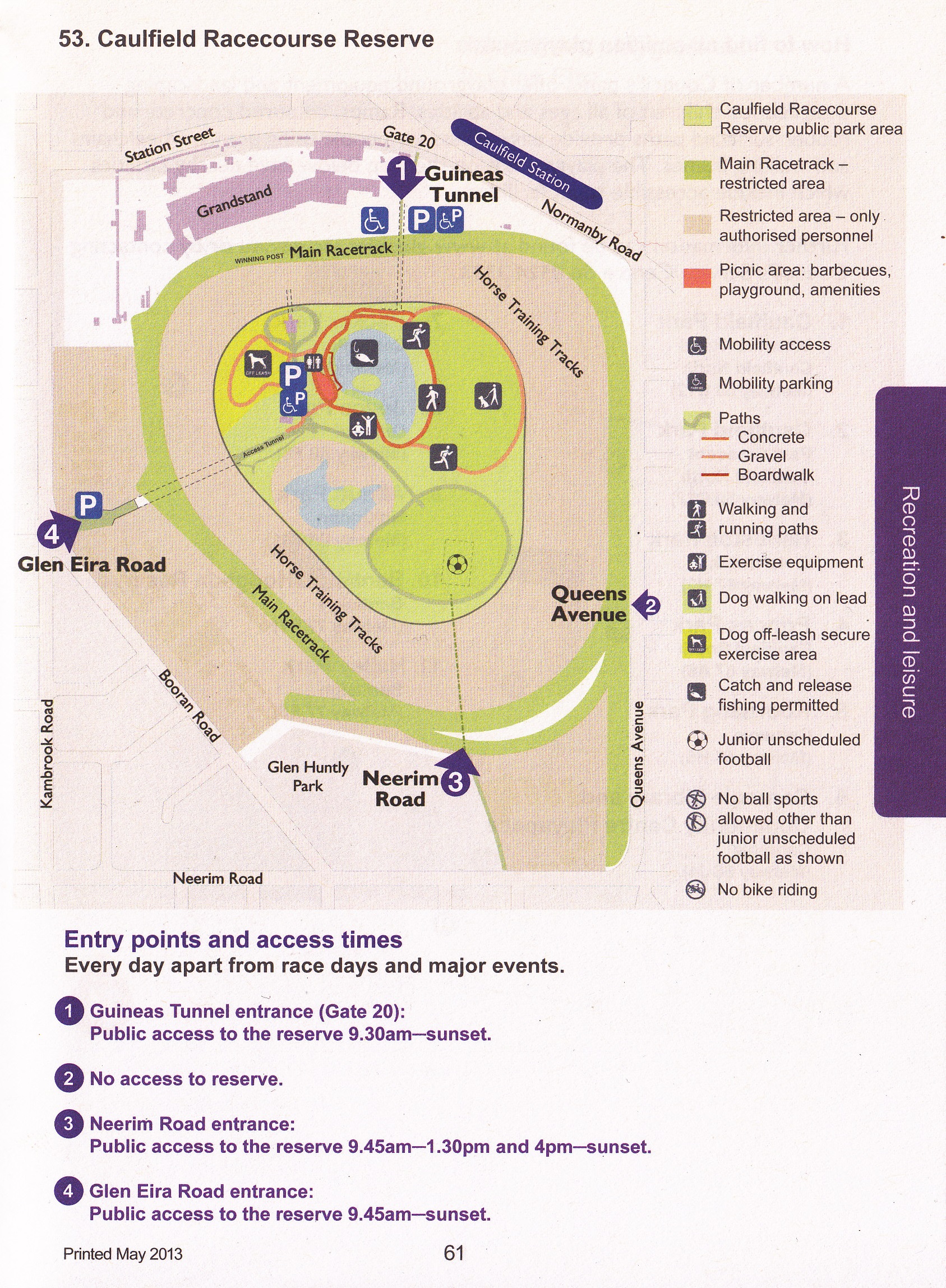 PS: Here are some photos that we’ve received from a resident that shows just what a waste of space this so-called ‘development’ has turned out to be. The photos we’re told were taken Sunday last in the mid afternoon.