GE Service Performance


bethlehem

The  latest example of Glen Eira’s woeful planning scheme is evident from this latest application for a 19 storey aged care facility in Kooyong Road. The cry goes up that there is a ‘loophole’ in the policy which would allow such a development. Yes, there is. But it is not a ‘loophole’, it is a gaping chasm compared to the policies that other councils have successfully implemented. We provide just one example from Hume City Council – and there are plenty more. Please note the following:

  • Glen Eira’s ‘policy’ relies on the 2002 housing policy. Hume’s on their 2007 ‘healthy aging’ policy
  • Hume stipulates for nursing homes that there be – One on-site car space per two members of staff and One on-site visitor car space per five residents. Glen Eira is silent on car parking spaces for visitors.
  • Retirement villages in Hume are said to require – All dwellings should be provided with a minimum of 2 bedrooms to provide flexibility for residents and room for family visitors. In Glen Eira there is no mention of number of bedrooms.
  • Hume requires – A centrally located open space area that occupies at least 10% of the total site area should be provided. Glen Eira’s requirement for ‘open space’ is vague and nebulous and basically waffle – Ensure a small area of secluded private open space, in addition to communal open  space, is provided for low care aged persons housing. For medium and high care aged persons housing, communal open space should be provided.
  • In Hume, there is emphasis on avoiding main roads. Glen Eira endorses this and the consolidation of large lots – Large allotments on main roads in Minimal Change Areas. Consolidation of sites is not encouraged unless the site abuts a main road.

Thus we have another policy that any developer can literally drive a truck through. And this policy dates from 2007. Yes, there are problems with policies everywhere, but at least other councils have the will and desire to close as many loopholes as they can. Glen Eira does not since this will only place impediments in the path of developers!

We have uploaded both Hume’s and Glen Eira’s policies so that residents may compare!

A comment has been received from a resident which we feel should be highlighted here as a separate post. The suggested questions are excellent and the recommendations sound and pragmatic.

We have commented numerous times on how many dwellings have already gone into Glen Eira in the past 5 years and how we are well ahead of projected population growth if this trend continues much longer. (See: https://gleneira.wordpress.com/2016/09/25/more-on-hyams/

We have also highlighted how the recent planning scheme review and its ‘workplan’ will take up to 20 years to complete if this council has its way. That is literally much too late to save the neighbourhood centres such as McKinnon, Bentleigh East, Ormond, Caulfield South, etc. We are already seeing 7 storeys in Hawthorn Road, Caulfield North.

Thus, instead of producing a meagre 2 structure plans in 4 years (and somehow Elsternwick has already been written off without any community consultation), action is required now. That means reorganising the budget, setting aside funding for outside consultants and beginning the work immediately. We also have to question why, when the Minister ordered council to move its butt way back in December 2015, the first structure plan isn’t already on the drawing boards and in the public domain for consultation.

We repeat again. These councillors have failed its residents and do not deserve to be re-elected.

Here is Mr. Ptok’s comment in full –

I was not able to attend, but am grateful for the information provided here, and the comments.

As someone involved in objecting to a number of developments in Carnegie (including appearing at VCAT at the recent 90-94 Mimosa Road application, which got approved today), I have penned a few questions I emailed the candidates in Rosstown Ward. Still waiting to hear back from some of them, but the following includes some key steps which, I believe, will help strengthen council’s position in VCAT hearings. Especially in light of today’s decision, I have concluded that the only hope of preserving anything of our neighbourhoods, is implementing the full Planning Scheme Review Work Plan in the coming term of council. This may require paying external consultants, but if it’s not done, looking at the speed of development in Carnegie, there won’t be much left of the old Carnegie come 2020.

Please feel free to circulate / ask your candidates, if you think any of the following can help strike a better balance between competing needs:

Dear [candidate],

I am a resident and voter in Carnegie.

I believe that whilst development is necessary, it needs to strike a balance between the needs of existing community, the developers, and future residents. Having been involved in a number of VCAT hearings, I believe there are things council can do to better manage the developments.

Could I ask which, if any, of the following actions you are willing to initiate and support, if elected to council:

1. Regular (at least quarterly) reporting on net dwelling approvals and dwelling type. This should include retrospective reporting, at least to 2013 when the new residential zones were adopted, ideally to 2003 when the municipality adopted policies to differentiate the municipality into housing diversity and minimal change areas.
This will allow comparison of dwelling approvals to population targets, and confident answering of the question: “is Glen Eira doing its fair share of meeting new housing required in Melbourne?”

2. Council’s VCAT watch report should include, where decisions went against council, a section on “actions council can take to avoid a similar outcome in future”.
This will give Councillors a clear idea of what would “strengthen” the Glen Eira planning scheme to ensure council decisions stand.

3. A review of the Planning Scheme Review Work Plan, including a presentation of council’s representative at VCAT. As the workplan currently spans more than a decade and relies heavily on internal resources to be completed, the concern from a resident point of view is that by the time the workplan is completed, the municipality will no longer be recognisable. As resident and ratepayer, I would be very happy if council used funds to pay external consultants so the work required can be completed in the next term of council.
A review of the work plan will give the newly elected Councillors an early opportunity to shape the management of development in Glen Eira.

4. Seek an amendment to the planning scheme to better manage change in neighbourhoods and where different planning zones meet. The amendment I am suggesting is that the maximum building height of any new development be the lower of:
– the height of the lowest adjoining property (including across the road) plus two stories, or
– the maximum height permitted under the zones.
This approach strikes a balance between the needs of neighbours (who would prefer a 1 storey increase) and developers (who would prefer going straight to the maximum), and allows for more managed change of neighbourhood character over time.

I am asking the same questions of all candidates in Rosstown Ward and look forward to your reply. If you require any further information on any of the points raise, I am of course happy to answer any questions.

Kind regards,

Greg Ptok

Several weeks ago Hyams & Delahunty were interviewed on the JAir radio station. Below we present the opening section with Hyams. The audio goes for 5.24 minutes.

As per usual with Hyams he is not averse to making statements that are misleading, incorrect, and blatant misrepresentations of the truth. Here are some examples:

HYAMS: What’s going on in Glen Eira is actually a lot less than what’s been going in some of the neighbouring municipalities

COMMENT

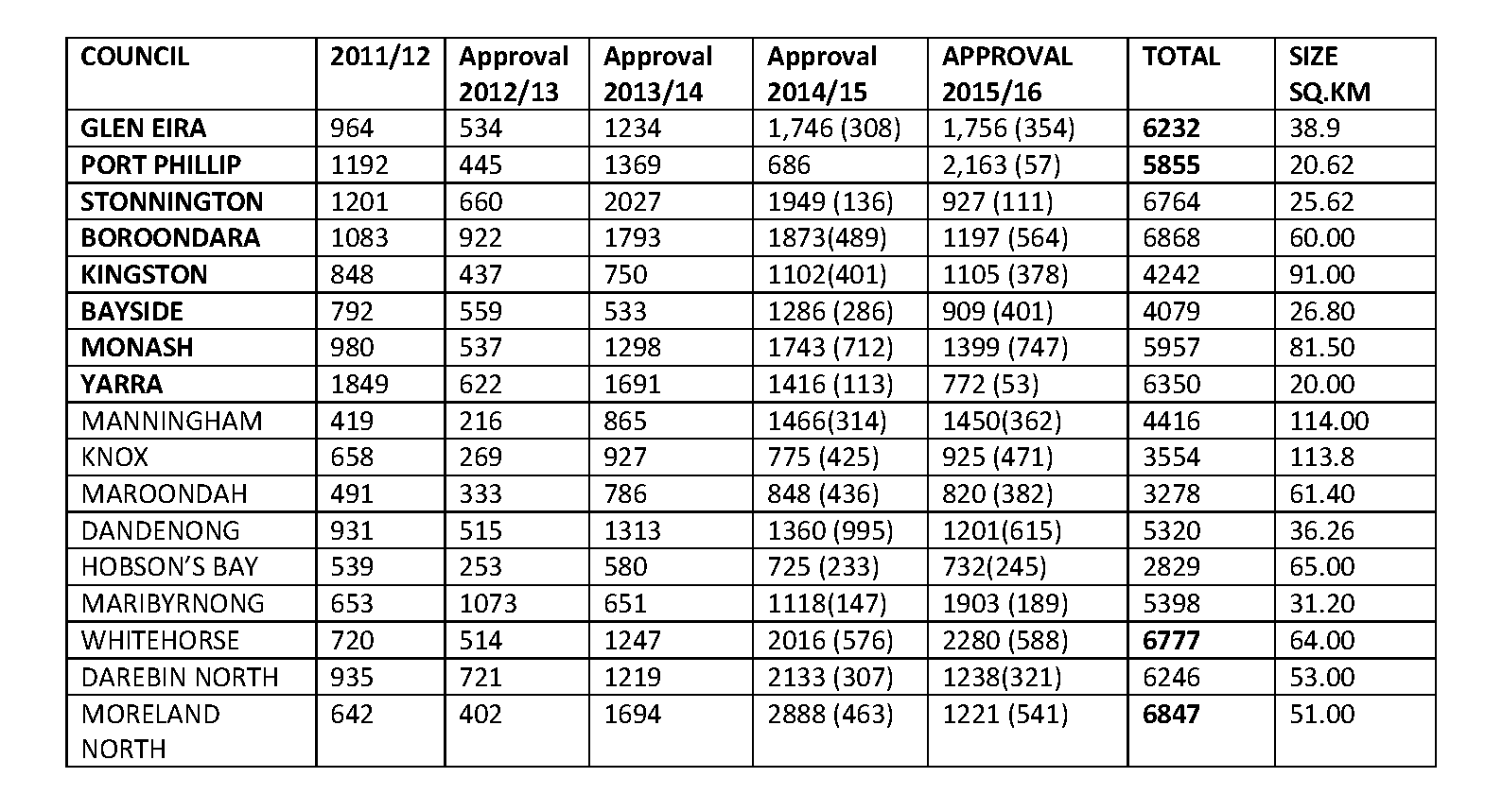
Dead wrong! We have compiled data from the Australian Bureau of Statistics (ABS) on building permits for the past 5 years and uploaded the 2015/16 data HERE so that readers can check for themselves. What residents need to realise is:

  • Of our ‘neighbouring municipalities’ Bayside, Kingston, Port Phillip, and Monash have had less development over the past 5 years! The only ‘neighbours’ with greater numbers are Stonnington and Boroondara – and there are some good reasons for this!
  • Glen Eira has 2.8% zoned Commercial. Stonnington according to the recent State of Play Reports has 8%, Boroondar has 3.6% and Port Phillip has 12% plus this latter municipality being in the unique position of being ‘capital city’ zone and a tourist hub. In these municipalities the majority of new development occurs in these commercial areas, whereas in Glen Eira, the overwhelming majority of new dwellings are in our quiet residential streets – thanks to the zoning and the small percent zoned commercial.
  • The number of houses built in Glen Eira is small compared to many other municipalities – thus development in Glen Eira is primarily apartment blocks
  • Other municipalities are double or triple the size of Glen Eira which already has the highest density per kilometre in the Southern Region. The impact on density and liveability is thus far greater in Glen Eira than say Kingston.
  • Victoria in Future 2016’s projections (UPLOADED HERE) indicate that from 2011 to 2031 Glen Eira will require an additional 11,800+ new dwellings to meet its population needs. The figures on building permits show that in Glen Eira more than half of this target has been reached in the space of 5 years AND these figures DO NOT INCLUDE THE 1500+ UNITS FOR THE CAULFIELD VILLAGE AND POTENTIALLY ANOTHER 4000+ FOR VIRGINIA ESTATE. At this rate, Glen Eira will meet its ‘target’ not in 2031 but in 2020. Then what?

Please consider the following table carefully. The figures in parenthesis represent the number of houses with building permits for that year.

building-approvals

There are plenty of other statements that amount to arrant nonsense and we believe designed to deliberately mislead:

  • Minimal change areas have had 50% site coverage, 25% permeability, and 4 metre setbacks since Amendment C25 which was gazetted in 2004. The only thing the zones have changed is making 8 metres mandatory and 2 dwellings per site – and not as Hyams so inaccurately portrays that these ‘additional’ protections are a result of the zones! What he also neglects to mention is that even this ‘protection’ is not sacrosanct if the size of the lot happens to be larger than its surrounding blocks of land. In Glen Eira at the time of the introduction of the new zones there were 1,795 lots of land in the Neighbourhood Residential Zone which were greater than 800 square metres. (Source: DEWLP document procured under FOI)
  • There are no setbacks to the Residential Growth Zones apart from ResCode. They have been there since time immemorial and again have nothing to do with the zones!
  • Developers buy up multiple blocks because they can squeeze more units on and this is explicitly encouraged in the Planning Scheme!
  • Glen Eira does not have 78% zoned as Neighbourhood Residential – it has just under 70%

But the best line must be – It’s not like we changed the zones to allow more development without telling anyone…..

Really? Is that why the zones were introduced in secret and public question responses were nothing but lies and all such responses ‘signed off’ by councillors without a single murmur?

There’s much, more more that could be said on Hyams’ performance on JAir. We will leave it to our readers to comment further.

Damning report on Glen Eira councillors but no action to be taken

Chad Van Estrop, Moorabbin Glen Eira Leader
September 23, 2016 2:30pm

A DAMNING confidential report has found Glen Eira councillors have defamed each other, come “nose to nose” during confrontations and acted as “judge and jury” to matters of infighting.

But according to a copy of the report, seen by Leader, council chief executive Rebecca McKenzie has said “no further action” would be required as a result of the findings by Frances O’Brien QC.

Ms O’Brien was appointed in May to investigate bullying allegations and advise on how to implement the council’s standards of conduct.

The report found:

■ Council defamed Oscar Lobo when censuring him for an alleged anti-semitic slur;

■ “Childish, silly and disparaging” email exchanges between Cr Jamie Hyams and Cr Lobo breached the councillor code of conduct;

■ An email sent by Michael Lipshutz to Cr Lobo asking if he worked at a bank linked to terrorists was “discriminatory and not innocuous.”

The report also lifts the lid on an ugly spat at a citizenship ceremony this year where Cr Hyams called Cr Lobo a “f**kwit” and Cr Lobo said Cr Hyams was a “little s**t” and the men came “nose to nose”.

Ms O’Brien said in her report that she did not accept that either of the two councillors had “ever been provoked such as to justify the conduct or language they have used”.

And she said their conduct during an increasingly unworkable four-year term “would be unacceptable in any workplace”.

Glen Eira council has blown $18,000 on the report meaning almost $45,000 has been spent this term to tackle infighting.

Leader understands senior council officers were not interviewed by Ms O’Brien for the report.

In July Ms McKenzie said the report made “no recommendations for further action under council’s code of conduct”.

But an April email from mayor Neil Pilling to councillors stated Ms O’Brien was brought in as an “independent arbiter” which meant her recommendations were not legally binding.

In the fall out from the O’Brien report an internal conduct panel has been established for councillors to report disagreements but council insiders have labelled it a “toothless tiger”.

Cr Hyams said he couldn’t comment on the contents of the report.

“There has been a process to resolve the issues and I respect that process,” he said.

Cr Lobo refused to comment on the report.

Ms O’Brien, a senior barrister with extensive experience in employment law and forensic examination of evidence, was one of three members of a commission established to examine workplace culture at Geelong Council earlier this year. That council was sacked in April.

Source: http://www.heraldsun.com.au/leader/inner-south/damning-report-on-glen-eira-councillors-but-no-action-to-be-taken/news-story/b5047432fde8a478f5697d5ae9d47419

++++++++++

COMMENT

Making matters even worse is the fact that this Council has refused to publish the report, or to take action against all miscreants – especially Hyams!

There has been absolutely no respect for public monies splurged on lawyers. We have received an email from a resident who applied to council under the Freedom of Information (FOI) legislation to gain access to the report. This was refused. The resident then appealed to the FOI Commissioner and in the past few days has received the email we present below – from ‘specialist’ lawyers hired by council to prevent the publication of the report. We can only ask:

  • How much more of ratepayers’ money are these councillors prepared to spend in order to protect themselves?
  • How much longer will bullying and vilification be condoned by these councillors?

foi

ra

Item 9.12 deals with the proposed closure of Fosbery/St  Aubins Avenue to create open space. What will be fascinating is to see whether resident concerns are acted upon by councillors or ignored entirely.

The report states that for traffic in Kambea and Otira Road – The majority of the feedback was strongly opposed to the proposal based on concerns around traffic volume, congestion and vehicle movement. Responding to this opposition we have –

The analysis of this data indicates that:

Σ There would not be any noticeable change in the daily traffic conditions in Fosbery Avenue (north of St Aubins Avenue) and at Otira Road.

Σ Daily traffic volumes in Fosbery Avenue, south of the proposed open space area would decrease by approximately 70%.

Σ Traffic volumes along St Aubins Avenue are also expected to decrease.

Σ Traffic volumes at Kambea Grove, west of Fosbery Avenue would be expected to increase by approximately 219 vehicle movements per day, and up to 44 vehicle movements in the AM peak hour.

Σ The traffic volumes are considered appropriate noting the acceptable threshold volume for a local street under State Government planning guidelines is variously 2,000 – 3,000 vehicles per day.

The most incredible paragraph in response to the potential speed of cars reads –

The location of the proposed open space was not identified in order to address a specific traffic concern, although wider streets like St Aubins Avenue and the southern section of Fosbery Avenue (south of the dogleg) can attract more traffic ‘cutting through’ and travelling at higher speeds, due to ease of access.

Surely when up to half a million dollars of ratepayer funds is about to be spent on a project, all aspects should be considered and fully investigated. We also remind readers that less than 2 years ago a tender was granted for the ‘redevelopment’ of this site for approximately $930,000. We have wondered whether this means that work previously done will now be ripped up to make way for this project?

Some further information on open space

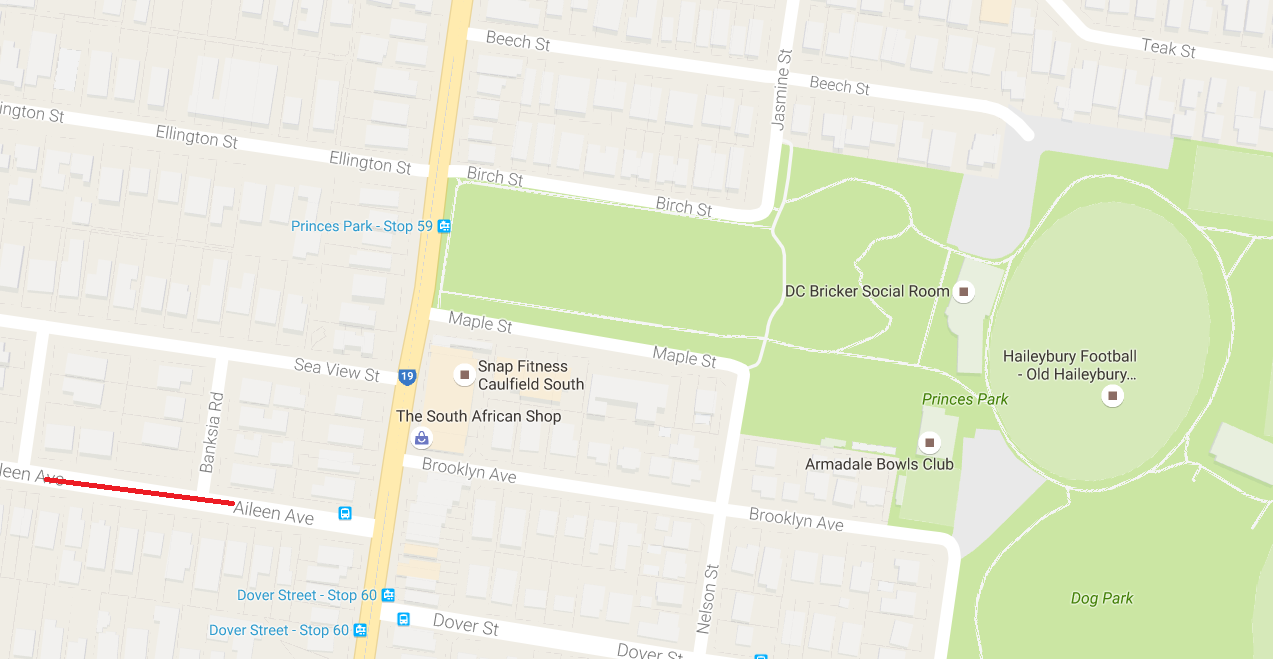
Page 212 of the agenda states – Purchase of a property in Aileen Avenue for a potential new open space opportunity in Caulfield South.

We assume that this relates to some recent in camera items and the resolution to ‘accept’ the officer’s report presumably for purchase. Readers should note:

  • Recent sales in Aileen Avenue are listed as over $2 million
  • Council’s purchase of a property in Aileen Avenue repeats the ongoing trend of concentrating on Camden ward to the exclusion of the far more ‘high priority’ recommendations from the Open Space Strategy for the Carnegie area. Why?
  • And why oh why is council continuing to spend valuable money on new open space that is literally a stone’s throw from existing open space? – ie Fitzgibbon/Eskdale (Caulfield Park); St Aubins/Fosbery (Greenmeadows)? And now Aileen Avenue – Princes Park?

os


fairy-tales

We’ve received this email from a resident, expressing what we believe is probably a fairly common reaction to the election conundrum – who to vote for?

Good morning, 

With no shortage of evidence pointing to the incompetence of our council, the big question is…. So who do I vote for? 

For the average person it is impossible to become adequately informed about who stands for what. 

Are there any candidates with integrity or honesty? Will anyone actually have the will power, knowledge and stamina to repair our failed planning scheme, when the council blames VCAT and VCAT simply insists it is ruling according to the laws of the state?  

Quite frankly I am convinced our local government is a complete joke, without the laugh. We have experienced first-hand the incompetence and lies coming from their planning and enforcement team who are paid for by my rates. A 3 year saga that left us high and dry. 

So now it is election time and I want to make my vote count….. yet sadly I think it makes no difference whatsoever. They are all as bad as each other. 

Please tell me I’m wrong…

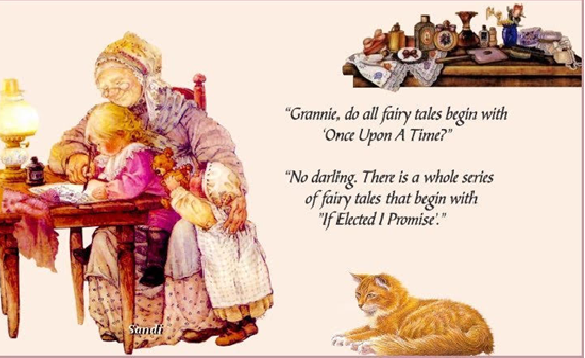
We do sympathise, whilst acknowledging that sorting the wheat from the chaff, the stooges from the genuine candidates, is going to be a herculean task, especially when each candidate talks in clichés, generalities, and is full of potentially hot air promises.

Our position is clear. After more than a decade of in fighting, incompetence, and abuse of power over and over again, it is definitely time for a change. These councillors have done nothing to advance planning, to secure sufficient open space, and to operate in a transparent and accountable manner. Nor have they acted on community aspirations that mean something or done this in a timely manner. Traffic, over development, open space, heritage, community gardens, tree protection are just some of the issues left untouched by this group of 9 councillors.

So now is the opportunity to change all this. And it can be changed with your vote. That means ensuring that each and every one of the incumbents are not re-elected nor those to whom their preferences are directed since the chances are that these are merely their stooges. Thus we urge all residents to MAKE YOUR VOTE COUNT and elect a council that is new, visionary, and committed to listening and working with the community and not against it. Ask each candidate the following:

  • Whether they will commit to a full and immediate review of the zones
  • Whether they will commit to changing the meeting procedures so that residents can freely ask questions and present their views
  • Whether they will commit to having community reps on all advisory committees and which are open to the public
  • Whether they will commit to online broadcasting of council meetings
  • Whether they will commit to residents having a direct input into budget priorities
  • Whether they will commit to insisting that all officer reports include costings, timelines and objectively present the pros and cons for each proposal

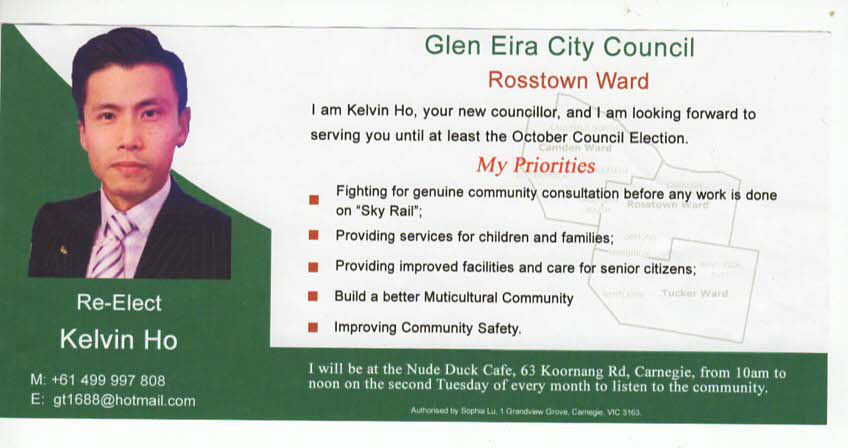
If the responses are nebulous, qualified, or mumbo-jumbo, don’t vote for them! The best example we have of this last statement comes in the form of Ho’s election flyer! At least he has the grace not to mention his opposition to ‘over-development’!!!!!!

EPSON MFP image

EPSON MFP image

In January 2013 Amendment C87 was gazetted. This amendment introduced some revised Neighbourhood Character Overlays into the planning scheme with the objective of ‘protecting’ certain streets and areas of the city. Council’s stated objectives in the recently completed planning scheme review is to implement more of these overlays.

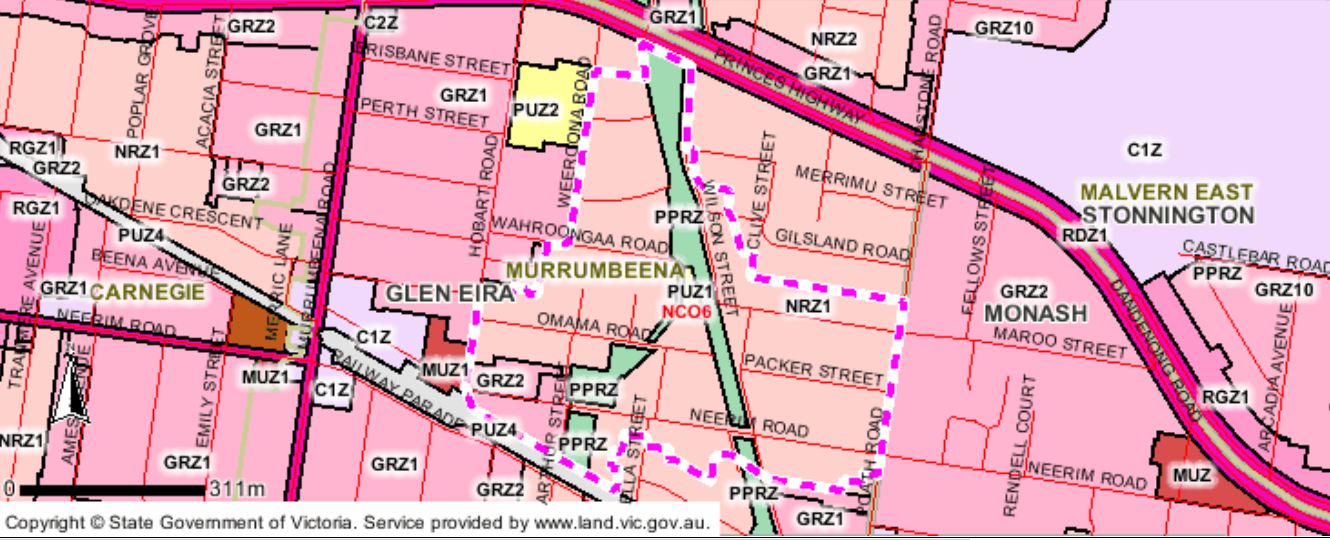
But there is a major problem with council’s planning as illustrated in a  recent VCAT decision which calls into question whether council is totally incompetent, or simply so pro-development that nothing they do to foster more development should come as a surprise to residents. This latest VCAT decision involved an application to build a 2 storey building containing 4 townhouses. The site was in Murrumbeena and included in a Neighbourhood Character Overlay (NOC6), plus a Design and Development Overlay, plus a Special Building Overlay (ie flooding). Yet, council in its wisdom also ZONED THIS AREA UNDER GENERAL RESIDENTIAL ZONE 1.

This raises a multitude of important issues –

  • Why has council included areas that have NCO’S in the GRZ and RGZ zones?
  • Discussion on the introduction of the new zones was already happening in 2013 and probably well before. Didn’t council planners know what they were potentially undermining? Or didn’t they and councillors care?
  • What happens now to the several hundred properties that find themselves in the same boat as this Murrumbeena application?
  • Why can’t council write amendments that actually mean something, instead of the contradictory and useless waffle that they continually produce? And who ultimately is responsible for vetting their nonsense? Here is an example of two statements that come from this NCO6. We maintain that they contradict each other –.

To ensure that new dwellings or extensions to existing dwellings respect the dominant building height, form, façade articulation, materials and roof forms of the streetscape..

New buildings should interpret the detailed elements of older dwellings that contribute to the neighbourhood character significance of the area in an innovative and contemporary manner that complements, rather than replicates, period dwelling styles.

Thus we have an NCO that is seeking to protect existing neighbourhood characteristics on the one hand (ie ‘respect) and then there is the injunction NOT TO ‘replicate’ but merely ‘complement’ the area. No definition of course exists as to the meaning of these two terms. You could literally drive a truck through any of these statements, decision guidelines and objectives!

The VCAT decision went the developer’s way with the member making this important point –

The construction and application of the zones, overlay controls and policies to this locality creates a tension within the planning scheme with respect to the future built form character of the area. This is a locality identified as a diversity area in which the Council seeks to encourage redevelopment and increased residential densities. It is one of a confined number of diversity areas in this municipality in which redevelopment is directed and specifically encouraged. Simultaneously the Council has applied an NCO to this locality, the purpose of which encourages development to be in accordance with a preferred neighbourhood character that is largely based on the protection of existing neighbourhood character. Notwithstanding this site’s diversity area location the Council opposes the demolition of a modest and relatively non-descript (my description) dwelling because it is a dwelling originating from the interwar period. (Source: http://www.austlii.edu.au/au/cases/vic/VCAT/2016/1494.html)

As for the other ‘protections’ afforded this site, they are useless. The Design and Development Overlay only applies to fence heights (like another 2 from council’s ‘generous’ 5 DDOs) and hence was irrelevant. The member also makes the point that council’s opposition to demolition should not be based on a Neighbourhood Character Overlay, but on a Heritage Overlay! Melbourne Water had no objections to the Special Building Overlay requirements following amended plans.

What does all this ultimately mean? We believe that:

  • No property should be zoned GRZ or RGZ if it is also covered by a Neighbourhood Character Overlay. This of course means changing the zoning – a definite ‘no-no’ for this council since they are ‘perfect’ and got everything right the first time around
  • At least another 200 properties now find themselves in the same boat as this Murrumbeena site. What will council do to ensure that they are fully ‘protected’?
  • Until there is a complete and utter re-write of the planning scheme, and eschewing reliance on useless waffle, then no resident anywhere can expect that his neighbourhood or street  is ‘safe’.

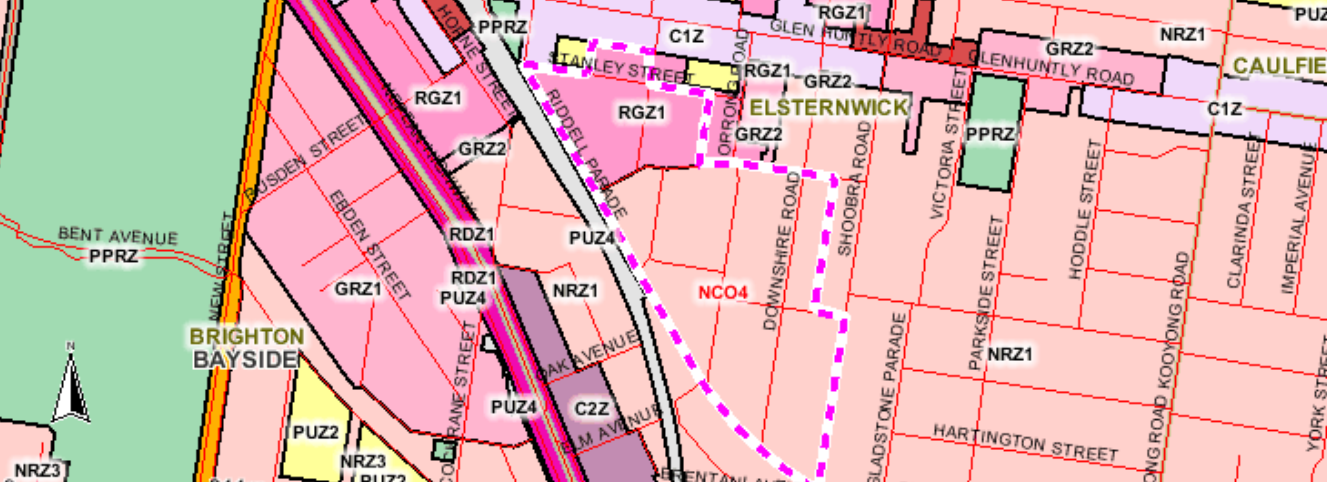
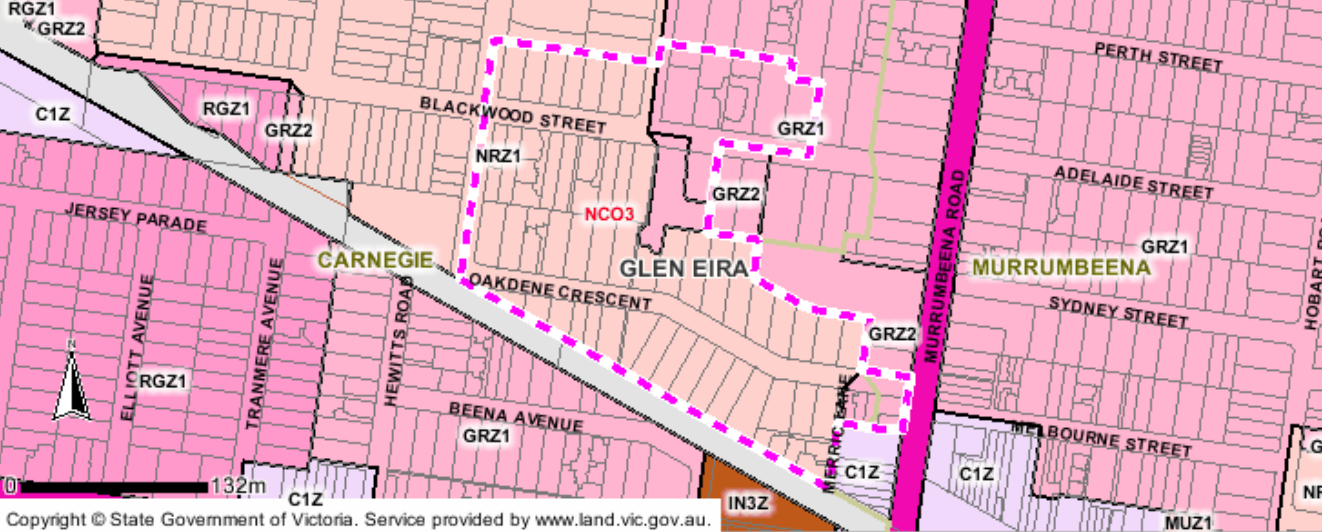
In the public interest, we provide some screen dumps of the other areas that are covered by an NCO, but also zoned for increased density. Residents in these areas – BEWARE!nco2

nco1

nco3


With the new Public Questions format introduced recently, the wider community  literally has no idea as to what the public question was, nor the answer, if the questioner was not present in the gallery at the time the item comes up in the agenda. Given that public questions occur at the end of the meeting (and this can be hours and hours later) it is no wonder that some residents might simply give up and leave or simply cannot abide the thought of 2 to 2 and a half hours of woeful arguments and plenty of hot air and grandstanding. Nor do these new protocols take into consideration that someone might be ill and unable to attend.

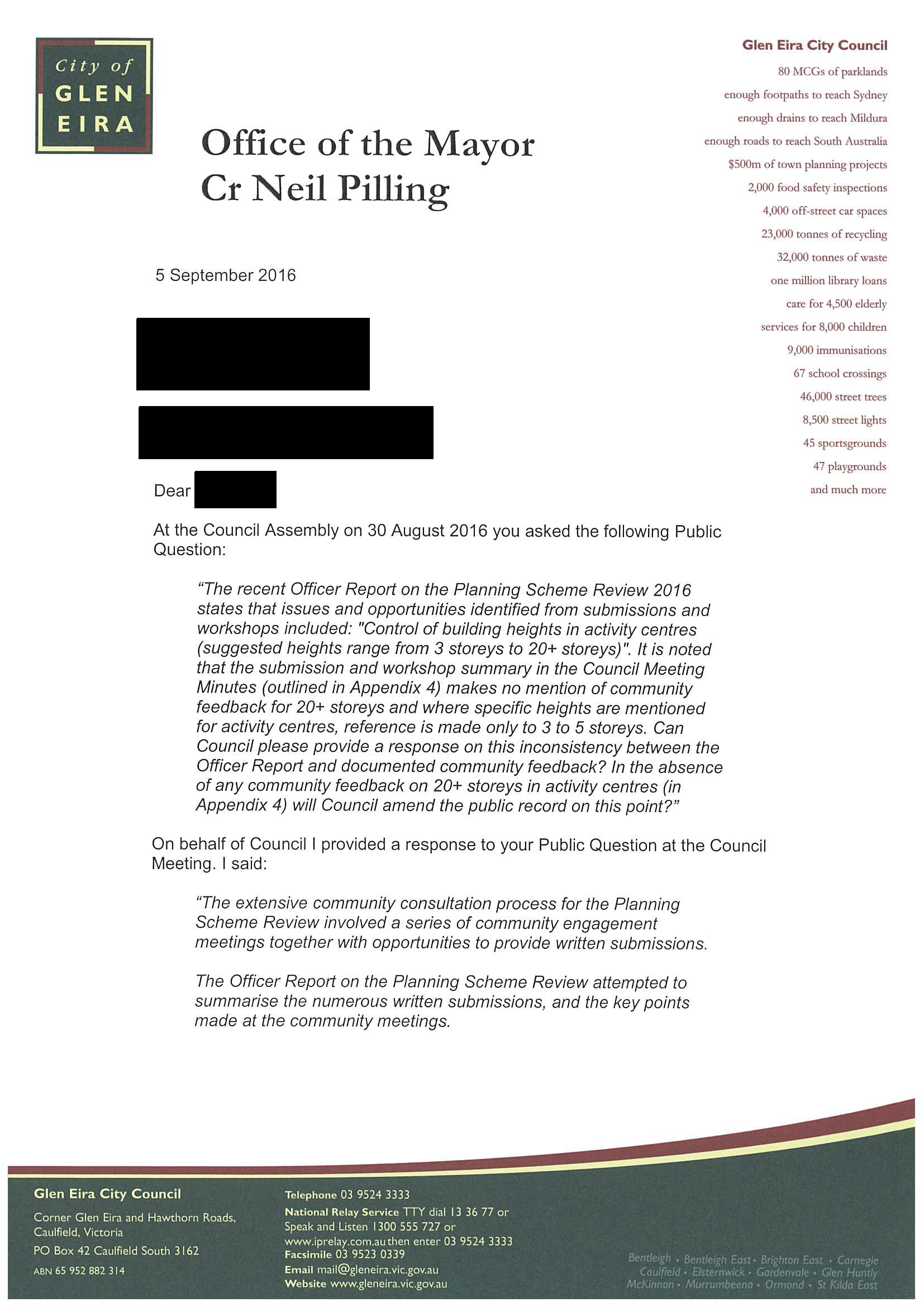
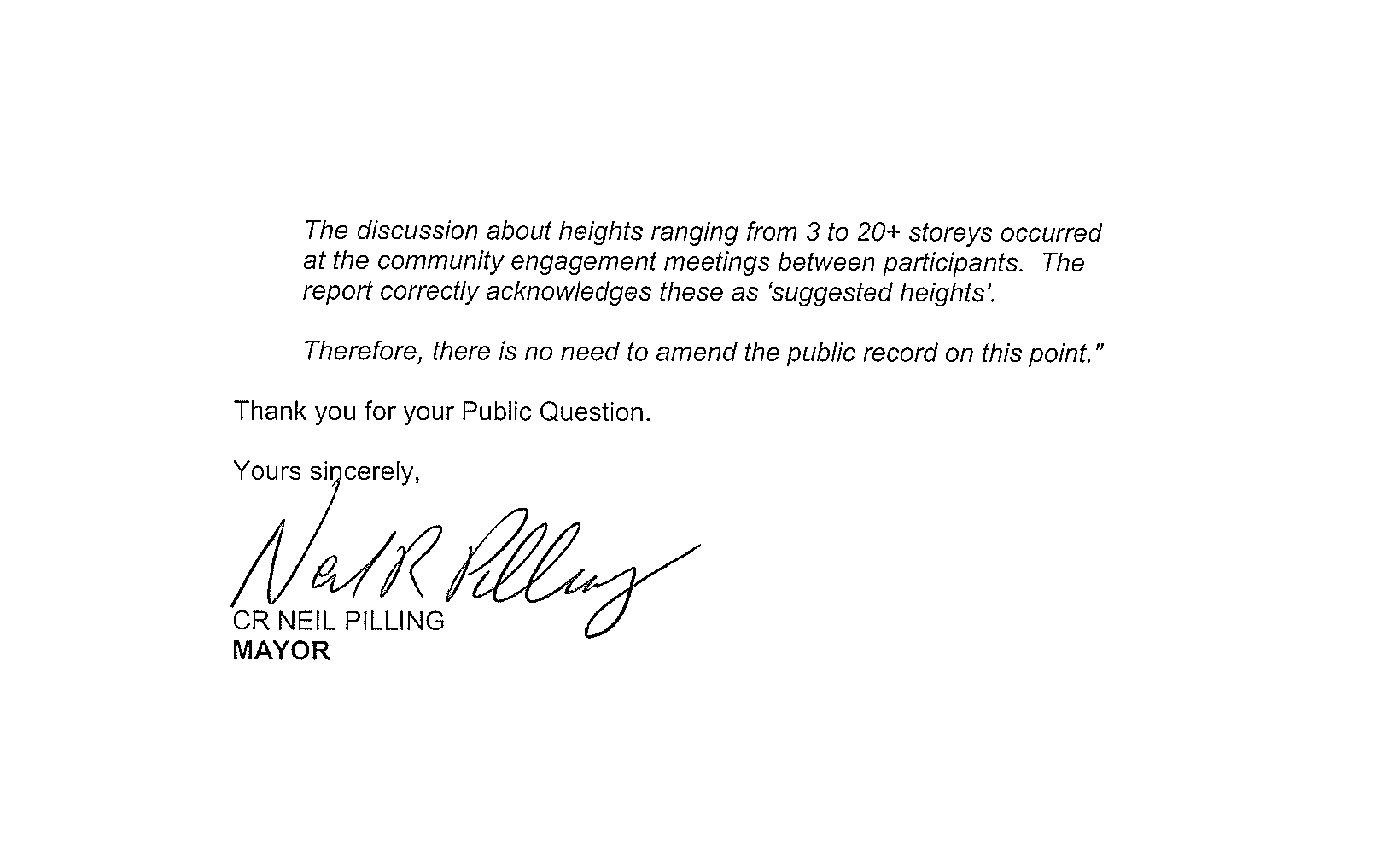
Councillors Hyams, Lipshutz, Esakoff, Pilling,and Ho have therefore successfully limited public access to resident views and queries since the questions and responses are not recorded in the minutes. We’ve however been able to subvert this anti-democratic practice by publishing one of these questions! Please note the answer and make up your own minds as to its veracity and faithful ‘reporting’ of events.

public-question_page_1public-question_page_2

untitled

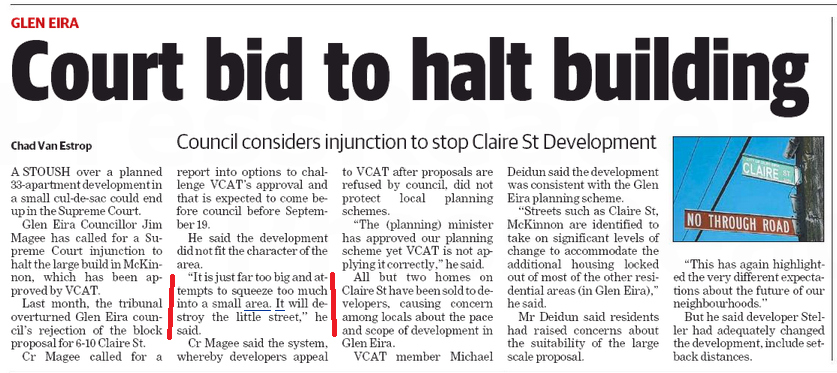
Are we asking too much for both journalists and councillors to actually portray the truth? Here are the facts:

  • Magee did NOT ASK FOR AN INJUNCTION. His motion asked officers for ‘options’ to ‘challenge the VCAT decision’ and to provide some figures on ‘costs’ and chances of ‘success’.
  • This site in Claire Street is far from a ‘small area’ as Magee would have readers believe. It is 2053 square metres – fulfilling council’s planning scheme objective to ‘encourage’ the ‘consolidation’ of sites!
  • In his chest thumping speech where VCAT was again the sole villain, Magee stated in part – This application ‘failed ResCode, failed the Glen Eira Planning Scheme’ but the VCAT member who refused the original application for 34 units has now granted a permit for this application for 33 units. The member said ‘Council encourages dwellings of this scale’ and he ‘could not be more wrong’. Council ‘does not encourage development of any scale’. ‘Council simply says what are the height limits’ and what the Planning Scheme allows and this was ‘set up via consultation’ in 2004 and in 2010 ‘our residents said to us very clearly’ that they wanted ‘increased set backs and height limits’. ‘We got’ these things but ‘VCAT again are not applying our planning scheme’. No point in ‘having a planning scheme then’ if VCAT ignores it and that’s why ‘mandatory controls are very important’. Nearly everyone in Claire St., ‘has sold out’ so council needs to ‘dissect’ the VCAT decision.
  • Several things to note in the above: (1) the VCAT member does NOT STATE that council ‘encourages dwellings of this scale’. What he does say is that council policy and the zoning makes Claire Street an ‘ideal’ location for 3 storey developments. (2) as for council not ‘encouraging’ ‘development of any scale’, perhaps Magee should have a read of the planning scheme he is supposed to administer!
  • The word ‘encourage’ occurs 352 times in the planning scheme. In the vast majority of these occurrences, ‘higher density’ is the goal. Here are some examples with the relevant clauses in parenthesis.

Higher density housing is encouraged within and adjoining the commercial zoning (Clause 21.03 )

Single dwellings and multi unit development are encouraged immediately adjoining the commercial areas of these centres.(21.03)

Industrial sites surrounded by residential areas are encouraged to convert to residential where appropriate.

A targeted approach involves identifying areas throughout the City where multi-unit development is encouraged and facilitated through local planning policies and statutory controls.(21.04)

Encourage a mix of housing types, increased residential densities and mixed use developments within urban villages and neighbourhood centres

The encouragement of residential development within and around commercial centres is a key strategy aimed at giving additional support to centres (21.06)

Where a small retail centre is in danger of losing its retail role, alternative land uses should be encouraged to fill vacant premises. Favourable consideration should be given to uses such as small business, clean light manufacturing, service business, residential and community use. This is particularly the case in centres such as McKinnon, Murrumbeena, Hughesdale and a number of local centres (such as Patterson).

Encourage conversion of derelict industrial sites to residential or mixed use activity where appropriate. (21.07)

Encourage highest residential densities in preferred strategic locations such as urban villages. (22.05)

To encourage increased densities within and around commercial/transport nodes which respects transition to the surrounding residential area

Where opportunity does exist,however, appropriate infill development at increased densities is encouraged.(22.05)

Buildings along Centre Road be encouraged to increase in height to provide for office,commercial and residential uses……

Where opportunities exist, medium density housing be encouraged in the residential areas surrounding the centre.

Encourage higher-density residential development.

Encourage site consolidation and redevelopment to support increased development densities.

Consolidate properties in the area west of Koornang Road to encourage more intensive development.

Commercial development on lots with frontage onto Neerim Road be encouraged

Increased density residential developments be encouraged

Increased density residential development be encouraged in Chestnut and Blackwood Streets with medium to high density development occurring on lots with frontage to Dandenong Road.

The re-development of 314 Neerim Road for medium density dwellings be encouraged

Increased density housing be encouraged, particularly along Rippon Grove.

Site consolidation to facilitate increased densities be encouraged

Encourage the higher and more intensive development in the southern and eastern parts of the precinct facing Station Street and the new road.(22.06)

Encourage the consolidation of sites to promote development opportunities.(22.07)

Encourage gradual changes in building heights between existing buildings and new developments.

CONCLUSION

Election time is definitely the top most consideration for many of the incumbents. Magee is excelling in his attempts to portray himself as a concerned councillor. We’ve had crocodile tears at VCAT, the demand for mandatory height controls instead of discretionary, and now the latest ploy – a request for a report on the Claire Street VCAT decision. We certainly doubt that this will go any further since appealing to the Supreme Court can only be done on a point of law and would cost the earth. Also, if council were stupid enough to vote in this course of action, then any determination would only be after the election. Thus, if Magee was so concerned about what is happening to McKinnon and other neighbourhood centres then where has he been for the past 18-24 months? Why does this crop up only now – 2 months out from election? Why all his votes for permits that we’ve previously pointed out? And why oh why, is so much of what comes out of this councillor’s mouth simply wrong, incorrect, and the opposite of the truth? What would help Magee’s election ambitions is that instead of lambasting VCAT again and again, he and his colleagues undertook to act upon resident wishes and review the appalling zones and rewrite the incompetent planning scheme. That would surely get him votes!

« Previous Page — Next Page »