GE Transport


Why on earth does council even bother to put in submissions to state government reviews when they are invariably of such poor quality? Most are a few pages of self congratulation with a total lack of analysis, detail, and real contribution to the debate. And lest we forget, without endorsement via a council resolution and made public only ‘after the fact’. Frankly, council ought to be highly embarrassed in comparison to what other councils are capable of producing.

The latest effort concerns the State Government’s Plan Melbourne Refresh – a very, very important document that will have a major impact on strategic planning for Melbourne for the next 30 years. There is much in this document that should concern residents:

  • The ‘suggestion’ that middle ring suburbs should contain a 70/30 split of future housing growth
  • Notions of a 20 minute neighbourhood centre
  • Environmental sustainability
  • Changes to planning legislation, and much, much more.

So what is Glen Eira’s response to all these vital issues? Readers should note what our council, unlike countless others, fails to even mention –development contribution levies, tree protection on private and public land. We’ve uploaded the full submission HERE. Below are a few extracts and then a comparison with the views of other councils.

This is a very, very long post, but we urge readers to carefully consider the views presented below.

ON HOUSING AND THE 70/30 SPLIT

The Glen Eira Council view – It is proposed to accommodate the majority of new housing in Melbourne’s established areas, rather than in the growth areas. Glen Eira adequately accommodates population growth through its longstanding housing policies and suite of residential zones. These serve to co-locate higher densities of housing with public transport. A balance has been achieved in maintaining low scale residential areas and channelling housing into locations that can best support change. We have obtained government approval for maximum heights over all residentially zoned land where there were no limits before. Any move through Plan Melbourne 2016 to dilute the protection that Glen Eira has over its residentially zoned land will not be supported.

COMMENT

There is much in the above paragraph that needs to be challenged. For example:

  • How many residents would concur with council’s interpretation of ‘adequately accommodates population growth’ when all the complaints are about traffic mayhem, lack of public open space, lack of well designed buildings, and lack of infrastructure support.
  • What exactly does ‘higher density’ mean when neighbourhood centres such as McKinnon, Ormond, Murrumbeena, and East Bentleigh have the highest proportion of GRZ in their suburbs. Further, if public transport is the ‘key’ to locating ‘higher density’ then East Bentleigh certainly does not fit into this category.
  • What exactly does ‘locations that can best support change’ mean when council has not lifted a finger to introduce any parking precinct plans, urban design frameworks, etc. And how can certain ‘locations’ ‘support change’ when there is absolutely no preferred character statements in the planning scheme for any of the housing diversity areas?
  • Another major furphy is the claim that ‘maximum heights’ are the be all and end all of good strategic planning. And of course there is also the blatant unfounded mantra that ‘all residentially zoned’ land in Glen Eira is now better off. No mention of course of Mixed Use Zones which give a lie to the claim that all residentially zoned land now has height limits.

Thankfully other councils have taken the trouble to analyse and provide some data to support their assertions. They also oppose the introduction of the 70/30 split but at least their arguments have far greater validity, or raise concerns that are never mentioned by Glen Eira – ie neighbourhood character, heritage, employment, etc. Some examples:

BOROONDARA – Council is particularly concerned with the point around ‘low suburban density’ and “to encourage high urban densities and foster more diversity and choice in the housing sector, in closer proximity to public transport and jobs.” Many areas in Boroondara which adjoin public transport corridors consist of high quality residential streets which should be protected from intensive development, particularly apartment buildings. This includes some areas in the vicinity of train stations.

, accommodating the majority of new dwellings in established areas within walking distance of the public transport network can lead to a loss of trees and canopy cover in those areas. Therefore, any regulatory framework needs to take account of the local context and competing objectives and allow a level of discretion in managing these requirements. Further, Council questions the notion of protecting environmental and liveability assets on the urban fringe at the expense of another area’s environmental assets. This includes protecting valued tree canopy cover that reduces urban heat island effect and other valued aspects of Boroondara’s liveability.

The proposed housing target ignores the expectations which Boroondara has around the quality of new development. Importantly though, it makes broad based assumptions around the capacity of existing infrastructure in established areas such as Boroondara to support such intensification. In many instances, local development and social infrastructure already operates at or above capacity. Further, increasing development within these areas will only exacerbate the situation. Established area councils therefore require better infrastructure funding mechanisms to meet  increasing demand and renewal of infrastructure assets.

Council also refutes the claim being made in the Discussion Paper that Melbourne’s middle ring suburbs are accommodating a steadily increasing share of Melbourne’s housing growth – from 25% of building approvals in 2002 to 40% in 2014. This is on the basis of Footnote 6 in the Discussion Paper which states “This is an indicative measure of change in middle suburbs as building approvals include knock down and rebuild developments and therefore not necessarily net additional dwellings.

While knock down rebuilds distort the data, overall, new supply has increased in middle suburbs.” In other words, the Discussion Paper cannot readily point to any data which suggests that new dwelling supply in the middle suburbs has increased to a level which can justify a 70/30 target or sub-regional or municipal wide housing targets more generally. Further, the Discussion Paper notes that Melbourne 2030 aspired to a (roughly) 70/30 housing target, but (at best) Melbourne is being planned on the basis of 61% of new dwellings being located in established areas to 2051 under Victoria in Future 2015……Council does not believe the MAC or the Minister for Planning has strategically justified the imposition of a 70/30 housing target.


MONASH

The issues with existing infrastructure and service levels within the established suburbs of Melbourne is significant and is the major impediment to achieving the 70/30 split and ensuring the Melbourne continues to be a liveable and functional city. If the strategy is to encourage increased density within established suburbs (including parts of Monash), the need to upgrade and provide additional physical and community infrastructure needs to be given a much higher priority and be more clearly acknowledged and planned for in Plan Melbourne.

The Refresh paper identifies ‘low suburban density’ as a problem that needs to be addressed. However, it does not explain why this is a problem. In stating that this ‘problem’ will be overcome, it does not explain whether it still proposes to enable the retention of existing elements of suburban development that many within the community value – such as key elements of the existing neighbourhood character – and how the aspiration to increase the density rather than continue to expand the urban growth boundary will work with the ‘green our city’ elements of the Plan Melbourne strategy.

The Refresh Paper criticises the current aspiration in Plan Melbourne for 50% of metropolitan Melbourne being within the Neighbourhood Residential Zone because ‘applying a zone according to a percentage is an unconventional approach’., however it appears to be taking a similar approach to setting a 70/30 split for new development. Further justification should be provided to support this proposed split, which, if achieved, will lead to a significant change throughout suburban Melbourne. It is not appropriate, for instance to completely remove from any decisions around housing scale, consideration of the character of the area (built or natural / landscape character.

WHITEHORSE

Transport infrastructure has the potential to shape the built form and land use activities of our city. Many investment decisions are made based on the proximity to transport infrastructure regardless of whether it is included in a metropolitan or local planning strategy. However, simply being adjacent to a bus route should not automatically mean that development intensity can be increased. For example, the bus service may be infrequent, or there may be a sensitive environmental or neighbourhood character area nearby that warrants protection. One option is to rank bus or transport routes by frequency and quality before allowing more intensive development across the board. Council notes that it considered this sort of information when it introduced the new residential zones suite into its planning scheme, with this information balanced against environmental and neighbourhood character considerations.

Council would also like to emphasise the importance of integrating planning and building systems and a recommendation along these lines could be included in Plan Melbourne 2016 here. For example, single dwellings on a lot over 300 square metres in most instances do not require planning permission, which often results in a dwelling which is out of character with the surrounding neighbourhood. By being in the building system, Council cannot control the built form outcome on these sites. More consideration to neighbourhood character in the building system, or alternatively, consideration of single dwellings in the planning system, is needed.

MORELAND

Council does not consider increased density should occur at the expense of adversely affecting valued urban character by excessive building height, allowing sub-standard accommodation (as is occurring with some apartment developments) and on the assumption that there is adequate infrastructure in established areas to accommodate increased growth in established areas.

COMMENT

What stands out clearly from the above quotes is that Glen Eira continues with its myth about the new zones being in the ‘right locations’. Every other council comments on the fact that being close to a transport node is not necessarily the best or sole criterion for increased density – especially not if it means the destruction of heritage, neighbourhood character, and environment. But in Glen Eira we have heritage overlays smack in the middle of Residential Growth Zones because they are allegedly ‘close’ to railway stations; we have street after street of beautiful Californian bungalows and Edwardian cottages gone – ie Bent St., Bentleigh and Elliott St., Carnegie, plus countless others. And of course we have moonscaping that is allowed to go on unabated. And even with this unprecedented growth in Glen Eira, there is no attempt to re-introduce development contributions levies or a decent open space levy.
PS: It hasn’t taken the developer long to resubmit another application for Claire St., McKinnon. It is still 3 storey, and instead of 36 dwellings, the application is now for 33 dwellings. Yes, the VCAT decision certainly stymied the development, didn’t it? So much for Magee’s  faith in council’s planning scheme and its non-existent neighbourhood character statements for housing diversity areas.


  1. We are promoting additional transport options including more and better train, tram and bus services; car sharing, cycling and walking

Oh yes, Glen Eira is definitely transport conscious! That’s why the funding for bicycle paths has been cut despite budget promises. That’s why car sharing was put off and councillors never even told that a proposal had been submitted to officers years ago. When a report finally made it to council the decision was (typically) to delay for another year. The next year a tiny number of spots was set up. And how much credence do we give to council’s ‘promotion’ and ‘advocacy’ power, when they can’t even get a bus to run past East Boundary Road? Then there’s the fabulous Road Safety Strategy which lapsed in 2008 and hasn’t been updated, or newly ratified.

  1. We fine builders if they breach safety requirements on building sites

We challenge any reader to find one single vcat decision where council has sought an order against any builder for ‘safety’ breaches. There aren’t any. As for fines – well we’ve featured countless photos of unsafe and illegal works (for pedestrians) alongside development sites. How many of these have been fined – despite the fact that the offences occur day after day!

  1. We are advocating for all development costs to be paid for by developments and not fall on existing ratepayers.

Really? So is this the reason that Esakoff moved a motion at the last MAV state conference that basically asked for ‘all development costs’ – BUT ONLY FROM COMMERCIAL DEVELOPMENTS?!!!!!! Forget the fact that this was never endorsed by any formal vote much less discussed in council chamber with supporting reasoning. Commercial development almost pales into insignificance when compared to the developments occurring in GRZ and RGZ and now MUZ. Why these developments ARE NOT targeted is the $64 question?

The best of course is last –

  1. We are providing additional public open space and have imposed the highest Open Space Levy on multi-unit developments of any suburban council (estimated $5 million per annum)

Some very neat phrasing here which is technically not only untrue, but deliberately misleading. Glen Eira has NOT imposed the ‘highest’ levy on multi-unit developments. Plenty of other councils have much higher levies directed towards their activity centres, and suburbs where development is likely to occur at an intense rate. The perfect example of this is Stonnington which has the second lowest amount of public open space. In their proposed amendment they sought an 8% levy across the board in contrast to Glen Eira which has the least amount of public open space and only sought 5.7%. Admittedly Stonnington were not successful in getting their 8% for the entire municipality. However, they did achieve an 8% levy from developers in 4 suburbs, including Prahran and South Yarra. Achieving 8% from these 4 suburbs (given the size of these areas)plus the 5% from the rest of the municipality means that Stonnington is well ahead of anything that Glen Eira can achieve. Their Annual Report cites an INCREASE of $4.65 million in open space levies and this amount does not take into account the full year’s impact of the 8% in the four suburbs.

Nor is Stonnington alone. Moreland for example has had in place for years now the following levies for developments in their various suburbs –

Brunswick – 6.3%

Coburg – 6.8%

Faulkner – 5.7%

Glenroy – 6.5%

Then there’s Dandenong with 20% for this stated area – – Any residential or commercial subdivision in the area bounded by Springvale Road to the west, Cheltenham Road, Dingley Freeway Reservation, Dandenong Southern Bypass to the north, EastLink to the east and Hutton/Greens Roads to the south.

Further, whereas countless other councils included in their amendments the clause that for certain ‘significant’ sites , the levy payable be higher than the levy for other areas, Glen Eira council was quite prepared to accept the obscene figures of 4 and 5% for the 2000+ development of Caulfield Village. They were even prepared to accept the ‘normal’ rate for the Virginia Estate with its proposed 4,600+ dwellings of 5.7%.

Readers should also remember that at the 11th hour, council reneged on its two previous resolutions that all monies collected from open space levies would be used to PURCHASE ADDITIONAL OPEN SPACE. Instead, revenue is now basically ploughed into more of the same – mega palaces (ie pavilions) and car parks within parks that constitute ‘open space’. The only purchases of land in the past 12 years have been two properties in Packer Park and now one in Magnolia Road that could have been bought years ago for a much cheaper price given that there’s been the on-off-on farce with the public acquisition overlay. An appalling record for a council that has known for decades that open space is a priority for residents.

We estimate that with the population increase, open space in Glen Eira per resident will DECREASE if this current policy continues. This in fact has been admitted by the Open Space Strategy itself. So what is council doing about this? Bugger all in our view. Spending millions on ‘redevelopment’ is not the answer to the continued growing lack of public open space.

  1. While the boom is being driven across Melbourne by external factors, Council is acting to limit heights and contain development to strip shopping centres and public transport routes

More deceptive phrasing we suggest. Most people would interpret ‘strip shopping centres’ as meaning the actual ‘strip’ itself and not residential land that is some 800 metres from the street. The use of present tense is also a concern. If council is ‘acting to limit heights’ then apart from 2 amendments for MUZ there is no evidence to suggest that council is doing anything to change the zoning. Council ‘acted’ in 2013. They are now totally ‘inactive’ except to refuse application after application and blame VCAT for everything.

Finally, the fact that such a piece of shonky, deceptive and deliberately misleading (mis)information could have gone out to residents without councilors’ knowledge says much about governance in Glen Eira and the kind of leadership that has been at the helm for far too long.

There has never been such a set of agenda papers as released today, which reveal in full glorious detail everything that is awry in Glen Eira. We will go through each item and pinpoint the atrocities –

Item 9.1 – 68 Kangaroo Rd Murrumbeena.

Application to extend physiotherapy centre from 2 to 5 staff; extend hours, extend car parking. Recommendation – permit be granted with reduced hours.

There were plenty of local objectors to this application and one pro-forma letter supporting application. All well and good. What is not acceptable though is the following –

Under the ‘applicant category’ we get – Susan Ross (formerly) Foresite Planning & Bushfire Consultants (currently). Exactly what does ‘formerly’ mean, or even allude to? Or is this simply council trying to camouflage the fact that Susan Ross was once upon a time employed as a council planner and that the property just happens to be owned by Jacquie Brasher’s (a current employee and strategic planner) husband? We might also query how ‘ethical’ it is for Ms Brasher, whilst still employed by council, to write to objectors?

Item 9.4 – ‘apartment boom’.

This is the ENTIRE REPORT – ‘ANONYMOUS’ reigns supreme again!

Purpose

Council has distributed the attached Circular to all properties in the municipality.

It is self-explanatory.

  1. Recommendation

That the report be noted.

Now wouldn’t an apology for all the bullshit and lies be appropriate here? Wouldn’t it be nice to know exactly how much of ratepayer money was wasted on this fiasco?

Item 9.6 – Transport strategy – draft action plan 2015-1017.

This is the most amazing document of all time. Before we highlight the inanities, it needs to be pointed out that –

  • all references to council’s ‘Road Safety Strategy’ are a misnomer. There is NO CURRENT STRATEGY – IT EXPIRED IN 2012 AND HAS NOT BEEN UPDATED!
  • The action plan is supposed to be from 2015-2017. Yet, some of the proposed actions extend into 2018!!!!!! and even then nothing will happen because only the ‘report’ is supposed to be available.

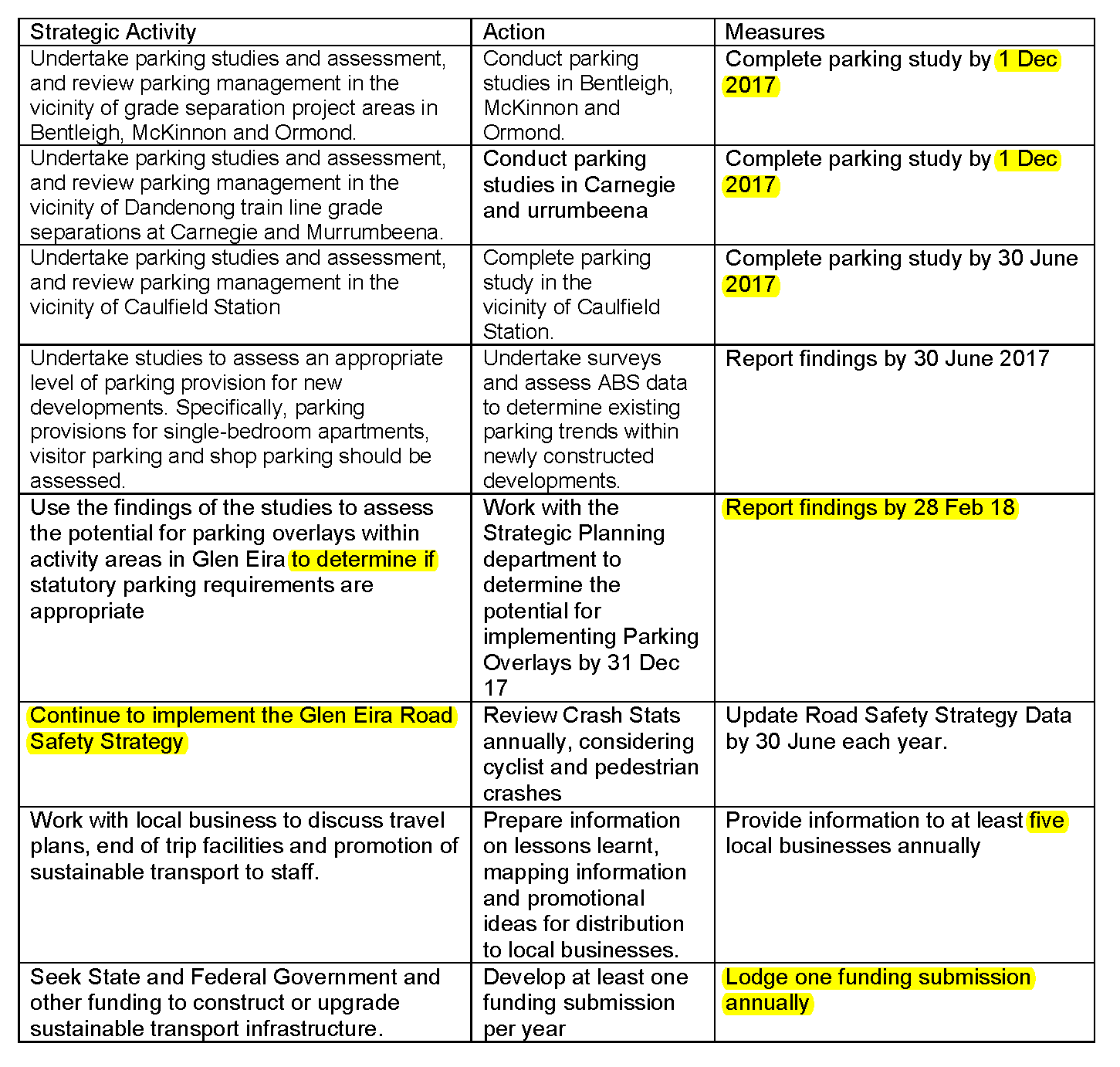
Here are some of the ‘actions’ listed. Please note that the vast majority (which we didn’t include) involve ‘advocacy’ and even this is proposed to take years to figure out what to do! Utterly amazing! It is also stunning that it will take years to do a traffic analysis! In short, great on empty, meaningless promises and very, very short on real action!

Strategic Activit1

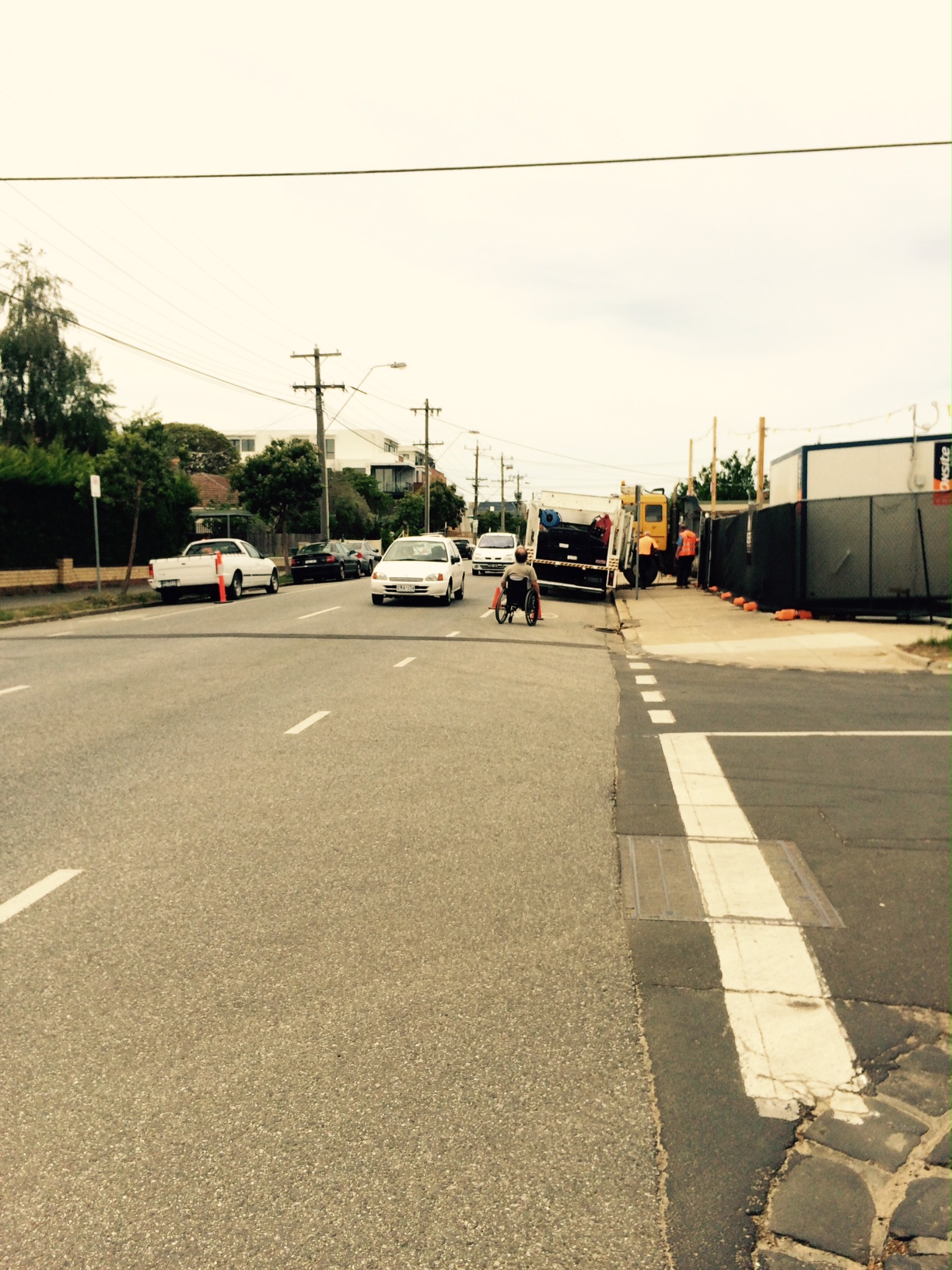
And by sheer coincidence we received the following photographs this morning from two alert residents in Carnegie. Doesn’t this say it all about council’s ‘road safety’ enforcement and how it clamps down on developers?

cr Neerim FullSizeRender

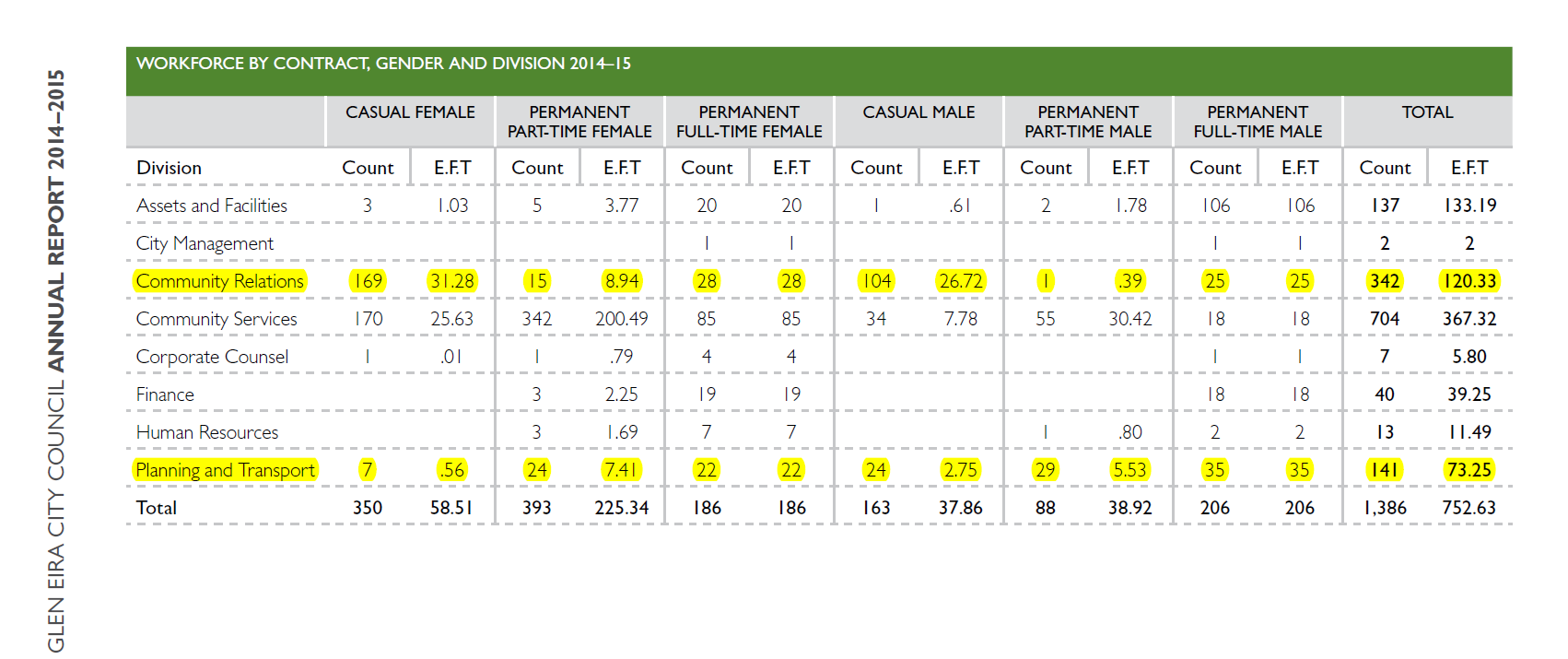
2014-15

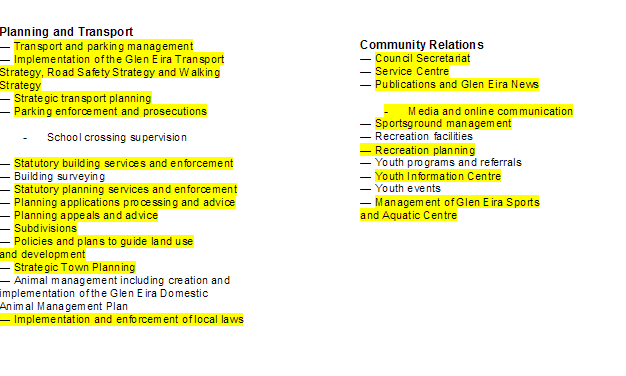
PS: Just to clarify the above, here are the definitions of the various departments. All are taken directly from the Annual Report – ie council’s own version!

Untitled

ITEM 9.7 – MRC

(ESAKOFF, LIPSHUTZ & SOUNNESS WERE APOLOGIES FOR THIS MEETING)

Delhunty moved an alternate motion that included: that the MRC has entered into a lease with the Alliance group involved with the level crossing removal project where “commuters’ will be allowed to ‘park for free’. This is a ‘sub lease arrangement’ and is ‘valued at approximately $90,000 -$100,000’ for 2 months. Motion also said that council write to the Trust to ensure that ‘they are aware’ of the arrangement. Also copies go to Minister for Environment & Climate Change, Lisa Neville, Auditor-General and members of parliament. Seconded by Magee.

DELAHUNTY: said that the report was first off about access arrangements for the public and what has been happening. Not a lot has been happening but there are ‘other current arrangments’ including a ‘commercial’ deal that has ‘been struck between the Alliance’ and the MRC ‘that values the Guineas car park, conservatively’ for $90,000 for 60 days. That’s just over $1,400 per day. In the ‘stalled’ lease negotiations between the Trust and the MRC ‘their offer and their apparent independent valuation’ is ‘offering the community 30 cents a day’. From this disparity, we ‘can see how absolutely outrageous’ the MRC’s offer on the lease is. ‘It shows what contempt they hold the community in’. ‘We won’t put up with it’ when the MRC itself values the land far more highly. Thus in the private arrangement the MRC ‘are making now what would cover’ their current lease. Even the 95,000 for the lease is a ‘poor outcome’ for the community when there is a valuation which says they should be paying closer to a million dollars for the lease of the land. Said that the starting point for any negotiations should be ‘what they have valued’ the car park land as. She is ‘hopeful’ that in passing this information on to ‘ those negotiating’ the lease that there will be ‘a better outcome for the community’.

MAGEE: started off by saying that the MRC ‘doesn’t seem able to put their hands on the agreement’ of 2011 and he suggests that ‘they look in the same filing cabinet’ where they can’t find the documents for the leases for the ‘northern stables’ and Aquinita Lodge. Ratepayers and taxpayers of Victoria are ‘paying in excess of a billion dollars’ for the grade separation but the MRC is ‘making a profit out of it’. They think that ‘you need us’ so we are ‘happy to sub-let Crown Land which you own’ and make you pay for the land that you own’. When the price they are paying for t’that small car park’ is ‘extrapolated’ across the 50 hectares of land then the ‘one million dollars is insignificant’ because it becomes more like ’40 or 50 million dollars’. Said that the MRC ‘are not what they portray’ themselves to be – they aren’t community minded nor a ‘friend of Glen Eira’. They have the ‘absolute need to profiteer’ and to ‘charge’ the taxpayers of Victoria to ‘park on their land’. ‘This is not only appalling. This is sickening’. Said that the ‘minister should be aware of this. The minister should be commenting on this’. If the MRC are ‘allowed to sublet’ the Guineas car park, then they can ‘sublet any part’ of the racecourse. Question is ‘what are they allowed to do’. Said there is ‘no lease in place’ and that it is an ‘ongoing, day by day’ process. Plus ‘anyone who sits back and accepts this’ is equally in contempt with the MRC.

OKOTEL: endorsed the motion and ‘queried how genuine’ the MRC are about ‘talking with council’. From the ‘invitation’ in the letter printed in the agenda, council has ‘sought’ a meeting with the MRC but it is ‘disappointing that they don’t seem to be able to make the time’. Said that there is no time set aside ‘as yet’. Thus, whilst the tone of the letter suggests they are ‘willing to have an open discussion’ that’s not happening but it’s important for council to ‘continue to advocate strongly’. ‘Despite’ the letters they get ‘very little progress is being made’.

HYAMS: asked for an amendment that when ‘further information’ is received that a report be tabled. This amendment was accepted by the mover of the motion and seconder.

DELAHUNTY: what needs to be finalised is the lease but negotiations ‘have broken down’ because there is ‘an incredible discrepancy between valuations’. The MRC has for the last 20 years paid about $90,000pa. They think it’s valued at $100 per year and the ‘council obviously thinks much higher’. The lease to the alliance shows that the MRC doesn’t value the land at $100 per year but much more and they are ‘trying to take the trust and the community for fools and we won’t stand for it here’. Their subletting will ‘help move the lease’ negotiations forward because it shows their own valuation of the land.

MOTION PUT and CARRIED UNANIMOUSLY


McKinnon Road, McKinnon, level crossing

Ms CROZIER (Southern Metropolitan)—My adjournment matter this evening is for the Minister for Roads and Road Safety, who is responsible for the removal of level crossings. A constituent of mine in the Assembly electorate of Bentleigh has a business close to the McKinnon Road level crossing in McKinnon, which is one of the level crossings highlighted for removal by the government. My constituent is a landlord and one of her tenants spoke to her about being approached by government authorities about the public acquisition of the land on which their business stands. As members will imagine, this has caused great concern to both the landlord and the tenant because it was the first time they had heard that that land was going to be targeted. My constituent attended the public meeting held last week in Bentleigh, and the public acquisition of land was also news to some people at that meeting.

The uncertainty has caused great concern amongst a number of businesses around the level crossing that is slated for removal. What has made it even more confusing is that the information given suggests that people should approach the local council for advice and guidance, yet the local council also seems confused. It does not seem to have anyone who knows much about it and so far it has not appointed anyone to undertake that work. As members will appreciate, there is much consternation amongst the community. The action I seek from the minister is that he provide clarification as to where people should go to seek advice or guidance about the future impacts land acquisition may have on business owners and operators, landlords and tenants.

There needs to be a clear direction about the intention of the public land acquisition, and clearly my constituents in Bentleigh need to have their fears and concerns allayed.

Mr PULFORD …..Ms Crozier raised a matter for the Minister for Roads and Road Safety, but I suggest that perhaps the Minister for Public Transport is the lead minister on the level crossings project.

Ms Crozier—I was not sure if it was Minister Donnellan or Minister Allan.

Ms PULFORD—The removal of the level crossings and a project of this scale does have intersections with road issues, and Ms Crozier’s issue was particularly around land acquisition, which would naturally sit with another minister. I suggest that if Ms Crozier is happy, I will refer that to the Minister for Public Transport as the lead minister on the level crossings removal project. I will seek a response for her.

+++++++++++

SOUTHWICK & STAIKOS

Level crossings

Mr STAIKOS (Bentleigh)—The Andrews Labor government is getting on with the job of removing level crossings in the Bentleigh electorate. In just eight months we have established the Level Crossing Removal Authority, allocated the funds in the budget, signed the contracts and completed early works. Full construction begins later this year.

Consultation is key to the successful delivery of these projects, and I was pleased that last week 500 local residents packed the McKinnon Secondary College hall to hear from the Level Crossing Removal Authority and give their feedback. After four long, dark, wasted years, the Andrews government is removing level crossings at Centre Road, McKinnon Road and North Road. Local residents are delighted by this and very much appreciated the opportunity to participate in the consultation last week. The only people unhappy about this consultation are those opposite. Several members of the opposition got a bit hot under the collar about this meeting and are highly critical of community consultation. The member for Caulfield, who is in the chamber, has been one of the most vocal opponents of consultation on level crossing removal works. I am not surprised by this, given the strange place the member finds himself in.

The member for Caulfield recently held a meeting in protest against the Matthew Guy residential zones. The flyer for the meeting opened with, ‘Do you have concerns about local overdevelopment, such as Port Phillip or questions about planning laws?’. It might as well have read: ‘Come and tell us how bad we were in government’. We know how bad they were—that’s why they are on that side of the house.

Mr SOUTHWICK (Caulfield)—I call on the Premier to discipline the member for Bentleigh over his disgraceful behaviour in advertising a level crossing removal information session using government funds to promote himself and his cause. I particularly question where the email addresses of constituents in Bentleigh will end up. Will they receive Labor Party information?

These level crossing removal information sessions are meant to be run by the Level Crossing Removal Authority, which is supposedly independent, to gain information. This is a disgrace to the Labor Party, and it is absolutely disgraceful behaviour by the member for Bentleigh. He has utilised this opportunity for his own political gain.

What will happen with the information that was collected? I think all constituents of Bentleigh would be very concerned. They provided their information with the singular intention of ensuring the wellbeing of their area. They want to receive the right information. This is an absolute disgrace to the member for Bentleigh. It is overreaching at very best. One would have to question what this information is going to be used for, and I ask the Premier to investigate this absolutely absurd and ridiculous action of the member for Bentleigh.

Caulfield electorate

Mr SOUTHWICK (Caulfield)—(Question 394) My question is to the Minister for Roads and Road Safety. The North Road, Ormond, level crossing removal is a vital project for my electorate of Caulfield which was announced and fully funded by the former coalition government in 2014. Local residents are concerned about the future of the Dorothy Avenue rail underpass, which may be removed as part of the North Road level grade separation, as it enables commuters to travel east–west through their neighbourhood and to two nearby schools.

I note the sham consultation process run by the member for Bentleigh, which did not allow many to attend the Dorothy Avenue meeting to talk about their concerns. We have certainly had a lack of consultation and transparency, with the only consultation run by the member for Bentleigh, which was an absolute sham. I ask: could the minister provide advice on whether the Dorothy Avenue rail underpass will remain or be removed as part of the North Road, Ormond, level crossing removal?

There was a great turnout at McKinnon Secondary College last night for the level crossings ‘information session’. Many questions were asked by residents. Some of the responses were:

  • Contracts had been finalised – major contractor John Holland
  • Residents fearful of potential damage to their neighbouring properties should contact the authority and have photos taken – ie a ‘before and after’ scenario
  • Palm trees would be removed and then replaced. No comment on the many gums – we assume they will probably be lost
  • Options for sale of ‘commercial’ land – we presume this means VicRail or VicRoads land
  • Whilst roads closed, parking will be available at the Caulfield Racecourse
  • Earth will be dumped at E.E.Gunn Reserve
  • Sheet anchoring will begin first – could be major concerns with water table and flooding

++++++++++

Month-long Frankston line shutdown to come as first of 50 level crossings go

Date: July 30, 2015

Adam Carey

Frankston line commuters can expect more than a month of disruption and slow, crowded bus rides when the rail line is closed in the summer of 2016/17.

The extended shutdown, while three level crossings are removed, is set to be repeated on other lines across Melbourne as the Andrews government races to rid the city of 20 level crossings in this term, and 50 within eight years.

Nine crossings on the line between Caulfield and Dandenong are also due to go in the next four years.

The 34-day shutdown of the busy Frankston line will be hardest felt by those who live and work near the three railway crossings.  Three stations – Bentleigh, Ormond and McKinnon – will be demolished from November 2016, a few weeks before the line is closed, meaning commuters who use them will have to head to another station to catch a train. It is expected the stations will be out of action for about three months before they reopen by the end of February 2017.

The planned 34-day closure of the busy line will be preceded by a one-week shutdown mid-next year for early works.

Details of the project were revealed at a community meeting in McKinnon in Melbourne’s south-east on Wednesday night. The meeting was attended by hundreds of people.

Among them was Daniel Bowen, a spokesman for the Public Transport Users Association, who said the Level Crossing Removal Authority would have to take care to get the planning right and minimise disruption.

“They’re going to need to make sure they plan it well to ensure there are no nasty surprises that result in closures being longer than necessary,” Mr Bowen said.

“People can see the benefit of these projects but clearly how they handle the disruption for train users, bus users and motorists is the key in ensuring that it’s a success.”

The first three Frankston line level crossings set to go are at North Road, McKinnon Road and Centre Road. The crossing at Burke Road, Glen Iris, on the Glen Waverley line will be removed as part of the same package of works.

Mr Bowen has published other details about the project on his blog.
Read more: http://www.theage.com.au/victoria/monthlong-frankston-line-shutdown-to-come-as-first-of-50-level-crossings-go-20150730-ginlew.html#ixzz3hL3v7Wfa


How many more times will this council permit the Melbourne Racing Club to get away with blue murder? How many more times will permits not be worth the paper they are written on? Or to be even more cynical, what kind of collusion is occurring between the MRC and council?

The latest outrage concerns the use of the four storey ‘big screen’ that council so kindly permitted to be placed on Crown Land. The officer’s report recommending approval of the permit stated –

The purpose of the proposed screen is to display race-day activities including live video feeds, race replays and sponsor information…..As such it is considered reasonable to have a screen as a component of the horse racing use. (minutes of May 20th 2014).

It now looks as if the definition of ‘race-day activities’ is about to expand and take in the Ashes Cricket and rugby too. More importantly, the MRC intends to have the screen going to 1am this coming Wednesday (ie tomorrow).

Once again we can only lament the arrogance and disregard for the local community by the MRC and we suspect, ably abetted by Council. Below is the advertisement for this event – with no indication of course as to whether this is part of the ‘major event days’ or whether any traffic management plan has been submitted to council and granted approval! 

Source:  http://mrc.racing.com/calendar/2015-07-08/super-sports-night

Game on at Caulfield! Trying to decide what to watch next week, either NRL SOO III or The Ashes? Problem solved, come and watch both at our place.

Come and join us for a Super Sports Night in the Medallion Bar at Caulfield Racecourse. 

As Australia starts their campaign to hold on to the Ashes against fierce rivals England in two weeks’ time, on the same night, Queensland and NSW will take to the field and battle out the State of Origin title. With the series now tied at 1-1, game III “the decider” is sure to be a thriller.

Caulfield’s new 38.4 metre wide Super Screen will provide dual coverage of both the Ashes and the State of Origin with 32 screens from start of play until 1:00am.

Gather your friends, family and colleagues and join us for a night of sporting action in Caulfield’s premium Medallion Bar to share in the excitement and passion as we cheer on our nation.

With free entry and prizes to be won, and great beer on tap, this is the perfect night to watch great sporting action with your mates.

Make sure you arrive by 6:30pm to be eligible for some great prizes.

Date: Wednesday 8th July 2015

Time: 6:00pm till 1:00am.
Patrons can then process to the Caulfield Glasshouse to watch the final innings of the Ashes or the Tour de France. The Caulfield Glasshouse closes at 4:00am.

Where: Medallion Bar, Caulfield Racecourse. Enter via Gate 23, Stations Street, Caulfield East. Limited parking provided Gate 2.

Happy Hour from 6 to 7pm – selected beverages $5.00 during this time. Hot items will be available for purchase from the standard Medallion Café menu, as well as specials for a more substantial meal.

For more info call 1300 GO RACE (46 7223) or Click here to view the menu (PDF)

PS: for all those who haven’t as yet had a read of the Australian Financial Review article on the Melbourne Racing Club, we reproduce it below

Nagging questions about Victorian racing icon 

by Duncan HughesIt’s a 54-hectare site in the prized inner-eastern suburbs of Melbourne. The tenants are offering less than 30¢ a day in rent. And the ensuing dust-up is exposing deep rifts in the city’s tight-ruling elites.

The Caulfield Racecourse Reserve was originally intended for use as a racecourse, a park and public recreation area when it was created 155 years ago on the then-outskirts of booming Marvellous Melbourne.

It embraced the ideals of Empire and Britishness in a state named after the reigning monarch, Queen Victoria, and a capital named after one of her favourite prime ministers, Viscount Melbourne.

Today it might be less famous than Flemington Racecourse in the city’s inner west. But Caulfield is on the “right side” of town. It’s a dress circle race track amid dress circle properties. And the landlord thinks the rent is far too cheap.

The tenant is Melbourne Racing Club, an establishment powerhouse that packs as much political punch as the Australian Football League.

The landlord is Caulfield Racecourse Reserve Trust, a governing body that includes a Federal Court judge and is chaired by Greg Sword, former ALP federal president and political powerbroker.

For more than 20 years  MRC has paid an annual rent of $95,000, which is adjusted for inflation.  Since 2012 it’s been squabbling with its landlord about its renewed offer of just $100 rent per annum. That amounts to just 30 cents a day.

MRC says that’s a fair sum, based on an independent valuation that takes into account millions it has spent on maintaining the racecourse plus hundreds of millions of economic activity generated by race meetings.

Local community leaders, whose constituents live in multimillion-dollar Victorian and Edwardian villas along whipper-snipped boulevards, claim they are being bullied.

One of them is Jim Magee, a former racecourse trustee and current mayor of Glen Eira, the local government for the area surrounding Caulfield Race Course.

He says the MRC’s offer is a “joke” and condemns how the MRC has used what is supposed to be public space.

Public campaigners claim race days and use of the track and its surrounds to train hundreds of horses have limited safe public access to a minimum.

Inadequate signage and entrances add to the difficulty of finding a way in.

“To get onto the reserve through the main entrance you have to navigate your way around 150 metres of horse poo and then an obstacle course of fences ostensibly intended to protect the public,” says Magee.

Hundreds of local schoolchildren are being forced to play for neighbouring community sports’ clubs because there are no local fields on which they can kick a ball, he says. The racecourse has monopolised a space equivalent to 15  Melbourne Cricket Ground playing fields.

His complaint is backed up by a report done last year by the Victorian auditor-general, John Doyle, who found that 11 hectares, 20 per cent of the land, is under lease to the MRC; another  37 hectares, 69 per cent, is used by the MRC without any clear legal entitlement or payment arrangement.

The remaining six hectares is open space for the community from 9.45 am to sunset except during 22 race meetings.

MRC vice-chairman Peter Le Grand is digging in for a fight. He says the annual offer of $100 in rent takes into account maintenance and security spending. The local council has failed to make any contribution to recent renovations and maintenance, he says.

But there’s even more mud being thrown around the turf. The Caulfield Racecourse Reserve Trust has discreetly raised its nagging concerns about senior MRC officials’ financial interest in the racing stables on the course, according to leaked letters to the state minister in charge of the course obtained by AFR Weekend.

The letters raise concerns that  MRC chairman Mike Symons, who is also a trustee, has an ownership interest in Aquanita Racing, a company that leases stables from the MRC under sub-lease from the trustees.

The letter, signed by Greg Sword, chairman of the trust, discloses that annual lease payments for the stable are about $27,000. An independent valuation by Charter Keck Kramer said the rental could be $328,000.

“Any financial negotiations involving the company is done at arm’s length,” says Symons about payments.

MRC vice chairman Le Grand adds: “Mike, or any of the board members, would exclude themselves from any debate, or discussion, that might involve a conflict of interest.” He says that “nothing had come up” about Aquanita Racing at MRC meetings during the past 10 years.

Auditor-general Doyle recommends improved disclosure of the MRC’s benefits from the course, criticised the state government’s oversight, and recommended improved disclosure of finances, performance and management of “perceived conflicts of interest” in the course’s management.

There is now speculation that the trust will be replaced by a management board similar to the statutory bodies that run the  Melbourne Cricket Ground Trust or the Melbourne and Olympic Parks Trust.

There is also talk about reviewing the way the land is managed.

“That’s news to me,” said mayor Magee. “It’s nice for the government  to tell someone what’s going on. You would have thought they would contact the local council about the most appropriate use for the land. But we have not heard a thing – its silence has been deafening. We only want to share the land.”

Here is a summary of the developer’s ‘presentation’ to residents at the recent Planning Conference.

ROB MILNER: said that he ‘understands that a lot of you just don’t want change’ (audience – howls of derision). ‘There will be change’ at Virginia Park ‘regardless’. Conceded that he couldn’t on the night answer everyone’s points or convince them otherwise but wanted people to ‘understand’ the plans in ‘proper context’. Said that change ‘will happen regardless of tonight’. Originally land was industrial with about 4000 workers as cigarette producers. ‘It had to move on, it had to change’ and became ‘more of a business environment’. Claimed that now it’s an employment centre for ‘many people’ under 30. Also about 1900 cars on the site. Claimed that the ‘reality’ is that it’s a ‘struggle to keep’ the jobs there. If things don’t change then ‘there would be a gradual decline of the jobs’ in part because larger sites and ‘cheaper land’ becomes available on the ‘outer fringe’ of Melbourne. So the jobs ‘that people around here’ are enjoying will start to ‘evaporate’. Question is ‘what change is appropriate’ and not ‘should there be change’.

In response to the ‘concerns’ expressed about notification, claimed that Gillon Group ‘hand delivered 12,000 notices’ about the forum held by the group. Meetings were in evening and morning and the ‘turnout’ was about 50 – 60 people. Said that there is not attempt to ‘hide this’ and that they ‘have gone out of their way’ to inform people. Claimed that the figure of 4,500 dwellings was part of a ‘piece of work’ that was done to ‘try and understand’ the ‘infrastructure’ needs of the site. They aren’t ‘applying for 4000 dwellings’ but only ‘1,250’ dwellings ‘as a maximum’. Went on to say that simply because there is a plan about 10 storeys it’s not ‘like a jug that you fill up with water’. Thus with only 1250 dwellings you ‘couldn’t possibly build’ to the ‘envelope’ that’s been approved. What will happen is that it’s ‘taken to the market’ and there is ‘interest’ or there isn’t ‘interest’ and there will be ‘something less than 1200’. Gillon is therefore a ‘company’ realising ‘change has to occur’ and is looking at Government policy that asks for the development of ‘mixed use centres’ and try to build ‘local public transport’ like getting ‘better bus services in this area’. Since Glen Eira was first out of the blocks with the zones, that protected ‘vast areas’ of land and left only ‘very small pockets’ to develop and contribute to ‘a more diverse housing stock’. Gillon takes this and believes there should be a ‘mix of uses’ that ‘tries to retain a lot of the white collar jobs’ and a ‘greater range of services’ enjoyed by the neighbourhood plus ‘some different housing opportunities’.

On ‘business impact’ said that there would come a time when ‘more evidence is brought to bear’. Said that Carnegie is ‘interesting’ because they ‘brought in’ a huge 5000 square metre supermarket ‘alongside the existing one’ plus there’s an Aldi. And ‘the centre probably thrived for it’. It’s these supermarkets that ‘are saying to us’ that East Bentleigh is ‘one of the poorest served’ areas for supermarkets and they want to build on Virginia Estate. Said that Gillon is doing things in ‘reverse’ because they’ve got ‘a very large employment base on the site’ even before ‘we start’ who have ‘poor access to convenience services’. This group will ‘benefit’. Their ‘advice’ is that they are in an area that has the least supermarket floorspace in the ‘whole of Melbourne’. They used a ‘reputable’ research company and retailers are telling them that the findings are ‘on the mark’. Admitted that ‘there has never been’ any shopping centre development that hasn’t had ‘some impact’ on its neighbouring centres but ‘it’s the degree’ of the impact that is the ‘issue’ and when East Bentleigh will only have a 9.1% impact then that’s within the norm of other developments. (interjections from audience with statements that impact is more like 25%).

Gillon applied for traffic lights on South Drive/East Boundary Road. Currently the area is ‘not a safe environment’ for cars trying to ‘get in and out’ of the Park. It can’t be a ‘do nothing’ situation so the ‘set of lights’ will be a ‘positive’. The VicRoads ‘issue is not to suggest that the site is snap frozen’. Gillon will ‘work through with’ VicRoads because there is ‘a capacity’ to ‘accommodate the growth’. Their concern is to ‘improve safety’. The other concern is PTV (Public Transport Victoria). Said there’s GESAC nearby which is a ‘major facility’ for the community and taken together with the employment at Virginia Park there is the ‘basic ingredients’ for the ’20 minute neighbourhood’ of Plan melbourne and ‘all that is missing is the residential’. The PTV isnt’ saying that there shouldn’t be development but their concern is about ‘putting in a bus stop’. Said ‘we can’t build a railway, can’t build a tram’ but there is the opportunity for ‘better public transport’.

On open space ‘we had long discussion with Council’ and during these discussions Council ‘lifted’ its open space levy to 5.7%. ‘They asked us could we please provide a link’ between Marlborough Reserve & Virginia Park and ‘the land at number 1 Barrington’. Council’s open space strategy defines this part of Glen Eira as ‘one of the better served’ locations with open space and that’s ‘why they are asking us for money rather than land’. ‘It’s their choice’ and if ‘approved it’s for you to approach council and debate that point’. ‘We’re merely responding to the direction we’ve been asked to follow’. The money they give will go ‘towards the enhancement of open space’.

Said that traffic ‘will not be on local streets’ because ‘there won’t be any access to the site’ apart from what already exists. All traffic will go onto East Boundary Road and if people live there then they have to accept that traffic ‘will grow’ since it’s a major arterial road.

On infrastructure said that water does move down ‘through that area’ into Barrington Street. Said there’s an ‘overland flow’ that has ‘been there since creation’. Development creates the ‘oppolrtunity to fix the problem’ and not create new ones. They’ve done the research in order to understand the ‘capacity’ and the movement of water (that’s why the 4000 dwellings scenario) so that the ‘net result’ will be to ‘find a solution’. Said that there ‘should not be a net increase’ and there ‘should be a net improvement’ in regard to water flow onto neighbouring properties.

They aren’t ‘proposing to build a school’ but it is an issue. Said that the number of children living on the site will be the result of the ‘housing mix’ and the number of dwellings and is not an issue that is unique to East Bentleigh. With town houses they are ‘looking at’ numbers of two to 2.5 people per dwelling. If they get to 1200 dwellings then that means 2,500 people.

Finished by saying that Gillon believes they are bringing the ‘opportunity’ for people to ‘walk to convenience shops’ and which ‘supplement the services’ that are already there. They are also ‘protecting and trying to create more jobs’ for people ‘in this local area’. Said that ‘we are trying to protect the character of your area’. The site is large and ‘we’re trying to give it a residential character’ to match the surrounds. They ‘provide buffers’ on boundaries and ‘support’ aims for ‘improved transport’ and ‘trying to make’ the roads ‘safer’. Gillon thinks ‘we have something worth considering’.

Note: people then wanted to ask questions and someone called out ‘are you doing it for profit as well?’ Pilling didn’t allow questions, explained when the agenda would come out and closed the meeting.

The officer recommendation is 4 storeys and 23 units instead of 25 units. Worthy of pointing out is that for this application there were 2 planning conferences held since first time around not all objectors were notified, and one objector received his letter the day after the meeting was held! The excuse and the culprit? Australia Post of course and not the inefficiency of council!

Then there’s the so-called ‘justification’ for recommending a permit. Please consider this extract as just one example:

The development does not satisfy some of the numerical requirements of ResCode in relation to street setbacks, side setbacks and walls on boundaries, site coverage and permeability. However, the design of the development will provide for an appropriate transition from the adjoining commercial properties to the north and east, to the residential sites to the south, particularly when the recent approvals and recommended changes are taken into consideration.

COMMENT – note the terminology used. ResCode is no longer referred to as ‘prescriptive’ as has occurred in recent applications, but has morphed into ‘numerical requirements’ that can be overlooked at will by council when it suits their purpose. The farce gets much worse however when it is admitted that side, and street setbacks do not meet these ‘requirements’; nor does site coverage and permeability. But it is still okay and ‘appropriate’ to grant a permit. What we are left with is the completely spurious, nonsensical assertion that ‘design’ and the imposition of questionable ‘conditions’ is enough to compensate for the failure to protect the most minimal residential amenity demands of ResCode. How many ‘standards’ can be breached before an application is refused outright? How many more times will VCAT have to inform council planners that insisting that the developer puts up a sign regarding residential parking permits is not on and does not belong in the formal ‘conditions’ part of a permit?

Even more disconcerting is the inclusion of the developer’s argument into a document that is supposed to be ‘neutral’, ‘objective’, ‘unbiased’ and which relies solely on ‘planning law’. Whilst the ‘argument’ does not win out, we question why it is even there, and especially why it features far more prominently and extensively than resident objections.

The rear dwelling of 38 Mavho Street is provided with two north facing ground floor habitable room windows that are within 3 metres of the boundary of the subject site. The development does not comply with the minimum requirements of ResCode for these windows. The applicant has indicated that one of habitable rooms is provided with a secondary light source and both rooms are not considered to be primary living areas. It is also noted that the existing boundary fence is 2.5 metres high. On this basis they have sought a variation from the minimum setback requirements of ResCode.

Planning conferences according to council have the prime objective of hearing resident and developer views and (if possible) reaching consensus and compromise. Below is what this developer had to say. No attempt made to reach ‘consensus’; no offer of ‘compromise’. In our experience this is par for the course given that developers know they are on ‘easy street’ in Glen Eira!

DEVELOPER – – said that the site was surrounded by commercial zones and that there is a ‘brand new’ 3 storey apartment block ‘across the road’. Site is in Residential Growth zone so allowed 13.5 metres height so this is ‘the best place’ to be allowed to develop to ‘that density’. On car parking they are meeting the standards of 1 car park per dwelling but asking for a reduction of 3 visitor parking because ‘the history and the facts are on our side’ since ‘no visitors ever use basement car parking’. They hired a consultant to do a ‘study on general impact’ of parking and traffic. Consultants are ‘respected’ by councils, ‘traffic engineers’ and ‘are well respected by VCAT’. What they propose is going to have a ‘minimum impact’. Doesn’t matter if it’s 25 apartments or 5 apartments or 100 apartments ‘it’s irrelevant’ since it’s ‘what development does to the neighbourhood’ and their study shows that the impact is ‘minimal’.


« Previous PageNext Page »