VCAT is no friend of residents. However, if there ever was a more clear-cut condemnation of the ineptitude, and indifference of Glen Eira City Council to land use planning, then it comes in the decision for a 12 storey, and 134 units, plus shops, plus waiver of some visitor parking in Woorayl Street, Carnegie.

Every single resident should read the judgement and in particular the following extracts. They will show:

  • How policies that expired in 2007 have not been touched since
  • How maps in the planning scheme contradict policy
  • The failure to include overlays and urban frameworks – the ‘tools’ that Sounness so easily reneged on
  • This judgement reads as a litany of utter failure to protect neighbourhoods

http://www.austlii.edu.au/au/cases/vic/VCAT/2015/735.html

“We have found that although a 12-storey building will represent a highly visible built form change on the review site and nearby, this outcome is supported by policy that aims to increase intensity of development in activity centres close to public transport and provide the highest density of dwellings within Urban Villages including Carnegie. In reaching that conclusion, we have had regard to the absence of overlay or schedule provisions containing preferred heights and the local policy framework that provides little specific guidance on height or built form outcomes sought for the area.

The policy includes a map that divides the Carnegie Urban Village into nine precincts. The review site is within Precinct 1 that contains most of the area between Dandenong Road and the railway line. There are specific built form policies for all precincts except Precinct 1. The policy for Precinct 1 expired on 30 September 2007. There was reference to the expired policy in various submissions and evidence at the hearing. We indicated at the hearing and confirm in this decision that we give no weight to a policy that, despite referring to objectives for the precinct, expired over seven years ago

We find clause 22.05 on Urban Villages provides general direction on how Carnegie is expected to change. Its general principles are relevant and its Precinct Map provides direction on land uses, street interfaces and the treatment of public places. It provides little direction on the height, scale or form of new development, which we consider are important elements of any statement of preferred character. As such, we find this policy allows great scope in interpreting what the preferred character might be.

The Urban Village Structure Plan is a Reference document to this policy. It identifies a Precinct layout that differs from what is in Clause 22.05 and includes the review site in a Mixed Use precinct, east of Koornang Road. It says this area is ideal for high intensity activity due to its proximity to the shopping centre, public transport and major road network. It says the Council should strongly consider purchasing the open space north of the railway reserve and when purchased redeveloped with seating, play equipment and lighting. It recommends that development avoid overshadowing the rail reserve’s open space. It also encourages a pedestrian walkway between Woorayl and Arawatta Streets, a new road link between these streets and the closure of the western end of Woorayl Street. We place little weight on this document. As a reference document, it provides background to the Urban Village policy. It does not substitute for the policy and is not a replacement for the expired policy in the Planning Scheme for Precinct 1. As such, we find it does not justify the Council’s submissions regarding the height of new development on this site or its submissions that that the site should provide a pedestrian link between Woorayl and Arawatta Streets.

A building must not exceed the maximum height specified in a relevant Schedule; however, the relevant Schedule sets no maximum height. The decision guidelines require consideration of State and local planning policy and the Guidelines for a development of five or more storeys.

  • Council is concerned that the proposal will result in significant shadow and associated loss of amenity to the public open space area on the south side of Woorayl Street. In the context of the urban village, Council contends this is unacceptable especially given there is no other open space in the activity centre or nearby. The unreasonable shadow impact in Council’s submission will occur in winter as well as spring and this outcome is contrary to policy that seeks to improve the quality of open space, to the DSE guidelines that aim to avoid reduction of sunlight to important public places and to the concerted efforts Council is making to improve quality and quantity of open space in the municipality. The City of Glen Eira Open Space Strategy 2014 recommends securing this reserve as a high priority and identifies it as an important open space for the community living and working north of the railway line. In addition, this Strategy includes guidelines that seek between 9am and 3pm a minimum of three hours direct sunlight at the winter solstice and five hours at the equinox.
  • It is the applicant’s submission that it is not reasonable to expect that there will be no winter shadow to the reserve opposite. The applicant says the shadow outcome is acceptable having regard to its role and function, the limited improvements, the public use zoning and the lack of any evidence that Council has a prospect of obtaining the land for public open space.
  • Ideally there would be no shadow cast to the reserve but on balance we consider the extent is acceptable having regard to the following matters:
  • The reserve is owned by VicTrack and zoned for Public Use –Transport. It is not zoned for public open space and it is not subject to a Public Acquisition Overlay.
  • Although there are Council aspirations to secure the reserve for open space, that conclusion is not assured. The plan to secure the reserve has been in place since 1998 with no apparent advancement to that end and the uncertainty about the future of the land is increased by potential rail works to provide grade separation at Carnegie with implications for land owned by VicTrack

The objective in the DSE Guidelines to avoid reducing sunlight to public places applies to ‘important’ places and refers to the option of local policy identifying public spaces that should be protected at the winter solstice. There is no such policy in the Planning Scheme but rather in a reference document and the importance of the space is reduced, in our view, by its unknown future.

  • Council criticised the proposal for failing to provide a public pedestrian link from Woorayl Street to Arawatta Street through to Dandenong Road as sought in the expired local policy for the precinct and supported by the Urban Village Structure Plan 1999. Council says such a link would assist in increasing permeability though the precinct and specifically would assist with improving walkability and access to the train station.
  • We have already indicated that we give the expired policy no weight. Whilst we acknowledge the Urban Village Structure Plan refers to a pedestrian link that would improve connectivity to Dandenong Road, we consider a 15 year old suggestion in a Reference document with no ongoing translation into policy is difficult to support. There are no obvious pedestrian link opportunities between Arawatta Street and Dandenong Road with no footpaths adjacent to the vehicle access to the car park, no pedestrian entry to the Spotlight development from Arawatta Street and Council did not identify any detailed analysis to support the concept. We consider the need for the link is not clear and would not refuse the application for this reason.

There are 134 dwellings proposed of which 123 are one or two bedroom and 11 are three bedroom.
Untitled

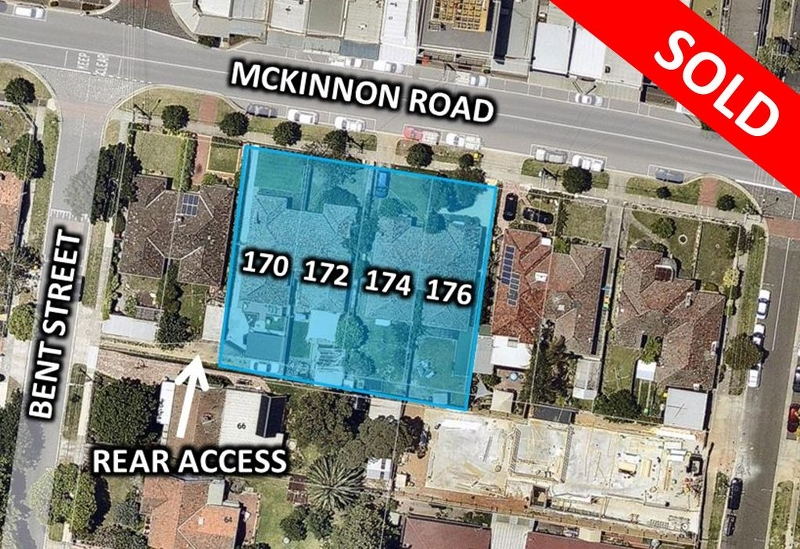
AND THE BLURB SAYS –

“Colliers International is delighted to announce the recent sale of four (4) seperate (SIC) houses sold in one line to a local developer.

170-176 McKinnon Road, McKinnon shows that there is an opportunity at present for neighbouring home owners to consolidate properties and achieve a premium result due to their development potential”.

The ‘facts’

  • zoned GRZ1
  • approx 1380sqm
  • surrounded by single storey homes
  • Not an ‘activity centre’ but a ‘neighbourhood centre’
  • 20 metres from already overdeveloped Bent Street and very soon Claire St, and of course, this has nothing whatsoever to do with the zones!

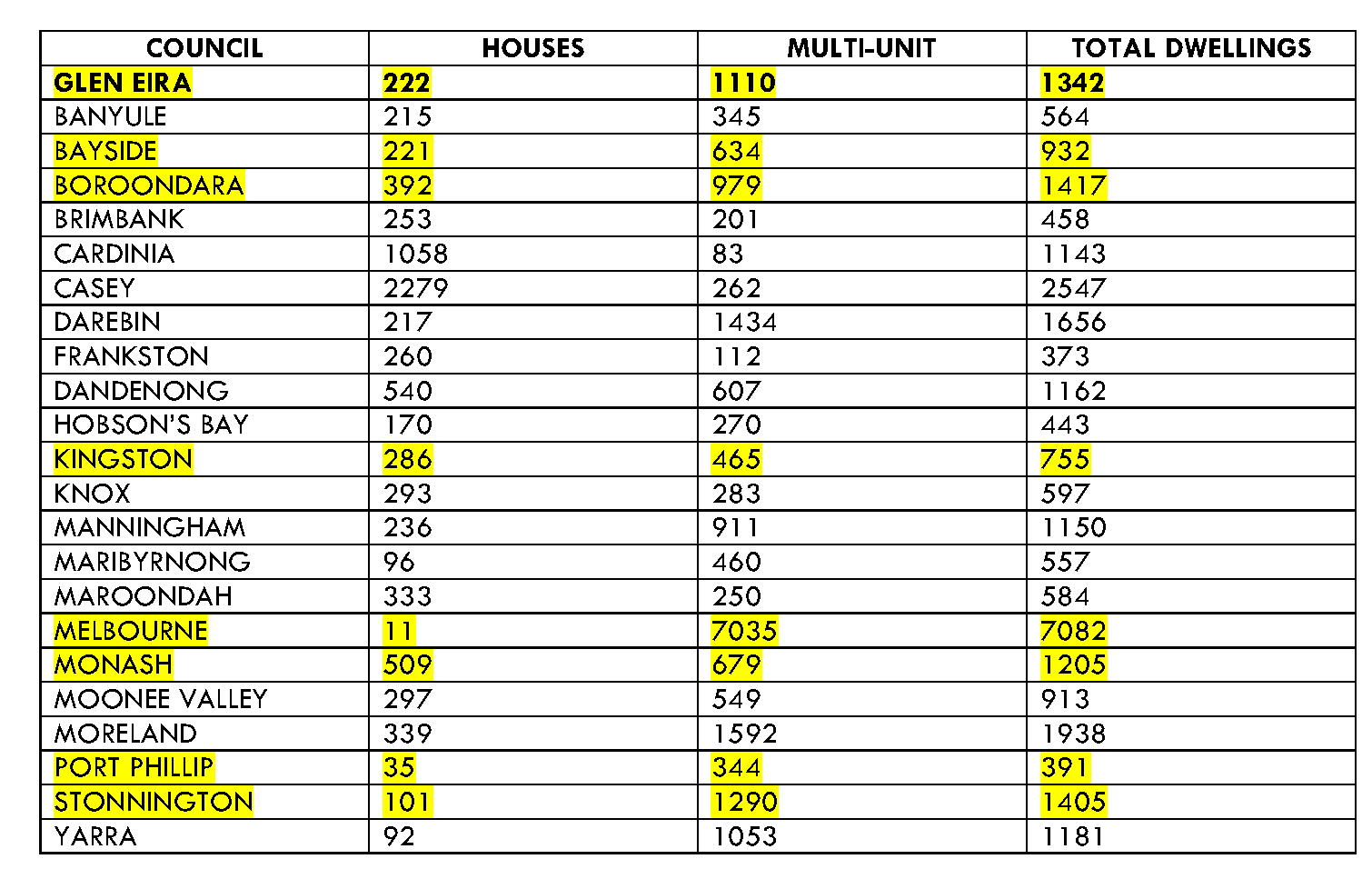
According to the constant Council propaganda regarding development, what is happening in Glen Eira is not unique and has got nothing whatsoever to do with the new zones. It’s all part of a universal ‘building boom’. To support this notion, officer reports (ably supported by Hyams and others) have cited building approval figures as the conclusive proof. Unfortunately for Council, the facts do not support the spin!

Below is an Australian Bureau of Statistics table providing the data on building approvals for the 2014/15 financial year to date. (ie to March 2015). Please remember that building permits usually come AFTER planning permits. Thus the figures below for Glen Eira do NOT include the countless additional permits granted for the Residential Growth Zones and the General Residential Zones or those land banking sites that have been sitting idle for eons. Other points that influence the figures presented below are:

  • Moreland, Moonee Valley and several other municipalities decided to apply to the Residential Zones Standing Advisory Committee to introduce their zones. The committee refused to support these council’s proposed amendments and thus these municipalities were left in limbo – unable to introduce their desired zoning. On 1st July these councils had the General Residential Zones automatically imposed on them. Some amendments are still waiting approval. Glen Eira of course rushed its new zones in secretly and they became ‘law’ on the 23rd August 2013 providing ‘certainty’ to developers that they could get their 3 and 4 storey multi unit developments in immediately.
  • Stonnington has had many building permits. However, Stonnington has 6.2% of its municipality designated as Commercial. Glen Eira has roughly 2.2%. Hence much of Stonnington’s development has occurred in these commercial areas. Boroondara and Yarra also have a huge percentage zoned C1Z.
  • Port Phillip is in the unique situation of having Capital City Zone status for part of its land – plus 4 major activity centres and miles of Mixed Use Zoning – especially along Bay Street, St. Kilda Road etc.
  • Glen Eira is NOT an ‘inner suburban’ municipality such as Port Phillip, Stonnington, Yarra, etc.
  • Other councils have had more building permits issued than Glen Eira. However, readers need to look at the ‘nature’ of these new buildings. Many are for single houses. In Glen Eira the vast majority (ie ratio of 5:1) has occurred as multi-unit development – courtesy of the new zones.
  • The Lobo request for a report of a little while back unfortunately did not ask for figures on Commercial and Mixed Use zones. This is vital to glean a full picture of what is happening – especially when an application can come in for 2 token shops and 100+ units on top! Thus far very little development has occurred in Glen Eira’s commercial centres when compared to what is happening in the growth and general residential zones. It is these two latter zonings which are taking the full brunt of over-development in our view – again thanks to the zones! This must again cast doubt on the spin and efficacy of commercial centres providing the bulk of development.
  • The final point that requires consideration is the number of new dwellings per municipality and the size of the municipality. For example: Boroondara, Kingston, Manningham and plenty of others are double or triple the size of Glen Eira. Erecting 1000 new dwellings in municipalities such as these, compared to Glen Eira will in all probability have a limited impact on overall DENSITY. In Glen Eira, the impact will be far worse, with the resultant loss of environmental and social amenity.

We’ve uploaded the full EXCEL spreadsheet HERE and provided a summary of the data below. We urge readers to do their own comparisons with other councils. We take no responsibility for the ‘totals’ as presented in these figures.

COUNCIL

dr

dr1

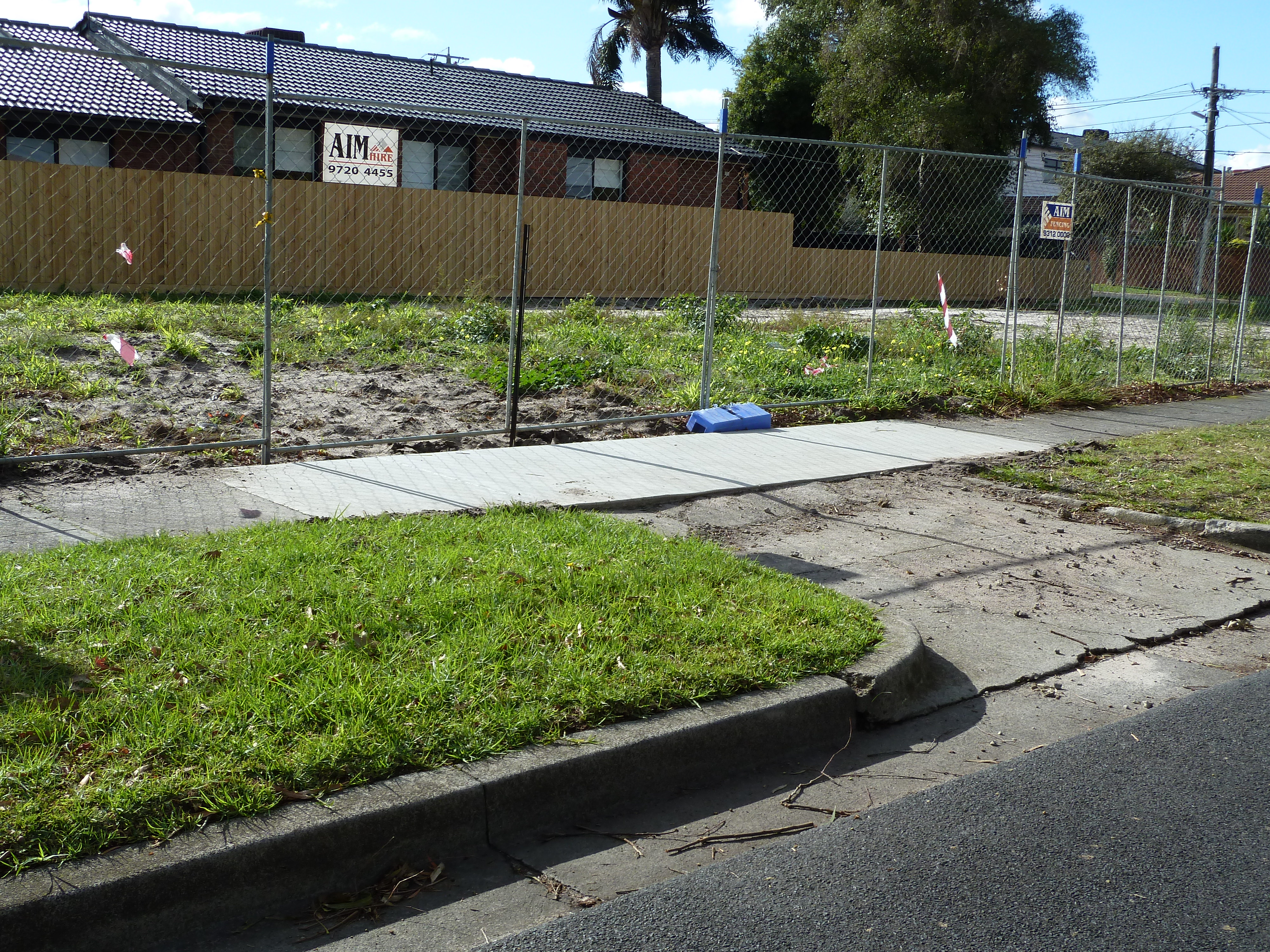
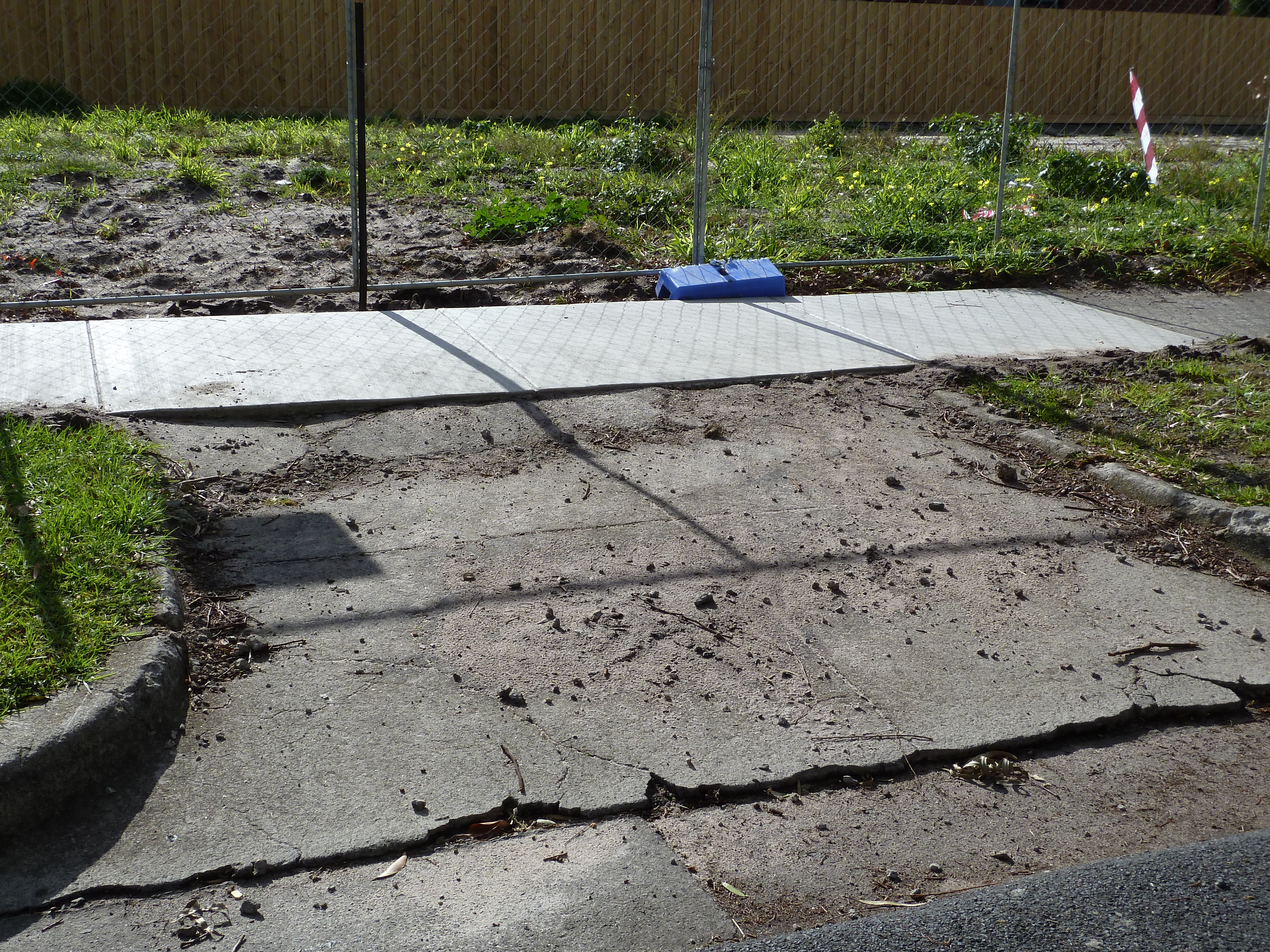
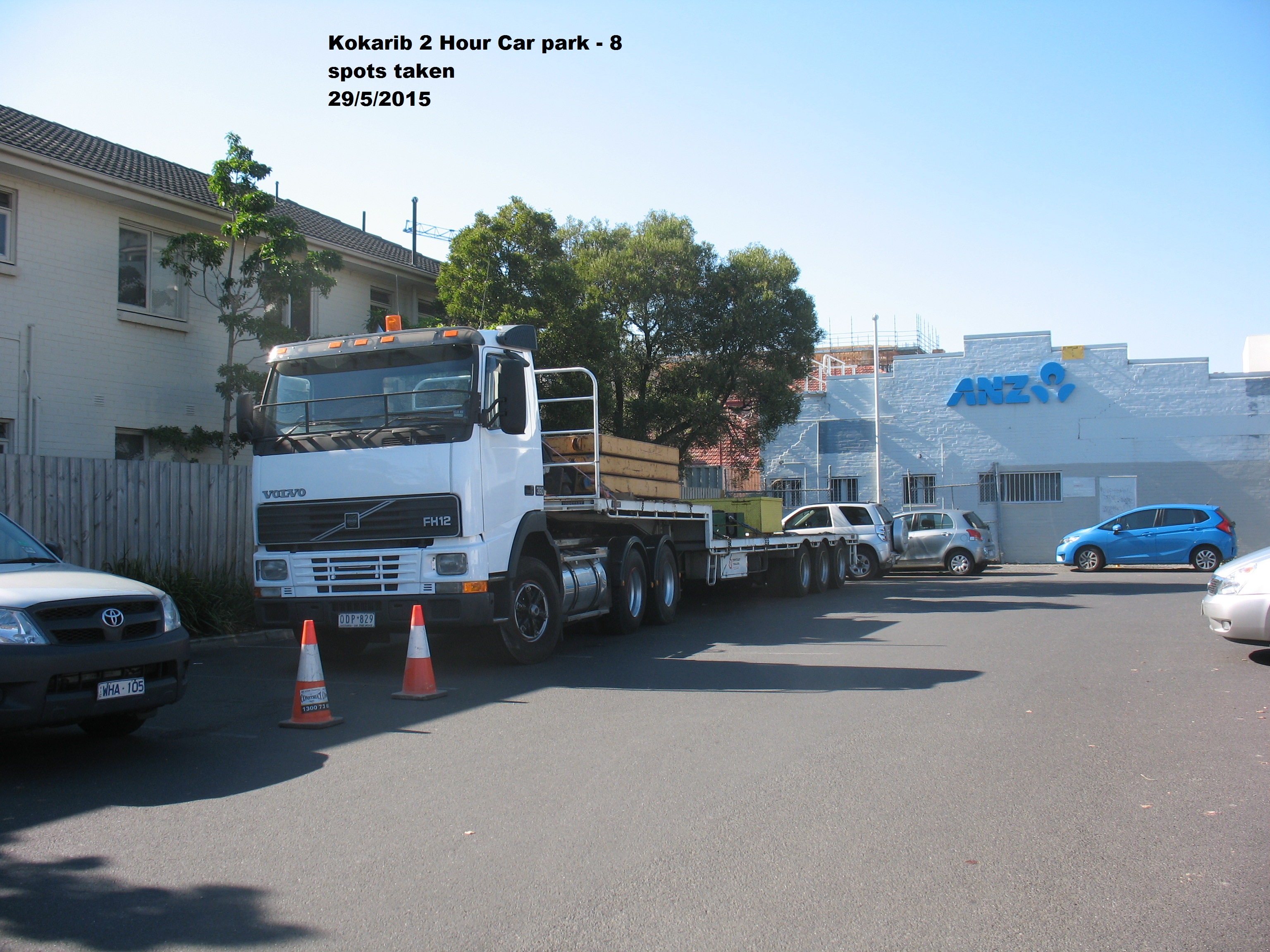
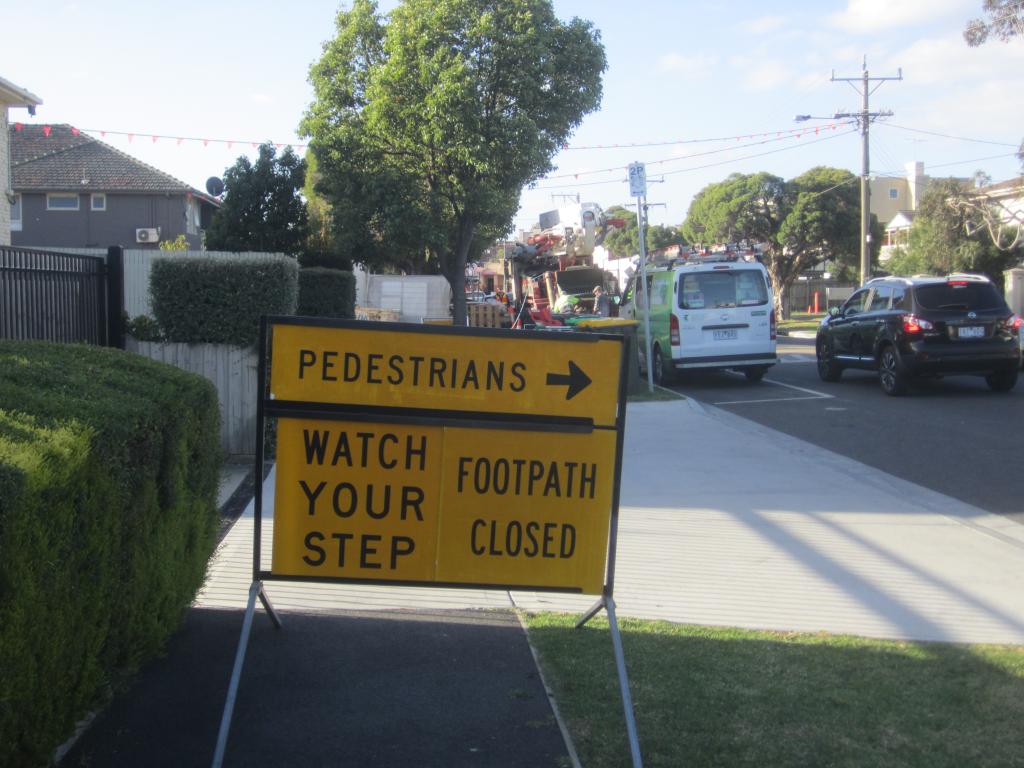
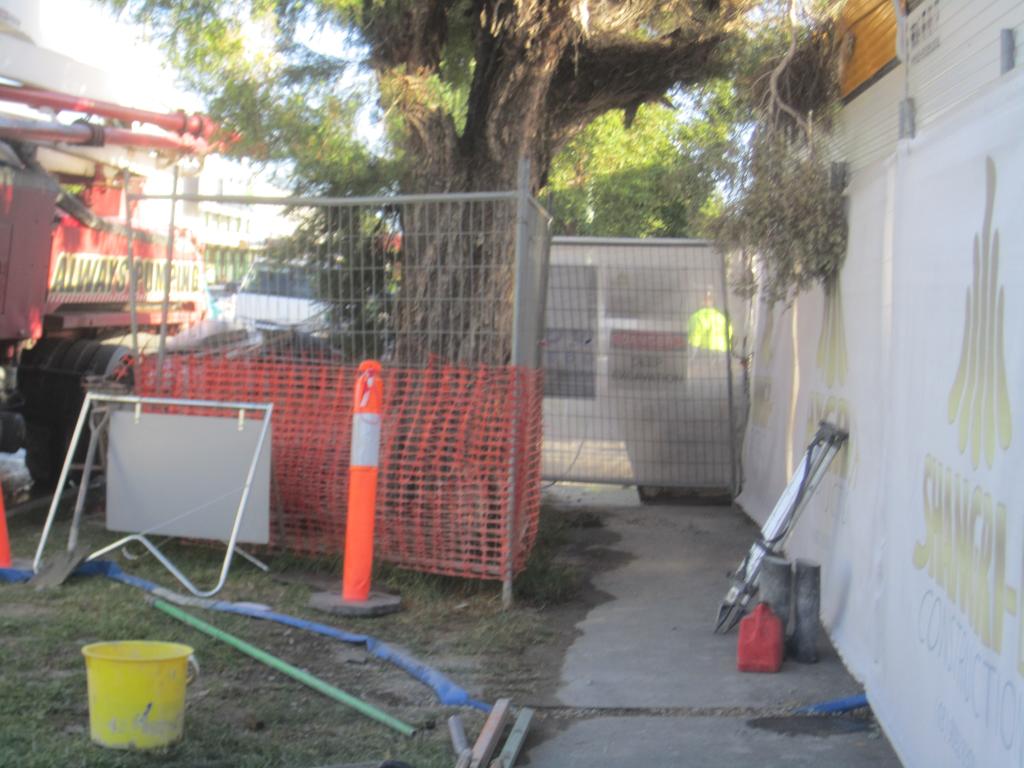
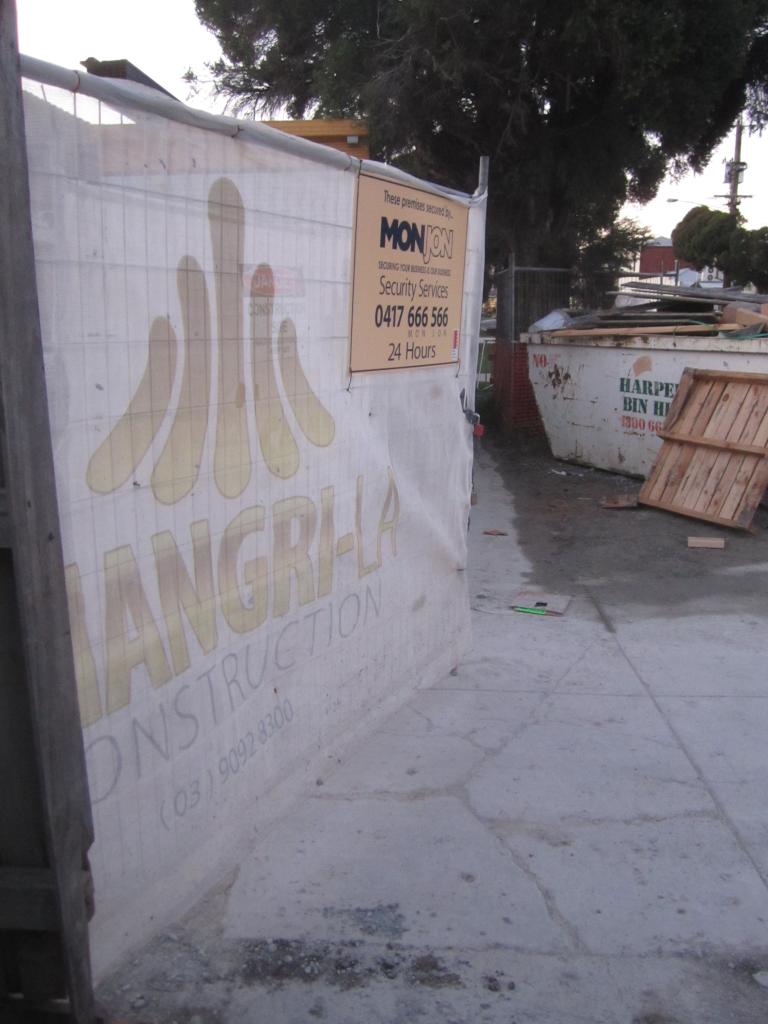
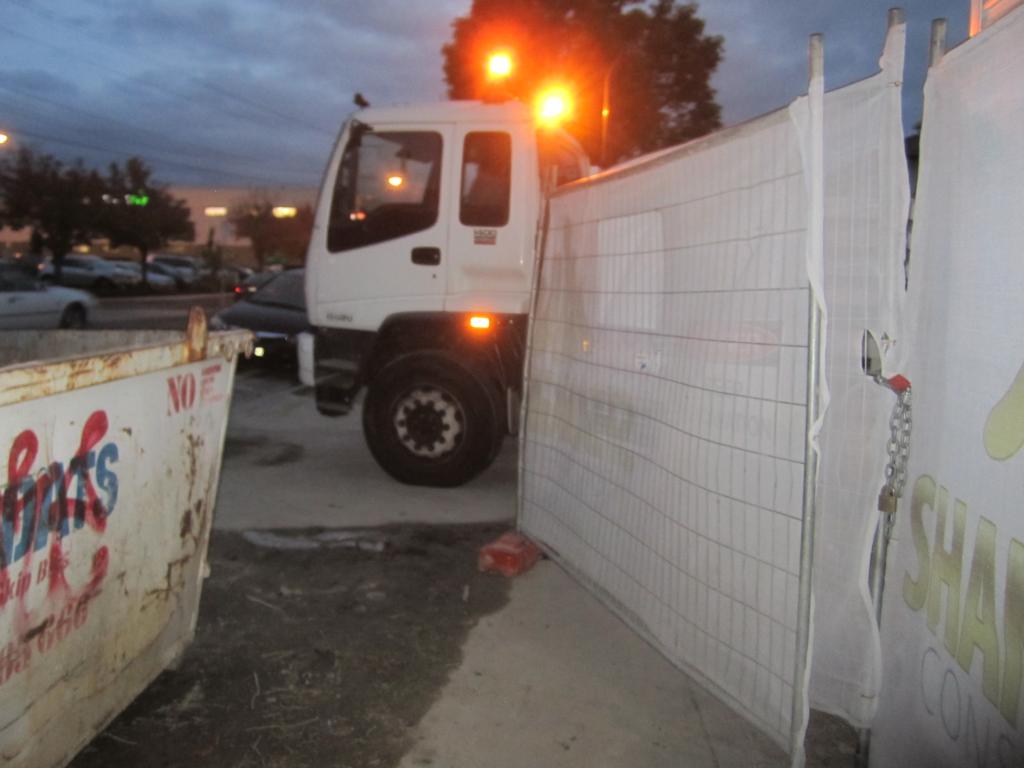
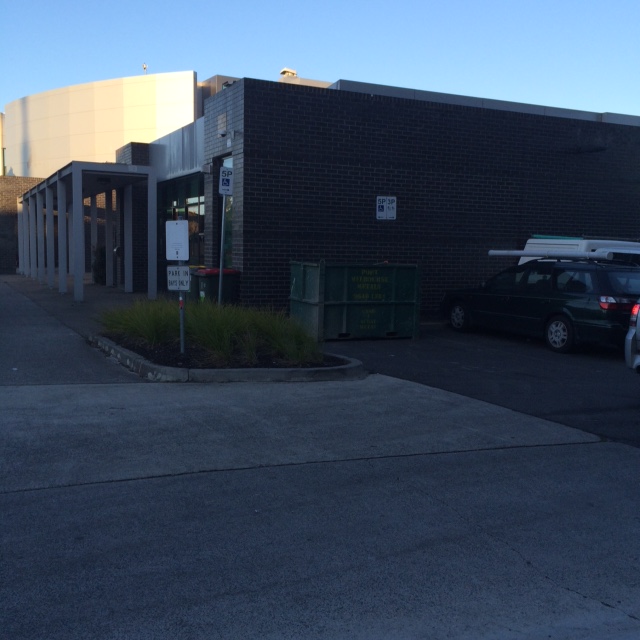
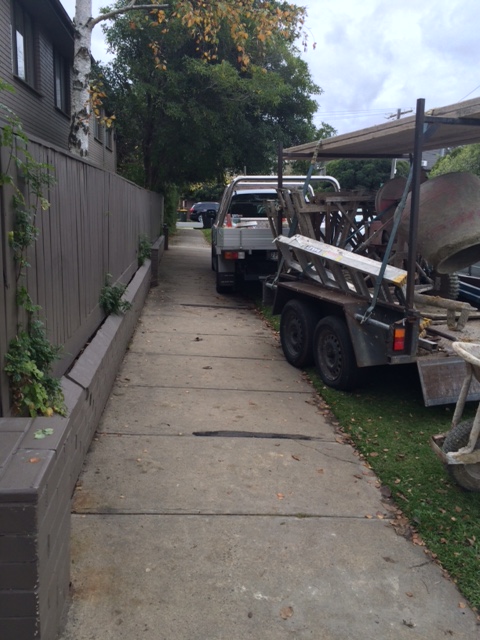
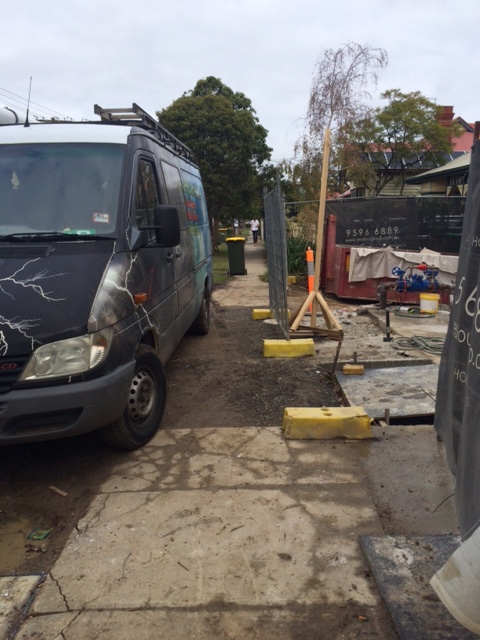
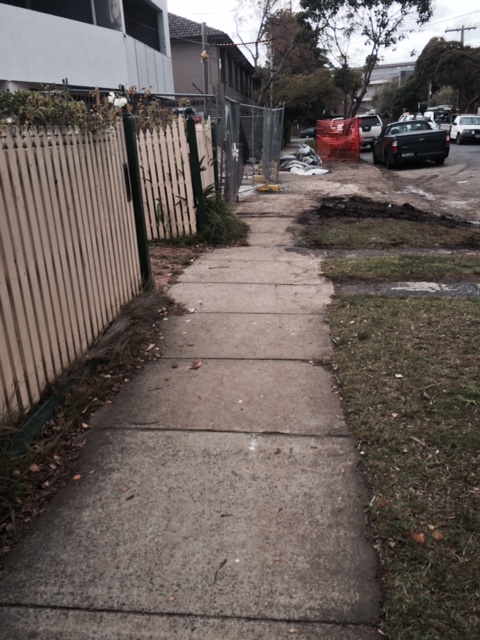
Risk management and public safety in Glen Eira is touted as the number one priority. The following photos we’ve received tell a different story! Why are pedestrians repeatedly forced onto busy roads without adequate protection such as barriers? Are there permits for all of these? Does anyone at council bother to check? Is anyone ever fined, taken to court? Or is it all too hard?

005

hs

hs2

hs3

pl


The photos are self explanatory and require no comment from us – except to point out that the evidence is continually mounting that developers own the streets. They do what they like, when they like – even going to the extent of leaving a bin in a disabled car parking spot!

carnegie

belsize

PS: another resident has just forwarded these

c12

FullSizeRender

Second reading

MrWYNNE (Minister for Planning)—I move:

That this bill be now read a second time.

Speech as follows incorporated into Hansard under sessional orders:

Victoria’s planning system encourages community participation in decision-making. This is especially true of the planning permit process. The community enjoys broad rights in the permit process to consider and object to proposals and to seek review of decisions through the Victorian Civil and Administrative Tribunal (VCAT).

Community participation has many benefits. It improves the decision-making process and often leads to better planning results. Objections can provide important insights into the potential effects of a proposal, not just on those who live or work nearby but also on the wider community. In the right circumstances, the number of objectors to a proposal can also provide such insights.

This bill amends the Planning and Environment Act 1987 to ensure the extent of community objection to planning proposals is considered. It does this by requiring the two key decision-makers in the permit process—responsible authorities and VCAT—to have regard, where appropriate, to the number of objectors when considering whether a proposal may have a significant social effect.

This new requirement must be considered before a decision or determination is made, together with other matters that must be considered under the Planning and Environment Act 1987, such as the objectives of the act, the planning scheme, and any significant economic and environmental effects that the proposal may have.

The bill amends two key provisions in the Planning and Environment Act 1987: sections 60 and 84B. Section 60(1) sets out matters a responsible authority must consider before deciding on a permit application. Section 84B sets out an equivalent set of matters that VCAT must consider. The bill inserts the new requirement in both sections to promote consistent decision-making.

Decision-makers must already consider whether a use or development may have a significant social effect. Social effects are not defined in the act but may include matters such as:

  • services.
  • access to social and community facilities.
  • choice in housing, shopping, recreational and leisure services.
  • community safety and amenity.
  • the needs of particular groups in the community, such as the aged.

This bill makes it clear that the number of objectors may be a relevant fact that ought to be considered in this assessment.

Whether it is appropriate for the number of objectors to be taken into account in a particular case is a matter for the decision-maker. In making a decision about whether to take into account the number of objectors, the decision-maker may be influenced by:

  • what the objectors have said in their written objection about the proposed use or development.
  • whether the issues raised in the objections are relevant planning considerations and relate to the reasons why the proposal requires a permit.
  • whether the issues raised in the objections point to a significant social effect on the community which is supported by evidence.

It will be for the responsible authority and VCAT to determine this based on the particular circumstances of the case.

The number of objectors alone will not establish that there is a significant social effect. However, the number of objectors may be indicative of the scale of a social effect on the community, the presence of a specific social need in the community that may be affected, or the social significance of a site to the community

The new requirement is likely to be particularly relevant where a proposal may reduce access to or enjoyment of community facilities or services or adversely affect public health and safety. The number of objectors, and the consistency of views expressed by objectors, may demonstrate that the community or a section of the community may be significantly affected.

This bill does not seek to reduce the weight given to the views of a single objector or a small number of objectors. It also does not seek to promote the consideration of irrelevant matters in decision-making. As is the case now, an objector will need to put their concerns in writing and state how they would be affected by the grant of a permit. The relevance of the issues raised will continue to be an overriding consideration in the assessment of all objections. It is the intention of the bill that decision-makers will ensure that the objections are a genuine reflection of an anticipated significant social effect that is supported by evidence, rather than simply the views of a number of objectors.

I commend the bill to the house.

Debate adjourned on motion of Mr PESUTTO (Hawthorn).

+++++++++

Bentleigh electorate

Mr STAIKOS (Bentleigh)—(Question 259) My question is to the Minister for Planning. I ask the minister if he will visit Bentleigh to explain the changes the government is making to the Victorian Civil and Administrative Tribunal (VCAT). For two years Glen Eira City Council has been implementing Matthew Guy’s residential zones, which have seen Californian bungalows in quiet residential streets make way for four-storey apartment buildings.

Councillors often oppose these individual applications and send them off to VCAT. The Planning and Environment Amendment (Recognising Objectors) Bill 2015 means VCAT can now recognise the social impacts a future development may have. Previously VCAT had no mechanism to recognise community concerns about development proposals. This change means the community’s voice will be given consideration in VCAT decisions. The government will also review the former Minister for Planning’s residential zones later this year. I ask the minister to visit my electorate and meet with interested local residents about these issues.

+++++++++

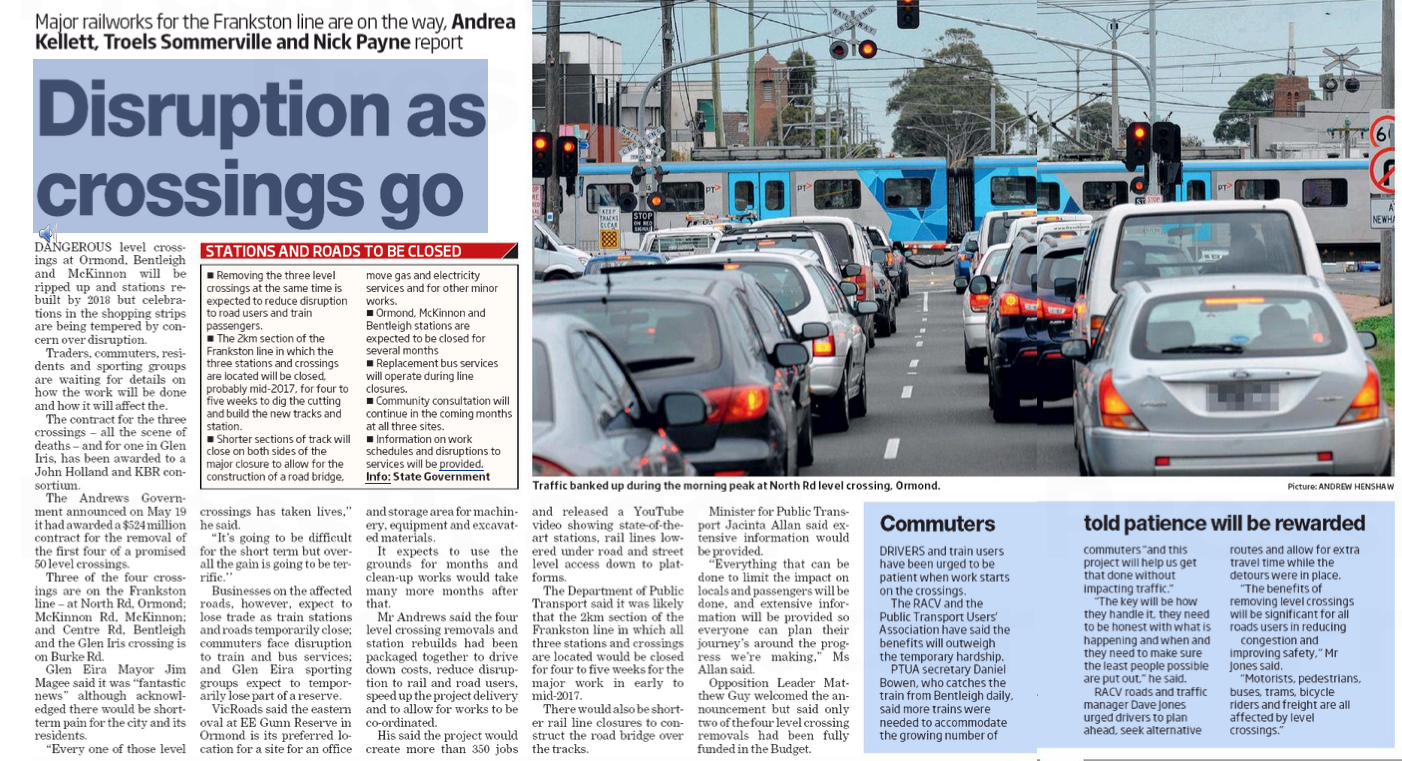
Bentleigh level crossing

Ms CROZIER (Southern Metropolitan)—While the announcement by Premier Andrews to remove the Centre Road, Bentleigh, level crossing is welcomed, it will be a hollow promise until proper funding has been allocated. While the Premier may have promised to remove the Centre Road crossing, the $2.5 billion allocated to crossing removals does not exist, as it is dependent upon the sale of the port of Melbourne.

This morning we heard the government making more announcements about the removal of level crossings on the Cranbourne-Pakenham line, with vague dates and what appears to be a rushed and panicked process so that it can meet its election promise of removing 50 level crossings. But questions remain about how this will be paid for and how the disruption it will cause will be managed. In Bentleigh the public is still unaware of when construction on the Centre Road level crossing will begin, how long construction will take and what impact the construction work will have.

The success of the traders on Centre Road is contingent on traffic flows and the availability of parking, yet there have been no community forums to discuss these issues. Premier Daniel Andrews has not released a credible plan to minimise interruptions caused by the crossing removal. Questions such as whether the car park adjacent to the station will be closed during the construction phase and what transport arrangements will be in place once the line is closed need to be answered. The people of Bentleigh deserve better than this, and all Victorians need to understand how these level crossings will be paid for. The budget papers clearly state that all capital funding for level crossing removals beyond 1 July 2015 is to be confirmed and highlight that the only level crossings which have been actually funded are those that were funded by the coalition.

PLANNING AND ENVIRONMENT AMENDMENT (RECOGNISING OBJECTORS) BILL 2015
Introduction and first reading
MrWYNNE (Minister for Planning) introduced a bill for an act to amend the Planning and Environment Act 1987 to provide for the Victorian Civil and Administrative Tribunal and responsible authorities to have regard to the number of objectors to permit applications in considering whether a proposed use or development may have a significant social effect and for other purposes.
Read first time.

PS: The ‘content’ of the proposed new bill has just been published on the parliamentary website and is UPLOADED HERE. We fear that the bill will simply be a tinkering at the edges since it is replete with such phrases as ‘where appropriate’. Of course, deciding what, where, and when something is ‘appropriate’ will still be left up to councils and VCAT!

++++++++

12++++++

Untitled

letter

crossingsCLICK TO ENLARGE!

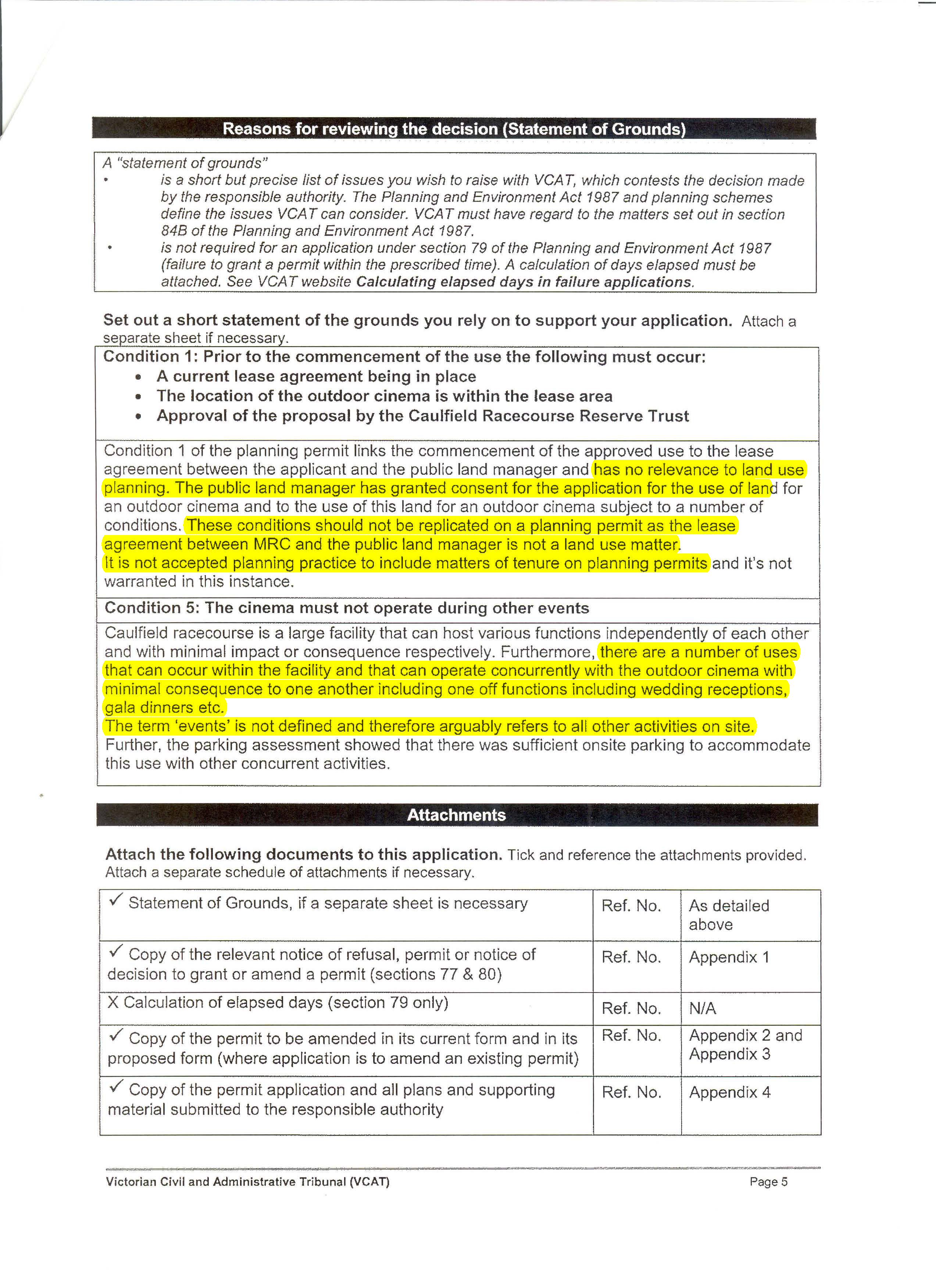
Having been handed everything they want on a silver platter by Council, the MRC and its agents, still want more. They have lodged an objection to council’s approval of the outdoor cinema (see below). We find this quite extraordinary for a variety of reasons –

  • The then Department (which has now morphed into something entirely different) in its ‘approval’ was unequivocal in that permission was conditional on three things – the existence of a lease; the nominated site for the screen lie within the leased area and, that the Trustees sign off on the application.
  • As far as we know, no new lease has yet been signed; it is questionable who or what department is the ‘land manager’ and if the Trustees even know what the hell is going on. Their website has disappeared and our glorious council reps have been noticeably silent on everything to do with the trustees – except declare conflicts of interest only when they feel like it!
  • The government has done nothing since the Auditor General’s report – except pour in more and more money to racing – ie their donation of $1m for the four storey screen in front of the grandstand.

According to the objection, the MRC now seeks to do what it wants, when it wants and for as long as it wants. If they feel like it, they can hold as many functions as possible ‘simultaneously’ with the cinema, combined with drinking, and commercialising crown land until 1am all year round. The question now becomes – will Council fight this at VCAT, or will they cave in as they have repeatedly done in the past?

We invite readers to revisit the post we put up when approval for the cinema was decided by Council (https://gleneira.wordpress.com/2015/02/24/the-mrc-cinema/). The hypocrisy and inconsistency of councillors is astounding. When literally hours can be spent on ‘debating’ whether or not the McKinnon Bowls Club should be allowed to ‘commercialise’ one of their greens (ie public land) and hence save a club from going under, and to then simply turn around and allow the MRC to ‘commercialise’ crown land, beggars belief. Of course, the real issue with McKinnon in our view is ‘internal’ – ie mates versus officers’ control. The common factor in both issues, is that neither has anything to do with public benefit!

There are other strange goings on too. According to council’s planning register, there are 4 applications for subdivision for the Caulfield Village site. Please note that the ‘address’ is now North Caulfield and no longer the arguably less ‘prestigious’ Caulfield East. What’s concerning about these applications is that the TOTAL subdivision number is 468. Council only approved 463 dwellings. Thus, why the additional 5 dwellings? Either the planning register is a total stuff up (not unusual) or there is much happening behind the scenes once again.

Outdoor Cinema VCAT Appeal0001 Outdoor Cinema VCAT Appeal0001