GE Planning


This post is all about Manipulation and how it parades as ‘consultation’.  We will only focus on two documents which we’ve uploaded for reference – the Planning Scheme Review and the council submission to the Government’s Retail Policy Review. These documents provide a clear indication of:

  • Agendas that are never clearly spelt out thereby ensuring consultation is nothing but a sham
  • The failure to provide adequate, reliable and objective information that should always form the basis of ‘consultation’ and subsequent ‘decision making’
  • Failure to substantiate million dollar decisions via comprehensive and rigorous cost benefit analyses

This is why we hold the above views. Councils are mandated to be transparent and accountable in their decision making. Implicit in these strictures is the imperative for ‘consultation’. The cornerstone of all ‘consultation’ is the absolute necessity to firstly INFORM. There can be no effective consultation if residents don’t know, or understand the full implications of all that is being asked or proposed.

Glen Eira continually, and we believe deliberately, undermines this basic tenet. Nowhere is this more evident than in the recent Planning Scheme Review. Only a tiny smattering of the 35 pages contains any ‘discussion’, justification, fact, figures, or cold hard evidence to support the ultimate recommendations. Here are a few examples: 

Master planning for institutions: There was limited interest in this issue. However those who commented were generally supportive of the idea of requiring master plans for institutions. Long term ambitions should be revealed when they impact the community. 

Council’s existing Development Contributions Plan Overlay has expired and must be removed from the scheme. There was limited public interest in this issue. However those who did respond believed they were an important form of levying developers to cover the costs of providing infrastructure – why should the current population have to pay for these upgrades through rates? This issue involves balancing the costs of justifying any overlay against likely future income for Council. 

The ‘Net Increase in Dwellings in Glen Eira’ ….indicates that Glen Eira’s policy of directing the majority of additional housing to Housing Diversity Areas (HDAs) that are around activity centres and/or close to public transport is working well. (Yet the Annual report tell us that only 40% of new housing stock is going into HDAs – certainly not a ‘majority’ as claimed here! And given that this policy came into effect in 2004, a 40% outcome in 7 years does not signify ‘success’!)

Processes and efficiency also need questioning as a result of this sentence – In 97% of files audited, the planner has assessed the application against relevant policies. (Why not 100%? On what bases are decisions then made?)

An analyses of the submission on the Retail Policy is equally illuminating.  – Decisions regarding retail development need to take into account the broader network of centres and the identified role and function of individual centres.’ (Is this why the C60 with its 35,000 metre retail space only looked at Chadstone, and not at the other 53 shopping strips throughout Glen Eira?!!! Why the contradiction?)

Another paragraph from Akehurst provides further food for thought:

An emerging issue for many councils is the need to manage the competing interest of commercial and residential tenants of activity centres. As more residential building are constructed in activity centres, we are seeing conflicts between residents and commercial uses in terms of noise from early morning deliveries, rubbish collection and street cleaning. Planning policy needs to ensure that retail and commercial uses remain the most important uses in an activity centre.

When this statement is compared to what is contained in the Planning Scheme Review, the hidden agendas become obvious – There was some support for structure plans for activity centres. However, many of the written submissions indicated the hope that structure plans will control and in fact minimise development in activity centres.  

Structure plans after all demand holistic approaches to planning that incorporates environment, residential amenity, open space, transport, etc. This is anathema to any plan that seeks to ‘ensure that retail and commercial uses remain the most important’. Pity is, that the ‘truth’ is never spelt out!

Conclusion? Crucial issues involving millions of dollars are thus brushed off with no real explanation or any ‘proof’ to support proposed future actions.

A caveat. We are not planners nor lawyers. However, we do regard ourselves as reasonably intelligent people who are continually scratching our heads trying to understand what the hell is going on. As ratepayers we have the right to expect that decisions that involve millions of dollars and have the potential to ruin the lifestyle of countless residents will be fully documented; that the rationale will be explained; that it will be a given that only on the basis of accurate and comprehensive information provision can any worthwhile decision be made. Hence, as reasonable and intelligent people, we want to know the information that has led to the above decisions. We want the information which will allow us to say ‘yeah’ or ‘nay’ to suspect proposals and public relations spin. That’s when there will be genuine consultation and NOT MANIPULATION.

Residents should take special heed of the following sentence, because it encapsulates this council’s vision and practise of ‘consultation’ and information provision –  ‘opening up ‘hard won’ local policies for public scrutiny potentially risks the continuation of such policies’.

We’ll conclude with this summary:

  • Information provided to residents lacks detail, comprehensiveness, and objectivity
  • Information provided to residents is deliberately skewed to further already determined agendas
  • Information provided to residents fails to include detailed cost benefit analyses
  • Information provided to residents fails the first principle of effective communication

Submissions made to the VEAC inquiry are now available online. We’ve uploaded both the MRC submission (here) and the Glen Eira Council submission.

This is one paragraph from the MRC submission (page 2) – Through the provision of dedicated unrestricted public open space and the provision of access to the Centre of the Racecourse the Reserve contributes to the mental and physical health of the local and broader Melbourne community. 

Here’s another – Glen Eira Council through their Planning Scheme and related permit controls, have required the Club to prepare a master plan for its freehold land holdings within thePhoenix Precinct. The proposed C60 Planning Scheme Amendment is the outcome of this master planning work. Through the Land Exchange, the Crown Land amenity is protected and enhanced while the C60 Amendment does not place additionalpressure on the pubic (sic!!!!!!!) space in the Centre of the Racecourse. 

We urge all readers interested in the Caufield Racecourse issue, the C60 and the general Open Space issues to please read and compare the various submissions. We also urge residents to ‘review’ the Glen Eira council submission! Links to various Council and community group submissions are provided below.

Bayside – http://www.veac.vic.gov.au/submissions/published/6746-Bayside_City_Council.pdf

Port Phillip – http://www.veac.vic.gov.au/submissions/published/6839-Port_Phillip_Conservation_Council.pdf 

Yarra – http://www.veac.vic.gov.au/submissions/published/6737-Yarra_City_Council.pdf

Boroondara – http://www.veac.vic.gov.au/submissions/published/6787-Boroondara_City_Council.pdf

Dept. Planning & Community Dev – http://www.veac.vic.gov.au/submissions/published/6801-Department_of_Planning_Community_Development.pdf 

Friends of Caulfield Park – http://www.veac.vic.gov.au/submissions/published/6810-Friends_of_Caulfield_Park.pdf

Manningham – http://www.veac.vic.gov.au/submissions/published/6822-Manningham_City_Council.pdf

Monash – http://www.veac.vic.gov.au/submissions/published/6827-Monash_City_Council.pdf

We’ve commented numerous times on the Glen Eira Planning Scheme and its deficiencies and loopholes. In this post we pinpoint exactly why the scheme fails to do what it is supposed to do – ie provide a detailed and comprehensive blueprint for the future – a vision that has been developed in CONJUNCTION with residents and which has the full support of the community. The Glen Eira Planning Scheme is ill conceived, poorly articulated and does not benefit the majority of residents. As an integrated planning (as opposed to town planning) document it is a shambles. Here are our reasons why –

Quote from Ian Wood, President Save Our Suburbs:

“Found this recently: The Glen Eira Activity Centre Strategy 2005 was endorsed by Council in March 2005. This strategy is yet to be incorporated into the Glen Eira Planning Scheme. [http://www.gleneira.vic.gov.au/page/Page.asp?Page_Id=1641&h=1] [last updated 7 Sept.2010]!!!!! How bloody long does it take DPCD [Department of Planning & Community Development] to approve this stuff????”

COMMENT – If this is true, here are the likely reasons for the Glen Eira Activity Centre Strategy (GEACS) not  being incorporated i.e. not accepted by the Planning Minister:

  • The 2005 Strategy is inconsistent with Melbourne 2030 on the status of Glen Huntly;
  • The 2005 Strategy proposes no Structure Plans;
  • The 2005 Strategy has no impact statement on Centres due to population and housing growth;
  • The 2005 Strategy has no relevance to transport issues like congestion and level crossings;
  • The 2005 Strategy has not worked through its implications for the Local Planning Policy Framework (LPPF), Glen Eira Planning Scheme (Glen Eira PS) and Municipal Strategic Statement (MSS) established prior to 2005;
  • The 2005 Strategy identified 52 shopping centres, but the MSS mentions only 17 centres;
  • In March 2005 Councillors who endorsed the GEACS were – Bury, Erlich, Grosbard, Hyams, Martens, Marwick,  and Sapir.  Esakoff, and Goudge opposed it.
  • In July 2006 the issue of the Glen Huntly status was deliberated and Councillors voted against developing a Structure Plan to determine its status. Councillors that unanimously rejected the Planning Minister’s suggestion were: Ashmor, Esakoff, Feldman, Lipshutz, Robilliard, Spaulding, Staikos, Tang, and Whiteside;
  • LPPF Section 21.03 Vision Strategic Framework states – “The Glen Eira Community Plan identifies the corporate direction of Council over a 3 year period (2001-2004)” and from 1996 “Glen Eira 2020 identifies a long-term vision for the municipality over the next 20 years. Glen Eira 2020 identifies a desired future for the City and was developed through analysis of trends and consultation with the community”. This is a back to the future Vision. Where is the new updated and accepted by the community, Community Plan?;
  • LPPF Section 21.04 Housing & Residential Development – extensive & detailed to develop 20% of Glen Eira, whereas only 8% development is needed. No justification for this course of action is given;
  • LPPF Section 21.06 Business – policy focus to improve Bentleigh, Elsternwick, and Carnegie and nowhere else. That is in spite of the population and housing growth everywhere in Glen Eira;
  • LPPF Section 21.08 Institutional & Non-residential uses in Residential Areas – policy focus only on schools/hospitals. Nothing on “medical centres, churches, childcare and kindergartens”. Purpose of this policy is to “encourage uses that retain housing stock”;
  •  LPPF Section 21.09 Public Uses / Community Facilities – general and non-specific with this telling statement “With the corporatisation of a number of government utilities it is no longer necessary for sites owned by private utility company to be included in a Public Use Zone”. MRC was structured in 1990s to utilize this argument admirably;
  • LPPF Section 21.09 again “The plan also examines properties that are Council owned or zoned for public uses in order to determine the opportunities for each property to maximize the potential return to the community.” Can anyone explain this gobbledygook?
  • LPPF Section 21.12 Transport – Short and sweet. No problems. Forget about complaining;
  • LPPF Section 21.13 Open Space – states the shortage of Open Space. No mention of the Crown Land provisions at the Caulfield Racecourse and no strategy to increase the amount of Open Space. Accept the reality!
  • LPPF Section 21.14 Monitoring & Review – “A review of this planning scheme will be undertaken at least every three years”. The last Review accepted by the planning Minister occurred in 2004, gazetted with permanent control 27 May 2004. No acceptable review has taken place in 2007 or 2010;
  • LPPF Section 22.02 Non Residential Uses in Residential Zones Policy – extensive & detailed description of how “medical centres, schools, parks, churches, childcare, and kindergartens [are placed and located] within residential areas”. No objective or policy analysis as to whether we need more or less of such community facilities and why we may need it. No factual information and data to support the objectives and policies. One of the objectives states “To encourage proposals that retain the existing housing stock within the municipality”. Increasing the stock is certainly retaining it;
  • LPPF Section 22.04 Commercial Centres Policy – Deals with Business Zone. Short and sweet. Only Bentleigh, Elsternwick and Carnegie are to develop their retailing space. The following telling statement summarises the Policy “Retail and commercial floorspace is at a level that currently serves the needs of the community. Additional floorspace must be closely monitored ensuring established centres are not weakened”. Can anyone explain how does the support of Caulfield Village with its proposed 35,000 square metres additional commercial floorspace maintain consistency with this Policy?
  • LPPF Section 22.05 Urban Villages Policy – Deals extensively and in detail with the 3 Urban Villages of Bentleigh, Elsternwick and Carnegie, whose Structure Plans were developed in June 1999. However, they never followed the guidelines of Melbourne 2030, in particular in regards to Community Consultation Process. For this reason those Plans are described in Structure Plans Status document as Other Spatial Plans. Essentially those plans have never had even a modicum of acceptance by the residents of those Villages. Each one of them has now got Residents Groups up in arms as to the way those areas are being developed 

All the information on LPPF and the Glen Eira Planning Scheme is available on line www.dse.vic.gov.au/planningschemes/gleneira/home.html . 

The question arises what makes for a good Planning Scheme. The answer is very simple. Any area plan affecting residents should have a modicum of support from people living in those areas. There is not one shred of evidence that this has happened in Glen Eira. The six point Community Consultation is a tick the box approach to satisfy the legislation and nothing else.  

Yet some stakeholders have benefited from the great development that has occurred in Glen Eira. The question arises who are those beneficiaries and who on the Council has also benefitted if there is no general support from the community?

We received an email, plus attachment, from a local resident – Ms. Lisa DiMarco. We feel that the ideas expressed in the attached need to be carefully considered and discussed, especially in light of the upcoming C60 and the entire planning process of this Council.

Just another reminder to readers, that we welcome all contributions, information, correspondence from and with council, that is relevant to the issues which confront residents and which impacts on lifestyle, liveability, and ensuring that the community’s voice is heard.

Lisa’s email reads:

“Hi there
I think the attached article on public spaces in European cities is very interesting.  You might like to post it on the Glen Eira Debates website.  The lack of public open space in the proposed C60 development is such a shame.  We need to start thinking differently about planning.  We need car free squares, piazzas, malls where people can congregate and relax.”

Last chance to have your say…

9 Feb 11 @ 12:41pm by Jenny Ling

The site of the proposed new six-storey development in Elsternwick.

The site of the proposed new six-storey development in Elsternwick.

RESIDENTS have until Friday (February 11) to have their say on revised plans for a multi-million dollar revamped Coles supermarket and apartments in Elsternwick.

Last year 66 residents objected to the original plans which included three buildings of up to seven storeys, 137 apartments, a new supermarket, shops and offices on Glenhuntly Rd, between Orrong Rd and Beavis St.

The original plan was rejected by Glen Eira Council and was appealed to VCAT last year.

Glen Eira councillors will form their view on the new plans, which include one six-storey building with 99 units and a supermarket, on February 22 before a three-day VCAT hearing on March 7.

Full details of the plans can be viewed at VCAT or Glen Eira Council. (http://www.gleneira.vic.gov.au/Page/page.asp?Page_Id=190&h=0#BM8474)

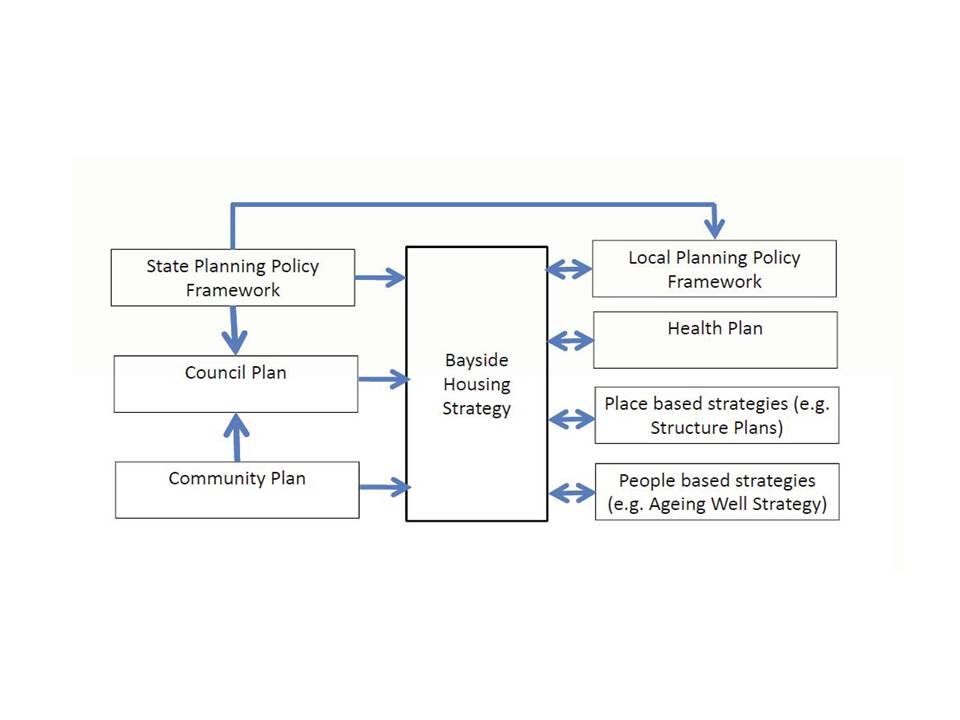
At tonight’s Bayside Council meeting, councillors will decide on the draft Bayside Housing Strategy as well as the draft Information Sheets which will form the first part of community consultation on their Planning Scheme Review. We’ve decided to highlight this strategy since it stands in stark contrast to the Glen Eira approach to planning. There are several things that readers need to note:

  • The Glen Eira Housing and Residential Strategy dates back a decade. It’s genesis is even earlier. Yet the amendment which this precipitated still stands. The jargon includes ‘structure plans’ – yet no structure plans have ever been devised.
  • With the C25 amendment, Glen Eira earmarked 20% of the municipality as ripe for development.  The Planning Scheme [clause 24.04(1)] states: “Over the next 20 years, the City will undergo moderate population growth and will see a continued decline in household sizes”. This has not been adequately reviewed to determine whether the assumption still holds a decade later. Glen Eira has in fact already outstripped its projected population figures. Yet, the consequences of such a policy are rampant high density living in more than 20% of the municipality. According to the 2009/10 annual Report (page 71), only 40% of new dwellings are being located in the so called ‘housing diversity areas’. Instead of protecting neighbourhoods, there is now basically open slather.
  • Glen Eira’s approach is reactive – that is, developers submit proposals, rather than developers having to fit in with clearly designated Structure Plans that govern growth, and development
  • Glen Eira’s policies are piecemeal. There is a real failure to fully integrate, and take account of such basics as: ESD, Open Space; health and wellbeing; etc.

By way of comparison to the above points, we would like readers to note that the Bayside strategy works in completely different, and we contend, better ways. Firstly, their starting point has always been carefully researched and developed structure plans for activity centres that have been endorsed by the community following bone fide consultation. Bayside also concentrates on population growth, not just housing stock, and finally the imperative to incorporate community sentiments via their Community Plan is given major prominence. Glen Eira of course does not have a ‘real’ community plan. It only has a Council Plan. The Bayside diagram below illustrates the interconnection of all these facets –

Your comments are welcome.

Recent announcements by both Glen Eira Council and the State Government need exploring and the asking of many important questions. We are referring to the Grade Separation in North Rd., Ormond. This month’s Glen Eira News, carries this small announcement on page 3 –

“VicRoads has advised Council that the Dandenong Rail Corridor Project is investigating short-term and long-term measures to improve the operation of the roads intersecting the Dandenong railway line. Community engagement is likely to occur in the first half of 2011.  

VicRoads has also advised Council that the new Government’s policy includes planning for grade separation projects including North Road, Ormond (project cost $150 million, $12 million allocated in the first term) and Murrumbeena Road, Murrumbeena (project cost $150 million, $2.5 million allocated in the first term)”. (Notice the order? – a case of let’s bury this as much as we can?)

Last year, the Leader’s ‘Red Spot Survey’ on level crossings had the Murrumbeena crossing as the worst in Metropolitan Melbourne. Glen Eira Council has for the past few years also joined in the chorus for upgrading of the Murrumbeena crossing (See Glen Eira News, front page, September, 2008). In a Media Release dated 22nd November, 2010 we find this: “Coalition Leader Ted Baillieu has announced if elected Premier this Saturday, he will commit an initial $379 million to fix the problems at eight metropolitan level crossings, including North Road, Ormond and Murrumbeena Road, Murrumbeena. Glen Eira Mayor Cr Steven Tang said the separation of local level crossings is a perennial issue that has been most recently highlighted by Murrumbeena Road’s number one position in the RACV and Leader Community Newspaper’s Redspot Survey. “

All well and good! But this doesn’t explain why, when Murrumbeena has always been in the spotlight, we suddenly have the Ormond project receiving $12 million dollars in the first term, compared with only $2.5 million dollars for the Murrumbeena site!!!!! What is going on? Why have the priorities suddenly been switched around?  Are there any backroom deals going on that the community knows nothing about?

After being alerted by a comment from Streuth we’ve done a little digging regarding IKEA’s plans for expansion and development in Melbourne. Streuth cited a job ad by IKEA, where the location was listed as ‘Ormond’. We  have also found other IKEA plans on the drawing boards. If IKEA is moving into Ormond then residents need answers to the following questions:

  • What does this mean for the Caulfield Village development?
  • What does this mean for local streets and neighbourhoods when Council doesn’t even possess a Integrated Transport Plan as part of its Planning Scheme?
  • Who knows anything about this, and when did they know?
  • Does anyone stand to make a profit here?
  • Has there been collusion between the bureaucrats/councillors and the State Government – all done behind closed doors?

In the end, any such development will only provide further conclusive proof of what a total shambles the Glen Eira Planning Scheme really is. No structure plans; no transport plan; no public realm policy. A case of the ‘secret society’ at work?

One of the most important functions that any council has, especially in these ‘pro development’ times, is the power to refuse, or to grant a permit. We’ve previously pointed out how the Glen Eira delegations to officers in effect removes many powers from councillors (as a council) and redirects them to select officers.  We’ve also pointed out how this council differs fundamentally from the delegations and planning committee rules that other councils see fit to impose. But there’s worse! The very language that Glen Eira uses in its delegations is deliberately vague, obtuse, and hence allows subjective judgements rather than stringent and explicit policy to provide the framework for decision making. The end result can only be the further erosion of Council powers. We refer in particular to Section 61 (1)(a) of the Planning and Environment Act which covers delegates power to grant a permit. Glen Eira proposes the following ‘conditions and limitations’ –

“the exercise of this power is limited to the following circumstances:

i)               There has been no objections lodged; and

ii)             The application/amending plan is generally in compliance with existing policy or guidelines;

iii)           The application has not been referred to the Council or the Delegated Planning Committee (DPC) for determination

The power cannot be exercised where:

i)               an application is for use of land for a brothel; or

ii)             An application is for use of land for gaming machines; or

iii)           An application is for extension of time for tennis court illumination beyond 10,00pm; or

iv)            A proposal involves dwellings exceeding one level, except where the delegate is DCD, MTP or MStatP who may grant a permit allowing a double storey development.

The permit must not be inconsistent with a cultural heritage management plan under the Aboriginal Heritage Act 2006.”

Readers should take careful note of the above bolded and underlined words and phrases. Exactly what does ‘generally’ mean? If there are 10 conditions, will someone still get a permit if they only meet 5, or 6, or 7 of those conditions? Thus subjectivity on the part of the officer is enough it seems. As to the issue of double storey developments, compare the above with the Port Phillip version. Implicit in the latter’s delegation conditions is the acknowledgement that councillors will ACTUALLY KNOW about all applications – that they are informed. Can we say the same about the processes at work in Glen Eira? And of course, in Port Phillip and numerous other councils but NOT Glen Eira, there is the ubiquitous ‘councillor call in’ principle stated clearly again and again – “Decision to grant a permit where the application involves a two storey extension and a ‘line of sight’ principle is involved and the proposal does not meet the prescription but does, in the officers view, meet the performance approach set out in the Heritage Policy and unless a councillor requests that the application be determined by Council.”  

It’s really time that councillors took control of this council and fulfilled their fiduciary duties to the community.

We’ve received a Position Paper from Mr. Orek Tenen on the entire Phoenix Precinct and the Racecourse/C60 amendment. Mr. Tenen’s paper is quite lengthy, and there are many attachments. (+2). We’ve uploaded the full paper here, but present in abridged form his conclusions and recommendations below:  

Suggestions 

To change the unsatisfactory situation and to ensure that Phoenix Precinct satisfies and complies with the designated original Crown Land provisions and community wishes, the following points should be progressed:

  1. The whole Original Crown Land (page 86 of Murray & Well book on History of Caulfield Ref) should be strategically planned as one entity of State significance (202 ha) together with all stakeholders and residents;
  2. Glen Eira and Stonnington Councils to ask the State Government to establish a Priority Development Zone for this whole area;
  3. Current Caulfield Racecourse trustees to be replaced with those that can appropriately represent the Crown Grant terms and conditions i.e. three functions (Racecourse, Public Recreation & Public Park) plus Glen Eira Council as a Planning and Responsible Authority, and State Government as the owner of the Crown Land;
  4. Amendment C60 to be abandoned, but C60 area to be developed as a Technology Park and not a shopping centre;
  5. Training of horses to be removed from the Caulfield Racecourse public Recreation ground & public Park (CRRP);
  6. The present training track to be used by the public for close viewing of races as is done at Flemington racecourse. This will increase the attendance of the Caulfield racecourse racing as is the wish of the racing fraternity and MRC;
  7. Fencing around the Racecourse to be transformed to a modern type that allows visualisation of the CRRP ground and activities on it;
  8. Increase the Recreation & Public Park elements of CRRP to be fully within safe racing track as it is done in so many overseas and Australia’s premier racecourses;
  9. Improve access to the CRRP Recreation & Public Park elements of the racecourse;
  10. Caulfield Station to be developed as a major Transit Station, particularly for goods transport linking East and West of Victoria i.e. deep channel Westernport Bay and Avalon Airport;
  11. Remove level crossings as a priority in getting the goods transport on line(s) that link Westernport and Avalon Airport;
  12. To ensure proper implementation establish a Steering Committee and an Implementation Authority.


Key findings:

  1. The original 1858 Caulfield Heath land size earmarked for recreation reserve was 440 acres (137.6 ha).  The Caulfield Racecourse is all that remains of that with 54 ha, of which only about 8 ha is supposedly reserved as a Public Recreation and Public Park. And even that is yet to become fully available to residents with an unknown timetable.
  2. Health & Environment issues should be the driver of the Build Environment if Quality of Life is to be improved;
  3. Councils are to properly plan for the future together with their community and not rely only on legislation and bureaucratic processes. This is important for the Victorian Government as well if it is to achieve its objectives for the State;
  4. Phoenix Precinct and Caulfield Racecourse to become a State significant Project, whose economic value exceeds $10 billion. Glen Eira Council has not got the capacity or staff to handle such a big Project.
  5. Caulfield Station in a middle rank LGA is a pre-eminent junction station and should be developed as a Transit Station for goods transport to connect East with West Victoria, specifically Westernport deep channel facility with Avalon Airport.
  6. Key to the success of Caulfield Junction is a program of removing Level Crossings between Westernport and Avalon Airport to ensure cost benefit of goods transport, both on rails and roads.


Orek Tenen,

Secretary

Sustainable Villages & Suburbs Inc

A previous post commented on the upcoming delegations to officers, paying particular attention to the ‘Conditions and Limitations’ under the Planning and Environment Act. We noted the fact that in Glen Eira the Planning Committee is NOT a special committee; that there is no official ‘councillor call in’, nor does the Planning Committee consist of councillors as community reps. In our municipality power is wielded by unelected officers as outlined in this council description of what the Delegated Planning Committee is. As a further means of comparison, we’ve uploaded the current Stonnington ‘Planning Delegation Guidelines’ .  Apart from the differences in composition, and the limitations on the powers of the committee, the fact that this document is freely available online, again stands in stark contrast to the practices of Glen Eira.

Stonnington is not alone in providing its residents with policy manuals and information as to the protocols under which a variety of services operate. Kingston, for example, has  a complete listing of all its protocols and guidelines online. We challenge readers to locate any similar documents on the Glen Eira website – assuming of course, that they even exist!

« Previous Page — Next Page »